In this Member Case Study Virtual Roundtable, Dan Jackson of the Adelaide Football Club discusses his work helping the team to define, assess and change team culture.
Recommended reading
How the Brooklyn Nets Put their People at the Heart of their Culture
Belonging: The Ancient Code of Togetherness
Framing the Topic
In this Member Case Study format of our Virtual Roundtables, Dan Jackson, the Head of Leadership and Culture Development at the AFL’s Adelaide Football Club, spoke about the relationship between environmental profiling and evolving team culture. Dan is a former professional AFL player and he explained how his own experiences of the high performance environment as a player has influenced his work to evolve team culture with the Crows.
Dan framed the session by breaking it down into three parts:
Assessing culture
What is ‘culture’?
“Culture is both a dynamic phenomenon that surrounds us at all times, being constantly enacted and created by our interactions with others and shaped by leadership behaviour, and a set of structures, routines, rules and norms that guide and constrain behaviour.” (E. Schein, 2004)
Jackson’s definition: “Culture is a reflection of how a consistent group of people behave in a particular environment over time.”
In assessing the culture of a group, there are three cultural pillars:
Changing culture
Unfreeze
Cognitive restructure
Evolve
Cultural trends
Members’ thoughts on current trends:
Former England rugby international George Kruis discusses how he prepared for his post-playing career with a lot of help from his clubs.
Those 14 years spent at the thick end of the game have imbued him with a number of skills as he now turns his attention full-time to his CBD and wellness venture, Fourfive, which he co-founded with former Saracens teammate Dom Day in 2018.
Fourfive is the official wellness provider to a number of sports organisations and is going from strength to strength, yet Kruis saw himself at a disadvantage for all his talents away from the pitch.
“Most people who start a company, their background will be in finance, it will be marketing, it might be in product development, it won’t necessarily be in your ability to catch a ball in the lineout,” he tells the Leaders Performance podcast.
Kruis hung up his boots in June having ended his playing career with the Saitama Wild Knights in Japan and came into the Leaders studio to discuss how he prepared for his post-playing career while still at the top of his game.
During the course of our chat we discuss:
John Portch: Twitter | LinkedIn
Listen above and subscribe today on iTunes, Spotify, Stitcher and Overcast, or your chosen podcast platform.
14 Sep 2022
ArticlesLeaders Performance Advisor Dr. Lorena Torres Ronda calls on her own experience to provide some steps that all organizations can take to create inclusive performance environments.
Definitely yes – and it’s not just me saying it.
There is growing support from the scientific community as well as empirical evidence from a range of different fields that diverse work environments are more innovative, creative and rich in productivity.
As Chris Hirst points out in his book No Bullsh*t Leadership, ‘a 2015 McKinsey report on 366 public companies found that those in top quartile for ethnic and radical diversity in management were 35% more likely to have financial returns above their industry mean… Diverse teams outperform those that aren’t.’
It often feels easier said than done, as creating or fostering a work environment rich in diversity requires that we know the sociological foundations of inclusion to really be successful in attaining an effective high performance environment. Firstly, let’s define and clarify some basic concepts.
Diversity means that “everybody is invited to the party” – you hire diversly, regardless of gender, race, skin colour, social background, physical ability, sexual orientation, religion, ethnicity and so forth. But being invited to the party doesn’t automatically mean you feel seen, heard and valued – all characteristics of feeling included – but the ultimate feeling of inclusion is the feeling that you belong. ‘Belonging’ means that you are in an environment where you can be your authentic self and everybody accepts you as you are. In order to foster an environment of belonging, you need to treat people (and be treated) with equity, with fairness, where everybody is given what is necessary to achieve similar or the same results.
Treating people equally (equality) means treating everybody the same, and while it might sound counterintuitive, treating people as individuals – which often means treating them differently – and providing an environment of security and support, where there is a sense of acceptance, inclusion, and identity of the members in a certain group, is fair.
A final point on this topic, as I wrote elsewhere, if you were intentional in your efforts to hire, say, female or African American staff but it turns out that those individuals attended the same schools, learned from the same professors and mentors, went to the ‘same book clubs’, or people who surround themselves with people with the same ideas or who will support them in their ideas (people enjoy being reinforced in their own ideas!), probably won’t bring functional, cognitive diversity to a group, but superficial diversity.
Diversity can come from the traits listed above, but also importantly from deep-level diversity: personality, values, abilities or beliefs. These characteristics might be accompanied by challenges and biases that must be taken into account and managed when conflict emerges.
What helps to create an inclusive environment? What is needed? What is the correct strategic approach?
We don’t want it to be a box-ticking exercise. There is increasing awareness that we live in a professionally more globalized world. Today the geographical location is not a barrier, you can find an Australian in America, a European in South America, an American in Asia, and all possible combinations. Finding women in high performance is already more difficult, especially in certain jobs or leadership positions. Unfortunately, the promotion of inclusion of races, gender, sexual orientations or religions in a community traditionally dominated by white males is not a norm yet. And sometimes the driver of diversity is reduced to a box-checking exercise. But if we work in an organization that is going to bet on diversity and innovation, what helps to create those inclusive environments?
An inclusive environment promotes the idea that everybody is heard and we all have a voice. We listen and we learn; and in those conversations there is a room for productive disagreement and free exchange of ideas. But in order to facilitate this, it is imperative to create a trusting and safe place, be open to different approaches, and understand that different people feel safe in different ways.
One exercise one can do, before thinking about tools to approach diversity and create an inclusive environment, is to do an exercise in establishing your awareness of your unconscious bias. What does this mean? Influences from our background, cultural environment and personal experiences we might have can lead to subtle, even unintended (unconscious) judgments. But they are there, they are the product of learned associations, social and cultural conditions. Therefore, practicing being self-aware of those possible biases, and being aware of how our words and actions might affect others, or even raising awareness of others biases, is a first step towards creating an inclusive environment. ‘Practice being an advocate to encourage open, candid, and respectful conversation to develop relationships built on trust. An inclusive leader is self-reflective and attendant to the feelings of others. They’ve also “done the work” – they’ve attuned all manner of different intelligences (gender, cultural, generational) that helps them understand difference’ (ADP, 2022).
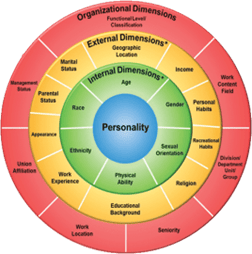
Gardenswartz & Rowe, Diverse Teams at Work (2nd Edition, SHRM, 2003). Internal Dimensions and External Dimensions are adapted from Marilyn Loden and Judy Rosener, Workforce America! (Business One Irwin, 1991).
Steps that can be taken to increase the number of female coaches and practitioners
I want to bring to the table something that has happen to me, when applying to a job or even when I had to hire people while working at an NBA franchise. To cite Chris Hirst again, ‘diversity is an undoubtedly desirable outcome, but when considering any individual hire or promotion, you have a duty, even moral responsibility, to hire the best possible person for the role, irrespective of who they are’. I have used almost the same exact words with my supervisor when expressing doubts about three candidates for a specific position, an argument that can be perceived as a less diverse team. On the one hand, we want the best candidate possible, and on the other hand, how are we ever going to get jobs that have been traditionally held by white males if we are never going to be given or give the first chance?! How do we know if a woman can be head coach in the NBA, or the performance director in a LaLiga team, if no one is given a chance to any women?! Of course we don’t have the experience – it’s almost impossible to obtain the experience! And the few that are sometimes afforded that opportunity face the pressure to excel, which is fair in itself, but are we being treated and evaluated as fairly as our male peers? How can we increase the number of female coaches or practitioners? Just give them the chance! And then, create an environment of fairness, and protect that environment, leaders, management, and staff. And the elephant in the room: remove those who are in the way and are the biggest barrier to change. Eliminate nostalgia from your organization. Make decisions to promote a diverse and inclusive workplace. Period.
How can teams better understand the atmosphere within teams – what data or feedback can you collect? Focus groups? One-to-ones?
I read the following in a book, and I thought ‘well, I wish my former supervisor, an apparent leadership expert, had read this sooner’. It read: ‘what you need to achieve change is for every member of your audience (AKA staff) to spend ABSOLUTELY NO TIME AT ALL thinking about how others need to change and to think only of the change they themselves will make’. I have experienced myself the huge damage that can be inflicted when people are given the opportunity to anonymously rate your colleagues. Rather than that, work to promote safe environments for having difficult conversations if needed. This enables everyone to be clear on what everybody else needs to do better.
Behavioral change happens when the individual grasps the need for them to change, and understands the benefit of that change. It is true that change is a challenge for most people; getting out of our comfort zone, the feeling of losing power or even fear of what might come, the feeling of being threatened by others’ success (huge in our sector!) – all are barriers to overcome on the path to future team success. Rather than allowing themselves to be inspired by others, some people puts barriers to new forms of thinking and behaving. If you are brave at heart, embrace the change rather than fear it. If you are able to adapt to challenging personalities, such as some players and coaches, why not be open to promoting diversity for the greater good of your team or your organization?
Lorena is one of six Leaders Performance Advisors, a group of leading performance thinkers providing more subject expertise to our member-only content and learning resources. To find out more about all our Performance Advisors, click here.

Phil Church of the Football Association discusses his greatest strengths as a leader.
It was a role the Leaders Performance Institute asked him about in a recent edition of the Leaders Performance Podcast.
“Our mission statement is probably a good place to start,” said Church, “and it’s to increase the number of English-qualified leaders, which is managers, coaches and technical directors, working at the highest levels of the game.”
We spoke at length about the FA’s suite of programmes and courses as it works towards fulfilling England Football Learning’s mission statement.
Attention then turns to Church’s strengths as a leader.
“Have you read the book Range?” he asks. The Leaders Performance Institute responds in affirmation having read David Epstein’s book in preparation for his presentation at the 2019 Leaders Sport Performance Summit in Atlanta.
Epstein makes the case for an extensive sampling period for all youngsters who play sport. To make his case he cites 18-time tennis grand slam champion Roger Federer, who played a range of sports in his youth and brought those skillsets from other sports to his game as a tennis player when he settled on a career in tennis.
“I think I’m the expert generalist,” says Church, who goes on to explain himself in greater detail.
What do you regard as your greatest strength?
PC: I think my greatest strength comes in two parts. It’s my experience throughout the last 25 years because it’s varied, and lots of people have varied experiences, so I think I know a lot of things about a lot of things. I started working in community football and I loved it; I had to work with key stakeholders, the youth offending teams. I ran an inclusion, employment and training programme for West Ham United. And that exposed me to some fantastic people, some brilliant work, and it wasn’t about football, it was about trying to help some young people get through some stuff. There was some brilliant stuff around that. I was at the PFA [Professional Footballers’ Association] as a coach developer, working for the players’ union, I’ve worked in clubs as the head of coaching and had work around the youth team and the senior game areas and now I’m leading a team at the FA. So my experience is a part of it. And then I think I have a good level of communication, so I think I can impart information and reason. I suppose communication and influence would probably be the part I’d link into that, where I think I can add impact.
What strength do you admire most in others?
PC: Resilience, I think. I use a quote quite often and I said it to my daughter a few weeks ago: ‘You’re only limited by courage, tenacity and vision’. And I believe that. There’s some brilliant people doing some amazing things and life throws lots of challenges at you and sometimes it’s hard and sometimes it’s good; and that tenacity is linked to the pitfalls you have and successes you have too – sometimes they are hard to deal with – so I think the level of resilience; some of the things that people go through, some of the stories of people who were in the Commonwealth Games or the Women’s Euros. Some of the journeys they’ve had and the way they’ve moved through those is fantastic.
What is the key to strong teamwork?
PC: Trust is at the heart of it. And ‘trust’ is just one word. But underneath the trust comes a whole layer of time, relationship-building, competence. And you get trust in different ways. You get trust from being good at something, you get trust from being consistent, behaving in certain ways all the time, you get trust from modelling good behaviour, you get trust from doing what you say you’ll do, which isn’t always as common as you might hope it would be in the world. So underneath trust, there’s so many facets that if you’ve got it, it’s strong. It’s easy to lose, and you can lose it really quickly. It takes a long time to get but it’s easy to lose quickly. But if you’ve got trust you can achieve lots of things with lots of people.
How will you look to get stronger in your role?
PC: I’m always looking to learn from other people. I am very fortunate to be able to work with and alongside lots of fantastic people from diverse backgrounds, from different lenses, with different skillsets. Partly for me it’s intentional. So I’m driven by developing high performance, developing strong cultures, by helping to develop people, and within that space it allows me to get access to some unbelievable people who are doing some fantastic things. I’ve got that passion for developing and improving and I’ve got loads of people around me who I think are magnificent. Part of it is probably the self-reflection bit. So I’m around it a lot, I see it a lot, and I’m working out how I can apply part of that to myself is probably key.
Listen to the full interview with Phil Church below:
John Portch: Twitter | LinkedIn
Listen above and subscribe today on iTunes, Spotify, Stitcher and Overcast, or your chosen podcast platform.
6 Sep 2022
ArticlesIn this recent Leaders Virtual Roundtable, Science in Sport’s James Morton leads a discussion on the question of fostering and sustaining collaboration in high performance environments.
Recommended reading
High Performance Environments – What the Research Is Telling Us
Performance Thinking: Understanding How you Learn, Unlearn and Deliver
Why Psychological Safety Paves the Way to Better Decision Making and Innovation
Framing the topic
Across this virtual roundtable conversation, we explored the ever-intriguing topic of collaboration, and in particular how to continue to foster and evolve it. Some of the key questions for exploration were around the barriers to collaboration, examples of good collaboration in practice, and where the areas of need are for impactful collaboration.
Session stimulus from James Morton, Professor of Exercise Metabolism, Liverpool John Moores University: Performance Collaboration: Winning Consistently… Together
Discussion points
Attendee takeaways
At the end of the roundtable discussions, attendees were asked to share one key reflection point or takeaway from the call that they would like to take back to their environment for further consideration:
GM Sean Marks explains that if you take care of your people they will take care of your culture.
Find those who know what it takes to win
In the early days of the Brooklyn Nets’ continuing rebuild under General Manager Sean Marks, he sought to bring in talents from organisations with a proven performance pedigree. The headliners were the likes of Kyrie Irving and Kevin Durant, but it extended to the performance staff and beyond. As Marks told an audience at 2020’s Virtual Leaders Meet: Total High Performance Summit, the Nets needed to know what it takes to win. He said: “When you bring in the likes of Kyrie and Kevin, it was a matter of sitting down with them, learning what do they want to see, how do they want to grow. What do they need and what are they looking for in a successful operation?” Both were forthcoming. “Kevin said right off the bat ‘this organisation needs to have championship characteristics in everything we do’. That is one of our tenets here that we constantly talk about to this day, whether that’s how we scout, how we conduct our reports, conduct ourselves both on and off the court; and this goes for players and staff.”
Opine and share, disagree and commit
Cultural architects come in all guises and Marks has brought together a disparate group on and off the court. “I like the fact that I’m bringing in people whether it’s from baseball or all walks of life in terms of computer programmers; a group of coaches that are coming from a variety of different backgrounds too,” he said, mindful that it is these people who continue to shape the Nets’ culture. “Multiple have been head coaches before; some haven’t, some have been in developing systems, some have been key development coaches and some of the best in the business.” Marks sets himself up as Devil’s advocate and weighs up divergent views before deciding the best course of action. Everyone can have their say but they must respect his final decision. “The worst thing you can have is people behind closed doors saying ‘I wish I was involved’ or ‘I didn’t have a say in that decision’ or ‘man, I disagree with that decision’,” Marks added. “Nobody’s allowed to disagree once we’ve already committed. Once we’ve committed we’re all in and that’s the type of environment that I’d like to be part of.
We are family
Marks understands that the Nets’ culture is continuously being reshaped by the players and staff. He described them as the team’s “No 1 priority”. Moreover, people need to be free to focus on the day job knowing that their families and loved ones are provided for and supported while they are away. Marks said: “Right from the get-go we like to make them feel like they are family – like they are in the Brooklyn Nets family.” He acknowledges how much people have sacrificed to commit to the Brooklyn rebuild. “Nothing goes awry here. We wouldn’t want them left to their own devices; it’s a big city, it can be a little daunting. Where do you find a place to live, whether it’s nurseries or restaurants; you name it, but things are catered for [to] these players and staff so they come in here and they’re able to assimilate into Brooklyn and the Nets, hopefully as seamlessly as possible.”
Strong cultures are self-selecting
When a culture’s values and norms are defined, those who cannot conform tend to take themselves out of the equation. “You can’t have a metric system to say ‘this person is bought in and this person isn’t’,” said Marks. “Honestly, if you’ve built the right culture and continue to have the right people around it weeds itself out. I know that’s strange to say but I’ve had a few people over the course of the time here just say, ‘look, you guys are moving at a pace that I can’t handle. I’d love to say that I want to own this and be part of this, there’s great things ahead, but, to be honest, I’m not cut for this – you can do better’. When people come to me and say that, terrific, there’s better things on the horizon, whether it suits their families or their livelihoods, terrific. I don’t think I always need to be the one to say ‘I don’t think that person’s bought-in’ or ‘I don’t think they’re a high riser or a high flyer’.”
Jimmy Wright, Team Biokineticist at the Natal Sharks, reflects on why sport often teaches us the wrong values.
“It’s a simple African way of saying my existence is dependent on your success – me being well is dependent on you being well,” he told the Keiser Series Podcast in August.
“I think team sports should embrace that idea because there cannot be a single standout star in a team. You’ll never see a team succeed because of a single individual. In fact, individuals will rise to the top because of great teams.”
Wright spoke at length about his 23 years working with the Sharks – he was the first biokineticist to work full-time at a South African franchise – and how his role has evolved during that time.
“There’s more evidence to support what we do but, at the same time, there’s more perspective, but certain things don’t change,” he continued. “If you chase the science, if you purely chase the literature, and you forget about experience and what has traditionally delivered the results you might just miss the diamonds.”
Here, Wright reflects on his strengths and areas for future improvement.
Jimmy, what do you consider to be your greatest strength?
JW: It’s my ability to take perspective. Perspective helps cut through the stuff that can potentially distract and perspective is what is creating the future for us. If we can see things for how they can be and we can look back from that point to the present, and if we can tell the story of what created that reality, we will have the formula for success. But you need to be able to do a bit of future travel. Perspective is important, understanding that winning is not everything, losing is not final, but to focus on getting better – growth – and take whatever the business is going to give you year on year. Perspective for me is a good thing; I think it’s more beneficial than benching one and a half times my body weight.
What strength do you admire in others?
JW: I would say it’s putting up with me! On a good day, I can be very draining – you can ask my wife – but I think it’s not in a bad way. It’s passion. Our CEO once upon a time was a player here [Eduard Coetzee], he then went away, played in France, came back, and now happens to be the CEO of the Sharks. His go-to line is that he came back to fire me! The nice thing is that we’ve always been very good friends and we still our very good friends. It’s a respectful relationship. But I think I can be challenging. I follow the advice I would have given myself when I was younger, I push hard. If I want money, so to speak, I won’t go away until I can have what I want, and if I can’t have the money, I’ll find another way. But on a good day I’m a high performance manager’s worst nightmare.
What is the key to strong teamwork?
JW: It’s ubuntu. It’s very simply an unselfish mindset. It’s counter-cultural. Sport does teach us all the wrong values, it teaches us winning at all costs. You can’t take that idea into a marriage. If you take the idea into a marriage that it’s winning at all costs, you’re going to be single very quickly. To a lesser extent teamwork has to focus on that which I will benefit from only when the team wins. Therefore, my efforts have to be solely focused on what makes the team better because if the team doesn’t win then I’m not going to win. What makes a team better? Winning fixes a lot of problems, so I will do whatever I can to make this team win but it starts with me. It cannot start with anybody else.
How will you look to get stronger in your role?
JW: To keep that perspective I mentioned, to keep myself sharp mentally and physically. Obviously, we deliver a health service and I like to practise what I preach and I like to be respected. I’ll keep pushing myself physically and mentally, I will keep on valuing good relationships. If I can keep on doing that then when I eventually depart I will have made a difference. That’s the important thing: to say that when we leave we’ve done our best, the place is better than when I arrived, then I’ll be happy.
To hear more from Jimmy Wright, listen below:
Listen above and subscribe today on iTunes, Spotify, Stitcher and Overcast, or your chosen podcast platform.

![]()
One of the primary motivations for this Performance Special Report, which is brought to you by our Main Partners Keiser, is to address the issues that affect female individuals within high performance sport, because they have been neglected for far too long. There are numerous issues – far too many to address in this report – but the Leaders content team took it upon themselves to shine a light on some of the admirable work being done for female athletes and coaches across the globe.
Complete this form to access your free copy of this Special Report, to discover the untapped potential that lies across girls’ and women’s sport, from the grassroots through to the elite level, and the individuals working to unlock that potential.

17 Aug 2022
ArticlesBrighton Manager Hope Powell discusses her ‘person-first’ approach to player development and the role of her multidisciplinary team.
“This is no disrespect to players, but they want to get there yesterday,” says the Manager of Women’s Super League [WSL] side Brighton & Hove Albion.
“I am always telling them it’s a long process, a marathon not a sprint, and you’re not going to go from one to ten in five minutes. They’re so used to getting everything now.”
She readily admits that after 15 years as Manager of the England women’s senior team, it has been a challenge for her at Brighton, where she was appointed in 2017. There is also considerable player turnover in the women’s game each off-season, which necessitates the development of in-house talent for all WSL sides.
“You have to move with the times, you have to stay current and fresh, you have to understand Generation Z,” Powell continues. “Club football is new to me. I know after five years in a club environment it seems long but it’s very new.” In her previous post, she would see players during national camps and international competitions. As a club manager, she sees them almost every day of the season. “That has been an eye-opener in the last five years and it’s made me look at myself as a manager and how I perform on a daily basis.”
That said, Powell admits her remit as Manager with England was not too dissimilar. “I’m responsible for the pathway of women’s football at Brighton and I did exactly the same with the FA [Football Association] and I really enjoy working with young players on the development side; working with different coaches and different teams.”
Powell, who previously spoke to the Leaders Performance Institute of her strengths as a coach and the leadership traits she most admires, here reflects on Brighton’s role in developing talent and ensuring players are prepared for the transitions they face.
Adapting to the players’ needs
Powell sees part of her role as a guide. She says: “Young players want it ‘now’ and obviously I don’t have all the answers – my job is to guide them to problem-solve.” Inevitably, her squad is made up of youthful talents seeking to make their mark in the sport and seasoned campaigners some of whom, in their early to mid-30s, are coming to the end of their playing careers.
“I have to adapt to their needs, their expectations, based on where they are in their career,” she continues, adding that players of all ages and experiences will ask why they may not be playing but that she will typically have more of those conversations with younger players. “The young players will say ‘I want to play’ and I’ll say ‘you’re not ready’.”
She describes an exercise in managing expectations. “Every young player thinks that they are good enough to play. They are good enough to play in terms of their talent, but I wonder if they don’t appreciate the demands at the highest level. Playing 90 minutes week-in and week-out is a challenge for any player. The on-pitch, the football bit, they just want to play, which is great. It’s more about the off-pitch considerations. The mental and physical demands of the game.”
Powell is aided in her efforts to support these transitions by her multidisciplinary team. “Their role is really important,” she says, “working with individuals and having conversations. We do a lot of one-to-ones with players, they will talk to our psychologist. We do a lot of analysis and we ask players to self-analyse and discuss their games. What they think they’re doing well, what they don’t think they are doing well, and just try to pull it all together.”
Often she will illustrate her points in a literal sense. “I’m very much drawing diagrams. ‘You’re here at the moment, now you’re in the middle bit of this development, you’re still developing, and we know at some point you will get to the point where you can excel and execute a task on a football pitch.’ I’m forever drawing pictures so that they can visualise what it is I’m trying to say; and I find myself having to do that, in a nice way, with some of the younger players because they’re good enough but not ready. That’s when the multidisciplinary team come into it as well.”
Formulations
Powell explains that her multidisciplinary team is led by her psychologist and clinical team. “We have – and this word is new to me – ‘formulations’,” she says, explaining that it is the multidisciplinary team that leads what is a player-focused process.
“We discuss the player from an on-pitch point of view. How they’re doing technically, tactically; are they playing well, are they in the team, are they not in the team – and the issues start coming when they’re not in the team or they’re young players.
“Psychologically, what’s the impact of that on the young player and how can we support them? Physically, where are they? They probably wouldn’t be able to last the 90 minutes; how can we support them physically to become better? It might be additional programmes for that player; it might be that they go and have one-to-one sessions with the psychologist and it might be that we sit down and do individual clips with that player.
“It’s very much engaging the multidisciplinary team from the outset, go through every player, have those formulations. They will meet every player, the player will meet every member of the multidisciplinary team, and then we just have conversations around the players all the time.”
‘You are not just a footballer’
Powell places considerable emphasis on her duty of care towards players. “I think that’s really important as their career can be over in a flash,” she says.
The club will provide player care from its academy through to the first-team and help players to find education and development opportunities. “We work to identify what their interests are, where we can help them, and sometimes we are able to help fund those opportunities.”
It is often a different conversation depending on the player and the stage of their career. Powell continues: “Most older players have got their path but it’s the younger players coming through who see the world of women’s football as it is now. They think: ‘wow, I can earn a good living here and I just want to be a footballer’. The older players have always done something else. The transition for the older players is probably OK but we still support them where we can. If they want to do education courses, like some of our players are doing a Masters, a degree, I’ll give them the time off to study if they need it, or to go to the university, whatever it is they need we will support them through that.
“The younger players coming through, I don’t let them get away with ‘just’ being a footballer – you can’t have it. You have to do something else and then we try to find out what they like, how we can support them and get them on courses, even if they’re short courses, because your career could be over in a day. You get a bad injury and then that’s it, your career is over. But young players don’t think about that at all.”
Powell’s concern for her players is obvious and she is bemused about her reputation as “a little scary”, as she puts it. “I have quite a nice relationship with the players, but they don’t want to be seen as ‘teacher’s pet’ sometimes. It makes me laugh,” she says. “They can be quite emotional in our one-to-ones, and I care about the person. Before the football, it’s the person for me – football is absolutely second.”
Jarrad Butler of Connacht Rugby and Rory Sloane of the Adelaide Crows describe the main dynamics at their respective clubs.
The club, which draws its five-player leadership group from a list of 45 decided to give youth a chance in 2020.
“Couple of guys who have been part of the leadership group over the previous four years stepped aside to let some of these young kids develop,” said Sloane.
Adelaide finished bottom of the AFL ladder in 2020 – a fact that left Sloane, as captain, “stung” – and decided to turn to youth to renew their fortunes. In this context, it made sense to empower some of the younger players on the list.
“We’ve still got a lot of leaders without titles,” he continued, “But yeah, five official leaders.”
Sloane is joined onstage by Jarrad Butler, the captain of Connacht Rugby, where their eight-strong leadership group takes responsibility for driving standards and behaviours. Together, they explore the creation of leadership groups at Adelaide and Connacht and the main dynamics involved.
Democracy
Leadership groups tend to be elected by athletes from amongst their peers and neither Adelaide nor Connacht are any different. “At the start of the year there was a questionnaire on who do you think leads by example on the field, who do you think is the best communicator, the guy that holds the most people to account,” said Butler of the process that saw Connacht’s eight-person group appointed for the 2020-2021 season. “We kind of ticked boxes that we thought [represented] values that we wanted to have as a group, as a team, who do you think best kind of ticks that box. And we tried to put a group together that then covers a whole lot of those bases, so we didn’t want just a whole bunch of guys that are all maybe very good at the same areas, so that was important.”
Regular meetings
“What we’ve been trying to do is catch up at least once a fortnight just to get on the same,” said Butler. “I think where we fell short, especially when the seasons for us dragged on, you kind of get caught just going through the motions a little bit and you forget to catch up. “We’ve have a meeting where we all get together and these guys aren’t really on the same page, and you’re seeing that come out in the performances as well and you’re like, well we haven’t got together in four weeks [so] no wonder we’re not on the same page at the moment. So we found one of the first challenges I guess was being diligent and actually catching up with each other, and again it’s one of those things where Andy Friend, our head coach, he was like ‘well it’s up to guys if you want to get together, we’re not going to chuck something in your diaries for you – either you do it or you don’t,’ and we learnt early that if you’re not going to do, then everything else starts slipping by the wayside as well.”
Learning dynamics
Butler explained that leadership groups also have a vital role in ensuring learning and development of understanding because there are times when a coach’s impact can be limited. “It’s one of those things where you’re in a meeting and you’re getting – you know, the defence coach comes up, the head coach, and they’re showing clips and clips and clips – it’s easy for things to get watered down,” said Butler, who discussed the balance of challenge and support with Sloane in more depth here. “For the main session, we [often] get one of the players, usually one of the leaders, early on they would do the review of the session, and they would come up with the clips. This year, it’s been a little harder to have these meetings with Covid, but still, coming up with clips and sending them out because we’ve found that when you’re getting told by your peers, when they’re highlighting something I think it holds more weight than when you’re getting it from a coach for whatever reason.”
Spread the load
Butler also makes the point that their duties extend beyond performance or rugby and it is important that the playing group does not allow a mere handful of individuals manage tasks for the group. “I think the main thing is that we all took on something that wasn’t rugby-related,” he said, “so it wasn’t falling on the same guys. So one guy would link up with the team manager on if there was any issue around travel or things like that, someone else would link up with the kitman, if there were any issues; and it would just mean that we haven’t had the same conversations with a whole bunch of people unnecessarily. So it helped kind of disperse that load as well, so it wasn’t falling on the same blokes. Because imagine, you know, there’s all those guys that are happy to do everything if you ask them to, but it’s not fair to them as well. So it’s all about lightening the load.”
