Haas F1 Team Principal Ayao Komatsu manages pressure and expectations at his team with a blend of challenge and support.
Not that he watches it, as he told the audience at the 2025 Leaders Sport Performance Summit.
“When I’m doing my job, if I even for a moment think about what I say or how I behave or how I’m perceived by a TV audience, then I can’t do that job,” said the Team Principal of the Haas Formula One team.
Those inhibitions, he explained, “could be the difference between me making the right decision or not” during a race.
Not that Komatsu is unaware of the influence he has as a leader. Google his name and the images that spring up tend to depict him holding a microphone at a press conference or media engagement. In that sense, Komatsu’s onstage appearance in London – just days after November’s Brazilian Grand Prix and a 12-hour flight – is no different.
“When you’re doing a media session that is an opportunity for us to tell our story, who we are,” he added.
Who they are is Formula One’s smallest team, both in terms of staff size, budget and infrastructure, but with a hard-earned reputation for punching above their weight under Komatsu’s stewardship.
In the year prior to his elevation, Haas finished tenth out of ten, which was in keeping with their size but below the expectations of team owner Gene Haas.
Komatsu, who previously served as Haas’ Chief Race Engineer, took the reins from Gunther Steiner ahead of the 2024 World Championship and led the team to seventh in the Constructors’ Standings; in 2025, they finished eighth.
He puts it down to an organisational structure that “promotes and forces communication and helps people to get to know each other”. “If we cannot work together, we’re not supporting each other, if we’re not aligned, we’ve got zero chance against organisations that are a minimum three times, sometimes four times larger”.
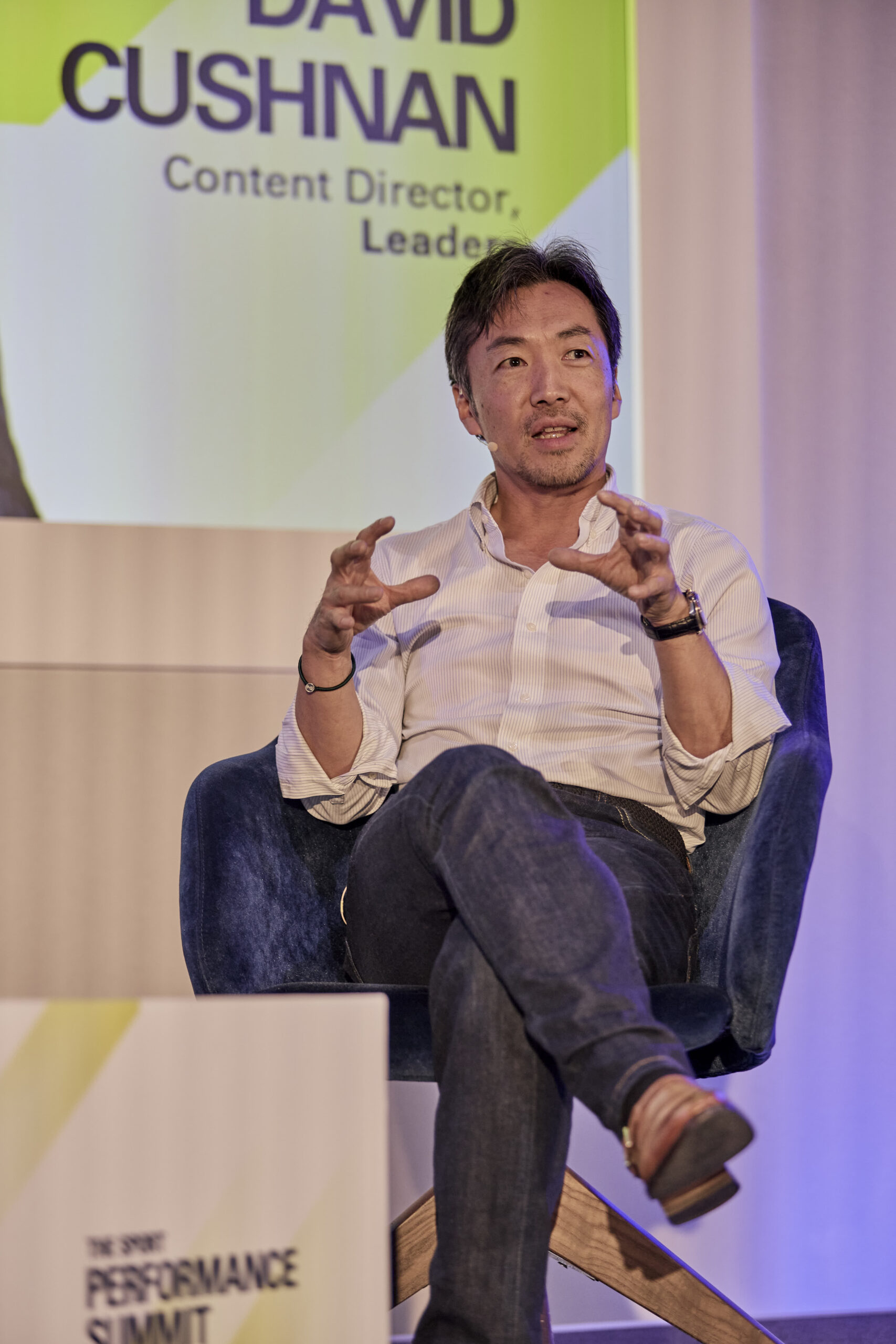
Ayao Komatsu onstage at the 2025 Leaders Sport Performance Summit at the Kia Oval in London.
Over the course of 35 minutes, Komatsu set out what it takes to manage the pressure and expectations of building on Haas’ successes while keeping in touch with Formula One’s leading lights.
Komatsu understands that you can’t chase results under pressure
Chronic pressure eventually leads to diminished performance. Komatsu found this out to his cost at the 2025 British Grand Prix at Silverstone.
“My mindset approaching the race was completely wrong,” he said. “I was really trying to force the result because I knew we should be scoring lots of points.”
Haas had spent considerable time and resource developing their car prior to Silverstone and knew that their drivers, Oliver Bearman and Esteban Ocon, could claim high finishes. Instead, the duo collided on the 43rd lap and finished pointless.
“What happened was really instead of letting the race come to you, doing your best, focusing on yourself, you are just focused on the result.”
It was a rare misstep for a leader who tries to give his staff “breathing space” and “a chance to think more about what they do rather than chasing it, because that’s not sustainable”.
Nevertheless, he pushes people out of their comfort zone each day
Komatsu said: “Our people are not afraid of failure. If you’re afraid of failure, nobody’s going to move.”
The right balance of challenge and support can enhance both focus and motivation.
“You’ve got to give people a clear message that, ‘come on, you’ve got to take yourself out of your comfort zone every day’,” he added. This is Komatsu’s non-negotiable. “If you haven’t taken yourself out of your comfort zone once a day, actually, I don’t think you’ve done your job.”
Komatsu encourages calculated risks that build confidence
Whenever crisis strikes, Komatsu has a well-planned contingency to relieve collective stress.
One such occasion was at the first race of the 2025 season, in Melbourne, where the Haas cars just “did not function”. Ocon qualified in last position, while Bearman could not even set a qualifying time and was required to start the race from the pit lane.
“That was a really testing time,” said Komatsu. But the team had discussed this very possibility for the past four months. They knew the car would either fly, flop or achieve something in between. In the event, the car flopped.
Their response to that race weekend was governed by the new car regulations coming in for the 2026 season. Most teams began to focus on their 2026 cars not long after Melbourne. Haas, with their comparatively modest resources, had no choice but to develop their 2025 car further because, as Komatsu said, “one place in the Constructors’ Championship is worth millions”. “So to make next year’s budget work, with brand new regulations, you’ve got to keep spending money to develop the car.”
He is proud of what happened next. “We just got on with it,” he continued. “I gave the team a clear objective; what is not acceptable, what we need to achieve. I didn’t tell them how. I listened to them and they came up with the solution and took the risk.”
While the true outcome “will only be known in January or February”, the 2025 car did improve and so did the team’s standing.
“For me, more than that sporting result, more than the lap time we gained, the important thing is the confidence this gives the people of the organisation; it’s priceless.”
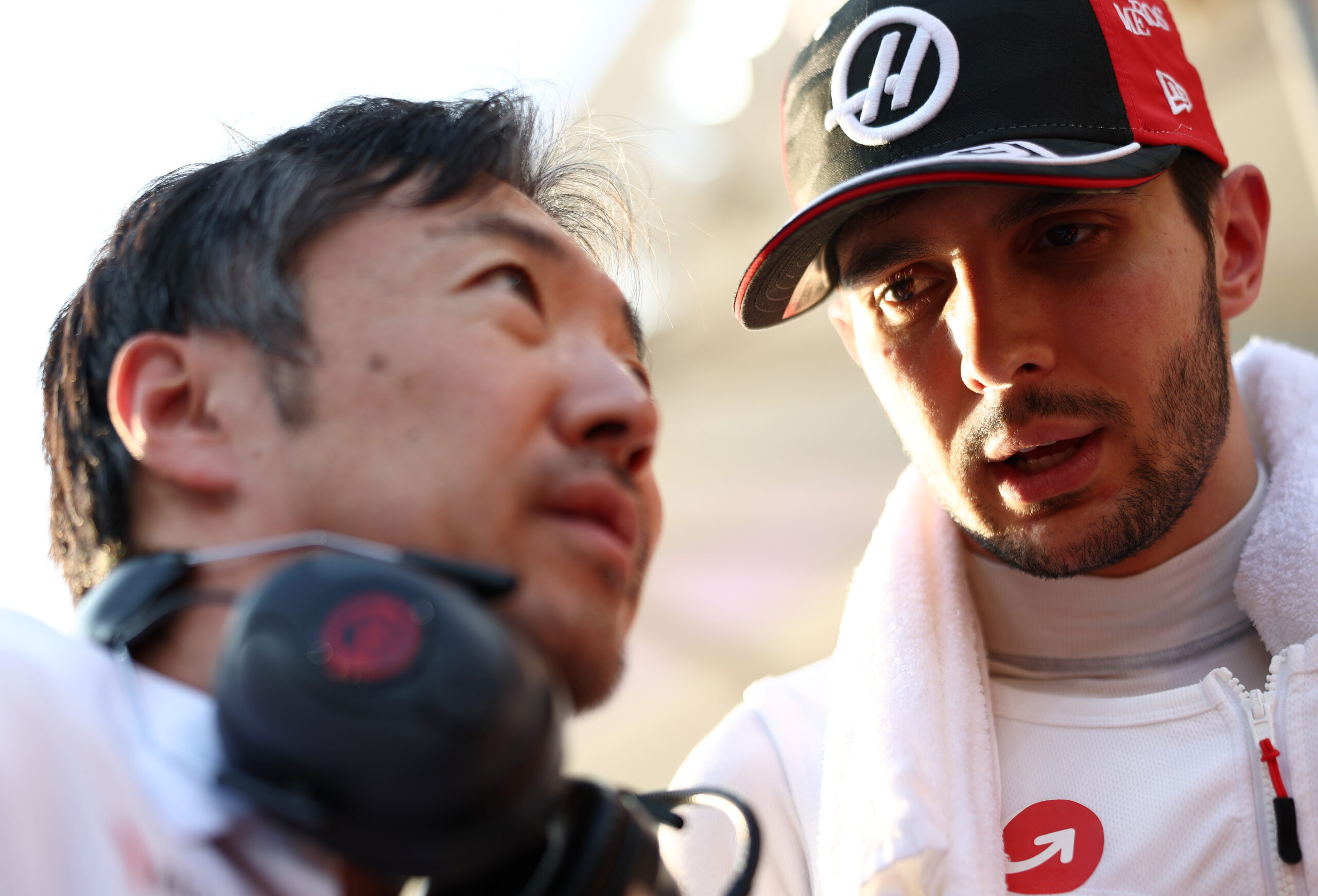
Ayao Komatsu and Esteban Ocon talk on the grid prior to the F1 Grand Prix of Abu Dhabi at Yas Marina Circuit in December 2025.
He has also cultivated a ‘no blame’ culture
In removing the fear, providing breathing space, and giving people latitude to solve their own problems, Komatsu has cultivated a ‘no blame’ culture.
He took public responsibility for the collision at Silverstone but later spoke to Bearman and Econ about what went wrong. He let them air their grievances and decide the future rules of engagement when their cars are in close proximity mid-race.
“I said, ‘look, until the next race, we’ve got two weeks. Take your time, you put everything on the table and, by next week, can you come to an agreement? If you don’t come to an agreement, I’ll tell you what we need to do’,” said Komatsu while fully aware that neither driver wants to be told what to do by anyone else.
“The important thing here is that full transparency,” he added. “I don’t have any other agenda than wanting both of you to perform; the team to perform. I’m not biased towards one driver or the other, but then again, sometimes I have to make a decision that will disadvantage one of the drivers, but as long as this guy knows that I was making that decision purely based on the interest of the team, as long as you’ve got that respect and transparency, it’s fine.”
When Ocon signed with Haas ahead of the 2025 season, some external observers harboured reservations due to his supposedly difficult character. Komatsu, having worked with Ocon for more than a year, is having none of that.
“I knew that it’s got a lot to do with the respect between the team and the driver, transparency, and then providing that safe space. I was very confident that we could provide that environment.”
What to read next
In a world where they don’t know ‘what it takes to win’, Fran Longstaff and More Than Equal are ‘building the road as they walk’.
Fran Longstaff, the Head of Research at More Than Equal, reminds the audience at April’s Leaders Meet: The Talent Journey that no woman has competed in a Formula 1 race since the Italian Lella Lombardi in 1976.
This is despite motorsport being one of the few mixed gender sporting domains where men and women can compete on equal footing.
“Our research rates show that females make up ten per cent of participation rates in motorsport,” adds Longstaff. “That goes down to four per cent at the elite level.”
More Than Equal’s mission is certainly bold. The organisation was founded in 2022 by former F1 driver David Coulthard and philanthropist Karel Komárek. The pair recognised that even the most accomplished young female drivers are behind on the development curve compared to their male peers.
Longstaff was drafted in to better “understand the problem behind the problem”. “Research and data runs through our Driver Development Programme like a stick of rock,” she tells the audience at the Royal College of Music. This approach is critical when the end point is still unknown.
The programme itself is divided into four pillars:
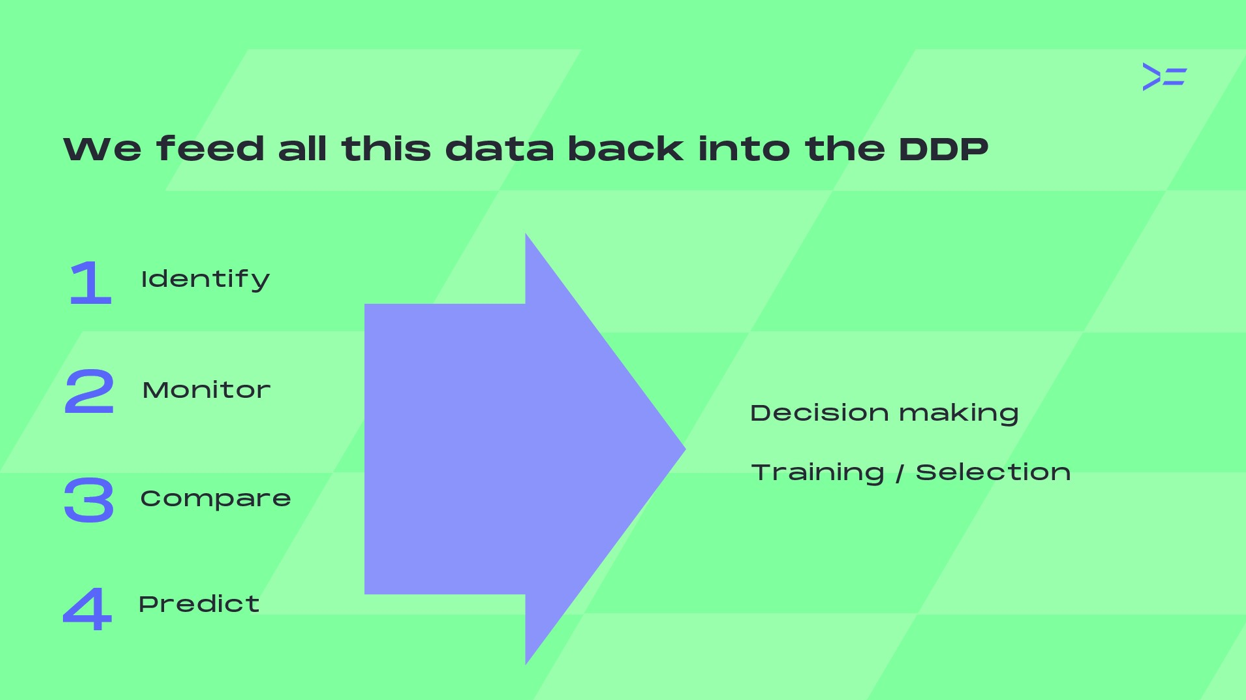
Their search began in karting. They trawled through the race results in a sport where it is notoriously hard for girls to take the next leap.
“That sounds like an easy task but karting race results are often stored as PDFs,” says Longstaff. “It is objectively the worst way to store data.” They also had to gender mark race results, which took time.
Additionally, more than 500 young female kart drivers heeded More Than Equal’s call to apply for their Driver Development Programme. The drivers with the most potential were invited to follow-up interviews, which extended to parents and families. “That way we could understand what activity they’d already done to enable them to get the results we were seeing on the track. This is where you could have some interesting conversations and even say the driver was over-performing their level of activity in that sport.”
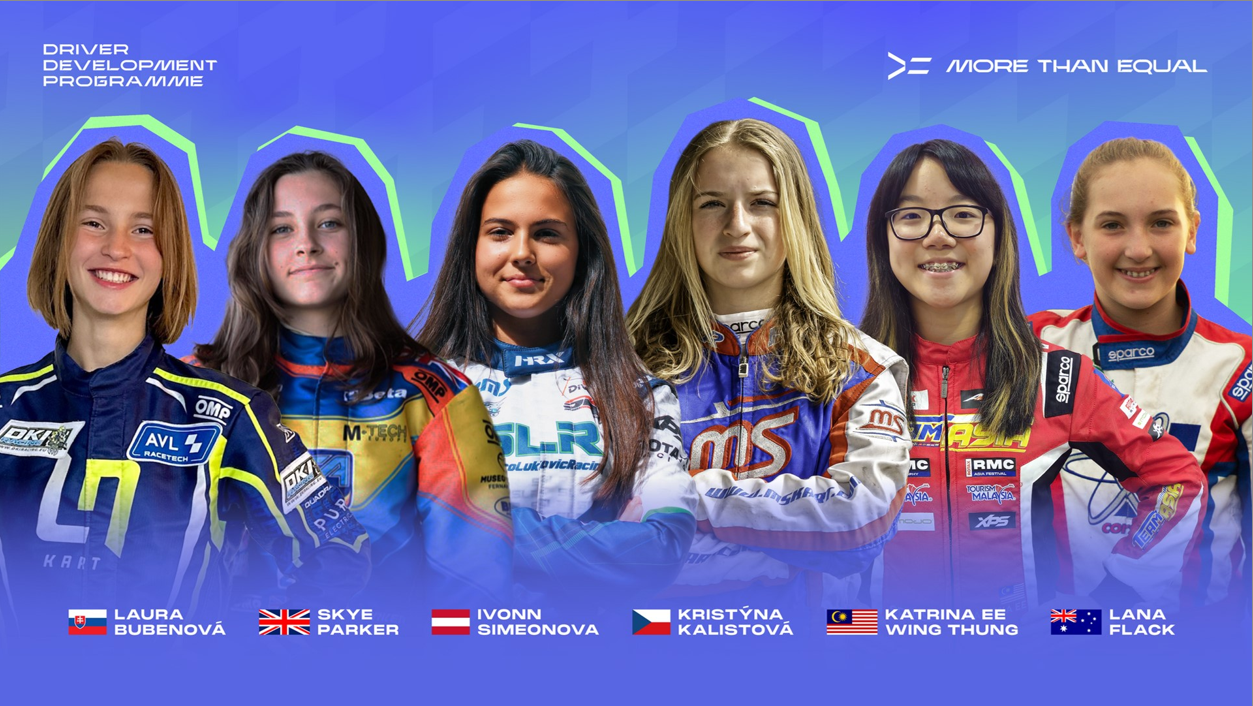
Six drivers, all aged 13-14 years old at the time, made it into More Than Equal’s first cohort:
To understand the problem behind the problem, More Than Equal, produced its Inside Track report in 2023:
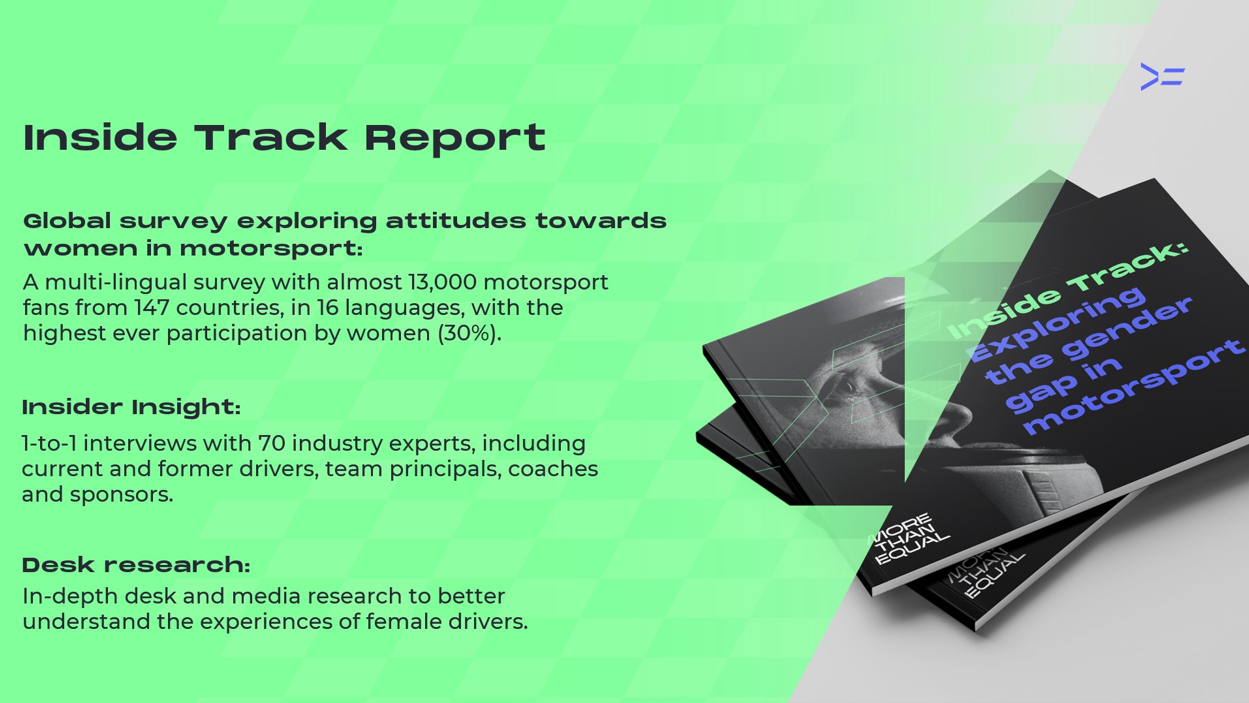
“There were fewer than 30 research papers on the human factors related to driver performance,” says Longstaff, who explains that they are “building the road as we walk”. Data is even more scant when it comes to female drivers or their experience behind the wheel. “We’re looking at how we can optimise and adjust cars to ensure that females can perform at their best without being hindered.” Longstaff underlines that this will not come at the cost of performance decrements to the car.
Additionally, the Driver Development Programme takes a 360 approach, taking in the physiological, psychological and technical elements of racing in an effort to better address the difficulties young girls face in karting. “We want to make that transition as seamless as possible,” says Longstaff.
There are regular coaching contact points. “We have camps every six to eight weeks where we come together as a community.” The girls recently had the opportunity to spend time with Coulthard at the Red Bull Ring in Austria. “They asked a lot of questions about his experiences and could really start to understand what it is to be an elite racing driver.”
Longstaff also explained that More Than Equal’s research is freely shared with F1 teams, which is a break with the usual secrecy that governs their interactions.
Benchmarks simply don’t exist for female F1 drivers. “We don’t know what a racing car driver should be doing and look like at 16 versus 18,” says Longstaff.
More Than Equal has commissioned two PhD students at Manchester Metropolitan University to help establish those benchmarks. “One student is going to be building physiological, psychological, cognitive training and anthropometric profiles from drivers all the way from karting to F1.”
The research into male and female differences will kick all tired and unfounded assumptions about female drivers into the long grass.
The other PhD student will research how hormones impact performance, particularly when it comes to cognitive function.
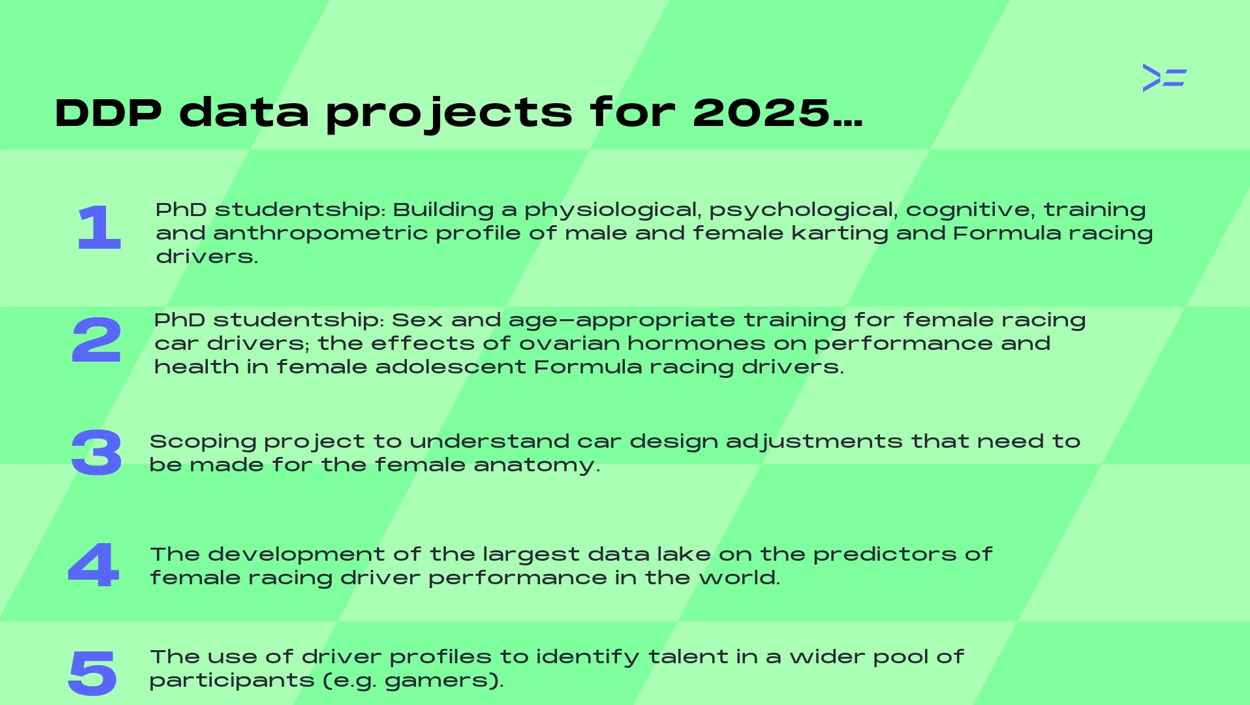
This work will help More Than Equal to build was Longstaff calls “the largest data lake on the planet on the predictors of female racing driver performance”. She adds: “All of those PDF race results get pulled into one central pool and we start to overlay that with the physiological, cognitive and psychological data. Once you have that, you can start to make predictions and we can understand who may have a greater chance of success at the next level of competition.”
It will also help to widen the talent net. “Once we have these driver profiles, we may be able to start to understand whether there are certain populations where we can spot talent.” Longstaff suggests the world of esports. “It’s a 50-50 split in terms of male-female players, so there’s a huge population we might be able to pull from.”
On top of that, digital twinning technology has the potential to enable teams to optimise how they adjust cars to the needs of their drivers with recourse to expensive testing. “You don’t necessarily need to be on the track,” says Longstaff, “but we can only do that by having all those data points in one system.”
What to read next
‘Some Skills of Adaptive Leadership Are Obvious, But That Doesn’t Make them Easier to Learn’
The Formula One team are make better, more data-informed decisions around race strategy.

Suddenly, the graph line began a rapid descent, so unexpectedly that Green, McLaren’s Head of Commercial Technology, quipped, “Oh, this doesn’t look good. We must have broken something.”
A colleague, however, assured him otherwise. The algorithm was predicting rain, which would cool the track. Though Green saw blue skies and sunshine, he shared the intel with folks in the hospitality area, who grabbed precautionary umbrellas.
“Sure enough, 20 minutes later, it started raining, and the clouds rolled in,” Green says. “That just made me smile, thinking that this is quite powerful that the race team that’s down there is using this information.”
This graph was the product of a new artificial intelligence model built and maintained by DataRobot, McLaren’s new partner this season. DataRobot has helped cull data and refine the AI models to make better predictions, even accounting for such details as how the hillier train in Monaco affects cloud movements compared to the flat Miami course. The rain in Miami cooled the track enough that F1 cars could make a few extra laps on their tires.
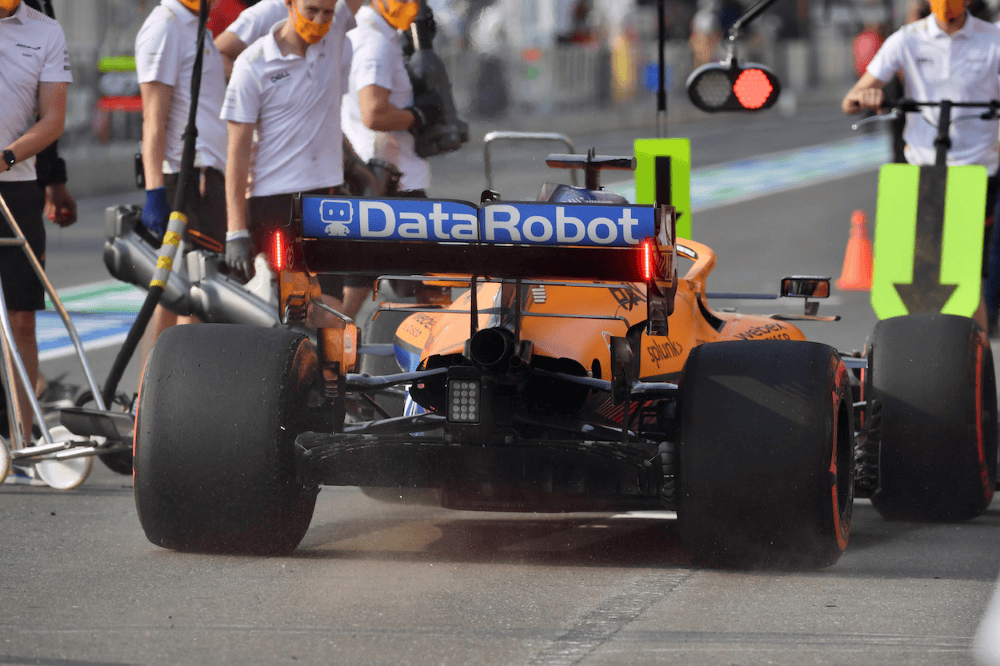
DataRobot is integrated into the McLaren Racing infrastructure, delivering AI-powered predictions and insights.
“It sounds a little pedantic, but it’s one of the most extremely important aspects that you could do for the race strategy team,” says DataRobot’s AI evangelist, Ari Kaplan. “So that was one of the successes is being able to better predict the actual air temperature, as well as the track temperature, more precisely than they could before.”
An F1 car is outfitted with 300 sensors, many of which sample data at different rates. The fuel flow sensor measures 2,200 times per second. Collectively, they produce tens of thousands of data points per second—and that doesn’t include any of the myriad of external sources—to be reviewed by the on-site team, which is in France this weekend, and the engineers at Mission Control, the nickname for McLaren’s headquarters in Woking, England.
“It’s a very data-rich sport, and we’re collecting and analyzing, truthfully, more data than we know what to do with,” Green says. While emphasizing how smart his team’s engineers are, he notes that a little more scrutiny was needed in their analysis.
“We’ve been running models and using AI for quite some time now, but like many organizations, as working on the IT team, we sort of just let people get on with it,” he adds. “And we didn’t really ask too many questions about which model they were using, how they made that choice where they were deploying it. It was really done without much supervision or much oversight.”
That’s where the DataRobot partnership, which was announced last November and includes McLaren’s F1 and IndyCar racing teams, plays a role. DataRobot maintains an AI cloud that serves a third of Fortune 50 companies.
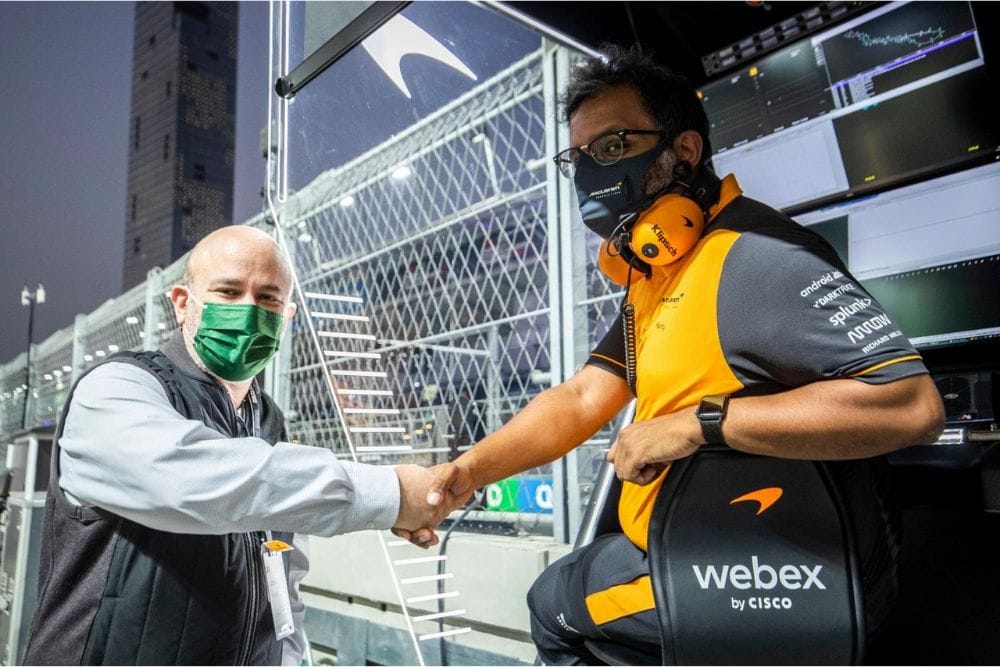
DataRobot’s Ari Kaplan (left) with Randy Singh, McLaren Racing’s Director of Strategy and Sporting.
“Anytime you have an AI opportunity,” Kaplan says, “you look at all different factors: what data is readily available? What type of insights could be given? What’s the actual value? If we get an insight, is it actionable and practical? Or is it just Trivial Pursuit and you’re getting fun data? Maybe that’s good for fans, but if it’s the race team, [they need] the things that they can take action on.”
Every area of racing strategy can be optimized in support of drivers Lando Norris and Daniel Ricciardo. McLaren’s pit times have been among the circuit’s fastest this season, with Norris making the fast pit stop in the field at Italy’s Emilia Romagna Grand Prix, needing just 2.27 seconds to get moving again.
Kaplan, who was a pioneer in baseball analytics, describes AI’s role in helping plan the timing of those stops—based on the car’s wear and tear, fuel management and weather—and also the intricate “ballet sequence” of so many crew members simultaneously tending to the car.
“You can spend hours and weeks in the wind tunnel trying to shave hundredths of seconds off the car—and you could lose that through through a pitstop,” Green says.
The remodeled car being raced this season in F1 are optimized for creating ground effect, an aerodynamic phenomenon that generates downforce. Green describes the change as going from “how much air can we push over the car to how much air can we pull under the car.”
To help with this transition, McLaren has built a digital twin of the car. Every new part begins its life on a designer’s computer where it undergoes rigorous computational fluid dynamics (CFD) modeling. Once it meets a certain standard, Green says they use a 3D printer to construct a part at 60% scale for wind tunnel testing. Only after those tests are passed is the part physically constructed for an on-car trial. These simulations are an area where AI has helped “massively,” Green says.
But for all the proliferation of data and technology, the AI models remain complementary to the process.
“We have this concept of ‘human in the loop,’” Green says. “So it’s not letting the AI make the decision for us. It’s not letting the machine model dictate your strategy that you’re clicking along with. It’s really about giving the human in the loop the best information, the best insight possible, so they can go and execute that decision with all of the other systems and information that’s coming out from the rest of the team—be that at the track or be that back in Mission Control.”
This article was brought to you by SportTechie, a Leaders Group company. As a Leaders Performance Institute member, you are able to enjoy exclusive access to SportTechie content in the field of athletic performance.