5 Feb 2026
ArticlesIn this exclusive column, performance specialist Dr Richard Young explains that repeated high performance is driven not just by plans or systems, but by the meaning performers attach to their work.
These hold the work together and give people a sense of direction, yet across numerous Olympic cycles and my work with teams in many countries, something deeper has shown up again and again. Repeat performers live by a small set of values that give their journey meaning, and that meaning becomes the story they return to when things get hard. Plans can organise a campaign, but meaning organises the person, and when the person is organised, behaviour aligns with purpose, decisions become cleaner, and responses under pressure strengthen.
Values are not abstract. They sit under the story people tell themselves about why the work matters. When performers are clear on their values, the story they live by gains weight and coherence. Meaning forms around those values, and behaviour follows the meaning. High performance at its core is high quality communication, and that communication begins with the internal dialogue that shapes how people approach their craft, their relationships and their response to the environment around them.
I learned this early in my work with an athlete who became a repeat performer. She spoke often about why she was doing the work, not in long speeches or motivational lines, but in a simple story grounded in a few clear values she believed in. Those values shaped how she behaved each day. She arrived ready because preparation mattered to her. She trained with intent because craft mattered to her. She kept close to people who steadied her because connection mattered to her. When she spoke with her coach she spoke with ownership because responsibility mattered to her. When we reviewed performance she measured herself against her values and her story rather than emotion or expectation. Her story filtered the noise and held her attention on what she could influence, and it stayed steady right through from her hardest performances to her best performances.
This pattern has repeated across many sports, campaigns and environments. The data I collect from repeat performers compared to the rest shows a consistent thread: they carry a story that fits their values and the meaning they bring to their journey, and they speak from that story in ways that guide their behaviour. Their story gives shape to their days and coherence to their choices. It grounds their relationships and helps them navigate difficulty. They are not waiting for meaning to arrive. They are building it and living inside it.
Those who are new or underperforming also care deeply and work hard, yet often do so without a clear set of values or a meaningful story that holds the work together. When values are unclear, meaning becomes vague, and when meaning is vague, behaviour loses structure. People get pulled by changing circumstances, shifting expectations and the noise around them. They work with effort but without consistent, clear direction, which slows their progress and creates friction in the system. This is not a comment on motivation or desire. It is a matter of clarity. Values anchor meaning. Meaning anchors story. Story anchors behaviour.
The power of distributed leadership
We know that the story in high performance environments is more than narrative. It is how people make sense of the path they are on and the role they play in it, and this is where distributed leadership becomes essential. In Amplify I wrote about leadership from the front, which is not the authority of the leader but the agency of the performer. When people are clear on their values and the meaning they bring, they contribute to the collective story of the team rather than waiting for the team to give them one. This alignment accelerates the group because each person brings their own clarity into the shared environment. When people are unclear, they wait for meaning to come from the outside, and that waiting creates misalignment and slows the group when pressure rises.
Distributed leadership grows when individuals write the story they want to live, then bring that story into the environment to help shape the story of the team. It is a form of contribution. It lifts the standard of communication. It clarifies the system. It allows people to act with confidence inside their role and in service of the whole. A team of people who know their own story and the story of the team has more alignment and more collective intelligence than a team with one story and many passive recipients. The power of meaning becomes a competitive advantage when everyone is an author rather than an audience.
One experience stands out to me from a world championships preparation phase. The team had come through a long training block. Performances were mixed, and the meetings were becoming heavier as the event approached. You could sense the pressure beginning to close in. To reset the group, we asked each athlete to tell the story of their season so far, not as a performance review but as an expression of the values they were trying to live and the meaning they brought to their work. One of the younger athletes spoke first. He said his season was about learning how to prepare in the right way and becoming someone who took responsibility for his craft. His values were clear. Growth. Responsibility. Trust. His story immediately shifted the tone in the room. Others followed with similar clarity. They spoke about identity, family, commitment, team and progress. Meaning returned to the group, and with meaning came direction. The environment lifted. And the team leaders connected the individual stories and values to the ambitious story of the team was creating together; people saw themselves first, then saw a clear and inspiring connection to the team story. That shift carried through to their highest calibre performance due to their collective ability to respond and adapt under pressure. They had triggered a conviction and belief in a story they had not experienced before.
Belonging: built from a shared sense of meaning
Meaning is one of the strongest levers of behaviour. When people know the values they stand on, their story gains structure. When their story has structure, their behaviour aligns in ways that support agency, transformation and performance. When teams share a sense of meaning built from individual values and stories, belonging grows. Belonging here is not sentiment. It is foundational to team performance. It keeps the group connected when tension increases and when pressure and uncertainty lift; and helps people stay inside their ‘circle of importance’ rather than drift into the noise.
I often ask leaders and high performers a simple question: What is the story you want to be able to tell about yourself and this team or organisation at the end of this campaign, cycle or career? Their answer reveals their values, priorities and the meaning they bring to the work. It opens the door for the team to see the personal stories that sit underneath performance and the personal meanings that drive behaviour. Most importantly, it gives leaders the opportunity to connect these stories, deepen the shared meaning and align the group around something that feels true to everyone. This is where distributed leadership grows. When people speak from their own story, they lead from the front. They help shape the environment rather than wait for the environment to shape them.
The advantage of meaning follows a clear line. Values shape meaning. Meaning shapes story. Story shapes behaviour. Behaviour shapes performance. When each person knows what they value, understands the meaning behind their work and brings that meaning into the collective story of the team, the group strengthens. Performance lifts. Cohesion deepens. The system grows more resilient because leadership is no longer held by a few. It is carried by many. When people wait for meaning to come from outside, the system slows. Alignment weakens because the stories underneath the work are not visible or connected. Teams are transformed when personal meaning becomes shared meaning.
Meaning does not guarantee medals, yet it strengthens the behaviours that make medals possible. It brings clarity to decisions, alignment to relationships and consistency to daily work. It supports cleaner communication and steadier responses when pressure rises. When meaning is present, people move with intent, and when people move with intent, performance grows.
Medals matter, but meaning matters most.
Richard Young is an internationally renowned performance advisor. He has been involved with 11 Olympics as an athlete, coach, researcher, technologist, and leader working across more than 50 sports and seven countries focused on sustained high performance. He has won international gold medals and coached world champions. He founded international performance programmes including, the Technology & Innovation programmes for Great Britain and New Zealand, and a Performance Knowledge & Learning programme for the New Zealand Olympic, Winter Olympic and Paralympic teams. Across seven Olympic cycles he has researched the differences between medallists and non-medallists, their coaches, support staff, leaders and the system they are in to unlock the keys that separate them from the rest.
More from Richard Young
During a recent Leaders Virtual Roundtable, members outlined six trends that are emerging from their daily work.
Curiously, the technical and tactical elements of their work did not make the agenda. Instead, they spoke of belonging, connection and the need to put the person above the performer.
Those insights led neatly to this Leaders Virtual Roundtable where heads of performance, department leads and sports scientists gathered to discuss the theme of holistic athlete development.
First, we asked the virtual room to reflect on how athlete development plans have evolved; what has grown in prominence and where there has been the most evolution. Then we asked the table what feedback they have received from athletes on what they want to see more of in their development plans.
Together, they unearthed six trends in athlete development, which we present as they were shared during the discussion.
1. Greater athlete co-ownership of development plans
Athlete individual development plans are increasingly co-crafted by athletes themselves, as several members told us:
“Athletes want to be involved in what the plans look like, how we set them, how they engage in getting better on a daily basis. They want to be more autonomous.”
“We give our athletes a lot more ownership around their development plans. They set their own goals, which they then discuss with the coaches.”
The trick, as some members have found, is positioning these development plans within the broader team environment. A sports scientist who works with college athletes in the US said:
“It’s about getting them to think outside of themselves and go, ‘Okay, what’s our common purpose as a team?’ If we can get them to connect to that purpose as quickly as possible, we’ll progress the team culture because it’s coming from the athletes themselves.”
2. The performance disciplines are converging in athlete development
This convergence is to be expected in a world of holistic development. As one member, a sports scientist at a Premier League club, said:
“We view it as transdisciplinary, where every discipline is affecting the other disciplines. We ask ourselves how are we coming up with these programmes together rather than in separate disciplines?”
They then explained how that might look in practice:
“We want the things that the technical and tactical coaches are asking on the field to align with the athlete’s physical development work… we can be in their individual technical or tactical meetings and understand what the coaches are looking for.”
Additionally, some teams rely upon their psychologists to facilitate their increasingly transdisciplinary approaches. This is an example from Major League baseball:
“At our team, the high performance staff have benefited from incorporating our performance psychology group. They have used DISC assessments with players and staff. They shared the results between all so that there can be a mutual understanding of how each person communicates, interacts with people, learns, takes and responds to feedback.”
3. There is an increasing emphasis on mental health and mental performance
The table was unanimous on the question of mental health and mental skills. Here are some representative observations:
“Whether it’s generational or societal, across our young athletes there’s definitely more emphasis on mental wellbeing and a recognition that the world that they’re preparing for is changing all the time.”
“Most questions posed by athletes seeking help are social, emotional or mental – not technical or tactical.”
“Mental health and the importance of athlete wellbeing & engagement have really been front and centre in our high-performance training environments.”
4. There is also a growing emphasis on ‘social wellbeing’
Social wellbeing derives from the strength of an athlete’s relationships with their coaches, peers and extended friend and family circles. The support such networks provide is critical, but far from a given, as a team manager from the sailing world explained:
“How can we get them away from their sport and give them space to develop that social part and also learn from each other’s experiences as well?”
One attendee, who works with adolescent athletes in the UK, said:
“We’re working with coaches, parents, athletes, and high-performance teams to understand what social wellbeing looks like. We also surveyed our athletes on the aspects of social wellbeing that are important to them. We asked: do they have a network of positive social support that can help them find balance? Do their national teammates have shared values that they all work together to attain? Can they rely on their teammates to support them during difficult times? Are they able to maintain healthy relationships while competing as a member of the team? And do they contribute to their community in meaningful ways?”
5. Development plans increasingly go beyond performance too
This is where the holistic nature of modern athlete development models goes beyond the technical, tactical and physical, because performance issues often have causes away from the sport. The table offered a selection of responses:
“Our development model combines not just character development, but emotional intelligence, academic support, and lifestyle and mentorship alongside the athlete’s sport.”
“We must develop young athletes as people first and give them a foundation of a well-rounded identity outside of who they are as an athlete. Everything of who they are and how they see themselves in many cases to that point in their life has been tied to their athletic performance.”
These elements are not always easy to measure:
“There is a drive for increased data, quantifiable outputs, and a linked performance gain. But we keep this ground and space for what we feel is a greater, longer-term benefit through creating that community, the social connection, and so on.”
“It really comes down to the expected value of helping athletes and coaches be the best they can be; creating the best environments, creating the best team dynamics, and developing the person as a whole.”
6. More flexible programming
A little flexibility goes a long way, but it takes effort and intent, as the sailing team manager said:
“We’re looking at how we can be more supportive by offering some flexibility around our training programme, so we can support our athletes with commitments that they’ve got beyond their sport. Academic studies is a big one.”
In a recent Leaders Virtual Roundtable, Simon Eastwood of Management Futures presented a series of models and tips for leaders in sport.
As Eastwood, the Head of Leadership Skills at Management Futures, explained, the wrong word, tone, timing or even body language from a coach can trigger a negative reaction when giving an athlete feedback.
Every Leaders Performance Institute member attending this virtual roundtable has been there; and Eastwood, as host of the session, began by posing this question:
When giving feedback, what do you notice that people say or do, or that perhaps you might have said or done, that can trigger a negative response?
Members at the table raised some familiar themes, including:
Switching tack, Eastwood posed a second question:
What types of feedback help people to improve both quickly and positively?
The table suggested feedback that is:
To help the members at the table strike that balance, Eastwood introduced them to the SCARF model.
The SCARF model
This framework, devised by neuroscientist David Rock, explains five domains that influence human social behaviour and motivation. SCARF stands for:
“It’s a great tool for stepping back and assessing your team and thinking about what really makes them tick,” said Eastwood. “Crucially, it’s not about avoiding that feedback.”
He suggested that leaders should reward these needs through feedback, so people feel valued and motivated rather than threatened and, to illustrate his point, presented a table that set out what ‘threat’ and ‘reward’ may look like in each domain:

Eastwood then pivoted to his next question:
When giving positive feedback, which elements do you find most need to be reinforced?
The table responded across each domain:
Status
Certainty
Autonomy
Relatedness
Fairness
The Feedforward model
Eastwood then moved the conversation on to what leaders can do to help individuals improve future performance rather than dwell on past mistakes.
To that end, he introduced the table to executive coach Marshall Goldsmith’s Feedforward model.
While Eastwood admitted the term “can feel a little bit contrived as a title”, he feels it enables productive feedback conversations by placing the emphasis on the future:

As Eastwood explained, conversations that feedforward:
Eastwood: “It doesn’t mean that you don’t address something that needs to be changed or improved, but it just means that rather than focus on what’s not gone well, you focus on what could go well next time.”
On the SCARF model: this means reduced risk of triggering status or fairness threats by avoiding blame.
Eastwood: “Instead of spending time looking back, the idea here is: how could you hold your position next time and still maintain the athlete-coach relationship?”
On the SCARF model: this supports athlete autonomy by inviting them to co-design solutions.
Eastwood: “It feels less threatening because it offers a range of possibilities. So you’re not really addressing what they’re not doing well, it’s just what they could do in the future.”
On the SCARF model: this reduces certainty and status threats by framing feedback as future-focused and constructive.
Eastwood: “They’re possibly looking out for more and asking ‘how I can be even better?’”
On the SCARF model: this taps into status and relatedness as motivating forces.
Eastwood: “It comes across more of a coaching opportunity, and it has to develop focus, which shows care rather than telling off.”
On the SCARF model: it places an emphasis on relatedness and fairness.
Eastwood then posed a final question to the table:
The next time you give feedback, what will you do better?
Attendees provided a range of responses:
“I think I will ask my team to think about the way they would like to receive feedback as individuals.”
“Improve the speed at which we provide feedback. Do it more regularly and get to it quicker.”
“I want to encourage to speak to our coaches to think about these two models because they struggle to give good feedback to our young athletes.”
“I want to hold group feedback sessions where you present something you want to get feedback on.”
“With the athlete’s input, we can create a more individualised starting point that makes sense to them.”
To wrap things up, Eastwood suggested that attendees start making changes within seven days. He said: “They’re easy to have as a theory and they stay a theory until you actually actively use them.”
9 Oct 2025
ArticlesIn this recent virtual Learning Series roundtable, Drs David Fletcher and Danielle Adams Norenberg explain why there is now more to the role than individual counselling.
An article brought to you in partnership with

“Just this last year I’ve had many more enquiries than I have had in the last 18 years around how my experience and background can help across the institution,” he said.
Once upon a time, it was primarily athletes who requested Fletcher’s time. Today it is just as likely to be a senior coach or performance director.
“Another space is the development of a multidisciplinary team,” he continued. “There’s also a demand for support getting people from technical expertise into leadership-type roles. The other space is working at board level around systems, structures and processes.”
Fletcher co-presented the second part of a Leaders Virtual Roundtable Learning series entitled ‘How Do we Enhance the Impact of Psychology in Performance Environments?’
For all that the role of psychology in performance is expanding, there are enduring challenges.
Wider perceptions for one. “Coaches haven’t necessarily been able to spend the time to truly understand what it is that sports psychology can do,” said Dr Danielle Adams Norenberg, the Head of Psychology at the UK Sports Institute, who joined Fletcher on hosting duties.
“We are still seeing some differences in who is hired, how they’re hired, what support they’re getting.”
Over the course of an hour, the duo set out those challenges before exploring the key role that performance psychologists can play in providing improved coach education and systemic-level support.
Common challenges in sports psychology
Coaches broadly accept the ‘80:20’ idea, which posits that 20 percent of performance is psychological (even if people quibble with the exact balance). Yet relatively few organisations provide the necessary service support.
To compound matters, the psychologists themselves are often at a disadvantage due to:
While these challenges persist, perceptions are shifting. The next part of the conversation focused on the ways a psychologist can support coach development and other system-level elements.
The performance psychologist’s role in coach development
“It’s hard to separate the technical and tactical from psychological, mental decisions coaches have to make,” said a performance manager from the New Zealand system.
Fletcher corroborated this observation. “Without doubt I’ve been doing much more work with coaches than one-to-one sessions with athletes,” he said. However, he finds coach education programmes to be “extremely hit and miss” both within national governing bodies and professional environments.
“A national governing body of sport might have a pretty solid coach education to go through your level one, level two, to get out in the field. But then when you’re working at Olympic level, what support is there?”
Fletcher and Adams Norenberg then outlined the two areas where psychologists can ensure more hits than misses:
A psychologist, as Fletcher explained, can help a coach to develop their “time management skills, body language, and communication skills” in the pursuit of better performance.
By the same token, psychologists have been instrumental in facilitating a shift from deficit-based to strengths-based coaching. Adams Norenberg said: “Even if planted within a very generic training session, athletes have the self-awareness, knowledge and autonomy to make the most out of their training session by focusing on developing their strengths.”
Psychology is another string in a coach’s bow. If they understand the types of pressures that athletes experience they can “choose a particular training session to not necessarily develop technique or tactical skills, but psychology skills.” She cited the example of the VR headsets used in training by Team Europe ahead of the 2025 Ryder Cup. Some players simulated the spectator abuse they would endure at Bethpage Black; others used it not for pressure training but relaxation, such as the Norwegian Viktor Hovland, who recreated the fjords of his homeland.
A performance psychologist can also help to ensure your actions match your words
Adams Norenberg refers to individual psychology work (in the absence of a wider remit) as little more than “icing the collapsing cake”.
It is unnecessarily limiting, as Fletcher illustrated using this common scenario. “If you’re hired as a sports psyche to do lots of athlete one-to-one work, the athlete leaves the room or steps off the track after a training session that’s been supported by a performance psychologist only for some organisational communication to come out that takes away all of that work.”
The solution lies in “working with our leaders to try and help them see that psychology can support them in the alignment of decisions to values and can help them communicate those decisions in ways that that land in a way with athletes that they see and value the support”.
Performance psychology v clinical psychology
There has been a trend towards pathologising psychological issues, which causes clinical psychologists to misunderstand the day to day work of performance counterparts.
With this issue in mind, Adams Norenberg recently hosted a forum for the clinical psychologists in the UKSI’s referral network outlining what performance psychologists do. “I have worked more with the network to try and build up a better relationship and understanding of what the sports psychologist’s roles and skillset is.”
What to read next
‘Sports Psychologists Cannot Just Sit and Wait for Work to Come in the Door’
2 Oct 2025
ArticlesFemale athletes, Artificial Intelligence, adaptive leadership and psychology were all on the agenda in September.
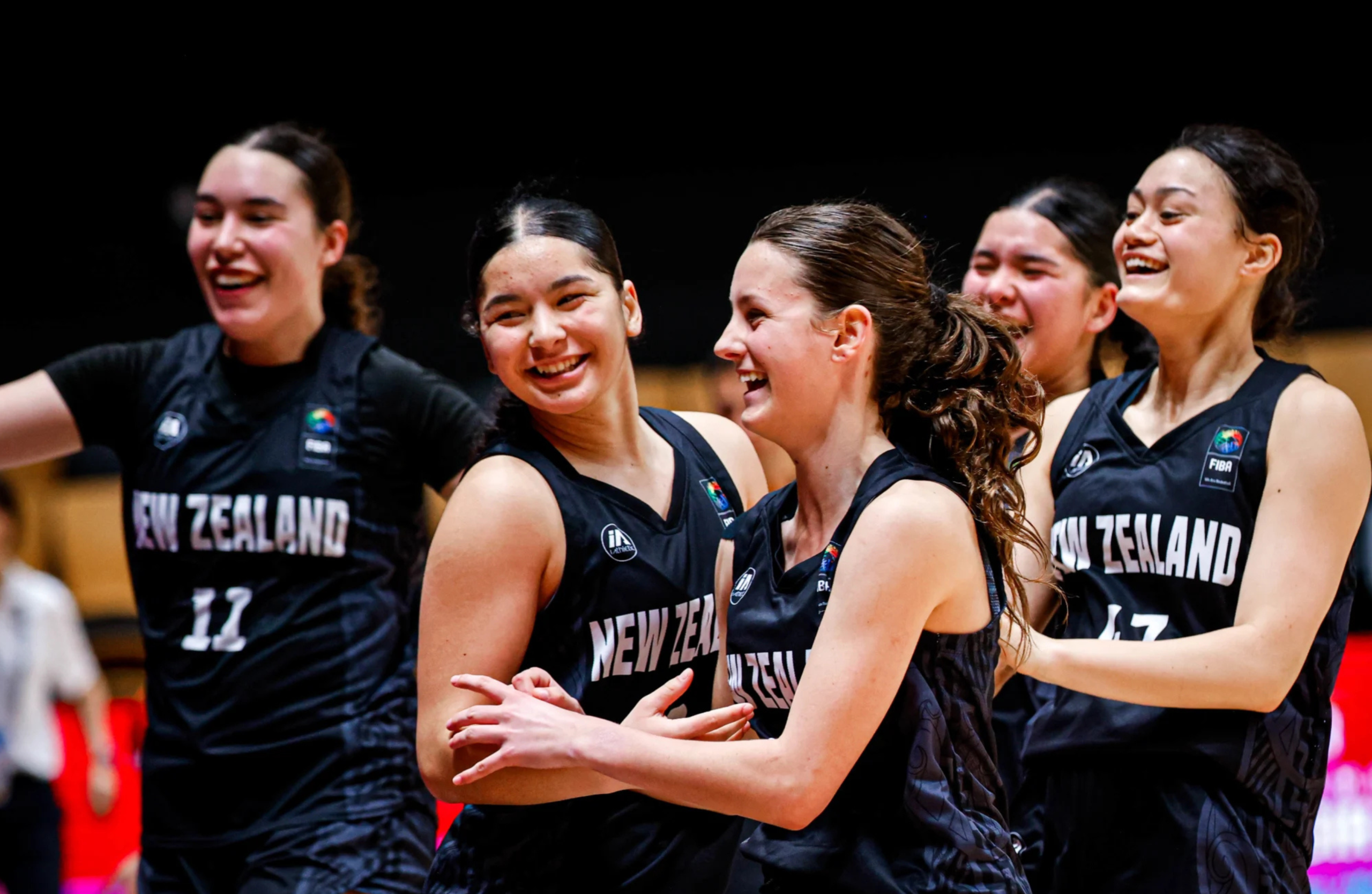
“Most of my career has been in the men’s game,” he said in the aftermath. “It was the only reference I ever had. To get the opportunity to coach these girls you have got to observe and listen and find ways to make them tick.”
The bonds they have forged during his two-year tenure will last a lifetime. “To be associated with these girls, they are driven, they have changed my life, changed the way I think as well. All of those sorts of things are added bonuses. A trophy is one thing, a medal is another thing but actually the quality of the people you work with is the ultimate.”
Mitchell’s sentiments were reflected across several of the conversations we hosted for members of the Leaders Performance Institute in September, from coaching female athletes to a coach’s ability to adapt to their changing environment.
Here are some of the choicest cuts.
Performance anxiety or body anxiety?
Last month, we shone light on Rachel Vickery’s appearance onstage at the Women’s Sport Breakfast at our Sport Performance Summit in Philadelphia. Vickery, a high-performance specialist and former artistic gymnast, recounted a recurring issue from her time working as a physio. Young female athletes would occasionally be sent to her with what was assumed to be exercise-induced asthma. It turned out their breathing difficulties were often anxiety-induced.
“You could see the look of relief on their faces when I started talking about body image, self-esteem and self-worth,” she continued. “So I started a seminar series in 2008 for female athletes and their parents called Growing Up in Lycra around body image identity.”
The seminars were picked up by Swimming Queensland. “I project managed the transformation of these seminars into an education DVD resource that was sent to all female athletes, parents and coaches State-wide.” It was later turned into a national resource by Swimming Australia. “We got some former Olympians involved and that resource went to all of our female athletes, their coaches and their parents. That resource is still used today.”
The role of AI in learning
Vickery was back at the helm for a Leaders Virtual Roundtable discussing how Leaders Performance Institute members can make learning more effective within their teams.
AI was high on the agenda. “AI should be used to support the growth and creativity of staff as opposed to being used for shortcuts where people become lazy,” said one coach developer.
Overreliance on AI, as this coach pointed out above, can stifle creativity. The table also suggested a series of shortcomings in current generations of AI:
The table then highlighted some potential solutions:
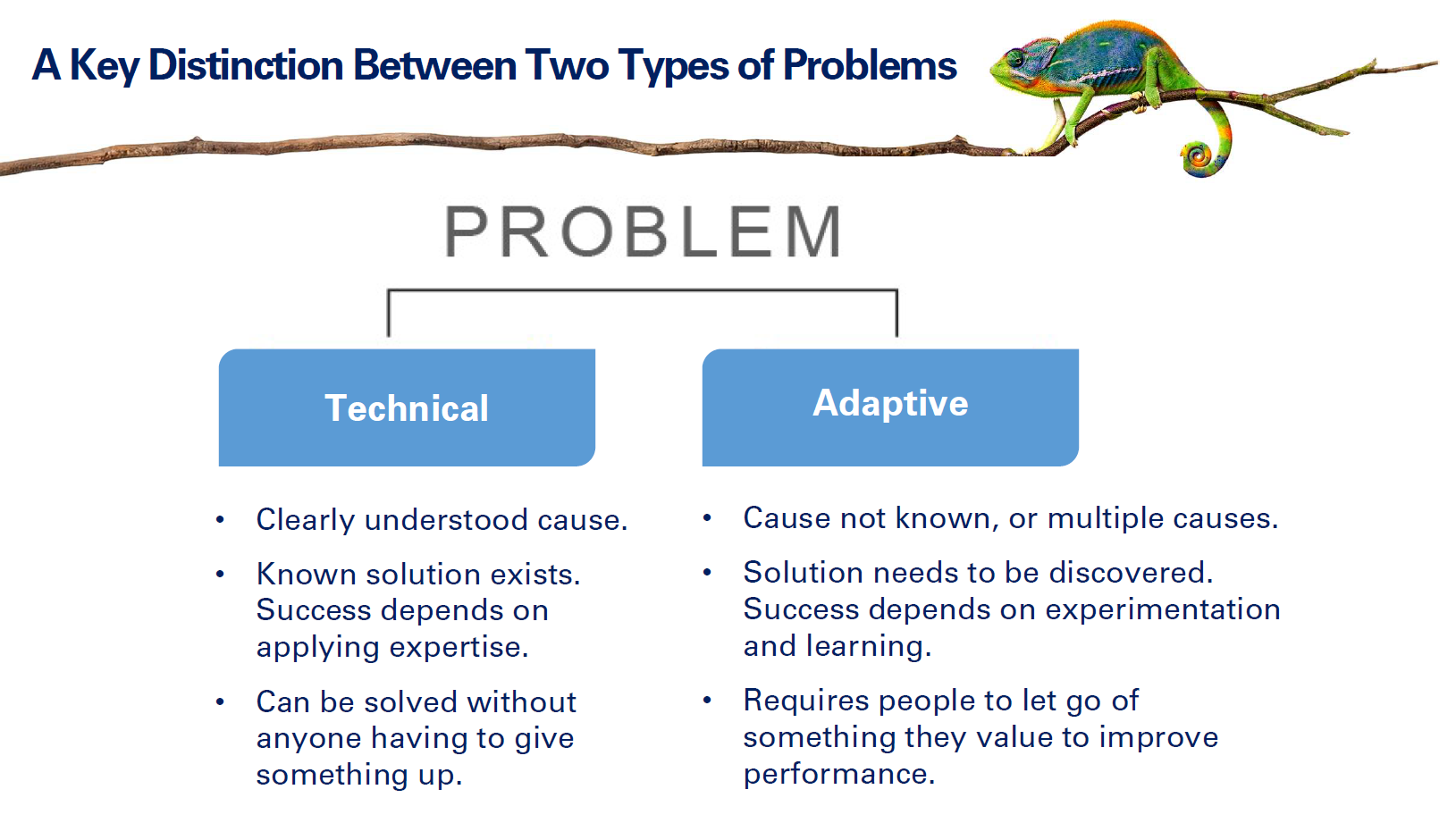
Are you an adaptive leader? You’ll need these four skills…
Tim Cox, the Director & Lead for High Performance Research at Management Futures, led a Skills Sprint Session virtual roundtable for Leaders Performance Institute members on the topic of adaptability.
It is a skill, as Cox explained, that was highly coveted by the coaches and practitioners who contributed to our Trend Report earlier this year.
Not that this is anything new. “It is well known that Charles Darwin did not talk about ‘the survival of the fittest’,” Cox continued, with reference to Darwin’s 1859 book On the Origin of the Species.
“The endpoint of Darwin’s research was that it’s not the strongest or the most intelligent of the species that survives, it is the one that is most adaptable to change.”
Over the course of 25 minutes, Cox discussed traps that people can fall victim to in pursuit of better adaptability. He also brought into focus the qualities of adaptive leaders and the skills that can aid adaptation.
Cox discussed four skills:
Read more about the qualities of adaptive leaders here.
‘Sports psychologists cannot just sit and wait for work to come in the door’
Darren Devaney, the Lead Performance Psychologist at Ulster Rugby, and Daniel Ransom, the Head of Psychology and Performance Lifestyle at the Manchester United Academy, co-hosted a virtual roundtable exploring how teams can better use psychology.
They discussed three requisite qualities in depth:
According to Devaney, the psychologist must “get away from the assumption that we work with the individual athlete only”. Instead, they should ask themselves “is my intervention best targeted at an individual or is this more systemic? And if I’m going to be here for the next five or six years, what’s the most useful way of spending one or two hours on this? Is it working with a head coach? Is it working with all the staff? Is it working with a group of players, or is it the one-to-one with the athlete?”
Psychology is not just the work of the psychologist. “An hour spent with one individual athlete is very well spent,” said Devaney, “but an hour spent with somebody that upskills or shapes them”, such as a coach, brings your work into “exponential territory”. He continued: “it changes how they do their work with 20 or 25 people over the course of the week”.
Ransom added: “If we really want to embed and integrate psychology what we require is other people to take on our ideas and work in ways that are psychologically-informed.”
“We can’t sit still and wait for work to walk in the door,” said Devaney. “I’ve often reflected that this organisation functioned for decades without me in the building, so if I’m not here, this place can keep going. I need to recognise the fact that it might not be every day the main thing that everybody’s thinking about, so how can I do that in a way that doesn’t produce scepticism or kickback?” Nevertheless, “you must be proactive in trying to have an impact.”
Ransom has advice for anyone encountering scepticism. “If people are ready for more in-depth and focused work, then let’s meet them there. If they’re not, and they’re at that sceptical end, how do we try and offer them something which is appropriate to the needs of what they might be open to? If we pitch that wrong and we try and go too hard or move too quickly with those people, I think you can get caught in a potential tug of war where we don’t really make much progress and people hold their position.” With skilful guidance, people can “see the value that other people have, and that can be a way of opening a few windows and doors to them.”
Find out more here.
30 Sep 2025
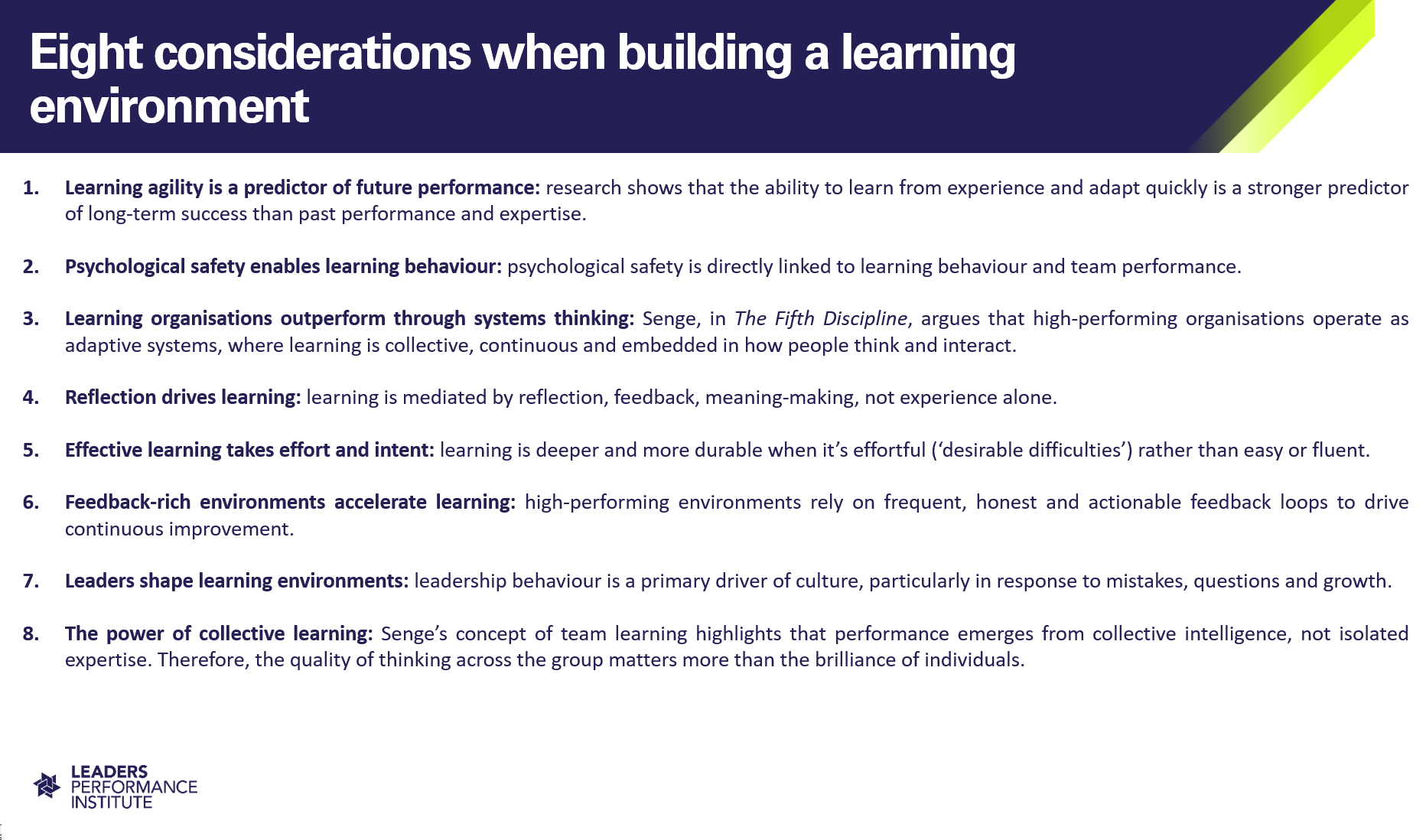
ArticlesIn a recent Leaders Virtual Roundtable, we asked Leaders Performance Institute members how they are working to make learning more effective in their organisations.
So says a coach developer who has worked across the North American, European and Australasian systems during their career.
“Even how they conduct performance reviews, induct, exit – all of that tells you about their speed of learning.”
When we asked the sports performance community to speak to us about the factors that affect the quality of leadership in their organisations, the most common answer was ‘learning & development’.
Its prevalence as a topic in our Trend Report has obvious roots: the speed of learning, as this coach developer put it, can enable you to outthink your otherwise well-matched peers.
Last week, Rachel Vickery, a high-performance specialist helping teams in the worlds of sport, business and the military perform under pressure, led a virtual roundtable entitled ‘How are we making learning effective?’
The importance of the environment came up time and again, as did the athlete-coach relationship and coach education practices. The group also spoke about AI’s role in learning.
Here, we outline five common challenges and run through a list of potential solutions.
This head coach, with extensive experience of team sports in Australia, perfectly captures the common misalignment between coaches and senior management. Often when it comes to learning – be it coach development or athlete-facing – everyone has different expectations and, therefore, support can be found wanting.
“We see it all the time in complex sporting environments: the overabundance of surveillance and support in the athlete community,” said one member of their experience working in the US Olympic and Paralympic system. “But if we were to look at that as being applied to the coach, we would very rarely see a similar level of support structure around them.”
Potential solutions:
These are the words of a coach developer who has worked across the globe and witnessed different ideas of how people learn. Coaches tend to prefer organic learning over structured IDPs, which is often at odds with the “business minds” in the front office. “Communicating up is definitely a different language than communicating with our coaches,” said a coach developer working in US baseball. “The language of our coaches is non-linear. They want their learning to be organic and they want a relationship with the coach developer.”
And it is not just coach development. Some teams are overwhelmed by data that doesn’t help them to answer key questions. Without that ability to parse the data for insights, it is difficult to learn.
Potential solutions:
It’s a line that says it all when it comes to the learning of younger athletes. It has an attendant impact on coach development. “Coaches are just not developing the way that we think they should at the rate that they should,” said the aforementioned high performance manager.
Potential solutions:
This is an issue that likely warrants its own roundtable discussion.
Overreliance on AI, as this coach pointed out above, can stifle creativity. The table also highlighted the shortcomings of current large language models:
Potential solutions:
The issue described by this high performance manager illustrates how complex the role the coach developer has become. “On the top of them are the organisational goals and desires, and on the bottom the coach’s individual disposition,” they added.
Potential solutions:
What to read next
How Do you Develop the Most Expert Coaching Workforce in World Football?
19 Sep 2025
ArticlesThe new Institute for Sports Tech Standards aims to provide reliable third-party testing with an aim to streamline the tech validation process and reduce redundancy.
Main Photo: Institute for Sports Tech Standards

But ultimately there were calls for more, and two of the white paper’s authors — Sam Robertson from TCG Advisory and Jessica Zendler from Rimkus Consulting — are now the founding co-directors of a new body, the Institute for Sports Tech Standards, that seeks to test product quality, establish accredited standards and consult on approval programs.
ISTS was formed from a strategic partnership between TCG Advisory and Rimkus and initially will focus mostly on collaborations with governing bodies but will expand to work with teams and tech vendors, too.
“There’s no Consumer Reports of sports tech,” Zendler said. “Everyone wants this, but no one does it. So what do we need to do to make it happen?”
Zendler, who is Director of Rimkus’ sports science practice, is Manager for the NBA/NBPA Wearables Validation Program; Robertson, a former Victoria University professor, has extensive experience working with FIFA’s Quality Program.

Zendler, the Director of the Sports Science Practice at Rimkus, is shown here speaking at a FIFA innovation conference. (Photo: Institute for Sports Tech Standards)
Robertson also previously served as a performance coach in soccer, rugby and Australian football, and has consulted for MLB, NFL and NBA teams. What he’s found is that many people in roles designed to be athlete-facing coaches or sport scientists have now largely become “applied technologists” spending upwards of 80% of their time managing software and hardware. All of them are inundated with inbound pitches of new tech, and none has the time to do proper validation.
“This was a classic problem that everyone in sport — particularly in the performance area, but also in the business space — would say, ‘We need to have better information about the technology we take on board,’” Robertson said. “But the reality is, it was a nice-to-have, rather than a must-have, and it’s only recently that shifted. The knocks on the doors became so frequent, so loud, that we thought, ‘Well, it’s time to do something about it.’”
The NBA and FIFA have taken leading roles in organizing technology vetting protocols, but those are deliberately bespoke to the needs of their sport and circumstance.
“A strategic labor of love on our part is to get more global standards out there that sports can agree upon that are going to cross-boundaries, cross-sports, cross-geographical regions,” Robertson said. “Once they are there, we can get a level of efficiency in what we’re doing.”
Tech vendors, especially startups operating on limited budgets, can’t afford multiple expensive testing program certifications. Those manufacturers would be glad to have a “paint-by-numbers” approach to validation, she added, because each league or governing body has different rules and associated fees — enough to hinder the focus on innovation.
Getting broader buy-in is a goal for the ISTS, which is working with the IEEE — a standards body Zendler described as having a “well-respected, high-integrity, public process” — on player and object tracking as its first project.
“We have seen this redundancy now happening, and this is not an efficient use of resources or anyone’s time,” Zendler said. “So can we make a way where it’s more of a third-party test institute that the governing body will say, ‘We’ll trust the report from that.’”

Robertson, who recently left his post at Victoria University, is the director of TCG Advisory and a consultant to pro clubs in the US and Europe. (Photo: Dave Holland/Canadian Sport Institute)
Both co-directors have PhDs and have held roles in academia — Zendler directed Michigan’s Performance Research Laboratory; Robertson led Victoria’s Sports Performance & Business program — but explained that most universities are set up more for innovation and research rather than testing. Higher education labs also tend to move more slowly.
Robertson, who has experience working with an accelerator in Melbourne, realized that young companies aren’t incentivized to seek testing early in the development timeline.
“It wasn’t lost on me that every single founder in that gets zero training on showing the quality of their product,” he said. “It’s all around getting a minimum viable product and attracting investment. That’s to be expected, but somewhere along the line you need to know [whether] your product is any good.”
This article was brought to you by SBJ Tech, a Leaders Group company. As a Leaders Performance Institute member, you are able to enjoy exclusive access to SBJ Tech content in the field of athletic performance.
5 Sep 2025
ArticlesIn this recent edition of SBJ Tech’s Athlete’s Voice, former British athlete Andrew Steele discusses his transition from track & field and how a chance meeting with a genetic scientist transformed his career trajectory.
Main Photo: Getty Images

You can’t have a discussion about sports technology today without including athletes in that conversation. Their partnerships, investments and endorsements help fuel the space – they have emerged as major stakeholders in the sports tech ecosystem. The Athlete’s Voice series highlights the athletes leading the way and the projects and products they’re putting their influence behind.
* * * * *
Steele, 41, later began a career in genetics and how that science affects fitness, nutrition and performance. He led product at DNAfit and then Prenetics (which had acquired DNAfit) before starting his own digital health firm, Stride, in 2023, which this summer made strong inroads in North America through a partnership with Unity Fitness Canada. It provides multiomic testing: wide-ranging diagnostics on genomics, the microbiome, protein profile and more.
On his vision for Stride…
Previously, we’d had a lot of products which are point solutions: Here’s a DNA test for this, here’s a blood test for this. With Stride, I’m trying to bring it all together. So we’ve got a range of multiomic lab testing. We do a DNA test, a microbiome test, a blood draw, a biological age test, and an oral health test will be in the future too.
We knit all that together to see a holistic picture of your internal biology in a way which is pleasant to see and understandable — not a bunch of PDFs to download from the lab, but actually a really engaging digital dashboard. Your DNA doesn’t change, but you test everything else every six months and see how that’s tracking. And then we make a tailored supplement based off those results for you.

In 2008, Steele competed in the Olympic Games held in Beijing in the 4 × 400 m relay. AFP via Getty Images
On the cold outreach that changed his life…
I’m actually glad I didn’t get [my medal] at the time because it forced me to be very open to opportunities about what came next in my life.
There was one email that came into my inbox one day from a guy who was working with a genetic scientist and looking to commercialize this test and looking for research subjects to help them understand how genetics affected exercise response. And if my [running] career been going better, I would have just forwarded it onto my agent and said, ‘Hey, see if there’s some deals to be done here.’ I was, at this juncture in my life, when I was 27, I had zero higher education. I had zero work experience, and I certainly had not even zero money. I had minus money.
So I engaged proactively on this, and thank God I did because, long story short, [I joined] a health tech business called DNAfit in 2013. That business went well, I learned a bunch, and I became a co-founder there. Five years later, we sold the business for $10 million as bootstrap founders. Then I went into the next thing [Prenetics] as Chief Product Officer, eventually being part of the leadership team that led to a billion dollar NASDAQ IPO. So it changed the path of my life, not winning that medal — but probably for the better. And, along the way, they awarded me the medal anyway.
On his current business life…
I still sit pretty close to sport. I founded a business called Stride, which is in the similar space of diagnostics and preventative health. But I also have one other thing, which is a big passion of mine. Sport First is a venture studio, which helps people that come from a sports background navigate the transition into becoming a founder and entrepreneur.
On his science and tech interest as an athlete…
If you’d asked my teammates, I was probably always known as the guy that was [following] the latest nutrition science or supplements. It was always a passion of mine — and tech. I was always super interested in startups.

Steele founded personal genetics company DNAfit before going on to become part of the Prenetics group. Now, he’s building Stride for personalized supplements tailored to an individual’s unique genetic makeup and personal health goals. Courtesy of Andrew Steele
On what he learned about his genetics…
DNA is just one of the things in the picture, right? There’s a genetic variable called ACTN3, and there’s a version of this gene which is basically the C version of this gene. So with every gene, you have two copies of it — you have one that you got from your mother and another that you got from your father. And then basically there’s a version of this gene that is often colloquially called the Olympic gene, or the sprint gene, and it’s basically extraordinarily over-represented in elite-level power.
Everyone who’s generally an Olympic level power athlete has either one copy or two copies of the C variant of this gene. This is me completely oversimplifying the science, but that’s basically the lay of the land. And I found out, fascinatingly enough, I didn’t have even one copy of this. I was an absolute outlier from an Olympic-level sprint athlete who just didn’t have this gene, which was considered almost table stakes to be a sprint athlete.
This article was brought to you by SBJ Tech, a Leaders Group company. As a Leaders Performance Institute member, you are able to enjoy exclusive access to SBJ Tech content in the field of athletic performance.
For the first time, all players will access to their data and video within 40 minutes of finishing their match.
Main image: ATP Tour

The tour treats the Next Gen Finals as an experimental ground for innovation, whether that be in competition format or technology. At the last edition that meant expanding access to filterable snippets of points within matches, which can be sorted by factors such as point result; shot type, direction or spin; and score, among others.
Metrics such as Shot Quality, developed by ATP partner TennisViz, are accessible within Tennis IQ in real-time to coaches sitting courtside, and supplementary video is typically available within 40 minutes of matches ending.
“What we’ve looked to do is offer the players an enhanced version of Tennis IQ across those two events (the ATP Finals and ATP Next Gen Finals), which actually is a bit of a glimpse into what we expect the future of Tennis IQ to be,” said ATP Director/ATP Events Adam Hogg. “It’s something that’s not currently available for the players on a week-by-week basis through the Tennis IQ platform, but ultimately something that we as the Tour at our own events wanted to offer as a premium service.”
The ATP is planning to roll out the video feature, along with biometric data derived from approved wearable devices, within Tennis IQ for its full schedule of events sometime in 2025, likely between Q1 and Q2. Tennis IQ launched as a match data platform last September.
To derive the metrics available within that platform, TennisViz applies custom-built machine learning algorithms to ball and player-tracking data provided by the ATP and ATP Media’s joint venture, Tennis Data Innovations (through the tour’s work with vendors like Hawk-Eye). TennisViz has collected data from more than 7 million shots dating back to 2004 and identified more than 60 different shot types, according to Head of Performance/Media and Broadcast Tom Corrie, with a shot’s quality determined by an assessment of ball characteristics, including speed, spin, bounce angle, and a shot’s depth and width on the court.
Relative to that process, the video feature is simple.
“What’s advanced is creating the Steal Score or the Shot Quality,” Corrie said, referencing two of the metrics TennisViz has developed. “We’re just attaching a time-stamping process to the [match] video, which we’ve developed the technology to do.”
TennisViz has a similar partnership with Wimbledon that encompasses video-tagging and has also worked with the USTA’s player development department. Corrie said the company is half-staffed by former coaches and half-staffed by engineers and developers, giving them a unique lens on the sport.
“Our vision was, ‘tennis data is dated,’” Corrie said. “All the other sports, particularly American sports, have moved on massively in the last 10 years in terms of different analytics and different fan-facing metrics. Tennis is still using ‘break points won’ as the number one determination of winning.
“This platform (Tennis IQ) rivals any platform in any other sports now, in terms of the fact that is’ live data. If you take the number of matches, the 24-hour nature of tennis, all those things – it’s now as good as any platform in any sport… We’re (tennis) now not behind. But we were.”
This article was brought to you by SBJ Tech, a Leaders Group company. As a Leaders Performance Institute member, you are able to enjoy exclusive access to SBJ Tech content in the field of athletic performance.
19 Dec 2024
PodcastsLachlan Penfold, the Head of Performance at the Melbourne Storm, describes his conversion at the sight of one of the NBA’s greatest players enjoying what he does. It’s rubbing off on his current work in the NRL.
A podcast brought to you by our Main Partners
Chief amongst them was his realisation that joy is crucial in a high performance environment.
“Joy in a professional sport? That’s a bit strange,” thought Penfold, but it was one of the team’s trademarks and no-one embodied it better than their Head Coach Steve Kerr and illustrious point guard Steph Curry.
“The player that embodies it better than anyone in world sport is Steph Curry in terms of just the absolute joy he gets from playing the game, from training the game,” Penfold continues, “not only from his perspective, but from seeing his teammates have success and do great things, the joy that he gets really invigorates a sporting team.”
It has fed into his work with the Melbourne Storm, who reached the NRL grand final in October. No doubt they’ll go again in 2025, inspired by the family environment described so vividly by Penfold [10:00].
We also spoke about his approach to training and recovery [17:30] and the importance of individualised work [22:30]. Last up, we discussed the year ahead [28:10].
Listen above and subscribe today on iTunes, Spotify, Stitcher and Overcast, or your chosen podcast platform.