We bring you five insights from Seth Meyers, the Brooklyn Nets, USOPC, US Air Force and Juilliard School – all of whom spoke at the Leaders Sport Performance Summit in New York.
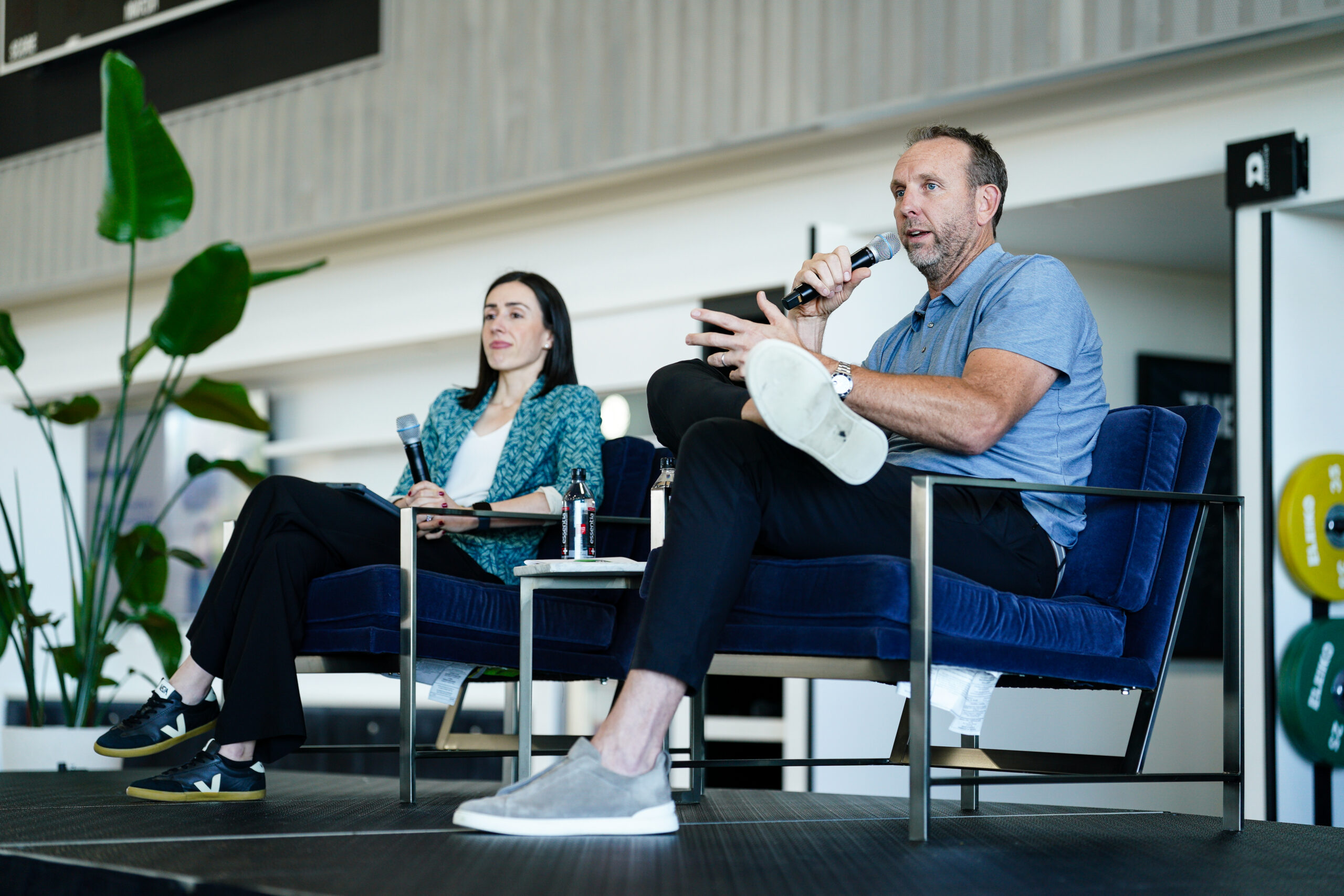
The renowned leadership specialist was speaking just moments before she introduced Seth Meyers to the stage at June’s Leaders Sport Performance Summit at the Barclays Center in Brooklyn, New York City.
Meyers, a comedian, broadcaster and producer, instantly built on the theme, with his tales of watching the likes of Will Ferrell, Kristen Wiig, and Jason Sudeikis produce sketches that died a death during read-through sessions (and all too often live onstage) at Saturday Night Live.
“Watching them succeed is something you can do,” he said, “but watching them fail at the table was the real education.”
Meyers made clear his admiration for the writers and producers of SNL who, as he said, “have seen and heard more sketches than anyone in the history of the world”. “It was a reminder of how hard comedy was,” he added. “To fail at this does not mean you’re not funny.”
Crucially, Meyers and his peers failed in what were ultimately safe spaces. They were all the better – and all the funnier – for it.
And it was not just Meyers’ musings. Across both days, we heard from leaders in high-performance environments as diverse as the US Air Force, Juilliard School and the Brooklyn Nets, who lent us their home for two days. Together they delivered insights on how leaders can cultivate environments in which people fail cheaply, learn quickly and perform sustainably.
Below is a selection of five insights that paint a picture of proceedings.
The Brooklyn Nets have been on an exciting trajectory since the arrival of Sean Marks as General Manager in 2016. His tenure began with a question: “What are we going to stand for?” Marks believed that the Nets needed an identity that meant more than mere wins or losses and he landed upon ‘Brooklyn grit’ – a system of behaviours that extended beyond one, single individual. “It’s really important that you take the responsibility to drive a culture that everybody can observe,” he said.
Marks and the Nets have continually hired the best people, regardless of their professional background. A quick roll call of their staff would reveal people with experience in fields as diverse as soccer, baseball, finance and, of course, basketball. Each is given the platform to perform. He said:
If you give people the opportunity, you empower them to speak up, you empower them that they do have a voice, they’re motivated far more than a group that isn’t empowered to have a voice.
Brooklyn Nets General Manager Sean Marks in coversation with host Holly Ransom. Photo: Leaders Performance Institute / Evan Bernstein
Across both days, listening emerged as an important performance tool. Whether building an NBA franchise, leading a writers’ room or cultivating future performers, the speakers repeatedly stressed that leaders who genuinely listen create environments where trust, challenge and innovation can flourish.
Marks for one said:
I want a diverse train of thought [and] if I’m going to hang my hat on hiring the very, very best, shame on me if I don’t listen to them.
Similarly, Seth Meyers’ beliefs have been shaped by his time in improvisational comedy as well as his time as a talk show host. He said:
One of the first rules with improvising is you have to be a listener. You can’t build something with a person if you’re just thinking about what you’re saying when you’re talking… and don’t ask questions you’re not actually curious about the answers to.
Seth Meyers on a different New York stage. Photo: Leaders Performance Institute / Evan Bernstein
So what actually happened when a sketch died during SNL read-throughs? What would Meyers do? What if the sketch actually died onstage?
“You have to shake it off,” he said. “You can learn lessons from things that don’t go well, but you can’t bring it with you to your next week’s effort.”
As one of the longest-serving head writers in SNL history, Meyers was responsible for managing exceptionally talented people operating under intense deadlines and, if writers carried every disappointment into the next week, their performance would deteriorate. The key was to try ambitious ideas, accept that many would fail, then learn quickly and move on.
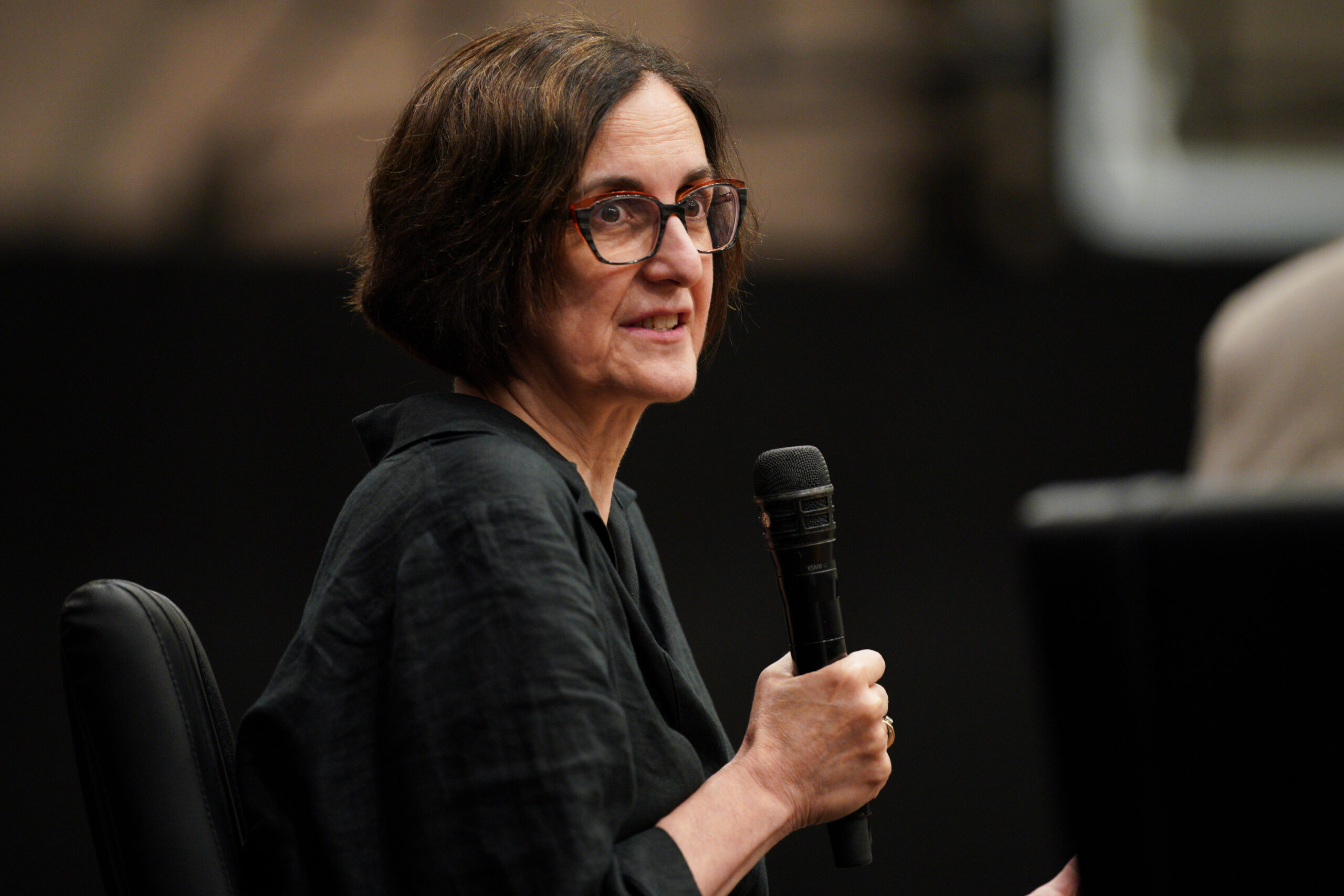
Meyers was echoed by Evan Yionoulis, the Director of the Juilliard’s Drama Division. “If we’re worried about fear, we have to foster an environment where you can be brave,” she said. She tells her students:
‘I believe in you, I brought you into the school. You’re going to graduate, and I’m going to take you all the way there, and I’m going to be patient… I’m not judging you, good or bad’. I’m going ‘what’s the next step to take it further? What’s the next step to take it deeper?’
Evan Yianoulis of the Juilliard School. Photo: Leaders Performance Institute / Evan Bernstein
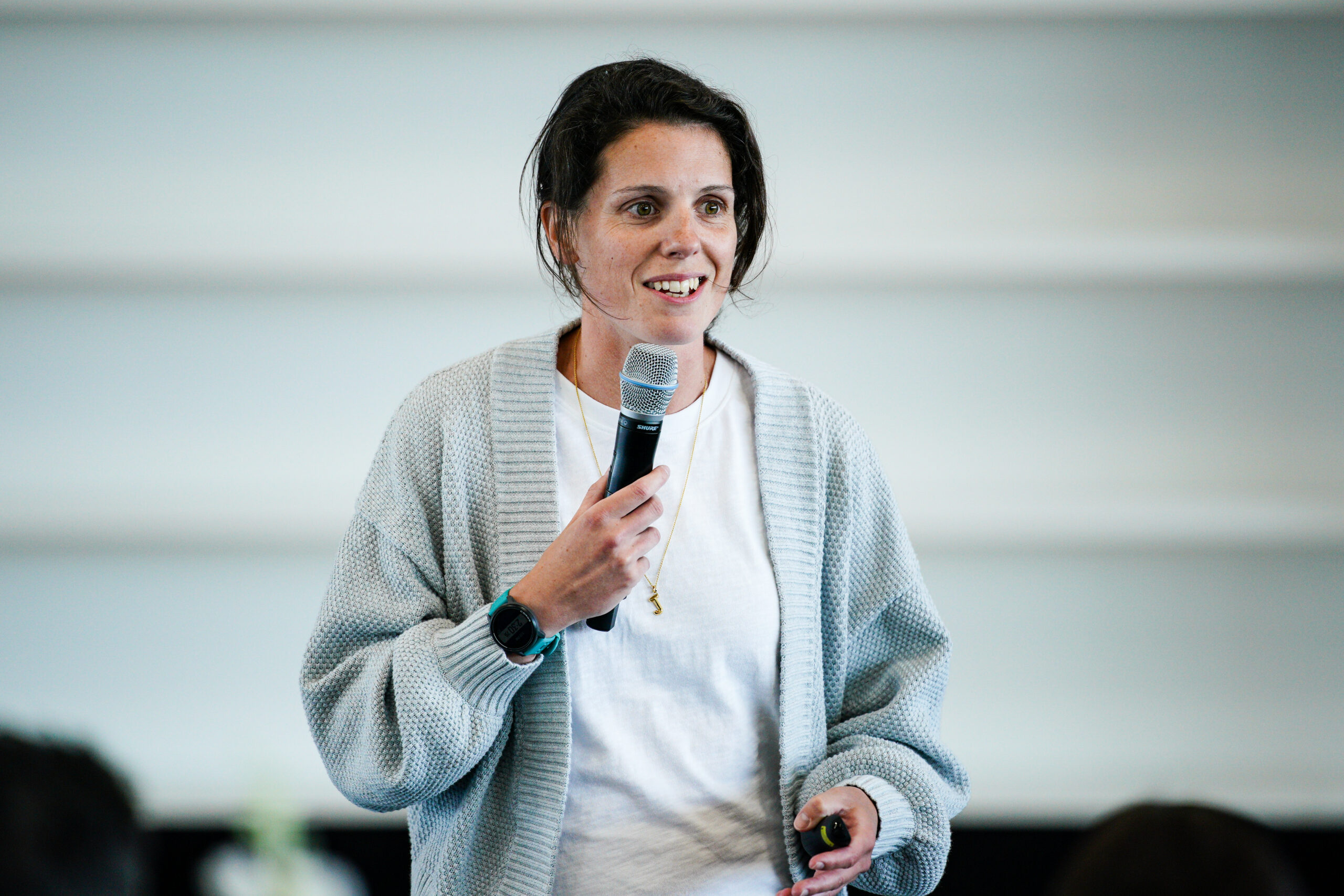
Dr Wendy Walsh is the Chief Learning Officer for the US Air Force, a role in which she oversees education for approximately 700,000 personnel. Her work goes beyond training to the creation of conditions that enable learning across a sprawling, complex system. She argues that high-performance environments are “complex adaptive systems made up of continuously changing people, relationships and influences. She argued that learning starts from observation:
It’s the most important thing that we do is to be present with each other… I might not agree with you, but it’s a requirement for me to understand a different person’s perspective, because that will reveal more possibilities.

Dr Wendy Walsh, the Chief Learning Officer of the US Air Force. Photo: Leaders Performance Institute / Evan Bernstein
Walsh was joined onstage by Andrea Tullos, who explained why the US Air Force pivoted from focusing on factors such as strength, endurance and swimming ability in recruitment. Ultimately, they were alarmed by the numbers of recruits dropping out. They shifted the focus to factors such as resilience, learning agility, tolerance for discomfort and motivation. Tullos said:
We need to know who they are before we understand what they can do… [and] it’s not about assigning blame. It’s about understanding how to get up tomorrow to do it all over again as a team and get better.
Andrea Tullos, former lieutenant general in the US Air Force and Founder and CEO of Outperform IQ. Photo: Leaders Performance Institute / Evan Bernstein
Team USA finished second in both the 2026 Milano Cortina Winter Olympic medals table (behind Norway) and Paralympics medals table (behind China). The United States Olympic and Paralympic Committee wants to be No 1 in both tables in 2030, which means creating the conditions that make future medals possible.
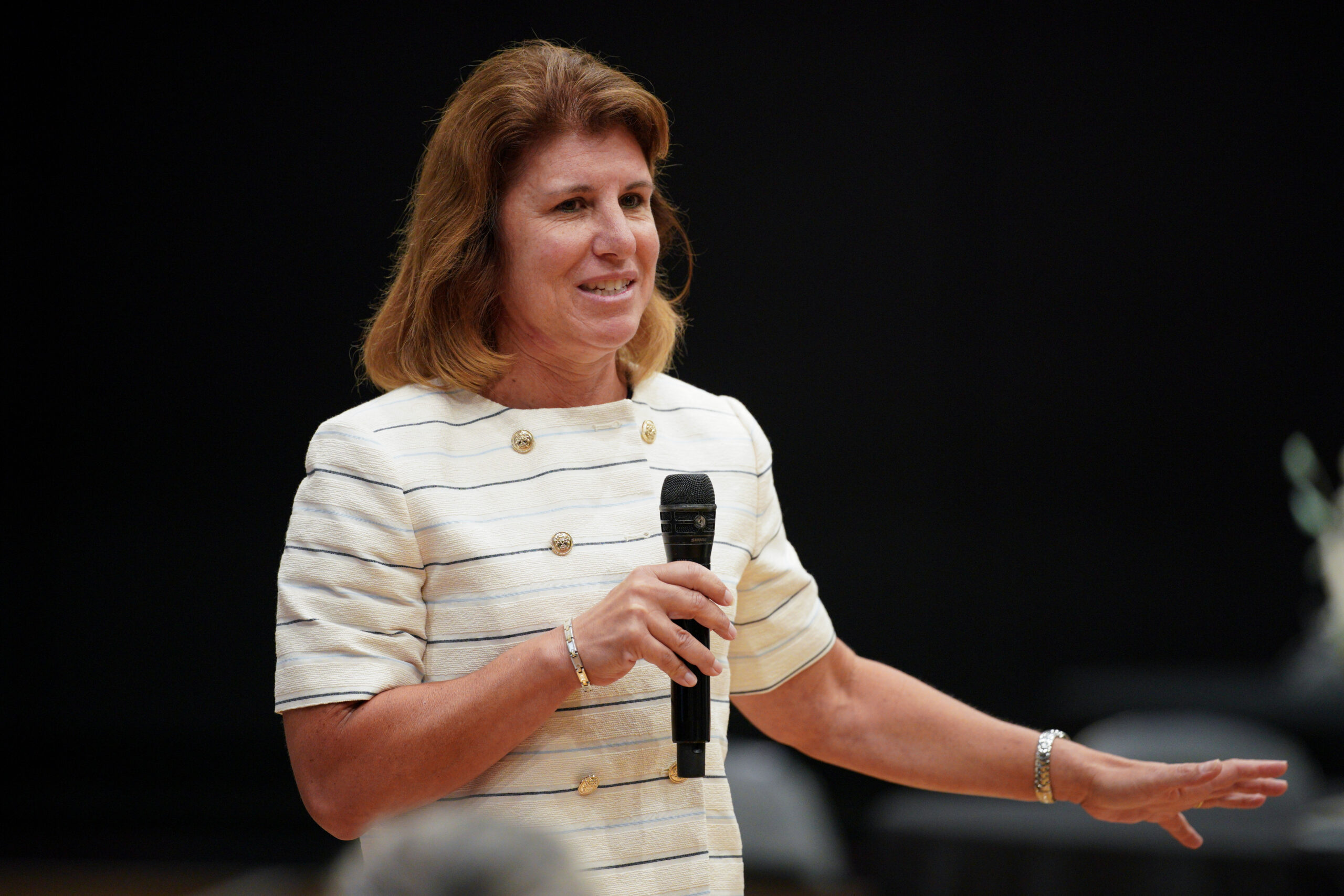
Jen Bryant, the USOPC’s Senior Director of Olympic and Paralympic Performance, told the audience of her organisation’s continuing efforts towards meeting their target. She said:
We couldn’t just focus on what we were going to do at the Games [Milano Cortina]. We needed to spend time building a team that was capable of going and delivering a podium-level performance… We focused on bringing a broader number of athletes through the pipeline… [we asked also ourselves] How are we keeping athletes in sport and then the opportunities to bring new athletes into Olympic sport?
Jen Bryant, the USOPC’s Senior Director of Olympic and Paralympic Performance. Photo: Leaders Performance Institute / Evan Bernstein
What to read next
In July, talent pathways, performance under pressure and the importance of a smartly implemented strategy were all talking points.
Having joined the Spanish federation in 2013, he worked with many of the same players through the Under-19s, Under-21s, the Olympic Games, Euro 2024 and now a World Cup triumph, making him one of the rare international coaches to oversee an entire generation from adolescence to the sport’s biggest prize.
“When I was made seleccionador I said that if I had an advantage it was that I knew the players. That allowed us to ‘bet’ on the future,” he told the Guardian in 2024.
It is a model many sports organisations would love to replicate. Yet, as performance specialist Iain Brunnschweiler observed during a recent Leaders Performance Institute roundtable: “I don’t think anyone’s solved this. That’s why we’re still talking about it; we’re still trying to work out how to do it most effectively.”
Spain would not claim to have cracked the code. Nevertheless, their success focuses attention on one of the most enduring questions in performance: how do organisations consistently develop talent capable of succeeding on the biggest stage?
That discussion was just one of the standout conversations among Leaders members in July.
We share some of the choicest cuts in this month’s Debrief.
Insight of the month:
When it comes to talent pathways, are we designing programmes around the needs of the athlete, or around the needs of the system?
Brunnschweiler wrapped up his presentation during the aforementioned roundtable with a reflection on his career working on elite talent pathways:
At the upper end of the talent pathway, the highest potential athletes can get the ‘worst’ programme.
An athlete may look as though they are receiving the best possible opportunity when they are training with senior professionals, yet if that exposure comes at the expense of match minutes, individualised development, physical preparation and psychological support, they may actually be receiving a worse developmental programme than peers lower down the pathway.
“They were being utilised more as a training mechanism for senior performers rather than a really high potential young player,” said Brunnschweiler, who worked with his colleagues to find a solution.
“One mechanism we did put in place was having a transition coach whose specific role was to go with that high potential player or group of players when they went into the senior training environment.”
Read the full roundtable report here.
Myth buster of the month:
Strategies don’t deliver outcomes – that’s the reality.
Michael Bourne, the Performance Director of the Lawn Tennis Association, admitted he loves a strategy. But as he told an audience at Leaders Meet: The Art of Strategy in April, ideas count for little without coherent actions.
He continued: “I’ve talked about a strategy that was written in 2018. So the idea of that being accurate to what we have to do today, well, a realism needs to be brought to that. The critical factor in those clear and coherent actions is if you still believe in your basic principles, you’ve got to have rapid review cycles that can tell you what you need to do today against the mission and the vision that we’ve set ourselves.”
These reviews are tracked on a dashboard, which contains 56 metrics that enable the LTA to link their strategy to “the bigger picture, to what everybody’s doing.”
Last month, with Wimbledon underway, we returned to that session to explore Bourne’s role in delivering the LTA’s ten-year performance strategy.
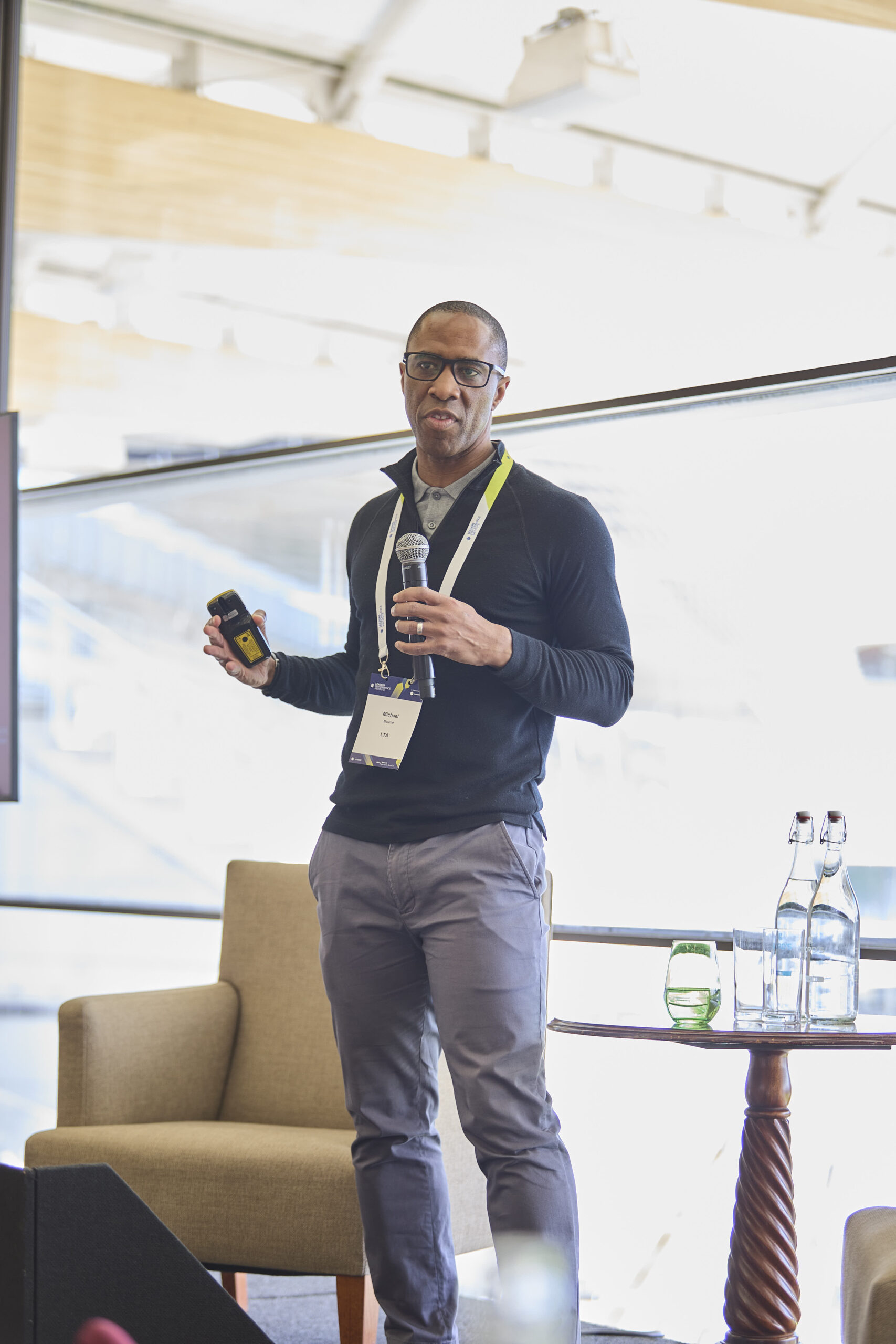
Michael Bourne, Performance Director at the Lawn Tennis Association, spoke first and set out the hard truths confronting British Tennis back in the mid-2010s. Image: Robert Obreja / Leaders Performance Institute
Good to know:
My work has taught me that you cannot overcome biases by simply trying to be more rational. The optimal path is to create processes that prevent us from succumbing to them.
Behavioural economist Dr Benjamin Kelly used the start of rugby union’s Nations Championship to run the rule over the biases that most commonly present themselves in the sport.
He advocates a structured intervention, as depicted below:
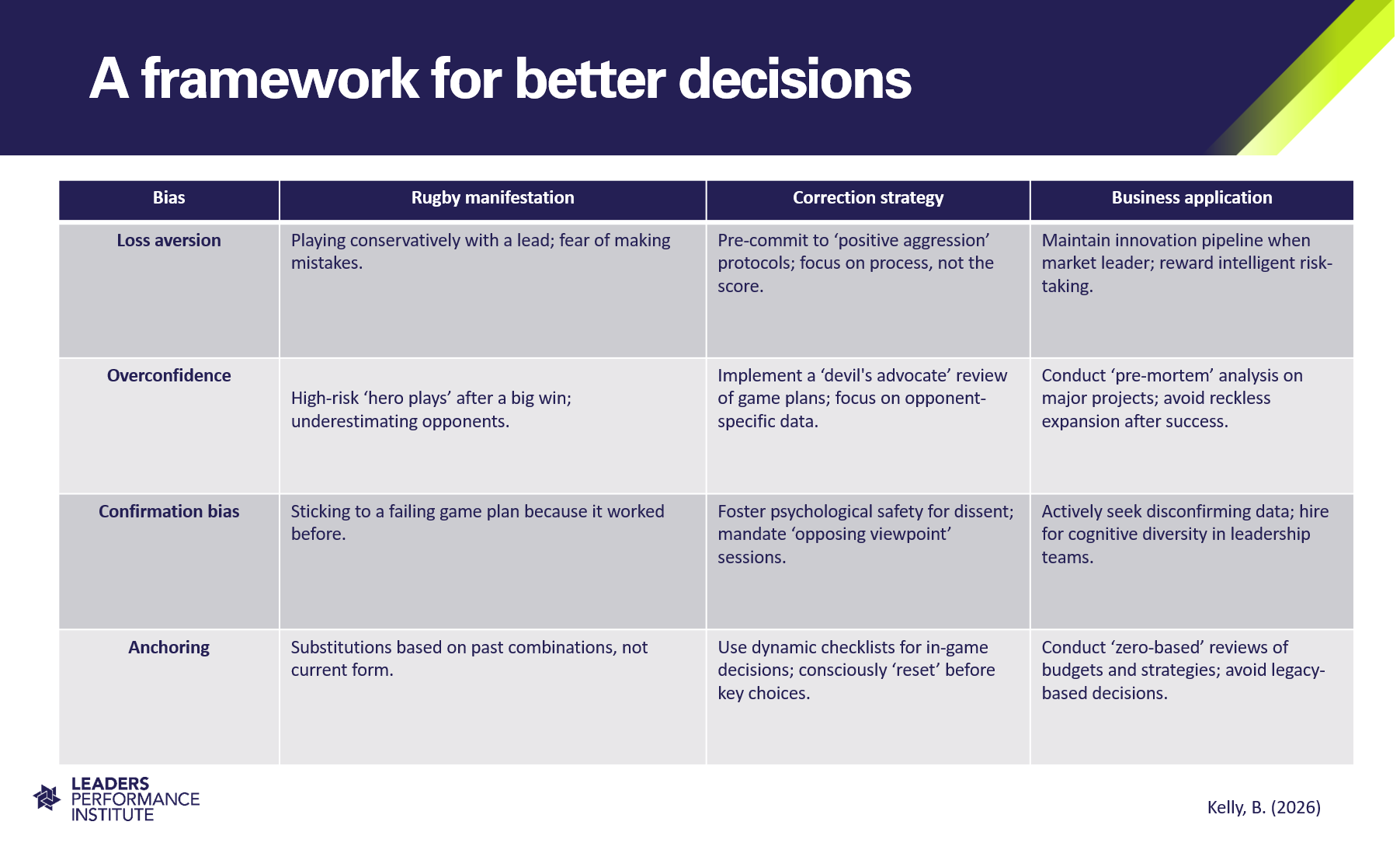
‘By understanding how these biases manifest, leaders can design and implement structured processes to counteract them,’ he wrote. ‘The journey to mastering the mental game is one of discipline and a commitment to process over outcome. The critical insight is not to eliminate bias, but to build systems that account for it. For any leader, in any field, that is the ultimate competitive advantage.’
Read the full article here.
Quote of the month:
Do the common things uncommonly well.
So said performance specialist Rachel Vickery at a roundtable on the topic of performance under pressure.
She argued that an ability to manage pressure is less to do with fancy tricks or even an attempted recreation of pressure moments in training, and more to do with reducing an athlete’s allostatic load – the accumulation of stressors and demands over time that push a person into a heightened state of physiological arousal.
“What they end up seeing in finals is not a sudden, unexpected failure of performance,” she said. “It was something that was actually built because of that accumulation in the system as a whole.”
The secret lies in increasing an athlete’s ‘buffer’ – the spare capacity between a person’s current arousal level and the point at which performance starts to deteriorate. When someone has plenty of buffer, the pressure can rise naturally, their arousal can increase, and they can still stay below their threshold.
Vickery argued that many organisations make a fundamental mistake by treating sleep, recovery, relationships and gratitude as wellbeing initiatives rather than as performance interventions that create buffer.
Read the full story here.
Best advice:
There’s this quote: every time you say ‘yes’ to something, you’re saying ‘no’ to something else. You’ve just got to make sure you’ve got the energy and the headspace to provide the appropriate level of support that your performance team need.
Ian Costello became the General Manager of Munster Rugby in 2025 and, in assuming the role, took a strategic leadership position after two decades of coaching on the grass.
He admits it has been a steep learning curve, but with a shared vision he has allowed Munster’s domain experts to flourish while finding the space to spot performance trends and nip issues in the bud.
Read our interview with Costello here.
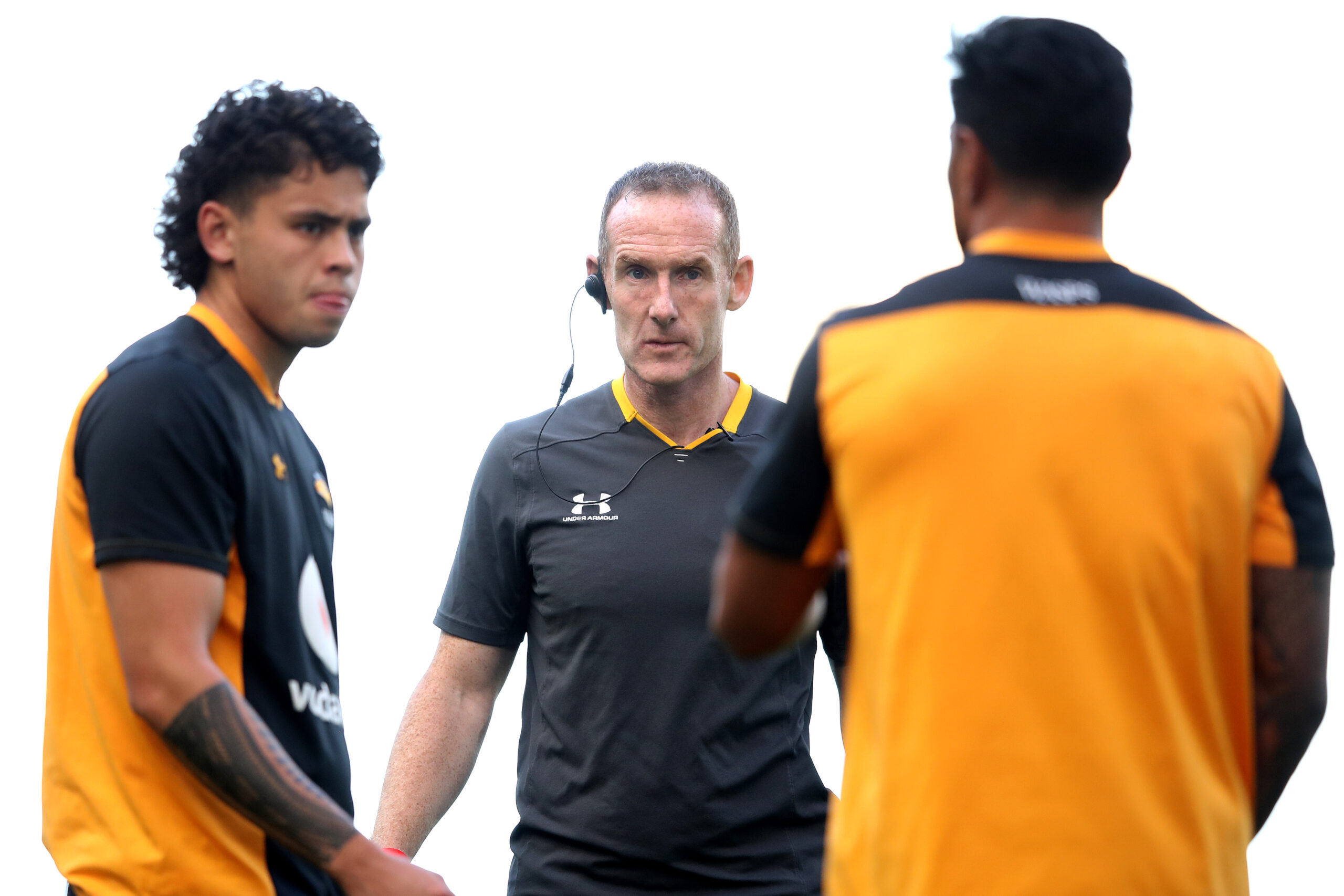
Ian Costello (centre) has been the General Manager of Munster Rugby since 2025.
What’s coming up for members
Why Succession Planning & Sustainability of Handovers is Critical
In the final part of his miniseries, Basketball New Zealand GM Paul Downes what kind of leadership works when authority is limited and commitment is discretionary.
In senior 5×5 teams, athletes are commonly not selected from within domestic systems given the time of year for FIBA competitions. Instead, they are selected whilst under contract within professional (and semi-professional) environments across various global leagues. Athletes for FIBA 5×5 age-grade tournaments (Under-15 to Under-19) are typically selected from performances across school, Association and National camp assembly periods.
Supporting the selected athletes are coaches and management that also are operate in decentralised, time‑limited contexts. No role holders are employed full-time and, as such, are operating without the contractual levers that traditional high‑performance (HP) models assume. Across the 5×5 HP pathways, BBNZ runs six age‑group national teams (male and female), plus select teams that provide ‘best vs best’ exposure to support development (on and off court) and prepare for FIBA tournaments.
Within this reality, management team members are asked to balance a number of competing demands. Examples include: short‑term competitiveness versus long‑term system sustainability, respect for professional autonomy versus national‑team standards, and redefining ‘success’ in an international sport increasingly dominated by wealthy, highly resourced nations. These challenges, among others, sit outside of being simply tactical or financial rather the most complex challenges that present are systemic and relational. Therefore, a crucial leadership question what presents itself to the BBNZ HP team is no longer whether leadership is required, but instead what kind of leadership actually works when authority is limited and commitment is discretionary.
The purpose of this article is to apply the research pertaining to Leadership Climate and Followership to the context of the 5×5 National Teams of BBNZ and demonstrate the opportunities that the constraints presented offer HP leaders for generating elevated levels of engagement and commitment to the HP strategy.
What is Leadership Climate and why does it matter?
The National teams of BBNZ can be considered to have compromised formal authority outside of assembled periods due the nature of management composition and contractual status. Without the ability for HP leaders to rely on extrinsic levers such as significant salaries, full-time contracts and formal hierarchies there could be supposed to be high risk regarding team culture and operational effectiveness. Powerful research from Goleman into Leadership Climate (1, 2) supports organisations such as BBNZ to succeed and maximise the opportunities that come from such constrained circumstances.
Goleman (1, 2) describes Leadership Climate as the emotional tone of the working environment created by leaders’ behaviours, which in turn shapes motivation, engagement, wellbeing, and performance outcomes. When HP leaders cannot rely on extrinsic motivation levers or formal hierarchy the notion of Leadership Climate becomes the primary lever for sustaining commitment and discretionary effort.
Unpacking climate further
To make Leadership Climate assessable and actionable, JCA Global (3) developed the Leadership Climate Indicator (LCI) as a behavioural measure of how it feels to be led within a given system. The LCI translates leadership behaviour into four distinct climate quadrants made up of twelve observable scales:
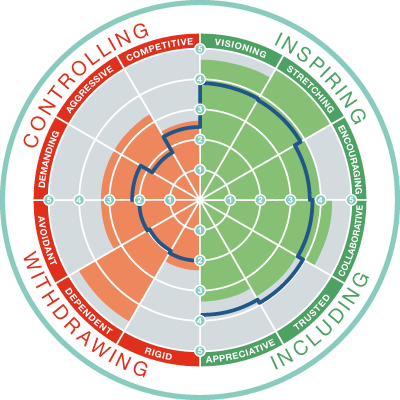
Green climates: the Inspiring and Including quadrants represent green climates – those that build clarity, trust, energy, and commitment through behaviours such as visioning, encouragement, collaboration, reliability, and appreciation.
Red climates: by contrast, the Controlling and Withdrawing quadrants represent red climates which, while sometimes effective in short‑term crises, erode trust and engagement when used habitually through behaviours such as micromanagement, aggression, avoidance, or rigidity.
In decentralised, tour‑assembled environments like BBNZ’s National teams, this framework provides a practical lens for understanding why some campaigns generate ownership, voice, and discretionary effort, while others default to compliance, silence, or disengagement under pressure. In these teams leadership climate can be considered to be the felt experience of being led by the HP team. This spans the experience one has at the recruitment stage, their subsequent onboarding, the connections leading into a camp/tour, tours themselves and the review period after each assembly. They are the conditions created by leaders’ behaviours during both stable and complex, high-pressure context and govern whether people think, speak up, and commit fully, or retreat into compliance and self‑protection.
Defining and contextualising Followership
Contemporary leadership research is explicit that leadership is not delivered one way from leaders to followers but is instead co‑produced through the active judgement, engagement, and agency of followers within relational and contextual systems (4, 5, 6). Within this literature, ‘Followership’ is defined as the behaviours, decisions, and choices individuals make in how they support, challenge, and contribute to collective goals – not simply their positional role or willingness to comply. It is an active function requiring judgement, commitment, and moral courage.
Kelley’s foundational work (6, 7) was pivotal in reframing organisational performance as being driven disproportionately by effective followers. These being followers who think independently and engage actively rather than by compliance‑based execution alone. This reframing shifts attention away from what leaders do to people, and toward the conditions leaders create with others.
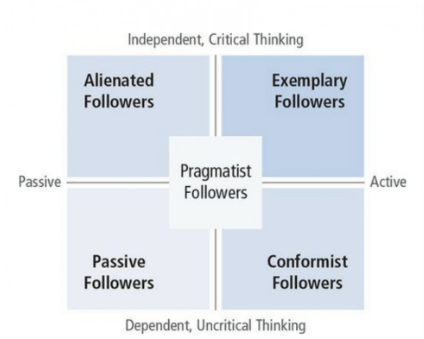
Figure 1. Kelley’s Followership Model (1988)
Figure 1 and Table 1 provide a summary of the five types of followers and what these mean in the context of BBNZ’s HP management teams. For Kelley, the ideal follower was a critical thinking contributor, termed the ‘exemplary follower’. Kelley argues that most leaders prefer ‘conformist followers’ because they are easy to control. ‘Alienated followers’ are critical but do not contribute; and ‘passive followers’ have little to no value other than bring present. A critical thinking follower who is alienated is far more likely to be a negative team member.
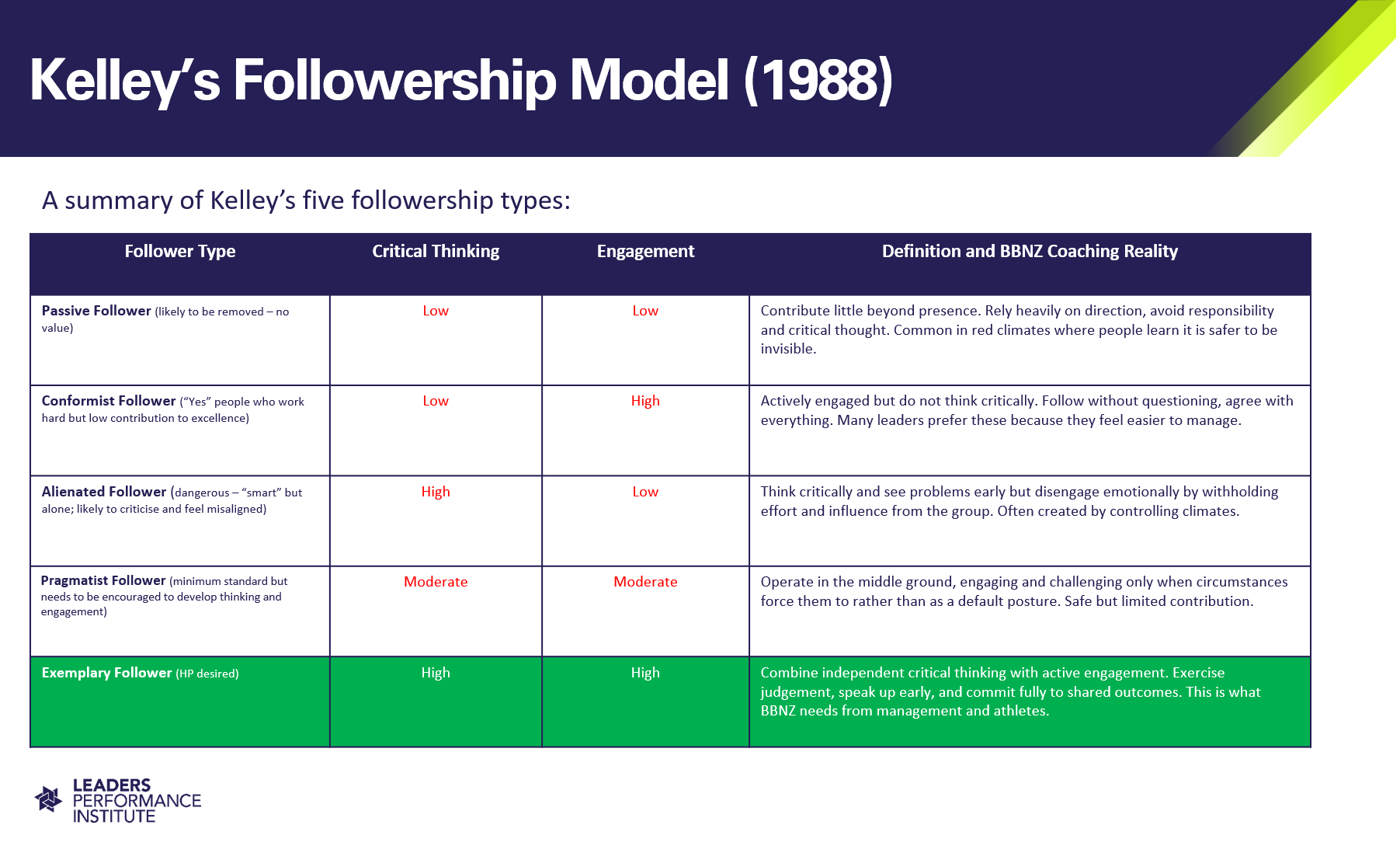
Table 1. A summary of Kelley’s five followership types
A clear understanding of Followership theory and the interaction of critical thinking with active contribution is valuable for organisations like BBNZ, where management teams operate in periodic, decentralised, and contractor‑heavy environments. Once national teams assemble for FIBA events, organisational charts flatten quickly, formal authority as a national sporting organisation (NSO) reduces, and the HP system functions largely through trust, clarity, and discretionary effort. In these contexts, the quality of followership becomes visible in what people do when conditions are uncertain, pressured, or imperfectly resourced.
In tour‑assembled environments, followership quality is a strong determinant of whether standards are sustained, problems are surfaced early, and judgement is exercised when it matters most. Kelley’s insight remains deliberately uncomfortable. Leaders often gravitate toward conformists because they feel easier to manage, yet doing so suppresses the independent thinking and ownership that complex, time‑bound campaigns depend upon.
How Leadership Climate and Followship exist across BBNZ’s national teams
An example of system logic is provided in Figure 2.
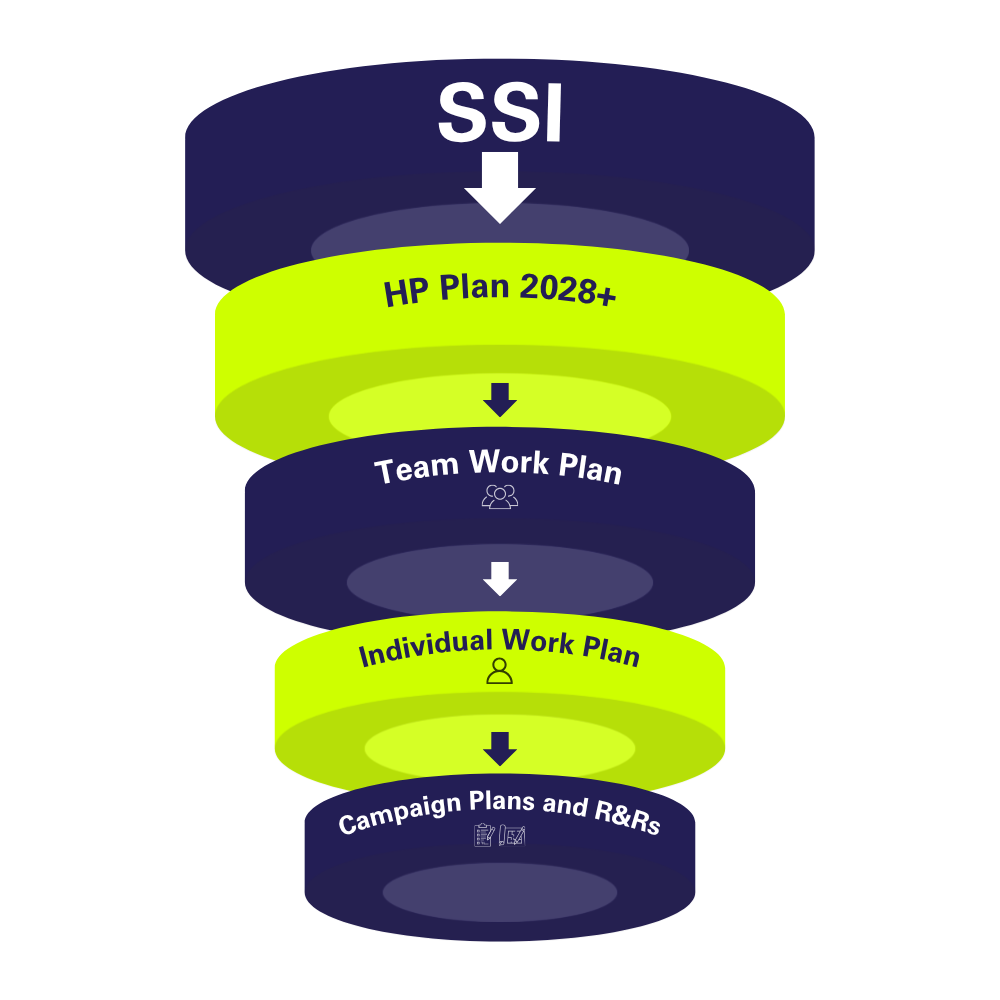
Figure 2. A system logic view of BBNZ HP Strategy spanning the NSO’s Strategic Statement of Intent (SSI) to HP Strategy (HP Plan 2028+) into HP Team Plan that support HP team member’s individual plans that inform how HP constructs and operationalises Campaign Plans and Roles and Responsibilities across various National teams.
In this example, clarity is treated as a primary leadership behaviour. Through making purpose, expectations, roles, and decision rights explicit HP leaders are able to reduce anxiety and guesswork in management teams and create the conditions for Inspiring and Including climates. These favourable climates elevate the quality of followership the HP system produces. Across the HP team’s ways of working there is a deliberate emphasis on a clear, shared purpose, psychological safety, empowerment with accountability, and inclusion.
These act as necessary prerequisites for ‘exemplary followership’ which are characterised by independent thinking and active engagement. Examples of how this is achieved are engaging in collaborative approaches to define ‘What It Takes To Win’ (WITTW), clarifying campaign roles early in a cycle, and making HP expectations visible through Team Charters to allow management and athletes to exercise judgement rather than wait for instruction. When management are recruited and onboarding takes place there is a priority to build early senses of belonging and clarify the conditions for constructive candour and continuous learning. With reference to Leadership Climate terminology, such conditions actively strengthen Visioning, Trusted, Collaborative, and Encouraging behaviours while reducing the likelihood that pressure induces Controlling or Withdrawing patterns.
In the realities of global FIBA tournaments existing in dynamic, uncertain, complex conditions the benefits of positive team climates and exemplary followship are experienced. By making purpose, boundaries, and expectations explicit before and during campaigns, BBNZ increases the probability that touring parties will act as capable followers. Ones who can think ahead, raise issues early, hold standards without being policed, and sustaining discretionary effort under fatigue. The latter is imperative with international travel and compressed recovery windows between competition. In this sense, the HP frameworks developed and communicated are not just management tools, they are deliberate climate interventions that enables leadership and followership to be co‑produced in conditions where formal control is neither realistic nor effective.
At age‑grade level, clarity is what allows people to coach and support with judgement rather than hesitation. When purpose, roles, and decision‑making boundaries are clear early in the cycle, staff don’t wait for permission—they act in the best interests of the athletes. That creates trust, encourages honest challenge, and allows learning to happen quickly. In high‑pressure tournaments, those conditions matter because we need people thinking and contributing together, not just executing instructions.
Mel Bennett (Head Coach of U15-U17 Women and Assistant Coach of 2Degrees Tall Ferns)
From a medical and recovery perspective, clarity changes everything. When roles, decision rights, and expectations are explicit, I don’t have to guess whether to escalate an issue or wait—and neither do the players. It allows us to act early, manage load properly, and hold standards without friction. In the middle of a FIBA campaign, that clarity creates trust, reduces stress, and lets everyone contribute their judgement rather than just follow instructions.
Mikayla Rosieur (2degrees Tall Ferns and U17 Men’s Physiotherapist)
To help better illustrate the interactions of Leadership Climate, the types of climate conditions and Followership, Table 2 maps the JCA Climate Types to Followership Behaviours in the form of ‘touring realities’.
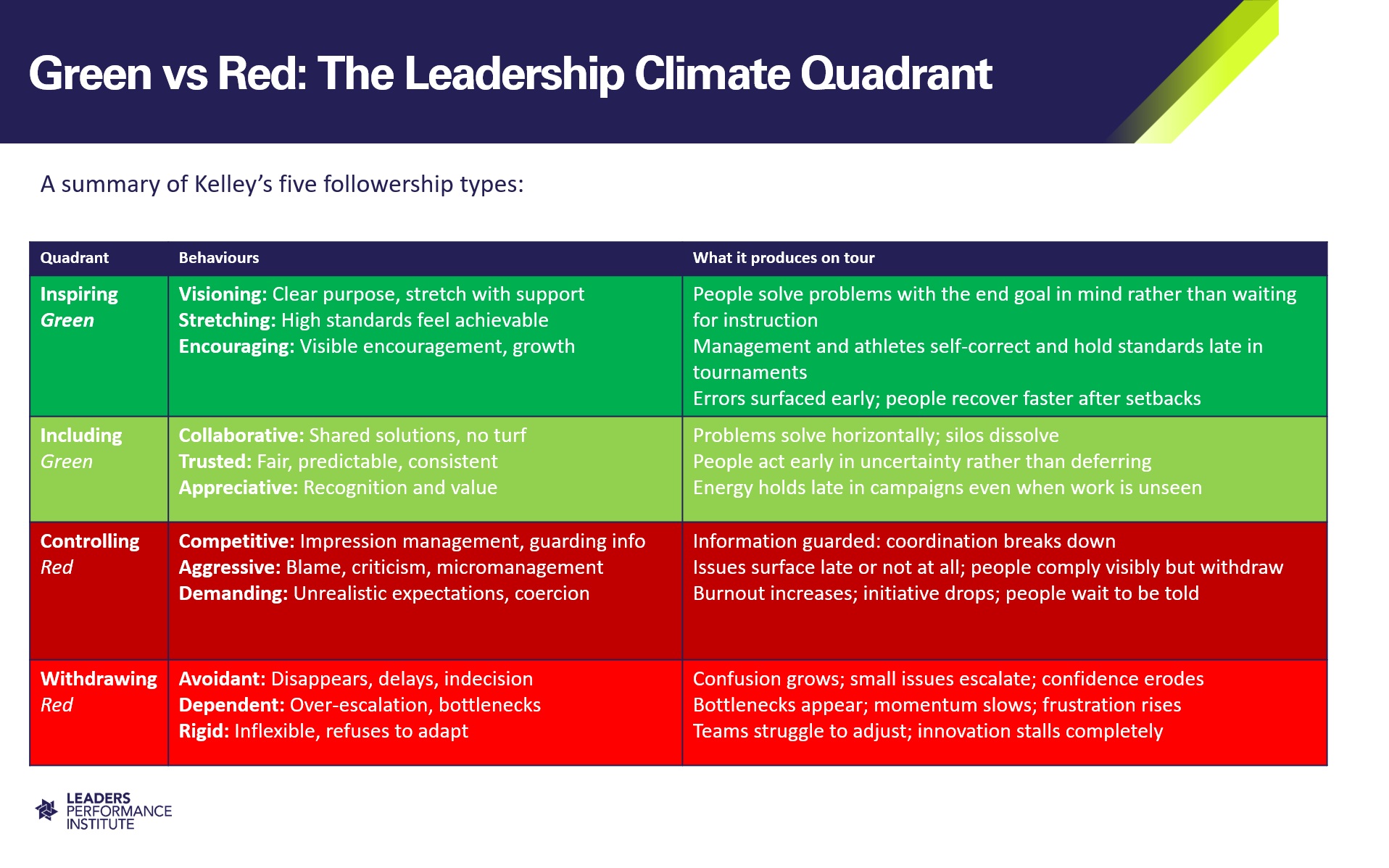
Table 2. The JCA Climate Types mapped to Followership Behaviours in the form of ‘touring realities’.
Recently the BBNZ HP team has constructed Team Charters as an initiative to elevate leadership climate and followership by replacing hierarchy with shared clarity. These charters make purpose, expectations, and behavioural norms explicit so that independent thinking, early voice, and accountable contribution become safe and expected, even under pressure. Through the removal of ambiguity (the primary trigger for anxiety, silence, and defensive followership) the Charters serve to stabilise the emotional climate whilst actively strengthening Inspiring (Visioning, Stretching) and Including (Trusted, Collaborative, Appreciative) climates by ensuring people know what matters, how decisions will be made, and how they are expected to contribute.
Concluding remarks
In decentralised, time‑limited national‑team environments, the decisive leadership task is not to demand compliance but to design the conditions for exemplary followership. That begins with making the why unmistakable for all parties. There needs to be a clear purpose, realistic success markers, and alignment surrounding how each role contributes. These conditions enable the setting of mutual expectations about standards, decision rights, and escalation pathways to hold teams steady under pressure. There is a requirement to create permission for feedback and insights by rewarding early problem‑raising, building trust through reliable follow‑through and predictable communication. HP leaders need to recognise the contributions that sustain standards, energy, and learning throughout campaigns. Create conditions, not compliance because international performance is built on the effort you cannot mandate.
References
Alignment, the question of performance outcome vs performance growth, learning and adaptive leadership were all on the agenda of the Leaders Performance Institute in May.
Take the club’s 2-1 home defeat to Bournemouth in early April, which was widely perceived as one of the team’s worst performances of the campaign.
The team looked and felt exhausted, which was not necessarily helped by their Manager Mikel Arteta’s ferocious work ethic and increasing demands on the training pitch. It was a period when injuries mounted too.
But as reported in the Independent, Arsenal attacking midfielder Eberechi Eze, approached his boss and told him in so many words: ‘we can do this, but we need a bit of space’.
To his credit, Arteta listened and though they lost at rivals Manchester City the following weekend, there were shoots of promise in that performance. Arsenal would win their remaining five matches and clinch the title by seven points from City.
They then came within a penalty shootout of winning the Champions League in Budapest.
Arteta swore in the aftermath that Arsenal will be back; and one suspects he might listen to his players a little more readily in the future.
Which brings us on to happenings at the Leaders Performance Institute in May, where a consistent theme has been the prioritisation of athlete needs, hopes and expectations.
Let’s dig into it.
Quote of the month:
A lot of coaches are either overdoing the teaching so there’s not any learning taking place or there are too many missed opportunities for the teaching and learning. It’s also changing the perception of the teacher; I’m doing it to you versus facilitating learning.
So said the head of coaching at a British university. He then raised the question of timing. “Do you jump in straight away? Do you wait till the end of the session and reflect? Do you wait till the next day and do some teaching and learning?”
It was an important consideration for a Leaders Virtual Roundtable that focused on what it takes to create an impactful and effective learning environment.
Read the breakdown here.
Insight of the month:
We’ve actually had our coaches start to record 10 to 15 minute videos, send them to players beforehand, and then the actual talk becomes them being able to reflect and digest the information.
So said a player development manager from Major League Baseball at a Leaders Virtual Roundtable where members discussed working with younger people.
Younger generations of athletes (as well as coaches and other staff members) are digital natives and teams would do well to lean into this.
Another voice from MLB, a sports scientist, told the table:
I think there’s definitely a difference in terms of how I have had to learn to communicate with them and include them in various decisions and thoughts along the way — and I’ll be the first to say I fumbled royally multiple times at first.
Read the full session summary here.
Good to know I:
But not everything is collaborative. I think we oftentimes confuse it, but we don’t want collaboration all the time.
So says Teena Murray, the Senior Vice President of Integrated Performance Support at US Soccer. She made the point that when a team has a shared mental model, individuals understand their domain, they know where there’s overlap and where there’s room for collaboration.
She wants her staff to be able to ask themselves “when am I the leader? When am I working in collaboration with another area, whether it’s nutrition, mental performance or sports science with strength & conditioning?” The answers provide “a clear understanding of who owns what but ultimately knowing what it is that we’re trying to deliver upon and what are the target outcomes that we’re really trying to reverse-engineer with all of our processes.”
We caught up with Murray as US Soccer prepared to make its new National Training Center in Fayetteville, Atlanta operational.
She explained why US Soccer aims to be ‘radically aligned and seamlessly integrated‘.
Good to know II:
Jeff Pagliano of Management Futures hosted a virtual roundtable where he gave members some tools to help them become better adaptive leaders.
In part, it means recognising issues when they emerge and tackling them in a calm and methodical manner.
He shared with the table the two types of problem that tend to exist in high performance and what makes each distinct: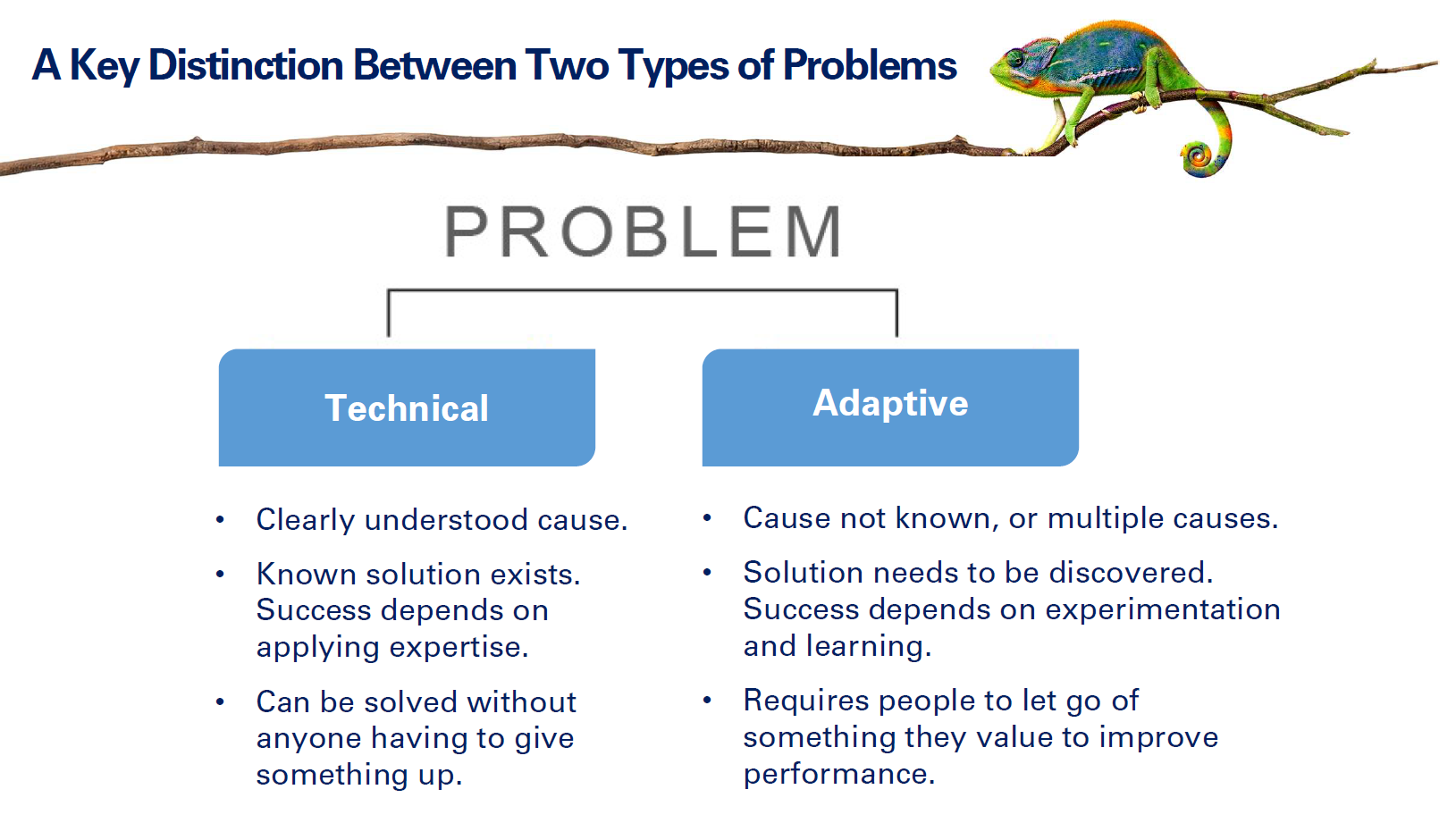
Pagliano then gave the table a series of hypothetical performance problems and asked them to decide if their nature was technical or adaptive. They were:
“These are the kinds of exercises I find to be really insightful because it helps me as a facilitator get a sense of where they’re coming from when they’re approaching leadership and change management,” said Pagliano.
Read more here.
Finally…
Paul Downes, the GM of Basketball New Zealand, described his approach to his first hundred says on the job. He argues that the idea that a new or transitioning leader can transform an organisation in the first 90 (or 100) days is unrealistic.
Read the first instalment of Downes’ miniseries here.

Image used courtesy of Basketball New Zealand.
Coming up for Leaders Performance Institute members:
The Professor at the London School of Hygiene & Tropical Medicine explores how leaders should act when faced with incomplete information.
Adam Kucharski posed this question to bemused members at the 2025 Leaders Sport Performance Summit in London.
“Fortunately, we’ve got some data we can draw on here,” he added while presenting a graph illustrating the results of a study that showed a positive correlation between the amount Cambridge colleges spend on wine and their students’ exam results.
“Now, I suspect a lot of you are thinking ‘hang on, just because two things are correlated doesn’t mean that one thing is causing the other’; and you’d be quite right. But it doesn’t mean this data is useless, because if one can understand the consistent relationships between things, we can make predictions.” In this case, if they can spend more on wine they can also likely spend more supporting their students.
“If the college has a higher wine spend, it’s plausible that they will have higher exam results, not because one thing causes the other, but because you’ve understood that relationship to make a prediction.”
However, there are limits to just relying on prediction when making decisions. In sports science, for example, an injury risk model cannot tell a coach what to change in training. “‘You want to know ‘why is it happening?’ and ‘what can I do about it?’”
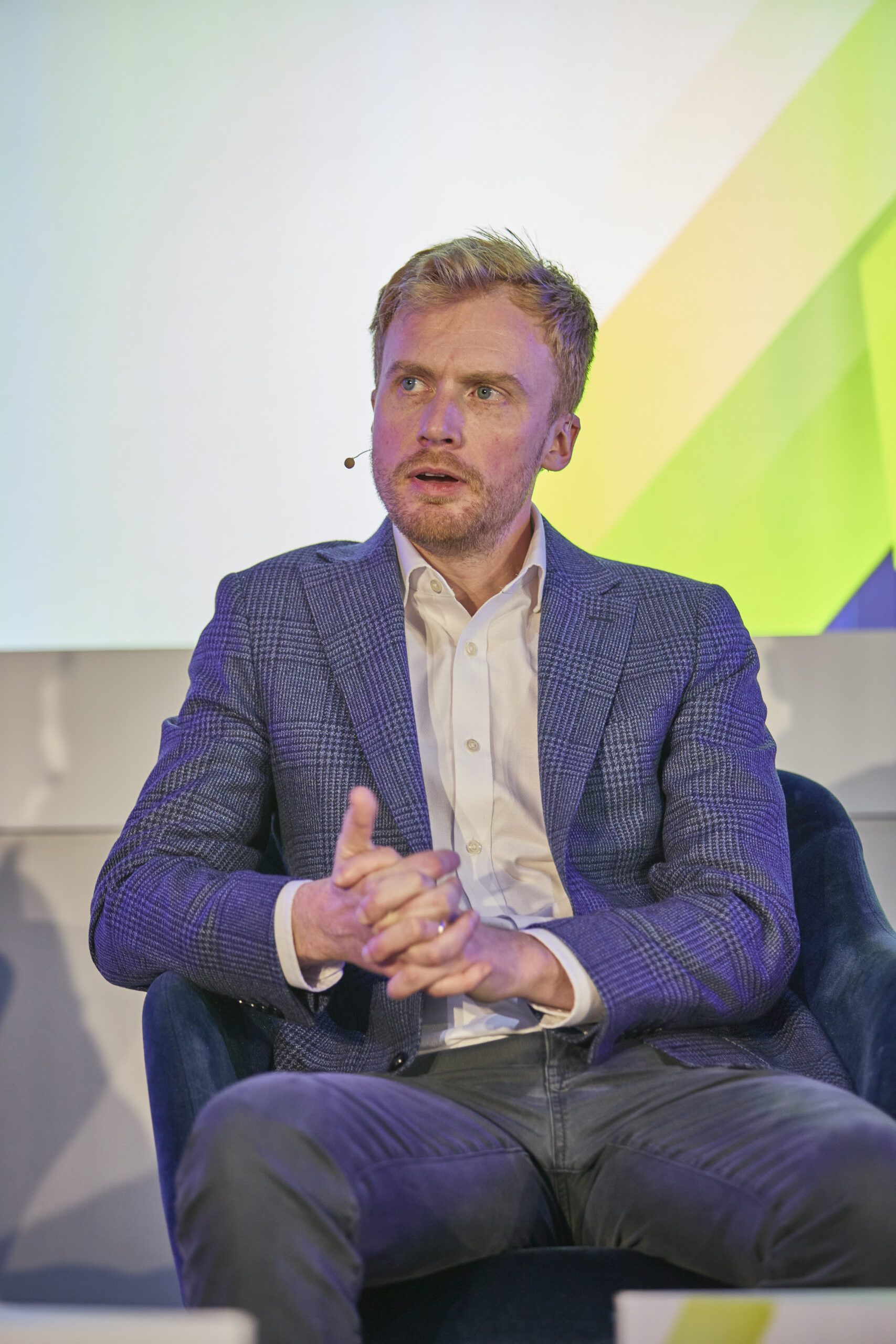
Adam Kucharski speaking at the 2025 Leaders Sport Performance Summit.
Over the course of half an hour, Kucharski, a Professor at the London School of Hygiene & Tropical Medicine, explored the craft of decision-making as influenced by information availability and behaviour.
“How certain is enough?” he asked. “How do we weigh the different ways that we could be wrong or weigh up the potential to get more information? Then, crucially, how do we think about the communication of that? And in terms of the ambiguity around uncertainty, being able to evaluate our judgements and ultimately get those ideas and innovations into the hands of the people who can make best use of them.”
He encouraged people in sport to consider a range of factors.
Perfect clarity is rare
Hindsight is 20:20, which leads to what Kucharski calls the “fundamental problem of cause and effect”. He said: “You only get to see one version of reality. You take an action, you see the outcome, you don’t get to rewind reality, not take that action, and then see what happens next. You never get to observe the counterfactual.”
Injuries offer a good opportunity to understand cause and effect in sport. With this in mind, Kucharski cited a 2020 study by economist Ian Gregory-Smith on the connection between labour and productivity and how this relationship is impacted by the ‘exogenous shock’ of injuries [because they occur unpredictably and allow causal inference].
“Starting quarterbacks are paid ten times what the backup is,” Kucharski continued, “but if the star quarterback is injured and the backup is used, the team is not ten times less likely to win.” The actual figure is closer to 30% less likely, but that could still be the difference between a losing season and a lucrative playoff run.
NFL teams understand this. “What they found is it’s pretty well balanced in terms of the additional money they pay their star quarterbacks versus the financial loss they estimate if that quarterback isn’t playing. So it seems, at least in this analysis, a reasonably efficient market.”
Some risks are worth taking, some are not
The NFL study is instructive but, as Kucharski said, “we don’t always get the luxury of treating everything with that level of detail.” At some point someone must make a decision with incomplete information.
He told the story of William Sealy Gosset, an English statistician who was hired by Guinness in 1899 as the brewery sought to make their brewing more consistent. Gosset’s job was to help improve crop selection, yield consistency, quality control and the stability of fermentation processes through statistical analysis.
He developed methods that enabled brewers to draw reliable conclusions from small amounts of data. They needed a way to tell whether differences in quality, crop yield or fermentation were real or just random noise, even when they only had a handful of samples with which to work.
“Gosset was a pragmatist,” said Kucharski. “He didn’t like the idea that we needed to demand high certainty for everything.” Unlike some of his contemporary statisticians, Gosset believed that context was key.
Kucharski agreed. He said: “It depends on the situation that we’re dealing with, it depends on the impact of the decision. How much might we lose if we’re wrong? It also depends on how hard it is going to be to go out and collect new evidence. Some datasets are easier to get than others.”
It should not be a “one-size-fits-all” threshold. “You’ve got to be careful that you don’t just end up wanting more and more evidence that’s fairly inconsequential to decisions; there’s a risk you end up over-analysing.” On the other hand, “if there’s a large cost to being wrong and it’s easy to collect evidence, then you should demand that certainty.”
Leaders in sport, Kucharski explained, are likely to face high-impact decisions where it’s hard to gather additional evidence and build higher confidence. “In those situations, as well as making use of your judgement, the evidence you have available, you also need to be careful where you set the threshold for action.”
Inaction is also a decision
Set your bar for action high and you’ll avoid bad ideas, but you may also miss out on something groundbreaking.
“There’s a temptation amongst leaders to want more certainty,” said Kucharski, “but that in itself is making a decision. If you never make a decision unless you’re 100% confident, you won’t take risks or make progress; and that requires us to think more deeply about what we mean by being ‘wrong’. What are the different ways we could be wrong and how do we balance them?”
To illustrate his point, Kucharski referred to Albert Einstein’s irritation whenever his papers were peer-reviewed following his emigration to the United States. This was in stark contrast to his experience in his native Germany where, to cite one example, Max Planck, the founder of quantum theory who also served as Permanent Secretary of the Prussian Academy of Sciences, promoted Einstein’s early research on relativity through the academy’s journals, always without recourse to peer review.
“Planck’s philosophy was it’s better to set the bar low and get ideas at the price of making some mistakes than set it too high and miss out on both,” added Kucharski.
A leader must assess the trade-offs and decide which metrics define success.
‘Weasel words’ help no-one
Sherman Kent co-founded the CIA’s Office of National Estimates (ONE) in 1950. A year later, as Kucharski told the audience, the office published a report entitled ‘Probability of an Invasion of Yugoslavia in 1951’. It concluded that there was a “serious possibility” of a Soviet invasion that year.
Kent later asked the different analysts involved what numerical probability they had in mind when they agreed to that phrasing. Their answers ranged from 1:4 to 4:1.
“He got quite frustrated with this,” said Kucharski, “he said ‘in intelligence, like in a lot of crisis and decision-making environments, you don’t get certainty and clear facts; you often have to use judgement’. He noted that people hate being pinned down to judgements; and they use ‘weasel words’.” These are intentionally ambiguous or misleading turns of phrase.
Kucharski admitted he had been guilty of using weasel words himself in the past. “The value in pinning people down to a judgement is it allows you to evaluate their judgement, particularly under uncertainty.”
Your network is critical when selling decisions
Kucharski argued that it is critical for leaders to balance the interaction between evidence, people and methods of communication.
“It’s not just about models,” he said. “It’s about how they interact with people; those end users.”
Leaders should look to create a “network effect”. “If you get the flu, you probably got it from one specific person; but ideas and the adoption of innovations don’t work like that. There’s a lot more need for social reinforcement.”
It helps to build credibility (“if you hear about something independently from lots of people, it gives you increased confidence about it”) and social legitimacy (“you might believe something is true, but if other people aren’t acting like it’s true, you might be less likely to act”).
What to read next