Leaders in Business
  • Membership
  • Events
  • Content
  • Virtual Learning
  • Connections
  • Partners
Login
  • Leaders Meet: Innovation
  • Events
    • Leaders Week London
    • Leaders Sports Awards
    • Leaders Club Events
    • Leaders Performance Institute Events
    • Leaders Meet: Innovation
  • Memberships
    • The Leaders Club
    • Leaders Performance Institute
  • About
    • Careers
    • Contact
I’m a sports leader:
  • Off The Field For those focused on the business of the sport View more
  • On The Field For those working with an athlete or elite team View more
  • Login
    • Leaders ClubThe membership for future sport business leaders
    • Leaders Performance InstituteThe membership for elite performance practitioners
  • Newsletters
Performance Institute Leaders Performance Institute Logo
  • Membership
  • Events
  • Content
  • Virtual Learning
  • Connections
  • Partners
Login
Members Only

30 May 2024

Articles

Talent Development Can Feel Like Catching Lightning in a Bottle, But Here Are Six Reasons why Leinster and Fulham Are Doing Better than Most

Category
Coaching & Development, Premium
Share
Facebook Twitter Email Copy Link
https://leadersinsport.com/performance-institute/articles/talent-development-can-feel-like-catching-lightning-in-a-bottle-but-here-are-six-reasons-why-leinster-and-fulham-are-doing-better-than-most/

Simon Broughton and Huw Jennings were both onstage at Leaders Meet: Teaching & Coaching and happy to share their wisdom.

By Henry Breckenridge
Ciarán Frawley’s nerveless penalty for Leinster took the Champions Cup final to extra-time last weekend.

Their opponents, Toulouse, would win 31-22 at London’s Tottenham Hotspur Stadium, but Frawley’s contribution at fly-half had echoes of his illustrious former teammate, Jonny Sexton, who retired last year.

Both Frawley and Sexton are graduates of Leinster’s esteemed academy, which has propelled the club to the elite of European rugby.

A remarkable 90 per cent of Leinster’s squad was born in Ireland or born to Irish parents abroad, as Simon Broughton, Leinster’s Academy Manager, told the audience at April’s Leaders Meet: Teaching & Coaching at Millfield School. More remarkable still, Leinster provides the backbone of Ireland’s national team, which is currently ranked second in the world of men’s rugby.

Broughton was joined by Huw Jennings, the Head of Football Development at English Premier League club Fulham. The south-west London club enjoy Category One status under the Elite Player Performance Plan and have long been renowned for the calibre of players to pass through their doors. It stretches from Johnny Haynes and World Cup-winner George Cohen in the 1950s to more recent graduates such as Moussa Dembélé, Ryan and Steven Sessegnon and Harvey Elliot.

Bridging the gap between academy and senior level is uppermost in the minds of both academies, but it is not the be-all and end-all.

“We have to have an effective end result for everyone that comes through the programme,” said Jennings, who built his reputation for youth development at Southampton in the early 2000s. “For some, that might be an early exit, but as long as they’ve had an experience they’ve benefited from, learnt from and, hopefully, enjoyed, then that’s a decent return.”

Below, we pick out six reasons why Leinster and Fulham are doing better than most.

  1. Holistic development

Both Leinster and Fulham prepare their players for a well-rounded future. Academic study tends to motivate young athletes intellectually and helps them deal with challenges, setbacks and even injuries. Leinster recruit players for their academy at aged 17-20 from clubs across the 12 counties of their province. They have adopted a ‘dual career’ model, where players pursue their studies alongside their rugby. Approximately seven or eight players are selected each year to join Leinster’s senior squad, which means the others must have something else to fall back on.

This is perhaps even more important at Fulham, whose academy recruits players at a much younger age (9 and upwards), with even fewer players making the grade as professional footballers. The club partner with sixth forms such as Raynes Park High School and Ark Globe Academy, both in south London, where older academy players can pursue A-Levels or BTEC qualifications.

  1. Nurturing environments

Leinster and Fulham both engineer their environments to facilitate learning and development. Broughton, an experienced player and coach, was appointed Leinster’s Academy Manager in 2021 and has been instrumental in leading the programme at their Ken Wall Centre of Excellence, which opened in 2019. They place an emphasis on teamwork, commitment, integrity, and communication.

The Fulham Academy, which has been led by Jennings since 2008, promotes individual growth within a high-performance setting. Players receive personalised attention, focusing on technical skills, physical conditioning and mental resilience.

Additionally, all players at Fulham, from the younger Foundation Phase up to under-23s, adhere to the academy’s core values, which are known as the 3Hs: honesty, humility and hard work. The club also seeks out diversity in its players and staff to help ensure that their academy better reflects modern society.

  1. A self-driven culture

Staff provide support at both clubs, but players are expected to take charge of their own development. Inspired by the Royal Academy of Dramatic Art, Leinster use the phrase ‘the athletes are at work’ as one of their underlying principles. It’s up to the player to put in the work and the team around the athlete will provide them with the tools they need. The club uses blended learning to appeal to the modern academy player in 2024, which means an array of videos, music, open conversations, and presentations to inspire creativity in their players.

At Fulham, Jennings and his colleagues say it is crucial for players to be able to manage their disappointment. They also believe the players that do this best can make the most of the opportunities that come their way. They increasingly find that those perceived to be high-achievers early in their academy journey find it hard to be high-achievers at the end of that journey. “The question to ask yourself is which players can deal with disappointment and, frankly, who can’t,” Jennings told the audience at Millfield.

However, he also emphasised the importance of academy coaches reflecting on their own practice. “We have to adapt to the athlete – not the other way around,” he added. “It’s about learning, it’s about understanding. It’s not referring to it as ‘back in the day’ – it’s about understanding where the athlete is in their journey so that we can relate to them.”

  1. Proximal role modelling

There are 60 players in the Leinster building everyday, 20 of whom are in their academy. It enables Broughton and his colleagues to use what they call “proximal role-modelling”. Once upon a time, academy players used their own changing room, whereas now they are fully integrated into the squad. They are able to observe pro athletes each day both on the training pitch and in meetings. “It helps to accelerate their learning and development,” said Broughton, who also spoke of the value in the informal conversations that take place en route to and from the training pitch.

  1. Honest conversations

Too often, staff in academy settings put off frank conversations about an athlete’s progress. That is not the case at Fulham. Difficult conversations need to be on the agenda from the off and, according to Jennings, “everything should be couched in positive language – but not at the expense of leaving out the critical message.”

  1. Parental involvement

Both clubs increasingly bring parents into the fold, fully acknowledging the role of family in the development of young athletes. For their part, Fulham recognise that young athletes are staying closer to their parental unit than in previous generations. It can be a challenge, as Jennings readily admitted, but the club tries to think of it as a learner who has just passed their driving test. “The parent is invited into the car but they’re not driving the vehicle. It’s not about exclusion: if the individual wants family members included, the club have to manage that,” he said.

2 Apr 2024

Articles

Five Ways RADA Is Raising the Performance Ceiling of its Acting Students

Category
Coaching & Development
Share
Facebook Twitter Email Copy Link
https://leadersinsport.com/performance-institute/articles/five-ways-rada-is-raising-the-performance-ceiling-of-its-acting-students/

In the second part of our interview with RADA’s Director of Actor Training Lucy Skilbeck, we discuss breaking habits, expanding capacity and self-reflection.

By John Portch
“With everybody, we start at the ground floor,” said Lucy Skilbeck.

The Director of Actor Training at the Royal Academy of Dramatic Art [RADA] is speaking to the Leaders Performance Institute for a two-part interview.

The first focused on the teachers, the second instalment hones in on the students themselves, those coming in on the ‘ground floor’. RADA enrols a talented cohort of 28 acting students each year and works for three years to raise their ceiling.

“What we identify is the talent and the potential for growth, development and passion,” Skilbeck continued. “They are all talented, there’s no question, and they have all done really interesting things before they’ve come to RADA. What the training does is expand the instrument.”

Here, we explore the five most important factors underpinning that process.

  1. Breaking the constraints of habits

This is the key point. Skilbeck, who also spoke at the 2023 Leaders Sport Performance Summit in London, believes that that everyone, including actors is constrained by their habits. “All of which we have developed from earliest infancy,” she said. “These are vocal and physical habits, mental habits, habits of the imagination, and emotional habits.” They can impair an actor’s work. “In other words, you can’t embody someone with an enormous emotional range, that has to go on an enormous emotional journey, if you’re habitually protective of your emotions and not [able] to go to anger, to distress, to passion, then you can’t take the character there either.” The students’ talents are, as Skilbeck explained, “held within whatever the constraints of their own habits”.

  1. Expanding an actor’s performance capacity

RADA’s actor training aims to break those habits and expand the acting students’ technical, emotional and imaginative capacity. “Really, what we’re training is how to be a human being and how to embody human experience in imaginary circumstances,” said Skilbeck, adding, “the only way I think that can be done is through the expansion of the self so that there’s access to the vulnerability that allows people to be open and exposed in a way that acting is asking them to do.” There are potential consequences of this approach to training, namely raising fears and psychological trauma.

  1. Managing fears and trauma

Skilbeck admitted there is an element of risk in encouraging students to be vulnerable. As such, RADA offers its Student Wellbeing Service through its Student and Academic Services department. The service consists of two main teams: their Disability Service and, of particular interest in a discussion of habits, their Counselling Service. Skilbeck acknowledges that breaking habits can be a difficult process and can potentially being up fears or trauma from past experiences. “We work with a psychologist who hosts sessions with students on resilience early in their training,” she said. “It is both psych ed and giving them strategies for managing what might be potentially overwhelming traumas.” The psychologist is also working with the teaching faculty to develop trauma-informed teaching spaces and practices so that teachers know how to respond and the material is less likely to provoke overwhelming responses for students. “The challenge, which I’m sure is found everywhere, is that people don’t always know what traumas they’ve had until they begin to surface some kind of emotional content that has potentially not surfaced for a while,” Skilbeck continued. “There’s no way we can prevent that entirely, but we do have as many structures around us as we feel we’re able to at the moment. We’re constantly questioning and trying to develop those structures to create those spaces that feel sufficiently secure for the students.”

  1. Reflective practice

Reflective practice is another key component of expanding capacity. “In reflective practice, I work with students on taking the observer position so that they can create some space from the sensation, the experience of the release, as much as possible,” said Skilbeck. It is a useful means for acting students to “develop the skills” to reflect on their progress and development and RADA also encourages its students to keep reflective journals. As discussed in part one, RADA reins in formal feedback for the most part in years one and two. A recent course review suggested that even more time be carved out for self-reflection. That can be easier said than done. “That’s like the $64,000 question,” said Skilbeck, who explained that RADA has cleared the calendars for three hours on Thursday afternoons for first and second-year students. She noted that much of the curriculum contributes to the development of independent practice but “we haven’t tied that together sufficiently for students to come out the other way end going ‘I’m really clear on what my skills for independence practice are’.” To this end, RADA has been exploring a second-year project for self-led work. The goal is “to make sure students are confident in their understanding of what ultimately becomes the capacity to create, devise and lead on their own project work and production work, if they so choose to do.”

  1. Embracing failure

Just as Skilbeck believes teachers will get things wrong in their practice, so will students – and this is to be embraced. “This is something we talk about a lot because we’re encouraging people to not to try and get it right and to allow failure to be part of one’s creative practice,” she said. “You can’t have a creative practice if you’re not willing to fail. You can only have a complacent practice because you’ll only try the things that you know will succeed. To have a creative practice you have to be willing to accept a degree of failure – and I think that goes for all of us – those trying to lead, run and develop courses as well as those who are participating on them.”

Further reading:

‘At RADA we Want Teachers to Follow the Students as Well as Guide them’

Members Only

28 Jun 2023

Articles

How the Pittsburgh Pirates Seek to Address Common Development Challenges in their Young Latin Players

In the second of a two-part interview, Hector Morales, the Pirates’ Director of International Development, delves into his work addressing those limiting factors.

By John Portch
Hector Morales says that the Pittsburgh Pirates’ Latin players can arrive at their academy in the Dominican Republic with “artificial confidence”.

“That’s what I call it. This confidence is just based on the people that are around you where you are,” says the Pirates’ Director of International Development. It is not uncommon for recruits from places such as Colombia, Venezuela, Mexico and the Dominican Republic to be the best player on their youth or school team. In those surroundings, they may be the best.

“But then that competence dissipates and goes away as soon as you step up to another cohort, where there’s a group of people who play better than you; and this is the first time you’ve seen this so it’s a culture shock sometimes.

“One player said to me once ‘my uncle lied to me – he said I was the best he’s seen’. I said: ‘He didn’t lie to you – you’re probably the best he’s seen, but that doesn’t mean there aren’t better arms out there’. I always tell the players, ‘if it’s too easy for you now, then your competition’s not here’. You shouldn’t be saying to yourself ‘I’m the best’ you should be saying ‘where’s my competition at because they’re not here? Where are those people who are going to give me the run for my money?’

“We’re never that good. There’s always somebody out there who can change our perspective”.

Morales spoke at length about bridging the cultural and development gap between Latin players and US players in part one of our interview. He also spoke of the practices that underpin the club’s approach at their Dominican Summer League academy in El Toro. In this second and final part, he delves further into some of the limiting factors that can affect Latin players and how he and his colleagues seek to address those.

“I still think that the biggest challenges we face are unrealistic expectations that things can go fast, that’s it’s like highlights,” says Morales, echoing the observations of some youth coaches across the globe.

“They were raised on highlights, they don’t see the games any more. If you asked, I’m pretty sure in soccer it’s the same, if you ask them, ‘do you see the full length of the game so you can understand the game?’ They’ll tell you ‘No, I saw the goal. I saw this pass or this tackle or I saw the red card’. They’re used to the 15-second or 20-second bite and they expect that their development will be the same.

“If you’re thinking that things should be fast – and elite level performance takes time – then there’s an immediate disconnect on satisfaction and effort and other things because it’s taking so long and you think you’re not progressing the way you should be”.

Morales adds that while smartphones have transformed all of our lives (“they dictate our moods and what we do”) the younger generation are “even more comfortable communicating this way, which has taken a toll on the social aspect of things”.

Compounding these factors, in Morales’ view, is the role of these young players’ agents. “They are overly protected,” he says. “They want their agents to fight their battles for them. There’s no longer this coach conversation. It is now ‘I will have my agent reach out to you. My agent will talk to you now’. ‘I’m talking about development, I want to talk to you’. ‘Talk to my agent’.

“It’s that [lack of] nurturing, not being able to solve problems and deal with an adult, to reach a potential opportunity to do something differently. Those are very big limitations we’ve got to train our young athletes for and prepare them for. ‘If you’re expecting X then let’s have a conversation because we need to reframe your expectations’. It’s interesting and a good challenge to have, I believe, the more the realistic the expectations, the better for the kids in the competitive environment”.

Morales explains that the players’ parents or guardians remain influential in their children’s lives, but it is the ‘buscones’ – a Dominican term for local agents – who pedal young players to visiting major league scouts and often have the most influence on the player.

“When you ask the players who’s the person they trust the most, they’ll tell you that person. They’ll give you the name of that person. That’s still the case,” he says. “This is one of the key elements I’m focused on. Who does this person trust? What’s their ‘why’? It is constantly evolving but we’ve got to stay on top of that so we can help them and they can feel connected”.

The Dominican academy’s roster of mentors perform a significant role in this regard. A player is assigned a mentor at the academy who checks in regularly to discuss the player’s development.

“I normally select former players who have been through the stages the players are going to go through in transition,” says Morales. “So they’ve been there, understand the challenges of going to the next level. They can sell it through emotional and personal connective stories of what it was like for them to go through those transitions. And there are a lot of times where guys didn’t make it all the way through, or their career ended early or their talent got to a certain level, but they always dominated the mental game whether in college or if they played for the Pirates. They did everything they needed to do and they controlled everything they needed to control and they were engaged in trying to get better but their talent met its ceiling.

“The next requirement for a mentor is that they want to be in baseball or find a way to get a career in baseball. So they are here for two reasons: to mentor players and also open their own understanding of what the potential opportunities are out there for them so they can continue to have a career in the game”.

As we wrap up the interview, the Leaders Performance Institute asks Morales for his hopes for the future in baseball development in this part of the Americas.

“I still have a ways to go to get all the players to understand all the components that influence performance,” he says. “At the elite level, when you have a bunch of people whose talents are the same, there at elements of the head and heart that get in the way, there are elements of nutrition and recovery. I’m still struggling to get them to understand this because I’m breaking the paradigm of ‘I’m only being looked at because of my tools so far’”.

He elaborates on that last point. “No scout in any sport goes to a player and says ‘talk to me about your sleep, talk to me about your recovery strategies. How do you prepare? What are your routines to ensure that you are eating well?’ They’re just looking at their capacity to dribble the ball, their capacity to hit, how hard the arm can throw and move. They’re looking for the fundamental raw tools.

“So now I’m trying to get the player to go from ‘I was valued, paid and given a bonus before this one thing and now you’re telling me this is not the only thing that matters, that everything else in here matters so I can be the best athlete I can be’. So it takes time. You finally get a nutritionist in there last year and now these players are understanding how to assess themselves and the importance of having one-to-one sessions with a nutritionist. We’re talking about the mental game all the time and we do mindfulness practices twice or three times a week during camp so they can practise and study, so they can find the opportunity to be in the moment.

“Some still do it with hesitation. They say ‘I don’t need this’ and then until I get video and show them what happened with this particular play ‘I guess I wasn’t paying attention’, ‘oh, so those mindfulness things we talked about – you might need it, you might need to practise how to focus and be in the now and in the moment’. So how about giving that a try now that you have proof they do need it because multiple times in the field it’s proven that they cannot focus very well.

“It’s a battle. And the next stage of this is for them, once we’ve nailed this down, is for them to understand the analytics and the things that we know are important so they can begin to understand how to address those challenges and how to make changes and how to adapt. And one that’s always in the forefront for me is to ensure that they don’t go back home without any one to change what they have going forward, because the natural tendency over time as they go home for the off-season and they see their old coaches who say ‘that’s not what we used to do here. This is the way you used to it. Keep doing it this way’. Because they trust this person they show up back at the academy worse than when they left because we have moved them forward in development and now they have gone back to something that they were doing before because they didn’t have the tools to say ‘no, my team’s metric of success is this way and they taught me to do this and I’m going to continue to do it this way’. They’re too young to tell an adult figure with authority that they can’t use their advice.

“I want 80% of my guys to go home and say ‘no’”.

It takes time, but Morales, the Pirates and their young recruits are on the right path.

Members Only

16 Jun 2023

Articles

Mobile Scouting Comes to Major League Soccer Courtesy of aiScout

Category
Data & Innovation, Premium
Share
Facebook Twitter Email Copy Link
https://leadersinsport.com/performance-institute/articles/mobile-scouting-comes-to-major-league-soccer-courtesy-of-aiscout/

All MLS first team clubs, as well as MLS Next Pro and MLS Next teams, will have access to the platform to scout players who can upload videos and metrics to the app for free.

A Data & Innovation article brought to you by

sport techie
By Joe Lemire
Major League Soccer is undertaking an ambitious, tech-aided endeavor to find overlooked talent, particularly in North America, through a new partnership with ai.io, the makers of mobile phone scouting app aiScout. All MLS first team clubs, as well as MLS Next Pro and MLS Next teams, will have access to the platform to scout players who can upload videos and metrics to the app for free.

“That’s why we think this technology is so powerful because all you need is this [smartphone],” MLS SVP Emerging Ventures Chris Schlosser said, “and suddenly, you can be scouted anywhere at zero cost. You can go do drills in your backyard or your driveway or local park, and that would allow you to get on MLS’s radar.”

MLS and ai.io will begin collecting data this fall to create appropriate benchmarks for evaluating players at various levels before all players gain access to aiScout in January 2024. The aiScout app uses Intel’s 3D Athlete Tracking computer vision technology and assess users’ physical and technical skills. Premier League clubs Chelsea and Burnley, which recently clinched a return to the top tier next season, are both R&D partners.

Fred Lipka, the Technical Director at MLS Next, helped champion the use of technology to eliminate the barriers of cost and geography from talent identification.

“Players’ pathways, as they journey through youth sport, is not necessarily soccer first,” Richard Felton-Thomas, aiScout’s COO and Director of Sport Science, said of the US. “And they didn’t just want to be an organization that’s picking up talent because they haven’t made it somewhere else. They want it to be at the forefront of talent identification, and he very early saw that the way to do this is to be able to make sure we can look at everybody in the country simultaneously and fairly.”

The founding story of ai.io originates from the experience of Founder Darren Peries and his son who, after being released from Tottenham’s academy, had no digital CV — data or video — to share with scouts of other clubs. And that was the case for a promising player who had been competing under the purview of a top-flight club. Many multiples more youth had even less access to the typical sporting infrastructure.

Perhaps the best case study of aiScout’s efficacy is its use by another early client, the Reliance Foundation Young Champs, a leading academy in India. During the pandemic when its scouts were unable to travel, RFYC used aiScout to evaluate 12-year-old players. AiScout was used to whittle down the number of candidates for a tryout — and led to the academy inviting four players from rural areas who weren’t even playing organized soccer at the time and thus never would have been on the radar.

“The nature of talent development can be a bit random,” Ben Smith, formerly Chelsea Football Club’s Head of Research and Innovation, told SBJ last summer before joining BreakAway Data full-time. “So if we can have a technology to work at scale across vast areas, then that our scope and our reach is potentially very substantial.”

MLS clubs will be able to search for talent globally, but the primary goal is to consider continental talent, given some of the regulations around homegrown players and international visas.

The aiScout app was part of FIFA’s innovation program and underwent validation testing at Loughborough University, London and Kingston University. A revamped version of the app was released last year to include more gamification and more content geared toward player development, as opposed to just evaluation.

“We wanted to prove that we were a trusted tool first with the clubs,” Felton-Thomas said. “What the new app does is it brings in more of those elements that players get to see, ‘OK, how do I get better if I’m not good enough today?’ We’ve got a bit more player focus to that journey of development, not just trialing.”

The aiScout app will be the focal point, especially early in the partnership, but the company also maintains mobile sport science centers, aiLabs, that has additional evaluative tools for biomechanics and cognitive function.

As the partnership progresses, each MLS club will be able to customize their use to include additional tests, datapoints and benchmarks that are bespoke to their needs. Schlosser said, to his knowledge, none of the league’s clubs have harnessed computer vision at the amateur level before, but he said they are eager to get started.

“The system is up and running in the UK,” he said. “They’ve done some trials with a couple of UK-based teams, so we have some confidence that this isn’t just fly-by-night stuff. This is real. And we’re excited to roll up our sleeves and then roll this out across the country. We think there are many, many kids that we haven’t seen yet.”

This article was brought to you by SBJ Tech, a Leaders Group company. As a Leaders Performance Institute member, you are able to enjoy exclusive access to SBJ Tech content in the field of athletic performance.

31 May 2023

Articles

MLS NEXT: the Program’s First Steps Towards Successfully Tapping into North America’s Considerable Soccer Talent Pool

Category
Coaching & Development
Share
Facebook Twitter Email Copy Link
https://leadersinsport.com/performance-institute/articles/mls-next-the-first-steps-towards-tapping-into-north-americas-considerable-soccer-talent-pool/

Justin Bokmeyer, MLS NEXT’s first GM, is the person tasked with developing the region’s talent identification and development programs.

By John Portch
Justin Bokmeyer was announced as the first General Manager of MLS NEXT in February.

The New York-based MLS NEXT was founded in 2020 as a youth soccer league in the United States and Canada with a view to establishing itself as the premier talent identification and development program in North American soccer.

It is well on the way to achieving that aim. In a little over three years, MLS NEXT has grown to consist of 137 clubs, 628 teams and more than 13,500 players.

Bokmeyer was seen as the ideal candidate for the GM position following his sterling work at the NBA where as the Head of Strategic Initiatives he helped to found the Basketball Africa League. Earlier in his career, he also served as the Director of Lacrosse Operations at the United States Military Academy at West Point for two years and spent 11 years on active duty in the US Army.

The Leaders Performance Institute asks Bokmeyer if he was attracted to MLS NEXT because, much like the Basketball Africa League, it is a new venture.

“Absolutely,” he replies. “In my military career and in working in the NBA, I was working in new things and got to build them from scratch.” He cites examples from the athletic department at West Point, where he helped to establish programs, as well as the numerous NBA academies set up on his watch. “That was one of the exciting things about me taking this MLS NEXT role. I don’t know if I can jump into something that’s set for 20 or 30 years. That’s a very different mindset and a very different leadership skill.”

MLS NEXT’s aim is to provide the requisite coaching contact and a unified approach akin to the English Premier League’s Elite Player Performance Plan that taps into the region’s large talent pool.

Here, the Leaders Performance Institute outlines Bokmeyer’s first steps.

Year one, hands-on

Bokmeyer explains that he feels he needs to be heavily involved in his first year as GM. “I’m very hands-on this year but then, leading into next season, people should feel very empowered,” he says. “They’ll know our culture, the standards, our norms. They’ll know which decisions they can make.” There are, at present, ten people on his staff who share responsibilities for operating and executing the program, player engagement and experience, and commercial opportunities.

Bokmeyer has ensured that roles and responsibilities are clearly defined across the team. “It’s the focus on how we work,” he continues. “It’s being very deliberate in the platforms we use, how we communicate, when we meet, what decisions need to come to me, being very deliberate in how we work.”

MLS NEXT has made inroads but brought onboard its first GM because the league understands there is still a ways to go. “One of the things that I pride myself on is being able to piece things together; really diving into how we make those decisions and what the long-term effects are. Are we solving the problem we need to solve? The ability to think through second and third order effects is one that I pride myself on, making sure that we stay focused on what we’re trying to solve for.”

Development tools

Bokmeyer has introduced a series of tools to support his staff’s development. “We held a staff meeting on the theme of decision making and so we introduced the idea to them around a decision journal and why that’s important for different decisions,” he says.

He also introduced the Questions & Empathy card deck to his team. It is a 56-card companion to Michael Ventura’s book Applied Empathy. “Seeking clearer understanding or deeper connections?” asks the Questions & Empathy website, “Let these cards guide your conversation and exploration.” The deck is: “designed to help inspire empathic exchanges among individuals, teams, and communities alike.”

Says Bokmeyer: “How do you have deeper conversations and get to know people so you develop that trust quicker? You really speed up that learning; and so I use those questions and empathy decks often within our group to open up conversation.”

The work of Daniel Coyle, author of the Talent Code and Culture Code, has proven useful too, with some tools freely available on his website.

‘What keeps you up at night?’

Bokmeyer and his staff will endeavour to visit each of MLS NEXT’s 137 clubs at suitable moments. “I’ve told my team several times that we cannot lead and be actual leaders from the New York office,” he says. “We have to be out to see the environments and talking to people. We’re in this initiative now over the next couple of months visiting all parts of the country, seeing the clubs, MLS clubs, non-MLS academies, anybody and everybody, getting out there, talking to them, and meeting them in their environment and not over Zoom. That lowers the defences, it creates more trust, and so we’re absolutely committed to getting out there.”

He runs through his itinerary at the time of our interview. “We’re going to hit the four clubs in San Diego next week; a couple of weeks ago I was at a site visit in south Florida for an event and visited the local clubs, five clubs in Miami, to make sure that I attend matches, training and see their facilities. Really trying to understand it is critical. You lose so much if we say we’re going to make these policies from the New York office.”

What is the first thing he asks those stakeholders? “What keeps them up at night?” he says. “That’s the biggest thing. Absolutely understanding that. Everybody we’re visiting, they’ve got to play the long game and we’re requiring them to play the long game and focus on that while they have to produce short-term results. And I know that they have families – their jobs and livelihood depend on that. So trying to balance that. Understanding what keeps them up at night is critical, whether that’s they don’t have enough players, their talent ID process is wrong, who they’re hiring, anything like that, we want to know. Then really focusing on what we can do to improve.

“Tell us your recommendations, competition schedule, talent ID, roster numbers, any of that. We’ve got this blank slate. ‘Tell us, if you were in our role, what would you do? What would you be looking at?’ That really brings out some good insights across the board from all these clubs.”

The role of college soccer

Bokmeyer believes that young players growing up in North America may have a unique opportunity to sample different sports to a competitive level. “I think the benefits of being exposed to a lot of different sports in the United States and Canada can provide a unique athletic skillset that other countries may not have,” he says.

Tapping into the large talent pool remains the primary goal. “How can we access that talent pool better? We’ve got some things in the works with technology and AI, but we want to be able to canvass the entirety of North America and find the players that could be hidden in different parts of the country.”

He also feels that the unique North American college system can complement MLS NEXT’s goals. “We know that 90% of our players won’t go pro pathway right away,” he adds. “Everyone is looking to go to college unless you’re going pro, so we have to ensure that the right conversations are happening, that the players are deciding what’s best for them and their development and not pushing them either way.

“We still see the college pathway as being a unique ecosystem for late developers or bloomers. If you look at Matt Turner, who played university college soccer in the US and now look at him playing in the Premier League with Arsenal. He’s one of those guys. We had 19 players who played at NEXT, went to college, and then were drafted in the MLS SuperDraft this past year. So there is still a viable pathway for NEXT players to go to college and then get drafted at some point during their college career and still get that chance.”

What’s next?

The research on athlete maturation by Sean Cumming at the University of Bath is of considerable interest to Bokmeyer, as is biomechanics, but, beyond specific physical markers, his immediate interest is to stimulate MLS NEXT’s development.

“We’re very clear on what we want to accomplish, we know how we’re going to do that, and we’ve got the things in place to do it and we’ve got the right clubs in place as well,” he says. “That’s through our standards and governance, that’s through clear communication and trust between the league and member clubs. And what it looks like is absolutely athlete-centred, and that’s putting player’s rights, whether it’s their data, first and foremost. We want to be aligned in our behaviours and in what we do – and we won’t have to be talking about that because it’ll just be known that we are athlete-centred. They’ll see that it’ll just be part of the behaviour and culture that we’ve set.”

Members Only

10 Oct 2022

Articles

Why the San Francisco 49ers’ Hiring of John Lynch and Kyle Shanahan Owed More to the Fortune 500 than NFL Tradition

Category
Leadership & Culture, Premium
Share
Facebook Twitter Email Copy Link
https://leadersinsport.com/performance-institute/articles/why-the-san-francisco-49ers-hiring-of-john-lynch-and-kyle-shanahan-owed-more-to-the-fortune-500-than-nfl-tradition/

EVP of Football Operations Paraag Marathe outlined the innovative approach at the Leaders Sport Performance Summit.

By John Portch
  • Are you asking the right questions of candidates? What do you really need to know?
  • Do you fully understand the demands placed on the role for which you are hiring?
  • Personality traits and potential compatibility are increasingly important.

San Francisco took an agnostic approach

In early 2017, Marathe and the 49ers installed John Lynch as GM and Kyle Shanahan as Head Coach as they sought to return their franchise to prominence. Their approach was unconventional, such as the long-listing of 22 candidates, and they didn’t rush. “We were 26 days in and we hadn’t announced anything,” Marathe told an audience at the 2018 Leaders Sport Performance Summit in Chicago. “Fans were getting impatient.” San Francisco had adopted what Marathe called an “agnostic” approach and eschewed the usual questions one might ask an aspiring GM or head coach. “We didn’t ask any of those questions because we figured if you’re at that stage where you’re interviewing for a GM or a head coach, you have a successful process that got you to where you are – we want to know what kind of leader you are,” he continues. “What’s your vision? Who are your mentors? How do you respond to failure? How do you deal with accountability? How do you hold yourself accountable? How do you hold your staff accountable? How do you think about the big picture?”

They recognised how demands on GMs and coaches are evolving

The questions the 49ers posed above are still more readily found in a job interview at a Fortune 500 company than in sports, but Marathe argued that the roles of the GM and head coach require different skillsets in the modern era. He said: “In today’s NFL, it’s no longer just about coaching the team or living in a Motel 6 in West Virginia and scouting players for 15 years – it’s about actually being a CEO on the field, a CEO off the field. That’s what running an NFL franchise is all about, so we were very focused on the process about looking for people who are leaders, who have leadership qualities, who hold themselves accountable, who have a certain amount of humility.”

In John Lynch and Kyle Shanahan they sought a partnership of equals

San Francisco prioritised a partnership, with neither GM nor head coach seen as the senior figure but more of a duo. “A lot of times this is an insular industry where people get threatened by one another,” said Marathe. “So we wanted to go in and find a head coach and a GM that were on the same sort of life cycle in their careers.” The hiring group acknowledged that a particular head coach candidate may work better with a subset of GM candidates. “We tried to find the right match that together brought out the best personality traits for the organisation and together had the right vision for leadership and accountability.”

They tested the personalities of their candidates

San Francisco gradually realised that Lynch and Shanahan would potentially be a good match. Such personality insights were delivered through some of the activities they asked their candidates to complete. One included a list of ten skills or responsibilities for a GM. They produced the same lists for a head coach. “For a head coach it might be designing a game plan or coaching your coaches or evaluating your players,” said Marathe, “and we asked them to rank them, one to ten, in terms of not how important they are but how good they are at each one. They had to be the best at something and they had to be the worst at something. And the same with the GM. It was actually interesting, going through these interviews, that some candidates couldn’t make themselves No1o at something. That teaches you something about them. In some of those exercises we did we really felt that John and Kyle would be very complementary working together.”

Members Only

30 Sep 2022

Articles

Measuring the Technical and Tactical in Soccer Scouting

Category
Data & Innovation, Premium
Share
Facebook Twitter Email Copy Link
https://leadersinsport.com/performance-institute/articles/measuring-the-technical-and-tactical-in-soccer-scouting/

The last in a series of three articles exploring the growth of digital scouting in global soccer.

A Data & Innovation article brought to you by
sport techie
By Joe Lemire

This story is part of our series on digital scouting. This piece, the conclusion to our soccer series, looks at the new sets of metrics available to coaches and scouts. You can read Part 1 on the growth of digital video here and Part 2 on how access to physical data has improved here.

Playermaker’s very first client in the United Kingdom was Fulham FC. This was a big get: Fulham had recently earned promotion to the Premier League for the 2018-19 season.

But there was a problem. Just two weeks after implementing the shoe-worn sensors, Fulham called Playermaker and said, “Your data is not reliable. It’s bad data.”

Someone from Playermaker’s team paid the club a visit where the Fulham coaches conceded that the day was “generally okay but look at this player: it’s abnormal. There’s no way he has so many touches and that he’s dribbling like this.”

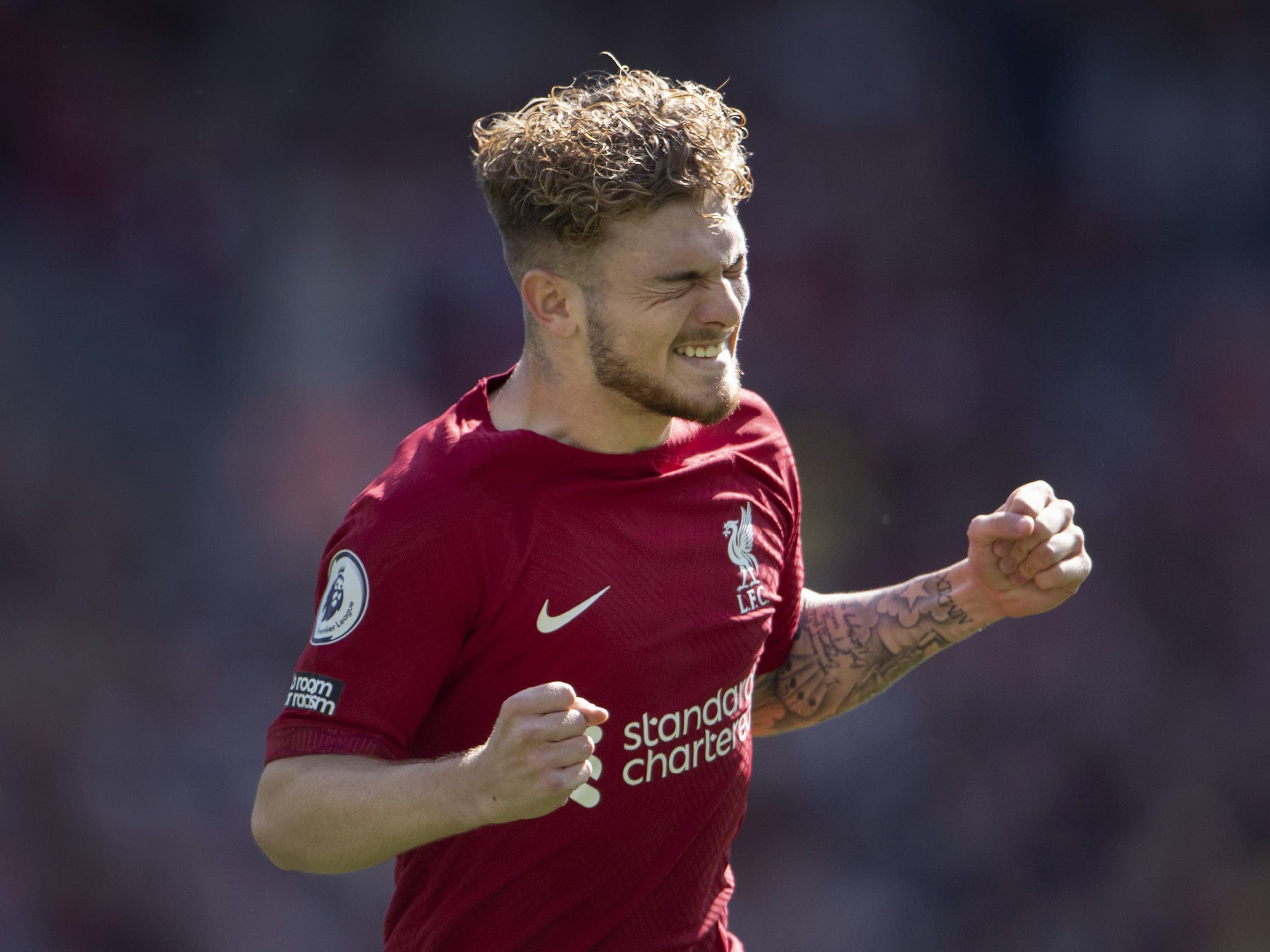
“We’re looking at this, and the data is legit,” recalls CEO Guy Aharon of 16-year-old Harvey Elliott’s preternatural ball handling. “And he became the youngest player ever to play a Premier League game.”
sport techie

Harvey Elliott’s impressive data from Playermaker’s shoe-worn sensors was initially thought to be a glitch.

The world of soccer data is evolving rapidly thanks to the proliferation of digital video, the growing accessibility of physical data inputs and now the introduction new devices and datapoints. Sensors such as Playermaker—which proffer physical data and, in a first, also metrics evaluating technical skills—are gaining a foothold in the scouting process, even if there’s a requisite learning curve to make sense of this new information.

Other new areas of information gathering include analysis of biomechanics using only smartphone cameras from AiScout and JuniStat, the democratized collection of physical data from SkillCorner and Track160, and the application of advanced algorithms to assess a player’s fit in varying tactical styles from SmarterScout and StatsBomb. Even the evaluation of the evaluators is being considered by thoughtful organizations such as 360 Scouting.

Players are getting more control of and context from their data from apps like BreakAway Data, which seeks to help prospects gain commensurate scouting interest for their talent. Presenting more true markers of talent helps minimize the need for multimedia skills in crafting highlight reels in hopes it reaches the right evaluator.

“Contrasting those is a very manual process, and making yourself stand out is based on selecting some good clips and being lucky if the right person looks at it,” says Ben Smith, Chelsea Football Club’s Head of Research and Innovation who also heads BreakAway’s international business. “But data has the ability to genuinely actually contrast you to people in a way that gives you, I think, a much higher percentage opportunity of actually being seen because it’s a marker of talent, rather than creativity in how you put together a CV or a visualization of who you are.”

Global soccer already suffers from the chasm between the haves and have-nots financially, but the gulf between clubs using advanced methods of scouting will contribute to the talent gap. The existence of scouting innovation doesn’t necessarily mean widespread adoption.

“People would be shocked if they saw the behind the scenes of Europe in terms of the way these clubs are run, not just from an operational standpoint, but from a sophistication,” says Jordan Gardner, Co-Owner and Managing Partner of Denmark’s FC Helsingør as well as an investor in England’s Swansea City and Ireland’s Dundalk FC. “So many decisions on recruitment are still made like, ‘I’m gonna go call my buddy, who’s an agent.’”

* * * * *

Data paired with video leads to visibility

Every year, the Reliance Foundation Young Champs, a five-star residential soccer academy in Navi Mumbai, scours India for the best 12 year-old players, offering them five-year scholarships to live and train at the academy. It’s a multi-pronged process of scouting trials all culminating in what’s a life-changing opportunity. Nine of the 10 players in its first graduating class two years ago received contracts to play professionally in the Indian Super League.

When the pandemic struck, however, RFYC had no ability to go see any young players in action. It sought help from a small London-based startup, AiScout, which uses Intel’s 3D Athlete Tracking computer vision technology to assess the physical movements of players.

From May to December, RFYC invited youth players to complete drills through the AiScout app. That helped whittle down the player pool to 400 who were invited to a regional trial. Eventually, the academy signed 19 players; AiScout was not the sole factor, of course, but 16 had participated in the virtual trials.
sport techie

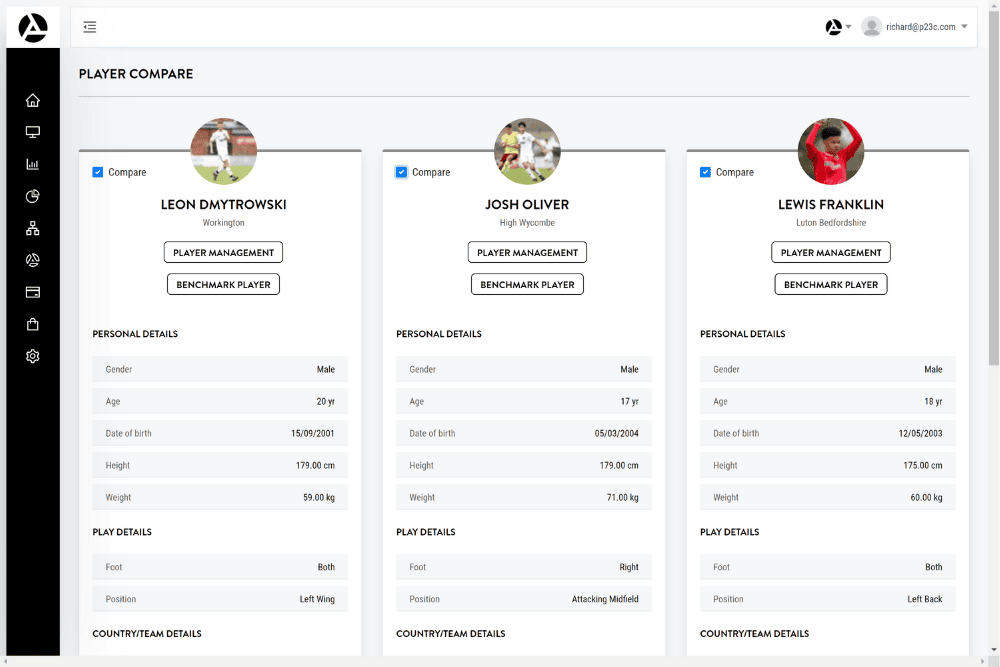
AiSCOUT is an AI-based platform that pro clubs are using to scout and develop amateur players based on uploaded data.

“Reliance Foundation actually found four players that weren’t even playing organized football,” says Richard Felton-Thomas, AiScout’s COO and Director of Sport Science. “They were just in rural areas, so scouts wouldn’t naturally find those anyways. That was a great test for the mobile phone as a system.”

The genesis of the app can be traced to the experience of Founder and CEO Darren Peries. After his son was cut from Tottenham’s academy, scouts from other clubs began calling him for more information. Peries had nothing to share outside a few mobile phone videos of varying quality.

“It just baffled him: here was a multi-billion pound industry,” Felton-Thomas says. “How can we sign a player for 100 million at 21 years old when, if they’re 18 or less, we’ve got almost next to nothing on them?”

Digital video was growing more available, but its analysis can be hindered when there’s limited information about the opponent and the level of competition. AiScout, a member of FIFA’s innovation program, entered as a source of objective data by tracking 21 points on the body, benchmarking the abilities of players at every level and every league and computing a National Rating Score.
sport techie

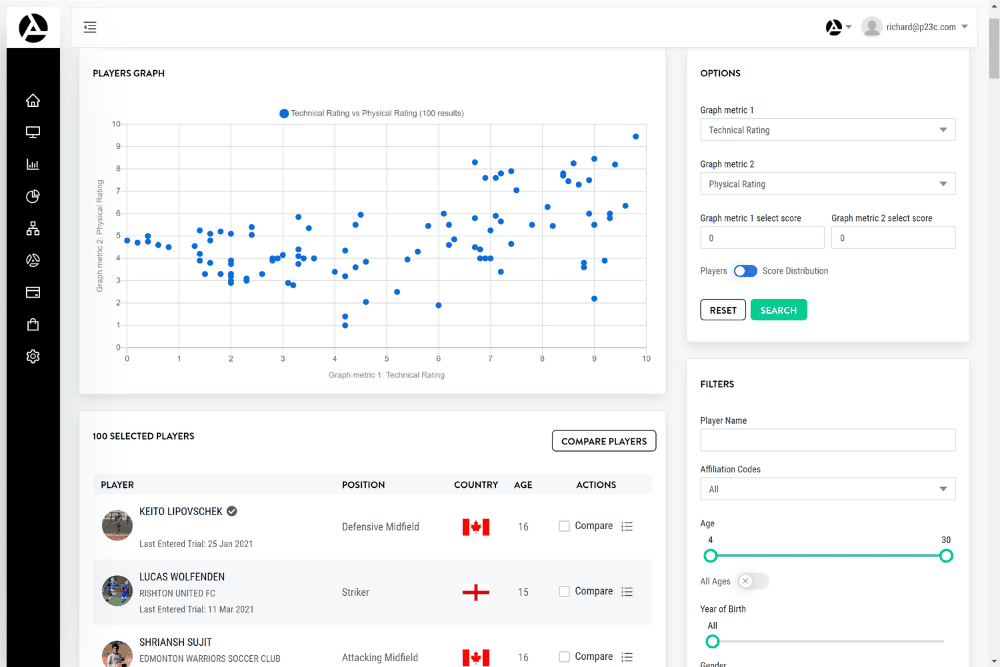
Amateur players can upload videos and data to trial for a Premier League club.

Two Premier League Clubs, Burnley and Chelsea, have been involved as early partners. Just as Tonsser began assembling showcase teams based on user-submitted videos, AiScout used its data to select 24 players to compete against Burnley’s U18 academy team; the game ended in a 2-2 draw. An additional four players were deemed exceptional and invited for weeklong trials at Burnley. Across the entire soccer ecosystem, more than 20,000 users have submitted information to AiScout with 64 players who have been trialed, signed or recruited.

“The nature of talent development can be a bit random,” says Chelsea’s Smith. “So if we can have a technology to work at scale across vast areas, then that our scope and our reach is potentially very substantial.”

JuniStat is a Russian-founded app now based in the US and Chile that seeks to do the same, with a user base of 40,000 users, mostly from Eastern Europe and Latin America with a strong growth market in Africa. Co-founder Gleb Shaportov says there are now 21 pro clubs using the app with most of the players between the ages of 10 and 15.

“As Brazilian clubs used to tell us, this is the golden age of football players where you can identify the future talent and develop them in a proper way,” he says.

Shaportov says JuniStat validated its technology with the Russian Football Union and has started the process of doing the same with Fifa this fall. “Directly from the smartphone, we can detect the skeleton of the player, and based on thousands of kids of the same age in our database, we are immediately tracking their performance. We get complex raw data from them, we analyze it and then we present the results to the user in an easy to understand and usable way.”

AiScout is working to create a mobile performance lab with additional technologies to gather physical data and is working with Chelsea as an R&D partner on cognitive testing and psychometric awareness. “Attention, spatial awareness, vision, or speed of processing—these types of things that you can, let’s say, ‘footballize,’” Felton-Thomas says.

The AiScout app is free for players, while scouts and clubs subscribe for access. Felton-Thomas says the mission is to create “an access-for-all, objective approach to talent identification,” no matter one’s hometown or finances. Results in the app can help secure a tryout or invitation to a showcase. “You’re going to have to prove yourself from there,” he says, “but we can get that visibility.”

* * * * *

Playing style metrics key tool for teams

Thiago Almada began playing for a local soccer club in his native Argentina at age four. He made his professional debut at age 16. By the time he was 18, in March 2020, and starting for Vélez Sarsfield, an AI-powered service called SmarterScout had flagged his Premier League potential, noting his skills in retaining the ball, winning ground duels and scoring.

Interest from major European powers in the Premier League, LaLiga and Ligue 1 all followed, with Manchester United and Manchester City among those reportedly in hottest pursuit. Almada instead opted for Atlanta United, signing for an MLS-record $16 million transfer fee.

A similar trajectory followed Almada’s countryman Julián Álvarez, whose performance at River Plate drew attention from the SmarterScout platform and later preceded a move to Man City. His data drew a “pretty stunning” resemblance to that of superstar Kevin de Bruyne and, the analysis concludes, “why Alvarez may be a better fit in the Premier League—and especially at Manchester City—than his physical attributes might suggest.”

SmarterScout is the work of Daniel Altman, a Harvard-educated economist who has been a soccer analytics consultant for Premier League and MLS clubs. The fully-automated platform ingests event data from 60 global leagues, enriches them algorithmically and then evaluates how well a player would fit in another league.

“We look for the most persistent metrics of player performance, and then we try to find the ones that are correlated with success at different positions, according to different profiles,” says Altman, referring to the varying playing styles at each position, such as the expectation of being aggressive or conservative. His own validation work suggests that SmarterScout needs only four matches’ worth of minutes to make reliable projections, with some individual player metrics showing consistency dating back to at least age 16.

This type of data application is showing dividends at all levels of the sport. Popular analytics provider StatsBomb has more than 150 client clubs from the Champions League on down to the fifth division of English soccer—but it has fewer clients at the lower level than before.

Last season, three of the four clubs in England’s fourth division, League Two, to achieve promotion to League One were all clients of StatsBomb. A fourth team reached the playoffs but narrowly failed to advance.

“We were told at some point that that would never happen: it’s too far down, they won’t want to spend budget on that,” StatsBomb Founder Ted Knutson says. “And obviously I’m a CEO and I’m a salesperson of this stuff, but the fact is, that surprised me.”

From those clubs on up to the Champions League clients, everyone receives the same data. “They get offered the same stuff,” Knutson says. “It’s a bit of a democratization of data science.” StatsBomb’s platform helps to make bespoke additions to a roster, helping avoid what Knutson has described as clubs building a “Frankenstein monster of a squad.”

He adds, “It’s not just counting numbers of how many tackles did this person make: ‘Are they positionally correct on a regular basis? Are they used to playing in a high line because we need guys that are comfortable in our tactical system that we’re definitely not going to change? We have this manager for another three years—we really like him—so we want a center back that fits in with him, as opposed to us going out and finding what we thought is the best center back in the market.’”

Firms like SmarterScout and StatsBomb are building on top of event data, a record of key moments in the match that are typically relegated to what happens around the ball: shots, passes, tackles and so forth. The tracking data that encompasses player speeds and distances is much harder to come by, which is where SkillCorner has found a niche extracting that dataset from broadcast.

“We’re still very much at the top end at the moment, but we have a lot of interest coming from academies,” SkillCorner GM Paul Neilson says. “The challenge when you get to that part of the market is the way that the video is filmed, the way it’s captured, the way it’s shot, is inconsistent compared to the professional level. Once you get into the academy structure, the position of the cameras, the vertical height, the horizontal distance from the field, the type of the cameras—is it manual operator or is it going to be smart cameras, Pixellot or Veo or Spiideo? And it’s just so much variation.”

SkillCorner is working on adapting its algorithms to meet that need while also teasing an evolution in analysis that will eclipse that information. Neilson says his team is developing its own set of next-level analytics to quantify defensive pressure on the ball, field awareness, the ability to find open space and more.

“To be honest, this is more important than physical data, because this is really about gaining intelligence and decision making,” Neilson says. “It’s not just the legs and how much they run. It’s the brain behind the athlete as well. And I think this potentially is the next big breakthrough for scouting and recruitment.”

* * * * *

Using video and data to scout the scouts

A decade ago, Marco van der Heide was an attacking midfielder for Cambuur, which at the time competed in Netherlands’ second division. Over parts of two seasons, van der Heide scored four goals in 16 matches, but a bad concussion prematurely ended his professional career.

When he had recovered, Cambuur hired van der Heide as a video scout, specializing in opposition analysis. The head coach then joined the staff at AZ Alkmaar—best known in the US as the club Oakland A’s executive Billy Beane has advised and invested in—and brought his former player with him.

On the side, van der Heide began collaborating with Sander IJtsma, a surgeon by day and proprietor of data-driven soccer analysis site 11tegen11 by night. Their video and data skills were a good combination but, noting the demands of IJtsma’s occupation and his interest in growing more quickly, van der Heide started his own video scouting company, 360 Scouting. And he set out to change the way the industry hires its evaluators.

“A lot of clubs still, very strangely, select scouts for their club because most of the times they are players who used to play at the club,” van der Heide says. “This is how I came in at Cambuur as a video analyst, but after that, I also showed that I had the required quality. But I wouldn’t have had this opportunity if I wouldn’t have played the club—which is good for me, but actually kind of weird because they should be selecting just on quality.”

To build out his startup—which currently has two clients, Cambuur and a Champions League participant he’s unable to divulge—van der Heide developed an application that explicitly told candidates that there was no need to send a résumé or cover letter. All that mattered was completing a video assessment. Initially, 350 applied, which got trimmed to 50 for a second assessment.

“Then there was the moment to ask them who they are, which age they are, et cetera,” van der Heide says. Among the six he eventually hired after eliminating the noise and bias of the process were a 41-year-old teacher and father of two and an 18-year-old student.

360 Scouting is now beginning to pivot from consultancy to platform. Van der Heide has continued his hiring practices to find local scouts who can do video and live scouting in four leagues this season: Poland, 2.Bundesliga, LaLiga 2 and the Eerste Divisie, the second division in the Netherlands. He hopes to grow to 50 leagues within three years using a network of quality, local scouts even if many are hobbyists.

“If clubs are finding people to scout players, then they’re also looking for undervalued talent,” van der Heide says. “So why wouldn’t they apply the same intention to finding the scouts themselves?”

* * * * *

Evolving data requires patience

Even when a club is willing to invest in data, it needs requisite patience in the process, too. Gardner, the owner of FC Helsingør in the Danish second division, says the minimum timeline for seeing improvement is two to three years. That was especially true at the club he purchased, which he described as having “basically no scouting infrastructure at all.”

“What’s interesting in the European soccer space is, with the promotion and relegation system, you can have an organization that is like a Single A baseball or even a summer league baseball team, and you have a couple of good years, and all of a sudden you’re in the majors,” Gardner says. “The infrastructure and the way the club runs is doesn’t catch up fast enough.”

Making the use of data more accessible could ease that prospect. For now, data analysts are still typically required to mine spreadsheets to find value. Bringing it within the realm of a coach’s expertise is an essential next step.

“Data, certainly across football, is making an interesting transition where it’s getting closer to performance and so performance practitioners rather than data specialists are starting to take more meaning from it,” says Smith of Chelsea and BreakAway Data.
sport techie

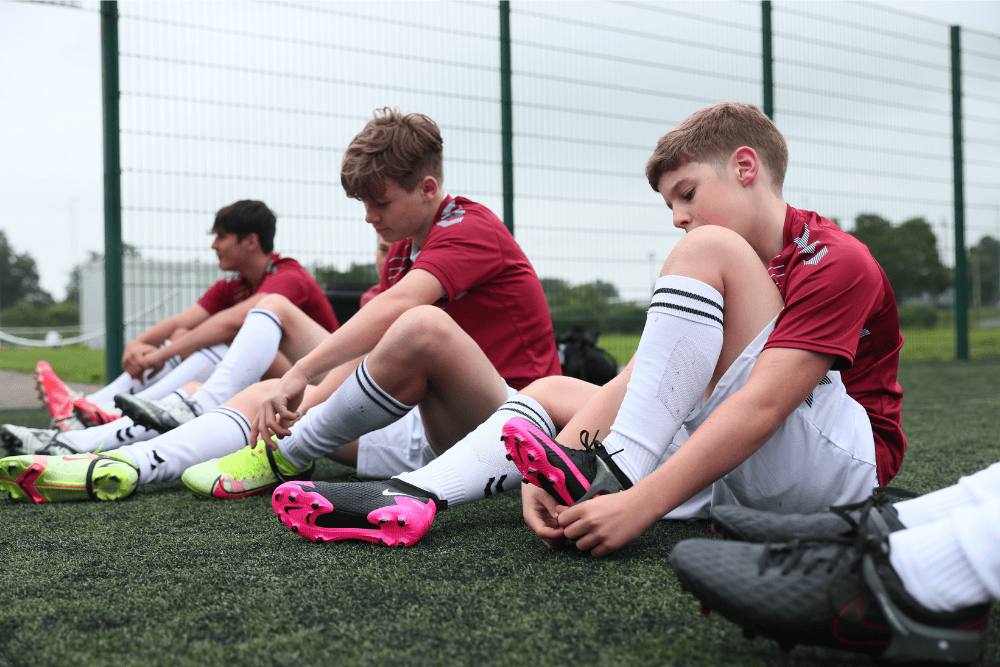
Playermaker’s data captures a player’s foot-to-ball interactions including ball touches.

The earliest adopter of PlayerMaker in the US was the University of Pittsburgh women’s soccer program. Coach Randy Waldrum says he understood it would take a few years to develop proper context for the metrics. Incidentally, the overall quality of the program has improved considerably, so the baselines keep evolving, too. The shoe-worn sensor, which provides physical and technical data, helps solidify what he’s seeing and, at times, can serve as a tiebreaker between two players.

“We now have a pretty good system in place and a pretty good file on what the average distance is players should be covering per position, the kind of touches that are required,” Waldrum says. “We can even get into some of the positions, whether it’s more right foot or left footed—those kinds of things.”

When PlayerMaker launched, it sold only to professional clubs and college teams, but when the pandemic struck in March 2020, several clients asked about obtaining individual units that its disparate players could use for training. Aharon, the CEO, told those clubs, “Yes, sure, we can.” Shaking his head, he hung up and called his COO, “Hey, this is something I just committed to that we need to deliver.”

“For us as a company and as an industry,” Aharon says of the pandemic, “it shortened what could happen in three, four or five years from now and it happened in a few months.”

This article was brought to you by SportTechie, a Leaders Group company. As a Leaders Performance Institute member, you are able to enjoy exclusive access to SportTechie content in the field of athletic performance.

Members Only

20 Jul 2022

Articles

Understanding the Selection Phase in US Special Operations Forces

Category
Coaching & Development, Premium
Share
Facebook Twitter Email Copy Link
https://leadersinsport.com/performance-institute/articles/understanding-the-selection-phase-in-us-special-operations-forces/

Lieutenant General John Daniel Caine discusses a process that is akin to the search for a ‘unicorn’.

By John Portch
  • What traits drive your selection process?
  • How do you promote accountability within your team?
  • How important are EQ and IQ in your environment?

‘We will figure out who you are’

Lieutenant General John Daniel Caine of the US Air Force is the Associate Director of Military Affairs of the Central Intelligence Agency [CIA]. Back in 2020, he spoke about Special Operations Forces [SOF] recruitment at the Leaders Sport Performance Summit in Charlotte. At the time, while still ranked Major General, he was serving as the Director of the Special Access Program Central Office of the Office of the Under Secretary of Defense for Acquisition and Sustainment.

Caine walked the audience through the rigorous assessment phase, which went some way to explaining why the numbers of candidates who progress to the selection phase are low. That said, when they make it, they reach a “crucible” that can last for weeks and months and which has the express purpose of imparting basic combat skills and testing for essential character traits.

He said: “We’re seeking a war fighter first and foremost who’s humble, who’s credible, who’s approachable.” He later joked that it was akin to the search for unicorns. “I say a unicorn but not really,” he added. “This is what we seek in our recruiting efforts, this is what we measure in assessment. What we continue to strive for in selection is these traits along with many others.”

Authenticity

It is no less true of the military than any other walk of life. “We’ve seen hundreds and hundreds of examples of people who come in and just try to pretend that they are somebody who they aren’t – I’m sure that you see the same thing in athletics, right?” said Caine. “But eventually we’re all fallible and we show ourselves. We’re going to figure that out and it’s always better to own it, own who you are, than to pretend to be someone who you are not.”

Humility

Of humility, Caine said that candidates must be, “humble to the point where they do not drink their own Kool-Aid. And we’ve all seen egos in sports and there’s egos in the military as well and SOF, but is this person at their core DNA humble? Do they realise that ‘this is a chapter in my life. It may be a big chapter but it’s just a chapter in my life’?” They must embody confidence but not cockiness, and remain selfless to a fault.

Credibility

Candidates can demonstrate credibility in several forms. Caine said: “Do they take the time to self-study? Do they take the time to clean their weapons? Do they clean up team gear before they do their own gear? What is it that makes them credible with their teammates, brothers and sisters?

Approachability

Caine refers to a sense of humour paired with equanimity. He said: “What is their attitude like when ‘the suck’ is on them? Are they still approachable? Do they retreat into the corner of the team room? Do they go off by themselves or do they maintain a positive attitude?”

Collegiality

Caine said: “Believe it or not, collegiality is a big thing we look for. What is the rapport between teammates and are they collegial with each other?”

EQ and IQ

Caine explained that EQ and IQ are essential for navigating the volatile world and complex networks of an SOF operator. He said: “[We value] the ability to adapt your leadership style, take advantage of the limbic signals, the non-verbal signals that are presented in a scenario that these leaders may be facing; and then be able to take action accordingly based on what they’re seeing and observing, not just what they’re hearing.”

High absorption, low reactivity and high coping skills

How do the traits desired by SOF stack up against those desired in sports? We explored this theme with Leaders Performance Advisor Edd Vahid, who also serves as the Assistant Academy Director at English Premier League club Southampton.

What personality traits do you need to see in youngsters at a football club? What are some of the ways you can measure for those?

In recent seasons our Psychology team have been reviewing an Academy player’s ability to self-regulate and maintain task focus. Specifically, this has involved subjective assessments of a player’s ability to absorb into a task (being present), demonstrate a healthy level of reactivity (avoiding being over-reactive) and have sufficient coping skills. The optimal profile would be a player who displays high absorption, low reactivity and high coping skills. Additionally, it is important that a player demonstrates a commitment and desire to add value to the team. Feedback from a range of disciplines helps presents an insightful picture of how this manifests in reality. 

To what extent is there room for personality outliers on football pathways? Is there a safe level of risk?

A core element of our coaching philosophy is to be person-centred. Therefore, our ability to embrace a diverse group of personalities is critical. With younger players it is important we seek to understand their intent and not default to judging them solely on their actions. Ultimately, we are responsible for creating an inclusive environment that affords different personalities the opportunity to progress. Whilst there has always been an appetite to understand and support different individuals, the recent increase in ‘individual development coaches’ perhaps reflects a clear aim to be explicit with this approach.

1 Jul 2022

Articles

Leaders Meet: Performance Pathways – the Key Takeaways

Category
Coaching & Development
Share
Facebook Twitter Email Copy Link
https://leadersinsport.com/performance-institute/articles/leaders-meet-performance-pathways-the-key-takeaways/

Members of the Leaders Performance Institute convened at St George’s Park to hear from pathways specialists at the Football Association, Wales Rugby Union and the Lawn Tennis Association.

In partnership with

By Sarah Evans
The focus of our third Leaders Meet of 2022 was around the dynamics of performance pathways and how to effectively manage the transitions of the athletes throughout. We also highlight the need to ensure psychological safety, particularly the notion of learner safety within your teams and staff throughout the pathway.

Session 1: Performance Pathways Part 1: Creating Effective Transitions

Speakers:

John Alder, Head of Player Development, Welsh Rugby Union

Helen Reesby, Head of National Performance Pathway, Lawn Tennis Association

Transition experiences:

  • When have you managed transitions well? When the transition is anticipated, you can prepare and make plans. When you can engage in mentoring, learn from others, and have great support. You have time to understand what you need based on your values, and understand what is right for you.
  • When have you not managed a transition well? Dealing with something with that it out of your control, such as a career-ending injury.
  • Biggest lesson learnt was the importance of speaking about it. We need to be able to sit, and address the issue. This might not be what you want to do, but it is essential. From an external point of view it might seem as though you have transitioned well, due to looking to what’s next and making plans. However, it is essential to not presume anything. It’s very easy to assume someone is OK based on their exterior, but you won’t truly know until you ask.
  • Importance to reflect on both positive and negative and not to stray away from either, as we can take huge value out of both.
  • Recognise the ending of one chapter and embracing the start of something new. And the importance of understanding our identity and how that impacts our transitions.
  • The role of your support system in helping you cope with transitions. Very important to have key people to support you in processing the emotions around the transitions in order to help manage the phase effectively.

Effective transitions:

  • What is a transition? Moving from junior to senior, injuries, changing position, location change, essentially an experience which stretches and requires change. The process of exiting something and entering something new or different and making this, hopefully, as seamless as possible.
  • Who is going through the transition, what resources do they have, how does it fit into their learning and where are they heading? What skills are required going into it?
  • Having the readiness and ability to meet the demands of the next stage.
  • Two elements to a transition: performance-ready. What are the demands of that next stage, do you have the tools to be able to step up? Person-ready: have you got the personal skills, are you ready for the lifestyle change? Are you personally ready? You often see one or the other.
  • We prepare them well for the anticipated change especially making them performance-ready. But often what we don’t spend enough time on is preparing them for the unanticipated transitions which inevitably will happen, and these are often the person-ready skills.
  • ‘Prepare the child for the path and not the path for the child’.
  • Have the athletes got the resources to deal with the new challenges or changing environment?
  • Smooth transitions or not? Recognising which transitions might be used as good bumps in the road to aid in their development.
  • Team sports: experience transitions together but it might feel different for each person. The importance of understanding how things impact individuals differently and the challenge of the coach to recognise what is best for each player and how they are experiencing that change (identity, curriculum, direction of travel).
  • In individual sport, how do you scale? Helen believes in a person-first approach with tennis being a highly individualised sport. There is a scale of transitions – they range from large transitions to small fry. The individualised approach is so important in terms of presuming and assuming.
  • Gender-specific in tennis – understanding differences in genders. Still person-first as you can’t just group the genders but what are the general differences to be aware of?
  • Parent involvement – in tennis they have to be heavily involved (time and resource). It’s easy to get frustrated by this, but they have a major influence on the transition and the support of the athletes, if you can engage with them and take them on the journey with you, they can be incredibly valuable.
  • Social cultural context and how that mediates transitions – what are the dynamics at play in the environment that can impact a transition? In many squad-based teams and sports, you can have 50 people including staff and athletes.
  • The importance of role clarity on the field and off the field.

Session 2: Performance Pathways Part 2: The Different Stages of Psychological Safety

Speaker:

Tim Cox, Managing Director, Management Futures

Psychological safety:

  • “Psychological safety is a belief that one will not be punished or humiliated for speaking up with ideas, questions, concerns, or mistakes” – Dr Amy C. Edmondson.

Why it matters:

  • You want people to be able to think clearly, to make connections, share insights, bring ideas and learn.
  • As a leader you want to simultaneously increase intellectual friction and decrease social friction.
  • Google Project Aristotle: the number one determinant of team success was psychological safety.
  • Wellbeing.

Social pain & the brain:

  • Whilst social pain and physical pain can have similar characteristics, they are not the same experience.
  • They share some of the same underlying neural substrates.
  • The common experiential element is the affective component of pain – the distressing experience associated with these threats motivates individuals to terminate, or escape the negative stimulus.

Four stages of psychological safety:

  • Inclusion safety: I feel valued and a sense of belonging. Safe to be myself. This is a pre-condition for the other three.
  • Learner safety: I feel safe to ask questions, seek guidance ask for help, admit mistakes, and be vulnerable.
  • Contributor safety: I feel safe to share my ideas, and trusted to act on my initiative.
  • Challenger safety: I feel safe to challenge the status quo.

Inclusion safety – key concepts:

  • What it should take to be included – two things:
  • Be Human
  • Be Harmless
  • And yet…
  • Sometimes we extend partial or conditional inclusion safety. Sometimes we revoke or withhold it.
  • ‘We like to tell ourselves soothing stories to justify our sense of superiority’.

Learner safety – key concepts:

  • The moral imperative to grant learner safety is to act first by encouraging and inviting the learner to learn.
  • Failure isn’t the exception, it’s the expectation and the way forward.
  • The most important signal in granting or withholding learner safety is the leader’s emotional response to dissent and bad news. How are your reacting, because the learner is watching us?
  • The prejudiced mind is wilfully blind. Do you genuinely believe they can?
  • When the environment punishes rather than teaches, whether through neglect, manipulation of coercion people become defensive, less able to self-diagnose, self-coach and self-correct. That opens people up to the risk of real failure – the failure to keep trying.

Contributor safety – key concepts:

  • A toxic environment shuts down performance because people worry about psychological safety before performance.
  • Speaking first when you hold positional power softly censors your team.
  • Inviting people to think beyond one’s role expresses greater respect and grants greater permission to contribute.
  • It’s the leader’s role to recognise the difference between dissenting and derailing behaviour and manage the boundary between the two.

Challenger safety – key concepts:

  • Challenger safety democratises innovation.
  • The more unknowns the leader eliminates through transparency the fewer the sources of stress for the individual.
  • Nothing shuts curiosity and exploration down faster than a small dose of ridicule administered at just the right time.
  • Deprive your team of challenger safety and you dedicate the team to the status quo.
  • Assigning permission for dissent from the outset takes away the natural fear associated with challenging status quo.

Six ways we can increase psychological safety:

  • Build trust and belonging.
  • Put it on the table – discuss it.
  • Model openness and honesty.
  • Make it easy to speak up.
  • Praise it.
  • Constructively challenge fixed positions.

Model openness & honesty

  • We forget how scary we are. Our power silences people.
  • We don’t question our list of whose opinion counts.
  • We send ‘shut up’ versus ‘speak up’ signals.
  • Watch your language.

Make it easy to speak up

  • Ask open questions to seek input, but make them specific e.g. What do people think we should be paying more attention to?
  • Red teaming / Brains trust meetings.
  • Use small groups or 1:1 conversations.

Session 3: Performance Pathways Part 3: An Insight into the FA’s Approach

Speaker:

Phil Church, Senior Coach Development Lead, The Football Association

  • Individualisation: we’ve certainly moved into a landscape where individualisation is key in relation to developing coaches and players. We have what we call a talent map, where we can look at who might have potential. We have boots on the ground, they’re ‘in the trenches’, provide unconditional support and they are not just there when they’re winning. This provides a good idea of the landscape and therefore how we can influence it.
  • Create a personalised and connected experience: we know the power to individualised approaches, but to elevate this to the next level, how are you connecting this to the experience players or coaches face? Individual relationships are a key component of this (who, self, how, what).
  • The FA’s approach to development: the general rule of thumb for the organisation’s development approach is 70:20:10. As people involved in developing talented coaches or players, you’d expect to see our work somewhere in and around the 20 or 10 section. This is why context and experiences outside of this around important to consider.
  • If we are only with them for 10-20% of their time, how can you influence and add value for them in that short space of time? You get trust in consistency and competence. How are you adding value to a player or a coach? ‘Bring a gift’ to add value to them.
  • Environmental context: spend time getting a better understanding of the context of the team around the individual. An individualised approach is powerful for development, but the external environment for the individual has potential for large influence.

Attendee takeaways:

  • Inclusion requires understanding of team values – learning, challenging, contributing.
  • Best practice for psychological safety – new people coming in to be clear of expectations and culture, and to talk about intent around psychological safety within the induction.
  • The need to formalise your transition process.
  • Think about the best way to train or support psychological safety.
  • The need to share the four stages of psychological safety and the six descriptions with the team.
  • To have the agreed ways of working threaded through a club or organisation strategy.
  • Have best practice embedded into everyday work and life.
  • Reflecting on effective transitions.
  • It is important to understand where failure fits into psychological safety – should we support failure at the top end of elite level performance?
  • As a coach or leader, understand your own transition journey to empathise and support the athletes.
  • Identifying your team’s roles and responsibilities to help build the six ways to increase psychological safety – use your super strengths well.
  • Psychological safety to give awareness to development pathways.
  • A way of changing best practice – at national senior team selection meetings, instead of the chair / senior selector listing their team selection and then asking the room to share theirs and justify the differences, build psychological safety in the room by ‘putting it on the table – discuss it’. All of the selection committee put their teams up simultaneously and then open the discussion.

Go to home
Follow us on Instagram Follow us on LinkedIn Follow us on X

Contact

Leaders UK

Tuition House
27-37 St George's Road
Wimbledon
SW19 4EU
London
United Kingdom

Enquiries Line: +44 (0)207 806 9817
Switchboard Number: +44 (0)207 042 8666

Leaders US

120 W Morehead St # 400
Charlotte
NC 28202
United States

Enquiries Line: +1 646 350 0449

Leaders

  • Contact
  • About
  • Careers
  • News
  • Privacy Policy
  • CA Privacy Rights
  • Cookie Notice
  • Website Terms of Use

Performance Institute

  • Membership
  • Events
  • Content
  • Virtual Learning
  • Connections
  • Partners

Latest

Intelligence Hub
High Performance Future Trends Research Elite Performance Partners continue to drive the potential in high performance forward through renewed Leaders partnership
Your Privacy Choices

© 2026 Leaders. All rights reserved

  • Privacy Policy

Attendees

x