Leaders in Business
  • Membership
  • Events
  • Content
  • Virtual Learning
  • Connections
  • Partners
Login
  • Leaders Meet: Innovation
  • Events
    • Leaders Week London
    • Leaders Sports Awards
    • Leaders Club Events
    • Leaders Performance Institute Events
    • Leaders Meet: Innovation
  • Memberships
    • The Leaders Club
    • Leaders Performance Institute
  • About
    • Careers
    • Contact
I’m a sports leader:
  • Off The Field For those focused on the business of the sport View more
  • On The Field For those working with an athlete or elite team View more
  • Login
    • Leaders ClubThe membership for future sport business leaders
    • Leaders Performance InstituteThe membership for elite performance practitioners
  • Newsletters
Performance Institute Leaders Performance Institute Logo
  • Membership
  • Events
  • Content
  • Virtual Learning
  • Connections
  • Partners
Login

23 Apr 2025

Articles

With the Right Support at the Right Time, Women Athletes Can Make Successful Career Transitions

Category
Coaching & Development, Leadership & Culture
Share
Facebook Twitter Email Copy Link
https://leadersinsport.com/performance-institute/articles/with-the-right-support-at-the-right-time-women-athletes-can-make-successful-career-transitions/

In a recent Women’s High Performance Sport Community Group call, former GB Hockey players Giselle Ansley and Emily Defroand discussed their experience of working with Performance Lifestyle Advisor Emma Mitchell.

Main image: Dean Mouhtaropoulos/Getty Images for FIH

By Rachel Woodland
The Women’s High Performance Sport Community Group is an action-orientated space for those working in high performance sport.

Since its inception, and through conversations across sports and nations, we’ve noted the importance of transitions in women’s sport, particularly as athletes come to the end of their professional careers.

The topic of transitions formed the basis of our first group conversation of the year, with the conversation led by former athletes Giselle Ansley, a Senior Account Executive with Specialist Sports; Emily Defroand, the Football Communications Lead at West Ham United; and Emma Mitchell, who recently left her position as a Performance Lifestyle Advisor at the UK Sports Institute and who worked directly with the duo during their playing careers.

Ansley and Defroand are former GB Hockey players, who won a wealth of medals between them. Ansley won Olympic gold and bronze, as well as Commonwealth gold, silver, and bronze. Defroand won a European bronze, as well as a Commonwealth bronze. Both have won many a domestic title too.

Mitchell, who won a PLx Award in 2023, won the 1994 Women’s Rugby World Cup playing for England and helped set up the Saracens women’s team.

Over the course of the conversation, we delved into Mitchell’s work and the realities for Ansley and Defroand as they began to transition in their careers.

Why it’s valued

Ansley knew she was aiming to leave post-Paris (2024) and began working with Mitchell post-Tokyo (2021). For her part, Defroand suffered multiple injuries where her body almost told her she needed to plan ahead.

In reflecting on her playing days, Ansley said: “In fact, Emma Mitchell’s role in Great Britain hockey and the impact that she had on me personally effectively changed my life.”

Mitchell had experiences from a different sport, which helped her leverage her expertise around coaching the person. She became immersed in the team behind the team and working with the wider staff and athlete squad in the pursuit of a common goal. “I don’t think there’s anything more powerful than that in sport because everyone is committed to the same thing,” she said. “It’s not necessarily a medal or winning a World Cup. It’s bigger than that and it’s something that’s so unifying. It’s quite incredible in terms of engagement levels.”

The realisation that playing a sport as a professional won’t be an option forever meant it wasn’t taken for granted. It also meant that they wanted to make the most of the opportunity and soak  up learnings and conversations with practitioners.

This is how it works:

  1. There’s been a shift from career coaching to managing transitions, which covers everything from someone joining the programme, to sustaining a long-term injury or any other significant change whilst in the programme, with extra emphasis on ‘leaving well’.
  2. Leaving well tends to involve starting to plan early. It comes back to knowing each athlete’s individual journey, and working at their pace. They have to own the process.
  3. Values exercises underpin much of the work. One of which involves spreading out many words that might represent someone’s value and them collating those they feel most strongly align to themselves, and whether they’re ‘always valued’ or ‘less valued’. And remember: it can be just important to know what you don’t value.
  4. Former athletes are invited to share how it worked for them, and hearing about a range of experiences with the process. Defroand said:

“Don’t get me wrong when I was at Bisham [the HQ of GB Hockey], I had absolutely no intention to retire at 26 but by being in the same room as athletes, some that have retired in their own terms, some that haven’t, some of them that tried through selection or injury. Everyone’s experiences are completely unique to themselves, but having heard from other athletes their first experiences of how their transition worked for them really helped me understand and know how complex that process is.”

  1. Make the most of time when athletes can’t play. For example, when they’re injured. Using the network of athletes and people in the community, where there are so many people willing to help.
  2. Remember that many of the skills you learn through your sport are transferable, highly valued, and not as common as you think they are, such as discipline, teamwork, leading, and following.
  3. Peer to peer programmes with athletes from other sports and mentoring programmes. “I still don’t know how many people understand in the moment just how valuable these skills will be later in life, but just keep telling them that they really are,” said Ansley.
  4. For Mitchell, it was important to get to know each person. There was a list of approximately 20 athletes who were seen as high potential, who GB Hockey wanted to make sure they stayed in the sport. Mitchell said:

“I focused on those and had some success with some of those. It’s just building up a little bit of success, building up good rapport with the group, being present in a lot of culture work, which I think is just so important. And then trying to work with each individual away from the performance environment to progress whatever it was they were looking to do.”

  1. To also have someone who isn’t a coach making decisions about selection have these conversations is powerful, as the athletes can open up further and know they’re not there to deep dive into a specific skill or tactic. Defroand said:

“Regardless of whether you come from that sport or not, it’s about how we’re developing us as people rather than just the hockey player. [It’s about] providing the safe space to talk and explore thoughts and work through challenging situations and developing other identities; being aware of other identities that are within you. Experiences that give you perspective and make you feel so lucky because you know you’re in the sport for a certain amount of time and that that will be it. [This can be] so valuable.”

What’s missing?

“I really don’t think we should underestimate the impact that this sort of support during and after each transition can have,” said Ansley. Not all sports get the excellent support that Mitchell has provided at GB Hockey. Providing the opportunity from an early stage of an athlete’s career is critical, even if they don’t engage with it immediately.

With more athletes not postponing starting a family until the end of their athletic careers it’s important to support this transition too.

Support must be there for athletes so that when they do enter the working world they’re not starting from the bottom again. Support must also be there for businesses to understand the transferability of an athlete’s skills, as well as the fact that female athletes are coming from a very different context to male athletes.

What can be done when resources are limited?

  1. Think about those already in your staff that might be interested in developing in this area and could upskill themselves to provide some support and some signposting.
  2. Use former athletes to share their stories.

What does it mean for others in roles supporting athletes?

Even thinking about it shows a level of care that will be appreciated by athletes. Showing understanding, but also being accepting of each athlete being in their own place with their own mindset, especially when dealing with injuries. Some might want to make the best use of that time, whatever it may be. With others believing that the best use of their time and energy is to focus solely on recovering. Some roles are in a great place to have regular check-ins, with a different bond to that of a coach. A chat can go a very long way.

Make it stick to ensure it delivers an ROI

From Mitchell’s perspective, part of the key to her success in her role came from GB Hockey choosing to embed the service within its programme philosophy. The original hire for the role came from GB Hockey’s programme budget rather than UK Sport funding for the role, a true reflection of how much they valued the work.

She also spoke about head coaches who didn’t see the work as duty of care, but as performance enhancing if done well. It’s helped extend careers, and support players enjoy an extra Olympic cycle because they dealt with what was coming next and the anxiety that can lead to.

The impact of these conversations, and the work being done by performance lifestyle advisors, has on culture shouldn’t go amiss, especially when the culture directly impacts performance in the view of the athletes.

For the athletes, the work with Mitchell helped with their motivation and longevity. Both Defroand and Ansley shared that by completing exercises like the values one elevated their appreciation for their sport and the level they were competing at. It motivated them to train their best and unlocked new levels of effort to give. It helped refine their athletic goals, but also their goals beyond that. In early days working with Mitchell, former GB Hockey player Sarah Evans [who also joined us on the call], found that there was real benefit to doing the work on herself, to help with her confidence if dropped, and to ensure that she was working to get selected knowing how she could help the squad whether or not she was on the pitch.

Mitchell said: “My feeling is that we all need a purpose and the type of people who are in sport at the elite level are incredibly driven so they will want to find something. It may never be quite the same as putting on a GB Hockey vest, but they want something that is fulfilling in a similar way. So helping them with that. And there’s research now that that actually demonstrates that athletes who engage in this type of work are likely to become the leaders in their sport and they are also likely to extend their careers, so it is actually seen as one of those that has a performance impact as well.”

Mitchell also signposted Professor David Lavallee from University of Stirling, specifically his research on transition support and measuring impact. She said: “We now capture everything we do on one database and part of that is the numbers bit. To just demonstrate, the Paris cycle was three years. I think my colleague working with the men and I had approximately 3,000 interactions across the two squads. It’s a big time sync recording all of this, yeah. It’s almost not justifying our existence, but it’s at least capturing some of that.”

Finally, we also spoke about supporting athletes to stay in sport when their playing careers come to an end. Whilst there are all sorts of initiatives to try and encourage athletes into coaching positions and gaining coaching qualifications, or staying within sports (for example, UK Sport’s Athlete to Coach programme), the reality is that even at international level coaching renumeration can be relatively low, and is naturally all consuming. For Mitchell, her role as a Performance Lifestyle Advisor was another way of deploying her coaching skills.

19 Feb 2024

Articles

Five Things the UKSI Performance Lifestyle Team Wants All Athletes to Consider Ahead of their Transition from their Sport

Category
Coaching & Development, Leadership & Culture
Share
Facebook Twitter Email Copy Link
https://leadersinsport.com/performance-institute/articles/five-things-the-uksi-performance-lifestyle-team-wants-all-athletes-to-consider-ahead-of-their-transition-from-their-sport/

Dawn Airton and Emma Groome outline the services that are available to British athletes during and beyond their time on a World Class Programme.

An article brought to you by our Partners at the

By John Portch
When athletes transition away from Great Britain’s World Class Programmes, they share common – but often unspoken – questions, hopes and worries that extend beyond their personal circumstances.

“A retired athlete might say ‘I thought I was the only one who couldn’t watch the next Olympics or Paralympics after I retired because it was just too painful’ or ‘I thought I was the only one who struggled with how my body and physical identity changed’,” says Emma Groome, Futures and Senior Performance Lifestyle Coach at the UKSI.

“But they’re not alone,” she continues. “Many athletes have been in their sport for years and years and they can say ‘can I ask you a question: is it normal to think this?’ You’re like ‘yeah, totally. We hear that a lot’.”

The UKSI Performance Lifestyle team numbers 38 staff members currently. “Every sport in receipt of World Class Programme funding from UK Sport is able to access core Performance Lifestyle services and some sports have chosen to invest further beyond their core allocation,” says Dawn Airton, the UKSI’s Futures Lead and Senior Performance Lifestyle Coach, who has joined Groome to speak to the Leaders Performance Institute.

“We’re one of the largest practitioner teams in the Institute,” adds Groome. “It’s quite impressive compared to where we started.”

Previously, athletes could receive support for up to six months after they had left a World Class Programme [WCP]. From athletes sharing their experiences, Groome and Airton realised that a change was needed, successfully pushing for this support to be extended for up to two years.

“It just didn’t feel long enough to provide that duty of care for athletes while they’re still coming to terms with those practical, emotional and physical changes that all athletes go through,” says Airton. “They need more time to make sense of their sporting journey and experiences and ask themselves: ‘what does my next chapter look like? Where am I going to thrive?’ Or even ‘who am I?’”

Airton and Groome have worked together on developing the Performance Lifestyle team’s support to athletes as they transition away from a WCP.

Here are five factors they want all British athletes on a World Class Programme to consider about the transition support services on offer at the UKSI.

1. It is now for two years and not just for retiring athletes

The UKSI Performance Lifestyle team will be there for an athlete and their holistic needs as they journey in, through and beyond elite sport. “It’s really important for athletes to know and to feel that the support is there for them, no matter their circumstances and, crucially, they can access this for two years after they leave a WCP,” says Groome. It could be that a programme has had its funding cut. Maybe an athlete has been deselected. It could even be that they have made the decision to turn professional, as is the case in a number of sports. Entering a WCP entails a number of choices on the part of the athlete and is a major transition in itself. “More often than not, athletes make the choice to move to an elite sports training environment to receive the best training, coaching and support services in the world. What that means is they often have to move home, move away from family and friends and the social and emotional support mechanisms they had in place’. Change and transition is part of every athlete’s journey, we are there to help them understand and manage those changes.” adds Airton.

2. Performance Lifestyle support is holistic and collaborative

The UKSI Performance Lifestyle team will support athletes throughout their time on a WCP and for up to two years afterwards across six ‘pillars’. They are: transitions, mental health & wellbeing, career development, financial health, learning & development, and education. “During and beyond their time on a World Class Programme, we’re supporting our athletes through change,” says Groome. “They’re going from being a funded athlete to not being a funded athlete and that brings them potential change and gives them decisions to make. What do they do next, practically-speaking? Do they need a job? Is this a transition into their next career? Is this the point at which they are going to self-fund? They may need to relocate and their income may be different.” In addition to these ‘external’ considerations come a range of ‘internal’ factors. “We’re talking in terms of their identity; who they are,” Groome continues. “One of the things we hear is what should a former athlete say when someone asks ‘what do you do?’ They tell us ‘I don’t know what to say anymore.”

It is paramount for the Performance Lifestyle team to raise the awareness of their work with current and former athletes, including those eligible athletes that may have left the high performance community. “We’re working closely with UK Sport and the British Elite Athletes Association [BEAA], who are developing an alumni community of athletes who have transitioned from a World Class Programme.” Support available to athletes includes access to the UK Sport-funded and UKSI-facilitated Personal Development Award, which assists athletes with personal and professional development; access to Health Assured, a free health and wellbeing provider who offer help with issues from legal advice through to counselling; and the BEAA alumni app. Airton says: “We want athletes to know that more support than ever before is available and it’s OK to ask for trusted and individualised help and support – people are genuinely there who want to help you with whatever that transition means for you.”

3. It is not one size fits all

The Performance Lifestyle team have tried to make things as simple as possible for transitioning athletes by identifying five areas where they focus their support: ‘understanding change’, ‘understanding self’, ‘understanding the world’, ‘making it happen’, and then ‘review’. “It’s not sequential or absolute that you have to progress through all of those areas, but they’re recurring themes in our conversations with athletes,” says Groome. “With ‘understanding change’, for example, we might come back to financial or professional development. ‘Understanding self’ is often linked to the athlete reconnecting with who they were or connecting with who they are now. This might be around discovering your strengths, values and passions or exploring the timeline of your life and career to this point.”

Athletes will engage with these support services to differing extents and may not engage with some elements at all. “It’s ‘the path of a meandering river’ as one of our Olympians described it to us recently,” says Airton. “It was the journey they’d been on to this point and how it aligns to their strengths, values, who they are as a person, the support mechanisms and the people who have got them through those experiences.”

The priority differs from athlete to athlete. “If it’s finding a job you would hone in on that,” says Groome, “but it could be the emotional component because no practical or sensible decision-making can be made at that time.
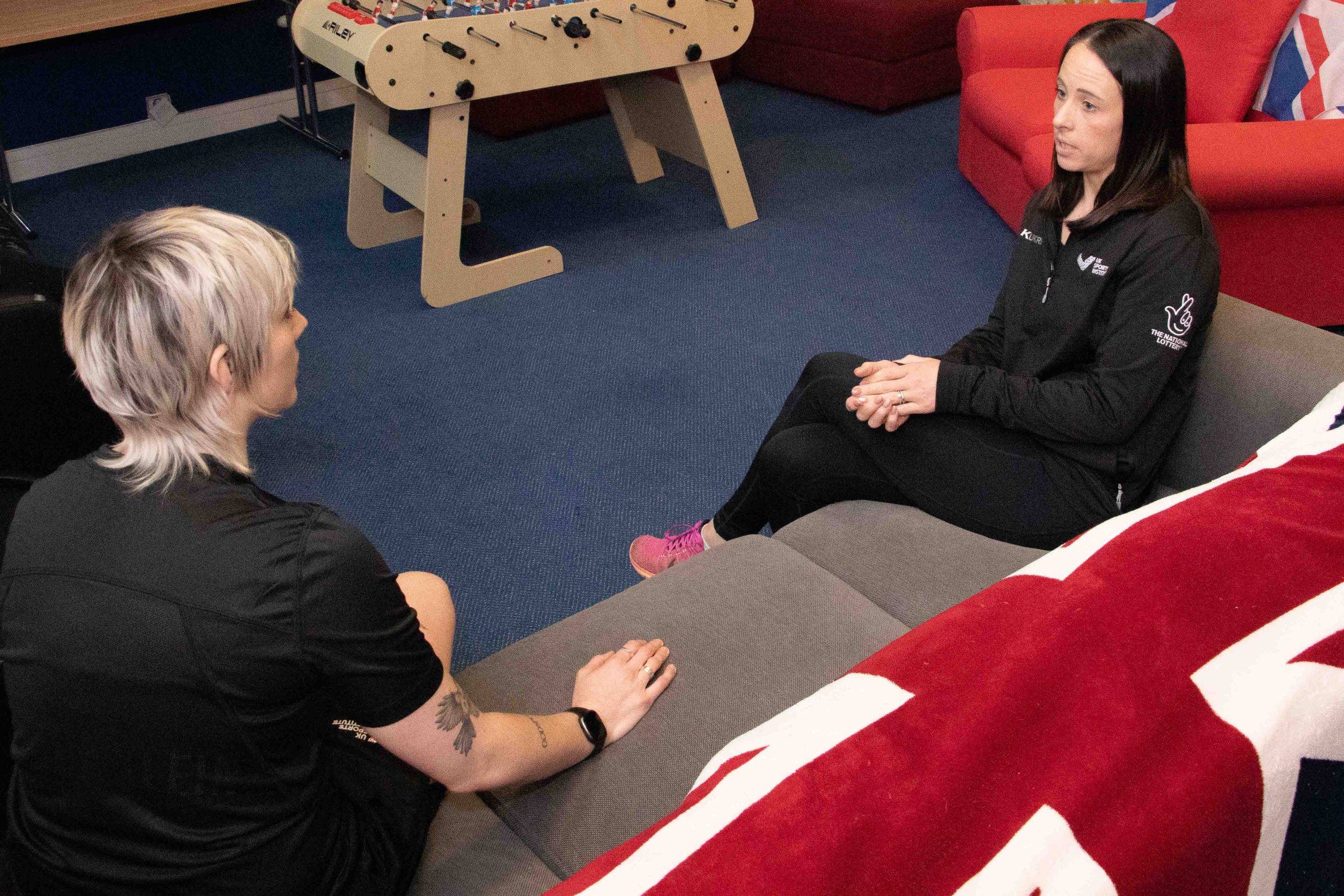
Image: UK Sports Institute

4. Performance Lifestyle can help you rediscover your purpose in a time of uncertainty

The removal of an athlete’s routine can be a major source of disorientation. “There was a gold medal-winning athlete I had worked with who had actually done a lot of planning ahead of their retirement and they told me ‘I turned the page in my diary and the page was blank’ – and that was the best-prepared athlete,” says Groome. “Normally, your structure is based around your training. More often than not, that determines when you go home, when you go on your holidays, all of those things. When you take away the reason for that structure it is something that Dawn and I find we have to support athletes with – without it, the impact on mental health can be significant. The Performance Lifestyle team witness snapshots of how athletes feel and they can share those insights with others in transition. “Athletes say it’s so good that another athlete felt like that,” Groome adds.

While an athlete cannot plan everything, there are elements from their athletic career that will aid their transition, as Groome explains. “They have a lot of these strengths and skills and they can apply elements of how they’d plan their performance, to problem-solve it, being resourceful, being creative.”

“They understand the uncertainty. Uncertainty is a big part of sport and any transition,” adds Airton, “but even just feeling like you’re taking action towards something has a big impact, I’ve found. The athletes we support have said ‘If I’m taking action, in my week, in my month, I feel I’m really making progress’ and we can then reflect on and review the progress being made. We do a lot of reflective practice over that two-year period to outline what you have understood about yourself, what you have achieved, and we highlight the strengths that people have.”

5. Planning your transition can help your performance

The growing reputation of the Performance Lifestyle team is down to its advocates, who all see the performance benefits. “We’ve got a lot of advocates across the performance directors, coaches, wider UKSI support teams and colleagues at UK Sport and the BEAA. This really is a system-wide approach to supporting athletes,” says Groome. “A colleague might say ‘I’ve got an athlete who could really do with having something else and I’ve sent them your way’. These advocates in the system help promote the belief that it helps rather than hinders your performance. Often that’s the hook for athletes who would not want to invest their time in something that doesn’t help their performance.”

If you are, work with, or know an Olympic or Paralympic athlete who is on a World Class Programme, or has left a World Class Programme in the past two years, contact [email protected] for more information on the support available.

Members Only

16 Jan 2024

Articles

Who’s your Next Leader? We Discuss the Key to Creating a Clear & Robust Approach to Succession Planning

Category
Leadership & Culture, Premium
Share
Facebook Twitter Email Copy Link
https://leadersinsport.com/performance-institute/articles/whos-your-next-leader-we-discuss-the-key-to-creating-a-clear-robust-approach-to-succession-planning/

In the first Leaders virtual roundtable of 2024, we delved into an ever-timely topic and asked members for their approach to a complex issue with no simple solutions.

By Luke Whitworth
In our first virtual roundtable of the year, we dedicated some time to the topic of succession planning, a theme that came to the fore a number of times in 2023.

This roundtable discussion was timely given the news that the New England Patriots in the NFL would replace legendary Coach Bill Belichick with Jerod Mayo who had served as the team’s Linebackers Coach and joined the organisation in 2019 – at 37 years old he is the youngest Head Coach in the league. It was a classic example of internal promotion and coach succession planning.

Prior to the roundtable conversation, we also took a look into some of the literature and industry insight from the business world around this topic.

The University of Washington Human Resources department define succession planning as:

The process of identifying the critical positions within your organisation and developing action plans for individuals to assume those positions. Taking a holistic view of current and future goals, this type of preparation ensures that you have the right people in the right jobs today and in the years to come.

In the long term, succession planning strengthens the overall capability of an organisation by:

  • Identifying critical positions and highlighting potential gaps or areas of risk.
  • Selecting key competencies and skills necessary for continuity.
  • Focusing development of individuals to meet future organisation needs.

According to the National Association of Corporate Directors, ‘fewer than one in four private company boards say they have a formal succession plan in place. However, those that do succession planning well are efficient in developing leadership skills, exposing executives to a broad variety of industries and help them develop skills that can be transferred to different business environments’.

Some of the statistics and literature digested ahead of this roundtable suggest there is a lot of organisations who don’t do succession planning well. To provide some structure to the conversations around succession planning, two questions were posed to provide direction to the discussions, with the first question consuming most of the conversations:

  • What is important to get right with succession planning?
  • What are the main barriers to its effectiveness?

Having a clear process and philosophy

Before we get into some of the things members on the call are doing to aid succession planning in their environment, having a clear process and approach to succession planning was the first real takeaway and consideration for all organisations. As the statistic above shows from the corporate world that only 25% of organisations have a formalised plan. With this in mind, do you have a clearly defined and agreed plan on your approach to succession planning?

If a member of the team leaves, what is your approach? In the discussions the group were largely in agreement that their organisations intent is to promote or hire internally, which tends to yield better results. The caveat is that it might depend on the specific role.

Succession planning requires clear intention, with alignment to your mission, vision and values of the team. Some of the work of Professor Alex Hill in his 2023 book ‘Centennials’ suggests that organisations who sustain success find a strong balance between ‘a stable core and a disruptive edge’. The stable core is the mission, vision and values of the team – the intention that helps to retain knowledge, the ethos and culture. The disruptive edge comes from people helping us to acquire new knowledge from different spheres. Although the group stated the impact of providing a pathway internally for new hires or role progression, we must always consider the importance of diversity of thought and new thinking. What is your philosophy?

Finally, how robust is your system around your process? One environment explained how they have key ‘authorised documentation’. Some of these documents have been through nearly 100 revisions to ensure that experiences and learnings in the past are captured. These are also a powerful reference for new starters and outline how we do things. This documentation is an effective fail-safe for knowledge retention and mapping skills analysis as you are able to identify past and possible trends. Succession planning as a concept provides the opportunity for you to retain knowledge, but also look at how we can acquire new knowledge.

Identify key positions in the organisation

When considering the question of the cornerstones to effective succession planning, the most common response from the group was the understanding and clarity around key positions in the organisation and their required skillsets. Do you have a skills matrix for each key role and regularly revisit these to better understand what the position needs both today and tomorrow? Making this part of the process provides you with an opportunity to remain on track in the short-term but to also evolve thinking around the future of a role or your work.

Who are the linchpin people in the organisation – do you have clarity on who they are?  In most organisations, there are key people that if we lose them it is going to cause a real issue for continuity. Are you frequently revisiting this and ensuring an agreed plan is wrapped around that individual should they move on?

One of the environments on the call stated how they look at their staffing as a roster and the need to remain on the pulse of its composition through diversity, required skillset and knowledge. Know what your composition is, continuously check in on it and the development of your people within it. This will allow you to identify high potential individuals but also have sight on those that may leave the environment for pastures new.

Set yourself up for success through onboarding

One of the attendees as part of the discussion shared their experience in the importance of well structured onboarding to the success of the succession planning process. That particular environment has leant on the work of Michael Watkins in ‘The First 90 Days’ to hone this approach. How well we onboard someone when they do arrive and even before they arrive, can be a determinant in giving the best a chance to succeed, which hopefully means we won’t be looking for another successor in a short period.

Identify high potential individuals

Being aware of key positions in the organisation dovetails with the need to identify those high potential individuals. Most organisations on the call are already doing this but it’s a good reminder to dedicate specific time in your teams to ensure there is awareness and alignment of who these individuals are and what the plan of action is for them.

When considering high potential individuals, one of the key discussion points on the call was the importance of providing them with exposure as close as possible to the potential position they could develop into in the future. Putting them on a development programme is impactful, but immersing into the nature of the role and skillset is arguably more powerful according to attendees on the call.

Despite the power of exposure, it was also agreed that future leaders training that aims to support the education and knowledge around the organisational culture and behaviours is another key cornerstone of effective succession planning. A final point surrounding high potential individuals was ‘expectation management’. One of the threads of discussion suggested that some organisations can shy away from formalised programmes for high potential individuals because they fear the risk of educating and developing someone will lead to them outperforming others – it reinforces the message around having a clear approach and philosophy to succession planning that aligns to your culture to remove this fear and risk that could be present.

Recruitment

Naturally when discussing the theme of succession planning, there is both an internal and external perspective when it comes to recruitment. One of the environments on the call shared that their philosophy towards recruitment is ‘people as opposed to expertise’ and they value those that are passionate, selfless and curious. On a similar note, an environment in North America shared that they both internally and externally target curious and driven individuals who are strong communicators. Regardless of whether you will be recruiting externally or promoting internally, the discussion was a strong reminder to ensure you are clear in the characteristics you want from your people.

Go to home
Follow us on Instagram Follow us on LinkedIn Follow us on X

Contact

Leaders UK

Tuition House
27-37 St George's Road
Wimbledon
SW19 4EU
London
United Kingdom

Enquiries Line: +44 (0)207 806 9817
Switchboard Number: +44 (0)207 042 8666

Leaders US

120 W Morehead St # 400
Charlotte
NC 28202
United States

Enquiries Line: +1 646 350 0449

Leaders

  • Contact
  • About
  • Careers
  • News
  • Privacy Policy
  • CA Privacy Rights
  • Cookie Notice
  • Website Terms of Use

Performance Institute

  • Membership
  • Events
  • Content
  • Virtual Learning
  • Connections
  • Partners

Latest

Intelligence Hub
High Performance Future Trends Research Elite Performance Partners continue to drive the potential in high performance forward through renewed Leaders partnership
Your Privacy Choices

© 2026 Leaders. All rights reserved

  • Privacy Policy

Attendees

x