18 Mar 2026
ArticlesThe Professor at the London School of Hygiene & Tropical Medicine explores how leaders should act when faced with incomplete information.
Adam Kucharski posed this question to bemused members at the 2025 Leaders Sport Performance Summit in London.
“Fortunately, we’ve got some data we can draw on here,” he added while presenting a graph illustrating the results of a study that showed a positive correlation between the amount Cambridge colleges spend on wine and their students’ exam results.
“Now, I suspect a lot of you are thinking ‘hang on, just because two things are correlated doesn’t mean that one thing is causing the other’; and you’d be quite right. But it doesn’t mean this data is useless, because if one can understand the consistent relationships between things, we can make predictions.” In this case, if they can spend more on wine they can also likely spend more supporting their students.
“If the college has a higher wine spend, it’s plausible that they will have higher exam results, not because one thing causes the other, but because you’ve understood that relationship to make a prediction.”
However, there are limits to just relying on prediction when making decisions. In sports science, for example, an injury risk model cannot tell a coach what to change in training. “‘You want to know ‘why is it happening?’ and ‘what can I do about it?’”
Adam Kucharski speaking at the 2025 Leaders Sport Performance Summit.
Over the course of half an hour, Kucharski, a Professor at the London School of Hygiene & Tropical Medicine, explored the craft of decision-making as influenced by information availability and behaviour.
“How certain is enough?” he asked. “How do we weigh the different ways that we could be wrong or weigh up the potential to get more information? Then, crucially, how do we think about the communication of that? And in terms of the ambiguity around uncertainty, being able to evaluate our judgements and ultimately get those ideas and innovations into the hands of the people who can make best use of them.”
He encouraged people in sport to consider a range of factors.
Perfect clarity is rare
Hindsight is 20:20, which leads to what Kucharski calls the “fundamental problem of cause and effect”. He said: “You only get to see one version of reality. You take an action, you see the outcome, you don’t get to rewind reality, not take that action, and then see what happens next. You never get to observe the counterfactual.”
Injuries offer a good opportunity to understand cause and effect in sport. With this in mind, Kucharski cited a 2020 study by economist Ian Gregory-Smith on the connection between labour and productivity and how this relationship is impacted by the ‘exogenous shock’ of injuries [because they occur unpredictably and allow causal inference].
“Starting quarterbacks are paid ten times what the backup is,” Kucharski continued, “but if the star quarterback is injured and the backup is used, the team is not ten times less likely to win.” The actual figure is closer to 30% less likely, but that could still be the difference between a losing season and a lucrative playoff run.
NFL teams understand this. “What they found is it’s pretty well balanced in terms of the additional money they pay their star quarterbacks versus the financial loss they estimate if that quarterback isn’t playing. So it seems, at least in this analysis, a reasonably efficient market.”
Some risks are worth taking, some are not
The NFL study is instructive but, as Kucharski said, “we don’t always get the luxury of treating everything with that level of detail.” At some point someone must make a decision with incomplete information.
He told the story of William Sealy Gosset, an English statistician who was hired by Guinness in 1899 as the brewery sought to make their brewing more consistent. Gosset’s job was to help improve crop selection, yield consistency, quality control and the stability of fermentation processes through statistical analysis.
He developed methods that enabled brewers to draw reliable conclusions from small amounts of data. They needed a way to tell whether differences in quality, crop yield or fermentation were real or just random noise, even when they only had a handful of samples with which to work.
“Gosset was a pragmatist,” said Kucharski. “He didn’t like the idea that we needed to demand high certainty for everything.” Unlike some of his contemporary statisticians, Gosset believed that context was key.
Kucharski agreed. He said: “It depends on the situation that we’re dealing with, it depends on the impact of the decision. How much might we lose if we’re wrong? It also depends on how hard it is going to be to go out and collect new evidence. Some datasets are easier to get than others.”
It should not be a “one-size-fits-all” threshold. “You’ve got to be careful that you don’t just end up wanting more and more evidence that’s fairly inconsequential to decisions; there’s a risk you end up over-analysing.” On the other hand, “if there’s a large cost to being wrong and it’s easy to collect evidence, then you should demand that certainty.”
Leaders in sport, Kucharski explained, are likely to face high-impact decisions where it’s hard to gather additional evidence and build higher confidence. “In those situations, as well as making use of your judgement, the evidence you have available, you also need to be careful where you set the threshold for action.”
Inaction is also a decision
Set your bar for action high and you’ll avoid bad ideas, but you may also miss out on something groundbreaking.
“There’s a temptation amongst leaders to want more certainty,” said Kucharski, “but that in itself is making a decision. If you never make a decision unless you’re 100% confident, you won’t take risks or make progress; and that requires us to think more deeply about what we mean by being ‘wrong’. What are the different ways we could be wrong and how do we balance them?”
To illustrate his point, Kucharski referred to Albert Einstein’s irritation whenever his papers were peer-reviewed following his emigration to the United States. This was in stark contrast to his experience in his native Germany where, to cite one example, Max Planck, the founder of quantum theory who also served as Permanent Secretary of the Prussian Academy of Sciences, promoted Einstein’s early research on relativity through the academy’s journals, always without recourse to peer review.
“Planck’s philosophy was it’s better to set the bar low and get ideas at the price of making some mistakes than set it too high and miss out on both,” added Kucharski.
A leader must assess the trade-offs and decide which metrics define success.
‘Weasel words’ help no-one
Sherman Kent co-founded the CIA’s Office of National Estimates (ONE) in 1950. A year later, as Kucharski told the audience, the office published a report entitled ‘Probability of an Invasion of Yugoslavia in 1951’. It concluded that there was a “serious possibility” of a Soviet invasion that year.
Kent later asked the different analysts involved what numerical probability they had in mind when they agreed to that phrasing. Their answers ranged from 1:4 to 4:1.
“He got quite frustrated with this,” said Kucharski, “he said ‘in intelligence, like in a lot of crisis and decision-making environments, you don’t get certainty and clear facts; you often have to use judgement’. He noted that people hate being pinned down to judgements; and they use ‘weasel words’.” These are intentionally ambiguous or misleading turns of phrase.
Kucharski admitted he had been guilty of using weasel words himself in the past. “The value in pinning people down to a judgement is it allows you to evaluate their judgement, particularly under uncertainty.”
Your network is critical when selling decisions
Kucharski argued that it is critical for leaders to balance the interaction between evidence, people and methods of communication.
“It’s not just about models,” he said. “It’s about how they interact with people; those end users.”
Leaders should look to create a “network effect”. “If you get the flu, you probably got it from one specific person; but ideas and the adoption of innovations don’t work like that. There’s a lot more need for social reinforcement.”
It helps to build credibility (“if you hear about something independently from lots of people, it gives you increased confidence about it”) and social legitimacy (“you might believe something is true, but if other people aren’t acting like it’s true, you might be less likely to act”).
What to read next
16 Mar 2026
ArticlesHead Coach Johann van Graan took the club from crisis to the podium in under three years. Here, we explore how closely he embodies Bernard M Bass’ popular idea.
The South African, then with Munster, had agreed to become the Head Coach at struggling Bath in December 2021.
A few days later, he switched on the TV only to see Bath go 0-28 down after just 25 minutes of their Champions Cup tie with Leinster.
It prompted the Everest comment, as Van Graan told an audience at the 2025 Leaders Sport Performance Summit in London.
“My oldest boy was worried,” he said onstage. “He almost broke into tears and he said ‘no, we can’t go to Bath’.”
Van Graan took the reins at Bath’s Recreation Ground six months later on 11 July 2022 and, over the next three years, led one of the most remarkable transformations in English rugby history.
By the end of the 2024-25 season, Bath had lifted three trophies: the European Challenge Cup, Premiership and Premiership Rugby Cup.
Here, we explore their ascendancy under Van Graan through the lens of transformational leadership theory, which was made popular in the mid-1980s by American scholar Bernard M Bass, an expert in leadership and organisational behaviour.
Transformational leadership theory has gained traction in the world of high performance in the subsequent four decades and, here, we take the four core dimensions of Bass’ model of transformational leadership (‘the four I’s’) and ponder how they define Van Graan’s work at Bath.
The four I’s of Bernard M Bass
1. Idealised influence
The transformational leader is admired for ‘walking the walk’. They embody qualities their followers want in their team.
In several respects, Van Graan is the embodiment of Bass’ idealised influence. He strives to be a role model of authenticity, fairness and purpose. By the same token, he is not merely a charismatic leader and does not see himself as a hero, even if he told himself at the start of his coaching career in 2023 to “back yourself because no one else will”.
“There’s a quote by Pep Guardiola,” said Van Graan. “‘This beast called football will eat you alive if you’re not always, always, always yourself’.”
Onstage, Van Graan repeatedly returns to the idea of authenticity; his views are sincerely held and he hints at the vulnerability expressed by the Manchester City Manager.
“It took me many years to figure out who I am first and then to become comfortable with that,” he continued.
This attitude has served Van Graan well in his nine years as a head coach working abroad, whether it was getting to grips with St Stephen’s Day rugby in Munster (“in South Africa on 26 December it’s the summer and you go on holiday”) or bracing himself to deal with Bath’s dire situation (“firstly, I had to understand the club’s issues”).
2. Inspirational motivation
Transformational leaders have the ability to inspire and motivate followers through fashioning and presenting a vision.
On his first day at Bath, Van Graan pinned a picture of the Allianz Stadium on the dressing room wall and said, “There’s no date attached to this, but we will get there”.
“I’m in,” said Bath hooker Tom Dunn in response, “but I’m not sure how we’re going to get there.”
It set the expectations suitably high and represented a compelling vision into which any rugby player could buy, not least a group with such raw potential.
For his part, Van Graan knew that performances and, later, the trophies would come when his team was bound by “connection, clarity and commitment”.
“One of the things we underestimate is what alignment truly looks like,” he continued. “I think we as coaches are sometimes scared of that word. We can never communicate enough. Do we really let people know what the standards look like? What the boundaries actually are? What are we actually going to attack?”
He also posed a question to the team’s leadership. “I asked ‘what does the club stand for?’ and nobody would give me an answer. I picked three words: ‘tough to beat’.” They made sense for a team at a low ebb.
“In a rugby context, most of us coaches go after the sexy stuff, but I think you have to go after the important stuff first. That’s defence, set pieces and managing your kicking game; ultimately, it’s a game where you have to go backwards to go forwards.”
Fast-forward three years, following that successful 2024-25 season, Van Graan turned to Dunn and said “we did this together”.
3. Intellectual stimulation
Transformational leaders challenge followers to be innovative, creative and open to new ideas.
Van Graan invited his players to challenge his thinking from day one.
With one player in particular, he played a game of ‘20 questions’. “I didn’t quite know how that was going to go,” he said. It led to a critique of the style Van Graan employed at Munster.
“His first question was ‘why did you kick so much at Munster?’ and I said ‘because we had the best lineout in the world’.”
Additionally, Van Graan runs an open-door policy. “You can make an appointment or knock on my door, come in, close the door, and in that way you can tell me anything. I won’t always agree with you but I will tell you exactly what I think.”
He will also listen. “We’ve all got two ears and one mouth,” he said, underlining the point.
“It’s very easy as a leader, specifically in a successful time, that you think it’s you. It’s not you. It’s the sum of all the others around you.”
Van Graan told the audience he has six mentors, one of whom is Frans Ludeke, whose coaching staff he joined in the mid-2000s at the Pretoria-based Bulls. In 2017, Van Graan flew to Tokyo to meet Ludeke and show him the presentation with which he hoped to win over the management at Munster where he had just applied to be head coach.
“Frans just said ‘you’re not going to get this job’. I asked why and he said ‘because it’s not you. You wrote on here what you think they want to hear. You’re not being yourself’.” Van Graan took the next 24 hours to rework his presentation and was ultimately successful in his candidacy. “I’m not saying it’s because of my presentation but Frans is someone who’s spoken into my life.”
4.Individualised consideration
Transformational leaders demonstrate concern for the needs and feelings of followers and help them fulfil their potential. They establish strong relationships and act as a supportive resource.
Van Graan, who recited a series of quotes during his time onstage, delivers a line from German philosopher Albert Schopenhauer: “talent hits a target no one else can hit; genius hits a target no one else can see.”
“I’m in no way saying I’m a genius,” said Van Graan. “The point I want to make is people want to dream, people want to belong, so you’ve got to give people hope, whether it’s players or staff, you’ve got to be able to see something first and then bring people along with you.”
He hoped to pursue that dream by co-creating a “new culture” at Bath. “‘Culture’ is a word that gets used by so many people. For me, it’s embracing everybody in the group, setting clear boundaries as to what you want and who you are. I guess what I’m saying is that it doesn’t matter where you’re from, what language you speak, the colour of your skin: everybody’s welcome at our club.”
This is particularly important when delivering bad news, such as telling a player their contract will not be renewed. In the past, he would make small talk. “Now, I walk in, shake your hand and say: ‘unfortunately, this will be your final season at the club’. I’ve become comfortable with the silence; and people respect that a lot more than not telling them.”
As part of Bath’s collective sense of trust, belonging and psychological safety, Van Graan encourages his players to take perspective. They led Northampton 21-18 with five minutes to go in the 2024 Premiership final and went on to lose 25-21. “We were six minutes from tasting greatness.” They walked out of Twickenham with their heads held high and, 12 months later, defeated Leicester Tigers 23-21 to win the 2025 final.
“We actually played a lot better in the final we lost than the final we won,” said Van Graan. “We haven’t reviewed the previous final at all. We spoke about how close we were but just moved on. The next journey had started.”
What to read next
13 Mar 2026
ArticlesThe performance specialist outlines the principles that served New Zealand’s double World Cup winners.
That is according to performance specialist Darren Shand, who made that very point during his presentation at a recent virtual roundtable.
“We’re all shooting for the stars, we’re all shooting for the trophies,” he said. “Ambition is very common to all in our environments, but execution is rare. Not everybody succeeds. Execution is where the magic is found.”
The New Zealand All Blacks, for whom Shand served as General Manager between 2004 and 2023, found that ‘magic’ more often than most. They won back-to-back World Cups in 2011 and 2015; they also spent ten years in that period as the top-ranked team in the world.
For opponents, the All Blacks were the benchmark; the most prized scalp in rugby union. As for the All Blacks themselves, their ambitions were so obvious that there was little need to spell them out in a nation where, as Shand explained, rugby is part of the “fabric”.
“That wasn’t the challenge for us,” he continued. “The challenge was that bridge; and I propose that strategy is the bridge between ambition and execution.”
The All Blacks’ strategy was rooted in their day-to-day actions, standards and habits; in other words, their behaviours. This was where their ambition truly mattered.
“Ambition is meaningless unless it changes behaviour; and strategy actually lives in behaviour, it doesn’t live in documents.”
Shand went on to share his three key principles for building an effective performance strategy.
1. Learning
Your strategy should evolve with your execution or, as Shand put it, “the question is not ‘is our strategy right?’ But ‘is our strategy still relevant?’”
“An effective performance strategy,” he argued, “should invest in the pillars that will move the needle the most.”
To illustrate his point, Shand described a hypothetical environment that promotes sleep as an important part of recovery as being more valuable than a “shiny new sleep gadget”.
He said: “Let’s build some non-negotiable recovery protocols across our group that we all buy into and that we build together. Let’s think about where we stay; we can have facilities onsite so that it’s really easy to create lots of options for people to participate in recovery; and let’s educate, let’s get players to understand the science behind it rather than just slapping something on someone to gather a whole lot of data.”
2. Alignment
While Shand was working with the All Blacks, alignment wasn’t an abstract concept, it was built into how the team worked week to week.
He described a typical example where coaches would lead the program in the days after a match and then, as the next match approached, the players would gradually assume control. It was a strategy that served them well.
“At the start of the week our players were still physically recovering,” said Shand. “The coaches lead at that point where we’re starting to build clarity; we’re trying to understand our next opponent and anything new that we’ve got to develop in our game for the next week. Our players physically can’t train too hard at that stage. There is 60 hours’ worth of recovery to get them back to close to 100% physically. So they’re just absorbing, they’re learning.”
Then the balance begins to tip the other way. “As the week builds, we want to shift their focus from clarity to intensity and we want them to start to test the things that we need come Saturday. At that point we start to hand that leadership role over to the players.”
It makes sense: it is the players on the field who will need to make decisions in the heat of the moment and so the coaches need to provide the environment for the players to test themselves.
“By the time we get to our final run before a match, it’s totally player-led as we strive for accuracy.”
Then, when the match starts, the players are “clear, light and bright” and everyone is on the same page.
3. Belonging
This is not a ‘soft’ cultural element but a key performance driver.
“Strategy only works when people feel they belong,” said Shand. “People protect what they feel they’re part of; people give more when they feel connected; people are willing to sacrifice when identity is shared.”
These ideas mirror the work of lawyer-turned-performance specialist Owen Eastwood, the author of the renowned book Belonging.
The team deliberately set out to understand their legacy, connecting every single player to all those who have represented the All Blacks since 1903. The players felt accountable to the past, present and the future. This influenced how they set about their work and, just as significantly, when the moment called for discipline, the playing group policed itself without recourse to coach intervention.
As Shand put it: “The group’s sense of belonging drove the behaviour; and behaviour delivered the strategy.”
He went on to explain that this will look different at senior level and at different stages of a talent pathway. “You don’t want them to be the same,” he added, “you want your young athletes heading towards your ambition, but you want to promote behaviours appropriate to that level and that stage of readiness.”
To do otherwise risks “taking away some of the belonging and identity that those teams need”.
In any case, it comes back to learning.
“Learning is the only sustainable competitive advantage,” said Shand.
The act of learning makes alignment possible and informs an individual’s sense of belonging to a collective.
What to read next
Too Often, the Person Is a Sticking Plaster for a Lack of Robust Systems and Processes
At a recent Leaders virtual roundtable, members discussed their enablers, levers, operational prerequisites and delivery mechanisms.
The Haas F1 Team Principal spoke onstage at the 2025 Leaders Sport Performance Summit in London about his team’s efforts to compete with better resourced and more illustrious teams.
“If we cannot work together, if you’re not supporting each other, if you’re not aligned, we’ve got zero chance against organisations minimum three times our size.”
Komatsu’s words set the scene for a virtual roundtable in late February, where Institute members reflected on what makes a performance environment great.
They set out the barriers they face before discussing how they would approach those barriers if given a clean slate.
Off the back of that, we’ve identified four building blocks of great performance environments for your consideration.
Building block 1: psychological safety (the enabler)
When people feel psychologically safe they are better able to contribute to the collective. It also promotes shared ownership and breeds alignment.
A head of culture from the world of English rugby union said:
“One of the most important elements of a great culture is to be a place where people can be themselves and be comfortable being the type of people they are.”
Job security is a critical element. A coach at an English Premier League academy said:
“Once you’ve got your key people, the people that want to be on the bus, in their roles then it’s just trying to keep them in those roles and develop them to better influence environment and the athletes.”
As for the athletes, a practitioner working in the British sports system observed their growing participation as stakeholders:
“We’re seeing a big shift in environments where athletes have much bigger voice and are involved in a lot more decisions, conversations. They don’t want to be told what to do anymore. They want to feel involved; know why what’s happening is happening.”
She then explained that the athletes need to be met halfway so that the dressing room does not turn into a “complaints forum”:
“We’ve definitely found that when you give that space to the athletes, they then can take it a little bit too far. Sometimes they complain about everything. ‘We want to fix this, we want to fix that’. It’s not super constructive… how do we create those boundaries and expectations on also what that looks like and how can we keep it productive to the goals of the environment and what we want to do?”
Building block 2: empathetic leadership (the primary lever)
When leaders are attuned to their people and consistent in their conduct, it helps to create an environment in which psychological safety, ambition and learning can flourish.
This begins with the everyday signals leaders send; what they are prepared to tolerate and the elements they choose to reinforce. The head of culture working in English rugby union said:
“Make sure that the sort of organisation you want to be is mirrored by the behaviours you accept. So it’s all good and well talking about having a good place to be and a good culture, but if you accept behaviours that are not aligned with that place you want to be, it’s disingenuous and people see through it.”
Leaders also shape the environment through the stability they create. In certain sports, this is a rare commodity. As a coach working in the notoriously trigger‑happy world of elite football pointed out:
“Where there’s lots of turnover, people become naturally less and less inclined to think about long-term growth and development.”
Yet this long‑term lens is essential staff and athletes alike. The same coach added:
“When you’re dealing with a 21-year-old high potential player who arguably hasn’t had some of the development they should have at a younger age, there’s probably loads of room for growth in those players if you can foster the right environment. You should be looking for the corners and the spaces around the programme where development is achievable.”
Building block 3: opportunities for growth (the operational prerequisite)
The trick is in providing athletes, coaches and staff with opportunities to develop under your stewardship.
A mental performance coach working in youth tennis in the US highlighted the problem that academy coaches (and their players) may encounter in this regard:
“It’s always a balance: how we can help the athletes improve, whether through coaches or what we call ‘free play’ so they can learn skills and have fun while doing it. But also, we live in a culture where the parents or whomever just want to see results right away and maybe that’s not the best for long-term success and the athlete’s career. You can be good at 12 years old and winning a lot of tournaments and matches, but how you’re doing it right now might not be better suited down the line.”
In the face of short‑term pressure, leaders must give people clarity in direction, expectations and the team’s priorities. A head of health and wellbeing from the world of motorsport spoke of their experience of the value in having “mission clarity”:
“You can then make sure that you’re really clear on the ambition of where you want to get to, then build back from there.”
Building block 4: systems & processes (the delivery mechanism)
When you have safety and clarity, one can then put in place the necessary processes to deliver high performance.
The head of health and wellbeing in motorsport spoke of an environment where leaders emphasise the importance of structured, backward‑planned systems. He said:
“Where are we currently? Look at the gap; and then how do we go about setting some really clear priorities and a strategy that we can deliver that gets us closer to it?”
Elsewhere, a member working in the military highlighted how intentional routines and reflective spaces help his teams stay aligned:
“There is value in being very deliberate in thinking about our infrastructure. We have a couple of offsites each year to drill down and make sure we’re getting these things right; to find the right answer. I’ve been a part of a few different teams and the ones that function the best find a way to do that.”
What to read next
Too Often, the Person Is a Sticking Plaster for a Lack of Robust Systems and Processes
4 Mar 2026
ArticlesAndy Burns of the New South Wales Institute of Sport offers advice to coaches and other leaders working to ensure everyone is on the same page when it comes to performance strategies and planning.
“He came up to me and said: ‘I think I should be promoted’,” says Burns, who today is a High Performance Manager with the New South Wales Institute of Sport.
At the time, which was several Olympic cycles ago, he oversaw the sports science and sports medicine programmes at a different organisation.
“I said: ‘Why do you think you should be promoted?’ He replied: ‘Well, because I can measure and articulate to you that the athletes are stronger, faster and fitter than they have ever been’.” The S&C coach quickly warmed to his theme. “‘The psychologist just sits and talks to them. How can they be a senior practitioner when I can clearly demonstrate that I’ve made them stronger?’”
Burns had a ready reply. “I said: ‘Let me ask you a question then. If we get to the Games and everybody hits a PB in the gym the week before we leave but everybody then goes out in the first round of the Games, have you done your job?’ His answer was ‘yes’. I said: ‘That’s the reason you’re not a senior – because you don’t understand how your part contributes to the whole’.”
In the intervening period, Burns has conducted extensive research on the topic of silos in sport and his work with the NSW Institute of Sport includes tackling those silos head on with a range of teams and sports.
Below, with Burns’ help, we explore the origins of silos and some practical steps teams can take to remove them.
What are some of the enduring barriers to interdisciplinary work?
Burns points to four common barriers in particular:
Naturally, people approach challenges with different priorities. He says: “The worldviews of coaches, physiotherapists and psychologists are based on how they were trained, how they were developed; their education system.”
Different disciplines have completely different terminology. Despite progress in bringing linguistic unity to this area, “we’re all still talking across each other to some degree,” says Burns.
Burns’ work has highlighted tensions between, say, a coach who often prefers their information “quick and dirty” compared to a sports scientist who takes their time to produce a shiny (and not overly succinct) PowerPoint report. As he points out, a coach can rightly say: ‘if we run a test on Thursday night and you get back to me by Monday, I’ve already taken four more sessions and your information is out of date’.
“KPIs are a massive challenge as well,” says Burns. “How do we move everyone to an interdisciplinary way of working if everybody’s objectives are just in their single discipline?”
What does it take to get everyone pulling in the same direction?
Shared ownership of the outcome, which includes both the successes and the ‘pain’ of performance.
Burns is preparing a paper that focuses on the characteristics of cross-functional teams and spoke to 12 performance directors as part of that process.
Some of their responses were to be expected, but one performance director spoke of the idea that ‘shared hardship forges teams’. Burns asked him to expand. The PD cited the example of a six-week cricket tour where players, coaches and staff are away from their friends and families.
“As a leader, that makes you think: what environments can I create where people are going to have to endure difficult moments as a team and share some of that hardship?” says Burns in reflection.
It’s not an easy question to answer because, as he points out, it’s generally the coach’s head on the chopping block if things go wrong. Coaches also tend to take a more “24/7 approach” than most practitioners. (“This is one thing that coaches told me that stuck with me and I don’t yet have an answer for how they might meet in the middle,” says Burns).
Moreover, if a coach is sacked, “there might only be two or three more jobs in that country at that level. They might have to move country and they can’t really jump from being a soccer coach to a rugby coach either.”
How can leaders work towards shared accountability?
For Burns, it starts with a programme’s over-arching KPIs and its ‘what it takes to win’.
“You have to clearly articulate the performance requirement of the sport, map your athlete cohort against that, and then the coach’s idea of how they interpret what it takes to win,” he says. When the coach is clear in their philosophy and the performance team understand what contributes to performance and what is a discriminator, they can start to share the workload.
“You have all these activities that are linked to the coach’s philosophy and the KPIs.” From there, the team can determine who needs to take the lead in a project and when. So when an athlete is injured, for example, the first lead would be the doctor, who would eventually pass the athlete to the physio, followed by the S&C coach, then, finally, the head coach.
Shared personal KPIs can also help to address the performance need, particularly as they are so much more powerful than KPIs that sit within a single discipline.
Burns explains his rationale using the example of a collective KPI for an S&C coach and a dietitian. “They need to understand the project around tapering for performance while maintaining lean muscle mass,” he says. “Now we’re talking about interdisciplinary practice rather than multidisciplinary; and then you’re in a position where you’re opening up those silos and getting people to think collaboratively.”
Coaches can have very different philosophies on what it takes to win. How should those differences be taken into account?
“For performance support staff, influence starts with understanding the coach”, says Burns. “Different head coaches value different disciplines in different ways.” For example, one coach may want their psychologist on hand each day, while another coach may not prioritise psychology. Burns likens it to the “layers of an onion”. “A coach needs to know who’s in their core team and who can be brought in as and when needed.”
Whatever the case, “you’ve got to cater to the individual sport, the individual programme, preferences of the coach and needs of the athlete cohort.” That means the practitioner must “learn their preferences, pressures and language, even if it’s not how you would ideally work. Credibility is built by solving real performance problems first. Once you’ve demonstrated value and earned trust, you can help shape broader planning and strategy. In high-performance environments, impact comes before influence.”
Burns then recalls a workshop he ran for an Archery team. “The coach and I wrote the name of an athlete on a whiteboard, wrote the score they needed to hit, and then the coach wasn’t allowed to speak for 30 minutes.”
Over the course of that half-hour, the other staff members wrote on the board how they would help that archer bridge their current gap between winning a medal or not.
“At the end, the coach turns to me and says, ‘I had no idea they had all that information on the athlete and the sport’.”
The message to coaches is that a practitioner may know more about your sport than you think and that knowledge (combined with their domain knowledge) can be used to generate deeper insights.
Does it come down to role clarity?
“That’s probably too simplistic – ‘role clarity’ has this airy quality,” says Burns, who points to his research with his co-author Dave Collins.
“It’s not just role clarity because I can tell you what your job is, but you have to accept that this is the job, that you’re comfortable with what you need to do; and then you need the recognition, remuneration and reward for doing the actual job.” These three aspects, as he explains, aren’t often discussed.
How do leaders ensure everyone is delivering the same messages?
Through a ‘shared mental model’, which Burns describes as “a common internal understanding held across a team about goals, strategies, processes, roles, and what ‘good’ looks like”.
This tackles the pervasive risk of mixed messages undoing your good work.
Burns adds: “If the coach says this is going to be a hard session but the physio puts an arm around the athlete and tells them to go easy, then it’s a problem.”
Athletes are as human as anyone else and some will look for a way out, if possible, “but if the whole performance team is like ‘no, this is really important for you’ then the athlete has no escape. The language is the same and there’s a clear outcome in mind.”
It “10Xs” the impact, as Burns puts it. “Every interaction with an athlete becomes an intervention and they keep hearing the same message and getting more and more reinforcement that ‘this is why we’re doing these things’. That speeds up how fast you can move as an interdisciplinary team.”
A shared mental model is also important when plans have to be adapted.
What about coaches resistant to change?
“Coaches,” as Burns says, “just want their athletes to deliver, perform, be successful and grow as people. So if you can contribute to that and demonstrate that you as a member of staff can contribute to that formula, they’ll generally listen to you.”
The shift is equally important for coaches themselves. “Opening the door to different expertise is not a threat to authority, it’s an expansion of it. The best coaches invite practitioners to become students of their sport, integrating their knowledge into performance decisions.”
He shares another real-life example concerning a talented athlete who was under-performing. “The athlete thought they had to be lean going into a competition,” he continues. “He thought: ‘if I’m leaner, I’m lighter, I’m faster’ and the coach reinforced that narrative.” The performance team unearthed the fact that the athlete’s PB came when they were eight kilos heavier. With both the athlete and coach’s consent, they adapted the athlete’s programme to great effect.
That evidence-based intervention earned the trust of that coach. “It’s not sports science and medicine versus coaching. At its best, it becomes one collective identity: the coaching team, sharing responsibility for performance.”
Burns is also ready for any coach who claims that something that failed ten years ago still has no place in the performance equation.
“It is sometimes about a simple reframe, such as: ‘Yes it didn’t work then, but do you know how much technology has advanced in ten years?’ It might have been the athletes weren’t ready for that, or the practitioner didn’t understand it well enough. I’d say ‘you’re a different coach because you’ve got more experience, the athlete cohort is different, and the concept might have progressed after ten more years of research and experimentation’.”
And what can help practitioners?
Burns suggests that all practitioners are given opportunities to lead projects that extend beyond their domain.
He says: “In one of our endurance sports, the younger athletes don’t fully understand general race day preparations such as: how do you manage a taper? How do you prepare on the day? What does your warm-up need to look like? What kind of food do you need to take with you? These are some basic fundamentals but rather than do one-to-one interventions, we decided to create a curriculum of education for this group.”
It has led to a situation where the S&C coach, despite not delivering on nutrition, is leading that stream. The contrast with the S&C Burns mentioned earlier in our conversation could not be starker.
“I’m holding them accountable to educating these athletes and pulling in the right people as and when needed to deliver certain elements of it.”
What to read next
Do you Feel your Team Has Plenty of Clarity But Still Suffers from Misalignment?
2 Mar 2026
ArticlesIn February, high performance specialists from across the sporting landscape wrote and spoke about a range of topics including performance systems, coach wellbeing and organisational alignment.
The Chinese-American star, who had just won silver medals in the slopestyle and big air at the Milano Cortina Olympics, had been asked at a press conference if she saw those medals as “silvers earned” or “golds lost”.
She chastised the journalist for his “ridiculous perspective” but her wider comments were more telling.
“How do I say this? Winning a medal at the Olympics is a life-changing experience for every athlete. Doing it five times is exponentially harder because every medal is equally hard for me, but everybody else’s expectations rise, right?” she said.
“I’m showcasing my best skiing. I’m doing things that quite literally have never been done before. So, I think that is more than good enough, but thank you.”
It called to mind the Milwaukee Bucks’ Giannis Antetokounmpo, who was similarly exasperated in a press conference when he was asked about the Bucks’ ‘failure’ upon their elimination from the 2023 NBA Playoffs.
“There’s no failure in sports,” he responded. “There’s good days, bad days, so days you are able to be successful — some days you’re not. Some days it’s your turn, some days it’s not your turn. That’s what sports is about. You don’t always win — so other people are going to win, simple as that. We’re going to come back next year, try to be better, try to build good habits, try to play better.”
Gu, it must be said, won gold in the halfpipe just days later (making it three golds and three silvers in two Olympics) but she and Antetokounmpo (who won the NBA Cup with the Bucks in 2024) hinted at how unhelpful it is to frame high performance as anything less than first place or a gold medal.
Setbacks are inevitable, but as Gu and Antetokounmpo show, athletes, coaches and programmes can choose how they meet the moment. Those that prepare smartly, with the right focus and guidance, can give themselves improved chances of success.
These ideas came up time and again at the Leaders Performance Institute in February. Here is a flavour of what was said.
Insight of the month
The Winter Olympics are on the agenda across the Performance Hub, with high-performance specialist Richard Young telling us what happens when teams stray from their mission:
As the event approached, small adjustments began to appear. Plans were refined again. Extra conversations were added. Senior leaders checked in more frequently. None of it seemed dramatic, yet the clarity that had carried them started to dilute. The athletes felt it before anyone articulated it. The system became busy, and when the moment came the performances were close but the medals did not follow.
The issue was not effort; it was the absence of a shared and protected standard. When everything feels important, the essential things lose their edge. The debrief circled around marginal gains, yet the real margin had slipped much earlier. At some point the team stopped asking whether each decision truly met gold medal quality.
Read more here.
Quote of the month
This month its Peter Hodgkinson, who wrote of his time working as Build Operations Manager for the INEOS Britannia sailing team during the 37th America’s Cup.
Given the youth and inexperience of his build team, psychological safety and intent-based leadership were the order of the day. He wrote:
Surprises are for birthdays and Christmas, in my book. I wanted this young team under pressure to speak up. I wanted them to feel that it was wrong not to say something if they were concerned about a part or a process or were having a problem. I wanted to hear what they had to say, I was desperate to hear what they were thinking, and it was important that I responded productively when they did bring me bad news.
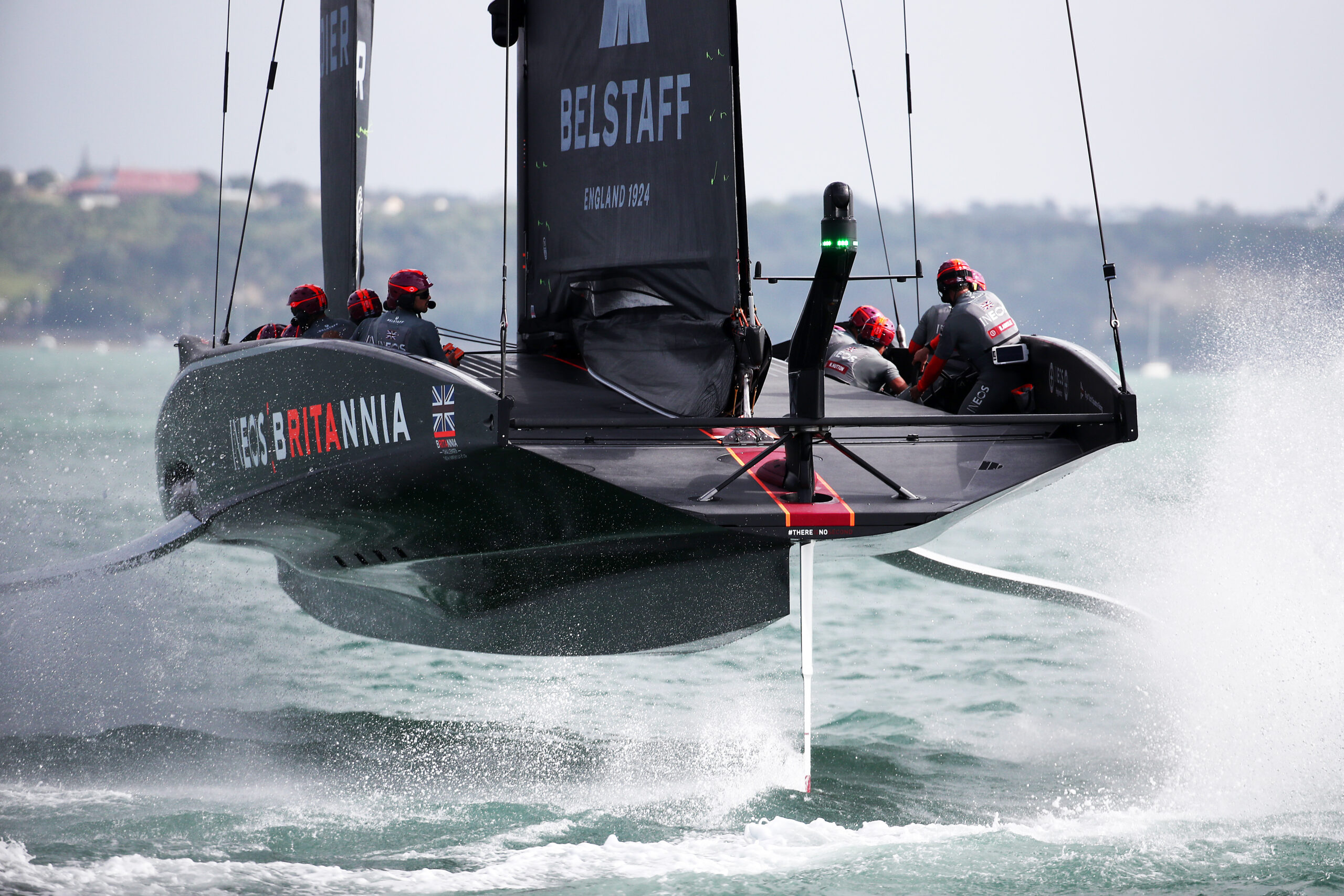
INEOS Britannia in action at the 37th America’s Cup. Photo: Getty Images/Fiona Goodall
Good to know
Pressure doesn’t make you better, but it does reveal what is already here.
That is according to high-performance specialist Rachel Vickery, who led a virtual roundtable for members looking at how they can reduce their athletes and coaches’ allostatic load – that is the cumulative ‘stacking’ of stressors over time that erode the amount of physiological ‘space’ an athlete has between their current arousal level and their personal stress threshold.
The stressors in question can be personal (e.g. a lack of sleep), organisational (e.g. misalignment), performance-based (e.g. being outside your comfort zone), or physiological (e.g. reduced ability to hear or absorb information).
Crucially, as Vickery explained, “as long as your arousal state stays below your threshold, your negative performance will not show up.”
Read more here.
Coach wellbeing
Though often neglected, members of the Leaders Performance Institute gathered to share ideas on how they can better support their coaches.
In one particular World Cup-winning environment, when athletes wanted specialist help, they were asked to book appointments. There was no 24/7 service.
This, their former manager explained, not only developed the self-reliance of the players, but also served to protect coaches and staff members who were all too ready to put themselves out, whether for out-of-hours appointments or “2am emails”.
Read more here.
Aussie rules
In early February we welcomed many of you to Brisbane for Leaders Meet: Australia, where organisations including the Brisbane Lions, Cricket Australia and World Rugby tackled the challenges of the day.
Chief amongst those was the ever-pressing need for alignment.
The Lions’ Senior Coach Chris Fagan favoured strong relationships with senior management; Australian all-rounder Ellyse Perry espoused the value of psychological safety in cricket; and World Rugby Chair Brett Robinson, as an executive, emphasised trust built on clarity from the top.
We picked out five elements for your consideration.
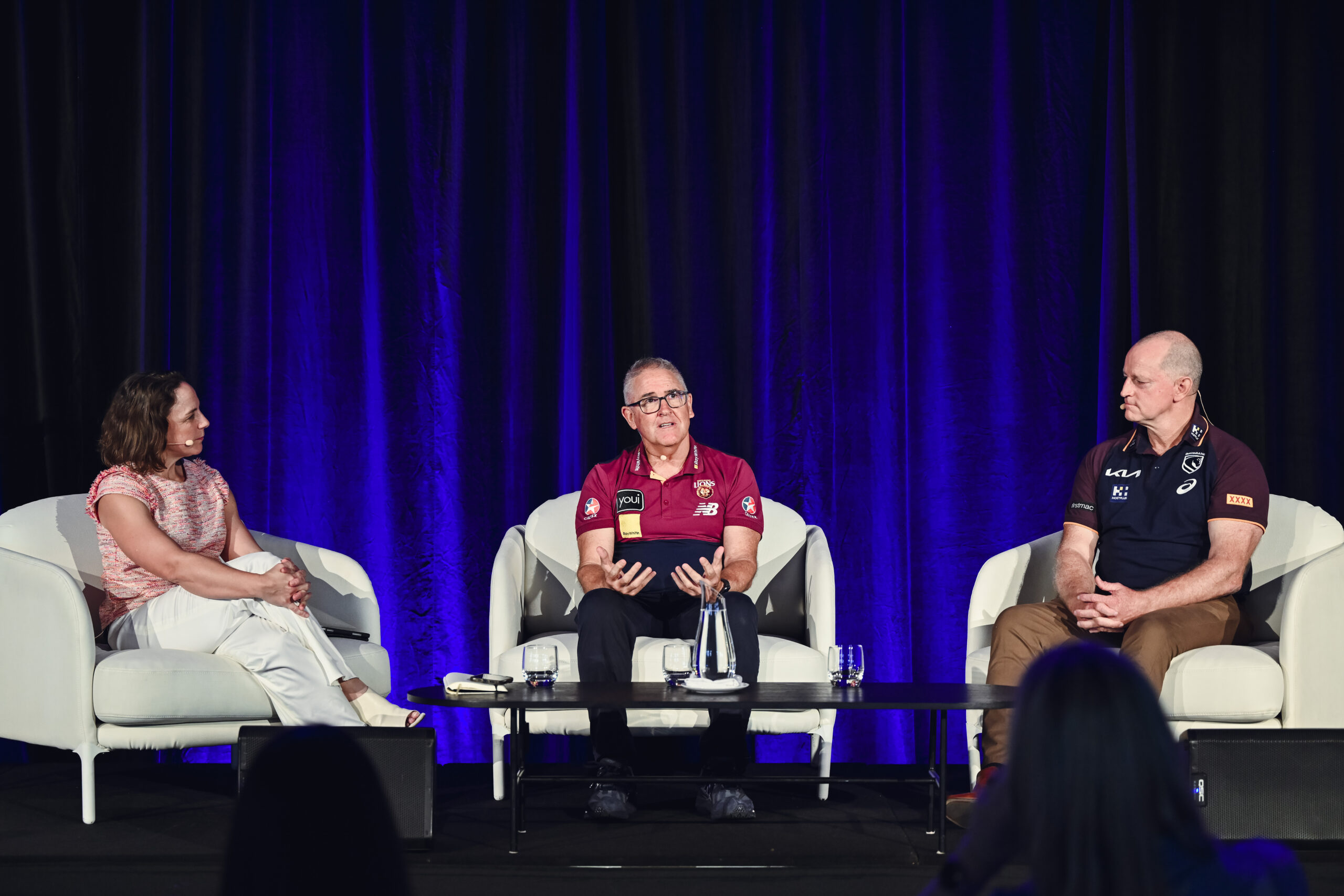
Chris Fagan (centre) in conversation with Michael Maguire (right) and moderator Rachel Vickery. Photo: Albert Perez
One you might have missed
Ben Ashdown and Dr Mustafa Sarkar of Nottingham Trent University pondered the behavioural elements of resilience in young players at football academies in this exclusive interview.
Their research has identified six resilience behaviours:
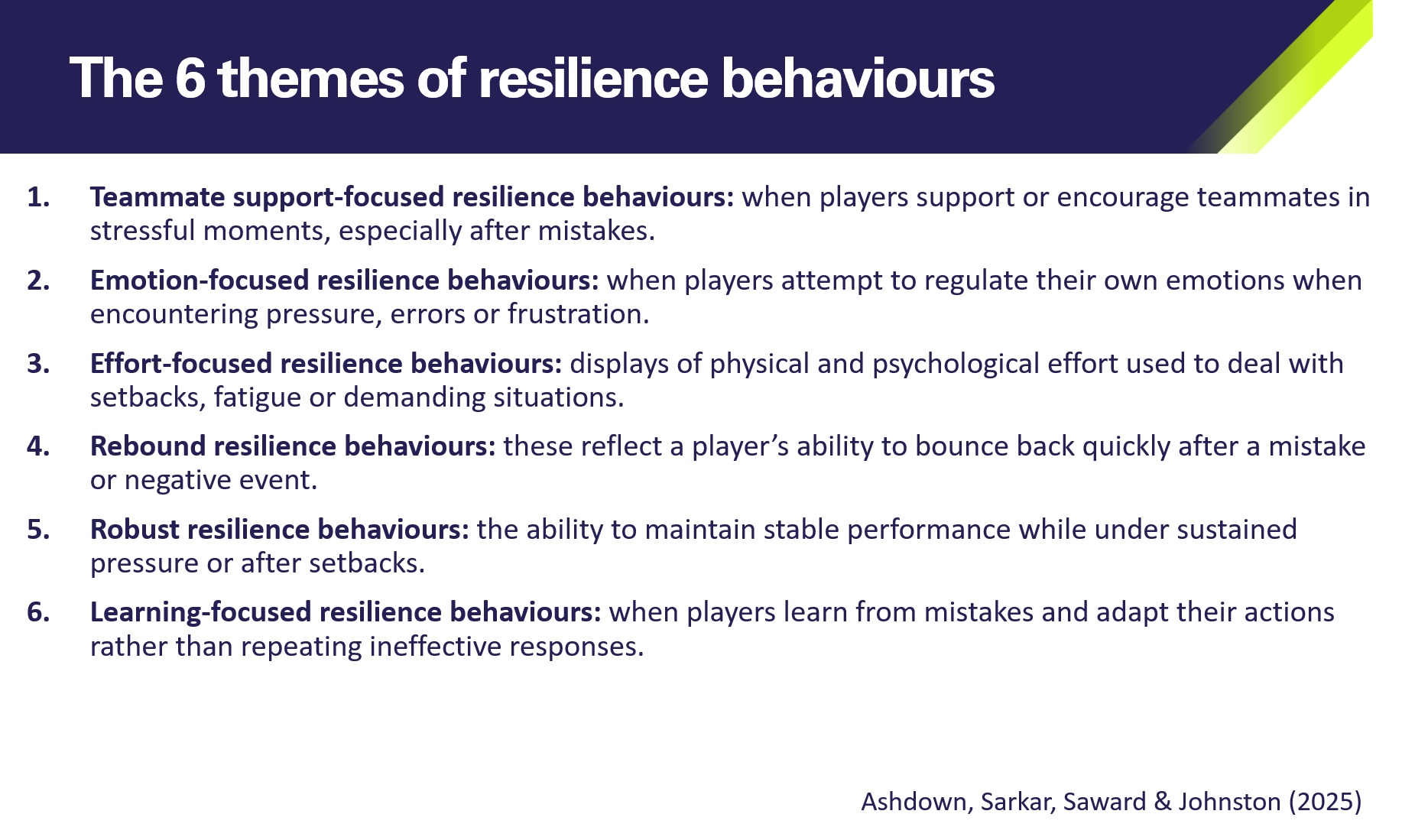
Their hope is to use these six to fashion a tool to help academy staff identify and develop resilience behaviours in their young athletes.
Read more here.
What’s coming up for members
In our latest Leadership Skills session, Jeff Pagliano of Management Futures reframes how organisations should understand, shape and protect their cultures.
Amaechi’s words are shared by Jeff Pagliano, a consultant with Management Futures, who in our latest Leadership Skill Series session, introduced members to tools that will enable them to help shape their team’s culture.
How do cultures develop?
Pagliano began his presentation with a definition:
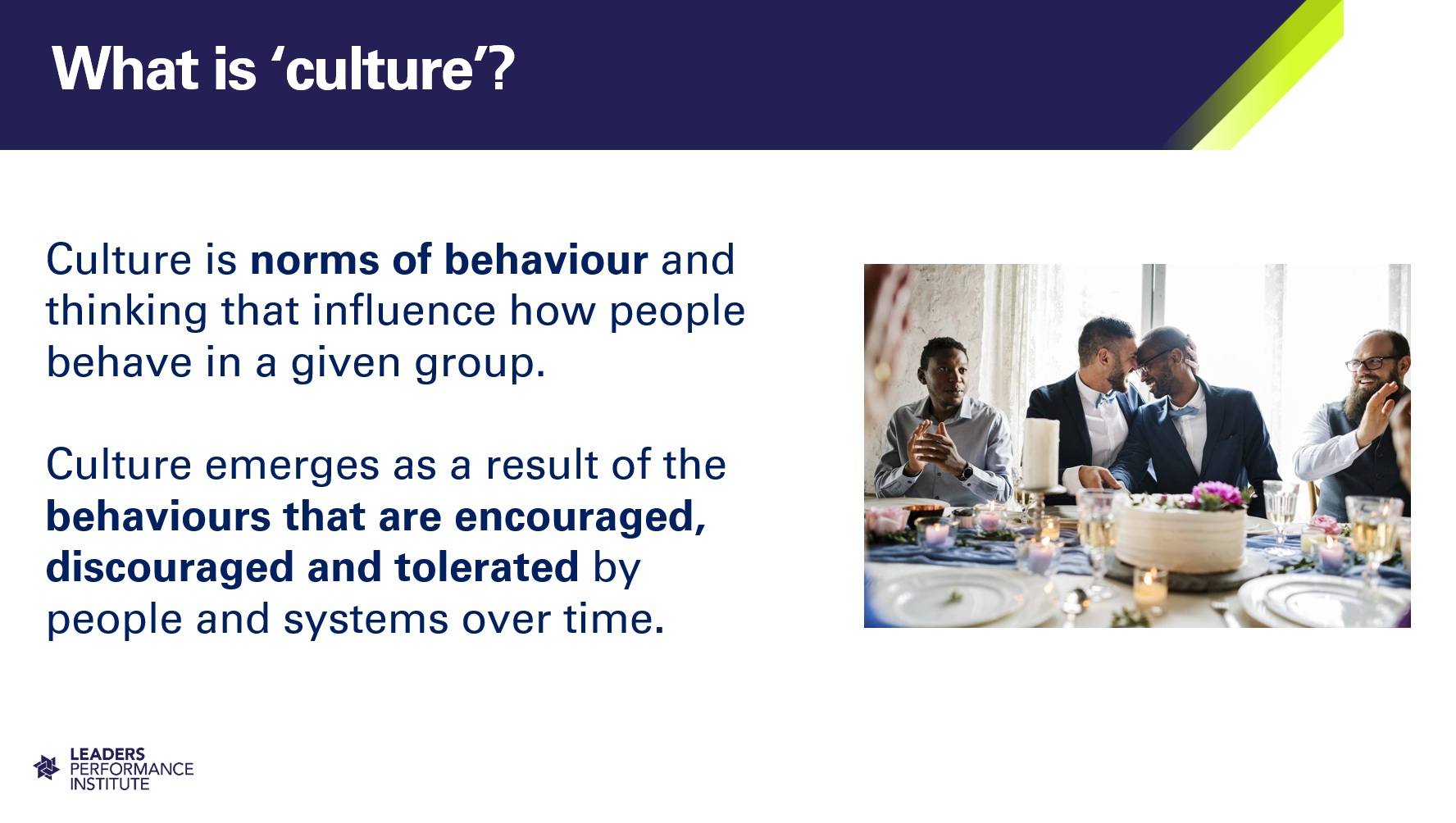
Management Futures uses the analogy of tables at a wedding reception to explain how cultures develop.
“You’ve seen how at a wedding each table develops its own personality,” said Pagliano. “It’s interesting that even in those interactions where some people know each other or some people don’t, a culture begins to form around that table. You can have the rowdy table, the quiet table; some are eager to get up to dance and some are not.”
What we see, what we say, what we believe
Pagliano then shared his ‘cultural iceberg’ model, which has been inspired by Swiss-American psychologist Edgar Schein and his pioneering work on organisational culture:
What we see
“This is literally what we see. So behaviours, systems, and processes,” said Pagliano. This could be how people interact, how leaders comport themselves, what actions are common or repeated. It also includes the physical environment (e.g., office layout or the visibility of team members).
What we say
“These are our goals, values and aspirations.” In other words, the official narrative.
What we believe
“These are the underlying assumptions we have about the organisation.”
The risk of emerging ‘shadow’ values
Underlying assumptions can lead to the emergence of what Pagliano calls ‘shadow’ values – unspoken, unofficial rules.
“Employees are acutely aware of what is rewarded or encouraged in everyday activities,” he said.
Pagliano quoted the British government’s sports funding agency, UK Sport, in making his point.
Therefore, it is important to be able to ‘map’ your team’s cultural influences to better help you understand who shapes your culture and in what ways.
Mapping cultural influences
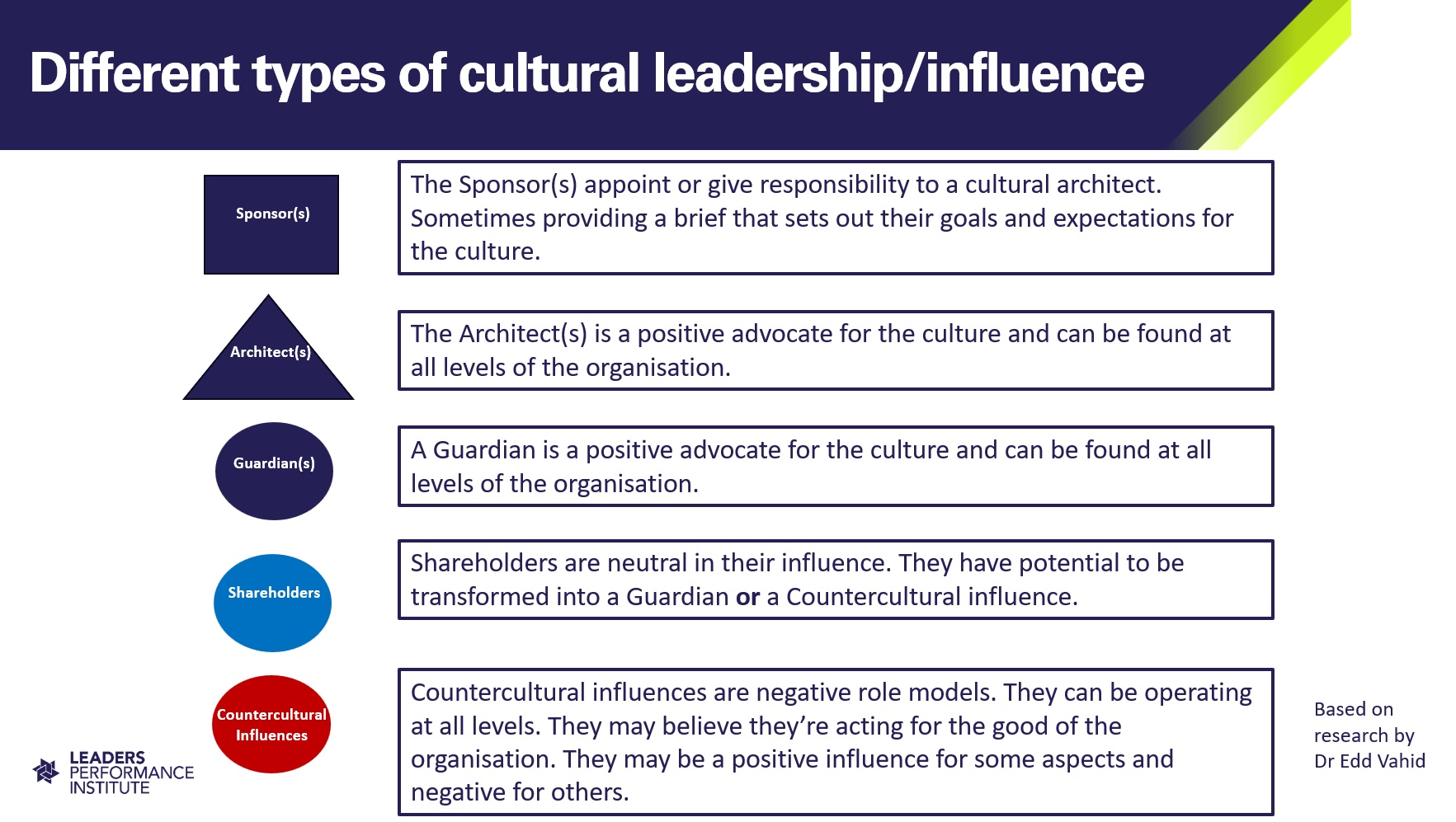
For this part of the session, Pagliano called upon Dr Edd Vahid’s Cultural Hypothesis, in which he spoke of the importance of ‘sponsors’, ‘architects’, and ‘guardians’ in shaping a culture through a combination of leadership and influence.
Pagliano added two further categories: ‘shareholders’ (“I would argue that everybody who works in an organisation is a shareholder”) and ‘countercultural influences’ (“countercultural influences are negative role models that can be operating at all levels”) and presented the following slide:
He then shared a hypothetical example of a cultural map that pulls on these five types. The result is a complex diagram:
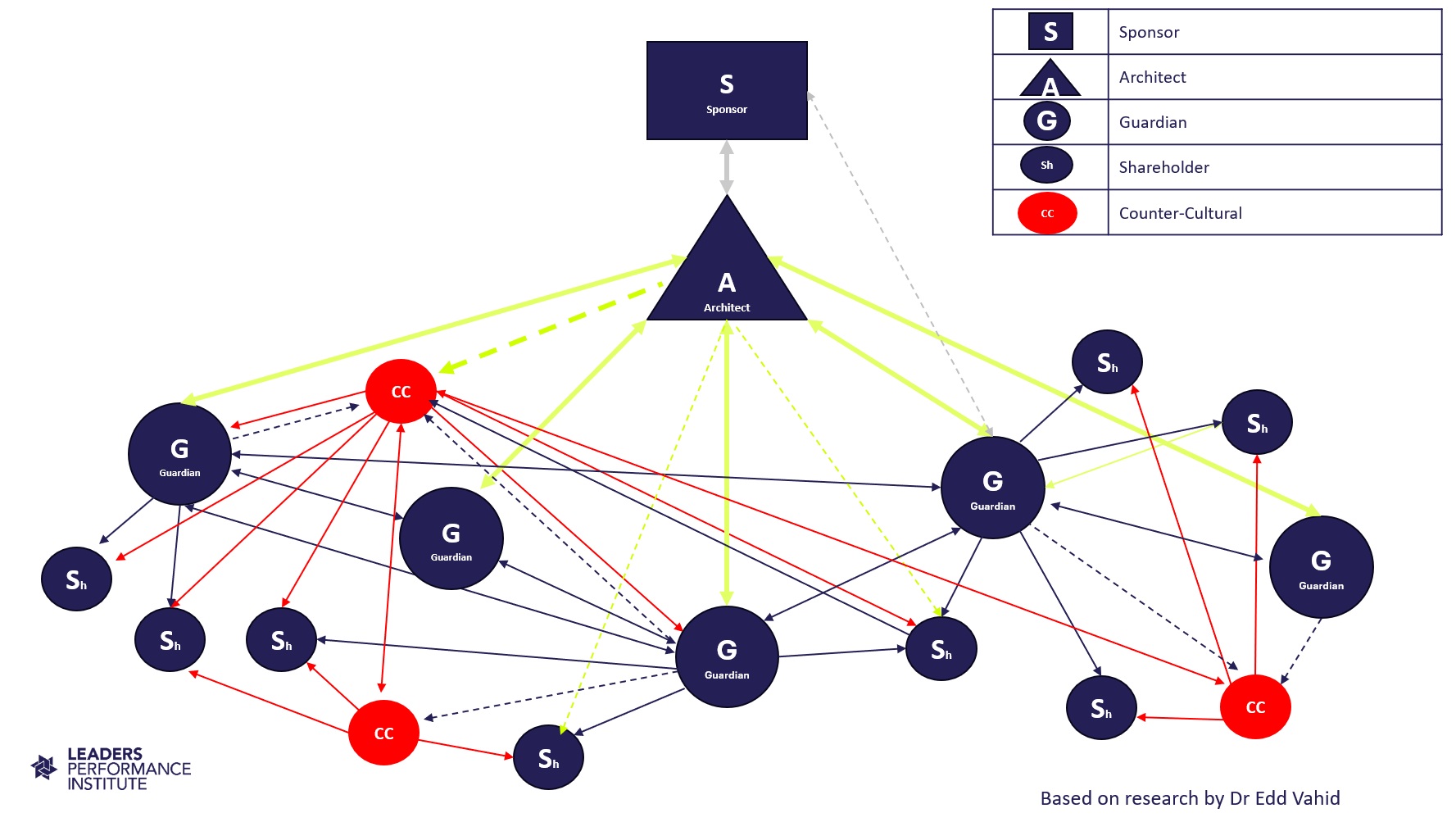
“Your sponsor is at the top,” said Pagliano. “That can be the owner of an organisation, maybe a GM, maybe a coach, but it’s somebody who has the ability to decide whether resources are allocated for building culture.
“Then you have the architect: the one who thinks about ‘see’, ‘say’, and ‘believe’. This is the person who has the ability to influence processes and has decision-making power.
They may or may not be the leader of the organisation, but they certainly have the ear of the leader.
“Then below is where the web gets a little complicated. This is where you can see how certain policies, procedures and aspects of culture can intertwine and be influenced.”
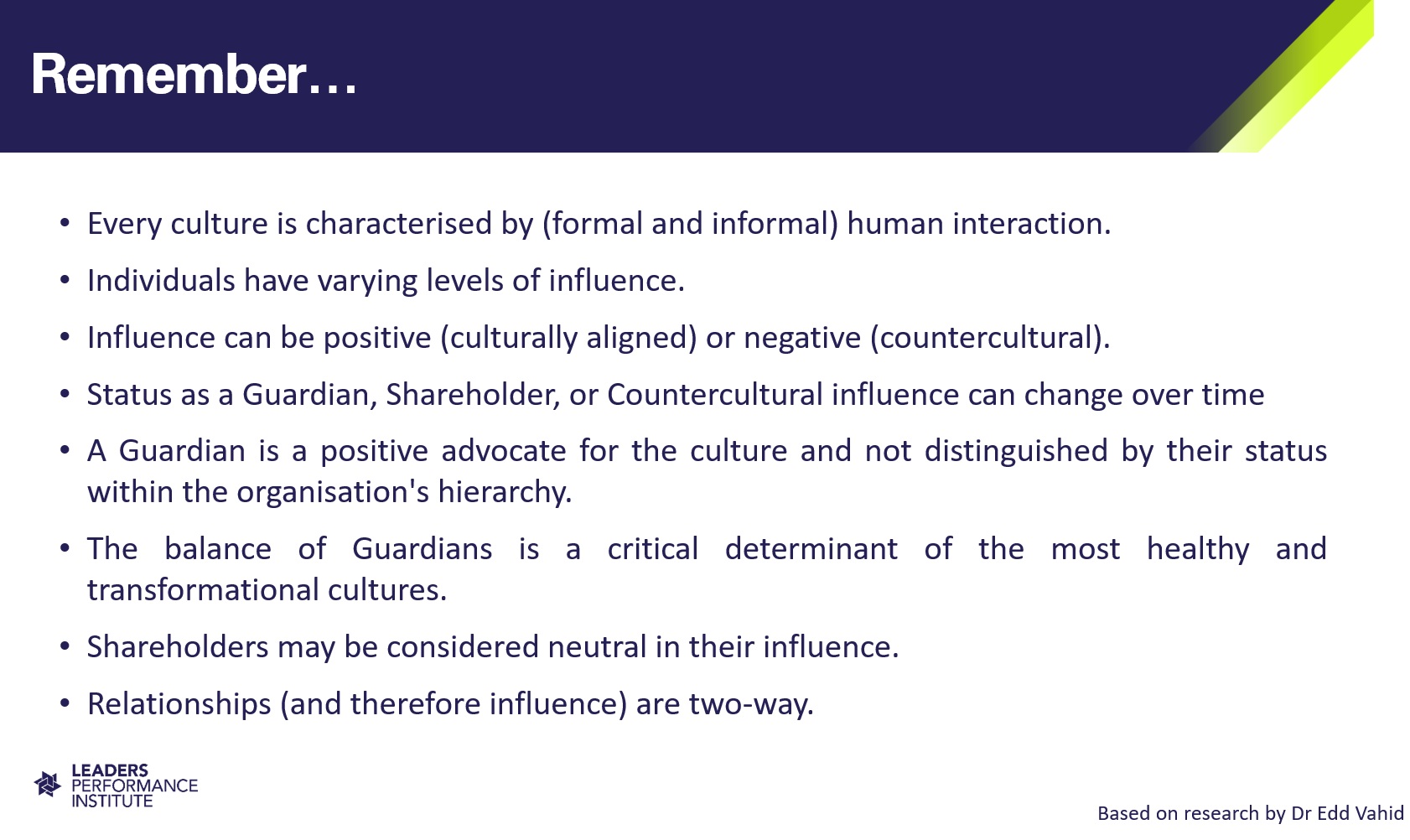
Pagliano concluded this section with a summary:
He concluded his presentation with six cornerstones of cultural leadership.
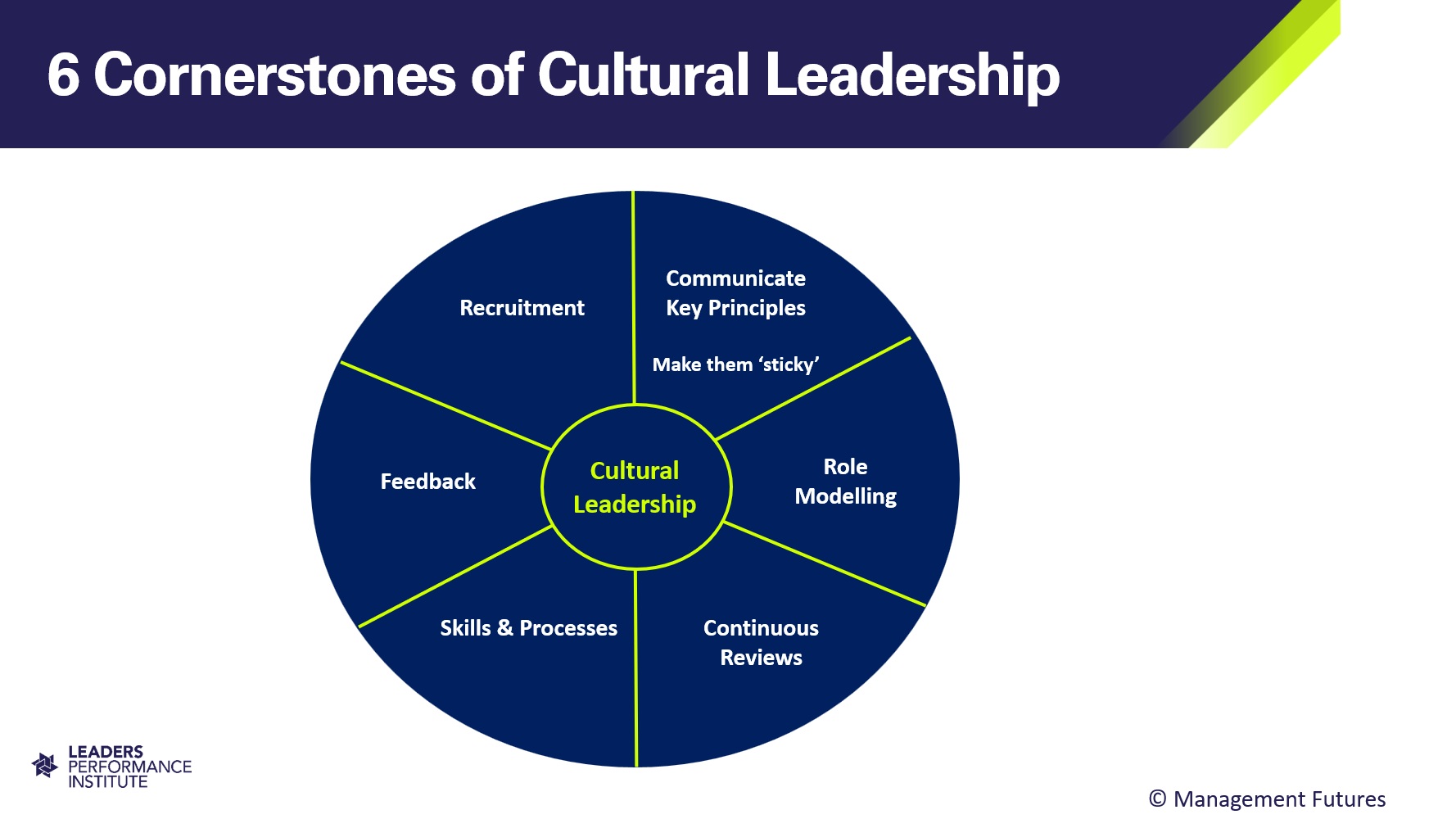
“These are the six levers that any culture leader, whether it’s your sponsor or your architect, can pull to make sure that vision of culture is consistent across your organisation.”
He then gave a real-life example for five of the six.
Communicate key principles – Netflix
“Netflix’s key principle is ‘act in Netflix’s best interests.’ And so their culture of ‘Freedom & Responsibility’ can be captured in these five words,” said Pagliano. “Anytime there’s a decision being made, you can always ask your team, ‘are we acting in Netflix’s best interests?’”
Role modelling – Collingwood FC
Pagliano explained that Collingwood’s Senior Coach, Craig McRae, asks himself daily, “‘to what extent are my day‑to‑day actions equal to our ambition?’” The Melbourne-based club were AFL premiers in 2023.
Continuous reviews – Pixar
“They had this concept of appreciative inquiry,” said Pagliano of Pixar. “It’s all about setting examples of excellence to create a blueprint for future performance.” In testing Toy Story, for example, the relationship between Buzz and Woody wasn’t working. So they went back to the drawing board over the course of six days and created those characters that we know and love today. Further down the line, they would go back and ask, ‘what were we doing right during those six days when we pulled together?’”
Skills and processes – the UK Sports Institute
This example is specifically about their approach to developing their staff members’ “teaming skills”. “This can come down to something as simple as ‘speak up, listen up’ and then a shared responsibility for performance,” said Pagliano. The UKSI wanted to teach “teaming skills across the different groups so that when groups from different parts of the organisation interact with each other, they have a shared language.”
Feedback – Doctors Without Borders/Médecins Sans Frontières
“Their motto is ‘we are intolerant of, but empathetic, when people don’t initially meet our high standards’,” said Pagliano, who explained that employees are given “three strikes”. “Feedback as a continual part of the process is really important to maintaining their culture.”
Recruitment – get the right people on the bus
Pagliano does not give an example for recruitment. Instead, he poses a question: “When you’re looking to hire folks, who do you think is going to buy into your shared cultural values and who is going to be a guardian or an architect of that?”
If you have any further questions around how to understand, shape and protect their cultures, feel free to reach out to Management Futures directly via [email protected]
What to read next
20 Feb 2026
ArticlesDuring his time with the INEOS Britannia sailing team, Peter Hodgkinson built an environment that enabled his young staffers to learn and thrive under pressure. As he explains in this exclusive column, intent-based leadership and psychological safety were at the heart of his approach.
Main Image: Getty Images/Fiona Goodall
We achieved a number of national firsts: the first British team to win the Challenger Series, fending off some tough opponents; the first British team to contest the Match itself in 60 years; and the first British team to score points in the Match for 90 years.
There was no shame in eventually losing 7-2 to Team New Zealand, who claimed their third consecutive victory. We gave it a good go against the team our helmsman, Sir Ben Ainslie, described as “the best team ever”.
This is the story of how we put ourselves in contention.
Assembling a functioning team: the hard part
The INEOS Britannia Team was made up of two organisations: Athena Racing and Mercedes GP. It wasn’t always easy – it was a collision of two different workplace cultures – but the common goal bonded the two companies together and we got on with the job.
I learnt a lot about sailing and the maritime industry and while there are similarities to motorsport, where I have made a career for four decades, there are a number of big differences (that’s a topic best saved for another day).
One of the things I really enjoyed about working on the Cup was that we got to recruit a new Build Logistics Team. Basically the Build Logistics Team are parts chasers; in the Cup they looked after ‘goods in’, ‘stores’, stock checks, parts picking, moving parts through inspection, NDT (non-destructive testing), X ray etc. so it is a fluid and dynamic role with lots of pressure.
The team we recruited had very little or no experience in this type of role but we believed it was more important to have the right mindset, practical intelligence and energy than experience. In the Cup, we didn’t have all the structures, systems and processes in place that you have in an F1 team but we had enough to do the basics well, if we used what we had correctly.
I believe if you have relatively fewer parts then you need additional people to manage those parts as they become more critical. Therefore, we ended up with a team of seven people in Build Logistics, which seems a lot, but considering the workload, I think this was the correct number.
Almost all members of the team we assembled would be considered Gen Z, but I didn’t view them in such narrow terms. I didn’t put them in some kind of box with a label. To me they were a new team that we had to get moving as quickly as possible. This was the hard part.
‘Don’t lose any parts’… and ‘no surprises’
The team’s inexperience was difficult to manage at first but as they were all intelligent it didn’t take long to get them up and running. Don’t get me wrong: we had some very difficult moments and some very challenging conversations, but after a few months we started to see improvements and we were going in the right direction. The energy and passion this group displayed was not seen by the whole team as everyone was flat out, but I could see what they were achieving. I applied what I had learnt in my time in HR (I was Head of Employee Engagement at Mercedes F1 between 2019 and 2022) to this group using intent-based leadership and psychological safety.
I gave the Build Logistics team two simple rules: ‘don’t lose any parts’ and ‘no surprises’. Don’t lose parts almost goes without saying, but it was important to articulate as it gave them a mental priority for what they were responsible for. I wanted them to feel that every part was important because, if we lost something, then we could miss an important test or delay a development item hitting the water, therefore delaying the opportunity to learn.
We did lose some parts but also we did learn from this, and I like to think we didn’t blame the person, as the process (or lack of) allowed it to happen. In most cases during my career, the human being was acting as a sticking plaster due to the lack of a robust process or system.
I used ‘no surprises’ as a tool to try to build psychological safety. Surprises are for birthdays and Christmas, in my book. I wanted this young team under pressure to speak up. I wanted them to feel that it was wrong not to say something if they were concerned about a part or a process or were having a problem. I wanted to hear what they had to say, I was desperate to hear what they were thinking, and it was important that I responded productively when they did bring me bad news. As a Build Logistics Team, we needed to know now if there was an issue, as we simply didn’t have time or resources to bury bad news. We needed to hear their voices and, for me, ‘no surprises’ gave them permission to speak.
We had a daily meeting at 11:00am to go over the plan, projects and new parts – similar to what we did in F1 – and it took a while to truly hear everyone’s voice. I would say to them: ‘I woke up at 2:30am and thought about this, when you woke up last night, what did you think about?’ Sometimes nobody had much to say when I asked this question but on many occasions there was a little nugget of information that came to light.
If you are looking to build psychological safety in your team, try using ‘no surprises’. It gives your team permission to speak and it will help your team grow and develop as they feel they have a voice and will be respected for their contributions.
The 2% vs the 98%
Now this might be a bit controversial: one nugget I gave to the young Build Logistics Team on the America’s Cup was “you are only remembered for the 2% you get wrong, not the 98% you get right”.
If you are really honest and park up all the psychology for a moment, this is probably a pretty true statement.
I am sure plenty of cleverer people than me will disagree with this sentiment, but this is how I see it. It is a bit below the line, but it did focus my mind on my own performance. I believe we remember negative moments or threats to help protect ourselves in the future if we see this type of situation happening again, and therefore it remains fresh in our memories.
Others will have some good memories of some of the things we did but they will remember in detail our mistakes and the moments where we did not behave reliably or with competence. In other words, they lost trust in us. As human beings we will make mistakes, this is how we learn, grow and develop.
Intent-based leadership
Leaders of new young teams need to provide a lot of control and support in the early stages of the team’s development while the team members improve their competence and get aligned to the clarity of the intent. As the team’s competence and clarity increases, the amount of leadership control decreases. This is built on the intent-based leadership theory devised by retired United States Navy captain David Marquet.
This is a snapshot:
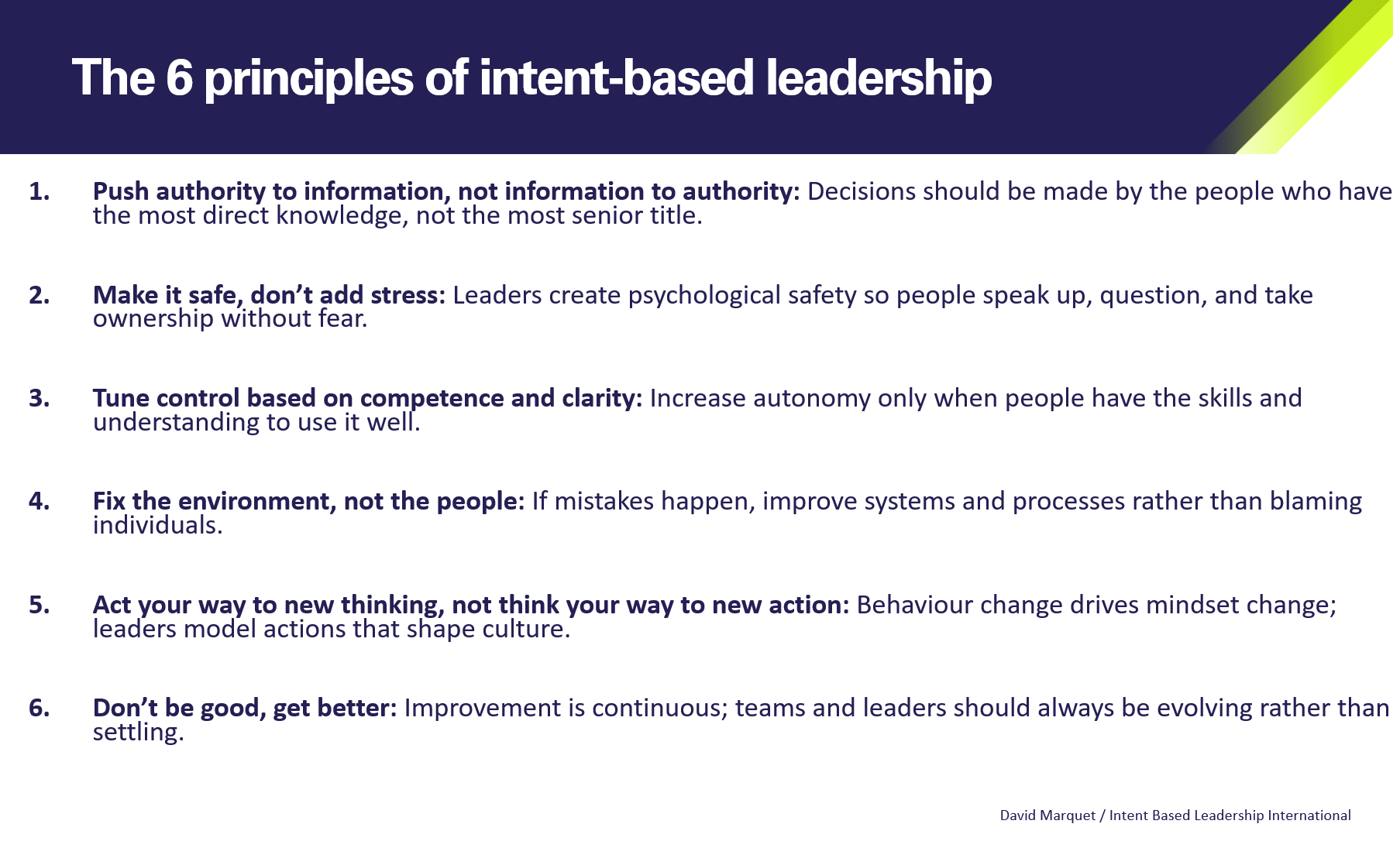
As a leader you are never quite sure what the people around you really think of you or if you have made a difference due to the pace of the world we live in. That said, a former member of the Mercedes F1 Build Logistics Team (and now a successful leader and manager in his own right) recently sent me one of the nicest bits of feedback I have ever received:
Your leadership allowed many young people to grow and now forms a lot of their own leadership and general teamwork skills. The biggest thing I always felt that made you different was your ability to allow others to make mistakes whilst catching them before it was at the detriment of the team. Without that, none of us would have learnt to be independent.
I think the key point from this is: I was catching the mistakes before they hit the 2% category while allowing the team to learn and become independent and responsible.
How is your team learning? Or are you telling them what to do so they don’t make mistakes? You don’t want their mistakes to reflect poorly on you and get you into that 2% category.
I hope this has given you something to think about. I am sure this may go against the grain for some of you but I suppose we can’t all agree on everything.
Peter Hodgkinson is a leadership and performance specialist skilled in helping high-performers become better at what they do. As an accomplished manager and mechanic, Peter has enjoyed almost three decades of success in elite sporting environments. His work in motorsport, as part of winning teams at Le Mans and Daytona, culminated in seven Formula 1 driver’s world championships won at Brawn and Mercedes, where he led car-building operations. Peter was Mercedes’ Head of Build during Lewis Hamilton’s era-defining run of six world titles. After a spell serving as Mercedes’ Head of Employee Engagement, Peter returned to the Factory Floor as Build Operations Manager for the INEOS Britannia sailing team when Mercedes supported their quest for the 37th America’s Cup.
If you would like to speak to Peter, please contact a member of the Leaders Performance Institute team.
18 Feb 2026
ArticlesIn his latest column, performance specialist Richard Young explains why the podium is merely the place where the work becomes visible.
What we’re watching was shaped long before now.
The medals being awarded at these Games were formed over months and years, through daily training sessions, ordinary conversations, and leadership decisions that rarely felt significant at the time. The podium is simply where all of that work becomes visible.
That’s why medals matter. Not as a destination, but as a standard that quietly shapes everything before the starting gate.
When a team commits to gold medal quality, the question changes. It is no longer “is this good enough?” It becomes “is this gold medal quality?” That shift sharpens judgment. It makes it easier to decide what stays and what goes. It creates the discipline to say no to additions that feel helpful but dilute the work.
Winter sport exposes this clearly. Conditions move quickly. Margins are tight. There is little room for correction. When athletes perform with clarity in that environment, it is rarely because of something added late. It is because gold medal quality guided training, recovery, and conversation long before they arrived.
The honesty of this standard matters. Gold medal quality does not guarantee the result, but there is no downside to holding it. It gives a team the best possible chance because the work has been measured against something that counts. And whatever happens on the day, you can walk away knowing the system reflected your best thinking and your best effort over time.
That is important because the Games have a way of revealing the truth. They do not create pressure; they concentrate it. They do not build your system; they expose it. Under that intensity, whatever has been repeated, clarified, and aligned over months and years becomes visible. What has been protected holds. What has been left loose shows itself.
I have seen this pattern many times and have helped teams address what is almost inevitable in the lead up to major events. Good intentions turn into noise. Leaders want to help, coaches want to protect, support staff want to add value. Meetings increase, plans are revisited, reporting expands. Activity rises while alignment begins to thin. Without a shared standard, every addition can be defended. With one, decisions become easier because there is something solid to measure them against.
I remember working with a winter sport programme that, from the outside, looked ready. The talent was there, the experience was there, and the resources were in place. As the event approached, small adjustments began to appear. Plans were refined again. Extra conversations were added. Senior leaders checked in more frequently. None of it seemed dramatic, yet the clarity that had carried them started to dilute. The athletes felt it before anyone articulated it. The system became busy, and when the moment came the performances were close but the medals did not follow.
The issue was not effort; it was the absence of a shared and protected standard. When everything feels important, the essential things lose their edge. The debrief circled around marginal gains, yet the real margin had slipped much earlier. At some point the team stopped asking whether each decision truly met gold medal quality.
Watching these Olympics, you can see the difference. Some teams are not louder or more animated, they are settled. Athletes adjust to conditions without drama. Coaches stay with the plan rather than reacting to every moment. Leaders are present and steady, not adding extra layers or distraction. That composure was built well before the Games. It came from hundreds of choices where gold medal quality decided what stayed in the system and what was taken out.
Across five Olympic cycles of research, one pattern was consistent. The best at repeat performance were also the best at saying no. They said no to late additions. No to unnecessary meetings. No to changes that did not lift the standard. They protected the gold standard when others were tempted to add. Their edge was not intensity. It was discipline around what mattered.
This is where medals matter. Not as pressure, but as a reference point.
When a shared standard is clear, alignment is not forced. A physiotherapist knows whether an intervention adds value. A coach simplifies a session without feeling exposed. An athlete speaks up because the question is not personal, it is principled. Does this meet gold medal quality? If it does, it stays. If it does not, it goes.
High performing environments stay simple as the demands increase. Winter sport tests that. Conditions shift. Schedules tighten. Margins are small. Anything extra becomes a load. Teams without a protected standard arrive still discussing basics. Teams who have done the work arrive clear on who they are, how they operate, and what they trust.
And that clarity does not sit with one leader! It runs through the system.
In environments where performances are repeated and sustained, leadership is not a title. Athletes lead themselves. Coaches lead learning. Practitioners lead their craft. Senior leaders protect the conditions. It only works when there is a standard everyone understands and can apply. Gold medal quality becomes the shared reference point. It is how distributed leadership holds together.
When leadership is shared in this way, pressure does not destabilise the system. People know what matters, decisions move quickly and conversations stay anchored. Simplicity is protected because the standard keeps pulling the work back to what counts.
Medals reflect the health of the system that produced them. Ignoring them does not remove pressure. It removes the reference point. The issue is not caring about medals. It is misunderstanding what they represent.
When medals are treated as proof of effort, people push harder. When they are treated as proof of control, people tighten their grip. When they are understood as the outcome of sustained quality over time, leaders look at the system. They ask what met the standard and what did not, and they adjust accordingly.
Across the five Olympic cycles of research, the repeat performers did this better than the rest. They reviewed their environment against gold medal quality and made decisions early. What needs lifting. What needs shifting. What needs removing. Questions that were visible as part of the daily work.
As these Games unfold, the competition is extraordinary. The margins are tight, the stakes are high, and the performances are world class. It is compelling to watch. But there is added value if we look under the hood. Beyond the podium and the headlines, we can observe the systems that hold when the pressure rises.
You can hear it in the interviews. Athletes speak with clarity about their process, not just the outcome. You can see it in their body language at the start line and in the finish area. There is composure. You can see it around the competition environment, in how teams warm up, how staff interact, how little needs to be said. None of that is accidental.
What we are watching is not only talent meeting opportunity. It is preparation meeting pressure. It is standards held over time. The best in the world are showing us what it looks like when a system has been built properly and trusted fully.
Gold medal quality is a way of deciding, leading, and working. It asks a simple question each day and requires an honest answer.
Over time, when medals matter, that standard shapes what becomes possible.
Enjoy the Games!
Richard Young is an internationally renowned performance advisor. He has been involved with 11 Olympics as an athlete, coach, researcher, technologist, and leader working across more than 50 sports and seven countries focused on sustained high performance. He has won international gold medals and coached world champions. He founded international performance programmes including, the Technology & Innovation programmes for Great Britain and New Zealand, and a Performance Knowledge & Learning programme for the New Zealand Olympic, Winter Olympic and Paralympic teams. Across seven Olympic cycles he has researched the differences between medallists and non-medallists, their coaches, support staff, leaders and the system they are in to unlock the keys that separate them from the rest.
More from Richard Young
Meaning Does Not Guarantee Medals, But it Strengthens the Behaviours that Make Medals Possible
The theme of alignment was high on the agenda at February’s Leaders Meet: Australia.
The Shepmates – Australian identical twin brothers Archie and Miles Shepherd – have become internet stars due to their viral videos depicting their high-energy and comedic reinterpretations of dramatic moments of sports commentary.
“I’m not going to pretend like we probably should be offering you guys advice. You’re the best at what you guys do,” Miles told a room of Leaders Performance Institute members at Rivershed in Brisbane. “But hopefully we can inspire you guys, or you take something from our story.”
Their dedication to their art and their fans has taken them to places they never expected. “We’ve found ourselves in a pretty niche part of the internet,” said Archie.
On top of it all, the brothers’ obvious chemistry, as well as their ability to finish each other’s sentences, hinted at the theme of alignment that ran through both days down on the River Brisbane (and it’s a performance trend we’ve tracked for some time).
They were not alone. Others who took to the stage, including the Brisbane Lions, World Rugby and the Queensland Ambulance Service, spoke of their efforts to ensure everyone within their walls is on the same page.
Based on the insights shared onstage across both days, the Leaders Performance Institute highlights how alignment shows up in the work of high-performing teams in at least five ways.
1. Smart coaches who can manage up
In sporting terms, there has never been a better moment for the city of Brisbane, with the Lions defending their AFL premiership and the Broncos winning the NRL in 2025.
Lions Senior Coach Chris Fagan and Broncos Head Coach Michael Maguire have built winning machines in this corner of Queensland, and both were on hand to tell Leaders Performance Institute members how it was done.
Key to their approach is an ability to manage the executives within their organisations. As Fagan said, “I always said to myself, if I was going to be a head coach, that I would make sure I would manage up to that group of people.”
Over the past nine years, Fagan tried to dine once a week with Lions’ CEO Greg Matthews as well as the team’s senior-coach-turned-executive Leigh Matthews.
Chris Fagan
Maguire has adopted a similar approach to prevent any noise or confusion emanating from above.
Michael Maguire

Chris Fagan (centre) in conversation with Michael Maguire (right) and moderator Rachel Vickery. Photo: Albert Perez
2. They seek ‘spine alignment’ too
While coaches can do what they can to ensure information is flowing in all directions, there is a role for both board members and heads of performance on the sports science side too.
Onstage, Peter Horne, the Performance Director at Rugby Australia, made the case for “spine alignment”, of which he said, “if we get true spine alignment of what we’re trying to achieve from a strategy, business and the deliverables [perspective] then we’re more likely to be able to execute.”
Crucially, as he admitted, it is not about agreement on every decision.
Peter Horne
“For the spine to work, you need everyone operating at the right level,” said Brett Robinson, the Chair of World Rugby, who joined Horne for the session. He included himself in that assessment.
Brett Robinson
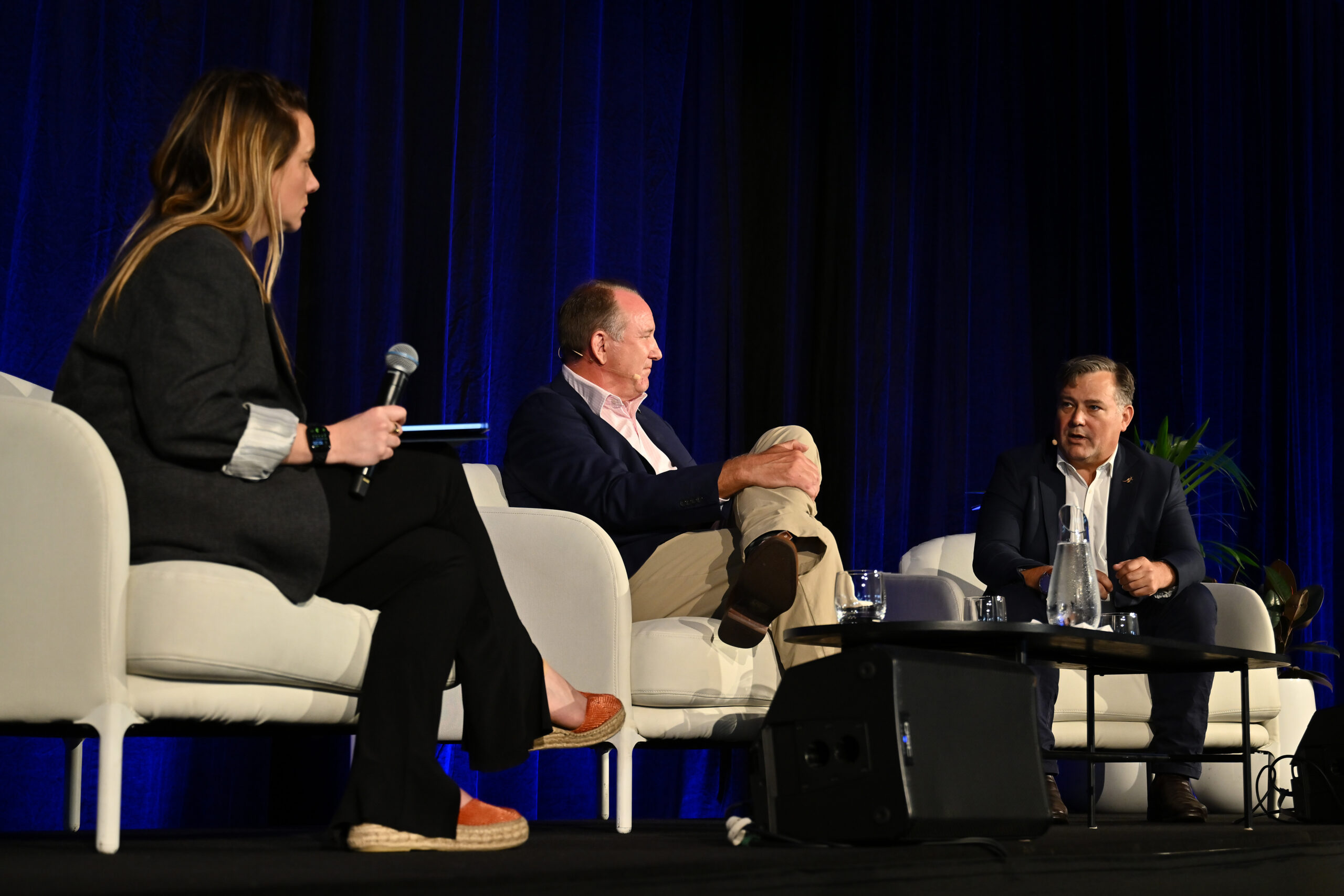
Peter Horne (right) makes his point onstage with Brett Robinson (centre) and Leaders’ Laura McQueen. Photo: Albert Perez
3. They bring their frontline people onboard
Few individuals are as well placed to discuss the concept of a culture driven by a shared purpose than Dr Stephen Rashford, the Medical Director of the Queensland Ambulance Service.
He is proud of his team’s “no excuses” approach too. “When we do our audits, everyone’s in the room, and there’s no making fun of anyone, there’s no bullying. We have honest, open discussions because we all just want to get better.”
Critically, their culture starts with their paramedics.
Dr Stephen Rashford

Dr Stephen Rashford mid presentation. Photo: Albert Perez
4. They have leaders who give their people psychological safety
Australian all-rounder Ellyse Perry is one of the greatest female cricketers of all time (then there’s her career as an international football player to consider). Her career has been underpinned by psychological safety. “When there’s a lot of support around that and real alignment on wanting to grow and improve, that makes a big difference,” she said.
Ellyse Perry
“No matter the position you hold, you don’t know everything, so be open-minded to learning,” said Anna Meares, the double Olympic gold medal-winning track cyclist who served as the Chef de Mission for the Australian Olympic Committee at the Paris Games. She spoke onstage alongside Perry and fellow Olympic gold medallist, the BMX cyclist Saya Sakakibara.
As Chef, Meares decided that open displays of vulnerability from early in the cycle would help to bring athletes and their coaches onboard.
Anna Meares
Psychological safety is just as important in individual sports, as Sakakibara told the audience. The Red Bull athlete won gold in Paris but recounted the story of her awful crash three years earlier in Tokyo and how it encouraged her to start placing her trust in others.
Saya Sakakibara

Anna Meares (second from left) makes her point to session moderator Fabio Serpiello in the company of Ellyse Perry (second from right) and Saya Sakakibara (first on the right). Photo: Albert Perez
5. They use process as a tool of alignment
In his presentation, Scott McLean, an associate professor at the University of the Sunshine Coast, explained that leaders must be aware of how things are connected in the complex systems of sports performance.
Scott McLean

Scott McLean from stage right. Photo: Albert Perez
Interventions should be governed by the performance need rather than results, according to James Thomas, the Performance Director at Warwickshire CCC, who made this case when he spoke onstage.
James Thomas

James Thomas onsite at Leaders Meet: Australia. Photo: Albert Perez
Where we’re going next