In an exclusive column, Peter Hodgkinson, the former Head of Build at Mercedes F1, sets out the considerations that helped him to lead in one of sport’s most high-pressured arenas.
Main Image: Getty Images / Mark Thompson
Not only is it difficult to fully see someone’s body language, it also makes it near impossible to see a leaking water pipe at the front of an engine!
In my opinion, you need to be present in a high-performance environment.
I served as Head of Build at Mercedes between 2011 and 2019, an era when we won five driver’s and five constructor’s world championships. It was a period of unprecedented success for the team and for at least part of that time I worked out of a small, tired office in the middle of the team’s factory.
It was a terrible space. It had no natural light, the AC was incredibly bad, and the ceiling tiles were water-stained. Admittedly, I couldn’t see those tiles – or the worn-out carpet, come to think of it – as easily at 7:30am when six or seven people turned up for work and squeezed into a room that was more suitable for four.
I wasn’t sad when that office was finally knocked down as part of a factory refurbishment, but it had been a home away from home. For 20 years I’d spent more time there than I did at home.
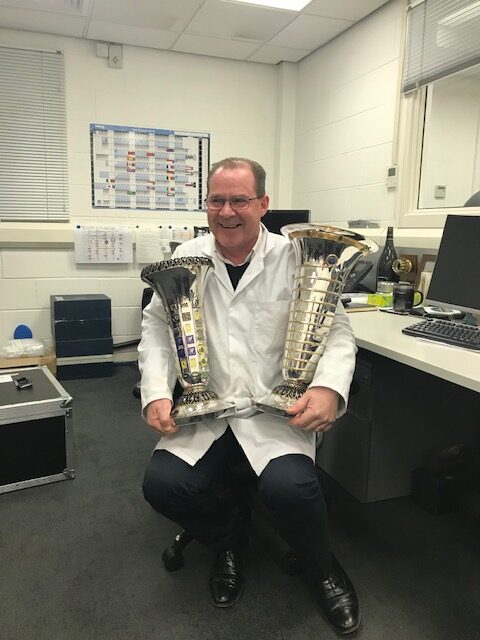
Peter Hodgkinson holds the Formula 1 Drivers’ and Constructors’ World Championship trophies in his ‘dreary’ former office at Mercedes HQ in Brackley, Northamptonshire.
This story (at least my schedule, if not the dreary office) probably sounds familiar to many of you. I was routinely on the road at 5:15am and did not leave until 6:30pm most evenings. Of course, I left my phone on just in case.
Such scenarios in high-performance are not going to change any time soon, but there are several things that you can do as a leader to protect yourself and your team from excessive workloads while still delivering the required work.
There are sure to be other things, but these five considerations make a good starting point.
I believe it was important to be seen and to say at least ‘good morning’ to as many of my team as possible. I wanted them to feel that I cared for them and I was interested in what they were working on and the issues that they faced; and it was another opportunity for information gathering.
When we were in the build period or working on a big update, I would try and get to work in time to talk to the nightshift in Build, Compbond, Inspection etc to get an understanding of the current status and get a head start thinking about what I had learnt. This floor walking – asking questions, providing challenge, learning about the current status and building relationships – as I said, I don’t think you can do this as effectively on Teams or Zoom.
I’ve touched upon this before. I never tried to plan more than 30 percent of my day. Most days, meetings were added into my calendar which I needed to attend and, if I had a big gap, I would try and block it out for my work.
We think of work as writing plans, answering emails, attending meetings, doing things, etc but floor walking and talking to people is just as important and is part of the job. It might not feel like work as you have nothing physically to show for it, but it is so important as you are building relationships with your team which is an essential part of the trust equation.
As a leader, you cannot be chained to your desk doing work, looking at your feet and never lifting your head to talk to your team.
Manage your job list by focusing on getting things done. But don’t just keep adding to the job list. Create movement.
Trying to have 70 percent of my day unplanned also meant that I had a pretty good chance of achieving the 30 percent that I did have planned, so I felt like I got stuff done and when I went home, I felt that I had achieved something.
This is important. We all like big, long job lists. It makes us feel valued, but if we just keep adding to them it is soul destroying, as you never feel like you have achieved anything. Try and get three things done each day, completed and finished. This is movement, placing a real mental focus on a task to get it completed. This is what I attempted to do from 6:00am to 8:00am each day. With the 30 percent rule, if there is a crisis that does require your full attention, then you should have some capacity to manage it without impacting too much of your day.
Dr Ceri Evans got me thinking about tasks in this way:
Name it: What is the technical task you are undertaking? Give it a name.
Time it: Add a deadline for when you are going to get this task completed. This adds pressure which gives us energy to perform.
Move it: Time to step in and perform. Complete or complain, it is your choice. Try three times a day for 15 minutes to focus on a task and get it completed. This is movement.
Trust is at the heart of any team’s performance. Trust is choosing to risk making something you value, vulnerable to another person’s actions. It happens in small moments when you have the opportunity to increase your trustworthiness.
For example, I tried to keep meetings to a minimum as I wanted to walk around and talk to people and follow up on issues. It was important to me to be connected to what was going on in the workshops and for the technicians to know that I cared deeply about what they were doing and the effort they were putting into their piece of the puzzle.
After clearing as many emails as possible, I would try and get out the door by 6:30pm and leave the Team Leaders to it. As I said, the phone was always on but, on the whole, it didn’t ring that much in the evenings or at night because the team knew what to do and what was required.
In short, they had my trust. I believe trust is made up of the following:
Reliability: You turn up at the same time every day, you deliver the work, you can be counted on in a crisis to be there. You are present.
Competent: You are knowledgeable and you know how to do the work to the best of your ability.
Relationship: You need to have a relationship with the people you are interacting with. Find out about what they like and dislike; be curious about them as a person.
In F1, I tried to get to a position where 80 percent of what we did was planned and 20 percent was chaos. The chaos makes the job both challenging and fun. It’s one of the reasons you get out of bed in the morning.
When the chaos hits 40 or 50 percent, this is too much and it leads to overload and overwhelm. Cracks will start to show in the team’s behaviours and the quality of the work will decline.
As a leader, you need to manage this carefully and do everything in your power to protect your team as much as possible from the really impossible requests.
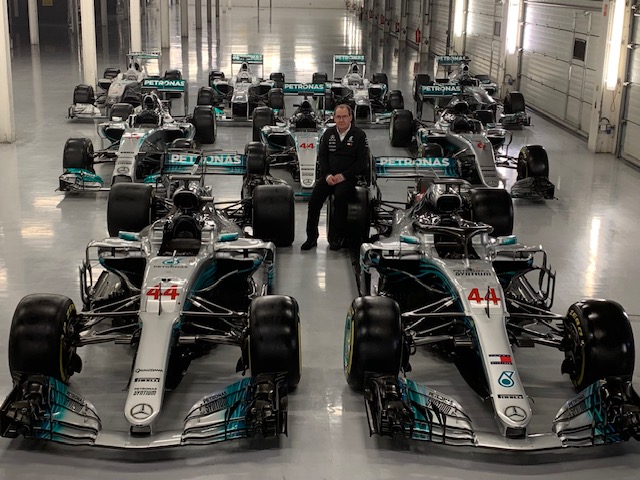
Peter Hodgkinson on the factory floor at Mercedes HQ in Brackley, Northamptonshire.
Sometimes you have to say ‘no’, but make sure you have other alternative options ready to present. You can’t just say ‘no’. There is a very fine line between protecting your team from excessive workload and delivering the required work to support the plan so if you do push back, make sure you can fully explain your concerns with facts, not just emotions.
Peter Hodgkinson is a leadership and performance specialist skilled in helping high-performers become better at what they do. As an accomplished manager and mechanic, Peter has enjoyed almost three decades of success in elite sporting environments. His work in motorsport, as part of winning teams at Le Mans and Daytona, culminated in seven Formula 1 driver’s world championships won at Brawn and Mercedes, where he led car-building operations. Peter was Mercedes’ Head of Build during Lewis Hamilton’s era-defining run of six world titles. After a spell serving as Mercedes’ Head of Employee Engagement, Peter returned to the Factory Floor as Build Operations Manager for the INEOS Britannia sailing team when Mercedes supported their quest for the 37th America’s Cup.
If you would like to speak to Peter, please contact a member of the Leaders Performance Institute team.
The Nxt Level Group’s David Clancy explores how the Dublin-based League of Ireland club seeks to build long-term success through reasserting its culture, defining a clear purpose, and engendering a sense of belonging in its players and supporters alike.
Main Image: courtesy of David Clancy
The murals around their home ground Dalymount Park (which is to be renovated in the coming years), the ‘home of Irish football’, speak of solidarity, diversity and inclusion; the terraces hum with the sound of supporters who are not just fans. They are owners of this proud club. The Gypsies. Bohs. The home where Bob Marley and Thin Lizzy played concerts years ago. A team rich in history, rich in story.
Different, rather than better
In a football economy dominated by multi-club groups, billionaires, private equity firms, and global TV rights, Bohs are a club who stand apart. They’ve become a story about what sport can be when it roots itself not just in performance, but in people that care about the team. Their budget isn’t as large as some other clubs’, so they are creative and intentional with what they do in the football market and community.
They offer something different and offer a surprising strategic case study. They show how sustainability and a long-term engagement advantage can emerge from fan ownership, cultural clarity, and humble leadership. They play differently off the pitch. They are a fan-owned club that has survived 135 years, not through scale or capital, but rather through culture, purpose, and belonging.
They recently commissioned and sold jerseys with ‘Oasis’ emblazoned on the front (building on the hype around the band’s August gigs at the Croke Park stadium). Half of the proceeds from sales supported Bohemian FC’s football and community projects, while the other half was split between Music Generation Ireland, which helps young people across Ireland access music, and Irish Community Care Manchester, who work with the Irish community (from which brothers Liam and Noel Gallagher hail) in that city.
This club truly embodies what category design means. They have effectively practised category design and owning a niche by positioning themselves not just as a football club, but as a cultural and social movement, blending sport with music, art, and activism. By creating and owning this unique space of ‘community-powered club’, they’ve differentiated themselves in the growing League of Ireland, attracting fans from Ireland and abroad, plus partners who share those values – rather than competing solely on wins and losses in the league table.
For leaders in leagues like the NBA, NFL, AFL, and Premier League, ‘Dublin’s Originals’ could be more than just a curiosity. A relative outlier, they offer an example of a model of sustainability for a team, one that challenges the dominant logic of growth in more unorthodox ways. Their underlying structure of fan ownership is worth studying. They are a collective of supporters who refuse to separate themselves from the team. Here, sustainability isn’t a corporate ESG initiative, it’s survival, identity, and continuity.
Alignment over expansion
Bohemians filter every strategic decision through a simple lens. They ask: ‘does this strengthen our bond with the community?’ This clarity allows them to stay relevant without necessarily chasing expansion, although supporter clubs are sprouting up across other continents. These fans want the team’s special edition away jersey featuring Dublin band Fontaines DC, which was released in support of the homeless charity Focus Ireland, or their Guinness-sponsored range of merch, the proceeds of which support Refugee and Migrant Solidarity Ireland.
Purpose alignment can be a sharper competitive edge than market dominance. Bohs remind us that sustainability doesn’t come from infinite growth, but from a cycle of reinvestment. Money goes back into facilities, players, and fan experiences, not siphoned off to distant investors. Fan-owned. Fan-run. Fan-driven.
Bohs pioneered blind football, amputee football and walking football in Ireland, and, in 2021, launched their Disability Supporters Association. They were the first League of Ireland team to take part in the Dublin Pride festival. They have teams and run events for young adults with intellectual impairments. They give back because it’s important for them.
For a team still seeking its identity in some shape and form, here are some inflection points from this club study. Replace relative transactional sponsorships with partnerships tied to a community identity (e.g., environmental groups protecting a part of a region). Give players structured time each season for community immersion, not as ‘charity golf appearances’ but as integral to the team’s ethos.
One could measure impact not just in brand impressions but in school programmes launched, parks built, and neighbourhoods revitalised, for instance. This piece of nurturing culture is not for decoration; it could be for leverage. Fans want their teams to win, but also to stand for something. To build something.
NBA franchises could issue community bonds or micro-shares, giving fans a symbolic stake and reinvesting proceeds into grassroots basketball. The result? Loyalty that outlasts market cycles. Premier League clubs could implement ‘golden share’ protections, ensuring fans safeguard cultural assets such as club colours, logos or stadium names. Food for thought.
Culture and ethos
Since the 2010s, Bohs, bohemian by nature, have adopted a left-wing political identity, which one can see in their club branding, language, public messaging and community initiatives. This resembles the philosophy and ideology of the Hamburg-based Bundesliga side St Pauli.
Daniel Lambert, their Chief Operating Officer, has positioned Bohs in support of causes such as Palestinian nationalism, anti-racism, anti-fascism, LGBTQ rights, refugee and homelessness advocacy. Jerseys carry messages from Amnesty International and the Movement of Asylum Seekers in Ireland. This alignment further builds loyalty and that sense of belonging to something, a movement. When fans and supporters are engaged, they likely will spend more on team merchandise too.
The club doesn’t shy away from social concerns and makes a stance. Volunteers run matchdays. Players show up at community events because it’s expected, not mandated and instructed. This is the culture, and these are not just PR moves but deliberate signals. These micro-behaviours strengthen loyalty and differentiate Bohs in a crowded and competitive sports market.
AFL clubs, many still member-owned, could guard against creeping commercialisation by doubling down on symbolic choices that reflect local identity. Of course, one must look at a P&L and the revenue statements, but this is worth contemplating. NFL franchises could reposition sponsorships not merely as transactions but as cultural alignments (health, education, inclusion, etc.).
A team could link sponsorships to civic identity – environmental causes, education initiatives, small business partnerships. Instead of buying attention, they earn trust. In an attention economy, values may outperform advertising in some peoples’ marks.
Imagine if a big franchise used its platform not just for commercial sponsorship, but as a megaphone for the causes their community cares about most. The return on emotional equity might dwarf the return on traditional marketing.
Fans as stakeholders
Bohemians’ ownership model turns belonging into structure. According to the club’s Social Impact report, as of 2023 they had over 3,100 members, up from just over 900 in 2018. There is a ‘one member, one vote’ rule. Membership is open to anyone and everyone, although there are limited season ticket and membership numbers; between seasons if a member does not renew their membership, it is sold on a first-come, first-serve basis. As well as match access, a member can attend and vote at the club’s AGMs and EGMs.
Once a member has hit three years of consecutive service, they are permitted to run for a board position. Thus, there is no outside control. Clear, values-driven, long-term thinking is encouraged over short-term profits; and growing the club and the community always remains the priority. Fans are shareholders; players feel the weight of representing not a brand, but a people. The ethos at the club is that belonging is the bottom line.
Could a Premier League club, say, recapture that intimacy? Could the NBA, with its superstar ‘big player’ economy rediscover the power of collective belonging? Bohs show us it’s possible, although the scale of operation is, of course, different. A team could give fans voting rights on heritage roundel designs or community projects. When supporters are allowed to co-create, membership renewal becomes almost automatic.
Stewardship, not ego
At Bohemians, leadership is custodianship. Senior management, coaches, and volunteers alike work with humility. The aim is not public visibility but leaving the club better than they found it.
Picture a club, now acquired by a new ownership group, flush with new wealth. They could embed ‘custodianship leadership’ programmes for academy coaches and staff, thereby reinforcing the idea that the club belongs to the city, not just its new owners.
Reframing success: The Bohs Scorecard
Bohs prove that success can be measured differently, and how one can rethink what success is. Yes, they want to win games. Qualify for Europe. Fill the stands. But they care about community impact, inclusivity, and the stories they leave behind.
In the NBA or NFL, where victory is often measured in ring counts, marquee signings or franchise valuations, this can sound quaint. But consider the long arc – which clubs will still matter when television deals shrink, when fans demand authenticity, when climate and social pressures force a rejig of what ‘sport’ contributes to society? Bohemians have already answered that question. They matter because they belong to their people.
This scorecard which, for the record, is not affiliated with Bohemian FC in any way, could unpack:
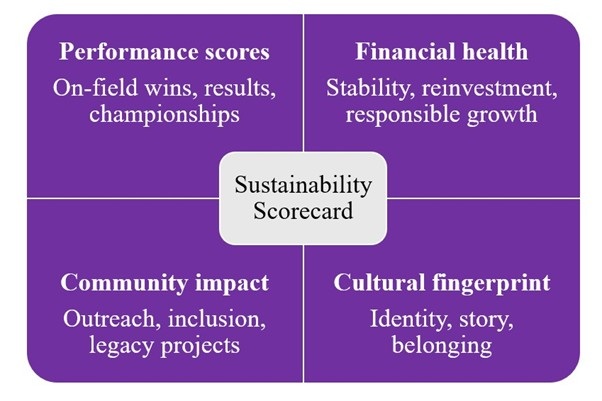
Potential examples of cases in point: cross-league applications
The 4-step Sustainability Playbook for leaders in sport
Why this matters
Front offices, director boards and ownership groups are under scrutiny and pressure: escalating player salaries, volatile media rights, and restless fan bases.
Bohs offer a reminder. Sustainability in sport is not just financial. It can also be cultural. The clubs that flourish in the next era will be those that treat belonging as an asset, culture as leverage, and leadership as stewardship.
David Clancy is the CEO of The Nxt Level Group and host of Essential Skills 2.
One for your diaries
Seán McCabe, the Head of Performance & Sustainability at Bohemian FC, will speak at Essential Skills II at the Irish Museum of Modern Art in Dublin on 28 October as part of a lineup of speakers across high performance sport, business and healthcare.
Tickets are available here.
In a recent Leaders Virtual Roundtable, Tim Cox of Management Futures discussed the traits of adaptable leaders and the common problems that trip up their rivals.
Cox, the Director & Lead for High Performance Research at Management Futures, is leading a Skills Sprint Session virtual roundtable for Leaders Performance Institute members on the topic of adaptability.
It is a skill, as Cox explained, that was highly coveted by the coaches and practitioners who contributed to our Trend Report earlier this year.
Not that this is anything new. “It is well known that Charles Darwin did not talk about ‘the survival of the fittest’,” Cox continued, with reference to Darwin’s 1859 book On the Origin of the Species.
“The endpoint of Darwin’s research was that it’s not the strongest or the most intelligent of the species that survives, it is the one that is most adaptable to change.”
Over the course of 25 minutes, Cox discussed traps that people can fall victim to in pursuit of better adaptability. He also brought into focus the qualities of adaptive leaders and the skills that can aid adaptation.
Firstly, those four traps that inhibit adaptation:
Cox then set out the four qualities of adaptive leaders and the skills and tools that support those qualities:
1. They spot the need for change
“It is important to actually spot the need for change and not just continue doing what you’re doing.”
Adaptive leaders…
Are able to shift perspective. “Adaptive leaders don’t just sit within their position,” said Cox. “They can see it from others’ perspectives, whether it’s a stakeholder’s or your competition’s.”
Are good at listening. “Our response to challenges to the status quo: how are we receiving them? Are we hearing them or are we just simply emotionally responding and cutting them down in whatever way?”
Conduct regular debriefs and reviews. Cox mentioned both the OODA Loop and the STOP framework, the latter of which he outlined:
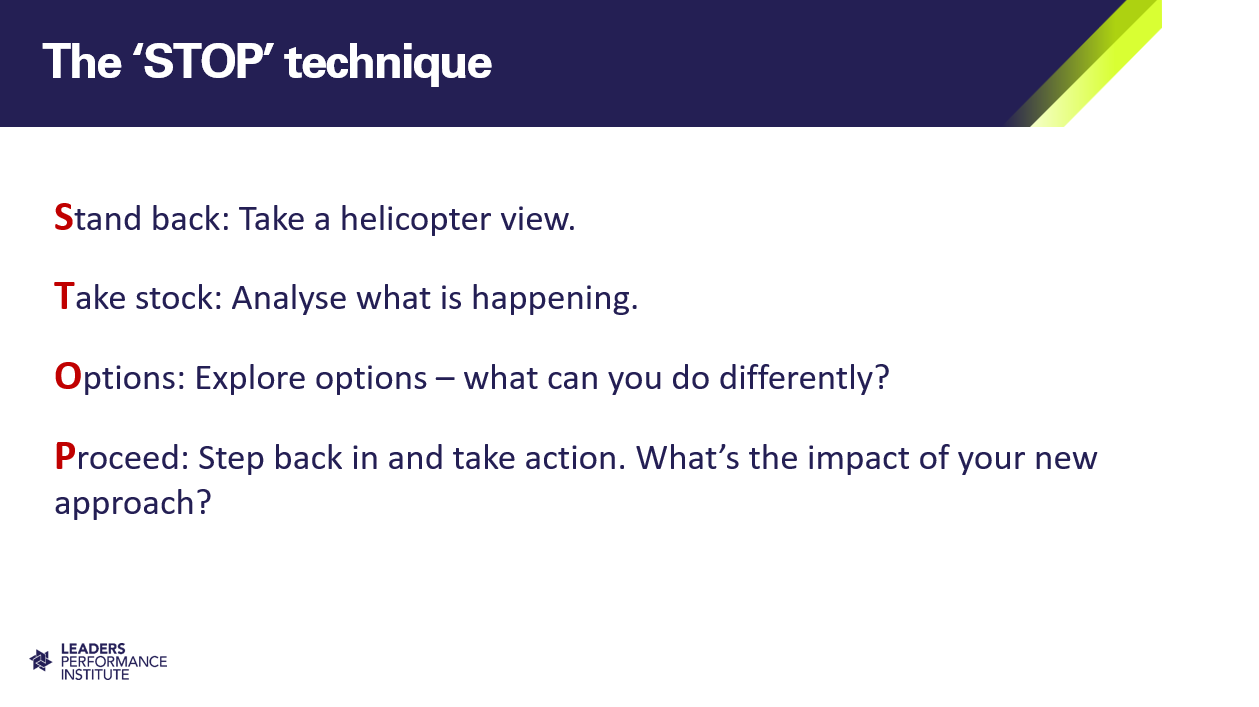
“There are many other frameworks. You will have your own,” said Cox. “But in whatever shape or form, remove yourself and take a moment on the balcony to see things from a different perspective.”
Scan for assumptions. “What we are assuming may not be that useful. Think of an issue you’re currently dealing with and write down eight assumptions you’re currently holding about it.”
Cox then invited Leaders Performance Institute members to ask themselves two questions:
2. They are the grandmasters of their response.
“This speaks to calmness but it also speaks to the strategic element and scanning ahead in terms of the decisions that might need to be taken.”
Adaptive leaders…
Plan for contingencies. “They red team in peace and look for what might happen in the same way that a team will plan for what happens when they go two goals down or receive a red card.”
Understand that self-care isn’t a luxury. “They put on their own mask first,” said Cox. “What might be your first response that buys you time to then consider a better, wider, more sustainable response?”
3. They empower people to contribute to the adaptation response.
“This is about understanding ideas from both within and outside the team.”
Adaptive leaders…
Convene their people and successfully convey the need to adapt.
Encourage collaboration and gather ideas. “Invite the outside in,” said Cox, citing the words of professor Alex Hill.
Test and learn. As Cox put it, they fire bullets before cannonballs. “Let’s test it small and then let’s see if it works; then we can fire the cannonball.”
4. They are adept at leading the change
“This is often where adaptation fails. It’s one thing to spot the change, it’s another to decide your response and empower people to put their mark on it.”
Adaptive leaders…
Mobilise people behind the strategy. “Key to this is understanding the roles individuals will play in that strategy,” said Cox. They communicate tangibly what they’ll be doing and what they can expect from the leader.”
Navigate resistance or conflict. “Enabling people to voice their emotions and values. Often, once they’ve been heard, even if they disagree, they’ll commit.”
Flex where flex is required. “Again, they spot the need for change.”
The 2008 world champion joined Mercedes in 2013 and would win a further six titles with the team. But, as Peter Hodgkinson tells us, things got off to a rough start. What followed as the team rebuilt the car was a case study in performance under pressure. But it started with a quick spot of lunch.
Main Image: Paul Gilham / Getty Images
Lewis’ rear brakes failed on his 16th lap and he careered into a wall at turn six, which is known as ‘Dry Sack’ corner. He emerged from the wreckage unhurt but his car’s front wing assembly, front uprights and the floor were all damaged in the accident and we had no spares at the circuit. To compound matters we also needed to supply a fix for that rear brake failure.
As the Head of Build for Mercedes F1, I was one of the first to receive the bad news from the Race Team in my office back at our HQ in Brackley, Northamptonshire. Not long after I put down the phone, Aldo Costa, our Engineering Director, came to find out the status of available spares.
The crash had only just happened so I did not have all the answers. I told Aldo I would get back to him shortly. I said much the same to Rob Thomas, our COO, when he stopped by. It was not long before a stream of people came to my office looking for answers and a plan. It was a big moment and I could feel the pressure building. I told some to stand by and others to go and gather information.
Then I told everyone I was going to lunch.
I could see the shock on their faces. How can you eat at a time like this?
For my part, I needed to get out of my office. I normally ate lunch at my desk so my trip to the canteen was out of character. People could see that. I sat on my own and ate for 20 minutes but at the same time my mind was going flat out.
When I got back to my office I knew what we needed to do.
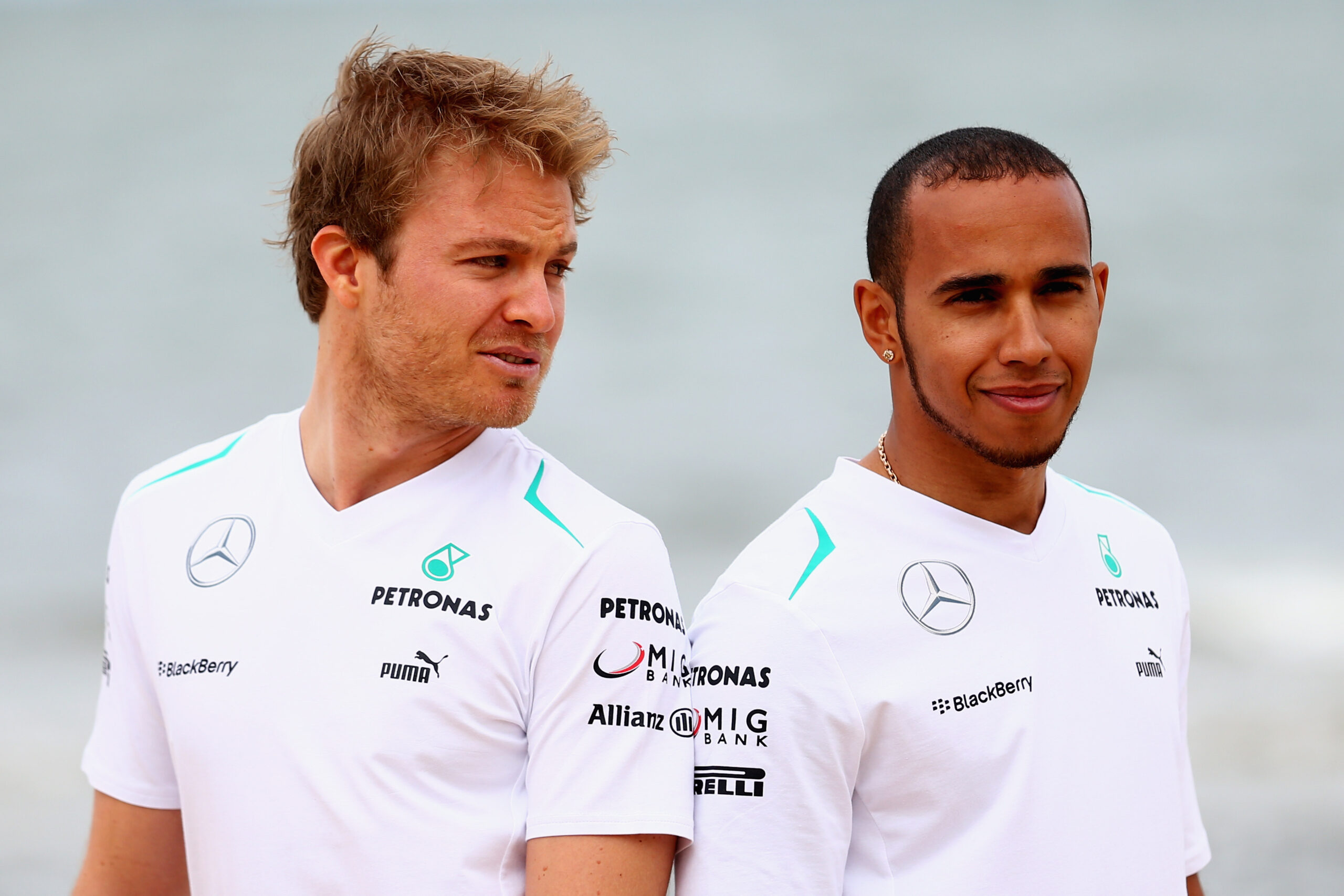
Mercedes teammates Nico Rosberg and Lewis Hamilton in 2013. Photo: Clive Mason / Getty Images
I called everyone to gather around for a short meeting (no one else had moved). We figured out what we knew and what required answers then came up with a basic plan and assigned responsibilities. The Composite Build team looked after the floor and the front wing along with Compbond and the design team. Sub Assembly had to look after the front uprights that were still in the Machine Shop.
I went looking for what we didn’t know because we couldn’t afford any surprises. The Race Team in Jerez needed sufficient time to rebuild the car. I needed to know both the latest the private jet could depart from the airport in nearby Oxford and if a car floor would even fit through the door of the plane. We also booked extra vans to take parts to Jerez and assigned extra people to support repairs at the circuit.
Once we had timings, we were able to understand what we could achieve in the time available. I’d like to think everyone had clearly defined roles and knew their responsibilities. There were so many details to sort out and any one of those could have prevented the car from running the next day.
Instead of meetings – there simply wasn’t time – I walked a thousand miles around the factory gathering and communicating information, asking and answering questions. That communication was dynamic. It was mostly verbal but reinforced with an email when time permitted. I kept Rob and Aldo informed of progress. The late Barry James, who was our Composite Manufacturing Manager, and Darren Burton, our Ops Director, worked with their departments to ensure we got all the support required.
The car ran the next day. It was a true team effort. The damaged parts were returned from Jerez for inspection, repair and service and a fix was sent out for the rear brake issue. It was an amazing recovery from a difficult situation, but that is Formula 1.
So, what did I learn? These moments are important, as the way you react to them is what you will be measured by as a person and a leader. If you think back on your careers, you will have good and bad moments. Some will be short, others will be longer. It will not stay tough forever, it will get better, but nor will it stay under control. Something will happen.
It is important to think about your behaviours in good and bad moments.
Firstly, Lewis’ crash hit five pressure drivers:
So, why I did I go to lunch?
I want to explain my rationale with reference to Dr Ceri Evans’ Red-Blue model, as set out in his 2020 book Perform Under Pressure. I cannot recommend it highly enough for a fuller, clinically-informed account of the principles of performance under pressure and how one can gain emotional control at the times when you need it most.
Ceri proposes a three-step model:
Here, I’ll explain how I approached each in turn after Lewis hit that wall.
The Step Back
I needed to go to lunch. I was under pressure and could feel it. I had to get out of my office and away from the noise. I realised that this was a flight response. I also realised I was under both internal and external pressure. My heartrate was up and you are trying to think of numerous things at the same time. Going to lunch allowed me to move from Step Back to Step Up. It gave me a moment to move away from the emotional response and start to come up with a mental plan of what we were going to do next.
The Step Up
You need to understand what is going on and start coming up with a plan for what you need to do and the desired outcome you seek.
In Step up mode, I was moving from Red mind to Blue mind. This requires a further explanation with a little help from Ceri, who describes two interacting mental systems:
Neither state is ‘good’ or ‘bad’. There must be a balance, as too much Red can make you impulsive, emotional and reactive, while too much Blue can leave you detached and hesitant.
In Step Up mode, I was moving from Red to Blue, from emotions and feelings to logic and planning. I allowed my Blue to dampen the Red. I now had an idea of a plan and what we needed to do and I remember very clearly feeling energised and ready to rock ’n’ roll.
The Step In
You have a plan to start tackling the issue, using the clarity of the Blue combined with the energy of the Red system. Trust you skillset, you are the best in the world at what you do.
We talked through the basic plan and off we went to face the challenges in front of us. During the course of that day, well into the evening, I remember going back to Step Back mode as something went wrong but this was quickly followed by Step Up (planning) and Step In (doing). Red/Blue, Decide and Do.
That day I was in a purple patch, balancing the Red and Blue.
How this impacted my behaviour
I knew that how I behaved and the language I used would impact the people working on this challenge. The pressure was on and one wrong word could trigger a shift back to a Red brain response, which we simply could not afford.
I also felt trusted by Aldo and Rob, who knew I would play my part to help resolve the issues along with the rest of the team. They didn’t interfere with what we were doing and allowed us to get on with the job. We made sure to regularly check-in with them both, providing updates and seeking their thoughts on something in those moments when we were stuck. It was classic Intent-Based Leadership in action.
This was one of many situations we faced weekly at MGP and no F1 team is any different.
You will be judged on how you respond and react to these moments. It is not about placing blame, it is about movement and making extraordinary things happen using the right mindset and behaviours.
Finally, there will always be lessons from these moments, so make the most of them. They are a great opportunity to improve as individuals, teams and organisations.
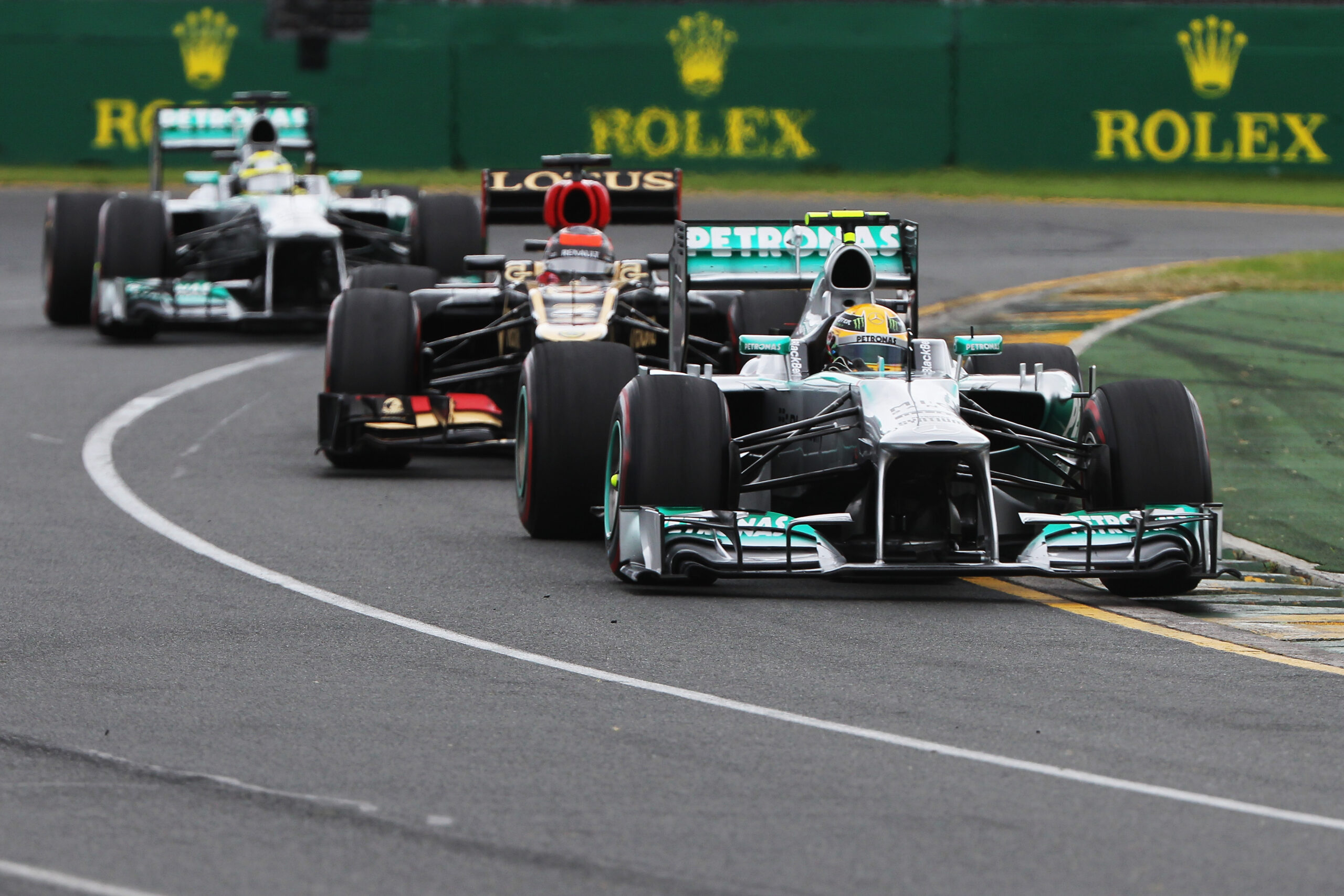
Lewis Hamilton, with Lotus driver Kimi Räikkönen and Mercedes teammate Nico Rosberg on his tail at the 2013 Australian Grand Prix. Photo: Ker Robertson / Getty Images
Peter Hodgkinson is a leadership and performance specialist skilled in helping high-performers become better at what they do. As an accomplished manager and mechanic, Peter has enjoyed almost three decades of success in elite sporting environments. His work in motorsport, as part of winning teams at Le Mans and Daytona, culminated in seven Formula 1 driver’s world championships won at Brawn and Mercedes, where he led car-building operations. Peter was Mercedes’ Head of Build during Lewis Hamilton’s era-defining run of six world titles. After a spell serving as Mercedes’ Head of Employee Engagement, Peter returned to the Factory Floor as Build Operations Manager for the INEOS Britannia sailing team when Mercedes supported their quest for the 37th America’s Cup.
If you would like to speak to Peter, please contact a member of the Leaders Performance Institute team.
As Harlequins’ lock Stephan Lewies explains, the key lies in collaboration – bring your athletes into the fold.
Quins’ 17-10 victory at the Twickenham Stoop ended five years of frustration and marked a complete turnaround from the 2023-24 Premiership Rugby season when they conceded 90 points in losing both home and away to Saracens.
Stephan Lewies, the lock who captained Quins to their long-awaited victory, had also endured every one of those losses. The run was particularly galling given the relative parity between the teams during that period. Quins were themselves Premiership champions in 2021.
So what was different this time? “Coming off a record like that in your derby game, in a way you go looking for answers in the wrong places,” Lewies told an audience several weeks later at the Leaders Sport Performance Summit in London.
“In the past, we’d review what’d gone wrong, and the coaches – who often feel pressure in a different way to the players – would go ‘let’s change this and let’s add that’ because Saracens are brilliant.”
It took eight reverses for Lewies and his team to work out why. “We’d always changed our tactics for Saracens,” he continued. “We would change how we structured our week.”
Quins, he explained, usually worked off an 80:20 game model where it is “80 per cent us and 20 per cent we change for the other team”. However, “we often went 50:50 against Saracens; training 50 per cent on us and 50 per cent on them.”
They did things differently ahead of the October 2024 match. Firstly, the players and coaches met independently before convening to discuss what was needed. The club had adopted a similar approach in their successful quest for the Premiership title in 2021. Their director of rugby [the de facto head coach] departed mid-season and the players worked with the remaining coaches to devise a winning formula after the club decided to wait until the off-season to appoint a replacement.
Once again it gave the team clarity in their convictions. “We said we’ve been constantly changing for this opposition because of the pressure that’s mounting on us,” said Lewies, “and we agreed that we should go back to what we do and just try to do that better.” That meant “doubling down” and going almost “90:10” in the week building up to the match. “That created clarity and alignment from the coaches to the players. And when the pressure came in this game, we could turn to something we’d done for the whole season, and basically for years, versus something new in a pressured moment.
“It’s much easier to stuff up something new under pressure versus something you’ve done for a long time because it’s already second nature.”
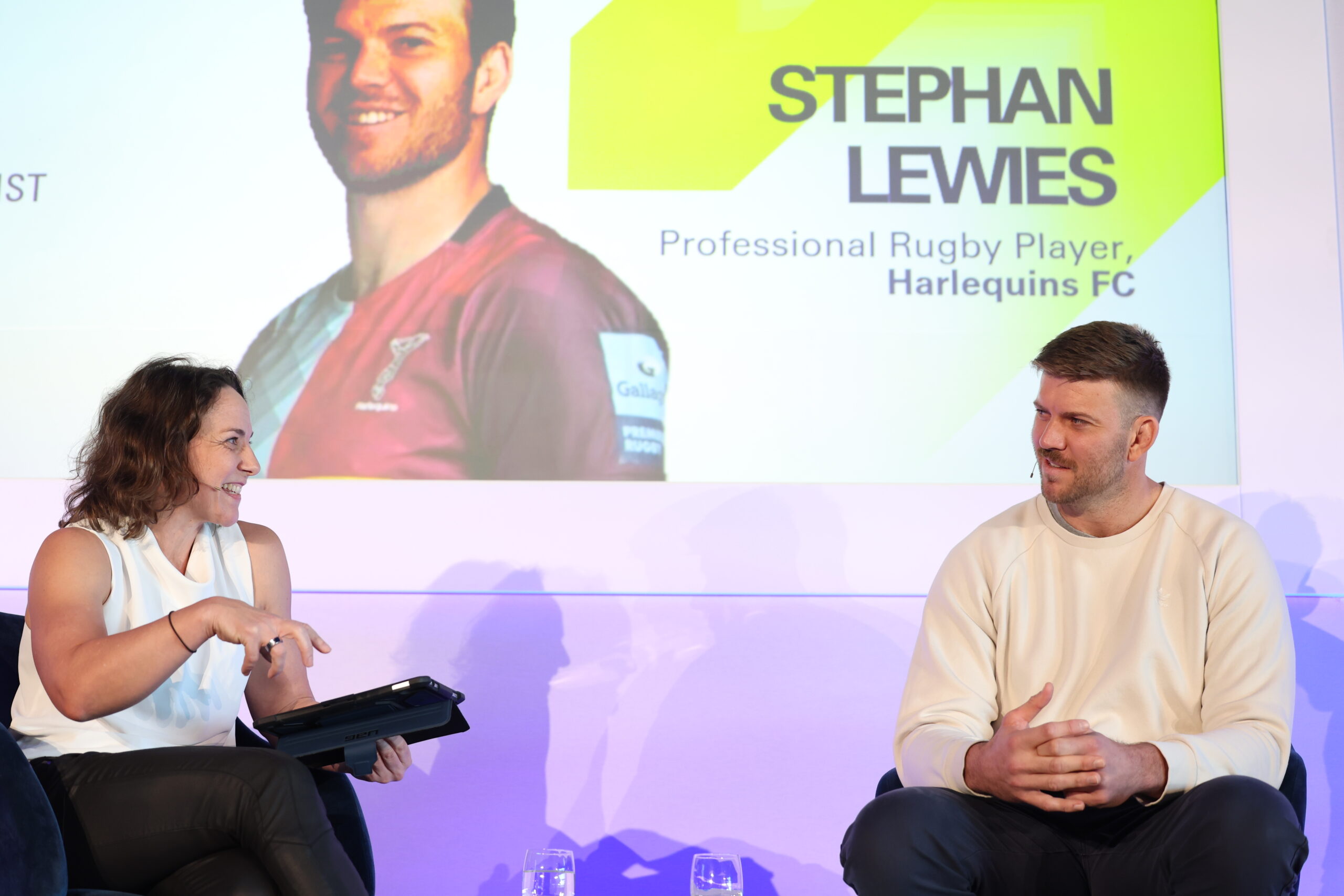
Stephan Lewies in conversation with Rachel Vickery onstage at the 2024 Leaders Sport Performance Summit at the Kia Oval.
Lewies’ reflections chimed with session moderator Rachel Vickery, a high-performance specialist helping teams in the worlds of sport, business and the military perform under pressure.
“So much of pressure is what happens off the pitch. When you’re on the pitch that’s actually your comfort zone in many ways and so you’re more prepared for that,” she said.
“Many teams have a monkey on their back around a particular opponent and that can change how the game is approached, which adds a lot of pressure.”
Lewies agreed and felt that being process rather than results-driven was ultimately what led to the result that day.
“It gives you freedom on the pitch to just go out and play,” he said. “You know your prep is done. Go out and express yourself. When you have clarity and alignment with the coaches you’re not asking yourself on the pitch ‘what’s the coach thinking?’ whenever there’s a tough decision. You almost know the answer to the question before it happens because you’re totally aligned in what you want to achieve in the game and at different stages of the game.”
It is an attitude Lewies takes into difficult conversations, which he faced often during his four years as Quins captain. The key was to be well prepared and, more often than not, those conversations would not be as tough as anticipated.
“If you kick the can down the road it can become a bigger problem. It can be scary to have that tough conversation in the moment, but that’s where growth happens, in that adversity. You grow closer as people and as teams.”
He recounted the story of a teammate who once skipped training and was suspended. Lewies endorsed the punishment but was labelled a ‘Judas’ by the player in question. The pair eventually made up after a frank exchange of views when it was clear that Lewies would listen to what his teammate had to say. It stopped matters escalating further and, as Lewies happily explained, made their relationship stronger.
“Getting him back on board and understanding him was critical for us.”
It was in such moments that the bonds, self-belief and confidence were forged that would eventually see off Saracens.
“There is so much value in creating opportunities to collaborate.”
What to read next
How Do you Develop the Most Expert Coaching Workforce in World Football?
John Bull of Management Futures outlines what it takes to deliver coordinated efforts within a team.
“When you get everyone in a system pushing in the same direction, it can have a multiplier effect. The momentum of each person’s efforts building on each other,” said John Bull, the Director & Lead for High Performance Research at Management Futures.
“It is,” as he adds, “a key area of performance at which we can all get better.”
In his online presentation for members of the Leaders Performance Institute, Bull outlined the common obstacles as well as steps all teams can take to get better at coordinating their efforts.
How alignment affects performance
Alignment – the coordinated efforts of a team – takes several forms. Each has different implications for performance outcomes.
Bull illustrated some of those differences using mathematical symbols (and idea lifted directly from Ineos’s Sir Dave Brailsford).
In an ideal world, each stakeholder’s efforts would multiply the others in this fashion:

“One person’s talent is building on and adding,” says Bull. “The multiplication becomes exponential.”
He used the analogy of a group of people pushing a car up a hill. “It’s also about timing. Are we pushing at exactly the right time, which is really what the multiplication symbol is because you get this amplifier effect.”
Additions are more commonly found, but it’s not true alignment:

“What I would mean by a plus is that two parts of the organisation are still moving in the same direction, still aiming at the same goal, but it’s not joined up. It’s independent activity,” said Bull. “They’re still adding their talent, so it’s still a positive contribution, but you’re not getting that momentum multiplier effect. And we all know what that feels like.”
The risk is that subtractions or divisions rear their ugly head:

“If you’ve got two parts of the organisation with very different interpretations of the strategy, you have it taking away from each other,” said Bull of the subtraction.
As for the division symbol, “that would be where, politically, you’re starting to get factions, briefing to the media, or people actively recruiting allies against another part of the organisation. Or sometimes where you have a board or owner deliberately undermining the coach.”
If teams are to achieve the multiplier effect, Bull highlighted five critical considerations:
1. Who?
Who are you trying to align and what different talents can you bring to bear on a problem? Be sure to involve all relevant parties, including those who may be excluded for fear that they will be distracted.
2. What are you trying to achieve and by when?
Misalignment often arises not from disagreement on the goal itself, but on the timeline and resources needed to achieve it.
3. Alignment on strategy i.e. the ‘how’
The distinction between strategy (high-level direction) and tactics (specific applications) is not always understood.
4. Ways of working
Alignment is an outcome of agreed processes of communication, collaboration and decision-making.
5. Vertical and horizontal dimensions
While vertical alignment (e.g. between board and coach) attracts a lot of focus, horizontal alignment between departments or teams underpins a truly joined-up approach.
Bull then highlighted some common tensions:
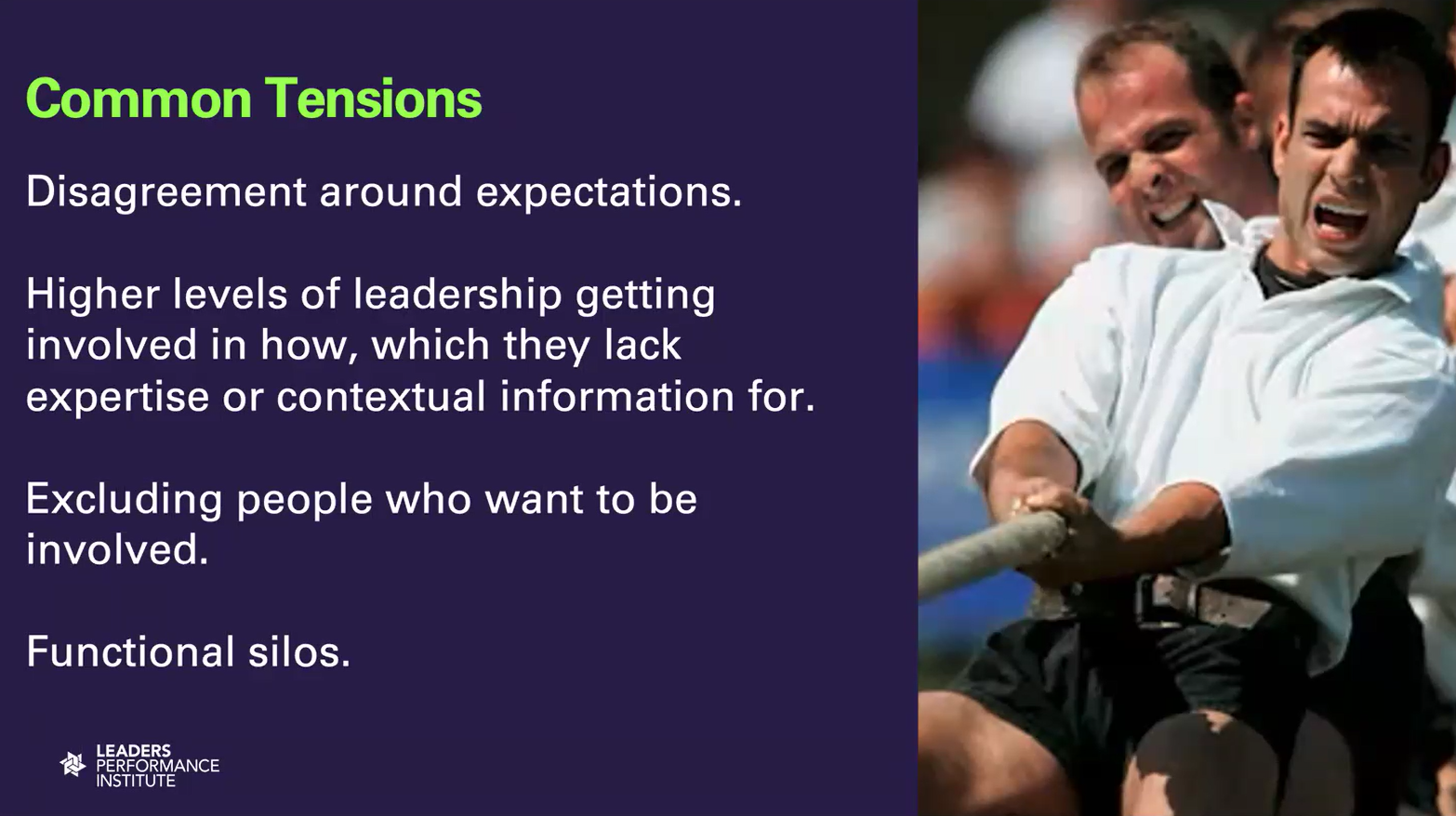
He said: “The reason I want to share these is to highlight where you might go for opportunities for improvement. Where do you see the opportunities for improvement in your environment and what’s your role in that? Where can you make a difference?”
The same goes for tests of alignment:
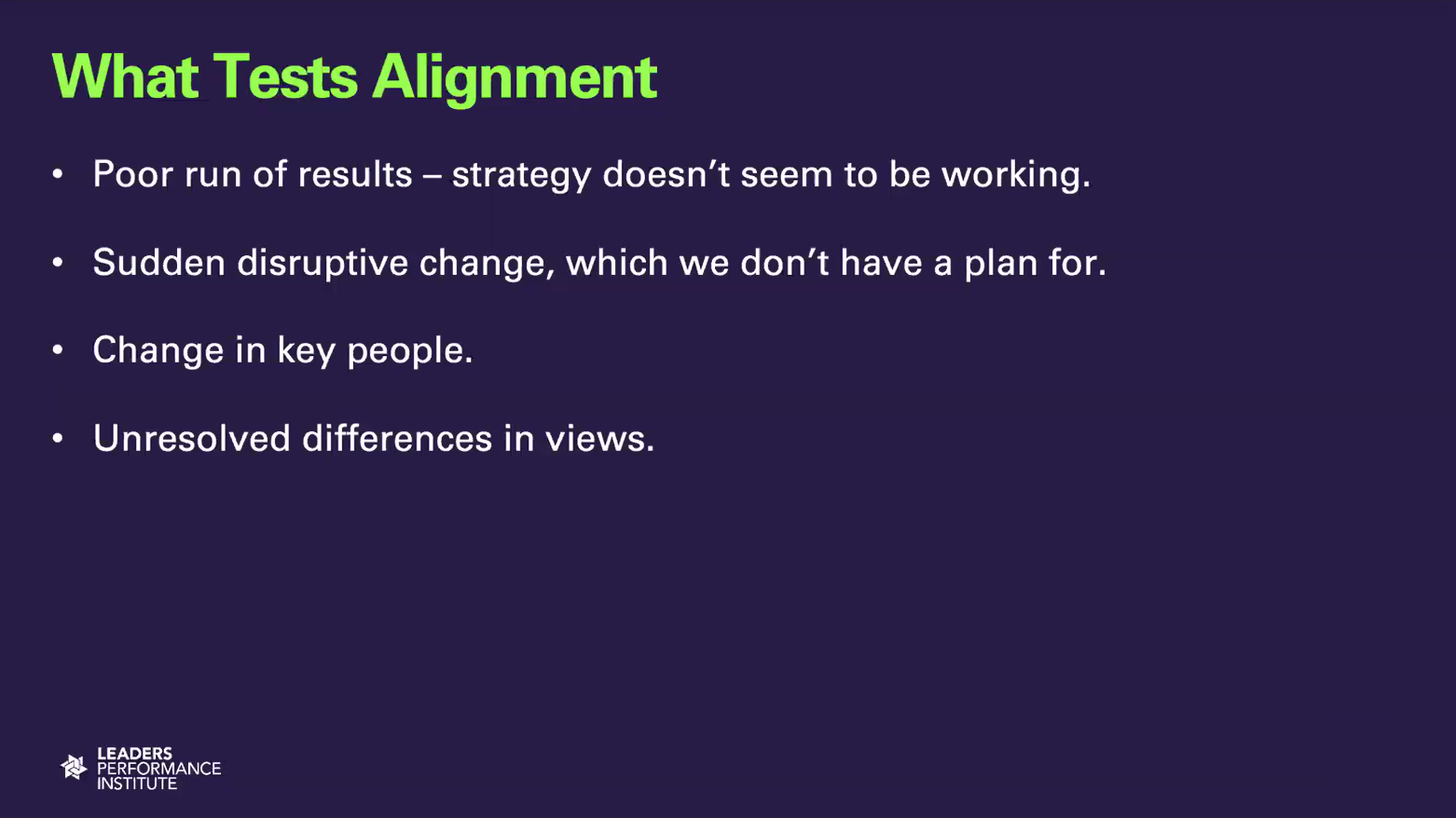
Each type of test presents opportunities to strengthen systems through reflection, planning and proactive leadership if you’re minded to look.
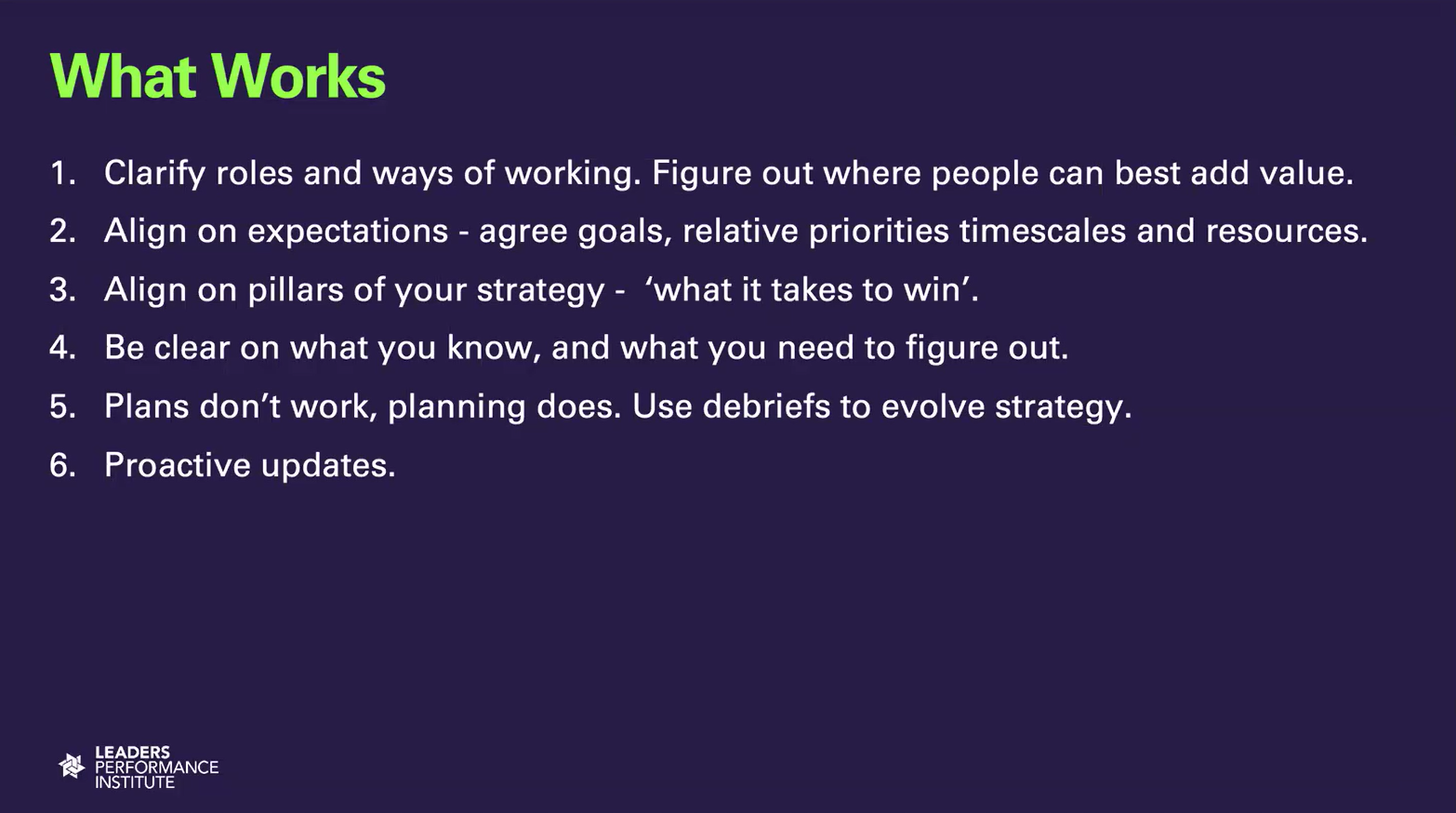
What actually works?
Bull suggested several methods for Leaders Performance Institute members to mull over:
What to read next
Do you Feel your Team Has Plenty of Clarity But Still Suffers from Misalignment?