In July the art of listening, coach and staff wellbeing, and the postpartum return of athletes were top of the conversational agenda.
Nestled in between the myriad elements that contributed to their success was the team’s sense of being “proper English”.
The trope was first aired in February following England’s 1-0 defeat of Spain (who were also their opponents in the Euro 2025 final), with defenders Millie Bright and captain Leah Williamson hailing a “properly English” performance.
Winger Chloe Kelly repeated it during the Euros, and several players were asked to define what it meant as the tournament went on. No-one gave exactly the same answer.
“It’s that we give everything, we run ourselves into the ground,” said midfielder Keira Walsh. For forward Alessia Russo it means “we’ll stick together”. For defender Lucy Bronze it means “if push comes to shove, we can win in any means possible”.
For England’s Dutch Head Coach, Sarina Wiegman, it means “passing with purpose”.
Perhaps it doesn’t really matter one way or another. Much like words on the wall of your changing room, it is more about the feelings they generate than the actual words used.
That is certainly the opinion of Dan Jackson, the General Manager of Player Development and Leadership at the AFL’s Adelaide Crows. He has spent his post-playing career working with teams on their culture. The words on the wall are often a focus.
“I probably spend the least amount of time worrying about whatever words they’ve got,” he told the Leaders Performance Institute in an article that appeared last month.
“Often, I don’t even bother changing them because if you want ‘connection’ or ‘unity’ or ‘team first’ or ‘family’, it doesn’t really matter. What I want to know is the behaviours you’re going to commit to, your system of accountability, and how you drive those behaviours.”
It was one of several nuggets of insight on offer, member to member, across the Leaders Performance Institute in July.
Are you a soldier or a scout?
“Some of the skills of adaptive leadership are more obvious, but that doesn’t make them easier to learn,” said John Bull.
The Director & Lead for High Performance Research at Management Futures hosted the third and final session of our Virtual Roundtable series entitled ‘Leading in Complexity’.
Bull wanted to encourage Leaders Performance Institute members to reflect on their own role as an adaptive leader and pinpoint some areas for self-development.
He introduced the table to the work of philosopher Julia Galef, who has outlined what she calls ‘scout’ and ‘soldier’ mindsets:
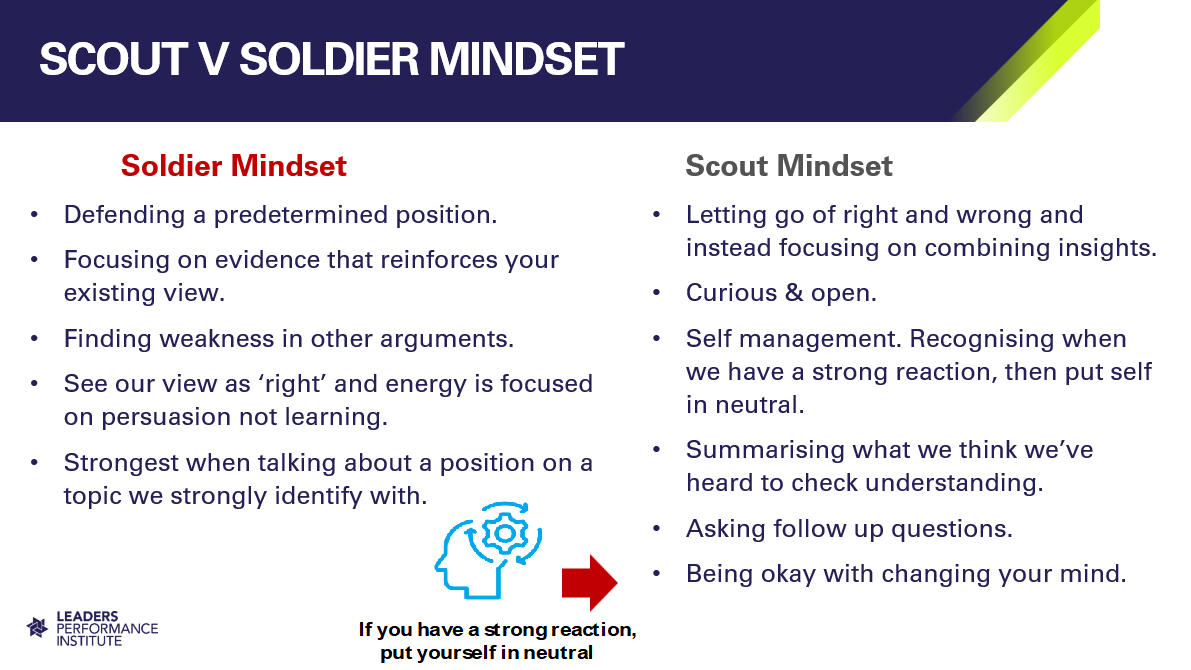
A scout mindset, such as when a scout might draw a map, is essential when learning and adapting. “It’s about acknowledging we might know some elements of the map, but large parts of the map are still undrawn,” added Bull. “It’s not ignoring that we have expertise, but it’s looking for what’s missing.”
On the other hand, a soldier mindset is counterproductive because, as Bull said, “most of our energy is going to influencing other people to see things our way as opposed to learning from what we’re missing.” It can also help, as Shona Crooks, a colleague of Bull’s from Management Futures says, to ‘put your brain in neutral’.
What kind of listener are you?
It was a question posed by Management Futures’ Jeff Pagliano during July’s Leadership Skills Series session.
There are at least four different types of listener, as Pagliano pointed out, but anyone can become better at listening at depth.
He illustrated his rationale with this graphic:
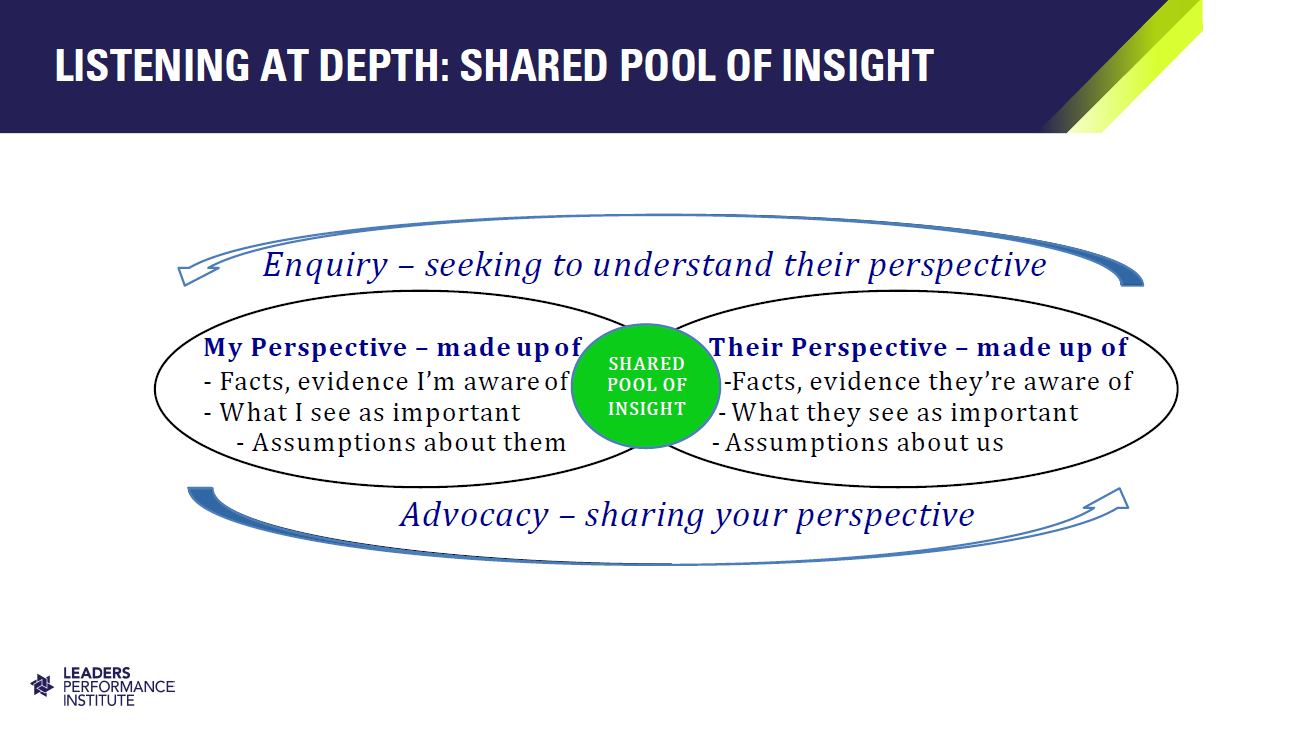
“Usually when we’re trying to persuade someone, it’s all about sharing our perspective. We call that ‘advocacy’,” said Pagliano. Your advocacy will be made up of the facts known to you, things you see as important, and any assumptions you make about the other person.
That person will have facts, thoughts and assumptions of their own, which is why we must add ‘inquiry’ to help bring those to the fore. “And when you bring those two things together that’s where you get that shared pool of insight.”
Listening at depth has other benefits too:
Do you care enough about your coach and staff wellbeing?
“We’ve had athlete wellbeing and engagement in place for more than ten years. We still don’t have coach wellbeing and engagement in place at all.”
This observation, offered at a Leaders Virtual Roundtable on the topic, is by no means unique.
Members of the Leaders Performance Institute have seen the following approaches help:
Read a full account here.
The postpartum return of British athletes
This was a theme of last month’s Women’s High Performance Sport community call, which featured Esme Matthew, the Head of Physiology at the UKSI, and Dr Kate Hutchings, who works with the UKSI’s leading clinical services for all world-class-funded Olympic and Paralympic athletes.
Early and open communication helps athletes and their teams set expectations and create tailored return-to-performance plans, with support from performance lifestyle advisors.
These help to place the athlete at the centre of their own decision-making.
Pelvic floor education and support are essential for postpartum recovery.
Each athlete’s requires unique and flexible plans informed by health monitoring and any necessary practical adjustments. It is key to enable them to stay connected to their sport.
Mental health support is vital as athletes adjust to motherhood.
Informal peer networks, such as WhatsApp groups, offer valuable emotional and practical support, helping athletes share experiences and reduce isolation during pregnancy and postpartum.
Click here for a fuller insight.
Rakesh Patel is tasked with helping floundering NHS hospitals in England. He believes the answer lies in cultural transformation, empathetic teaching, and smarter feedback.
Having read that, you may think that just as readily applies to the world of sport.
“How can we transform underperforming environments into thriving ones?”
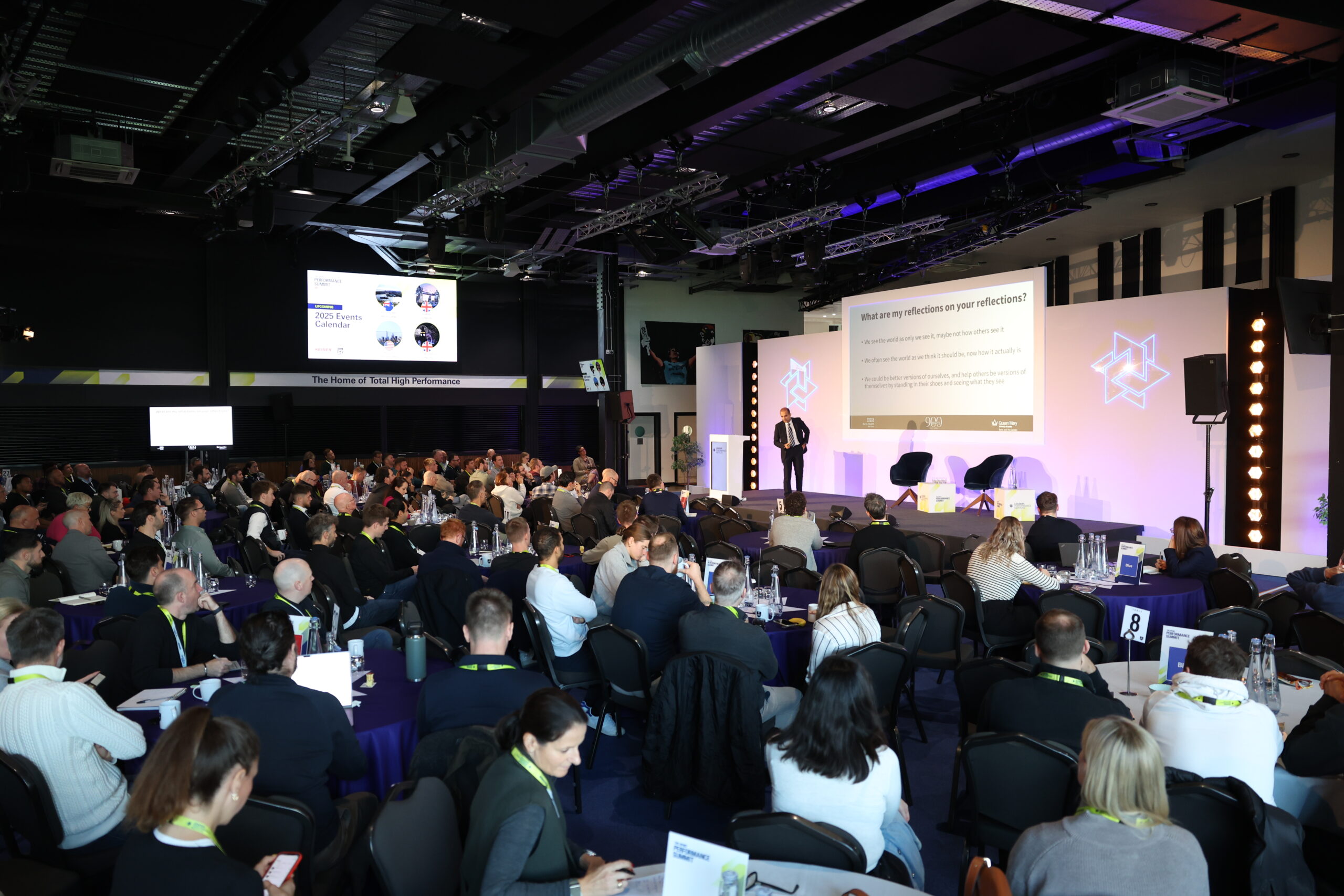
That is the question Rakesh Patel, a nephrological surgeon who works at Barts Hospital in London, asked the audience at last November’s Leaders Sport Performance Summit.
His remit includes working on the NHS’s Recovery Support Programme [recently renamed the Provider Improvement Programme], which is designed to support underperforming hospitals and medical providers who have been placed in ‘special measures’.
Patel and his colleagues will work with these hospitals to help identify systemic issues that lead to habitual failures. They will implement evidence-based interventions and build local capacity to sustain improvements once they’ve left the building.
Away from clinical practice, Patel is a professor at Queen Mary University, where 2,300 medical students matriculate at any one time.
As such, he has given a lot of thought to learning and failure in the NHS, which is the ‘sacred cow’ of British society.
What does the Recovery Support Programme do?
Its aim is to mitigate crises and enable people to learn from their mistakes. For Patel, it has to start with rethinking underperformance, because jumping to conclusions helps no one.
“We only see the world as we see it, but not how others see it,” he says. “In a performance role, if we’re assessing someone, we often see the world as we think it should be and not actually how it is.”

Underperformance, whether in experienced clinicians or medical students, cannot always be attributed to a lack of skill or effort.
Just as distractions, pressure, poor communication or emotional stress are prevalent in sport, their presence is felt with greater consequence in medical settings.
Take this feedback from medical students when reflecting on video footage of their mistakes:
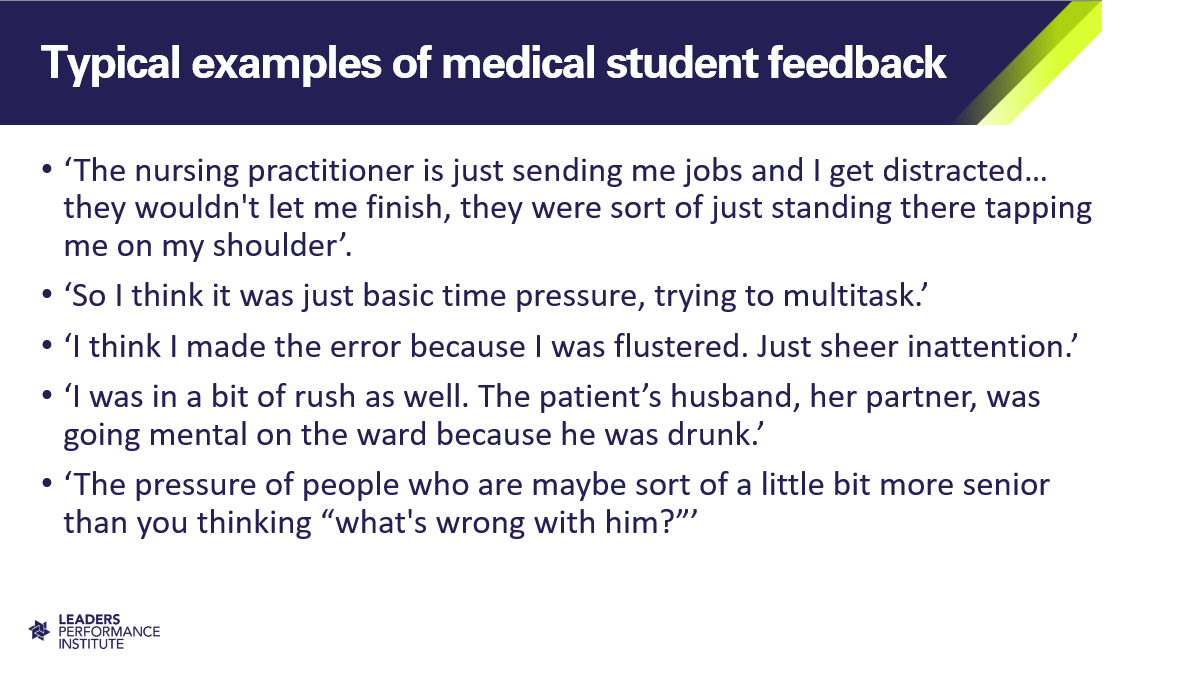
“The last one upset me most as a doctor,” says Patel, who later added that judgement can degenerate into reported cases of outright hostility. “I found it upsetting that these doctors were coming in to do work and we’re being nasty to them and that was why they were underperforming.”
At some level, as Patel explains, these errors point to the human limitations of working memory.
He cites The Magical Number Seven, Plus or Minus Two, the highly regarded 1956 paper by psychologist George A Miller, who said that a person has a working memory capacity for five chunks of information, plus or minus two. That means placing the working memory under too much strain will lead to (often avoidable) errors.
Patel says: “Any threat to working memory will impair performance. If you need your brain and you need to think through things, it’s likely you’re going to have underperformance.”
It follows then that to enable better learning – and prevent avoidable errors – there needs to be less pressure on people’s working memory.
“If you add up all those bits contextual things – inattention, distraction – you can see why memory matters,” says Patel. “You can literally only remember three to seven things and, in that moment, when it hits your eyes and your ears, if you do not do something with it in the first half a second to three seconds, it’s gone. That’s why in high pressure situations when we’re under stress is when our memory gets hit. We can only focus on what we need to.”
That is why medicine values reps and evaluation as much as any team. “When things get complex, you don’t need to think about it.”
With this in mind, it is easier to choose the right form of feedback.
“We all talk about feedback and there’s probably more books on feedback than anything else,” says Patel. “There is an evidence base around how you give it and we wanted to give the best feedback, in the way that it needed to hit and cut through.”
This was tricky to navigate in hospitals placed under special measures. “They weren’t the easiest characters to work with,” he adds, “but it depends on what’s important. If there’s the greater good and we’re going to work together, then even the biggest ego you can get down to your level and work through.
“And we only went into hospitals if we had CEO buy-in and everyone was going to engage. So we taught them how to give feedback better.”
He highlighted four formats favoured in the NHS:
1. Facilitated self-reflection
“One of the most important interventions you can ever do is ask someone ‘how do you think that went?’ And if you do that before they start and you say ‘how well do you think you’re going to do before you start?’ You then get them to calibrate what they think with what you think.”
It was, as Patel says, “the lightbulb moment”. He also underlines the value of sitting with doctors as they watch themselves on video. “It’s not about telling them what they’ve done but asking them; ‘these are your notes, you wrote them, tell me what you were thinking at the table’. You don’t dictate, but get them to reflect.”
2. Revisit video assessments at periodic intervals
Patel and his colleagues test doctors and students from the outset and provide instant feedback. More critically, however, they will also revisit feedback at regular intervals over the following weeks.
“I’ve told you about working memory and fear – they’re going to forget it,” he says of that instant appraisal. “So we videoed everything and we drip fed the feedback over time. Why was that important? Because I don’t know if you’ve ever done it, but watching yourself make a mistake three or four weeks down the line when you know you’ve made that mistake, and being reminded of it, is really powerful.”
3. Peer to peer learning
Sometimes Patel takes himself out of the equation. “We often forget what it’s like to be a novice. That’s why peer-to-peer works really well. So if you’ve got someone new, get someone who’s of a similar age that can explain it better.”
4. Ask them to ‘teach it back’
“We do this when we teach clinical skills,” says Patel, alluding to evidence pointing to the efficacy of this approach to learning. “There’s something about having the confidence plus the competence to be able to explain a skill to someone else.”
The Recovery Support Programme approach is scalable too.
“I couldn’t go into all these hospitals, and this training model needed to be scaled,” says Patel, who explains that pharmacists were uniquely placed within hospitals to deliver the model in his stead. For one, a large proportion of the noted errors were prescription-based.
And it worked. Doctors trained by Patel’s team and those who have taken the training model make fewer mistakes. “We trained them to be resistant to all the trauma and all the nonsense around them, to still focus on the task.”
What to read next
Talent ID and Development: The Race to Deliver Formula 1’s First Female World Champion
In the third and final session of our Virtual Roundtable series ‘Leading in Complexity’ John Bull of Management Futures explores the skills and tools that enable a leader to be more adaptable in the face of change.
The Director & Lead for High Performance Research at Management Futures hosted the third and final session of our Virtual Roundtable series entitled ‘Leading in Complexity’.
Bull wanted to encourage Leaders Performance Institute members to reflect on their own role as an adaptive leader and pinpoint some areas for self-development.
But, as he admitted, this is easier said than done. He recalled a conversation he had with his colleague Tim Cox, who led sessions one and two, and our own Luke Whitworth.
“We reflected that it takes energy to spot the necessary changes,” said Bull. “It probably feels like it then takes even more energy to then try and lead the change in the face of resistance.”
There are, however, skills to be learned and tools available to all leaders.
Four inhibitors (and four more)
In session two, Cox outlined four common ‘traps’ that can inhibit your ability to be adaptable.
They were:
You can read about these in greater detail here.
At the start of this session Bull added four additional traps suggested by the Leaders Performance Institute members who have attended this series:
“You know the end of this sentence,” said Bull, who introduced the table to the work of British organisational theorist Charles Handy, specifically his 2015 book The Second Curve: Thoughts on Reinventing Society.
Handy wrote: ‘The nasty and often fatal snag is that the Second Curve has to start before the first curve peaks.’
“You need to start reinventing almost on the peak of the curve before your competitors do,” added Bull.
Sports, as Bull pointed out, tend to recruit leaders from within the realms of their own sport. “The implication of that is that the sport is lacking some cognitive diversity,” said Bull.
As an antidote, he cited the example of British Cycling’s ascendancy in the late 2000s under Sir Dave Brailsford. “The two biggest breakthroughs in British Cycling came from Australian swimming [equipment design] and in introducing a clinical psychiatrist.”
All change requires a leap of faith. “This inhibitor is linked to the traditional,” said Bull, “but where an organisation may be very risk averse that can get in the way of adaptation.”
This was a major area of focus in our recent Trend Report.
Bull said: “The more alignment you have, the faster you will be able to pivot and adapt as a team.”
Why mindset matters when it comes to adaptability
Put simply, a leader’s mindset influences how they perceive, respond to, and lead through change in complex environments.
Bull then led the virtual room through six areas that demonstrate why mindset matters:
‘Radically traditional’ is a term coined by Professor Alex Hill to describe organisations that have thrived for over a century through an adherence to tradition allied to a willingness to adapt.
“The key insight out of that work is: in order to be able to be adapt, you have to be really clear on what doesn’t change,” said Bull. “It’s about being really clear on what is the core that we want to safeguard, what is what is now out of date. It’s having a balanced view and doing both at the same time.”
Bull used neuroscience to make his point here. “If we are threatened by the uncertainty we’re going to go into fight or flight mode,” he said. “And as we all know we’re going to be less resourceful in fight or flight as opposed to seeing it as an opportunity.” This is what sets adaptable people apart. “They’re calmly ready for it, they’re calmly in alert. Their radar is on and, if you can relish the uncertainty and dial up that part of your personality that relishing it, your brain’s going to be operating at its best. You’ll have all the feel-good hormones of serotonin, endorphins, dopamine and oxytocin.”
Bull is fond of the phrase ‘situational humility’, which was coined by renowned psychologist Amy Edmondson. “If we’re operating in a domain where we have a lot of expertise it’s recognising there’s still going to be stuff we don’t know,” he said.
He built on his point by introducing the work of philosopher Julia Galef, who has outlined what she calls ‘scout’ and ‘soldier’ mindsets:
A scout mindset, such as when a scout might draw a map, is essential when learning and adapting. “It’s about acknowledging we might know some elements of the map, but large parts of the map are still undrawn,” added Bull. “It’s not ignoring that we have expertise, but it’s looking for what’s missing.”
On the other hand, a soldier mindset is counterproductive because, as Bull said, “most of our energy is going to influencing other people to see things our way as opposed to learning from what we’re missing.” It can also help, as Shona Crooks, a colleague of Bull’s from Management Futures says, to ‘put your brain in neutral’.
“From a mindset point of view, this is about where’s our energy going?” said Bull. “Is our energy going to what we can’t control? Or is our energy going to the element of that which we can control?”
Bull said: “Do we focus on learning from failure and finding opportunities where the failure has low consequences?”
This is “the courage to speak up, challenge and name a need to adapt even when that’s really unpopular,” said Bull of the term commonly used in marketing. “There will be some elements of what the sport does or what the organisation does which has served your team incredibly well in the past, which you might feel needs revisiting. That’s going to get the strongest reaction, but sometimes that’s important to show that courage.”
The group were then invited to rank themselves, strongest to weakest, on their ability in each area:
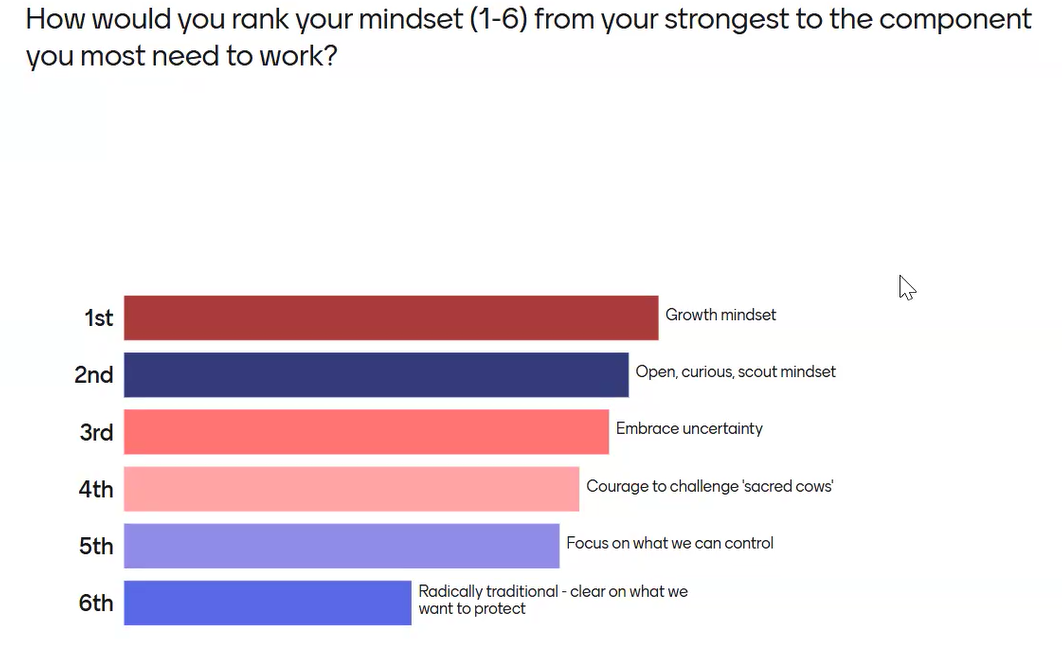
“The common component is emotion,” said Bull in reflection.
How we respond to challenges is critical and, to follow up, he shared eight important adaptive leadership skills needed in complex environments:
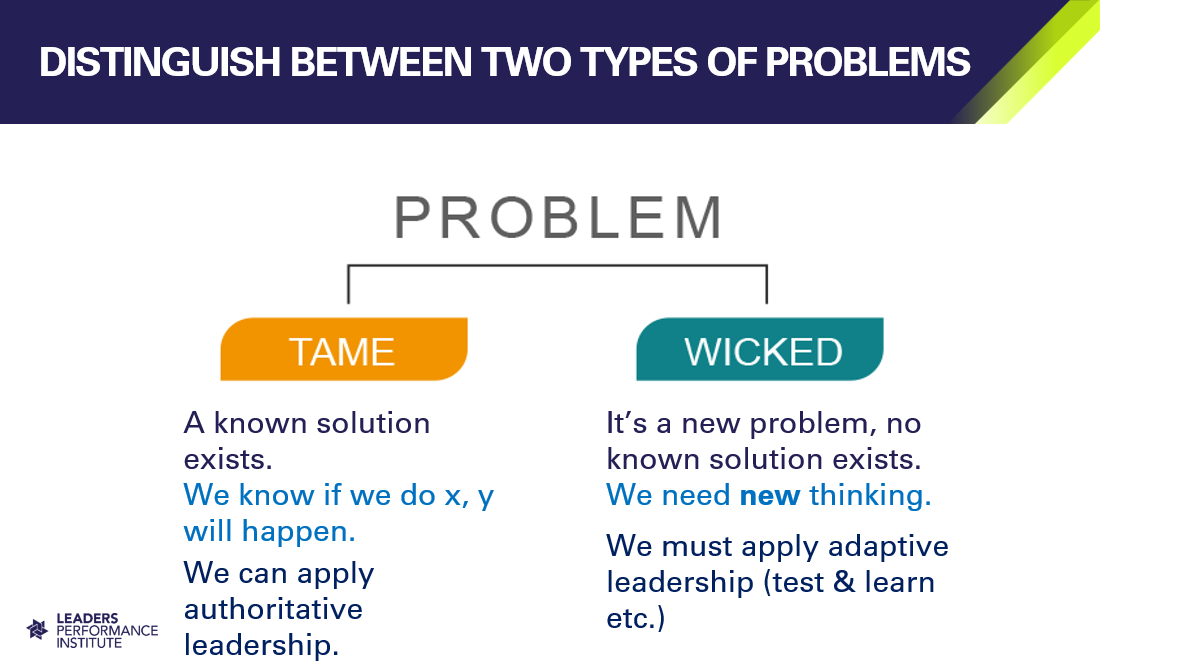
“The leadership required around a tame solution is very different to the leadership skills required around adaptive leadership and solving a wicked problem,” said Bull. “And where a lot of leaders and organisations get into trouble is where they treat a problem that is wicked as though it’s tame and they try and just implement a simple solution; and it doesn’t work or they try and ignore the problem.
“One of the key skills is how do we spot when we need to go into adaptive leadership mode?”
Again, attendees were asked to rank themselves on each of the eight suggestions:
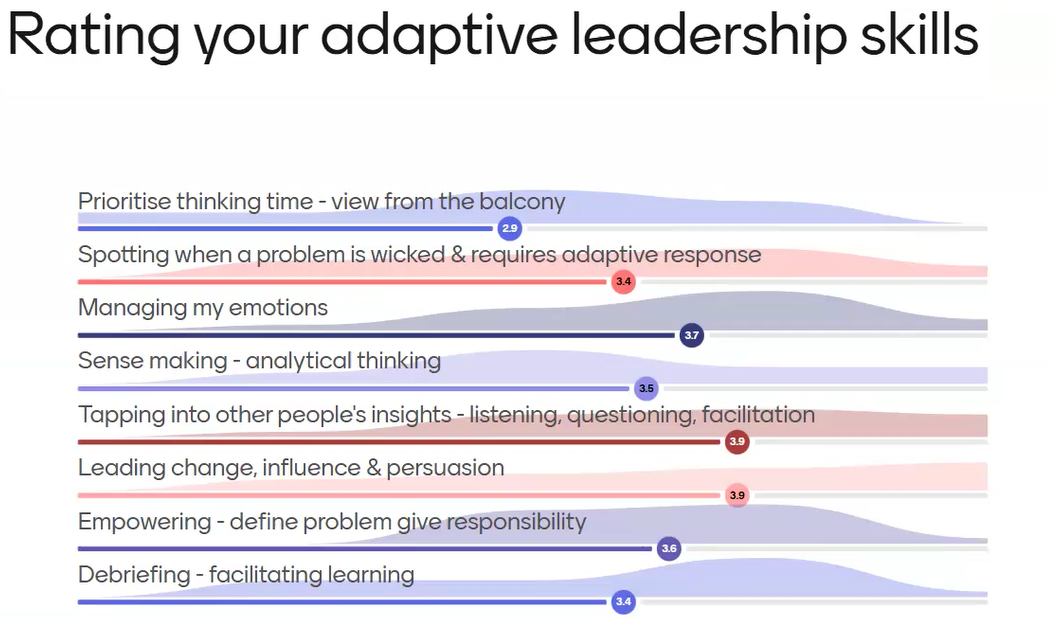
Bull believes the snapshot provided by the above bodes well for sport. “I’m struck, relative to outside of sport, how strong people are generally scoring on the ‘leading change, influence, and persuasion’,” he said. “That’s a positive strength to be able to bank here because, in our experience, and if you look at the research around this, that’s often the skill that most holds back adaptive leadership.”
To wrap things up, Bull shared eight tools to help leaders be more adaptive:
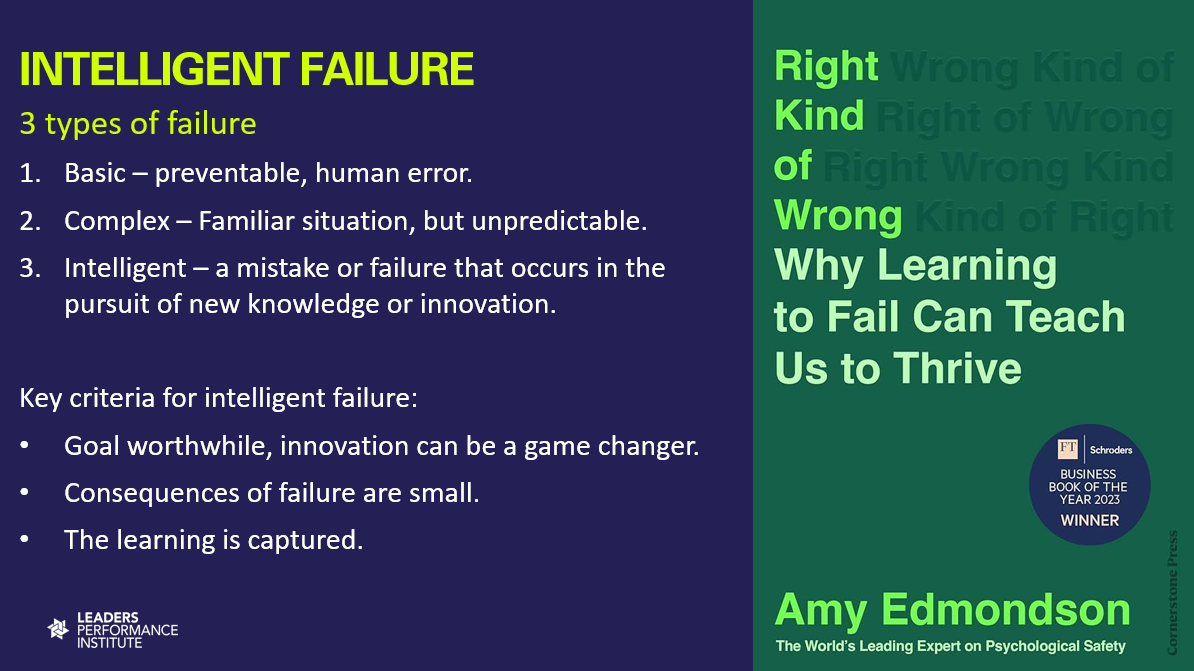
“So what she would say is in organisations that that have a more mature attitude to failure will find opportunities to do ‘intelligent failure’.”
In her book Right Kind of Wrong: Why Learning to Fail Can Teach Us to Thrive, Edmondson outlines three types of failure and the conditions for ‘intelligent failure’:
Final task
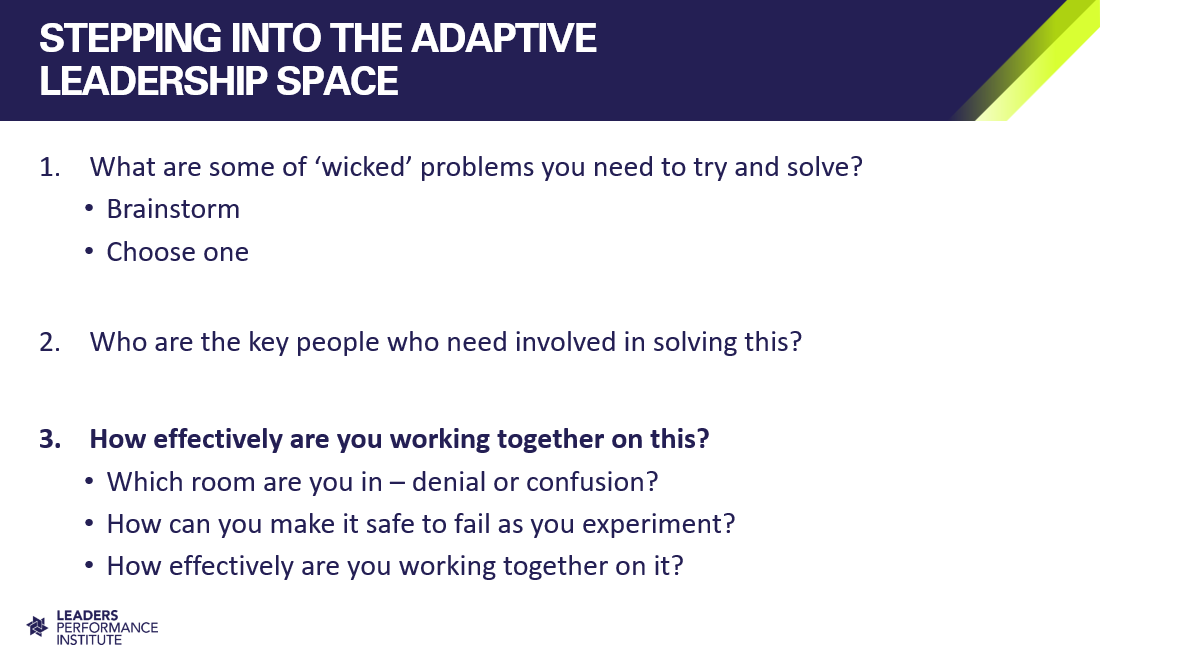
Bull concluded by setting the virtual room a task to consider in their own time:
What to read next
In a recent Leadership Skills Series session, Management Futures’ Jeff Pagliano presented ways to prioritise ‘listening at depth’ in a fast-moving environment.
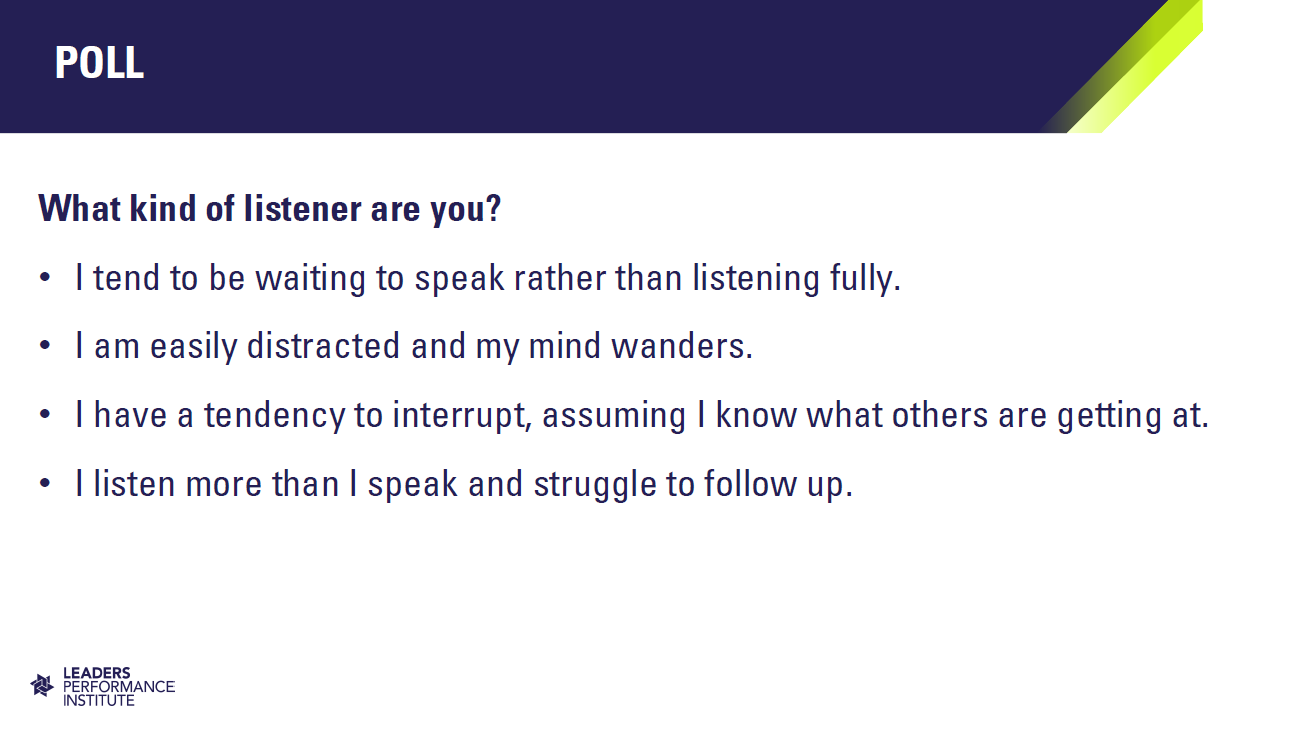
Jeff Pagliano, a consultant with leadership specialists Management Futures, posed this question at the outset of a recent online Leadership Skills Series session.
The Leaders Performance Institute members in attendance could select one of the following:
“This might be difficult because, as I said in our previous session on influencing skills, when we talk about communication, we really only think of it as how we express our ideas in a way that’s more persuasive,” Pagliano continued. “Do we stop and consider the important role that listening plays in that?”
He admitted that the description that fits him best is ‘I am easily distracted and my mind wanders’.
“I definitely feel my mind going in a couple of different directions when someone’s talking,” said one attendee. “I think I could have ticked all of those responses because sometimes the mind wanders to interrupting, waiting to answer.”
Pagliano empathised. “I think it is a product of the digital age,” he said. “My own thought is that we’re all easily distracted because we have so many stimuli constantly coming at us.”
Another member spoke of their tendency to be waiting to speak rather than listen fully.
He said: “Part of our roles is to try and be solutions-based and help our people with whatever they’re working their way through.” He reflected that it is a point of pride for people in his position. “Waiting to speak comes from the idea of being able to say ‘I think I have an answer or a suggestion that might be able to help you in this’. But I do think that at some point it detracts from the overall quality of the conversation and the connection piece that you then share with that person because you’re not fully present.”
Again, Pagliano highlighted the good intentions. “That tendency to come up with solutions comes from a very good place, but it’s about also trying to know when it’s appropriate.”
He added: “listening is what’s needed.”
The impact of listening at depth
Pagliano posed two further questions to help set the scene:
This provoked varied responses but the table agreed that people expect to be heard and leaders are expected to listen:
Pagliano also pointed out the importance of body language, eye contact and verbal cues.
The obstacles were just as recognisable:
Next, Pagliano explained why one of the benefits of listening at depth is what he calls a ‘shared pool of insight’. He illustrated his answer with this graphic:
“Usually when we’re trying to persuade someone, it’s all about sharing our perspective. We call that ‘advocacy’,” said Pagliano. Your advocacy will be made up of the facts known to you, things you see as important, and any assumptions you make about the other person.
That person will have facts, thoughts and assumptions of their own, which is why we must add ‘inquiry’ to help bring those to the fore. “And when you bring those two things together that’s where you get that shared pool of insight.”
Listening at depth has other benefits too:
“Erin Meyer”, as Pagliano explained, “has written a lot about collaborations across cultures and how sometimes when we’re listening if we’re missing something, it isn’t because we’re not working hard enough or we haven’t harnessed our listening skills, it’s because the cultural context that the other person is coming from is different than our own. And when I say ‘cultural context’, what I’m referring to is the education system, where they were raised and where they grew up.”
This led to a discussion of ‘low context’ and ‘high context’ cultures, which Pagliano outlined:
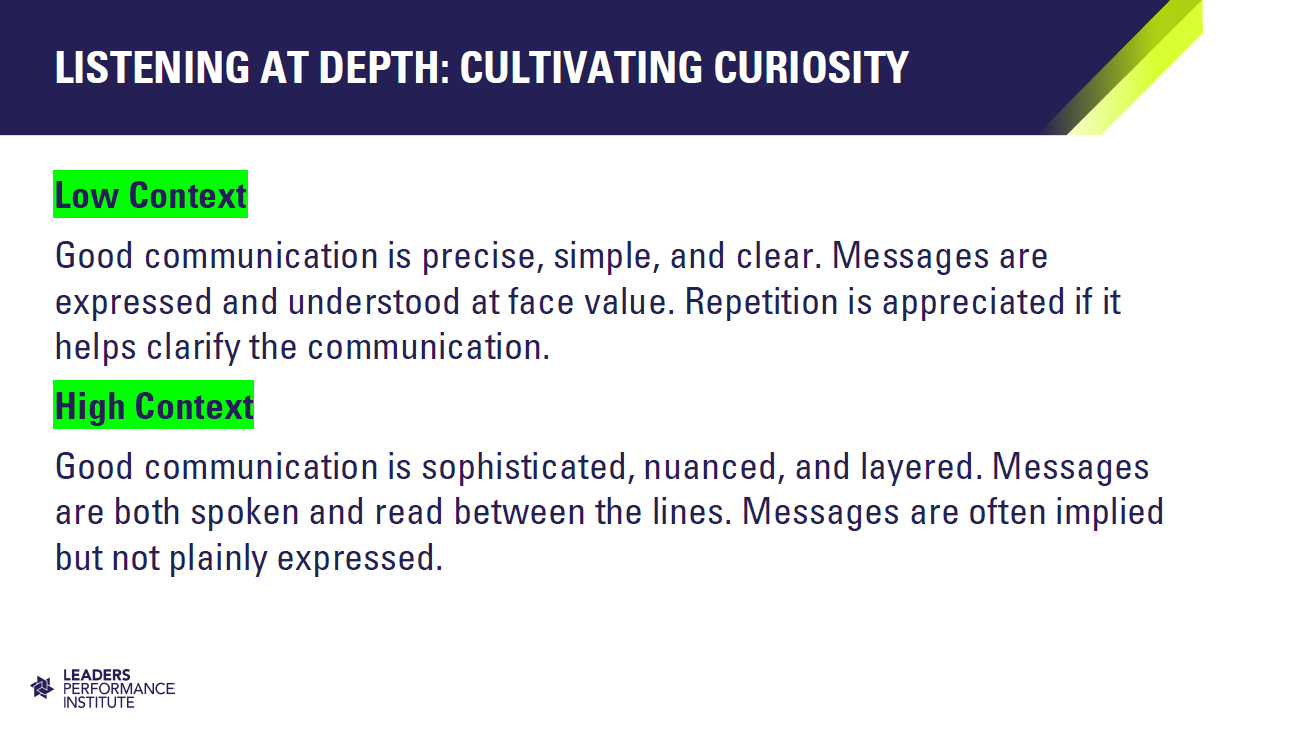
Real-life examples, he explained, could be a comparison of the United States and United Kingdom.
“The US would be considered a low context culture,” said Pagliano. “An American is going to tell you what they’re going to tell you, they’re going to tell you, and they’re going to tell you what they just told you. So they’re going to say it three times.
“The UK would be a high context culture. So if you’ve ever had a situation where you are listening, but you leave an interaction feeling as though you missed something, potentially, for myself as an American, it’s because I’m talking to someone from a high context culture.
“My listening hasn’t suffered, it’s not that I’m not putting as much effort into it, it’s that I don’t understand the context of the other person who’s communicating with me.
“I didn’t miss anything, but I wasn’t listening the right way.”
Five ways to show you are listening at depth
The virtual room included people working abroad and other environments where the coaches originate from a range of cultures.
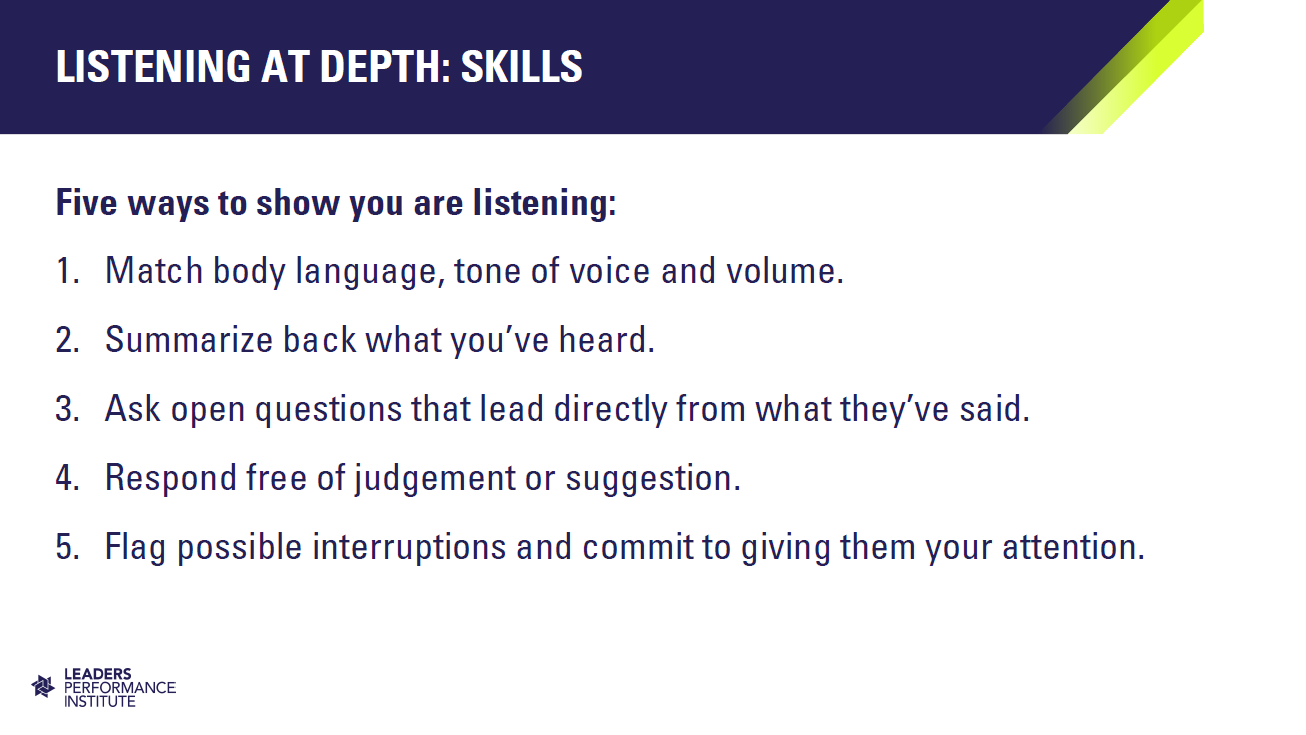
This creates a spectrum of cultural norms around such elements as reporting lines, feedback and trust, which has implications for athletes and team dynamics. We can, however, demonstrate that we are listening at depth.
Pagliano has five tips:
He also suggests that people look out for the following:
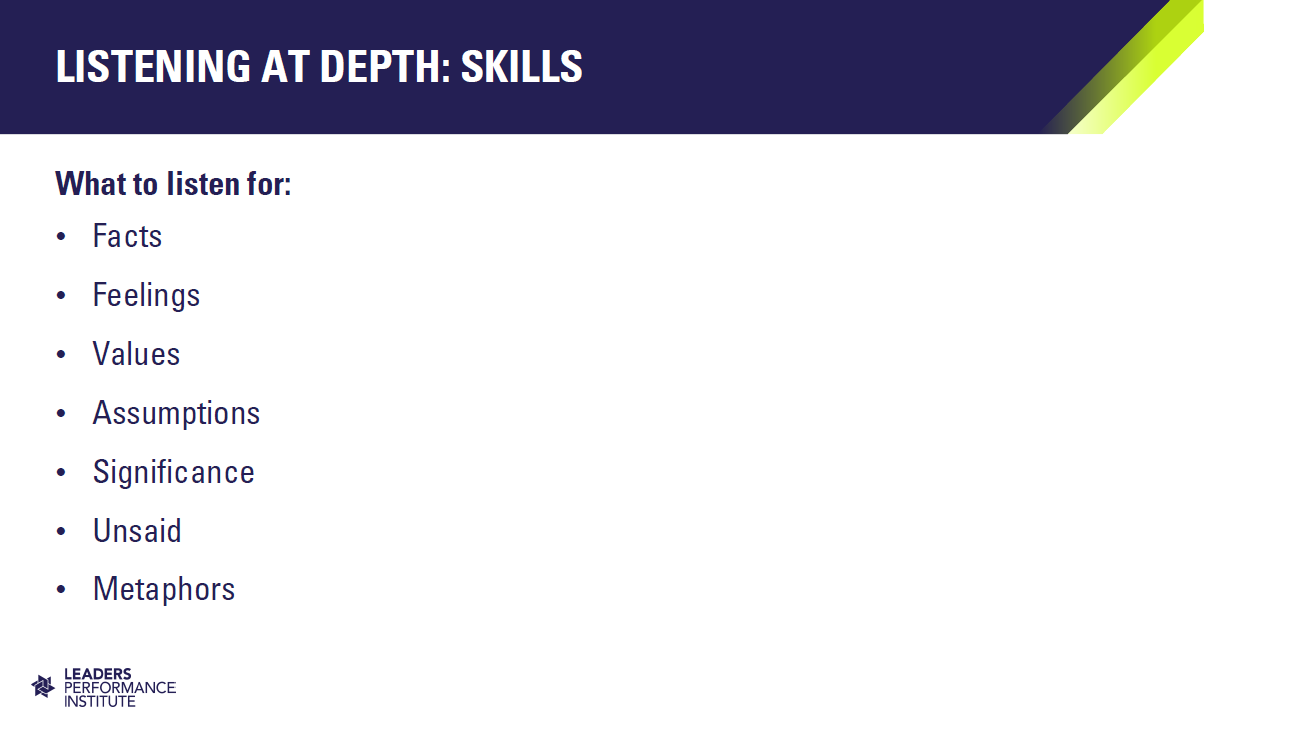
Pagliano wrapped up the session with some final tips:
What to read next
In June, performance under pressure, empowered leadership and female athlete health were some of the topics discussed by members of the institute.
“I think the real champions are made in situations when you deal with that pressure,” said Alcaraz at Rolland-Garros in Paris last month. “That’s why I saw my best tennis in crucial moments, and that’s why I saw my best tennis in those difficult situations.”
Performance under pressure was a theme that run through the month of June here at the Leaders Performance Institute, starting with the wise words of Red Bull’s big wave surfer Ian Walsh.
His approach is geared around managing his fear. “Those nerves and everything you fear are natural, and you can use that to elevate your performance,” he said in this article. “It commands every ounce of your being and your focus to deal with what’s coming at you and how you want to navigate it to try and finish on your feet.”
Elsewhere, we returned to the question of alignment, named the common causes of inadaptability, and asked the Brisbane Lions to talk about their approaches to female athlete health.
What if there’s clarity in your communication as a team, but still you suffer from misalignment?
Edd Vahid, the Premier League’s Head of Academy Football Operations, answered this in a recent interview with the Leaders Performance Institute.
He explained there could be a few factors at play, all of which point to the importance of feedback:
Staff development needs. If a staff member commits an error of execution, it is an opportunity to deliver developmental feedback. Vahid says: “Does everyone understand what we’re going after? If they do and they step outside of that, then feedback is warranted.”
Psychological safety. “It’s a buzz term,” says Vahid of the commonly used phrase, “but it’s crucial for people to feel they are in a feedback culture.” The leader must show that the intent of feedback is to help the individual to progress. “You’re taking time to give them feedback because you care,” he adds. “You’re then seeking to work with the individual to create that development.”
The leader’s behaviour. Leaders must also demonstrate their willingness to listen to feedback. “They need to provide ‘speak up’ signals,” says Vahid with reference to the work of psychologist Megan Reitz. “The leader needs the skill to understand the position they’re in and the power they carry in that dynamic.”
The four inhibitors that prevent adaptability in a complex world
Those four inhibitors are discussed in great detail here, but one that will discuss below is when leaders themselves become the bottleneck due to their authoritative approach.
“Authoritative leadership has been proven time and time again to be effective in very short bursts,” said Tim Cox of Management Futures at a recent Leaders Virtual Roundtable, “but it isn’t much good for adaptability.” The reasons are simple enough. “It’s really difficult for one person to be able to think through, be creative, respond to the environment around them when things are changing at a high pace.”
Leaders, Cox said, should:
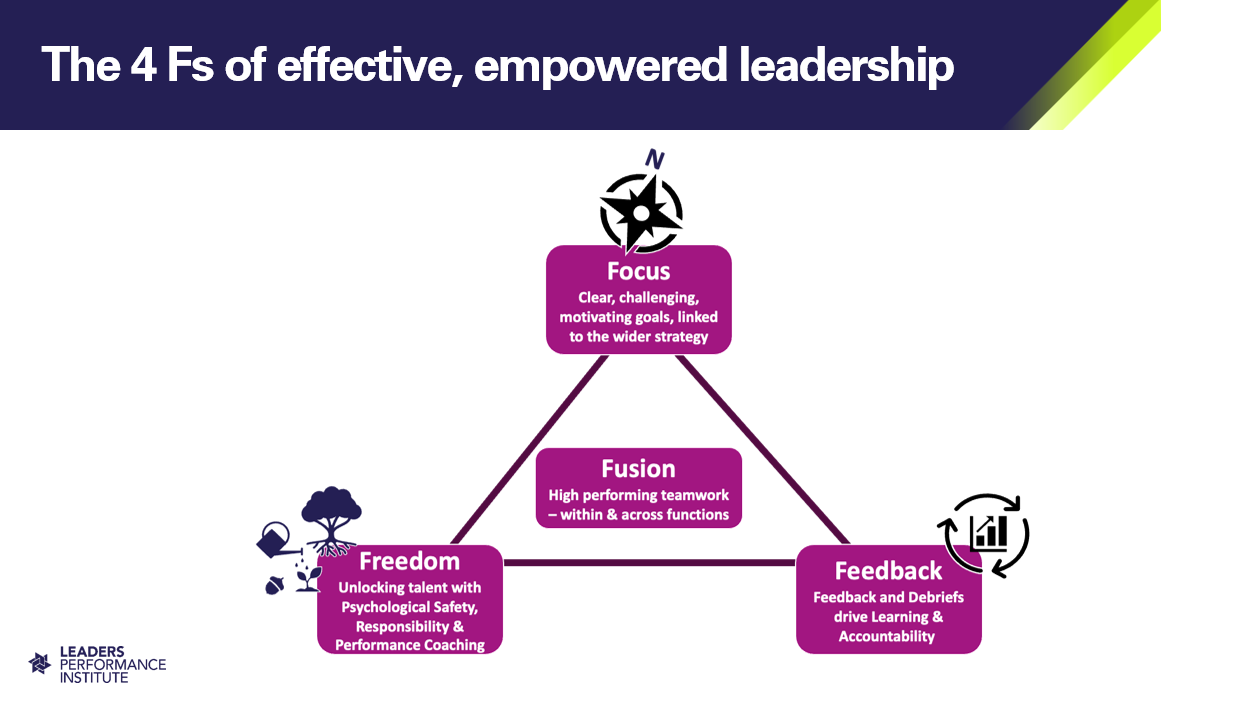 Focus: The leader must deliver clear, strategic alignment where everyone understands the direction and purpose of their work.
Feedback: Regular feedback and debriefing are essential for learning and continuous improvement, especially in dynamic settings.
Freedom: Give people autonomy and allow them to explore, innovate, and respond to change.
Fusion: This is about building strong relationships and collaboration, both within and beyond your organisation with a view to harnessing collective intelligence
Leadership is stagnating
This idea of leadership stagnating was revealed in stark terms in our Trend Report earlier this year.
The Trend Report revealed that 57 per cent of practitioners believe that leadership within their organisation has stayed the same or got worse in recent years.
The primary factors appear to be the shift towards task orientation and the pressure to ‘win now’, which can act to stifle innovation and long-term thinking. Leaders, as a selection of Leaders Performance Institute members agreed during a June roundtable, have less bandwidth, less time for staff development and even less time for staff onboarding.
Ben Baroody of Abilene Christian University, who co-led the session with Edd Vahid, observed that even at organisations that prioritise leadership development, stagnation is still reported. For Baroody, this is compounded by what he sees as the link between alignment and (high) quality leadership.
Vahid questioned whether leaders are giving themselves enough capacity to lead effectively and, as such, he is an advocate of distributed leadership models and leaders who invest in their own development as well as that of their people.
The virtual floor also highlighted the importance of skills including influencing, an ability to hold honest conversations, and active listening.
The Brisbane Lions have turned female athlete health into a performance question
The renewed focus on female athlete health is a direct result of the work of Matt Green, the Lions’ High Performance Manager for AFLW and his team.
As an organisation, the Lions focus on five key, interrelated areas:
When it comes to topics such as developing a performance culture, engendering trust and adroitly using tech, the former defender’s instincts as an athlete stand her in good stead.
A podcast brought to you by our Main Partners

“You feel it,” says the Director of Bayern’s women’s programme. “You already know when you look at their faces. You’re like ‘I think she doesn’t like it’, ‘yeah, she likes it’ and ‘she needs a bit of proof’. It’s like sometimes I see myself sitting on the other side.”
The ‘other side’, as Bianca tells Teamworks’ Andrew Trimble and Leaders’ John Portch, refers to her transition from a Germany international and Frauen-Bundesliga regular to a senior leader of the German champions, whom she represented on the pitch for four years.
“It’s so much harder now when you sit on that side now,” she adds, reflecting on how she used to feel as a player. “I see myself sitting on the other side, like, ‘oh, maybe I have to talk to them again’.”
In this third and final episode of our special series with Teamworks, Bianca touched upon several of the major themes that emerged from our recent Special Report High Performance Unpacked: interconnected performance teams.
She spoke of her role in helping to transform the Bayern culture on and off the pitch [37:00]; keeping the athlete at the centre of the performance jigsaw [14:30]; the importance of sports psychology [31:00]; and the thoughtful integration of technology [21:00].
Listen above and subscribe today on iTunes, Spotify, Stitcher and Overcast, or your chosen podcast platform.
Episode One: Simon Rice, the Philadelphia 76ers
Episode Two: Miranda Menaspà, the Australian Institute of Sport
As the former New Zealand PM explains, the better question isn’t whether you’ll experience impostor syndrome but how you’ll act when you do.
“It was a leader-only event and they’d decided I was not a leader,” she told an audience during an onstage appearance at Westminster’s Methodist Central Hall earlier in June. “I find myself really holding back from saying ‘I’m the Prime Minister’ as if somehow it’s name-dropping,” she continued.
Within moments, Malcolm Turnbull, the then-Prime Minister of Australia, with whom she had been talking in the corridor, returned, grabbed Ardern’s arm, and walked through with her while indignantly uttering the words ‘she’s the Prime Minister of New Zealand’.
Leaders at that APEC meeting had been given identifying pins to wear, but Ardern’s was covered by her long hair.
Ardern, who served as Prime Minister of New Zealand between 2017 and 2023, has spoken of her impostor syndrome during various public appearances and also in her recent memoir A Different Kind of Power.
The APEC security staff may have perceived her as an impostor due to her gender – she was one of just three female leaders at that meeting – but that was not an issue for Ardern herself. New Zealand has long had women serve in senior governmental posts, including Prime Minister [three], Speaker of the House, and Governor-General [four]. “I didn’t look out at the world and think that a woman couldn’t lead,” said Ardern, “but I didn’t think you could lead with my personality.”
She was 14 when her favourite teacher introduced her to the concept of impostor syndrome, ‘a phrase,’ she writes, ‘I would remember for the rest of my life’. It represented ‘puzzle pieces clicking together’.
Some telltale signs of Ardern’s impostor syndrome
Impostor syndrome is not a recognised psychiatric disorder but it is experienced by a whole range of people regardless of their accomplishments.
Ardern alludes to three areas where her impostor syndrome has tended to manifest.
Her perfectionism: as she explains in her memoir, she was noted as a skilled public speaker and debater at high school. Nevertheless she suffered from debilitating nerves. Even with her exhaustive preparation she ‘could not shake the feeling that something could go terribly wrong. And when it did, it would also be proof that I wasn’t good enough to be there in the first place.’
Unrealistic personal expectations: during her recent appearance on HBR’s IdeaCast, Ardern spoke of the notion in leadership “that confidence is built through absolute knowledge and displaying a sense of the fact that we have all of the answers all of the time.” It is an idea she has come to refute.
Unfavourable personal comparisons: Ardern’s father once protectively described her as ‘too thin-skinned’ for politics. There were times when she concurred. She noted the resilience of Helen Clark when she worked as a researcher in the former New Zealand Prime Minister’s office in the early 2000s. ‘And while Helen Clark had shown me that it was possible to be a woman in politics,’ Ardern wrote, ‘no one had shown me that you could be sensitive and survive’.
How Ardern deals with it
She accepts that impostor syndrome doesn’t go away. “In my experience, it does not,” said Ardern onstage. In any case, “it’s such a broad turn of phrase,” she added. “I would prefer to just describe it as a confidence gap because I think there’s a spectrum and, at any given time, you can be in different places on that.”
She does not accept it as a sign of weakness. When she was asked to go beyond her perceived areas of competence, her instinctive response as PM was “to anticipate risk, to prepare, to bring humility to what you’re doing, to bring in experts, to bring in advisors. And don’t we want that in our leaders?”
She does not believe that impostor syndrome is always bad. “Just remember all that it brings you,” she said. “It doesn’t take everything, it brings you something as well. Just remember that I existed as Prime Minister for five years with my monkey on my shoulder and I do believe it made me better at my job.”

A Different Kind of Power: A Memoir by Jacinda Ardern. Available now from Penguin Random House.
In a recent Leaders Virtual Roundtable, Tim Cox of Management Futures presents a series of tools for navigating those obstacles.
Many of you will be familiar with VUCA (which stands for ‘volatility’, ‘uncertainty’, ‘complexity’ and ‘ambiguity’) and employed it in your day to day work.
It looks like this:
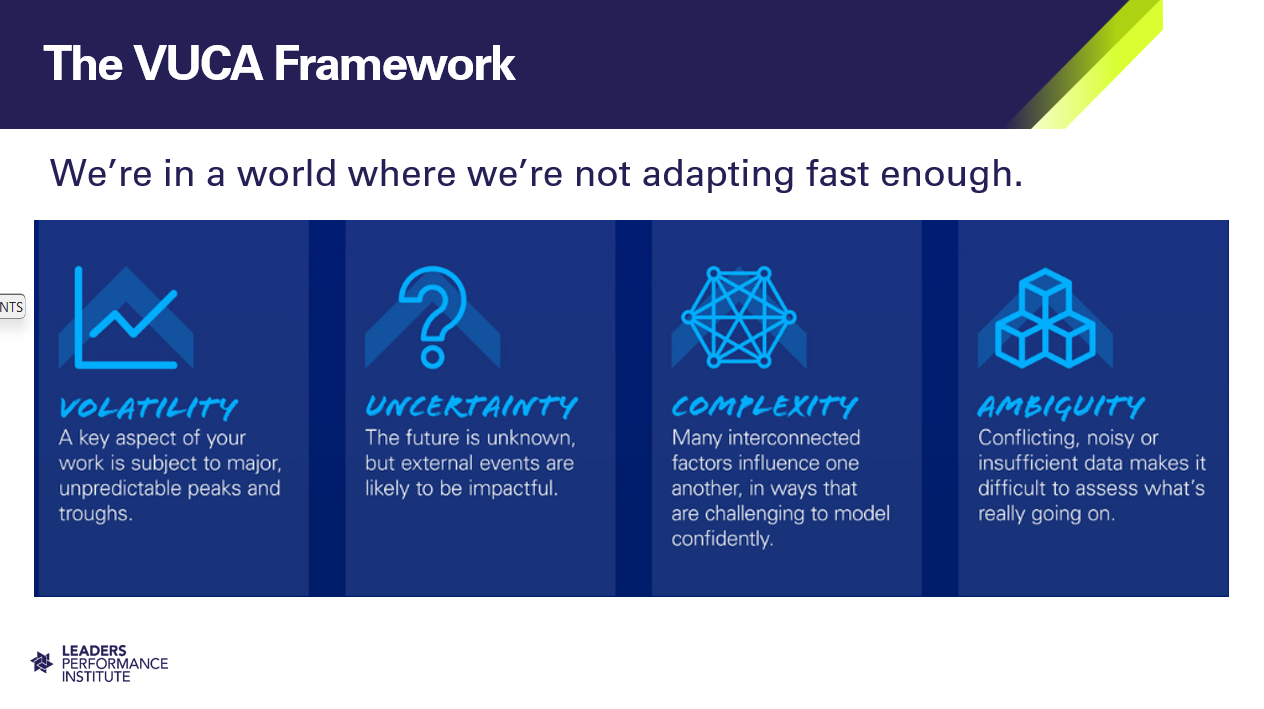
VUCA was devised in military circles in the 1980s as a strategic response to external forces and is both analytical and structural. It remains a useful tool for planning and building resilience.
However, there is a growing consensus that VUCA alone does not capture the emotional and psychological toll as environments become increasingly complex.
In 2018, the author Jamais Cascio, a self-styled ‘futurist’, published his BANI Framework, which is his effort to introduce a more human-centred lens, that emphasises fragility, emotional responses, and the breakdown of linear logic.
Here is an outline:
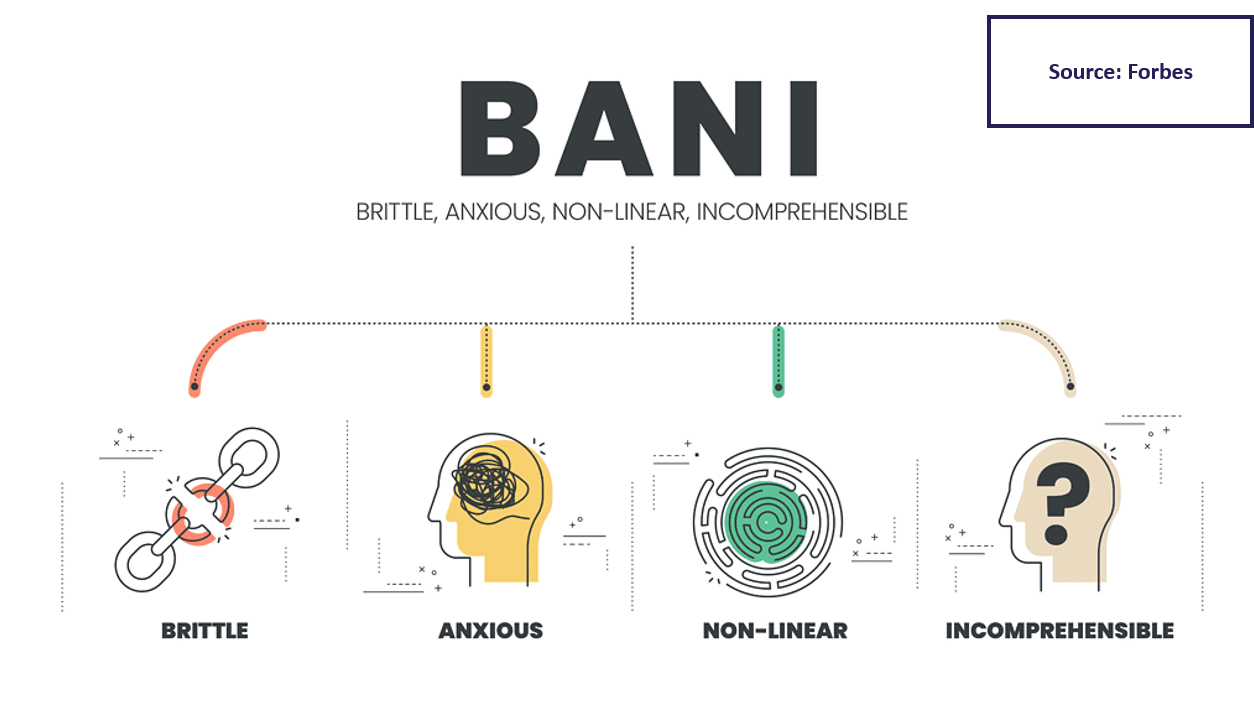
And here is how it may look in your environment:
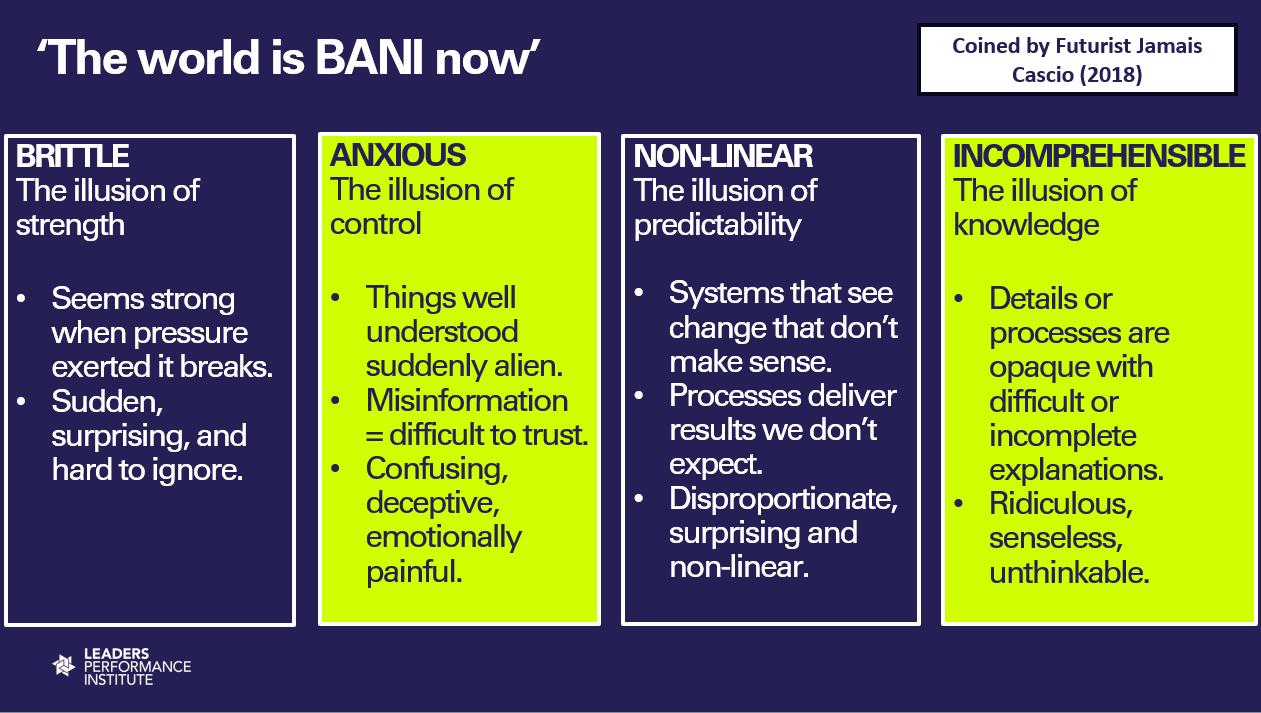
“Cascio sees BANI as parallelling VUCA, but he thinks VUCA is not real enough,” said Tim Cox of Management Futures, the host of a recent Leaders Virtual Roundtable. “He’s not saying BANI replaces VUCA, but he feels that it’s much more up to date with what’s going on at the moment.”
It helped to set the scene for the second session of our three-part Virtual Roundtable series entitled ‘Leading in Complexity’.
Which trap is most common in your organisation?
In part one, we explored how adaptability can increase the chances of an effective response to complexity.
In part two, we turned our attention to four common factors that can inhibit your ability to be adaptable and asked the table to select their most common ‘trap’.
Cox then spoke to each trap in turn.
This trap was cited by the fewest attendees but, as Cox explained, “even in sport we are often hijacked by emotions and we fail to adapt because they override our thinking.”
One must “relax, observe, and make a call”. Cox has some tips on that front:
Nearly half of attendees cited this as the most prominent trap.
It is an enacting metaphor too. “The classic operating from an out-of-date map was the belief that the world was flat,” said Cox. “It limited people and it spread fear in people not to go beyond certain points.”
Without active sense-making, he explained, leaders risk falling into mental ruts that limit adaptability.
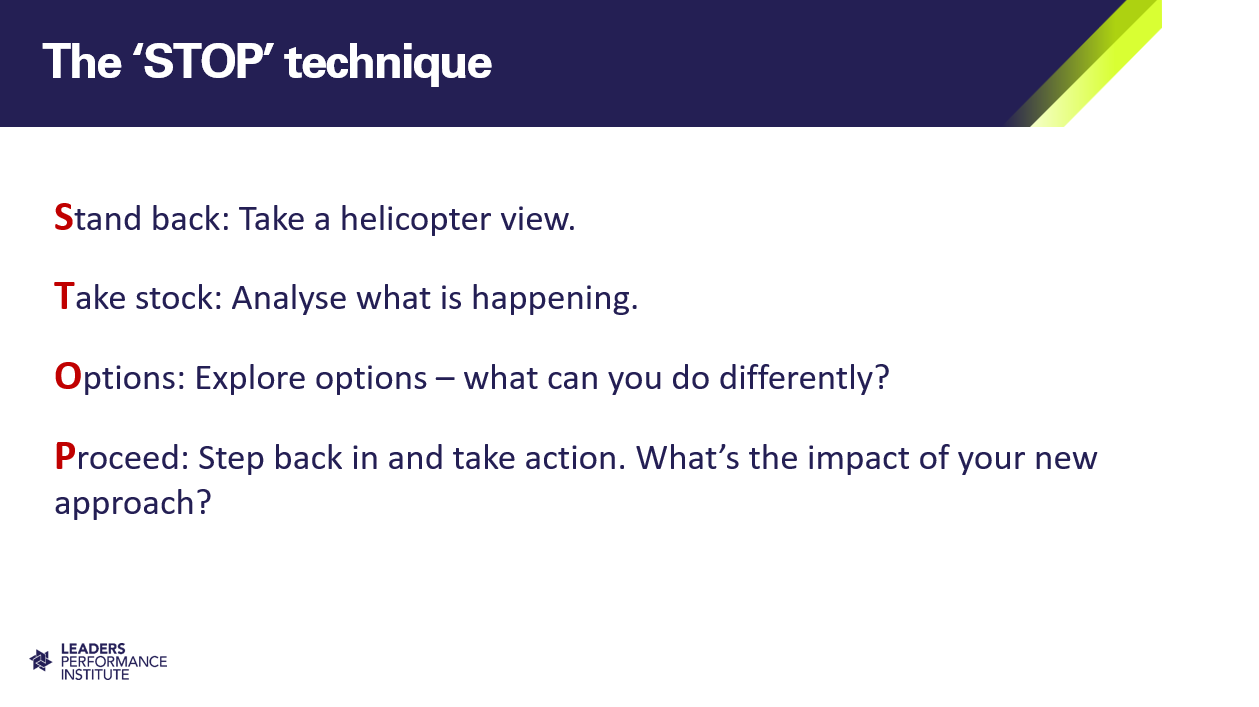
Cox recommended the following:
It is a practical method for fostering adaptability and creative problem-solving in complex environments:
Our poll indicated that more than one in five attendees rank this as their team’s most prominent inhibitor.
“Authoritative leadership has been proven time and time again to be effective in very short bursts,” said Cox, “but it isn’t much good for adaptability.” The reasons are simple enough. “It’s really difficult for one person to be able to think through, be creative, respond to the environment around them when things are changing at a high pace.”
Leaders should:
Focus: The leader must deliver clear, strategic alignment where everyone understands the direction and purpose of their work.
Feedback: Regular feedback and debriefing are essential for learning and continuous improvement, especially in dynamic settings.
Freedom: Give people autonomy and allow them to explore, innovate, and respond to change.
Fusion: This is about building strong relationships and collaboration, both within and beyond your organisation with a view to harnessing collective intelligence
As with authoritative leadership, our poll indicated that more than one in five attendees rank this as their team’s most prominent inhibitor.
Cox had a selection of ideas that leaders might consider:
Other inhibitors cited by Leaders Performance Institute members:
Sign up for Part Three
In the third and final session on 3 July, we will explore building a collective playbook for leading in complexity: