Leaders in Business
  • Membership
  • Events
  • Content
  • Virtual Learning
  • Connections
  • Partners
Login
  • Leaders Meet: Innovation
  • Events
    • Leaders Week London
    • Leaders Sports Awards
    • Leaders Club Events
    • Leaders Performance Institute Events
    • Leaders Meet: Innovation
  • Memberships
    • The Leaders Club
    • Leaders Performance Institute
  • About
    • Careers
    • Contact
I’m a sports leader:
  • Off The Field For those focused on the business of the sport View more
  • On The Field For those working with an athlete or elite team View more
  • Login
    • Leaders ClubThe membership for future sport business leaders
    • Leaders Performance InstituteThe membership for elite performance practitioners
  • Newsletters
Performance Institute Leaders Performance Institute Logo
  • Membership
  • Events
  • Content
  • Virtual Learning
  • Connections
  • Partners
Login
Members Only

1 Aug 2025

Articles

How Eight Years of FIFA and Hawk-Eye Collaboration Will Come to Fruition at the 2026 World Cup

Category
Data & Innovation, Premium
Share
Facebook Twitter Email Copy Link
https://leadersinsport.com/performance-institute/articles/how-eight-years-of-fifa-and-hawk-eye-collaboration-will-come-to-fruition-at-the-2026-world-cup/

An enhanced version of semi-automated offside technology will make its debut at the tournament, which is set to take place in the US, Canada and Mexico.

sport techie
By Joe Lemire
The FIFA Club World Cup has not only been “a perfect test case” for trialing innovations that might debut at the men’s FIFA World Cup 26, but it also has marked the grand unveiling of the Football Technology Center AG.

That’s the joint venture created last November by FIFA and Hawk-Eye Innovations with an initial charge of assisting referees and automating data collection.

FIFA and Sony-owned Hawk-Eye first debuted Semi-Automated Offsides Technology at the Qatar World Cup in 2022, and now it has created an enhanced version of it. Only calls in which a player is within 10 centimeters of the offsides line require manual oversight from an official. Also at this tournament, the tabulation of event data — everything from shots, passes, corner kicks and the like — has been automated with computer vision algorithms, supplanting what historically had always been a very manual process.

Early feedback has been positive, putting those innovations on track for an appearance at next year’s tournament. The quadrennial World Cup typically serves as a debut for new tech. Goal-line technology first appeared in 2014, VAR in 2018 and SAOT in 2022.

“We recognize that, in order to do stuff which is pretty game-changing, you have to do it on a two-, three-, four-year cycle,” Rufus Hack, the CEO of Sony’s sports businesses, told SBJ. “It doesn’t take a year to develop the technology, to implement it, to refine it, to test it, to introduce it. And so we came on this concept of, let’s do an eight-year joint venture where, effectively, they put in some of their IP, some of their technology, their football expertise. We put in people, our technology expertise, our learnings from other sport.”

The vision of the FTC

The Football Technology Center is based in Zurich, like FIFA, and relies on dedicated personnel from both FIFA and Hawk-Eye. In lieu of a CEO, it is steered by a board of directors, consisting of Hawk-Eye’s Hack and Managing Director Ben Crossing and FIFA’s Dir of Innovation Johannes Holzmüller and Technical Director Steve Martens. There is also a separate joint operational management committee with equal representation from both entities.

“We see this as potentially the Football Technology Center creating new football technologies, assets and IP, which then can potentially be commercialized-slash-distributed to the rest of the sport,” Hack said. “Ultimately, FIFA are very much about looking to democratize sports technology down to the member associations,” referring to the 211 countries and territories across six continents that are represented by FIFA.

“For us, this is less about a significant revenue opportunity of being able to create new products,” he added. “It’s more about being able to be thought leaders and sitting side by side with FIFA, who are effectively the guardians of football technology in the game, to be able to do these new innovations, and then potentially working together to distribute some of that for the rest of the football community.”

Hawk-Eye’s cameras and algorithms capture data from 29 points on the human body, so a player’s limbs, hands and feet are fully tracked. That generates millions of datapoints per game, but FIFA sought practical use of it.

“We have high-quality data available, but at the end of the day, we also want to have valuable information — an outcome, not only for officiating, but also for other areas,” Holzmüller said. “We needed to have some vehicle where we can develop and explore how this data can be used in the future.”

The lead time for many of these projects is long, but there other avenues that can be explored. For instance, Hack said it might be possible in the future to use technology to determine whether that ball has gone out of bounds or whether it struck a player’s hand or other part of the body.

“We believe in these big, long-term strategic partnerships,” Hack said. “We believe it provides a much better opportunity for the rightsholder and partner to co-invest alongside each other and genuinely feels like a partnership, rather than that buyer/supplier relationship.”

This article was brought to you by SBJ Tech, a Leaders Group company. As a Leaders Performance Institute member, you are able to enjoy exclusive access to SBJ Tech content in the field of athletic performance.

Members Only

30 Jul 2025

Articles

Coach and Staff Wellbeing: Five Approaches to Five Common Challenges

Category
Human Performance, Premium
Share
Facebook Twitter Email Copy Link
https://leadersinsport.com/performance-institute/articles/coach-and-staff-wellbeing-five-approaches-to-five-common-challenges/

In a recent Leaders Virtual Roundtable, we tapped into the collective wisdom of the room to unearth ideas to help the community better manage coach and staff wellbeing.

By John Portch
The reality of being available to everyone 24-7 is spelled out by a coach from Australia.

“I have a relentless stream of calls and messages,” she said. “It’s hard to sleep when your phone is on all night.”

The system may recognise the need to look after staff wellbeing but “the reality is that organisations might not understand the challenges staff face on the ground at camps and tours.”

The challenges are systemic and cultural, as Leaders Performance Institute members continually pointed out during a recent Virtual Roundtable on the creation of healthy environments in sport.

“Regardless of what you have written down on a piece of paper, the culture is that you know everyone is there all the time pushing for performance, because that’s what’s required when you’re at the top end of things,” said a sports scientist working in Canada.

“How do you chip away at that over time and shift people’s perspective to this idea that ‘I’m actually a detriment to my team when I show up not at my best, so out of respect for my teammates, I need to make sure I’m ready to be here’?”

The group put their finger on five enduring challenges and, while there’s no perfect solution in a world where the ‘martyr mindset’ still holds sway, five ways to better support coaches and staff.

Challenge #1: The typical focus on the athlete often comes at the expense of the coach

Athlete wellbeing is considered paramount. While understandable, but it can too often come at the expense of coaches and other staff.

“We’ve had athlete wellbeing and engagement in place for more than ten years. We still don’t have coach wellbeing and engagement in place at all.”

Response: Find space for coach and staff wellbeing in your strategy

You may face budgetary constraints and cultural reticence, but you can’t take away the stigma attached to asking for help without providing wellbeing services.

It can be as simple as baking wellbeing-based KPIs into your performance reviews, as is the case in the Australian system courtesy of its High Performance 2032+ Sport Strategy.

The Australian system also provides coaches and staff with access to the Australian Institute of Sport’s mental health referral network.

Challenge #2: Coaches don’t always want or seek help

The aforementioned ‘martyr’s mindset’ often makes coaches instinctively reluctant to seek help.

“We do offer our coaches mental health support. Very few of them take advantage of it. It speaks to the challenge of what are the things that are going to make a difference.”

Response: Encourage coaches and staff to develop work friendships

There’s no silver bullet, but it helps to talk. “One of the highest predictors of employee satisfaction is if that person has a best friend at work,” said a wellness director from the US. “You want a culture that encourages relationships to be formed organically.”

Challenge #3: Presenteeism

All coaches need an extended break from time to time. As one attendee said, “it’s about creating environments where it’s safe to take leave. So you feel relaxed when you’re on leave. Not like, ‘shit, things are falling apart”.

“Too often the culture makes coaches think ‘If I’m not here, then I’m not seen to be fully committed.’”

Response: Paint presenteeism as irresponsible

Stepping back is often the responsible thing to do. “Respect your team and don’t be selfish by turning up,” said a performance coach from New Zealand.

It can also help to arrange staff cover when people are taking a break. “We spend a lot of time setting up partnerships that allow performance support staff to be backfilled and allow them to have time off when they’ve been away at world championships,” said a performance director from Australia, although they also admitted it can be harder to cover for coaches.

Challenge #4: Risk-based approaches to wellbeing have made us reactive, not proactive

The volume of high-profile duty of care failures in sport has led to a risk-based, reactive approach to wellbeing. Teams too often wait for things to go wrong but, as a wellbeing manager from Australia said, “compliance should be the bare minimum”.

“Unfortunately, it’s an easier conversation with your board when you’re talking about risk rather than the potential opportunity or the performance-enabling aspect.”

Response: Take a more personalised approach

“We’re starting to have more individualised conversations with people,” said the Canadian sports scientist.

“We want to get into the habit of doing things a little bit differently and recognise that you can’t show up at your best 24-7.” The question they seek to ask is: “What stress do we need to take off of you in order for you to feel like you’re at your best?”

Challenge #5: Too much focus on technical expertise

An old trope that needs little explaining.

“Our practitioner education system is about your ability to deliver your expertise and communicate technical things well. Your role in supporting wellbeing, or even looking after your own wellbeing, isn’t really covered at all.”

Response: Demonstrate that wellbeing and performance are indivisible

It sounds obvious when someone from within the system spells it out. “Ultimately we are human, and if our wellbeing is going well, we’re much more likely to perform when we’re creating those environments,” said the Australian wellbeing manager.

It should be integral to coach development programmes and role modelled by leaders.

“I try to model taking time off when I’m feeling tired, admitting, ‘OK, I just need a personal day, guys, I’m just feeling a bit rough’,” said a wellness manager from the US system.

There is also a tacit acknowledgement of this link between wellbeing and performance from even the most resistant head coaches.

“If we challenged the culture by working with assistant coaches, hopefully creating the next generation of head coaches that are willing to prioritise their wellbeing, then the assistant coaches were viewed as the threat,” said a US college-based performance coach.

It is important to encourage wellbeing for all.

What to read next

When it Comes to Learning, the Coach Must Create the Right Environment, But the Athlete Must Want to Step into it

29 Jul 2025

Articles

When it Comes to Learning, the Coach Must Create the Right Environment, But the Athlete Must Want to Step into it

Category
Coaching & Development
Share
Facebook Twitter Email Copy Link
https://leadersinsport.com/performance-institute/articles/when-it-comes-to-learning-the-coach-must-create-the-right-environment-but-the-athlete-must-want-to-step-into-it/

Edd Vahid of the Premier League has advice for coaches and athletes alike.

By John Portch
“We know that learning has to be important because if you’re out-learning your competitors, you’re probably going to be outperforming them too.”

So says Edd Vahid, the Premier League’s Head of Academy Football Operations.

The numbers as revealed in our Trend Report back him up. Almost one in five practitioners who completed our survey felt that learning and development had a direct impact on the quality of leadership in their teams.

“It has to come from senior leaders, it must be role-modelled from the top,” Vahid adds. “Role models are crucial in setting the tone for organisational learning.”

When it comes to teaching and learning, he has advice for coaches and athletes alike.

For coaches

Create the right environment…

The skill of the teacher, coach or trainer is to create an environment where you’ve got the capacity to learn, to receive feedback, and for it not to be immediately critical.

That means creating opportunities…

If you’re learning and you’re able to apply it, you’re going to see progress. You need the opportunity to because therein lies the application of knowledge.

You must also work to understand how people learn…

I think we could probably spend more time on this as an industry. To support an individual, you need to understand an individual, to understand an individual, you need to invest time in them. People learn where there’s been care, an attentiveness, and an investment in the person. The coach needs to understand what makes someone tick beyond the superficial level. What are their influences? What is creating an impact on them when turning up to do a session? What’s going on at home? Such considerations are crucial.

Also ask yourself: what are you trying to achieve?

What outcome are you trying to achieve? That will determine the approach, timing and future support. If you simply use feedback as an opportunity to offload, especially when a learner hasn’t done well, it may serve your benefit because you’ve been able to get rid of some of your frustrations. But that’s not right. To help them, you have to offer them something they haven’t seen themselves or it’s going to drive them further down.

Enable good feedback loops…

It starts with an expectation. The feedback is specific to that expectation. Then identify what the development opportunities are. So how do you avoid or improve a certain situation in the future? Then there’s the monitoring.

Inviting people to share their feedback on the process is an important part of the feedback loop. The best coaches plan but they’re also responding to emerging themes and the needs of players within a particular session. It goes back to understanding the player’s needs and considering those in session design. We probably don’t seek their feedback often enough. Ask simple questions: how is this working for you? What’s landing? What influences that? Are you progressing?

For the athlete

And learners must be adaptive…

We each have our learning preferences – others will be better equipped to talk about the myths that surround learning styles and other elements – but you have to find a way to respond to the stimulus in the environment. If you haven’t had opportunities how are you going to accelerate your learning without the chance to compete?

That means there has to be personal responsibility…

You see it all the time: the highest performers, whether implicitly or explicitly, go out of their way to make sure they’re ready to learn. There has to be personal responsibility when it comes to how you turn up to learn, how prepared you are to absorb the information that’s available in the environment, whether that’s through players, coaches or other ways. You must be prepared to learn.

What to read next

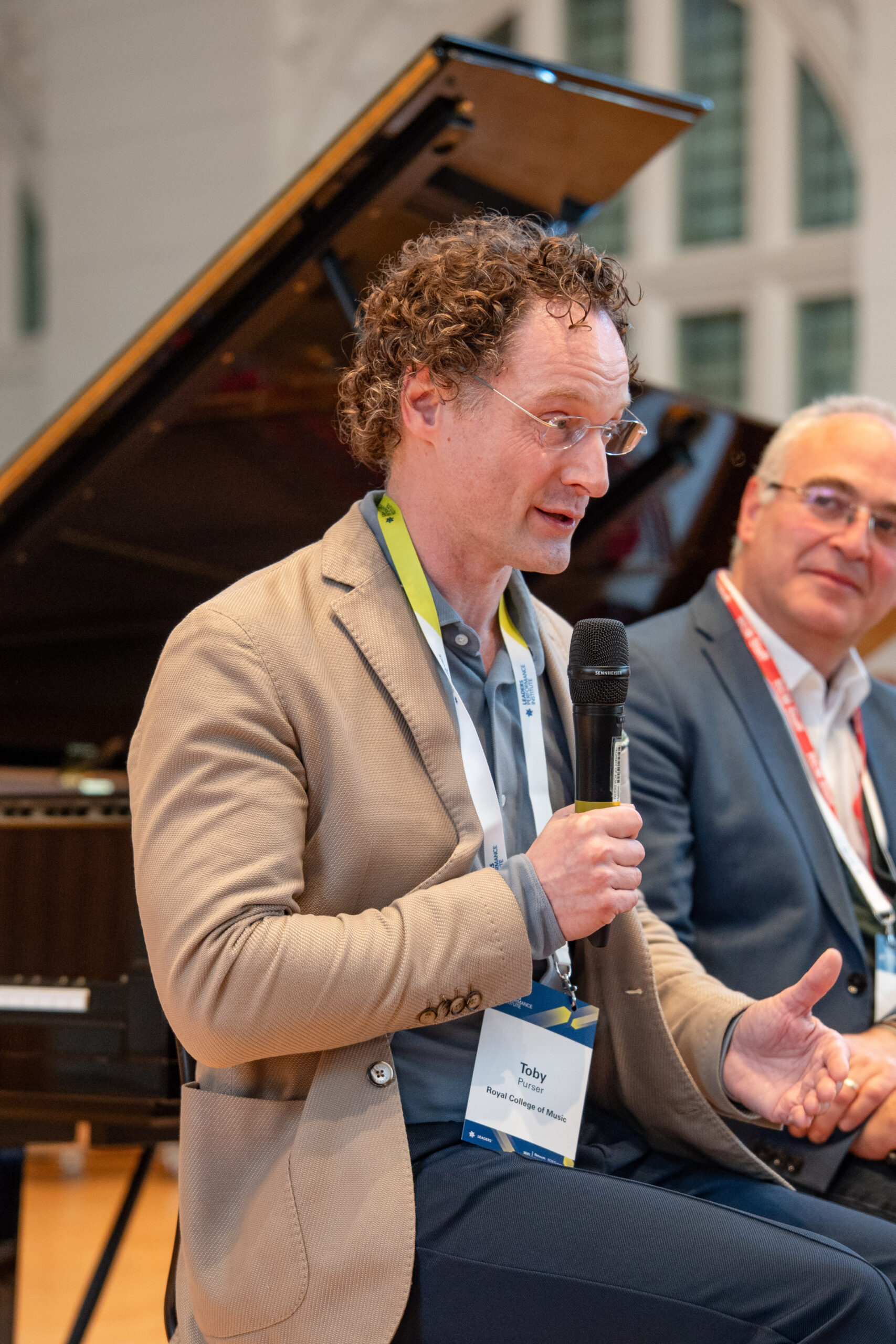
From the Practice Room to the World Stage: How the Royal College of Music Prepares its Students for Careers as Musicians

Members Only

25 Jul 2025

Articles

Why New Helmets in Youth Football Have Implications Way Beyond Concussions

Category
Data & Innovation, Premium
Share
Facebook Twitter Email Copy Link
https://leadersinsport.com/performance-institute/articles/why-new-helmets-in-youth-football-have-implications-way-beyond-concussions/

As Dr Robert Cantu and Mike Oliver from the National Operating Committee on Standards for Athletic Equipment explain, their research is helping the sport to understand overall head impact exposure in a more nuanced fashion, while potentially influencing training methods, rules and player development models.

Main Image: courtesy of NOCSAE

sport techie
By Joe Lemire
The number of American youth playing tackle football has declined precipitously in the past decade, largely driven by concerns over concussions and other head impacts.

The Sports & Fitness Industry Association reported that 758,000 youth ages 6-12 were regularly playing tackle football as of 2023, which is down from 965,000 who consistently played a decade ago in 2015 — a 21% decrease. And those who do play have been wearing helmets certified by a safety standard primarily with adults in mind, not kids.

That is now changing, as the National Operating Committee on Standards for Athletic Equipment, which first established safety guidelines for football helmets in 1973, is introducing its first youth football helmet standard specifically designed to protect players before they reach high school.

While the existing NOCSAE testing standards minimized impact energy in all helmets, from youth to pros, this more targeted measure should offer further protection to those players participating in leagues affiliated with Pop Warner, American Youth Football, USA Football and similar organizations.

“That’s been really very effective in preventing injuries in kids, too,” renowned neurosurgeon and NOCSAE Vice President Dr Robert Cantu said of the standard previously in place, “but we are very well aware of the fact that kids are not miniature adults. They have unique situations. Their brains are not as myelinated. Their necks are quite weak, so their head is a bobblehead doll. Their heads are quite big when they’re young, and quite heavy. And the types of hits that they take in football are not the same as older kids take.”

Peer-reviewed, university-led research more than a decade in the making drove the new youth standard led by NOCSAE’s Scientific Advisory Committee, which Cantu chairs. The most critical change in the new mandate, which goes into effect in March 2027 to give manufacturers time to adapt, is that helmets for the youngest players — facemask included — cannot exceed 3.5 pounds.

Only a few manufacturers already make sufficiently light youth football helmets, such as Light, Riddell and Schutt, but they represent a limited selection in the market. Light CEO Nicholas Esayian explained that heavier helmets typically fare better in lab tests but often don’t serve the needs of players on the field, especially younger players.

While the NFL and NFLPA have led pioneering work to test helmets for that league and NOCSAE has continued to iterate and improve its standards required at the pro, collegiate and high school levels, the youth player had been overlooked.

“Everybody tends to think, well, as long as they’re not going any faster than the [older] guys up above, then the helmet should be OK,” said Mike Oliver, who served as NOCSAE executive director for 20 years before stepping down this spring and remaining as the organization’s general counsel. “But the comment was made that we really don’t know what the risk exposure is. So how likely are you to get hit at some velocity versus hitting the ground versus hitting another player?”

Research funded by NOCSAE and led by professors Steve Rowson (Virginia Tech) and Blaine Hoshizaki (University of Ottawa) investigated head impacts, collecting data from sensors, triangulated cameras and predictive modeling in youth players. Rowson looked at ages 10 through 14, while Hoshizaki focused on ages 5 through 9. The results were surprising, Oliver said, noting that “the younger group actually had the higher head accelerations in games and practices than the older group, and turns out the primary reason is they hit the ground more often.”

New standards for helmets are designed to provide more protection for young players before they reach high school. (Image courtesy of NOCSAE)

While most governmental agencies require only self-certification of compliance, NOCSAE, an independent nonprofit, has required third-party certification since 2015, with manufacturers needing accredited institutions to assess products.

Cantu previously has recommended that there not be any tackle football for children younger than 14, but that’s his personal position. With NOCSAE, he views his role as ensuring best practices.

“If somebody is going to be doing something, I feel very strongly that I would like to be, if I can, helpful in making the activity as safe as absolutely possible,” he said.

There’s a compounding effect with head impacts. There’s greater research and understanding that the accumulation of sub-concussive hits can lead to problems over time, so minimizing that exposure early can pay dividends.

“To the extent we can attenuate the forces the brain sees, even if it’s 10%, that’s meaningful over thousands of hits to the head over a lengthy career playing a sport,” Cantu said.

New NOCSAE Executive Director John Parsons previously served as director of the NCAA Sport Science Institute and indicated the importance of how the college and pro games have taken steps to modify rules to mitigate risk of all head impacts.

“The conversation has shifted a little bit, so we’re not only just talking about concussion, but we’re also talking about head impact exposure,” Parsons said.

To date, NOCSAE has funded roughly $12 million in grants for researching concussions in sports. In addition to the work done by Rowson and Hoshizaki, the SAC reviewed more than 40 other studies related to injury risk in youth football to help inform the new policy. The weight limit is the biggest change, but the youth standard also has a lower threshold for acceptable rotational acceleration, as that type of impact is shown to cause injuries.

What neither the new standard nor the one for older players requires is any particular material or shape.

“Our standards are intentionally design neutral,” Oliver said. “Technology is moving pretty quickly, and if we did that, our standard may specify something today and six months from now, there’s something better, or there’s something new. And so we don’t do that, and it’s one of the reasons why you see such a divergence of engineering approaches to helmet design, whether it’s pro or otherwise.”

This article was brought to you by SBJ Tech, a Leaders Group company. As a Leaders Performance Institute member, you are able to enjoy exclusive access to SBJ Tech content in the field of athletic performance.

Members Only

24 Jul 2025

Articles

From the Practice Room to the World Stage: How the Royal College of Music Prepares its Students for Careers as Musicians

Category
Coaching & Development, Premium
Share
Facebook Twitter Email Copy Link
https://leadersinsport.com/performance-institute/articles/from-the-practice-room-to-the-world-stage-how-the-royal-college-of-music-prepares-its-students-for-careers-as-musicians/

Ashley Solomon explains his approach to harnessing the potential of talented, driven individuals at the famous conservatoire.

By John Portch
As both a musician and a teacher, Ashley Solomon says “I must put my neck on the block” and be willing to perform for the students whom he tutors.

Solomon is the Chair and Head of Historical Performance at the Royal College of Music – the capacity in which he took to the college’s stage at April’s Leaders Meet: the Talent Journey – but he is also a world-renowned flautist and Director of an award-winning ensemble named Florilegium.

When Florilegium were booked to perform at central London’s Wigmore Hall in March, it was the perfect opportunity for Solomon to show his students how it’s done.

“I managed to persuade the hall to offer some under-35s £5 tickets and I said to my students ‘it costs you more to buy a pint in the pub, so if I’m not worth more than that I’m very upset’,” he says.

“As a result, 30 of them came, which was wonderful for the hall, because it tends to be full of white-haired people of a certain age. They could see me and my colleagues try to promote what we teach them to do. Part of my job here is to try and inspire the next generation to be better than me.”

Solomon tells the audience that he tutors a range of bachelors, masters and PhD students but, as he explains, “it’s no good having the theory without being able to do the practice.”

Here, in his own words, Solomon explains how the Royal College of Music prepares gifted students for careers as musicians.

It is best to spot the talent when it’s not fully formed… The Royal College of Music is one of the greatest institutions in the world, so we rarely have people apply who don’t think they have a chance of getting in, but we have hundreds apply for a small number of places. You have to spot their potential during the audition phase.

If they have passions beyond their music, I’m not interested… The last question I like to ask undergraduate candidates is usually the most telling: ‘is there anything else that you’re passionate about?’ I lose interest in those that give me a list of other things. We’re training elite athletes and you have to be so single-minded and you have to make so many sacrifices to be absolutely the top of your game emotionally, physically and mentally. If they’re distracted, then I’m not sure this is the right place for them.

Where the talent is not exceptional, there must be a glimmer of excitement when they play… You hear it in a sound, in a music shape, in the passion, the moment when the hairs on your arms stand on end. It might not be the best playing in the room but there’s been something that touched you.

Students from more deprived areas are the most interesting… Most of those who come at undergraduate level have either been to specialist music schools or their parents have paid for private instrumental lessons. They know their talent and you can see those who walk into the building from a music school. They have confidence – I wouldn’t use the word ‘arrogance’ – and feel comfortable here. Students from our Tri-Borough Hubs [government-funded music schools in the west London area], on the other hand, are desperate to impress and there’s a different energy about them. We might think a little differently about those students when they apply if they’re not quite achieving the highest level because you see the potential and the fire in their eyes. That’s worth much more than being able to do it all – if you can do it all you’re actually quite hard to teach.

An ego is a healthy thing… I tell my students that I have a healthy ego. Otherwise why would I want to stand in front of 2,000 people and play? That’s to be embraced. There’s no point in being falsely modest about it if you’re really good and you’ve done years of training. You should know you have the skill to deliver in your back pocket. How do you feed off an audience who are fidgeting? Many of you here today will have seen our performance simulator. We show students what it’s like to be in the green room before the concert, to walk onto the stage to the applause, to cope with the silence before you play. We have students here who delight in all those areas and who have the healthy ego required to develop those skillsets.

As a teacher, it’s important to know what not to say… I’ve spent a lot of lessons saying to myself ‘that won’t flick the switch on if I make that comment’. You need to look for that kernel of words that will draw out of that person exactly what you want without being too explicit. Like all of you, I carry with me things that don’t work and know not to repeat those.

We try to replicate the profession while they are students… the best way of seeing how musicians cope is to take them on tour. Every two years we take a group of students to perform at a festival in the heart of the Bolivian Amazon. We tell them it’s an eight-hour coach journey, followed by a two-hour rehearsal and the show. You’ve got to drink plenty of water and eat sensibly because musicians need to know when to release the right energy for you to deliver the goods. We don’t wait until the last minute to push them over the edge and say ‘sink or swim’.

We support all graduates for the first five years of their careers… We can’t just say ‘thank you, now off you go’. We have a careers advice department and help them to make connections in the industry.

What to read next

Drama Lesson: How an Actor’s Creativity Flows when the Director Relinquishes Control

Members Only

18 Jul 2025

Articles

MLB Is Set for Robot Umpires in 2026

Category
Data & Innovation, Premium
Share
Facebook Twitter Email Copy Link
https://leadersinsport.com/performance-institute/articles/mlb-is-set-for-robot-umpires-in-2026/

Commissioner Rob Manfred announced that he plans to propose that ABS be implemented for major league regular-season games next season.

sport techie
By Joe Lemire
The so-called robot umpires are poised to receive a big league call-up in 2026, following MLB Commissioner Rob Manfred’s announcement that he plans to propose that ABS — the technology’s official name, for automated ball-strike system — be implemented for major league regular-season games next season.

But it won’t be the first top league to do so. The Korean Baseball Organization has had ABS in place for two seasons. Its robot umpires call every pitch, as opposed to the two-challenges-per-game system in place in Class AAA and expected in MLB, following a spring training trial.

MLB’s own testing has been rigorous, dating to the MLB-affiliated Atlantic League’s usage back in 2019 and continuing through all levels of the minor leagues. But the KBO represents an opportunity for learnings from the third-most prominent league in the world.

“We have a nice back and forth with KBO and NPB on these rule issues,” Manfred told SBJ, referring to the Korean and Japanese pro leagues. “We pay a lot of attention to those sorts of experiments, how they’ve worked. They were very satisfied with the way it played out in Korea, and we take that as encouraging as well.”

More details emerge on MLB’s robot umpire plan

The KBO uses a camera tracking system from its longtime data and technology provider, Sports2i, just as MLB will utilize Hawk-Eye cameras, the same system that powers Statcast. MLB’s minors have used a two-dimensional plane at the center of home plate, but the KBO ABS requires a pitch to cross through the strike zone at both the middle and back of the plate.

ABS in the KBO uses the corners of the plate and adds 2 centimeters to either side, using a formula based on a player’s height. The zone was lowered roughly 1 centimeter at the top and bottom edges between 2024 and 2025, based on feedback.

Any strike zone can be inputted into the technology, and it may take some iterations to get it just right. The rulebook defines a rectangle but, in practice, most human umpires call an oval — neglecting to call strikes in the upper and lower corners. Human umps also typically widen the zone in blowouts or on 3-0 counts.

The impact of ABS in the KBO: Walks have ticked up slightly, from 9.1% of all plate appearances in 2023 (the last non-ABS season) to 9.4% this year, while strikeouts have increased more dramatically, from 17.7% in 2023 to 19.9% in 2025.

Kwangwon Lee, Sports2i’s team leader for its global business unit, told SBJ, “Our partner, KBO, always makes bold and innovative decisions to develop the league,” and added that its R&D department continues to iterate and improve the tracking system.

Insiders Weigh In

Mets designated hitter Jared Young, who starred in a 38-game stint with the Doosan Bears last season, said pitches on the edges were called normally but noted it appeared to be “a very up-and-down strike zone” and that it seemed inconsistent from one stadium to the next. “But,” he added, “you can’t complain. Everyone’s got the same thing.” Having also spent time in Class AAA the past few seasons, Young endorsed the challenge system as his preference.

Daniel Kim, who formerly scouted for MLB clubs and made appearances on ESPN during its 2020 COVID coverage of the Korean league, is now a popular KBO media analyst with 164,000 subscribers to his YouTube channel. Kim said fans, and even many players, were upset with the state of human umpiring.

“Fans love it,” Kim said, adding that all they want is consistency. “From the player side, surprisingly, we got some mixed reaction. Veteran players started complaining quite a bit in the early part of last year, whether pitchers or the hitters. As you know, the older established players had their own strike zone. They got the benefit of the doubt, I guess.”

One KBO team executive, who requested anonymity to speak freely about umpiring, said, “ABS shows no mercy or bias toward either side. It is as objective as it gets, and the machine does not care for any context of the situation at all. In a vacuum, that is how it should be, as the strike zone has been defined by the league of how it should be and the ABS follows the rules.”

Player evaluation is changing as a result of ABS: Pitchers with high velocity and big breaking pitches are being prioritized over pitchers with less dynamic stuff who try to command the outer edges.

“ABS does not care how well a pitcher locates the shadow zone” — referring to a baseball-width addendum on either side of the zone — “or how well a catcher frames a pitch,” the executive explained. “It only cares if a pitch crosses the zone or not. So the pitchers that used to live in the edges of the zone that would often benefit from umpire calls/framing are out of luck.”

ESPN and MLB Network analyst Xavier Scruggs, who hit 61 home runs in two KBO seasons, has kept in touch with old teammates who have shared good feedback about the system. He and Dan Kurtz, who runs the league’s leading English-language media site MyKBO.net, both noted that ABS was a safeguard against gambling improprieties, as it removes the human element. They pointed out the KBO endured some bad headlines — mostly a decade or longer ago — related to allegations of scandal.

“You have something that’s set in stone to where you don’t have umpires affecting the game in such a drastic way that could be concerning,” Scruggs said.

But the KBO even demoted a few umpires to the minors in 2020 for calling inconsistent strike zones, so technology can mitigate that variation.

“KBO looks at ABS as trying to help speed up the games and trying to prevent confrontations,” Kurtz said. He added, “Korea is a very forward-thinking, technology-using country in itself, and so they’re basically, if we have it, why are we not using it?”

Many US baseball fans have asked the same question, but won’t have to wait much longer — at least for a small taste of what the KBO has.

This article was brought to you by SBJ Tech, a Leaders Group company. As a Leaders Performance Institute member, you are able to enjoy exclusive access to SBJ Tech content in the field of athletic performance.

17 Jul 2025

Articles

Drama Lesson: How an Actor’s Creativity Flows when the Director Relinquishes Control

Category
Leadership & Culture
Share
Facebook Twitter Email Copy Link
https://leadersinsport.com/performance-institute/articles/drama-lesson-how-an-actors-creativity-flows-when-the-director-relinquishes-control/

British actor Michael Fox explains that the best directors know that the answer can come from anyone in the room.

By John Portch
It is common for athletes to spend much of their time trying to please the coach.

While not a bad thing per se, if the athlete is overly focused on doing what their coach may see as the ‘right’ thing, they’re not focused on performing to the best of their ability. Performance can be suboptimal if the coach imposes a creative straitjacket.

There are parallels between the athlete-coach relationship and the actor-director dynamic in the performing arts, as British actor Michael Fox explains onstage at the 2024 Leaders Sport Performance Summit in London.

“It’s about quality listening,” he says. “The director’s role is to lead, to steer the ship, but the frustrating thing is that you can lose answers if the actors are not able to voice their opinion and put it out into the room.

“It’s good to be heard, and the director can do what they want with it, but if you’re allowed to voice it then you can let it go. You can lose people’s creative instincts if they’re not able to voice their opinion.”

Fox, who is best known for his work on Downton Abbey and Dunkirk, has also appeared in numerous theatre productions and voiced characters in several video games since graduating from the Royal Central School of Speech and Drama.

On occasion in his subsequent career, he has encountered directors who see themselves as “gurus”. “You can make people really shrink around you,” he says of such characters. “Am I just an instrument for you to share with the world how amazing you are?”

Fox’s observations struck a chord with the coaches in the room at the Kia Oval and raised several questions:

Does the responsibility sit solely with the director?

No. In fact, as Fox says, “you have to still value the things that you need to do to make sure that you’re at the top of your game.” His routine includes yoga and meditation and, since he “spends a lot of time unemployed” he must do whatever it takes to ensure he is ready to go following a successful audition.

It sounds quite insular. How does that translate to a company setting?

“You do the work separately and then come and be crafted,” says Fox. “You’re taking the edges off to push in the right direction. You don’t want the director to do all the work.”

Speaking of directors, surely no two are alike?

Not at all. “That first week we just don’t know what we’re expecting,” says Fox. “You have to adapt to their way of working.” He appeared at the summit during the London production of The Fear of 13, which was unique in its genesis. “We were up on the first day and we nearly staged the front half of the play, which is madness, but it was amazing. But most directors talk over a coffee for the first few days.”

What qualities define the best directors, in Fox’s opinion?

“The directors I like working with are the ones that come into the first day of rehearsals and say ‘I don’t have all the answers – we’ll find them together’,” says Fox. “I respond better to that sort of mentality because I think it’s more honest. We don’t have all the answers. The best idea can come from anywhere in the room.”

However, it is still common practice, as he explains, for film call sheets to rank actors by importance on any given day. “That kills creativity, personal agency and instinct,” adds Fox. “They feel like their voice is less important.”

Therefore, “the best directors can give trust and individual agency to the actor over what they’re doing, their artistry, then you feel like you’re growing as an individual.” Critically, “in the moments where you need to be instinctive onstage you’re not thinking about getting it right for them or making a mistake.”

How might this look in practice?

A good example is Sinéad Rushe’s 2023 production of Shakespeare’s Othello in which Fox played the character of Iago.

It was notable for the fact that three actors played Iago onstage at the same time and Othello was given a more prominent role than in traditional stagings.

“We wanted to take Iago’s complicity with the audience away and put Othello much more at the centre of that play,” Fox told The Uncensored Critic Podcast earlier this year. Iago’s famous soliloquys became dialogues between the three aspects of his character rather than the usual series of knowing asides to the audience.

Rushe, who also taught Fox at Central, facilitated creative discussions from the off. “We’ve had two periods of development just of ten days each just to begin to workshop this idea of three actors playing Iago,” Rushe told The Theatre Audience Podcast on the eve of the second preview.

She also wanted to protect actor Martins Imhangbe in the titular role. “There’s a racial dynamic there that’s very problematic and there are these very interesting histories of actors who’ve played Othello over the years of finding it actually quite a distressing experience of feeling like the entire audience is laughing at them through the vehicle of Iago.”

Imhangbe himself also spoke at the time of the company’s work “dismantling” and “reconstructing” the play. “We’re trying to do something different with it, so it means we have to see it with fresh eyes,” he told The Rendition. “We’re trying to bridge the gap between what was written and how it’s relevant today.”

Rushe added that the production provided “a feeling of kindred spirits and people up for working in a collaborative and ensemble way.”

Fox agrees. “It was an unusual take but actually it meant that people could hear the play anew. And I loved it.”

What to read next

How to Transform an Underperforming Environment into a Thriving Hub

Members Only

11 Jul 2025

Articles

Griffin Canning: ‘It’s Super Helpful to Get Some Validation… it’s Also Easy to Go Down a Rabbit Hole’

Category
Data & Innovation, Premium
Share
Facebook Twitter Email Copy Link
https://leadersinsport.com/performance-institute/articles/griffin-canning-its-super-helpful-to-get-some-validation-its-also-easy-to-go-down-a-rabbit-hole/

The New York Mets’ starting pitcher, who is enjoying a breakout year, ponders whether tech leads to changes or provides validation.

sport techie
By Joe Lemire

You can’t have a discussion about sports technology today without including athletes in that conversation. Their partnerships, investments and endorsements help fuel the space – they have emerged as major stakeholders in the sports tech ecosystem. The Athlete’s Voice series highlights the athletes leading the way and the projects and products they’re putting their influence behind.

* * * * *

Right-handed starting pitcher Griffin Canning pitched five up-and-down seasons with the Los Angeles Angels but has excelled in his first year with the New York Mets, going 6-2 with a 2.90 ERA over his first 12 starts.

The 29-year-old Canning, a former second-round pick out of UCLA, has credited the Mets’ pitching lab and its tech-savvy coaches as part of why he signed with the club in the offseason — and why he’s off to a strong start to the season.

On how the Mets’ pitching lab has helped…

Personally, probably the biggest thing has been the KinaTrax. It can show your body, just as a skeleton moving through your delivery. I feel like it’s a little easier to look at just the skeleton, instead of maybe video of yourself to really dissect how you’re moving and maybe where your mechanics are off a little bit. And then obviously every team has the Edgertronic to see how the ball is coming off your hand and be able to tweak your pitches a little bit there and see just how to make them more consistent.

On whether KinaTrax data led to changes or validated what he was doing…

A little bit of both. I can see how my feels match up with some of the numbers and what it looks like. It’s a helpful tool in-season, too. [If you] maybe have an outing where your mechanics feel a little bit off, you can go to that and see, maybe you moved on the rubber a little bit, or you’re not lifting your legs high, or your front side is doing something a little bit different. It’s a tool just to help keep you on track and not let things spiral.

On the tools he uses in the offseason…

I threw some on a force plate mound at Banner Health in Arizona. It’s super helpful to see where you’re at and get some validation for maybe how you’re feeling. It’s easy to go down the rabbit hole of comparing yourself to ‘the hardest throwers have this.’ So I think it’s a double-edged sword of understanding who you are and knowing yourself, and then just trying to maximize that.

On his use of the Oura ring…

Going to bed early is definitely valuable for me. Trying to getting to bed early and then hitting that [lowest heart rate before] the midpoint — those are usually the nights that I get my best sleep. It’s a little harder in-season with different schedules, traveling.

If anything, it’s probably more of a tool to hold you a little bit accountable because you don’t know exactly how accurate it is. Sometimes you wake up feeling great, and your sleep didn’t match all. So I think it’s more of a tool just holding yourself accountable, wanting to see a good score when you wake up in the morning. You don’t want to put too much stock into it because if you wake up on a day that you’re pitching, you don’t want to let that get in your head.

On why he embraces tech…

You’re always trying to find an edge of how you can feel your best consistently every single day, just with how long of a season it is. We’re here every single day. It’s just about checking all the boxes — your nutrition, your sleep, your recovery — just to feel your best and be able to go out there and perform.

This article was brought to you by SBJ Tech, a Leaders Group company. As a Leaders Performance Institute member, you are able to enjoy exclusive access to SBJ Tech content in the field of athletic performance.

Members Only

10 Jul 2025

Articles

Talent ID and Development: The Race to Deliver Formula 1’s First Female World Champion

Category
Coaching & Development, Premium
Share
Facebook Twitter Email Copy Link
https://leadersinsport.com/performance-institute/articles/talent-id-and-development-the-race-to-deliver-formula-1s-first-female-world-champion/

In a world where they don’t know ‘what it takes to win’, Fran Longstaff and More Than Equal are ‘building the road as they walk’.

By John Portch
“Our mission is simple: to find and develop the world’s first female F1 champion within ten years.”

Fran Longstaff, the Head of Research at More Than Equal, reminds the audience at April’s Leaders Meet: The Talent Journey that no woman has competed in a Formula 1 race since the Italian Lella Lombardi in 1976.

This is despite motorsport being one of the few mixed gender sporting domains where men and women can compete on equal footing.

“Our research rates show that females make up ten per cent of participation rates in motorsport,” adds Longstaff. “That goes down to four per cent at the elite level.”

More Than Equal’s mission is certainly bold. The organisation was founded in 2022 by former F1 driver David Coulthard and philanthropist Karel Komárek, The pair recognised that even the most accomplished young female drivers are behind on the development curve compared to their male peers.

Longstaff was drafted in to better “understand the problem behind the problem”. “Research and data runs through our Driver Development Programme like a stick of rock,” she tells the audience at the Royal College of Music. This approach is critical when the end point is still unknown.

The programme itself is divided into four pillars:

  1. Identify

Their search began in karting. They trawled through the race results in a sport where it is notoriously hard for girls to take the next leap.

“That sounds like an easy task but karting race results are often stored as PDFs,” says Longstaff. “It is objectively the worst way to store data.” They also had to gender mark race results, which took time.

Additionally, more than 500 young female kart drivers heeded More Than Equal’s call to apply for their Driver Development Programme. The drivers with the most potential were invited to follow-up interviews, which extended to parents and families. “That way we could understand what activity they’d already done to enable them to get the results we were seeing on the track. This is where you could have some interesting conversations and even say the driver was over-performing their level of activity in that sport.”

Six drivers, all aged 13-14 years old at the time, made it into More Than Equal’s first cohort:

  1. Monitor

To understand the problem behind the problem, More Than Equal, produced its Inside Track report in 2023:

“There were fewer than 30 research papers on the human factors related to driver performance,” says Longstaff, who explains that they are “building the road as we walk”. Data is even more scant when it comes to female drivers or their experience behind the wheel. “We’re looking at how we can optimise and adjust cars to ensure that females can perform at  their best without being hindered.” Longstaff underlines that this will not come at the cost of performance decrements to the car.

Additionally, the Driver Development Programme takes a 360 approach, taking in the physiological, psychological and technical elements of racing in an effort to better address the difficulties young girls face in karting. “We want to make that transition as seamless as possible,” says Longstaff.

There are regular coaching contact points. “We have camps every six to eight weeks where we come together as a community.” The girls recently had the opportunity to spend time with Coulthard at the Red Bull Ring in Austria. “They asked a lot of questions about his experiences and could really start to understand what it is to be an elite racing driver.”

Longstaff also explained that More Than Equal’s research is freely shared with F1 teams, which is a break with the usual secrecy that governs their interactions.

  1. Compare

Benchmarks simply don’t exist for female F1 drivers. “We don’t know what a racing car driver should be doing and look like at 16 versus 18,” says Longstaff.

More Than Equal has commissioned two PhD students at Manchester Metropolitan University to help establish those benchmarks. “One student is going to be building physiological, psychological, cognitive training and anthropometric profiles from drivers all the way from karting to F1.”

The research into male and female differences will kick all tired and unfounded assumptions about female drivers into the long grass.

The other PhD student will research how hormones impact performance, particularly when it comes to cognitive function.

  1. Predict

This work will help More Than Equal to build was Longstaff calls “the largest data lake on the planet on the predictors of female racing driver performance”. She adds: “All of those PDF race results get pulled into one central pool and we start to overlay that with the physiological, cognitive and psychological data. Once you have that, you can start to make predictions and we can understand who may have a greater chance of success at the next level of competition.”

It will also help to widen the talent net. “Once we have these driver profiles, we may be able to start to understand whether there are certain populations where we can spot talent.” Longstaff suggests the world of esports. “It’s a 50-50 split in terms of male-female players, so there’s a huge population we might be able to pull from.”

On top of that, digital twinning technology has the potential to enable teams to optimise how they adjust cars to the needs of their drivers with recourse to expensive testing. “You don’t necessarily need to be on the track,” says Longstaff, “but we can only do that by having all those data points in one system.”

What to read next

‘Some Skills of Adaptive Leadership Are Obvious, But That Doesn’t Make them Easier to Learn’

2 Jul 2025

Articles

How the UKSI Manages the Postpartum Return of British Athletes

Category
Human Performance, Leadership & Culture
Share
Facebook Twitter Email Copy Link
https://leadersinsport.com/performance-institute/articles/how-the-uksi-manages-the-postpartum-return-of-british-athletes/

As Esme Matthew and Dr Kate Hutchings explain, the reality is you won’t always find the answers in research Papers. Dialogue and individualised plans are critical.

By Rachel Woodland
Given the recent increase in women choosing to not delay having a family, and the subsequent increase in athletes competing during and after pregnancy, sport systems need to adapt in support of this growing demographic.

Our recent Women’s High Performance Sport Community call featured the UK Sports Institute sharing how organisations can better support athletes returning to performance postpartum.

We were delighted to be joined by:

  • Esme Matthew, the Head of Physiology at the UKSI
  • Dr Kate Hutchings, a Sports Medicine Doctor working with the UKSI’s leading clinical services for all world-class-funded Olympic and Paralympic athletes
  • Dr Richard Burden, who leads the Female Athlete Performance Programme at the UKSI

The conversation focused on the structures UKSI have put in place to support athletes, including the role multidisciplinary teams (MDTs) have, which practices are having a positive impact on athletes, and what was learnt in the most recent Games cycle.

Six core themes emerged around what is involved in guiding an athlete successfully through pregnancy and their postpartum return. We also discussed what can be done where resources are limited.

  1. Preparation and planning are crucial

The timing of when an athlete chooses to inform their coach and support team of their pregnancy will vary, but having conversations as early as possible during pregnancy is essential to map out return-to-performance plans. It’s advised that athletes establish support networks and define expectations with their teams before delivery. This could include what they expect in terms of communication from their coach, when they’re hoping to train, and how they’d like to stay connected to their sport or team. The panel recommended putting this in contract form and falling back on the initial discussion when necessary.

In their experiences, Matthew and Hutchings have found that Performance Lifestyle Advisors play a pivotal role in helping athletes navigate logistics like childcare, breastfeeding, and travel. It might also be that the Performance Lifestyle Advisor is the team member the athlete lets know first of their  plans to have a child, and signposted the athlete to the resources offered by the Female Athlete Performance Programme.

Deciding what will be monitored before giving birth will help with this planning process and ensure shared expectations postpartum. The monitoring plan will also help shape MDT support. More on each to come.

  1. Multidisciplinary support teams

It won’t surprise you to hear that effective return requires collaboration between many people, including but not limited to:

  • Doctors (such as Hutchings)
  • Physiologists (such as Matthew)
  • Nutritionists
  • Pelvic health physiotherapists
  • Mental health professionals

That being said, the athlete must be central to all decisions, with support teams adapting to their evolving needs. It also won’t surprise you that no athlete return is the same as any other, even if it isn’t the athlete’s first child. Ultimately it comes down to who they trust to help them make decisions. Even if the goal is to have the athlete make final decisions, they’ll seek input and guidance along the way.

A key learning from more recent years has come from athletes wanting to test and push the boundaries of what’s possible when pregnant. For Matthew and Hutchings, the health and wellbeing of the athlete and baby are the first priority. But athletes are not used to that being a default mindset. It’s not that they don’t care about their own wellbeing or the wellbeing of their baby, but they are used to continuously thinking about how they are going to be better athletes. How can they return faster? How can they get themselves in the best possible shape pre-delivery so that their postpartum period is as easy as possible. Alongside this, MDTs will need to come together to help support an athlete through some really difficult questions. For example, ‘can I go on this training camp in warm weather?’, ‘can I still compete at this week of my pregnancy?’ or ‘can I still do  my sport?’ The reality is that you are not going to find an answer to these questions in a research article.

A further reality is that these questions will always be asked, and that a standard FAQ section won’t suffice. Instead, the duo recommend talking through the risk.

Typical questions:

  • What’s the risk of falling?
  • What’s the risk of impact?
  • How far along in your pregnancy are you?
  • What risk are you willing to take?

The aim is to have the athlete answer these question for themselves. The MDT needs to be able to provide guidelines for athletes to be able to consider that for themselves, given that some examples, such as ‘can I go on this training camp to Australia, where we know it’s going to be really hot?’ and ‘can I still do a competition while it’s still really hot if I feel OK?’ can’t be answered ahead of time. They have to be able to answer it on the day given how many factors might change. But we should be educating them in how to make that decision.

One way to approach this is to talk through the theory with the athlete. With the heat example, that’s explaining blood flow and where else blood will be directed beyond the placenta. If they understand the theory of it, it can make it easier for them to make decisions for themselves.

Beyond this, a couple of things to definitely avoid were shared too:

  1. Anaerobic exercise.
  2. No supine exercise later on in pregnancy.
  3. No lying on your stomach during exercise.
  4. Towards the end of pregnancy, although still up to the athlete, avoid any risk of falling. For example, avoiding contact sport.

The UKSI are also really clear with the athletes that they don’t provide any sort of obstetric support. So they’re not there to be midwives or health visitors.

Then there are additional considerations to think of for who might be part of the athlete’s support team. For example, Hutchings is working with a Paralympian and she had to leave a meeting because she was going to a session where her hearing dog was going to be trained to listen for a newborn baby’s cry. There are situations where the planning for post-natal is even more considered.

Involving a partner can also be an excellent addition to support teams. It gives them more information for when the athlete needs them to fight the traditional athlete mentality to push through. There can also be a discussion about how hard this transition might be and that the athlete is going to need support through their decision making. It can provide another check and challenge for them when questioning if they really need to push that hard today or offer observations such as ‘I can see you feel really tired. Why don’t you just have a day off?’ It’s not an athlete’s mindset. Their mindset is more likely ‘I feel a bit off, but I’m going to carry on anyway’. Matthew shared that, “having someone that’s there with them on a day-to-day that can really help with that has been really useful”.

It’s also important to train staff. Matthew added that ahead of the Paris cycle, the learning module for staff across the UKSI was rewritten. Para athlete support was interwoven across the module rather than being a separate section, as it had been previously.

On the call, we also spoke about any instances where an athlete might prefer to talk to Matthew or Hutchings about her pregnancy, rather than her MDT in her sport and her coach, and everything that goes with it. Both have found this to be quite rare. If it has happened it’s normally been where they are the only female support they have, or when the team haven’t known about the pregnancy yet. In response to this,  they’d focus on brining  everyone together to be aligned with the initial message to the athlete being a reminder that Matthew and Hutchings are there as an extra layer of support for both the athlete and their support team within the sport. This is usually followed up with an MDT webinar. This would cover what their training and pregnancy would look like. Talking through training plans postpartum with all of their support team with the athlete in the room. Typically this gels and brings everyone together.

Matthew and Hutchings were quick to point out that some of the best examples of support teams have been all male apart from themselves. They’ve been incredibly understanding, and couldn’t do enough for the athletes. It’s just trying to bring everyone together and get them on the same page.

The other time this can happen is before an athlete is pregnant, but they would like to talk about what training might look like during pregnancy or what return  timelines might look like for them in their sport, and they might not want to talk to the sport about it yet because they don’t feel comfortable.

So Matthew and Hutchings would always encourage them to tell their sport as early as possible, but it does at least give like a bit of a safety net for that.

  1. Pelvic health as a game changer

When asked around practices that have a positive impact on athlete return postpartum, pelvic floor education and support before and after birth was repeatedly described as transformative for any female athlete, given its impact on incontinence and strength training.

From research around the Commonwealth Games in 2022 one in five athletes reported urinary incontinence. They were planning for adapting to this through kit changes or fluid restrictions. The stats for urinary incontinence postpartum, regardless of mode of delivery, is at one in three athletes; and faecal incontinence is one in 10. “It’s such an important area for us to get right and that’s why we always work very closely with pelvic health physios,” said Hutchings. “If you keep up and do all your pelvic floor exercises, if you’ve got good pelvic health antenatally, you reduce your risk of urinary incontinence by 40 per cent postpartum, regardless of the method  delivery.”

Athletes are encouraged to use tools like the NHS Squeezy app and see a pelvic health specialist pre- and postnatally if something bespoke is needed.

As a group we also discussed being careful with the interrelatedness of symptoms of pelvic floor weaknesses and REDs. With it being important to stay diligent around REDs given changes to nutritional needs, if breastfeeding; plus changes in bone density linked to giving birth. All with the added complexity that athletes remain on the register for drugs testing in their sports and will need to be sensible with supplements.

  1. Individualised return plans

Given that no two athletes’ journeys are the same. Plans must be flexible and responsive to daily changes in health and energy. Monitoring will play an important role here, with the likes of readiness scores, subjective wellness, sub-max testing guiding training and return.

It’s important to have awareness about each athlete’s training environment. Especially as each athlete will stop full training at different stages antenatally for a variety of reasons. That could also impact when they reengage postpartum too. This awareness, allied to open communication, is even more important if they’re the only pregnant athlete in a squad or sport.

This is important for thinking about athletes feeling disconnected, and how we can continue to keep them in the same spaces as other athletes, but with a different programme, for example in the gym, or continuing to attend squad meetings, even if they’re not training at the same capacity.

As mentioned earlier, having some really clear markers as part of an athlete’s individualised plan is also helpful. This would include discussing what you would like to measure postpartum before you get there. This can useful for the coach too. Matthew and Hutchings also always work hard on helping the athlete connect with detraining while accepting that some of the markers that they would keep track of normally are going to go down. There are also conversations about things like blood volume and endurance levels. For example, some endurance athletes will panic about losing fitness and when these conversations happen, Matthew and Hutchings talk about the physiological principles that sit around pregnancy that actually support a maintenance of economy and supporting systems. So having those markers lets the athlete and MDT talk through the pregnancy, what are you expecting to see, and managing those expectations and then, postpartum, what would you look to be monitoring when you come back and when would you look to do that?

An example where this work well, is in rowing and Jack Brown’s work with Olympic double sculls bronze medallist Mathilda Hodgkins-Byrne. They included clear physiological markers and sub-max testing to guide return. Together they put some good markers in place around sub-max testing to look at economy. They had some clear markers in the sand that the sport wanted the athlete to meet but did some nice monitoring around that. This included morning monitoring, which is quite tricky to get done when the athlete is having to get up and look after her child. Her first thought is to talk about what can work and potential practical solutions that you can look at. It could be that starting with just a readiness score for training for the day can be tracked and then over time you can start to build others back in. For example, resting heart rate in the morning when that feels really important, say, six months postpartum.

We discussed options to support training, including blood flow restriction. However, there are other things that can be done that are just really sound training principles around muscle hypertrophy postpartum that could be harder to implement than previously; therefore focus could be on those first. It could be as basic as doing good training and recovery. It can be quite difficult for athletes to do the training postpartum when they’ve got so much going on, like getting to training, being able to take the time out to do it, finding childcare, sorting all of their nutrition. So that’s a really big focus for the UKSI postpartum, the planning and organisation. With nutrition, this might be have you got something in the car that you can eat on the way home? Because once you get home the baby is back to you and you’re in full-on Mum mode.

Further, if an athlete or coach wants to use methods such as BFR because they want to accelerate their return, it’s known that from a pelvic floor point of view the UKSI doesn’t get people running much before 12 weeks anyway. Thus, you could accelerate other areas such as muscle development, but it’s the pelvic floor that you want to engage. And that takes time.

  1. Mental health and identity

Both Matthew and Hutchings advocate for mental health support, and work with a psychologist for pregnant and postpartum athletes. The change they face is vast, likely moving from a very regimented and structured training life to one full of unpredictability and many unknowns and firsts. There can be a struggle with the dual identity of being a new mother and an elite performer. As Hutchings said: “I think that’s really important for us to recognise and have those conversations and then feeling comfortable to say to their team. Actually, I don’t feel all right today or I’m a bit tearful, I’m struggling or I don’t feel like I fit in.”

It’s important for the MDT to recognise that an athlete might feel disconnected as they return to their sporting environment. They might be the first (or only current) athlete to be pregnant.

  1. Peer support and mentorship

A simple support mechanism has been the creation of a WhatsApp group for pregnant and postpartum athletes to foster peer mentorship and shared learning. This informal network has been highly valued for emotional support and practical advice.

What about those with fewer resources?

Smaller sports often lack in-house expertise. UKSI fills this gap by offering bespoke support and education.

  • Practitioners are encouraged to upskill using resources like:
    • IOC Pregnancy Guidelines
    • 6R Framework (Gráinne Donnelly)
    • Greg Whyte’s Bump It Up

How might you take advantage of the UKSI’s experiences in athlete return postpartum?

  • If you’re in the GB Paralympic and Olympic system your sport can utilise the UKSI Female Athlete Performance Team through Dr Kate Hutchings.
  • If you have research and innovation questions, and you’re in a position to do so, (Paralympic, Olympic or professional sport), you could work with the Centre of Excellence for Women in Sport, which the UKSI collaborate with alongside Manchester Metropolitan University through Dr Richard Burden.

Go to home
Follow us on Instagram Follow us on LinkedIn Follow us on X

Contact

Leaders UK

Tuition House
27-37 St George's Road
Wimbledon
SW19 4EU
London
United Kingdom

Enquiries Line: +44 (0)207 806 9817
Switchboard Number: +44 (0)207 042 8666

Leaders US

120 W Morehead St # 400
Charlotte
NC 28202
United States

Enquiries Line: +1 646 350 0449

Leaders

  • Contact
  • About
  • Careers
  • News
  • Privacy Policy
  • CA Privacy Rights
  • Cookie Notice
  • Website Terms of Use

Performance Institute

  • Membership
  • Events
  • Content
  • Virtual Learning
  • Connections
  • Partners

Latest

Intelligence Hub
High Performance Future Trends Research Elite Performance Partners continue to drive the potential in high performance forward through renewed Leaders partnership
Your Privacy Choices

© 2026 Leaders. All rights reserved

  • Privacy Policy

Attendees

x