In September, Leaders Performance Institute members tackled topics including AI, alignment and strategy.
He remains the only senior coach to have won a premier (let alone three) without having played at elite level in the AFL or its predecessor, the VFL. Fagan suspects he won’t be the last.
“I think there’s plenty of people out there that could be like me if they were able to get that opportunity,” he told Fox Footy’s AFL360 programme. “Coaching is just a little bit more than how you played the game – it’s a lot about how you teach people, how you develop people, how you give them confidence, how you give them a sense of belonging. All of that comes together in those big performances in finals – it’s not just as simple as knowing a lot about the game, and being a good player.
“One of the good things for me is that I couldn’t rely on my reputation as a player; I’ve had to develop other skills that have helped me be able to communicate with my players and get the message through. I’m proud that I’ve been able to do that, and I just hope others do get the chance at some stage to do the same thing.”
We have very little to add to that other than to point you in the direction of Fagan’s appearances onstage at the Leaders Sport Performance summit here, here and here and offer our warmest congratulations to the man and his organisation, who have long-been esteemed members of the Leaders Performance Institute.
Right, let’s round up the happenings at the Leaders Performance Institute for September where the discourse ranged from AI and alignment, to problem-solving and strategy.
Quote of the month:
Remember… AI will not palpate a hamstring. It will not notice the hesitation in a player’s voice. It cannot carry the moral weight of a return-to-play decision. It cannot rebuild trust after a setback. But… it can place the right information in front of the right people. It can preserve why a decision was made. It can return hours to practitioners… give some white space back into a crammed calendar. Free up headspace and offset cognitive load. It can help a department learn from every case rather than simply move on to the next one.
David Clancy of The NXT Level Group and Ivan Peric of Peric & Partners penned a guest column exploring how artificial intelligence can help your performance team to see more clearly, remember more accurately – and learn more quickly.
They make their case using the Premier League. Read the full story here.

(Photo by Justin Setterfield/Getty Images)
Insight of the month:
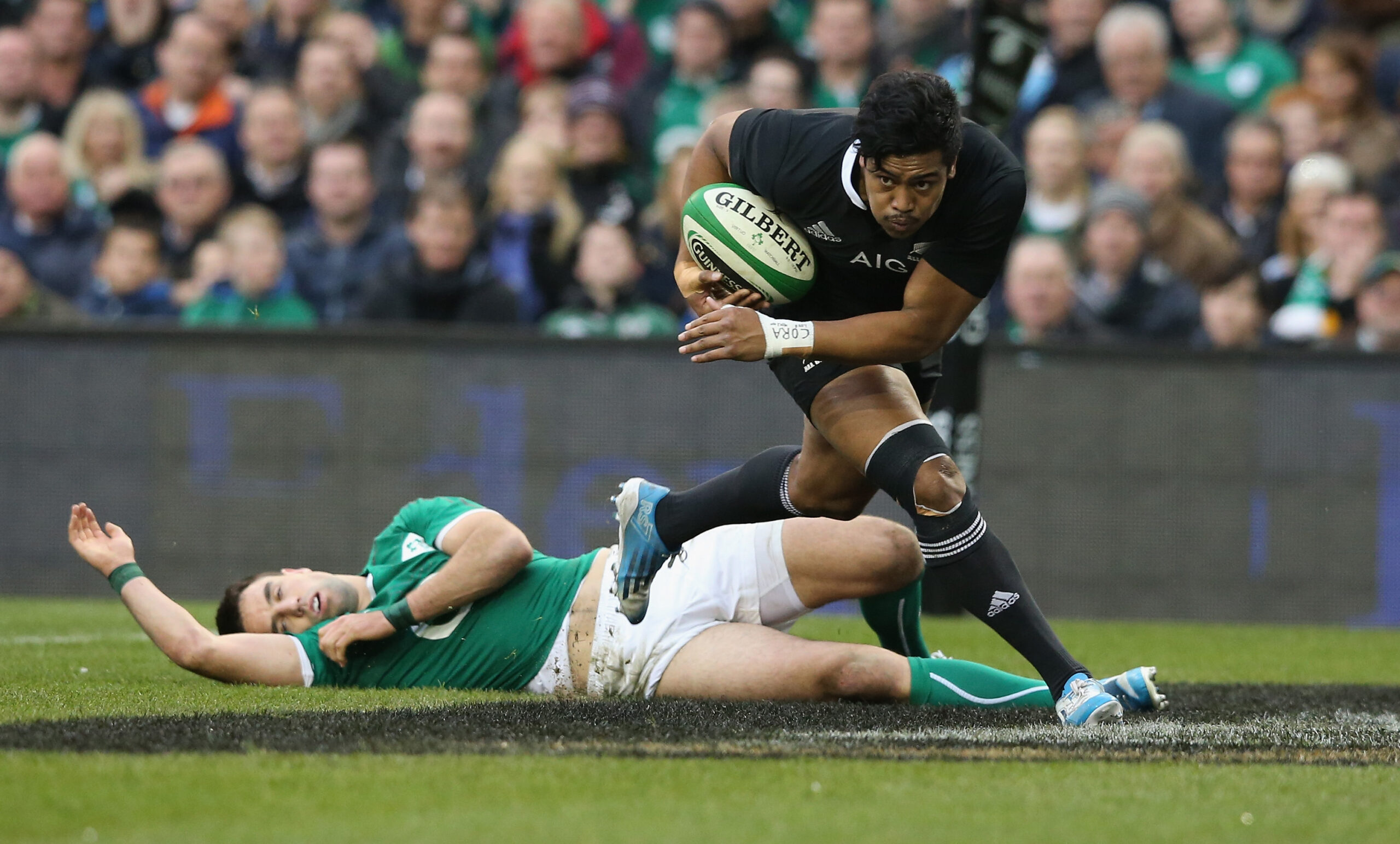
Darren Shand, the former General Manager of the New Zealand All Blacks, posed a question at a recent Leaders Virtual Roundtable: how does your plan unfold when you’re not there? His argument is that he should be able to visit at hear, see and feel your plan in action. However, that can only be the case is everyone is bought in and, as he explained, clarity and alignment are not the same thing:
If we’ve got clarity without belief, we’ve just got compliance. We’ve just got people doing what they think they need to do. But if we’ve got clarity with belief, we’ve got a much deeper commitment to whatever that plan is… The more we could create things together, the better we were… it forced us as management to make the plan even simpler because we had to fit with their way of thinking and their way of being rather than ours.
Read the full report here.
(Photo by David Rogers/Getty Images)
Good to know:
Were you aware that McDonald’s tried to introduce ‘McSpaghetti’ in Italy in the late 1980s?
They held back because, when they put it on the menu, no one ordered it. The idea failed but it was a cheap failure. McDonald’s’ approach in this instance certainly compares favourably with Google’s expensive first-generation Glass product.
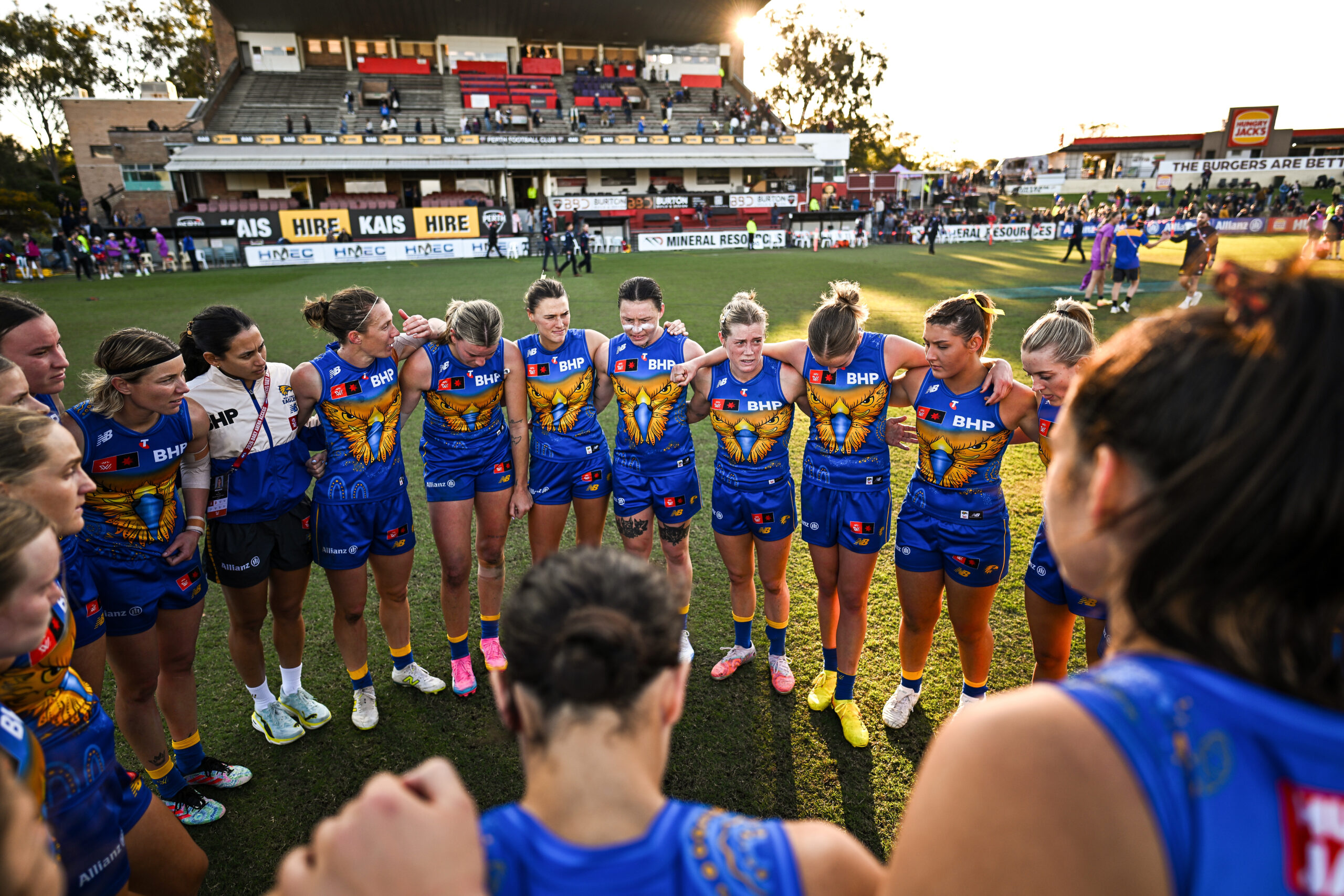
John Bull, the Head of High Performance Research at Management Futures, shared those two examples at another Virtual Roundtable that explored the idea of empowering others to solve. He said:
The key trap that we fall into is, when faced with uncertainty or sudden change, we feel pressured to come up with the answer. That is deeply misleading if we don’t know what works… A lot of us are conditioned to think of strong leadership as being linked to having the ability to give clear direction; and when you are in a time of uncertainty, if results aren’t going as you would expect or like or the expectation on you, a lot of people will look to their leaders for guidance… Faced with uncertainty, sudden change, we feel pressured to come up with the answer, but if we don’t know what works, we should move into an ‘empower to solve’ response rather than defaulting to directive leadership.
Check out the full report here.
(Photo by Daniel Carson/AFL Photos via Getty Images)
One pitfall to avoid:
What makes a good strategy? Members of the Leaders Performance Institute answered that question at another Virtual Roundtable, which you can read about here.
Here is a story one performance director shared about their organisation’s penchant for a quick measurement at the expense of long-term development:
I was in an environment where the executive team focused heavily on the number of athletes coming through the facility. The problem was that there wasn’t really a clear plan behind it and trust started to erode among the staff working closest to the athletes. What actually drove success – delivering a world-class service – wasn’t being recognised or measured in the same way. So it was a good example of how a strategy can look clear on paper but still struggle because of issues elsewhere in the system.
(Photo by David Ramos/Getty Images)
What’s coming up for members
Jen Bryant of the USOPC explains the three questions powering Team USA’s Winter Olympic resurgence.
“I do make sure to tell people they didn’t hire me in 2011,” joked Jen Bryant at June’s Leaders Sport Performance Summit in Brooklyn.
Bryant, who joined the United States Olympic and Paralympic Committee in 2019, had just been promoted to Senior Director of Summer Olympic and Paralympic Sport. Until the 2026 Milano Cortina Games, she had served as the organisation’s High Performance Director of Winter Sports.
Onstage, she discussed Team USA’s resurgence. In Italy, they finished second in the medal table with 33 medals, including 12 golds. It was the first time they had won more than ten Winter Olympic golds in a single Games.
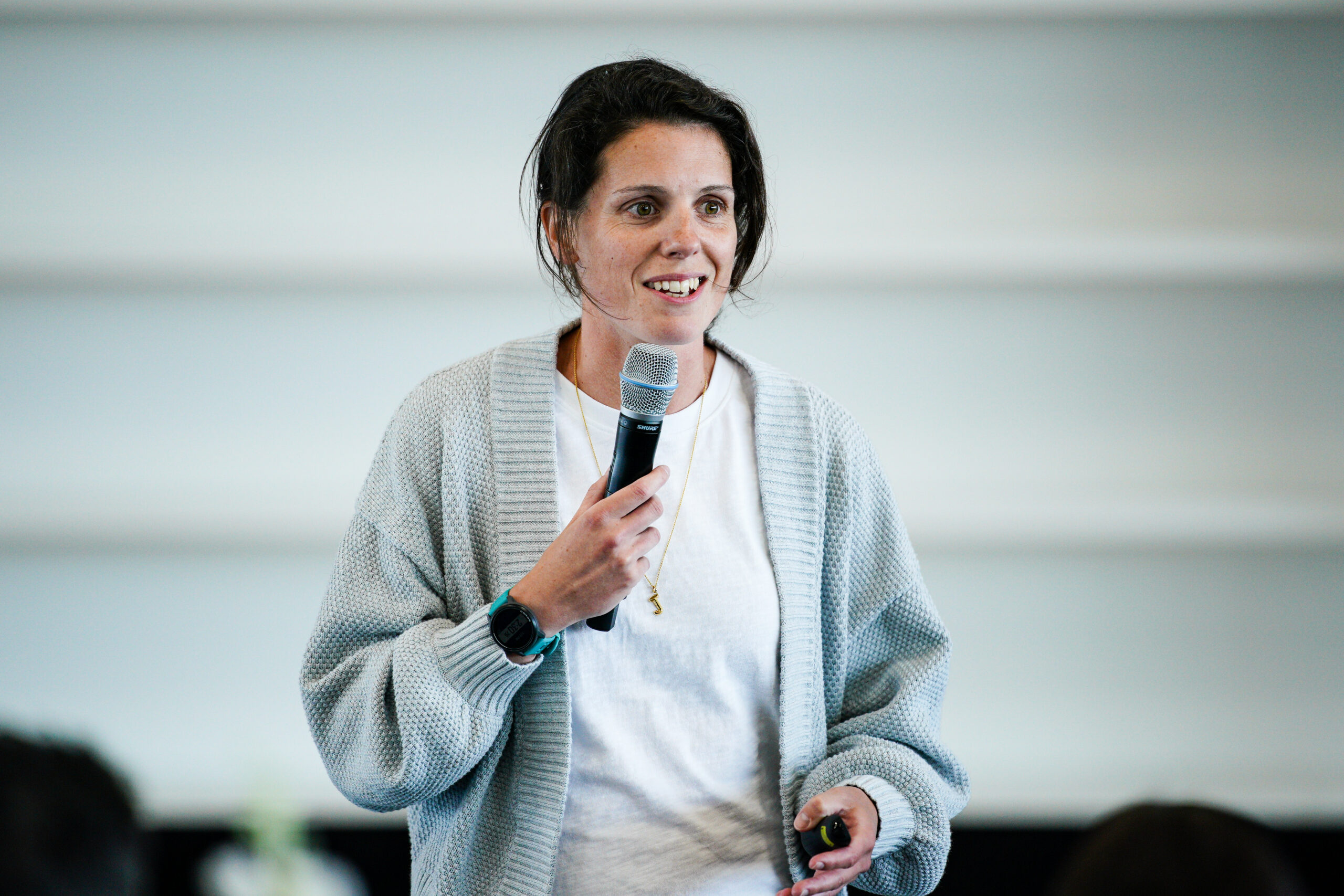
Jen Bryant onstage at Barclays Center at the 2026 Leaders Sport Performance Summit in New York. (Photo: Leaders Performance Institute / Evan Bernstein)
“Our goal is to be the best nation in the world again in 2030,” said Bryant, with the French Alps in mind, as she repeated the USOPC’s stated ambition since the reality check of Pyeongchang. Yet, as she admitted, there have been times when “it felt like we could not even spell ‘winter’.”
The US’s winter Olympic team has too often been “relying on too few athletes to win too many medals”, as Bryant put it while standing in front of an image of three-time Olympic skiing gold medallist Mikaela Shiffrin.
Bryant then explained the journey from being barely able to spell ‘winter’ to once again becoming a top three nation through three questions that guided the USOPC’s work.
“Something needed to change in the way we thought about winter sport,” said Bryant.
The USOPC needed to understand where they could improve and where it was most exposed before committing its resources. They began by asking their eight national governing bodies for winter sports to identify what Bryant called the “obvious opportunities”. She continued: “Where in the programme did we see our greatest areas of opportunity for growth? And, candidly, where did we see our biggest risks from Beijing? Where have we got deeper pipelines? Where could we look at new events?”
“We couldn’t just focus on what we were going to do at the Games,” said Bryant. Instead, the task was “building a team that was capable of going and delivering a podium-level performance”.
Bryant previously worked at the British Bobsleigh & Skeleton Association in her native UK. “They typically say Team GB is really good at all the sports you have to sit down in,” she added. “What they really mean is they’ve got a really, really strong R&D programme.”
At the Milano Cortina Games, Team USA won one of the four bobsleigh gold medals on offer. Germany claimed the other three in a repeat of their dominance in Beijing in 2022. Germany holds an advantage through its long-established engineering and research programme in sliding sports. The USOPC is working to close that gap and Bryant said the US now has some of the best sleds in the world. She also referred to regulatory changes involving carbon and ski preparation as an R&D opportunity to be exploited.
Then there was the issue of talent transfer. “We have incredible talent in this country that may not have been correctly connected with the right sport opportunities,” said Bryant. “Can we find entry points into these sports?”
She pointed to bobsledder Kaysha Love, a former collegiate sprinter who transferred into the sport and went on to become a world champion. “We focused on bringing a broader number of athletes through the pipeline.”
Training time was another issue, with athletes lacking reps and exposure to Games-like conditions. “We identified a gap in the amount of time our athletes were able to spend on snow or on ice training, and that was something we needed to remedy,” said Bryant. They upped their quota of overseas training camps. There was no other choice. “We struggle with winter sport conditions year round for obvious reasons.”
As the Games approached, Team USA concentrated on the details that might make a difference in competition.
“Spoiler alert: there’s not a lot we can do by the time we get to the Games,” said Bryant while explaining there were still areas where better preparation might help. She described a project in the luge programme that examined “steel composition, steel preparation, and how that interacts with ice.” That work helped the team understand the track conditions and adjust their equipment. There was a similar project with US Ski & Snowboard around ski and wax preparation.
The final element Bryant discussed was tailored support. As Milano Cortina was spread across six villages in three Italian regions, Team USA adapted their facilities and services to the needs of specific sports rather than applying a standardised approach. In Cortina, facilities were designed for the sliding disciplines; elsewhere, support reflected the needs of the sports based there.
What to read next
‘We’ve Lost Athletes Because of this’: When Support Descends into Surveillance
Four-time Olympic rowing champion Meghan Musnicki spent her sporting career pursuing marginal performance gains. In retirement, she is using data to improve health and longevity.
Main Image: USL

Musnicki, a graduate of Ithaca College, retired in 2024 and then sought what she called only her second “real job” in the last 15 years. Through a friend of a friend, she was introduced to Biograph, a high-tech preventative health clinic with locations in New York and San Francisco. Musnicki joined as an executive in membership development and partnerships — and also learned some critical insights about her own health. She applied those findings, improved her condition and is now training or a new challenge: Musnicki recently bought a Garmin smartwatch to train for her first marathon.
On the appeal of Biograph:
“The premise behind all of it is something that obviously really resonated with me given the commitment to living the best life you can live for as long as possible. They gave me a shot given my very limited résumé.”
On the growth of data and tech in sport:
“As you can imagine, it’s become more tech- and data-driven in the last four to six years. When I initially started — I made my first team in 2010 — compared to now, there’s all sorts of different metrics and measurements and telemetry that they hook up to the boat that analyze every specific thing. When I started, it was very much your heart rate and your perceived level of exertion.”
On what she applied to her training:
“You learn quickly as an athlete how your body operates best, and you find its limits because it’s a very specific extraction mindset [prioritizing shorter-term gain]. You pick low-hanging fruit at first. We always joke, ‘Show up every day.’ That’s the easiest way, but ‘show up every day’ stops being effective when you’re in it for five, 10, 15 years. Then you have to get more nuanced and look at more detailed, more nitty-gritty things like how’s my nutrition? How’s my recovery? As an aging woman, am I focusing on my muscle mass, my body composition? What am I optimizing in order to ensure that I have longevity in this sport?”
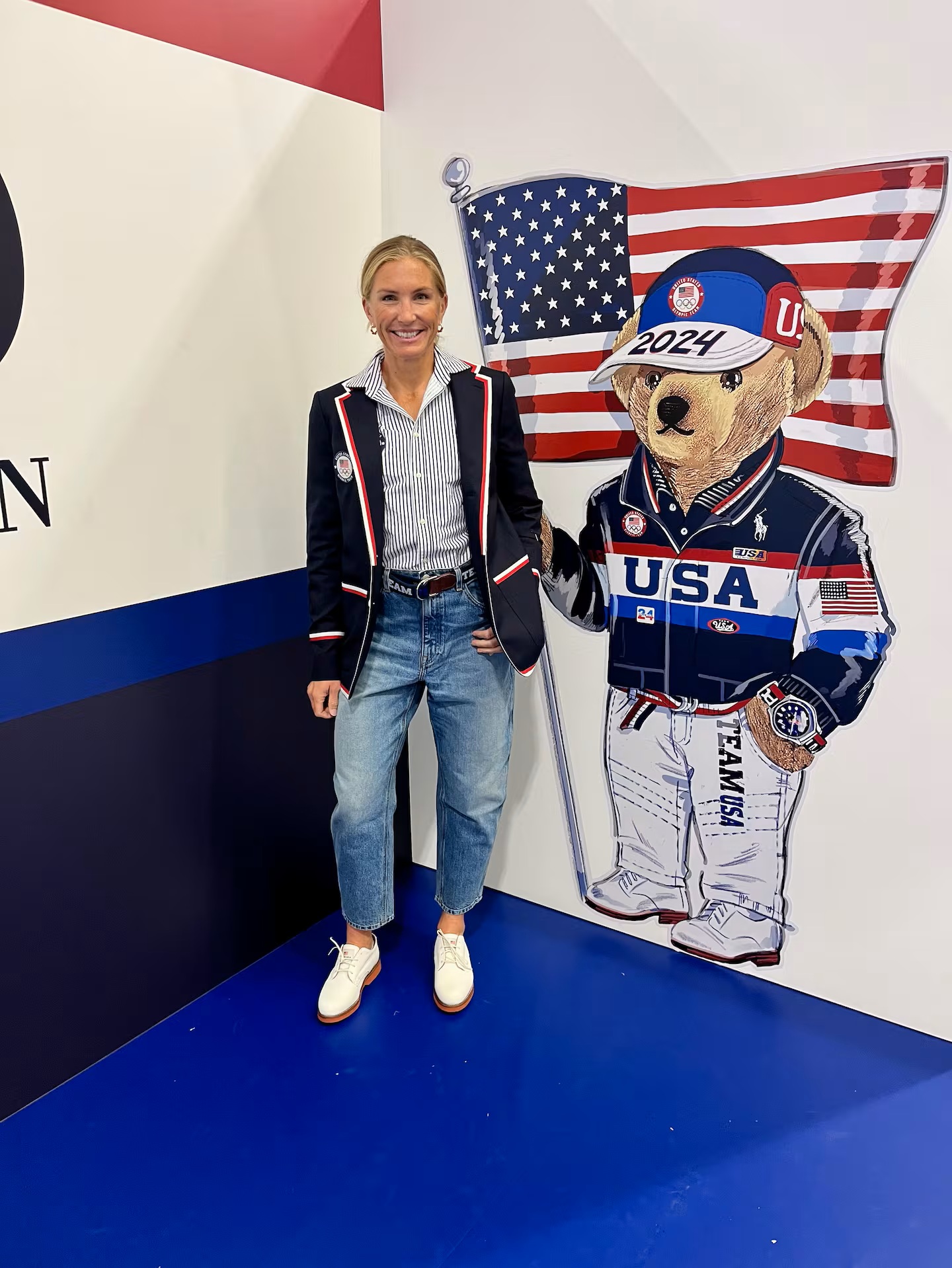
On the surprise results in her Biograph diagnostic:
“You would think that I would be like a textbook picture of health, and I thought that it wasn’t going to be terrible. And don’t get me wrong, it wasn’t terrible, but it flagged a genetic risk for cardiovascular disease, which isn’t terribly surprising: My father passed away from a sudden heart attack when he was 49 when I was a freshman in college. And lo and behold, I have high Lp(a), a genetic predisposition to developing cardiovascular disease.”
“It just makes you pause because no one would look at me and be like, ‘Oh, she for sure has high cholesterol.’ It just goes to show you that if you dig a little bit deeper than surface level, there’s all sorts of things that could be hiding or lurking underneath that you don’t know about. It could be a little scary, but I think of it as more empowering. I empower myself with the knowledge of like, okay, this is my reality. And now what choices am I going to make to address and deal with that?”
On how she applied the findings:
“When I think about Biograph, the value for me wasn’t just discovering that I had the issue. It was having people that could interpret the information and give me tangible things to do to begin to move the needle. More data isn’t always better. It’s what you do with it. I lowered in six months my Lp(a) by 25, 30 points. I lowered my cholesterol by 30. And this was just lifestyle changes. Obviously I could have gone on a statin, that’s one of the options, but they work with you. And I was like, ‘I don’t really want to go on a statin right away. I want to see how I can do it otherwise with more lifestyle interventions.’ And so I worked with the dietician, the exercise physiologist, and it worked for me.”
On how she’s transitioned out of rowing:
“A lot of it is shifting away from more specific training, again, in thinking of that extraction and thinking more long-term. So as an aging woman, I really focus on making sure I’m doing heavy lifting to preserve my muscle mass and my bone density. I keep up my Zone 2 cardio, which has never been an issue for me given that I’m an endurance athlete. More importantly for me, I have to do a lot of sprint work. I do a lot of jump and plyometric training for my bone density and my explosive power. And then, probably not as much as I should, but I’m still a work in progress mobility and making it so when I get up in the morning, it’s not the Tin Man for too long.”
This article was brought to you by SBJ Tech, a Leaders Group company. As a Leaders Performance Institute member, you are able to enjoy exclusive access to SBJ Tech content in the field of athletic performance.
We bring you five insights from Seth Meyers, the Brooklyn Nets, USOPC, US Air Force and Juilliard School – all of whom spoke at the Leaders Sport Performance Summit in New York.
The renowned leadership specialist was speaking just moments before she introduced Seth Meyers to the stage at June’s Leaders Sport Performance Summit at the Barclays Center in Brooklyn, New York City.
Meyers, a comedian, broadcaster and producer, instantly built on the theme, with his tales of watching the likes of Will Ferrell, Kristen Wiig, and Jason Sudeikis produce sketches that died a death during read-through sessions (and all too often live onstage) at Saturday Night Live.
“Watching them succeed is something you can do,” he said, “but watching them fail at the table was the real education.”
Meyers made clear his admiration for the writers and producers of SNL who, as he said, “have seen and heard more sketches than anyone in the history of the world”. “It was a reminder of how hard comedy was,” he added. “To fail at this does not mean you’re not funny.”
Crucially, Meyers and his peers failed in what were ultimately safe spaces. They were all the better – and all the funnier – for it.
And it was not just Meyers’ musings. Across both days, we heard from leaders in high-performance environments as diverse as the US Air Force, Juilliard School and the Brooklyn Nets, who lent us their home for two days. Together they delivered insights on how leaders can cultivate environments in which people fail cheaply, learn quickly and perform sustainably.
Below is a selection of five insights that paint a picture of proceedings.
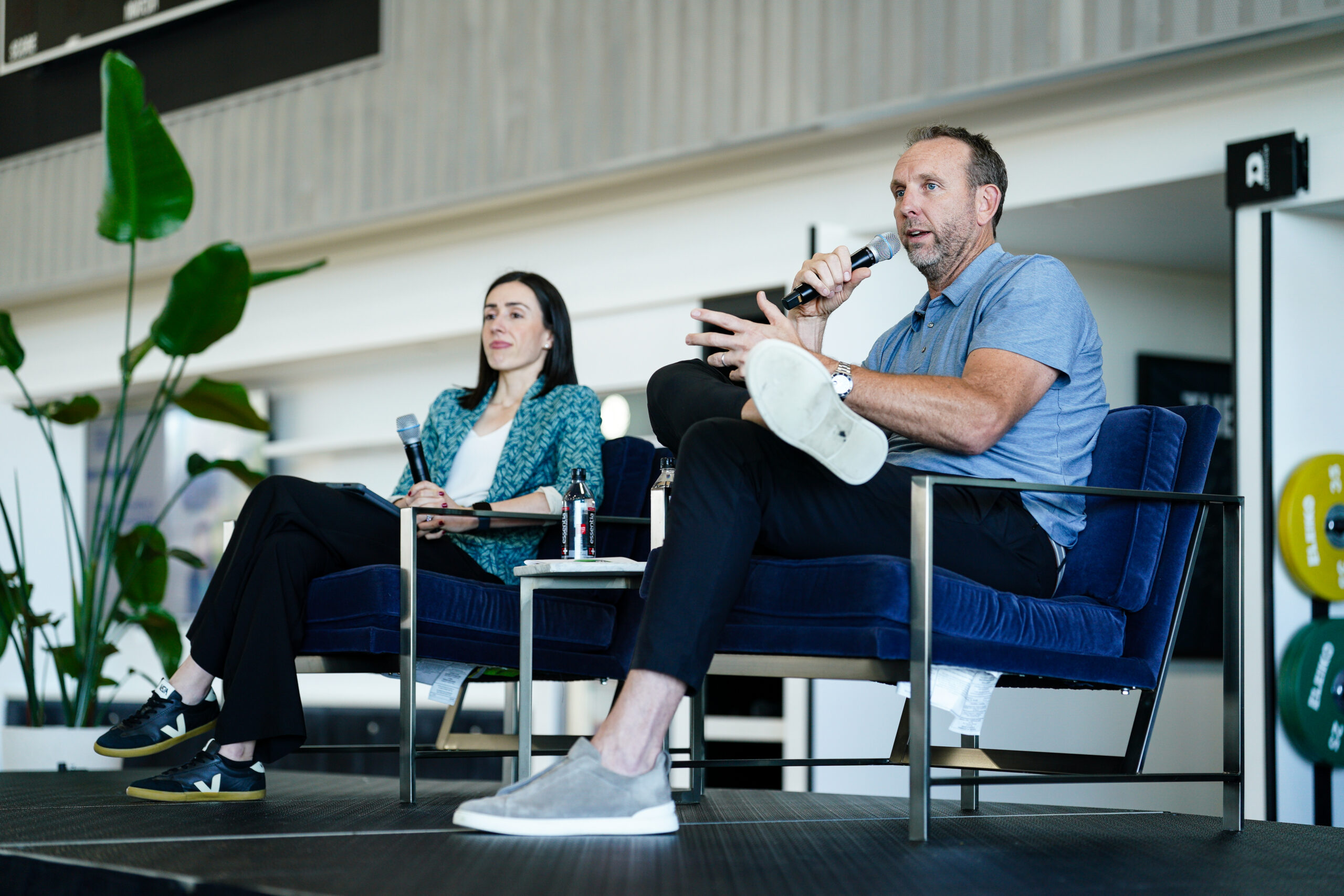
The Brooklyn Nets have been on an exciting trajectory since the arrival of Sean Marks as General Manager in 2016. His tenure began with a question: “What are we going to stand for?” Marks believed that the Nets needed an identity that meant more than mere wins or losses and he landed upon ‘Brooklyn grit’ – a system of behaviours that extended beyond one, single individual. “It’s really important that you take the responsibility to drive a culture that everybody can observe,” he said.
Marks and the Nets have continually hired the best people, regardless of their professional background. A quick roll call of their staff would reveal people with experience in fields as diverse as soccer, baseball, finance and, of course, basketball. Each is given the platform to perform. He said:
If you give people the opportunity, you empower them to speak up, you empower them that they do have a voice, they’re motivated far more than a group that isn’t empowered to have a voice.
Brooklyn Nets General Manager Sean Marks in coversation with host Holly Ransom. Photo: Leaders Performance Institute / Evan Bernstein
Across both days, listening emerged as an important performance tool. Whether building an NBA franchise, leading a writers’ room or cultivating future performers, the speakers repeatedly stressed that leaders who genuinely listen create environments where trust, challenge and innovation can flourish.
Marks for one said:
I want a diverse train of thought [and] if I’m going to hang my hat on hiring the very, very best, shame on me if I don’t listen to them.
Similarly, Seth Meyers’ beliefs have been shaped by his time in improvisational comedy as well as his time as a talk show host. He said:
One of the first rules with improvising is you have to be a listener. You can’t build something with a person if you’re just thinking about what you’re saying when you’re talking… and don’t ask questions you’re not actually curious about the answers to.
Seth Meyers on a different New York stage. Photo: Leaders Performance Institute / Evan Bernstein
So what actually happened when a sketch died during SNL read-throughs? What would Meyers do? What if the sketch actually died onstage?
“You have to shake it off,” he said. “You can learn lessons from things that don’t go well, but you can’t bring it with you to your next week’s effort.”
As one of the longest-serving head writers in SNL history, Meyers was responsible for managing exceptionally talented people operating under intense deadlines and, if writers carried every disappointment into the next week, their performance would deteriorate. The key was to try ambitious ideas, accept that many would fail, then learn quickly and move on.
Meyers was echoed by Evan Yionoulis, the Director of the Juilliard’s Drama Division. “If we’re worried about fear, we have to foster an environment where you can be brave,” she said. She tells her students:
‘I believe in you, I brought you into the school. You’re going to graduate, and I’m going to take you all the way there, and I’m going to be patient… I’m not judging you, good or bad’. I’m going ‘what’s the next step to take it further? What’s the next step to take it deeper?’
Evan Yianoulis of the Juilliard School. Photo: Leaders Performance Institute / Evan Bernstein
Dr Wendy Walsh is the Chief Learning Officer for the US Air Force, a role in which she oversees education for approximately 700,000 personnel. Her work goes beyond training to the creation of conditions that enable learning across a sprawling, complex system. She argues that high-performance environments are “complex adaptive systems made up of continuously changing people, relationships and influences. She argued that learning starts from observation:
It’s the most important thing that we do is to be present with each other… I might not agree with you, but it’s a requirement for me to understand a different person’s perspective, because that will reveal more possibilities.
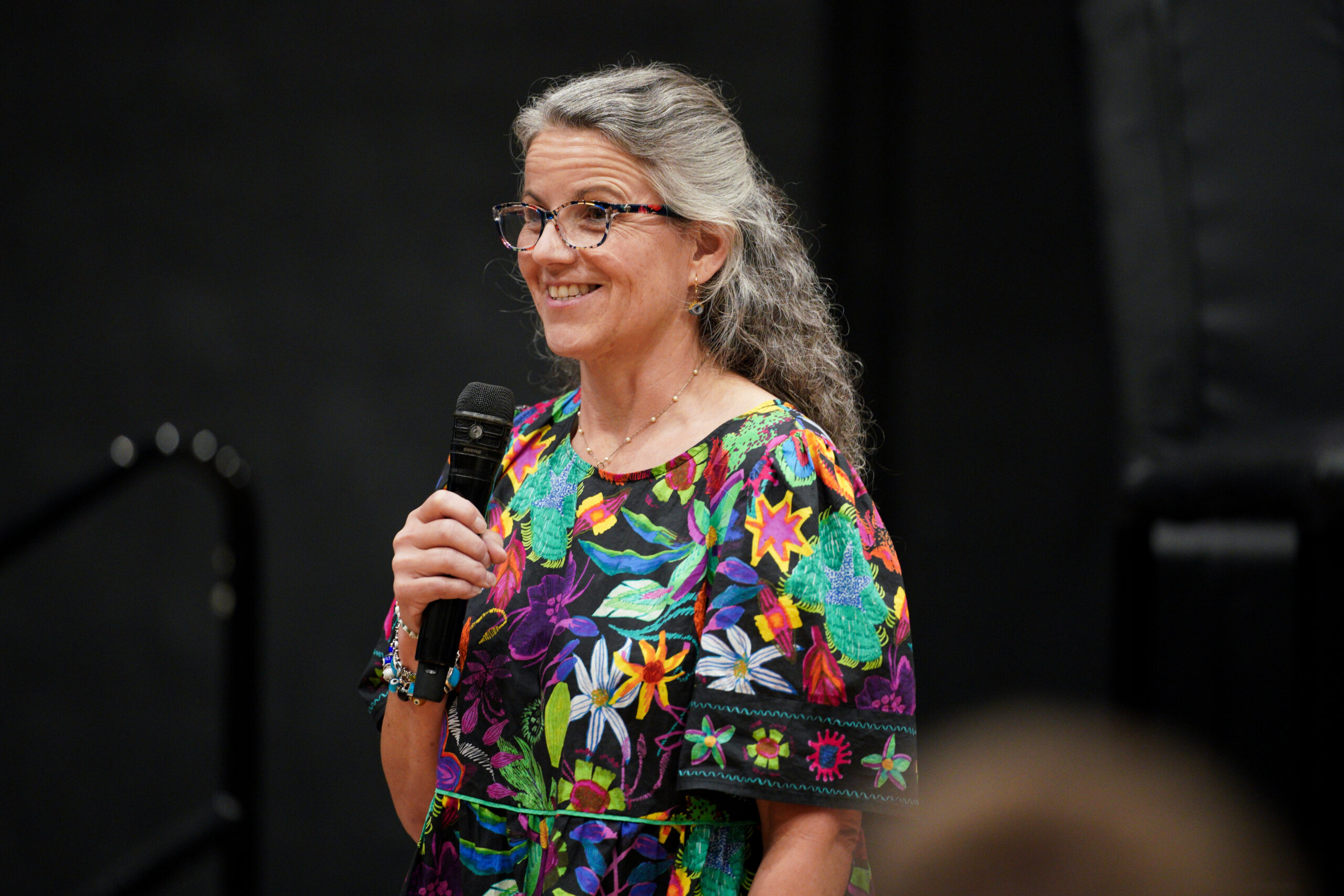
Dr Wendy Walsh, the Chief Learning Officer of the US Air Force. Photo: Leaders Performance Institute / Evan Bernstein
Walsh was joined onstage by Andrea Tullos, who explained why the US Air Force pivoted from focusing on factors such as strength, endurance and swimming ability in recruitment. Ultimately, they were alarmed by the numbers of recruits dropping out. They shifted the focus to factors such as resilience, learning agility, tolerance for discomfort and motivation. Tullos said:
We need to know who they are before we understand what they can do… [and] it’s not about assigning blame. It’s about understanding how to get up tomorrow to do it all over again as a team and get better.
Andrea Tullos, former lieutenant general in the US Air Force and Founder and CEO of Outperform IQ. Photo: Leaders Performance Institute / Evan Bernstein
Team USA finished second in both the 2026 Milano Cortina Winter Olympic medals table (behind Norway) and Paralympics medals table (behind China). The United States Olympic and Paralympic Committee wants to be No 1 in both tables in 2030, which means creating the conditions that make future medals possible.
Jen Bryant, the USOPC’s Senior Director of Olympic and Paralympic Performance, told the audience of her organisation’s continuing efforts towards meeting their target. She said:
We couldn’t just focus on what we were going to do at the Games [Milano Cortina]. We needed to spend time building a team that was capable of going and delivering a podium-level performance… We focused on bringing a broader number of athletes through the pipeline… [we asked also ourselves] How are we keeping athletes in sport and then the opportunities to bring new athletes into Olympic sport?
Jen Bryant, the USOPC’s Senior Director of Olympic and Paralympic Performance. Photo: Leaders Performance Institute / Evan Bernstein
What to read next
With a little help from Saya Sakakibara, Ellyse Perry and Anna Meares, we reflect on what enables better execution in the moment.
High-performance specialist Rachel Vickery made this very point at a Leaders Virtual Roundtable in early 2026 when she discussed the science behind a missed free throw in basketball or a simple putt on the eighteenth green in golf.
“Typically, the cause has less to do with what’s happening in the arena and a lot more to do with what’s happening everywhere else,” said Vickery, who helps teams in the worlds of sport, business and the military perform under pressure.
She explained that pressure is a daily accumulation that adds to a person’s allostatic load, which is the cumulative ‘stacking’ of stressors over time that erode the amount of physiological ‘space’ an athlete has between their current arousal level and their personal stress threshold. Vickery refers to this space as their “buffer”.
“We know from the environments that we work in that pressure is actually the constant,” she continued, “but it’s the physiological stress response that is often the variable.”
The stressors in question can be personal (e.g. a lack of sleep), organisational (e.g. misalignment), performance-based (e.g. being outside your comfort zone), or physiological (e.g. reduced ability to hear or absorb information).
Crucially, “as long as your arousal state stays below your threshold, your negative performance will not show up.”
At Leaders Meet: Australia in February, we invited three champion performers to the stage with a view to interrogating how they found their A games under pressure.
The trio in question were Olympic BMX gold medallist Saya Sakakibara; Ellyse Perry, who is widely regarded as one of the greatest female cricket players of all time (she is also a former Australian soccer international); and two-time Olympic track cycling champion (and Paris 2024 Australian Olympic Chef de Mission) Anna Meares.
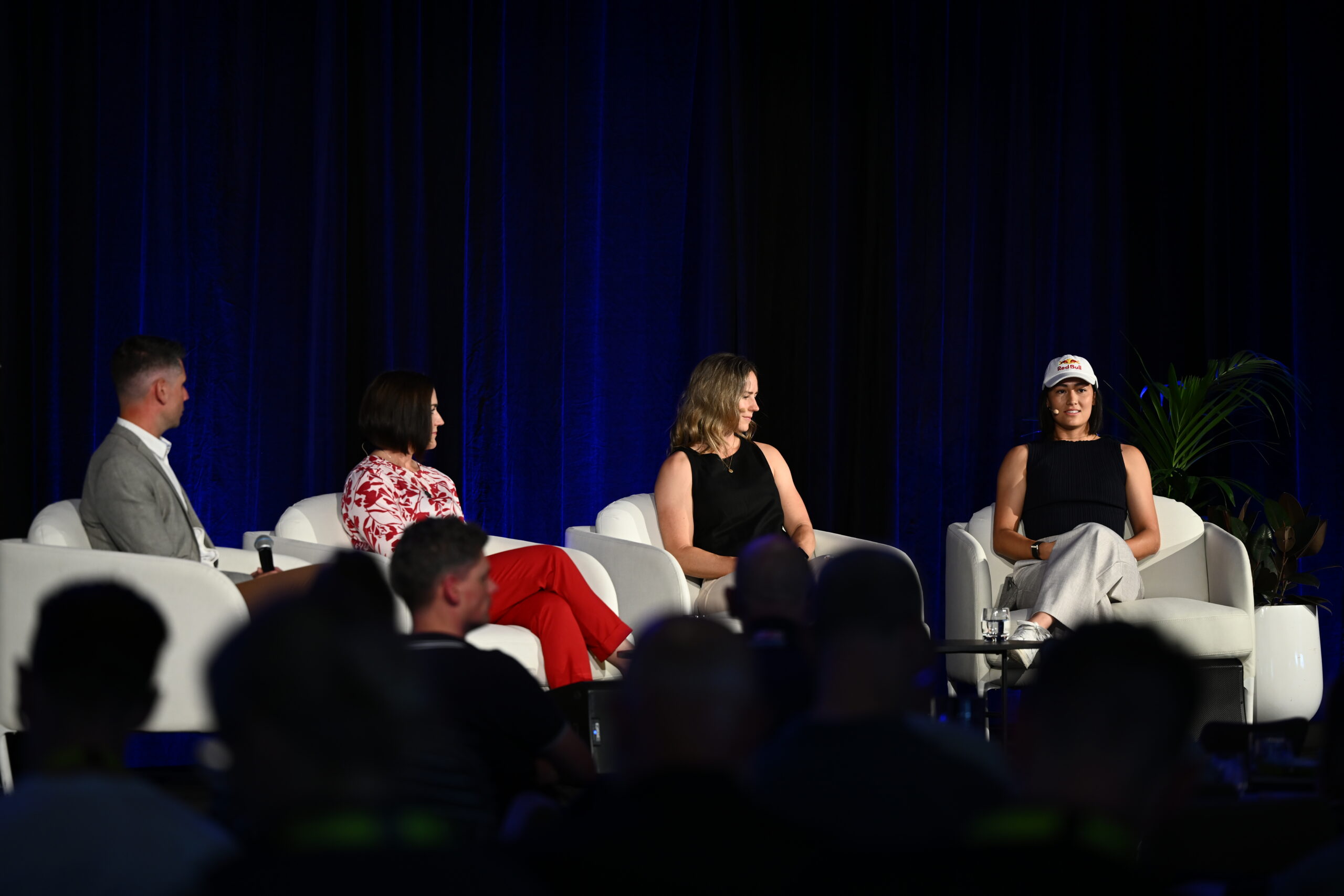
(Left to right) Moderator Fabio Serpiello with Anna Meares, Ellyse Perry and Saya Sakakibara onstage at Leaders Meet: Australia (Photo: Albert Perez / Leaders Performance Institute).
Below, they tackle the topic from a systemic and cultural perspective.
1. Preparation that frees up mental space
Saya Sakakibara crashed out of her BMX semi-final at the delayed 2020 Tokyo Olympics, but the experience set her on the path to gold at Paris 2024.
“Tokyo was my first time racing at an Olympic level,” she said. “I had absolutely no idea what to expect. I think in hindsight I was very underprepared and I was out of touch with my race routine.”
This realisation would make all the difference in Paris where she interpreted the track conditions better than her opponents. In preparation, Sakakibara visited the Vélodrome de Saint-Quentin-en-Yvelines two months before the Games to learn the “ins and outs” of the track, as she put it.
“I also took my GoPro and put it on my head and I did a race run, like a full lap, so I could take that video with me and went home and used it as a tool to really visualise the race,” she continued. She also filmed her walk up the hill to the track. “I was able to rehearse the things I’m saying as I’m walking up the hill. There was a telegraph pole halfway up to the start hill; and I was like, ‘every time I look at that telegraph pole, I’m going to tell myself to smile and I’m so grateful to be here’. I rehearsed that over and over.”
Her preparation enabled her to stay present. “Usually if you don’t have a system in place or if you haven’t rehearsed something, you go into panic mode and you act on emotion and not logic. So having those little things like smiling at the telegraph poll or making sure I’m saying like, ‘just fucking go’ or whatever it was.”
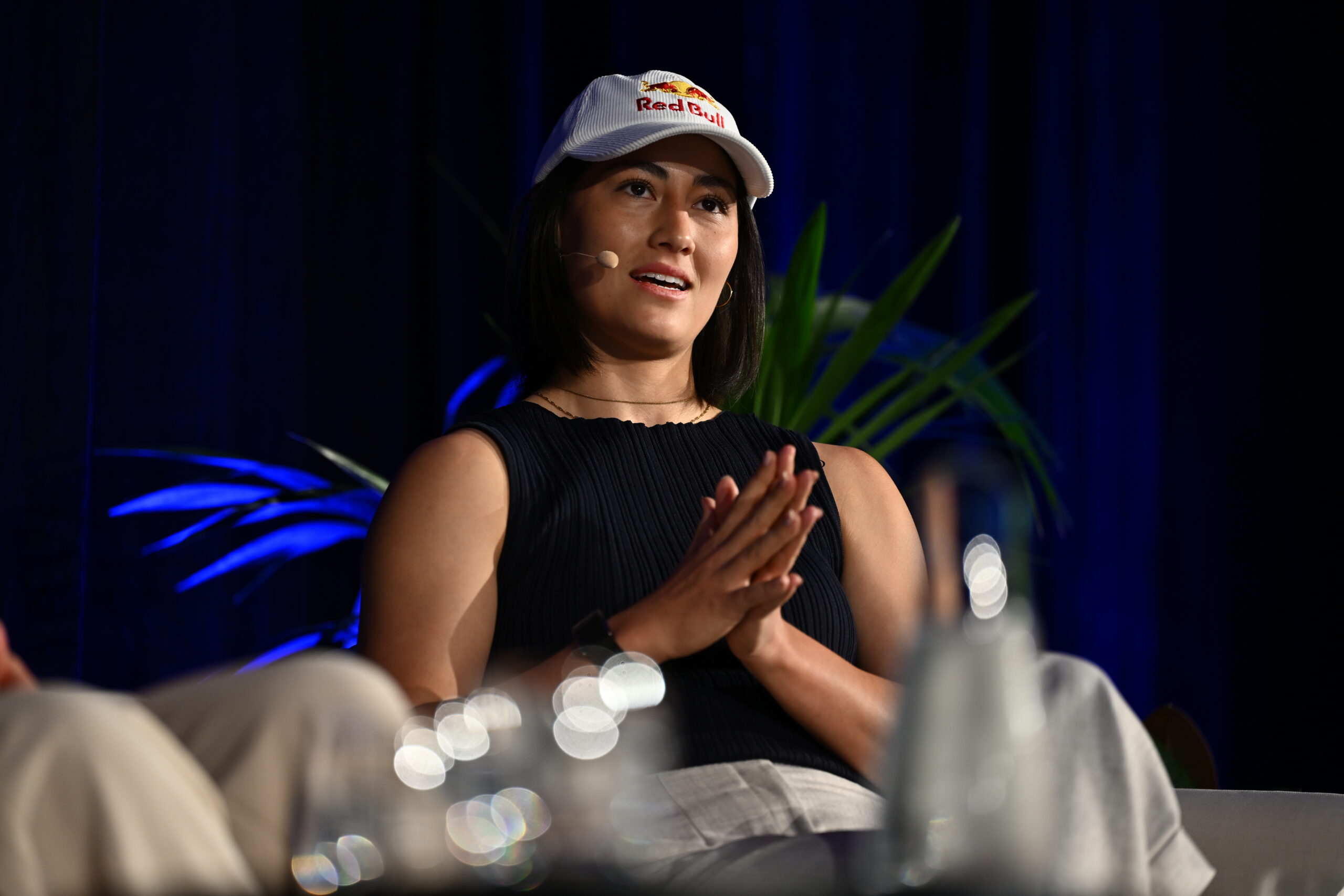
Saya Sakakibara (Photo: Albert Perez / Leaders Performance Institute).
2. Consistent leadership
The trust Sakakibara could place in her process helped her in more vulnerable moments too. “I still struggle with self-belief,” she told the audience. “I really don’t think all high performers have this unshakable belief that they’re going to win all the time.”
Consistency in leadership – vision, purpose, goals – is just as critical, as Ellyse Perry explained. “I think the way that that’s done with clarity and hopefully with some calmness over a long period of time is what really makes a difference,” she said.
It is something that has benefited Perry and Australia, who won the ICC Women’s T20 World Cup at Lord’s last weekend (5 July) for the seventh time in ten editions. The tournament was very much in Perry’s sights when she spoke in Brisbane; and Australia’s renewal is something Head Coach Shelley Nitschke has discussed on the Leaders stage in the recent past.
“People know what they get, they’re not guessing today how you’re going to respond to something, what the outcome is going to be.”
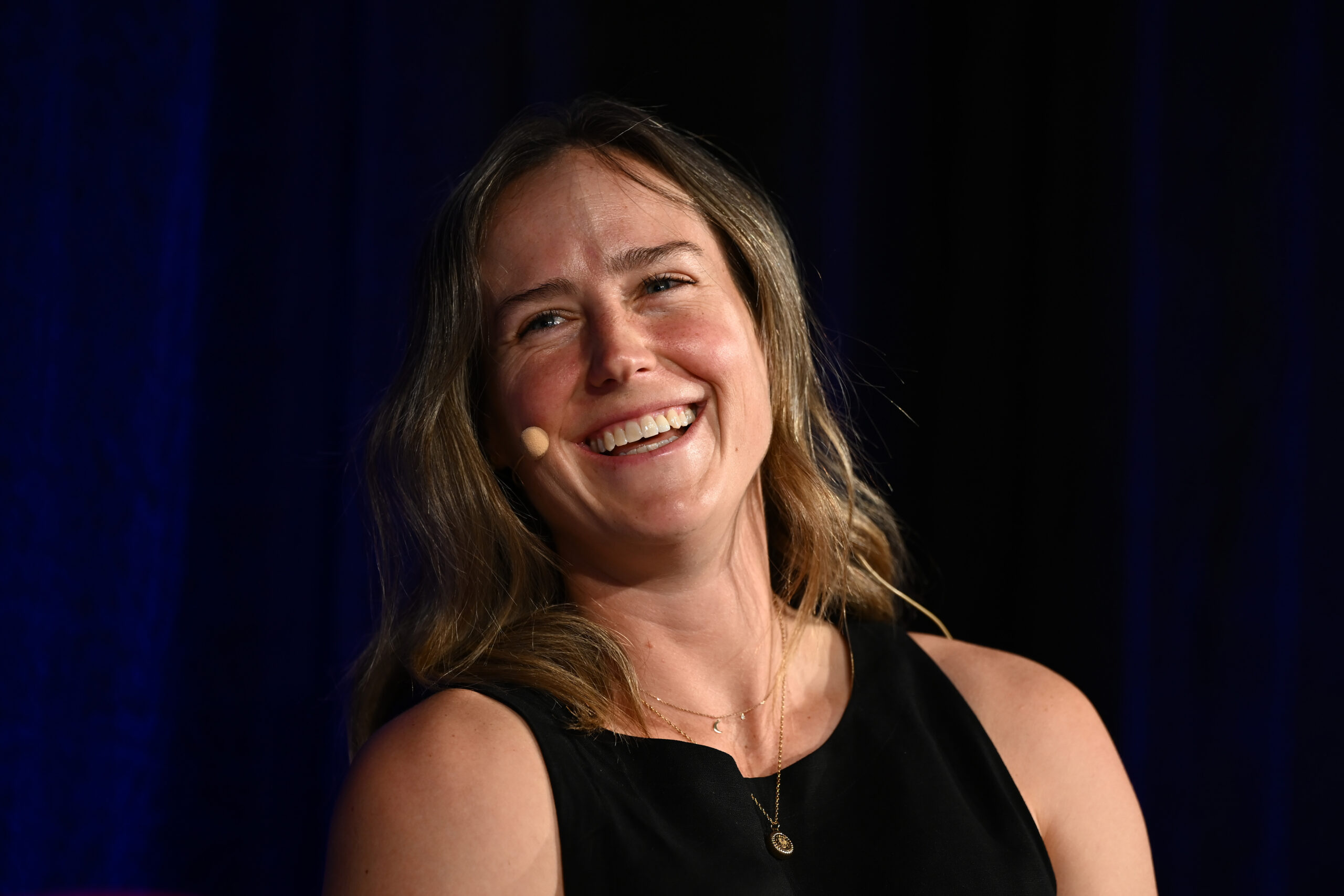
Ellyse Perry (Photo: Albert Perez / Leaders Performance Institute).
3. Safe learning environments
Anna Meares, who overcame the challenge of home favourite Victoria Pendleton in the sprint cycling event at the 2012 London Olympics, spoke of using less prestigious competitions to hone her performance in the build-up to those Games.
“I needed to understand Vicky better in order to make myself competitive in that environment with her and feel capable of surviving,” said Meares, who then described her work with her coach. “We went through a very long and tedious process of breaking down old habits, old skillsets; doing everything wrong deliberately and then going through a very frustrating process of learning new skillsets; starting to put myself in environments where I could trust those skillsets.
“I remember we went to a World Cup competition and my coach would not let me race not confident in the front, not confident in the back; but these were where he gave me the scope to make the wrong decision under pressure.”
It takes away any fixation on the process. “What that then does is it teaches you that this was not the right decision to make in that situation. Next time I’m there, I’m going to make a different decision. It slowly starts to change the pathway that you can create, but also the trust in making that up.”
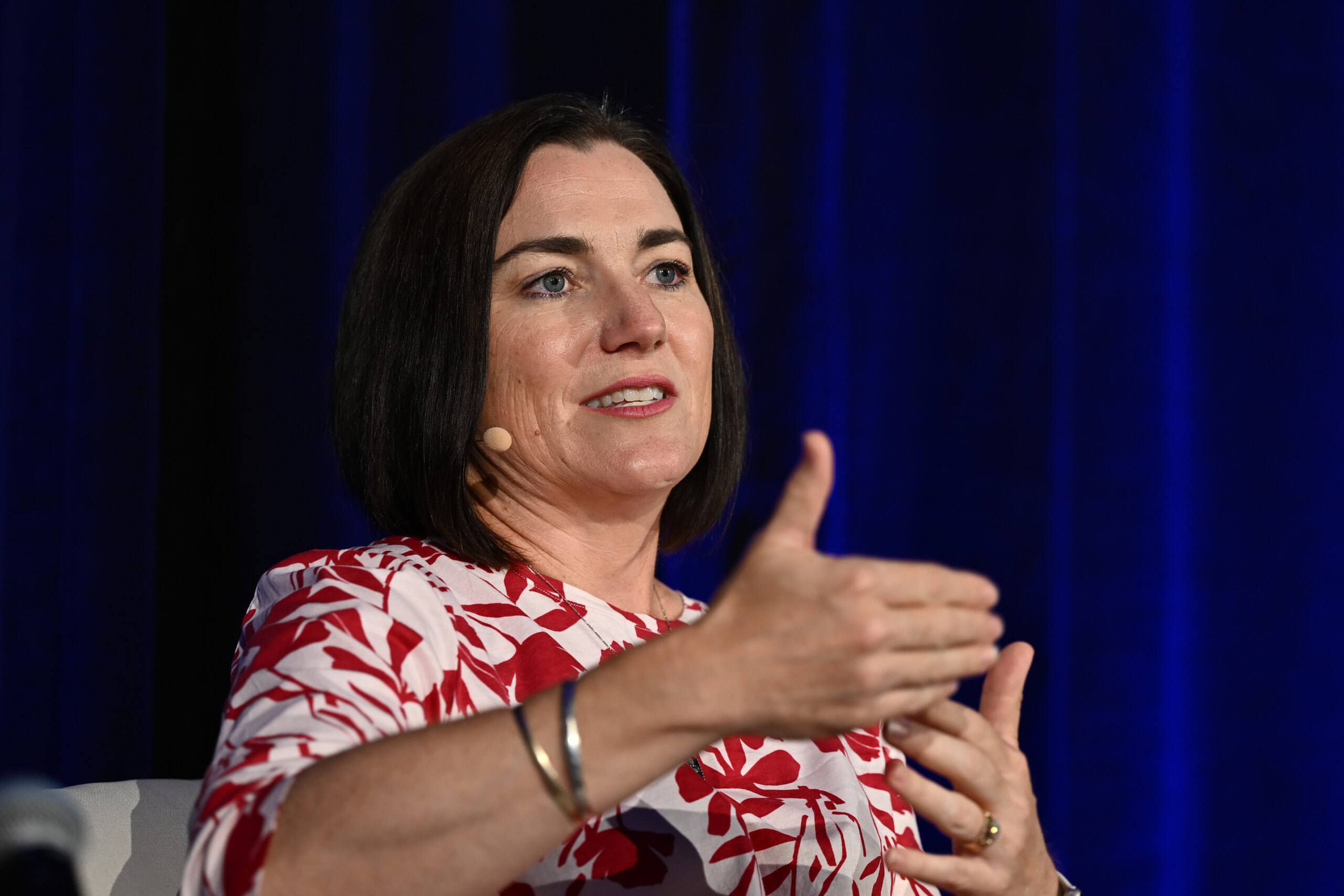
Anna Meares (Photo: Albert Perez / Leaders Performance Institute).
4. Repetition and mastery
“When I was at the top of the start hill in Paris, I felt the most ready I’ve ever been,” said Sakakibara.
Meares then reflected on her own experience and went some way to explaining why efforts such as hers or Sakakibara’s look so ‘easy’ from the outside.
“Your intuition or your autopilot comes from the work that you have done,” said Meares. The best systems and environments reduce panic, uncertainty and cognitive overload so that people can read the situation, trust their preparation and make better decisions.
“The mental preparation is just as important in order to get out of your own way, in order for the intuition to lead the way.”
In other words, the best systems or processes enable better judgement in the heat of the moment. “I rehearsed all those things so when it came to crunch time, it was just like, ‘yeah, I know what to do’.”
What to read next
Pressure Doesn’t Make you Better – it Reveals what’s Already There
We bring you five factors to consider as discussed at Leaders Meet: the Art of Strategy this year by guests including Michael Bourne of the Lawn Tennis Association, Olympic gold medallist Tabby Stoecker and the UK Ministry of Defence’s Aneaka Reay-Kemp.
Main Image: Robert Obreja / Leaders Performance Institute
“In order to build the right bridge, you need to understand those two things.”
Bourne, the Performance Director at the Lawn Tennis Association [LTA], was the first to speak at Leaders Meet: the Art of Strategy, which took place at Lord’s Cricket Ground in London in late March.
Members of the Leaders Performance Institute travelled from far and wide for a day that challenged assumptions and provoked some of the sharpest minds in the sports industry to rethink how strategies emerge in high-performance environments.
Bourne was joined on the bill by Milano Cortina mixed skeleton gold medallist, Tabby Stoecker, and speakers from organisations including the Football Association, luxury retailer Selfridges, and the UK Ministry of Defence. Together, they explored how strategies are built, stress-tested and executed by the best in the business.
Below is a snapshot of the day’s proceedings; five fresh insights to help strengthen your own planning and execution.
1. A strategy starts with a brutally honest discussion
Bourne joined the LTA in 2018, when they were two years into their ten-year performance strategy designed to tackle the lack of players coming through the British tennis system.
Yes, Andy Murray had won three majors in recent memory, but the sense was that this was “despite the system, not because of it”.
“In essence, between 2016 and 2017, the organisation undertook a diagnosis of the situation,” said Bourne, “and they came up with a number of different issues”.
This diagnosis, which included a lack of coherent pathways, limited programmes for talent ID, and resources spread too thinly, enabled the LTA to have a long, hard look at itself without pointing fingers at individuals. It lowered stakeholder defensiveness and provided the foundations for what they needed to do next.
Bourne was not present for the diagnosis, but he was recruited shortly after to ensure the LTA adopted the right approach and a coordinated set of actions. But they could not jump ahead. As he said:
I believe that you have to have that first element of the diagnosis and your guiding policy right first.
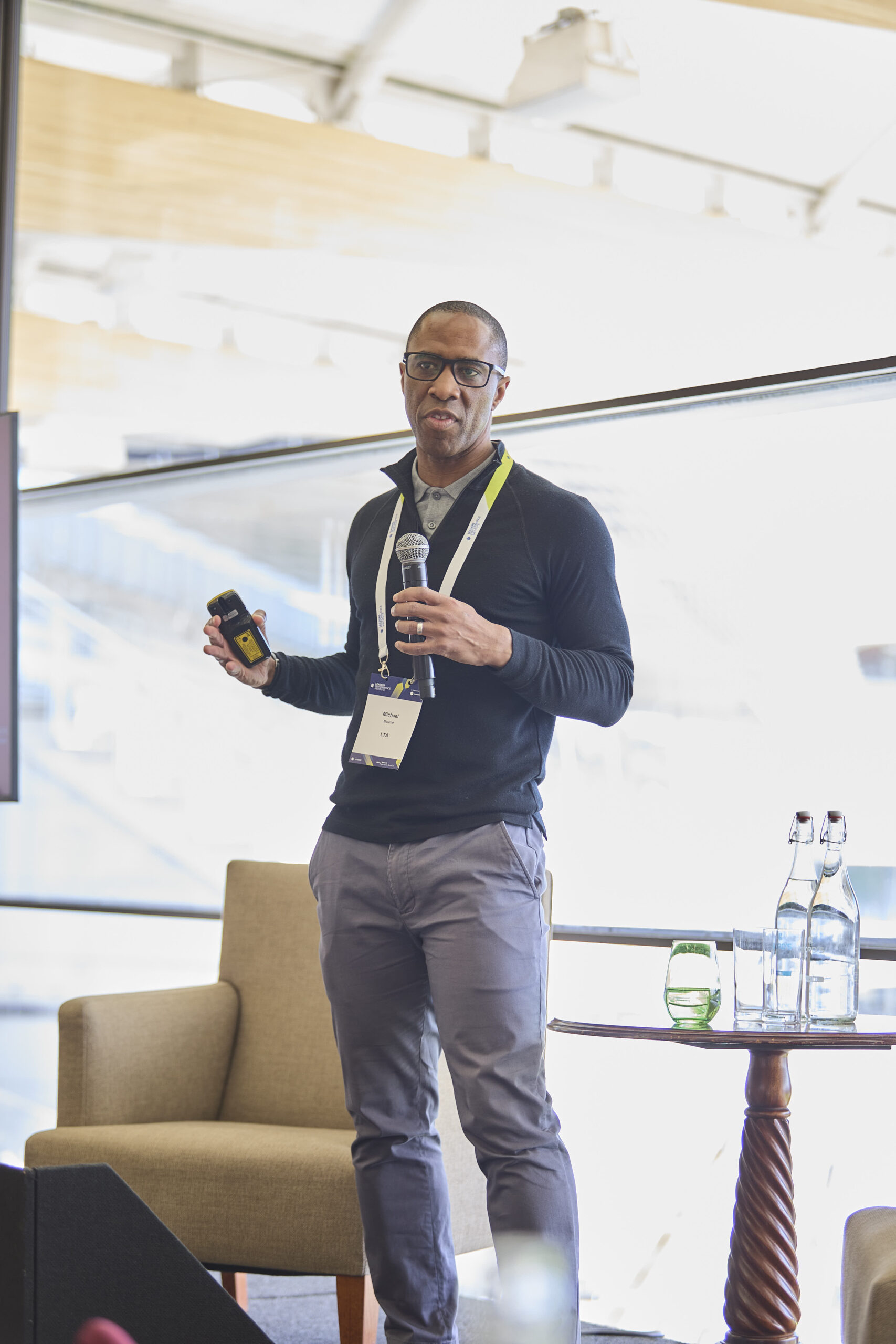
Michael Bourne, Performance Director at the Lawn Tennis Association, spoke first and set out the hard truths confronting British Tennis back in the mid-2010s. Image: Robert Obreja / Leaders Performance Institute
2. Your strategy must be co-created
At luxury retailer Selfridges, Head of DEI, Recruitment & Onboarding, Sharlene John, faced the challenge of trying to tie her work to commercial outcomes while challenging the idea that DEI is “fluffy” and irrelevant.
The result was Selfridges’ award-winning DEI and culture strategy Open to the World. On John’s watch (she joined Selfridges in 2021), female leadership within the organisation has grown from 32% to almost 70%; Selfridges is also an industry leader in ethnic representation.
Open to the World flourished because of John’s efforts to ensure it was a co-created initiative from the start. She said:
Before we even put pen to paper, it was going out and speaking to my teams, but also my leaders, to understand what does DEI or culture mean to you? And where there was that missing voice, it was bringing people into the room. So not just relying on those senior leaders where we don’t have representation, it was ‘OK, we’ll go down a layer’… I was talking to people across our business with a headcount of around three and a half thousand… We’ve got stores in Manchester, Birmingham, a tech suite in Leicester, and then the flagship in London. I went to every site speaking to people from grade 2, which is our junior role, up to our grade 7, which is exec positions, to understand what Open to the World actually means to them.
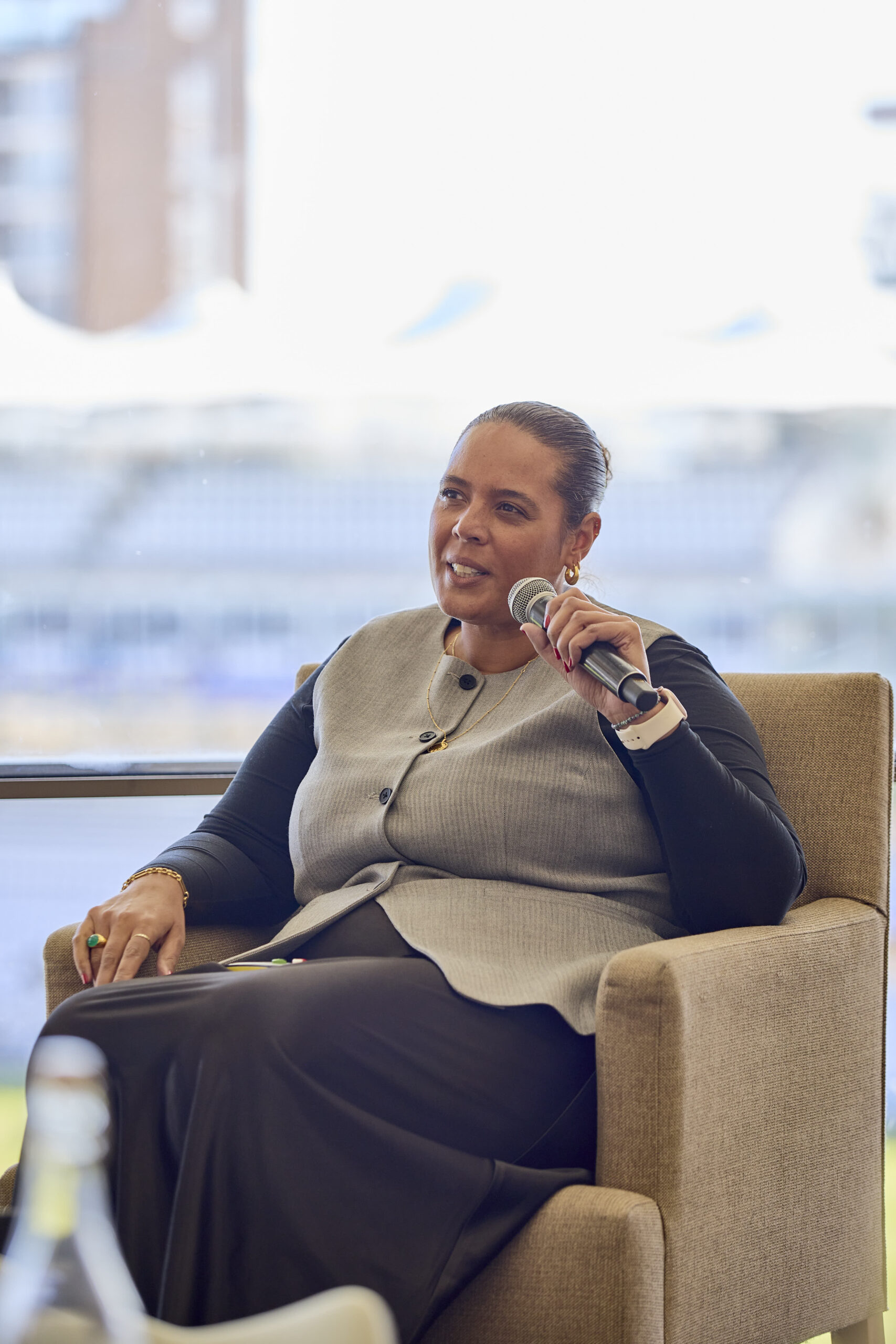
Sharlene John, the Head of DEI, Recruitment & Onboarding at Selfridges, describes her organisation’s award-winning Open to the World inclusion programme, which was built by a plurality of stakeholders. Image: Robert Obreja / Leaders Performance Institute
3. Evaluation (and re-evaluation) is continuous
“If you don’t get it right when you’re there in the moment, doing a review process at the end is worthless.”
So said Paul Ford, the former Head of Sport at the British Olympic Association [BOA] who recently joined English Championship side Norwich City as Performance Director. He spoke alongside Tabby Stoecker, the mixed team skeleton gold medallist at the Milano Cortina Games alongside her teammate Matt Weston.
When it comes to in-the-moment tweaks, Ford has a point. The BOA must work with national governing bodies, coaches and athletes continuously throughout a four-year cycle. “It’s making sure that we are doing it hand in hand with our sports as frequently as possible,” Ford added.
A macro ‘plan-do-review’ alone is not adequate. Of competition time itself, he said:
It’s on a daily cycle during delivery mode at a Games. [We ask] what are you planning for this day? What are we doing this day? How has this day gone? Because if you don’t make the most of that experience in the moment, it’s not going to happen for another four years.
Stoecker benefited from this approach, as demonstrated by her success. She said:
There wasn’t just the review of that specific race, but also ‘what are you taking from this that you’re going to change or carry forward for three years’ time, two years’ time, six months’ time?’… you can get quite swept up in what you’re doing and you have these extreme highs and lows. So I think staying focused, and when you’re then doing that and being so process-driven, the results just come.

British Olympic gold medallist Tabby Stoecker is deep in conversation with Paul Ford, the former Head of Sport at the British Olympic Association, as they discuss Team GB’s strategic approach to Olympic cycles and, more specifically, Stoecker’s path to gold in the mixed skeleton at the Milano Cortina Games. Image: Robert Obreja / Leaders Performance Institute
4. Be ready to act on incomplete information
You and your team may enjoy clarity and alignment of purpose, but optimal operating conditions are likely to be elusive whatever your efforts.
With this in mind, Aneaka Reay-Kemp, the Lead Military Intelligence Specialist at the UK Ministry of Defence, told the audience how British military operations are primed to perform when personnel do not have even 60% of the desired information. They are trained, as she said, to be “comfortable being uncomfortable”.
Rank, she argued, has limited bearing. In fact, the British military has taken steps to reduce the influence of its own hierarchies in moments of uncertainty. She said:
It doesn’t matter what’s on that person’s chest, it doesn’t matter their background, they still bring value no matter how junior they are. So for me, I find that when you’re operating in an environment where you don’t have all the information, understanding your people, understanding their capability, what they bring to the party can help save someone’s life.

Aneaka Reay-Kemp, the Lead Military Intelligence Specialist at the UK Ministry of Defence (centre), in conversation with moderator Iain Brunnschweiler (left) and Football Association Head of Strategic Development & Operations, Paul Cleal (right) as she explained what it takes for military personnel to act with incomplete information. Image: Robert Obreja / Leaders Performance Institute
5. What are you ready to discard?
New initiatives, new processes and new ways of thinking are great, but what are you prepared to discard?
“One of the things about strategy is making choices,” says Paul Cleal, who spoke alongside Reay-Kemp in his capacity as Head of Strategic Development & Operations at the Football Association. “If you’re trying to change something, it almost always involves stopping doing something else.”
However, as he has experienced, this is often easier said than done. “If things involve stopping doing something for the new thing you need, a lot of organisations struggle with that.”
Evidence, he explained, is critical in making those choices:
When I walked in three years ago, my job was not to throw things in the bin and do them differently. It was to ask: is what we’re doing now meeting the strategic aims and to what extent do we need to get closer to our strategic aims and what is it we can change?
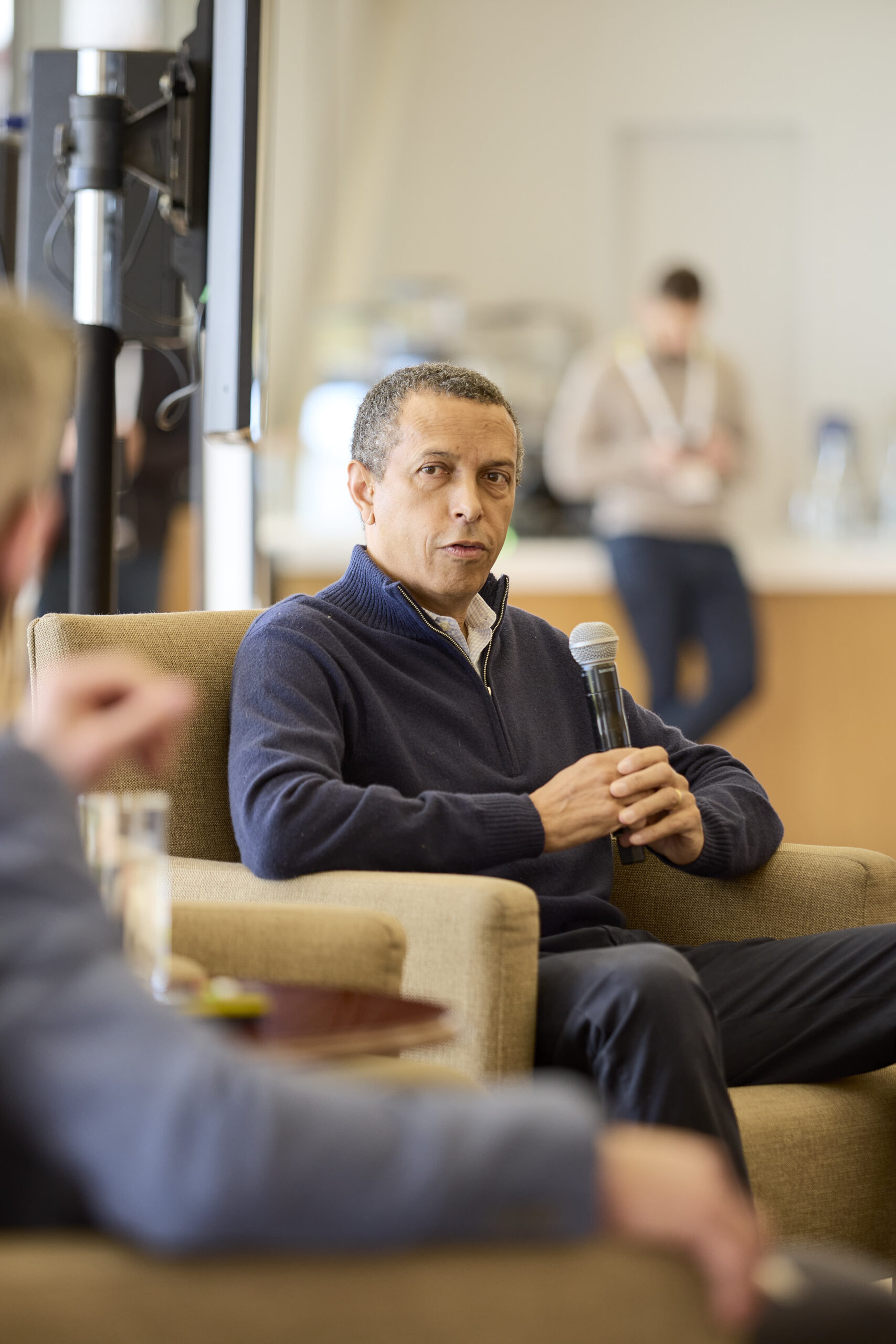
Paul Cleal, the Head of Strategic Development & Operations at the Football Association, explains why it’s important to discard programmes and processes when they no longer serve the collective. Image: Robert Obreja / Leaders Performance Institute
See you at the Sport Performance Summit in New York?
Here are a selection of best practice tips from members of the Leaders Performance Institute.
Former US President Dwight D Eisenhower wrote that line in a letter to a US diplomat in 1950 and repeated the sentiment throughout his eight years in the White House.
The line was quoted by Patrick Mannix, the Sports Science Senior Manager at US Soccer, at a presentation to Leaders Performance Institute members in 2025.
“The idea behind this quote is that high-performance teams don’t necessarily have a static plan,” said Mannix.
“The plan is constantly evolving as new information comes to light, whether that’s in relation to the tournament that we’re playing in, the players that we’re working with, and a variety of other contexts that are relevant to the world of international soccer.”
With a considered plan, a leader can align their people and allocate their resources effectively. With a structured review process, improvements can be sustained.
That is the message at the heart of a forthcoming case study virtual roundtable hosted by Mannix’s US Soccer colleague, Teena Murray, who will speak in her capacity as the organisation’s Director of Performance and from her experience of leading performance programmes at the NBA and NHL.
Here, we foreground Murray’s presentation with a selection of five best practice insights in the realms of planning and reviewing delivered by members of the Leaders Performance Institute.
1. The VMOST framework
‘The organisations that perform most consistently are not those that plan less,’ wrote James Thomas. ‘They are those that build solid foundations, plan with intent, adapt with discipline and continue to stay rooted to the agreed values and behaviours when circumstances change.’
Thomas, the Performance Director at Warwickshire County Cricket Club, wrote these words in February.
He argued that while planning is often perceived as control, he believes it to be the opposite:
When the direction is clear, planning is decentralised. Coaches, athletes and staff can act with confidence because they understand the broader context. When strategy is absent, everything escalates upwards. Decisions slow, responsibility blurs and energy is wasted re-litigating the same conversations week after week.
Thomas then introduced business strategist Rakesh Sondhi’s VMOST (Vision, Mission, Objectives, Strategy and Tactics) framework, which ‘provides a disciplined way of connecting the big picture of the future to the daily actions, tasks and deliverables required to get there’: 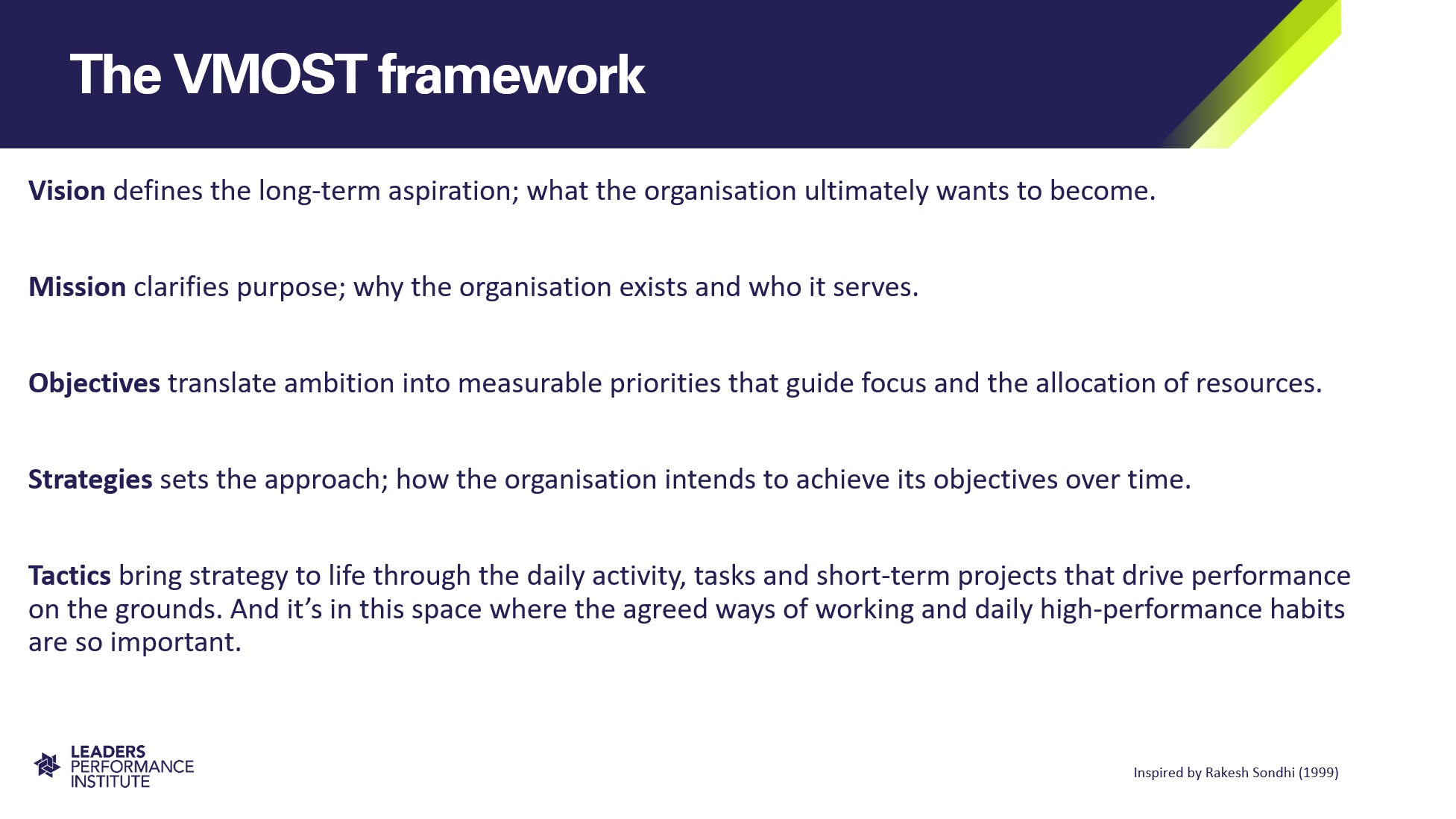
‘The power of VMOST lies in its simplicity,’ Thomas continued. ‘In high-performance environments, complexity is already high. Strategy models must reduce cognitive load, not add to it. VMOST creates line of sight. Individuals can see how their daily work connects all the way through to the long-term vision of the team and/or organisation.’
Finally, ‘when applied well, this kind of structure does not constrain creativity. It enables it. People can feel empowered to adapt, innovate and solve problems within a clear strategic frame’.
2. Find the right time for athlete education
Paul Ford, the outgoing Head of Performance at the British Olympic Association, explained in a recent article that an Olympic Games environment ‘is the worst possible place for trying to get people to peak and perform to the best of their capabilities’. He wrote:
Athletes are compacted into a brand-new village of more than 16,000 people who are all subject to a constrained competition schedule in what amounts to 52 world championships in 17 days, all in the same city.
It’s almost like they are being set up to fail when they’re expected to deliver the best performance of their lives.
The key, he argued, is tapping into the bits of the Olympic experience that build you up and not the elements that can detract from your performance. Athlete education is a critical element of the BOA’s fixed Games plan and comes in the form of discussions. ‘When to land these discussions is the next question,’ wrote Ford, before adding:
[Ahead of the 2028 Los Angeles Olympics] some sports, such as sailing and canoeing, will know their Olympians as early as September 2027; others, such as track and field, won’t select until May 2028. So the education journey we go on with the sailors and canoeists is long; we can plan out and get that right and drip feed it at the right times. Whereas the track and field athletes don’t want to hear anything about the Games because they’re not necessarily going. We must be smart in making the education bespoke and fit for purpose for each sport. Equally, some will want us to sit down and talk it through while others just want those short videos and podcasts. It’s finding out how the different cohort of athletes’ best digest information.
3. It is critical to learn from failure
In October, Everton’s Head of Sport Science, Jack Nayler, penned his thoughts on what it takes to look at a failure and ensure lessons are learned (primarily in the context of complexity in sports high-performance systems).
He shared his reflections on the late Richard Cook of the University of Chicago, specifically his treatise entitled How Complex Systems Fail.
Nayler wrote:
Around this time, I was challenged by a friend in the industry to put together my thoughts on building a performance department for a sports team. I found it challenging just to make an org chart and list positions without giving the background and rationale for why and how the department existed in that structure as well as its philosophical construct. This exercise of transferring ideas from my head on to paper forced me to critically confront my assumptions and crystallised my thoughts on how I believe we need to operate in the complex environment of elite professional team sports (specifically football as this has been my professional experience).
4. Embed review mechanisms
Mannix and his colleagues at US Soccer continually face the club vs country balance. In his aforementioned presentation, he spoke of the process that takes place when American players report for international duty.
“Building rapport and trust with those clubs is massively important because that helps us drive a lot of the exchange of information,” he said. “We need to know when our equipment and staff are arriving and where our players are coming from.”
Some may be in better shape than others, which underlines the need to review ahead of a session. Mannix said:
When a coach is trying to build out the session plan, the right hand is a good sports scientist or a performance coach, and the left hand is the first assistant, and those three individuals are working very closely to ensure that there’s a good plan in place for every training session. There’s good understanding as to what the availability of the players is going to be, particularly in the first two days of training, because what we’ve found through communication with clubs is we sometimes have to be flexible when players are coming into our environment simply because although Europe observes FIFA windows, we have to work with our partners in MLS on when players are released to come and join our environment.
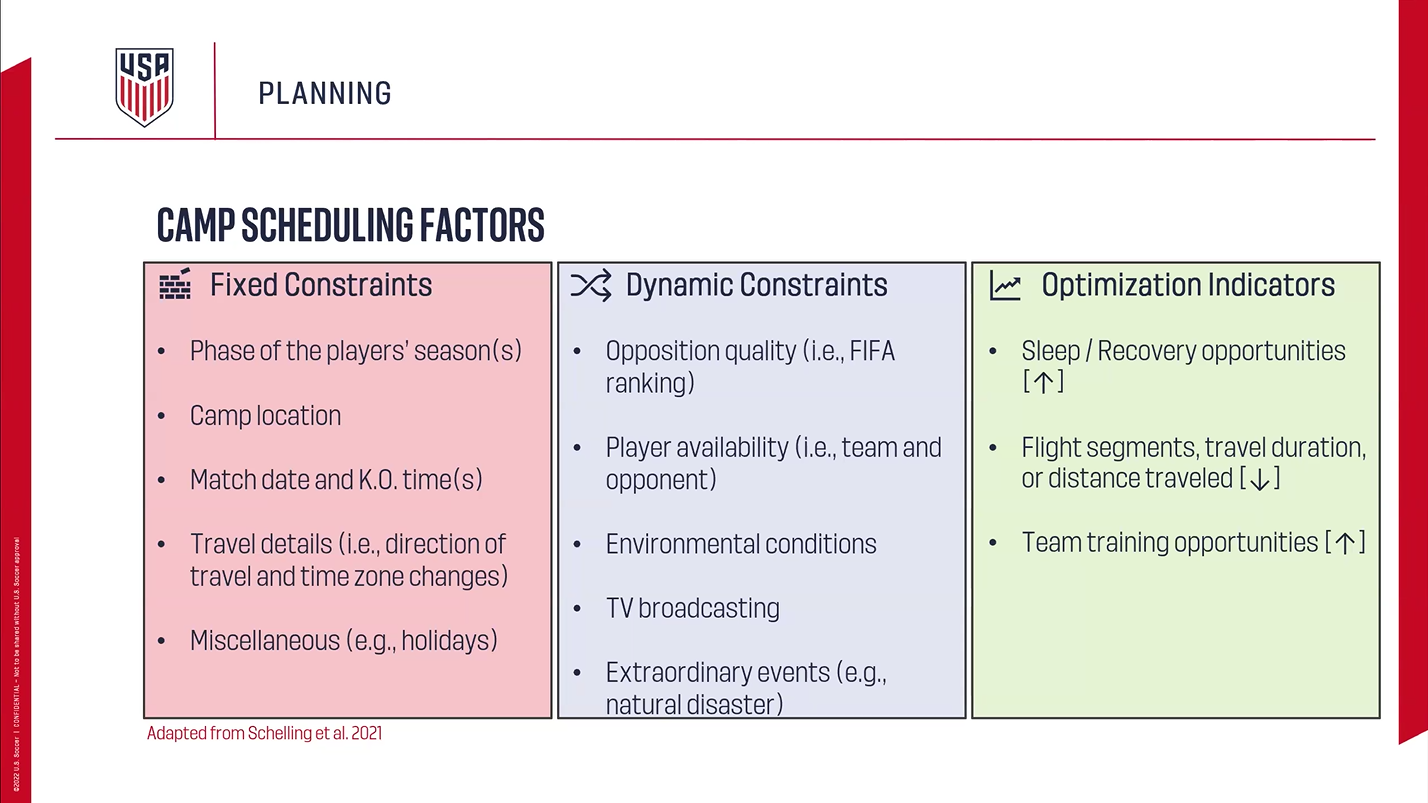
Mannix and his colleagues understand the range of fixed and dynamic constraints they face. They use that understanding to find ‘optimization indicators’:
5. Pursue collaborative planning where possible
Where can you pool your resources with others for the collective good?
In 2024, the UK Sports Institute, US Olympic and Paralympic Committee, Australian Institute of Sport and High Performance Sport New Zealand formed the Global Alliance, which enables them to share sports science research and best practice when it comes to their female athletes.
The Global Alliance is a case study in what can be achieved in time and resource-limited environments when organisations collaborate in areas with little impact on competition itself (they still want to beat each other).
The Alliance’s main objectives, as explained on a Leaders Community Call in November 2024, include…
Additional reporting by Sarah Evans, Rachel Woodland and Lottie Wright.
Owl AI’s software would have flipped the gold and silver medalists at the women’s slopestyle in Milano Cortina.
Main Image: AFP via Getty Images
The women’s snowboard slopestyle finish prompted immediate criticism for the judges who awarded Japan’s Mari Fukada the gold (with a score of 87.83) and New Zealand’s Zoi Sadowski-Synnott (87.48) the silver — with notable reactions from NBC analyst Todd Richards and others.
The frustration focused on the inconsistency of scoring on jumps — specifically Fukada’s high scoring on the 720s (two full rotations) in her routine, while Sadowski-Synnott’s attempted more difficult 1080s (three full rotations) as part of her set. And it hit the exact reason why Bloom founded the tech startup to begin with — and in this case, the difference between silver and gold after a rejudging from Owl.
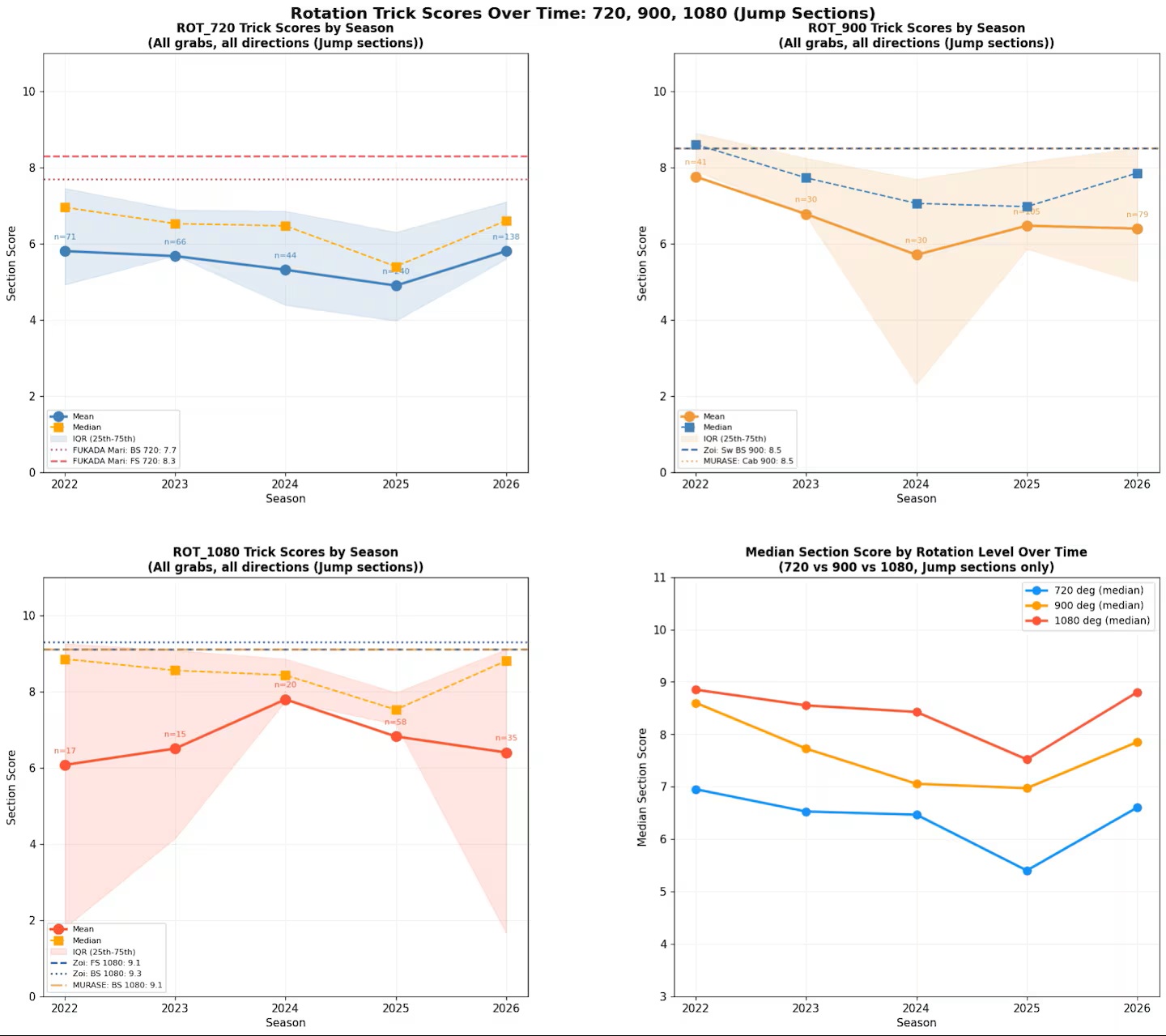
This graph shows the data sets utilized by Owl AI to determine that the women’s snowboard slopestyle at the Milano Cortina Games should have likely flipped the gold and silver finishes for the event. (Graphic used courtesy of Owl AI.)
“I don’t think much needs to be said about how important these moments are for the athletes,” Bloom told SBJ. “They’ve worked their entire lives to just make an Olympic team, let alone put down the best run and either miss the podium or have the wrong color medal for whatever reason.”
To check the medal finish, Owl AI created a data set to look back at the past five years of judging for both 720s and 1080s. What it discovered: The two scores Fukada earned in Milan Cortina on her 720s (7.7 and 8.3, respectively) stood out drastically. The scores on Sadowski-Synnott’s 1080s were also near the peak of scoring for the moves but still very in line historically with the judging from which Owl pulled.
Owl rejudging still slates Kokomo Murase as the bronze winner. But it flipped the finishes of Fukada (with an 86.67 adjusted score) and Sadowski-Synnott’s (89.13).
“This is where we really think we could augment the judges,” said Josh Gwyther, Owl AI’s CEO. “Because if you, as a judge, are putting in a score and immediately saw this deviation, you might be like, ‘Okay, let me see, Is there something there?’ And maybe notate that anomaly.”
Both Bloom and Gwyther have often shared that Owl is not meant to replace judges but to be a helpful tool to set everyone (judges, athletes, fans) up for success around an event. But because judges can vary in their experience, background, and biases, Owl becomes guardrails of context. For example, Bloom pointed out, 720s won the men’s version of this event in the 2006 Olympics. It’s no longer a cutting-edge move, which should be reflected in the score.
Because Olympic moments happen at a four-year frequency, it adds extra pressure to make these decisions as correct as possible.
“On one hand, you want to honor those who won,” said Bloom, a former world champion and two-time Olympic skier. “You want to say, listen, on this day, given this criteria, that’s your gold medal. And any sort of commentary beyond that shouldn’t sort of diminish you because that was their day.
“But at the same time, if that athlete or any athlete would agree that there’s a lot of subjectivity to these sports and everybody would like to push for a more objective world.”
This article was brought to you by SBJ Tech, a Leaders Group company. As a Leaders Performance Institute member, you are able to enjoy exclusive access to SBJ Tech content in the field of athletic performance.
In February, high performance specialists from across the sporting landscape wrote and spoke about a range of topics including performance systems, coach wellbeing and organisational alignment.
The Chinese-American star, who had just won silver medals in the slopestyle and big air at the Milano Cortina Olympics, had been asked at a press conference if she saw those medals as “silvers earned” or “golds lost”.
She chastised the journalist for his “ridiculous perspective” but her wider comments were more telling.
“How do I say this? Winning a medal at the Olympics is a life-changing experience for every athlete. Doing it five times is exponentially harder because every medal is equally hard for me, but everybody else’s expectations rise, right?” she said.
“I’m showcasing my best skiing. I’m doing things that quite literally have never been done before. So, I think that is more than good enough, but thank you.”
It called to mind the Milwaukee Bucks’ Giannis Antetokounmpo, who was similarly exasperated in a press conference when he was asked about the Bucks’ ‘failure’ upon their elimination from the 2023 NBA Playoffs.
“There’s no failure in sports,” he responded. “There’s good days, bad days, so days you are able to be successful — some days you’re not. Some days it’s your turn, some days it’s not your turn. That’s what sports is about. You don’t always win — so other people are going to win, simple as that. We’re going to come back next year, try to be better, try to build good habits, try to play better.”
Gu, it must be said, won gold in the halfpipe just days later (making it three golds and three silvers in two Olympics) but she and Antetokounmpo (who won the NBA Cup with the Bucks in 2024) hinted at how unhelpful it is to frame high performance as anything less than first place or a gold medal.
Setbacks are inevitable, but as Gu and Antetokounmpo show, athletes, coaches and programmes can choose how they meet the moment. Those that prepare smartly, with the right focus and guidance, can give themselves improved chances of success.
These ideas came up time and again at the Leaders Performance Institute in February. Here is a flavour of what was said.
Insight of the month
The Winter Olympics are on the agenda across the Performance Hub, with high-performance specialist Richard Young telling us what happens when teams stray from their mission:
As the event approached, small adjustments began to appear. Plans were refined again. Extra conversations were added. Senior leaders checked in more frequently. None of it seemed dramatic, yet the clarity that had carried them started to dilute. The athletes felt it before anyone articulated it. The system became busy, and when the moment came the performances were close but the medals did not follow.
The issue was not effort; it was the absence of a shared and protected standard. When everything feels important, the essential things lose their edge. The debrief circled around marginal gains, yet the real margin had slipped much earlier. At some point the team stopped asking whether each decision truly met gold medal quality.
Read more here.
Quote of the month
This month its Peter Hodgkinson, who wrote of his time working as Build Operations Manager for the INEOS Britannia sailing team during the 37th America’s Cup.
Given the youth and inexperience of his build team, psychological safety and intent-based leadership were the order of the day. He wrote:
Surprises are for birthdays and Christmas, in my book. I wanted this young team under pressure to speak up. I wanted them to feel that it was wrong not to say something if they were concerned about a part or a process or were having a problem. I wanted to hear what they had to say, I was desperate to hear what they were thinking, and it was important that I responded productively when they did bring me bad news.
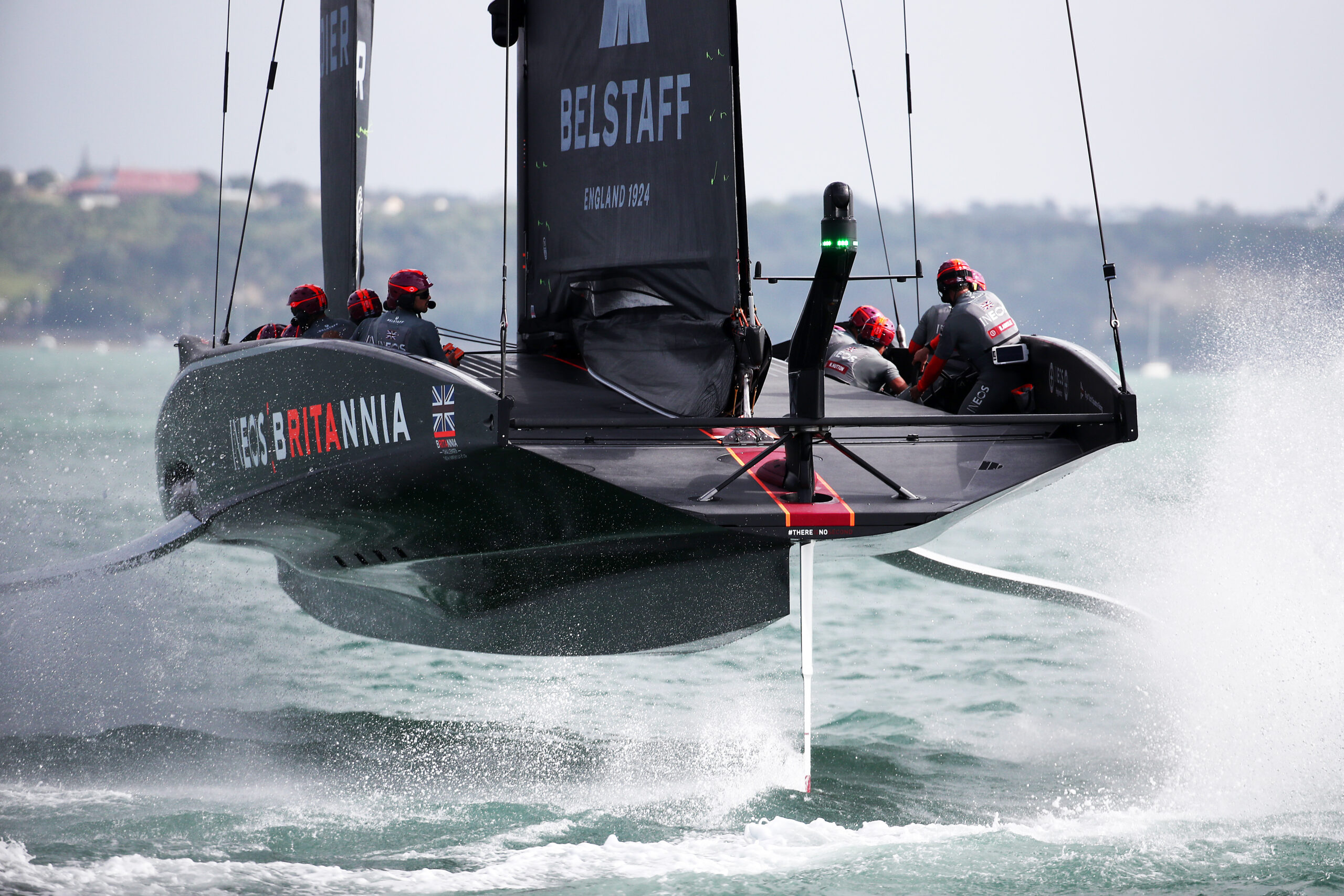
INEOS Britannia in action at the 37th America’s Cup. Photo: Getty Images/Fiona Goodall
Good to know
Pressure doesn’t make you better, but it does reveal what is already here.
That is according to high-performance specialist Rachel Vickery, who led a virtual roundtable for members looking at how they can reduce their athletes and coaches’ allostatic load – that is the cumulative ‘stacking’ of stressors over time that erode the amount of physiological ‘space’ an athlete has between their current arousal level and their personal stress threshold.
The stressors in question can be personal (e.g. a lack of sleep), organisational (e.g. misalignment), performance-based (e.g. being outside your comfort zone), or physiological (e.g. reduced ability to hear or absorb information).
Crucially, as Vickery explained, “as long as your arousal state stays below your threshold, your negative performance will not show up.”
Read more here.
Coach wellbeing
Though often neglected, members of the Leaders Performance Institute gathered to share ideas on how they can better support their coaches.
In one particular World Cup-winning environment, when athletes wanted specialist help, they were asked to book appointments. There was no 24/7 service.
This, their former manager explained, not only developed the self-reliance of the players, but also served to protect coaches and staff members who were all too ready to put themselves out, whether for out-of-hours appointments or “2am emails”.
Read more here.
Aussie rules
In early February we welcomed many of you to Brisbane for Leaders Meet: Australia, where organisations including the Brisbane Lions, Cricket Australia and World Rugby tackled the challenges of the day.
Chief amongst those was the ever-pressing need for alignment.
The Lions’ Senior Coach Chris Fagan favoured strong relationships with senior management; Australian all-rounder Ellyse Perry espoused the value of psychological safety in cricket; and World Rugby Chair Brett Robinson, as an executive, emphasised trust built on clarity from the top.
We picked out five elements for your consideration.
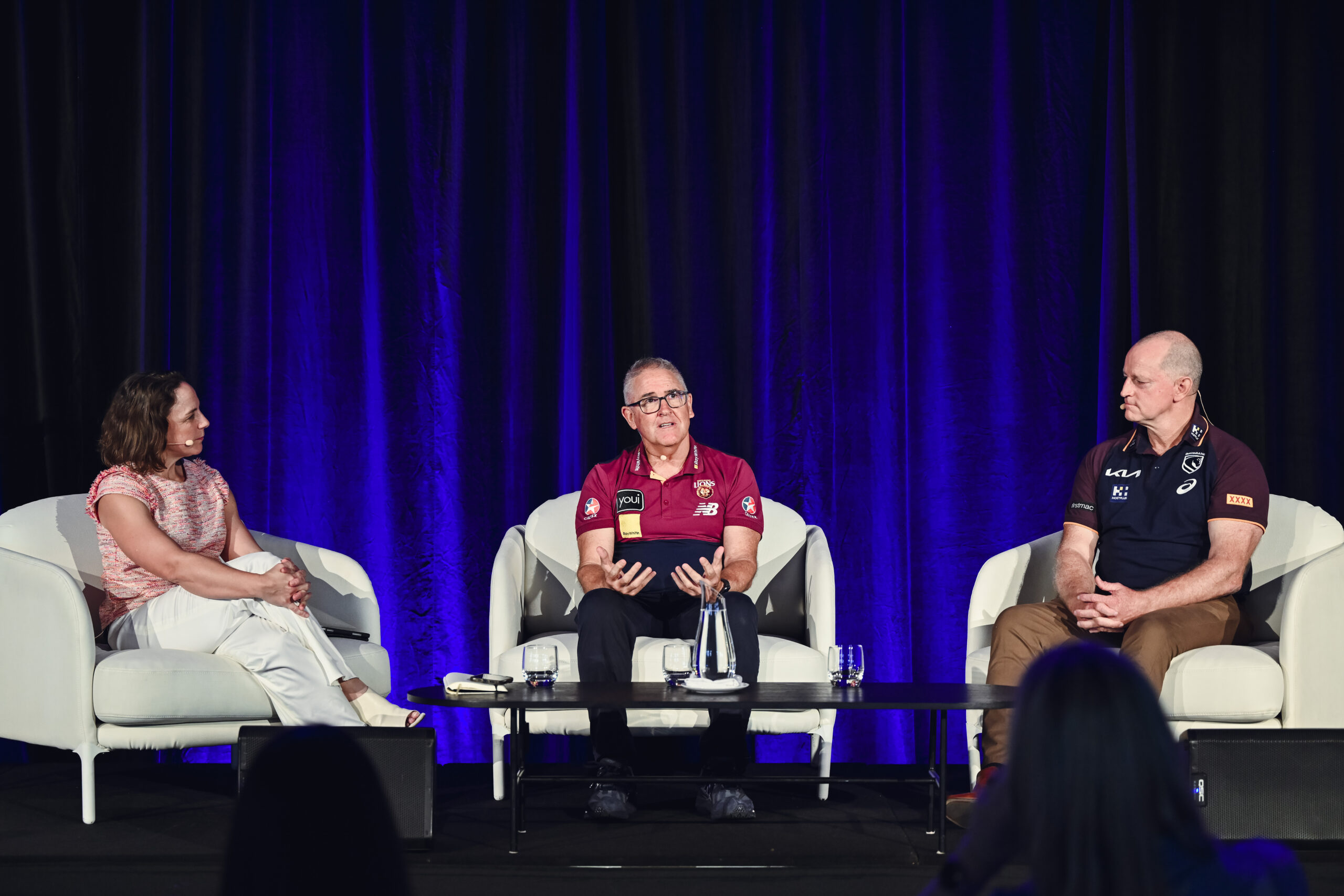
Chris Fagan (centre) in conversation with Michael Maguire (right) and moderator Rachel Vickery. Photo: Albert Perez
One you might have missed
Ben Ashdown and Dr Mustafa Sarkar of Nottingham Trent University pondered the behavioural elements of resilience in young players at football academies in this exclusive interview.
Their research has identified six resilience behaviours:
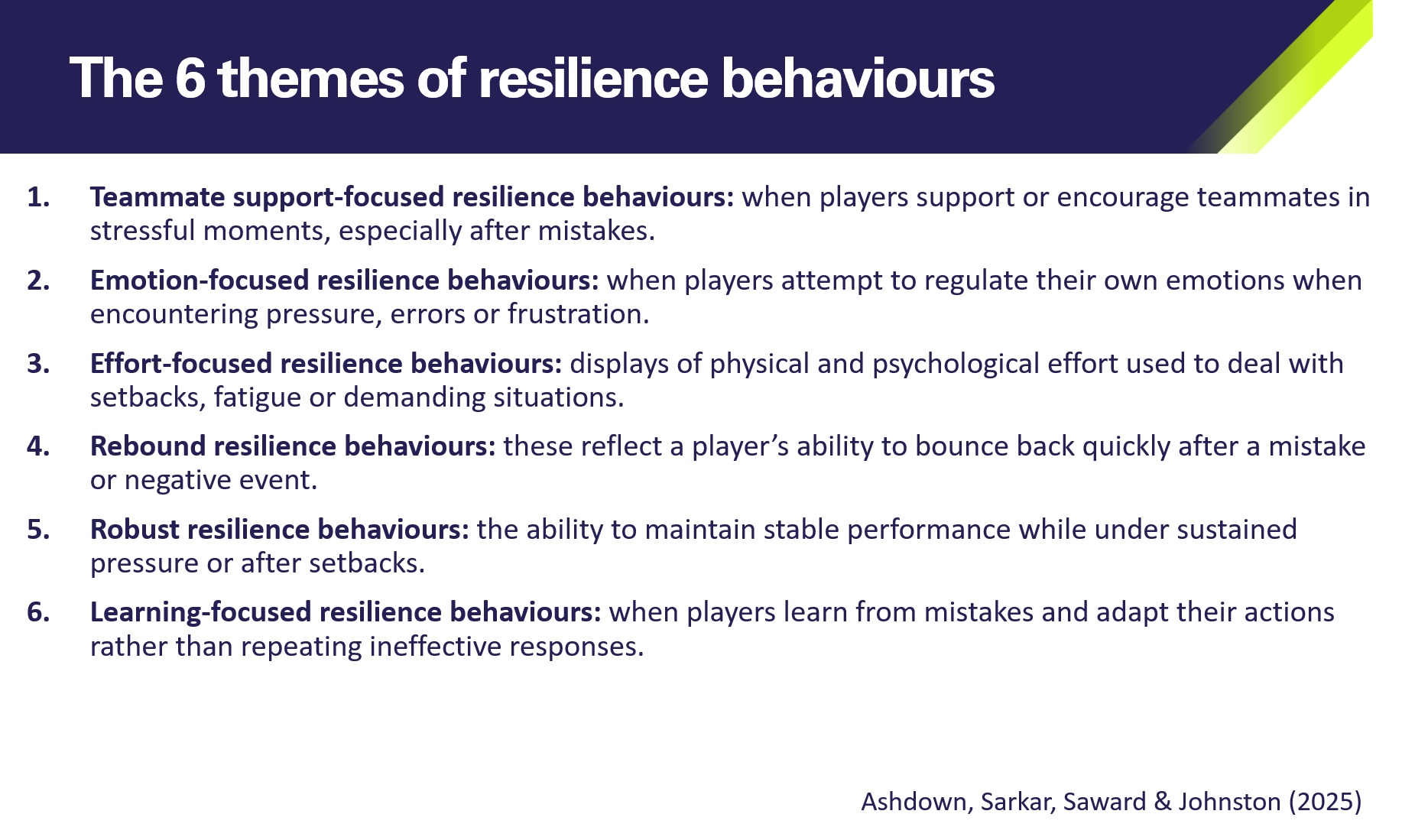
Their hope is to use these six to fashion a tool to help academy staff identify and develop resilience behaviours in their young athletes.
Read more here.
What’s coming up for members