Alex Hill, the Co-Founder and Director of the Centre for High Performance compelled the league to consider its own mortality before suggesting ways it can ensure its relevance a century from now.
A podcast brought to you by our Main Partners

On one such occasion, Hill, the Co-Founder and Director of the Centre for High Performance, compelled senior leaders at the Premier League to confront its own demise.
“I said: ‘at some point people will not want to work for you’. Now that feels impossible at the moment,” Hill tells the Leaders Performance Podcast.
How did that observation go down?
“It was quite a quiet room,” Hill says. “At the moment, they’re lucky they’ve got the pick of the best talent, the best physios, the best scientists – but that might not be there forever.”
Hill spent 13 years studying organisations that have out-performed their peers for over 100 years, including the All Blacks, Eton College and the Royal Shakespeare Company. The result is his book Centennials: The 12 Habits of Great, Enduring Organisations.
“If you want society to support you long term, your impact has to be much broader than just creating role models,” he continues. “Why don’t you take the learning from being at the cutting edge of mental and physical performance and share that?”
Hill believes that the British national governing bodies competing at the Olympic and Paralympic Games could feed those lessons back into the community in the form of a “spin-offs division” similar to that of NASA (another centennial).
“This spin-offs division [could be] designed to take that learning and feed it into all of society so that the whole of our country develops.”
It is just one idea Hill shares during the course of a conversation full of advice for sporting organisations. He spoke of the New Zealand All Blacks and their readiness to embrace failure [40:20]; finding smarter ways to attract money and talent [10:45]; and why a diverse talent pool can make an organisation more relevant to a broader swathe of society [17:15].
Henry Breckenridge X | LinkedIn
Listen above and subscribe today on iTunes, Spotify, Stitcher and Overcast, or your chosen podcast platform.
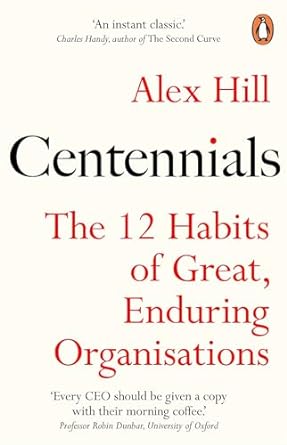
Alex Hill’s Centennials: The 12 Habits of Great, Enduring Organisations is now available in paperback from Cornerstone Press / Penguin Random House
As Dr Daryl L Jones explains, crises are best handled by organisations whose people are able to both flourish and perform at their best.
You may recognise the signs from your own experience; from elements of high risk and disruption to the instability and the potential for internal clashes.
They’re all familiar signs, but do you truly understand how crises emerge? It is often assumed that crises are the outcome of events that cannot be managed – but nothing can be further from the truth.
That is the view of Dr Daryl Jones, the VP of Sports Leadership at Abilene Christian University, who wrote a white paper in 2017 entitled Sports Leaders, Sensemaking, and Self-Preservation: Uncovering the Real Crisis in Sport.
Jones, during a recent Virtual Roundtable for members of the Leaders Performance Institute, explained that crises emerge as a complex interplay of behaviours, processes and emotions.
Reconceptualising what we understand by ‘crisis’
Jones honed in on three specific areas that provide the terms for analysing crises in sport:
Common misconceptions of crises in sports organisations
Jones points to four common misconceptions:
Organisational elements conducive to crisis
Crises are not strictly outcomes – they are induced by behaviours, processes and emotions. They are highly disruptive, often leading to demise for the brand, organisation and culture. They garner passive responses from leaders because they are operating in self-preservation mode, while attempting to reconcile winning today and building for the future; we often subconsciously operate from fear as opposed to strength.
Additionally, crises are accompanied by apathy and myopia. What does this mean? We tend to develop a system of rewards for people to not be innovative, but to solve for today.
During the session, Jones shared some reflections from sporting leaders who were interviewed for the research:
Six of the behavioural, process, emotion-based factors most frequently associated with crisis
The research project led by Jones uncovered the six behavioural, process, and emotion-based factors (BPE) most frequently associated with organisational crises in the sports industry. Curiously, the first factor was not even a point of consideration in his initial theory-building process:
Taking steps towards learning the behaviours and practices that promote a flourishing organisational culture
What does this research tell us? It tells us we can start to proactively manage crisis as leaders; but it’s going to require that shift from self-preservation to flourishing. Jones’ assumption was that the most frequently associated response would be job performance. However, the research revealed that no matter who the leader was or where they were operating, or in what capacity, there was some form of self-preservation that at some point entered into their workflow.
Self-preservation tend to raise its head in the following scenarios:
To wrap up, Jones offered some recommendations:
23 Jul 2024
ArticlesWho are your team’s cultural architects and cultural guardians?
Angus Gardiner, the General Manager of the New Zealand rugby team the Crusaders, once said: ‘good and bad teams have the same values written on the wall’.
The ‘saying’ is the easy part, the ‘doing’ is quite another and this idea, was the jumping off point for Dr Edd Vahid’s recent project with Management Futures titled A Cultural Hypothesis, which was published in March 2024.
Vahid hypothesised that sustained cultures of success consistently display four features:
As Vahid wrote, ‘an inspiring purpose is essential, a psychologically safe environment is critical, and a sense of belonging exists as a fundamental human need. Coupled with exceptional leadership, these elements distinguish cultures that thrive’.
The fourth has provided the basis of Vahid’s three-part Performance Support Series focusing on culture and change.
The first session invited Leaders Performance Institute members to assess themselves across the four areas; the second focused on cultural leadership as the ‘super enabler’ of culture; the third session further explored the skills needed by cultural leaders.
The three levels of cultural leadership
In A Cultural Hypothesis, Vahid explains that cultural leadership operates on three levels:
The architects and the guardians are more active in their roles and, during the session, Vahid explored the skills required for each.
Cultural architects – what skills are required?
Vahid asked members to reflect on the cultural architects in their environments and their skills. The group suggested the following:
Vahid then shared a series of observations about cultural architects based on his research:
They are often appointed by the sponsors. By contrast, the guardians will mobilise on the ground.
They lead the cultural design. They have the ability to articulate and create the environment; they make others aware of the vision and direction of travel. This needs to be done in a skilled and inspiring fashion, with language that is able to influence the culture.
Their role can also be more literal i.e. they have a role in creating a more optimal physical environment.
They acknowledge the tensions within their team and possess the ability to flex and be agile without losing sight of the purpose.
They understand the importance of stories, which can help to distinguish your culture. As Daniel Coyle asked several organisations in his 2018 book, The Culture Code, ‘tell me a story of something that happens here that doesn’t happen anywhere else?’ They know the answer.
The architect must be effectively monitoring the culture and its current state. That can be checking-in with where the culture is now or, equally, understanding the journey that it is going to go on. It’s important to invite feedback and ‘speak truth to power’. It is crucial for them to be connected to the guardians in staying abreast of goings on; they must also ensure a sense of positivity around the culture.
Architects will take a more ‘global view’ than the guardians.
In light of the ‘radically traditional’ research of Alex Hill and the Centre of High Performance, architects provide what Hill calls the ‘disruptive edge’ while the guardians maintain the ‘stable core’.
Cultural guardians – what are their other traits?
Once again, Vahid turned to members to ask what skills they felt cultural guardians possess. They suggested:
Vahid outlined what his research had to say on the matter of cultural guardians:
The guardians can provide much-needed support as well as bandwidth, space and capacity for the architects to focus on the things that really matter. It requires insight and intelligence to provide a clear view of the landscape.
They carry a strong purpose; there is a level of awareness, alignment and connectedness. The challenge for the architect is to ensure the guardian remains connected because if the connection is lost, you can lose someone who is a positive advocate and instead they become a disruptive influence.
The guardians can speak truth to power with ‘radical candor’, to cite Kim Scott’s theory; they ‘care personally while challenging directly’.
They are role models. They also need to have a degree of influence as they are the foot soldiers that can carry out the vision effectively.
The guardians are on the ground, taking that more localised view. They can make decisions on the ground for the benefit of and in alignment with the culture. They don’t need to escalate every decision or action.
Finally, guardians are identified or are emerging. Vahid’s use of the term ‘identify’ is deliberate because one of the challenges for cultures is to identify the individuals that are going to have a positive influence. He says teams have to ask the question as to whether they are doing enough to support their guardians and the development of their skillset.
Cultural architects, cultural guardians… and cultural shareholders
While there are cultural sponsors, architects and guardians, these are all cultural shareholders.
Vahid’s research suggests that cultural shareholders can be distinguished by their level of:
Those who carry significant positive influence and are highly motivated in alignment with your cultural aspirations could be considered guardians, but they are absolutely your strongest architects.
The challenge of a culture is to get an appropriate balance. Is there sufficient weight towards the guardians – if everyone’s a shareholder, are there sufficient numbers of strong and positive advocates for the culture – or are there people who might be considered countercultural?
How does a shareholder become a cultural guardian?
Vahid invited Leaders Performance Institute members to answer the question. They said that cultural shareholders transition into guardianship because:
In order to create more cultural guardians, Vahid argues that it is important to:
What are some of the fundamental change principles?
Vahid invited members to reflect on cultural change and the fundamental principles they call upon in those phases of development. Attendees suggested the following:
The change starts with observation; the sponsor then gives the architect permission to design, create and deliver what the new culture might look like. With this in mind, Vahid suggests a six-step process:
Nobody said it was easy, but there are steps that all leaders can take to be better prepared.
This can be tricky because you can’t shortcut the development of rapport, belonging and trust – all are critical to team development and effective transitions – and yet teams and leaders still face pressure to perform now.
This topic was at the heart of a recent Leadership Skill Series session, which was attended by Leaders Performance Institute members. All in attendance agreed that for a team to reach its full potential, every individual needs to have a sense that their team has invested in them and they need to be invested in the team too. Everyone needs to buy-in.
What steps can you take to reach that point?
Five levels of communication in teams
Before we delve into the five key transitions for teams, it is worth exploring five levels of communication as experienced in a team setting. It is useful to think of this as a pyramid. Teams begin at No 1 and work towards No 5, with increasing exposure to risk, vulnerability and criticism at each level.
With these in mind, let’s get into those transitions.
There are five key transition scenarios experienced by teams:
These transitions can be both expected and unexpected. Dynamic team environments require adaptability, resilience and a commitment to continuous growth. By navigating these transition points with purpose and intention, teams can cultivate an environment of collaboration, innovation and excellence that propels them towards their collective aspirations.
Start off by building rapport fast. Don’t wait for trust to arrive. In any team development approach, you need to spend a significant amount of time upfront developing rapport and trust before you are ready to do anything else. You can measure this by assessing where everyone is at in the five levels of communication (see above).
Learn quickly about others’ strengths, weaknesses and working styles. Seek to understand from each individual what are they hoping to bring to the team.
Give people a sense of contribution and that everyone has a part to play. As the leader, set a clear, simple vision and specify what part each person has to play in this.
Clarify ‘the rules’ of the team and consider the creation of a team charter around standards, behaviours and values. Remember to involve the team in creating the charter because if there is that ownership, you tend to find the team set higher standards than the leader would, and that in turn raises the bar.
It can be easy to assume that it is the old team plus an additional person. This isn’t the case. When a new person joins or one leaves, this influences the team dynamic. As a leader, you need to be cognisant of this and be prepared to revert to the bottom of the communication pyramid (see above) at first to build back up again with group alignment.
It sounds simple but help create opportunities for the new person to introduce themselves, get to know others and have a sense of belonging in the team.
Closely aligned to this, invite individuals to contribute straight away to heighten that sense of belonging, as well as emphasising their strengths and how they can contribute both individually and across the team.
Beware of the ‘magic helper’ syndrome. There is a tendency in teams for a piling up of jobs the new person can take on. We don’t want to put a heavy load on straight away and hope they are the ‘magic person’ who will solve all the problems. Onboarding cleanly and intentionally is important.
This is arguably one of the more trickier transitions, but one that is also very common.
Beware of ‘Year Zero’ syndrome. As a new leader coming in, show respect to the past. Don’t be dismissive of the past. Some colleagues may have worked there for a long time and have fond memories of the previous leader or team dynamic. Naturally, it will change but it’s important not to disrespect it.
Seek to build rapport. Some social time is useful for the team to learn who you are. The more they know about you the more they are likely to open up about themselves. The leader must support their team in having access to informal networks as well as formal ones.
Arrange one-to-ones as well as team meetings. Develop the relationship.
Allow for some ‘mourning’ of the previous leader. You can’t embrace the new without letting go of the past.
Give people your picture of the future. Give the purpose behind how you see the picture, why you are doing what you are doing. Outline broad plan of action. Be very clear on giving each person in your team clarity about the part they play so they feel connected to the vision.
It’s important to acknowledge disappointments. Don’t shy away from it. Process it as a team. We discuss the use of visual methods such as timeline reviews to show the wider picture and journey.
Review the lessons learned from the disappointment and use these to inform the resetting of the team’s vision and goals. As part of the review process, don’t lose sight of what is still good and what you do well.
As a leader, offer and show thanks to the team. The rapport and relationship within the team will be crucial to getting back on track.
Success is also a significant transition point in teams. It’s a culmination of the great work the team has done, but also a chance to reflect on what next and how to get better.
Ensure you celebrate the success to enhance team cohesion. At the same time, stay humble as the likelihood is that other teams or the competition will have learned from your success.
Just as you should give thanks in disappointment, the same goes for responding to success. Similarly, conducting a lessons-learned review after winning is just as important as when you don’t win.
A very simple but powerful question a leader can ask their team is ‘what percentage of our potential have we actually reached?’ The answer is rarely 100%, therefore it creates an opportunity to engage in high quality conversation around what next and how we improve again.
And when transition messages are unwelcome…
Vulnerability is powerful, especially in candidly telling the team anything that you don’t know.
Don’t act the victim and be aware of your communication to your team.
Be emotionally open and honest, admitting to any discomfort, but also express honest positive emotion.
It doesn’t all have to be perceived negatively. Point out any potential advantages of the transition.
Similarly, emphasise what will stay the same through the transition. We know human beings don’t like change, so this should bring about some comfort.
Create a clear ‘call to action’ with next steps specified to outline the roadmap to moving forwards.
We bring you insights, reflections and a range of tips from the Brisbane Lions, San Antonio Spurs, Melbourne Business School and beyond.
An article brought to you by our Event Partners


The renowned leadership consultant was onstage at the Leaders Sport Performance Summit at Melbourne’s Glasshouse speaking about her book The Leading Edge, in which she proposes a framework for leadership based on notion that when we are able to lead ourselves we are better equipped to steward others through periods of change and development.
An audience of more than 200 Leaders Performance Institute members sat with rapt attention as Ransom joined coaches and leaders from organisations including the Brisbane Lions, San Antonio Spurs and Melbourne Business School, all of whom laid out how they are working to ensure their people can navigate the shifting sands of high performance in years to come.
“Research suggests some of the most in-demand skills by 2030 will be how we work together, connect, and build empathy,” Ransom continued.
Here, in light of those skills, we explore eight ways those who took to the stage are working to future-proof their teams.
The recent renaissance in Australian cricket – the men’s and women’s teams are reigning world champions across four different formats – has not been a happy accident. Andrew McDonald and Shelley Nitschke, the head coaches of the men’s and women’s teams respectively, stressed the need for thorough performance planning, skilful execution and finding the space to pick up lessons along the way.
Andrew McDonald, Head Coach, Australia men’s cricket team
Shelley Nitschke, Head Coach, Australia women’s cricket team
Next steps:
Burnout is a universal problem, with New Zealand and Australia suffering some of the highest rates in the world, according to leadership consultant Holly Ransom. She argues that while stress is inevitable, and can be abated, burnout can be entirely avoided. In her view, the conditions necessary for eradicating burnout stem from empathetic leadership and, when a leader adapts their habits, it gives permission for others to do the same.
Holly Ransom on the notion that we can’t sustain leadership, without leading ourselves first.
Next steps:
1) Complete an energy audit – when are our natural highs and lows in a day, and how are we using them?
2) Establish your building blocks – do the little things that help you build momentum.
3) Set your micro-breaks – take time to get mini hits of new energy.
Kit Wise of the Royal Melbourne Institute of Technology [RMIT] and Budi Miller of the Theatre of Others, an innovative performing arts company, were invited onstage to share their approaches to fostering creativity and risk-taking in their environments.
Professor Kit Wise, Dean, School of Art, RMIT
Budi Miller, Co-Artistic Director, Theatre of Others
Next steps:
The New Zealand All Blacks and San Antonio Spurs are worlds apart in sporting terms but share numerous commonalities when it comes to bringing to life and sustaining a winning culture. Beyond results, both are renowned for creating environments where people and innovation flourish, as the All Blacks’ Mike Anthony and Spurs’ Phil Cullen explained.
Mike Anthony, High Performance Development Manager, New Zealand Rugby Union
Phil Cullen, Senior Director of Basketball Operations and Organizational Development, San Antonio Spurs
Next steps:
New Zealand Rugby have identified five factors that enable their group to flourish:
1) Connection – players take pride in serving their community.
2) Balance – the group looks for learning, stimulation and edge.
3) Fun – a big part of balance.
4) Learning – athletes learn by doing; so what environment will facilitate the best learning?
5) Family – the organisation has worked to bring families in while also helping them to understand the expectations of an athlete in high performance sport.
The Spurs have their three core values:
1) Character, which is based on values.
2) Selflessness, which is culture-focused.
3) ‘Pound the Rock’. A metaphor inspired by 19th Century Danish-American social reformer Jacob Riis. His Stonecutter’s Credo perfectly captures the Spurs’ drive for championships:
“When nothing seems to help, I go and look at a stonecutter hammering away at his rock perhaps a hundred times without as much as a crack showing in it. Yet at the hundred and first blow it will split in two, and I know it was not that blow that did it, but all that had gone before.”
The Stonecutter’s Credo, Jacob Riis
The Brisbane Lions men’s team, under the stewardship of Senior Coach Chris Fagan, have in recent years returned to prominence for the first time in a generation. Amongst the factors responsible for their rise is their ability to out-learn their opponents, as High Performance Manager Damien Austin explained.
Damien Austin, High Performance Manager, Brisbane Lions
Next steps:
Models for change are all good and well – change is inevitable, so perhaps they are entirely necessary – but what are some of the so-called ‘soft’ factors that enable a leader to influence change? Professor Jen Overbeck was on hand in Melbourne to dispense some tips for explaining and justifying change to others.
Jen Overbeck, Associate Dean, Melbourne Business School
Next steps:
Wellbeing and performance are indivisible, yet there is more we can all be doing to ensure our people can flourish. At the Glasshouse, Emily Downes of High Performance Sport New Zealand and Sonia Boland from the Australian Institute of Sport provided an insight into their work helping people to thrive amidst the challenges presented by high performance sport.
Emily Downes, General Manager – Wellbeing & Leadership, High Performance Sport New Zealand
Sonia Boland, National Wellbeing Manager, Australian Institute of Sport
Next steps:
As women’s sport continues to evolve, the system will need the athletes and the coaches to fill the spaces created. Given the hitherto piecemeal approach to developing women’s sport, and the often misunderstood differences between men and women athletes, this is far from a given. Helene Wilson of High Performance Sport New Zealand and Tarkyn Lockyer of the AFL are two individuals meeting this challenge head on.
Helene Wilson, High Performance Sport New Zealand
Tarkyn Lockyer, Australian Football League
Next steps:
Here are some of the things you need to consider when leading a team through a period of change.
For the first part of the discussion, we heard from Bobby L Scales II, a former professional baseball player and front office executive, before engaging in some thoughts and experiences of our own around the topic.
This summary is split into two parts, the first, highlighting the insights from Scales, the second, the group’s thoughts on what they have seen work well when it comes to effective change. When considering the topic of organisational change, you will often here of the ’90 Days’ concept, which underpinned some of the experiences Scales shared with us in the first segment of the roundtable.
Win the people
Before we explored different elements and specific details for the ’90 Days’ approach to change, Scales shared that from day zero it is crucial to ‘win the people’ as part of this process. The leader or those involved need to show strong emotional intelligence through understanding contractual situations, team structure and roles. There is a need to be authentic. There must be clear intent around communication and decision-making. Finally, acting with integrity and communicating effectively are important elements to set the stall out successfully from the very outset.
First 30 Days – how did we get here?
Being clear on how you ‘win the people’ in Scales’ experiences is an important cornerstone of the effectiveness of the change process. Now this has been outlined, we can look towards three other key foundations: how did we get there, strategy formation and strategy implementation. In the first thirty days, we must think and reflect on the circumstances surrounding why you as a leader or team are there. Reflective questions you can explore include: what is broken? Are these challenges technical, tactical, cultural? What is needed to resolve what is broken? Is it a case of filling the cracks, re-modelling or tearing it down and starting afresh? Finally, what role do you as the leader play in fixing this?
First 60 Days – strategy formation
Using the first 30 days to evaluate the situation allows you to move into the next phase of the process, which Scales refers to as strategy formation and something you can do around the 60-day mark. This is where you develop your strategy, so what is important to get right? First and foremost, involve the stakeholders in the process as this gives you the insight and data to find out more about your people’s ideas, abilities, strengths and weaknesses.
Secondly, by this stage we should have clarity on what needs fixing, so development of the technical and tactical items that you are going to feed into the strategy formation. Finally, developing and clearly outlining the roadmap of an action plan that is different to the previous regime that can generate collective buy-in and clear direction. As the leader initiating the change, clear and effective communication of the process, procedure and expectations are crucial; as are the formulation of key performance indicators that reflect the new direction to allow for measurement in defining and measuring the success of the process.
First 90 Days – strategy implementation
Finally, time for implementation and action. It often sounds easy but as Scales reiterated, it is far and away the most difficult stage of the process. What is important to look out for? He explained that it is natural for people to revert to what is comfortable. As the leader, you need to be aware of this to not stifle the action plan. To support this, ensure there are active reviews along the journey to provide opportunities to reflect and adjust if needs be. This stage is also going to be a key insight around personnel, and specifically if you have the correct people on the bus and if they are in the correct seats. Your active reviews will help provide key information around this – here is where you may have to make difficult decisions if certain individuals aren’t on the bus with you or if adjustments around roles need to take place.
Change management checklist
For the second part of this roundtable, we asked attendees when thinking about effective change management, what have you seen work really well? The idea for this segment of the call was to create a checklist of best practices and considerations based on the experiences of those on the call, complementing what Scales learned from his personal experience. All of the responses from the group could be categorised into: transparency, commitment to philosophy and core values and alignment.
Transparency
There were a number of responses that fed into the bucket of the importance of transparency. Having transparency with all decision-making and structural changes that are decided upon. The leader or group being personally or collectively transparent in sharing information about themselves, what they value, expectations of one another and clarity on what their leadership approach is. Being clear in the message, with transparent and outlined goals and roles for all involved, providing autonomy for people so they feel a part of the progression. Creating the conditions for empowerment with accountability, and even safe space opportunities to let people talk, ensuring they feel that empowerment in the first place. When change is done well, the leadership demonstrate vulnerability to ‘open up the room’ and accompany this with active seeking feedback throughout the change process. One participant shared the importance of tapping into the self-determination of employees, notably their competence (the recognition of skillsets), connection (building relationships) and choice (collating opinions and fostering a sense of autonomy).
Commitment to philosophy and core values
A second core section for effective change as outlined by those on the call was a commitment to a philosophy and core values. Those that have seen change done effectively suggested that it is important for the leader or leadership to be themselves and intentional, displaying their core values as a person or collective. They outline clear expectations with a clear vision, but without judgement. They also have the ability to show what excellent looks like and galvanise an organisation around the philosophy and commitment to high standards.
Alignment
Finally, a word that you could expect to see when considering important elements of change management – alignment. Those who are effective change agents are able to co-develop the change with key stakeholders, creating a chain of clarity and alignment. They are skilled at being emotionally intelligent, so in getting to know those involved, are able to align tactics and strategies to best support them through the process. They are able to build strong relationships and trust with all involved, thus actively engaging them on the journey. As part of channelling alignment, consider asking your people for their suggested changes or ideas before suggesting yours to continue to develop their sense of empowerment. Finally, another effective strategy is finding out who the early adopters are or those who are the biggest influencers, seeking to generate alignment with them to continue positive momentum.
Leaders Performance Advisor Bobby Scales uses the 30-60-90 model to outline his approach.
Results may have slipped, your culture may have drifted. Perhaps the market is telling you there’s something you need to improve upon.
Recognizing the need for change is one thing, coming into a new environment and selling that change to the team you have inherited is quite another.
We know change is difficult. Change can illicit feelings of fear and uncertainty and when those feelings arise, as humans we naturally go back to what is comfortable and safe. The problem is that more often than not what is comfortable and safe is exactly why the change is needed. Your team may feel isolated or alienated. Even when the change is 90% good, people are going to worry about the ‘bad’ 10% and how it inevitably affects them. The leader needs to create an environment where people are willing and able to embrace change.
Leading a team or organization through times of change is a heavy lift and there is no escaping that, but there are things a leader can do to give themselves the best chance during those first 90 days and beyond.
Below is the ‘30-60-90’ model I would follow if I were leading a team or department through a period of transition and development. For the uninitiated, the 30-60-90 model divides those first 90 days into three phases where you sequentially identify your team’s issues, formulate your strategy, and begin to execute your plans.
Know your personnel
Your first 30 days should be spent asking the people around you a ton of questions. You need to have an idea of what needs to change but, in those early days, you must get a proper gage of the temperature ‘in the room’. How are people feeling? What was the sentiment of the group previously? Allow them to ask questions of you. Find out about the ‘who’ first, then you can begin to ask questions about the ‘what’. It is important to ask what happened in the past and understand why things were done a certain way before. This will inform your ideas of where you need to go. It’s impossible to do the latter until you win the people first.
In my view, this is the most difficult phase during those first 90 days because you and your staff are learning and, oftentimes, you’ll have new personnel either in management or in the rank and file – or just an entirely new group on both sides – because something has not gone to plan. You are not changing for the sake of change: you’re changing because something needs to happen in order to grow whatever group you are part of.
It is crucial to know your personnel, as former NFL Head Coach Herm Edwards memorably put it, you need to learn who is in front of you and to whom you are talking. Staff members cannot be bucketed into broad categories as you solicit their feedback. You need to understand each and every person on your team as an individual to fully understand where they fit or if you need to move on.
Identify the right people, get them in the correct seats on the bus
One thing you’ll find with long-tenured individuals is that they can become stifled or bored, which does not alter the fact that they may have some great ideas stifled because there is no real pathway for advancement and bored because there have been ideas that have been put forward and for whatever reason haven’t gone anywhere. If you have a smart and sharp talent base, you need to afford staff members the space to run with those ideas. Another way to put it is that you need to make sure that your people are sat in the correct seats on the bus.
All people want to be challenged in their job. People want to feel they can master their job and excel in their role and grow into more. As a manager, that can mean being secure in the fact that you are not the smartest person in the room. Part of the first 30 days is understanding that and then folding that into your plan.
It also speaks to your authenticity as a leader. Yes, ‘authenticity’ is a buzzword these days but, when you’re creating an environment, people want to know you are real. You have to be yourself, you have to be honest, and you have to be up front. It goes hand in hand with your integrity. People need to understand that you’re still doing the right things when no one else is watching too.
With the right questions asked of the right people, we then turn our attention to days 31 to 60. This phase is about formulating your plan and how you’re going to put all the pieces into play. Towards the end of that period you need to tell your group: ‘this is what we’ve got here and these are the answers I got from you all. This is not me making this up because I was not part of this group before. Here’s how we got here, these are the answers I’ve gotten from you and this is the path forward as I see it for this group’. You have to lay out your vision and plan for innovating or iterating in your environment and, when you have buy-in, it alleviates a lot of those questions such as ‘what’s in it for me?’
Here’s what’s in it for you: a chance to grow your career that you didn’t have before because you were stifled. You were bored and now you have the opportunity to stretch your legs and run with it.
It is also a question of communication and there also needs to be an intentionality to your strategy. There are key people you should have identified inside your department that are your influencers, people whose words and actions carry weight. It is important to communicate effectively with and through those people.
Full steam ahead
By the time you reach day 61 you’re going full steam ahead as you put your plan in place and you let your people run with it.
Your plan must also be nimble. Having a process and a framework is important but if market factors change then you will need to have the space to amend your approach. In that scenario, you need to be honest and open. You need to communicate that message in a way that is supportive rather than aggressive. Again, it comes down to communication and being genuine in gathering people’s ideas about how to remedy the situation when things are not going according to plan.
It is amazing what you can ask people to do when they feel like they are part of a team and in the know.
We explore attitudes to change at Ulster Rugby, the BBC and Royal Military Academy.
What is ‘change’ in your context?
It’s a simple but important question: “What is ‘change’ in and of itself?” asked Dan McFarland, the Head Coach of Ulster Rugby, when talking to the Leaders Performance Institute in 2022. “Firstly, ‘change’ is someone who says ‘this isn’t working, things are terrible, and we need to change’. But change is also growth. If you’re an organisation that wants to grow, develop and learn – by definition that is ‘change’.
“How you conceptualise change and how you use it is interesting, because if you include the idea that ‘growth is change’ then there’s always a need for change, isn’t there? At least in anything that’s competitive. It is important not to box change as merely something that happens to a failing organisation or somebody who’s in trouble. Then it’s just a degree in change and, I suppose, recognising the degree of change is interesting.”
Tim Davie, the Director-General of the BBC, referred to change as a “narrative around jeopardy” when speaking at the 2021 Leaders Sport Business Summit in London. He said: “That’s a pretentious way of phrasing it but people are naturally resistant in well-established organisations. Sometimes, you really need to really believe there is an issue of jeopardy [but] many people in the organisation say ‘we were OK for 99 years, we’ve done alright.’”
What’s timeless in your organisation? And what’s not?
The BBC was on the cusp of its centenary year when Davie spoke onstage. “My personal view is that, first thing, a successful reform comes from a real understanding of history, strength, respect of tradition, really understanding where an organisation comes from, what its core purposes are. What things are valid that are not attached to technology that are timeless?” he told the audience. Davie makes the distinction between what is “important and timeless” and what is not. “I think some people defend their territory or in their silo saying ‘that is something that’s absolutely sacred’. ‘It isn’t. What’s sacred is this’,” he added.
Is the motivation there?
In 2011, behavioural scientists at University College London developed the COM-B framework for behavioural change. It is a diagnostic tool to assess whether the organisation or individual possess the capability (C), opportunity (O) and motivation (M) to perform the desired behaviour. When you have each, it is often the perfect recipe for change but, as Gareth Bloomfield, a psychologist at the Royal Military Academy at Sandhurst, told the Leaders Performance Podcast in 2022, there can be a multitude of things that affect an individual’s motivation. “Do you believe you can do it? Do you believe it’s going to be useful? Most people when they’re given new direction about what they need to do, most people just say ‘that sounds easy, I can do that’ but do they fundamentally believe that it’s going to be useful to the team?” said Bloomfield. “If they don’t understand what the Leader’s vision is, what the leadership team are trying to get to, then maybe there’s a gap there in terms of my motivation because I don’t really understand why it’s going to be useful. Do I fully appreciate the consequences of doing it and not doing it? This becomes an important part of motivation, which is, most of the time, if I’m going about a behaviour that is counter-productive, I’m not necessarily that aware of it because the counter-productive elements of it are long-term.”
The leader must role model change and chart development
McFarland viewed himself as a role model of change at Ulster. “Let’s say you want to create a learning environment,” he said. “You’ve got to model that. If that’s me, I’ve got to be seen to be willing to be wrong and adapt, I’ve also got to be seen to be doing things that are helping my own individual growth, I’ve got to be seen to be celebrating things where people are developing. Then once you’ve modelled those you’ve got to be able to mechanise those. There’s got to be room in the actual programme for doing that kind of stuff. It could be individual development programmes that are up and running and actually have things that you do, there’s got to be time in the schedule for development of certain things or skills, but there’s also got to be time in the programme for sports staff to be able to have personal development. Then, finally, you’ve got to be able to measure that; you’ve got to be able to look at your programme and say ‘have we actually created development? Have we developed as a staff, as a group? Have we developed as players? Have we developed as individuals?’ Modelling, mechanising and measurement are pretty key to that.”
27 Apr 2023
ArticlesThe Premier League hosted its first Performance in Practice session for Leaders Performance Institute members at its London HQ. The title given to the afternoon was Leading Innovation & Problem-Solving.
The theme for the afternoon, as indicated by the title, was Leading Innovation & Problem-Solving. The session included a case study and conversation from both inside and outside of sport, as well as exploring the skills and tools to ‘develop the muscle’ of innovation both individually and collectively.
“If the rate of change within an organisation is slower than the pace of change within its external environment – it will die” – Jack Welch, former CEO & Chair of General Electric
Performance in Practice – Part I: Insights on Innovation in Sport
Guest: Scott Drawer, Head of Sport, Millfield School
When do you know you are getting innovation right:
What is creativity, research & innovation?
Creativity:
The science of creativity (Kaufman 2016):
Study: what are some of the commonalities of the most successful scientists in the world?
Innovation = Ideas + Impact
Confusion is often caused by misunderstanding symptoms and causes. Creativity is a symptom of innovation not a cause.
3 necessary (but not sufficient) conditions for innovation:
Designing for innovation:
Failing is your first attempt in learning – celebrate the process vs. the outcome. Closing doors is almost as important as opening them.
Learning from Others’ Failures: The Effectiveness of Failure Stories for Managerial Learning
Research:
Where does research fit in the innovation process?
‘Knowledge alone is not impact.’
Conclusions:
Performance in Practice – Part I: Insights on Innovation, Creativity & Problem-Solving
Guests:
Scott Drawer, Head of Sport, Millfield School
Jonnie Noakes, Director of Teaching & Learning, Eton College
How do we create a culture of learning?
What holds back innovation:
Where to put the resource: find people who are innovative or develop their skills to be innovative?
Session 2: Leading Innovation & Effective Problem-Solving
Can you develop it and, if so, how can you develop it?
Rivers of thought:
Edward de Bono – when we step into an environment, what we do is absorb quickly and begin to form ideas, developing ‘rivers of thought’.
IDEAL Model for Problem-Solving:
Taking us back to a process of innovation. Can be obsessed with creativity as a concept vs. the process of creativity.
Identify problems and opportunities
“The first and most important step towards innovation is identifying the problems you want to try and solve” – James Dyson.
Two types of innovation:
Traps to watch out for…
Define the problem:
Key traps to avoid at this stage:
Exploring possible strategies:
The more options you have, the better your chances of coming up with a game-changing idea.
5 Strategies:
Questions to help us apply these techniques:
Group insights: what are the key qualities of those who are good innovators?
A Leaders Performance Podcast brought to you by our Main Partners
This question is posed by psychologist and former Leaders speaker Gareth Bloomfield in this edition of the Leaders Performance Podcast, which is brought to you today by our Main Partners Keiser.
Bloomfield, who works with the Royal Military Academy at Sandhurst, explores the topic of behavioural change at length and delves into:
John Portch: Twitter | LinkedIn
Listen above and subscribe today on iTunes, Spotify, Stitcher and Overcast, or your chosen podcast platform.
