Leaders in Business
  • Membership
  • Events
  • Content
  • Virtual Learning
  • Connections
  • Partners
Login
  • Leaders Meet: Innovation
  • Events
    • Leaders Week London
    • Leaders Sports Awards
    • Leaders Club Events
    • Leaders Performance Institute Events
    • Leaders Meet: Innovation
  • Memberships
    • The Leaders Club
    • Leaders Performance Institute
  • About
    • Careers
    • Contact
I’m a sports leader:
  • Off The Field For those focused on the business of the sport View more
  • On The Field For those working with an athlete or elite team View more
  • Login
    • Leaders ClubThe membership for future sport business leaders
    • Leaders Performance InstituteThe membership for elite performance practitioners
  • Newsletters
Performance Institute Leaders Performance Institute Logo
  • Membership
  • Events
  • Content
  • Virtual Learning
  • Connections
  • Partners
Login

4 Apr 2024

Articles

The Debrief – a Snapshot of Powerful Discussions Happening Right Now Across the Leaders Performance Institute

Category
Leadership & Culture
Share
Facebook Twitter Email Copy Link
https://leadersinsport.com/performance-institute/articles/the-debrief-a-snapshot-of-powerful-discussions-happening-right-now-across-the-leaders-performance-institute/

Al, the art of persuasion, and the habits that hinder performance – just some of the topics that filled the air in March.

By Luke Whitworth
There has been plenty happening but, before we look back, let’s look forward.

Leaders Meet: Teaching & Coaching, an in-person member event, is just around the corner so, if you haven’t already, do check it out and register to join us at Millfield School in Somerset. We have some excellent topics on the agenda, including pedagogy & andragogy, non-directive coaching, coaching neurodivergent athletes, the language of coaching, complexity science and much more besides.

The day will be most relevant to anyone working with athletes on a day-to-day basis, whether in a first team environment or within the pathway. There’s just a couple of weeks left to register so don’t miss out.

Our Debriefs are designed to set you up for success. We’ll keep you on the pulse of contemporary thinking across the high performance space and provide members with the inspiration to engage with the variety of opportunities on offer through their membership. Do check out some of our upcoming events and virtual learning sessions to connect, learn and share with fellow members from across the globe.

And now, let’s reflect on the pressing performance issues of the day.

Virtual roundtables

March was a busy month for roundtables. From topic-led conversations around Sustaining Team Culture and the Influence of AI on Performance Programmes, to a Leadership Skills session focused on Building Persuasion and, last but definitely not least, part two in our series of learning around Wellbeing and what is having the most impact.

These are the insights that resonated with us most.

The potential impact of AI

We identified some of the enablers and outlined some of the key questions we still have around the technology.

So, where do we think AI can have a positive impact on our programmes?

  1. Greater efficiencies: AI can be used to speed up processes and automate insights, such as in the case of scouting reports or player tracking. It can also help streamline workflows.
  2. Deeper insights: there has long been a wealth of data in sport but often far more limited means of interpreting the numbers. AI can pick up that slack and even potentially unearth insights we haven’t yet considered.
  3. Enhanced injury prevention & rehabilitation: we think AI can support athlete monitoring and overall health monitoring to better inform decision-making around training loads, future scheduling, and athlete development programmes.
  4. A better tactical and on-field understanding: AI can simulate fixtures and help to deliver a better understanding of how to beat opponents with the most effective tactics, which can then be shared with coaching staff as they build a gameplan.

All sounds good, doesn’t it? However, we still have some questions that need answering. Have you explored and come up with answers to these in your environments?

  1. How do we make AI work? An obvious question, but there’s no consensus. It leads to further lines of enquiry: who do we need to engage to make this work in terms of disciplines, personnel, and how will their perspectives be used to educate the collective? Who are your big AI stakeholders? AI mapping, one member noted, can be a valuable tool. What type of expertise do you need? There is some uncertainty over who might be the best profile of person to help with the internal development of AI use.
  2. How do we set the right foundations? Have you implemented the correct data privacy and cyber security processes? How do you intend to educate your athletes and staff around its use? One attendee spoke of the need for a working definition of ‘intelligence’. Clarity is essential for effective interdisciplinary collaboration.
  3. What could AI change? One of the most common issues is the ‘role replacement v role enhancement’ debate. How will the skillsets of roles in your environment evolve as the technology begins to take affect? One member suggested that the analyst’s role may shift from collation and interpretation to communication. Coaches will need to be provided with data literacy skills too. Teams will also need to be mindful of not losing the subjective human element, which demands human interaction rather than machine learning alone.
  4. How do we measure the quality of data? How clean is your data? It’s a crucial question to answer when making data-informed decisions. If there are any issues then you will need to get your house in order first.

Why persuasion is an important skill in modern day leadership

How can you master the art of persuasion? We have some tips for you. Having good ideas is not enough. In order to change thinking and enact change, we need to be able to persuade people.

The Trust Equation
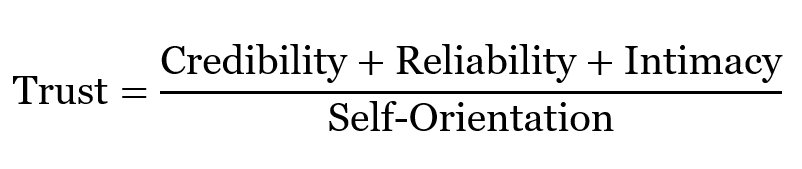
The equation is a conceptual formula used to describe how to build and elevate trust. To go into a big more detail, Credibility speaks to words and credentials and simply put, how authentic are we? Reliability is the perception of someone’s integrity,  are your actions connected to your words? Are you credible in how you present yourself? Intimacy refers to the feeling of safety or security in the sharing of information and how safe and secure others feel in sharing with us. Finally, Self-Orientation reflects an individuals focus and where it is directed – is it towards themselves or others?

Essential steps in mastering persuasiveness

There was lots of gold in this skills session but as we reflected on the essential steps to impact the notion of persuasion well, there were four steps to reflect on in developing your persuasion muscle:

  1. Embrace feedback and recognise areas for improvement in your own field.
  2. The consistent practice and conscious application of persuasion techniques – they help to refine your leadership over time.
  3. There are easy, everyday wins that elevate persuasion skills, from how you position yourself, the level of status you reflect, to how you convey a logical thought pattern.
  4. Just as athletes relentlessly refine their techniques and strategies to achieve peak performance, leaders must adopt a mindset of continuous improvement and adaptability to persuasiveness.

Additional reporting by Lottie Wright

Something a little different…

As many of you will know, we at the Leaders Performance Institute pride ourselves in exploring the world of high performance outside of the elite sporting context. With this in mind, we wanted to push your attention to some golden insights from the Royal Academy of Dramatic Art and their Director of Actor Training. To read more on their approach to elevating performance here and also how they’ve worked to redesign their curriculum here.

Skilbeck shared with us five factors that underpin their process to developing their talent. Are yours similar?

  1. Breaking the constraints of habits: these habits have developed from earliest infancy, whether physical, mental, imagination or emotional. RADA believes these can impair an actor’s work.
  2. Expanding an actor’s performance capacity: as a follow on from the above, actor training aims to break habits and expand technical, emotional and imaginative capacity. Lucy shared that what they’re training is how to be a human being and how to embody human experience in imaginary circumstance.
  3. Managing fears and trauma: breaking habits can be a difficult process and can potentially being up fears or trauma from past experiences. RADA works with a psychologist who hosts sessions with students on resilience early in their training, that is both psych education and giving them strategies for managing what might be potentially overwhelming traumas. The psychologist is also working with the teaching faculty to develop trauma-informed teaching spaces and practices so that teachers know how to respond and the material is less likely to provoke overwhelming responses for students.
  4. Reflective practice: RADA works with students on taking the observer position so that they can create some space from the sensation and the experience of the release. Students are encouraged to keep reflective journals.
  5. Embracing failure: RADA talks a lot about embracing failure because they’re encouraging people to not to try and get it right and to allow failure to be part of one’s creative practice. Lucy shared that you can’t have a creative practice if you’re not willing to fail. You can only have a complacent practice because you’ll only try the things that you know will succeed.

Additional reporting by John Portch

Community groups

In March, our Performance Support & Science community group took centre stage.

With 2024 bringing new projects and streams of work, we looked into the pressing questions and topics that are currently occupying the minds of those in this group.

Some of these will look familiar. How are you trying to approach some of these issues in your environment?

Sustaining staff health & energy

A few different people as part of the group discussion alluded to the topic of staff energy and sustainability, from the lens of the performance support and coaching team. Some of the spin off questions referred to how do we best integrate support and what does that look like, particularly due to the intensity of competition and in some environments, where there is uncertainty.

AI is coming, so how do we prepare?

Firstly, we’d recommend revisiting some of the bullet points above on what came out of the conversations of this topic in one of our roundtables. A lot of performance teams are evaluating it’s possible impact and the input it could have into our worlds. Will you be an early or late adopter and do you have a clear strategy in place to ensure there is clarity and preparation for how you will use it when that day comes?

Are you collaborating with external practitioners?

Arguably the most common response from the group when it came to current challenges. Such is the nature of modern day elite sport, performance support networks around our athletes are growing, including independent specialists who are not employed by the organisation. The crux of the conversation was, if we are to work with them, how do we do it best? Or do we not look to collaborate with them at all?

Balancing long-term planning and short-term delivery

This is a constant battle for performance support teams, such is the nature of the work that takes place in this field. The group brought to the table the question of how others are finding the balance to ensure they are moving at the ‘pace of performance’ in the day-to-day environment, but a nod to the future exists when it comes longer-term programme planning. We also discussed how to keep senior and experienced staff growing as it can be very easy to slip back into the short-term mindset, thus stifling longer-term development opportunities.

Members Only

14 Mar 2024

Articles

How Are we Currently Measuring the Impact of our Coach Development Practices?

Category
Coaching & Development, Premium
Share
Facebook Twitter Email Copy Link
https://leadersinsport.com/performance-institute/articles/how-are-we-currently-measuring-the-impact-of-our-coach-development-practices/

It’s an ever-present challenge, but members of the Leaders Performance Institute are taking steps to systematise their processes.

By Luke Whitworth
How do you measure the intangibles of your coach development programmes in order to demonstrate their impact and effectiveness?

The challenge facing members of the Leaders Performance Institute is one of consistently showing a tangible return on investment in this space.

This pinch point provided the basis of a recent Leaders Virtual Roundtable that enabled members to share their experiences with coach development practices; what has worked for them, elements that are showing promise, and ideas that warrant further discussion.

Below, we detail their main considerations and their attempts to answer that question of impact and effectiveness.

Factors to consider

  • Do you fully understand the outcome you’re trying to achieve? If there is clarity then coach development can be explored from a variety of different perspectives. That could be coach development at a systemic level where you are measuring return on investment within a programme or sport. It could also be learning interventions for the individual. Whatever the focus, it’s important to have clarity.
  • What are you actually measuring and how do you define ‘success’? Is it the growth of the coach or performance outcomes? As noted at the table, if you are too focused on performance outputs and performance it can mask what has and has not happened.
  • Is your coach development work role-relevant? This question is pitched at the systemic level, with one member explaining that they are engaged in research that seeks to answer the question: ‘what is coaching expertise?’ It is important to understand how coaches can be supported both as an individual and within the context of their environment.
  • Is there alignment between team performance and individual development? The table recognised the complexity around the needs of athletes and coaches which, in turn, makes it challenging to track and monitor impact effectively.
  • What steps have you taken to help your coaches build self-awareness? Elements of the Australian Olympic system’s approach to coach development are built on establishing new ways of understanding ‘self’ and self-awareness.
  • What does it mean to be a high performance coach? In the Australian Olympic system, athletes, staff and high performance managers were brought together to answer this very question as part of a research project. The purpose was to better understand what coaches need to be successful and then provide a coach development framework to more accurately track progress.

How are you currently measuring impact?

While the table offered differing methods, there was a consensus that the challenge of measuring the impact of coach development practices persists.

Storytelling: a counterpoint to data

One environment shared they are using mixed methods and a range of tools, structures and forms to gather information. The attendee also emphasised the importance of storytelling and the creation of narratives, which have been a big piece of understanding the impact. One of the frameworks they are utilising is the values creation framework, which comes out of the social learning space. The aim is to connect this to a ‘values’ story, created by the coach, that will complement other quantitative and qualitative sources of information. Another sport shared that they are focusing on stories of impact. They are still finding it challenging to show this clearly through numbers, but stories of shifts in behaviour or the practice of asking for feedback from others on how they feel as part of the environment the coach has created, have proven useful.

The athlete (and other staff): the missing part of the puzzle

The table looked at coaching impact through the lens of athlete – they are, after all, the beneficiaries of this coaching work. One member commented that athletes can often be a missing part of this puzzle. Similarly, it is important to collate input from others in the environment around the coach’s development journey. Solicit feedback from other staff members on the developmental differences they are seeing in the coach.

A coach’s needs analysis

Other simple methods for measurement include capturing, assessing and measuring against a coach’s needs analysis. Needs analyses often present baseline data to track across time. As part of your needs analysis, there is also an opportunity to understand what makes a particular coach tick. One environment took this idea forward by creating an ‘impact report’, which allowed them to reflect on the needs and what was delivered through subsequent interventions; identifying which had the most impact on the individual. This also provided excellent insight into how to continue to personalise learning opportunities. Another environment shared how they had trialled the use of pre- and post-mortems on specific areas of a coach’s development.

Mic’d up

In a more technical intervention, it has become common practice for coaches to be mic’d up or videoed as part of their development. The next phase being considered is the mic’ing up of the athletes to better understand what they are doing with the learning and coaching they are receiving.

Measuring confidence levels

Another environment shared how they have started to measure a confidence level pre-programme and then used feedback from different people to see where the individual is at during and post-programme. Interestingly, the coaches in this environment tend to feel confident on a topic pre-programme, then, as they get into the programme, that confidence dips as they begin to critically self-reflect, but then it builds back up through developmental support.

Future thinking

Is there a trick we are missing when measuring coach development?

Traditionally, the focus is on the individual, but coaches in elite sport seldom work in isolation. It is important to continue to take into consideration the wants and needs of the environment as well as the individual coach.

Therefore, is the next phase of coach development a better understanding of how we coach and develop teams and then working to establish what team development looks like when everyone is working collectively and effectively?

13 Dec 2023

Articles

How Australia Is Taking Steps to ‘Fix the Leaky Pipeline’ in Women’s Coaching

Category
Coaching & Development, Leadership & Culture
Share
Facebook Twitter Email Copy Link
https://leadersinsport.com/performance-institute/articles/how-australia-is-taking-steps-to-fix-the-leaky-pipeline-in-womens-coaching/

Michelle De Highden explains that the AIS’s new Action Plan seeks to build a more inclusive and sustainable sporting system.

By Rachel Woodland
With fewer than nine years until Australia hosts the Summer Olympics and Paralympics in Brisbane, the Australian sports system has serious concerns about the representation of women in coaching. 

Research conducted by organisations including the Australian Sports Commission and the Australian Institute of Sport [AIS] revealed that fewer than 10 per cent of the top 36 funded high performance sports were led by women head coaches. 

To cast the figures in even sharper relief, this is despite female athlete representation at recent Summer and Winter Olympics reaching over 50 per cent. 

This underrepresentation led directly to the Women in High Performance Coaching [WiHPC] Project. It began in October 2021 with the aim of fixing ‘the leaky pipeline’ – the wide range of factors that have drained the Australian system of talented female coaches. 

Two years later, the project published its Fixing the Leaky Pipeline: Action Plan and timed its release to coincide with the AIS’s World Class to World Best conference. The Action Plan, in its own words, ‘consolidates 24 months of engagement, highlighting the experiences of women coaches and the need for change. More importantly, it reveals and connects the “bright spots” of opportunity to build momentum and create solutions for the women coaches of Australia.’ 

Upon its launch, the Leaders Performance Institute sat down with one of its co-authors, Michelle De Highden, the AIS’s High Performance Coach Development Senior Lead. 

She revealed that it’s “a snapshot of where the Australian system is at in this moment in time” and is far from complete. What the action plan does, De Highden adds, “is illustrate some things that you can do as an individual or an organisation to create changes for the women in your organisation and environment. It promotes collective responsibility”. 

De Highden explains that the ‘leaky pipeline’ concept has resonated with most. It is hard for women to get into the high performance coaching system, and if they do get in, they’re faced with enormous challenges, from parental leave struggles to poor behaviour and mistreatment, to the relentless lifestyle associated with high performance coaching.  

This leads to an opportunity for organisations to look at their own landscape and ask ‘where are our hidden talent pools?’ The high performance system must create opportunities to bring back talent that may have previously left. 

Looking more closely at the pipeline 

De Highden and her colleagues needed to understand the current landscape if adaptations and interventions were to have an impact. Working pods, including one mapping the women’s coaching pipeline – even though it’s organic and ever-changing – spoke with 24 different sports in pursuit of a contextual understanding. As she says, “it was important to answer questions such as where is the inflection point that you can target? How is the shape of the pipeline different for different sports and where does it narrow? What about women-only and traditionally female sports? Or sports that still haven’t had a woman head coach? There is no model and so there is a need to deeply understand the narratives of the women in your environment; and get some data. Some sports report on who coaches at competitions; they collect across as many areas as possible. The deep understanding piece is to know why women coaches are not getting in or staying.” 

There is no magic bullet, but the Action Plan identifies ‘toolkits’, which are high-level supports to drive implementation and change. De Highden says that the archetype toolkit, as an example, has resonated deeply. It has, according to the Action Plan, “been developed to assist organisations [and] deepen their understanding of culture, attitudes, and behaviours that their coaching staff are facing. The toolkit provides instructions and support for facilitating a workshop including archetype characters.” 

De Highden adds that it can be used to highlight narratives and facilitate storytelling. “Characters, with positive and negative impacts on women, created within and developed by women,” she says. “Individuals can then unpack themes with the group”. This process creates conversation, builds understanding and awareness, and takes the individual person out. When tested, it has had a significant impact – all based on real-life stories. Match the story to character and then have a conversation. The AIS is keen to work with researchers to test the concept further. 

Additionally, the WiHPC has made ten recommendations that ‘demand every sport, organisation and individual assumes the responsibility to act’. The recommendations come with a scorecard that invites organisations to mark themselves on areas such as: ‘Develop and implement a Women’s Talent Network’, ‘Implement a 12-month campaign to elevate the visibility of women coaches’, and ‘engage with researchers to support evidence-based interventions’. De Highden explains that organisations will report on the ten recommendations in 12 months’ time. She says: “These sports all need funding and collective buy-in, but everyone is aware there’s already good things happening, so these provide an opportunity to amplify what’s working”. 

The Action Plan highlights four strategic focus areas: 

  1. Behavioural, cultural, environmental development supported by workshops, programs and audits. 
  2. Systems that support diversity and what systems can do in this space. 
  3. Developmental areas and strategies to support women in the system. 
  4. Elevating visibility and storytelling and positive impact that is happening at a system and individual level. 

For all the talk of 12 months, there are, as De Highden illustrates some quick wins – there has to be to build momentum. For example, visibility and storytelling or the strategic use of marketing teams. “Photos of women coaching are an easy start”, she says. “We can raise the profile of the women who are coaching, celebrate the successes of the organisations who are doing it well, or showcase women wearing kit in high performance support roles. The engagement piece is the vehicle to share stories and 14 case studies have already been shared, including on parental leave. Other groups have been started. Some of these aren’t that difficult and cost no money. Everybody can do this”. 

Parental support and recruitment 

Navigating the lifestyle around high performance coaching is difficult regardless of gender, but even harder for women. There are opportunities. A parental leave toolkit is already being road-tested with the AIS. De Highden explains that all the toolkits included in the Action Plan will be iterated over time.  

There are, she says, two sports already keen to explore opportunities with the AIS, to learn about the realities of what’s useful for their staff. “Every organisation should have a policy and a plan, regardless of gender,” she observes, “but people don’t know where to look for a policy. It’s not transparent, and they don’t want to ask, as that leads to judgements. These need to be actionable, now.” 

Recruitment is another important area. Doing this well is central to everything else, including parental leave and part-time talent pool too. It has to be fair, equitable, and transparent. Organisations need to be clear on what they are looking for and, crucially, to recruit based on capability not on reputational, social, or experiential capital. Recruitment structures need to be robust and transparent. There is a ‘capability framework’ toolkit. These illustrate the characteristics of the most capable pathways coaches. It provides evidence to show that the framework is impactful. It is an important piece of work. 

De Highden details a case study at Golf Australia, who recently launched their Parental Support and Travel Program. At Squash Australia, one individual took parental leave and then job shared with their substitute once they returned. Sailing Australia wanted to recruit a retiring athlete after Tokyo who only wanted to commit to 80 per cent of the hours, so they found a complementary person for the other 20. “Recruitment, flexible arrangements, parental support, maternity return. It can work”. 

Learning and development 

The AIS runs an Experiential Learning Program. In August, it enabled 11 aspiring female coaches to gain international competition experience by attending upcoming major events. “Barriers to participation were removed,” says De Highden. There was a one-day workshop first, which was used to establish a plan for whilst on tour and what these coaches needed to learn. They were also taught reflective practices and offered mentorship and support. They were encouraged to ask themselves: what mechanisms are there to help you on and off tour? Consider your reputational capital and your ability to hold your own space in a challenging environment. What’s your role on tour, to help with the clarity of what your job is? De Highden adds: “coaches will then regroup to reflect on experiences from on tour, including an evaluation piece and discussion of what’s next. The AIS has secured funding to do it again in 2024. Not just for women, but with funding targeted to elevate opportunities”. 

For those looking to embark on a similar journey De Highden suggests that you take the time to talk to women coaches first. She says: “Listen, showcase, select top themes, focus on learning more about those while using narratives and storytelling as a framework to connect with the women. Celebrate their successes. Bring people in and keep them involved. The AIS used a complex-adaptive systems lens. There is no simple solution. Multiple things can be done to nudge the system at the organisational, interpersonal, systems, cultural level and, if you can nudge at all levels, you can make progress. If everyone takes one step, then we’ve made progress.  

“There is so much to do the question is often where do I start. The issue is bigger than just women high performance coaches. We know that there’s some things that need to be done well: understanding the DEI landscape, policies in place”. Self-assessment guides, for example, can be a useful tool. They cannot provide all the answers, but can help give an indication of where an organisation can start. “Reporting is important, and the AIS will have a 12-18 month visibility piece ready by the end of 2024, which will help the Australian sport system share more success stories of what’s working well.” 

De Highden says the AIS is looking for funding to research a framework for developing women’s talent. Opportunities come up but these come and go depending on funding. “Our aim is to create an 8-12 year framework in the developmental journey of a coach with opportunities for them throughout and proper evaluation”. 

Additionally, the Action Plan highlights 12 factors across the drivers of poor participation, the need for urgent calls to action to avoid broader system risks, and opportunities to leverage the bright spots. The AIS doesn’t want to lose oversight of them. Mentorship, allyship, sponsorship, networking are all important elements. 

Visibility in action 

De Highden cites several examples of sports and systems coming together to address their concerns. She says: “If organisations know it’s happening they can have conversations around what worked and make sure support is there too. It validates the experience through minimal financial support. Those with well-structured support can share best practices with other sports, for example netball with AFLW. Nothing can be forced, but this is the visibility piece in action”. 

This piece is not just about women coaches, as De Highden explains. She says: “If we can apply these toolkits, practices, and thinking of inclusive practice and belonging, everyone is welcome; there will be intersectionality across the board. It will impact the whole organisation”. 

Researchers who come to the AIS have previously said they are not sure what’s needed, but now they are ready. They need to work out what the piece looks like and conduct robust evaluations around the impact of these toolkits. The sporting system must forge internal alignment between community coaching and DEI – you need to do this even if it is hard to report on.  

You can benchmark to other industries. Qantas and Australian Television and Radio School, for example, both have fewer than 10 per cent of women in high profile roles. Then meet to discuss and share ideas. 

It is about deepening your understanding in pursuit of a more inclusive and sustainable sporting system. 

23 Nov 2023

Articles

‘I Hated Having a Female Coach – But Here I am Coaching’

Category
Coaching & Development
Share
Facebook Twitter Email Copy Link
https://leadersinsport.com/performance-institute/articles/i-hated-having-a-female-coach-but-here-i-am-coaching/

Emma Trott explains that she can do her best work with her young female riders once she has created a supportive, trusting environment.

By John Portch
“I remember when I was a rider,” says Emma Trott. “I had a female coach, I hated it, I never wanted another female coach ever again – but here I am now sat here coaching.”

Trott, who has since stepped down as Women’s Junior Endurance Coach at British Cycling, was speaking at September’s Leaders Meet: Driving Step Change in Female High Performance at Manchester’s Etihad Stadium.

She had essentially just crossed the road, as British Cycling’s HQ happens to be a stone’s throw from the Etihad.

With a short journey behind her, she took to the stage where she spoke alongside Danny Kerry, the Head Coach of the Canada women’s field hockey team, about coaching provisions for female athletes.

“We’ve spoken about the importance of having female coaches within the organisation,” adds Trott.

The challenge of coaching teenagers continues to evolve. “I think social media is not helping. It [offers] instant gratification of their view; put a picture up and you get a like. Talking to my group, there’s been a massive boom across women’s sport. We’ve got riders turning pro younger and younger.

“That actually creates problems within the rest of the group because they think it’s normal that you should be turning pro at 17 years old but, actually, you still need to develop; and everyone’s developing at different stages. How do you get that across? Then, for me, it’s the parent piece as well. What are they saying? What are they hearing you saying?

“Teams are now set up specifically for the women. They may be connected to the men’s team just as women’s football teams are, but they’re not there to necessarily do the same thing as the men’s team. It’s about how we can get the best out of these people.”

Here, we explore Trott’s approach to coaching young female athletes as she set it out for Leaders Performance Institute members in Manchester.

Ensure their heads are in the right place

Firstly, as Trott explains, British Cycling must reconcile individual and team goals for its riders. She says: “When we’re working as a team obviously we’ve got one common goal and we need to be at the coaching session for that common goal, although everyone is working on different things behind the scenes. That’s where things will deviate. but we also need to make sure their heads are in the right place.

“That’s one of the key things for me, the emotions of the group. I work with 16, 17, 18-year-olds, which can be quite challenging at times; making sure their heads are in the right place at the right times. For riders it’s really hard because who are they? Where are they going?”

It is important for Trott and her riders to understand their mutually agreed commitments. “It means you’re effectively two people at major competitions,” she continues. “Because you are the coach that’s there for those guys, but you’re thinking three competitions ahead for the others.”

‘The others’ to whom she refers are those not selected for certain competitions. “The people at home still have their training and you’re messaging them to show them that they are just as important – because they are – and it might be that their goal isn’t the Worlds. It might be the Euros; and the Euros just happen to be after the Worlds. I always talk about ‘this is the plan, this is what we’re doing, this is why you haven’t been selected for X but you will be selected for Y. I think females work really well with that process.”

Nevertheless, she allows them to grieve when necessary. “I allow them to be upset for two or three days because that’s important. It’s important to express our emotions and allow that to happen. Once we’re over that then we can start the conversation about performance again.”

Tune into the environment, try truly listening

Trott feels that the skill of listening is often misunderstood and undervalued. “People don’t listen all the time,” she says. “We hear what we want to hear and [the reason] we hear what we want to hear is because we’ve already made a decision of how we’re going to impact something rather than listening to what is actually being said.

“And actually taking it deeper as well. It’s that question, isn’t it. ‘Are you OK?’ ‘Yes, I’m fine.’ ‘OK, what does that really mean?’ You really find out more [that way] and that’s the key thing for me. Females and males say a lot but I think you’ve got to dig a bit deeper to understand what the message really is.”

Trott and her colleagues use British Cycling training camps to connect with their riders, but as they are all based in different parts of the UK, they will also hosts regular online check-ins. Each presents its challenges and opportunities. Sometimes in camp the solution is to take a step back.

“The other thing is that I use my group. If you create the environment where they trust you, you build the strength of the group. If there is an issue happening I won’t rush straight to the cause or the person immediately. I would actually use one of my more senior riders, an 18-year-old, to get a snippet of what the problem is. I can them go to that person and use this myself and hopefully help them. The key thing is to listen. I don’t think we listen particularly well.”

It’s OK to fail – so enable clear, honest feedback

Failure presents a learning opportunity and that is never truer than at underage level. Trott will place a lot of trust in her riders as they develop as people and athletes and she promotes the idea that “it’s OK to get things wrong”. She says: “Them knowing that, it comes back to that environment where, if we’ve created the right environment, then they’re not failing – it’s a learning opportunity that then takes them to the next level.”

This learning goes hand in hand with leadership because, as Trott says, “Once I’ve sent them off on the bus it’s over to them.” Inevitably, leadership comes more naturally to some than others but each rider must be given the tools to develop their ability to lead. “If they don’t get the opportunity to [learn] then they won’t perform. They’ll never lead because they’ll be scared to lead, but once they realise they can do that they learn, they grow, not just in sport but in management, business, wherever they end up.”

Know when to cut athletes some slack

The conversation turned towards female-specific issues, such as the menstrual cycle and their impact on training schedules and competition. “It’s something I’m aware of,” says Trott, who recognises the challenge and admits she would not want to have five riders on the same menstrual cycle. “I remember having a conversation with a gym coach around this. If we move certain sessions and decrease certain parts at certain points it just makes the rider feel better.” It has changed the philosophy around a training session. “In essence, in that session, what we’re trying to achieve isn’t 100 percent what we’re trying to achieve but, from a mental stance, it’s actually better for the rider at that point.”

7 Sep 2023

Articles

Creativity, Innovation and Adaptability – Why All Coaches Would Benefit from Working with Para Athletes

Category
Coaching & Development, Human Performance
Share
Facebook Twitter Email Copy Link
https://leadersinsport.com/performance-institute/articles/creativity-innovation-and-adaptability-why-all-coaches-would-benefit-from-working-with-para-athletes/

Five factors to consider when meeting the challenge of devising individualised and holistic athlete programming in para sport, as discussed in a recent Keiser Virtual Roundtable.

A Human Performance article brought you by our Main Partners

By John Portch
“I would probably be so bold as to suggest that any Olympic or professional coach should work with a para athlete or try to get close to a para programme,” said Neasa Russell, the Sports Director at Paralympics Ireland.

“It blows your head in terms of the constraints you would have normally – probably unconsciously – worked with because you’ve been doing the same pattern, training and programmes all the time.”

Russell, who will also serve as Team Ireland’s Chef de Mission at the 2024 Paralympic Games in Paris, speaks from both sides having also worked with non-disabled athletes in her previous roles at Rowing Ireland, British Rowing and the English Institute of Sport (now UK Sports Institute).

She was speaking in late August at a Keiser Virtual Roundtable, which was attended by high performance coaches and practitioners from across the world. The aim of the session was to explore the space for innovation and adaptation in a para sport environment while providing some food for thought for those working in non-disabled sport.

“[When coaching para athletes] you have to really rethink and relearn a lot of what you would have presumed or assumed,” she told the host, Keiser’s Gabe Derman. “You need to work off the needs of the athlete and be really creative.”

Russell explained what it is like to work at Paralympics Ireland before taking her place in a series of breakout discussions with the coaches in attendance. The group emerged from those conversations with the consensus view that the growing ability to innovate and effectively adapt in para sport is a consequence of improved investment, which itself is a sign of greater social acceptance and sporting credibility for para sport in the wider world.

The sporting landscape, they agreed, is still not equitable, but well-intentioned organisations are beginning to meet the unique challenges presented by para athletes with creativity, innovation and adaptability.

Here are five factors lifted from the conversation to consider when meeting the challenge of providing individualised, holistic athlete programming in para sport.

  1. Innovation craves the correct conditions

Ultimately, para sport is just another branch of your sport. As one coach noted, if para sports were the sole focus at sports organisations then there would be fewer of the issues of limited funding, research and resources that crop up continuously. In that regard, it resembles the general women’s sporting landscape, which has also been neglected from a coaching, medical and sports science perspective. Those of you with para teams: how accommodating is your organisation of para athletes? If you need to ramp things up it is crucial to bring your team’s decision-makers onboard. When the conditions are favourable for para sports programmes, one can look to make the strategic changes that promote innovation or adaptability. Locating a seat for para sport at the top table of high performance often requires a push and will not happen without advocates who are willing to back up their words and intentions.

  1. Consider how your innovations and adaptations are captured

Russell argued that the athlete-coach dyad in para sport requires an even greater degree of trust than in non-disabled sport. This is due to the challenge presented by an athlete’s unique impairment. For example, a para athlete may not be able to see their coach or engage in video analysis. Or they may not have movement in their lower limbs and it is therefore incumbent on the coach to help tweak their movement patterns. Such situations require both curiosity and humility on the part of the coach as they seek to understand their athlete’s day-to-day preferences. Does the athlete, for instance, want you to offer your help or not? A coach can best develop an understanding of how an impairment impacts the training programme of an athlete by learning in real time. There is no textbook to follow. Any wisdom or experience gleaned from the successful implementation of innovations and adaptions tends to be shared anecdotally from coach to coach. This is, as one participant pointed out, a ‘legacy’ of the lack of investment and sports science research in para sport.

  1. Where is the ‘richness and craft’ in your coaching?

There was a consensus at the roundtable that, in comparing non-disabled and para sport, the performance principles are approximately “80% the same”. However, in para sport, there is an even greater need for individualised and holistic support, as no two athletes will have the exact same impairment. It may come down to modalities or prosthetics but could just as easily come down to other physiological factors. For example, an athlete of short stature will generate lactate especially quickly, which has implications for their recovery protocols. Athletes with spinal cord injuries will have problems with their thermal regulation, especially in outdoor sports where they need to be mindful of managing their cooling strategies. The pinch points may also come in the athlete’s daily living. You may want your athlete to go directly home after training but if they are visually impaired – and therefore unable to drive themselves – they may require buses or even taxis to make their commute. Or if an athlete takes substantial time to prepare a meal because of their impairment then you may wish to ensure they have meals already prepared for post-training in order to help them optimise their recovery. You need to bake such factors into your training programmes. These are just some of the “nuances” a coach must navigate with what Russell termed “richness and craft”.

  1. Do your athletes understand what it takes to compete, let alone win?

It is notoriously difficult to establish ‘what it takes to win’ in para sport given the wealth of classifications and range of impairments even in linear sports. However, before considering podium potential, it is important to ask: is your athlete at home on the international stage? It can be difficult for some nations to provide para athletes with the requisite level of competition ahead of a major games. How can you as a coach expose your athletes to international standards? That transition can be managed with better coach and performance support packages. A national Paralympic committee in attendance said they are hosting ‘pathway to Paris’ workshops for their athletes who have either limited international experience or a low training age. These sessions can be remedial at times, but are nevertheless invaluable to that nation’s para athletes.

  1. Adopting an ecological approach to recruitment

Talent pools can be shallow in para sport and there are likely to be further disparities between disciplines. National governing bodies have a number of factors to consider when seeking to innovate around recruitment. They include where you recruit your athletes and the best approach to take. A national Paralympic committee at the roundtable said they had adopted a place-based approach in working with its national governing bodies. This means they are working to understand the issues, interconnections and relationships within those para sporting environments in order to coordinate action and investment. There are, as they explained, numerous moving parts and “well tests” (data acquisition tests) that enable athletes and coaches to see what works for them and what doesn’t.

18 May 2023

Podcasts

Performance Perspectives: Coach Wellbeing – Seeing the Coach as a Person Too

Category
Human Performance, Leadership & Culture
Share
Facebook Twitter Email Copy Link
https://leadersinsport.com/performance-institute/podcasts/performance-perspectives-coach-wellbeing-seeing-the-coach-as-a-person-too/

Mark Gannon, the CEO of UK Coaching delves into the steps teams and individuals can take to protect the wellbeing of their coaches.

Mark Gannon, the CEO of UK Coaching, feels that it is about time that coaches were perceived as people too.

UK Coaching is an association that connects and supports approximately 180,000 coaches from grassroots to elite level through its UK Coaching Club.

“Coaching is all about the right environment,” he tells the Leaders Performance Podcast. “So we’ve got psychologists, nutritionists, that sort of athlete support personnel that we wrap around the athlete and I think what we need to start thinking about now is that coaches are people too and how do we wrap the same sort of support, differently, around the coach?

“If you work for a financial organisation, you’ve got a head of culture or people or HR, and there’s certain things in place in your work environment. Well, that shouldn’t be any different in our sector, maybe in our sector there’s a bit of catching up to do.

“It’s twee, but people are your greatest asset and the more that we can look after people and the more we can make the environment the right environment, the more people are going to succeed.”

Ahead of UK Mental Health Awareness Week, which runs 15-19 May, Henry and John caught up with Mark, who discussed how teams and organisations can better help their coaches. He also touches upon:

  • The notion that we all tread a fine line when it comes to our mental wellbeing [9:00];
  • The perennial question of job security and its impact on coaches [10:30];
  • UK Coaching’s work with partners to help identify changes of behaviour in coaches [18:00];
  • How coaches can protect their own wellbeing [25:00].

Henry Breckenridge Twitter | LinkedIn

John Portch Twitter | LinkedIn

Listen above and subscribe today on iTunes, Spotify, Stitcher and Overcast, or your chosen podcast platform.

Members Only

1 Mar 2023

Articles

What Are you Doing to Develop Better Coaches?

Category
Coaching & Development, Premium
Share
Facebook Twitter Email Copy Link
https://leadersinsport.com/performance-institute/articles/what-are-you-doing-to-develop-better-coaches/

Michelle de Highden and Bill Davoren from the Australian Institute of Sport discuss their organisation’s recent approach to coach development.

By Sarah Evans

Recommended Reading:

Tips For Coaching Generation Z, From Eton College

Are Coaches Too Dogmatic About their Methods?

Coaching Mastery & Creating Environments for Talent to Flourish

Framing the topic:

Our first Member Case Study of the year provided an opportunity for Michelle De Highden and Bill Davoren from the Australian Institute of Sport (AIS) to delve deeper into a case study of the coach development practices that are having the most impact across the Australian Institute system.

The session explored:

  • The AIS’s key operating principles.
  • Their ‘how’.
  • The impact of AIS coach development practices so far.
  • How they work to shine a lens on experiential, social learning.

This was followed by:

  • Breakout discussions for attendees.
  • A ‘what we have learned’ feedback opportunity after the breakouts.

Michelle and Bill began with a outline of the AIS’s key operating principles:

  • Respect the challenge of coaching.
  • Understand the context of the National Sporting Organisations (NSOs).
  • Value engagement.
  • Seek collaboration.
  • Pursue alignment.
  • Think bespoke and creative solutions.
  • Underpin with evidence-based thinking.
  • Commitment to social and experiential learning.
  • Consider system outcomes.
  • Design thinking methodology.

Next came an explanation of the AIS’s ‘how’:

They seek to enhance coach capability through the following approaches:

  • Develop and lead.
  • Integrate and organise.
  • Consult and collaborate.
  • Design, create and deliver.

How the AIS shines a lens on experiential, social learning:

  • Design features in their programmes are consistent with research showing that most coaches tend to favour informal approaches to learning.
  • Social structures that enable meaningful interactions to take place are a core feature.
  • Better outcomes are typically achieved when programmes are continually shaped by the inputs of people for whom the solutions are being sought.

Four examples of coach development programmes implemented so far:

  1. Head Coach Summit Programme:
  • Targets the development and learning of our best coaches.
  • Adopted a learner-centred approach.
  • Considers different perspectives and ways of thinking.
  • Examines real world experiences.
  • Hosts fortnightly, virtual, small group facilitated discussions.
  • Held a two-day summit in Alice Springs last September for the first cohort.
  1. Generation 32 Coach Programme:
  • A national programme for 31 coaches, 20 of whom are women.
  • Includes the Queensland Australian Sport Programme (24 coaches, 13 women).
  • Coaches complete two-year full-time/Part-time employment with the NSO and National Institute Network partner.
  • Provides mentoring.
  • Hosts AIS-led learning labs (16 across the two years).
  • Works with the principle that success leaves clues.
  1. High Performance Coach Mentorship Programme (Pilot)
  • This programme is a direct response. The No 1 requested opportunity is mentoring from both more experienced and less experienced coaches.
  • Two pilot programmes: AIS Programme (11 mentors, 13 mentees); Athletics Programme (10 mentors, 26 mentees).
  • Enables pre-programming training, programme guides, financial support and ongoing support from programme managers.
  • Places the emphasis on developing non-hierarchical support networks among coaches.
  • Facilitates the skill development of mentor and mentee coaches.
  1. National Coach Network
  • Network of Australian High Performance coaches.
  • Facilitate networking, learning and engagement with one another.
  • Formal and informal learning opportunities.
  • Newsletters and regular webinars – world-class coaches.
  • Future: face-to-face learning events.
  • Reach: 300+ network members.

These were the two discussion points attendees were encouraged to answer in their breakout conversations:

  • What is currently occurring in your coach development space? Is there a fundamental philosophy/approach?
  • What is the impact of this learning programme? And how do you know?

The following emerged as learnings:

  • It’s a big job!
  • Collaboration is key.
  • Different lenses are vital.
  • There’s no one way to do things.
  • Relationship-building is important.
  • NSO engagement is fundamental.
  • Performance directors are absolutely crucial to coach development.
  • The inability to resource coach development adequately can be an issue.
  • There is a need for a future-focused approach to programming.
  • A social and experiential learning approach is favoured by coaches and learners alike.
  • Coaches are under increased scrutiny, which can take its toll.
  • People can feel undervalued and confused without proper support.
  • High performance, athlete voice and wellbeing are connected.
  • Coach wellbeing should be a priority.
  • A periodised approach to coach development is sensible.
  • Prioritise impact over quantity.
  • There is momentum to be harnessed in the high performance environment.

Questions and key takeaways from our members:

  • How do we utilise athlete feedback in evidence of a coach’s growth and the development impact?
  • It is important to have a shared understanding of key operating principles / guidelines for how coaches align.
  • In Australia, there is an Aboriginal culture of story sharing and elders passing on information, yet in our world we let wisdom leave the building too easily.
  • One attendee liked the behavioural traits that were listed for being part of coach development group. Helps people bring a similar mindset to the task.
  • A pool of mentors from across the sport sector can really help to impact on coaches, coach developers, performance psych, mentors etc. it broadens the impact and support.
  • Independent analysis of impact is essential. We can’t ‘mark our own homework’.
  • Checking that the athlete and coach are on the same page.
  • Exploring at the idea of experiential and social learning and how best to connect like-minded people.
  • One attendee said: “in our breakout room we discussed the importance of mentoring – how we utilise that and measure impact. From Bill’s initial brief I personally really enjoyed the thought that had gone into engaging culture, and understanding the bespoke needs of teams and coaches”.
  • One attendee liked the phrase ‘library book’ approach – making it more bespoke.
  • There is value in having someone independent to come into to your programme and work with the coaches on specific areas such as communication.
  • Look for more opportunities to bring coaches together – use various forms of bait.
  • How can we leverage the idea of ‘custodians of knowledge’ to support our more experienced and skilled coaching staff to pass on knowledge to other coaches across our pathway?
  • Can we identify coaches earlier who really want to go on the long journey?
  • It is important to agree who owns coach development when the system is looking to lead, enabling people to be most effective on the front line of coaching in the sport.

Members Only

15 Feb 2023

Articles

The Fight Against ‘Legacy Thinking’: How Well Can you Adapt and Change?

Category
Coaching & Development, Leadership & Culture, Premium
Share
Facebook Twitter Email Copy Link
https://leadersinsport.com/performance-institute/articles/the-fight-against-legacy-thinking-how-well-can-you-adapt-and-change/

Professor Carl Gombrich believes that interdisciplinarity leads to different perspectives on expertise and creativity.

By John Portch
Carl Gombrich argues that you are an expert because of your interdisciplinarity, not in spite of it.

It was with this idea in mind – plus what he perceives as the British school and university system’s inability to cater for more than narrow academic subjects – that he founded the London Interdisciplinary School (LIS) alongside Chris Persson and Ed Fidoe in 2017.

Gombrich, who serves as the school’s Academic Lead and Head of Teaching and Learning, is a living embodiment of interdisciplinarity. He is a professor with degrees in mathematics, physics and philosophy. On top of that, he used to be a professional opera singer. Before co-founding the LIS, in 2010, he set up the UK’s first Bachelor of Arts and Science degree at University College London (UCL).

He broached the topic of interdisciplinary learning and knowledge at the 2022 Leaders Sport Performance Summit in London but, before taking to the stage, he sat down with the Leaders Performance Institute to give us a flavour of what to expect.

“Interdisciplinary learning is learning in which you combine the skills, knowledge and methods from more than one discipline,” he says. He then cites the hypothetical example of a coder with an intimate understanding of graphics and art being good at data visualisation. “Those two things don’t generally go together but you can combine them comfortably these days and be a very go-to person. There are so many combinations. I had one student on a programme I set up studying genetics and law because she’s very interested in going into the legal aspect of genetic engineering.”

Essentially, interdisciplinarity combines knowledge in new and useful ways, which is a handy skill to have in sport, as Gombrich would point out onstage. Sport, he accepted, is highly specialised, but environments do change and people must draw on new knowledge to be able to adapt and grow. An interdisciplinary approach also leads to an increased menu of options and, therefore, more creative approaches to problem-solving.

However, while there are tangible benefits to interdisciplinary learning and knowledge, Gombrich feels that systemic problems in the British education system, to name but one example, present an obstacle to realising society’s collective potential. “Our school system and university system are not set up for this at all,” he continues. He believes they are beset by what he calls “legacy thinking”. “So my life for the last 12 years is opening the door for students who want interdisciplinary learning and knowledge; and the great joy has been seeing how successful they’ve been as a result.”

Addressing real world problems

Is interdisciplinarity as simple as trying to analyse and understand gaps in skillsets and complementing those with expertise from elsewhere or is it something more holistic?

“I think it’s been a spectrum. It’s not black and white. But what I’ve been amazed about in my career in the last ten years is how students find the gaps,” says Gombrich.

This is where he believes legacy thinking presents an obstacle. “There are so many new areas which are more complex and require more combinations than old academic subjects will really allow for,” he adds.

“I think the reason the thing I did at UCL was a success is because I had a boss and a boss’ boss who allowed me the space, within an established institution, to do that. [For] most institutions – not just universities, anywhere – you’ve got to look at the incentives of people. What are people incentivised to do? Academics in their academic subjects are incentivised to be brilliant at that one very narrow academic subject. Because of the way the degrees are structured, they’re incentivised to get students who are only really very good or interested in that subject.”

Schools, he argues, are no different given the distinctions they emphasise between science and humanities. “You need a sympathetic manager who’s honestly going to knock a few heads together sometimes and say, ‘we totally respect what you do in your area, but there’s more to life than just your area and can we help students learn enough of your area to do well, but also combine it with other things?’.”

He returns to the story of the law student who studied genetics. “The pushback might be straightaway from the lawyers like, ‘Oh, well that person’s only half a lawyer’ or ‘that person’s only half a genetics engineer’, but you say they’re more than double – the unique lawyer who knows about genetics.

“Actually a student of mine has a great way of saying this. He’s working in AI and law, another fantastic combination where there’s such a need for people that can speak to both audiences, and he says it’s pretty hard to be the top 1% of anything – it’s really, really hard. But it’s not that difficult to be the top 10% of two or three things, and if you see that as a multiplier you become the top .1%, or 1 in 1000, in that new unique area.

“There are these areas open to you if you just keep your eyes and ears open.”

Strikingly, the LIS teaches no subjects. This is because the school does not believe in traditional categories of education that it feels no longer reflect the world today. “We just teach through real world problems, so students will study something like sustainability in equality and we’ll teach them methods – so basically research methods. It could be quantitative methods around statistics, it could be graphical methods, it could be social science methods. How to design a survey, how to conduct an interview. And we don’t say, ‘oh this is economics’ or ‘this is sociology’ or ‘this is physics’ – we just teach them tools to go out and to tackle that problem. So this is the big step that we’ve made – it’s very radical. I think it’s very hard for people to shift their mindset.”

It sounds like they are teaching students an entirely new way to learn. “Absolutely, 100%, that a big meta of all this. One of the quotes I say from a student of mine is about how being on our programme she was almost forced, as she puts it in a beautiful way, to: ‘foster a burning curiosity about things’. And that’s kind of a teacher’s holy grail, because if you can take someone from thinking that learning is just kind of receiving knowledge passively, perhaps regurgitating it through an exam, and then have them thinking, ‘I’m just curious, I want to know, I want to learn!’ then they’re kind of made for life, really. They can, in this modern world retool, retrain, have three or four careers and that’s really nice to hear.”

How does the LIS track progress without exams? “One of the defining features of interdisciplinarity is trying to reflect the real world more. In the real world there are no exams. There’s things you do, there’s feedback and, if you’re a good learner and you’re lucky to get feedback, you should learn from that experience. That’s what learning is: trial, error and feedback, and iteration and improvement.”

The LIS prefers real life projects. “For example, in the first year, our students worked with 13 separate individual external organisations on a sustainability consultancy report. These were only first years and it was quite scary for them coming from school and all the traditions of school, but the [clients] were genuine external clients, people interested in doing a startup around waste management or in education, looking at schools, school architecture, all sorts of different things. And our students were asked to use the knowledge they got from our programme to write this report for them. So there is a real emphasis to try and make the assessments as real as possible.

“The other answer to that is a bit more theoretical, but I think it’s worth trying to answer it – how do you assess interdisciplinarity? How can you say you’ve done a good job combining genetics and law? That is much harder to do because you’re coming from a space where we know what law looks like, we know what genetics looks like [but] we don’t really know what someone who’s really good at that combination looks like. But that’s the sort of challenge we should like as educationalists and we are working on that. We’ve got various ways of looking at how students have synthesised knowledge together, how they’ve integrated it. We’ve looked at quite a few meta things like how they’ve framed the problem, how they’ve been critical of the various different perspectives. We talk a lot about taking perspectives on a problem, having evidence that you’ve taken more than one perspective. So there are quite a lot of these meta tools, but it’s interesting actually, in setting up a new uni, a lot of the kind of standard regulatory phraseology just doesn’t work because it says, ‘demonstrate that you’re better at this discipline in this way’, but we don’t want one discipline, we want them to take different perspectives and synthesise them in new ways.”

The balance between ‘synthesis’ and ‘analysis’ lies at the heart of the discussion between traditional methods of education and interdisciplinary learning. “In education, we’re very good at analysis because we know what it looks like to break something down into bitesize pieces and then be critical about it. Or if you get something right and we can give that a mark, we’ve got a checklist about that.

“We don’t really know what good synthesis looks like, because almost by definition synthesis gives you novelty, it gives you newness – someone’s done something cool and combined these two things that you’ve never seen before. How are you supposed to go to your mark sheet, to the regulator, or even to the student sometimes, and say ‘this is really good’?

“I said to my students at UCL that I’m going to reserve the top marks for those of you who surprise me in a good way. And what’s the students’ first question? ‘How can I surprise you, Carl?’ And it’s like ‘just stop and think about it for a moment.’ And that’s the twist you need. Of course certainly some students are scared of it, some even resent it because they think, ‘no, if I do everything correctly I should be able to get the top grade.’ And you want to say ‘no, you do everything correctly – that’s cool, you’re a B.’

“You’re never going to be outstanding, you’re never going to change people’s minds really, or create something, unless there’s a whole bit above doing everything correctly which we reserve for that synthesis, that novelty and that productive, creative approach”.

Specialist-generalists

How interdisciplinary learning and knowledge may best apply to sports is in the continuing debate around specialists and generalists in high performance.

Gombrich is a believer in the theory of interactional expertise, which was devised by a professor of social sciences called Harry Collins, who defined the concept as: ‘the ability to converse expertly about a practical skill or expertise, but without being able to practise it, learned through linguistic socialisation among the practitioners.’ The opposite is contributory expertise, which is possessed, quite simply, by experts in their field.

“There’s an entire huge class of people in the knowledge who use their linguistic interactional expertise in really valuable ways,” says Gombrich. “Now the challenge for this is people think this means that if you can bullshit your way you’re good, you’re doing a good job. And Collins said this isn’t about bullshit, it’s about leadership – can you understand someone’s point of view and their objectives without being them? Without being a marketeer or being an accountant, can you really understand what makes them tick, what they care about, what their main concepts are in their discipline? Can you advocate for something without being an expert in that area?”

Interactional experts, as he would tell the audience, have the ability to ask penetrating questions, play devil’s advocate, translate accurately from one expert to another and negotiate in unfamiliar circumstances. This means they are good at taking perspective, translating between sectors and brokering, showing empathy, being creative and demonstrating leadership.

But how should a team be constituted? “There are quite a lot of these meta questions,” says Gombrich. “Can you find the right narrow experts that are willing to open up and listen to other perspectives? Or, and there’s a risk here, do you say you’re not going to have experts like that because they just can’t integrate? So you’re going to have a whole bunch of people who are open-minded, but is there a kind of groupthink in open-mindedness? So there’s a kind of asymmetry with this, you see. The open-minded person has to, in a sense, include the close-minded person in their discussions; and interdisciplinarians are always trying to do that, kind of widening the ambit of inclusivity. A close-minded person just says, ‘oh, I just don’t consider you, you’re out of my spectrum’. But that, in a way, makes their life a bit easier. There’s just one track. But I think in an interdisciplinary team you can’t afford to do that. So you need to include difficult people who might challenge you, and some of the very, very difficult people might not even be willing to be in the conversation with you.

“We have two very high level guiding principles at LIS for our students and I guess they apply everywhere because we’re about tackling complex problems. One is that you need to pursue multiple perspectives and the other is you need to think in terms of networks and relationships. Now how this works for teams in sport I’m not quite sure, there must be a way, but often when solving a problem these days it’s best if you’re humble enough to know that you don’t know the answer but someone in your network does. And if you can pick up the phone to them and get 20 minutes with them they might give you that nugget which you didn’t get before.”

Gombrich concludes with a quote from former US President Harry Truman. “He said: ‘it is amazing what you can accomplish if you do not care who gets the credit’.

“Humility is a theme across all this. Humility of knowledge, humility of learning, humility of reaching out to people and admitting you don’t know.”

Members Only

2 Nov 2022

Articles

How Can the Coach Play a More Effective Role in a Young Athlete’s Development Phase?

Category
Coaching & Development, Human Performance, Premium
Share
Facebook Twitter Email Copy Link
https://leadersinsport.com/performance-institute/articles/how-can-the-coach-play-a-more-effective-role-in-a-young-athletes-development-phase/

How Tennis Australia works with coaches in the provision of life skills, regulation and self-awareness tools for its young players.

By John Portch
“The coach has to almost become a diplomat with various stakeholders,” says Ben Robertson, the National Wellbeing Manager at Tennis Australia.

“We’re Tennis Australia employees but some of these kids will return to a private coach. So there’s a lot of communication between our coaches and their private coaches.”

Robertson has joined his colleague Nicole Kriz, the National Lead of Tours, Camps, College and Wellbeing at Tennis Australia, to discuss the Wellbeing and Life Skills Programs that the organisation provides for its young players. They speak to the Leaders Performance Institute from a hotel in France where they are on tour with a group of 13 and 14-year-old players from Australia.

The duo spoke at great length about the benefits for its young players, who are provided with life skills and regulation and self-awareness tools that will serve them well in their lives beyond the tennis court.

But what about the coaches? Kriz says: “The question for us is: how do we assist the coaches to deliver the content as best and as broadly as we can?”

Educating the coaches

The coach buy-in has been essential for Tennis Australia, where coaches serve as another medium between the players, the parents and their private coaches at home. “We’re developing the whole person by giving them this range of activities but we need to be able to map that back and formalise it,” says Robertson. “Culturally, good coaches have always got this, we’re just trying to formalise the program in some respects.”

There are challenges, however. “If the kids are with you, and we say: ‘this is part of your role. You need to find time each day to have those ad hoc conversations that happen, but then you need to do some formal things and you need to put the assessment in’ – that’s a challenge. Not to upskill the staff but giving them a process that they have to follow through. I think that’s in all sports. Like in other sports, if I’m a backs coach I can say ‘I’m only responsible for the backs and Nic’s responsible for the forwards and you’re responsible for the mids’. But it’s not like that. Sport’s changed now. It’s all based on relationships and there’s more to coaching than going out and hitting a tennis ball.”

“I think it’s the understanding that coaching has moved from the on-court to off-court and then how do we create a program so that the quality of delivery is consistent,” adds Kriz.

“The quality of how you coach or Nic coaches is going to be completely different,” says Robertson. “That’s why we’ve written the program because you need to have some foundation elements that you need to tick off. You might have a good relationship with some of the kids and they’re onboard straight away because they love what you do, they love the relationships. Whereas if I come in and I haven’t got a great relationship they’ll ask ‘why are we doing this?’ The quality of the delivery is going to vary. We’re aware of that. It’s like school teaching. It’s going to vary from class to class. The actual foundation of what we need to get done and what we need to put in, that’s the program. And how it’s delivered is going to be different for every person.”

As with players and parents, there is also a need for staff to understand that a development tour for players of 13 or 14 years of age is exactly that. Kriz says: “It’s an education piece for the coaches too because we’ve got 12 coaches on this trip and we’re trying to educate them and say ‘this is not about performance, guys. You’re not judged as coaches depending on if the kids are winning or losing’. It is needed because a lot of coaches, when they get to this level, they think that they need to get a result and the reality is that it’s not always going to happen on this tour. You’re actually developing these kids for the next tour – this tour is for the results on the next tour. Otherwise the coaches are building up that anxiety within them and they’re putting that pressure inadvertently on the kids, not meaning to, but then it starts to get a little more demanding on the kids. If you throw your kid into the tournament at the start of the week without any tools to manage their new situation and just go ‘work it out, sink or swim’ you’re not going to have a good result.”

Both Kriz and Robertson speak about the challenges of adherence. “We’ve had athletes and coaches starting at seven o’clock in the morning and the last matches have been finishing at 10 o’clock at night and for a young kid that’s pretty rough,” says Kriz. “By the time it’s 10:30, they need to be in bed but they’ve been at the court all day. Yesterday was their first afternoon off and they’re like ‘can we do the spreadsheets tomorrow because we’re tired?’ So it’s that adherence in terms of what’s your priority here, what do you need to get done irrespective of your ‘I want or I feel or I do or not like it’? So it’s trying to educate them in that regard. Where is the best time? Where is the best place? And how do you prioritise that along with your on-court and off-court component?

“Tennis is one of the only sports where your match can finish past midnight. On his way to winning the US Open in September, Carlos Alcaraz finished his quarter-final match at 3am, with his fourth round match extending past 2am. While this is a long way down the track for our younger athletes, we must proactively teach them the skills to be able to cope with the inherent demands of professional tennis.”

There will also be times when coaches need a break. Robertson says: “My role is that I’ll go from tour to tour and the first thing I’ll do is see how the staff are and go, ‘right, have a night off, I’ll take the kids out for dinner because it’s good for me to connect with them anyway and see what they’re like’ and it gives the staff the night off just to check in with family properly, not just the five-minute phone call between getting on the bus and being at the court, having some rest, watching Netflix, whatever it might be that they need. There’s the formal program for the kids, but there’s also an acute awareness for the staff to help each other.”

Members Only

5 Sep 2022

Articles

How Effectively Are you Coaching your Coaches?

Category
Coaching & Development, Premium
Share
Facebook Twitter Email Copy Link
https://leadersinsport.com/performance-institute/articles/how-effectively-are-you-coaching-your-coaches/

The Leaders Performance Institute explores three practices that will help with your coach education and development initiatives.

By Luke Whitworth
The field of coach development has continued to grow in importance across high performance environments in recent years, perhaps enhanced further by the impact of the Coronavirus pandemic, where support structures for coaches were just as important as those for athletes. For coach developers specifically, there remains a focus on how performance environments are evolving and what that means for coaching practice.

A recent Leaders Virtual Roundtable on ‘coaching the coaches’ brought together coaches, coach developers and other discipline leads who were keen to learn more about current focuses associated with coach developments. Together we sought to explore best practices and practical ideas around how to support coaches and, here, the Leaders Performance Institute identifies three practices to consider with your teams.

1. Learning networks

Coaching at the elite level in particular can be a lonely existence. To provide coaches with more support, organisations are beginning to ask coaches, as part of their development journeys, to review and design specific learning networks. This creates an awareness of who they speak to the most and who and where do they go to for new knowledge around a particular section of performance.

Coach developers are seeking to map what these networks look like and subsequently align them to personal development plans. As a coach developer, ask yourself: are there any gaps and how do we plug them? A nice term highlighted on the call was that we want to encourage a ‘seascape of learning’. As a coach you navigate your own journey, as opposed to just being told what you need to do. People are there to support you navigate the journey but not there to be directive. The role of the coach developer is to raise awareness of different things they want to look at themselves, or potential blind spots.

2. Creating transparency around development focuses

We often talk about the importance of multidisciplinary teams having clarity and understanding of the individual development plans of athletes – what about extending this further to creating transparency around the development plans or coaches and other high performance staff? For coaches in particular, it’s important to show vulnerability and invite feedback from athletes.

A couple of examples were shared on the call where coaches have put their individual development plans up on the wall next to the athletes, allowing for the athletes to also input on what the focuses of the coaches are. If we want to create a culture of genuine feedback on coaching create space for the athletes to understand what the focuses are, make it a two-way process so that the development plans aren’t sitting separately.

3. Coaching cells

The notion of coaching cells is not a new phenomenon for a number of organisations, but they can be an impactful and productive way of creating opportunities and space for coaches to converge in both a formal and informal way. Coaching cells are small groups of coaches who get together and take it in turns within the group to present either a coaching challenge, a topic of interest or opportunity they see.

The purpose of the cell is to create a cross-pollination of ideas and space to share ideas and solutions. Aside from the opportunity to have impactful and important discussions around coaching practice, coaching cells are a powerful intervention in developing relationships between coaches.

There are some organisations across high performance sport who have taken the notion of coaching cells a step further, placing more emphasis on the concept of interdisciplinarity in sharing best practice and insight across disciplines. Cells have been designed to include a coach, nutritionist, sports scientist, athletic performance specialist and psychologist – this intervention aids the knowledge development and appreciation of how different disciplines influence and can support one another.

Go to home
Follow us on Instagram Follow us on LinkedIn Follow us on X

Contact

Leaders UK

Tuition House
27-37 St George's Road
Wimbledon
SW19 4EU
London
United Kingdom

Enquiries Line: +44 (0)207 806 9817
Switchboard Number: +44 (0)207 042 8666

Leaders US

120 W Morehead St # 400
Charlotte
NC 28202
United States

Enquiries Line: +1 646 350 0449

Leaders

  • Contact
  • About
  • Careers
  • News
  • Privacy Policy
  • CA Privacy Rights
  • Cookie Notice
  • Website Terms of Use

Performance Institute

  • Membership
  • Events
  • Content
  • Virtual Learning
  • Connections
  • Partners

Latest

Intelligence Hub
High Performance Future Trends Research Elite Performance Partners continue to drive the potential in high performance forward through renewed Leaders partnership
Your Privacy Choices

© 2026 Leaders. All rights reserved

  • Privacy Policy

Attendees

x