At a recent virtual roundtable, members of the Leaders Performance Institute discussed one of sport’s most pressing challenges.
So wrote Arie de Geus in the Harvard Business Review in 1988 while serving as the Head of Strategic Planning at Shell.
This idea was amplified by systems scientist Peter Senge in his seminal 1990 book The Fifth Discipline: The art and practice of the learning organisation.
They both emphasise the idea that learning is not a mere ‘nice to have’; it should be woven into your environment and enable your people to strive for continuous improvement.
They also discuss a problem that persists nearly four decades later: that learning in numerous organisations is inconsistent, unstructured, individualised and event-based.
This idea set the premise for a recent Leaders Virtual Roundtable where members convened to chat through their challenges in this area and potential solutions.
“In some quarters, we get caught up on a single event; you go to a conference or someone comes into your environment and we see that as a learning moment,” said Luke Whitworth, the Sport Performance Team Lead at the Leaders Performance Institute. “Whereas it’s really what we’re going to talk about today, which is how we embed this in what we’re doing.”
Firstly, he shared a selection of eight primers for the session ahead:
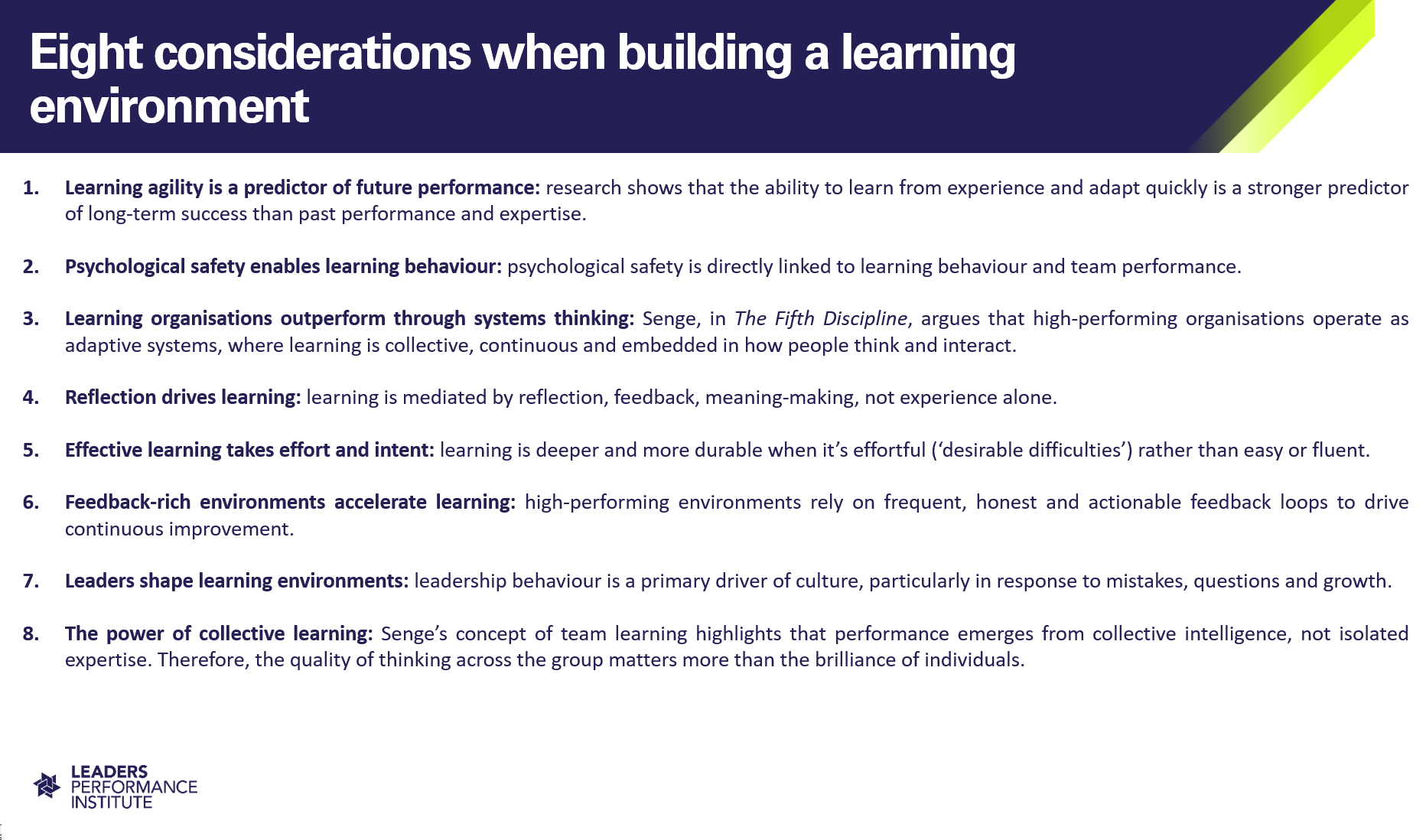
The table then conferred on the areas where learning currently breaks down in their systems and the challenges that prevent the creation of effective and impactful learning cultures. They raised a selection of common themes:
Time pressure and competing priorities
This was the most common challenge at the table. The struggle was succinctly captured by three attendees who have all worked in Major League Baseball. “The breakdown is typically the perception that I don’t have time for this,” said one. “The to‑do lists take precedent over the to‑be list.”
“You’re just constantly on to the next day and there’s not a ton of time to pause and reflect,” added another.
“Coaches think learning is getting in the way of getting the job done,” observed the third.
A lack of (the practice of) reflection
This is intertwined with the lack of time.
“The reflection piece is where we see a breakdown a lot,” said the Director of Player Development at an MLB club. “They probably don’t allow themselves enough time to review and reflect,” added an L&D manager at a British sporting organisation.
There is no consensus over “when is the right time to do all of this teaching and learning and, therefore, we simply don’t do it,” said a coaching lead at a British university.
Basic performance pressure
“There is a need for performance in the now rather than the development piece over time,” said a coach working in English football. “The managers are under real pressure.”
That coach was not alone. “The environment praises immediate results,” said another coach from the world of MLB. “There’s this pressure to produce over learning.”
This has engendered fixed mindsets when it comes to learning. “This is how we’ve always done it,” said the coach in English football citing a typical excuse.
A lack of clarity
As the Director of Player Development in MLB explained, “our group really wants to learn but is trying to be a jack of all trades and master of none.”
“It probably confuses coaches,” said the manager working at a British sporting organisation. “What do they want to be learning?”
As a consequence, that learning often happens in silos.
A lack of role modelling from leaders
“If leadership is not only supporting but modelling this, others then feel like they can take the time,” said the NCAA performance specialist, who explained that learning may be on the agenda of the lower ranks but “it stagnates at those middle tier leadership positions.”
Another leader based at a British university asked both the table and himself: “Are we doing enough as a manager to drive that thinking and priority?”
Poor quality teaching or coaching
“A lot of coaches are either overdoing the teaching so there’s not any learning taking place or there are too many missed opportunities for the teaching and learning,” said the head of coaching at a British university. “It’s also changing the perception of the teacher; I’m doing it to you versus facilitating learning.”
Then there is the question of timing. “Do you jump in straight away? Do you wait till the end of the session and reflect? Do you wait till the next day and do some teaching and learning?”
Then Whitworth invited the table to share what they need to do to make learning a competitive advantage in their organisation. As before, there were some common themes:
Space for ‘failure’ and ‘messy’ learning
“Learning is messy,” said a coach working for the NBA. “Learning is not ‘you learn it, you go and execute it, and everything’s beautiful’. If we don’t allow the space for mistakes then learning won’t happen.”
And, as an individual working in MLB, said, “it’s going to be messy, it’s not going to be pretty and we have to be okay with that.”
There also needs to be a shift in tone and content from negative to positive, as another coach working with the NBA noted. “A coach will highlight, ‘okay, you did this wrong’, but there is not too much focus on what you can improve.”
Psychological safety is further built through clear scaffolding. “If I’m dedicating time, how does it apply? How can I put it into play? How does it connect to my role?” asked a performance specialist working at a US college.
Crucially, messy does not mean unplanned. “We need to be more intentional in planning it,” said a nutritionist based at a British university. He was supported by a colleague who added that we need to “put it front and centre in objectives and appraisal meetings.”
Leaders that role model learning behaviours
“You’ve got to create that psychological safety,” said the Director of Player Development in MLB. “It goes back to modelling.”
“Do we give it time?” said the nutritionist. “Do we prioritise it in conversations and in meetings and in one-to-ones? Do we celebrate it when it’s done well? Do we hold people accountable when it’s not done?”
Embedded learning
“What about consistency and integration?” asked a performance specialist from an NCAA college. “Is learning aligned with the daily fabric of the organisation? It cannot be those one-offs. We’ve all been to those workshops, and it gives you a little energy boost, but what’s the lasting impact? What’s the follow up? How do we actually put it into play?”
Self-directed learning
“How can people take accountability for themselves and identify where they need to go?” asked a coach working in the NBA. “How can you create those spaces for self-reflection or guided discovery for them to self-assess against the framework or anything else; to use a reflection-type tool to think about those things so that they can then identify and take ownership themselves?”
Facilitated learning
“Are we really coaching if we’re not teaching or are we just hosting sessions?” asked the coaching lead. “There is that skill of being the facilitator of learning rather than just being the teacher.”
Collective learning
As De Geus and Senge argue, organisations achieve sustained advantage when individuals learn faster together. A performance expert working at a US college echoed their thoughts, noting that “the competitive advantages are the creativity, the collaboration, innovation, and the consistency.”
This reflects Senge’s concept of collective intelligence, where the quality of thinking across the group exceeds that of any one individual. Collaboration enables better shared thinking, faster learning cycles and better decisions, which ultimately allows organisations to adapt more quickly than their competitors.
Balance the short, medium and long term
“What do you need to change now and where can you take a longer view?” It was an important question, that was posed by a coach working in the NBA. “I think it’s being comfortable with the different timelines and knowing what the objective is and then being able to work through that with your staff and in your one-to-ones.”
What to read next
You Don’t Arrive Strategic: How Leaders Grow Into their Role
Strategy, skill acquisition and change management were just some of the topics on the agenda at the Leaders Performance Institute in April.
“I joked last week that this place feels like my home course,” he said. “I haven’t played anywhere else in the last two or three weeks really. I felt prepared in that way. I felt prepared that wherever I hit it on the golf course, I sort of know what to do. I know where to miss. I’m pretty comfortable with all the shots around the greens.”
McIlroy, a six-time major winner, disregarded other PGA Tour events and even chose to ignore a back injury that had been hampering his performance. At one point he even carded a score of 29 on the front nine at Augusta.
“It’s a good blueprint,” he continued. “I’m not going to take three weeks off before every major, but to get to the major venues early, do your preparation, play. And not just play and look at things, but actually play. Go out there with one ball, shoot a score and try to do it that way.”
McIlroy’s successful strategy came not long after our Leaders Meet: the Art of Strategy event at Lord’s Cricket Ground, where a range of guests, including Olympic gold medallist Tabby Stoecker and Lawn Tennis Association Performance Director Michael Bourne discussed how to build, stress-test and execute an effective performance strategy.
We know McIlroy wasn’t there because he was in Georgia, but he, much like yourselves, can check out the chief insights here.
And now on to other happenings at the Leaders Performance Institute in April.
Quote of the month:
Personally, I don’t believe in skills coaches.
These are the words of Rory Teague, who notably spent a year and a half between 2016 and 2017 working as a skills coach under then England men’s rugby union Head Coach Eddie Jones.
A decade on, Teague serves as the Head Coach of French Pro D2 club AS Béziers Hérault and, as he tells the Leaders Performance Institute, would not copy Jones’ appointment in southern France.
“I wouldn’t myself employ a skills coach,” he says. “I think every coach who coaches an area of the game should be able to coach the skill of their area. ‘Skills coach’ as a term has become archaic as coaching has moved along.”
Read the full story here.
We also addressed some of the common tensions, challenges and opportunities in skill acquisition here.
Insight of the month:
British military operations are primed to perform when personnel do not have even 60% of the desired information at hand.
As Aneaka Reay-Kemp, the Lead Military Intelligence Specialist at the UK Ministry of Defence, told the audience at Leaders Meet: the Art of Strategy, they are trained, as she said, to be “comfortable being uncomfortable”.
Rank, she argued, has limited bearing. In fact, the British military has taken steps to reduce the influence of its own hierarchies in moments of uncertainty. She said:
It doesn’t matter what’s on that person’s chest, it doesn’t matter their background, they still bring value no matter how junior they are. So for me, I find that when you’re operating in an environment where you don’t have all the information, understanding your people, understanding their capability, what they bring to the party can help save someone’s life.
Reay-Kemp was one of six guests who brought the day’s proceedings to life.
Shock of the month:
We often hear informally of ‘bad’ environments, but we don’t necessarily expect them to be amongst those considered the very best.
Yet that was the experience of Alexander Campbell, the former principal dancer at the Royal Ballet and Birmingham Royal Ballet when he attended the Royal Ballet School in the early 2000s.
“I struggled so much that I wasn’t sure whether I wanted to continue pursuing a career in ballet,” he said.
He had arrived from his native Sydney mid-term, which didn’t help him to settle, but it was also down to the type of prescriptive teaching that routinely irks younger generations today.
“We weren’t really encouraged to step out of our lane. It was like, ‘you know the steps, you focus on this, and we’ll worry about everything else,’” he added.
When reflecting on that time for Leaders members, he said it was “such a missed opportunity.”
His turn-of-the-century experience as a ballet student shows that the need for teachers to meet their students halfway is not new. Two decades later, talent environments in performing arts, and in sport, must be designed to engage a cohort that wants to know ‘why?’
Campbell, now the Artistic Director of the Royal Academy of Dance, shared his full story here.
Good to know:
What’s the difference between a ‘change’ and a ‘transition’?
A ‘change’ is simply that, but a ‘transition’ refers to the human adaptation required in the face of change.
That is according to John Bull, the Head of High Performance at Management Futures, who posed this question at a virtual roundtable for members of the Leaders Performance Institute where the topic of the day was ‘what makes change stick?’
In simple terms, as Bull explained, change initiatives fail not because the change itself is wrong but because the human transition is misunderstood, ignored or rushed.
“The object of change is quite straightforward; transition can be super complicated,” he said, “and what we tend to do in organisations is not pay nearly enough attention to managing transition. We forget about that.”
To help the virtual room in this regard, he introduced attendees the three phases of transition:
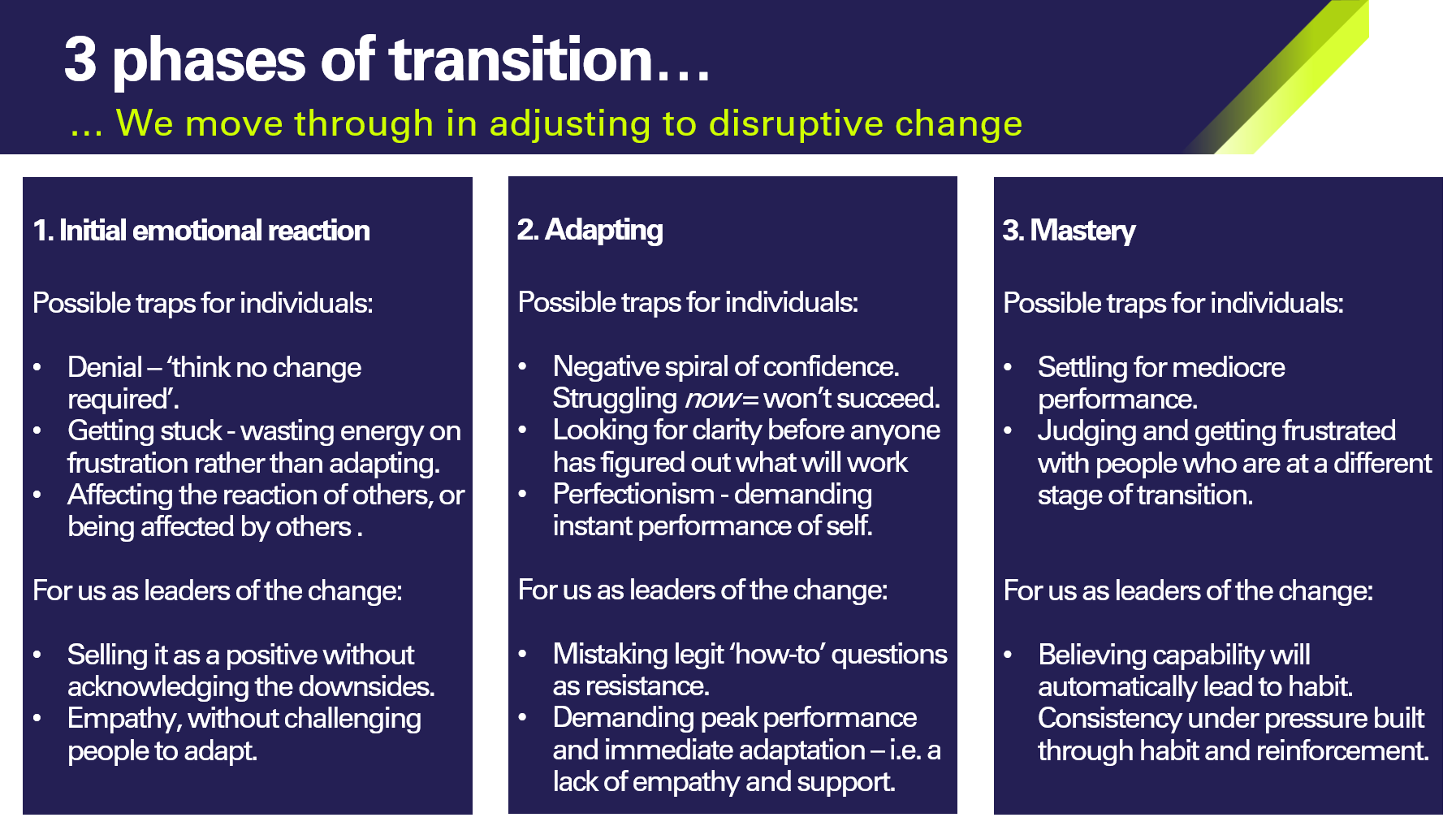
Bull brought these three phases of transition to life by describing how he went through each in response to a postponed work project:
The key thing about stage one is I am still really frustrated and annoyed with certain individuals that have led to that happening. Now, I would say on one level, that’s really understandable. It’s a significant project that we were really excited about; but here’s the key point: it is useless and doesn’t help me one bit. So all the energy that I’m investing in the frustration is not going into the adapting; and what I should be spending much more time on is focusing on what do we need to do to adapt now that change has happened.
Finally…
Four common causes of tension between business and performance… and four opportunities for increased collaboration.
Coming up for Leaders Performance Institute members
Artistic Director Alexander Campbell explains his academy’s approach with reference to his own experience as a professional ballet dancer.
“The reality is that not any one teacher is going to know, if you’ve got ten people in front of them, what’s best for each individual person in that class,” he told an audience at Leaders Meet: The Talent Journey last year.
“It’s about having that humility or that understanding that it’s OK not to know that definitively, for it to be a work in progress.”
Campbell, who spent 19 years at the Royal Ballet and Birmingham Royal Ballet companies, retired in 2024 to take up his current role, which gives him responsibility for the academy’s teaching across more than 80 countries.
It’s a position that grants him insights into the expectations, motivations and development needs of the next generation of dancers; and, as a self-proclaimed “sports tragic”, he was delighted to address an audience of Leaders Performance Institute members at the Royal College of Music in London.
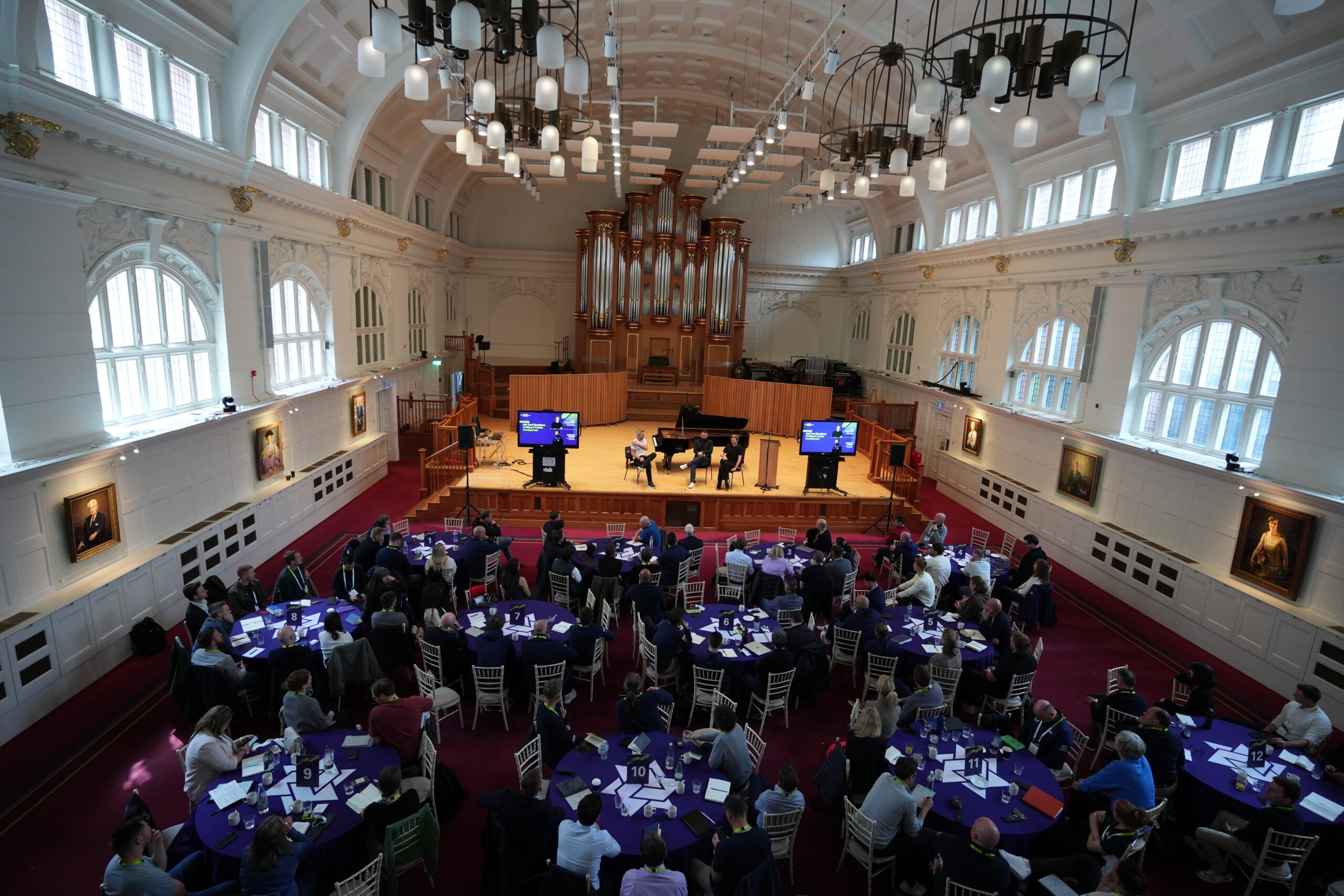
The Amaryllis Fleming Concert Hall at the Royal College of Music in London where we hosted Leaders Meet: The Talent Journey in April 2025.
Below, we explore, through the lens of Campbell’s own ballet career, his approach to meeting that challenge head-on with the RAD.
Meet students halfway
Campbell’s teaching mindset has been influenced by his underwhelming student experience at the Royal Ballet School, which he attended on a scholarship between 2003 and 2005.
The main problems were the teachers and the environment. “I struggled so much that I wasn’t sure whether I wanted to continue pursuing a career in ballet,” he said.
He had arrived from his native Sydney mid-term, which didn’t help him to settle, but it was also down to the type of prescriptive teaching that routinely irks younger generations today.
“We weren’t really encouraged to step out of our lane. It was like, ‘you know the steps, you focus on this, and we’ll worry about everything else,’” he added.
As Campbell explained in a 2017 interview with the Daily Telegraph, “we weren’t encouraged to ask too many questions. I think it took me too long to learn that, because I was naturally inquisitive, and wanted to know why we were doing certain things.”
When reflecting on that time for Leaders members, he said it was “such a missed opportunity.”
His turn-of-the-century experience as a ballet student shows that the need for teachers to meet their students halfway is not new. Two decades later, talent environments in performing arts, and in sport, must be designed to engage a cohort that wants to know ‘why?’
Promote early sampling
Campbell followed in the footsteps of his maternal grandparents, Valma Briggs and Mario Desva, who had both danced with Ballet Rambert in London.
By the early 1990s, Briggs was teaching at Academy Ballet in Sydney; Campbell’s mother worked in the same school as a manager. He began dancing at the school at the age of five.
He played grade cricket too. If his dancing talent was no surprise then nor was his cricketing ability as his father Alan was a professional player.
Campbell might have gone down that path himself had circumstances been different, but there was no pressure from his parents to choose one over the other; his teachers at Academy Ballet were similarly minded.
Of his cricket and school studies (he was homeschooled from the age of eight), Campbell said, “my parents were keen for me to remain interested in other things so that I was ‘Alexander, a person with various interests’ rather than just ‘Alexander, the ballet dancer’.”
Much like the world of sport, the performing arts has increasingly moved away from the idea of early specialisation. On Campbell’s watch, the RAD promotes the type of holistic development he enjoyed; and he is not alone. “Thinking about and knowing certain conservatoires, thinking about their talent pathways and their talent identification, how they train people is being reconsidered.”
The shift towards co-creation
As Campbell explained, RAD teachers must be able to adapt to a generation of students that desire agency in their own development.
“As educators and teachers, it’s really easy to go, ‘OK, I have to have this knowledge and I have to demonstrate to them that I know how best to get from A to B’,” he said.
That isn’t true, of course, but it requires humility on the part of the educators; and much of Campbell’s focus is on equipping dance RAD teachers with the “understanding that it’s OK not to know things definitively, for it to be a work in progress, and that it is going to be different, not just for each individual, but for each year [grade] at the school.”
Campbell’s decision to persist with ballet beyond his experience at the Royal Ballet School was influenced by his “opportunities to work with other coaches and have different experiences” at the Birmingham Royal Ballet. When he joined the company in 2005, it enabled him to see “a different environment and different way of operating that felt much more aligned to the sort of experience that I’d hoped for and wanted to have.”
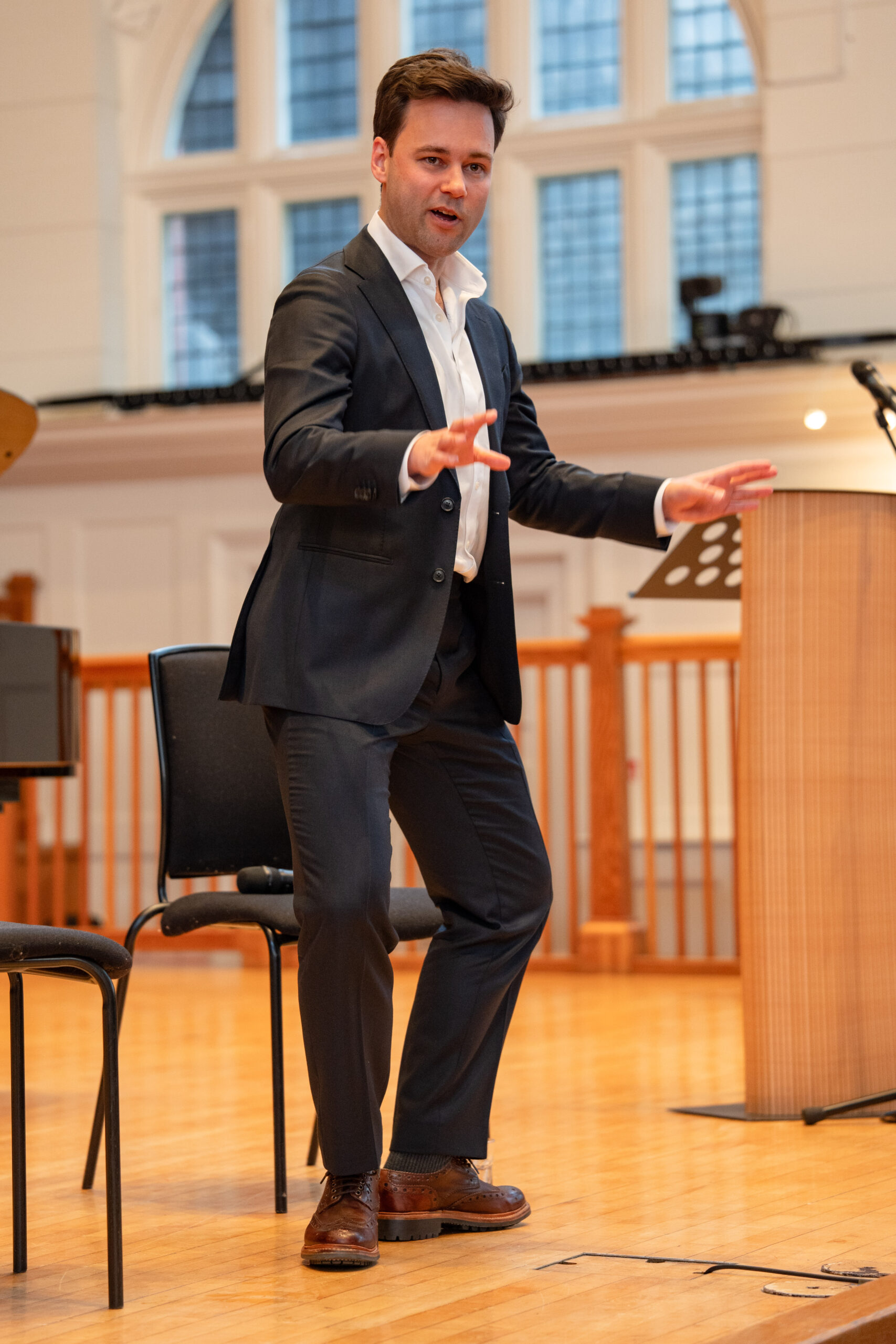
Campbell demonstrates a plié for an audience of Leaders Performance Institute members, who imitate his movements with varying success despite his words of encouragement.
Care is a baseline expectation
We know that wellbeing is a performance enabler; younger generations sense it too.
Campbell wants RAD staff to be role models of wellbeing. He said: “Educating our teachers on that and the importance of looking after themselves could have the most impact in a fairly short period of time.” It must start with him as Artistic Director; a fact of which he is “acutely aware”.
The RAD has also made efforts to improve safeguarding in its schools and increase the accessibility of its courses, particularly for students and participants with additional support needs. “We’ve got teachers who have parents saying ‘my child has additional needs but they love dance, they really want to be part of it; is that something you can do?’ And a lot of our teachers will find a way or have found a way, but a number of them feel nervous about the responsibility that entails. They don’t want to get it wrong.”
Campbell and the RAD are working to provide those teachers with the right tools. “We give them the support so they can say ‘this is how you go about it or if you want to find out more this is where you would go’. I think this is giving us the best opportunity to broaden our participation in ballet and dance.”
A broader definition of success
Campbell admitted that all his “Plan As” came off in his professional life. He is a prime example of talent meeting opportunity.
However, as he said, “my self-worth and my personality were not determined by whether I was successful in that pursuit.”
He makes sure this is reflected across the RAD’s curricula. “I don’t want to just provide for those people who want to get to the top level and be the very best.” Rather, he also wants to support the career aspirations of students who say, “I enjoy this, I’m quite good at it, but actually I don’t have that real drive to pursue this one very narrow thing.”
Their love of the art form might lead to a career in dance teaching or one of the industry’s that surround the performing arts such as lighting, set design or even physiotherapy with a specialism in dance. The RAD will support those aspirations. “It’s understanding that there are more opportunities than just being the dancer on the stage.”
What to read next
AS Béziers Hérault Head Coach Rory Teague ponders the question of skill acquisition and delivers his six considerations.
These are the words of Rory Teague, who notably spent a year and a half between 2016 and 2017 working as a skills coach under then England men’s rugby union Head Coach Eddie Jones.
A decade on, Teague serves as the Head Coach of French Pro D2 club AS Béziers Hérault and, as he tells the Leaders Performance Institute, would not copy Jones’ appointment in southern France.
“I wouldn’t myself employ a skills coach,” he says. “I think every coach who coaches an area of the game should be able to coach the skill of their area. ‘Skills coach’ as a term has become archaic as coaching has moved along.”
He feels that assigning skills coaches to coaching units risks diluting accountability. “When something breaks down, you’re not going to just look to the skills coach who’s sat in the room waiting for the moment to say ‘oh, that’s me’,” he continues.
“If the lineout doesn’t go well because of the throw, who’s responsible for that? Is it the lineout coach or the throwing coach that comes in once a week? I would prefer that my forward coach has understanding of the skill of throwing and takes responsibility for it.”
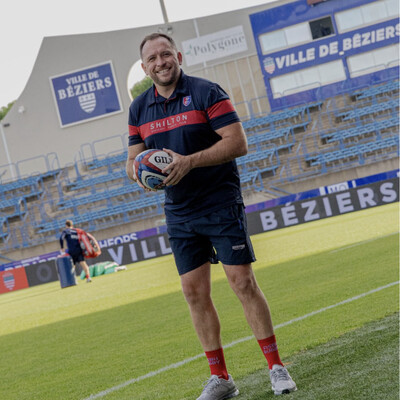
AS Béziers Hérault Head Coach Rory Teague. (Image: Rory Teague / LinkedIn)
Over the course of half an hour, Teague ponders the topic of skill acquisition from a coaching career spent as a skills coach, unit coach, and now a head coach.
Here are his six of his main considerations.
1. The difference between ‘skill’ and ‘technique’
“Ultimately, skill is technique performed under pressure,” says Teague, who has been influenced in his thinking by coaches including Rick Shuttleworth (a consultant at organisations including the Rugby Football Union and UK Sports Institute), Scott Wisemantel (Attack Coach at the NRL’s Paramatta Eels) and, of course, Jones (who is now in his second spell as Head Coach of the Japan men’s team).
“They were three incredible coaches who helped me along the way,” he adds. “They pushed me to go and find out what is ‘skill’; what is the difference between ‘technique’ and ‘skill’? Because there’s a big difference.” Skill, he suggests, is the ability to select, adapt and execute actions in a pressured context. There is little value in a player passing the ball ten metres to their teammate repeatedly at the end a training session. “They’re only working on their technique, because there’s no external cue for when they’re passing.”
It follows that skills in rugby develop as a consequence of an interaction between mechanics, cognition and match context. “If I stand in front of the player and they run towards me and I run towards them, they’re interacting with the environment i.e. me, them, and the distance – and then they’re performing the technique.”
There is also a psychological and emotional dynamic that goes beyond cognition and technical execution. All these elements can affect skill expression in a match situation.
“There’s no substitute for being in the saddle,” adds Teague. “Hot feedback in the moment can be so powerful because you’re living that moment with the player.” He will use the moment to talk them through a situation.
He will readily halt training sessions to allow kickers to practise too. “Get them to kick when their heartrate is up and their emotional state is variable rather than just doing 50 kicks at the end of the session – because that’s just technique.”
2. Implicit and explicit learning both matter
At the heart of discussions about skill acquisition is the dichotomy between information-processing approaches (skill acquisition as learning to plan and execute correct movements by processing information internally) and ecological approaches (skill acquisition as learning to perceive and act in context by interacting with the environment).
Teague is not a dogmatist, even if he leans towards the latter. “I like implicit coaching where the exercise and your questions give the player the feedback,” he says. “What exercises can you design whereby you don’t have to say anything, the player performs the act, and the exercise gives the player the feedback? If you look at, say, goal kicking or throwing, you want the player to self-regulate when they’re in the moment and feel the pressure.” He will look to ask a series of questions that “get the player to think about where they want the ball to end up, where they want the ball to go versus breaking it down too technically”. He will also be mindful of the timing too, both pre and post-match.
However, when it comes to explicit approaches, “it’s not that those guys you’re very direct with are not taking control of their own journey and development, they just need to be told.”
It comes down to knowing the individual athlete. “I’ve worked with some players where I’ve fluffed it up too much and asked too many questions and they just want you to go ‘tell me exactly what you want me to be doing, tell me exactly what I’m doing wrong, tell me exactly how I can get it better’. Whereas with others, you can ask ‘what do you think?’”
Skill acquisition requires the coach to understand what the best approach is and why. Additionally, while it may be ideal for the session design to act as the teacher, there will be times when the coach needs to check for understanding.
3. Ask yourself: what will help the player?
While it is important for players to be drawn towards training sessions, whether by coaches placing balls in their line of sight or by making sessions enjoyable, the guiding principle should be whatever will help the players in that moment.
“Do you want your players to think your coaching drills are really good or do you want players to think ‘you’ve taught me how to pass better’?” As ever, the answer “depends on where you are” with the players in question.
In any case, “sometimes you have to get through the reps and you can’t deviate away from repetition”. Teague says: “I’ve seen coaches try to do these fast exercises to appease players and sometimes they can be so complicated that the players don’t buy into it because of how complex it is.”
There will be times when a coaching intervention can harm a player’s development and Teague will consciously be less prescriptive as a game week develops. “As you get closer towards the game, you’re looking at confidence versus correction” because sometimes less is more.
4. The coach is only part of the player’s journey
Between 2022 and 2023, Teague worked as a forwards and backs coach with Racing 92 where he had the opportunity to coach Finn Russell, who is widely considered one of the best fly-halves in the world.
Teague reflects on that period and what he refers to as the “culture of extras”, which is the work that the world’s best players continue to do on their basic skillsets.
“Finn would ask to do some extras when he thought it was right for him,” says Teague, who explains that Russell’s experience guided their training interactions. “Sometimes he’d do them on his own, sometimes he’d ask a coach to be there to give him some feedback, sometimes he’d want a coach there just to keep him company.”
Teague has also worked at school and underage level where he employed a more directive approach but in an environment like England or Racing, “telling them what to do probably isn’t the most intelligent thing.”
Instead, “I think the more players take control of their own skill development, the more you as a coach just have to be part of that journey, not driving that journey for them.”
5. Be patient, it’s a journey
The Leaders Performance Institute asks Teague what he knows now that he wished he knew whilst working as a skills coach.
“Skill acquisition takes a lot more time than I thought,” he says, adding that it could take a season for a goal kicker to become 10% better. “I don’t know if patience is a skill, but I wish I understood more about the learning journey of the player in terms of skill; that each player can pick things up at different rates.”
It comes back to the player-coach relationship. “Players need to take responsibility around what they want to be working on; and that’s a shared process with the coach. Obviously, if there’s something the player has really not identified that they need to work on, and if the coach has to tell them, then so be it.”
Teague will decide when to intervene, when to step back, and when to change the task.
“If you’re clever in your design, you can keep pushing and changing the design incrementally as you see the player evolving and becoming better. Equally, you can take it backwards if the player isn’t getting it. So it’s that ability to move up and down the bandwidth of the learning journey where, ‘OK, I’ve set the start point here at three, I need to go back to one before I can move to four, five and six’.”
6. Data informs, it does not decide
When it comes to using data in skill development, Teague describes it as a question of “data versus feel”.
He says: “You can look at the number of passes per game, for example, but then I think you have to really sit down, watch the video, watch the technique, watch the context, look at the environment that they’re in at that moment in time in the game, conditions; there’s lots of different things.”
As ever data must inform judgement, not replace it; it must provide a meaningful talking point. “I think data can serve its purpose, but what we don’t want to do is go too much down the data route without looking at the individual data moments in the game.”
As a final question, the Leaders Performance Institute asks Teague what advice he has for coaches working in skill development.
“Go and find the theory behind skill acquisition. I think it will change you. It will change mindsets, definitely.”
What to read next
How Do you Develop the Most Expert Coaching Workforce in World Football?
Leaders Performance Adviser Iain Brunnschweiler addresses the complex world of youth sport.
For all the experience in the virtual room – members that have spent decades working with youth athletes – each struggles to balance the elements that help young athletes to realise their potential.
“You’ll never solve it,” says Brunnschweiler, who has worked on successful talent pathways in both football and cricket. “The interesting part is how we make decisions and deliver on a strategic approach that’s appropriate for the context of the athlete.”
For the benefit of the virtual table, he outlined five common tensions that he has encountered on talent pathways:
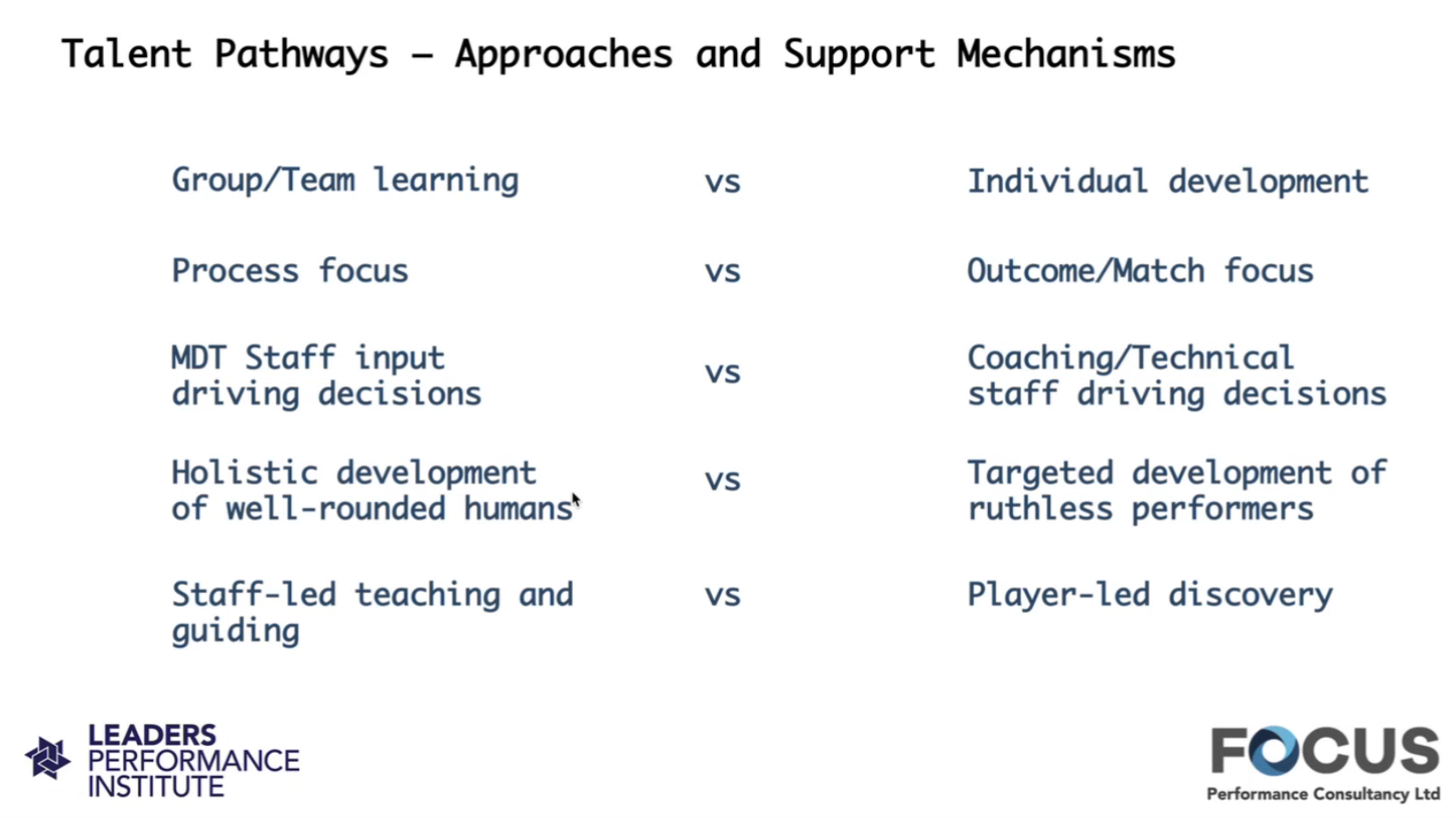
The list is not exhaustive, but it is representative.
“The headline feedback from everyone at the roundtable is that probably they’re weaving down that ‘versus’ line in the middle when they’re doing this well,” adds Brunnschweiler.
He explains each tension in turn:
1. Group/Team learning vs Individual development
“Within your programme, how much time are you spending on team tactics, team interconnectivity, team culture, etc. versus identifying individual work-ons, individualised practices, individual focused development, individual prioritisation?”
2. Process focus vs Outcome/Match focus
“This is very similar to the first in many ways but, in my mind, is distinctly different. How much are you focusing on the process versus the outcome? And this is really around how you’re monitoring development. So if there’s a pathway lead or an academy director: are you looking at whether teams are winning when it comes to competition or are you looking at tracking progress against process markers that are embedded either within training or within the game?”
3. MDT staff input driving decisions vs Coaching/Technical staff driving decisions
“This is about athlete programming. How much of your emphasis is put on the ologists, multidisciplinary staff, the scientists versus coaching and technical staff? Who’s making the final call? How are you looking to integrate? What are the processes or systems that allow those two things to collide effectively? This was certainly one of the tensions that strongly resonated with the group.”
4. Holistic development of well‑rounded humans vs Targeted development of ruthless performers
“There’s been a massive growth in talent pathways around understanding the holistic nature of development and the growth in player care, support, psychology support, performance, wellbeing, and education off the pitch. The common question is ‘how do we develop well‑rounded humans?’ And the tension is someone saying ‘but surely it’s just about game performers can we spend all of our time targeting development of that ruthless in‑game performance?’”
5. Staff‑led teaching and guiding vs Player‑led discovery
“There’s a perception that it’s slower to do the player‑led, but it might be deeper; whereas it’s quicker and can feel more rewarding to do the staff‑led. ‘Let me tell you, here’s some guidance. Let me solve the problem for you.’”
Brunnschweiler then reflected on some of the available support mechanisms:
1. Consider if the athlete’s experience of a programme matches your teams’ intent. Much will depend on the athlete’s prior experiences, plus how and when they came to your programme.
“There’s a lot of insight generated around young athletes in all sports now and it’s like, well, how do you harness that background information as well as that current information you’re getting on them in order to make decisions around their programming?”
It requires a shared mental model between the different disciplines.
“There were some good examples at the roundtable where team culture means people’s view are respected, taken onboard and valued. And that’s utilised as a part of a decision-making approach.”
2. Retain coaches with age-specific expertise. Too little value is placed on age-group coaches, which can lead to those individuals seeking employment with more mature athletes.
“If I’m the first team coach, there’s a perception I’m better than the under-12s coach; whereas they’re equally challenging in different ways. Someone who’s brilliant at working with 10 to 12 year olds may end up working with older athletes because they get paid more.”
They may or may not be equipped to make that transition but he argues that teams can make it less of a problem by asking:
“Can you manipulate your wage structure to ensure these academy coaches stay valued within the role they’re best deployed in?”
3. Remember: well-rounded athlete can still possess an edge. While there is a desire to ensure holistic approaches that promote well-rounded development, there is a risk in taking it too far.
“There’s a danger that we over-index on compliance within pathways; and, actually, being an edgy, ruthless person is an imperative characteristic for an elite performance athlete.”
4. Development support for coaches. There is a time when a coach needs to be instructional and clear as well as a time when they need to skilfully draw a decision from an athlete.
“How do we provide learning and development support for coaches and other members of the MDT in this space so they can be skilful at learning design and skilful at knowing when to provide which approach based on the context and the athlete?”
5. Give the young athlete a sense of agency. Let young athletes speak in conversations around their IDPs and help them understand why things may feel challenging.
“I’ve seen people saying we want to put on sessions that look slick. That may or may not be the objective. It might also be that we’re really clear as a club that we think the deep learning and progress occurs in messy sessions where it’s clunky and we’re allowing players to play and solve problems. As coaches, we should be the best problem-setters.”
What to read next
10 Ways in Which the Best Environments Support their Pathway Athletes
