John Bull of Management Futures says it as he sees it, but stresses that all teams can improve their teamwork.
“One of the things I see, certainly in the corporate world, is that people mistake ‘good’ for high performing,” said the Head of High Performance at Management Futures. “In my experience, genuine high-performing teamwork is much rarer than people would admit.
“We know what it feels like when a team is dysfunctional and something’s not working, but when a team is harmonious and there are fairly good relationships, people mistake that for being a high-performing team.”
He presented this distinction between dysfunction and high performing as different ends of a continuum:
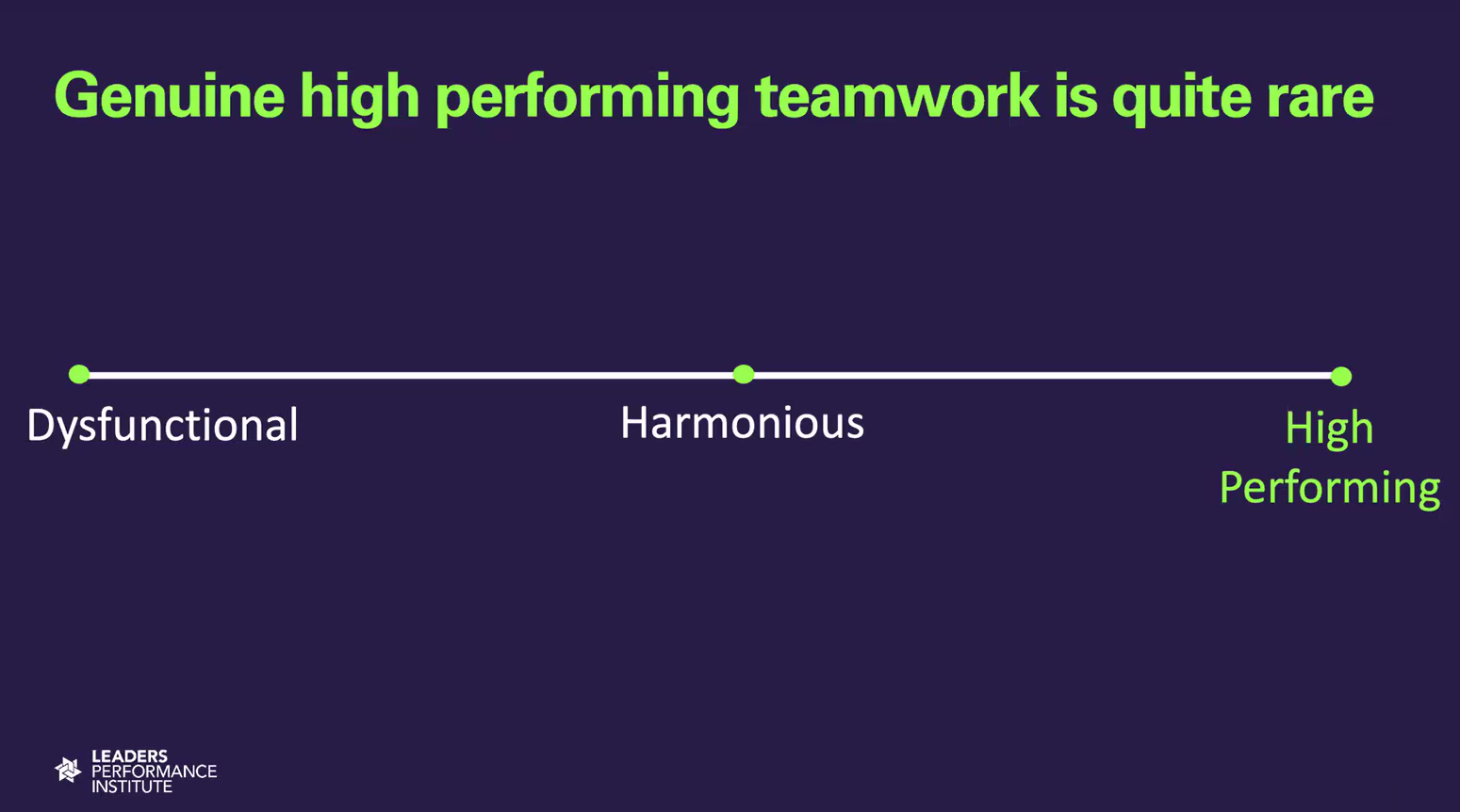
“In order to get to the right-hand side of this continuum, high-performing teamwork requires people to lean into behaviours that don’t come naturally,” added Bull.
He then explained that there is also a risk in over-collaborating. “This is about quality not quantity. Our efforts to get more out of teamwork can sometimes slow down performance.”
There is also a distinction between working within a ‘stable team’ (e.g. a department within a high performance team) and teamwork across boundaries, between people who rarely work together or don’t see themselves as one team (e.g. business and performance functions).
The aviation industry, Bull said, excels at cross-boundary teamwork.
“If you think about when you have a critical incident while flying, you’ve often got people in the crew who don’t know each other. The crew must collaborate with air traffic control on the ground, and they won’t know them,” he continued. He explained that the industry has long valued listening and speaking up.
It has also placed an emphasis on ‘diamond thinking’, which looks like this:
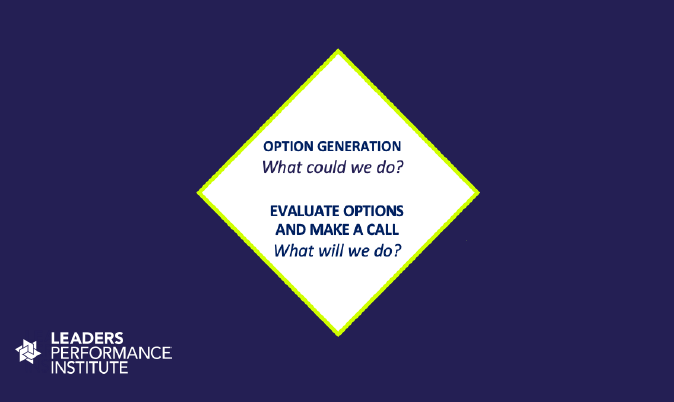
“In aviation, when you have to solve an issue, as a rule of thumb, you should spend 50 percent of the time opening the diamond up,” he said. “You get a lot of input but you’re then clear on who’s going to make the final call. Some of us in the coaching space struggle with the balance between democracy and a leader making a decision. Diamond thinking allows for that.”
Bull then led the table into a discussion on his four building blocks of team performance:
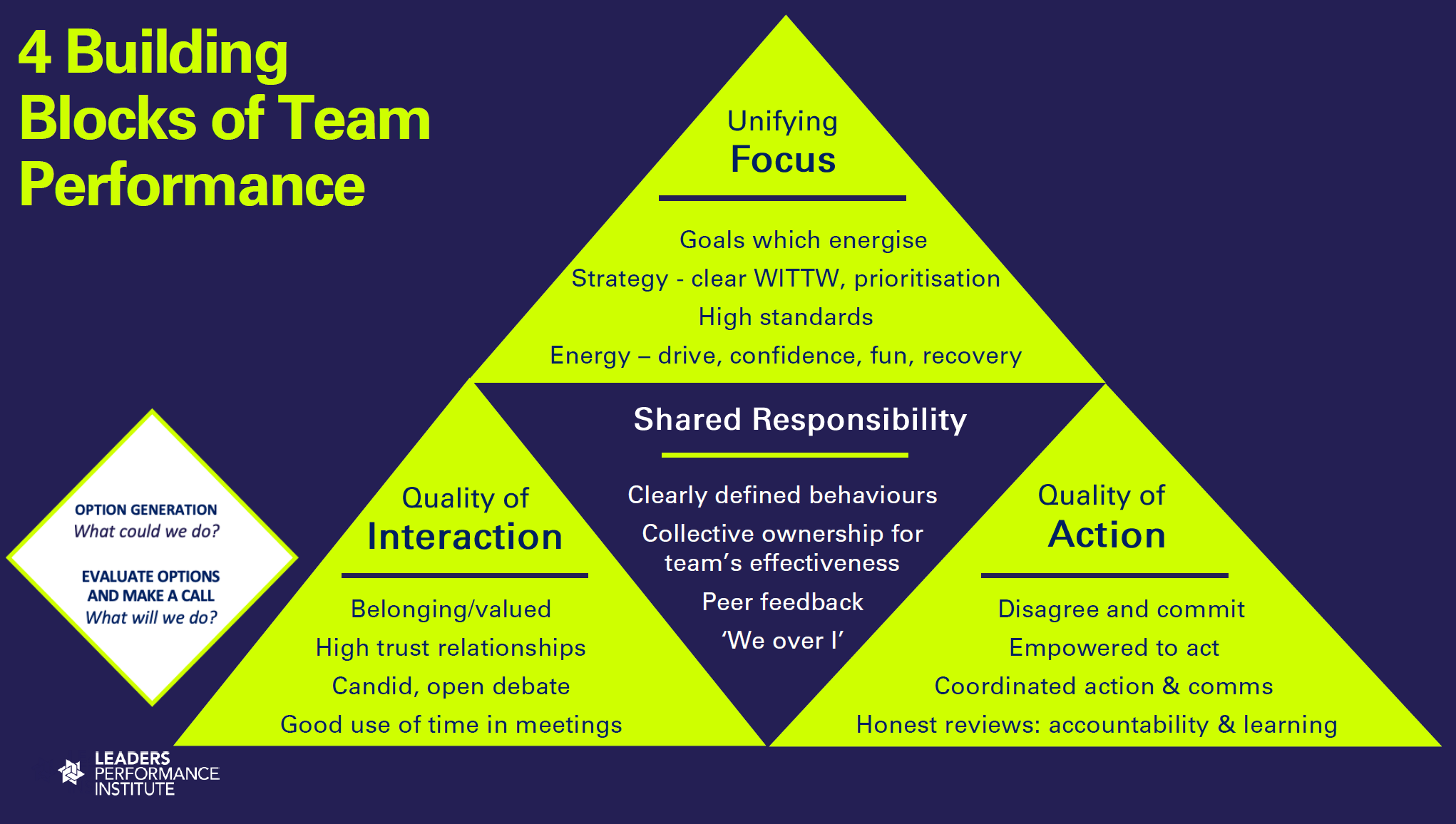
He explained each in turn and their different elements.
1. Unifying focus
“If you don’t have clarity you can’t create any of the other conditions.”
2. Quality of interaction
“Trust enables us to lean into more uncomfortable conversations and have the real performance conversations in a way that doesn’t put those relationships at risk.”
3. Quality of action
“High-performing teamwork emerges when people go for the gap.”
4. Shared responsibility
“It’s getting people to recognise that when the team’s not performing they should feel empowered to step in and say something about it and not just rely on the team leader.”
As a follow on, Bull highlights six human factors that can serve to inhibit team performance:
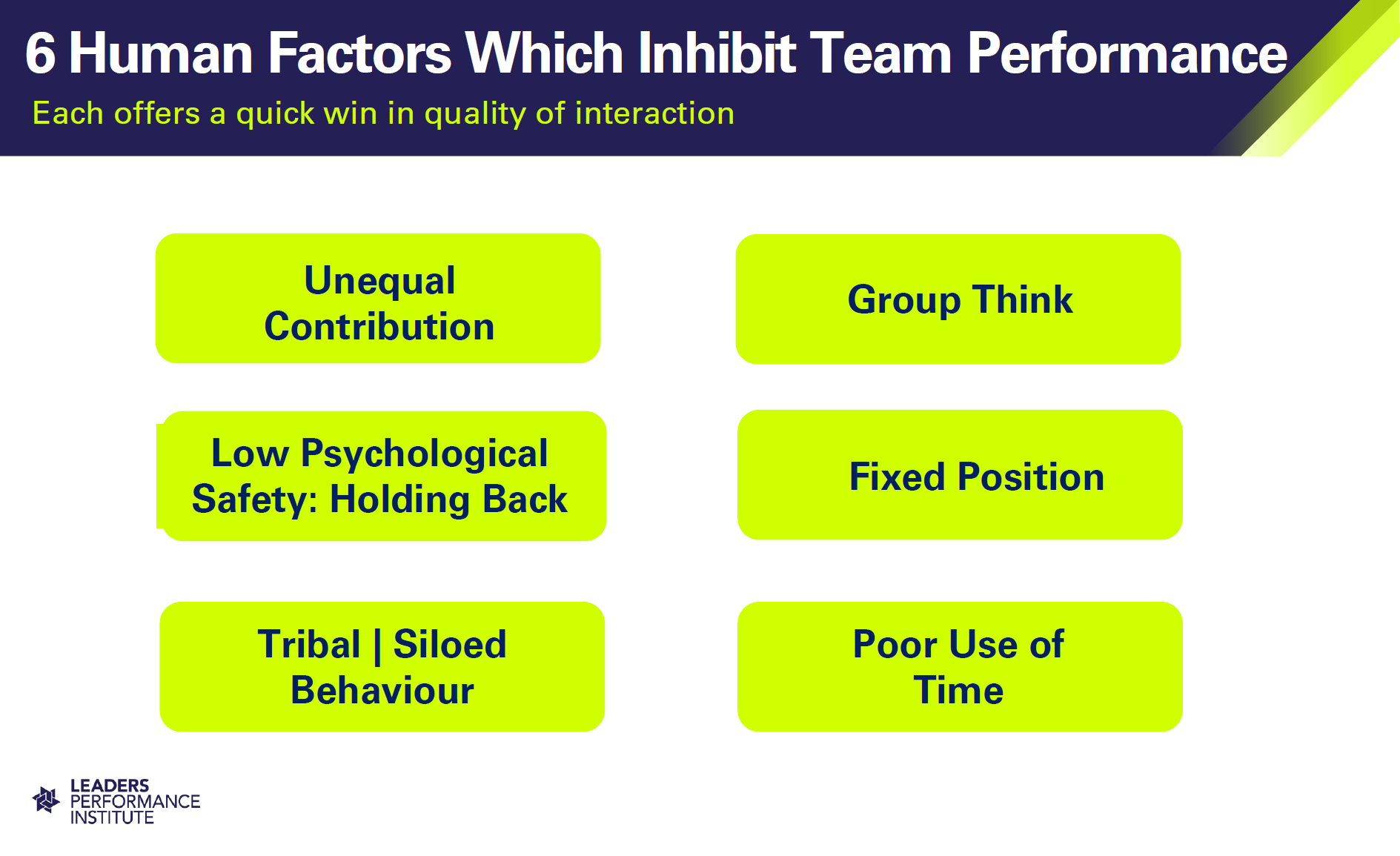
Again, he shared his thoughts on each:
Unequal contribution: “We know from research that if you have a group or a team of eight people 70 percent of the contribution will come from two or three… Status and personality has more of an impact on who speaks than who knows stuff, and that should scare you as a team leader.”
Groupthink: “It’s a hardwired principle of how our brains work that we will conform to the thinking of the group if we don’t have a strong view… One of the best ways to combat groupthink is to get people to think individually before a group discussion.”
Low psychological safety: “Probably the biggest thing that kills team performance is a lack of psychological safety.”
Fixed position: “One of the things that hurts psychological safety the most is defensiveness, where people are in a fixed position. The way you deal with the fixed position that I’ve seen work best is to deal with it one-to-one.”
Tribal or siloed behaviour: “We’re wired as humans to be tribal and there are two types of tribal behaviour. One is where you are deliberately trying to beat the other. What is much more common is you’re not competing but you just don’t think about the other ‘tribe’ as much.”
Poor use of time: “Humans tend to be pretty bad at how we use time together in groups. A quick win is to get the team thinking about when we had our best team meeting, what was it about that, what’s getting in the way of it.”
Bull then returned to the themes of psychological safety and fixed positions when sharing and describing the three types of “thinking environments” in groups and teams as revealed by Management Futures’ research:
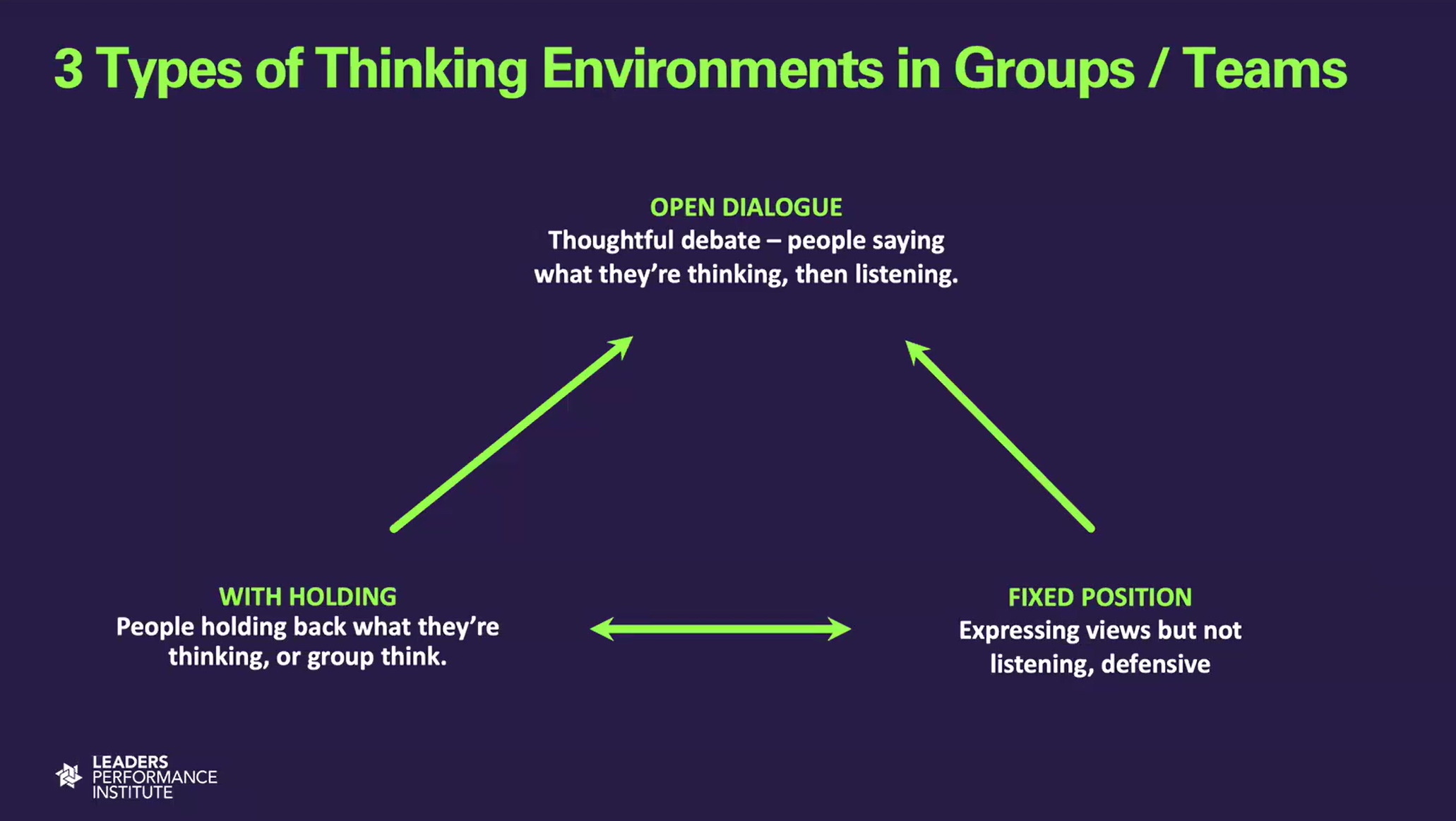
“The bottom two points are ineffective,” said Bull. “The definition of open dialogue is where people are saying what they think, but as soon as they’ve put their view out they’re inviting disagreement. It’s not about trying to win the argument, it’s about trying to get to a collective insight of what we know as a group. It’s very different to trying to influence colleagues.”
With time running out, Bull shared a final slide highlighting four key skills to encourage collaboration, with a series of questions for members to ponder: 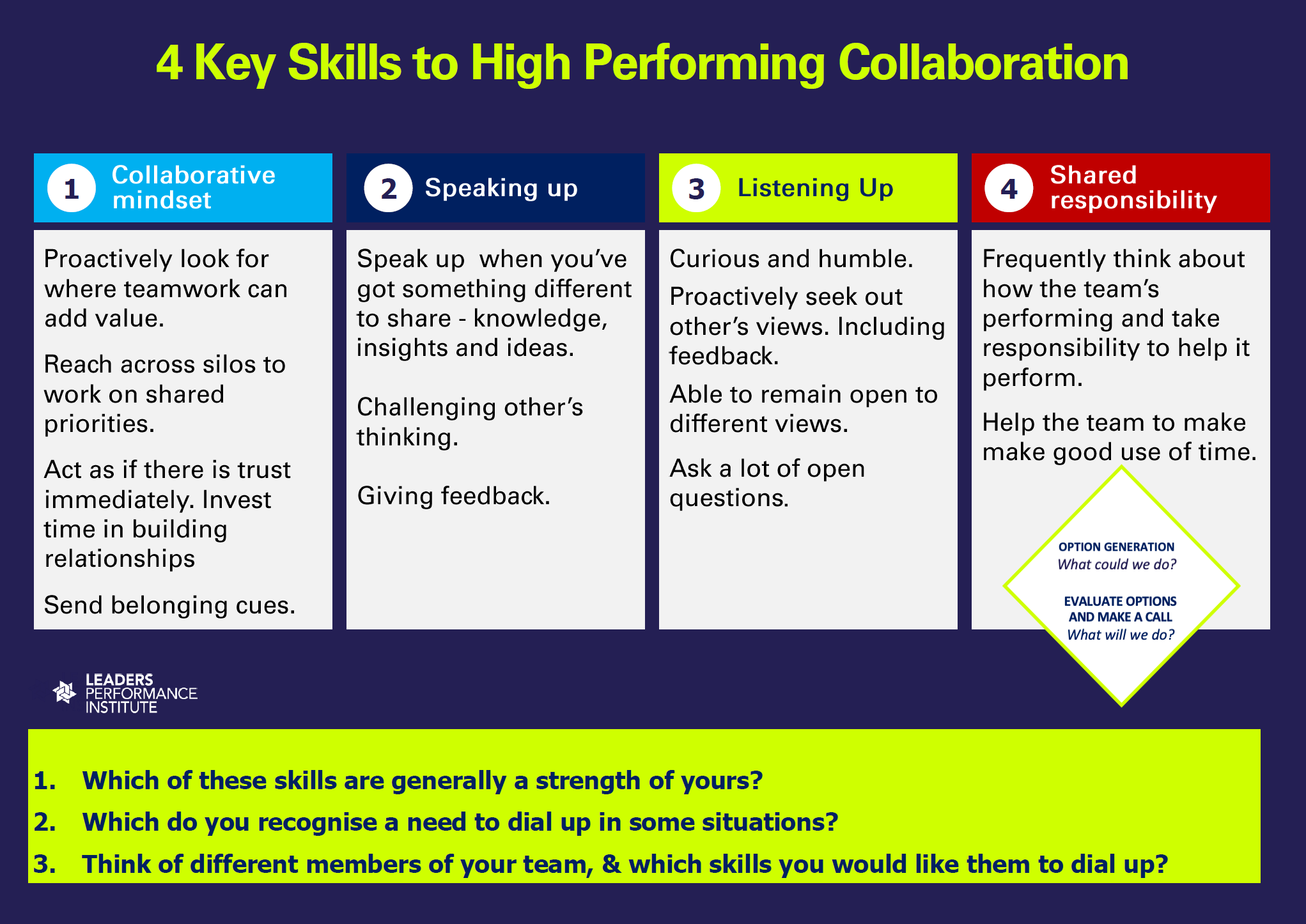
At the 2025 Leaders Sport Performance Summit, some of the most respected leaders in high performance set out their plans to build the winning teams of the future.
The South African, then with Munster, had agreed to become the Head Coach at struggling Bath in December 2021.
A few days later, he switched on the TV only to see Bath go 0-28 down after just 25 minutes of their Champions Cup tie with Leinster.
It prompted the Everest comment, as Van Graan told an audience at the 2025 Leaders Sport Performance Summit at the Kia Oval in London.
He eventually took the reins at Bath’s Recreation Ground in July 2022 and, over the next three years, led one of the most remarkable transformations in English rugby history.
In May, Bath lifted the European Challenge Cup, Premiership and Premiership Rugby Cup.
The tale of Van Graan’s ‘Rec Revolution’ set the tone for an international gathering of over 300 high-performance leaders to share knowledge, best practice and inspiration.
The agenda took its lead from our Trend Report in which more than 200 performance leaders from almost 40 sports told us how they expect the industry to develop in the years ahead.
Five trends stood out:
Van Graan is at the vanguard of several of these trends and, across both days, the Leaders Performance Institute delivered a range of guest speakers from organisations including England Rugby, the Royal Air Force, and the Haas F1 team to speak to each trend.
The following is a snapshot of what they said.
1. Alignment is now a competitive advantage
For evidence of the stock placed in being aligned, look no further than Bath’s transformation from a rabble to the best team in England in just three years.
Van Graan said: “I put up a picture of Twickenham on the very first day. I said ‘I can’t tell you how we’re going to get there, but we will get there.”
He wanted his playing group, coaches and other performance staff to coalesce around three values: connection, clarity and commitment. The trick was then bringing those to life.
Johann van Graan
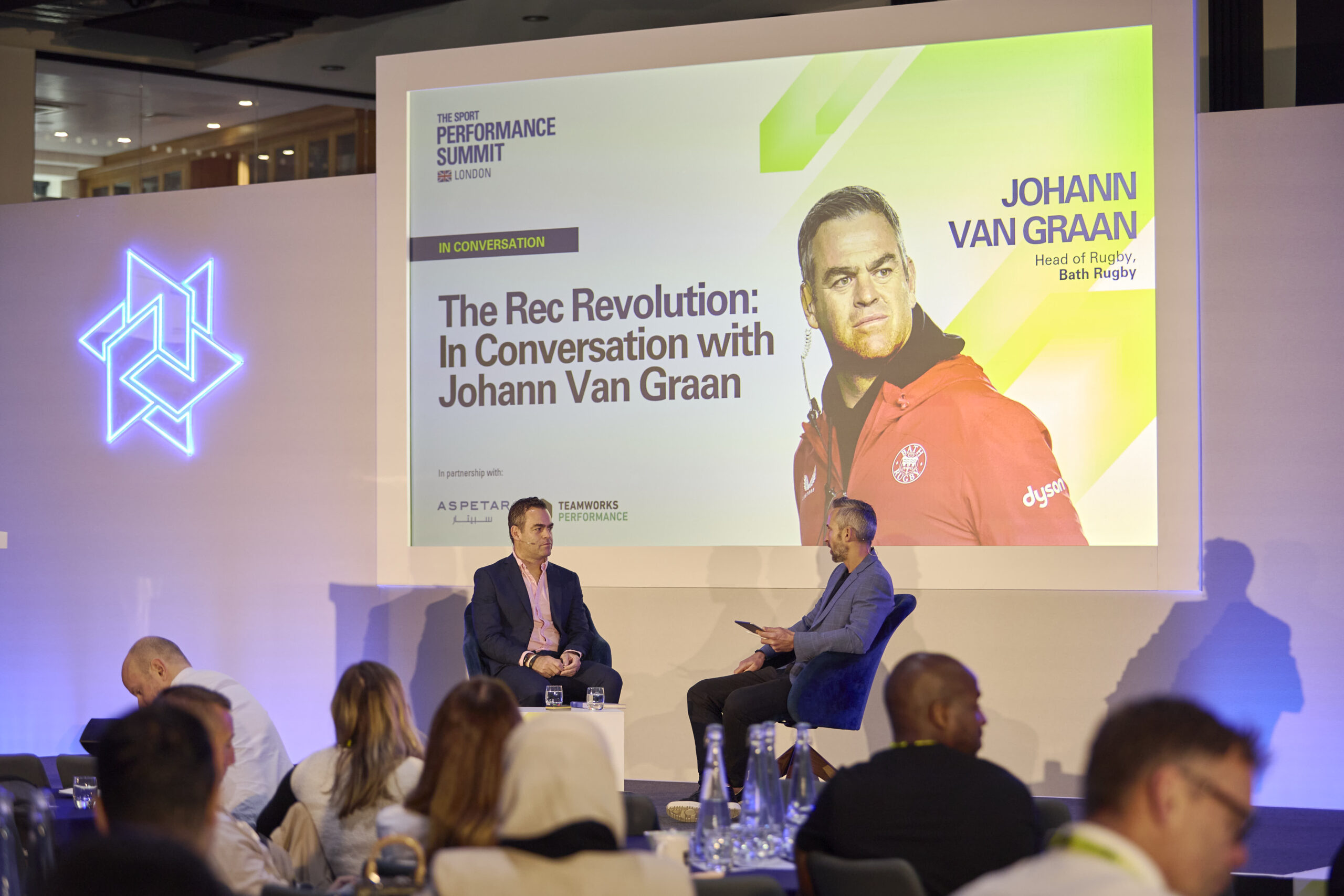
Bath Head Coach Johann van Graan in conversation with host Iain Brunnschweiler.
2. Leaders increasingly seek to empower and collaborate
John Mitchell offered another inspiring story from the world of rugby union.
In 2023, when he signed on as Head Coach of the England women’s national team, it was Mitchell’s first time coaching a women’s team.
The Red Roses had a genuine shot at winning the Women’s Rugby World Cup on home soil in 2025, but a talented team needed an experienced guiding hand.
The team delivered, with Mitchell receiving plaudits for his role as England secured their first world title in 11 years.
Two months on from that achievement, the audience found Mitchell (affectionately known to his peers as ‘Mitch’) in typically reflective mood alongside the recently retired Emily Scarratt, who was part of the Red Roses’ winning squad.
Sport (and rugby union) grows ever more complex and yet, after 30 years, Mitchell feels he has never been better equipped to coach.
“You don’t have the full scope,” he says of his early coaching days in the mid-90s. “You have strengths early on that are recognised but then also you sometimes don’t know the whole of yourself. So you take the time to understand the whole of yourself.”
He came to a critical understanding. “When I was younger, I was going to try and be right. Maybe I was trying to prove myself as a coach.”
John Mitchell

England Red Roses Head Coach John Mitchell shakes hands with former England fullback Emily Scarratt at the conclusion of their panel session.
Emma Keith built on the theme of empowerment in her presentation on officer training in the Royal Air Force.
“Cultures and environments can only grow when everybody takes accountability,” said the Commandant of the RAF’s Tedder Academy of Leadership. Keith, a group captain, is the first female to run RAF officer training.
Emma Keith
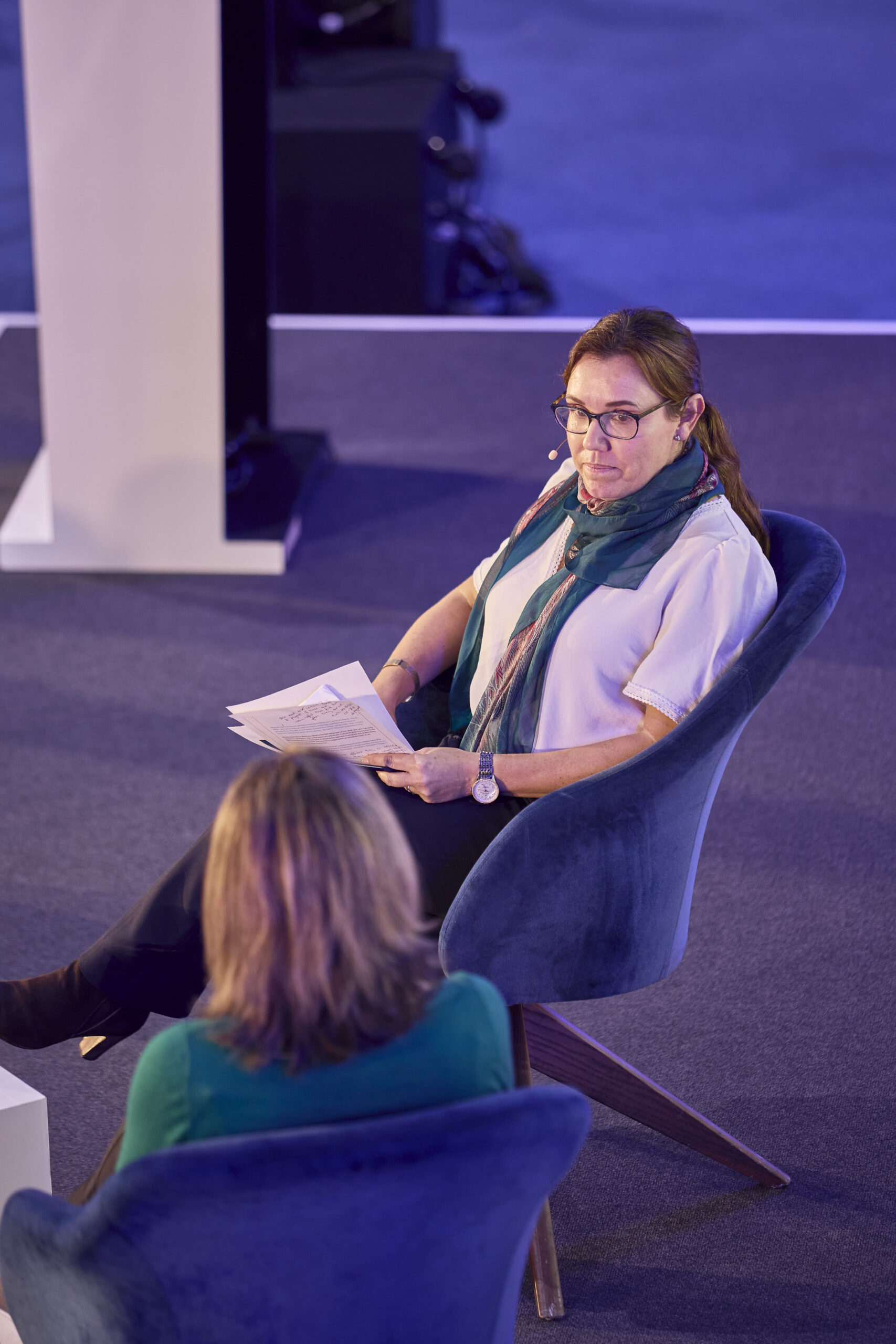
Group Captain Emma Keith talks to UK Sport’s Alex Stacey following her presentation on officer training in the Royal Air Force.
3. Teams are prioritising resourcefulness over resources
As Team Principal of MoneyGram Haas F1, Ayao Komatsu knows as well as anyone that his team is competing with better resourced and more illustrious teams.
The team has 375 staff members, which may sound like a lot, but it pales in comparison to the likes of Ferrari, Red Bull and McLaren.
“If we cannot work together, if you’re not supporting each other, if you’re not aligned, we’ve got zero chance against organisations minimum three times our size,” said Komatsu, who had just flown in from the Brazilian Grand Prix in São Paulo where Haas’ Oliver Bearman achieved a creditable top-six finish the weekend before the summit.
Ayao Komatsu
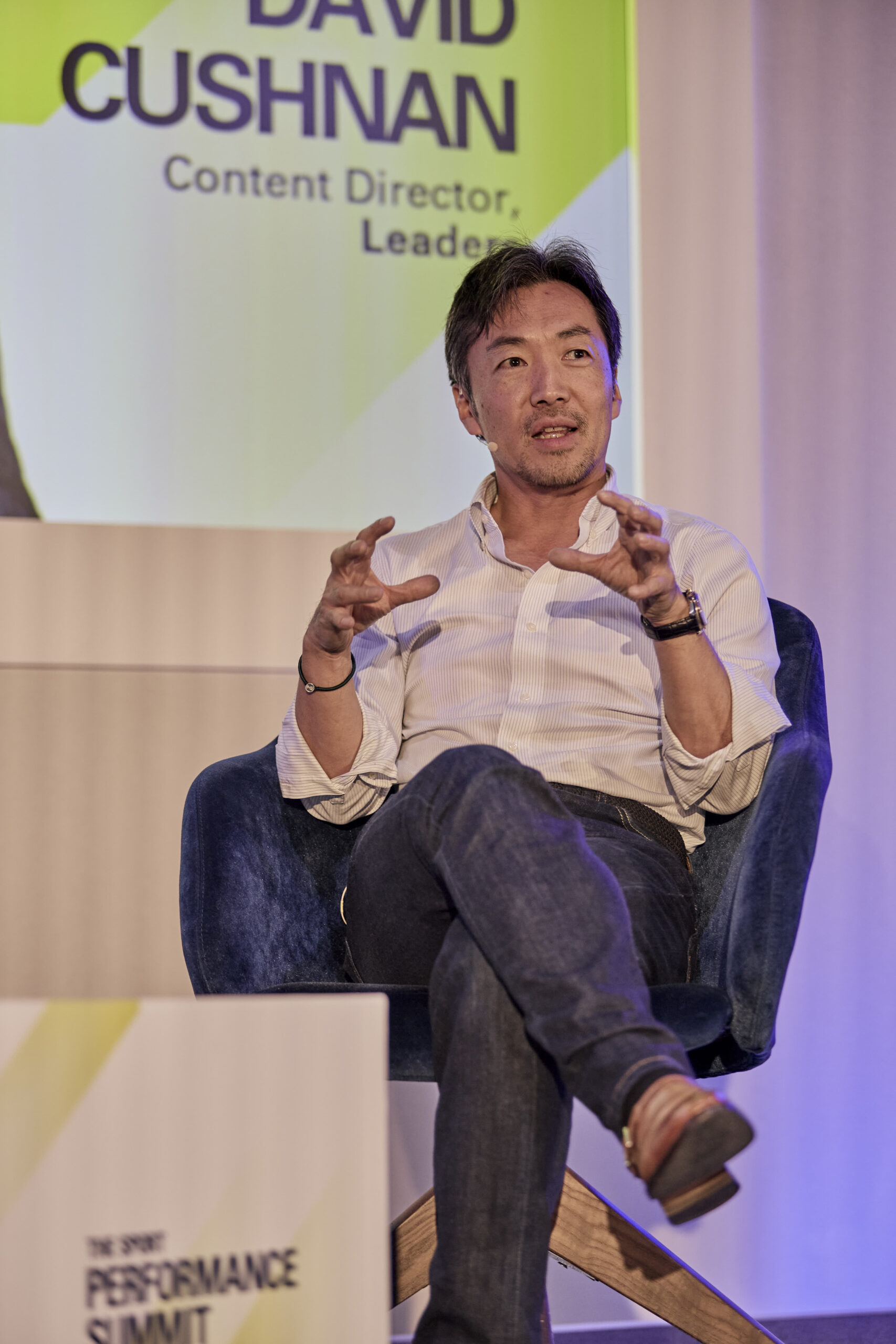
Ayao Komatsu, the Team Principal of Haas F1, shares insights into life in the pitlane.
Similarly, albeit in vastly different circumstances, the Red Cross must make the most of its limited resources when emergencies strike.
Chris Davies, the Director of Crisis Response and Community Resilience at The British Red Cross, cited his team’s core operational process:
Chris Davies
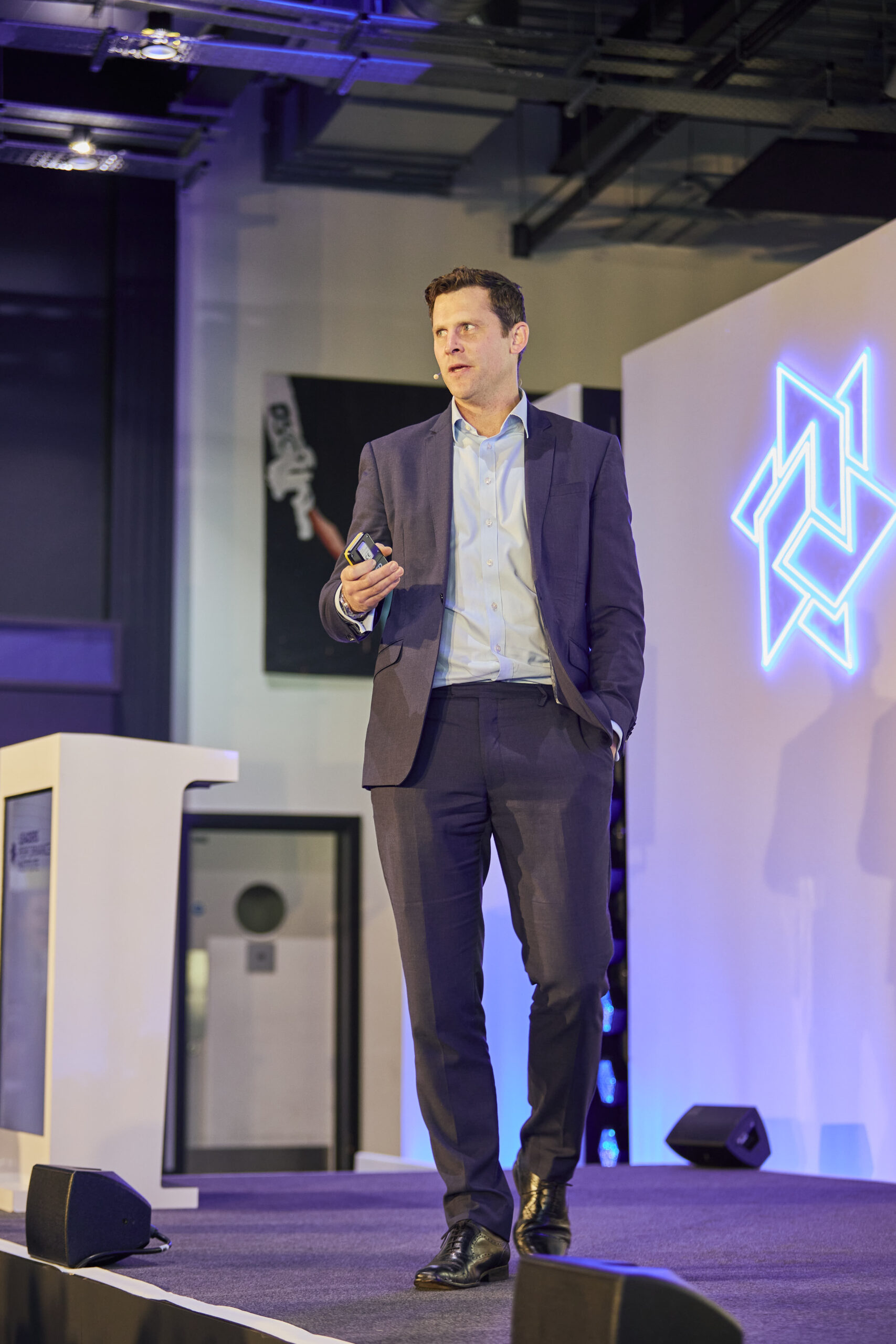
Chris Davies of the British Red Cross in full presentation mode.
4. Psychology will be a game-changer
The mental and behavioural side of performance was an ever-present topic on both days of the summit. Our guests discussed several elements:
The importance of individual expression and acceptance
Johann van Graan
Belonging as a contributor to wellbeing (and performance)
Emily Scarratt
Psychological safety
Ayao Komatsu
5. Teams are engaging in a tech arms race
Professor Tom Crick spoke in his capacity as Chief Scientific Adviser at the UK Government’s Department for Culture, Media and Sport.
He presented on the growth of AI and continually stressed how important it is to keep “the human in the loop” regardless of whatever advances are coming.
To this end he offered Leaders Performance Institute members a series of recommendations.
You must be able to explain why you are using an AI tool…
“You can’t just say ‘the computer says so.’ There has to be some understanding and explainability, and there has to be trust.”
An AI tool should not replace your people…
“AI should not erode or disempower or remove agency for people within your domain. It should augment human capability, not replace it,” said Crick. He added: “It is about co-design, co-decisions and co-evolution as we go forwards – keeping humans embedded in the process.”
Don’t assume your AI tool is right…
“Don’t automatically trust the system. Always ask: is that the right data? Does that feel right? Can we verify and validate it another way?”
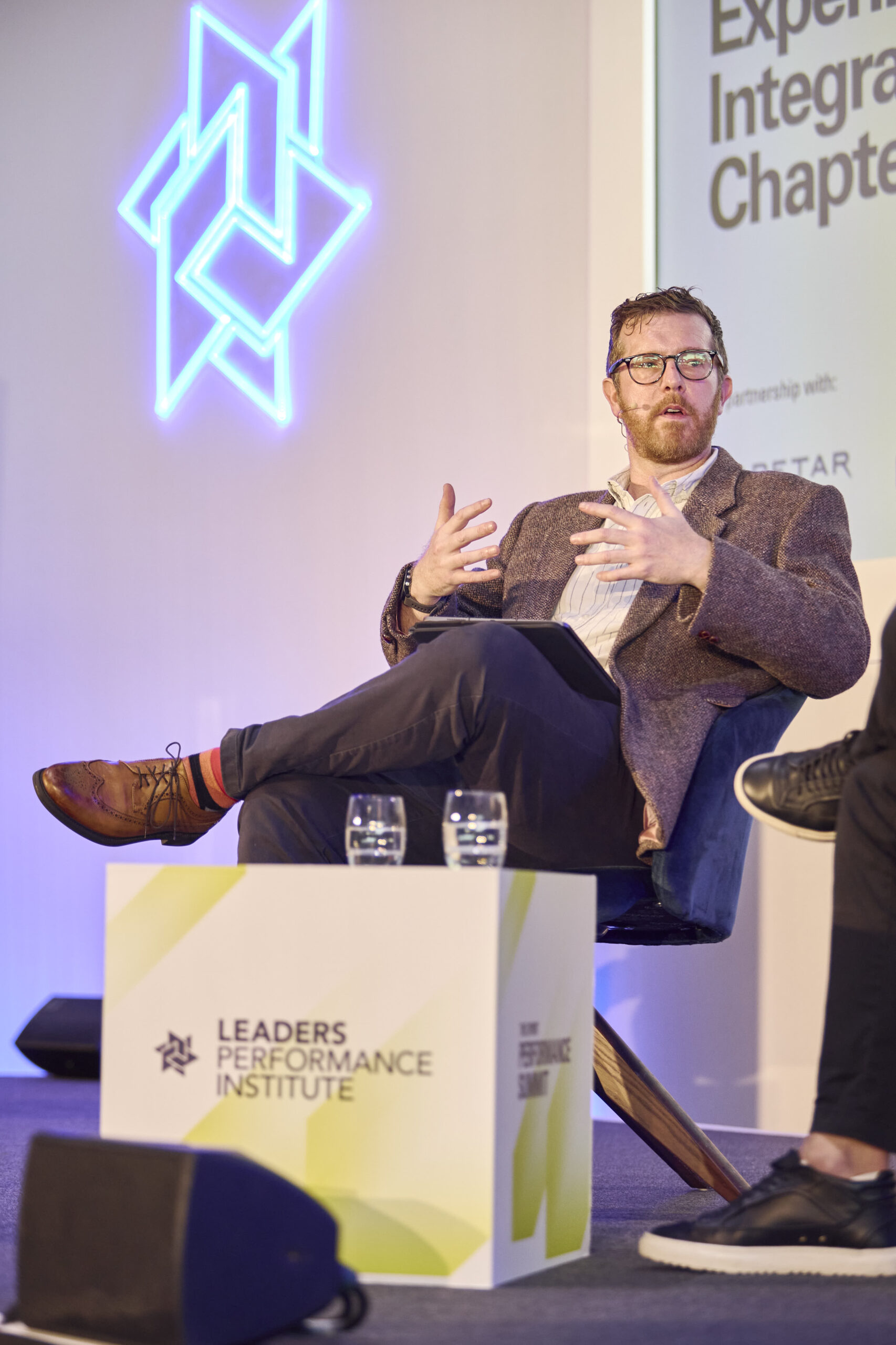
Tom Crick, the Chief Scientific Adviser at the UK Government’s Department for Culture, Media and Sport, answers questions from Leaders Performance Institute members.
Next stop for the Leaders Performance Institute
ESA Director of Science Carole Mundell discusses creativity and problem-solving in volatile environments both in space and here on Earth.
Main Image: European Space Agency
The video depicted a range of space-faring feats performed by the European Space Agency [ESA] as it enjoyed its 50th year.
Mundell, who is the Director of Science at the ESA , brought the room back to Earth again when outlining her efforts to bring together 23 European nations (more specifically their governments) in pursuit of the agency’s interstellar goals.
“Diplomacy is a contact sport,” said Mundell, who is a diplomatic veteran at this stage. She is responsible for a pan-European staff of over 45,000 people, with headquarters in five jurisdictions. You can also throw in the challenges posed by Brexit, the pandemic (when international diplomacy definitely was not a contact sport) and the war in Ukraine.
“The political churn at the moment is unprecedented,” she continued. “From one day to another, we don’t know whether our member state governments will continue to be governments or remain in place for another election.”
This volatility stands in contrast to ESA missions, all of which take decades to devise and tend to last longer than most political careers.
Then there’s the space-based challenges. In her time onstage, Mundell described a range of missions, from explorations of Jupiter’s moons to detailed observations to the surface of Mercury. All require incomprehensible precision.
Take the LISA [Laser Interferometer Space Antenna] mission. Its purpose is to detect gravitational waves in space; the ripples in space-time caused by cosmic events such as black hole collisions.
“They will have three spacecraft flying in convoy, with two and a half million kilometres between each spacecraft,” she said. “They will follow an Earth-Sun orbit and they will rotate and stay in that triangle.”
The lasers in question must be able to point with precision narrower than a proton.
““We’re going to measure the nature of space-time itself. It’s eye-watering technology.”

LISA measuring the properties of gravitational waves (Image: the European Space Agency)
Mundell has become adept at managing the external elements that could derail projects such as LISA. Thanks to her leadership, ESA’s creative and technical minds are able to do their best work in a climate of political uncertainty.
Psychological safety
In space, Mundell told us, things often go wrong. Take the Euclid mission, the purpose of which is to map the ‘dark’ universe. The lens of space telescope, which orbits the sun 1.5 million km from Earth, became contaminated by a strip of ice thinner than a strand of DNA. Mundell’s team had to find a way to defrost the ice without damaging the equipment’s sensitive optics.

Euclid begin its dark universe survey. (Image: European Space Agency)
But if you can reasonably anticipate microscopic space ice then you can devise a plan to defrost it.
“We did that last month,” she said almost matter-of-factly, but the ESA’s staff have built trust in their systems. “At a time of crisis, the first thing you do is check the process.” The system provides a layer of safety that goes beyond the interpersonal dynamics originally associated with the term ‘psychological safety’ (although these remain important; Mundell says: “Please create the best possible cultures you can. Please have the courage to really call out bad behaviour”).
“The cognitive safety comes from the fact that you know there is a process that you’ve all built together.”
This knowledge is also useful when navigating potential cultural differences present in a supranational organisation.
More creative, less expensive, more innovative
On her way to the Kia Oval, Mundell received news that one of an ESA contract negotiation was going backwards.
“My first instinct was to think of a solution,” she said. “And a very calm senior colleague said to me: ‘we don’t need to escalate this’. We don’t always need to go to the nuclear option.”
Such setbacks and budget cuts are par for the course. During his annual press briefing in January, ESA Director General Josef Aschbacher revealed that the ESA budget for 2025 would be €7.68 billion. It was €7.79 billion in 2024, but Germany, Italy and the UK reduced their contributions by a collective €430 million.
“We have to continually innovate and make things more creative, less expensive, but more innovative,” said Mundell, who explained that the ESA must design to cost. While there is room for creativity in day to day problem-solving, the process guides the action taken. “We have a whole quality assurance system where we set our objectives and we say ‘what will we do?’ ‘What did we say we’d do?’ ‘Did we do what we said?’”
Enduring purpose
The ESA was founded to enable European nations to explore the cosmos and further the continent’s knowledge and understanding. It’s an enduring purpose that continues to appeal. On 1 January this year, Slovenia became the 23rd member state, with several others still in the queue to join.
“Our missions are lifetime generational missions,” said Mundell. “You’ll see that people will give a significant fraction of their lifetime to develop, design and fly these missions, and ultimately protect them, to deliver science back to society. Children in school today will use data from our missions.”
She explained that once every three years there is a council meeting of ESA members at a ministerial level to decide the agency’s budget for the next three-year cycle. She shared an image from the 2022 meeting in Paris. It was taken just before she joined:

The official portrait of ministers at the 2022 ESA Council Meeting at Ministerial Level. (Photo: Stephane Corvaja / European Space Agency)
“This is a photograph of inspiration,” she said. “These ministers come from all different political backgrounds, they were facing various different challenges at this time. There was cost of living crisis and obviously the war in Ukraine was pushing all sorts of problems across these member states, and yet they all came together and they agreed that space is important.”
Hear more from Carole Mundell
As behavioural finance specialist Dr Benjamin Kelly explains, these four common biases can derail even the best players.
While technical skill and conditioning are paramount, behavioural biases frequently derail even the most talented players. For leaders in sports, understanding these cognitive shortcuts and emotional responses is crucial for optimising athlete performance, coaching strategies, and mental resilience.
I believe that golf, much like financial markets, is fertile ground for behavioural finance – a field integrating psychology and economics to explain irrational decisions. While behavioural finance has profoundly reshaped our understanding of investment behaviour, its application to sports decision-making, particularly in golf, remains remarkably underexplored. This is a significant oversight, as the very same biases impacting trading decisions equally affect decision-making on the golf course.
By examining cognitive shortcuts and emotional responses that derail golfers, we uncover profound lessons applicable to high-pressure environments across sports and business.
My work with investors has consistently demonstrated that reducing ‘bad decisions’ incrementally improves investment returns. This same principle applies directly to golf: eliminating poor choices on the course directly translates to saving shots and enhancing performance.
Overcoming behavioural biases is notoriously difficult; our innate cognitive architecture makes us highly susceptible. Therefore, the optimal path to mitigation is not to fight the bias directly, but to create a step in the process that prevents us from succumbing to it. In trading, a simple yet powerful example is the stop-loss order – a pre-defined instruction to exit a position if it falls to a certain price, removing emotional discretion from a critical decision.
This methodology, involving structured interventions, is evolving for golfers of all abilities.
Below, I illustrate these points with compelling examples, including Robert MacIntyre’s dramatic final round at the 2025 BMW Championship, and propose actionable strategies for correction.
Loss aversion describes our innate tendency to prefer avoiding losses over acquiring equivalent gains; the psychological pain of a loss is often twice as powerful as the pleasure of a gain. In golf, this bias is a primary contributor to the dreaded ‘choke’ phenomenon, particularly when a player holds a significant lead. The shift from playing to win to playing not to lose is a classic manifestation. It leads to tentative play and costly errors.
Consider the ‘final day phenomenon’ in golf, where approximately two-thirds of leading players fail to convert their lead into a win on the final day of a tournament. This represents a conversion rate of roughly 33%. My work with investors has consistently shown that even a modest improvement in decision-making, leading to an increase in success rates from 33% to 45%, can yield material benefits. For a professional golfer, this translates directly into more career victories and significant financial gains. For investors, it means incrementally improved returns and enhanced portfolio performance. This isn’t a sudden decline in skill; it’s a psychological battle. A player leading a tournament, especially on the back nine, often shifts from an aggressive, winning mindset to a conservative, loss-averse one. Instead of continuing the attacking golf that built their lead, they focus on not making mistakes, which leads to tentative swings, reduced pace, and increased unforced errors. The fear of losing the lead becomes more potent than the desire to win. It paralyses their natural game.
Robert MacIntyre at the 2025 BMW Championship provides a vivid illustration. MacIntyre entered the final round with a commanding four-shot lead, having played exceptional golf through the first three rounds (carding 62, 64 and 68 for an average of 64.67 shots). However, in the final round, under immense pressure and with a significant lead to protect, he shot a 73 – eight shots worse than his average for the preceding rounds. This stark difference, which ultimately saw him lose the tournament to Scottie Scheffler, is a textbook example of loss aversion in action. The desire to protect the lead likely led to a more cautious, less assertive approach, resulting in a performance significantly below his demonstrated capability. His post-round comments when he expressed a desire to “smash up my golf clubs,” underscored the emotional toll of such a collapse, which was rooted in the psychological pain of losing what felt like an assured victory.
Correction strategy: process-oriented thinking and positive aggression
Mitigating loss aversion requires a conscious shift from outcome-oriented to process-oriented thinking. Golfers should:
My methodology, applied to investment, focuses on establishing clear, unemotional exit strategies to prevent such value traps, which directly improves returns by eliminating these ‘bad decisions’.
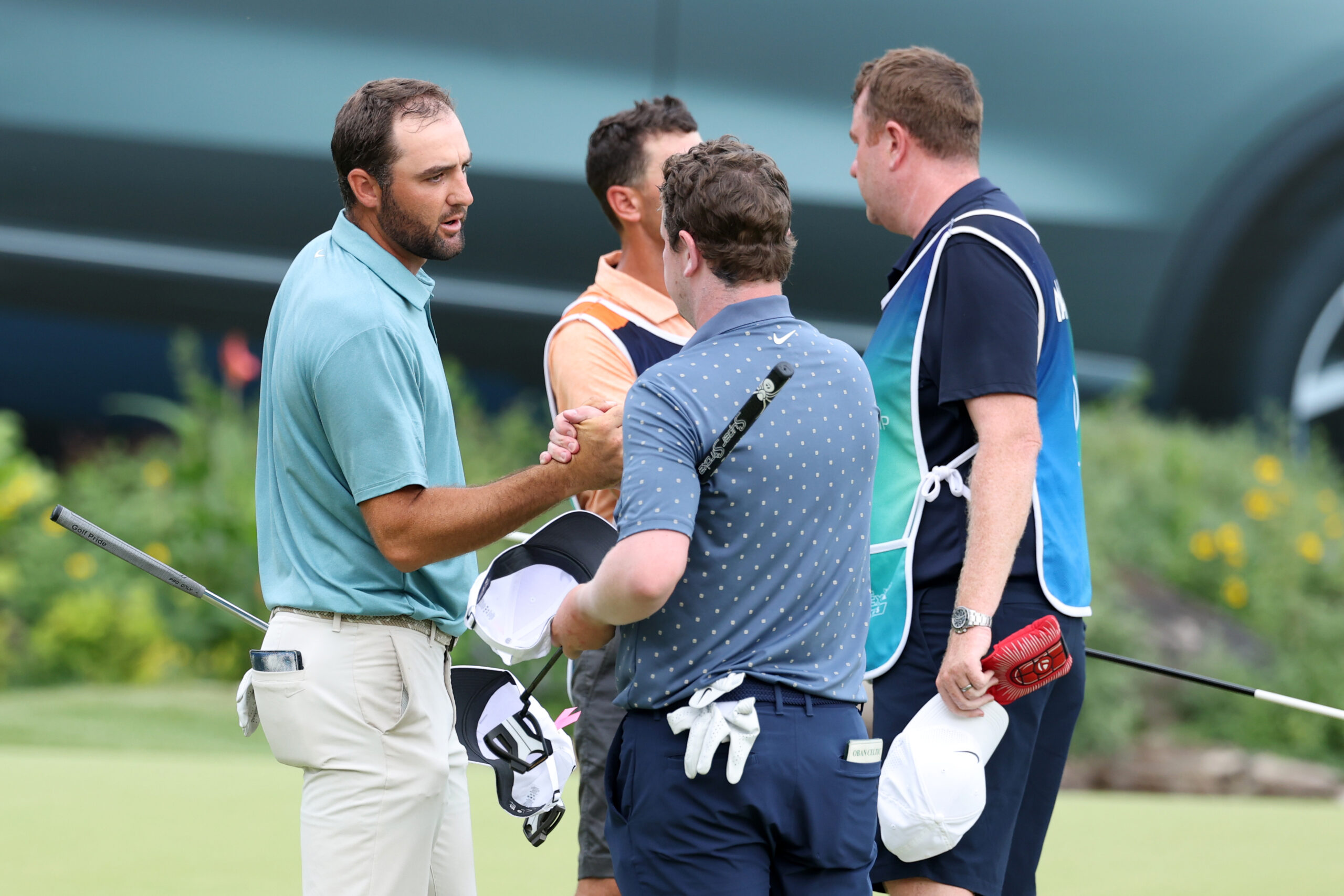
A victorious Scottie Scheffler shakes hands with Robert MacIntyre at the BMW Championship 2025 at Caves Valley Golf Club. (Photo: Kevin C Cox/Getty Images)
This translates to a pre-shot checklist that includes a deliberate assessment of risk vs reward. This ensures the chosen shot aligns with a pre-determined strategy rather than emotional impulse.
Overconfidence bias is the tendency to overestimate one’s abilities, knowledge, and the accuracy of one’s predictions. In golf, this often manifests as the infamous “hero shot” syndrome. Picture a golfer, slightly out of position after a wayward drive, facing a daunting carry over water or a dense thicket of trees to reach the green. A more prudent strategy might involve laying up, accepting a bogey or par. However, the overconfident golfer, convinced of their exceptional skill or believing this is their moment of glory, attempts the low-percentage, high-risk shot. The result is often disastrous: a ball splashed into the water, lost in the woods, or a double bogey that unravels a promising round.
Three-time major champion Pádraig Harrington has openly confessed that overconfidence cost him dearly at the 2025 Senior PGA Championship, particularly on a crucial 15th hole. Despite his vast experience, he felt his confidence and arrogance led him to an ill-advised approach shot, costing him a crucial hole. This mirrors countless amateur golfers who, after a few good shots, attempt to carry a 200-yard water hazard with a 3-wood, only to find their ball sinking to the bottom, convinced their recent success grants them an infallible touch. The allure of the ‘hero shot’ often blinds players to the higher probability of failure, driven by an inflated sense of their current capability.
Correction strategy: objective risk assessment and pre-shot routines
To counteract overconfidence, golfers must:
My investor checklists include a mandatory step for a ‘devil’s advocate’ review of high-conviction trades, forcing a re-evaluation of assumptions. This translates to a ‘reality check’ step in their pre-shot routine, where they explicitly consider the worst-case scenario and whether the reward truly justifies the risk. This step prevents the overconfident ‘hero shot’.
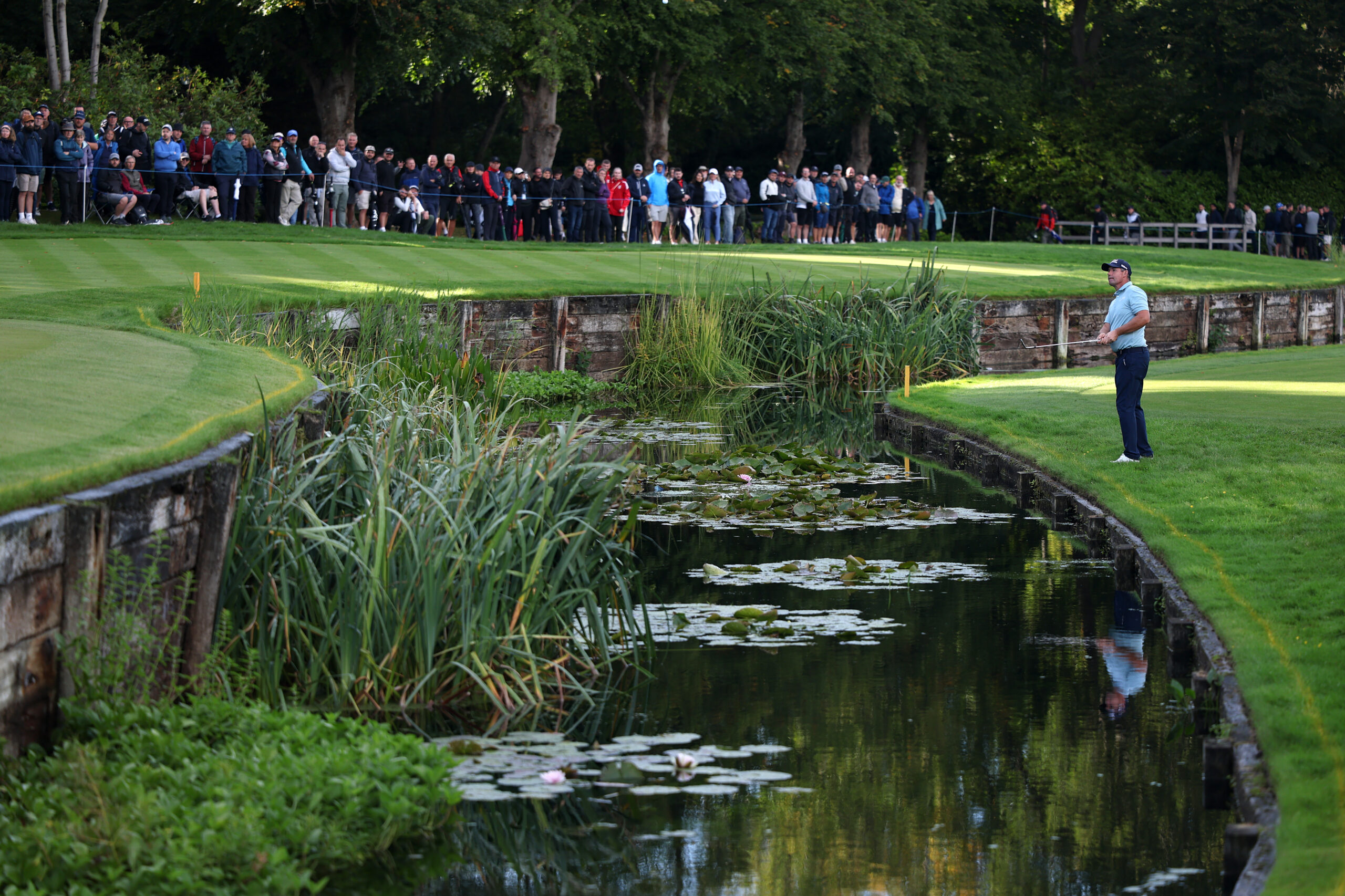
Pádraig Harrington at the 2025 BMW PGA Championship. (Photo: Andrew Redington/Getty Images)
Confirmation bias is the tendency to seek out, interpret, and remember information in a way that confirms one’s pre-existing beliefs or hypotheses. On the golf course, this can lead to flawed self-assessment and persistent errors.
A golfer might believe their slice is due to an ‘outside-in’ swing path, and subsequently only notice instances where their swing appears to confirm this, ignoring other potential causes like an open clubface. This selective attention prevents them from accurately diagnosing and correcting the root cause of their swing fault. Similarly, a player might attribute a good shot to their skill and a bad shot to external factors (a bad bounce, a gust of wind), reinforcing a biased self-perception that hinders genuine improvement.
Correction strategy: objective data and external feedback
To address confirmation bias, golfers should:
My investor checklists mandate seeking out and documenting opposing viewpoints before making a significant investment.
This means a ‘feedback loop’ step where they actively solicit input from their caddy or playing partners on their swing or strategy, or review objective data from launch monitors, rather than relying solely on their internal, potentially biased, assessment.
Anchoring bias occurs when individuals rely too heavily on an initial piece of information (the “anchor”) when making decisions, even if that information is irrelevant. In golf, this can lead to rigid decision-making that fails to adapt to changing conditions.
A common scenario involves a golfer fixating on the yardage provided by a sprinkler head or a course guide at the start of a hole. This initial yardage becomes an anchor, making it difficult to adjust for dynamic factors like wind changes, elevation shifts, or a different pin position that emerges during the round. A player might stubbornly stick to a club choice based on the initial anchor, even when conditions clearly dictate a different approach, leading to shots that are consistently long or short.
Correction strategy: dynamic assessment and multiple data points
Counteracting anchoring requires:
My investor checklists include a mandatory ‘re-anchor’ step, where all previous price points are deliberately ignored, and decisions are made solely on current fundamentals and future projections.
For golfers, this translates to a ‘situational awareness’ step in their routine, where they consciously disregard previous hole outcomes or initial yardage markers, and instead focus on a fresh, comprehensive assessment of all current variables before committing to a shot.

Robert MacIntyre at the 2025 BMW PGA Championship. (Photo: Jasper Wax/Getty Images)
Conclusion: cultivating mental discipline for peak performance
Behavioural biases are an inherent part of human cognition, but their impact on the golf course need not be detrimental.
By understanding how overconfidence, loss aversion, confirmation bias, and anchoring manifest, and by implementing structured strategies to counteract them, golfers can significantly enhance their decision-making capabilities. The journey to mastering the mental game of golf is one of continuous self-awareness, discipline, and a commitment to process over outcome.
Just as my work helps investors reduce the incidence of “bad decisions” to incrementally improve returns, applying these behavioural finance principles to golf can directly lead to saving shots and elevating performance. The critical insight is that overcoming biases is extremely difficult; our innate cognitive architecture makes us highly susceptible.
Therefore, the optimal path to mitigation is not to fight the bias directly, but to create a step in the process that prevents us from succumbing to it. This methodology, evolving from investment to the golf course, empowers athletes of all abilities to make optimal choices when it matters most.
For sports leaders, fostering an environment that encourages objective self-assessment, embraces data-driven insights, and champions structured routines will be key to developing athletes who not only possess exceptional physical talent but also the mental fortitude to make optimal decisions when it matters most.
This approach not only leads to more consistent performance but also a deeper, more rational engagement with the beautiful, challenging game of golf.
Dr Benjamin Kelly advises investors and professional athletes on decision making strategies in high stakes environments. If you would like to speak to Benjamin about his work, please contact a member of the Leaders Performance Institute team.
In an exclusive column, Peter Hodgkinson, the former Head of Build at Mercedes F1, sets out the considerations that helped him to lead in one of sport’s most high-pressured arenas.
Main Image: Getty Images / Mark Thompson
Not only is it difficult to fully see someone’s body language, it also makes it near impossible to see a leaking water pipe at the front of an engine!
In my opinion, you need to be present in a high-performance environment.
I served as Head of Build at Mercedes between 2011 and 2019, an era when we won five driver’s and five constructor’s world championships. It was a period of unprecedented success for the team and for at least part of that time I worked out of a small, tired office in the middle of the team’s factory.
It was a terrible space. It had no natural light, the AC was incredibly bad, and the ceiling tiles were water-stained. Admittedly, I couldn’t see those tiles – or the worn-out carpet, come to think of it – as easily at 7:30am when six or seven people turned up for work and squeezed into a room that was more suitable for four.
I wasn’t sad when that office was finally knocked down as part of a factory refurbishment, but it had been a home away from home. For 20 years I’d spent more time there than I did at home.

Peter Hodgkinson holds the Formula 1 Drivers’ and Constructors’ World Championship trophies in his ‘dreary’ former office at Mercedes HQ in Brackley, Northamptonshire.
This story (at least my schedule, if not the dreary office) probably sounds familiar to many of you. I was routinely on the road at 5:15am and did not leave until 6:30pm most evenings. Of course, I left my phone on just in case.
Such scenarios in high-performance are not going to change any time soon, but there are several things that you can do as a leader to protect yourself and your team from excessive workloads while still delivering the required work.
There are sure to be other things, but these five considerations make a good starting point.
I believe it was important to be seen and to say at least ‘good morning’ to as many of my team as possible. I wanted them to feel that I cared for them and I was interested in what they were working on and the issues that they faced; and it was another opportunity for information gathering.
When we were in the build period or working on a big update, I would try and get to work in time to talk to the nightshift in Build, Compbond, Inspection etc to get an understanding of the current status and get a head start thinking about what I had learnt. This floor walking – asking questions, providing challenge, learning about the current status and building relationships – as I said, I don’t think you can do this as effectively on Teams or Zoom.
I’ve touched upon this before. I never tried to plan more than 30 percent of my day. Most days, meetings were added into my calendar which I needed to attend and, if I had a big gap, I would try and block it out for my work.
We think of work as writing plans, answering emails, attending meetings, doing things, etc but floor walking and talking to people is just as important and is part of the job. It might not feel like work as you have nothing physically to show for it, but it is so important as you are building relationships with your team which is an essential part of the trust equation.
As a leader, you cannot be chained to your desk doing work, looking at your feet and never lifting your head to talk to your team.
Manage your job list by focusing on getting things done. But don’t just keep adding to the job list. Create movement.
Trying to have 70 percent of my day unplanned also meant that I had a pretty good chance of achieving the 30 percent that I did have planned, so I felt like I got stuff done and when I went home, I felt that I had achieved something.
This is important. We all like big, long job lists. It makes us feel valued, but if we just keep adding to them it is soul destroying, as you never feel like you have achieved anything. Try and get three things done each day, completed and finished. This is movement, placing a real mental focus on a task to get it completed. This is what I attempted to do from 6:00am to 8:00am each day. With the 30 percent rule, if there is a crisis that does require your full attention, then you should have some capacity to manage it without impacting too much of your day.
Dr Ceri Evans got me thinking about tasks in this way:
Name it: What is the technical task you are undertaking? Give it a name.
Time it: Add a deadline for when you are going to get this task completed. This adds pressure which gives us energy to perform.
Move it: Time to step in and perform. Complete or complain, it is your choice. Try three times a day for 15 minutes to focus on a task and get it completed. This is movement.
Trust is at the heart of any team’s performance. Trust is choosing to risk making something you value, vulnerable to another person’s actions. It happens in small moments when you have the opportunity to increase your trustworthiness.
For example, I tried to keep meetings to a minimum as I wanted to walk around and talk to people and follow up on issues. It was important to me to be connected to what was going on in the workshops and for the technicians to know that I cared deeply about what they were doing and the effort they were putting into their piece of the puzzle.
After clearing as many emails as possible, I would try and get out the door by 6:30pm and leave the Team Leaders to it. As I said, the phone was always on but, on the whole, it didn’t ring that much in the evenings or at night because the team knew what to do and what was required.
In short, they had my trust. I believe trust is made up of the following:
Reliability: You turn up at the same time every day, you deliver the work, you can be counted on in a crisis to be there. You are present.
Competent: You are knowledgeable and you know how to do the work to the best of your ability.
Relationship: You need to have a relationship with the people you are interacting with. Find out about what they like and dislike; be curious about them as a person.
In F1, I tried to get to a position where 80 percent of what we did was planned and 20 percent was chaos. The chaos makes the job both challenging and fun. It’s one of the reasons you get out of bed in the morning.
When the chaos hits 40 or 50 percent, this is too much and it leads to overload and overwhelm. Cracks will start to show in the team’s behaviours and the quality of the work will decline.
As a leader, you need to manage this carefully and do everything in your power to protect your team as much as possible from the really impossible requests.

Peter Hodgkinson on the factory floor at Mercedes HQ in Brackley, Northamptonshire.
Sometimes you have to say ‘no’, but make sure you have other alternative options ready to present. You can’t just say ‘no’. There is a very fine line between protecting your team from excessive workload and delivering the required work to support the plan so if you do push back, make sure you can fully explain your concerns with facts, not just emotions.
Peter Hodgkinson is a leadership and performance specialist skilled in helping high-performers become better at what they do. As an accomplished manager and mechanic, Peter has enjoyed almost three decades of success in elite sporting environments. His work in motorsport, as part of winning teams at Le Mans and Daytona, culminated in seven Formula 1 driver’s world championships won at Brawn and Mercedes, where he led car-building operations. Peter was Mercedes’ Head of Build during Lewis Hamilton’s era-defining run of six world titles. After a spell serving as Mercedes’ Head of Employee Engagement, Peter returned to the Factory Floor as Build Operations Manager for the INEOS Britannia sailing team when Mercedes supported their quest for the 37th America’s Cup.
If you would like to speak to Peter, please contact a member of the Leaders Performance Institute team.
The 2008 world champion joined Mercedes in 2013 and would win a further six titles with the team. But, as Peter Hodgkinson tells us, things got off to a rough start. What followed as the team rebuilt the car was a case study in performance under pressure. But it started with a quick spot of lunch.
Main Image: Paul Gilham / Getty Images
Lewis’ rear brakes failed on his 16th lap and he careered into a wall at turn six, which is known as ‘Dry Sack’ corner. He emerged from the wreckage unhurt but his car’s front wing assembly, front uprights and the floor were all damaged in the accident and we had no spares at the circuit. To compound matters we also needed to supply a fix for that rear brake failure.
As the Head of Build for Mercedes F1, I was one of the first to receive the bad news from the Race Team in my office back at our HQ in Brackley, Northamptonshire. Not long after I put down the phone, Aldo Costa, our Engineering Director, came to find out the status of available spares.
The crash had only just happened so I did not have all the answers. I told Aldo I would get back to him shortly. I said much the same to Rob Thomas, our COO, when he stopped by. It was not long before a stream of people came to my office looking for answers and a plan. It was a big moment and I could feel the pressure building. I told some to stand by and others to go and gather information.
Then I told everyone I was going to lunch.
I could see the shock on their faces. How can you eat at a time like this?
For my part, I needed to get out of my office. I normally ate lunch at my desk so my trip to the canteen was out of character. People could see that. I sat on my own and ate for 20 minutes but at the same time my mind was going flat out.
When I got back to my office I knew what we needed to do.
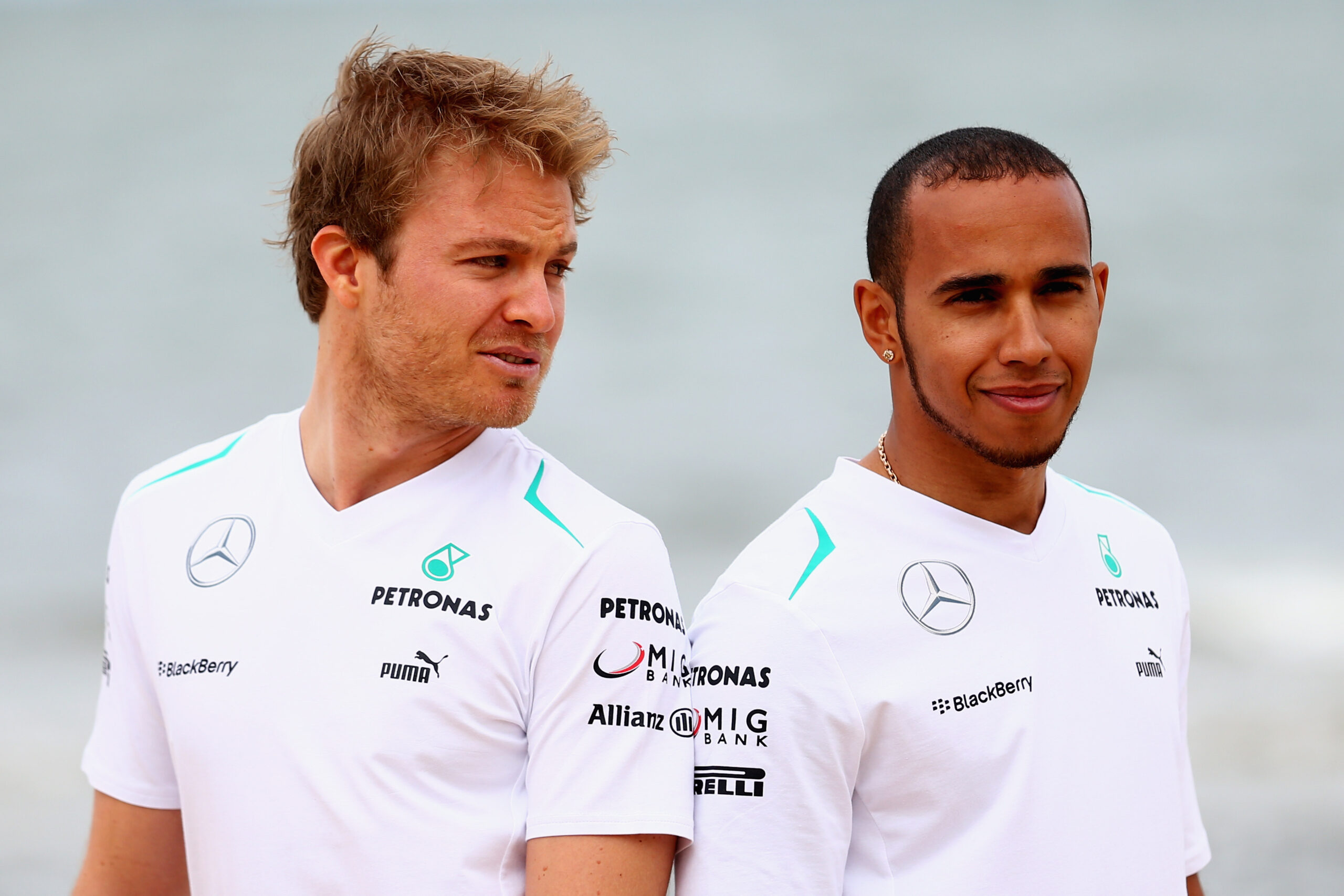
Mercedes teammates Nico Rosberg and Lewis Hamilton in 2013. Photo: Clive Mason / Getty Images
I called everyone to gather around for a short meeting (no one else had moved). We figured out what we knew and what required answers then came up with a basic plan and assigned responsibilities. The Composite Build team looked after the floor and the front wing along with Compbond and the design team. Sub Assembly had to look after the front uprights that were still in the Machine Shop.
I went looking for what we didn’t know because we couldn’t afford any surprises. The Race Team in Jerez needed sufficient time to rebuild the car. I needed to know both the latest the private jet could depart from the airport in nearby Oxford and if a car floor would even fit through the door of the plane. We also booked extra vans to take parts to Jerez and assigned extra people to support repairs at the circuit.
Once we had timings, we were able to understand what we could achieve in the time available. I’d like to think everyone had clearly defined roles and knew their responsibilities. There were so many details to sort out and any one of those could have prevented the car from running the next day.
Instead of meetings – there simply wasn’t time – I walked a thousand miles around the factory gathering and communicating information, asking and answering questions. That communication was dynamic. It was mostly verbal but reinforced with an email when time permitted. I kept Rob and Aldo informed of progress. The late Barry James, who was our Composite Manufacturing Manager, and Darren Burton, our Ops Director, worked with their departments to ensure we got all the support required.
The car ran the next day. It was a true team effort. The damaged parts were returned from Jerez for inspection, repair and service and a fix was sent out for the rear brake issue. It was an amazing recovery from a difficult situation, but that is Formula 1.
So, what did I learn? These moments are important, as the way you react to them is what you will be measured by as a person and a leader. If you think back on your careers, you will have good and bad moments. Some will be short, others will be longer. It will not stay tough forever, it will get better, but nor will it stay under control. Something will happen.
It is important to think about your behaviours in good and bad moments.
Firstly, Lewis’ crash hit five pressure drivers:
So, why I did I go to lunch?
I want to explain my rationale with reference to Dr Ceri Evans’ Red-Blue model, as set out in his 2020 book Perform Under Pressure. I cannot recommend it highly enough for a fuller, clinically-informed account of the principles of performance under pressure and how one can gain emotional control at the times when you need it most.
Ceri proposes a three-step model:
Here, I’ll explain how I approached each in turn after Lewis hit that wall.
The Step Back
I needed to go to lunch. I was under pressure and could feel it. I had to get out of my office and away from the noise. I realised that this was a flight response. I also realised I was under both internal and external pressure. My heartrate was up and you are trying to think of numerous things at the same time. Going to lunch allowed me to move from Step Back to Step Up. It gave me a moment to move away from the emotional response and start to come up with a mental plan of what we were going to do next.
The Step Up
You need to understand what is going on and start coming up with a plan for what you need to do and the desired outcome you seek.
In Step up mode, I was moving from Red mind to Blue mind. This requires a further explanation with a little help from Ceri, who describes two interacting mental systems:
Neither state is ‘good’ or ‘bad’. There must be a balance, as too much Red can make you impulsive, emotional and reactive, while too much Blue can leave you detached and hesitant.
In Step Up mode, I was moving from Red to Blue, from emotions and feelings to logic and planning. I allowed my Blue to dampen the Red. I now had an idea of a plan and what we needed to do and I remember very clearly feeling energised and ready to rock ’n’ roll.
The Step In
You have a plan to start tackling the issue, using the clarity of the Blue combined with the energy of the Red system. Trust you skillset, you are the best in the world at what you do.
We talked through the basic plan and off we went to face the challenges in front of us. During the course of that day, well into the evening, I remember going back to Step Back mode as something went wrong but this was quickly followed by Step Up (planning) and Step In (doing). Red/Blue, Decide and Do.
That day I was in a purple patch, balancing the Red and Blue.
How this impacted my behaviour
I knew that how I behaved and the language I used would impact the people working on this challenge. The pressure was on and one wrong word could trigger a shift back to a Red brain response, which we simply could not afford.
I also felt trusted by Aldo and Rob, who knew I would play my part to help resolve the issues along with the rest of the team. They didn’t interfere with what we were doing and allowed us to get on with the job. We made sure to regularly check-in with them both, providing updates and seeking their thoughts on something in those moments when we were stuck. It was classic Intent-Based Leadership in action.
This was one of many situations we faced weekly at MGP and no F1 team is any different.
You will be judged on how you respond and react to these moments. It is not about placing blame, it is about movement and making extraordinary things happen using the right mindset and behaviours.
Finally, there will always be lessons from these moments, so make the most of them. They are a great opportunity to improve as individuals, teams and organisations.
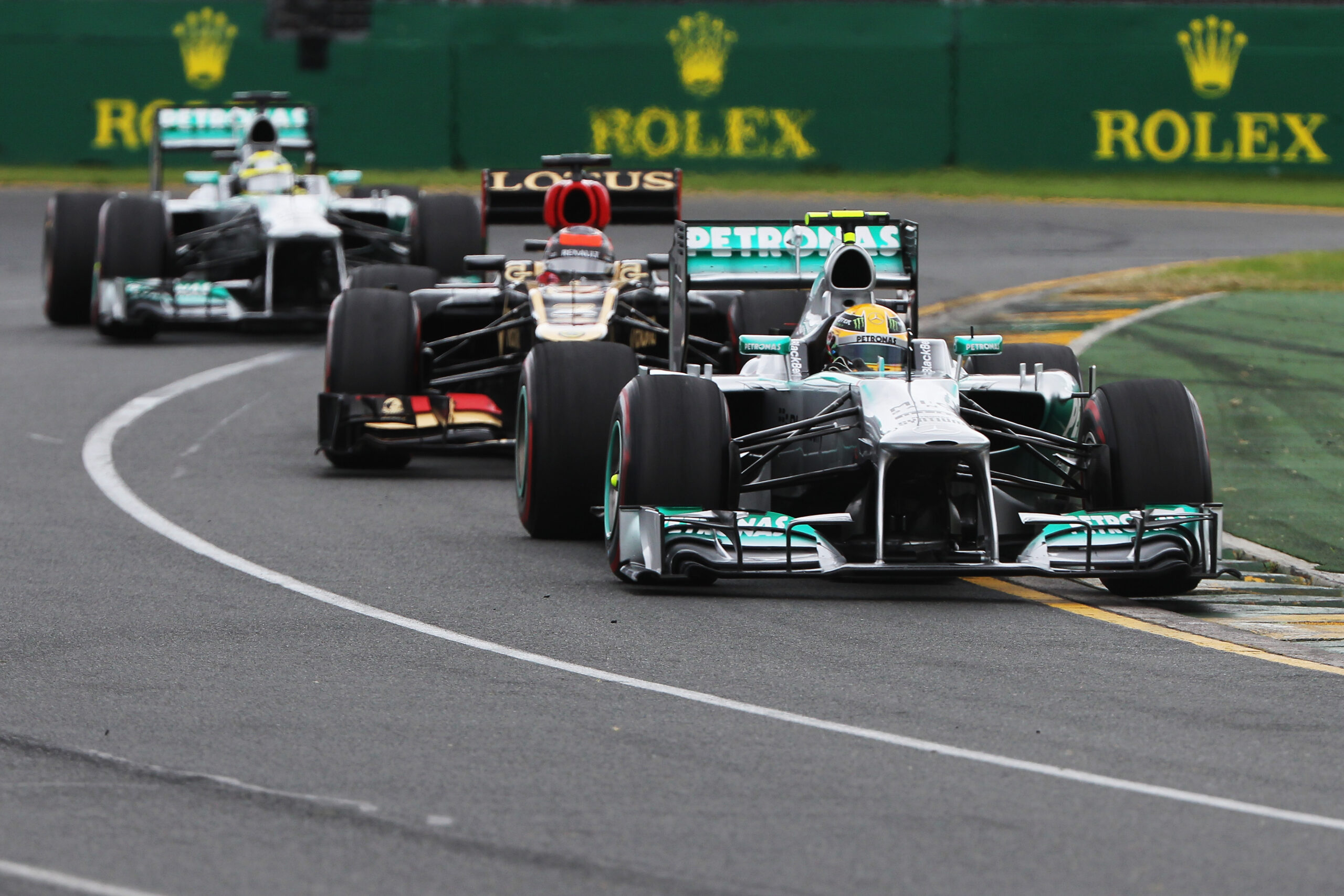
Lewis Hamilton, with Lotus driver Kimi Räikkönen and Mercedes teammate Nico Rosberg on his tail at the 2013 Australian Grand Prix. Photo: Ker Robertson / Getty Images
Peter Hodgkinson is a leadership and performance specialist skilled in helping high-performers become better at what they do. As an accomplished manager and mechanic, Peter has enjoyed almost three decades of success in elite sporting environments. His work in motorsport, as part of winning teams at Le Mans and Daytona, culminated in seven Formula 1 driver’s world championships won at Brawn and Mercedes, where he led car-building operations. Peter was Mercedes’ Head of Build during Lewis Hamilton’s era-defining run of six world titles. After a spell serving as Mercedes’ Head of Employee Engagement, Peter returned to the Factory Floor as Build Operations Manager for the INEOS Britannia sailing team when Mercedes supported their quest for the 37th America’s Cup.
If you would like to speak to Peter, please contact a member of the Leaders Performance Institute team.
As Harlequins’ lock Stephan Lewies explains, the key lies in collaboration – bring your athletes into the fold.
Quins’ 17-10 victory at the Twickenham Stoop ended five years of frustration and marked a complete turnaround from the 2023-24 Premiership Rugby season when they conceded 90 points in losing both home and away to Saracens.
Stephan Lewies, the lock who captained Quins to their long-awaited victory, had also endured every one of those losses. The run was particularly galling given the relative parity between the teams during that period. Quins were themselves Premiership champions in 2021.
So what was different this time? “Coming off a record like that in your derby game, in a way you go looking for answers in the wrong places,” Lewies told an audience several weeks later at the Leaders Sport Performance Summit in London.
“In the past, we’d review what’d gone wrong, and the coaches – who often feel pressure in a different way to the players – would go ‘let’s change this and let’s add that’ because Saracens are brilliant.”
It took eight reverses for Lewies and his team to work out why. “We’d always changed our tactics for Saracens,” he continued. “We would change how we structured our week.”
Quins, he explained, usually worked off an 80:20 game model where it is “80 per cent us and 20 per cent we change for the other team”. However, “we often went 50:50 against Saracens; training 50 per cent on us and 50 per cent on them.”
They did things differently ahead of the October 2024 match. Firstly, the players and coaches met independently before convening to discuss what was needed. The club had adopted a similar approach in their successful quest for the Premiership title in 2021. Their director of rugby [the de facto head coach] departed mid-season and the players worked with the remaining coaches to devise a winning formula after the club decided to wait until the off-season to appoint a replacement.
Once again it gave the team clarity in their convictions. “We said we’ve been constantly changing for this opposition because of the pressure that’s mounting on us,” said Lewies, “and we agreed that we should go back to what we do and just try to do that better.” That meant “doubling down” and going almost “90:10” in the week building up to the match. “That created clarity and alignment from the coaches to the players. And when the pressure came in this game, we could turn to something we’d done for the whole season, and basically for years, versus something new in a pressured moment.
“It’s much easier to stuff up something new under pressure versus something you’ve done for a long time because it’s already second nature.”
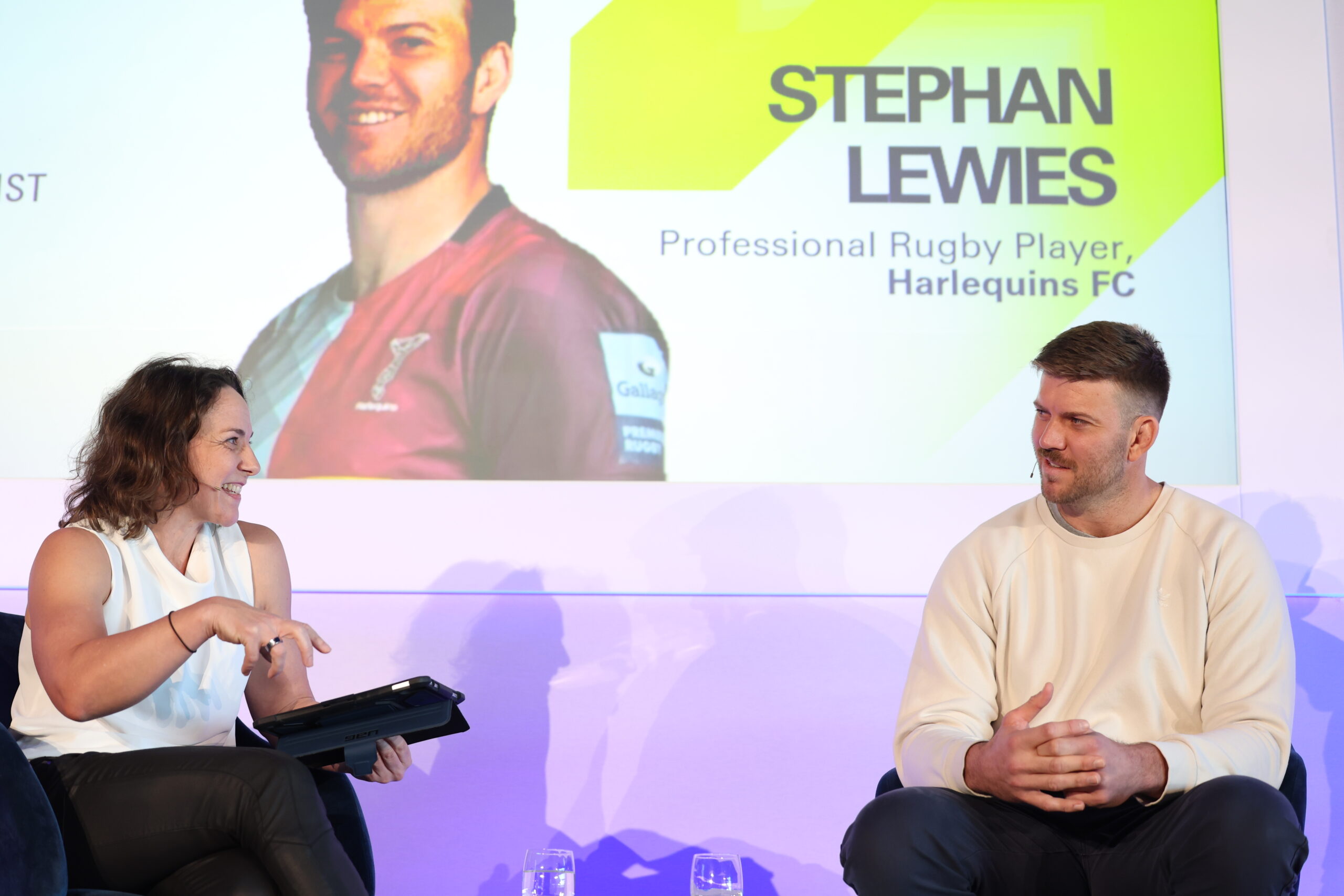
Stephan Lewies in conversation with Rachel Vickery onstage at the 2024 Leaders Sport Performance Summit at the Kia Oval.
Lewies’ reflections chimed with session moderator Rachel Vickery, a high-performance specialist helping teams in the worlds of sport, business and the military perform under pressure.
“So much of pressure is what happens off the pitch. When you’re on the pitch that’s actually your comfort zone in many ways and so you’re more prepared for that,” she said.
“Many teams have a monkey on their back around a particular opponent and that can change how the game is approached, which adds a lot of pressure.”
Lewies agreed and felt that being process rather than results-driven was ultimately what led to the result that day.
“It gives you freedom on the pitch to just go out and play,” he said. “You know your prep is done. Go out and express yourself. When you have clarity and alignment with the coaches you’re not asking yourself on the pitch ‘what’s the coach thinking?’ whenever there’s a tough decision. You almost know the answer to the question before it happens because you’re totally aligned in what you want to achieve in the game and at different stages of the game.”
It is an attitude Lewies takes into difficult conversations, which he faced often during his four years as Quins captain. The key was to be well prepared and, more often than not, those conversations would not be as tough as anticipated.
“If you kick the can down the road it can become a bigger problem. It can be scary to have that tough conversation in the moment, but that’s where growth happens, in that adversity. You grow closer as people and as teams.”
He recounted the story of a teammate who once skipped training and was suspended. Lewies endorsed the punishment but was labelled a ‘Judas’ by the player in question. The pair eventually made up after a frank exchange of views when it was clear that Lewies would listen to what his teammate had to say. It stopped matters escalating further and, as Lewies happily explained, made their relationship stronger.
“Getting him back on board and understanding him was critical for us.”
It was in such moments that the bonds, self-belief and confidence were forged that would eventually see off Saracens.
“There is so much value in creating opportunities to collaborate.”
What to read next
How Do you Develop the Most Expert Coaching Workforce in World Football?