23 Feb 2026
ArticlesAs Warwickshire’s Performance Director James Thomas explains, strategy is not about establishing certainty, it’s about people, collaboration and coherence.
Often the word elicits a raised eyebrow amidst busy training and competition schedules or it alludes to scarce downtime for coaches and practitioners.
It is also associated with corporate language, long documents and theoretical discussions that feel disconnected from the daily reality of training, selection and competition. In high-pressure environments, planning (reviewing and learning) can be seen as a luxury, something to revisit once results improve or uncertainty settles.
My experience has been the opposite. I’m passionate about helping raise awareness of the importance and performance impact of great strategic planning.
Strategy: a precursor to performance
After more than two decades working across Olympic and professional sport, I have come to believe that performance strategy and planning are not distractions from performance, they are precursors to it. In environments often defined by pressure, volatility and constant change, strategy provides something invaluable: direction, connection and a level of continuity.
High-performance sport is inherently unstable. Calendars shift, athletes get injured, form fluctuates, staff move on, leaders change and external demands arrive without warning. In that context, the absence of a clear performance strategy does not create freedom. It creates noise. Decisions become reactive, alignment erodes, and short-term fixes quietly undermine decision-making rooted in the agreed long-term ambition.
The organisations that perform most consistently are not those that plan less. They are those that build solid foundations, plan with intent, adapt with discipline and continue to stay rooted to the agreed values and behaviours when circumstances change.
Planned Olympic success
One of the clearest demonstrations of the value of performance strategy in my career came during my time as Performance Director at British Gymnastics in the build-up to, and during, the delayed Tokyo Olympic Games in 2021.
This period was defined by disruption. The global COVID-19 pandemic fundamentally altered how athletes trained, competed and lived. Lockdowns restricted facility access. Competition schedules collapsed and re-emerged unpredictably. Athlete preparation was fragmented, and long-term planning was constantly challenged.
At the same time, the organisation was navigating a significant cultural crisis. The Whyte Review had been co-commissioned by UK Sport and Sport England in 2020 following allegations of abuse and mistreatment within gymnastics in Britain. Trust had been damaged, scrutiny was intense and the responsibility to rebuild confidence, both internally and externally, sat alongside the imperative to perform on the world’s biggest stage, the Olympic Games.
In that environment, strategy became an anchor.
It provided stability when circumstances were anything but stable. Performance strategy gave athletes, coaches and staff a clear sense of direction at a time when certainty was scarce. It reminded us of our five principles of high performance, our data informed team strategies for qualifications and finals, and created a shared understanding of what mattered most, even as day-to-day plans shifted repeatedly. This anchor also supported me during really challenging times when key staff behaviours or direction of travel didn’t align to our beliefs and approach. It gave me confidence to hold the line and make the tough decisions that leaders are so often faced with.
Rather than attempting to predict an uncertain future, the strategy focused on the team, the people, the data and practitioner-informed principles that we talked about for over three years. It established how decisions would be made, what trade-offs we were prepared to accept and those ‘what if’ scenarios that can always catch you off guard. One of these being the Head Coach breaking their leg 48 hours before heading to Tokyo. We actually had a plan for this!
This allowed the system to adapt without losing its identity.
That experience was one of the most challenging of my career, but always hugely exciting and rewarding. Three planned, but hard-earned medals secured for Team GB reinforced a core belief: strategy is not about certainty. It is about people, collaboration and coherence.
Different sports, same principles for high performance
The same principle holds true in professional football, albeit at a different scale.
During my time as Director of Performance Services at Manchester City, operating within the City Football Group, I saw first-hand how long-term strategic planning can drive sustained performance improvement across an entire ecosystem.
At Manchester City, consistent performance progression was not the product of isolated excellence or short-term cycles. It was anchored in a clear long-term plan that connected the Academy, Women’s and Men’s first teams through shared principles, aligned methodologies and a common performance language.
That plan did not seek to eliminate fluctuation. Ebb and flow were expected. Injuries, form, competition demands, squad evolution and commercial demands were all recognised as natural parts of elite sport. What mattered was that the long-term vision, the direction of travel remained consistent, even as tactics and personnel changed.
Crucially, this strategic clarity extended beyond a single team or season. It flowed across the wider City Football Group model, creating a level of coherence across clubs operating in different countries, cultures and competitive contexts. While local adaptation was encouraged, the underlying performance philosophy remained aligned.
The level of consistent on-pitch success at Manchester City over the last 5-7 years, in many ways, is unparalleled, from Academy player progression and sales to the Men’s first team treble in 2023. Long-term business and performance strategy has a lot to do with this, in my opinion.
Good performance strategy increases speed
Modern high-performance environments are defined by complexity. Multiple competitions, condensed calendars, overlapping priorities and increasingly specialised roles place constant strain on alignment. Planning in these environments is often misunderstood as control. In reality, it is the opposite.
When direction is clear, decisions decentralise. Coaches, athletes and staff can act with confidence because they understand the broader context. When strategy is absent, everything escalates upwards. Decisions slow, responsibility blurs and energy is wasted re-litigating the same conversations week after week.
The VMOST model
At this point, structures and frameworks matter.
One of the most effective ways I have seen performance strategy articulated in high-performance sport is through clear, simple models that translate long-term ambition into day-to-day action.
One such model is VMOST (Vision, Mission, Objectives, Strategy and Tactics).
VMOST was created by business strategist Rakesh Sondhi and first proposed in 1999 book Total Strategy. The framework provides a disciplined way of connecting the big picture of the future to the daily actions, tasks and deliverables required to get there.

The power of VMOST lies in its simplicity.
In high-performance environments, complexity is already high. Strategy models must reduce cognitive load, not add to it. VMOST creates line of sight. Individuals can see how their daily work connects all the way through to the long-term vision of the team and/or organisation. In my last two roles as a performance director, my VMOST strategy was etched onto a big wall, one which staff members and athletes walked passed regularly. And when curious conversations or even debates took place, we often found ourselves standing around the visual, challenging whether a new idea could really help us achieve a strategy or the mission, or was it something that could derail us and divert energy, with no clear route to helping us win. This is definitely something I am taking into my new role in professional cricket.
When applied well, this kind of structure does not constrain creativity. It enables it. People can feel empowered to adapt, innovate and solve problems within a clear strategic frame.
A new era in professional cricket
In cricket, this strategic clarity is particularly valuable and I’m living this right now as Performance Director at Warwickshire and the Birmingham Phoenix.
Across a single season, players move between formats that demand entirely different physical, technical and psychological outputs. Red-ball cricket rewards patience, control and endurance. Short-form formats demand clarity, aggression and adaptability. Players are selected for specific skill sets, yet all must contribute to a collective performance.
Without a clear strategic framework, these transitions become chaotic. Workloads conflict, roles blur and development stalls. With strategy, complexity becomes more manageable. Individuals understand their role, how it evolves across formats, and how their contribution supports the team’s wider ambition.
At its best, performance strategy connects people.
High-performance sport is full of specialists. Coaches, analysts, medics, strength staff and operations teams all operate in defined roles, and rightly so. The risk is not a lack of expertise, but fragmentation. Excellent work happening in isolation without a clear line of sight to the bigger picture, is one of the biggest risks leaders can face.
A well-articulated strategy creates connection. It allows people to see how their work links through to the final mission and vision of the organisation. Daily decisions gain meaning. Trade-offs become easier to navigate. Autonomy increases because intent is understood.
When people understand why their work matters, they can make better decisions.
Strategy also provides continuity in environments where turnover is inevitable.
Athletes move on. Coaches change. Support staff rotate. In some organisations, meaningful personnel change happens every season. Culture alone cannot carry performance identity through that level of churn.
Strategy creates continuity of thought.
It anchors philosophy, ambition and non-negotiable principles beyond any individual. It allows new people to arrive and quickly understand how performance is built, what standards matter and what success really means in that environment.
In my experience, the strongest systems are those where people can come and go without the performance identity being lost. That does not happen by accident. It happens because strategy has been made explicit, shared and lived.
This requires leadership discipline.
Performance strategy only creates connection and continuity if leaders reference it consistently, use it to explain decisions and hold themselves accountable to it under pressure. When strategy is visible in how leaders talk, select, invest and prioritise, it stops being a document and becomes a shared language.
That language matters when pressure rises.
Under stress, people revert to what they understand. Strategy provides a common frame of reference. It reduces anxiety, accelerates alignment and allows honest conversations about performance without personalising every decision.
Planning also helps organisations say ‘no’.
In elite sport, opportunity is constant. New competitions, new technologies, new interventions and new ideas arrive relentlessly. Without strategy, everything feels urgent, and every new opportunity feels like one we can’t miss out on. With strategy, priorities are clear. Resources are allocated intentionally. Energy is focused where it matters most.
Importantly, you need to find ways to stay flexible, and not become rigid, bound to a strategy you developed years ago.
The best strategies are not scripts. They are frameworks. They define principles, priorities and trade-offs rather than fixed answers. They allow adaptation without drift.
Good performance strategy answers simple but powerful questions:
The human impact of planning is often underestimated.
Clear strategy can reduce uncertainty. It gives people confidence in decision-making. Applied well, it creates psychological safety by replacing ambiguity with intent. Athletes and staff perform better when they understand direction, expectations and how success is defined.
This is particularly important in high-performance environments where accountability is high and pressure is constant.
For leaders looking to build effective performance strategy, a few principles matter.

Competitive advantage
Across Olympic and professional sport, one belief has remained constant for me: strategy is a competitive advantage if organisations are willing to treat it as such and invest in the people who are delivering it.
In high-performance sport, change and uncertainty is guaranteed. Strategy does not eliminate it, but it determines whether change becomes a threat or can be used as an advantage.
When planning for performance connects people, aligns ambition, creates continuity and promotes curiosity, performance shifts from reactive winning to sustainable success.
James Thomas is the Performance Director at Warwickshire County Cricket Club and one of sport’s leading high performance experts. If you wish to speak to James, please contact a member of the Leaders Performance Institute team.
More from James Thomas
20 Feb 2026
ArticlesDuring his time with the INEOS Britannia sailing team, Peter Hodgkinson built an environment that enabled his young staffers to learn and thrive under pressure. As he explains in this exclusive column, intent-based leadership and psychological safety were at the heart of his approach.
Main Image: Getty Images/Fiona Goodall
We achieved a number of national firsts: the first British team to win the Challenger Series, fending off some tough opponents; the first British team to contest the Match itself in 60 years; and the first British team to score points in the Match for 90 years.
There was no shame in eventually losing 7-2 to Team New Zealand, who claimed their third consecutive victory. We gave it a good go against the team our helmsman, Sir Ben Ainslie, described as “the best team ever”.
This is the story of how we put ourselves in contention.
Assembling a functioning team: the hard part
The INEOS Britannia Team was made up of two organisations: Athena Racing and Mercedes GP. It wasn’t always easy – it was a collision of two different workplace cultures – but the common goal bonded the two companies together and we got on with the job.
I learnt a lot about sailing and the maritime industry and while there are similarities to motorsport, where I have made a career for four decades, there are a number of big differences (that’s a topic best saved for another day).
One of the things I really enjoyed about working on the Cup was that we got to recruit a new Build Logistics Team. Basically the Build Logistics Team are parts chasers; in the Cup they looked after ‘goods in’, ‘stores’, stock checks, parts picking, moving parts through inspection, NDT (non-destructive testing), X ray etc. so it is a fluid and dynamic role with lots of pressure.
The team we recruited had very little or no experience in this type of role but we believed it was more important to have the right mindset, practical intelligence and energy than experience. In the Cup, we didn’t have all the structures, systems and processes in place that you have in an F1 team but we had enough to do the basics well, if we used what we had correctly.
I believe if you have relatively fewer parts then you need additional people to manage those parts as they become more critical. Therefore, we ended up with a team of seven people in Build Logistics, which seems a lot, but considering the workload, I think this was the correct number.
Almost all members of the team we assembled would be considered Gen Z, but I didn’t view them in such narrow terms. I didn’t put them in some kind of box with a label. To me they were a new team that we had to get moving as quickly as possible. This was the hard part.
‘Don’t lose any parts’… and ‘no surprises’
The team’s inexperience was difficult to manage at first but as they were all intelligent it didn’t take long to get them up and running. Don’t get me wrong: we had some very difficult moments and some very challenging conversations, but after a few months we started to see improvements and we were going in the right direction. The energy and passion this group displayed was not seen by the whole team as everyone was flat out, but I could see what they were achieving. I applied what I had learnt in my time in HR (I was Head of Employee Engagement at Mercedes F1 between 2019 and 2022) to this group using intent-based leadership and psychological safety.
I gave the Build Logistics team two simple rules: ‘don’t lose any parts’ and ‘no surprises’. Don’t lose parts almost goes without saying, but it was important to articulate as it gave them a mental priority for what they were responsible for. I wanted them to feel that every part was important because, if we lost something, then we could miss an important test or delay a development item hitting the water, therefore delaying the opportunity to learn.
We did lose some parts but also we did learn from this, and I like to think we didn’t blame the person, as the process (or lack of) allowed it to happen. In most cases during my career, the human being was acting as a sticking plaster due to the lack of a robust process or system.
I used ‘no surprises’ as a tool to try to build psychological safety. Surprises are for birthdays and Christmas, in my book. I wanted this young team under pressure to speak up. I wanted them to feel that it was wrong not to say something if they were concerned about a part or a process or were having a problem. I wanted to hear what they had to say, I was desperate to hear what they were thinking, and it was important that I responded productively when they did bring me bad news. As a Build Logistics Team, we needed to know now if there was an issue, as we simply didn’t have time or resources to bury bad news. We needed to hear their voices and, for me, ‘no surprises’ gave them permission to speak.
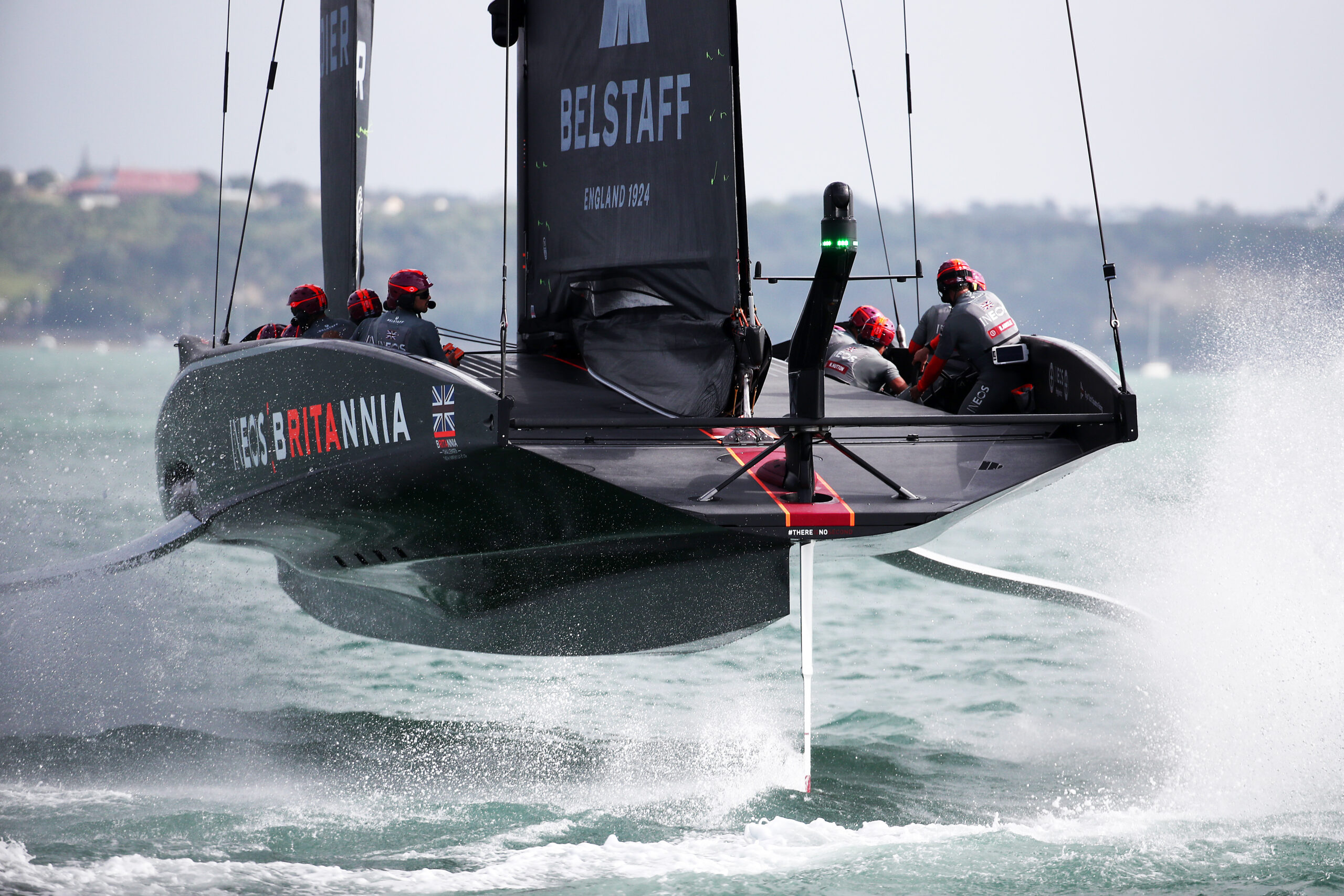
We had a daily meeting at 11:00am to go over the plan, projects and new parts – similar to what we did in F1 – and it took a while to truly hear everyone’s voice. I would say to them: ‘I woke up at 2:30am and thought about this, when you woke up last night, what did you think about?’ Sometimes nobody had much to say when I asked this question but on many occasions there was a little nugget of information that came to light.
If you are looking to build psychological safety in your team, try using ‘no surprises’. It gives your team permission to speak and it will help your team grow and develop as they feel they have a voice and will be respected for their contributions.
The 2% vs the 98%
Now this might be a bit controversial: one nugget I gave to the young Build Logistics Team on the America’s Cup was “you are only remembered for the 2% you get wrong, not the 98% you get right”.
If you are really honest and park up all the psychology for a moment, this is probably a pretty true statement.
I am sure plenty of cleverer people than me will disagree with this sentiment, but this is how I see it. It is a bit below the line, but it did focus my mind on my own performance. I believe we remember negative moments or threats to help protect ourselves in the future if we see this type of situation happening again, and therefore it remains fresh in our memories.
Others will have some good memories of some of the things we did but they will remember in detail our mistakes and the moments where we did not behave reliably or with competence. In other words, they lost trust in us. As human beings we will make mistakes, this is how we learn, grow and develop.
Intent-based leadership
Leaders of new young teams need to provide a lot of control and support in the early stages of the team’s development while the team members improve their competence and get aligned to the clarity of the intent. As the team’s competence and clarity increases, the amount of leadership control decreases. This is built on the intent-based leadership theory devised by retired United States Navy captain David Marquet.
This is a snapshot:

As a leader you are never quite sure what the people around you really think of you or if you have made a difference due to the pace of the world we live in. That said, a former member of the Mercedes F1 Build Logistics Team (and now a successful leader and manager in his own right) recently sent me one of the nicest bits of feedback I have ever received:
Your leadership allowed many young people to grow and now forms a lot of their own leadership and general teamwork skills. The biggest thing I always felt that made you different was your ability to allow others to make mistakes whilst catching them before it was at the detriment of the team. Without that, none of us would have learnt to be independent.
I think the key point from this is: I was catching the mistakes before they hit the 2% category while allowing the team to learn and become independent and responsible.
How is your team learning? Or are you telling them what to do so they don’t make mistakes? You don’t want their mistakes to reflect poorly on you and get you into that 2% category.
I hope this has given you something to think about. I am sure this may go against the grain for some of you but I suppose we can’t all agree on everything.
Peter Hodgkinson is a leadership and performance specialist skilled in helping high-performers become better at what they do. As an accomplished manager and mechanic, Peter has enjoyed almost three decades of success in elite sporting environments. His work in motorsport, as part of winning teams at Le Mans and Daytona, culminated in seven Formula 1 driver’s world championships won at Brawn and Mercedes, where he led car-building operations. Peter was Mercedes’ Head of Build during Lewis Hamilton’s era-defining run of six world titles. After a spell serving as Mercedes’ Head of Employee Engagement, Peter returned to the Factory Floor as Build Operations Manager for the INEOS Britannia sailing team when Mercedes supported their quest for the 37th America’s Cup.
If you would like to speak to Peter, please contact a member of the Leaders Performance Institute team.
18 Feb 2026
ArticlesIn his latest column, performance specialist Richard Young explains why the podium is merely the place where the work becomes visible.
What we’re watching was shaped long before now.
The medals being awarded at these Games were formed over months and years, through daily training sessions, ordinary conversations, and leadership decisions that rarely felt significant at the time. The podium is simply where all of that work becomes visible.
That’s why medals matter. Not as a destination, but as a standard that quietly shapes everything before the starting gate.
When a team commits to gold medal quality, the question changes. It is no longer “is this good enough?” It becomes “is this gold medal quality?” That shift sharpens judgment. It makes it easier to decide what stays and what goes. It creates the discipline to say no to additions that feel helpful but dilute the work.
Winter sport exposes this clearly. Conditions move quickly. Margins are tight. There is little room for correction. When athletes perform with clarity in that environment, it is rarely because of something added late. It is because gold medal quality guided training, recovery, and conversation long before they arrived.
The honesty of this standard matters. Gold medal quality does not guarantee the result, but there is no downside to holding it. It gives a team the best possible chance because the work has been measured against something that counts. And whatever happens on the day, you can walk away knowing the system reflected your best thinking and your best effort over time.
That is important because the Games have a way of revealing the truth. They do not create pressure; they concentrate it. They do not build your system; they expose it. Under that intensity, whatever has been repeated, clarified, and aligned over months and years becomes visible. What has been protected holds. What has been left loose shows itself.
I have seen this pattern many times and have helped teams address what is almost inevitable in the lead up to major events. Good intentions turn into noise. Leaders want to help, coaches want to protect, support staff want to add value. Meetings increase, plans are revisited, reporting expands. Activity rises while alignment begins to thin. Without a shared standard, every addition can be defended. With one, decisions become easier because there is something solid to measure them against.
I remember working with a winter sport programme that, from the outside, looked ready. The talent was there, the experience was there, and the resources were in place. As the event approached, small adjustments began to appear. Plans were refined again. Extra conversations were added. Senior leaders checked in more frequently. None of it seemed dramatic, yet the clarity that had carried them started to dilute. The athletes felt it before anyone articulated it. The system became busy, and when the moment came the performances were close but the medals did not follow.
The issue was not effort; it was the absence of a shared and protected standard. When everything feels important, the essential things lose their edge. The debrief circled around marginal gains, yet the real margin had slipped much earlier. At some point the team stopped asking whether each decision truly met gold medal quality.
Watching these Olympics, you can see the difference. Some teams are not louder or more animated, they are settled. Athletes adjust to conditions without drama. Coaches stay with the plan rather than reacting to every moment. Leaders are present and steady, not adding extra layers or distraction. That composure was built well before the Games. It came from hundreds of choices where gold medal quality decided what stayed in the system and what was taken out.
Across five Olympic cycles of research, one pattern was consistent. The best at repeat performance were also the best at saying no. They said no to late additions. No to unnecessary meetings. No to changes that did not lift the standard. They protected the gold standard when others were tempted to add. Their edge was not intensity. It was discipline around what mattered.
This is where medals matter. Not as pressure, but as a reference point.
When a shared standard is clear, alignment is not forced. A physiotherapist knows whether an intervention adds value. A coach simplifies a session without feeling exposed. An athlete speaks up because the question is not personal, it is principled. Does this meet gold medal quality? If it does, it stays. If it does not, it goes.
High performing environments stay simple as the demands increase. Winter sport tests that. Conditions shift. Schedules tighten. Margins are small. Anything extra becomes a load. Teams without a protected standard arrive still discussing basics. Teams who have done the work arrive clear on who they are, how they operate, and what they trust.
And that clarity does not sit with one leader! It runs through the system.
In environments where performances are repeated and sustained, leadership is not a title. Athletes lead themselves. Coaches lead learning. Practitioners lead their craft. Senior leaders protect the conditions. It only works when there is a standard everyone understands and can apply. Gold medal quality becomes the shared reference point. It is how distributed leadership holds together.
When leadership is shared in this way, pressure does not destabilise the system. People know what matters, decisions move quickly and conversations stay anchored. Simplicity is protected because the standard keeps pulling the work back to what counts.
Medals reflect the health of the system that produced them. Ignoring them does not remove pressure. It removes the reference point. The issue is not caring about medals. It is misunderstanding what they represent.
When medals are treated as proof of effort, people push harder. When they are treated as proof of control, people tighten their grip. When they are understood as the outcome of sustained quality over time, leaders look at the system. They ask what met the standard and what did not, and they adjust accordingly.
Across the five Olympic cycles of research, the repeat performers did this better than the rest. They reviewed their environment against gold medal quality and made decisions early. What needs lifting. What needs shifting. What needs removing. Questions that were visible as part of the daily work.
As these Games unfold, the competition is extraordinary. The margins are tight, the stakes are high, and the performances are world class. It is compelling to watch. But there is added value if we look under the hood. Beyond the podium and the headlines, we can observe the systems that hold when the pressure rises.
You can hear it in the interviews. Athletes speak with clarity about their process, not just the outcome. You can see it in their body language at the start line and in the finish area. There is composure. You can see it around the competition environment, in how teams warm up, how staff interact, how little needs to be said. None of that is accidental.
What we are watching is not only talent meeting opportunity. It is preparation meeting pressure. It is standards held over time. The best in the world are showing us what it looks like when a system has been built properly and trusted fully.
Gold medal quality is a way of deciding, leading, and working. It asks a simple question each day and requires an honest answer.
Over time, when medals matter, that standard shapes what becomes possible.
Enjoy the Games!
Richard Young is an internationally renowned performance advisor. He has been involved with 11 Olympics as an athlete, coach, researcher, technologist, and leader working across more than 50 sports and seven countries focused on sustained high performance. He has won international gold medals and coached world champions. He founded international performance programmes including, the Technology & Innovation programmes for Great Britain and New Zealand, and a Performance Knowledge & Learning programme for the New Zealand Olympic, Winter Olympic and Paralympic teams. Across seven Olympic cycles he has researched the differences between medallists and non-medallists, their coaches, support staff, leaders and the system they are in to unlock the keys that separate them from the rest.
More from Richard Young
Meaning Does Not Guarantee Medals, But it Strengthens the Behaviours that Make Medals Possible
The theme of alignment was high on the agenda at February’s Leaders Meet: Australia.
The Shepmates – Australian identical twin brothers Archie and Miles Shepherd – have become internet stars due to their viral videos depicting their high-energy and comedic reinterpretations of dramatic moments of sports commentary.
“I’m not going to pretend like we probably should be offering you guys advice. You’re the best at what you guys do,” Miles told a room of Leaders Performance Institute members at Rivershed in Brisbane. “But hopefully we can inspire you guys, or you take something from our story.”
Their dedication to their art and their fans has taken them to places they never expected. “We’ve found ourselves in a pretty niche part of the internet,” said Archie.
On top of it all, the brothers’ obvious chemistry, as well as their ability to finish each other’s sentences, hinted at the theme of alignment that ran through both days down on the River Brisbane (and it’s a performance trend we’ve tracked for some time).
They were not alone. Others who took to the stage, including the Brisbane Lions, World Rugby and the Queensland Ambulance Service, spoke of their efforts to ensure everyone within their walls is on the same page.
Based on the insights shared onstage across both days, the Leaders Performance Institute highlights how alignment shows up in the work of high-performing teams in at least five ways.
1. Smart coaches who can manage up
In sporting terms, there has never been a better moment for the city of Brisbane, with the Lions defending their AFL premiership and the Broncos winning the NRL in 2025.
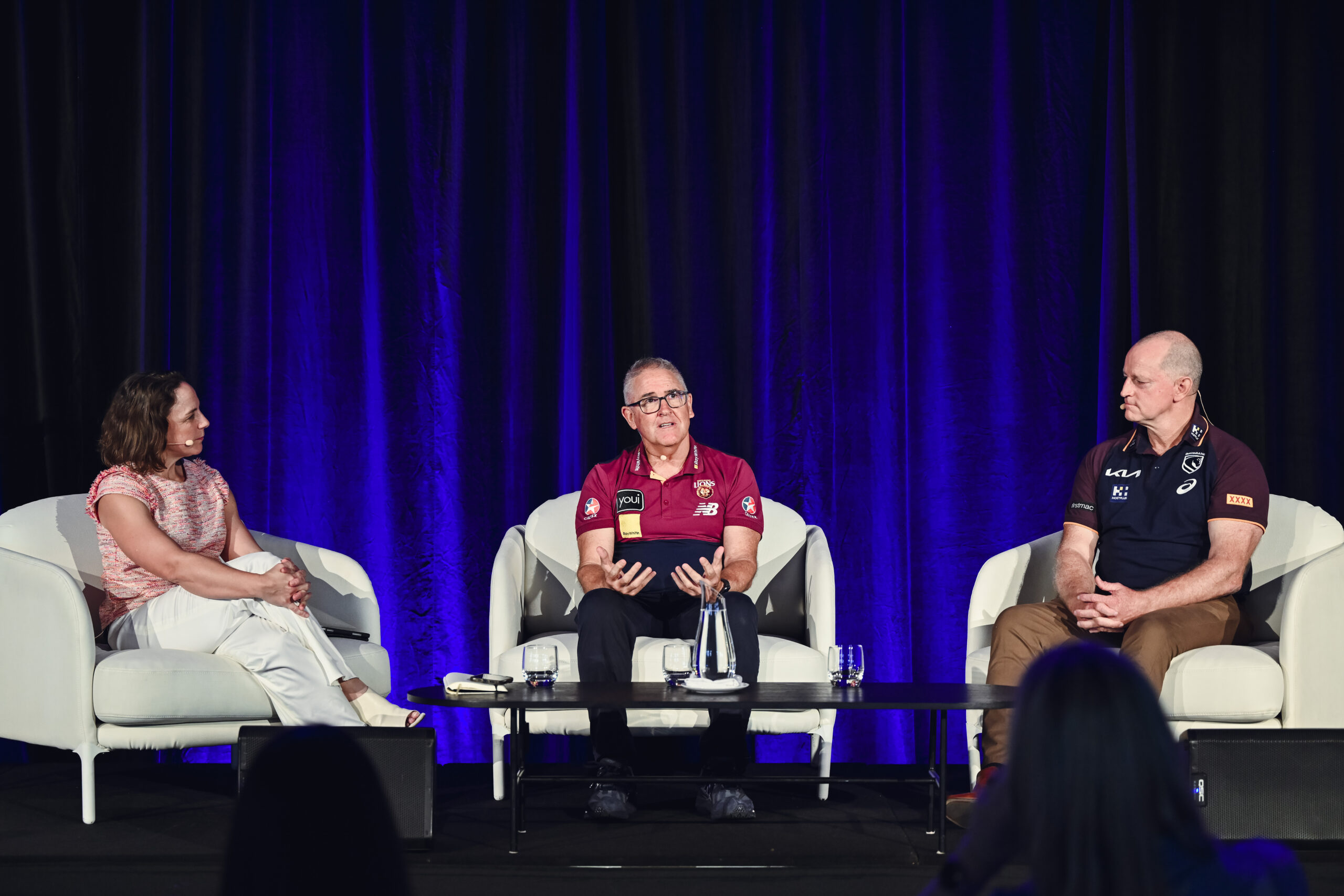
Lions Senior Coach Chris Fagan and Broncos Head Coach Michael Maguire have built winning machines in this corner of Queensland, and both were on hand to tell Leaders Performance Institute members how it was done.
Key to their approach is an ability to manage the executives within their organisations. As Fagan said, “I always said to myself, if I was going to be a head coach, that I would make sure I would manage up to that group of people.”
Over the past nine years, Fagan tried to dine once a week with Lions’ CEO Greg Matthews as well as the team’s senior-coach-turned-executive Leigh Matthews.
Chris Fagan
Maguire has adopted a similar approach to prevent any noise or confusion emanating from above.
Michael Maguire

Chris Fagan (centre) in conversation with Michael Maguire (right) and moderator Rachel Vickery. Photo: Albert Perez
2. They seek ‘spine alignment’ too
While coaches can do what they can to ensure information is flowing in all directions, there is a role for both board members and heads of performance on the sports science side too.
Onstage, Peter Horne, the Performance Director at Rugby Australia, made the case for “spine alignment”, of which he said, “if we get true spine alignment of what we’re trying to achieve from a strategy, business and the deliverables [perspective] then we’re more likely to be able to execute.”
Crucially, as he admitted, it is not about agreement on every decision.
Peter Horne
“For the spine to work, you need everyone operating at the right level,” said Brett Robinson, the Chair of World Rugby, who joined Horne for the session. He included himself in that assessment.
Brett Robinson

Peter Horne (right) makes his point onstage with Brett Robinson (centre) and Leaders’ Laura McQueen. Photo: Albert Perez
3. They bring their frontline people onboard
Few individuals are as well placed to discuss the concept of a culture driven by a shared purpose than Dr Stephen Rashford, the Medical Director of the Queensland Ambulance Service.
He is proud of his team’s “no excuses” approach too. “When we do our audits, everyone’s in the room, and there’s no making fun of anyone, there’s no bullying. We have honest, open discussions because we all just want to get better.”
Critically, their culture starts with their paramedics.
Dr Stephen Rashford

Dr Stephen Rashford mid presentation. Photo: Albert Perez
4. They have leaders who give their people psychological safety
Australian all-rounder Ellyse Perry is one of the greatest female cricketers of all time (then there’s her career as an international football player to consider). Her career has been underpinned by psychological safety. “When there’s a lot of support around that and real alignment on wanting to grow and improve, that makes a big difference,” she said.
Ellyse Perry
“No matter the position you hold, you don’t know everything, so be open-minded to learning,” said Anna Meares, the double Olympic gold medal-winning track cyclist who served as the Chef de Mission for the Australian Olympic Committee at the Paris Games. She spoke onstage alongside Perry and fellow Olympic gold medallist, the BMX cyclist Saya Sakakibara.
As Chef, Meares decided that open displays of vulnerability from early in the cycle would help to bring athletes and their coaches onboard.
Anna Meares
Psychological safety is just as important in individual sports, as Sakakibara told the audience. The Red Bull athlete won gold in Paris but recounted the story of her awful crash three years earlier in Tokyo and how it encouraged her to start placing her trust in others.
Saya Sakakibara

Anna Meares (second from left) makes her point to session moderator Fabio Serpiello in the company of Ellyse Perry (second from right) and Saya Sakakibara (first on the right). Photo: Albert Perez
5. They use process as a tool of alignment
In his presentation, Scott McLean, an associate professor at the University of the Sunshine Coast, explained that leaders must be aware of how things are connected in the complex systems of sports performance.
Scott McLean

Scott McLean from stage right. Photo: Albert Perez
Interventions should be governed by the performance need rather than results, according to James Thomas, the Performance Director at Warwickshire CCC, who made this case when he spoke onstage.
James Thomas

James Thomas onsite at Leaders Meet: Australia. Photo: Albert Perez
Where we’re going next
Emily Scarratt and John Mitchell knew their England team could be world champions, they just needed the right environment to be able to prove it.
The centre had just competed in her fifth tournament (a joint record in the women’s game), claimed her second winner’s medal, and helped to complete an 11-year quest to bring the World Cup trophy back to England. It was almost the perfect way to bow out after 17 years as an international, 115 caps and a world record 754 points.
Yet she had only played 19 minutes of England’s campaign – all as a second half substitute in the Red Roses’ opening pool match; a 69-7 defeat of the United States in Sunderland.
“I’ve definitely been part of environments before where that kind of non-playing player can become quite negative and toxic,” she told an audience at the 2025 Leaders Sport Performance Summit in London.
“For a large part of my career, I was starting and therefore it’s very easy to say the right things and present in that way when you’re not under the stress of not being selected or not playing as much as you would like.”
Scarratt was joined onstage by England Head Coach John Mitchell, who in early February extended his contract until the 2029 World Cup and added Scarratt to his coaching staff.
The session moderator, Rachel Vickery, asked him what it meant to see Scarratt and her other non-playing teammates (known within the Red Roses setup as “pillar” players) celebrating with such vigour.
“I reflected that we actually hit the sweet spot with the culture,” said Mitchell. “Sometimes you don’t get that sweet spot and we might not get it again.”

Rachel Vickery (left) talks to John Mitchell (middle) and Emily Scarratt (right) onstage at the 2025 Leaders Sport Performance Summit.
Here we reflect on what Mitchell and the Red Roses got right for 2025.
He spoke up when something wasn’t quite right
When Mitchell signed up to become England Head Coach in 2023, his remit was to win the World Cup. He was a coach with a proven track record in the men’s game who had now been handed the resources and the players to deliver the Women’s World Cup on home soil.
But in 2018 and 2022 England had lost World Cup finals they could, or perhaps should, have won.
“The leading question was how do we get done what we haven’t through the years?” said Mitchell.
It involved integrating young talent (eight players made their World Cup debuts against the US) and tactical tweaks (they had been too reliant on their maul). Both required an environment that enabled the best team on paper to prove they were the best team on grass.
To deliver on that front, Mitchell and the team’s leaders landed on three guiding values: ‘courage’, ‘take the handbrake off’ and ‘be all in’.
These values inspired England’s veterans and new internationals alike. “If the top person genuinely believes that culture is important it makes a difference,” said Scarratt. “Potentially in previous campaigns that hasn’t been the case and culture could get a little bit sidetracked or lost along the way.”
Mitchell even spoke up when he spied a shortcoming in the players’ well-meaning desire to ‘do it for the girls’.
“My thinking was that emphasis might be slightly calibrated towards ‘me’ – not intentionally – but how do I get the girls to calibrate towards ‘we’?” he said. “Because if I inspire you and I’m inspired by you, isn’t that more important, more inspiring to the person next to you? We get the job done and then our voice around our individual ‘why’ will be far greater.”
The cultural tweaking never stopped
“It’s very easy to just pick values, put them somewhere and hope that people live by them,” said Scarratt. “Our values were genuinely threaded through a lot of what we did, whether it was medical presenting or S&C presenting” and, when you witness that, “it’s very easy to buy-in”.
Mitchell held difficult conversations when necessary, but all players and staff, Scarratt said, were expected to speak up when necessary “to nip things in the bud before they became potentially bigger.”
At the suggestion of leadership consultant Patrick Marr, Mitchell would ask his player leadership group and support staff on the eve of each international camp to tell him “who’s going to pull the cart forward? Who’s going to sit on the cart? Who’s going to hold up the cart?”
After an hour he would “come back and I’d see two or three players, plus a couple of staff, where our priority needs to go,” he said, adding “we would then decide on who I would speak to and who they would speak to.” For every player or member of staff, there would be someone who could bridge that gap and “communicate around standards of behaviour”.
Mitchell even danced on TikTok when duty called
If you’re an England supporter, you may have seen the TikTok video of Mitchell dancing with his players.
“I needed to show vulnerability,” he said of such moments, which was not something he considered as a younger coach. “I had to do things that I probably don’t normally do and join in with the girls on certain things.”
Psychological safety may start with players or their head coach dancing in the dressing room, but it ultimately manifests on the pitch during tricky spells or in performance meetings when a staff member has the courage to raise a performance issue.
Mitchell knew he had to lead from the front. “Sometimes you’ve got to be the leader of those actions before somebody else does them.”
That said, his belief in the power of the head coach has been softened (and his self-awareness amplified) by three decades in the sport. “You learn through emotional intelligence that you don’t have to be absolute or right when making decisions. Just use your people. Listen to your people.”

John Mitchell and Emily Scarratt shake hands as their session draws to a close at the 2025 Leaders Sport Performance Summit in London.
The team talked about the pressure they felt
For the first time, England openly spoke about winning the World Cup. It served as a pressure valve and, again, gave voice to their values.
“It might sound a bit silly but we hadn’t done that before,” said Scarratt, implicitly acknowledging how awkward the group felt at first about such an “un-English” sentiment.
As the English media and public latched onto the team ahead of the US match, the pressure grew. The players trained poorly on one occasion but, instead of dismissing it, they discussed it openly.
“I think we did a really good job of dampening it down by not not speaking about it,” Scarratt added. “By actually putting it out there and allowing people to know that other people felt like that.”
And Mitchell’s words after England eased through the gears on the opening night set the tone. He said: “There’s bigger games coming where teams will put even more pressure on us, so let’s take confidence from what we’re building and stacking as we’re going along. Our game doesn’t need to be perfect, it just needs to be effective, and that will win us the tournament.”
He was right and, looking to 2029, their goal is to win back-to-back World Cups, establish a legacy as one of women’s sports greatest teams, and to further grow the women’s game.
These lofty goals provoke three questions that Mitchell and England must answer: “What will earn the right? What will we keep and take forward with us? And then, thirdly, is what we what will we need to start again?”
What to read next
Meaning Does Not Guarantee Medals, But it Strengthens the Behaviours that Make Medals Possible
In the second part of his series, the British Olympic Association’s Paul Ford explains that while Games environments are challenging, Great Britain’s success is testament to stringent planning and preparation – and that athlete education is at the heart of it.
Athletes are compacted into a brand-new village of more than 16,000 people who are all subject to a constrained competition schedule in what amounts to 52 world championships in 17 days, all in the same city.
It’s almost like they are being set up to fail when they’re expected to deliver the best performance of their lives.
However, we like to flip this as an opportunity.
At the British Olympic Association we feel if we educate and mentally prepare the team for what to expect it can bring a performance gain. We unite all the athletes competing as part of Team GB while giving them the platform to perform to the best of their ability.
It builds on the concept of ‘One Team GB’ as I wrote here.
A part of something bigger
‘One Team GB’ is the idea that while Team GB is made up of various national teams and individuals – and the last thing we want to do is remove that individuality – we are all there united under the same common goal as Team GB. To perform at our best and inspire our Nation!
An awesome colleague, Olympian Georgie Harland, conducted a project with the help of Owen Eastwood, during the Tokyo 2020 Olympic Games cycle. They explored our Olympic heritage dating from the 1896 Athens Games. That process unearthed so many different stories, which say to today’s British Olympians: ‘you’re not the first to go to the Games, you won’t be the last either, but you are the next and you now have the opportunity to create your own story’.
More recently, our Athlete Services Manager, Olympic rhythmic gymnast Rachel Smith, evolved this with some exceptional work going into the 2024 Paris Games around generating a true sense of belonging for our future Olympians.
As a Sport team, we visit all the different sports in advance of the Games (our Games Ready roadshow) and talk about these stories going back 130 years and always bring it back to the idea that you have the opportunity to create your own story, leave your mark as an individual in your sport and inspire the nation and next generation.
We encourage athletes to think ‘you matter as an individual’ but also ‘you’re part of a collective effort, and most importantly, you belong here’. They have their individual focus, and being selfish is fine, but we recognise that we’re here as part of that greater common purpose. Bonded by the collective support of one another. This is hugely important when the pressure is so high. No one is on their own!
Looking forward, we will engage past Olympians to continue support this process because they can bring their own stories to life. The athletes of 2028 will recognise the stars of 1984 (when the Olympics were last in LA) such as Daley Thompson and Seb Coe. That peer-to-peer connection is so much better than me trying to tell the same stories alone third hand.
The Opening Ceremony: to go or not to go?
At an Olympic Games, there are certain things you can use as a performance boost. It might be attending the Opening Ceremony: if you walk behind the flag as part of Team GB it can be a massive ‘switch on’ moment ahead of going into competition. However, if you’re competing the next morning at 8:00am in the pool, attending the opening ceremony is not ideal preparation.
You must look at the opportunities afforded by the Games and tap into the bits that are going to build you up without compromising your preparation.
If it’s your first Games, it can be hard to understand just how these different experiences might affect you. You may be on your feet a lot more than normal, meaning your hydration may be lacking, as may your sleep, because you don’t necessarily go back to your room after training and you may stay up later than normal because of the Games ‘buzz’. You may well be looking at your phone and messaging people more so than normal in competition; all that blue light exposure may ruin your sleep quality.
We find that several first-time athletes will struggle to stick to their plan because they might see their role models or idols in other sports who are hugely successful doing something in the gym and they think to themselves ‘oh, maybe I should give that a go’. That’s a potential recipe for injury disaster.
We must prepare that message in advance and tell athletes that when the Games arrive, they must stick to their process because the performances will be there and the results will take care of themselves if they do so. Don’t deviate from the norm at the crucial moment!
When to land these discussions is the next question. Some sports, such as sailing and canoeing, will know their Olympians as early as September 2027; others, such as track and field, won’t select until May 2028. So the education journey we go on with the sailors and canoeists is long; we can plan out and get that right and drip feed it at the right times. Whereas the track and field athletes don’t want to hear anything about the Games because they’re not necessarily going. We must be smart in making the education bespoke and fit for purpose for each sport. Equally, some will want us to sit down and talk it through while others just want those short videos and podcasts. It’s finding out how the different cohort of athletes’ best digest information.
Athletes will already have their own coping strategies and, as with anything else that goes into the preparations, it’s about not trying new things at a Games. Their coping strategies shouldn’t be any different to what they normally are – it’s just that the amplitude of the noise is going to be greater than anything you’ve experienced before.
Our former Team GB psychology lead, Dr Kate Hays, in the build-up to Tokyo 2020, talked through ‘stress buckets’ and the ‘taps’ you place on that bucket are your coping strategies. Our thoughts remain the same: everyone’s release mechanisms will be different, but you need to know when to turn on those taps.
We encourage athletes, coaches and support staff to openly discuss their taps ahead of time so that they are both known and understood, and crucially, supported by their peers.
Blue days, white days
At the Games, we also arrange ‘blue days’ and ‘white days’ where athletes and staff wear Team GB attire of the corresponding colour.
It may sound autocratic, but it is deliberate – even if it’s harder at Winter Games because you’re in so many layers – and there is a rationale. If you walk into an unfamiliar space where you are unknown, it can be uncomfortable, particularly if you’re not from a team sport where the squads tend to move on mass. If you’re an individual fencer, archer or table tennis player, you might be there by yourself and it can be a lonely environment as mentioned – and the last place you want to be lonely is at an Olympic Games, stuck in your own head, when the pressure is mounting.
If you go into the dining hall on a ‘white day’, you’ll see the British athletes stand out against all the other national colours. It’s a safe and comfortable place for you to be part of; it says, ‘we’re all over here’. We tend to say where we’re going to sit each day but the blue and white does make it easier; and it’s not just in the dining hall but also when moving around the village. It’s a conversation-starter and you’ve broken down the barrier because you’re bonded by the kit.
In Paris, we also had our own barista in our Team GB Olympic block so that we could create this common space for people who are all there for the same reason together. You’re not forcing them out of their room but you’re offering it as an incentive.
Our role in performance preparation
We leave the technical work to the coaches, but we need to look at the whole performance picture: what does it take to maximise this and what facets can affect that? What can we tweak within the environment to facilitate comfort, safety, and ultimately enable people to be brave and thrive?
A fundamental part of how you prepare people to perform is as much about getting them mentally and emotionally ready of what to expect. Whilst the swimming pool at a Games is still 50m, and the athletics track is 400m long; it’s the bells and whistles around them that change. We help to prepare athletes and staff for what to expect of the ‘circus’ around them. Their belonging and sense of value to the team, and how by going into this together we can thrive when it matters most.
Paul Ford is the Head of Sport at the British Olympic Association. If you would like to speak to Paul, please contact a member of the Leaders Performance Institute team.
What to read next
5 Feb 2026
ArticlesIn this exclusive column, performance specialist Dr Richard Young explains that repeated high performance is driven not just by plans or systems, but by the meaning performers attach to their work.
These hold the work together and give people a sense of direction, yet across numerous Olympic cycles and my work with teams in many countries, something deeper has shown up again and again. Repeat performers live by a small set of values that give their journey meaning, and that meaning becomes the story they return to when things get hard. Plans can organise a campaign, but meaning organises the person, and when the person is organised, behaviour aligns with purpose, decisions become cleaner, and responses under pressure strengthen.
Values are not abstract. They sit under the story people tell themselves about why the work matters. When performers are clear on their values, the story they live by gains weight and coherence. Meaning forms around those values, and behaviour follows the meaning. High performance at its core is high quality communication, and that communication begins with the internal dialogue that shapes how people approach their craft, their relationships and their response to the environment around them.
I learned this early in my work with an athlete who became a repeat performer. She spoke often about why she was doing the work, not in long speeches or motivational lines, but in a simple story grounded in a few clear values she believed in. Those values shaped how she behaved each day. She arrived ready because preparation mattered to her. She trained with intent because craft mattered to her. She kept close to people who steadied her because connection mattered to her. When she spoke with her coach she spoke with ownership because responsibility mattered to her. When we reviewed performance she measured herself against her values and her story rather than emotion or expectation. Her story filtered the noise and held her attention on what she could influence, and it stayed steady right through from her hardest performances to her best performances.
This pattern has repeated across many sports, campaigns and environments. The data I collect from repeat performers compared to the rest shows a consistent thread: they carry a story that fits their values and the meaning they bring to their journey, and they speak from that story in ways that guide their behaviour. Their story gives shape to their days and coherence to their choices. It grounds their relationships and helps them navigate difficulty. They are not waiting for meaning to arrive. They are building it and living inside it.
Those who are new or underperforming also care deeply and work hard, yet often do so without a clear set of values or a meaningful story that holds the work together. When values are unclear, meaning becomes vague, and when meaning is vague, behaviour loses structure. People get pulled by changing circumstances, shifting expectations and the noise around them. They work with effort but without consistent, clear direction, which slows their progress and creates friction in the system. This is not a comment on motivation or desire. It is a matter of clarity. Values anchor meaning. Meaning anchors story. Story anchors behaviour.
The power of distributed leadership
We know that the story in high performance environments is more than narrative. It is how people make sense of the path they are on and the role they play in it, and this is where distributed leadership becomes essential. In Amplify I wrote about leadership from the front, which is not the authority of the leader but the agency of the performer. When people are clear on their values and the meaning they bring, they contribute to the collective story of the team rather than waiting for the team to give them one. This alignment accelerates the group because each person brings their own clarity into the shared environment. When people are unclear, they wait for meaning to come from the outside, and that waiting creates misalignment and slows the group when pressure rises.
Distributed leadership grows when individuals write the story they want to live, then bring that story into the environment to help shape the story of the team. It is a form of contribution. It lifts the standard of communication. It clarifies the system. It allows people to act with confidence inside their role and in service of the whole. A team of people who know their own story and the story of the team has more alignment and more collective intelligence than a team with one story and many passive recipients. The power of meaning becomes a competitive advantage when everyone is an author rather than an audience.
One experience stands out to me from a world championships preparation phase. The team had come through a long training block. Performances were mixed, and the meetings were becoming heavier as the event approached. You could sense the pressure beginning to close in. To reset the group, we asked each athlete to tell the story of their season so far, not as a performance review but as an expression of the values they were trying to live and the meaning they brought to their work. One of the younger athletes spoke first. He said his season was about learning how to prepare in the right way and becoming someone who took responsibility for his craft. His values were clear. Growth. Responsibility. Trust. His story immediately shifted the tone in the room. Others followed with similar clarity. They spoke about identity, family, commitment, team and progress. Meaning returned to the group, and with meaning came direction. The environment lifted. And the team leaders connected the individual stories and values to the ambitious story of the team was creating together; people saw themselves first, then saw a clear and inspiring connection to the team story. That shift carried through to their highest calibre performance due to their collective ability to respond and adapt under pressure. They had triggered a conviction and belief in a story they had not experienced before.
Belonging: built from a shared sense of meaning
Meaning is one of the strongest levers of behaviour. When people know the values they stand on, their story gains structure. When their story has structure, their behaviour aligns in ways that support agency, transformation and performance. When teams share a sense of meaning built from individual values and stories, belonging grows. Belonging here is not sentiment. It is foundational to team performance. It keeps the group connected when tension increases and when pressure and uncertainty lift; and helps people stay inside their ‘circle of importance’ rather than drift into the noise.
I often ask leaders and high performers a simple question: What is the story you want to be able to tell about yourself and this team or organisation at the end of this campaign, cycle or career? Their answer reveals their values, priorities and the meaning they bring to the work. It opens the door for the team to see the personal stories that sit underneath performance and the personal meanings that drive behaviour. Most importantly, it gives leaders the opportunity to connect these stories, deepen the shared meaning and align the group around something that feels true to everyone. This is where distributed leadership grows. When people speak from their own story, they lead from the front. They help shape the environment rather than wait for the environment to shape them.
The advantage of meaning follows a clear line. Values shape meaning. Meaning shapes story. Story shapes behaviour. Behaviour shapes performance. When each person knows what they value, understands the meaning behind their work and brings that meaning into the collective story of the team, the group strengthens. Performance lifts. Cohesion deepens. The system grows more resilient because leadership is no longer held by a few. It is carried by many. When people wait for meaning to come from outside, the system slows. Alignment weakens because the stories underneath the work are not visible or connected. Teams are transformed when personal meaning becomes shared meaning.
Meaning does not guarantee medals, yet it strengthens the behaviours that make medals possible. It brings clarity to decisions, alignment to relationships and consistency to daily work. It supports cleaner communication and steadier responses when pressure rises. When meaning is present, people move with intent, and when people move with intent, performance grows.
Medals matter, but meaning matters most.
Richard Young is an internationally renowned performance advisor. He has been involved with 11 Olympics as an athlete, coach, researcher, technologist, and leader working across more than 50 sports and seven countries focused on sustained high performance. He has won international gold medals and coached world champions. He founded international performance programmes including, the Technology & Innovation programmes for Great Britain and New Zealand, and a Performance Knowledge & Learning programme for the New Zealand Olympic, Winter Olympic and Paralympic teams. Across seven Olympic cycles he has researched the differences between medallists and non-medallists, their coaches, support staff, leaders and the system they are in to unlock the keys that separate them from the rest.
More from Richard Young
2 Feb 2026
ArticlesIn the first month of 2026 Leaders Performance Institute members discussed at length strategies for effective learning, the value in evidence-informed practice, and why your values should be the carrot, not the stick.
It was a lesson to all sleeping giants. Here was a team with the most losses in the sport’s history and, over the course of their 16-0 season, had compiled more wins than between 2020 and 2023 in total.
Indiana Head Coach Curt Cignetti spoke of a “paradigm shift” in the aftermath of the Hoosiers’ 27-21 defeat of Miami.
“People can cling to an old way of thinking, categorising teams as this or that or conferences as this or that or they can adjust to the new world, the shift in the power dynamic in college football today,” he said.
Cignetti was brought in ahead of the 2024 season and transformed the mindset of a team that had been treading water for decades.
“There’s got to be a lot of like-minded individuals who come together for a common purpose, and sometimes that belief has to be a little bit irrational,” said Indiana centre Pat Coogan.
“Especially in a place that hasn’t had success like Indiana. I’ve seen it, and I’ve seen the way this place has been characterised, and when Coach Cig got here, he believed, and he got people to believe. Sometimes people laughed at him and thought he was crazy, but that’s irrational belief. You’ve got to get people to buy-in and believe in the mission.”
With a host of senior players set to graduate, success may not be replicable in the short term, but Cignetti is ready for whatever comes next.
“Perfection is impossible to attain on a consistent basis,” he said. “But we’ll continue to take it one day at a time, one meeting at a time, one practice at a time, and just keep improving and committing to the process and showing up prepared, trying to put it on the field, and see where it takes us.”
It was a powerful message to kick off the year in sports performance and one that underlined the importance of the fundamentals while refusing to stand still.
Which brings us nicely to the happenings at the Leaders Performance Institute these past four weeks.
Insight of the month
‘What underpins successful teams across formats is not uniformity, but clarity of individual responsibility within a collective framework. Team performance does not replace individual accountability; it depends on it.’
In a guest column, James Thomas, the Performance Director at Warwickshire CCC, spoke about facilities being a secondary concern until the leaders had created the right environment to enable athletes, whether they’re the Olympic champions with whom he has worked or Premier League and Champions League-winning footballers, being paramount.
Read more about why high performance is not something leaders should demand. It is something they should enable.

Britain’s Anthony Joshua on his way to winning gold at the 2012 London Olympics. (Scott Heavey/Getty Images)
Surprising insight of the month
Did you know that Team GB built its own hub within the London Olympic Village in 2012. This was very much a “host nation benefit” as Paul Ford MBE called it in another popular guest column last month.
The Head of Sport at the British Olympic Association wrote:
When we finished in London we looked and thought: ‘it’s not home advantage necessarily, we just need to be more creative’.
It provoked a question: how do we create an optimal physical way of uniting the team within the Games environment? Part of it was using our Olympic Village residential space smarter. But you can’t expect this of the local organising committee to do on our behalf, since their brief is so vast. Instead, we decided to take it out of their hands. And for each of the subsequent Summer Olympics we have found an out-of-village space exclusively for our use.
Read more about their approach here.

Team GB flag bearers Helen Glover and Tom Daley pose for a selfie outside the residence of the British Ambassador to France ahead of the 2024 Olympic Games in Paris. (Alex Pantling/Getty Images)
Best advice
Leaders Performance Institute members across the globe strive to encourage learning throughout their teams and while it will always be an important feature of any successful team, you should not waste your time on the wrong people.
As performance specialist Iain Brunnschweiler explained at a Leaders Virtual Roundtable:
“There’s definitely some people who, you can try as hard as you like to get them to learn and I think we have to be cognisant of our own energy as someone who’s seeking to help. It’s a bit like athletes, isn’t it? If you’re up for it, I’ll give you 150% of my energy. If you’re not, after a period of time, I’ll just go, ‘look, you crack on’. So I think we have to be accepting of that.”
Over the course of an hour, Brunnschweiler and a band of LPI members noted ten strategies for more effective learning.
One you might have missed
Jamie Taylor of Dublin City University and the CoEx|Lab made the case for evidence-informed as opposed to evidence-based practice.
He enlisted the help of students from DCU’s online doctorate and MSc programmes, which are aimed specifically at coaches and practitioners in high performance sport.
One such student is Eilish Ward, the Head of Player Development at the Ladies Gaelic Football Association.
As she told Taylor, you can’t simply drop research on top of a sports programme. It must be used critically, in conjunction with a coach’s own research, and applied in an informed manner.
“There’s not necessarily one solution,” she said. “There’s no one way to learn anything or to gain experience or expertise.”
The key for Ward in her work is to ensure she and her colleagues are “making as informed decisions as possible when we’re designing learning activities” because “not everything from research may be transferable into a practical environment and, equally, every practical environment is going to be hugely different.”
Read more about DCU’s programmes here.
Quote of the month
“We have to become diplomats, high‑level development people who can manage such diverse groups. Somewhere along the line, we need to start creating those development opportunities for everybody who’s on this call.”
These are the attention-grabbing words of a performance director working in India who spelled out the challenges in talent identification and development.
He and a host of LPI members listed five of the most common trends (and five opportunities) in that space.
Good to know
Organisational values should be your carrot, not your stick.
That’s according to Emma Keith, a Royal Air Force Group Captain, is the Commandant of the Tedder Academy of Leadership at the RAF. In 2015 she became the first woman to run RAF Officer Training.
In her appearance at the 2025 Leaders Sport Performance Summit in London, she spoke about how the RAF’s values, all contained within the prosaically titled Air Publication One document, had been used to browbeat good people.
“Actually 99% of my organisation are amazing, they really are, and I wanted a document that was aspirational for them, that they could believe in, that it was the organisation they wanted to be a part of. And we know from all the different behavioural models of change that it only happens when people want to change, not because it’s been forced on them.”
Again, the focus was learning strategies in an inspiring presentation.

The RAF’s Emma Keith onstage at the 2025 Leaders Sport Performance Summit in London. (Leaders)
What’s coming up for members
A recent Leaders Virtual Roundtable explored five common trends on talent development pathways.
With those questions ruminating in Leaders Performance Institute members’ minds, Luke Whitworth, our Sport Performance Team Lead, set the scene for a discussion of current trends in athlete development at youth level.
The group highlighted both trends and their attendant challenges, yet there was a sense that these also represent opportunities to refine how coaches and practitioners approach talent development.
These are the five main trends that stood out from the conversation, as well as some ideas that have served members well in their roles.
1. The provision of holistic development is a baseline expectation
“We’ve been growing when it comes to holistic development,” said a coach from a Middle Eastern academy, “not only the focus on the technical, tactical part, but also performance in the physical area, the psychological support, the educational programmes.”
It’s a situation that extends well beyond that region and it is not just the athletes but their parents who demand more rounded support.
“It is very important to be on the pitch with the players and in the dressing rooms, the lecture rooms, because it’s important to work directly with them and support them,” the coach added.
Opportunity
A psychologist based in the Australian system shared her approach:
“We have dedicated programmes and an evidence-based curriculum that teaches those skills of resilience, coping, receiving feedback and the soft skills.”
2. Earlier professionalisation
Young athletes in team sports increasingly come with their own performance entourage in tow – physios, S&Cs, psychologists – and it’s led a shift towards a “more professional mindset and approach”, as a coach based at a British university describes it.
“We’re now working in performance, not development,” said another. This expanded menu of support services is not a bad thing in isolation.
“From a coaching point of view, the influence they have on feedback that the player gives you is not necessarily aligned with what we’re trying to implement as coaches; and that can be frustrating,” said a coach at an AFL club.
Those influences include third parties, such as agents. “We actually have services that are professional organisations that just provide services for athletes who are on their way up and they cherry-pick them,” said a performance director of the Indian sporting landscape where he plies his trade. “They give them a psychologist, a physio, a strength & conditioning person and everything else they need as soon as they get a whiff that they might be talented.”
Opportunity
Compromise and clarity are essential, as the India-based performance director explained:
“As an academy we have to make agreements, establish roles and responsibilities, who should take care of this, who should take care of that, while we’re managing that professional approach.”
3. Many young people are priced out
As the price of attending both training and competitions year after year continues to rise, those from less affluent demographics are falling away.
“How can we get people who maybe can’t afford to get into these sports to stand in front of us?” said a head of youth coaching at a major English football club. “Our academy car park is amazing. It’s like a first-team car park. The days of kids coming on trains and buses to training have almost gone now.”
Opportunity
In Australia, some sporting bodies support and subsidise athletes; and if a child in a remote region requires online assistance to make it work, then that’s what they’ll receive. The aforementioned psychologist said:
“We’re very conscious of setting up a pathway that players can access equitably. We don’t charge to come on a talent camp… and we’ve just sent a player off for an MRI. We’ll pay for that. We pay for their accommodation and their food, which is probably not common across pathway sport or teenage sport in Australia.”
4. Changing athlete psychology and social needs
This is related to No 1. Today’s young athletes are often more technically skilled than previous generations, but they require more psycho-social and emotional support.
For one, young athletes today are more extrinsically motivated, as the head of youth coaching in English football observed.
“They really care about what people think of them, the perception piece, whether that’s social media, but they really care what people think about them. So being part of a group is quite important for them,” he said.
On that final point, the same scenario is playing out in Australia. “The one thing I’m sensing now is the expectation of a player that’s been at the club for a while or just coming in is that they feel connected to the environment,” said the AFL coach. “So if that doesn’t happen, we’re seeing more player movement than ever before.”
Opportunity
Players are taking more care in their choices rather than pledging blind loyalty to a club – and the smartest teams have noticed. “We’re actually seeing the greatest successes in terms of who wins the premiership or the championship from teams that do that well compared to ones that don’t,” he said before adding:
“The athlete is putting a lot of time into making decisions about their careers. I think we’ve got to step up in this space and not be walked over by the athlete, but understand what their motivations are and tailor it to the individual as much as anything. I know the social skill part is an ongoing challenge. I’ve already had older players come up to me and going ‘he’s not fitting in well socially’. So we’ve got to go to work on that.”
5. This all means that staff members must change
As the conversation neared its conclusion, Whitworth posed another pertinent question: “We’ve talked a lot about how the athlete is evolving, but in turn, how do we have to evolve as well? And what additional skills are we going to need?”
Communication, as ever, was high in the group’s thoughts. “Everyone’s gone digital first,” said a sports nutritionist based at a British university. “I probably do 80% of my work with athletes online.”
His colleague, a coach, concurred. “When there’s clarity then there’s clean execution from different disciplines. When it’s muddy, things don’t get done.”
Opportunity
The performance director based in India went further based on his experience:
“We have to become diplomats, high‑level development people who can manage such diverse groups. Somewhere along the line, we need to start creating those development opportunities for everybody who’s on this call.”
What to read next
Talent ID and Development: The Race to Deliver Formula 1’s First Female World Champion
27 Jan 2026
ArticlesIn the first of two articles on the topic, the British Olympic Association’s Paul Ford explains that comfort, familiarity and safety are not nice to haves, but essentials to help people thrive when it matters most.
We have long since secured Stanford University as our main team preparation base for Los Angeles 2028. We did the groundwork starting in 2023, and planning is well underway with our sports to do warm weather camps there this year. Likewise, we are on the cusp of announcing our in-competition High Performance Centre in LA to support us at Games-time as well.
We believe that securing the best multi-sport facilities is an essential component of helping British Olympians to perform at their best, as I hope to explain below. And its importance is why we’re already underway on Brisbane 2032!
Creating a home from home
Much has been written and said about British athletes enjoying their tea, baked beans and tomato ketchup in Rio de Janeiro, Tokyo and Paris outside of the Olympic Village bubble within our Team GB exclusive Preparation Camp and in-competition High Performance Centres, but there is a clear performance benefit in having access to these bare necessities.
The media understandably focus on those elements because it forges a connection between the athletes and the public they represent. These may be highly skilled performers, but they are regular human beings too; and if people feel safe, happy and comfortable, they tend to perform better when it matters most. Support staff just as much as the athletes. Everyone on our team has a role to play, and we need them to all perform their best.
It dawned on us ahead of the 2012 London Games, where we, as hosts, were afforded a huge opportunity, but equally given a broader challenge too. We took 541 athletes, which was approximately two-thirds more than we would normally take. We had to find a way of uniting this extended team above and beyond what we would normally do.
One element is our belief that all our athletes and sports come together as ‘One Team GB’ (which conceptually we’ll explore in the second article). Another element is more structural: we needed to find a space where we could be exclusively just who we were: Team GB. Extending our normal multi-sport pre-Games Preparation Camp at Loughborough University was one thing, but we needed an exclusive in-competition hub as well beyond just our residential space in the Olympic Village during competition.
It is still largely unknown that we were able to build our own hub within the London Olympic Village (very much a host nation benefit) as we traded off space for our full bed allocation within the main accommodation blocks. So while we were able to pull strings with the Organising Committee (as all host nations do) when we finished in London we looked and thought: ‘it’s not home advantage necessarily, we just need to be more creative’.
It provoked a question: how do we create an optimal physical way of uniting the team within the Games environment? Part of it was using our Olympic Village residential space smarter. But you can’t expect this of the local organising committee to do on our behalf, since their brief is so vast. Instead, we decided to take it out of their hands. And for each of the subsequent Summer Olympics we have found an out-of-village space exclusively for our use.
The benefits are significant. When athletes arrive in the Olympic Village, they are greeted by chaos. With all those different nations in the same place at the same time, it is not conducive to rest and relaxation. Our in-competition High-Performance Centres in Rio, Tokyo and Paris provided a stress valve; a haven that removed British athletes from the chaos and the noise. Our ‘Performance Lodge’.
At each of those games we set up the Performance Lodge in local schools, near the Village. These are multi-purpose spaces that no-one is using in the periods in with the Games take place, as it’s the summer holidays. We can effectively go in and do a ‘DIY SOS’ for 72 hours and flip around several classrooms into, say, medical spaces, lounges or meeting areas for family and friends; we can build boxing rings in their sports gymnasium; we can install our own catering services for the team. It creates an in-competition environment to support performance readiness for GBR athletes and staff only. It complements and cultivates the team feel and supports optimal recovery & regeneration at the same time.
Nothing left to chance
We go by the name British Olympic Association most of the time as the National Olympic Committee for Great Britain & Northern Ireland, but when it comes to competition we flip into Team GB mode.
We know our place in the congested British sporting landscape: we are solely concerned with delivering the team to the Games. We try to take the other stakeholders on a journey, including the National Governing Bodies, UK Sport as the funding agency, the UK Sports Institute and home countries sports institutes. To ensure everyone is clear what the plan will be. Crucially, we aim for no surprises at the Games.
We plan and deliver nine Games and Youth Festivals every four years. As illuded to above, whilst we could just plan one at a time, in chronological order, we do it concurrently, as to achieve what we want to we need to work ahead of our competitors.
As mentioned, we have secured Stanford University as our primary preparation base for the 2028 Olympics. We believe this is a massive coup, again, because we’re going to be able to transition our athletes through the nine-hour time zone shift, get over the 12-hour flight fatigue, adapt to the California summer heat, and do final technical training in a world class environment. They’re going to be able to do that in our exclusive controlled bubble and be forged as a united team. Critically, they’ll be comfortable and familiar by the time they go into the Olympic Village with being around each other from other sports, which only happens once every four years. For many this, if not planned for, can be a massive derailer, a shock to the system, and scupper performance.
But for us to have confidence in that Preparation Camp, we must test it. We must run that Camp environment multiple times as best we can beforehand because we’re working with a university that has never hosted an Olympic team before and new hotels who have never had such an array of requirements. The Camp alone in 2028 will be a five-week performance operation. We’ll have individual sports go there this summer, and in 2027 where we’ll run a bespoke multisport camp too. We don’t leave anything to chance. We simulate and test. Hopefully we flush out as many things that could go wrong as possible. The east coast of Australia will get the same treatment ahead of 2032.
‘The most-local non-local team’
Yet things can and do go wrong, which is where our planning and diligent solutions-oriented mindset comes into its own. In Paris, there was, as widely publicised, some challenges with the athlete dining experience in the Olympic Village. It’s complicated to cater for ~16,000 people in one dining hall. Local Organising Committees are almost setup to break at points given the enormity of the task they are given. Yet it’s the most important moment for an Olympian to have everything just perfect. That’s where we must be solutions based and see the opportunities, have the Plan B and C ready. So, in Paris, when this became tricky, rather than just moaning and complaining, we went into action, and that’s where our Plan B came in. We worked with the affected sports and transported athletes to our Performance Lodge and double our services covers to supplement the affected athletes performance nutrition to aid recovery. It came at a significant additional cost to us, but we had to do it.
Though not the same issues, this was not a first. There is always a curve ball at a Games. And truth be told we like it. As we have always thrived in adversity and used it as a performance opportunity. In Tokyo, the obvious one, we had to manage the pandemic and layered COVID complications at the Games. It remains a point of pride that we were the only ‘big’ nation to get every athlete who travelled to the Games to make the start line of their event, and to perform. The results spoke for themselves.
As an example, there were restrictions on numbers in the Olympic Village, and a limitation on how early teams could bring athletes into the Olympic Village. For nations travelling across multiple time zones, from climates not like the intense heat and humidity of a Japanese summer this was a performance inhibitor. But we did get in early. That’s because of some solid groundwork and efforts with the locals in the years in advance. We achieved special dispensation and were able to bring the Team into country to acclimatise and prepare in our own unique bubble in the city of Yokohama, just south of Tokyo. It gave us, again, a massive performance advantage. It was not by chance (though we couldn’t predict the pandemic obviously), but we achieved this exemption because we had worked so hard in advance to win the hearts and minds of our hosts beforehand. They saw us as their local team.
In 2019, a year before the originally planned Tokyo Games, we held a series of community engagements at our Preparation Camp base in Yokohama, to test things, and connect with the locals. Swimmers Adam Peaty and Duncan Scott, for example, brought their medals from Rio and put them around kids’ necks at an open swim session. That was a ‘money can’t buy moment’. We are incredibly privileged with what we represent and are custodians of the Olympic values. Bringing it to the communities that the Games affect is so important. Yokohama city officials saw and truly felt this, which is why they were so supportive of us still going through the Preparation Camp in 2021, ahead of the rescheduled COVID Games. That’s not something we had planned for but was a consequence of undertaking that process properly.
Similarly in Rio, we set ourselves a challenge: when Brazil isn’t cheering for Brazil, how can we encourage Brazil to cheer for Team GB? Again, this was off the back of a Home Games and seeing the power of what having loud and enthused crowds could do for our athletes. We approached that in two ways. At our Preparation Camp in Belo Horizonte, one hour north of Rio, we invited local children to Athletics and Rugby 7s training sessions prior to the Games. It built that connection and was reported in the local media. We were seen as ‘the most local non-local team’. We also did a series of community engagements, including sending our boxing, judo and taekwondo athletes into favelas within the greater Rio area. It carried an element of risk, but we had the mindset of this work being the right thing to do. When adversity ensued in Rio as the system creaked during the Olympic Games, the locals supported us with whatever we needed.
And so, wherever Team GB athletes go, whenever they attend an Olympics, we plan, prepare and deliver an all-encompassing home from home model. Everything is centred on the athletes.
Through following the principles above, all the athletes need to do is arrive and execute their best performances when it matters most. The results take care of themselves.
Paul Ford is the Head of Sport at the British Olympic Association. If you would like to speak to Paul, please contact a member of the Leaders Performance Institute team.
Read part two
How Team GB sets the stage for British Olympians to write their Own Stories