Leaders in Business
  • Membership
  • Events
  • Content
  • Virtual Learning
  • Connections
  • Partners
Login
  • Leaders Meet: Innovation
  • Events
    • Leaders Week London
    • Leaders Sports Awards
    • Leaders Club Events
    • Leaders Performance Institute Events
    • Leaders Meet: Innovation
  • Memberships
    • The Leaders Club
    • Leaders Performance Institute
  • About
    • Careers
    • Contact
I’m a sports leader:
  • Off The Field For those focused on the business of the sport View more
  • On The Field For those working with an athlete or elite team View more
  • Login
    • Leaders ClubThe membership for future sport business leaders
    • Leaders Performance InstituteThe membership for elite performance practitioners
  • Newsletters
Performance Institute Leaders Performance Institute Logo
  • Membership
  • Events
  • Content
  • Virtual Learning
  • Connections
  • Partners
Login

27 Nov 2024

Articles

Your Mental Skills Work Must Be Simple, Relevant and Applicable

Category
Human Performance, Leadership & Culture
Share
Facebook Twitter Email Copy Link
https://leadersinsport.com/performance-institute/articles/your-mental-skills-work-must-be-simple-relevant-and-applicable/

In the third part of his ongoing miniseries, mental performance coach Aaron Walsh says that the key to integrated mental skills work is a better understanding of your athletes’ needs and their competition.

By Aaron Walsh
While no-one doubts that mental skills are important, conversations with colleagues led me to believe that mental skills programs were rarely integrated successfully.

I wanted to understand the perceived gap between value and impact and embarked on a research project whereby I contacted 35 head coaches and performance directors and asked three questions.

The first two were ‘yes’ or ‘no’ questions:

  • Do you think mental skills play an important role in the overall performance of your team?
  • Do you currently have a strategy to integrate this work into your team environment?

The third question was open-ended:

  • What major obstacles prevent mental skills from being integrated into your team?

One of my significant findings was that the information delivered to the players, coaches, and staff wasn’t consistently effective. This is understandable; psychology is a vast subject, and translating the principles that underpin the work can be difficult. However, the last thing a provider wants to do is add a layer of complexity for athletes who already have the burden of processing a lot of information.

To address this, I will examine a couple of areas we can focus on to ensure the content we deliver is meaningful and impactful. We want it to enhance performance and provide the necessary information, tools, and support for our players and staff to perform at their best when pressure is present. The first area of focus is determining what content is needed for our teams.

To illustrate this, I will look at the different natures of the sports our athletes participate in and how that shapes what we engage them with.

Looking for the clues

When determining what content to deliver, our first reference point will be something other than a textbook or theory. We will use what we know about psychology extensively, but we need to ask a more critical question before we dive into it.

What are the mental demands of the sport? 

This seems a simple question, but it forces us to eliminate supercilious issues and allows us to identify where we can bring value to the athlete. To help us answer this question, I have divided sports into three categories. The reason for doing this is the nature of the sport will tell us what challenges the athlete is likely to face.

The categories below are not black and white in their definition; for example, in some sports, you have moments when you are required to initiate the movement (A lineout throw in Rugby, a free kick in football, a free throw in basketball). Still, most of the time, you are responding to movement. In other sports, you only initiate the movement (golf, archery, jumps in athletics).

Defining these challenges allows us to tailor our content to meet those needs. In other words, we become relevant.  For the sake of brevity, I will define the mental challenges of the sports involved and give three mental skills to enhance performance. This is not intended to be a comprehensive list but rather a snapshot identifying the demands and skills required to succeed.

  1. Endurance sports

The name and nature of endurance sports give us immediate insight into their challenges. How do you mentally stay engaged in a mundane task that is causing significant pain?!! Endurance athletes are different beasts. To be successful, they must develop the ability to tolerate discomfort and resist the temptation to back off or quit. This becomes essential during long-duration efforts.

Key mental skills required

  • Managing focus: The ability to maintain attention on the task so the athlete can push through fatigue and distractions during long events.
  • Self-talk: Encouraging and affirming internal dialogue to counteract negative thoughts, especially in challenging moments.
  • Adaptability: Being flexible and able to adjust plans or strategies in response to unexpected conditions (weather, terrain, etc.)
  1. Sports where you respond to movement

Most sports require the athlete to respond to movement to be successful. This includes both a moving ball and opposition. The nature of the games, from basketball to football to rugby, is fast-paced, and participants must make numerous decisions under fatigue and pressure. This is often accompanied by strategic demands, with various game plans that must be executed for the team to perform well. As the introduction mentions, these sports are intertwined with moments where the athlete must initiate the movement.

Key mental skills required

  • Clarity: Being clear on the athlete’s role in the team, understanding the key areas to focus on, and being aware of crucial game plan responsibilities.
  • Decision-making: Ability to make the right decision at the right time. The clarity above needs to be married to in-game calmness. It will be necessary to trust their instincts and preparation for this to occur.
  • Moving on quickly: Mistakes will occur in a fast-paced game where multiple decisions are made. Athletes must be able to reset mentally, let go of the past, and refocus on the next task they need to excel in.
  1. Sports where you initiate movement

These tend to be the sports where perceived mental failure occurs. How many of us have watched an athlete with a putt to win or a kick to seal victory, and those athletes succumb to pressure? What makes these sports so demanding is that you have time to think when you initiate the movement. Unlike responsive sports, where you are primarily instinctive and reactive, these sports ask the athlete to prepare for a difficult task, fully aware of what is at stake.

Key mental skills required

  • Pre-performance routine: Most of the tasks in these sports are repetitive. Even if the environment in which they function has variables, they would typically be described as closed skills. A consistent routine underpinning the task allows the athlete to build a process for dealing with pressure.
  • Task focus: having time before the movement is initiated gives space for the athlete’s thoughts to wander. They can drift to the outcome and the potential consequences of failure. The routine explained above gives a place for the thoughts to land; by focusing on the task and the associated requirement, they can mitigate against the temptation of outcome distraction.
  • Staying present: When you are required to repeat an action numerous times, it’s difficult not to be impacted by the past. If an athlete remembers a poor shot, throw, or kick, it can significantly affect the next one. Therefore, the athlete must be able to reset and stay engaged with the present demands.

One further layer of having demand-based content is making it positionally specific. In a team sport, what will be required will be different. A goalkeeper will be different from a forward, and a front rower in Rugby will be different from a fly-half. A quarterback will be different from a lineman. The more we can dig into these demands, the more relevant our content will be.

Three principles to guide our content

The second aspect of enhancing engagement is related to how we present to the athletes. Once we identify what needs to be delivered, how do we maximise our time with the athletes so the work is meaningful to them?

Below are three principles I have leaned on to make this happen:

  1. Simple — Psychology is a complex subject; however, there is no need to make the content inaccessible by using language and terms you don’t need to. You don’t need to impress them by demonstrating your knowledge of the subject matter.Additionally, I have made the mistake of presenting too much information. The more information you have, the greater the chances of being confused. If you keep the language simple and try to cover only a little, you enhance the audience’s ability to grasp the key messages.
  2. Relevance — Any content we deliver must apply to the athlete’s needs. The athlete cannot integrate irrelevant mental skills into their performance. Not everything you know will be relevant to what they need. One good question for us to ponder is, “What do they need to know that is relevant to the challenges they will face?”
  3. Applicable — The content needs to be translated into practical solutions. No one wants to be told they are “doing it all wrong” and then not have a roadmap for growth to occur. They should be able to walk out of a session with some tools they can apply to their performance that meet the demands they will face.

Reflection questions

  • What are the mental demands of the sports you are engaged with?
  • What mental skills will be critical to meet those demands?
  • How do we ensure the information is simple, relevant and applicable?

Further reading

Your Team’s Mental Performance Program Will Only Be Effective with a Clear Strategy. Here’s What you Should Do

7 Nov 2024

Articles

Female Athlete Health: Five Top Tips When Discussing the Menstrual Cycle and Other Issues

Category
Human Performance
Share
Facebook Twitter Email Copy Link
https://leadersinsport.com/performance-institute/articles/female-athlete-health-five-top-tips-when-discussing-the-menstrual-cycle-and-other-issues/

Esther Goldsmith and Dr Natalie Brown from Sport Wales offer their best advice for beating taboos, finding the right words, and picking the opportune moment.

By Esther Goldsmith & Dr Natalie Brown
Talking to female athletes can feel challenging and uncomfortable; and sometimes concerns of safeguarding practices can exist.

This results from historic perceptions of the menstrual cycle and female-specific factors such as pelvic health being personal, secretive and related to feelings of embarrassment, shame and uncleanliness.

However, female health and topics such as the menstrual cycle are normal biological functions related to hormonal control, the same as heart rate, breathing, and appetite.

From speaking to practitioners and coaches, as members of the Sport Wales Female Health & Performance Team, we know there are additional influences on comfort levels when having conversations with female athletes about the menstrual cycle. For example, knowledge of the topic, appropriateness, gender of practitioner, experiences (professional and personal) and perceived relevance (both to athletes and performance).

Previously reported barriers to conversation include:

  • [Male] coaches feel that it’s inappropriate or an invasion of privacy
  • Cultural taboos resulting in shame and embarrassment
  • Confusing messages in the media
  • Not having resources or education to know what to say and when
  • [Female] coaches’ previous experience of menstrual cycles not affecting performance/training
  • Perception that discussion of menstrual cycles and hormonal contraceptives are outside of the coaching role
  • Lack of a female practitioner
  • Lack of structure in place for education or support
  • Lack of time in a season for proper education
  • In addition, practitioners and coaches are sometimes paralysed because they don’t know the right questions to ask, the right language to use or how to start the conversation with the female athletes that they work with

Here are our top tips…

1. Acknowledge that everyone feels different

It is important to acknowledge and have awareness that some athletes may feel comfortable to talk openly about their menstrual cycles whereas some may feel like it’s the worst thing in the world to start with. This could be influenced by their culture, age, family, and social surroundings.

2. Think about language

One thing that is important to be aware of is the language that you use. We’ve all grown up using euphemisms for lots of different things, whether that is for parts of the body or biological functions that we are embarrassed to talk about. There are lots of period euphemisms or ‘code words’ but using these can reinforce the perception of awkwardness, embarrassment and the negative stigma that is historically related to menstruation. We encourage using the terms menstrual cycle, menstruation, periods, and period products.

3. Consider the who, what, where, when and how

Before initiating conversations with female athletes about their menstrual cycle or other aspects of female health, have a think about the ‘who’, ‘what’, ‘where’ and ‘when’ and ‘how’…

Who – Who is best to have the conversation? Do you want support from another coach/team member to improve comfort of the first conversation e.g. is there someone the athlete is familiar with. Dependent on the age of the athlete, this may be a parent or guardian.

What – It’s OK to let the participant know that you’re not an expert. Explain the reasons why you want to talk about menstrual cycles – that they are key factors in health and wellbeing and may also affect training and performance. Avoid statements such as ‘don’t need to know any more detail’. Remember to be clear, to use evidence and to listen to what they are saying back to you.

Where – Be aware that there may be cultural barriers that prevent people feeling comfortable talking about these topics and let them know that they are in a safe space outside of these barriers. Try to avoid it being an afterthought to a conversation that you’re already having that might be interrupted or have a time limit to it.

When – Is there an opportune moment to bring it up rather than a formal conversation? Think about when you approach an athlete to talk, when is the best time? When they’re tired and hungry after training?! Probably not, but don’t just ignore it! Remember that it is important for long-term health and performance of the athlete.

And finally, here are some ideas for ‘how’ to start the conversation:

  • ‘Do you think your training is affected by your menstrual cycle/hormonal contraceptives?’
  • ‘Do you track your menstrual cycle?’
  • ‘Do you experience any symptoms such as menstrual pain, lower back pain, fatigue related to your menstrual cycle that affects you in training or competition?’
  • ‘Have you got any management strategies in place for bleeding on competition day or to manage any related symptoms that are associated with the menstrual cycle?’

4. Think about actions

Following on from a conversation with a female athlete about their menstrual cycle, how could you action outcomes of the conversation and improve support? You don’t have to have all the solutions, but following up on actions promptly is important. This will help with positive experiences of talking openly about female specific factors. An example of this could be an athlete with heavy periods is extremely worried about leaking through the white shorts, so you put motions in place to change the colour of the kit.

5. Consider all the stakeholders

Whilst conversations with female athletes are the first step engaging all stakeholders in that athletes’ support network is important. This includes parents/guardians/carers, other coaches, support staff, teammates and medical practitioners.

Sometimes athletes respond better to an older athlete talking about their experiences with their menstrual cycle. Encouraging senior athletes to talk to junior athletes may be helpful in your sporting environment.

These approaches and principles can be applied to other female specific areas such as sports bras, pelvic floor health/incontinence and menopause. For further advice on conversations with female athletes, complete our Menstrual cycle openness and conversations e-module.

Further reading:

How Sport Wales Is Enabling Female Athletes to Succeed on the World Stage

30 Sep 2024

Articles

Teams Can Go from Good to Great with Interdisciplinarity… Here’s How you Can Master the Secrets of Success

Leadership & Culture
Share
Facebook Twitter Email Copy Link
https://leadersinsport.com/performance-institute/articles/teams-can-go-from-good-to-great-with-interdisciplinarity-heres-how-you-can-master-the-secrets-of-success/

In the second part of this miniseries, David Clancy and Michael Davison explain why there’s more to interdisciplinarity than merely assembling experts. In fact, it requires an environment that lets diverse knowledge flow, interact and coalesce into something far greater than the sum of its parts.

By David Clancy & Michael Davison
“None of us is as smart as all of us.”
Ken Blanchard, business consultant

A story of interdisciplinarity

Let’s start with Jack Draper.

Imagine Draper, who is the currently the No 1 British men’s tennis player (currently ranked 20th on the ATP Tour) seeking that extra edge to stay at the top. His success isn’t just the result of raw talent or relentless training. Behind the scenes, he has a backroom team seemingly working in support of him – a nutritionist optimising food intake and hydration, a sports psychologist fine-tuning performance under pressure, a physiotherapist managing recovery, and a strength coach – pushing physical limits. Each expert has mastery, but what sets this team apart is how they interact and click.

To reach this point, Draper’s coach, James Trotman, didn’t just talk tennis strategy. He collaborated with Draper’s physiotherapist to adapt his game around his body’s capabilities. The psychologist worked closely with the strength coach to ensure mental resilience matched Draper’s physical preparation. Let’s not forget that the player himself was at the centre of this interdisciplinary team, which like most sports is player-focused. Each discipline flowed into the other, creating a holistic approach that made Draper not just a better tennis player, but a stronger, more balanced athlete.

The secret to his rising dominance wasn’t just in individual expertise, it was in the ‘interdisciplinary’ synergy that allowed his team to anticipate challenges, innovate, and help him evolve in a way no single expert could have achieved alone. This ‘collective intelligence’, and high-level teamwork, propelled him to achieve even greater heights, proving that in today’s complex world, true success is a team effort built on the integration of diverse applied knowledge and experience.

So, what is interdisciplinarity and how is it different?

Interdisciplinarity is the fusion of knowledge from multiple fields to tackle complex problems that no single discipline can solve on its own. This differs to a multidisciplinary or transdisciplinary model; the former is when experts from different disciplines work in parallel on a common problem, but each remains within their own disciplinary boundaries. The latter relates to the integration of academic disciplines by involving stakeholders outside of traditional academia (e.g., community members, policymakers) to co-create new knowledge and solutions.

All approaches seek to leverage multiple perspectives and areas of expertise to solve complex problems, but they differ in how deeply the knowledge is integrated and in the level of collaboration. Multidisciplinary maintains strict disciplinary boundaries, interdisciplinary integrates them, while transdisciplinary dissolves these boundaries completely. Multidisciplinary focuses on parallel efforts, interdisciplinary on integrated collaboration among academic disciplines, and transdisciplinary on forming external stakeholder engagement. Multidisciplinary brings together separate expertise, interdisciplinary synthesises it, and transdisciplinary creates frameworks that include non-academic insights, in a nutshell.

Back to interdisciplinarity

In a world where challenges are increasingly multifaceted – spanning biology, psychology, sociology, technology and beyond – interdisciplinary approaches are critical to innovation, creativity and progress. Research shows that teams combining diverse expertise produce more inspired and robust solutions, with improved and more accurate group thinking (Rock & Grant, 2016), leveraging what’s known as collective intelligence. This approach fosters interactional expertise, where individuals, though not specialists in all fields, become adept at understanding and integrating knowledge across domains, enhancing the team’s ability to solve problems from multiple perspectives. This is cross-functional working at its best.

Studies in cognitive science and organisational behaviour confirm that interdisciplinary teams outperform homogeneous ones in problem-solving, originality, and adaptability. By blending insights from different scientific traditions, interdisciplinarity accelerates breakthroughs that shape our future in high performance sport.

The Expert Compass

Visualise a group of elite performers – whether it’s a special operations military unit or an executive leadership team at a multinational – coming together to tackle a complex challenge.

What sets these teams apart from the rest? It’s not just that they each possess individual expertise, it’s that they know how to navigate their combined expertise with precision and ownership. Enter the Expert Compass, a mental map that allows high-performing teams to leverage the unique knowledge of each member while orienting toward a shared, clearly aligned goal.

In an interdisciplinary team, the compass acts as a guide, ensuring that no single expertise is overvalued or sidelined. Instead, the team becomes adept at knowing not just what expertise is needed, but when and how to use it effectively. They know who to turn to for specific knowledge, and more importantly, they understand how to integrate that knowledge seamlessly into the problem-solving or decision-making process.

This is where the power of interdisciplinarity reveals itself. Instead of working in silos, where experts are isolated in their own domains, the team leverages their diverse knowledge bases to create solutions that are more progressive, rigorous, and resilient. It’s a fluid process, navigating complex terrain with the agility of a compass, constantly adjusting and recalibrating based on the input from different fields.

Interactional expertise

But it’s not enough to just assemble a group of experts and hope they collaborate. The secret sauce of interdisciplinary success is interactional expertise: the ability of team members to understand and communicate across disciplines, even if they aren’t trained specialists in those areas.

This form of expertise allows a neuroscientist to engage meaningfully with a software engineer, or a physiotherapist to collaborate with a performance analyst, even if they don’t have deep technical knowledge in each other’s fields. They’ve developed enough fluency in the language, messaging and logic of the other disciplines to ask the right questions, contribute valuable insights, and understand the broader implications of their colleagues’ expertise.

Interactional expertise is what prevents interdisciplinary teams from becoming chaotic, disjointed or fragmented. It creates the connective fascia that holds different domains together, that interwoven fabric of performance, and allows them to produce something greater than the sum of their parts.

Collective intelligence

When interactional expertise is present, a team taps into a powerful phenomenon – this is known as collective intelligence. This is the magic of interdisciplinarity done well. When the team becomes smarter than any individual could be on their own. They think, adapt, and solve problems with a kind of emergent intelligence that draws from the diverse perspectives and knowledge sets within the group.

Collective intelligence doesn’t happen automatically. It’s the product of deliberate design, creating environments where knowledge flows freely, trust and psychological safety is high (Reynolds & Lewis, 2017), and each expert is empowered to contribute. It thrives on a sharing environment and culture, but also articulated shared goals. It relies on individuals having the humility to know the limits of their own expertise, and the curiosity to learn from others by sharing and challenging one another with questions like ‘Why are we doing this?’ and ‘Is there a better way?’.

The secret to success (and why others fail)

So why do some teams excel at interdisciplinarity while other teams flounder? The secret lies in the ability to manage both ego and ego-less collaboration. High-performing interdisciplinary teams have members who are confident in their own expertise but are humble enough to acknowledge when they need input from others…that they do not have all the answers. They’ve mastered the balance of asserting their knowledge without overstepping their lane.

On the other hand, teams that fail at interdisciplinarity often do so because of misaligned priorities or a failure to establish clear lines of open communication. Experts can become territorial, clinging to their domain and shutting out contributions from others. Or, in the absence of interactional expertise, conversations become broken, with different disciplines speaking past each other instead of to each other.

The best teams recognise that interdisciplinarity isn’t just about bringing together experts. It’s about building bridges between those experts and creating a culture where learning from one another is just as important as showcasing your own knowledge.

Acquiring interactional expertise

Developing interactional expertise requires intentional effort and a willingness to engage.

Here are a few keys to acquiring it:

  1. Curiosity over mastery: You don’t need to become an expert in every discipline, but you do need to cultivate a deep curiosity about other fields. Ask questions that help you understand the thought processes, principles, and constraints that guide your colleagues’ work.
  2. Cognitive empathy: Try to see problems from the perspective of other disciplines. This requires cognitive empathy…the ability to imagine how a colleague might approach a situation based on their own expertise and experience.
  3. Structured learning: Make it a priority to attend cross-functional training sessions, workshops, or informal discussions that expose you to the vocabulary and frameworks of other fields. Teams that succeed often set aside time for interdisciplinary learning, so that each member can expand their interactional knowledge.
  4. Reflective practice: After interdisciplinary collaborations, take time to reflect on what you’ve learned about the other disciplines involved. What assumptions did you have going in? What surprised you? What connections did you see between fields that you hadn’t noticed before?

The role of leadership and processes

The leverage in interdisciplinary teams lies in both the individual leader and the processes they put in place. Leaders play a critical role in setting the tone for collaboration, fostering psychological safety, and modelling interactional expertise. Great leaders make a point of being learners themselves. They actively engage with other disciplines and encourage their team members to do the same.

But leadership isn’t enough on its own. There must be systems and incentives in place to support interdisciplinarity. This includes structured opportunities for cross-functional work, regular knowledge-sharing sessions, and mechanisms to ensure that all voices are heard. High-performing teams often use formal frameworks like design thinking, agile methodology, or interdisciplinary reviews to ensure that expertise is integrated, not isolated in silos.

Leadership plays a pivotal role in fostering diverse perspectives that lead to innovative problem-solving and knowledge creation. However, the benefits of the diversity are maximised when coordination is effective, particularly in environments with low task uncertainty (Fang He., et al. 2021).

In short, leadership provides the vision, mission and the encouragement, while systems, processes and team behaviours ensure that the objective is realised in a sustainable and scalable way.

Actions

In the world of sports, athletes often have a team of private practitioners – physiotherapists, nutritionists, psychologists – who work closely with them. When these practitioners interact with a broader team, especially in high-performance settings, the principles of interdisciplinarity become even more important.

The key is to establish a collaborative ecosystem where information flows freely, and each practitioner is seen as an integral part of the athlete’s overall performance.

This requires…

  1. Open lines of communication: Practitioners should regularly communicate with each other to ensure they are aligned on goals and treatments. It’s not enough to work in parallel; there needs to be an intentional sharing of knowledge, progress, and challenges.
  2. Respect for expertise: Each practitioner brings a unique perspective to the table, and the best teams recognise the value of this diversity. Collaboration works best when each professional is trusted to contribute their expertise, without others overstepping into areas they are not qualified to address.
  3. Holistic understanding of the athlete: Successful teams take a holistic view of the athlete, understanding that no single treatment or approach operates in isolation. Physical training affects mental performance, and nutrition impacts recovery. The practitioners must view their roles as part of an integrated system designed to optimise the athlete’s overall wellbeing and performance. Let’s also mention the power of the athlete’s voice in this respect, as they are the CEO in these affairs so it’s critical their points are heard.

Conclusion

Interdisciplinarity in high-performing teams is about more than just assembling experts; it’s about creating an environment where diverse knowledge can flow, interact, and coalesce into something far greater than the sum of its parts. By cultivating interactional expertise, leveraging collective intelligence, and fostering a culture of trust and humility, teams can unlock the true potential of their combined expertise.

And in fields like sports, where collaboration between the team behind the team and broader teams is critical, the principles of interdisciplinarity can be the difference between good performance and greatness. As Matthew Syed, author of ‘Rebel Ideas: The Power of Diverse Thinking’ said, ‘collective intelligence emerges not just from the knowledge of individuals, but also from the differences between them’. 

David Clancy is a Learning and Development Consultant at the Houston Texans and Director at The Nxt Level Group. He is also the Editor of Essential Skills for Physiotherapists: A Personal and Professional Development Framework, which is available now from Elsevier.

Michael Davison is an International Sports Performance Consultant at the Houston Texans and Director at The Nxt Level Group and Board Member of the Football Research Group.

If you would like to speak to David and Michael, please contact a member of the Leaders Performance Institute team.

References

Fang He, V., Krogh, G., and Siren, C. (2021). Expertise Diversity, Informal Leadership Hierarchy, and Team Knowledge Creation: A study of pharmaceutical research collaborations. Volume 43 (6). European Group for Organisational Studies.

Reynolds, A. & Lewis, D. (2017). Teams Solve Problems Faster When They’re More Cognitively Diverse in Collaboration and Teams. Harvard Business Review.

Rock, D. & Grant, H. (2016). Why Diverse Teams Are Smarter in Diversity and Inclusion. Harvard Business Review.

Acknowledgements

Special kudos to Carl Gombrich of the London Interdisciplinary School, who spoke at the 2022 Leaders Sport Performance Summit in London. One of the school’s courses, titled ‘Cross-Functional Leadership’, was very insightful. This article has been influenced by that programme, as well as research on the Expert Compass, requisite knowledge and expertise from Tim Davey and Amelia Peterson.

Gombrich also contributed a chapter to Essential Skills for Physiotherapists: A Personal and Professional Development Framework by Clancy, et al. (2024), about interdisciplinarity and soft skills.

10 Jun 2024

Podcasts

Five Years on from the USWNT Introducing Menstrual Cycle Tracking, Sports Science for Female Athletes Remains Under-Developed. So What Can Athletes and Practitioners Do about it?

Category
Data & Innovation, Human Performance
Share
Facebook Twitter Email Copy Link
https://leadersinsport.com/performance-institute/podcasts/five-years-on-from-the-uswnt-introducing-menstrual-cycle-tracking-sports-science-for-female-athletes-remains-under-developed-so-what-can-athletes-and-practitioners-do-about-it/

Ellie Maybury of Soccer Herformance discusses the obstacles that face females in high performance in the second episode of the latest People Behind the Tech series podcast. For all the issues, she remains optimistic about the steps that can be taken.

A Data & Innovation podcast brought to you in collaboration with

sport techie

When the US women’s national soccer team started tracking their menstrual cycles, it was seen as groundbreaking.

At least part of their success in claiming back to back World Cup titles in 2019 was attributed to the fact they could adjust individual training plans and nutrition based on the data.

Ellie Maybury was part of the USWNT backroom team that introduced this initiative and, more than half a decade on, tech support for female athletes doesn’t seem to have progressed as much as she’d have hoped. At least in soccer.

“A lot of the technology we have absorbed into the women’s game has come from the men’s game or men’s sports environments,” she tells the People Behind the Tech podcast.

“And maybe some of the processes and metrics that come with that get transferred as well.”

Maybury, who recently founded Soccer Herformance, a performance consultancy for female soccer players, is in the hotseat on episode two of this series.

She addressed the issues that hold back female high performance, from managing the lack of objective datapoints [4:50] and the importance of education for athletes who often misunderstand their own bodies through no fault of their own [26:20], to the need to take athletes on a journey while remaining honest about the limitations of research at the present time [17:00].

Check out episode one:

Paige Bueckers Proved Her ACL Injury Was Behind her at March Madness, but, as Andrea Hudy tells us, Questions Must Still Be Asked about the Injuries that Afflict Female Athletes

Joe Lemire LinkedIn | X

John Portch LinkedIn | X

Listen above and subscribe today on iTunes, Spotify, Stitcher and Overcast, or your chosen podcast platform.

Members Only

4 Jun 2024

Articles

How to Demonstrate an ROI on Mental Skills Work

Category
Coaching & Development, Human Performance, Premium
Share
Facebook Twitter Email Copy Link
https://leadersinsport.com/performance-institute/articles/how-to-demonstrate-an-roi-on-mental-skills-work/

What gets measured gets done, but charting the impact of mental skills has proven particularly tricky for teams across the world of sport.

A Human Performance article brought you by our Main Partners

By Luke Whitworth
In the modern landscape of high performance sport, we often here the phrase ‘everything that is managed is measured’.

Such is the desire to show impact and return on investment, we are indeed measuring much of what can be measured.

Nevertheless, it can be difficult to measure the impact of areas such as coach development work or, as discussed in a recent Virtual Roundtable for Leaders Performance Institute members, mental skills work.

A number of environments on the call were already in the process of measuring their mental skills work, some to a high success level, whereas others were closer to the start of their journey.

In any case, it is fair to say that there are no teams with all the answers, but here are some points to consider.

Measuring the success of your mental skills work

While it is easy to jump into the measuring process, it is important to first build some pre-requisites.

We can’t be trapped into the tendency to measure for measure’s sake. Have you defined and discussed what you are measuring and why? Is it and will it impact performance outcomes? On the roundtable, some members suggested positioning mental skills as a development tool to impact performance; it presents a more positive and forward-thinking narrative.

Make sure you are capturing the data and insights in a valid and reliable way. Also, make time to debrief and discuss results to understand how stake holders are interpreting data.

Does trust exist in the environment between staff, players and the coaches? When we think of the success of effective mental skills or sport psychology support, trust is a cornerstone of a well-functioning approach. Build up the trust before jumping into the measurement or else the data or insight you collate may lack purity. Involve the athletes early in the process as well – working with the athlete on a version of self-evaluation that can be trusted.

Additionally, how can you work through your coaches to get athlete buy-in while garnering their feedback on the athletes’ growth and improvement?

How to capture the impact of mental skills more effectively

Separate the process from the outcome. There is a combination of quantitative and qualitative data in all evaluations of outcome or impact.

One member shared that they combine goal-setting information gleaned from their athletes and ‘progress’ notes within their athlete management system. As part of this process, there have group evaluations centred around athlete makeup twice a year.

Athletes need to have personalised baselines and, therefore, baseline profiling can enable teams to identify the individual’s unique characteristics. Athlete profiling can entail a battery of behavioural observations and group debriefs, which allow you to crowdsource your staff members’ insights into the key areas in which you are trying to measure impact. Psychometric tests may also prove a useful tool. A member at the roundtable outlined how their organisation has started to ask their coaches to provide feedback and rate their mental skills programme.

If you can identify patterns, then your programmes will be much easier to scale. An organisation at the roundtable, an environment with a large number of multisport athletes, has developed a custom in-house tool that enables them to highlight performance gaps, opportunities and focus areas.

Members Only

25 Apr 2024

Articles

You May Be Pleased with your Strategy, But What If your Athletes and Coaches Reject it?

Category
Human Performance, Leadership & Culture, Premium
Share
Facebook Twitter Email Copy Link
https://leadersinsport.com/performance-institute/articles/you-may-be-pleased-with-your-strategy-but-what-if-your-athletes-and-coaches-reject-it/

The Australian Institute of Sport faced this very problem. Here’s what they did and how it impacted their wellbeing work with coaches.

By John Portch
As the saying goes, the road to hell is paved with good intentions.

In 2022, the Australian Institute of Sport [AIS] began to devise its High Performance 2032+ Sport Strategy. It launched at the end of that year and would align all peak bodies associated with Olympic, Paralympic and Commonwealth Games sports in a national high-performance strategy; more than 50 organisations united behind one vision, purpose and mission as Australia builds towards success at the 2032 Brisbane Games on home soil.

Yet six weeks into the development of the strategy, a cohort of Australian Paralympians, past, present and future, approached Matti Clements, the Executive General Manager of Performance at the AIS, and told her they would not commit to the strategy because they felt like an afterthought.

“Our system has been created around able-bodied athletes and they felt they were just a consideration once everything else had been done,” Clements told an audience at the 2023 Leaders Sport Performance Summit in London. “For them to belong to this, they needed to see themselves as part of the strategy, so we made a very considered commitment to them to ensure inclusive design for all our programmes and frameworks.”

Coaches and their wellbeing were another common afterthought. “Athletes are at the centre of high performance, but it’s coach-led and coach-informed,” said Clements. If Australia is to find, develop and retain their best talent, then coach wellbeing is a prerequisite to performance.

It’s a topic addressed by the system’s Win Well Pledge (a component of the 2032+ Strategy), which aims to create an inclusive and sustainable high-performance sporting system that prioritises both performance and wellbeing.

“Our vision is really simple: we win well to inspire Australians,” Clements added. “People think it’s a) expensive; b) hard work; c) someone else’s responsibility – it’s none of those things – if we can all commit to it, we can all achieve it.”

The AIS has adopted an “ecological” wellbeing model that considers four sets of challenges: the individual, organisational, interpersonal and the wider Australian system. Here, we look at each in turn through a coaching lens.

The individual

Whatever the situation, the AIS is there to help every individual. For example, Australian coaches concerned about their mental wellbeing can use the AIS Mental Health Referral Network. It is a national service where athletes, coaches and high performance support staff can see a mental health professional for free confidential support. It was launched in 2018 primarily for athletes but is increasingly used by coaches. That said, coaches do not necessarily need help with their mental health. It could be a single parent with two children or a coach that needs help to improve their diet, nutrition and lifestyle.

The organisation

National governing bodies are increasingly aware of issues for coaches at home, or indeed abroad. They tend to be away for 16-18 weeks a year and, to compound matters, long haul flights invariably await them. That typical scenario comes with a sense of guilt because families are being left behind but coaches are excited travel and compete. As part of the redress, the national governing bodies of Australian sport started to involve families in discussions around coaching schedules.

The interpersonal

Conversations and connection are everything. Too often Australia’s coaches speak of being ill-equipped to manage the pressures of their role or the isolation they experience. Now, the national governing bodies arrange for coaches to meet and share challenges and experiences in facilitated forums. Bill Davoren, the AIS High Performance Coach Development Manager, who joined Clements onstage to discuss their strategy, spoke of a coach at the 2022 Commonwealth Games in Birmingham, who came under intense media scrutiny following adverse results for her athlete (who nevertheless went on to claim gold). He said: “That coach spoke openly about the support that she got from others through the connections and experiences that she had.”

The system

The system is Australian and, on one hand, that means doing things in a “uniquely Australian way,” as Clements put it, which also means calling upon the nation’s rich Indigenous culture in an effort to emphasise sharing, vulnerability and support. She added: “We have the longest living culture in the world, yet we are white and middle-class and we do not utilise the knowledge of our Aboriginal and Torres Strait Islander peers about passing on knowledge from generation to generation.”

28 Feb 2024

Articles

The Preparation Work of Champions – How England’s Red Roses Are Planning to Defend their Six Nations Title

Robin Eager tells us that the team’s development work at St George’s Park is helping to set them up for another tilt at glory.

Main image: England Rugby

By John Portch
The Women’s Six Nations begins on the weekend of 23-24 March and England’s preparations, as reigning champions, have long been underway.

In January, the Red Roses’ new Head Coach, John Mitchell, announced a 38-player squad for their first training camp of 2024, which took place at St George’s Park in Staffordshire.

“We had what we call our ‘alignment camp’,” says Robin Eager, the England’s Women’s Athletic Performance Manager, of the week-long camp. “It was an opportunity for our group to reconnect for the first time since November.”

He refers to the end of the inaugural WXV 1 competition, which England won courtesy of comprehensive defeats of Australia, Canada and hosts New Zealand. Mitchell took the reins full-time at the tournament’s conclusion and the team now begins its pursuit of a sixth consecutive Six Nations title.

The Red Roses left no stone unturned at St George’s Park which, in addition to England’s 23 football teams, regularly hosts a range of elite athletes and sports teams at its 330-acre complex. SGP boasts 14 state-of-the-art pitches, which can be configured for a variety of sports, and indoor facilities including a full-size 3G pitch, a multifunctional sports hall, a strength & conditioning gym, hydrotherapy pools and a cryotherapy chamber.

“We could get some early learning done around how we want to develop our game and how we want to play,” Eager continues. “It also allowed us to complete some physical profiling on the back of reviews from the last campaign, which then informed the development plans of individual players.”

He offers an absorbing insight into the world of serial winners. In keeping with others in that bracket, it starts with their environment. “First and foremost, you’ve got to define what you want your culture to look like.”

Eager, who joined the team in June 2022, cites the platform provided by the Red Roses’ values, the specifics of which are kept in-house. “They might not translate to another team but they’re ours that we live by, constantly refer to, constantly judge ourselves by, praise positive examples of.”

The coaches look to create a psychologically safe environment that balances challenge and support. “If we want players to be the best they can be, they’ve got to push themselves to learn. If you push your boundaries then there will be times when you’re going to fail, and if you fail you’re probably going to feel vulnerable. You have to create an environment where players feel like their voice is heard, that it’s OK to feel vulnerable, and they feel safe to push themselves, as this is the only way we will grow both individually and collectively to become the team we aspire to be.”

Eager and his colleagues try to role model the blend of hard work and vulnerability they expect of the playing group. “As a management team, you must demonstrate that you’re also putting yourself in that position.”

Returning guests

The Leaders Performance Institute was at St George’s Park during the Red Roses’ alignment camp. As we strolled through the foyer of the adjacent Hilton Hotel we saw several groups of players and staff relaxing.

“Beyond preparation work, SGP provides a wonderful casual space for socialising, bonding and unwinding together as a group,” says Eager, who is talking to the Leaders Performance Institute on Teams approximately three weeks after the camp.

“We don’t just allow it to happen by accident. A lot of relationships are built on informal conversations – they’re not always built in meeting rooms – you can create environments that allow those incidental coffee and corridor conversations to happen. If you’re in the wrong venue or facility, it can detract from that effort.”

This was neither Eager’s nor the Red Roses’ first time at St George’s Park. They are regular guests and will return in March ahead of England’s first Six Nations match away to Italy. “St George’s Park is a great facility for us because it allows us to put together our best preparation model for how we want to approach a competition. This includes elements such as facilities, flow and food provision, which are absolutely vital.”

St George’s Park, as Eager explains, has a range of training and recovery modalities that satisfies the preferences of an international squad drawn from different clubs. “Having that breadth available so that players feel they have everything they need to best prepare themselves on a week to week basis is invaluable. If you’re used to preparing in a certain way and we can’t provide that then it brings anxiety.

“Ultimately, we want our players to feel like they’re the best-prepared players contributing to the best-prepared team so that when they go out on the field, they can feel confident that they’ve prepared properly to deal with the game when it’s got a bit messy.”
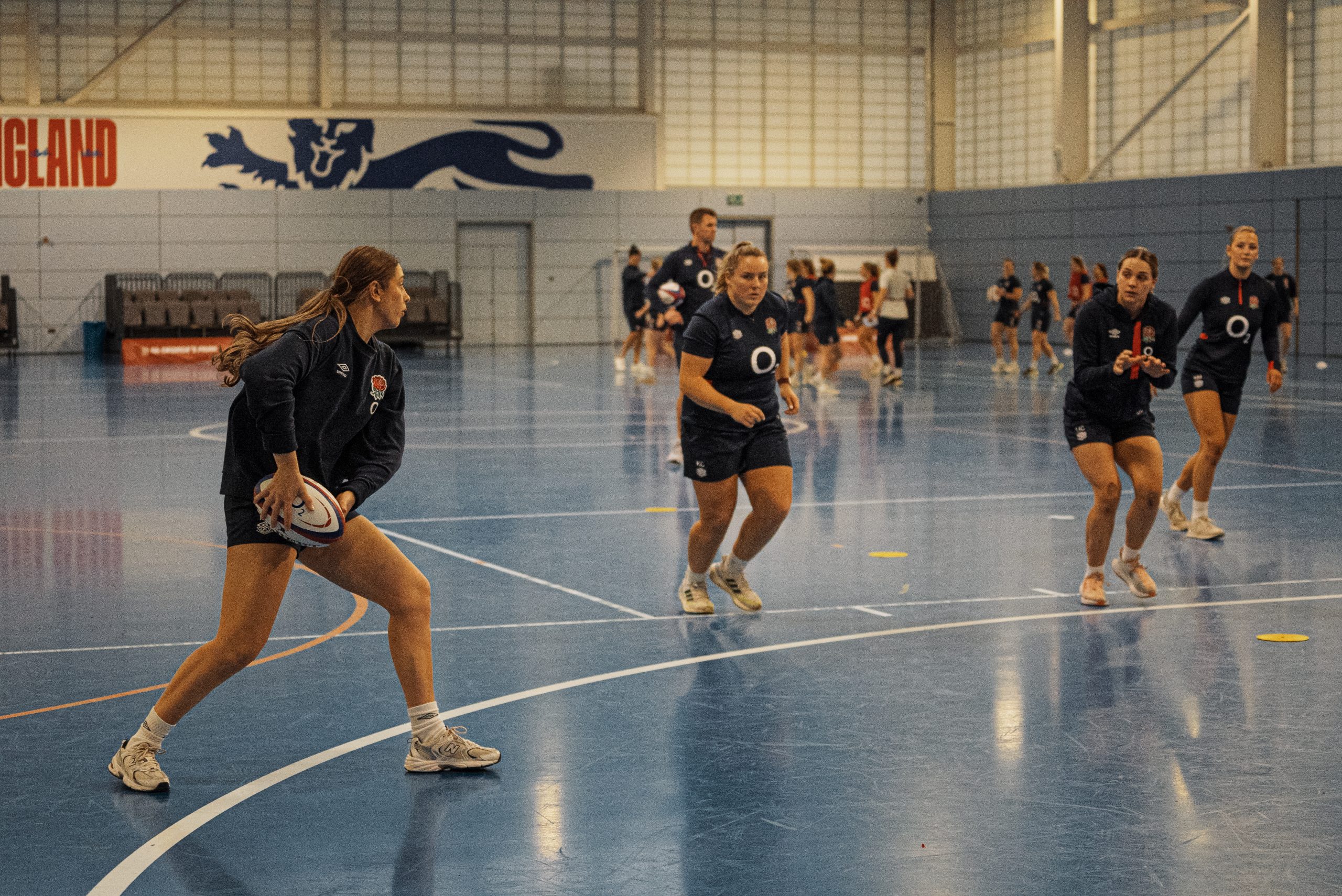
Image: England Rugby

How the Red Roses execute their plans

As Eager points out, in international rugby, there can be relatively large gaps between series and campaigns.

“One of the benefits of international environments is that you have periods where you’re completely on it and you’re executing your plan,” he says. “Then you’ve got time when players are back at their clubs and you can review and plan for the next campaign. We’re continuing to develop how we go about that process and make it as effective as possible.

“Plans enable us to align as a staffing group around what we’re trying to achieve; vision, purpose and clarity. For every session, we have clear objectives and everything in the programme has a clear rationale.”

Events will not always run smoothly but there is a firm idea of the team’s development priorities and so England can pivot swiftly. “Certain sessions can go perfectly to plan, certain other times you have to adjust around what you’re seeing in front of you.” Where appropriate, some elements are gamified. “It is a strategy that ultimately drives energy, competition, intent, memories and laughter.”

England’s plans are aligned to the playing style of Mitchell, who is striving to construct a team capable of winning the 2025 Rugby World Cup and build on the platform bequeathed by his predecessor Simon Middleton.

“We need a clear understanding of how we want to play the game,” says Eager. “Once we define that, what are the key elements that contribute to us playing our best game? For example, if we’re a team that relies heavily on moving the ball, kicking the ball, we’ve got to have the players with the capability to do that. Their passing skills and kicking skills have got to be good. A lot of ball movement comes with a lot more running, so you’ve got to be running fit. So you can see how that starts to layer in.

“From there, we’re able to say where a player’s profile sits from a rugby perspective, a physical perspective, an injury perspective, and ask: is there a gap between where they are currently at and what they need to do in order for the team to perform? And if there is, that ultimately forms their development goals. So there’s a clear link between what we need to do and why that’s important.”

Constant communication

There are key principles in the way England play that enables players to transition smoothly from the club environments to the national team, but equally essential are the relationships the Leaders Performance Institute witnessed first-hand at the Hilton.

“Unless you can connect with people first, your coaching is limited,” says Eager. “You’re never going to have close relationships with every single player, that’s just not possible, but you’ve got to make sure there are some key people within the management group that have relationships so you’ve got most bases covered with most players. You’ve got to take the time to get to know the players as people.”

He cites business professor John Maxwell’s ‘students don’t care how much you know until they know that you care’ and author Maya Angelou’s ‘I’ve learned that people will forget what you said, people will forget what you did, but people will never forget how you made them feel’ as maxims for effective coaching.

Coaches and performance staff will proactively speak to players outside of international camps but, again, there must be a rationale. “There’s a real balance between having contacts and connection with the players at their clubs versus overdoing it,” Eager adds. “That’s their club time, they’ve also got lives to live, but connection is important to continue our growth as a group. We’re fortunate to have a relatively big coaching group, ensuring that there’s always avenues for conversation outside of camp.”

Critically, as Eager says: “you’ve got to be able to connect on a level beyond just a transactional coach-player piece, particularly with the modern player. The players have got to have confidence and trust in you and what you’re delivering because sometimes you’re pushing them to places they may not be comfortable going as part of training. When developing players, you’re pushing them, stretching them and encouraging them to fail so that they can learn. It takes a leap of faith from players to know that they won’t be judged. It’s really important: if you want to stretch players to their maximum potential you work on those relationships.”

Eager has worked with both male and female groups during his career. He notes numerous similarities across men’s and women’s rugby, as well as some subtle differences. “The women’s game is a little bit less defence and kick-dominant. There’s more open play,” he says.

Beyond rugby, some differences are sociological. He is not alone in noting that female athletes tend to ask coaches ‘why?’ more often than their male counterparts. “That shouldn’t be a bad thing. In my role, I’m ultimately responsible for how tired or fresh they feel because I’m the one pushing training loads and physical capacity. I need to make sure that my communication and rationale are on point so that when I’m asking them to go to places where they’re working hard or they’re sore, they don’t lose confidence. They understand the purpose, the benefit, and that it’s going to reap rewards on the back end of tournaments.”

Other differences are physiological, relating to factors such as hormone levels and the menstrual cycle. “That brings differences week to week which shouldn’t be seen as a negative because with that comes huge opportunities as well.

“We’re really trying to work with players on an individual basis to understand what works for them and, ultimately, it’s not a one-size-fits-all approach. At the same time, it’s a team sport, so you try to find the balance of what’s consistent from a team perspective and what flexes from an individual perspective to put people in the best position to perform.”
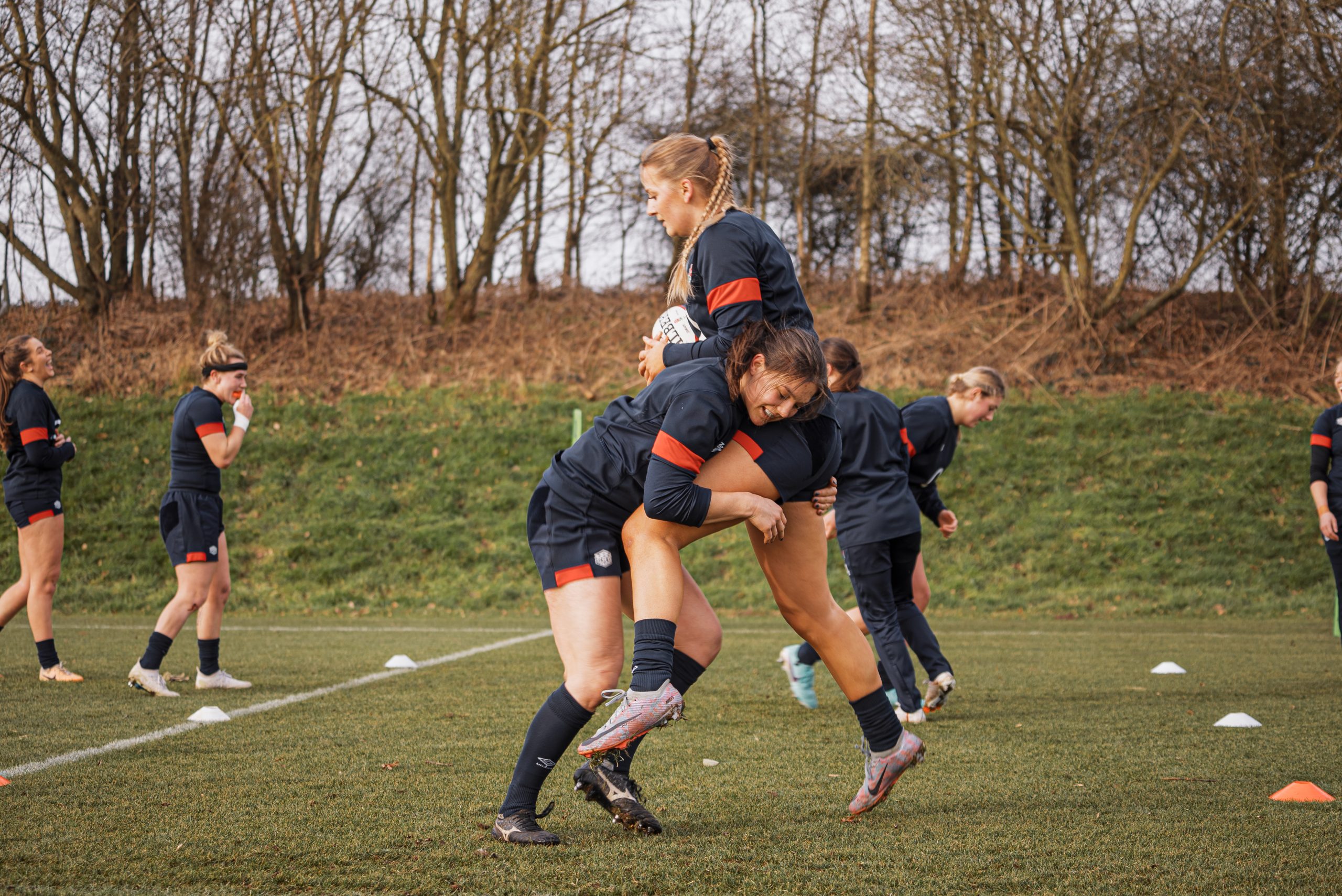
Image: England Rugby

The return to St George’s Park

The Red Roses will return to St George’s Park for a two-and-a-half-day camp in early March. “We’re constantly trying to layer in the developments in our game,” says Eager. “This camp will have a different theme with regards to what we’re trying to develop from a technical perspective, tactical perspective. Physically we’ve got a slightly different objective as well.

“In the alignment camp, we were looking at doing a lot more profiling and testing whereas now we’re trying to get the girls settled into more of a rhythm for our typical training weeks.

“Physically, it’s week one of eight for us. We’re back into running their athletic development programmes, we’re taking on their rugby development for the next eight weeks whereas the alignment camp was dipping our toe in, giving them some of the early information and getting engaged in where players are at. We’re starting to put the meat on the bones now.”

Eager’s excitement is palpable. “Change initially brings unknowns but it also brings huge opportunities. We’ve got a coach who’s got so much experience and we know that from a staff perspective and player’s perspective that’s only going to make us better. We’re going to learn a hell of a lot but what’s also refreshing is that Mitch recognises he’s coming into an environment that’s new for him as well, having predominantly worked in the men’s game. He’s also learning in that space.

“We’re all really excited to be able to continue to build on our last campaign. We have an opportunity to revisit the purpose of the team, our vision, what’s important to us in terms of our values, and how we want the environment to be. That sets the validation for everything else; training sessions, structures. It’s hugely exciting.”

Crucially, when the players return to St George’s Park they will all want to be there. “You can create an environment so players say ‘I can’t wait to get back in, it’s going to be great, I’m looking forward to these eight weeks’. That’s ultimately what we’re after and what we’re working hard on.”

St George’s Park provides a world-class elite training camp environment for any team or athlete wanting to optimize their performance. To find out more click here.

Members Only

22 Jan 2024

Articles

A Case Study in Out-Learning your Opponents – Part 2: Periodised Learning, Improved Training and Quality Interactions

Category
Coaching & Development, Leadership & Culture, Premium
Share
Facebook Twitter Email Copy Link
https://leadersinsport.com/performance-institute/articles/a-case-study-in-out-learning-your-opponents-part-2-periodised-learning-improved-training-and-quality-interactions/

Helene Wilson led the Northern Mystics to the ANZ Premiership in 2021 but not before taking her playing group on an individual and collective development journey.

By John Portch
Champion teams often cite their pre-season work as a determining factor in their success, but Helene Wilson’s Northern Mystics adopted a novel approach.

“We were bottom of the table and we made it to the top by literally changing the way we practised and our environment,” Wilson told an audience at September’s Leaders Meet: Driving Step Change in Female High Performance.

Wilson, who currently serves as Manager of High Performance Sport New Zealand’s [HPSNZ] Women in High Performance Sport programme, was primarily at the Etihad to discuss her five years as Head Coach of the Northern Mystics, a netball team in New Zealand’s ANZ Premiership.

The Mystics won the first national championship in their franchise’s 24-year history on Wilson’s watch in 2021. They went close again in 2022, her final year, and won a second Grand Final in 2023.

Yet in 2019, as Wilson explained, they finished bottom of the ANZ Premiership. At the time, the Mystics were infamous for their disunity and underachievement.

The talent and potential was there, but Wilson knew it could not be unlocked without an environmental overhaul. She started with one simple question: “how do we create an environment where high performance comes from out-learning your opposition and people are on a journey together to get there?”

Find a suitable framework for addressing performance questions

Central to their transformation was the Mystics’ belief in the Māori concept of ‘Wānanga’. “It’s a word that means coming together and meeting to discuss, collaborate and consider,” Wilson told the Etihad audience. “It could look similar to a team meeting but it can take many forms and Wānanga happens in many ways.”

A fuller account is provided here but, in summary, a Wānanga provides a space for collective, inclusive, reflective practice (‘Rongo’ in Māori) that enables people to reengage with problems in the world beyond (‘Tū’) having formed a consensus on the best solutions.

“There is an energy about it,” said Wilson. “The process and energy is like a coming together and moving apart in a state of clarity, which is collectively built together. The process of ‘Karakia’ – transitioning from one realm to another – takes us from the worlds of Tū and Rongo.”

These Māori concepts and traditions resonated with her staff and playing group, but Wilson emphasised the relevance of the framework rather than its local aspects. Coaches, she argued, should use cultural artefacts germane to their context. “There’s stuff around us everywhere that you can apply in different ways and it’s the framework that is key.”

The players and staff bought into the idea and it meant the team could get to work on what was needed to take them from last to first place in the space of two years.

Improve the quality of your interactions

Ahead of that triumphant 2021 season, Wilson and her coaches convened to establish what it would take for the Mystics to win that season’s Grand Final. They also invited the playing group to do the same.

“We tried to define the standards that we needed to shift to win the Premiership,” she said. “I remember specifically at this time we would Wānanga in the gym and we were talking about the standard of performance that we needed to put down on the court in pre-season to ensure that we could win the Premiership.”

The players and coaches often had contrasting views. “We had all the data and the information and knew what we needed to do, but we had to hold that back and let the players lead it,” she added.

In one particular pre-season Wānanga, Wilson addressed the Mystics’ reputation for throwing away possession cheaply. The players sought a measurement for tracking their improvement but one wasn’t forthcoming. “How do we measure it? How do we know we’re doing well? We couldn’t agree, we couldn’t align, so we had to go out and learn.”

That Wānanga preceded a public pre-season game and Wilson used the opportunity to pose further questions: if you make mistakes on the court what does that look like? How many mistakes is OK? What’s your key role in your position? For example, if you’re a goal attack and your main role is to get the ball to the goal shooter as accurately as possible and you want to throw it from the first phase in the centre, how am I to determine that you will get that ball there? Tell me what you need to do. And they will tell me how they believe they will take this skill and execute it to the level we’d accept, as well as how many mistakes we were allowed. They defined what they were going to put on court and what they were going to get right.”

Each member of the team would set personal limits. “It looks like ‘I won’t make the same mistake twice in a row’. OK then, if you do, then you’re off. You’ll work with the S&C on the side line in front of the public, practising that mistake for two minutes, then you’ll go back on court and we’ll see how you go.”

The continuous Mystics substitutions made the game a strange spectacle. “You can imagine the first half the first time we tried this,” said Wilson. “It was like a yoyo. My opposition coach said to me ‘what the eff are you doing?’”

“There was a lot to unpack in our changing room after that and our psychologist was a great help.” The subsequent Wānanga went on for an hour and a half. One of the key questions was the matter of each individual’s role in the team. “Even if I’m only on the bench how do I still contribute? It was the benchies’ job to pull their teammates up when they weren’t executing the skillset they said they would more than two times in a row. That then formed a drive for individual performance.”

As Wilson said, the Mystics changed the way they practised. “It wasn’t just making an effort to say it – it wasn’t as simple as that – it was the quality of the interaction that happened.”

Increased energy and confidence

At the Etihad, Wilson shared an image of her team lining up backstage ahead of the 2021 Grand Final and noted the sense of “energy and confidence; that they each had each other’s back as they go out and do it.”

She said: “Then we joked we were doing this hard work as people so I could get to drink a piña colada on the bench while I was coaching; knowing I had done my job. I wish I had one, because they were driving the performance on that day.” The Mystics quickly established a two-goal lead over their opponents, the Mainland Tactix, that they never relinquished in a 61-59 victory.

“We made seven errors in the entire game,” Wilson continued. “And when we had that Wānanga at the start of the season, the players said they should be able to make 64 errors in a game. We [the coaches] knew they needed to make under 15 [to win the Premiership] and they made seven. It shows how they drove their own performance.”

To further underline how the Mystics transformed their environment, Wilson referred to Grace Nweke, a 21-year-old New Zealand international and one of the rising stars of the sport. She joined the Mystics in 2019 while still at school but, thanks to Wilson encouraging her players to have a voice, Nweke immediately had the platform to speak up when she felt things weren’t working for her.

“She was 16 years old and didn’t quite think her S&C programme was quite right for her and she asked how we could discuss how it might be changed – that’s powerful for an athlete to have that support [especially] when the S&C said ‘well, I’ve been doing this for 20 or 30 years’ – but then it’s also powerful for the S&C to say ‘how are we going to work together to make this better?’”

In the first part, we delved deeper into Helene Wilson’s role in creating a culture that enabled the Northern Mystics to ‘out-learn’ their opponents.

28 Nov 2023

Articles

Goal Harmony vs Team Harmony: Why your Team’s Targets Should Be Measurable and Performance-Based

Category
Leadership & Culture
Share
Facebook Twitter Email Copy Link
https://leadersinsport.com/performance-institute/articles/goal-harmony-vs-team-harmony-why-your-teams-targets-should-be-measurable-and-performance-based/

In our final Performance Support Series of 2023 we explored the distinction between goal harmony and team harmony and make the case for the latter being the more impactful.

By Luke Whitworth
As part of our final Performance Support virtual roundtable series of 2023, we are focusing our attention on the overarching topic of Performance Planning.

Over the course of the three sessions, we are focusing on three core areas of this topic:

  1. Leading with purpose: the relationship between personal and professional purpose on shaping both organisational and team planning.
  2. Goal harmony vs team harmony: how can you create team alignment to galvanise and focus your team’s performance?
  3. Debriefing: implementing effective debriefing to create a learning culture in your team.

For the second part of this learning series, the focus is goal and team harmony, with specific attention paid to how you can create team alignment in order to influence team performance.

The desired outcomes of the session included:

  • Reflecting upon your team’s effectiveness.
  • Exploring a framework for team effectiveness.
  • ‘Team target practice’.

Exploring team harmony

Team harmony requires contributions from everyone on the team in order to reach those goals. The best team goals are co-created by team members and are aligned with the larger organisational goals.

In high performance sport, numerous organisations and environments employ a ‘team harmony’ outlook as opposed to a ‘goal harmony’ approach. In this session, we highlighted some of the potential pitfalls with a team harmony approach and make the case for why goal harmony can be more impactful.

With a team harmony approach, we often witness a vague strategy, mission and vision. The consequence of this vagueness can lead to operating in silos and overall inconsistency in messaging and the operation of the team. Another side-effect of this vagueness is that resources aren’t applied efficiently and there can often be a climate of uncertainty due to a lack of trust.

Finally, we can also experience people in the environment being particularly pleasant with one another, but not undertaking constructive conflict around the direction of the programme. With an absence of constructive conflict, there can be a lack of commitment and, with a lack of commitment, we can experience levels of under-performance.

What’s the solution?

Now we have identified some of the possible pitfalls with a team harmony approach, what solution could give us the best possible outcomes?

A goal harmony approach can be that solution. It is vitally important to set a unifying, ultimate performance target that drives everything that you do. Does your team have this ultimate target? This target isn’t a vision, it is measurable and performance-based. When reflecting on this in the group conversations and, leaning on prior experiences, we often find that many efforts to create alignment to galvanise and focus team performance lack this clarity.

Steve Jobs famously spoke of the friction that is required in teams to generate high performance. It is the friction, discussions and disagreements around performance matters that keep you at the cutting edge and challenging the nature of the ultimate performance target.

In summarising this section, if we generate harmony and clarity around the goal, the friction that takes place sits around the requirements of the target and not the individuals involved as we have already established collective harmony and clarity. So what could goal harmony look like in practice?

Enhance team effectiveness with ‘What it Takes to Win’ planning

A well-known performance model is the ‘What it Takes to Win’ framework, which formed part of our discussions around how to enhance team effectiveness and to promote the notion of goal harmony over team harmony.

In the specific examples and experiences we engaged with in this session, the ‘What it Takes to Win’ concept was built on the premise of five key factors:

  1. The performance target: we begin by setting the target first, in which the target is centred around what sits under the performance e.g. a specific time required, not a target of ‘to win a gold medal’.
  2. Performance drivers & demands: what are the performance requirements and demands to reach the target?
  3. Prioritise & decide: where and how are you allocating your resources?
  4. Marginal gains: these are your 90-day plans where disciplines of teams are required to execute against specific tactics. Then they review them on a 90-day basis.
  5. Results & review.

To pick up on the starting point of a ‘What it Takes to Win’ model, often the success of this approach lies in the practice of setting the target. The performance target should be a bridge to your vision, purpose, dream and goal. The target has to be in your control and engages all resources and team members. It also requires a clear deadline and ability to be measurable. Finally, for the performance target to be impactful, it often requires you to feel a bit uncomfortable.

12 Oct 2023

Podcasts

Keiser Series Podcast: Conor McGoldrick – Red Bull

Category
Human Performance
Share
Facebook Twitter Email Copy Link
https://leadersinsport.com/performance-institute/podcasts/keiser-series-podcast-conor-mcgoldrick-red-bull/

‘In interdisciplinary work, conflict only shows you care. However, it is important to work out the areas where you agree’.

A podcast brought to you by our Main Partners

When Conor McGoldrick joined John Portch for this Keiser Podcast, he spoke of learning from other disciplines and how that happens in both an unstructured and structured way.

The Head of Strength & Conditioning at Red Bull’s Athlete Performance Center in Salzburg is describing the learning opportunity provided by the interdisciplinary work that goes on around the organisation’s 850-plus athletes across four football clubs, two hockey teams, and approximately 250 sporting disciplines.

“The unstructured way is almost like a child and you are learning just by being there from practitioners who are better [in their field] than you,” he says.

“Then there’s this more structured approach where you actively seek opportunities to observe and have questions asked of you; and I think with that understanding it makes that interdisciplinary work easier.”

Conor is the first guest on this three-part series looking at Strength & Conditioning through a leadership lens.

On the conversational agenda were:

  • Athletes’ biggest S&C concerns [9:00];
  • Knowing when to keep your counsel [12:15];
  • The link between behaviours and success [21:50];
  • The gamification of training [25:00].


John Portch LinkedIn | X

Listen above and subscribe today on iTunes, Spotify, Stitcher and Overcast, or your chosen podcast platform.

Go to home
Follow us on Instagram Follow us on LinkedIn Follow us on X

Contact

Leaders UK

Tuition House
27-37 St George's Road
Wimbledon
SW19 4EU
London
United Kingdom

Enquiries Line: +44 (0)207 806 9817
Switchboard Number: +44 (0)207 042 8666

Leaders US

120 W Morehead St # 400
Charlotte
NC 28202
United States

Enquiries Line: +1 646 350 0449

Leaders

  • Contact
  • About
  • Careers
  • News
  • Privacy Policy
  • CA Privacy Rights
  • Cookie Notice
  • Website Terms of Use

Performance Institute

  • Membership
  • Events
  • Content
  • Virtual Learning
  • Connections
  • Partners

Latest

Intelligence Hub
High Performance Future Trends Research Elite Performance Partners continue to drive the potential in high performance forward through renewed Leaders partnership
Your Privacy Choices

© 2026 Leaders. All rights reserved

  • Privacy Policy

Attendees

x