Emily Scarratt and John Mitchell knew their England team could be world champions, they just needed the right environment to be able to prove it.
The centre had just competed in her fifth tournament (a joint record in the women’s game), claimed her second winner’s medal, and helped to complete an 11-year quest to bring the World Cup trophy back to England. It was almost the perfect way to bow out after 17 years as an international, 115 caps and a world record 754 points.
Yet she had only played 19 minutes of England’s campaign – all as a second half substitute in the Red Roses’ opening pool match; a 69-7 defeat of the United States in Sunderland.
“I’ve definitely been part of environments before where that kind of non-playing player can become quite negative and toxic,” she told an audience at the 2025 Leaders Sport Performance Summit in London.
“For a large part of my career, I was starting and therefore it’s very easy to say the right things and present in that way when you’re not under the stress of not being selected or not playing as much as you would like.”
Scarratt was joined onstage by England Head Coach John Mitchell, who in early February extended his contract until the 2029 World Cup and added Scarratt to his coaching staff.
The session moderator, Rachel Vickery, asked him what it meant to see Scarratt and her other non-playing teammates (known within the Red Roses setup as “pillar” players) celebrating with such vigour.
“I reflected that we actually hit the sweet spot with the culture,” said Mitchell. “Sometimes you don’t get that sweet spot and we might not get it again.”
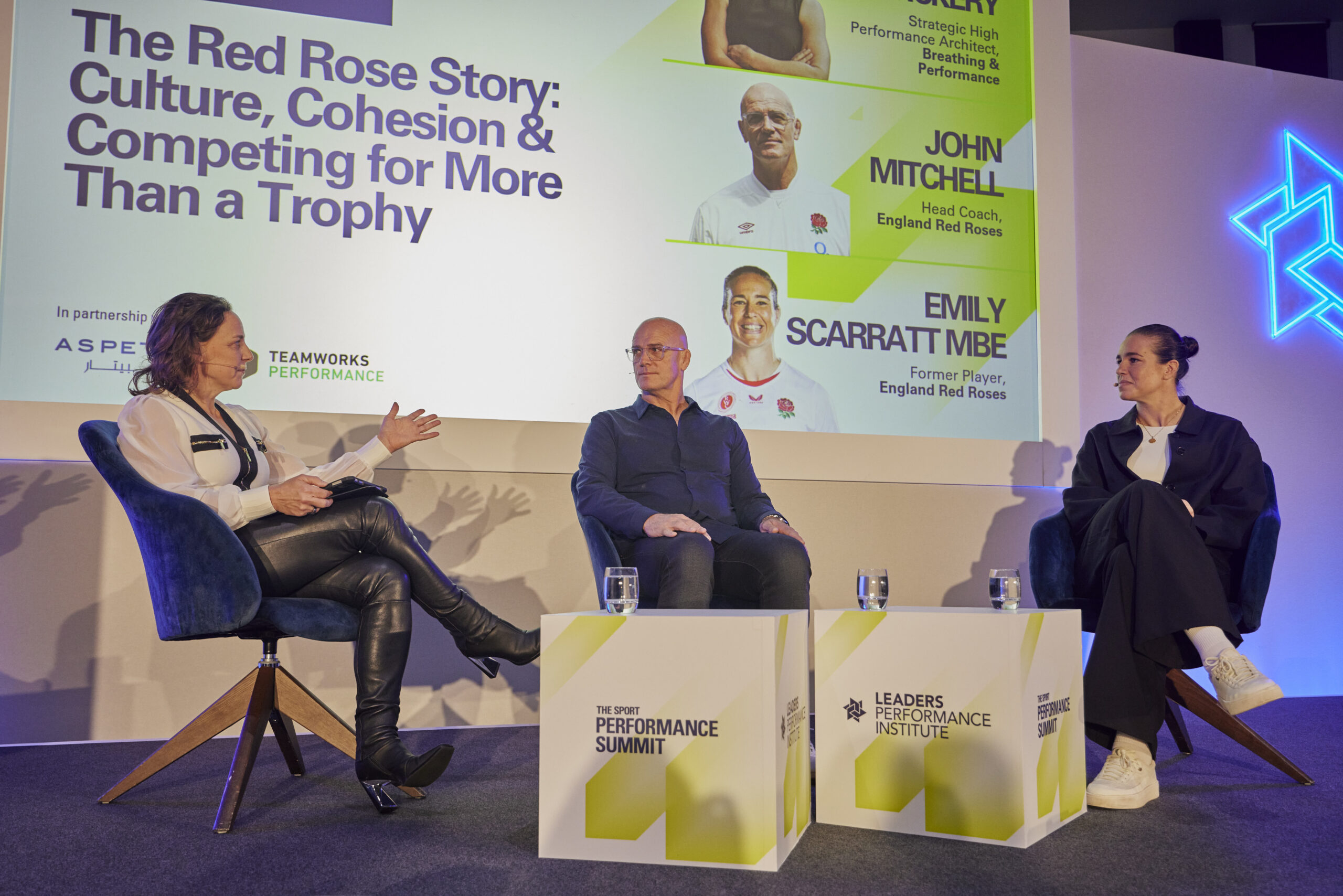
Rachel Vickery (left) talks to John Mitchell (middle) and Emily Scarratt (right) onstage at the 2025 Leaders Sport Performance Summit.
Here we reflect on what Mitchell and the Red Roses got right for 2025.
He spoke up when something wasn’t quite right
When Mitchell signed up to become England Head Coach in 2023, his remit was to win the World Cup. He was a coach with a proven track record in the men’s game who had now been handed the resources and the players to deliver the Women’s World Cup on home soil.
But in 2018 and 2022 England had lost World Cup finals they could, or perhaps should, have won.
“The leading question was how do we get done what we haven’t through the years?” said Mitchell.
It involved integrating young talent (eight players made their World Cup debuts against the US) and tactical tweaks (they had been too reliant on their maul). Both required an environment that enabled the best team on paper to prove they were the best team on grass.
To deliver on that front, Mitchell and the team’s leaders landed on three guiding values: ‘courage’, ‘take the handbrake off’ and ‘be all in’.
These values inspired England’s veterans and new internationals alike. “If the top person genuinely believes that culture is important it makes a difference,” said Scarratt. “Potentially in previous campaigns that hasn’t been the case and culture could get a little bit sidetracked or lost along the way.”
Mitchell even spoke up when he spied a shortcoming in the players’ well-meaning desire to ‘do it for the girls’.
“My thinking was that emphasis might be slightly calibrated towards ‘me’ – not intentionally – but how do I get the girls to calibrate towards ‘we’?” he said. “Because if I inspire you and I’m inspired by you, isn’t that more important, more inspiring to the person next to you? We get the job done and then our voice around our individual ‘why’ will be far greater.”
The cultural tweaking never stopped
“It’s very easy to just pick values, put them somewhere and hope that people live by them,” said Scarratt. “Our values were genuinely threaded through a lot of what we did, whether it was medical presenting or S&C presenting” and, when you witness that, “it’s very easy to buy-in”.
Mitchell held difficult conversations when necessary, but all players and staff, Scarratt said, were expected to speak up when necessary “to nip things in the bud before they became potentially bigger.”
At the suggestion of leadership consultant Patrick Marr, Mitchell would ask his player leadership group and support staff on the eve of each international camp to tell him “who’s going to pull the cart forward? Who’s going to sit on the cart? Who’s going to hold up the cart?”
After an hour he would “come back and I’d see two or three players, plus a couple of staff, where our priority needs to go,” he said, adding “we would then decide on who I would speak to and who they would speak to.” For every player or member of staff, there would be someone who could bridge that gap and “communicate around standards of behaviour”.
Mitchell even danced on TikTok when duty called
If you’re an England supporter, you may have seen the TikTok video of Mitchell dancing with his players.
“I needed to show vulnerability,” he said of such moments, which was not something he considered as a younger coach. “I had to do things that I probably don’t normally do and join in with the girls on certain things.”
Psychological safety may start with players or their head coach dancing in the dressing room, but it ultimately manifests on the pitch during tricky spells or in performance meetings when a staff member has the courage to raise a performance issue.
Mitchell knew he had to lead from the front. “Sometimes you’ve got to be the leader of those actions before somebody else does them.”
That said, his belief in the power of the head coach has been softened (and his self-awareness amplified) by three decades in the sport. “You learn through emotional intelligence that you don’t have to be absolute or right when making decisions. Just use your people. Listen to your people.”
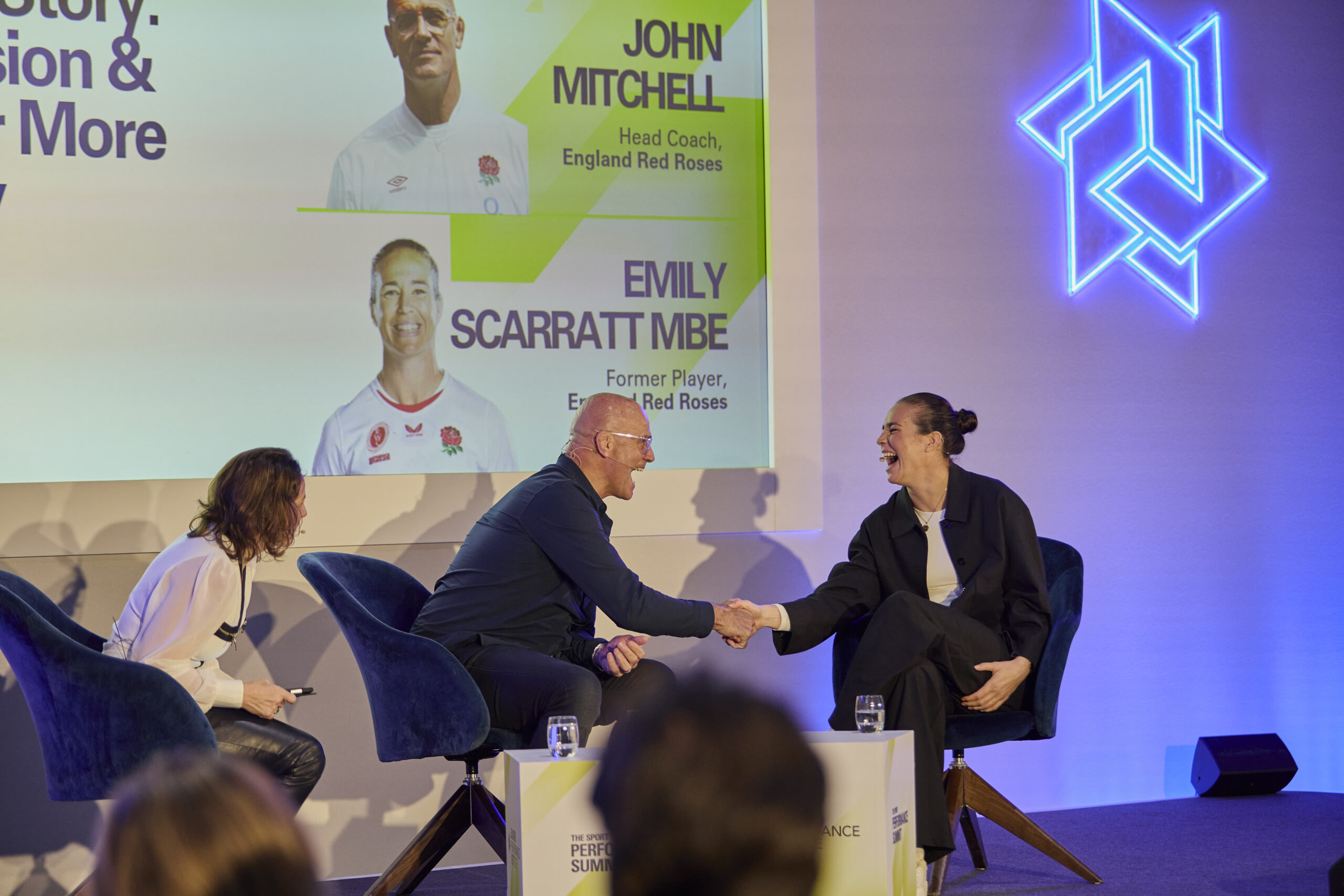
John Mitchell and Emily Scarratt shake hands as their session draws to a close at the 2025 Leaders Sport Performance Summit in London.
The team talked about the pressure they felt
For the first time, England openly spoke about winning the World Cup. It served as a pressure valve and, again, gave voice to their values.
“It might sound a bit silly but we hadn’t done that before,” said Scarratt, implicitly acknowledging how awkward the group felt at first about such an “un-English” sentiment.
As the English media and public latched onto the team ahead of the US match, the pressure grew. The players trained poorly on one occasion but, instead of dismissing it, they discussed it openly.
“I think we did a really good job of dampening it down by not not speaking about it,” Scarratt added. “By actually putting it out there and allowing people to know that other people felt like that.”
And Mitchell’s words after England eased through the gears on the opening night set the tone. He said: “There’s bigger games coming where teams will put even more pressure on us, so let’s take confidence from what we’re building and stacking as we’re going along. Our game doesn’t need to be perfect, it just needs to be effective, and that will win us the tournament.”
He was right and, looking to 2029, their goal is to win back-to-back World Cups, establish a legacy as one of women’s sports greatest teams, and to further grow the women’s game.
These lofty goals provoke three questions that Mitchell and England must answer: “What will earn the right? What will we keep and take forward with us? And then, thirdly, is what we what will we need to start again?”
What to read next
Meaning Does Not Guarantee Medals, But it Strengthens the Behaviours that Make Medals Possible
In the first month of 2026 Leaders Performance Institute members discussed at length strategies for effective learning, the value in evidence-informed practice, and why your values should be the carrot, not the stick.
It was a lesson to all sleeping giants. Here was a team with the most losses in the sport’s history and, over the course of their 16-0 season, had compiled more wins than between 2020 and 2023 in total.
Indiana Head Coach Curt Cignetti spoke of a “paradigm shift” in the aftermath of the Hoosiers’ 27-21 defeat of Miami.
“People can cling to an old way of thinking, categorising teams as this or that or conferences as this or that or they can adjust to the new world, the shift in the power dynamic in college football today,” he said.
Cignetti was brought in ahead of the 2024 season and transformed the mindset of a team that had been treading water for decades.
“There’s got to be a lot of like-minded individuals who come together for a common purpose, and sometimes that belief has to be a little bit irrational,” said Indiana centre Pat Coogan.
“Especially in a place that hasn’t had success like Indiana. I’ve seen it, and I’ve seen the way this place has been characterised, and when Coach Cig got here, he believed, and he got people to believe. Sometimes people laughed at him and thought he was crazy, but that’s irrational belief. You’ve got to get people to buy-in and believe in the mission.”
With a host of senior players set to graduate, success may not be replicable in the short term, but Cignetti is ready for whatever comes next.
“Perfection is impossible to attain on a consistent basis,” he said. “But we’ll continue to take it one day at a time, one meeting at a time, one practice at a time, and just keep improving and committing to the process and showing up prepared, trying to put it on the field, and see where it takes us.”
It was a powerful message to kick off the year in sports performance and one that underlined the importance of the fundamentals while refusing to stand still.
Which brings us nicely to the happenings at the Leaders Performance Institute these past four weeks.
Insight of the month
‘What underpins successful teams across formats is not uniformity, but clarity of individual responsibility within a collective framework. Team performance does not replace individual accountability; it depends on it.’
In a guest column, James Thomas, the Performance Director at Warwickshire CCC, spoke about facilities being a secondary concern until the leaders had created the right environment to enable athletes, whether they’re the Olympic champions with whom he has worked or Premier League and Champions League-winning footballers, being paramount.
Read more about why high performance is not something leaders should demand. It is something they should enable.

Britain’s Anthony Joshua on his way to winning gold at the 2012 London Olympics. (Scott Heavey/Getty Images)
Surprising insight of the month
Did you know that Team GB built its own hub within the London Olympic Village in 2012. This was very much a “host nation benefit” as Paul Ford MBE called it in another popular guest column last month.
The Head of Sport at the British Olympic Association wrote:
When we finished in London we looked and thought: ‘it’s not home advantage necessarily, we just need to be more creative’.
It provoked a question: how do we create an optimal physical way of uniting the team within the Games environment? Part of it was using our Olympic Village residential space smarter. But you can’t expect this of the local organising committee to do on our behalf, since their brief is so vast. Instead, we decided to take it out of their hands. And for each of the subsequent Summer Olympics we have found an out-of-village space exclusively for our use.
Read more about their approach here.
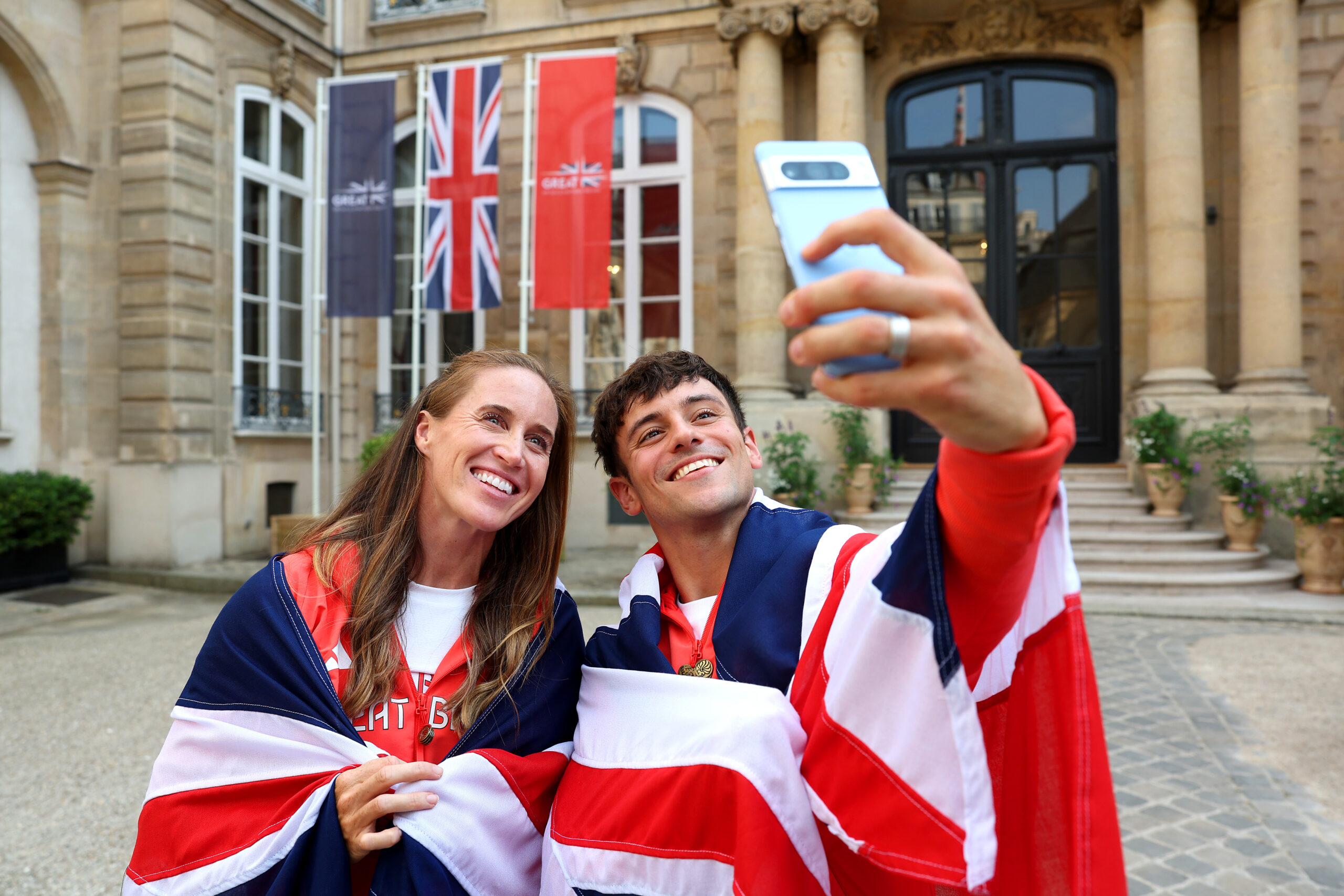
Team GB flag bearers Helen Glover and Tom Daley pose for a selfie outside the residence of the British Ambassador to France ahead of the 2024 Olympic Games in Paris. (Alex Pantling/Getty Images)
Best advice
Leaders Performance Institute members across the globe strive to encourage learning throughout their teams and while it will always be an important feature of any successful team, you should not waste your time on the wrong people.
As performance specialist Iain Brunnschweiler explained at a Leaders Virtual Roundtable:
“There’s definitely some people who, you can try as hard as you like to get them to learn and I think we have to be cognisant of our own energy as someone who’s seeking to help. It’s a bit like athletes, isn’t it? If you’re up for it, I’ll give you 150% of my energy. If you’re not, after a period of time, I’ll just go, ‘look, you crack on’. So I think we have to be accepting of that.”
Over the course of an hour, Brunnschweiler and a band of LPI members noted ten strategies for more effective learning.
One you might have missed
Jamie Taylor of Dublin City University and the CoEx|Lab made the case for evidence-informed as opposed to evidence-based practice.
He enlisted the help of students from DCU’s online doctorate and MSc programmes, which are aimed specifically at coaches and practitioners in high performance sport.
One such student is Eilish Ward, the Head of Player Development at the Ladies Gaelic Football Association.
As she told Taylor, you can’t simply drop research on top of a sports programme. It must be used critically, in conjunction with a coach’s own research, and applied in an informed manner.
“There’s not necessarily one solution,” she said. “There’s no one way to learn anything or to gain experience or expertise.”
The key for Ward in her work is to ensure she and her colleagues are “making as informed decisions as possible when we’re designing learning activities” because “not everything from research may be transferable into a practical environment and, equally, every practical environment is going to be hugely different.”
Read more about DCU’s programmes here.
Quote of the month
“We have to become diplomats, high‑level development people who can manage such diverse groups. Somewhere along the line, we need to start creating those development opportunities for everybody who’s on this call.”
These are the attention-grabbing words of a performance director working in India who spelled out the challenges in talent identification and development.
He and a host of LPI members listed five of the most common trends (and five opportunities) in that space.
Good to know
Organisational values should be your carrot, not your stick.
That’s according to Emma Keith, a Royal Air Force Group Captain, is the Commandant of the Tedder Academy of Leadership at the RAF. In 2015 she became the first woman to run RAF Officer Training.
In her appearance at the 2025 Leaders Sport Performance Summit in London, she spoke about how the RAF’s values, all contained within the prosaically titled Air Publication One document, had been used to browbeat good people.
“Actually 99% of my organisation are amazing, they really are, and I wanted a document that was aspirational for them, that they could believe in, that it was the organisation they wanted to be a part of. And we know from all the different behavioural models of change that it only happens when people want to change, not because it’s been forced on them.”
Again, the focus was learning strategies in an inspiring presentation.
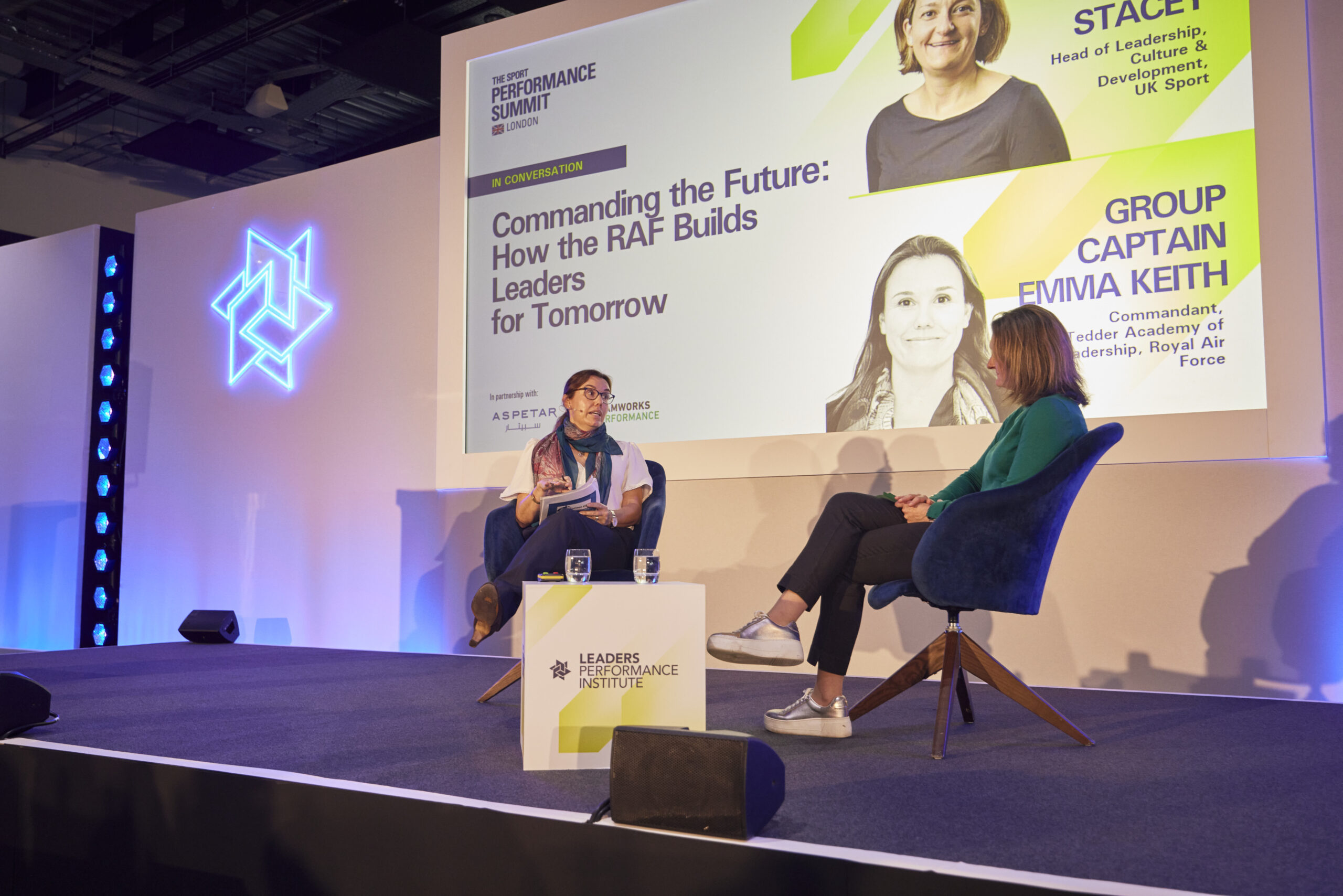
The RAF’s Emma Keith onstage at the 2025 Leaders Sport Performance Summit in London. (Leaders)
What’s coming up for members
As Jamie Taylor of Dublin City University and the CoEx|Lab explains, the university’s master’s and doctorate programmes are designed to help coaches and other high-performance practitioners embed research into their daily practice – a habit that is sometimes overlooked in sport.
Additionally, one of the key challenges in coaching is that there is a world of evidence that can help practice, but most do not know about it.
At Dublin City University we are trying to subvert that attitude through our online doctorate and MSc programmes, which are aimed specifically at coaches and practitioners in high performance sport.
We have a community of around 100 coaches and practitioners who appreciate the capacity for research to enhance both theirs and their organisation’s practice in ways that have long been transformational in, say, S&C or medical.
In many respects, coaching is a discipline apart, yet sports performance has long-been reliant on other domains to pick up and apply research. More research can and should be done.
Below, I explore – drawing on insights from students across the doctorate and MSc programmes – the common barriers in coaching, before making the case for evidence-informed research that can meaningfully support practice. The programmes are delivered by a team of practitioner-researchers, including Áine MacNamara, Dean Clark, Robin Taylor, Rosie Collins, Stephen Behan and myself.
The common barriers
As a coach, you should be weaving research into your practice – it should not be additional.
“Last Friday, we protected two hours for some internal professional development with a group of practitioners,” says Ian Costello, the General Manager of Munster Rugby. “There’s 20 reasons not to do it, but if it’s important, it’s protecting the time in your diary, no matter how busy you are.”
Ian believes the programme has opened up new career options, potentially even beyond professional rugby union. He has now got into the habit of writing in his diary in three colours: black for operational matters; green for strategic issues; and blue for learning and personal development.
“Someone gave me one of those multicoloured pens – I hate them because of my bad handwriting and these don’t help – but it’s brilliant for my diary,” he continues. “Learning and personal development can be anything from podcasts to light reading or heavy reading. It can be writing too – that was a good life skill and practical skill that a mentor shared with me.”
Additionally, coaches have not often been shown how to critically organise their thinking, even when they thought they were doing so.
Ian has been coaching for more than two decades, but still wouldn’t describe himself as the finished article.
“The first year broke me down in terms of questioning everything I know around critical thinking and reflective practice,” he says. “What the doctorate does is give you more structure to that process. It provides you with a more robust and applicable skillset to be accurate in research terms and then to think critically about the information you’re absorbing. As time goes on, you’re able to transfer that to your practice more readily and with a lot more clarity.”
He is not the only one to find the first year challenging. “It was quite confronting and shocking,” says Jamilon Mülders, the Performance Manager at the Royal Dutch Hockey Association. “You try to present where you’re coming from, what you have achieved, what you have done and why you have done things, and the staff at DCU will pose little questions like ‘where’s the evidence?’”
Jamilon has won Olympic and world championship medals as a coach, and yet, as he says, “I have to acknowledge that nine out of ten things we did worked for whatever reason at that stage, but there was no underlying theory, no evidence. There was nothing you could fall back on where you can explain it or also just make sure that you detect possible mistakes, issues, challenges, hurdles which might have happened or occurred in other areas.”
He sensed that something was absent. “I felt that something was missing in my personal education and growth,” he continues, further reflecting on that induction period at DCU.
Some coaches may never have set foot in an academic setting but, whether it’s our doctorate or MSc programme, we don’t need to simplify course material for coaches. We just need to make sure we are providing the right provocation.
“When we’re asked better questions it causes us to say ‘actually, I took that situation for granted, but I need to peel that back a little bit more’,” says Rachael Mulligan, the Athlete Support Manager at the Federation of Irish Sport. “It forces you to go ‘what is the best question to ask in order to get to a better outcome?’”

The most recent cohort of students on DCU’s professional doctorate and MSc programmes lines up for a group shot at DCU in Dublin.
The case for evidence-informed – not evidence-based – research
I hear all the time that ‘we need to quantify this’. It leads us to measure things that don’t really matter simply because we can count them.
There are different ways of seeing this and my view is that evidence should inform coaching, working alongside professional experience, theory, and context, rather than being treated as something on which coaching can be straightforwardly evidence-based.
“For anybody to be genuinely comfortable about their view of the world or their view on practice, it should be research-informed,” says Scott McNeill, the Head of Coach Development at the Premier League. “The risk and challenge of research is that sometimes things can go out of date very quickly. A body of research can be nearly out of date the day that it’s printed. So to keep that as a consistent and live way of engaging in practice would make sense to me, that suggestion that knowledge isn’t fixed, that these things keep evolving.”
“The first thing I said was my issue with research is I sometimes think researchers are almost in an ivory tower and very much removed from what goes on in the day-to-day field of performance sport,” says Rachael of the topic.
“That perception was completely quashed after a couple of weeks in the programme because there’s so much emphasis in terms of, yes, this is fantastic in the academia space, but how do we move this into real-life practice?”
“I used to always say I was evidence-based and a lot of coaches will pride themselves on that,” says Christoph Wyss, the Lead Physical Performance Coach at Red Bull. “But I think evidence-informed makes more sense because if a research paper comes out, being evidence-informed is taking that research, reading it, critiquing it, seeing what’s good and what’s not, and then applying that to your setting, because every setting is different.”
As he says, “with evidence-based you’re just transplanting it, doing exactly what they did, but then evidence-informed is more translating it.”
“There’s not necessarily one solution,” says Eilish Ward, the Head of Player Development at the Ladies Gaelic Football Association. “There’s no one way to learn anything or to gain experience or expertise.” The key for Eilish in her work is to ensure she and her colleagues are “making as informed decisions as possible when we’re designing learning activities” because “not everything from research may be transferable into a practical environment and, equally, every practical environment is going to be hugely different.”
“Being evidence-informed is probably more aligned with what we do on a day-to-day basis,” says Niall O’Regan, the Head of Education & Development at the Football Association of Ireland (FAI). “It is something that has helped me to understand how to be authentic, how to be creative in adapting what the research is saying is to suit the needs and the context and the environment that you’re in.”
Plus, as Scott says, “people sniff you out pretty quickly whenever there’s a gap between what you’re saying and what might feel real to them. Our job as people that work in this space is to either translate the messaging in a more accessible way or to admit that there probably still is a gap.”
And therein lies the opportunity to ask better questions.
Research should never be far from practice
While the programmes can be intimidating for coaches, we’re here to help in any way we can because it is important that research is not too far from practice. When they are close, the research finds practical application.
“This was a part I enjoyed from day one because you could immediately see the practical implications and make an impact,” says Jamilon of his coaching in field hockey. “So if I were talking with S&Cs about load management around our training, my new way of approaching them and asking questions really helped me to have a clearer view on the team and the environment.”
In some cases, research can help to highlight the current inadequacies in a high performance programme.
Niall, for one, thinks differently these days about coach development structures at the FAI; and it feeds into his practice.
“There are some experienced coaches that have so much knowledge and so much expertise in their fields that they may not need to go systematically through a certain set of steps,” he says. “They may have the ability to effectively communicate, empower others or share knowledge in a way which doesn’t require them to go through a checklist. They can get to the end with the exact same learning and sometimes even more learning.”
Such an approach doesn’t necessarily sit right with the coach and it wouldn’t necessarily sit right with the coach developer. “There’s a grappling effect where those people probably feel like, ‘well, I’m being rigidly pushed into a checklist of things and being asked to do things that I naturally wouldn’t do myself’.”
It comes back to being research-informed. “The person in front of you is the actual start point, and then it’s up to us as the educators and developers to be able to link it into research. The practice comes first and then it’s a matter of layering in what research is out there that can inform the decisions that that person is making.”
If you would like to know more about the professional doctorate and MSc programmes at DCU please email Jamie Taylor at:
In a recent Leaders Virtual Roundtable, Tim Cox of Management Futures discussed the traits of adaptable leaders and the common problems that trip up their rivals.
Cox, the Director & Lead for High Performance Research at Management Futures, is leading a Skills Sprint Session virtual roundtable for Leaders Performance Institute members on the topic of adaptability.
It is a skill, as Cox explained, that was highly coveted by the coaches and practitioners who contributed to our Trend Report earlier this year.
Not that this is anything new. “It is well known that Charles Darwin did not talk about ‘the survival of the fittest’,” Cox continued, with reference to Darwin’s 1859 book On the Origin of the Species.
“The endpoint of Darwin’s research was that it’s not the strongest or the most intelligent of the species that survives, it is the one that is most adaptable to change.”
Over the course of 25 minutes, Cox discussed traps that people can fall victim to in pursuit of better adaptability. He also brought into focus the qualities of adaptive leaders and the skills that can aid adaptation.
Firstly, those four traps that inhibit adaptation:
Cox then set out the four qualities of adaptive leaders and the skills and tools that support those qualities:
1. They spot the need for change
“It is important to actually spot the need for change and not just continue doing what you’re doing.”
Adaptive leaders…
Are able to shift perspective. “Adaptive leaders don’t just sit within their position,” said Cox. “They can see it from others’ perspectives, whether it’s a stakeholder’s or your competition’s.”
Are good at listening. “Our response to challenges to the status quo: how are we receiving them? Are we hearing them or are we just simply emotionally responding and cutting them down in whatever way?”
Conduct regular debriefs and reviews. Cox mentioned both the OODA Loop and the STOP framework, the latter of which he outlined:
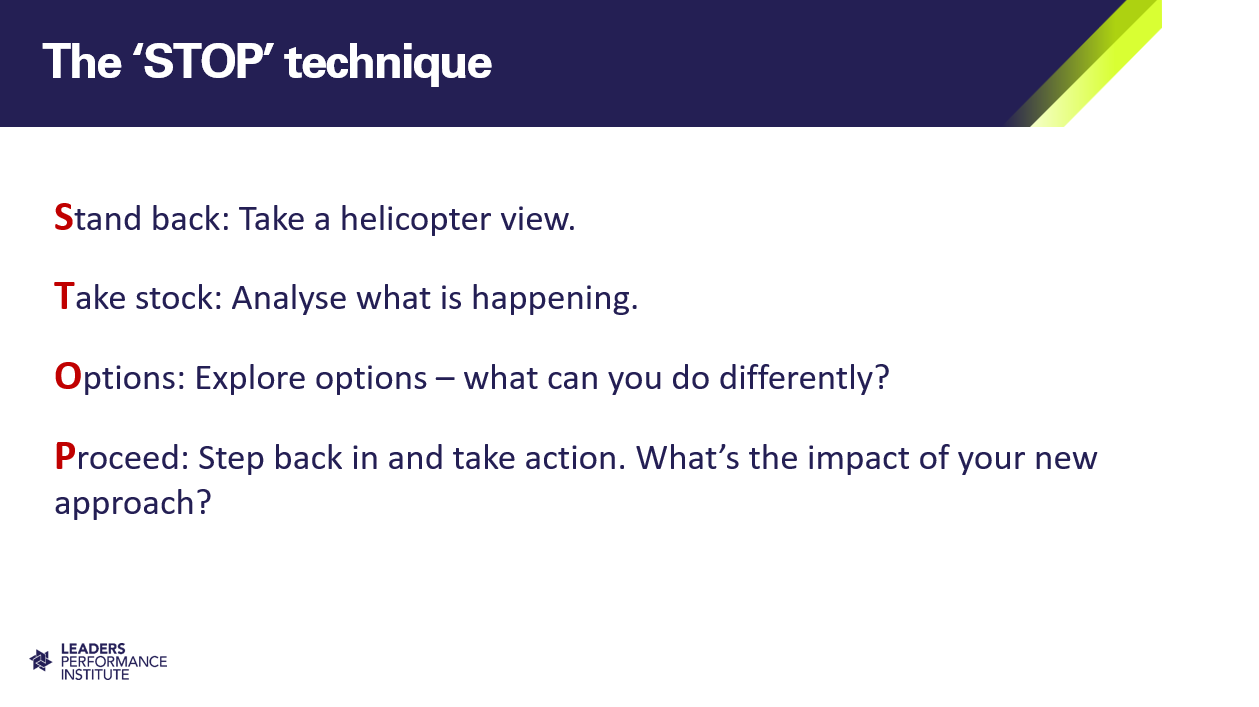
“There are many other frameworks. You will have your own,” said Cox. “But in whatever shape or form, remove yourself and take a moment on the balcony to see things from a different perspective.”
Scan for assumptions. “What we are assuming may not be that useful. Think of an issue you’re currently dealing with and write down eight assumptions you’re currently holding about it.”
Cox then invited Leaders Performance Institute members to ask themselves two questions:
2. They are the grandmasters of their response.
“This speaks to calmness but it also speaks to the strategic element and scanning ahead in terms of the decisions that might need to be taken.”
Adaptive leaders…
Plan for contingencies. “They red team in peace and look for what might happen in the same way that a team will plan for what happens when they go two goals down or receive a red card.”
Understand that self-care isn’t a luxury. “They put on their own mask first,” said Cox. “What might be your first response that buys you time to then consider a better, wider, more sustainable response?”
3. They empower people to contribute to the adaptation response.
“This is about understanding ideas from both within and outside the team.”
Adaptive leaders…
Convene their people and successfully convey the need to adapt.
Encourage collaboration and gather ideas. “Invite the outside in,” said Cox, citing the words of professor Alex Hill.
Test and learn. As Cox put it, they fire bullets before cannonballs. “Let’s test it small and then let’s see if it works; then we can fire the cannonball.”
4. They are adept at leading the change
“This is often where adaptation fails. It’s one thing to spot the change, it’s another to decide your response and empower people to put their mark on it.”
Adaptive leaders…
Mobilise people behind the strategy. “Key to this is understanding the roles individuals will play in that strategy,” said Cox. They communicate tangibly what they’ll be doing and what they can expect from the leader.”
Navigate resistance or conflict. “Enabling people to voice their emotions and values. Often, once they’ve been heard, even if they disagree, they’ll commit.”
Flex where flex is required. “Again, they spot the need for change.”
As Harlequins’ lock Stephan Lewies explains, the key lies in collaboration – bring your athletes into the fold.
Quins’ 17-10 victory at the Twickenham Stoop ended five years of frustration and marked a complete turnaround from the 2023-24 Premiership Rugby season when they conceded 90 points in losing both home and away to Saracens.
Stephan Lewies, the lock who captained Quins to their long-awaited victory, had also endured every one of those losses. The run was particularly galling given the relative parity between the teams during that period. Quins were themselves Premiership champions in 2021.
So what was different this time? “Coming off a record like that in your derby game, in a way you go looking for answers in the wrong places,” Lewies told an audience several weeks later at the Leaders Sport Performance Summit in London.
“In the past, we’d review what’d gone wrong, and the coaches – who often feel pressure in a different way to the players – would go ‘let’s change this and let’s add that’ because Saracens are brilliant.”
It took eight reverses for Lewies and his team to work out why. “We’d always changed our tactics for Saracens,” he continued. “We would change how we structured our week.”
Quins, he explained, usually worked off an 80:20 game model where it is “80 per cent us and 20 per cent we change for the other team”. However, “we often went 50:50 against Saracens; training 50 per cent on us and 50 per cent on them.”
They did things differently ahead of the October 2024 match. Firstly, the players and coaches met independently before convening to discuss what was needed. The club had adopted a similar approach in their successful quest for the Premiership title in 2021. Their director of rugby [the de facto head coach] departed mid-season and the players worked with the remaining coaches to devise a winning formula after the club decided to wait until the off-season to appoint a replacement.
Once again it gave the team clarity in their convictions. “We said we’ve been constantly changing for this opposition because of the pressure that’s mounting on us,” said Lewies, “and we agreed that we should go back to what we do and just try to do that better.” That meant “doubling down” and going almost “90:10” in the week building up to the match. “That created clarity and alignment from the coaches to the players. And when the pressure came in this game, we could turn to something we’d done for the whole season, and basically for years, versus something new in a pressured moment.
“It’s much easier to stuff up something new under pressure versus something you’ve done for a long time because it’s already second nature.”
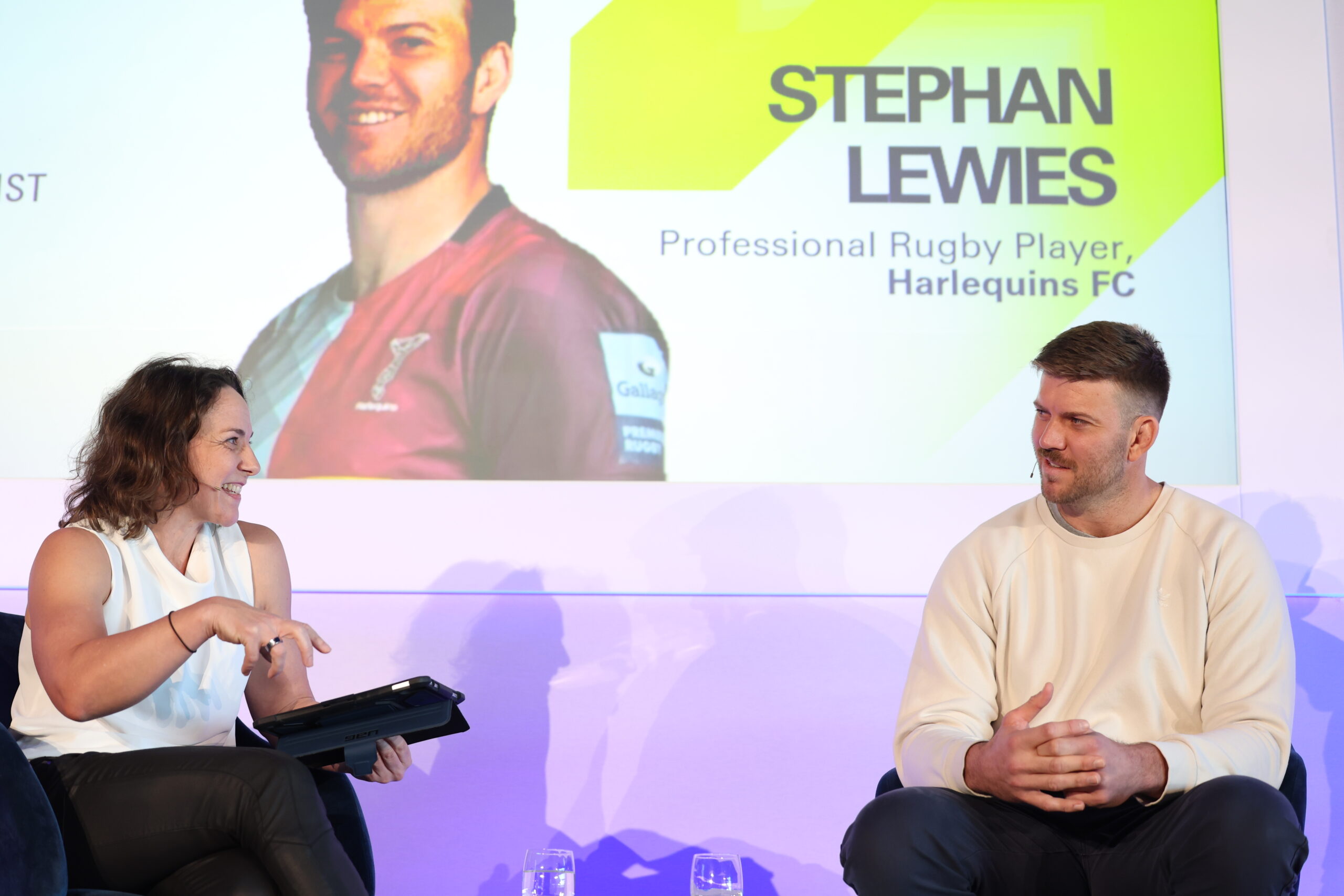
Stephan Lewies in conversation with Rachel Vickery onstage at the 2024 Leaders Sport Performance Summit at the Kia Oval.
Lewies’ reflections chimed with session moderator Rachel Vickery, a high-performance specialist helping teams in the worlds of sport, business and the military perform under pressure.
“So much of pressure is what happens off the pitch. When you’re on the pitch that’s actually your comfort zone in many ways and so you’re more prepared for that,” she said.
“Many teams have a monkey on their back around a particular opponent and that can change how the game is approached, which adds a lot of pressure.”
Lewies agreed and felt that being process rather than results-driven was ultimately what led to the result that day.
“It gives you freedom on the pitch to just go out and play,” he said. “You know your prep is done. Go out and express yourself. When you have clarity and alignment with the coaches you’re not asking yourself on the pitch ‘what’s the coach thinking?’ whenever there’s a tough decision. You almost know the answer to the question before it happens because you’re totally aligned in what you want to achieve in the game and at different stages of the game.”
It is an attitude Lewies takes into difficult conversations, which he faced often during his four years as Quins captain. The key was to be well prepared and, more often than not, those conversations would not be as tough as anticipated.
“If you kick the can down the road it can become a bigger problem. It can be scary to have that tough conversation in the moment, but that’s where growth happens, in that adversity. You grow closer as people and as teams.”
He recounted the story of a teammate who once skipped training and was suspended. Lewies endorsed the punishment but was labelled a ‘Judas’ by the player in question. The pair eventually made up after a frank exchange of views when it was clear that Lewies would listen to what his teammate had to say. It stopped matters escalating further and, as Lewies happily explained, made their relationship stronger.
“Getting him back on board and understanding him was critical for us.”
It was in such moments that the bonds, self-belief and confidence were forged that would eventually see off Saracens.
“There is so much value in creating opportunities to collaborate.”
What to read next
How Do you Develop the Most Expert Coaching Workforce in World Football?