We run the rule over his reflections at the recent Leaders Sport Business Summit in Abu Dhabi to detail the leadership qualities to which Palace have since returned.
With the south-east London club enduring a poor run of form, they turned to the man who led them between 2017 and 2021.
When Hodgson left Selhurst Park at the end of the 2020-21 season he indicated that he would be retiring from management after a 35-year coaching career that started in 1976 at Halmstads in Sweden and took in spells in Switzerland, Italy, Denmark, Finland, Norway and the Middle East over the next four decades.
There were numerous highlights. He won league championships in both Sweden and Denmark, achieved World Cup and European Championships qualification with Switzerland’s men, and one could even make the case that Hodgson’s finest work came in his homeland, where he led Fulham to the Europa League final in 2010 and helped Palace to consolidate their status as a Premier League club.
He had hard-earned laurels on which to rest. Yet eight months after retiring he was back, taking the reins at struggling Watford in January 2022. The club slid into the Championship that May and Hodgson slipped into retirement again, seemingly for good this time. That is until last week when Palace returned to a familiar face, who has signed a contract until the end of the season.
In light of his appointment, Hodgson’s words, spoken at the Leaders Sport Business Summit in Abu Dhabi in February, seem prescient. He had been asked by Leaders’ Jimmy Worrall about his efforts to cope with the stress of management and indicated that it was more of an “obsession”, “a way of life”, than a mere job.
“To some extent, the adrenaline and the emotion and the passion, the excitement – that’s what drew us to becoming a coach in the first place,” he said with a smile while looking at fellow football manager Alan Pardew, who joined him onstage. “We signed up for it, we wanted it.”
Hodgson has a reputation for inspiring underdogs to over-performance, but no one can predict how his latest tenure will go or if Palace will preserve their Premier League status, and there are plenty of observers with reservations about his appointment, but there were signs in Abu Dhabi that he will be ready for the challenge come what may.
Bring players on a journey
Hodgson described his first days on any new assignment as a “classic leadership task”. He said: “You have to sell yourself and your ideas because what you’re going to need to have any success at all is to create the environment that you think is going to be conducive to producing the type of results and the type of football you want to see.
“I think that your first impressions are very important, I think you need a lot of belief, and that belief that you maybe have in yourself, in your methods and the way you think the team’s going to need to play in order to win matches, you need to be able to get that over to the players in a way; and that will involve to some extent a very clear-sighted but somewhat stubborn approach to the subject.”
He recounted his first spell at Serie A side Inter in the mid-’90s when he tried to shift the team away from the style to which the players had become accustomed.
“To get that, you’ve somehow got to bring the players with you. Your personality, your belief in yourself, your ability to sell the idea to them, and the ability to convince them that ‘if you do this, if you follow me, if we go together, there’s a chance that we’ll make this succeed’ and that’s how I went about it.”
Good and bad apples
Hodgson has held 23 management or head coaching positions (including two tenures at Inter and Crystal Palace) and experienced both success and failure along the way.
Worrall asked him how he reacted at those times where his approach simply didn’t take hold. Hodgson cited a lack of trust and the potential impact of negative public perceptions of his personality and work. “That is how it is and, if you’re going to do the job, or have any chance to do the job, you have to fight through those things,” he said.
Where he enjoyed positive results, Hodgson felt he had the backing of senior leadership. Fulham was a prime example. He joined the west London club in December 2007 and picked up just nine points from his first 13 Premier League matches. However, the results turned, with Fulham claiming 12 points from their final five matches. With Fulham’s Premier League status secure, the club had a springboard from which to secure the European qualification that led to the Europa League final.
“The first months were very difficult and I suppose it was fortunate that I came to the club after periods of success in previous jobs,” he said. Self-belief was important too. “Because if you start to lose faith in yourself, and your belief that what you’re offering is something that will help the players, then you really are doomed. That could easily have happened because, to be honest, we were doing so badly at the time and people were expecting the new manager bounce and that certainly didn’t happen with me.
“But we kept faith and I could see on the training field that the players weren’t averse to what we were doing; they weren’t thinking ‘this is ridiculous and we’re never going to win playing like this’. We got the feeling they did believe and the results didn’t improve that much but performances did.”
At Fulham, the team kept the faith, and Hodgson’s work was supported by the team’s senior leaders, with forward Brian McBride and midfielder Danny Murphy cited onstage in Abu Dhabi.
“These two guys got so much behind the team and what we were trying to do, that their leadership on the field was an enormous bonus for myself and my coaching staff because if you can get the leadership on the field from your players then your chance of being a good leader yourself can improve enormously.”
Hodgson also cast aside those he perceived as bad apples. “One of the things we had to do, quite frankly, was to move some people from the first-team squad. It was a big first-team squad and it was pretty obvious to us in that early period that these are not only not helping us, they’re hindering us because of their negativity. We wanted resilience and positivity. These guys were negative. We had to move those aside and work with the positive ones that we had left in the group.”
Work-life balance
Hodgson’s time away from the game left him with a realisation about the impact of stress. “You don’t sometimes realise what the stress and pressure is doing to you until you’re not doing it at the moment and you watch the television and you see the faces of the people who are out there; the last minutes of games, hanging onto a win or trying desperately to get an equaliser, and you see that tension there and you think ‘was I like that?’,” he said.
However his second spell at Palace goes, he gave the sense in February that although the pressure of Premier League management is real, his resilience would not be an issue should a club come calling.
“People would ask me, especially as I got older, ‘how do you cope with the tension, don’t you find the pressure is getting too hard for you, especially at your age?’ ‘No, I don’t really feel it, I think I’m OK’. But I think I was fooling myself because, looking at these people, I’m sure it was just the same because, unfortunately, the cliché about the coach on the side line [is true]. You’re kicking every ball, you are to some extent, there’s no doubt about that. I don’t know how you get away from that.”
Time, however, has taught him the importance of a balance, even if football management is “a way of life”. “The only way out of it is your balance,” he said. “The balance between your working life and your family life or time with friends and time with leisure activities, and of course your perspective.”
With perspective comes awareness. “The awareness that no one is really forcing me to do this, this is something that I’ve always wanted to do; and if I don’t feel capable any more of dealing with this pressure then it would be up to me for my own health and for the benefit of my family to move away.”
Whatever else, Hodgson has not reached that stage and there could yet be a successful epilogue to his career.
Ioan Cunningham, the Head Coach of Wales Women, explores the continuous development of his newly professional squad ahead of the 2023 Six Nations.
The number has further increased since then and Head Coach Ioan Cunningham reflects on this development with pride, particularly in light of Wales’ creditable performances at the delayed Rugby World Cup in 2022. The team reached the quarter-finals in New Zealand before bowing out against the hosts.
“I think creating history meant something special to the group,” he tells the Leaders Performance Institute. The changes have been noticeable too, as Wales seek to bridge the gap between themselves and the World Cup semi-finalists, namely England, Canada, France and the world champions New Zealand.
“The physical changes – we were able to put the players on full-time programmes, maximising their rest and recovery – allowed them to get better,” Cunningham continues. “We were able to put a daytime training programme together, which was fantastic for our group, zoning in on our skillset work as well as physical conditioning, building athletes that could play the style of rugby we wanted to play.”
Cunningham, a notable contributor to our latest Special Report, is set to lead his Wales side into the 2023 Women’s Six Nations this weekend. Wales host Ireland in Cardiff on Saturday afternoon (25 March).
The preparations were in full swing when the Leaders Performance Institute sat down for a Teams call with Cunningham, who delved into his team’s hopes for the competition while reflecting on his style as a leader.
Ioan, how has the team’s transition to professionalism influenced you as a leader?
IC: I began by being coaching-focused on the grass, really getting close to the players, building relationships, growing trust, building self-belief in the players. But then as time went on, it’s sort of stepping back a little bit to that satellite view looking down on the whole programme. So what do we need to make us better? Trying to take a more holistic approach around the players, trying to get the psychologist involved, the nutritionist involved and how that fits into the team; another S&C coach and growing that department and those groups and allowing the players to flourish in the environment. My style has changed. I’m still coaching the players quite hard but also making sure that the team around me is delivering and I am checking in with them regularly to make sure that we maintain our standards.
What is the link between your standards and the culture you are seeking to create?
IC: First and foremost, we want our players to come into our environment and enjoy what they’re doing. That’s the most important thing. Within that, we will be up front and honest with each other. We did a piece early on about performance conversations and how that’s different to maybe just having a normal conversation with anyone. So when we have those performance conversations they might be difficult or hard to hear, but the feedback is coming from a good place because we want you to get better. Also, how players give feedback to each other is an important part of enabling ourselves to get better, maintaining those training standards, allowing no sloppy behaviours with regards to a meeting. We say when everyone’s in we’re ‘on’ and we don’t want to waste a rep. Those things are huge in our environment and we stay on top of those. Over the last six months, the group have grown immensely to self-police that to a point so that we can just chip in and stay on top of players and then they drive it, especially the senior group.
What do you need to be aware of in terms of the general energy of the group?
IC: We don’t want any negative people, sappers or oxygen thieves. It’s easy enough to look at something they can’t control, whether it’s the weather or timings or equipment, but what they can control is how they react to a situation and that’s still something we work hard on. Selection is a big thing. They can’t control selection. What they can do is control everything in their control to make sure they give themselves the best chance to be selected. It’s moving that energy and that focus onto them first. We had this thing last year in the Six Nations and in the World Cup. It was ‘we before me’. We put the team first before ‘me’. So if I’m thinking of the team first I’m going to do everything I can, first and foremost, to make the team succeed because it’s easy enough to point fingers and say ‘well, she didn’t do that’ or ‘this wasn’t good enough’ or ‘I didn’t have this’. But did you do everything you could?
How carefully do you choose your words? What can you say and what do you prefer to not say?
IC: It depends on the individual, the person, or the type of group that you’re dealing with, but most of the time it’s an approach of an arm around the shoulder but you’re also jabbing them in the rib. I’m coming to players with a care mindset because I want them to get better but I’m also saying it directly sometimes because ‘this is what you need to hear’. I need to check-in to make sure they have heard the message is clear because some people have listened but they don’t hear. Also, within our coaching group, I think we’re at the stage where we’ve worked together for quite a good period where we can actually ask the right questions of each other. For example, I might say to my forwards coach ‘are you looking at everything you can to make sure that we’re operating in our lineout? Can we be more creative? Do we need to go back to our skillset work?’ I might show them examples that I’m seeing and he’ll come back to me and show me examples of what he’s seeing and then we meet at a common place and say ‘this is clearly what we need to work on going forward and let’s be clear on that with the players’. And I’ll be open to him. I’ll say ‘I’ll come to you in the session. I won’t come to the players unless I need to speak to them’. I’ll say ‘keep driving something, you can do that differently, you can check there if they actually learned that’. I’ll just stay on top of that mostly day to day or in the session.
How do you work to provide opportunities for player feedback?
IC: There is a small group setup for meetings, both unit meetings as well as team. I’ve created a group which I call a ‘guidance group’ – I didn’t want to call them a ‘leaders group’, I wanted to call them a ‘guidance group’ because I want them to guide and support, lead and feed back. Within that, there are four players who are experienced and been around the group and there’s one young player attached. She can learn off everyone else and see the type of conversations we’ll have. And they are the sounding board on the grass for me plus they deliver some of the information I want to be delivered to the team. I believe the environment is a safe one for players to speak out, ask a question. All of our team are very approachable from a management point of view and I think that creates an environment where players come in and are comfortable expressing themselves and that’s what we want.
What can you do to remove as much stress as possible from your playing group?
IC: As a leader, when you step into the building every day I think you’ve got to come in with positive high energy but also a calmness that says everything’s under control. I think that’s really important. And to show that the messages you are giving are clear, you’re not stressed as a head coach. It’s like the old swan. You’re calm on top of the water and your legs are kicking underneath. That’s the picture and the aura you try to give off, that everything is good, calm and controlled, planned and organised. We’re focusing on the process rather than the outcome. ‘Did we do everything right this week? Yes we did.’ Back it up with confidence; ‘we’ve trained superbly well this week, we’ve done everything we can do’. So giving them that confidence. Even in the middle of games. I remember when we played the Black Ferns [New Zealand] in the quarter-final of the World Cup. We knew we were playing one of the best teams in the world and the girls gave everything in that first half and, at half-time, they were coming in thinking ‘we’re down by 20 points. What’s he going to say?’. And it was all calm and positive. ‘We’ve done superbly well, executed what we wanted to do, just keep doing it. It’s real good work.’ I remember some of the faces were like ‘oh, great’ and when you review that and speak to the players later on when the emotion’s gone a couple of days after. They said ‘we were expecting you to come in and give us a rocket but you didn’t. You backed us and supported us and said the right things’. You get a good response off that. One phrase I’ll say to the players is ‘make it hard not to pick you’. It’s making sure they realise that it’s not just what they do on the training field, it’s not just what they do with the ball in hand; have they done their injury prevention work? Have they checked-in? Have they monitored? Have they ticked everything off to make sure they are ready to go? And that is part of performance. If they have done those things there will still be a conversation in a one-to-one selection feedback meeting, for example, because it’s about habit-forming. If they don’t do these things then something’s going to break later on down the line.
You view the matches as a vehicle for your improvement?
IC: 100%. The next World Cup is in 2025, so it’s about two and a half years away; it’s not that far from the last one. So you’ve one eye on that so you’re like ‘we’ve got to start bringing fresh faces into the group, we’ve got to start exposing more players to Test match rugby to prepare them for 2025. We’ve still got to win the Test matches that are in front of our face, so how do we do that? Looking at the evolution of players as well, as in changing positions or the combination of players playing together. Those are really important. There’s a lot of stuff going into one game or this tournament. And with the Six Nations, it’s so important to start well because it’s only five games and if you don’t start well the momentum can go against you quite quickly. There’s a lot going on and it’s exciting with regards to the different bits of that jigsaw coming together and, before we know it, we’ll be in a World Cup year trying to do better than we did last time.
What would it take for your Six Nations campaign to be considered a success?
IC: Score more points, it’s as simple as that. On average, we’re scoring about 12 points a game, 15. That’s not good enough to win Test matches and to beat the better teams in the world. So our conversion rate in the opposition 22. Once we get in there can we convert more often than we have been? If we can nail those two things then we’ll certainly become a better force. If we nail what we’ve spoken about in our game from an attacking point of view, we’ll create those opportunities and you have to convert them then. I’ll give you an example, we played Canada in August before the World Cup and we had eight entries into the 22 and came away with three points. They had five entries into our 22 and came away with 22 points. It’s just those entries and those conversion rates. If you look at the ‘why’ behind that, why didn’t we convert more from those eight entries? Those are the work-ons we’ve got to nail from an accuracy point of view, players understanding, everyone on the same page, the detail within our structures, and hopefully those entries turn into more points for us.
Ioan Cunningham is a contributor to our latest Special Report, titled Navigating Your Way Through Major Competitions: a snapshot from Olympic, Paralympic and elite team sports. In addition to Welsh Rugby Union, it features insights from Swimming Australia, the Lawn Tennis Association, Athletics Australia and Hockey Ireland. Each has teams competing in major tournaments this year, and all are bound to give you something to think about in your future projects.
17 Mar 2023
ArticlesIn the first part of our interview, the Former Executive Vice President of Football Operations at the Houston Texans explains that a leader needs the right inputs.
“That’s a very tough question to answer because you don’t always know everything about what everyone’s doing,” says Jack Easterby, the Former Executive Vice President of Football Operations at the Houston Texans.
“It becomes important to look at wide windows of decision-making patterns. Most of these owners have other businesses. You can study some of their investment strategies or their potential investments in those businesses.”
Easterby, who also worked with Bill Belichick, the General Manager and Head Coach at the New England Patriots, believes a prospective leader can learn from studying how the owners structured their C-suite and delegated responsibilities.
He does, however, issue a caveat. “It’s not good to do that based on the media because the media doesn’t always tell the story of what owners are really about,” he continues, “but it is incumbent upon the leader to pick the right place because that alignment is key, from jump street”.
In the first part of this interview with the Leaders Performance Institute, Easterby explores the art of the inquisitor, the questions he thinks should be asked by the leader, and the questions he wished he’d asked in the past.
Jack, what is the risk to the leader in failing to ask the right questions?
JE: People are going to give you information, and when you have whatever reporting structure you have set up, people are going to come to you and say: ‘hey, this needs to be done, this needs to be dealt with’; and they’re going to do that based on their tension points. ‘We need a better bathroom for everyone to use’ or ‘we need a better cafeteria’. You don’t just want the inputs you get to be based on their problems. You want the inputs to be based on what’s going to make the program better. Sometimes, if you don’t ask good questions, and you don’t persist in the deep questions that you feel are better for everybody, what happens is that you get a lot of issues – but the issues that you hear about are not the real issues. So you may solve a lot of problems but you’re not actually getting better. As a leader, I think the question is not ‘do you solve problems?’ – every leader has to solve problems – it’s ‘which problems are you solving?’
What are the important questions?
JE: The ones that make the biggest impact on the clubs that I’ve been part of are the ones that solve the big questions; and in order to solve the big questions you’ve got to ask the big questions. ‘How do we function as an overall group? How are you held accountable for your job? How does each individual person feel cared for in their professional and personal existence? How do we create a better version of ourselves year by year? What are the inputs of information and how we receive data from the outside world? And how do we store data on the inside world and how do we communicate with each other?’ Things like that – when you ask those questions you’re going to get systems, past experiences, a lot of stuff that people throw at you. You can go through it and be able to say ‘here’s what we do from here to go to next place as a group’. But if you don’t ask really good questions you’re just going to get a newspaper of today’s problems sent to your desk. That’s good, but that’s not always the long term best information that you want to go through.
What are some of the questions you wish you’d asked in previous roles?
JE: How do we build or how do we digest the multi-phase implementation of a program? Meaning that I think we all want to win, we all want to be great, but that’s a question I would have asked in Houston, maybe even in New England. How does the leadership team or the executive team digest a multi-phase program and how do we make sure that we’re all going to stay on track no matter how many phases it takes? Because when you diagnose a problem and you go from A to B to C to D to E and you’re trying to elevate slowly to get to a place of prominence, you know that’s going to take some time and phases. It’s going to take some iterations. You might be at phase two and everyone is like ‘we’ve got to get this done’ and so you’re not really at phase two because everybody is ready to abort the mission. I think that’s something I would have asked going in. ‘How does everybody in here receive the multi-phase vision and how do we keep everybody on track to a multi-phase vision so that we’re not evaluating the ham when it’s only been cooking for 15 minutes?’ You can’t pull it out, you have to leave it in there and let it cook because then you can really push out different challenges along the way and say ‘hey, remember we’re at phase two of six’ versus ‘this is the next thing’ and I probably didn’t do a great job of that. I was just trying to sell that next thing as we all got excited about growing. You’re trying to sell that next version of yourself versus ‘hey, this is version two of our nine-step process to get us to where we can be the best version of who we can be here within the club’.
Perhaps it is not always obvious at the time.
JE: That’s exactly right. Hindsight is 20-20. It’s like the stock market, which tells us every day where we are at the moment. You have forecasting but you also have that daily metric on where you are; up down or whatever. When you’re leading, you need to be able to do both of those. You need to be able to forecast and then come back to today and say ‘this is where we are within that forecast’. If you’re buying a bond or something that’s going to mature over time, you need to be able to know, ‘OK, I’m going to remind you. It’s not going to mature today, it’s going to take a second’. And if you do that, your checkpoints are going to be a little easier because you’re not looking for the best possible result within a short period of time.
James King and Greg Newman offer advice from the world of trading.
It is a question the Leaders Performance Institute poses to James King shortly after he appeared onstage at the 2022 Leaders Sport Performance Summit in London.
“I think sport needs to maintain a very specific focus on what it takes to win,” says King, an advisor who has counselled government agencies, specialist military units and provides guidance to owners, managers and athletes within elite sport. In 2021, he released a book called Accelerating Excellence: The Principles that Drive Elite Performance.
“One of the popular themes over the past few years has almost been this obsession with culture,” he continues. “And I think in the popular media there’s been some incredible TED talks, great books around the topic, and I think it’s very easy to chase a subject because it’s so interesting and then look to apply it rather than focus very specifically in terms of your specific organisation in sport.
“Where are we leaking progress? Where are we breaking down? Is our culture a problem? If it is then fine, go out and read. But instead of reading and trying to copy-paste from others, really try to spend that time doing the thinking yourself. ‘Where are we leaking progress, what can we do about that?’ and intervening very specifically in that area.”
The concept of ‘leaking progress’ is one that King returns to time and again and one he referenced onstage alongside Greg Newman, the CEO of the Onyx Capital Group, which is a renowned trading firm. Both have joined the Leaders Performance Institute for a further chat. Here are some edited excerpts.
Greg, what is the best way to test your strategies around individual and collective performance?
Greg Newman: It 100% comes down to experimentation. You don’t know if things are going to be successful and you need to have that scientific approach of first hypothesising what it is you think is actually going to happen and being quite specific about that, and then you’re testing it with historical data, and then it goes to actually applying it from a non-risk perspective. So we’ll put on a strategy in live terms but it’s not actually going to make or lose money. So that’s the way you start; and then you refine that and make sure you get the learnings, refine that strategy, and then ultimately go live with it once you’re ready. When you go live, it’s also [implemented in] stages as well, [through] progressive exposure.
What steps do you advise when it’s clear that the strategy isn’t working?
GN: I think the main thing for us is to be clear about what we can control and what we can’t control. If we look at a given strategy, a given area, a given team, and they’re applying the process that we know well, we know we succeed in other areas, we know what we want from people, the skills we want them to have and demonstrate and the processes we want. So they’re doing all of those things and it’s not working, then it’s more likely going to be the market conditions or something external. It’s looking for that answer, but you have to have that ruthless approach when something isn’t working objectively. Is it better just to move on, cut your losses, and pivot somewhere else? Again, it comes down to experimentation. If it’s not working, it’s not too big of a deal, you just keep moving forward and nothing lasts, right? It’s constant adaption and evolution.
James, how do the principles of your book Accelerating Excellence most readily apply to sport?
James King: When you define ‘sport’, one of the defining elements is competition. Therefore, the objective is kind of winning or iterating towards winning more than you might lose. The foundational principles that I discuss in the book are designed with that in mind completely. They all derive from the academic study of outliers, whether that’s an individual or an organisation. So it’s breaking down and examining the causal mechanisms that are truly predictive of superior performance across time. So I think the application to sport couldn’t be neater and tidier in that respect.
In your view, what are the traits of serial winners?
JK: There’s one trait that all elite performers have in common more than anything else and that’s this concept of self-concordance. So there’s three defining themes in that. The first one is that everyone that I’ve seen that excels, and also examining the literature, is very clear that those individuals perform roles where their strengths align very much with the roles they perform, whether that’s a style of play, whether that’s the domain they’re in, full stop. The second component would be their sincere interests. Some might describe it as ‘passion’ but I prefer the word ‘interest’; to me, passion’s a short-term temporary high, whereas an interest is this almost semi-permanent attraction or instinctive attraction to a certain activity or area. And I think that everyone I’ve seen excel has that almost obsession with the craft they’re competing in. Then, finally, it would be this concept of the goals they’ve pursued in sport have aligned with their values and they’ve probably had maybe a little bit of luck here but have been exposed to demonstrating their strengths and interests for an organisation that sincerely aligns with their own values, again whether that links to the style of play or the behaviours that are acceptable in that environment or what that club and organisation stands for. And I think you get this sweet spot when people are able to pursue a role that optimises all their natural strengths in that area where they are sincerely obsessed and for an organisation where their values just align and they’re just so in sync with what that organisation wants to achieve.
If you could both give one piece of advice to coaches here today, what would it be?
GN: Like I was saying onstage, it’s absolutely following a process. I know that’s become embedded in sport now, that’s like the way things are going; really believing in processes even when it comes to wellbeing, people around you and getting the best out them. So your vision, setting that north star, setting that constant improvement. All these things can seem on the face of it very vague and maybe even wishy-washy, but there are processes out there that you can apply. [Being] rigorous and really concentrating on that process, whatever it might be, and sticking to it. If something it’s going to be about you, and that’s not really definable, that’s not really scalable; [you need] a process that you can apply and improve, teach other people, and scale that way.
JK: The one piece of advice I’d give to coaches is to make sure you’re very clear on what it takes to win in the craft you’re coaching in, then, secondly, understand very specifically where the athlete or the performer you’re coaching is in relation to that, where they’re – I use the term again – leaking progress, and then, thirdly, make sure you understand who they are as an individual and how they are optimised. What are their strengths technically? What are their strengths psychologically? What’s their interest on the pitch or in the boardroom, if you’re working outside of sport. Then what’s most important to them? And make sure you create an environment that optimises those things. The question I get commonly asked is: ‘how do you optimise this person’s performance or that person’s performance?’ I think the real question is how do you optimise the conditions so that that person optimises their own performance? And that’s where I think coaches should be focusing because if you understand those things so well, the solutions in terms of what to coach and how to coach just fall in your lap.
Leaders Performance Advisor Meg Popovic kicks off her three-part Performance Support Series titled ‘The Performance Paradox’
Recommended reading
Owning Your Own Shadow: Understanding the Dark Side of the Psyche
How Can You Better Support the Subcultures Within your Teams?
Framing the topic
This was session one of our first Performance Support Series of the year, which focused on ‘The Performance Paradox’. Across these sessions, which are led by our Performance Advisor and performance expert Dr Meg Popovic, the aim is to explore the trade-offs, and considerations in the quest to win for staff, athletes, and their wider organization. There are two more sessions to follow.
“Feminine consciousness is concerned with process. It sees the goal as the journey itself and recognizes that the goal is consciousness of the journey. Being is consciousness of becoming.”
Marion Woodman, psychoanalyst and author
Definition of paradox:
How does paradox connect with transformation and learning?
Meg returned to her study of subcultures to further explore the performance paradox. She began with a reminder of what constitutes a subculture:
Meg then reintroduced the concept of ‘shadow work’, which she also discussed last year. It is the practice of working to illuminate the aspects of yourself that you bury or repress. It comes from ‘depth psychology’, which is defined by Susan Clayton and Gene Meyers as ‘the psychological theory that explores the relationship between the conscious and the unconscious as well as the patterns and dynamics of motivation and the mind’.
Why do we bring depth psychology into high performance sport?
Establishing the known and the unknown:
Conscious – ego
Unconscious – shadow
Example: snowboard culture vs Olympics culture
Snowboard culture
Conscious – ego:
Unconscious – shadow:
IOC/Olympic Culture:
Conscious – ego:
Unconscious – shadow:
Task 1: Spend some time on your own, think of an example within your environments of the known and the unknown, the conscious and unconscious, the contradictory tensions that exist. Within small groups, share your insights with your team.
“The Miracle of Paradox” – from Owning the Shadow by Robert Johnson
Task 2: owning the shadow
Challenge between task 1 and 2:
In a challenging problem to solve, strive to hold the tension of opposing energies. See what emerges.
3 Jan 2023
ArticlesMax Lankheit, the incoming Head of Performance & Innovation at the Philadelphia Union, shares some of the books that have shaped him as a leader in sport.
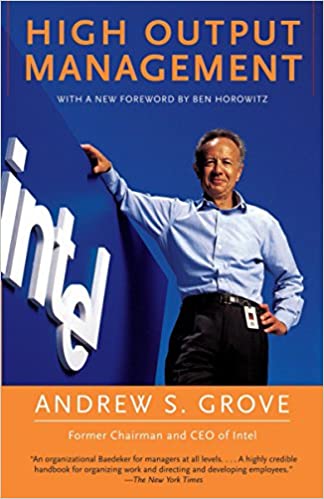
Lankheit says: “The genius of Andy Grove lies in his ability to explain the complexity of organizational management with simple, easy to comprehend analogies and examples. Highly actionable for managers at all levels.”
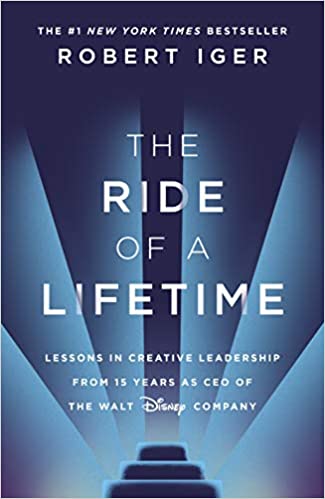
Lankheit says: “The memories of the man that pushed Disney further than anyone could’ve ever predicted are a masterclass on leadership, business development, innovation, and change management. The stories in this book continue to inspire me.”
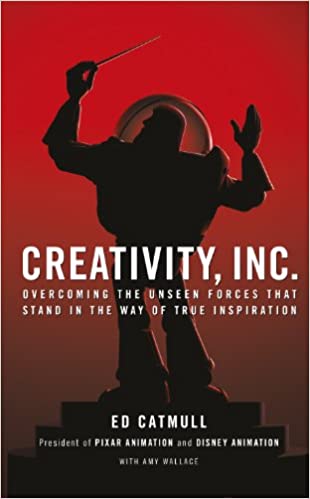
Lankheit says: “Everybody talks about ‘high performance’. This book offers the opportunity to learn from the person that founded and led Pixar, a company that continuously reinvents itself and exemplifies sustained success. If you want to learn how to create a culture of innovation and creativity and how to empower people to inspire the whole world you must read this book.”
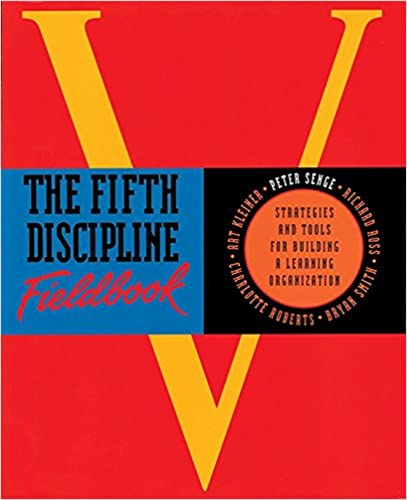
Lankheit says: “As a big believer in systems thinking I find this the most useful book out there to translate theory into practice. Hence, the many dog-ears in my personal copy. It should not be the first book one reads about dynamic systems theory but it will surely become the one that you will turn to the most eventually.”

Lankheit says: “I was introduced to Buddhism in 2006 and discovered the power of meditation. But it was the writing of Allan Watts that helped me understand the principles and practice of Zen. This book is light-hearted, educational, and enlightening. A masterpiece.”
Are your Team’s Performance Measurements and Reviews Up to Scratch?
EPP Industry Insight Series: What’s the Difference Between Management and Leadership?
We collected the views of the speakers at November’s Leaders Sport Performance Summit in London and, in this second instalment, we look at the importance of continued learning and development.
At this year’s Leaders Sport Performance Summit at London’s Twickenham Stadium, the Leaders Performance Institute spoke to a number of our speakers to ask: what are they most optimistic about heading into 2023?
There answers were varied and spanned two articles – Part I can be found here – but learning and development kept creeping up in these conversations.
For example, Neil Saunders, the Director of Football at the English Premier League, spoke onstage about the league’s Elite Player Performance Plan. “We are 10 years since the launch of the Elite Player Performance Plan and we’ll be updating our strategy and setting new aims and objectives for the system moving forward,” he said. “And that’s really exciting because there’s a great opportunity to build on some of the amazing work that’s taking place already but also to address areas of opportunity and try to improve what we’re doing to make sure that our work in player development is not just fit for now but also for the future.”
Joel Shinofield, the Managing Director of Sport Development at USA Swimming, answered the question in a similar vein. “We just launched a brand new technology product, we’ve revamped it completely, we’ve revamped all of our coach education, so those are at their very early launch stages and seeing those become more mature, seeing coaches access the new data we’re going to provide to them,” he said.
“The idea behind our data project and our technology project was to make more resources available to our members; and so what I want to see is the utilisation of that because I know that’s going to be the value of the whole project is that our clubs, our teams, our coaches, our membership has access to data that will help them improve the sport and improve their experience.”
USA Swimming is one of the most mature programs in elite sport and stands in contrast in some respects to a newer sport, such as competitive climbing. “We’re in the process of putting a full-time coaching team in place, seeing them evolve and develop in support of those athletes, and really just continue the learning,” said Lorraine Brown, the Head of Performance at GB Climbing.
“We’ve got a huge amount to learn, not only just about high performance sport but actually more about the sport and what it takes to support these amazing athletes. We’ve got brilliant athletes who despite the system have really achieved some amazing things. So how do we really help to facilitate them to continue to do that and provide some added value to their own environments? And part of that is making sure that as well as the experiences, actually the medical support around them and making sure that they stay fit and healthy as the volume and pressure increases. The pressure can have that negative effect of making them more susceptible to injury and illness. So how do we stay on top of that?”
Beyond performance itself, Jatin Patel, the Head of Diversity & Inclusion at the Rugby Football Union, is optimistic that his work can continue to have an impact on the sport of rugby union.
“I’m really looking forward to having more conversations around and spreading the importance of inclusion from grassroots all the way up to professional,” he said.
“Guiding and advising people how we can do it better, learning more myself, being new to rugby, and ultimately the longer-term aim of bettering the game and future-proofing it and ultimately reaching our objective and wanting to be a sport that’s more reflective of society.”
These sentiments are shared by Patel’s session moderator, Shona Crooks, the Head of Equity, Diversity & Inclusion at Management Futures.
She said: “I’m excited to learn more in this space. I think because I work in DE&I everyone expects you to have all the answers and it’s nice as I evolve, as organisations evolve, as society evolves, and so coming up with new ways to do things, new options, new training, new skills; how I can help to upskill people, how I can bring and move the conversation on. Because, ultimately, the end goal is that I do myself out of a job, that, actually, we’re so inclusive and everyone feels that sense of belonging, that DE&I just doesn’t exist anymore. How do I help each year to chip away at that?”
We then wrap up this two-part series with a reminder that in times of uncertainty, whether that be through growth or a more general sense of volatility, your fundamental principles will be invaluable.
“There’s always the unknown of what’s coming,” said Craig McRae, the Senior Coach of Collingwood FC, who are developing as a team under his tutelage. “That’s an attraction and an excitement in itself. For us, it’s about repeating behaviours. Putting ourselves into a position that we were last year and in our game like any game, you don’t start at the top, you’ve got to work your way up the ladder. I think that’s part of the excitement of our journey.”
The final Leadership Skills Series Session of 2022 brought together members of the Leaders Performance Institute to discuss how they can use their influencing skills within their environments.
Recommended reading
How Great Leaders Inspire Action
Framing the topic
In our final Leadership Skills Series Session of 2022, we look at how our members can enhance their influencing skills within their environments. We began the session by framing what influencing is and how we might be able to enhance these skills and be more effective with our communication. Influencing doesn’t happen in a vacuum, it’s linked to who you are, your personal brand and how people feel about you. It is something that has to be nurtured and worked with over a period of time.
‘The key to successful leadership today is influence not authority’ – Kenneth Blanchard, American business consultant
What influencing meant to our members:
What behaviours do we see from those that influence well?
Outcome thinking:
Event + Response = Outcome
Focus on what you want to achieve and then, because of that, think about how you need to behave.
Wheel of Influence:
Pull behaviours
Responsive:
Passive:
Push behaviours
Assertive:
Aggressive:
How do we make our points ‘stick’?
Four Ps model – for getting people on board with the need for change, and giving confidence in our new direction.
Thoughts and reflections from our members about the model:
In early November, some of the industry’s most respected leaders from across the globe gathered at Twickenham to discuss the pressing performance matters of the day.
It is designed to connect people with responsibility for performance at the highest levels of world sport with each other and the ideas that have served their peers best. The top jobs in elite sport are often lonely places and always comprise unique challenges. The following is a record of the Think Tank meeting that took place on 14 November at Twickenham Stadium in London. A behind-closed-doors event, the account that follows is a general one and aimed at presenting the lessons learned from the conversation.
Some of the participants have held senior roles for more than five years and we keen to ask the others: how they ensure their continued development and while continuing to win both individually and collectively.
Key points:
Does the current generation of young athletes love sports? There are several valid reasons why in current high performance systems they may not, but what steps can we take to ensure their continued development and adaptability?
Key points:
The perennial question about the art and science of coaching takes on further layers with the development of sports science and data science – where does the balance sit in modern sport?
Key points:
You can win and plan to win at the same time but it is not easy to find a balance in a world where results and outcomes are all too often the focus. There are, however, some steps that leaders can take.
Key points:
Knowing what it takes to win is essential but success can create a lot of white noise, particularly for younger athletes who may not fully understand how they were able to scale the summit. How can you manage expectations at all levels?
Key points:
Participants
29 Nov 2022
VideosThe third session of the 2022 Leaders Sport Performance Summit at London’s Twickenham Stadium saw Roger pick Craig’s brain around his approach to coaching, how he works with his athletes, and the importance of coach wellbeing.
“Having a mentor is key. I would video every session, so I could watch it back and reflect, and constantly look to get better. As coaches we review the game a lot but we very rarely review ourselves and the processes behind the programme.”
