From day one of his tenure as Senior Coach Chris Fagan has sought to align the team’s leaders, engender a sense of collective ownership and establish a culture where learning is prized.
Not only was he walking into a foundering team (it is rare for a coach to inherit a winning environment) but he was keenly aware that his own modest playing career meant that he arrived with less coaching clout than some of his AFL peers.
“I felt like I had to work harder to earn the players’ respect,” Fagan told an audience at Leaders Meet: Australia in February.
For all that, he was no novice. The reputation he had built at Hawthorn (first as Head of Coaching and Development, then as General Manager of Football Operations) between 2008 and 2016 is what attracted the Lions in the first place.
Fagan, with typical self-awareness, understood the assignment. “I think the key is when the players realise that you’re just there to help them and make them better and that’s what you’re going to bring to work every day,” he continued.
“I think it makes it easier to coach them. They know that you’re on their side and you want them to be as good as they can be, both as athletes and people, which is what I tried to do in the early days. I think that works and resonates with young men.”
The first two seasons on Fagan’s watch were poor but from 2019 onwards they have made finals each year. In 2024, they won the Grand Final; in 2025, they won it again for good measure.
As such, few are better placed to answer one of sport’s most pressing questions: what is it that environments that sustain success do?
Fagan has ensured that four factors work in his favour.
1. Everyone understands their value and how they can contribute
Fagan recalled his arrival at the Gabba ahead of his first pre-season. “I wanted to develop a group that could almost coach themselves and lead themselves, but we were far from that when I first walked into the club,” he said.
His first move was to arrange an interview with every player. “I had three questions: what’s good about this footy club? What’s not so good? And if you were me and you were in my position, what would you do to make it better? I wanted to start that way because I wanted everyone to understand that for our club to get better, everyone had to play a role and that you would be listened to.”
It took him two months to sit down with everyone. “Some interviews went for two hours, some went on for 20 minutes,” he explained while looking at Lions co-captain Harris Andrews in the Leaders audience. “He can probably remember his interview,” Fagan said, addressing Andrews directly. “He probably didn’t say too much then. Mate, you’d be there for an hour now, wouldn’t you?”
That moment of levity between the coach and a veteran player demonstrated how successful Fagan’s efforts have been on that front.
He added: “The idea was to go ‘well, we’re all in this together, we’re going to build it together, and we’re going to find out what’s not working and we’re going to talk about what we can do to get better; and that’s the way I wanted to start because that’s the way I wanted to continue.”
Nine years later, the personnel have changed but, as Fagan said, “it’s still that club to this day.” Those interviews still happen and buy-in remains strong. “It’s a force. It’s not one person, such as the coach, doing the job. It’s a whole lot of people getting it done.”
2. Failure is framed as a learning opportunity
In reflecting on that first round of player interviews back in 2017, Fagan remembers being staggered by some of the responses.
“Some of the players said that it was better to be in rehab and not playing than to be playing, which I was astonished by,” he said. “It probably said something about the culture of the club and that it wasn’t necessarily a safe place to work at being the best version of yourself. So these were strange things to hear, but I knew that you could fix those things with a bit of work. It was just going to take a bit of time.”
Two elements were critical: Fagan needed to remove the fear and ensure that the team was learning from its failures (of which there were plenty in those first two years).
“I always like to think that we almost failed our way to the top,” he added, while emphasising the importance of a growth mindset. “We learned so many lessons along the way and, in the end, we were able to hold up some silverware because I think we treated failure in a really sensible way at our footy club, because it wasn’t easy in the early days.”
Fagan has joked in the past that his team in 2017 and 2018 were the “happiest bunch of losers” having won just five games in each campaign. Their fortunes were transformed from 2019 onwards when they won 16 games. “We went from being a team that couldn’t win to a team that could win home and away games; from being a team that couldn’t win finals to a team that can now win finals.”
3. Everyone is aligned from the boardroom to the locker room
Behind the scenes, Fagan quickly worked to build relationships with the Lions’ CEO Greg Swann and former Senior Coach Leigh Matthews, who joined the board upon his retirement.
“I arranged to have dinner with those two men and their wives once a week; and we’ve been doing that for nine years,” said Fagan. “It’s been invaluable because I’ve got two allies that work amongst the board; and people at higher level at the club that have always been able to tell my story and tell the story of the team to those who needed to know it. So I’ve always felt very safe in the entire time I’ve been at Brisbane because I took that approach.”
It was not necessarily something that would have occurred to Fagan earlier in his career. “I would have been just so into the team and working at that level that I wouldn’t have thought it was important to manage up, but it is incredibly important because those people can help you.”
4. External noise is dismissed in the face of facts
Fagan is noted for his calm pitch side demeanour. “Leigh Matthews always says to me in terms of coaching that the coach has to be the calmest person in the place even though you’re not,” he said.
It is part of Fagan’s efforts to manage the external noise around his team. “In this country, there’s a lot of experts out there who comment on the game and their favourite activity is trying to bring coaches down. Your job as a coach is to bulletproof your environment against that and always deal with the facts,” he continued.
“I think that’s always helped our players and our coaching group to stay on track when you lose a few games and it gets a little bit rocky, which it always will during a football season. You never know what’s around the corner, but you’ve just got to build your culture.”
What to read next
2 Jun 2026
ArticlesAlignment, the question of performance outcome vs performance growth, learning and adaptive leadership were all on the agenda of the Leaders Performance Institute in May.
Take the club’s 2-1 home defeat to Bournemouth in early April, which was widely perceived as one of the team’s worst performances of the campaign.
The team looked and felt exhausted, which was not necessarily helped by their Manager Mikel Arteta’s ferocious work ethic and increasing demands on the training pitch. It was a period when injuries mounted too.
But as reported in the Independent, Arsenal attacking midfielder Eberechi Eze, approached his boss and told him in so many words: ‘we can do this, but we need a bit of space’.
To his credit, Arteta listened and though they lost at rivals Manchester City the following weekend, there were shoots of promise in that performance. Arsenal would win their remaining five matches and clinch the title by seven points from City.
They then came within a penalty shootout of winning the Champions League in Budapest.
Arteta swore in the aftermath that Arsenal will be back; and one suspects he might listen to his players a little more readily in the future.
Which brings us on to happenings at the Leaders Performance Institute in May, where a consistent theme has been the prioritisation of athlete needs, hopes and expectations.
Let’s dig into it.
Quote of the month:
A lot of coaches are either overdoing the teaching so there’s not any learning taking place or there are too many missed opportunities for the teaching and learning. It’s also changing the perception of the teacher; I’m doing it to you versus facilitating learning.
So said the head of coaching at a British university. He then raised the question of timing. “Do you jump in straight away? Do you wait till the end of the session and reflect? Do you wait till the next day and do some teaching and learning?”
It was an important consideration for a Leaders Virtual Roundtable that focused on what it takes to create an impactful and effective learning environment.
Read the breakdown here.
Insight of the month:
We’ve actually had our coaches start to record 10 to 15 minute videos, send them to players beforehand, and then the actual talk becomes them being able to reflect and digest the information.
So said a player development manager from Major League Baseball at a Leaders Virtual Roundtable where members discussed working with younger people.
Younger generations of athletes (as well as coaches and other staff members) are digital natives and teams would do well to lean into this.
Another voice from MLB, a sports scientist, told the table:
I think there’s definitely a difference in terms of how I have had to learn to communicate with them and include them in various decisions and thoughts along the way — and I’ll be the first to say I fumbled royally multiple times at first.
Read the full session summary here.
Good to know I:
But not everything is collaborative. I think we oftentimes confuse it, but we don’t want collaboration all the time.
So says Teena Murray, the Senior Vice President of Integrated Performance Support at US Soccer. She made the point that when a team has a shared mental model, individuals understand their domain, they know where there’s overlap and where there’s room for collaboration.
She wants her staff to be able to ask themselves “when am I the leader? When am I working in collaboration with another area, whether it’s nutrition, mental performance or sports science with strength & conditioning?” The answers provide “a clear understanding of who owns what but ultimately knowing what it is that we’re trying to deliver upon and what are the target outcomes that we’re really trying to reverse-engineer with all of our processes.”
We caught up with Murray as US Soccer prepared to make its new National Training Center in Fayetteville, Atlanta operational.
She explained why US Soccer aims to be ‘radically aligned and seamlessly integrated‘.
Good to know II:
Jeff Pagliano of Management Futures hosted a virtual roundtable where he gave members some tools to help them become better adaptive leaders.
In part, it means recognising issues when they emerge and tackling them in a calm and methodical manner.
He shared with the table the two types of problem that tend to exist in high performance and what makes each distinct:
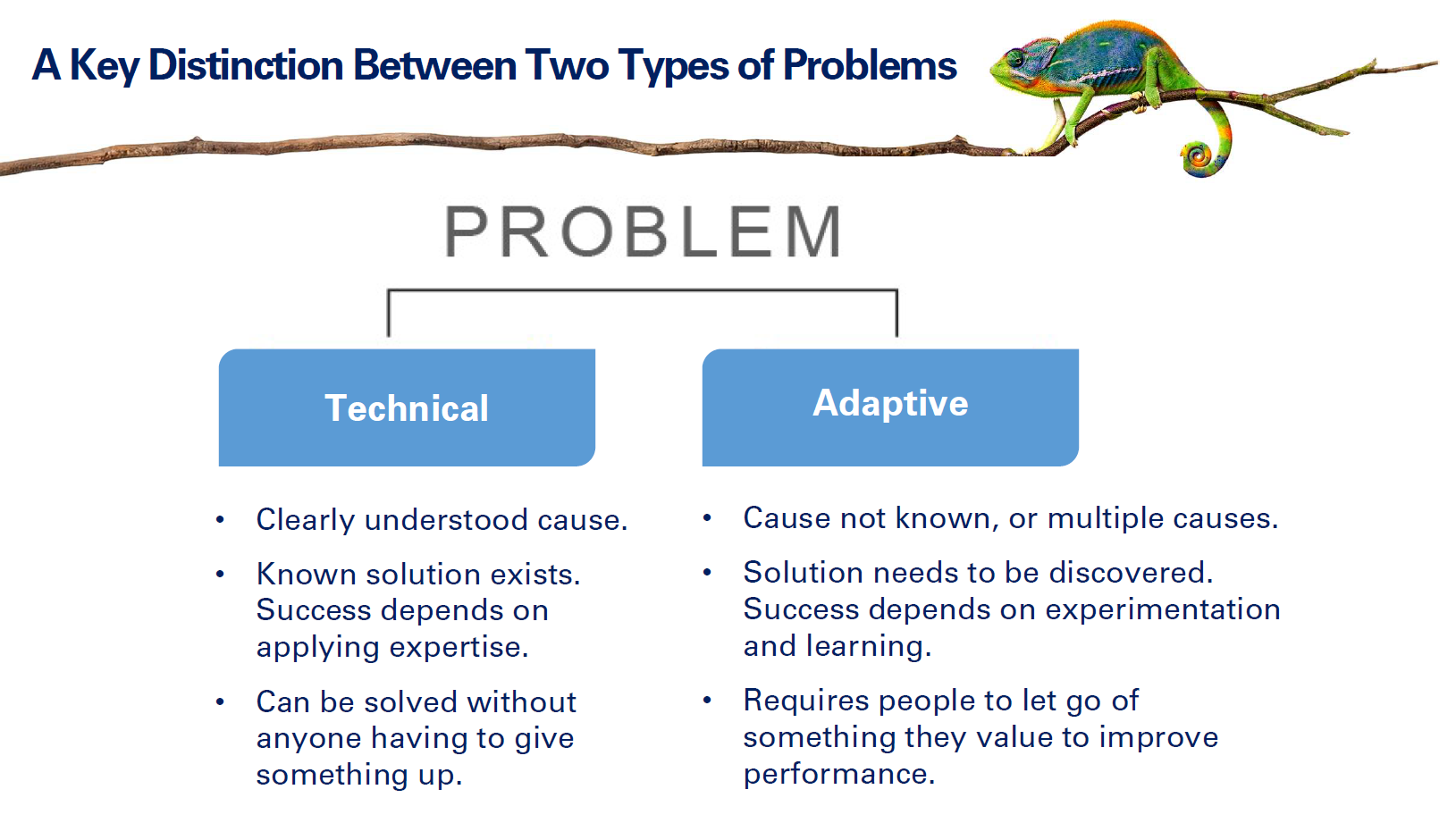
Pagliano then gave the table a series of hypothetical performance problems and asked them to decide if their nature was technical or adaptive. They were:
“These are the kinds of exercises I find to be really insightful because it helps me as a facilitator get a sense of where they’re coming from when they’re approaching leadership and change management,” said Pagliano.
Read more here.
Finally…
Paul Downes, the GM of Basketball New Zealand, described his approach to his first hundred says on the job. He argues that the idea that a new or transitioning leader can transform an organisation in the first 90 (or 100) days is unrealistic.
Read the first instalment of Downes’ miniseries here.

Image used courtesy of Basketball New Zealand.
Coming up for Leaders Performance Institute members:
18 Mar 2026
ArticlesThe Professor at the London School of Hygiene & Tropical Medicine explores how leaders should act when faced with incomplete information.
Adam Kucharski posed this question to bemused members at the 2025 Leaders Sport Performance Summit in London.
“Fortunately, we’ve got some data we can draw on here,” he added while presenting a graph illustrating the results of a study that showed a positive correlation between the amount Cambridge colleges spend on wine and their students’ exam results.
“Now, I suspect a lot of you are thinking ‘hang on, just because two things are correlated doesn’t mean that one thing is causing the other’; and you’d be quite right. But it doesn’t mean this data is useless, because if one can understand the consistent relationships between things, we can make predictions.” In this case, if they can spend more on wine they can also likely spend more supporting their students.
“If the college has a higher wine spend, it’s plausible that they will have higher exam results, not because one thing causes the other, but because you’ve understood that relationship to make a prediction.”
However, there are limits to just relying on prediction when making decisions. In sports science, for example, an injury risk model cannot tell a coach what to change in training. “‘You want to know ‘why is it happening?’ and ‘what can I do about it?’”
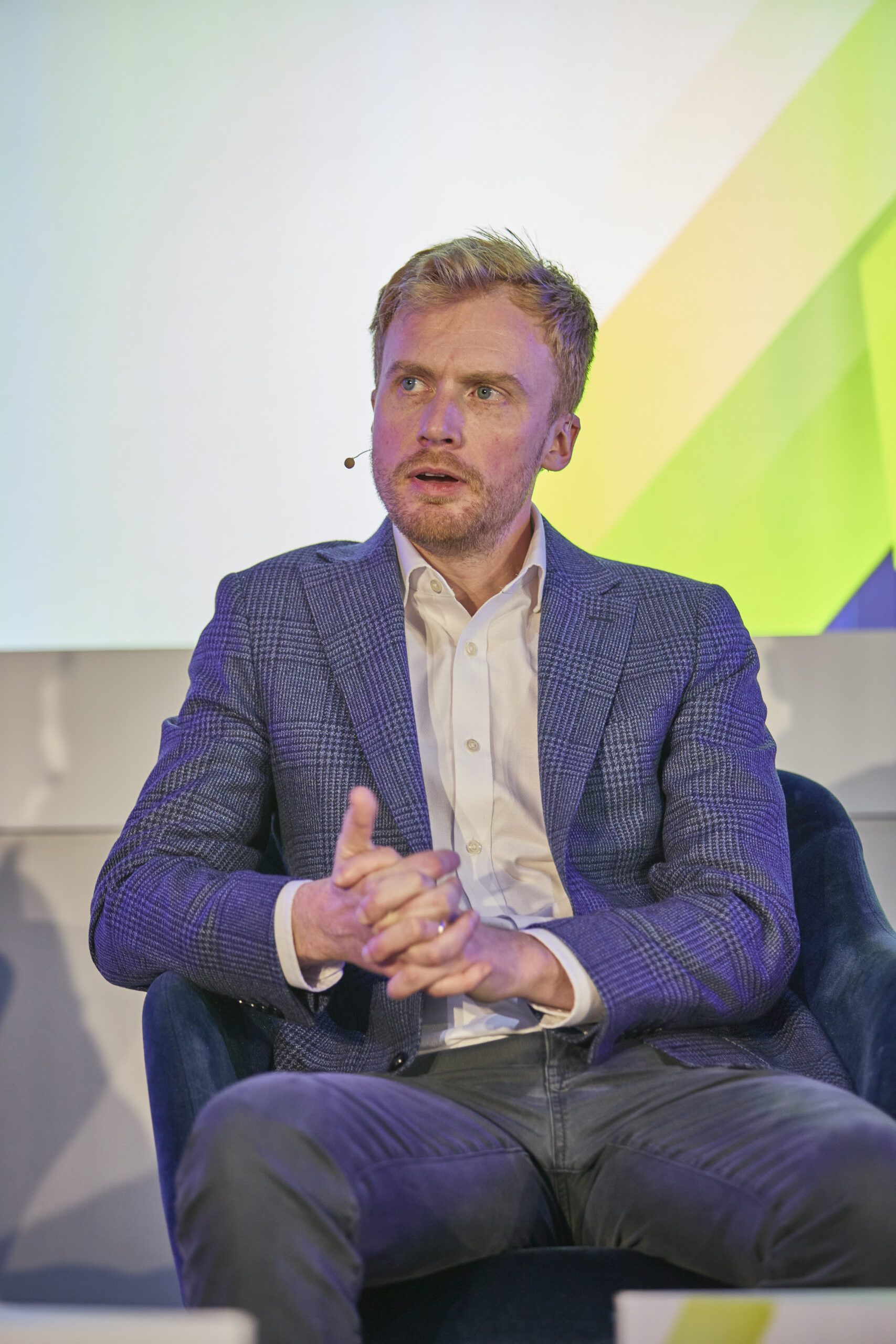
Adam Kucharski speaking at the 2025 Leaders Sport Performance Summit.
Over the course of half an hour, Kucharski, a Professor at the London School of Hygiene & Tropical Medicine, explored the craft of decision-making as influenced by information availability and behaviour.
“How certain is enough?” he asked. “How do we weigh the different ways that we could be wrong or weigh up the potential to get more information? Then, crucially, how do we think about the communication of that? And in terms of the ambiguity around uncertainty, being able to evaluate our judgements and ultimately get those ideas and innovations into the hands of the people who can make best use of them.”
He encouraged people in sport to consider a range of factors.
Perfect clarity is rare
Hindsight is 20:20, which leads to what Kucharski calls the “fundamental problem of cause and effect”. He said: “You only get to see one version of reality. You take an action, you see the outcome, you don’t get to rewind reality, not take that action, and then see what happens next. You never get to observe the counterfactual.”
Injuries offer a good opportunity to understand cause and effect in sport. With this in mind, Kucharski cited a 2020 study by economist Ian Gregory-Smith on the connection between labour and productivity and how this relationship is impacted by the ‘exogenous shock’ of injuries [because they occur unpredictably and allow causal inference].
“Starting quarterbacks are paid ten times what the backup is,” Kucharski continued, “but if the star quarterback is injured and the backup is used, the team is not ten times less likely to win.” The actual figure is closer to 30% less likely, but that could still be the difference between a losing season and a lucrative playoff run.
NFL teams understand this. “What they found is it’s pretty well balanced in terms of the additional money they pay their star quarterbacks versus the financial loss they estimate if that quarterback isn’t playing. So it seems, at least in this analysis, a reasonably efficient market.”
Some risks are worth taking, some are not
The NFL study is instructive but, as Kucharski said, “we don’t always get the luxury of treating everything with that level of detail.” At some point someone must make a decision with incomplete information.
He told the story of William Sealy Gosset, an English statistician who was hired by Guinness in 1899 as the brewery sought to make their brewing more consistent. Gosset’s job was to help improve crop selection, yield consistency, quality control and the stability of fermentation processes through statistical analysis.
He developed methods that enabled brewers to draw reliable conclusions from small amounts of data. They needed a way to tell whether differences in quality, crop yield or fermentation were real or just random noise, even when they only had a handful of samples with which to work.
“Gosset was a pragmatist,” said Kucharski. “He didn’t like the idea that we needed to demand high certainty for everything.” Unlike some of his contemporary statisticians, Gosset believed that context was key.
Kucharski agreed. He said: “It depends on the situation that we’re dealing with, it depends on the impact of the decision. How much might we lose if we’re wrong? It also depends on how hard it is going to be to go out and collect new evidence. Some datasets are easier to get than others.”
It should not be a “one-size-fits-all” threshold. “You’ve got to be careful that you don’t just end up wanting more and more evidence that’s fairly inconsequential to decisions; there’s a risk you end up over-analysing.” On the other hand, “if there’s a large cost to being wrong and it’s easy to collect evidence, then you should demand that certainty.”
Leaders in sport, Kucharski explained, are likely to face high-impact decisions where it’s hard to gather additional evidence and build higher confidence. “In those situations, as well as making use of your judgement, the evidence you have available, you also need to be careful where you set the threshold for action.”
Inaction is also a decision
Set your bar for action high and you’ll avoid bad ideas, but you may also miss out on something groundbreaking.
“There’s a temptation amongst leaders to want more certainty,” said Kucharski, “but that in itself is making a decision. If you never make a decision unless you’re 100% confident, you won’t take risks or make progress; and that requires us to think more deeply about what we mean by being ‘wrong’. What are the different ways we could be wrong and how do we balance them?”
To illustrate his point, Kucharski referred to Albert Einstein’s irritation whenever his papers were peer-reviewed following his emigration to the United States. This was in stark contrast to his experience in his native Germany where, to cite one example, Max Planck, the founder of quantum theory who also served as Permanent Secretary of the Prussian Academy of Sciences, promoted Einstein’s early research on relativity through the academy’s journals, always without recourse to peer review.
“Planck’s philosophy was it’s better to set the bar low and get ideas at the price of making some mistakes than set it too high and miss out on both,” added Kucharski.
A leader must assess the trade-offs and decide which metrics define success.
‘Weasel words’ help no-one
Sherman Kent co-founded the CIA’s Office of National Estimates (ONE) in 1950. A year later, as Kucharski told the audience, the office published a report entitled ‘Probability of an Invasion of Yugoslavia in 1951’. It concluded that there was a “serious possibility” of a Soviet invasion that year.
Kent later asked the different analysts involved what numerical probability they had in mind when they agreed to that phrasing. Their answers ranged from 1:4 to 4:1.
“He got quite frustrated with this,” said Kucharski, “he said ‘in intelligence, like in a lot of crisis and decision-making environments, you don’t get certainty and clear facts; you often have to use judgement’. He noted that people hate being pinned down to judgements; and they use ‘weasel words’.” These are intentionally ambiguous or misleading turns of phrase.
Kucharski admitted he had been guilty of using weasel words himself in the past. “The value in pinning people down to a judgement is it allows you to evaluate their judgement, particularly under uncertainty.”
Your network is critical when selling decisions
Kucharski argued that it is critical for leaders to balance the interaction between evidence, people and methods of communication.
“It’s not just about models,” he said. “It’s about how they interact with people; those end users.”
Leaders should look to create a “network effect”. “If you get the flu, you probably got it from one specific person; but ideas and the adoption of innovations don’t work like that. There’s a lot more need for social reinforcement.”
It helps to build credibility (“if you hear about something independently from lots of people, it gives you increased confidence about it”) and social legitimacy (“you might believe something is true, but if other people aren’t acting like it’s true, you might be less likely to act”).
What to read next

In the first instalment of a two-part interview, Lisa Jacob of Hockey Ireland describes how she interprets her role as High Performance Director.
She is a former dual international athlete, having represented Ireland at both field hockey and rugby sevens. In hockey, she accrued 139 caps and scored 17 goals between 2006 and 2014 and, upon retiring from hockey, took an 18-month contract to play sevens.
In her post-playing career, she returned to hockey and coached the Ireland girls’ under-16 and under-18 teams. She also worked as a coach developer. Then, in 2019, Jacob was appointed to Hockey Ireland’s board of directors and she became the organisation’s Strategic Director later that year. It began a run of several swift transitions.
In 2020, Jacob became the women’s programme’s Team Manager, in charge of logistics and operations – “the glue that gets things moving” – as she puts it. “I had no career plan – I just ended up as Team Manager perchance,” she tells the Leaders Performance Institute.
“I did that into the Tokyo Olympics and then we had a couple of coaches who finished up after the Olympics, but the team had a World Cup qualifying tournament maybe eight weeks later. So I went from Team Manager to an assistant coach. I knew the group and I had a coaching background anyway.
“I had that critical choice of ‘do I go towards coaching or do I go towards something else?’”
Her decision was ‘something else’ and she became High Performance Director in September 2022. It is a role she discusses in the first half of a two-part interview with the Leaders Performance Institute.
“I sit overarching all of high performance over the men’s and women’s programmes and the pathway,” she continues. “My role is trying to support the head coaches to enable them to focus on their role and take away some of the stakeholder management and fight for resources, and go between the institutes.”
Hockey Ireland identifies, develops, trains and selects players from across both jurisdictions on the island of Ireland, which means that Jacob works closely with Sport Ireland, Sport Northern Ireland, the Sport Ireland Institute, the Sport Institute of Northern Ireland, as well as the Olympic Federation of Ireland.
“They would all be big stakeholders with whom I work directly and my piece is as a kind of advocate; planning; doing all of the policies and proposals.
“The performance director’s role is important because that fight for resources always exists, so there needs to be somebody who’s always separate, who can oversee everything and go ‘hold on, if we join these dots we can get more bang for our buck’ or ‘this is more important than this space, even if you don’t like it, and this is why’, ‘this is the bit that’s important for you’ etc.”
Working under the programme’s head coaches (Mark Tamilty on the men’s side and Sean Dancer on the women’s) is a mixture of Hockey Ireland employees and institute service providers.
“There’s a lot of staff around the team, which can be great, but it can also cause a disconnect,” Jacob says. “I see my role as checking where everyone is at. I feel by listening that you really get a feel for it, where things are at, what might need to happen. It might seem small but I am helping people with their performance challenges as they see them.
“I also have a role in working with the athletes. By and large, I work with the leadership group to address any issues. In some ways, I need to be separate enough but also connected enough to understand if there are issues or changes of direction needed. I need to be approachable enough for those to come to the fore.”
What have been some of her reflections on her first six months in the role? “I’ve learned that the role is quite hard to define,” she says, adding, “there’s more than one way to do the performance director role, certainly in Ireland. You take the piece around how you can position and engage yourself and engage everybody in a way that you can shift the dial.”
There is not always unanimity. “It’s certainly not always an easy one but there’s a lot of really good people in the programme and my job is to get the best out of them, make sure that things are working well, so they can do what they’re best at.”
At the time of writing, both the men’s and women’s programmes are placed thirteenth in their respective FIH World Rankings (“that’s probably accurate enough”) but the women’s team exceeded all expectations to finish runners-up at the 2018 FIH World Cup. It was a breakthrough moment for the women’s game in Ireland and, in the subsequent time, the programme has enjoyed an increased range of, and access to, service providers. “That has allowed us to professionalise the programme for the girls. They get more direct support to be able to commit to hockey as well as pursuing work or study. They’re not scrambling to make things work.”
While that silver medal provided a watershed, there have not been wholesale changes, and there will not be any on Jacob’s watch.
“The programme is in place and has had a really clear plan over the last four years or so,” she says. “We’re now in 2023, which is a key year for qualifying for the Olympics. You might sit down and look at something with the coach but it’s really now small tweaks with a few key questions such as ‘are you going to go on a warm weather tour?’ So I’d work with the coach to set the direction of the programme but it’s not from a blank page or throwing out everything we’ve been doing.”
To wrap up the first part of her interview, the conversation turns to social support for athletes and staff and how Jacob can make an impact. She discusses her role with regard to the Ireland women’s programme, stating that the squad is a “really good group of friends” and “sometimes that can be good and sometimes that can make it harder to have honest conversations in the performance space.”
This is why the team have placed an emphasis on building relationships in the truncated time between the Tokyo and Paris Olympic Games. “When we have lunch, we need to sit together, you need to be asking your mate what’s going on in their life proactively rather than just hoping it will happen just because we’re in the same training base for two days a week.”
Players and personnel may not always talk about themselves but they may tell other Hockey Ireland staff about a teammate or colleague. Jacob explains that the work of Hockey Ireland’s head of performance services is invaluable in that regard. For her own part, she is sure to have contact points within the staff.
“I have realised in the last six months that there’s one or two people who sit very naturally in the space of supporting people through performance challenges.” She must ensure the right person is available for each challenge. “If you’re on the ground observing, you can send the right support towards someone or even follow up with them yourself – but there’s so many people I that I literally cannot do it all myself – with me, there are key people I try to keep across because I tend to be the glue for everybody else and it’s made me think quite a lot about how you structure and support people’s wellbeing and mental health in a high performance environment.”
Lisa Jacob is a contributor to our latest Special Report, titled Navigating Your Way Through Major Competitions: a snapshot from Olympic, Paralympic and elite team sports. In addition to Hockey Ireland, it features insights from Swimming Australia, the Lawn Tennis Association, Athletics Australia and Welsh Rugby Union. Each has teams competing in major tournaments this year and all are bound to give you something to think about in your future projects.
Nov 16, 2020
ArticlesDan Clements of Welsh Rugby Union explains how appreciative inquiry leverages the strengths of individuals, organisations and cultures to drive and sustain change with the ultimate aim of enhanced performance.
I will take a bet that amongst some other things, at some point they nurtured you, recognised your strengths and made you feel valued. Strengths-based thinking has had a lift in modern times within sport as more and more people seek to learn and find an edge in their practice or their organisation as a whole.
The exploits of world class coaches have been extensively documented and have offered a small window into the potential of such an approach. World class leaders such as Gregg Popovich of the San Antonio Spurs, British & Irish Lions Head Coach Warren Gatland and Richmond Tigers supremo Damian Hardwick have offered an insight into the possibilities within coaching when your starting point in a relationship with a player or a group of individuals is their strengths and what they can do, not what they can’t.
Delving deeper, October’s National Rugby League Grand Final in Australia between perennial powerhouse Melbourne Storm and 2020’s highfliers the Penrith Panthers highlighted the potential for strengths-based thinking.
The modern coach is no doubt used to the pre-game interview, they are part and parcel of the territory and give the avid viewer a sneak peek into mindset and the thrill of the occasion. It was interesting to listen to master coach Craig Bellamy of the Melbourne Storm that weekend when 20 minutes prior to kick off he was asked ‘what will your final message to your team be?’. With the watching millions no doubt expecting a small insight into a rousing Churchillian speech, it was interesting to watch the multi-championship winning coach answer simply and clearly that he would remind his team of who they are representing, what they do well and what got them there.
Now just consider that for a second, what they do well and what got them there. It might only seem small, but when you consider the narrative in performance sport in the main is about negating the opposition or working out how to solve problems you start to become intrigued about the differences between a strengths-based approach or a deficit finding lens.
Strengths-based coaching or thinking is clearly not a new thing, however what this article and lifts the lid on is the subject of strengths-based change through the medium of coach learning.
It is a topic covered in even greater detail with my colleagues Kevin Morgan and Kerry Harris in our research paper titled Adopting an Appreciative Inquiry Approach to Propose Change within a National Talent Development System, which was published in September.
Performance leaders are acutely aware that coaches play a vital role in the change process within any organisation. Now this alone might jump out as an interesting point when you consider change. The old adage ‘the only constant is change’ may resonate, as time and time again leaders in any aspect of performance sport seek to find a way to enhance performance, but they must do it in a way that engages and collaborates with their people.
Appreciative inquiry leverages on the strengths of individuals, organisations and cultures to drive and sustain change with an ultimate aim of enhanced performance
Change and people development has traditionally been approached as a top down ‘leader knows best’ scenario that leads to mixed results and ironically sometimes leads to even more change. What this article investigates is the potential for strengths-based change within performance sport, through the process of appreciative inquiry. Appreciative inquiry is an unashamedly positive change process borne out of the work of David Cooperrider, who sought to seek an alternative approach to the traditional ideas of change management.
Appreciative inquiry leverages on the strengths of individuals, organisations and cultures to drive and sustain change with an ultimate aim of enhanced performance. When you consider this in relation to performance sport, it paints quite a compelling picture for organisations that are constantly looking to improve to stay ahead of their competition whilst working in a collaborative manner. Why is this any different to traditional change you may ask? Well, it has been suggested that society has many years of experience in problem solving and have gotten very good at it. On the flipside though, we have very little experience in looking for what works and finding new and innovative ways of doing more of the same.
What our recent research paper uncovers is that the power of positivity within appreciative inquiry could play an integral role in designing change interventions within sport. Working with 12 talent coaches, we sought to discover what they do well and what gives vitality to the group through a series of personal and collaborative tasks. Why do they coach, why here, and what gives them the most satisfaction as a group? This built into an investigation of strengths, what they do well, and what gives them pride.
Interestingly, by allowing them to start from a position of strength it encouraged the participants to be more open to change as well as the identification of areas for personal development. Positive thoughts and positive thinking led to critical dialogue that fostered collaboration. An important element of appreciative inquiry then asks the group to imagine a preferred ‘vision of the future’ or simply put, what would great look like for you? Asking participants to articulate and share this vision drove creativity and engagement, as the group were eager to share.
Finally, with a vision laid out the group designed a route map to get there. Leveraging their strengths, the coaches identified areas of practice that they could tangibly develop in a quest to achieve the identified goal. This process highlighted the capacity within strengths-based change for innovation and collaboration as coaches worked together to build a framework for development.
The positivity principle that lives at the core of the process is something that cannot be ignored. It led to a heightened state of collaboration amongst the coaches which is often seen as utopia in performance sport both on and off the pitch. Australian coaching legend Ric Charlesworth highlighted this in his book World’s Best when he shared that as a team ethos starts to become embedded within any culture it becomes infectious and redoubles itself when evident and drives team members on to ‘do more’. The results highlighted that the positivity within the process allowed the coaches to collaborate and uncover new ways of working, or quite simply, achieve the holy grail of ownership and buy in to the change process.
This process highlighted the capacity within strengths-based change for innovation and collaboration as coaches worked together to build a framework for development.
Now anyone that is responsible for people development or learning within their organisation would know that things are never that straightforward. Learning and specifically coach learning remains a complex endeavour as organisations seek methods that make it a meaningful and worthwhile process for the coach. Results here showed that this scenario was no different, with coaches getting lost in rhetoric and semantics within parts.
What appreciative inquiry and a strengths-based approach did show though, was that a positive lens within the process encouraged participants to ‘break through’ stumbling blocks that stalled the progression and identification of areas to concentrate efforts on. This positive lens asked the group to imagine ‘what next?’ and encouraged the design of a ‘route map’ for change.
More and more in high performing organisations we are seeking the next advantage or area of innovation. Could that answer lie internally, within our people? The final point to consider relates directly to strengths-based change, as we will all go through or lead a change process as some point within sport. Have you considered where your strengths may lie? Are you an expert who will lead from the front and struggle to capture learning or innovation? Or is there a way where we can collaborate with our people and innovate and learn along the way? Perhaps starting with a positive focus will encourage this.
Dan Clements is the Performance Coach Manager at Welsh Rugby Union.
Click here for access to Adopting an Appreciative Inquiry Approach to Propose Change within a National Talent Development System by Dan Clements, Kevin Morgan and Kerry Harris.
The former Arsenal and Monaco manager on developing talent, science and data, leadership and the demands of the modern sporting landscape.
The Leaders Performance Institute has asked the former Manager of English Premier League side Arsenal about his management style. Many observers have drawn their own conclusions during the Frenchman’s three-decade coaching career but he has seldom been asked himself.
This is clearly a state of affairs that suits the man but, with his customary graciousness, Wenger delivers a candid response: “I am a person who is highly motivated but is also always unsatisfied; a bit of a perfectionist. That means I am an unhappy person who suffers a lot every day. A manager has an easy life when his team wins and has a nightmare when his team doesn’t win.” The wry smile that accompanies his reply, a trait familiar to many who have enjoyed the pleasure of Wenger’s company, befits a man who has experienced triumph and defeat across more than 1,700 matches as a manager in French, Japanese and English football. It also hints at his drive, determination and even his need to return to the dugout as soon as possible. Even as he faces more suffering he seeks the next challenge, and so Wenger, who left Arsenal in May, is poised to find fresh work, with a litany of potential suitors waiting in the wings.
All will be seeking to tap into the wisdom and intelligence of a genteel character, dubbed ‘Le Professeur’ for his calm and cerebral approach to management. In press conferences he will field all questions about the game and is equally at ease discussing current affairs, philosophy and fiscal policy – he read politics and economics at the University of Strasbourg’s Faculty of Economic and Management Sciences while still playing in the French lower leagues. Wenger also had an influential role in the design and construction of Arsenal’s Emirates Stadium, which opened in 2006. If this sets Wenger apart from most of his counterparts, his 22 years at the helm of Arsenal are unlikely to be superseded in the modern era. When Sir Alex Ferguson retired in 2013 after 26 years at Manchester United, Wenger was described as football’s last ‘legacy manager’; a throwback to a bygone age. With Ferguson gone, Wenger’s tenure exceeded the other 19 Premier League coaches’ combined for those next five years; the average managerial tenure remains closer to 18 months in England.
Success helped to explain his staying power – there were three Premier League titles and seven FA Cups accrued during that time – but it was also the fluid attacking style of his best teams, playing a brand of football that wowed Arsenal fans and rivals alike, and his consistent ability to help young players reach their potential. Beyond France and Japan, it was a much more insular time for the English game, when the tabloid press led the enquiries of ‘Arsène who?’ and even the players Wenger inherited got in on the act. Memorably, Arsenal’s right-back at the time, Lee Dixon, soon to be a Wenger convert, commented that the bespectacled manager looked like a geography teacher, i.e. as far removed from the traditional image of the manager as could be. Most English onlookers were oblivious to his achievements, particularly those with AS Monaco, but were made to take notice as Wenger’s novel approach to nutrition, sports science and scouting helped to deliver a Premier League and FA Cup double in his first full season at Arsenal.
That was then, and now, during Wenger’s career hiatus, the Leaders Performance Institute presents his reflections – gleaned from three separate interviews in the past three years, including most recently at November’s Leaders P8 Summit in London – on a sport that has evolved around him. “I started to manage a football team at the top level at the age of 33 [AS Nancy in 1984]; then it was just me and the players,” he recalls. “Today, you have at least ten members of staff and you can’t do everything alone.”
The demands placed on young players today
The game evolved but so has Wenger. Another aspect of his longevity is what he calls the ‘stamina’ of his motivation. It is a point he has touched upon several times with the Leaders Performance Institute. He asks: “We are all motivated by different things but how big is our motivation to maintain a high level? We can produce ten out of ten on a Monday; can we do it again on Tuesday? Can we do it in six months? The stamina of motivation is a very overrated quality for all people who are successful in life. For me, and I might be wrong, in any job the first quality is the high level of stamina in motivation.” Wenger can see the motivation in himself, and says the modern manager has any number of psychological analysis tools at his disposal when assessing players, but the ‘little details in real life’ remain the most significant in his eyes. “I’ll always have an interview with the player and the parents; and the mother tells me more about the boy than any psychological analyses. When you have talented boy and I ask him: ‘When you’re on holiday do you play football?’ If he says ‘no, not so much’ I think to myself, my friend, you’ll never be a top level football player. But the mother complains he’s always out there with the ball after school, comes home too late, you think, ‘Oh, that’s interesting.’ So these kind of details in everyday life are very important.”
Every major sport has become a world sport and selection is worldwide. When I grew up, you need to be best player in your area. Today, if you want to go to a big club, you need to be one of the best players in the world. I think that demands a special personality.
When Wenger talks about young players his tone remains positive, even as he cites the unique challenges presented by the elite European football landscape: the sport has never been more visible and accessible, with players routinely scrutinised across all forms of media in a manner that exceeds their predecessors. As well as the increasing physical demands, Wenger argues that it requires different personality traits too. “Maybe the demands on the personality are much higher today because the players are under so much stress and scrutiny,” he observes. “They cannot hide anywhere and everyone has an opinion about every player. The modern player must be resistant to that stress and be capable of dealing with the demands.” He continues: “Every major sport has become a world sport and selection is worldwide. When I grew up, you need to be best player in your area. Today, if you want to go to a big club, you need to be one of the best players in the world. I think that demands a special personality.” Wenger has broadly identified three types of personality within modern players: the perfectionist, the competitor, and those who seek approval. He runs us through each in turn, starting with the perfectionist – the character he sees most obviously reflected in himself: “This is the easiest to deal with for a manager – the guy who has to battle with himself. That means he has an interior demand to be as good as he can be. He’s an unsatisfied person who doesn’t care what you think about him. He has an idea of the game and wants to be as close as possible to perfection. This is the champion, the real champion. This is the guy who gives an interview 20 years later and still remembers that he should have headed a cross rather than volleying it. This is the ideal champion.”
Next is the competitor, which is a tougher proposition for the manager. “This is the guy who goes into the dressing room and says in a subconscious language, ‘My friends, I am better than all of you.’ It is the guy who needs to be better than others, everywhere he goes and in everything that he does. Once he’s the best and acknowledged as the best he can lose motivation, although the perfectionist never does.” These players differ from those who seek approval from their peers. “These people walk into the dressing room and want to be acknowledged that they are people of quality. They look for recognition from their teammates and want them to say, ‘Yes, we know you are a good player.’ They retain their motivation because the perceptions of others fluctuate.” How does Wenger decide which type of personality he is dealing with in each case? “Watching a player is the best revelation of character. We can hide our true intentions and I can be very polite and educated but when I go out onto the pitch and it matters to me I become who I really am.” He believes that personality is tied to position on the field. “We are made up of those who love to win and those who hate to lose, but there is a dominance in all of us. Those that hate to lose are more defenders, those that love to win tend to be creative. We’ve seen normal players who, when you put them in the right position, they become top players.” Examples in Wenger’s career are manifold: turning Emmanuel Petit, whom he worked with at Monaco and then signed for Arsenal, from a left-back into a dominant midfielder; he worked a similar trick with Thierry Henry, who Wenger, as Monaco Manager, debuted as a left winger – a position Henry maintained for the best part of the next five years – before the duo reunited at Arsenal. There Wenger indulged his earlier instinct to play Henry as a forward and he became one of the world’s deadliest marksmen. Also at Arsenal, but moving in the opposite direction, were Lauren and Kolo Touré, who were moved back from midfield to defensive roles with profound results. Wenger says: “There’s no better detector of personality than to watch a player who says, ‘Let me show you that I can win’ with his actions and you look how he plays. He becomes who he really is and not what he has learnt to be.”
“You do not see many smiles”
Our chat about personality types lends itself nicely to an exploration of player motivations at a time when, according to Wenger, the responsibility for performance increasingly falls on the club. “This is because of the quantity of investment,” he tells the Leaders Performance Institute. “Football is so important these days and when a player doesn’t perform, the club has to answer ‘why?’ and therefore has to do more for the player.” That is not to say players are absolved of responsibility, if anything, their burden is greater than ever. “We can help people who want to be successful, a guy who has the right level of motivation,” says Wenger. “But even when a guy has the right level of motivation he can be handicapped by other things. More than ever, young players today are under high pressure from their families, their agents and their environment; the pressure is very high. I personally feel that in the academies, when a boy signs today at 16 years of age, he has to be successful; and something has been taken away because he comes home every day and his father asks ‘did you practise well? Were you good? What did the coach say?’ When I was 16 football was the reward for coming out of school but, for these kids, football is what school was before. It is the job. At 16 the pressure is there already and they do not feel the same happiness – you do not see many smiles.”
One of the problems is the inefficiency of the academy system in European football – the attrition rates would shame any other business sector and this problem is not unique to football. “In every academy perhaps 1% of people will play in the Premier League,” says Wenger, adding, “when we have 1% we are happy. This also means we produce unemployed people in big quantities at an early age and I think we have to rethink the whole process and redress the balance.” Wenger fears early specialisation and his time at Arsenal the club went to lengths to ensure a more rounded education and development programme for their undergraduates. “It is not better that this boy has a normal life but still gets the requisite hours of training?” he asks. “[Arsenal have] an agreement with the school, for example, and the player is in touch with those who play basketball, hockey or rugby; and he’s in touch with people who have a normal life.
I think the game is about winning, of course, but it’s also about something deeper; that shared vision of the game. [It’s about] the values the game brings to people, the emotions you can share at the top level. When the game is played, respect can be bigger than anything else.
The father figure
In April 2018, when Wenger announced his imminent departure from Arsenal, Cesc Fàbregas, who played for the Frenchman between 2003 and 2011, took to Instagram to praise his former coach. He wrote: “He had faith in me from day one and I owe him a lot, he was like a father figure to me who always pushed me to be the best. Arsène, you deserve all the respect and happiness in the world. #classact.” Fàbregas is not a lone voice in labelling Wenger a father figure and the man’s approach to leadership goes someway to explaining why. “I have an influence on the immediate result of the team but I also have a fantastic opportunity to influence people’s lives,” Wenger tells the Leaders Performance Institute. “When you think that a guy can come from nowhere, with a good attitude, and you help him to become somebody; I think it’s one of the proudest moments for any human being to help people become somebody.”
Wenger has long been known as one of the finest developers of talent in Europe. Liberian forward George Weah came to Europe on Wenger’s watch, and would go on to become Africa’s first Ballon d’Or winner [he now serves as President of his nation], while the Frenchman also gave career debuts to Lillian Thuram, David Trezeguet and the aforementioned Henry, all of whom went on to win the Fifa World Cup and Uefa European Championships with France. This record continued at Arsenal. A 21-year-old Patrick Vieira came to north London on Wenger’s recommendation in September 1996, just weeks before his compatriot joined as Manager. After a season treading water at AC Milan in Italy, Vieira was set on the path to greatness and shared in France’s success at the 1998 World Cup and 2000 European Championships. Henry also reunited with Wenger in 1999, after his own short spell in Italy at Juventus, and he would go on to become Arsenal’s record goalscorer. Wenger also gave a career debut to Ashley Cole, the finest English left-back of his generation.
Wenger put this process eloquently in his native French during a 2015 interview with L’Équipe. “I am only a guide,” he began, adding: “I enable others to express what they have within them. I didn’t create anything. I am a facilitator of what is beautiful in man. I define myself as an optimist. My never-ending struggle in this business is to release what is beautiful in man. I can be described as naïve in that sense, but it allows me to believe; and I am often proven right.” Not always, as Wenger freely admits, but he tells the Leaders Performance Institute there is something greater at play. He says: “I think the game is about winning, of course, but it’s also about something deeper; that shared vision of the game. [It’s about] the values the game brings to people, the emotions you can share at the top level. When the game is played, respect can be bigger than anything else.” This serves to create those lasting bonds with his players. “I could meet a player 20 years later and we can still be on the same wavelength because we have a memory of something we shared together that was both sincere and of high quality. Daily training also has to be built on the pleasure of sharing the collective game.” In further comments that resonate given his recent departure from Arsenal, Wenger adds: “You also have the responsibility to make sure the clubs grows so that when you leave you can say, ‘Look, I’ve made a little way with this club. Today it’s much stronger than when I arrived.’”
Knowing when a young player is ready to play
For such results in developing talent and for his former charges to speak so highly of him, Wenger has gone to great lengths to earn their trust. In part this is due to the emphasis he places on co-creating values with his teams. “We are a group of people who create the culture,” he explains. “Before the start of the season we sit together and my coaching staff and I will ask the players ‘What do you think is important in the way we live together?’ and we then put that on paper. The values we think are important, which will include respect, communication, being on time, proper behaviour on the football pitch; we take those, put them together, and we create our own culture. Then it allows me to say: ‘Look guys, that’s us; that’s our identity’. If you don’t behave properly then I can say: ‘Look, you decided that. That’s not right; we’re not behaving like we decided to.” Wenger will hold players accountable but he won’t overburden them. “I must first show that I trust him, and one of the ways of doing that is not to talk too much and to just hand him the shirt on the Friday before the game. Then I must be brave enough to walk out there in front of 60,000 people and say: ‘Yes guys, I believe in this person and he’ll be strong enough to play.’” Picking a player when they are ready is the ultimate demonstration of trust. “Sometimes, more than any speech, if I say to a player: ‘I believe you’re a great player’ and he replies: ‘Yes, but why don’t you play me?’ The simplest way to give trust and confidence to somebody is to select them for big games.” How can he be certain that a young player is ready? “When he plays in training and the other players give them the ball.”
The loneliness of the decision-maker
The Leaders Performance Institute often asks general managers, coaches and team managers what their biggest mistakes were and invariably their response is rooted in the ego of their youth and inexperience. As Wenger tells us, he is no different in this regard: “When you’re 20 years old you think you possess all the necessary qualities to succeed in life but I’m in a position today where my ego doesn’t interfere; my pride doesn’t interfere in communication any more. Experience helps you to understand what is important and get rid of all the rubbish. That means I can tell a player his haircut is not so important when it comes to being a great football player and then I can give him what he really misses in his game; what will be important for him to have the chance to be successful. We have the tools and the experience to tell him what will be important.” That includes sports science, even if Wenger feels that the modern head coach can feel ‘invaded’ at times by reams and reams of data. “Every morning at Arsenal we’d have a staff meeting where you have medical people, mental people, fitness people and you prepare the day as everyone expresses an opinion; but it’s always the same. At the end of the day, you have to make a decision. The manager is the decision-maker.”
This is why the right staff are so important. “Science and data can bring more knowledge and precision about how to perform,” he adds. “As well I believe that the last word is the quality of the observation, the instinct, to knowing people individually and, therefore, I believe that artificial intelligence is an important tool. The modern manager has to pragmatically select the four or five most important datasets that can help produce success on the pitch.” For now, Wenger doesn’t know his next move but there will certainly be a move in 2019. “Life is moving, competition is moving, so don’t stand still. You always have to question yourself; what is the next step? Where do I go from here? Success can encourage you to stand still; you think it worked so you continue to do that. That is the best way to get lost.”
Something tells us that Wenger will find his way.