In our latest Leadership Skills session, Jeff Pagliano of Management Futures reframes how organisations should understand, shape and protect their cultures.
Amaechi’s words are shared by Jeff Pagliano, a consultant with Management Futures, who in our latest Leadership Skill Series session, introduced members to tools that will enable them to help shape their team’s culture.
How do cultures develop?
Pagliano began his presentation with a definition:
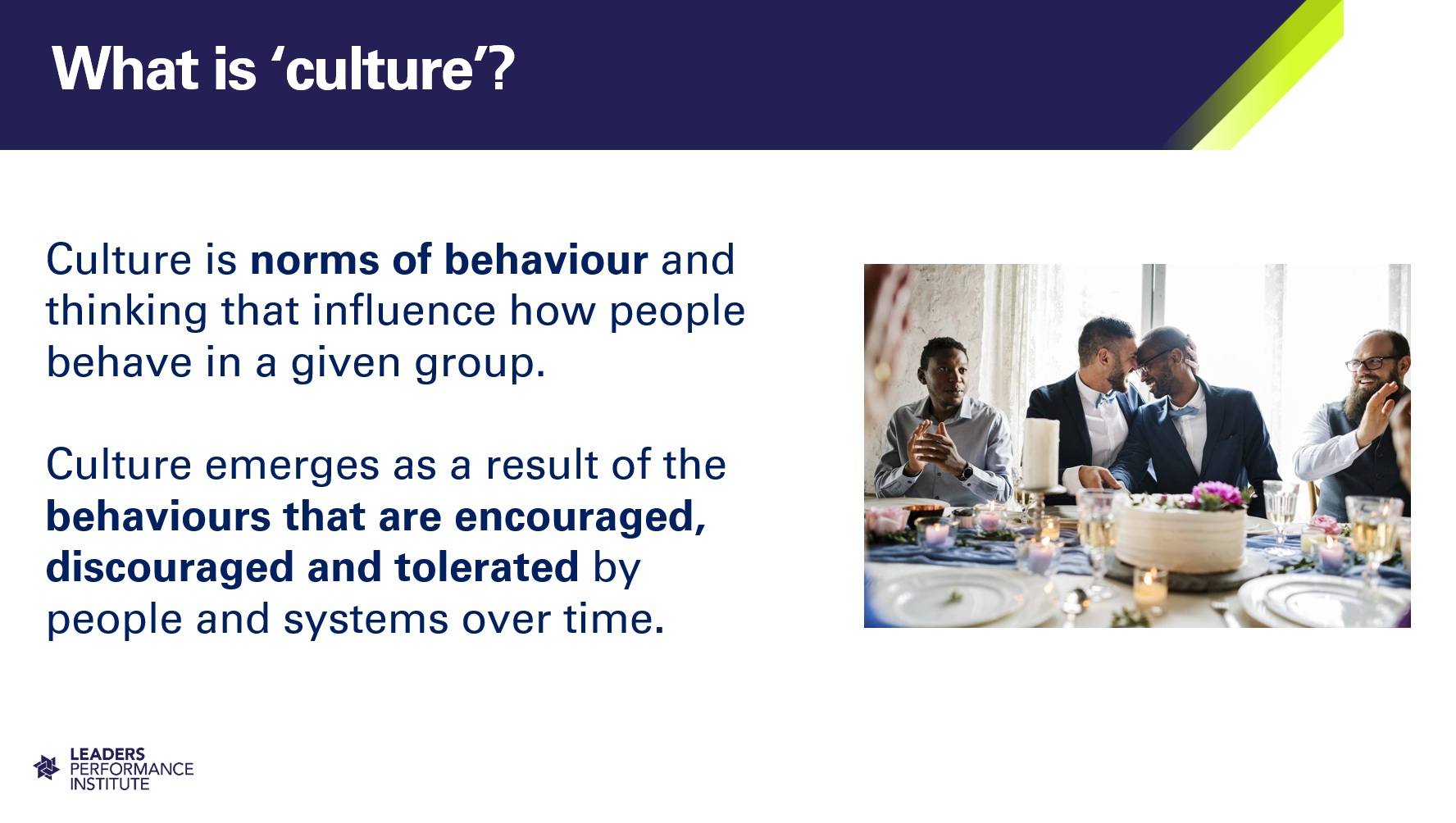
Management Futures uses the analogy of tables at a wedding reception to explain how cultures develop.
“You’ve seen how at a wedding each table develops its own personality,” said Pagliano. “It’s interesting that even in those interactions where some people know each other or some people don’t, a culture begins to form around that table. You can have the rowdy table, the quiet table; some are eager to get up to dance and some are not.”
What we see, what we say, what we believe
Pagliano then shared his ‘cultural iceberg’ model, which has been inspired by Swiss-American psychologist Edgar Schein and his pioneering work on organisational culture:
What we see
“This is literally what we see. So behaviours, systems, and processes,” said Pagliano. This could be how people interact, how leaders comport themselves, what actions are common or repeated. It also includes the physical environment (e.g., office layout or the visibility of team members).
What we say
“These are our goals, values and aspirations.” In other words, the official narrative.
What we believe
“These are the underlying assumptions we have about the organisation.”
The risk of emerging ‘shadow’ values
Underlying assumptions can lead to the emergence of what Pagliano calls ‘shadow’ values – unspoken, unofficial rules.
“Employees are acutely aware of what is rewarded or encouraged in everyday activities,” he said.
Pagliano quoted the British government’s sports funding agency, UK Sport, in making his point.
Therefore, it is important to be able to ‘map’ your team’s cultural influences to better help you understand who shapes your culture and in what ways.
Mapping cultural influences
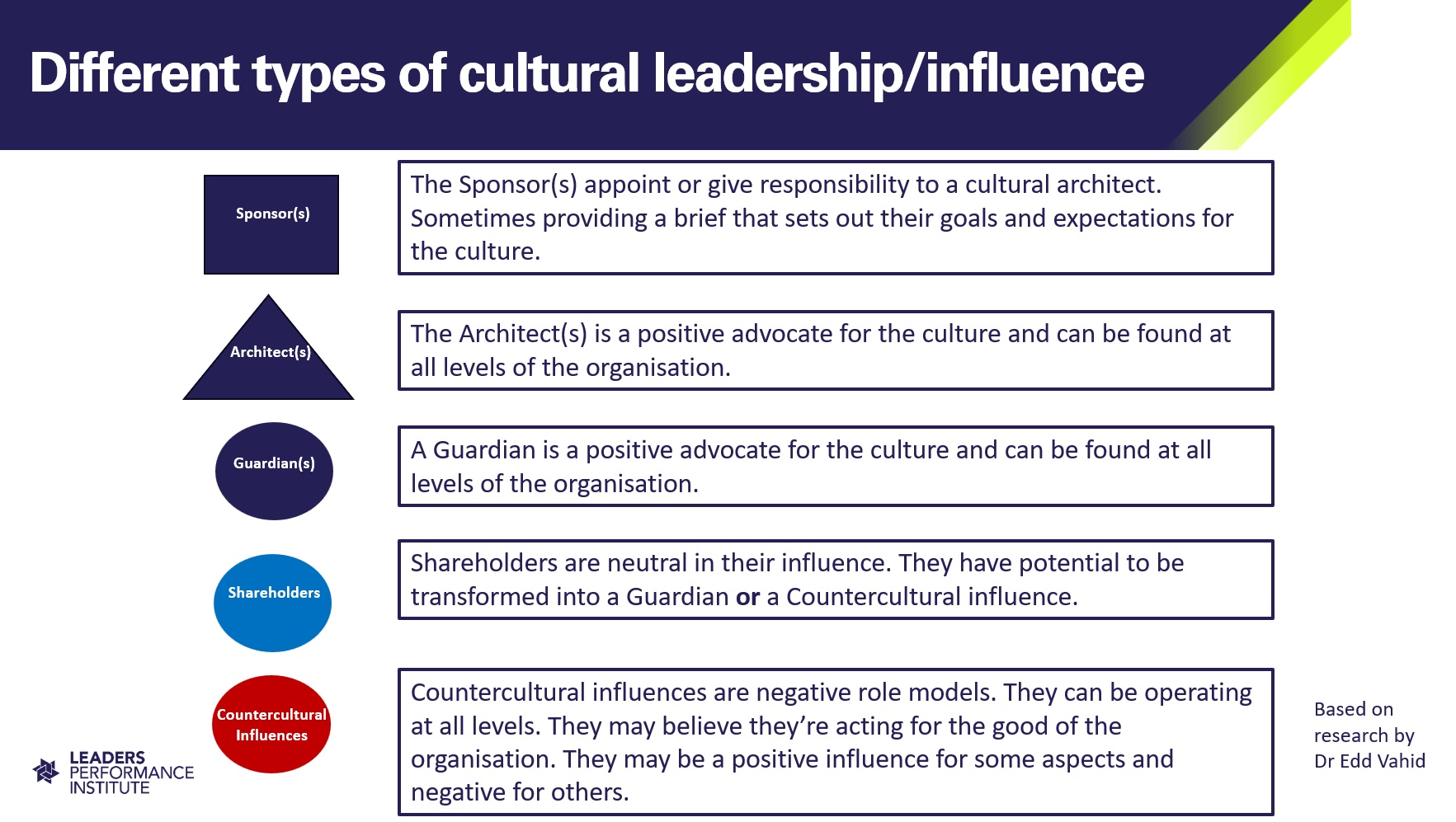
For this part of the session, Pagliano called upon Dr Edd Vahid’s Cultural Hypothesis, in which he spoke of the importance of ‘sponsors’, ‘architects’, and ‘guardians’ in shaping a culture through a combination of leadership and influence.
Pagliano added two further categories: ‘shareholders’ (“I would argue that everybody who works in an organisation is a shareholder”) and ‘countercultural influences’ (“countercultural influences are negative role models that can be operating at all levels”) and presented the following slide:
He then shared a hypothetical example of a cultural map that pulls on these five types. The result is a complex diagram:
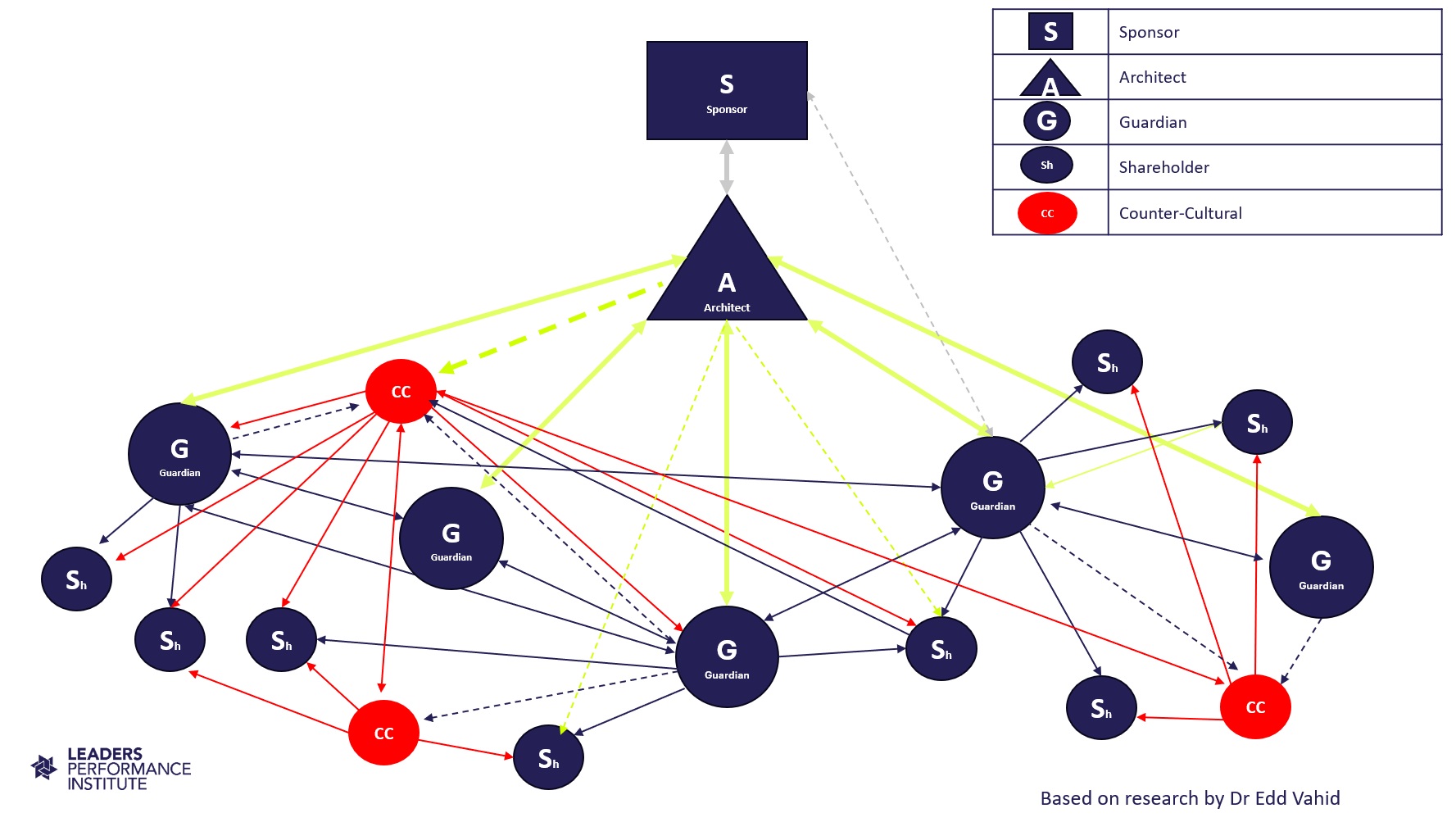
“Your sponsor is at the top,” said Pagliano. “That can be the owner of an organisation, maybe a GM, maybe a coach, but it’s somebody who has the ability to decide whether resources are allocated for building culture.
“Then you have the architect: the one who thinks about ‘see’, ‘say’, and ‘believe’. This is the person who has the ability to influence processes and has decision-making power.
They may or may not be the leader of the organisation, but they certainly have the ear of the leader.
“Then below is where the web gets a little complicated. This is where you can see how certain policies, procedures and aspects of culture can intertwine and be influenced.”
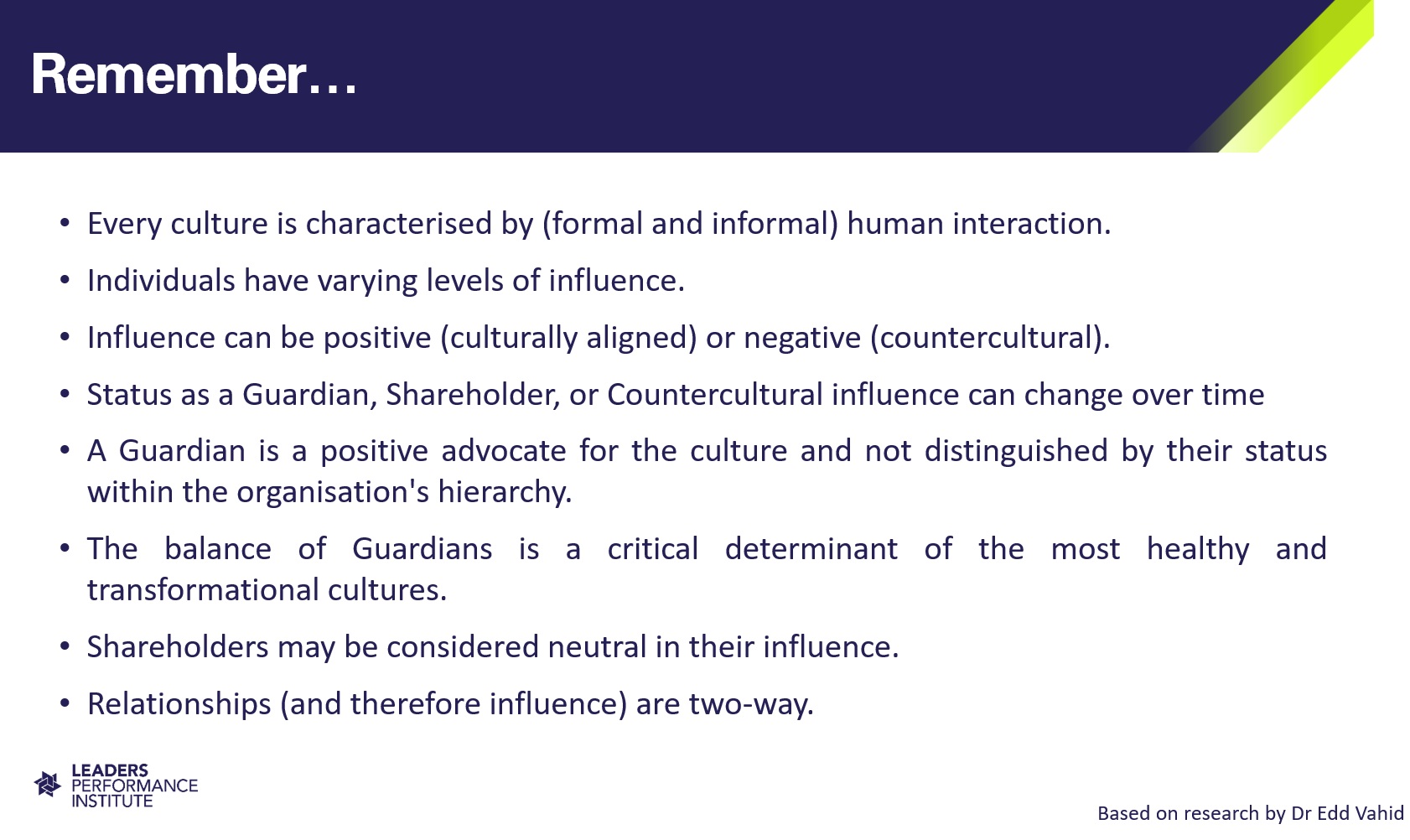
Pagliano concluded this section with a summary:
He concluded his presentation with six cornerstones of cultural leadership.
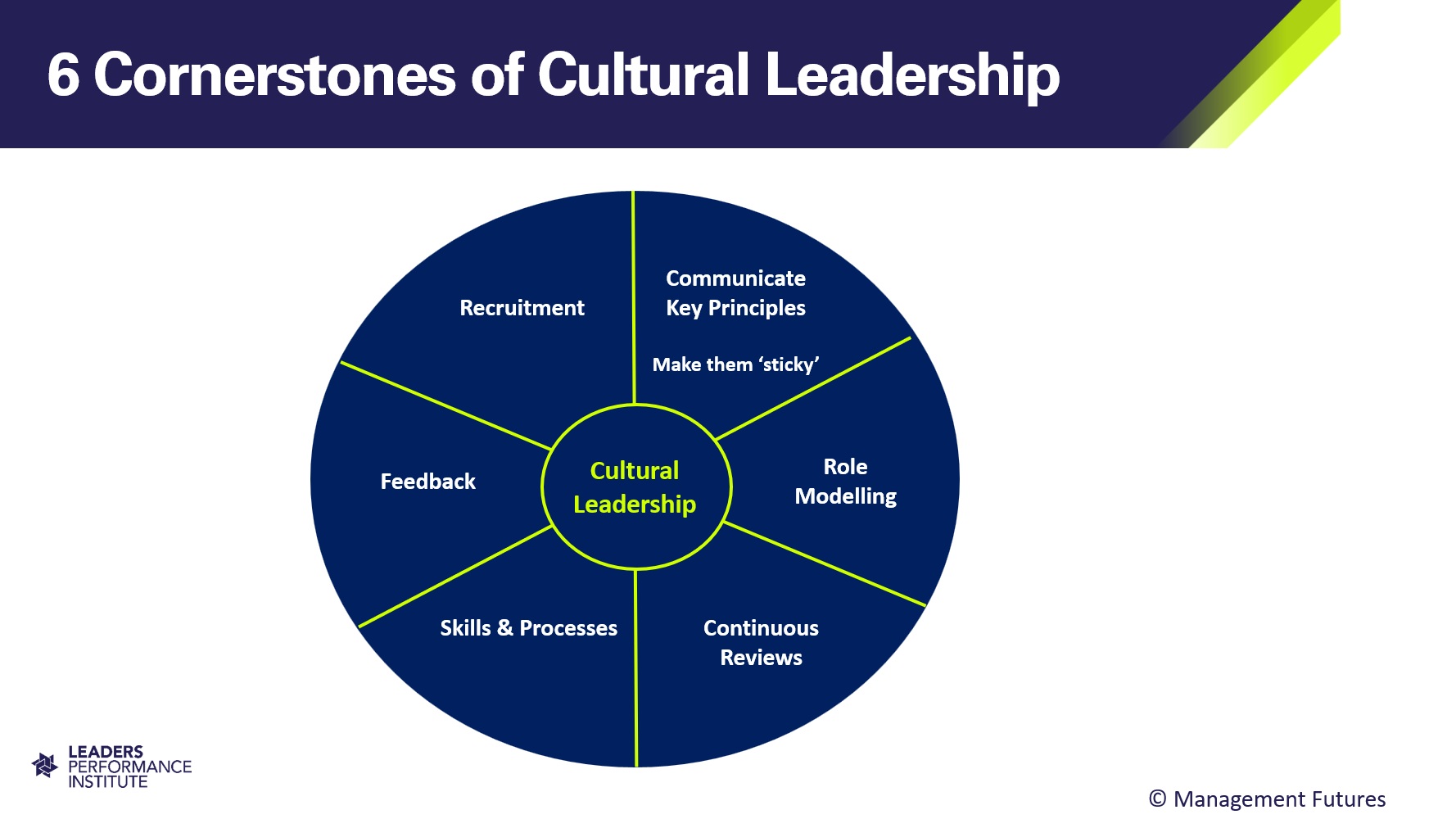
“These are the six levers that any culture leader, whether it’s your sponsor or your architect, can pull to make sure that vision of culture is consistent across your organisation.”
He then gave a real-life example for five of the six.
Communicate key principles – Netflix
“Netflix’s key principle is ‘act in Netflix’s best interests.’ And so their culture of ‘Freedom & Responsibility’ can be captured in these five words,” said Pagliano. “Anytime there’s a decision being made, you can always ask your team, ‘are we acting in Netflix’s best interests?’”
Role modelling – Collingwood FC
Pagliano explained that Collingwood’s Senior Coach, Craig McRae, asks himself daily, “‘to what extent are my day‑to‑day actions equal to our ambition?’” The Melbourne-based club were AFL premiers in 2023.
Continuous reviews – Pixar
“They had this concept of appreciative inquiry,” said Pagliano of Pixar. “It’s all about setting examples of excellence to create a blueprint for future performance.” In testing Toy Story, for example, the relationship between Buzz and Woody wasn’t working. So they went back to the drawing board over the course of six days and created those characters that we know and love today. Further down the line, they would go back and ask, ‘what were we doing right during those six days when we pulled together?’”
Skills and processes – the UK Sports Institute
This example is specifically about their approach to developing their staff members’ “teaming skills”. “This can come down to something as simple as ‘speak up, listen up’ and then a shared responsibility for performance,” said Pagliano. The UKSI wanted to teach “teaming skills across the different groups so that when groups from different parts of the organisation interact with each other, they have a shared language.”
Feedback – Doctors Without Borders/Médecins Sans Frontières
“Their motto is ‘we are intolerant of, but empathetic, when people don’t initially meet our high standards’,” said Pagliano, who explained that employees are given “three strikes”. “Feedback as a continual part of the process is really important to maintaining their culture.”
Recruitment – get the right people on the bus
Pagliano does not give an example for recruitment. Instead, he poses a question: “When you’re looking to hire folks, who do you think is going to buy into your shared cultural values and who is going to be a guardian or an architect of that?”
If you have any further questions around how to understand, shape and protect their cultures, feel free to reach out to Management Futures directly via [email protected]
What to read next
In the first month of 2026 Leaders Performance Institute members discussed at length strategies for effective learning, the value in evidence-informed practice, and why your values should be the carrot, not the stick.
It was a lesson to all sleeping giants. Here was a team with the most losses in the sport’s history and, over the course of their 16-0 season, had compiled more wins than between 2020 and 2023 in total.
Indiana Head Coach Curt Cignetti spoke of a “paradigm shift” in the aftermath of the Hoosiers’ 27-21 defeat of Miami.
“People can cling to an old way of thinking, categorising teams as this or that or conferences as this or that or they can adjust to the new world, the shift in the power dynamic in college football today,” he said.
Cignetti was brought in ahead of the 2024 season and transformed the mindset of a team that had been treading water for decades.
“There’s got to be a lot of like-minded individuals who come together for a common purpose, and sometimes that belief has to be a little bit irrational,” said Indiana centre Pat Coogan.
“Especially in a place that hasn’t had success like Indiana. I’ve seen it, and I’ve seen the way this place has been characterised, and when Coach Cig got here, he believed, and he got people to believe. Sometimes people laughed at him and thought he was crazy, but that’s irrational belief. You’ve got to get people to buy-in and believe in the mission.”
With a host of senior players set to graduate, success may not be replicable in the short term, but Cignetti is ready for whatever comes next.
“Perfection is impossible to attain on a consistent basis,” he said. “But we’ll continue to take it one day at a time, one meeting at a time, one practice at a time, and just keep improving and committing to the process and showing up prepared, trying to put it on the field, and see where it takes us.”
It was a powerful message to kick off the year in sports performance and one that underlined the importance of the fundamentals while refusing to stand still.
Which brings us nicely to the happenings at the Leaders Performance Institute these past four weeks.
Insight of the month
‘What underpins successful teams across formats is not uniformity, but clarity of individual responsibility within a collective framework. Team performance does not replace individual accountability; it depends on it.’
In a guest column, James Thomas, the Performance Director at Warwickshire CCC, spoke about facilities being a secondary concern until the leaders had created the right environment to enable athletes, whether they’re the Olympic champions with whom he has worked or Premier League and Champions League-winning footballers, being paramount.
Read more about why high performance is not something leaders should demand. It is something they should enable.

Britain’s Anthony Joshua on his way to winning gold at the 2012 London Olympics. (Scott Heavey/Getty Images)
Surprising insight of the month
Did you know that Team GB built its own hub within the London Olympic Village in 2012. This was very much a “host nation benefit” as Paul Ford MBE called it in another popular guest column last month.
The Head of Sport at the British Olympic Association wrote:
When we finished in London we looked and thought: ‘it’s not home advantage necessarily, we just need to be more creative’.
It provoked a question: how do we create an optimal physical way of uniting the team within the Games environment? Part of it was using our Olympic Village residential space smarter. But you can’t expect this of the local organising committee to do on our behalf, since their brief is so vast. Instead, we decided to take it out of their hands. And for each of the subsequent Summer Olympics we have found an out-of-village space exclusively for our use.
Read more about their approach here.

Team GB flag bearers Helen Glover and Tom Daley pose for a selfie outside the residence of the British Ambassador to France ahead of the 2024 Olympic Games in Paris. (Alex Pantling/Getty Images)
Best advice
Leaders Performance Institute members across the globe strive to encourage learning throughout their teams and while it will always be an important feature of any successful team, you should not waste your time on the wrong people.
As performance specialist Iain Brunnschweiler explained at a Leaders Virtual Roundtable:
“There’s definitely some people who, you can try as hard as you like to get them to learn and I think we have to be cognisant of our own energy as someone who’s seeking to help. It’s a bit like athletes, isn’t it? If you’re up for it, I’ll give you 150% of my energy. If you’re not, after a period of time, I’ll just go, ‘look, you crack on’. So I think we have to be accepting of that.”
Over the course of an hour, Brunnschweiler and a band of LPI members noted ten strategies for more effective learning.
One you might have missed
Jamie Taylor of Dublin City University and the CoEx|Lab made the case for evidence-informed as opposed to evidence-based practice.
He enlisted the help of students from DCU’s online doctorate and MSc programmes, which are aimed specifically at coaches and practitioners in high performance sport.
One such student is Eilish Ward, the Head of Player Development at the Ladies Gaelic Football Association.
As she told Taylor, you can’t simply drop research on top of a sports programme. It must be used critically, in conjunction with a coach’s own research, and applied in an informed manner.
“There’s not necessarily one solution,” she said. “There’s no one way to learn anything or to gain experience or expertise.”
The key for Ward in her work is to ensure she and her colleagues are “making as informed decisions as possible when we’re designing learning activities” because “not everything from research may be transferable into a practical environment and, equally, every practical environment is going to be hugely different.”
Read more about DCU’s programmes here.
Quote of the month
“We have to become diplomats, high‑level development people who can manage such diverse groups. Somewhere along the line, we need to start creating those development opportunities for everybody who’s on this call.”
These are the attention-grabbing words of a performance director working in India who spelled out the challenges in talent identification and development.
He and a host of LPI members listed five of the most common trends (and five opportunities) in that space.
Good to know
Organisational values should be your carrot, not your stick.
That’s according to Emma Keith, a Royal Air Force Group Captain, is the Commandant of the Tedder Academy of Leadership at the RAF. In 2015 she became the first woman to run RAF Officer Training.
In her appearance at the 2025 Leaders Sport Performance Summit in London, she spoke about how the RAF’s values, all contained within the prosaically titled Air Publication One document, had been used to browbeat good people.
“Actually 99% of my organisation are amazing, they really are, and I wanted a document that was aspirational for them, that they could believe in, that it was the organisation they wanted to be a part of. And we know from all the different behavioural models of change that it only happens when people want to change, not because it’s been forced on them.”
Again, the focus was learning strategies in an inspiring presentation.
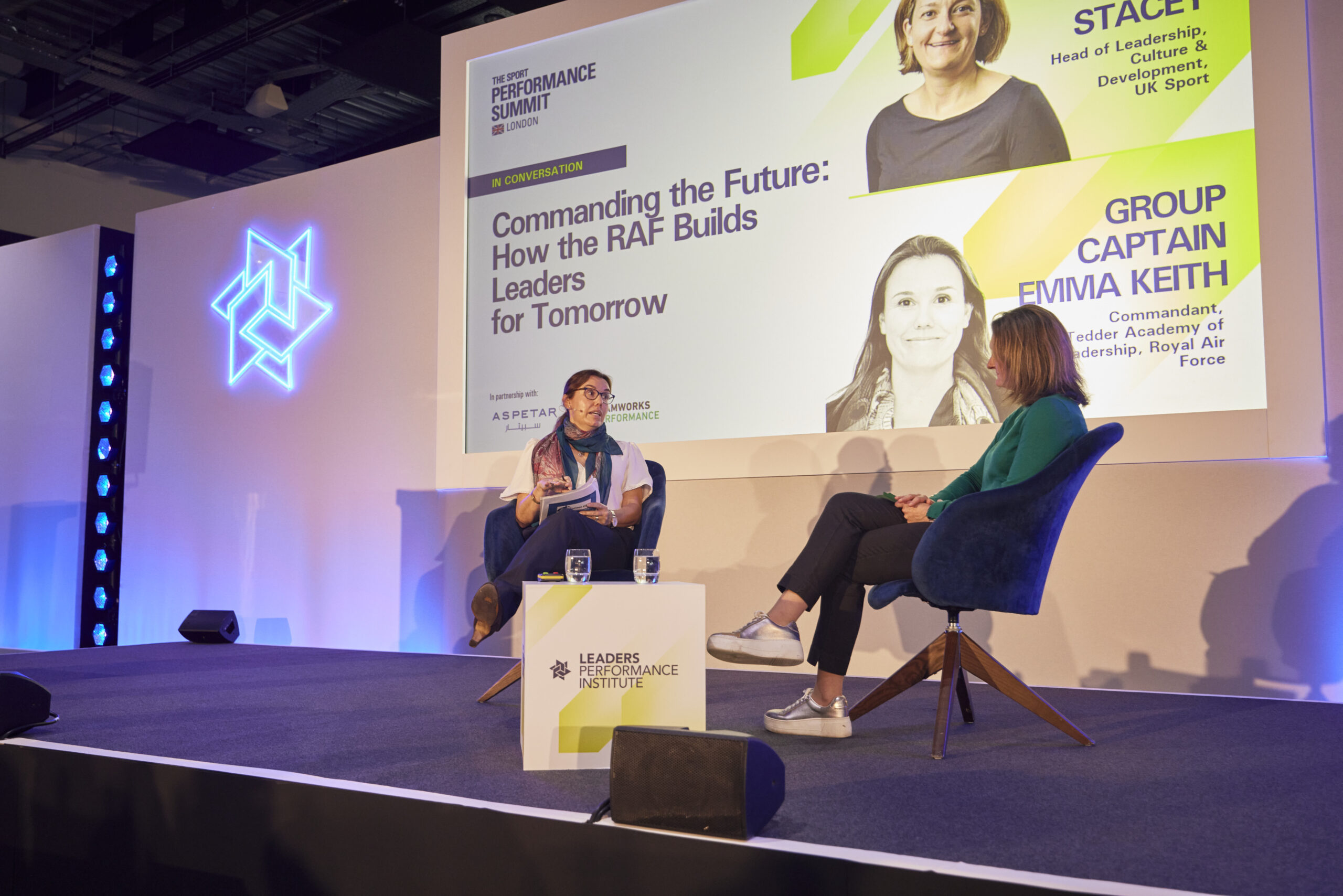
The RAF’s Emma Keith onstage at the 2025 Leaders Sport Performance Summit in London. (Leaders)
What’s coming up for members
In a recent Leaders Virtual Roundtable, performance specialist Iain Brunnschweiler led a discussion on strategies more effective learning. We pick out ten below.
With those words host Iain Brunnschweiler, who runs the Focus Performance Consultancy, set the scene for a virtual roundtable discussion during which Leaders Performance Institute members shared the strategies that have facilitated better individual and organisational learning within their teams.
“There’s definitely something about learning being contagious,” he added in expectation. “If credible, valuable members of staff are going after things deliberately like you are, I’d hope that there’s some sort of contagion within your organisation.”
To start proceedings, Brunnschweiler outlined a four-part model of organisational learning. “This is an unpublished model,” he said of it. “This is the world according to me.”
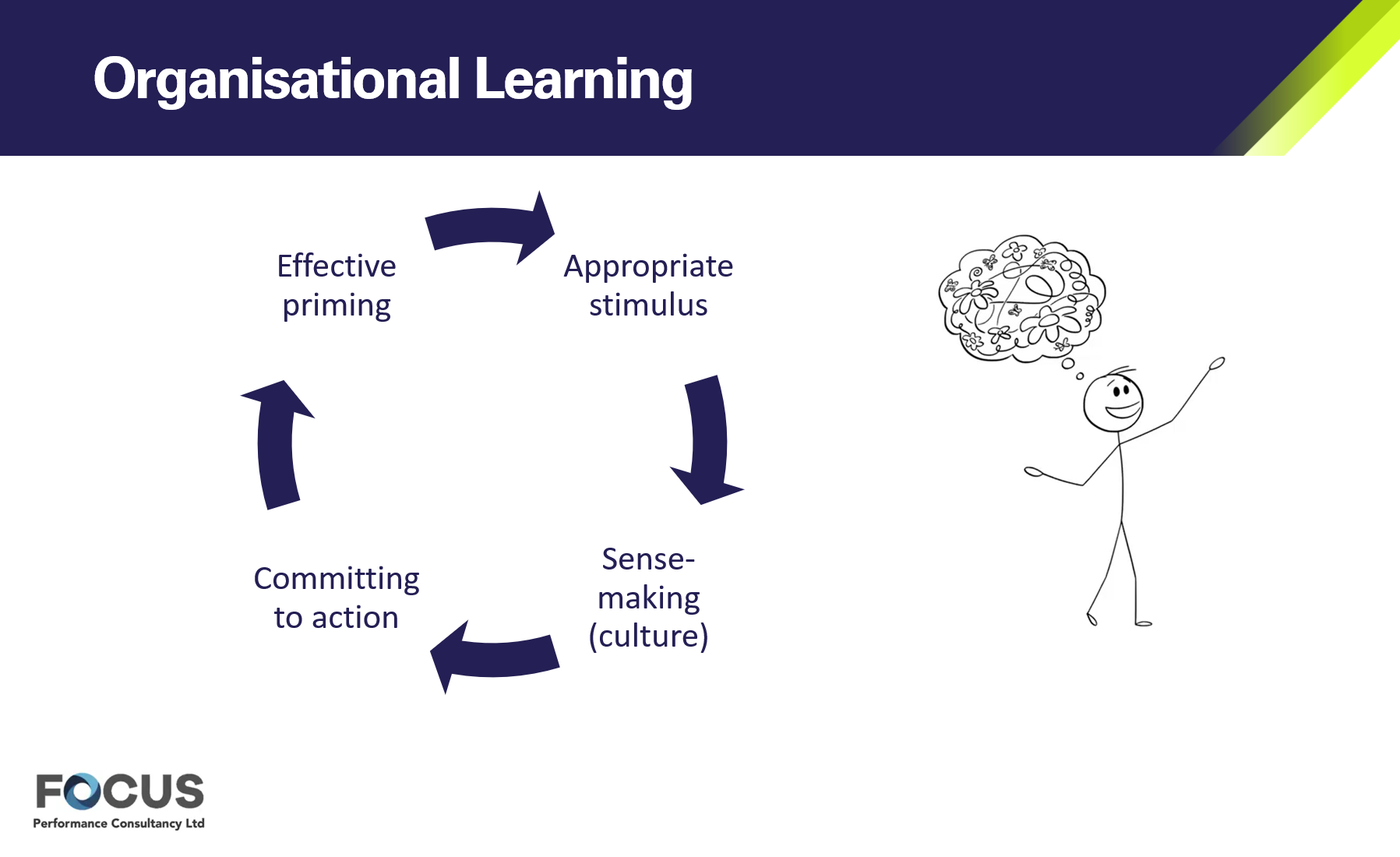
Effective priming
“How can we deliberately set people up for learning? That’s something that I’ve increasingly considered,” said Brunnschweiler, who highlighted one-to-one conversations with staff members as a way to identify their aspirations and their motivations.
Appropriate stimulus
“How do we provide a stimulus to create thought in aspirational people?” In a previous role, Brunnschweiler implemented weekly 30-minute meetings with staff members. He also enlisted external speakers and asked individuals to present on a teaching project.
Sense-making (culture)
“If within your organisational culture there are people and spaces that allow you to have conversations, check and challenge your thinking, that is a really good way of helping the learning to land,” said Brunnschweiler, while emphasising the cultural dynamic.
Committing to action
“Often,” Brunnschweiler said, “the greatest risk here is that we have a brilliant conversation, and then we do nothing about it’. How do we commit to something that’s going to make some sort of change, whether it’s small or large?”
The group then shared ten strategies to encourage more effective individual and organisational learning:
1. Give staff members the freedom to explore learning
“If we want to happy or we want to have happy staff, we need to give them some freedom,” said a sports scientist working in the major US leagues. “And if we want them to be free, then we have to encourage them to be courageous and pursue what they want to have and what they want to do.”
Brunnschweiler said:
“A learning culture starts with recruitment… can we keep shifting that culture by recruiting naturally curious and hungry people and maintain momentum.”
2. Hunger for learning must be role-modelled from the top
Often, staff members are eager to learn, as a psychologist working in the US college system observed, “but having leadership model this is so key”. Only then will staff members carve out the time, as he said:
“If your staff members don’t feel like they have the grace and space to allocate time in the day they’re going to say, ‘I have to do this,’ or ‘I have a meeting’ instead.”
3. Understand people’s motivations
If you can understand someone’s motivations or aspirations then you have an anchor for a conversation about their development. Brunnschweiler explained that it is important to focus on those who want to learn, not those who don’t. He said:
“Some people have little appetite for self-development. And I think we have to be cognisant of our own energy… and accepting of that fact.”
4. Create individual development plans for staff members
The aforementioned psychologist made a convincing case for staff IDPs. He said:
“We talk so much about player development plans, but do we truly have staff development plans, like, ‘here’s where you are, here’s where you can go, here are the gaps to be filled’?”
5. Place staff on secondments when possible
“We don’t put barriers in the way of our people going out on secondment,” said a director of cricket in the English game, where the season is not a 12-month schedule. This is, as Brunnschweiler observed, a cost-effective way of bringing IP back into the building. He said:
“How can we be resourceful? Can we create opportunities for people to visit places and return with knowledge without spending money?”
6. Find your critical friends
Sense-making can be difficult, but sometimes it just takes opening your phonebook. A call with a critical friend is what Brunnschweiler calls a “micro sense-making space”. He said:
“I’ve accrued a small network of people who, for example, when I’m driving, I just phone them up and I know they’ll challenge my thinking and that I’ll learn from that conversation.”
7. Learn from failures
“I’m far more interested in the failures,” said a physiotherapist at a globally renowned organisation. “When my team see me talk about failures, when things have gone wrong, that makes people listen a bit more; and I often think we should prep to fail. Are we ready to fail, so that if we fail, we can look back and say, ‘okay, we did everything we wanted to do?’” Brunnschweiler agreed, adding:
“It’s a good sign if you’ve lost and a staff team are reviewing and reflecting on it and they’re genuinely unpicking and they’re able to call each other out or go, ‘do you know what, I messed up today’. That is a real signature of a place that wants to get better.”
8. Importance of managerial vulnerability
Leaders can role-model learning, but they can also demonstrate vulnerability.
“If you can put your hands up and say, ‘I made a mistake’, that sets the culture, it sets the environment,” said a physiotherapist working in Australian sport. In building on that point, the physiotherapist from No 7 said:
“If we can guarantee that removal of blame, it will encourage us to talk about what we can learn.”
9. Job security
It sounds obvious, but managerial vulnerability goes hand in hand with job security.
“In a fast‑paced environment there is more chance of people getting sacked. I think this could be almost correlated to your hunger for learning,” said the physiotherapist based in Australia. “You might just sit there, be quiet, go insular, and just tick our day‑to‑day off – you don’t want to put your neck out there.” He has witnessed the impact of leaders reiterating that people’s jobs are safe.
“When you are told people aren’t just going to get sacked, it creates the environment for learning.”
10. Appoint a dedicated staff member for learning
“I’ve never worked somewhere that’s had a dedicated head of learning,” said an analyst working in Middle Eastern football. “It always falls on line managers and it’s hit and miss.” Brunnschweiler agreed and added:
“How does any organisation ensure that a PDR process is not just some tick-box exercise, but there’s genuine validity in what you’re going after, what you’re going to commit to, and then it’s followed up on?”
What to read next
Team standards, the price you pay for poorly delivering feedback, psychology and innovation have all been on the Leaders Performance Institute agenda these past two months.
Michael Maguire’s team were behind at half-time in every game of the finals series but came back to beat the Canberra Raiders (the minor premiers) in the qualifying and elimination finals; they over-turned another half-time deficit to beat the Penrith Panthers in the preliminary finals; and lightning struck thrice in the Grand Final when they faced a 22-12 deficit at the interval.
“I didn’t have to say too much at half-time. I just said to them ‘your best half is about to come’, because we have come from behind over the last month. I said if you go and do that, we win the game,” said Maguire – a former speaker at the Leaders Sport Performance Summit – after the Grand Final.
This was a team whose belief in their ability was forged in adversity. Maguire stuck by his players at tricky moments during the season. At times, following a run of poor results, it seemed unlikely that the club would challenge for its first NRL premiership since 2006.
“I remember Madge’s passion and him sticking up for us midway through the year when we were getting rinsed through the media about the way we go about things, but the care he has for us, no one knows outside the club,” said fullback Reece Walsh.
“The way he looks after us as people, the way he looks after our partners, there is nothing more we could ask for. He demands a lot, as he should demand a lot – we have just won a comp.”
Both Maguire and Walsh hint at the ingredients for high performance – empathetic leadership, high standards and mutual trust – that underpinned the agenda at the Leaders Performance Institute in recent weeks.
Below, we give a flavour of the conversations that commanded attention during that time.
‘The standard you walk past is the standard you accept’
Maguire was in attendance at the Leaders Sport Performance Summit in November where the Broncos appeared onstage courtesy of General Manager Troy Thomson.
We also heard from rugby’s other code, rugby union, as England’s former fullback Emily Scarratt and Red Roses Head Coach John Mitchell explained how the Women’s Rugby World Cup was won; before that, Johann van Graan delved into the transformation he led at English Premiership champions Bath Rugby.
Nestled in between was an inspired presentation by Emma Keith, a group captain, who is the first female to run Royal Air Force officer training.
Hers, much like Maguire’s, was a message of empowerment rooted in accountability and care. She said:
“The standard you walk past is the standard that you accept. That can be poor infrastructure that you don’t report; it could be poor behaviour. If you walk past it, you’re saying it’s okay. And that’s a slow rot from within.”
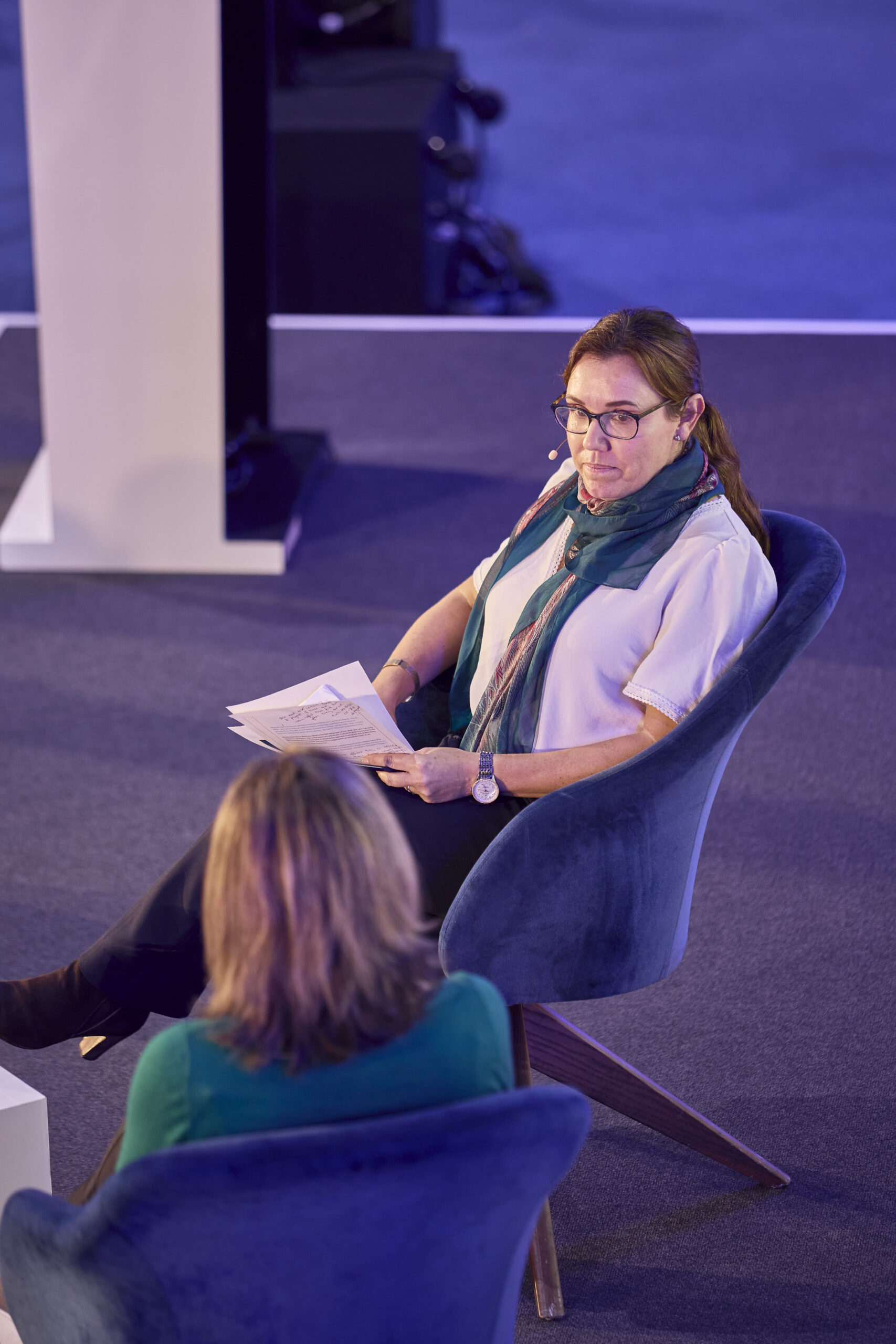
Group Captain Emma Keith talks to UK Sport’s Alex Stacey following her presentation on officer training in the Royal Air Force.
Read more from the summit here.
The price you pay for poorly delivering feedback
“In terms of feedback, we’re quite basic creatures,” said Simon Eastwood. “We will react and respond instinctively to what we perceive as threat or reward.”
As Eastwood, the Head of Leadership Skills at Management Futures, explained, the wrong word, tone, timing or even body language from a coach can trigger a negative reaction when giving an athlete feedback.
Eastwood hosted a virtual roundtable aimed at helping coaches and practitioners to improve how they deliver feedback.
He shared a number of tools on the day, including the SCARF model.
This framework, devised by neuroscientist David Rock, explains five domains that influence human social behaviour and motivation. SCARF stands for:
“It’s a great tool for stepping back and assessing your team and thinking about what really makes them tick,” said Eastwood. “Crucially, it’s not about avoiding that feedback.”
He suggested that leaders should reward these needs through feedback, so people feel valued and motivated rather than threatened and, to illustrate his point, presented a table that set out what ‘threat’ and ‘reward’ may look like in each domain:
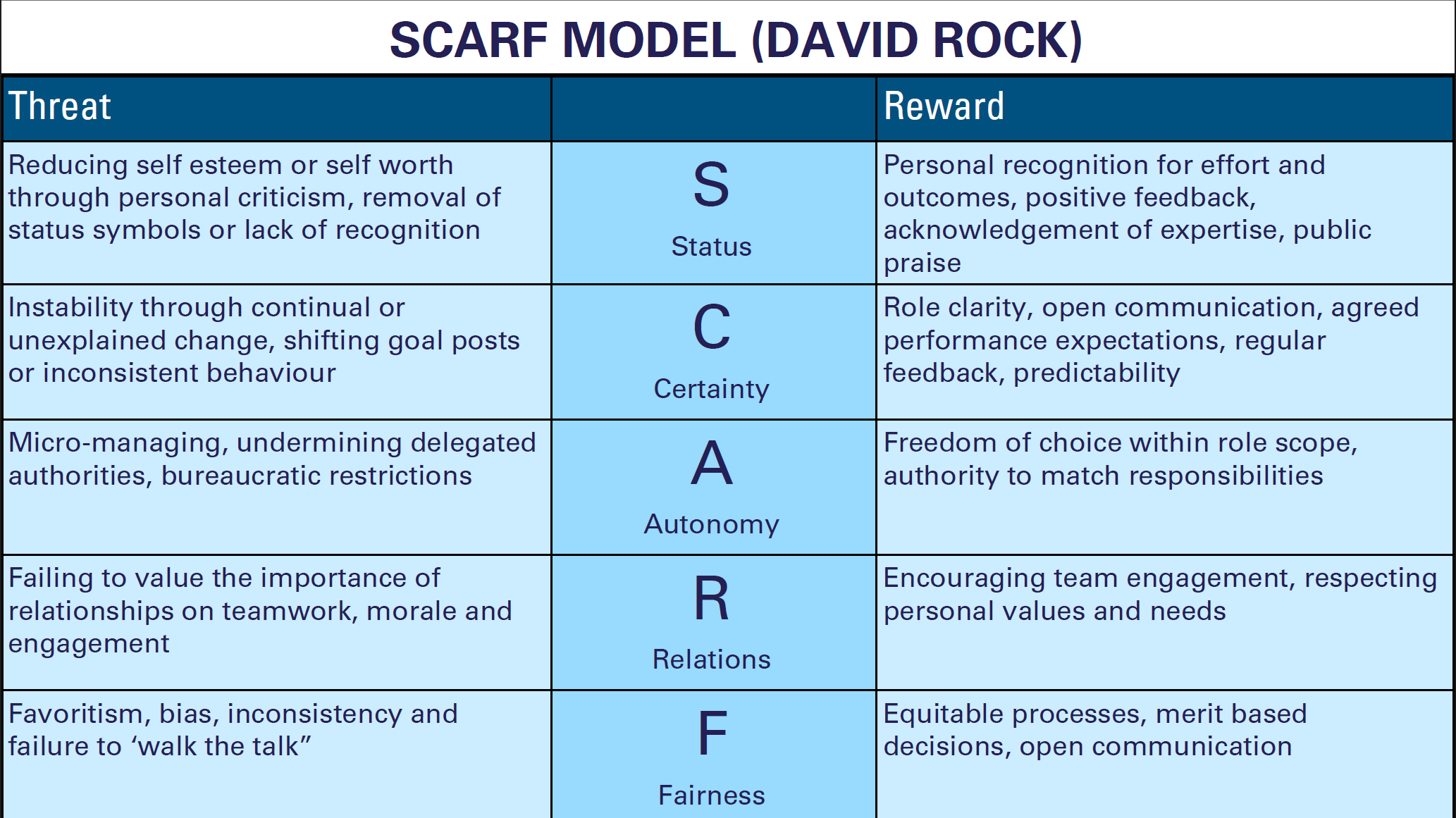
Eastwood then posed a question: “When giving positive feedback, which elements do you find most need to be reinforced?”
Leaders Performance Institute members can read more here.
The evolving work of the psychologist
Elsewhere, Dr David Fletcher, a Professor of Human Performance and Health at Loughborough University, and Dr Danielle Adams Norenberg, the Head of Psychology at the UK Sports Institute co-hosted a roundtable on the evolving role of the psychologist.
They outlined two ways in which a psychologist may be a useful asset for the head coach:
1. The development of the coach’s leadership skillset
A psychologist, Fletcher explained, can help a coach to develop their “time management skills, body language, and communication skills” in the pursuit of better performance.
By the same token, psychologists have been instrumental in facilitating a shift from deficit-based to strengths-based coaching. Adams Norenberg said: “Even if planted within a very generic training session, athletes have the self-awareness, knowledge and autonomy to make the most out of their training session by focusing on developing their strengths.”
2. The development of their psychology skills
Psychology is another string in a coach’s bow. If they understand the types of pressures that athletes experience they can “choose a particular training session to not necessarily develop technique or tactical skills, but psychology skills.” Adams Norenberg cited the example of the VR headsets used in training by Team Europe ahead of the 2025 Ryder Cup. Some players simulated the spectator abuse they would endure at Bethpage Black; others used it not for pressure training but relaxation, such as the Norwegian Viktor Hovland, who recreated the fjords of his homeland.
Leaders Performance Institute members can read more here.
True innovation must have an impact… but what is innovation?
Fabio Serpiello, the Director of Sport Strategy at Central Queensland University, posed this very question at a recent virtual roundtable.
He argues that teams should alight on a shared definition; one that does not conflate the concept with ‘creativity’. (Creativity, as Serpiello explained, is the outcome of an ideation phase, while innovation covers the execution and eventual impact of an idea.)
Then, he made the case that when teams have an agreed definition of what ‘innovation’ means to them then it offers a “clear way to approach and analyse whether the innovation processes in your organisations work or not.”
Greg Satell’s Model of Innovation
Innovation, Serpiello argues, also comes in several shapes and forms depending on the nature of the problem. To make his point, he introduced renowned change management specialist Greg Satell’s Model of Innovation, which provides a practical framework for introducing innovative practices, encourages strategic thinking about problems and helps to facilitate better collaboration.
He presented a diagram of Satell’s model to the table:
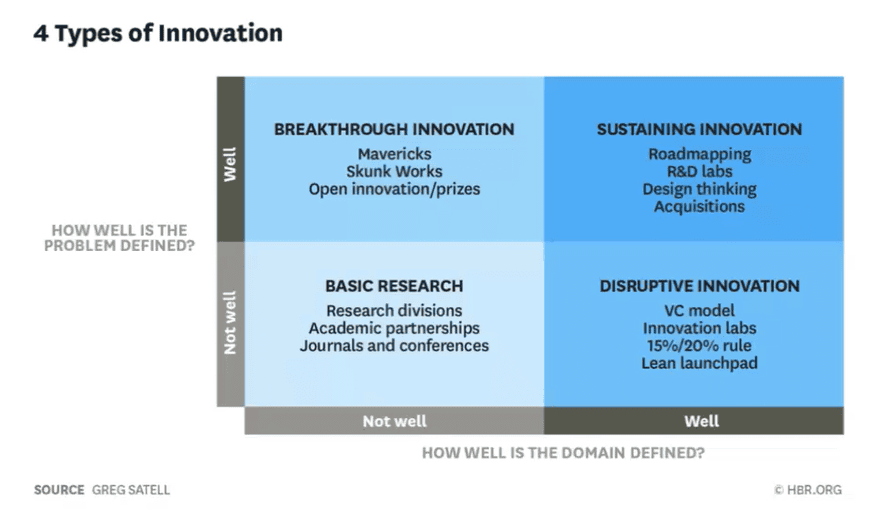
Serpiello then shared his thoughts on each quadrant:
Basic research – a low understanding of both domain and problem: “We don’t really know what the problem is and we don’t really know in which field or area it happens.”
Disruptive innovation – a well-understood domain but poorly understood problem: “In this area you may need something like innovation labs or launch pads.”
Breakthrough innovation – a poorly understood domain but well-defined problem: “This is the reverse of disruptive innovation… the classic example of open innovation.”
Sustaining innovation – a well-understood domain and problem: “The most common form in sport [and often the subject of] continuous research, design thinking or road mapping.”
Leaders Performance Institute members can read more here.
John Bull of Management Futures outlines what it takes to deliver coordinated efforts within a team.
“When you get everyone in a system pushing in the same direction, it can have a multiplier effect. The momentum of each person’s efforts building on each other,” said John Bull, the Director & Lead for High Performance Research at Management Futures.
“It is,” as he adds, “a key area of performance at which we can all get better.”
In his online presentation for members of the Leaders Performance Institute, Bull outlined the common obstacles as well as steps all teams can take to get better at coordinating their efforts.
How alignment affects performance
Alignment – the coordinated efforts of a team – takes several forms. Each has different implications for performance outcomes.
Bull illustrated some of those differences using mathematical symbols (and idea lifted directly from Ineos’s Sir Dave Brailsford).
In an ideal world, each stakeholder’s efforts would multiply the others in this fashion:

“One person’s talent is building on and adding,” says Bull. “The multiplication becomes exponential.”
He used the analogy of a group of people pushing a car up a hill. “It’s also about timing. Are we pushing at exactly the right time, which is really what the multiplication symbol is because you get this amplifier effect.”
Additions are more commonly found, but it’s not true alignment:

“What I would mean by a plus is that two parts of the organisation are still moving in the same direction, still aiming at the same goal, but it’s not joined up. It’s independent activity,” said Bull. “They’re still adding their talent, so it’s still a positive contribution, but you’re not getting that momentum multiplier effect. And we all know what that feels like.”
The risk is that subtractions or divisions rear their ugly head:

“If you’ve got two parts of the organisation with very different interpretations of the strategy, you have it taking away from each other,” said Bull of the subtraction.
As for the division symbol, “that would be where, politically, you’re starting to get factions, briefing to the media, or people actively recruiting allies against another part of the organisation. Or sometimes where you have a board or owner deliberately undermining the coach.”
If teams are to achieve the multiplier effect, Bull highlighted five critical considerations:
1. Who?
Who are you trying to align and what different talents can you bring to bear on a problem? Be sure to involve all relevant parties, including those who may be excluded for fear that they will be distracted.
2. What are you trying to achieve and by when?
Misalignment often arises not from disagreement on the goal itself, but on the timeline and resources needed to achieve it.
3. Alignment on strategy i.e. the ‘how’
The distinction between strategy (high-level direction) and tactics (specific applications) is not always understood.
4. Ways of working
Alignment is an outcome of agreed processes of communication, collaboration and decision-making.
5. Vertical and horizontal dimensions
While vertical alignment (e.g. between board and coach) attracts a lot of focus, horizontal alignment between departments or teams underpins a truly joined-up approach.
Bull then highlighted some common tensions:
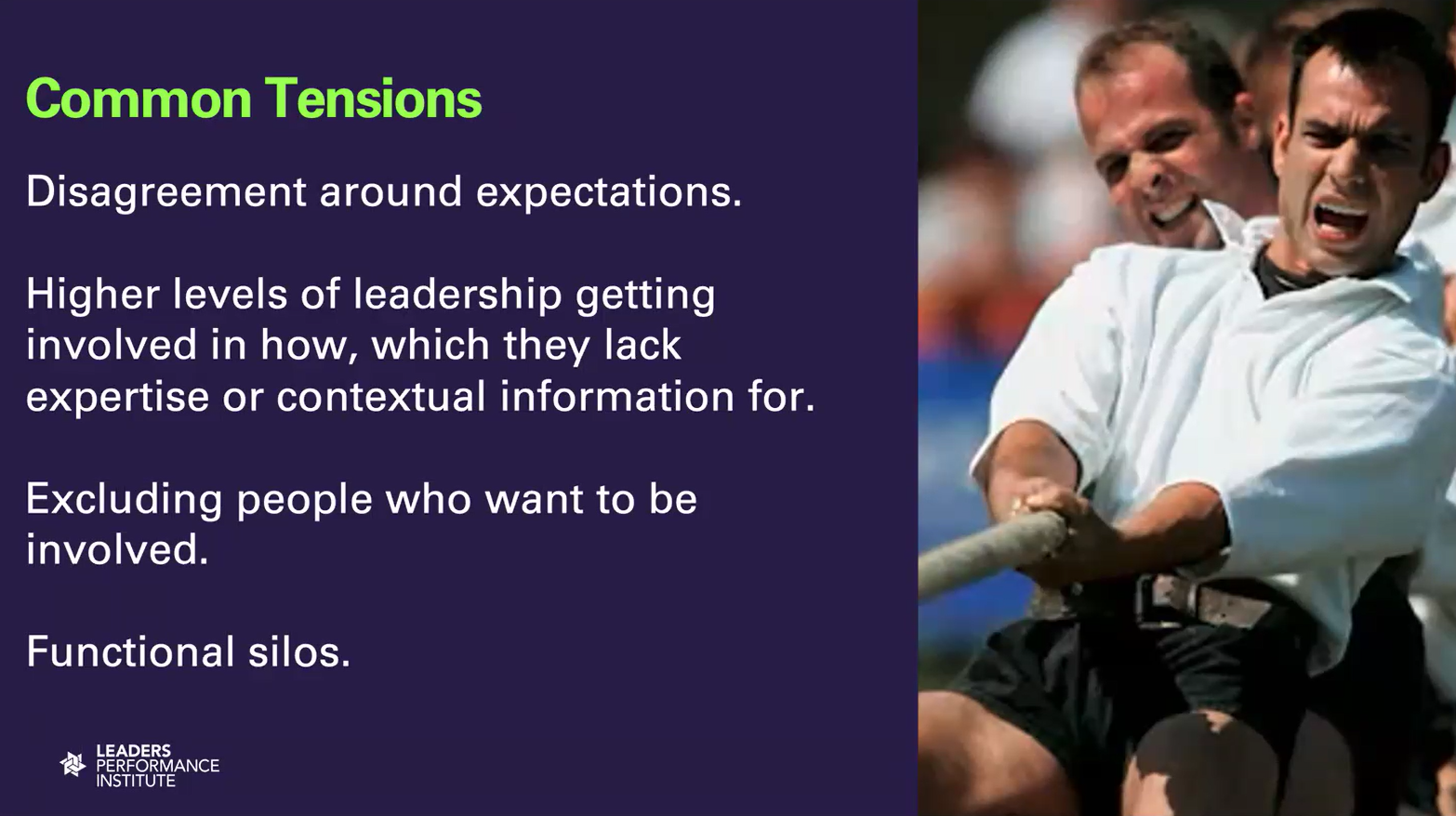
He said: “The reason I want to share these is to highlight where you might go for opportunities for improvement. Where do you see the opportunities for improvement in your environment and what’s your role in that? Where can you make a difference?”
The same goes for tests of alignment:
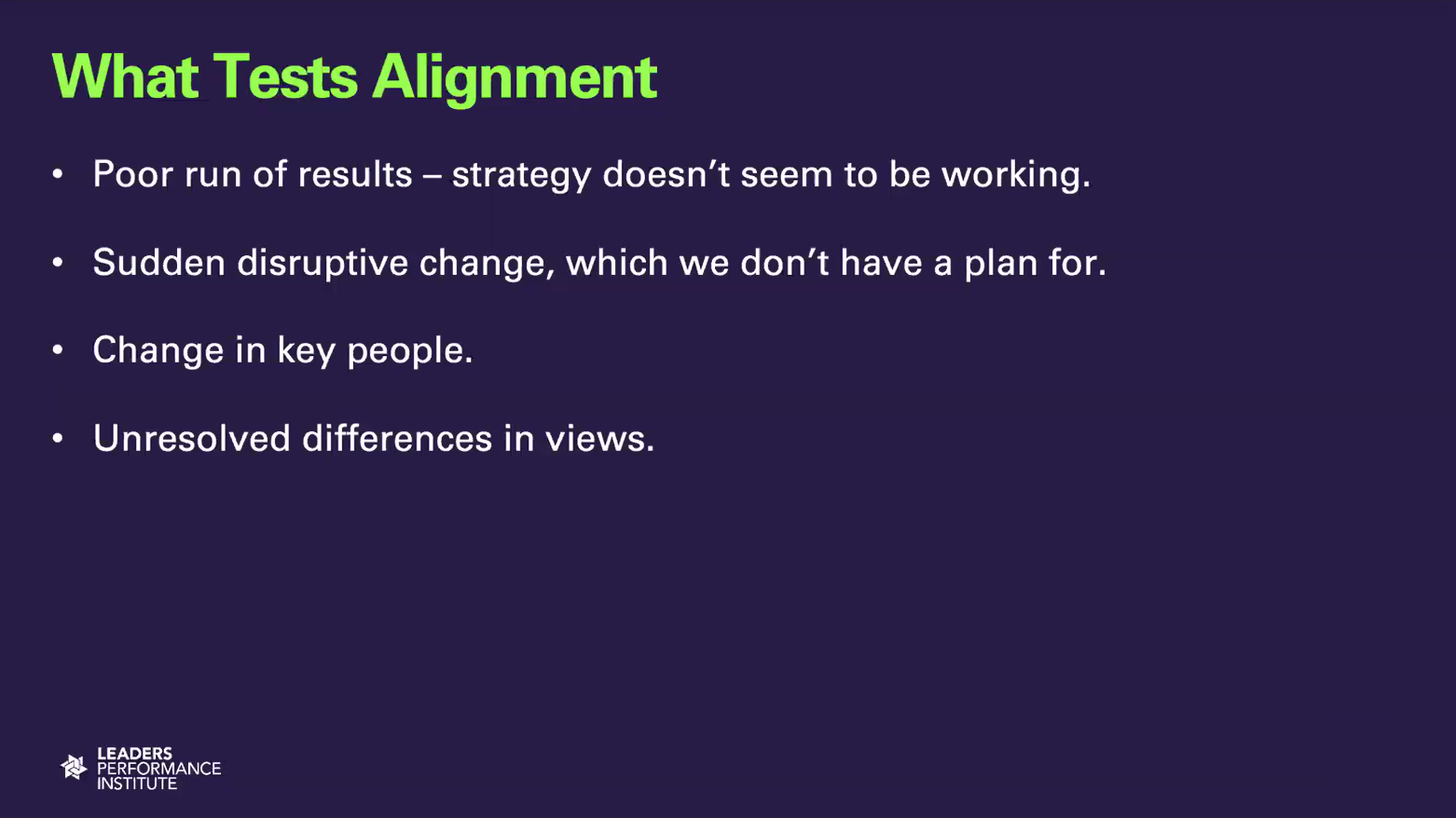
Each type of test presents opportunities to strengthen systems through reflection, planning and proactive leadership if you’re minded to look.
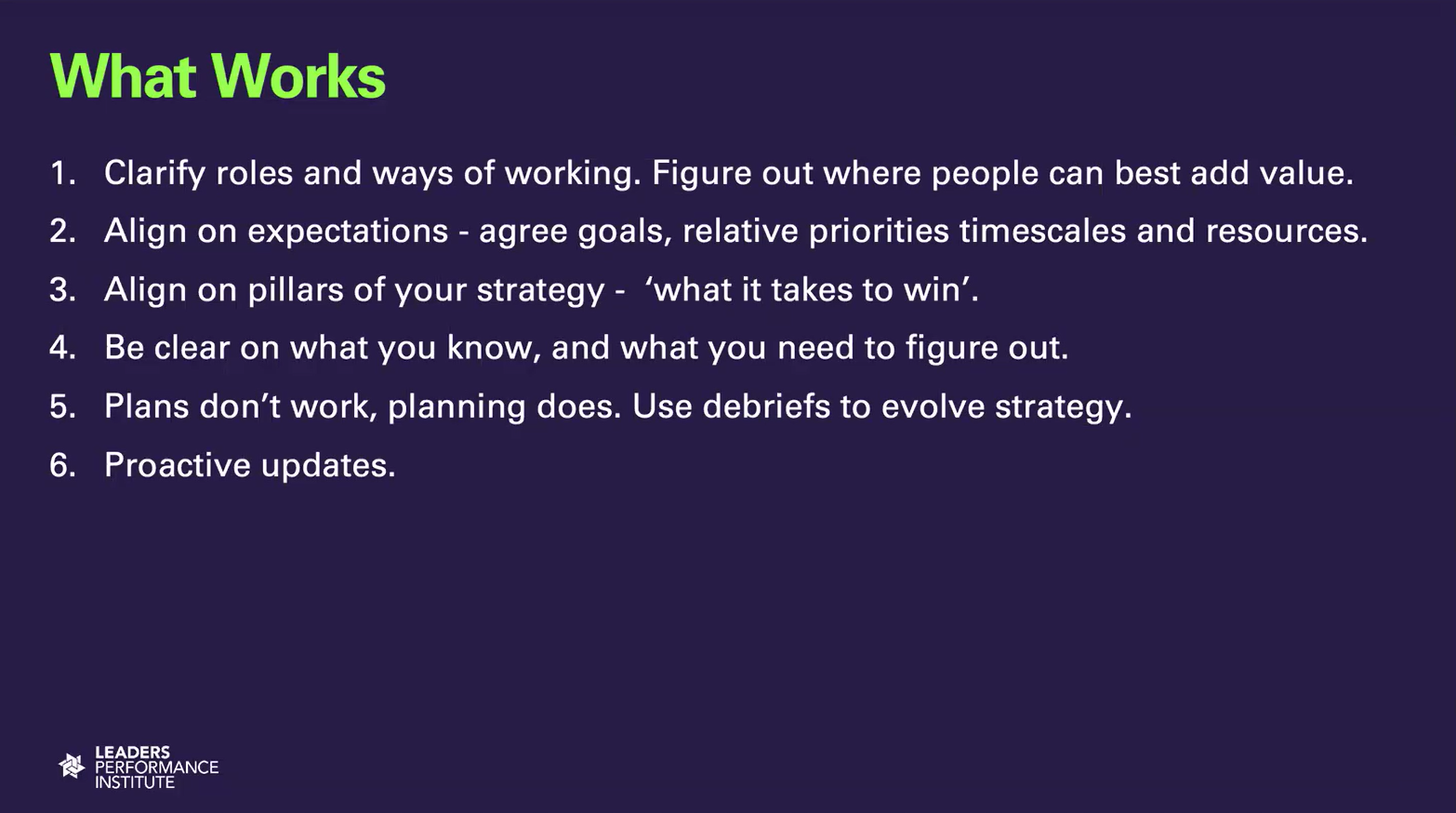
What actually works?
Bull suggested several methods for Leaders Performance Institute members to mull over:
What to read next
Do you Feel your Team Has Plenty of Clarity But Still Suffers from Misalignment?