In a recent Leaders Virtual Roundtable, performance specialist Iain Brunnschweiler led a discussion on strategies more effective learning. We pick out ten below.
With those words host Iain Brunnschweiler, who runs the Focus Performance Consultancy, set the scene for a virtual roundtable discussion during which Leaders Performance Institute members shared the strategies that have facilitated better individual and organisational learning within their teams.
“There’s definitely something about learning being contagious,” he added in expectation. “If credible, valuable members of staff are going after things deliberately like you are, I’d hope that there’s some sort of contagion within your organisation.”
To start proceedings, Brunnschweiler outlined a four-part model of organisational learning. “This is an unpublished model,” he said of it. “This is the world according to me.”
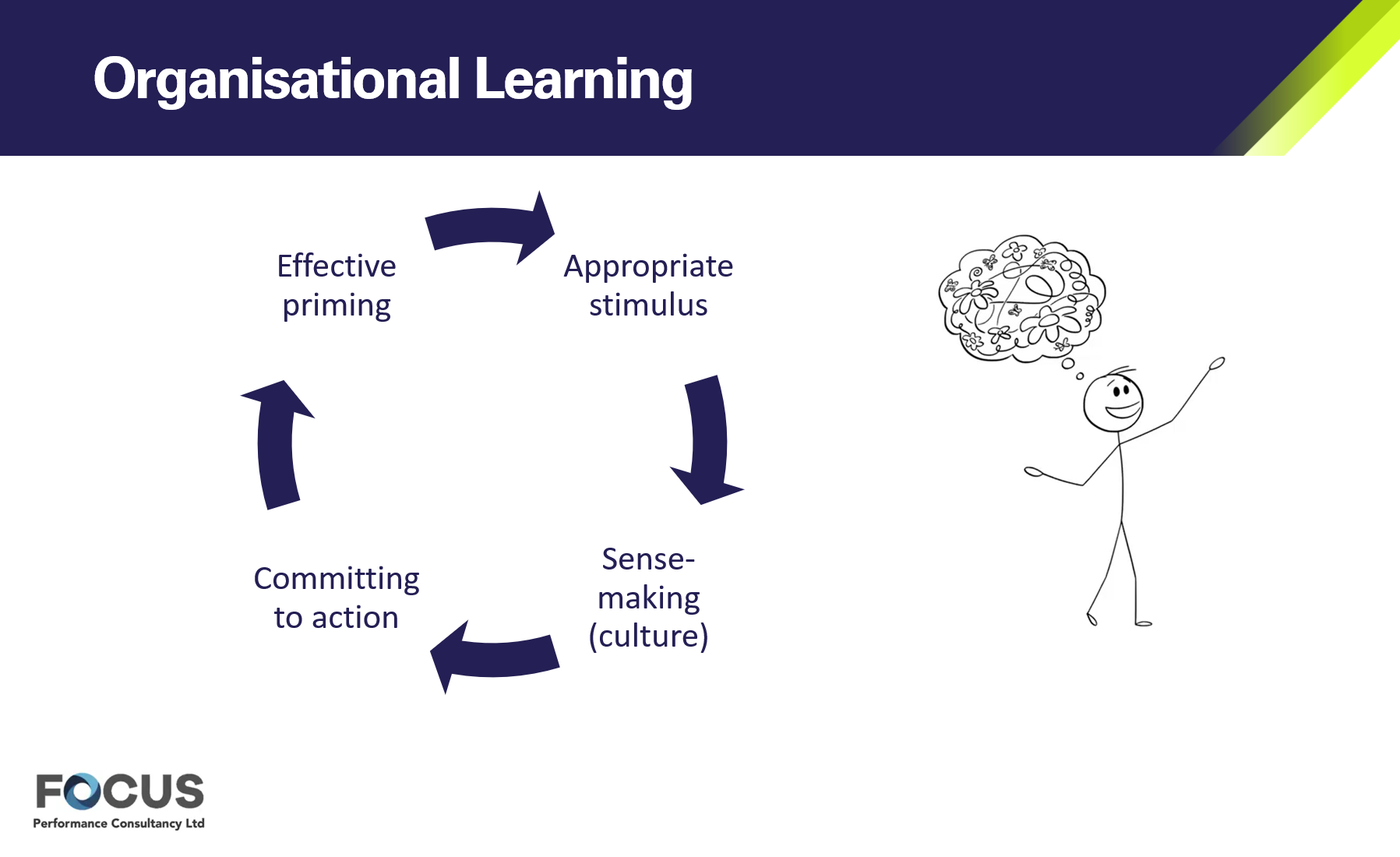
Effective priming
“How can we deliberately set people up for learning? That’s something that I’ve increasingly considered,” said Brunnschweiler, who highlighted one-to-one conversations with staff members as a way to identify their aspirations and their motivations.
Appropriate stimulus
“How do we provide a stimulus to create thought in aspirational people?” In a previous role, Brunnschweiler implemented weekly 30-minute meetings with staff members. He also enlisted external speakers and asked individuals to present on a teaching project.
Sense-making (culture)
“If within your organisational culture there are people and spaces that allow you to have conversations, check and challenge your thinking, that is a really good way of helping the learning to land,” said Brunnschweiler, while emphasising the cultural dynamic.
Committing to action
“Often,” Brunnschweiler said, “the greatest risk here is that we have a brilliant conversation, and then we do nothing about it’. How do we commit to something that’s going to make some sort of change, whether it’s small or large?”
The group then shared ten strategies to encourage more effective individual and organisational learning:
1. Give staff members the freedom to explore learning
“If we want to happy or we want to have happy staff, we need to give them some freedom,” said a sports scientist working in the major US leagues. “And if we want them to be free, then we have to encourage them to be courageous and pursue what they want to have and what they want to do.”
Brunnschweiler said:
“A learning culture starts with recruitment… can we keep shifting that culture by recruiting naturally curious and hungry people and maintain momentum.”
2. Hunger for learning must be role-modelled from the top
Often, staff members are eager to learn, as a psychologist working in the US college system observed, “but having leadership model this is so key”. Only then will staff members carve out the time, as he said:
“If your staff members don’t feel like they have the grace and space to allocate time in the day they’re going to say, ‘I have to do this,’ or ‘I have a meeting’ instead.”
3. Understand people’s motivations
If you can understand someone’s motivations or aspirations then you have an anchor for a conversation about their development. Brunnschweiler explained that it is important to focus on those who want to learn, not those who don’t. He said:
“Some people have little appetite for self-development. And I think we have to be cognisant of our own energy… and accepting of that fact.”
4. Create individual development plans for staff members
The aforementioned psychologist made a convincing case for staff IDPs. He said:
“We talk so much about player development plans, but do we truly have staff development plans, like, ‘here’s where you are, here’s where you can go, here are the gaps to be filled’?”
5. Place staff on secondments when possible
“We don’t put barriers in the way of our people going out on secondment,” said a director of cricket in the English game, where the season is not a 12-month schedule. This is, as Brunnschweiler observed, a cost-effective way of bringing IP back into the building. He said:
“How can we be resourceful? Can we create opportunities for people to visit places and return with knowledge without spending money?”
6. Find your critical friends
Sense-making can be difficult, but sometimes it just takes opening your phonebook. A call with a critical friend is what Brunnschweiler calls a “micro sense-making space”. He said:
“I’ve accrued a small network of people who, for example, when I’m driving, I just phone them up and I know they’ll challenge my thinking and that I’ll learn from that conversation.”
7. Learn from failures
“I’m far more interested in the failures,” said a physiotherapist at a globally renowned organisation. “When my team see me talk about failures, when things have gone wrong, that makes people listen a bit more; and I often think we should prep to fail. Are we ready to fail, so that if we fail, we can look back and say, ‘okay, we did everything we wanted to do?’” Brunnschweiler agreed, adding:
“It’s a good sign if you’ve lost and a staff team are reviewing and reflecting on it and they’re genuinely unpicking and they’re able to call each other out or go, ‘do you know what, I messed up today’. That is a real signature of a place that wants to get better.”
8. Importance of managerial vulnerability
Leaders can role-model learning, but they can also demonstrate vulnerability.
“If you can put your hands up and say, ‘I made a mistake’, that sets the culture, it sets the environment,” said a physiotherapist working in Australian sport. In building on that point, the physiotherapist from No 7 said:
“If we can guarantee that removal of blame, it will encourage us to talk about what we can learn.”
9. Job security
It sounds obvious, but managerial vulnerability goes hand in hand with job security.
“In a fast‑paced environment there is more chance of people getting sacked. I think this could be almost correlated to your hunger for learning,” said the physiotherapist based in Australia. “You might just sit there, be quiet, go insular, and just tick our day‑to‑day off – you don’t want to put your neck out there.” He has witnessed the impact of leaders reiterating that people’s jobs are safe.
“When you are told people aren’t just going to get sacked, it creates the environment for learning.”
10. Appoint a dedicated staff member for learning
“I’ve never worked somewhere that’s had a dedicated head of learning,” said an analyst working in Middle Eastern football. “It always falls on line managers and it’s hit and miss.” Brunnschweiler agreed and added:
“How does any organisation ensure that a PDR process is not just some tick-box exercise, but there’s genuine validity in what you’re going after, what you’re going to commit to, and then it’s followed up on?”
What to read next
Team standards, the price you pay for poorly delivering feedback, psychology and innovation have all been on the Leaders Performance Institute agenda these past two months.
Michael Maguire’s team were behind at half-time in every game of the finals series but came back to beat the Canberra Raiders (the minor premiers) in the qualifying and elimination finals; they over-turned another half-time deficit to beat the Penrith Panthers in the preliminary finals; and lightning struck thrice in the Grand Final when they faced a 22-12 deficit at the interval.
“I didn’t have to say too much at half-time. I just said to them ‘your best half is about to come’, because we have come from behind over the last month. I said if you go and do that, we win the game,” said Maguire – a former speaker at the Leaders Sport Performance Summit – after the Grand Final.
This was a team whose belief in their ability was forged in adversity. Maguire stuck by his players at tricky moments during the season. At times, following a run of poor results, it seemed unlikely that the club would challenge for its first NRL premiership since 2006.
“I remember Madge’s passion and him sticking up for us midway through the year when we were getting rinsed through the media about the way we go about things, but the care he has for us, no one knows outside the club,” said fullback Reece Walsh.
“The way he looks after us as people, the way he looks after our partners, there is nothing more we could ask for. He demands a lot, as he should demand a lot – we have just won a comp.”
Both Maguire and Walsh hint at the ingredients for high performance – empathetic leadership, high standards and mutual trust – that underpinned the agenda at the Leaders Performance Institute in recent weeks.
Below, we give a flavour of the conversations that commanded attention during that time.
‘The standard you walk past is the standard you accept’
Maguire was in attendance at the Leaders Sport Performance Summit in November where the Broncos appeared onstage courtesy of General Manager Troy Thomson.
We also heard from rugby’s other code, rugby union, as England’s former fullback Emily Scarratt and Red Roses Head Coach John Mitchell explained how the Women’s Rugby World Cup was won; before that, Johann van Graan delved into the transformation he led at English Premiership champions Bath Rugby.
Nestled in between was an inspired presentation by Emma Keith, a group captain, who is the first female to run Royal Air Force officer training.
Hers, much like Maguire’s, was a message of empowerment rooted in accountability and care. She said:
“The standard you walk past is the standard that you accept. That can be poor infrastructure that you don’t report; it could be poor behaviour. If you walk past it, you’re saying it’s okay. And that’s a slow rot from within.”

Group Captain Emma Keith talks to UK Sport’s Alex Stacey following her presentation on officer training in the Royal Air Force.
Read more from the summit here.
The price you pay for poorly delivering feedback
“In terms of feedback, we’re quite basic creatures,” said Simon Eastwood. “We will react and respond instinctively to what we perceive as threat or reward.”
As Eastwood, the Head of Leadership Skills at Management Futures, explained, the wrong word, tone, timing or even body language from a coach can trigger a negative reaction when giving an athlete feedback.
Eastwood hosted a virtual roundtable aimed at helping coaches and practitioners to improve how they deliver feedback.
He shared a number of tools on the day, including the SCARF model.
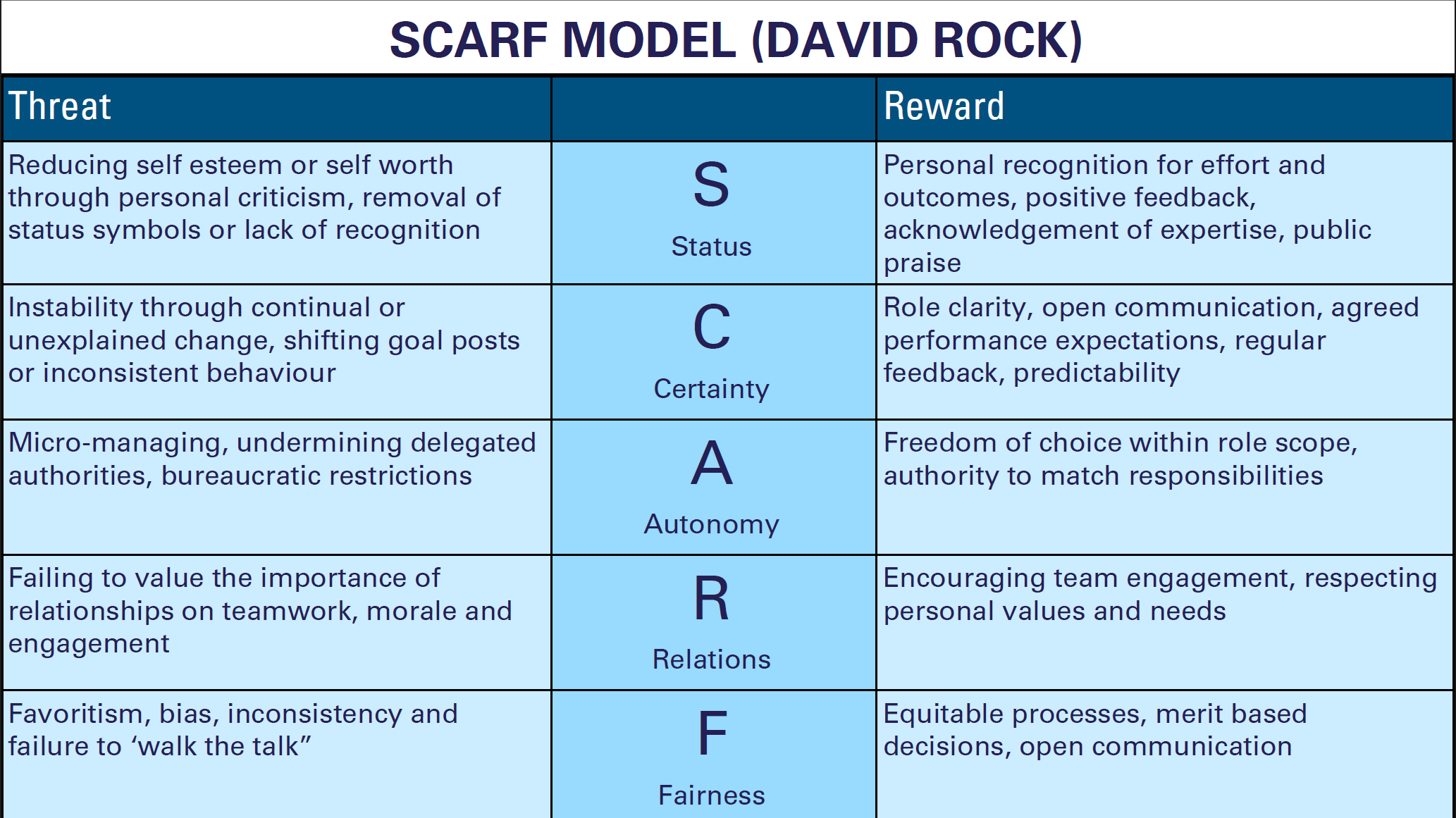
This framework, devised by neuroscientist David Rock, explains five domains that influence human social behaviour and motivation. SCARF stands for:
“It’s a great tool for stepping back and assessing your team and thinking about what really makes them tick,” said Eastwood. “Crucially, it’s not about avoiding that feedback.”
He suggested that leaders should reward these needs through feedback, so people feel valued and motivated rather than threatened and, to illustrate his point, presented a table that set out what ‘threat’ and ‘reward’ may look like in each domain:
Eastwood then posed a question: “When giving positive feedback, which elements do you find most need to be reinforced?”
Leaders Performance Institute members can read more here.
The evolving work of the psychologist
Elsewhere, Dr David Fletcher, a Professor of Human Performance and Health at Loughborough University, and Dr Danielle Adams Norenberg, the Head of Psychology at the UK Sports Institute co-hosted a roundtable on the evolving role of the psychologist.
They outlined two ways in which a psychologist may be a useful asset for the head coach:
1. The development of the coach’s leadership skillset
A psychologist, Fletcher explained, can help a coach to develop their “time management skills, body language, and communication skills” in the pursuit of better performance.
By the same token, psychologists have been instrumental in facilitating a shift from deficit-based to strengths-based coaching. Adams Norenberg said: “Even if planted within a very generic training session, athletes have the self-awareness, knowledge and autonomy to make the most out of their training session by focusing on developing their strengths.”
2. The development of their psychology skills
Psychology is another string in a coach’s bow. If they understand the types of pressures that athletes experience they can “choose a particular training session to not necessarily develop technique or tactical skills, but psychology skills.” Adams Norenberg cited the example of the VR headsets used in training by Team Europe ahead of the 2025 Ryder Cup. Some players simulated the spectator abuse they would endure at Bethpage Black; others used it not for pressure training but relaxation, such as the Norwegian Viktor Hovland, who recreated the fjords of his homeland.
Leaders Performance Institute members can read more here.
True innovation must have an impact… but what is innovation?
Fabio Serpiello, the Director of Sport Strategy at Central Queensland University, posed this very question at a recent virtual roundtable.
He argues that teams should alight on a shared definition; one that does not conflate the concept with ‘creativity’. (Creativity, as Serpiello explained, is the outcome of an ideation phase, while innovation covers the execution and eventual impact of an idea.)
Then, he made the case that when teams have an agreed definition of what ‘innovation’ means to them then it offers a “clear way to approach and analyse whether the innovation processes in your organisations work or not.”
Greg Satell’s Model of Innovation
Innovation, Serpiello argues, also comes in several shapes and forms depending on the nature of the problem. To make his point, he introduced renowned change management specialist Greg Satell’s Model of Innovation, which provides a practical framework for introducing innovative practices, encourages strategic thinking about problems and helps to facilitate better collaboration.
He presented a diagram of Satell’s model to the table:
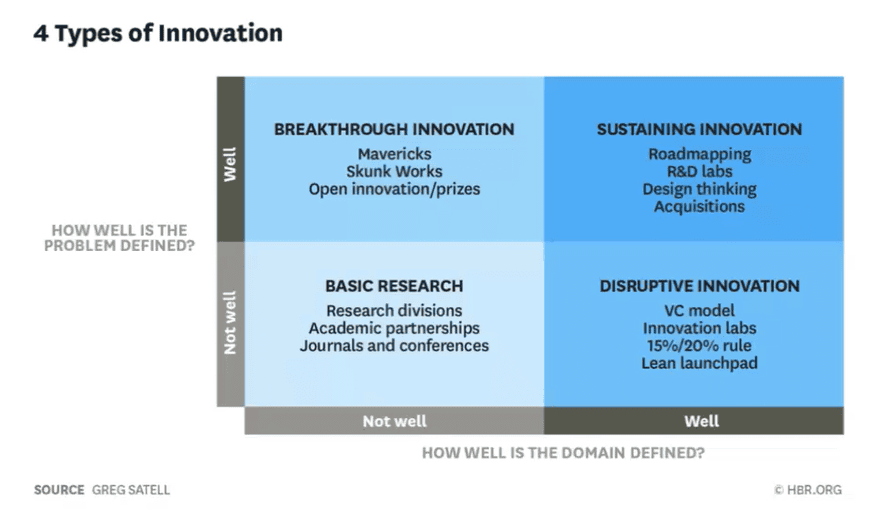
Serpiello then shared his thoughts on each quadrant:
Basic research – a low understanding of both domain and problem: “We don’t really know what the problem is and we don’t really know in which field or area it happens.”
Disruptive innovation – a well-understood domain but poorly understood problem: “In this area you may need something like innovation labs or launch pads.”
Breakthrough innovation – a poorly understood domain but well-defined problem: “This is the reverse of disruptive innovation… the classic example of open innovation.”
Sustaining innovation – a well-understood domain and problem: “The most common form in sport [and often the subject of] continuous research, design thinking or road mapping.”
Leaders Performance Institute members can read more here.
John Bull of Management Futures outlines what it takes to deliver coordinated efforts within a team.
“When you get everyone in a system pushing in the same direction, it can have a multiplier effect. The momentum of each person’s efforts building on each other,” said John Bull, the Director & Lead for High Performance Research at Management Futures.
“It is,” as he adds, “a key area of performance at which we can all get better.”
In his online presentation for members of the Leaders Performance Institute, Bull outlined the common obstacles as well as steps all teams can take to get better at coordinating their efforts.
How alignment affects performance
Alignment – the coordinated efforts of a team – takes several forms. Each has different implications for performance outcomes.
Bull illustrated some of those differences using mathematical symbols (and idea lifted directly from Ineos’s Sir Dave Brailsford).
In an ideal world, each stakeholder’s efforts would multiply the others in this fashion:

“One person’s talent is building on and adding,” says Bull. “The multiplication becomes exponential.”
He used the analogy of a group of people pushing a car up a hill. “It’s also about timing. Are we pushing at exactly the right time, which is really what the multiplication symbol is because you get this amplifier effect.”
Additions are more commonly found, but it’s not true alignment:

“What I would mean by a plus is that two parts of the organisation are still moving in the same direction, still aiming at the same goal, but it’s not joined up. It’s independent activity,” said Bull. “They’re still adding their talent, so it’s still a positive contribution, but you’re not getting that momentum multiplier effect. And we all know what that feels like.”
The risk is that subtractions or divisions rear their ugly head:

“If you’ve got two parts of the organisation with very different interpretations of the strategy, you have it taking away from each other,” said Bull of the subtraction.
As for the division symbol, “that would be where, politically, you’re starting to get factions, briefing to the media, or people actively recruiting allies against another part of the organisation. Or sometimes where you have a board or owner deliberately undermining the coach.”
If teams are to achieve the multiplier effect, Bull highlighted five critical considerations:
1. Who?
Who are you trying to align and what different talents can you bring to bear on a problem? Be sure to involve all relevant parties, including those who may be excluded for fear that they will be distracted.
2. What are you trying to achieve and by when?
Misalignment often arises not from disagreement on the goal itself, but on the timeline and resources needed to achieve it.
3. Alignment on strategy i.e. the ‘how’
The distinction between strategy (high-level direction) and tactics (specific applications) is not always understood.
4. Ways of working
Alignment is an outcome of agreed processes of communication, collaboration and decision-making.
5. Vertical and horizontal dimensions
While vertical alignment (e.g. between board and coach) attracts a lot of focus, horizontal alignment between departments or teams underpins a truly joined-up approach.
Bull then highlighted some common tensions:
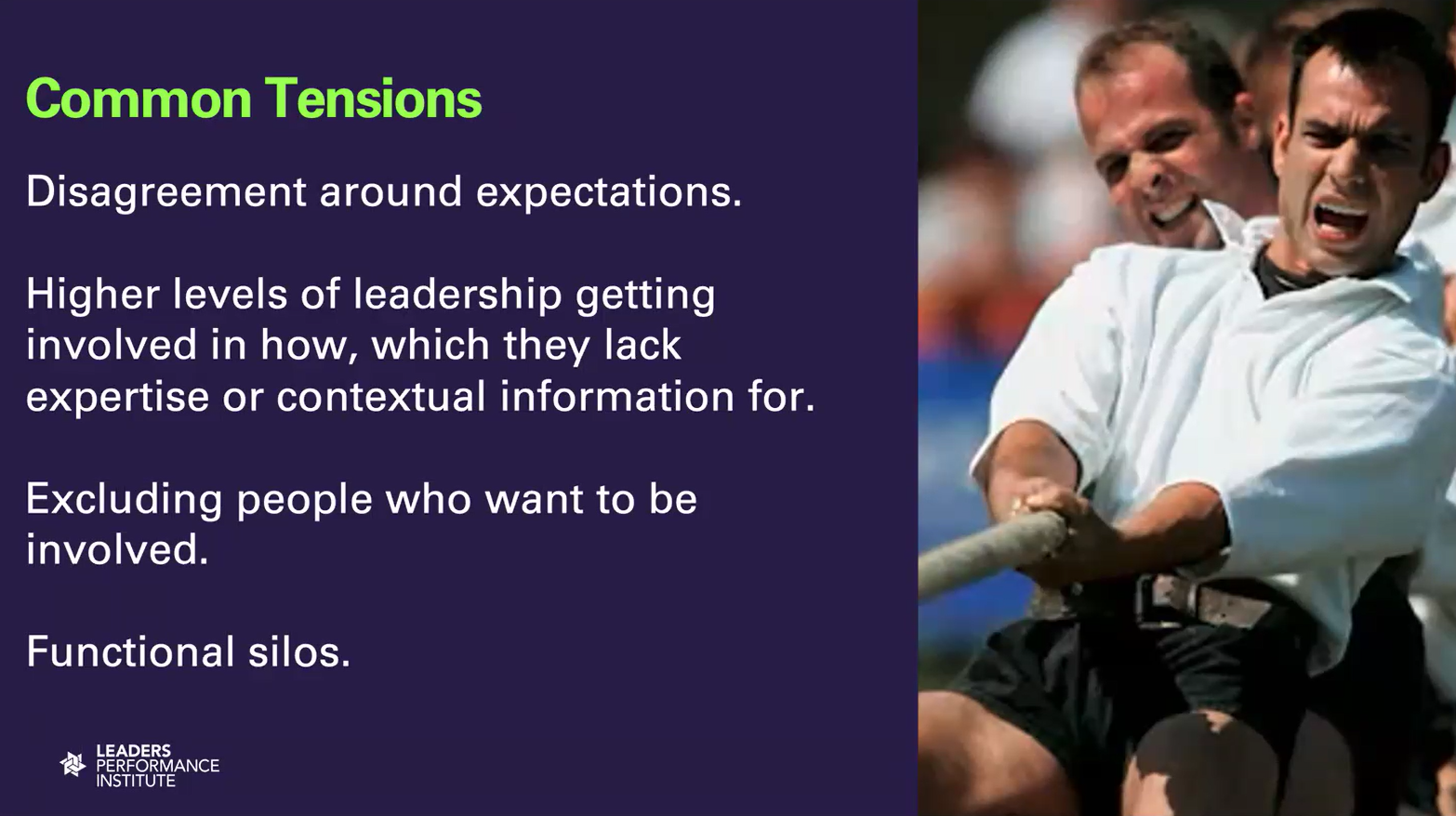
He said: “The reason I want to share these is to highlight where you might go for opportunities for improvement. Where do you see the opportunities for improvement in your environment and what’s your role in that? Where can you make a difference?”
The same goes for tests of alignment:
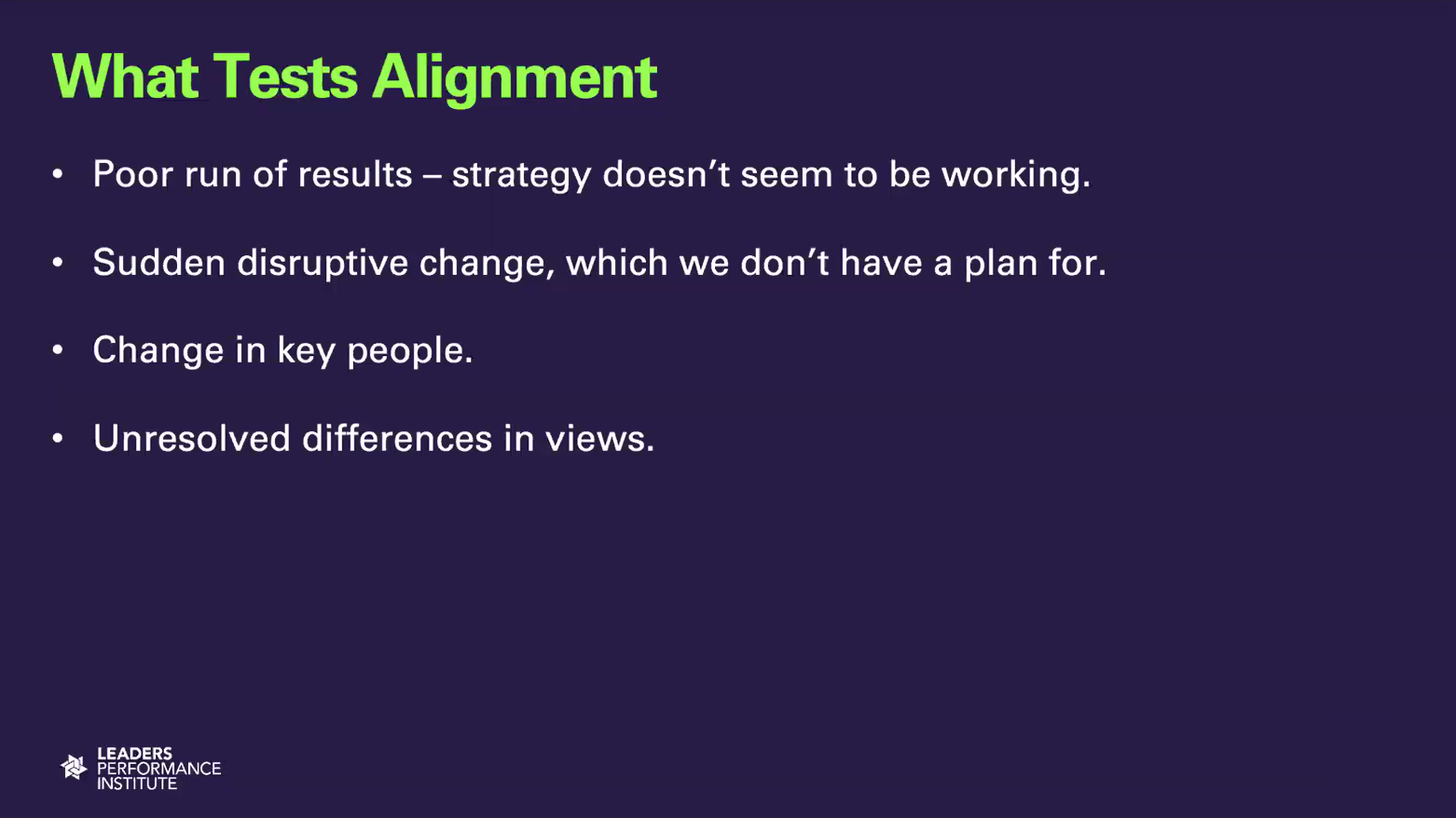
Each type of test presents opportunities to strengthen systems through reflection, planning and proactive leadership if you’re minded to look.
What actually works?
Bull suggested several methods for Leaders Performance Institute members to mull over:
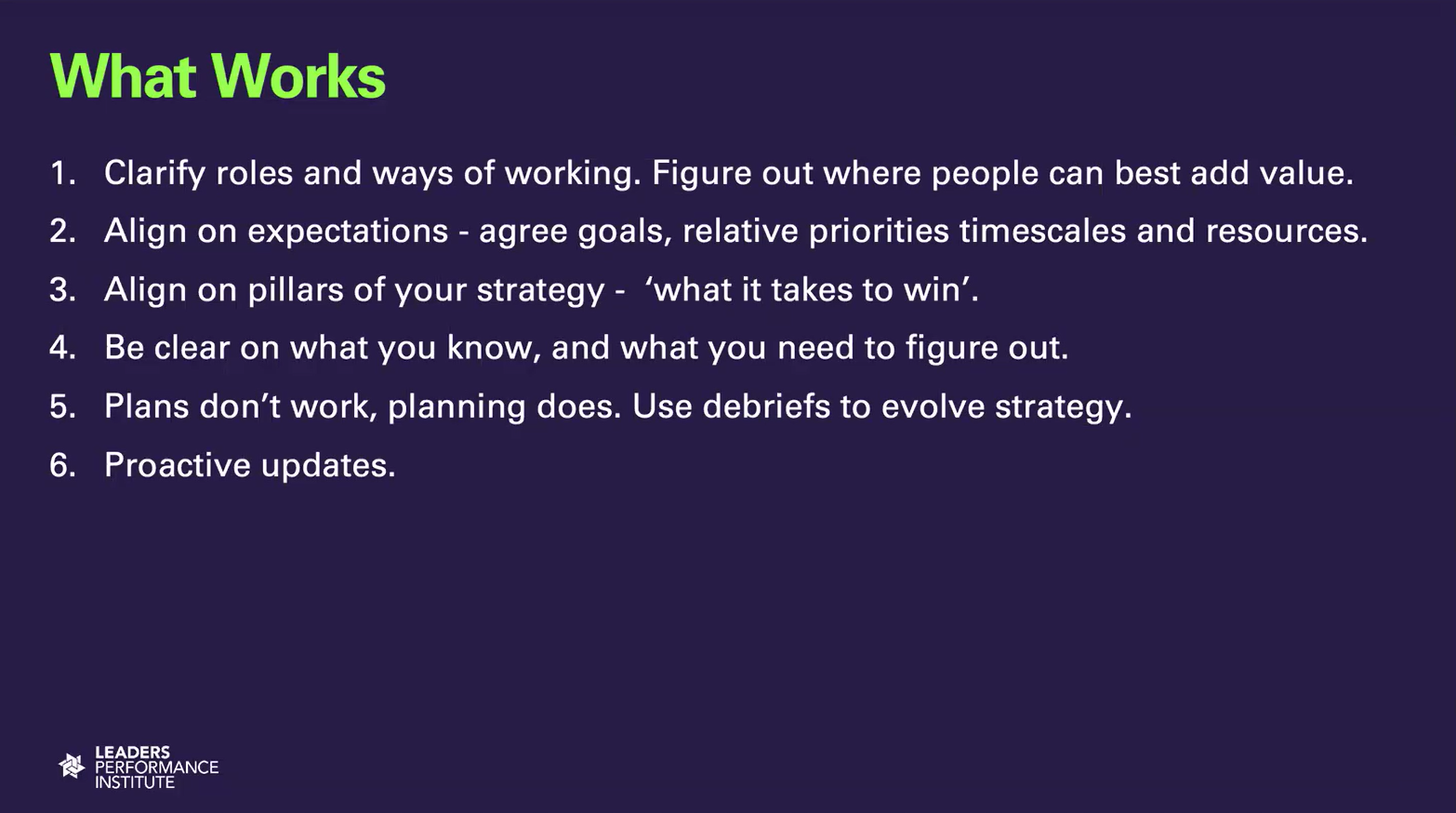
What to read next
Do you Feel your Team Has Plenty of Clarity But Still Suffers from Misalignment?
In July the art of listening, coach and staff wellbeing, and the postpartum return of athletes were top of the conversational agenda.
Nestled in between the myriad elements that contributed to their success was the team’s sense of being “proper English”.
The trope was first aired in February following England’s 1-0 defeat of Spain (who were also their opponents in the Euro 2025 final), with defenders Millie Bright and captain Leah Williamson hailing a “properly English” performance.
Winger Chloe Kelly repeated it during the Euros, and several players were asked to define what it meant as the tournament went on. No-one gave exactly the same answer.
“It’s that we give everything, we run ourselves into the ground,” said midfielder Keira Walsh. For forward Alessia Russo it means “we’ll stick together”. For defender Lucy Bronze it means “if push comes to shove, we can win in any means possible”.
For England’s Dutch Head Coach, Sarina Wiegman, it means “passing with purpose”.
Perhaps it doesn’t really matter one way or another. Much like words on the wall of your changing room, it is more about the feelings they generate than the actual words used.
That is certainly the opinion of Dan Jackson, the General Manager of Player Development and Leadership at the AFL’s Adelaide Crows. He has spent his post-playing career working with teams on their culture. The words on the wall are often a focus.
“I probably spend the least amount of time worrying about whatever words they’ve got,” he told the Leaders Performance Institute in an article that appeared last month.
“Often, I don’t even bother changing them because if you want ‘connection’ or ‘unity’ or ‘team first’ or ‘family’, it doesn’t really matter. What I want to know is the behaviours you’re going to commit to, your system of accountability, and how you drive those behaviours.”
It was one of several nuggets of insight on offer, member to member, across the Leaders Performance Institute in July.
Are you a soldier or a scout?
“Some of the skills of adaptive leadership are more obvious, but that doesn’t make them easier to learn,” said John Bull.
The Director & Lead for High Performance Research at Management Futures hosted the third and final session of our Virtual Roundtable series entitled ‘Leading in Complexity’.
Bull wanted to encourage Leaders Performance Institute members to reflect on their own role as an adaptive leader and pinpoint some areas for self-development.
He introduced the table to the work of philosopher Julia Galef, who has outlined what she calls ‘scout’ and ‘soldier’ mindsets:
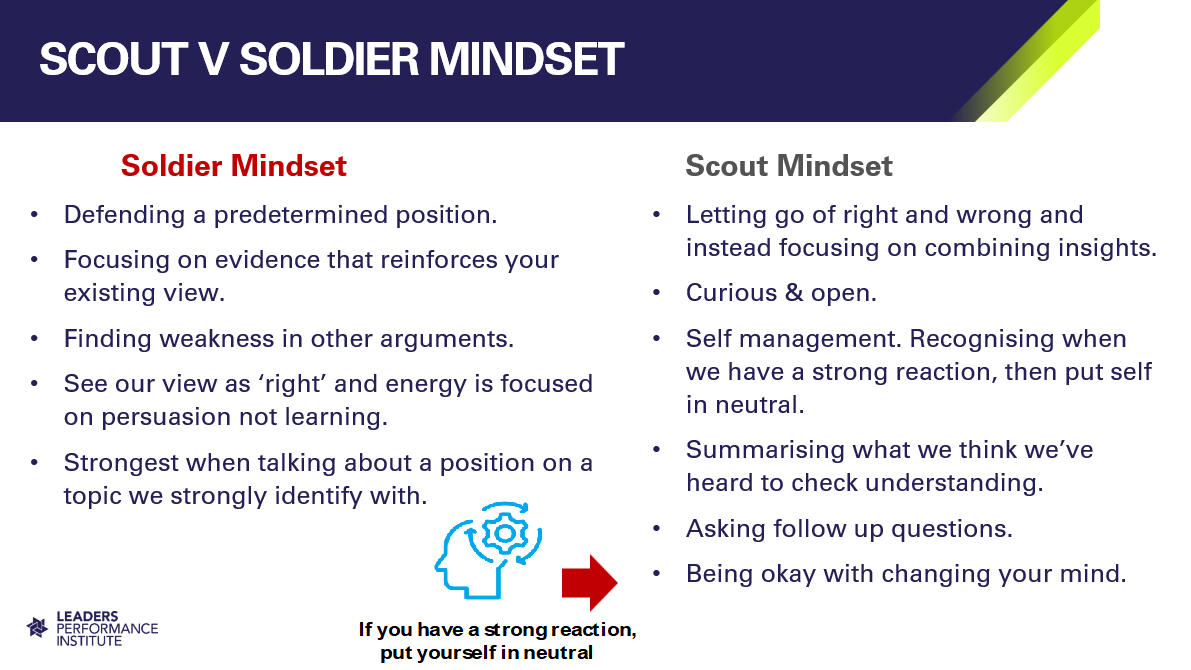
A scout mindset, such as when a scout might draw a map, is essential when learning and adapting. “It’s about acknowledging we might know some elements of the map, but large parts of the map are still undrawn,” added Bull. “It’s not ignoring that we have expertise, but it’s looking for what’s missing.”
On the other hand, a soldier mindset is counterproductive because, as Bull said, “most of our energy is going to influencing other people to see things our way as opposed to learning from what we’re missing.” It can also help, as Shona Crooks, a colleague of Bull’s from Management Futures says, to ‘put your brain in neutral’.
What kind of listener are you?
It was a question posed by Management Futures’ Jeff Pagliano during July’s Leadership Skills Series session.
There are at least four different types of listener, as Pagliano pointed out, but anyone can become better at listening at depth.
He illustrated his rationale with this graphic:
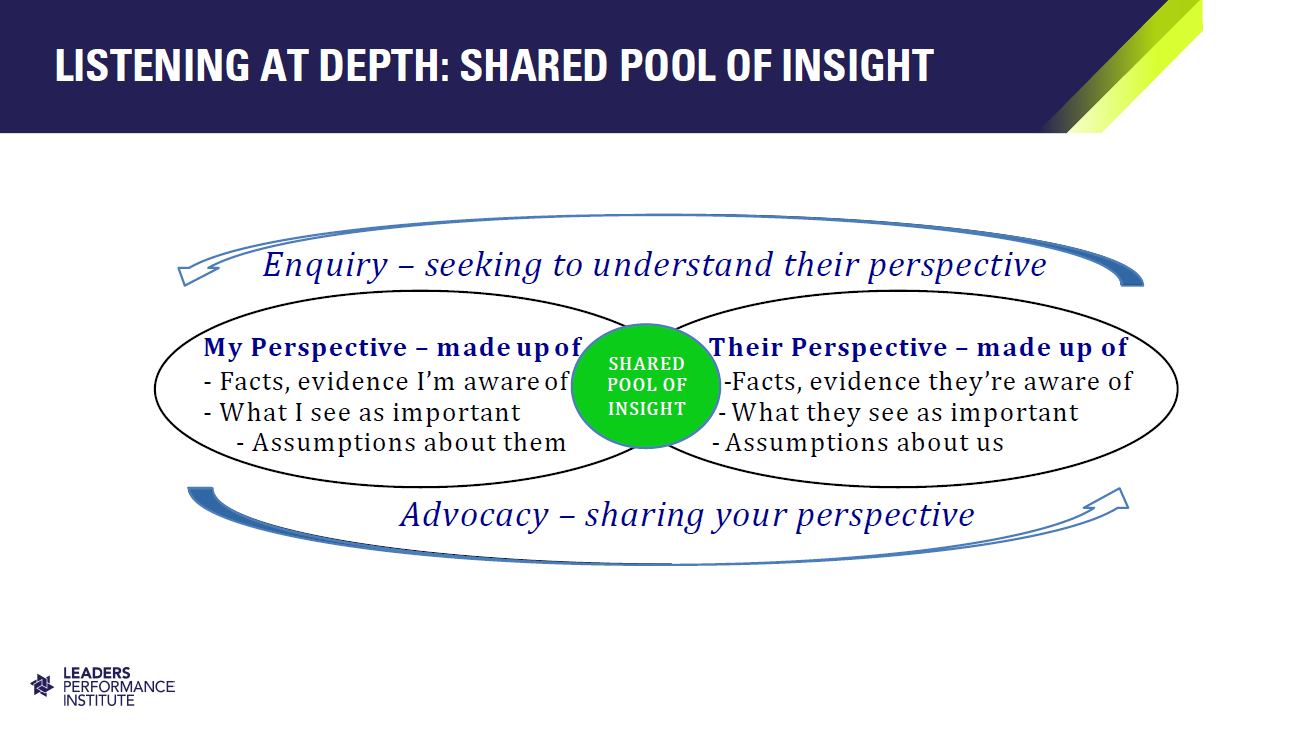
“Usually when we’re trying to persuade someone, it’s all about sharing our perspective. We call that ‘advocacy’,” said Pagliano. Your advocacy will be made up of the facts known to you, things you see as important, and any assumptions you make about the other person.
That person will have facts, thoughts and assumptions of their own, which is why we must add ‘inquiry’ to help bring those to the fore. “And when you bring those two things together that’s where you get that shared pool of insight.”
Listening at depth has other benefits too:
Do you care enough about your coach and staff wellbeing?
“We’ve had athlete wellbeing and engagement in place for more than ten years. We still don’t have coach wellbeing and engagement in place at all.”
This observation, offered at a Leaders Virtual Roundtable on the topic, is by no means unique.
Members of the Leaders Performance Institute have seen the following approaches help:
Read a full account here.
The postpartum return of British athletes
This was a theme of last month’s Women’s High Performance Sport community call, which featured Esme Matthew, the Head of Physiology at the UKSI, and Dr Kate Hutchings, who works with the UKSI’s leading clinical services for all world-class-funded Olympic and Paralympic athletes.
Early and open communication helps athletes and their teams set expectations and create tailored return-to-performance plans, with support from performance lifestyle advisors.
These help to place the athlete at the centre of their own decision-making.
Pelvic floor education and support are essential for postpartum recovery.
Each athlete’s requires unique and flexible plans informed by health monitoring and any necessary practical adjustments. It is key to enable them to stay connected to their sport.
Mental health support is vital as athletes adjust to motherhood.
Informal peer networks, such as WhatsApp groups, offer valuable emotional and practical support, helping athletes share experiences and reduce isolation during pregnancy and postpartum.
Click here for a fuller insight.
Rakesh Patel is tasked with helping floundering NHS hospitals in England. He believes the answer lies in cultural transformation, empathetic teaching, and smarter feedback.
Having read that, you may think that just as readily applies to the world of sport.
“How can we transform underperforming environments into thriving ones?”
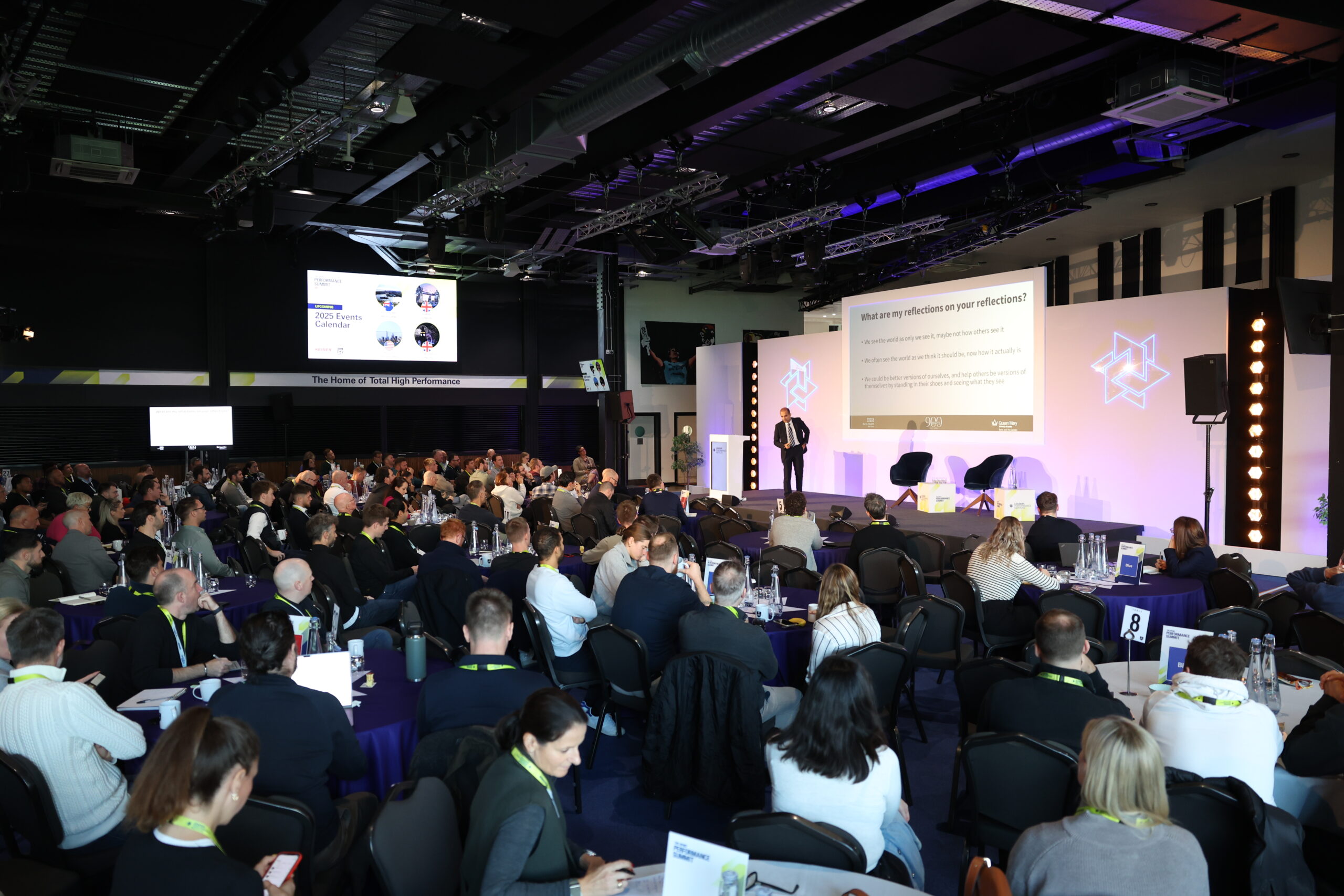
That is the question Rakesh Patel, a nephrological surgeon who works at Barts Hospital in London, asked the audience at last November’s Leaders Sport Performance Summit.
His remit includes working on the NHS’s Recovery Support Programme [recently renamed the Provider Improvement Programme], which is designed to support underperforming hospitals and medical providers who have been placed in ‘special measures’.
Patel and his colleagues will work with these hospitals to help identify systemic issues that lead to habitual failures. They will implement evidence-based interventions and build local capacity to sustain improvements once they’ve left the building.
Away from clinical practice, Patel is a professor at Queen Mary University, where 2,300 medical students matriculate at any one time.
As such, he has given a lot of thought to learning and failure in the NHS, which is the ‘sacred cow’ of British society.
What does the Recovery Support Programme do?
Its aim is to mitigate crises and enable people to learn from their mistakes. For Patel, it has to start with rethinking underperformance, because jumping to conclusions helps no one.
“We only see the world as we see it, but not how others see it,” he says. “In a performance role, if we’re assessing someone, we often see the world as we think it should be and not actually how it is.”

Underperformance, whether in experienced clinicians or medical students, cannot always be attributed to a lack of skill or effort.
Just as distractions, pressure, poor communication or emotional stress are prevalent in sport, their presence is felt with greater consequence in medical settings.
Take this feedback from medical students when reflecting on video footage of their mistakes:
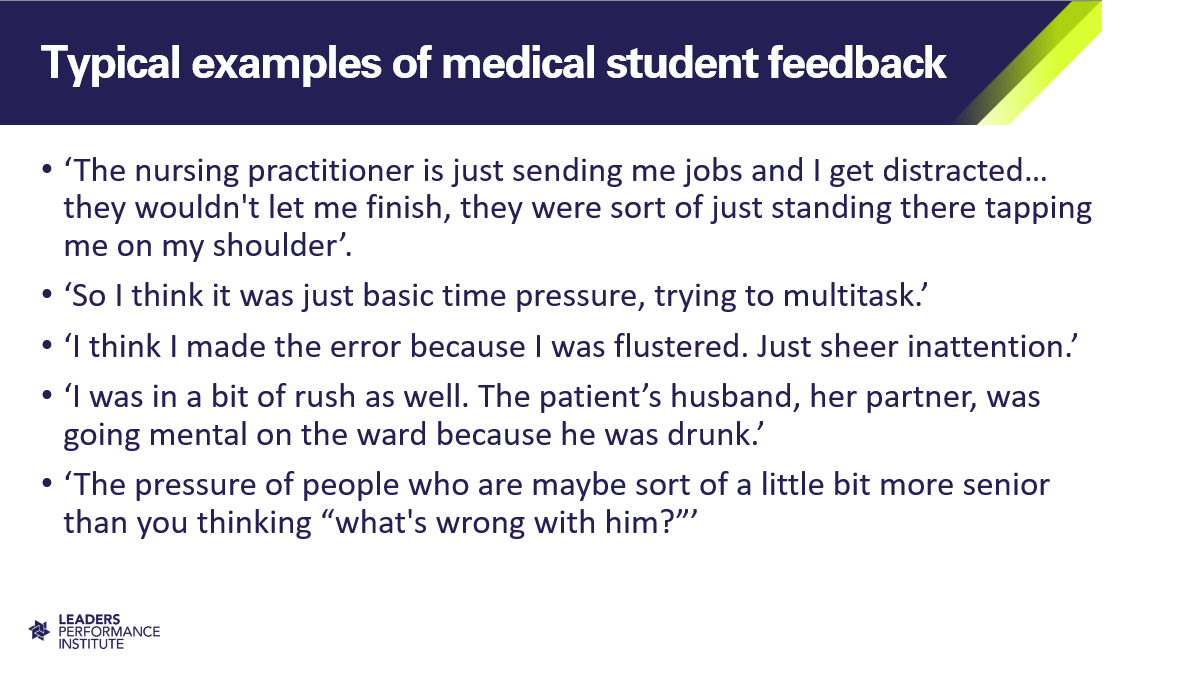
“The last one upset me most as a doctor,” says Patel, who later added that judgement can degenerate into reported cases of outright hostility. “I found it upsetting that these doctors were coming in to do work and we’re being nasty to them and that was why they were underperforming.”
At some level, as Patel explains, these errors point to the human limitations of working memory.
He cites The Magical Number Seven, Plus or Minus Two, the highly regarded 1956 paper by psychologist George A Miller, who said that a person has a working memory capacity for five chunks of information, plus or minus two. That means placing the working memory under too much strain will lead to (often avoidable) errors.
Patel says: “Any threat to working memory will impair performance. If you need your brain and you need to think through things, it’s likely you’re going to have underperformance.”
It follows then that to enable better learning – and prevent avoidable errors – there needs to be less pressure on people’s working memory.
“If you add up all those bits contextual things – inattention, distraction – you can see why memory matters,” says Patel. “You can literally only remember three to seven things and, in that moment, when it hits your eyes and your ears, if you do not do something with it in the first half a second to three seconds, it’s gone. That’s why in high pressure situations when we’re under stress is when our memory gets hit. We can only focus on what we need to.”
That is why medicine values reps and evaluation as much as any team. “When things get complex, you don’t need to think about it.”
With this in mind, it is easier to choose the right form of feedback.
“We all talk about feedback and there’s probably more books on feedback than anything else,” says Patel. “There is an evidence base around how you give it and we wanted to give the best feedback, in the way that it needed to hit and cut through.”
This was tricky to navigate in hospitals placed under special measures. “They weren’t the easiest characters to work with,” he adds, “but it depends on what’s important. If there’s the greater good and we’re going to work together, then even the biggest ego you can get down to your level and work through.
“And we only went into hospitals if we had CEO buy-in and everyone was going to engage. So we taught them how to give feedback better.”
He highlighted four formats favoured in the NHS:
1. Facilitated self-reflection
“One of the most important interventions you can ever do is ask someone ‘how do you think that went?’ And if you do that before they start and you say ‘how well do you think you’re going to do before you start?’ You then get them to calibrate what they think with what you think.”
It was, as Patel says, “the lightbulb moment”. He also underlines the value of sitting with doctors as they watch themselves on video. “It’s not about telling them what they’ve done but asking them; ‘these are your notes, you wrote them, tell me what you were thinking at the table’. You don’t dictate, but get them to reflect.”
2. Revisit video assessments at periodic intervals
Patel and his colleagues test doctors and students from the outset and provide instant feedback. More critically, however, they will also revisit feedback at regular intervals over the following weeks.
“I’ve told you about working memory and fear – they’re going to forget it,” he says of that instant appraisal. “So we videoed everything and we drip fed the feedback over time. Why was that important? Because I don’t know if you’ve ever done it, but watching yourself make a mistake three or four weeks down the line when you know you’ve made that mistake, and being reminded of it, is really powerful.”
3. Peer to peer learning
Sometimes Patel takes himself out of the equation. “We often forget what it’s like to be a novice. That’s why peer-to-peer works really well. So if you’ve got someone new, get someone who’s of a similar age that can explain it better.”
4. Ask them to ‘teach it back’
“We do this when we teach clinical skills,” says Patel, alluding to evidence pointing to the efficacy of this approach to learning. “There’s something about having the confidence plus the competence to be able to explain a skill to someone else.”
The Recovery Support Programme approach is scalable too.
“I couldn’t go into all these hospitals, and this training model needed to be scaled,” says Patel, who explains that pharmacists were uniquely placed within hospitals to deliver the model in his stead. For one, a large proportion of the noted errors were prescription-based.
And it worked. Doctors trained by Patel’s team and those who have taken the training model make fewer mistakes. “We trained them to be resistant to all the trauma and all the nonsense around them, to still focus on the task.”
What to read next
Talent ID and Development: The Race to Deliver Formula 1’s First Female World Champion
