In this recent edition of SBJ Tech’s Athlete’s Voice, former British athlete Andrew Steele discusses his transition from track & field and how a chance meeting with a genetic scientist transformed his career trajectory.
Main Photo: Getty Images

You can’t have a discussion about sports technology today without including athletes in that conversation. Their partnerships, investments and endorsements help fuel the space – they have emerged as major stakeholders in the sports tech ecosystem. The Athlete’s Voice series highlights the athletes leading the way and the projects and products they’re putting their influence behind.
* * * * *
Steele, 41, later began a career in genetics and how that science affects fitness, nutrition and performance. He led product at DNAfit and then Prenetics (which had acquired DNAfit) before starting his own digital health firm, Stride, in 2023, which this summer made strong inroads in North America through a partnership with Unity Fitness Canada. It provides multiomic testing: wide-ranging diagnostics on genomics, the microbiome, protein profile and more.
On his vision for Stride…
Previously, we’d had a lot of products which are point solutions: Here’s a DNA test for this, here’s a blood test for this. With Stride, I’m trying to bring it all together. So we’ve got a range of multiomic lab testing. We do a DNA test, a microbiome test, a blood draw, a biological age test, and an oral health test will be in the future too.
We knit all that together to see a holistic picture of your internal biology in a way which is pleasant to see and understandable — not a bunch of PDFs to download from the lab, but actually a really engaging digital dashboard. Your DNA doesn’t change, but you test everything else every six months and see how that’s tracking. And then we make a tailored supplement based off those results for you.
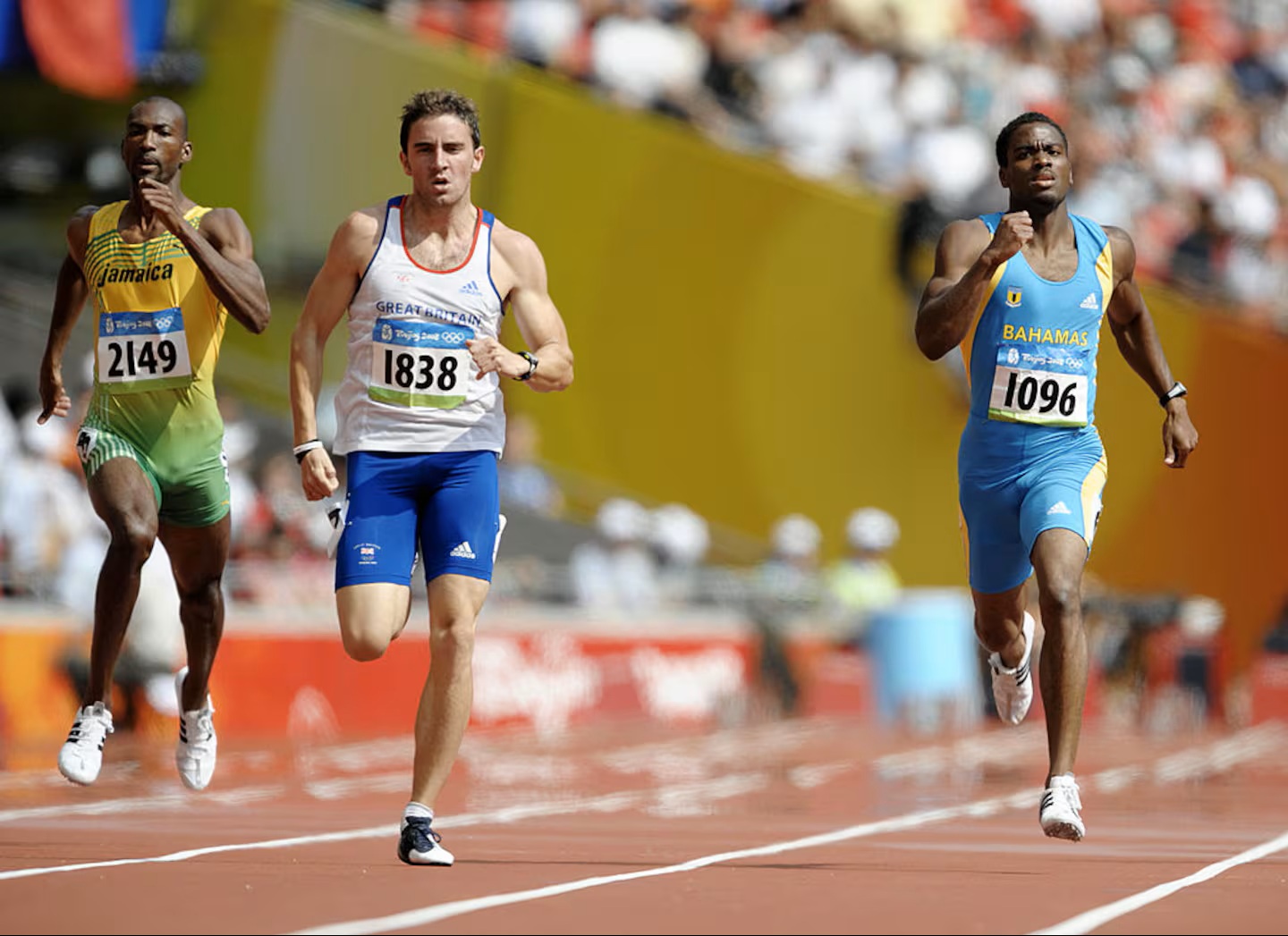
In 2008, Steele competed in the Olympic Games held in Beijing in the 4 × 400 m relay. AFP via Getty Images
On the cold outreach that changed his life…
I’m actually glad I didn’t get [my medal] at the time because it forced me to be very open to opportunities about what came next in my life.
There was one email that came into my inbox one day from a guy who was working with a genetic scientist and looking to commercialize this test and looking for research subjects to help them understand how genetics affected exercise response. And if my [running] career been going better, I would have just forwarded it onto my agent and said, ‘Hey, see if there’s some deals to be done here.’ I was, at this juncture in my life, when I was 27, I had zero higher education. I had zero work experience, and I certainly had not even zero money. I had minus money.
So I engaged proactively on this, and thank God I did because, long story short, [I joined] a health tech business called DNAfit in 2013. That business went well, I learned a bunch, and I became a co-founder there. Five years later, we sold the business for $10 million as bootstrap founders. Then I went into the next thing [Prenetics] as Chief Product Officer, eventually being part of the leadership team that led to a billion dollar NASDAQ IPO. So it changed the path of my life, not winning that medal — but probably for the better. And, along the way, they awarded me the medal anyway.
On his current business life…
I still sit pretty close to sport. I founded a business called Stride, which is in the similar space of diagnostics and preventative health. But I also have one other thing, which is a big passion of mine. Sport First is a venture studio, which helps people that come from a sports background navigate the transition into becoming a founder and entrepreneur.
On his science and tech interest as an athlete…
If you’d asked my teammates, I was probably always known as the guy that was [following] the latest nutrition science or supplements. It was always a passion of mine — and tech. I was always super interested in startups.
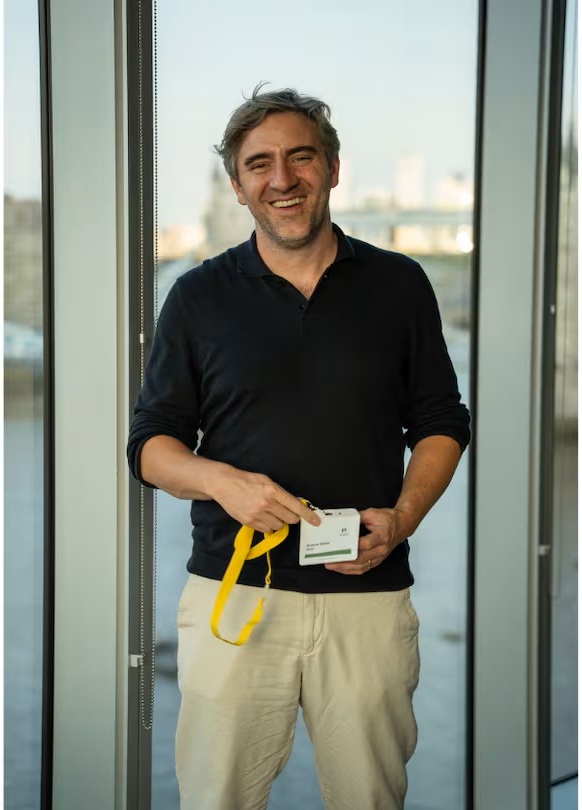
Steele founded personal genetics company DNAfit before going on to become part of the Prenetics group. Now, he’s building Stride for personalized supplements tailored to an individual’s unique genetic makeup and personal health goals. Courtesy of Andrew Steele
On what he learned about his genetics…
DNA is just one of the things in the picture, right? There’s a genetic variable called ACTN3, and there’s a version of this gene which is basically the C version of this gene. So with every gene, you have two copies of it — you have one that you got from your mother and another that you got from your father. And then basically there’s a version of this gene that is often colloquially called the Olympic gene, or the sprint gene, and it’s basically extraordinarily over-represented in elite-level power.
Everyone who’s generally an Olympic level power athlete has either one copy or two copies of the C variant of this gene. This is me completely oversimplifying the science, but that’s basically the lay of the land. And I found out, fascinatingly enough, I didn’t have even one copy of this. I was an absolute outlier from an Olympic-level sprint athlete who just didn’t have this gene, which was considered almost table stakes to be a sprint athlete.
This article was brought to you by SBJ Tech, a Leaders Group company. As a Leaders Performance Institute member, you are able to enjoy exclusive access to SBJ Tech content in the field of athletic performance.
The program’s Director of Football Performance Nutrition discusses the dietetic practices of the back-to-back national college champion.
A Data & Innovation podcast brought to you in collaboration with
“He used that next year to really focus on nutrition,” she tells Joe Lemire and John Portch. “[He] got down and dropped his body fat percentage by 7%, lost 45lbs [20.4kg], and he was a first-round draft pick.
“He just did such a good job at buying in and it made him a faster, more explosive person. He never lost any muscle mass, which meant he was really focusing in on eating enough of just the right things so that we were able to retain that muscle and focus on losing that fat.”
Collier’s pride is palpable, particularly as a native of Athens, Georgia, and long-term Bulldogs fan. “It’s so much fun to see them buy-in and then say ‘C, I feel so much better in practice’. ‘C, I didn’t know I could have this much energy’. It’s probably the most rewarding part of my job.”
In this edition of The People Behind the Tech podcast, Collier lifts the lid on her work as the Director of Football Performance Nutrition at the Georgia Bulldogs, who retained the NCAA national championship in January.
During the course of the conversation, we covered:
John Portch Twitter | LinkedIn
Listen above and subscribe today on iTunes, Spotify, Stitcher and Overcast, or your chosen podcast platform.
The startup’s AI-powered nutrition app is helping athletes to optimize their performance.
Main image courtesy of Hexis
A Data & Innovation article brought to you by
Through that experience, Dunne saw numerous innovations aiding sport science peers as they collected data and provided insights on athletic readiness and training loads, but there was nothing comparable for his field. That realization prompted the founding of Hexis, an AI-powered personalized nutrition app.
“Although wearables had rushed ahead and people were harvesting continuous physiological data from other sources, nutrition had really lagged behind,” said Dunne, the company’s CEO. “Everything was still a tracker and calorie counter. So we decided to take some of the advancements in sports nutrition in elite sport, which were really centered around predictive nutrition and understanding how to periodize intake, according to the load and demands of the day.”
After launching publicly in Q3 last year, Hexis has attracted more than 500 paid subscribers, of which more than 10% are professional and Olympic athletes. Endurance athletes are the most represented group. In mid-April it launched an integration with Apple Health to ingest more objective data for custom meal plans and also an in-house food tracking feature that Dunne believes will improve upon what’s available at MyFitnessPal.
Users are onboarded by sharing info about their sport, lifestyle, sleep patterns, weight, body composition, typical meals and training schedule and their goals. The duration and intensity of training is considered in generating a meal plan automatically. One recently added feature, Live Energy, evaluates intake versus expenditure at a micro level.
“If, for example, this went from being a light session into a hard session, everything pretty much updates on the fly as though I was your nutritionist in your pocket and how I would manipulate things,” Dunne said.
A desktop dashboard for team nutritionists to monitor an entire roster is in development. That’s an acute need in the field, as the best nutrition plans are personalized, which necessarily requires more time and effort. Augmenting a nutritionist’s resources to be more efficient is what helped bring together two of Hexis’ co-founders in the first place.
Dunne, whose longest team stint was with the Harlequins in Premiership Rugby, and British Cycling’s lead nutritionist, Sam Impey, both did their PhD work at Liverpool John Moores University and often crossed paths at industry events.
“Whenever we’d catch up, normally over a beer at a conference, and it was quite weird how often we’d see similarities in the challenges that we faced, even though [cycling and rugby are] dramatically different sports — but the issues of nutrition around scalability,” Impey said.
Their sub-disciplines within performance nutrition were different — Impey focused on carbohydrate periodization and physiological changes to the muscle whereas Dunne is a behavioral scientist with an expertise in the use of technology — but they both identified that same need.
While holding a postdoctoral position at the University of Birmingham, Impey began exploring the application of his PhD research around the timing of carbohydrate intake to help the body best adapt to training. Proper nutrition can increase the benefit of exercise, helping people get fitter, faster. He said he had compiled “a reasonably interesting Excel sheet” and thought he’d bounce some ideas off Dunne.
“I’ll never forget his face when I showed it to him,” Impey recalled, “because he was like, ‘Wow, that’s interesting.’ And he said, ‘Look, I’m actually doing the the same thing.’ But I think he was nine, 12 months, further down the road than me.”
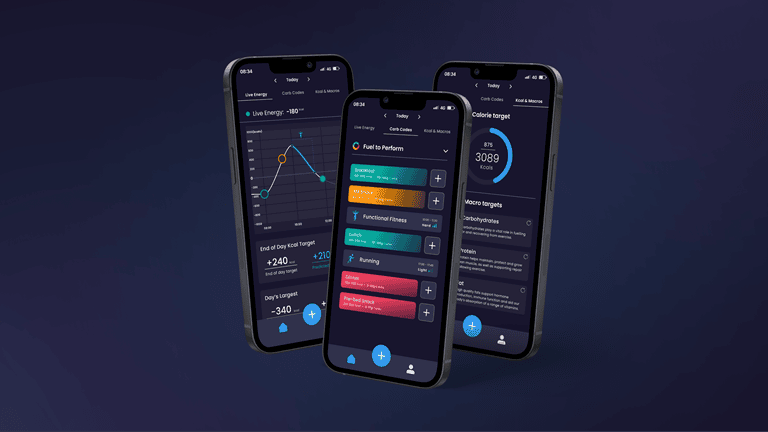
Image courtesy of Hexis
They joined forces, along with three other co-founders: Rodrigo Mazorra Blanco, the director of engineering and CFO; Xiaoxi Yan, who leads data science; and Carmen Lefevre-Lewis, a behavioral scientist who is also a UX research manager at Meta. Impey praised the executive team’s diverse experience and its “strong and encouraging check-and-challenge culture.”
Though most of the team’s experience is in Europe, Dunne’s CV includes a stint as a performance science consultant for Orreco — winner of SBJ Tech’s Best in Athlete Performance for 2022 — where he provided in-person support to client teams, including a two-year stint helping out periodically with the NBA’s Dallas Mavericks.
As with many startups, Hexis draws on elite sport experience to design and develop the product so it’s suitable for professional athletes, but the app is accessible for anyone who trains regularly.
“The reason we built Hexis and where we thought we could really cause a shift in behavior is more around planning,” Impey said, explaining that most tools available are retrospective, but they want to target prospective action.
“Adherence is obviously the golden nugget for everyone,” Dunne said, noting that team spends extensive time exploring ways to engage with all kinds of users who respond to different messaging and prompts at different times of day.
As prevalent as the technology is, one area Hexis has not delved into is machine learning. “When it comes to physiology, we don’t want the system to make a mistake and learn from its mistake,” Dunne said. “We feel there’s pretty good rules around exercise metabolism and biochemistry that, with the development of AI and expert systems, we can give a right and a wrong answer.”
This article was brought to you by SBJ Tech, a Leaders Group company. As a Leaders Performance Institute member, you are able to enjoy exclusive access to SBJ Tech content in the field of athletic performance.
An article brought to you by our Partners

Notwithstanding my bias, it is important to remember that it is in fact nutrition that provides the basis of all human performance. It is perhaps no surprise, therefore, that in my conversations with leading performance directors from around the world, I often comment that nutrition should be one of the first and most important hires for anyone leading a new performance programme.
I am going to explain why.
Why nutrient intake impacts performance
Where once our focus was solely on ensuring sufficient muscle fuel stores, it is now accepted that what we eat before, during and after every single training session has the capacity to drastically alter our whole-body physiology, affecting tissues and organs over and above that of skeletal muscle. For example, the timing, type and quantity of both macronutrients (i.e. carbohydrate, fats and proteins) and micronutrients (i.e. vitamins and minerals), alongside total body water content (i.e. hydration status), can all affect the daily function of our brains, gut, kidney, liver, immune system, bones, tendons, ligaments and so on. When considered this way, the importance of nutrition extends far beyond that of body composition or fuelling for game day. Rather, our daily nutrient intake affects our ability to make decisions, execute physical actions and technical skills, withstand mechanical load, fight infection, maintain training volume, promote sleep, reduce injury risk and so on.
From a human performance perspective, a poorly fuelled athlete is therefore likely to suffer from poor sleep quality, exhibit increased incidence of injury and illness and display impaired growth, maturation and recovery, all of which can manifest in your star player apparently suffering from a lack of responsiveness to training and a loss of form. It is through this lens that it is no exaggeration to say that I have witnessed transformations in athletes’ careers and longevity within their sport once they have embraced the principles of a performance approach to nutrition. From the performance director’s perspective, the hiring of a highly skilled performance nutritionist could thus be viewed as one of the shrewdest returns of investment across the organisation. For without one, the other key members of the ‘orchestra’ are unlikely to get the best from their athlete.
The limitations of the ‘consultant’ model
The practical delivery of performance nutrition has evolved considerably throughout the last decade. In the historical service model, sports typically employed an expert ‘consultant’, usually based on their academic and/or practical experiences. Despite the expert knowledge that a carefully chosen consultant can bring to the performance programme, the consultancy model has obvious limitations in that ‘face time’ is typically restricted to one or two days per week. In such instances, the consultant often spends their time in setting up generic team-wide systems and protocols (e.g. fuelling, recovery, body composition protocols etc), upskilling the knowledge base of existing staff to support practical day-to-day delivery, as well as managing specific athlete case histories. However, in considering my reflections from this model, I am not convinced that this type of approach yields the cultural change or attention to detail that is required to truly support the delivery of a high-performance service. Indeed, in many situations, the consultant may be responsible for the remit of improving performance in excess of 100 athletes, a task that clearly conflicts with the concept of creating and delivering highly individualised and multidisciplinary athlete performance plans.
The triangulation of practitioners, academia and the sports industry
Fortunately, with the increased recognition from both head coaches and performance support staff on the role of nutrition in supporting performance, the landscape of nutrition delivery is changing. This is especially prevalent across the UK and Europe and is beginning to be adopted across the big leagues of the US. As an example, most soccer clubs within the English Premier League now employ a full-time professionally accredited nutritionist to operate at first team level as well as an additional full-time head to focus on nutrition to the academy players. Such individuals typically travel home and away to ensure that nutrition delivery occurs at the heart of where and when it matters. In some situations, the nutrition programme is also supported by formal collaborations with academic institutions so that academic experts can also inform the creation of an evidence-based programme, the nature of which may extend to the integration of PhD practitioner-based researchers within the club. Given the requirement to adopt a safe supplement programme, a fully integrated partnership with a sports supplement provider specialising in banned substance testing is also an essential ingredient of an elite performance nutrition programme. Upon reflection, it is this triangulation of practitioners, academia and industry that could now be considered a model of best practice, one that can be dynamic and responsive to change as the performance questions arising on the front line are posed thick and fast.
Integrated performance nutrition
The increased appreciation from head coaches and performance directors on the performance effects of sound nutrition is particularly pleasing to see. In the 2020 Uefa consensus statement on nutrition for football, former Arsenal Manager Arsène Wenger, who currently serves as Fifa’s Chief of Global Football Development, contributed an accompanying editorial where he argued the case for nutrition to be integrated within a performance team’s activities. ‘It should be a fundamental part of the team’s performance and/or medical meetings, where the priorities for each individual player are discussed in detail’, he wrote. ‘When nutrition—like any other element of sports science—exists in a silo, answering only the questions or interests of a single practitioner (i.e. the nutritionist, him or herself), it is detrimental to the team.’
This integrated performance approach that Wenger calls for certainly resonates with how we approached Performance Nutrition during the four seasons I spent as Nutrition and Physical Performance Lead at Team Sky. When Chris Froome pulled back 3 minutes 22 seconds on Stage 19 of the 2018 Giro d’Italia to win his third consecutive Grand Tour, I knew our programme was in a good place. “Today was about fuelling, today was about making sure you can fuel a ride like that all the way to the end,” Sky’s Team Principal Sir Dave Brailsford told the media in the aftermath. “It’s fundamental really, so all staff, myself included, have been out at the side of the road putting together a fuelling plan for him so that he would absolutely not miss a beat, because that’s basically the game changer.” In the years to follow, the team (now known as the Ineos Grenadiers) have since employed three full-time performance nutritionists (two of whom are integrated practitioners from the Science in Sport Performance Solutions team) alongside three full-time performance chefs. There is consistency, clarity and a performance-focused approach across all training camps and races.
Athletes are starting to ‘see’ nutrition
As a result of this increasingly adopted integrated and full-time staffing model, athletes and staff are now ‘seeing nutrition’ on a daily basis. The role of the nutritionist is now considered much more important than the mere organisation of food services at both home and away games. It is no longer a consultant who appears and disappears in the flash of an eye. The nutritionist now sits at the top table, having visible dialogue with the most influential decision makers in the organisation. The culture is changing.
From both a theoretical and practical perspective, perhaps the biggest leap we have made is in the recognition that nutritional needs are not static. In the same manor that physical load and performance objectives are periodised across the micro- and macro-cycles at both team and individual athlete level, nutrition should subsequently follow suit. It should no longer be a one-size-fits-all approach where every day is the same. Rather, the entire performance team and athlete roster should recognise that nutritional needs will change between and within each individual depending on the development and performance goals at any given time. Every meal should be carefully considered because it can impact the work of the whole performance team.
In this regard, the remit of the nutritionist has developed to be the:
“Strategic periodisation of energy, macro- and micronutrient availability (alongside targeted use of supplements and ergogenic aids) to improve body composition, training adaptations, performance, recovery and athlete health.”
The outcomes of such an approach will produce an athlete who is ready to win consistently.
This article first appeared in our latest Performance Special Report – Winning With Nutrition
Long relegated to the side lines, nutrition is finally getting the attention it deserves when it comes to helping athletes achieve peak performance. Download Winning With Nutrition, produced in partnership with Science in Sport and featuring NBA champions the Milwaukee Bucks, the NFL’s Dallas Cowboys, and English Premier League club Aston Aston Villa.