18 Sep 2024
ArticlesAs Head Coach of the Australia Women’s cricket team, Shelley Nitschke was tasked with changing a winning side. She did so in four steps.
“It feels a bit dirty in a way, but we got the result we were after,” said Healy in the aftermath. “I think the gap’s not necessarily been there as much as everyone has spoke about.”
There was a sense amongst Australia’s players that their success owed to a quirk in the format. Yes, they had won the series’ only Test match, but they had lost both limited-overs series 2-1 to England. Nevertheless, the scoring system was weighted in favour of the Test and, at the series’ conclusion, the teams were tied on eight points each, which meant Australia retained the Ashes as holders.
It was not the type of emphatic victory to which Australia and their Head Coach Shelley Nitschke had become accustomed. After years of blazing a trail and lifting trophies galore, Australia’s rivals were beginning to bridge the gap.
“There were just a few signs along the way that the game was changing and other teams were getting close to us,” Nitschke told an audience at February’s Leaders Sport Performance Summit at Melbourne’s Glasshouse.
She also spoke of her team’s resilient but laboured performances in their 2022 Commonwealth Games semi-final and final. Those matches against South Africa and India, respectively, could have gone the other way were it not for decisive moments of inspiration from Australia’s serial winners.
“We were finding ourselves in those positions more often than I would have liked,” Nitschke continued.
She had led Australia into the Commonwealths as Interim Head Coach and was appointed on a permanent basis after the competition. For all the planning that went into retaining the Ashes, the drawn series rang alarm bells in Nitschke’s mind, and the post-tour debrief was not going to her liking.
“We were happy to bring the Ashes home, but we knew there was work to do heading into the T20 World Cup [taking place in the UAE in October] and the discussions just weren’t moving the dials as much as I was hoping.”
Nitschke responded by pushing for change and her efforts have so far been vindicated by Australia’s subsequent results. The holders enter the World T20 as the favourites to defend their title.
Here, we explore the four steps Nitschke has taken to keep Australia ahead of the chasing pack.
1. She found the reason for change
Nitschke had noted Australia’s opponents’ increased aggression and strategic use of powerplays [ten-over spells in an innings where the fielding team is restricted in the number of players they can place outside of a 30-yard circle around the batting team’s wicket]. Without adaptation, Australia’s approach would not cut it at the highest level for much longer. “I went to the analysts and started to crunch the numbers and have a look at what other teams were doing and where we fared in regards to the rest of the world,” said Nitschke. “We like to think that we would have been ahead of the game, particularly around powerplays, but there were certain parts of the game where we just weren’t.” It led to a fresh set of winning measurements and KPIs; and Nitschke had her vision for change.
2. Then she found the right words
It would not be what Nitschke said but how she said it. As she prepared her pitch for change she first presented to her Team Psychologist Peter Clarke, a popular figure within the playing group. Nitschke said: “He was really useful in recommending the language to use; saying ‘don’t dumb it down and ‘don’t say it’s not a huge challenge’ or ‘just a few tweaks’.” Clarke guided Nitschke in her use of words and reassured her that in several key elements, such as assessment, stakeholder analysis and change strategy, she and Australia had already made a start. Armed with the right delivery, Nitschke could begin to instil the team’s revamped style and strategy.
3. She asked for input
After the initial pitch, Nitschke would deliver a data-informed dossier to every player during Australia’s October 2023 series with the West Indies. The coaches had already decided it was not the moment to implement wholesale change. “We contacted them and just let it stick with them for a while – it probably would have hit a few between the eyes.” It was a frank admission and not without risks. The trick was to ask each player for their opinion. “It led to some really good suggestions,” said Nitschke, who also consulted her staff, several of whom chipped in with ideas from beyond cricket.
4. She identified her change agent
When leading a transition, you need influential people to have your back when enduring setbacks. “We’ve lost a few games we ordinarily may have won,” said Nitschke, who was keen to take advantage of the relatively low stakes series following the Ashes. She would lean heavily on Alyssa Healy, who was appointed Australia captain in December 2023. “Alyssa was involved from the start in driving [the change] through the playing group.” Nitschke would need to call upon every bond of trust developed between the duo in their six years working together. She continued: “There were some senior players that were probably challenged a little bit through being asked to play a little differently than what they had been for the last few years, even though they’d been successful. It could have gone in a completely different direction because if we didn’t have buy-in from the captain then we probably weren’t going to get buy-in from the rest of the team.”
6 Mar 2024
ArticlesHow members of the Leaders Performance Institute are meeting the medical, cultural and financial challenges in better preparing their female athletes.
There is sure to be an element that hones in on female athlete health, a topic that brought together members of the Leaders Performance Institute for a virtual roundtable at the end of February.
While there are gains being made in high performance environments across the world of sport, there are enduring challenges in addressing female athlete health that require more time, resource and expertise.
The first part of the group discussion highlighted five common areas of focus. They were:
Policy around pregnancy, particularly in the case of athletes, is an issue that came up in all quarters. One of the primary concerns is that policies are dependent on your context or sport. For example, it is proving challenging to implement a single, coherent policy across the multisport and multidiscipline Olympic or Paralympic system. One attendee made the point that a clear policy provides the basis for education within high performance environments.
RED-S [relative energy deficiency in sport] is a condition that occurs when athletes do not get enough fuel to support their energy demands. Research has found that if RED-S isn’t treated sufficiently, there can be possible negative impacts on reproductive health, bone health, immunity, metabolism, cardiovascular and psychological health. Insights from the call outlined that the reason why RED-S is a large focus in many sports is the lack of education and expertise within teams to sufficiently support athletes. A number of attendees shared that they are implementing formal screening for RED-S across both female and male athletes – RED-S can also affect the male population – and formal education for both athletes and staff. As well as providing opportunities to learn about RED-S, this approach is beginning to create an environment where people feel more comfortable talking about the topic. Finally, it was not lost on the table that there’s an opportunity to work with younger age groups, to begin education early, especially as they go through puberty.
There is an increasing amount of research into the impact of the menstrual cycle on performance output. People are investing time and resource in data collation to better understand athletes’ cycles. This enhanced understanding then informs athletes’ development programmes and provides better education opportunities for both athletes and, just as importantly, the staff that are responsible for the design and delivery of athlete development programmes.
Conversations on female athlete health have tended to focus on the menstrual cycle, which is important, but pelvic floor health has often been overlooked, as some attendees admitted. There is an increase in high performance discussions around pelvic floor health but, given that it has rarely been a focus, some are starting at the bottom when it comes to those conversations and finding opportunities for education.
While breast health was not discussed in such depth, it remains a cornerstone of female athlete health strategies. One attendee spoke of their environment investing time into bra fitting (taking an individualised approach) and, again, education.
Other factors that impact on female athlete health strategies
Firstly, without sufficient education, we aren’t upskilling everyone in our environments. Foundational health education for coaches and athletes is an important tool for raising awareness, improving understanding and helping people to recognise and act, both in a preventative and proactive manner. Also, we shouldn’t be blindsided by the idea of just focusing on athlete education at the upper end of the pathway. There is an opportunity to embed a clear education strategy throughout an entire pathway.
Secondly, entry screening should be a core component of our programmes in order to provide baseline data and insights where we can tailor opportunities for our athletes over time.
Thirdly, the importance of creating spaces for discussion. Some attendees shared that there are still challenges with pushback from other disciplines, notably coaches when it comes to female athlete health. With this challenge in mind, a number of sports shared how they are trying to create organic, open spaces for both athletes and staff to come together to engage in discussions around topics such as the above in order to make a positive impact.
Environmental and resource-based challenges in female athlete health
Environmental and resource-based challenges persist for female athlete health strategies. Those explored by the table in the second part of the discussion can be broadly divided into three areas:
One trend is a lack of openness to engage in discussions around female athlete health in an environment due to insufficient education and alignment. A couple of different sports shared that despite a baseline understanding of the importance of female athlete health, there is still pushback around certain education resources and adapted training programmes. Whilst we were discussing some of the cultural challenges that still remain, it was also noted how improving engagement and breaking down communication barriers are also challenging, particularly in enabling a combination of knowledge and skills training for athletes and staff.
One participant shared that the big question around education for them is how to make knowledge stick and how to know if we are being impactful. This is certainly relevant for athletes and staff, although it was noted that education in their environment is particularly important for staff. It is fair to say that there was an agreement that we are still searching for the best methods of education to make the most impact. As noted above, the wider notion of policy and guidance seems to be proving to be a challenge.
Many sports are still trying to build sport-specific guidance on female athlete health and best practice. Although research in this space is becoming more apparent, there is still a paucity of clear guidance available, especially due to the specific sporting contexts we are operating in. Another popular response was simply a lack of in-house expertise in our environments – some sports are looking for the right signposts and opportunities to bring experts in to provide continued professional development. Funding and financial challenges are also being felt – that to be ‘doing female athlete health well’, more research, guidance and, in some instances, financial support, is required. In some women’s sport, that opportunity isn’t currently present.
29 Feb 2024
ArticlesHow the AFL and High Performance Sport New Zealand are seeking to provide opportunities on women’s talent pathways.
We’ll be exploring this topic throughout the year, but took time at The Leaders Sport Performance Summit in Melbourne in early February to learn from the AFL [Australian Football League] and High Performance Sport New Zealand [HPSNZ].
Helene Wilson, the Women in High Performance Lead at High Performance Sport New Zealand, took to the stage at the Glasshouse alongside Tarkyn Lockyer, National Academy Manager & Coach at the AFL. Knitting together the conversation was moderator Sonya Thompson, the Head of National Development at Cricket Australia.
The current landscape
The AFL have set their sights on supporting athletes in their pathways so that, as Lockyer said, “when they get their opportunity [in the senior game] they can step in and thrive – and change the game.”
Given their purpose, the AFL’s pathway programme is developing athletes to be adaptable and malleable so that they will be prepared for any one of the 18 different club environments into which they may be drafted.
Whilst funding levels are the same for the men’s and women’s pathways, the structure of the programmes has focused on different elements. To this point in time, for example, the women’s pathway has had to cover gaps in knowledge when it comes performance support in areas such as recovery and preparation.
At HPSNZ, as Wilson told us, they’re supporting regionally-based teams who might include aspirational, podium, or team athletes. This, combined with other factors, means that across their programmes “how we get there has to be different.”
Specifically, when it comes to supporting women’s needs in the pathway to perform their best, the focus is holistic support. The reality is that the pathways are supporting the athletes in their pursuit of developing transferable skills as they can’t guarantee their athletic career will generate enough earnings.
Staff pathways
It’s important that we don’t neglect the importance of staff roles within pathways. The AFL, as Lockyer told us, are hopeful that there’ll be more opportunities for women in coaching in the future. Women coaches provide a different perspective, and the AFL don’t underestimate the importance of a well-rounded coaching body. This is true regardless of whether it’s the women’s or men’s programme.
As well as providing the opportunities, the support around the women coaches, once they are in their roles, needs to be put in place. “We have to set them up to be successful,” said Wilson, whose experiences teach us that women coaches tend to bring more emotional intelligence to their work. The staff as a collective need to each have their points of difference, especially as a head coach can’t be everything to everyone.
Wilson also reminded us that part of this is the education of the athletes too. For example, at the moment, numerous male athletes don’t know of many women who hold coaching positions. In addition to her primary duties at HPSNZ, Wilson holds the role of the New Zealand men’s netball team Head Coach too. She firmly believes that if you can apply your coaching practices in a different setting you’ll become a better coach. In coaching the men’s team, Wilson has witnessed how the men apply and execute the same skills differently, which requires a different approach from her as their coach.
Pathway frameworks
Regardless of who the staff are we need to provide clarity to the athlete and find ways to integrate, not duplicate, the different areas of expertise within the staffing team. We need everyone pulling in one direction, and that is the direction that is best for the player.
At the AFL, a formal instrument underpins this, through their athlete management system. Within the HPSNZ network, it’s important that there’s connection down and up the pathway to the national level. They also approach the emotional space first and help athletes navigate learning, so that they have had a brilliant learning opportunity even if it transpires that they aren’t good enough to progress through the pathway. Each athlete needs someone who’s providing personal and learning support, and at each transition the learning needs to be anticipated.
The AFL’s frameworks support fundamentals and creativity within the game as well as an environment of high support and high challenge – all whilst not forgetting that creating an atmosphere that is fun shouldn’t be overlooked.
Wilson shared how important it is to get repetitions of training and execution; and to learn through others and in playing up. We can learn so much, and gain so much, by playing with those who are at different points of the pathway. It’ll support athletes in their transition moments; and casual conversations are powerful in creating lasting motivation and establishing role models.
Both Wilson and Lockyer emphasised the importance of reducing the pressure to be perfect, and making sure there are structured play sessions within the programming. How can we stretch these talented athletes through creativity? Balancing progress with deliberately forcing them to fail. All whilst creating an environment that lets each athlete be themselves.
Future-focused
For Wilson, the dream is that we won’t be talking about women in high performance coaching. We’ll have diverse staff teams and aiming for points of difference through the coaching team. We need to have ways for athletes to stay in high performance sport outside of playing. We will get to 50:50 splits in funding in those roles, but that will come through equity not equality.
For Lockyer, the language will change to ‘one game, our game’ and the women’s league will be one of the competitions, not the women’s. The more rounded we can be as a team, with the diversity of thinking across the team, a better platform will be created for everyone.
To achieve this Wilson added that women have a responsibility to know, articulate and show their value; and it’ll take mentoring to achieve that aim.
28 Feb 2024
ArticlesRobin Eager tells us that the team’s development work at St George’s Park is helping to set them up for another tilt at glory.
Main image: England Rugby

In January, the Red Roses’ new Head Coach, John Mitchell, announced a 38-player squad for their first training camp of 2024, which took place at St George’s Park in Staffordshire.
“We had what we call our ‘alignment camp’,” says Robin Eager, the England’s Women’s Athletic Performance Manager, of the week-long camp. “It was an opportunity for our group to reconnect for the first time since November.”
He refers to the end of the inaugural WXV 1 competition, which England won courtesy of comprehensive defeats of Australia, Canada and hosts New Zealand. Mitchell took the reins full-time at the tournament’s conclusion and the team now begins its pursuit of a sixth consecutive Six Nations title.
The Red Roses left no stone unturned at St George’s Park which, in addition to England’s 23 football teams, regularly hosts a range of elite athletes and sports teams at its 330-acre complex. SGP boasts 14 state-of-the-art pitches, which can be configured for a variety of sports, and indoor facilities including a full-size 3G pitch, a multifunctional sports hall, a strength & conditioning gym, hydrotherapy pools and a cryotherapy chamber.
“We could get some early learning done around how we want to develop our game and how we want to play,” Eager continues. “It also allowed us to complete some physical profiling on the back of reviews from the last campaign, which then informed the development plans of individual players.”
He offers an absorbing insight into the world of serial winners. In keeping with others in that bracket, it starts with their environment. “First and foremost, you’ve got to define what you want your culture to look like.”
Eager, who joined the team in June 2022, cites the platform provided by the Red Roses’ values, the specifics of which are kept in-house. “They might not translate to another team but they’re ours that we live by, constantly refer to, constantly judge ourselves by, praise positive examples of.”
The coaches look to create a psychologically safe environment that balances challenge and support. “If we want players to be the best they can be, they’ve got to push themselves to learn. If you push your boundaries then there will be times when you’re going to fail, and if you fail you’re probably going to feel vulnerable. You have to create an environment where players feel like their voice is heard, that it’s OK to feel vulnerable, and they feel safe to push themselves, as this is the only way we will grow both individually and collectively to become the team we aspire to be.”
Eager and his colleagues try to role model the blend of hard work and vulnerability they expect of the playing group. “As a management team, you must demonstrate that you’re also putting yourself in that position.”
Returning guests
The Leaders Performance Institute was at St George’s Park during the Red Roses’ alignment camp. As we strolled through the foyer of the adjacent Hilton Hotel we saw several groups of players and staff relaxing.
“Beyond preparation work, SGP provides a wonderful casual space for socialising, bonding and unwinding together as a group,” says Eager, who is talking to the Leaders Performance Institute on Teams approximately three weeks after the camp.
“We don’t just allow it to happen by accident. A lot of relationships are built on informal conversations – they’re not always built in meeting rooms – you can create environments that allow those incidental coffee and corridor conversations to happen. If you’re in the wrong venue or facility, it can detract from that effort.”
This was neither Eager’s nor the Red Roses’ first time at St George’s Park. They are regular guests and will return in March ahead of England’s first Six Nations match away to Italy. “St George’s Park is a great facility for us because it allows us to put together our best preparation model for how we want to approach a competition. This includes elements such as facilities, flow and food provision, which are absolutely vital.”
St George’s Park, as Eager explains, has a range of training and recovery modalities that satisfies the preferences of an international squad drawn from different clubs. “Having that breadth available so that players feel they have everything they need to best prepare themselves on a week to week basis is invaluable. If you’re used to preparing in a certain way and we can’t provide that then it brings anxiety.
“Ultimately, we want our players to feel like they’re the best-prepared players contributing to the best-prepared team so that when they go out on the field, they can feel confident that they’ve prepared properly to deal with the game when it’s got a bit messy.”
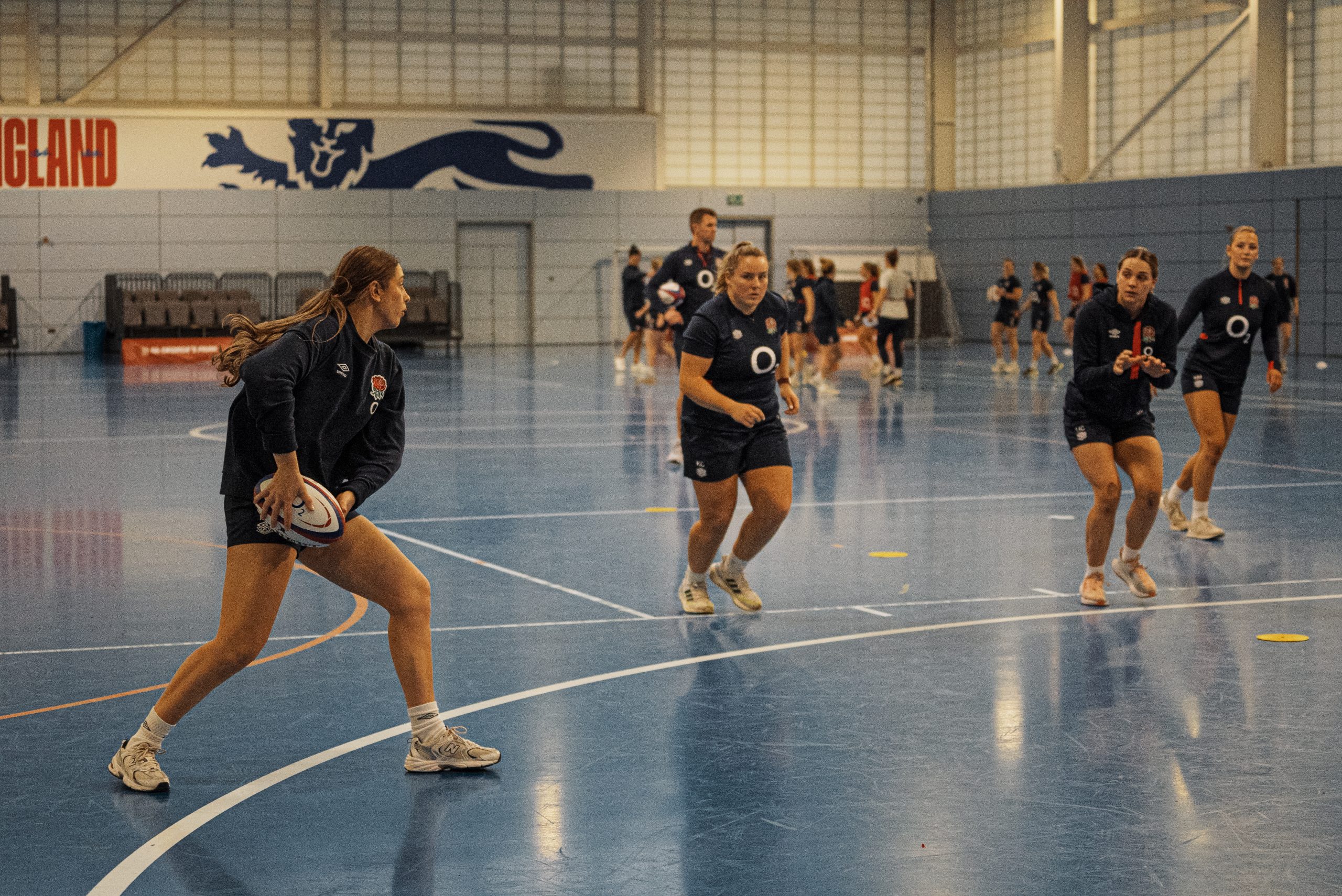
Image: England Rugby
How the Red Roses execute their plans
As Eager points out, in international rugby, there can be relatively large gaps between series and campaigns.
“One of the benefits of international environments is that you have periods where you’re completely on it and you’re executing your plan,” he says. “Then you’ve got time when players are back at their clubs and you can review and plan for the next campaign. We’re continuing to develop how we go about that process and make it as effective as possible.
“Plans enable us to align as a staffing group around what we’re trying to achieve; vision, purpose and clarity. For every session, we have clear objectives and everything in the programme has a clear rationale.”
Events will not always run smoothly but there is a firm idea of the team’s development priorities and so England can pivot swiftly. “Certain sessions can go perfectly to plan, certain other times you have to adjust around what you’re seeing in front of you.” Where appropriate, some elements are gamified. “It is a strategy that ultimately drives energy, competition, intent, memories and laughter.”
England’s plans are aligned to the playing style of Mitchell, who is striving to construct a team capable of winning the 2025 Rugby World Cup and build on the platform bequeathed by his predecessor Simon Middleton.
“We need a clear understanding of how we want to play the game,” says Eager. “Once we define that, what are the key elements that contribute to us playing our best game? For example, if we’re a team that relies heavily on moving the ball, kicking the ball, we’ve got to have the players with the capability to do that. Their passing skills and kicking skills have got to be good. A lot of ball movement comes with a lot more running, so you’ve got to be running fit. So you can see how that starts to layer in.
“From there, we’re able to say where a player’s profile sits from a rugby perspective, a physical perspective, an injury perspective, and ask: is there a gap between where they are currently at and what they need to do in order for the team to perform? And if there is, that ultimately forms their development goals. So there’s a clear link between what we need to do and why that’s important.”
Constant communication
There are key principles in the way England play that enables players to transition smoothly from the club environments to the national team, but equally essential are the relationships the Leaders Performance Institute witnessed first-hand at the Hilton.
“Unless you can connect with people first, your coaching is limited,” says Eager. “You’re never going to have close relationships with every single player, that’s just not possible, but you’ve got to make sure there are some key people within the management group that have relationships so you’ve got most bases covered with most players. You’ve got to take the time to get to know the players as people.”
He cites business professor John Maxwell’s ‘students don’t care how much you know until they know that you care’ and author Maya Angelou’s ‘I’ve learned that people will forget what you said, people will forget what you did, but people will never forget how you made them feel’ as maxims for effective coaching.
Coaches and performance staff will proactively speak to players outside of international camps but, again, there must be a rationale. “There’s a real balance between having contacts and connection with the players at their clubs versus overdoing it,” Eager adds. “That’s their club time, they’ve also got lives to live, but connection is important to continue our growth as a group. We’re fortunate to have a relatively big coaching group, ensuring that there’s always avenues for conversation outside of camp.”
Critically, as Eager says: “you’ve got to be able to connect on a level beyond just a transactional coach-player piece, particularly with the modern player. The players have got to have confidence and trust in you and what you’re delivering because sometimes you’re pushing them to places they may not be comfortable going as part of training. When developing players, you’re pushing them, stretching them and encouraging them to fail so that they can learn. It takes a leap of faith from players to know that they won’t be judged. It’s really important: if you want to stretch players to their maximum potential you work on those relationships.”
Eager has worked with both male and female groups during his career. He notes numerous similarities across men’s and women’s rugby, as well as some subtle differences. “The women’s game is a little bit less defence and kick-dominant. There’s more open play,” he says.
Beyond rugby, some differences are sociological. He is not alone in noting that female athletes tend to ask coaches ‘why?’ more often than their male counterparts. “That shouldn’t be a bad thing. In my role, I’m ultimately responsible for how tired or fresh they feel because I’m the one pushing training loads and physical capacity. I need to make sure that my communication and rationale are on point so that when I’m asking them to go to places where they’re working hard or they’re sore, they don’t lose confidence. They understand the purpose, the benefit, and that it’s going to reap rewards on the back end of tournaments.”
Other differences are physiological, relating to factors such as hormone levels and the menstrual cycle. “That brings differences week to week which shouldn’t be seen as a negative because with that comes huge opportunities as well.
“We’re really trying to work with players on an individual basis to understand what works for them and, ultimately, it’s not a one-size-fits-all approach. At the same time, it’s a team sport, so you try to find the balance of what’s consistent from a team perspective and what flexes from an individual perspective to put people in the best position to perform.”
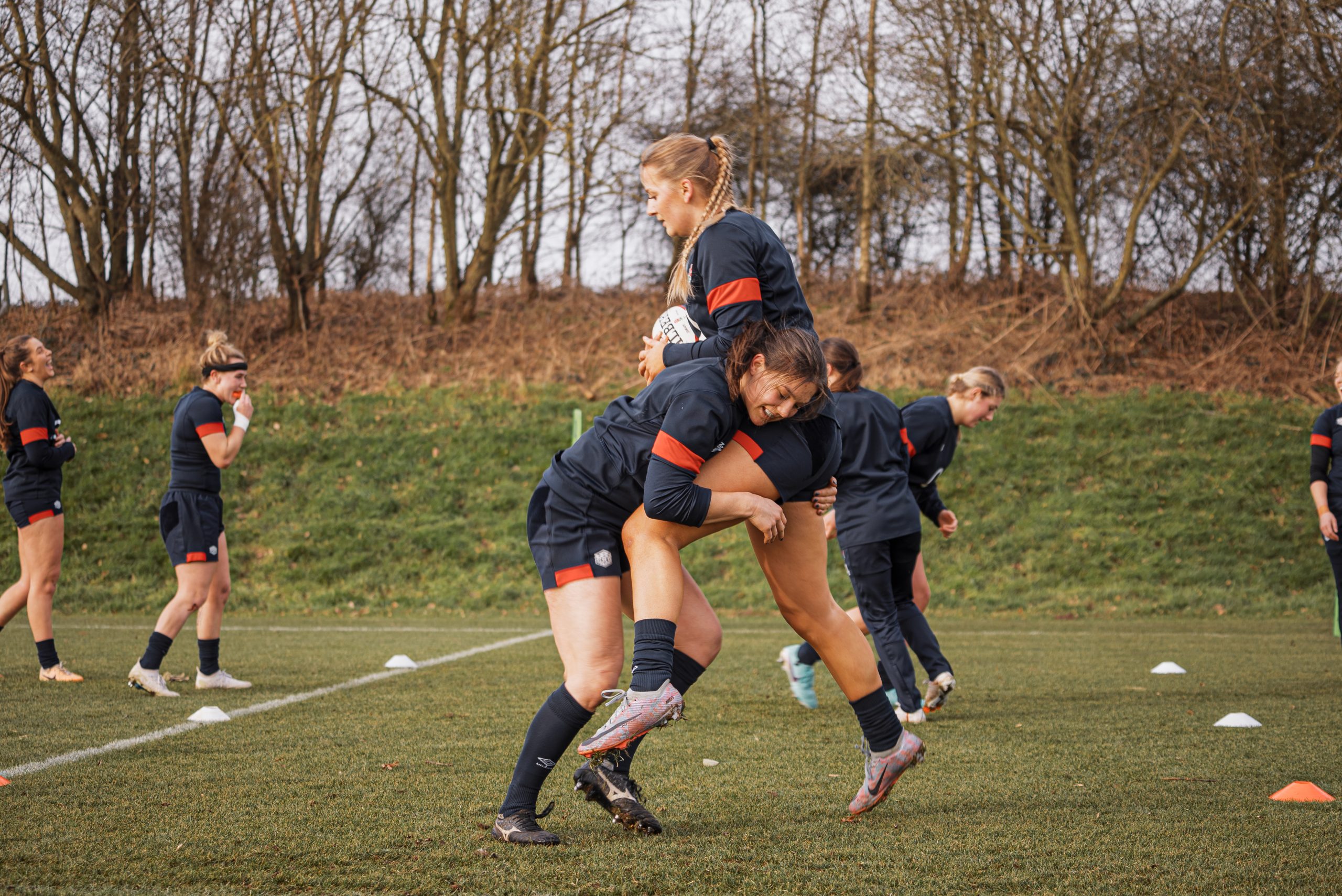
Image: England Rugby
The return to St George’s Park
The Red Roses will return to St George’s Park for a two-and-a-half-day camp in early March. “We’re constantly trying to layer in the developments in our game,” says Eager. “This camp will have a different theme with regards to what we’re trying to develop from a technical perspective, tactical perspective. Physically we’ve got a slightly different objective as well.
“In the alignment camp, we were looking at doing a lot more profiling and testing whereas now we’re trying to get the girls settled into more of a rhythm for our typical training weeks.
“Physically, it’s week one of eight for us. We’re back into running their athletic development programmes, we’re taking on their rugby development for the next eight weeks whereas the alignment camp was dipping our toe in, giving them some of the early information and getting engaged in where players are at. We’re starting to put the meat on the bones now.”
Eager’s excitement is palpable. “Change initially brings unknowns but it also brings huge opportunities. We’ve got a coach who’s got so much experience and we know that from a staff perspective and player’s perspective that’s only going to make us better. We’re going to learn a hell of a lot but what’s also refreshing is that Mitch recognises he’s coming into an environment that’s new for him as well, having predominantly worked in the men’s game. He’s also learning in that space.
“We’re all really excited to be able to continue to build on our last campaign. We have an opportunity to revisit the purpose of the team, our vision, what’s important to us in terms of our values, and how we want the environment to be. That sets the validation for everything else; training sessions, structures. It’s hugely exciting.”
Crucially, when the players return to St George’s Park they will all want to be there. “You can create an environment so players say ‘I can’t wait to get back in, it’s going to be great, I’m looking forward to these eight weeks’. That’s ultimately what we’re after and what we’re working hard on.”
St George’s Park provides a world-class elite training camp environment for any team or athlete wanting to optimize their performance. To find out more click here.
22 Jan 2024
ArticlesHelene Wilson led the Northern Mystics to the ANZ Premiership in 2021 but not before taking her playing group on an individual and collective development journey.
“We were bottom of the table and we made it to the top by literally changing the way we practised and our environment,” Wilson told an audience at September’s Leaders Meet: Driving Step Change in Female High Performance.
Wilson, who currently serves as Manager of High Performance Sport New Zealand’s [HPSNZ] Women in High Performance Sport programme, was primarily at the Etihad to discuss her five years as Head Coach of the Northern Mystics, a netball team in New Zealand’s ANZ Premiership.
The Mystics won the first national championship in their franchise’s 24-year history on Wilson’s watch in 2021. They went close again in 2022, her final year, and won a second Grand Final in 2023.
Yet in 2019, as Wilson explained, they finished bottom of the ANZ Premiership. At the time, the Mystics were infamous for their disunity and underachievement.
The talent and potential was there, but Wilson knew it could not be unlocked without an environmental overhaul. She started with one simple question: “how do we create an environment where high performance comes from out-learning your opposition and people are on a journey together to get there?”
Find a suitable framework for addressing performance questions
Central to their transformation was the Mystics’ belief in the Māori concept of ‘Wānanga’. “It’s a word that means coming together and meeting to discuss, collaborate and consider,” Wilson told the Etihad audience. “It could look similar to a team meeting but it can take many forms and Wānanga happens in many ways.”
A fuller account is provided here but, in summary, a Wānanga provides a space for collective, inclusive, reflective practice (‘Rongo’ in Māori) that enables people to reengage with problems in the world beyond (‘Tū’) having formed a consensus on the best solutions.
“There is an energy about it,” said Wilson. “The process and energy is like a coming together and moving apart in a state of clarity, which is collectively built together. The process of ‘Karakia’ – transitioning from one realm to another – takes us from the worlds of Tū and Rongo.”
These Māori concepts and traditions resonated with her staff and playing group, but Wilson emphasised the relevance of the framework rather than its local aspects. Coaches, she argued, should use cultural artefacts germane to their context. “There’s stuff around us everywhere that you can apply in different ways and it’s the framework that is key.”
The players and staff bought into the idea and it meant the team could get to work on what was needed to take them from last to first place in the space of two years.
Improve the quality of your interactions
Ahead of that triumphant 2021 season, Wilson and her coaches convened to establish what it would take for the Mystics to win that season’s Grand Final. They also invited the playing group to do the same.
“We tried to define the standards that we needed to shift to win the Premiership,” she said. “I remember specifically at this time we would Wānanga in the gym and we were talking about the standard of performance that we needed to put down on the court in pre-season to ensure that we could win the Premiership.”
The players and coaches often had contrasting views. “We had all the data and the information and knew what we needed to do, but we had to hold that back and let the players lead it,” she added.
In one particular pre-season Wānanga, Wilson addressed the Mystics’ reputation for throwing away possession cheaply. The players sought a measurement for tracking their improvement but one wasn’t forthcoming. “How do we measure it? How do we know we’re doing well? We couldn’t agree, we couldn’t align, so we had to go out and learn.”
That Wānanga preceded a public pre-season game and Wilson used the opportunity to pose further questions: if you make mistakes on the court what does that look like? How many mistakes is OK? What’s your key role in your position? For example, if you’re a goal attack and your main role is to get the ball to the goal shooter as accurately as possible and you want to throw it from the first phase in the centre, how am I to determine that you will get that ball there? Tell me what you need to do. And they will tell me how they believe they will take this skill and execute it to the level we’d accept, as well as how many mistakes we were allowed. They defined what they were going to put on court and what they were going to get right.”
Each member of the team would set personal limits. “It looks like ‘I won’t make the same mistake twice in a row’. OK then, if you do, then you’re off. You’ll work with the S&C on the side line in front of the public, practising that mistake for two minutes, then you’ll go back on court and we’ll see how you go.”
The continuous Mystics substitutions made the game a strange spectacle. “You can imagine the first half the first time we tried this,” said Wilson. “It was like a yoyo. My opposition coach said to me ‘what the eff are you doing?’”
“There was a lot to unpack in our changing room after that and our psychologist was a great help.” The subsequent Wānanga went on for an hour and a half. One of the key questions was the matter of each individual’s role in the team. “Even if I’m only on the bench how do I still contribute? It was the benchies’ job to pull their teammates up when they weren’t executing the skillset they said they would more than two times in a row. That then formed a drive for individual performance.”
As Wilson said, the Mystics changed the way they practised. “It wasn’t just making an effort to say it – it wasn’t as simple as that – it was the quality of the interaction that happened.”
Increased energy and confidence
At the Etihad, Wilson shared an image of her team lining up backstage ahead of the 2021 Grand Final and noted the sense of “energy and confidence; that they each had each other’s back as they go out and do it.”
She said: “Then we joked we were doing this hard work as people so I could get to drink a piña colada on the bench while I was coaching; knowing I had done my job. I wish I had one, because they were driving the performance on that day.” The Mystics quickly established a two-goal lead over their opponents, the Mainland Tactix, that they never relinquished in a 61-59 victory.
“We made seven errors in the entire game,” Wilson continued. “And when we had that Wānanga at the start of the season, the players said they should be able to make 64 errors in a game. We [the coaches] knew they needed to make under 15 [to win the Premiership] and they made seven. It shows how they drove their own performance.”
To further underline how the Mystics transformed their environment, Wilson referred to Grace Nweke, a 21-year-old New Zealand international and one of the rising stars of the sport. She joined the Mystics in 2019 while still at school but, thanks to Wilson encouraging her players to have a voice, Nweke immediately had the platform to speak up when she felt things weren’t working for her.
“She was 16 years old and didn’t quite think her S&C programme was quite right for her and she asked how we could discuss how it might be changed – that’s powerful for an athlete to have that support [especially] when the S&C said ‘well, I’ve been doing this for 20 or 30 years’ – but then it’s also powerful for the S&C to say ‘how are we going to work together to make this better?’”
In the first part, we delved deeper into Helene Wilson’s role in creating a culture that enabled the Northern Mystics to ‘out-learn’ their opponents.
18 Jan 2024
ArticlesRichard Burden of the UKSI’s Female Athlete Health & Performance team reflects on their ability to overcome indifference, limited resources and internal politics.
Though the UKSI is but a small cog in the wheel, the institute’s Female Athlete Health & Performance team has been astute in dealing with the typical challenges present in a high performance system, as Richard Burden, the UKSI’s Co-Head of Female Athlete Health & Performance, told an audience at September’s Leaders Meet: Driving Step Change in Female High Performance at Manchester’s Etihad Stadium.
“We don’t have a lot of resource,” he said of his team, which he leads alongside Dr Anita Biswas. They work closely with Dr Kate Hutchings, who leads the UKSI’s female athlete clinic. It is quite an undertaking for a system that serves up to 800 athletes, numerous coaches and a wealth of different interests.
“Between the three of us,” he continued, “we have four days a week to try and do some of the things that we do. That’s a step change – that’s good compared to previous cycles – I’m not complaining. I’m just giving a little bit of context because a lot of the time when people who don’t have experience look at the system we’re in, they think that’s amazing, that you’ve got a tonne of resource, that you must be able to do some really cool stuff.
“The fact is that we don’t have [unlimited resources]. But we’ve got quite good at working with what we do have.”
Part of their success can be attributed to bringing coaches and athletes on what Burden refers to as a research and innovation journey. Too often sports scientists and practitioners fall short on that front.
In June 2023, Burden and Biswas spoke onstage at the Female Athlete Conference in Boston about the “needless tug-of-war” between female athlete sports science and applied practice. They were joined by exercise physiology and nutrition specialist Professor Anthony Hackney of the University of North Carolina. Together they asked an audience of physicians and practitioners who or what they saw as the greatest barriers to research and innovation. “Coaches” was a common response “because of the perception that they lack engagement in research and innovation”. Three months later, at the Etihad, Burden turned that idea on its head.
“Sports scientists and practitioners are really poor for this,” he said. “If a coach doesn’t want to listen to their idea it’s the coach’s fault.”
Burden suggested it could be a problem with how the idea is pitched. “If coaches are suggested as a barrier, what are we doing about that? Do people know why a coach might not engage in science, research and innovation? Are we giving them a reason to change? Are we giving them something they can use that’s actually going to make a difference?”
People often point to the limited budgets in high performance. “Yeah, funding is tight, but it’s probably not going to get any bigger. Maybe we’ll get a bigger slice of the pie but the pie is unlikely to get any bigger,” he continued. “So how can we be more resourceful?”
Time-poor coaches is another suggested issue. Again, it doesn’t wash with Burden. “How can we create more time with what we currently have? Everyone is super busy. We need to get stuff done – so how are we going to do that? And the translation: how can we improve the practicality of doing research and innovation in elite environments so we can actually give out something useful?”
The UKSI Female Athlete Health & Performance team have focused on four areas.
Any potential innovation has to add value. “There is always an interesting-versus-important question that we ask ourselves,” said Burden. “We can’t just do stuff that’s interesting – we have to do things that are interesting and add value – that’s our sense-check.”
The Female Athlete Health & Performance team answer that question by spending time talking to coaches and athletes with a view to understanding their needs. In 2019, the English Institute of Sport (EIS; the former name of the UKSI) launched their SmartHER campaign to encourage female athletes to speak about their challenges and concerns in a safe setting. It led to a roadshow series where education sessions were provided for coaches and athletes across the UK. “That gave us momentum because it just started conversations,” said Burden. “It was only basic level education but it was things that people hadn’t heard before, and the conversations started to grow within sports and between sports, and back and forth between the UKSI and the sports. Better conversations would happen.”
This opening up of communication lines led to the development of the UKSI’s internal learning platform, known as the Performance Hub, with modules including ‘The Basics of the Menstrual Cycle’ and ‘Additional Considerations for the Female Athlete’. “It’s always available to practitioners in the UKSI so they can upskill themselves on their own time,” said Burden. “It is aimed at giving people more awareness and confidence in their conversations.”
He quickly learned not to assume knowledge. “A lot of this comes from the eyes of a bloke who is quite a lot of the time the only bloke in the room. It is not a given that a female coach will know about bra fit, whereas a middle-aged male coach may be comfortable discussing such issues.”
Increased athlete-coach engagement has eased another common concern from researchers: access to the athletes and coaches themselves. “You have to bring them on a journey,” said Burden. “You bring them along, you increase accessibility. Researchers and academics often complain that athletes are protected, that you can’t access them – but what have you done to try? By doing your research in a lab? They can’t relate to that. Go into their environment, see how they live, see how they train, and co-design the questions.”
As conversations about topics such as menstrual cycle tracking developed within the British high performance system, it led an increasing number of athletes, coaches and researchers to ask if there was a less invasive alternative to needle and blood sampling in hormone data collection.
In 2021, the EIS trialled Hormonix, which collects hormone data through saliva sampling. The technology was designed in collaboration with Mint Diagnostics. Later, Hormonix was trialled at Manchester City Women, where it has led to further research projects around female athlete health.
Burden also spoke of a UKSI research collaboration with Manchester Metropolitan University and British Rowing, who had a question. “They called it Project Minerva,” he said. “It’s something they’ve been developing about the influence of training load and the delivery of training on female health. So how is the menstrual cycle influencing their ability to deliver training and what impact is it having on internal load, competition and performance? It’s their question – it hasn’t come from research or a university – it’s come from the sport. We’re there to provide some of the research and innovation expertise to help them formulate the question and work out a path to answer it.”
Co-designed research and innovation can accelerate the UKSI’s ability to provide support to athletes. “Get the practitioners involved, get athletes, get the teams and bring them along with it because if they’re onboard you get easier access to them and you’re going to produce something that’s more translatable, meaningful and applicable to them.”
When the UKSI Female Athlete Health & Performance team proposed a collaboration with the Australian Institute of Sport [AIS] and the United States Olympic & Paralympic Committee [USOPC], it had never been done before.
“It’s across traditional lines,” said Burden. “When you talk about competitive advantage, why are we talking to the Aussies and why are we talking to the Americans? But that’s not how we’re looking at it. The Aussies have done some really good stuff that we haven’t. We’ve done some really good stuff that they haven’t. The same with the Americans.
“If we combine resources to stop duplicating effort, because we’ve done educational stuff, the AIS have done some brilliant educational stuff, the USOPC have done some really good educational stuff. We’ve all done the same educational work. What’s the point when we can do it all together and focus on other things?
“I thought I was going to have a really hard time when I took this to the directors. I thought there was going to be some sort of major health event for some of them when I said ‘I want to work with the AIS, I want to work with the USOPC’ but it was actually really easy and we put together a fairly compelling reason why, but it was quite easy because this isn’t about performance advantage, this is about advancing female athlete health and performance.”
“What can you do with information that you already have?” asked Burden. To illustrate his point, he referred to the UKSI’s drive to centralise all blood screens across the British high performance system. It enabled that information to be used in a more informed and impactful way.
“The information was being held in UKSI silos, but there was potential if we could aggregate it all,” he continued. “That was a few years ago and it wasn’t the easiest conversation to have with the sports because they had their own suppliers. There was some politicking to convince everyone that it was going to be really beneficial.
“The vast majority of our sports now use the same supplier, which means we have a database of blood screens that is continuously being populated. Because of that, we can start to unpick some of the things that we need to understand.
“We’re starting to understand sport by sport differences, sex differences and, over time, we’re going to be able to start to individualise between sport differences, in-sport differences, individual differences. Being able to do that, we can inform our practices and inform the treatment or our understanding of the biggest health problems in a much more informed and precise way because we’re using what we already have in a much better way.”
In Burden’s view, this pooling of evidence has the potential to lead to the greater individualisation of support services. He contests the perception of case studies as low in the traditional hierarchy of evidence due to them being small in sample size. “We’re in elite sport and I don’t want to generalise – I don’t care what the mean for the whole group is – I need to know why athlete X is different from athlete Y. Case studies are really impactful for us – if you can collect case studies then you start to build an evidence base. When trying to understand things like the menstrual cycle, generalised approaches just aren’t going to cut it.”
As discussed on this virtual roundtable, it has to be more than a tick-box exercise if you’re going to reinforce a culture of continuous improvement.
Two questions underpinned the groups’ conversations on the day:
Having a clear philosophy and intent
In summarising all of the responses and suggestions from the group, it became clear that the effectiveness of your approach to learning and development starts way before the actual practicalities. A reflective question for all is whether your team or organisation has a clear philosophy and intent on learning or if it is just a tick-box exercise because you know it is something that generally needs to be done? Put simply: if you don’t have this philosophy and statement of intent clearly mapped out, it isn’t likely to be effective. We also discussed around reinforcing a culture of continuous improvement, of which clear approaches to learning form a large part of this outlook.
Firstly, start off with outlining key principles. Instilling a set of clear principles that sit behind your learning and development work allows you to find the balance between short and long-term focuses. There is a natural tendency in many high performance environments to be reactive, which can minimise long-term growth. Thoughts from the group suggested that your principles should cover both bases so there are clear expectations from the here and now, but also the future.
Be intentional, often less is more. There is a vast amount of learning and development opportunity for staff and also athletes, so much so that it can be overwhelming. So with this in mind, ensure you are intentional with what is being focused on, how much time you are dedicating to it and perhaps most importantly, how will it drive positive change. One of the comments on the call that summarised this point well was the importance of creating the need and desire for change.
Have a needs-based approach. This is a natural follow on from the point above and will support the intentionality of what you or your team engages in. The key element of the needs-based approach is making sure you are participating using the right stimulus.
With any learning and development experience you engage in, do you have a clear commitment to action post-engagement which highlights what you are actually going to do differently or to deepen the quality of that learning?
Finally, how do you think about developing an organisational system that facilitates learning and development? A reflection is that learning can often take place in silos and learning isn’t shared organisation-wide. Environments that create a true culture of learning have clear systems and strategies in place to create opportunities for the sharing of practice. Intention and organisation will also help to elevate the quality of your learning.
Peer group opportunities
When aggregating all of the responses from the group conversations, unsurprisingly the most common response when thinking about effective learning and development strategies were aligned to peer group opportunities. There were a few specific examples of this in how you are able to facilitate these opportunities for staff or your athletes.
Other impactful strategies
Although a large number of effective strategies aligned to peer-group opportunities, there were also some excellent thoughts and considerations that sat outside of this bucket. Some of these strategies are well-known and utilised well in environments, but it was a good reminder of the impact they can have when focused on consistently and strategically.
Unsurprisingly, experiential learning was identified as a really impactful strategy for learning. To get this right, create a space for the learning experience, mixing theory and practice and then make the learning activity experiential in nature.
There was also a thread of discussion around after-action reviews and debriefing. These tend to be strategies that are not utilised as well across high performance sport, largely due to the fast-paced nature of the industry – it’s often onto the next game. However, one environment shared how much they have gained by having reviews every week on decision-making processes and having this consistent approach has yielded some really positive results. How consistent are you with reviewing?
‘Question-based leadership’ was something the group felt was an opportunity when considering effective learning and development strategies. Question-based leadership refers to the notion of communicating through open, targeted questions more often than in closed statements. In a number of recent conversations across the Leaders Performance Institute, several members have shared how quality questioning is an under-utilised skill in many environments.
Finally, the group also touched on the importance of psychological safety in the environment and celebrating a ‘beginners mind’ to help reduce fear, noise and impostor syndrome.
The recent Women’s Sport Breakfast highlighted advances in the understanding of post-partum parenthood, the company policies that provide support, and opportunities to return to competition.
The Women’s Sport Breakfast at November’s Leaders Sport Performance Summit in London brought together a panel of guests well-versed in the historical experience of women working in elite sport and the choices that were often forced upon them when it came to the most personal of decisions.
Moderator Claire-Marie Roberts, a chartered psychologist who serves as the Head of Elite Development at the English Premier League, was joined onstage at the Kia Oval by Ros Cooke, a physiotherapist specialising in pelvic health who works with the UK Sports Institute and MSK Physiotherapy; Sarah Evans, a new mother, current Leaders employee, and former GB Hockey player who now represents Surbiton Hockey Club; and Lauren Forrow, the Head of Operations at GB Cycling, who is expecting her first child in the New Year.
For three quarters of an hour they explored parenthood, policies and return-to-play protocols in front of an audience of coaches and practitioners drawn from across the globe.
There was pride in what has been achieved thus far, and lessons learned in the process, but there is still a long way to go for the vast majority of sports. In fact, no one can rest on their laurels – everyone can continue to learn and do better.
Policies and guidance
In reflecting upon her time as an international player, Evans never felt she had the option of having a child and maintaining a place in the Great Britain squad – a situation perpetuated by a lack of role models. Several years later, she understands the importance of taking it slowly, looking after her pelvic health, and not expecting an immediate bounce back. Evans, who was accompanied onstage by her baby daughter, said her body has changed having been through a trauma, but she’s focusing on celebrating her body’s ability to grow and sustain life rather than being frustrated by it. She’s conscious that she has a good support system and has invested in the services of a pelvic health expert. Hockey, as she put it, lets her have something for herself and control her identity, as well as be a role model to her daughter.
The improved environment, even during the course of just one individual’s career, is noteworthy. Cooke explained the importance of the likes of UK Sport, the RFU [Rugby Football Union] and FIFPRO, football’s global players’ union, publishing their guidance and policies on maternity, especially in the post-partum period.
It’s uplifting to see sport moving to a more open dialogue and recognising that it’s not one-size-fits-all. Not only do different sports need different things, and have different funding pools, but each individual is affected in different ways too. The importance of this work has grown as we see an increasing trend for athletes to not delay motherhood, supported by such policies and guidance.
Help people to better understand being a parent
Cooke also reflected on her biggest learnings from working with athletes pre- and post-partum. Firstly, everyone needs space to understand their new role as a parent – this applies to men too. Secondly, where there is a lack of evidence, because people have been nervous to conduct research with pregnant people, this causes cognitive dissonance with athletes who crave certainty and timelines.
She highlighted how we’ve set ourselves up to expect what isn’t necessarily best for our bodies. There has typically been judgement of how quickly people return to sport, and celebrations of quick returns, but what is best for the long-term health of the body?
With her athletes, Cooke aims to share information on the risks of quick return, but in a supportive way. She is also working to integrate pelvic health support with all athletes and colleagues, making it more normal to do so. There’s an opportunity for people to gain so much from the experience of becoming a parent and it’s important to look after anyone going through this change. Cooke emphasised the importance of pelvic health as a normal bodily function for everyone, supporting sexual health, urination, and defecation; and she sees this being an area that will increase in importance for men too. It also has an impact, she added, on performance and plays a key role in how our bodies transmit force through the pelvic area. Not only that, but sub-optimal physical health can impact mental health and cause anxiety and depression, as well as impact social interactions.
Change the language around returning
Forrow revealed that GB Cycling approve of the guidance provided by UK Sport and can point to five riders who have returned to racing having given birth. She added that the behaviours illustrated within the guidance have been fundamental in establishing an athlete’s preferences upon their return. Forrow said that it’s important for practitioners to ask positive questions to help them better understand each individual’s experiences.
The team have worked on changing the language around returning, focusing not just on performance plans and structures, but on a happy, healthy mum and baby, as well as remembering the joys of riding. They talk about ‘exercise’ rather than ‘load’ or ‘training’, and refer to ‘milestones’ not ‘dates’ – it’s a process they hope will alleviate pressure.
Forrow sits on the senior leadership team [SLT] at GB Cycling and has witnessed the influence of the guidance at first hand, both as a leader and as an expectant mother herself. As she explained, it has been empowering for Forrow, learning so much about her body, and sharing that knowledge in a workplace sense, whilst hearing from others. People are GB Cycling’s first competitive advantage so helping people in every way will only increase that. It is also worth noting that GB Cycling have extended paternity leave.
Forrow’s first six months as an expectant mother were tough, so having the SLT role-model the value of well-being was powerful. In her case, this played out around the UCI Cycling World Championships, which took place in Glasgow in August. Her usual field-of-play role wasn’t possible, but where the team value and focus on staff development, the team told her “we got this” and the values and culture of GB Cycling allowed mum and baby to be put first.
There remains much work to be done and Forrow hopes that current statistics will change. At present, 80 percent of people don’t return to full-time work, 20 percent don’t return at all, 50 percent return to admin roles even if they were previously in a position of management.
Whilst personal preference is OK, hopefully the stats will tell a different story in the future.
Ask – don’t just assume
Roberts worked with an Olympic committee over ten years ago. At this time, athletes tried to meticulously plan and align their pregnancies with Olympic cycles, or to combine them with an injury. There were high levels of expectation, increased stereotyping, and high levels of pressure around how they felt they should approach pregnancy.
A decade later, Roberts’ topline advice for expecting mothers and those supporting them is to abandon expectations, put each individual at the centre, consult heavily, provide support in line with those consultants, be flexible, and help with changing mindsets to not having much certainty.
It remains a gamble and a risk to conceive during a career. However, whilst athletes previously delayed the choice as their organisations couldn’t provide the support, they can now return to the same level, and in some cases, even increase their levels of performance.
Nevertheless, expectations can be detrimental, and some women can’t return to the same level. Therefore it is imperative that we respect, support, and neither stereotype people nor make assumptions about them.
Seven practices we need to see more often:
28 Nov 2023
ArticlesIn our final Performance Support Series of 2023 we explored the distinction between goal harmony and team harmony and make the case for the latter being the more impactful.
Over the course of the three sessions, we are focusing on three core areas of this topic:
For the second part of this learning series, the focus is goal and team harmony, with specific attention paid to how you can create team alignment in order to influence team performance.
The desired outcomes of the session included:
Exploring team harmony
Team harmony requires contributions from everyone on the team in order to reach those goals. The best team goals are co-created by team members and are aligned with the larger organisational goals.
In high performance sport, numerous organisations and environments employ a ‘team harmony’ outlook as opposed to a ‘goal harmony’ approach. In this session, we highlighted some of the potential pitfalls with a team harmony approach and make the case for why goal harmony can be more impactful.
With a team harmony approach, we often witness a vague strategy, mission and vision. The consequence of this vagueness can lead to operating in silos and overall inconsistency in messaging and the operation of the team. Another side-effect of this vagueness is that resources aren’t applied efficiently and there can often be a climate of uncertainty due to a lack of trust.
Finally, we can also experience people in the environment being particularly pleasant with one another, but not undertaking constructive conflict around the direction of the programme. With an absence of constructive conflict, there can be a lack of commitment and, with a lack of commitment, we can experience levels of under-performance.
What’s the solution?
Now we have identified some of the possible pitfalls with a team harmony approach, what solution could give us the best possible outcomes?
A goal harmony approach can be that solution. It is vitally important to set a unifying, ultimate performance target that drives everything that you do. Does your team have this ultimate target? This target isn’t a vision, it is measurable and performance-based. When reflecting on this in the group conversations and, leaning on prior experiences, we often find that many efforts to create alignment to galvanise and focus team performance lack this clarity.
Steve Jobs famously spoke of the friction that is required in teams to generate high performance. It is the friction, discussions and disagreements around performance matters that keep you at the cutting edge and challenging the nature of the ultimate performance target.
In summarising this section, if we generate harmony and clarity around the goal, the friction that takes place sits around the requirements of the target and not the individuals involved as we have already established collective harmony and clarity. So what could goal harmony look like in practice?
Enhance team effectiveness with ‘What it Takes to Win’ planning
A well-known performance model is the ‘What it Takes to Win’ framework, which formed part of our discussions around how to enhance team effectiveness and to promote the notion of goal harmony over team harmony.
In the specific examples and experiences we engaged with in this session, the ‘What it Takes to Win’ concept was built on the premise of five key factors:
To pick up on the starting point of a ‘What it Takes to Win’ model, often the success of this approach lies in the practice of setting the target. The performance target should be a bridge to your vision, purpose, dream and goal. The target has to be in your control and engages all resources and team members. It also requires a clear deadline and ability to be measurable. Finally, for the performance target to be impactful, it often requires you to feel a bit uncomfortable.
20 Nov 2023
ArticlesThe UK Sports Institute believes that if we want to improve the conditions for girls and women in sport, we need to learn from the past.
An article brought to you by our Partners at the

Female athletes suffer certain sports injuries more frequently than male athletes, but that should not be the case.
“It is important to consider biological differences between men and women when it comes to performance or injury outcomes, but it’s only one piece of the puzzle,” says Dr Victoria Downie, a performance scientist within the UK Sports Institute’s [UKSI] Performance Innovation Team. She is telling the Leaders Performance Institute about elements of her team’s research into female athlete injury occurrence.
“I started to explore how we as an institute could better understand all the factors which are impacting how women are training, competing and performing, how they feel, and their whole experience of being women in elite sport,” adds Downie, who has spent time immersed in different Olympic and Paralympic sports in order to better understand their challenges and opportunities. “It’s easy to underestimate the impact of simply spending time listening to athletes. That goes for men and women but perhaps more for female athletes who feel historically as if they haven’t had much of a voice.”
Female athlete health and wellbeing has long been a priority for the UKSI. In February, through the prestigious British Academy Innovation Fellowships scheme, the Institute partnered with the University of Nottingham to launch a research project calling upon former UK Sport-funded female athletes who have retired within the last five years. The purpose is to interview these former athletes and explore how women’s sporting environments – their social and cultural context when training and competing – influenced their experiences of both minor and major injuries.
“We asked women to talk about their experience of injury while doing their sport and all the factors that may have influenced that experience.”
The gendered environment
The research project is being led by Dr Stephanie Coen, an Associate Professor of Geography at the University of Nottingham. “You may be wondering what a geographer has to do with this type of work, but my speciality within Geography is Health Geography,” she tells the Leaders Performance Institute.
“Broadly, I’m interested in how our environments influence our health and, within that, my interest has been around gender differences in physical activity.”
In 2021, Coen published a paper with Joanne Parsons at the University of Manitoba and Sheree Bekker at the University of Bath entitled ‘Anterior cruciate ligament injury: towards a gendered environmental approach’.
“My foray into sport was prompted by my previous work on how environments, like the gym, shape the gendered nature of physical activity,” says Coen, who explains that her collaboration with Parsons and Bekker happened “by chance”. In 2017, she was approached by Parsons, a clinician, and four years later their paper with Bekker would provoke a response in the sports world “that exceeded our wildest expectations”.
One of the key elements of the paper was to challenge the focus on the clinical and biological in female athlete injury occurrence. “The current medical paradigm puts the focus of injury within the female body – menstrual cycles, anatomy, biomechanics, all of those things – whereas the gendered environmental approach asks us to take a wider lens. It’s not that the biological lens doesn’t matter, but the gendered environment approach asks us to think beyond the individual body to how we can change the gendered conditions of sport in ways that might reduce injury risk.”
The myth of the ‘ideal female athlete’
Female athlete ACL injuries provide an illustrative example of the impact of the gendered environment. Downie says: “When this is discussed in the media, there is talk about women having more ACL injuries because of their biomechanics, because whilst they’ve got their period, their muscles are a bit more relaxed.” She is not dismissive of those factors, but the UKSI has long sought to look beyond such internal factors.
“One example that’s come out of our work is that women in sport often talk about feeling as if they need to show they are strong or not complaining,” says Downie. “That is a factor that could be leading women to not report that they are feeling a niggle or they feel that they need to train through the niggle to show they are strong – ‘I don’t want to be the one that misses training today’ – and it could be a factor that delays their diagnosis.”
“This inherent belief is embedded in history. For example, women were only allowed to run the Olympic marathon for the first time in 1984. Before that, people thought women weren’t strong enough, weren’t brave enough. There has been a huge shift in these beliefs over the last 40 years, but it is not a long time in the grand scheme of things. These beliefs are still in play and through this work we are hoping to highlight these factors.”
There is also the challenge presented by what Coen and Downie call the perception of the “ideal female athlete.” “This is the kind of wider social norm that prescribes the social and physical qualities that the ‘ideal’ female athlete embodies,” says Coen. “That might seem abstract, but actually, in the women’s experiences, this kind of ideal really did function as a barrier to women feeling as if they could voice health and injury concerns because if they maybe asked too many questions, maybe they’re being too direct or too assertive and that might contravene the ideal of being soft, nice, polite and agreeable. The ideal of the female athlete can have quite a tangible material impact on the everyday experiences of women athletes with ramifications for how they went about tending health and injury concerns.”
The drive to better understand these concerns fuels the entire project. “It’s about understanding that these sorts of social norms and taken-for-granted ways of doing things become part and parcel of the sport environment,” adds Coen. “These social and cultural aspects are an untapped opportunity for reducing women’s injury risk. If we can make them visible, we can change them. And this puts us in a position to improve outcomes more widely for girls and women in sport.”
The research-to-practice gap
Coen’s academic work made her a natural fit for the UKSI. “We always look outside the Institute for people who are working outside of elite sport on areas that interest us,” says Downie. “We put together an application for a British Academy Innovation Fellowship and we won the award, which meant that we have Steph for the whole year.”
Coen has taken on the duties of interviewing the retired athletes who were encouraged to come forward for the project. “I feel so lucky and privileged to have this opportunity,” she says. “I went to my first Performance Innovation Team meeting in the spring and I’ve been blown away by the creativity and excitement in the room.
“When we published the gendered environmental approach to ACL injury it was a conceptual paper, an idea. By partnering with the UKSI and Vic we’ve been able to move this idea into something that can have a tangible impact for women in sport. That research-to-practice gap is something that often feels very wide in academia and I feel like in this work we’re actually closing this gap in real time.
“It shows there’s leadership at the UKSI that’s really trying to push forward in a substantial way for female athletes.”
Downie’s excitement is palpable with a Summer Olympics and Paralympics year approaching. “This work has not happened overnight,” she says. “We’re in a place now where we can share this and start to have some impact. Paris is less than a year away but we can see some tangible impact going into the next cycle.”