In this recent edition of SBJ Tech’s Athlete’s Voice, former British athlete Andrew Steele discusses his transition from track & field and how a chance meeting with a genetic scientist transformed his career trajectory.
Main Photo: Getty Images

You can’t have a discussion about sports technology today without including athletes in that conversation. Their partnerships, investments and endorsements help fuel the space – they have emerged as major stakeholders in the sports tech ecosystem. The Athlete’s Voice series highlights the athletes leading the way and the projects and products they’re putting their influence behind.
* * * * *
Steele, 41, later began a career in genetics and how that science affects fitness, nutrition and performance. He led product at DNAfit and then Prenetics (which had acquired DNAfit) before starting his own digital health firm, Stride, in 2023, which this summer made strong inroads in North America through a partnership with Unity Fitness Canada. It provides multiomic testing: wide-ranging diagnostics on genomics, the microbiome, protein profile and more.
On his vision for Stride…
Previously, we’d had a lot of products which are point solutions: Here’s a DNA test for this, here’s a blood test for this. With Stride, I’m trying to bring it all together. So we’ve got a range of multiomic lab testing. We do a DNA test, a microbiome test, a blood draw, a biological age test, and an oral health test will be in the future too.
We knit all that together to see a holistic picture of your internal biology in a way which is pleasant to see and understandable — not a bunch of PDFs to download from the lab, but actually a really engaging digital dashboard. Your DNA doesn’t change, but you test everything else every six months and see how that’s tracking. And then we make a tailored supplement based off those results for you.
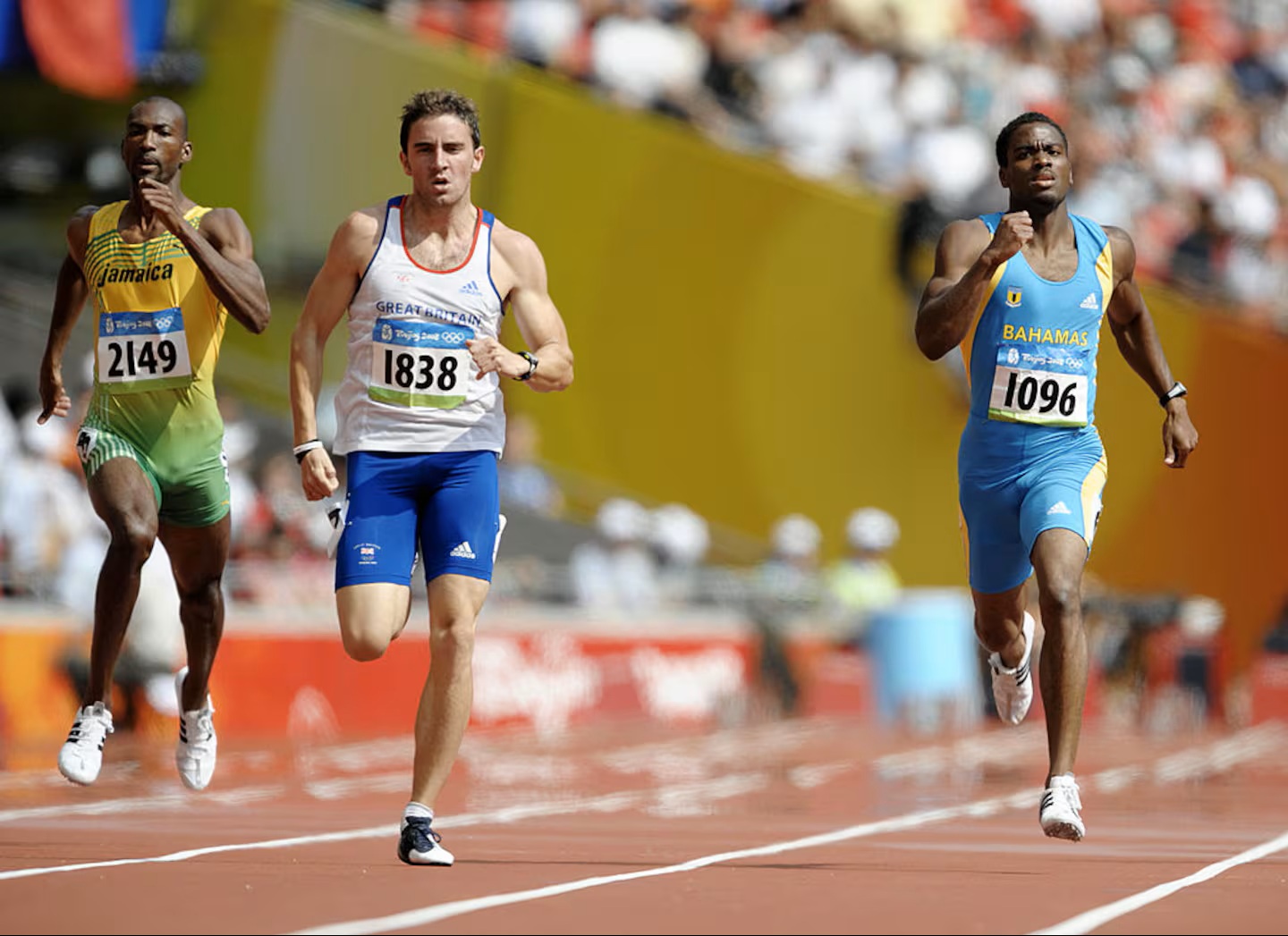
In 2008, Steele competed in the Olympic Games held in Beijing in the 4 × 400 m relay. AFP via Getty Images
On the cold outreach that changed his life…
I’m actually glad I didn’t get [my medal] at the time because it forced me to be very open to opportunities about what came next in my life.
There was one email that came into my inbox one day from a guy who was working with a genetic scientist and looking to commercialize this test and looking for research subjects to help them understand how genetics affected exercise response. And if my [running] career been going better, I would have just forwarded it onto my agent and said, ‘Hey, see if there’s some deals to be done here.’ I was, at this juncture in my life, when I was 27, I had zero higher education. I had zero work experience, and I certainly had not even zero money. I had minus money.
So I engaged proactively on this, and thank God I did because, long story short, [I joined] a health tech business called DNAfit in 2013. That business went well, I learned a bunch, and I became a co-founder there. Five years later, we sold the business for $10 million as bootstrap founders. Then I went into the next thing [Prenetics] as Chief Product Officer, eventually being part of the leadership team that led to a billion dollar NASDAQ IPO. So it changed the path of my life, not winning that medal — but probably for the better. And, along the way, they awarded me the medal anyway.
On his current business life…
I still sit pretty close to sport. I founded a business called Stride, which is in the similar space of diagnostics and preventative health. But I also have one other thing, which is a big passion of mine. Sport First is a venture studio, which helps people that come from a sports background navigate the transition into becoming a founder and entrepreneur.
On his science and tech interest as an athlete…
If you’d asked my teammates, I was probably always known as the guy that was [following] the latest nutrition science or supplements. It was always a passion of mine — and tech. I was always super interested in startups.
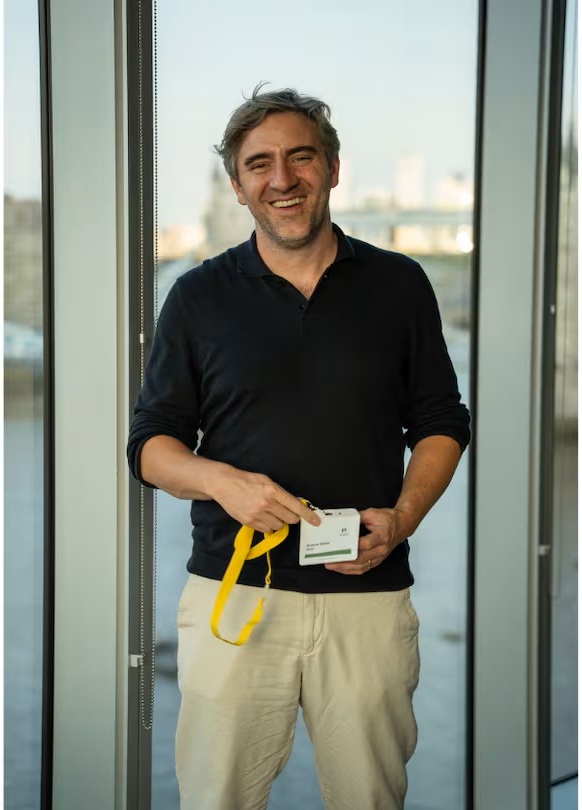
Steele founded personal genetics company DNAfit before going on to become part of the Prenetics group. Now, he’s building Stride for personalized supplements tailored to an individual’s unique genetic makeup and personal health goals. Courtesy of Andrew Steele
On what he learned about his genetics…
DNA is just one of the things in the picture, right? There’s a genetic variable called ACTN3, and there’s a version of this gene which is basically the C version of this gene. So with every gene, you have two copies of it — you have one that you got from your mother and another that you got from your father. And then basically there’s a version of this gene that is often colloquially called the Olympic gene, or the sprint gene, and it’s basically extraordinarily over-represented in elite-level power.
Everyone who’s generally an Olympic level power athlete has either one copy or two copies of the C variant of this gene. This is me completely oversimplifying the science, but that’s basically the lay of the land. And I found out, fascinatingly enough, I didn’t have even one copy of this. I was an absolute outlier from an Olympic-level sprint athlete who just didn’t have this gene, which was considered almost table stakes to be a sprint athlete.
This article was brought to you by SBJ Tech, a Leaders Group company. As a Leaders Performance Institute member, you are able to enjoy exclusive access to SBJ Tech content in the field of athletic performance.
Lachlan Penfold, the Head of Performance at the Melbourne Storm, describes his conversion at the sight of one of the NBA’s greatest players enjoying what he does. It’s rubbing off on his current work in the NRL.
A podcast brought to you by our Main Partners

Chief amongst them was his realisation that joy is crucial in a high performance environment.
“Joy in a professional sport? That’s a bit strange,” thought Penfold, but it was one of the team’s trademarks and no-one embodied it better than their Head Coach Steve Kerr and illustrious point guard Steph Curry.
“The player that embodies it better than anyone in world sport is Steph Curry in terms of just the absolute joy he gets from playing the game, from training the game,” Penfold continues, “not only from his perspective, but from seeing his teammates have success and do great things, the joy that he gets really invigorates a sporting team.”
It has fed into his work with the Melbourne Storm, who reached the NRL grand final in October. No doubt they’ll go again in 2025, inspired by the family environment described so vividly by Penfold [10:00].
We also spoke about his approach to training and recovery [17:30] and the importance of individualised work [22:30]. Last up, we discussed the year ahead [28:10].
Listen above and subscribe today on iTunes, Spotify, Stitcher and Overcast, or your chosen podcast platform.
The double world champion also spoke about how she uses data monitoring in her daily life and the new series of the podcast she co-hosts with USNT teammate Tobin Heath.
A Data & Innovation article brought to you by
You can’t have a discussion about sports technology today without including athletes in that conversation. Their partnerships, investments and endorsements help fuel the space – they have emerged as major stakeholders in the sports tech ecosystem. The Athlete’s Voice series highlights the athletes leading the way and the projects and products they’re putting their influence behind.
* * * * *
After tearing her ACL in June 2022, Press required four surgeries and an arduous recovery. She returned to her first training session in early June, after which she spoke to SBJ about her rehab and the new season of her podcast. Along with Tobin Heath, Megan Rapinoe and Meghan Klingenberg, Press founded a media and lifestyle brand called RE—INC in 2019. She and Heath are the co-hosts of the The RE-CAP Show podcast, which returned for its third season on June 13. The first episode includes appearances by USWNT legend Abby Wambach and author and podcast host Glennon Doyle.
On returning to the pitch…
I am currently in the car driving home from my first training. I would say the road to recovery happens very slow, and then yet it happens all at once. I have been back in the team environment for almost four months. So it’s been a long time that I’ve been integrated into the environment, and it took four months for me to get ready to be in a warmup and a passing pattern — really simple, basic stuff. And I felt very ready for it. I felt almost underwhelmed by how easy it was because I’ve done a lot more complicated things, and yet it was also entirely overwhelming and joyful to be so connected to my teammates and be celebrated in the way that I have been these last two days.
I’m very grateful for that. They say it’s the hope that kills you, and as I drive home, I just have this big smile on my face because I can’t help it. I can’t help hoping. I can’t help believing that I’m going to make it back, and it’s going to be everything that I see in my head. I’m relentlessly optimistic, I’m naively positive, and I like that about myself, and I don’t intend to change it. I think the way that it left me feeling was just like, yes, I can do this.
On monitoring her rehab…
I’m a person of devices, so I have quite a toolkit, I’d say, of ways that we’re tracking and measuring. The truth is we’re really still working through issues with my knee, and I have chronic scarring of the knee, so I can experience some discomfort and some swelling that could lead to more scarring, which is incredibly rare, because most people don’t scar after a couple months after their surgery. I’m now over nine months for my surgery and still at risk of scarring. So it just means that I have to try very carefully with how much impact my knee can take.
We’re being careful, but we’re progressing. In terms of my overall fitness, what my GPS has said is that I’ve got to like 60% of a match load, which is all that I really need to get in terms of volume. And yet, in the warmup and the passing pattern today, it felt like I played a 90-minute game. I was so fatigued. There’s training, and then there’s really training. There’s no way to get fit for football, except for playing football. And I’ve done a ton of running, I’ve done a ton of lifting, and now it’s time to play.
On how deep she gets into data…
My performance staff would laugh because they said they’ve never worked with a player that cares so much. So right now, I wear a Polar Watch that I was given in like 2015 from the national team. It’s just old school. And I wear my Apple Watch, which is connected to my GPS so I can see all my data live, from heart rate to distance to speed to all that. And then I do sleep with an Oura ring — although I’m not endorsing any of these products, I’m not connected to any of these products — but I do sleep with an Oura ring and track my sleep and my stress levels.
On season three of the podcast…
Our show really is about authenticity, and it’s about creating a more inclusive space for sports and including diversity of perspective. And so that means we have hard conversations, and we have honest conversations and we have vulnerable conversations, and we have a lot of fun — the same spirit and joy that you saw last year during the World Cup edition of the show. We’re back, and we’re bigger than ever.
On the origin of the creating the podcast…
I never thought I would be in media. I think that’s even more true of Tobin. There’s two typical paths for athletes after soccer, and it’s coaching and broadcast. ‘So Christen, do you want to be a coach?’ ‘No.’ ‘So Christen, then you must want to be a broadcaster? I was like, ‘No.’
That’s an interesting part of the story, but first and foremost, we decided to launch this show as current and active players, and that’s unique and different. It’s not really a stepping-back-from-soccer thing. It’s current players trading stories and having a little bit more space to dictate the narrative.
And then secondly, we really approach this as business leaders. This is our business, this is our company. We are a 3C company: content, community and commerce. The most amazing thing about women’s sports is the community, and we’re trying to build the coolest women’s sports community in the world in our membership, and we’re feeding that with amazing content.
And I think because we have such an authentic and vulnerable relationship with our audience that we’ve developed over the last five years that we’ve been building this business, it made sense for Tobin and I to be our first piece of content that was really more large scale and more widely accessible. But the plan will be to find like-minded people that sit at the intersection of sports, progress and equity, to continue to hear stories from an insider’s perspective. It really disrupts the industry in that way.
On topics they plan to cover in season three…
We’re going to be talking about women’s health, particularly in sport, which is obviously a really hot topic, and representation in sport — how we make it more diverse and equitable for more people, be it across the gender spectrum, the orientation spectrum, across different races and classes. I think that’s incredibly important. Soccer in America is an upper-middle class sport, and almost everywhere else in the world, it’s a very accessible sport that’s found on the street. That’s really the spirit of football, so that’s really important to us.
On the role of athletes as activists…
The interesting thing about the community that surrounds women’s sports in particular is they care about a lot more than the sports, and the values transcend beyond the pitch. And that’s about diversity, inclusion, progress. And I think that’s just inherent because it is disruptive in itself to see women embodied, powerful, unapologetic and also very celebrated the way that you do in the professional sports world today. The people that it’s drawing in are the same people that want to march, and they want to create change and they want to stand up for what they believe in.
It’s so embodied in the Angel City culture. The professional team that I play for has just nailed it. And when you’re in the stadium, it’s electric, and win or lose, it’s a different type of vibe than any other sports arena I’ve been in because there’s a connection point for all of the audience. They care about more than the X’s and O’s. They care about what we represent to them, the progress and the opportunity that we as women athletes represent.
On the versatility of women athletes…
It’s always been that way in women’s sports, and it’s just becoming more popularized. I think the expectation is that we would always be multifaceted as women and expected to do multiple jobs in multiple roles, if we were going to have careers. And so it really did take to me and my personality to be a player and also be a leader off the field, on the US women’s national team, going through the Equal Pay lawsuit, going through the reestablishment of our players association.
For me, it was such a balancing sense of purpose that I continue to create space in my life for that, and I think that’s what we’ve done with our business, RE—INC. RE—INC is reimagined, incorporated. We set out, in 2019 when we started this company, to reimagine the status quo, to reimagine the way women are seen and experienced in sports. And it’s a very bold and ambitious goal, and we do it in a multifaceted way. And I’m really, really proud of that.
This article was brought to you by SBJ Tech, a Leaders Group company. As a Leaders Performance Institute member, you are able to enjoy exclusive access to SBJ Tech content in the field of athletic performance.
In the last episode of this series of the People Behind the Tech podcast, the Magic’s Harjiv Singh discusses smart practice design, targeted data visualization, and the cognitive elements of motor learning.
A Data & Innovation podcast brought to you in collaboration with
Hot on the heels of Andrea Hudy, who recounted her own story of ACL troubles in episode one, Harjiv told the tale of a pickup basketball game that ended with him tearing his ACL and meniscus while also suffering an avulsion fracture.
The 16 months of rehab stoked an interest in sports science that not only led him to the NBA but, since January, roles at the Grand Rapids Rise women’s volleyball team, as Director of Performance Science, and the University of Michigan, where Harjiv teaches out of the Human Performance and Sports Science Center.
John Portch and Joe Lemire could not have wished for a more engaging guest on this finale to this People Behing the Tech podcast series, where Harjiv delved into the sports science principles that define his work.
He also shared his thoughts on training drill design [15:39] and the transferability in competition – a relatively new area of enquiry. “It could be as simple as, in basketball, you’re putting a defender in front of you,” he says. “But it can also be as complex as the angle and the approach of that defender, the people in the vicinity of the athlete, where the athlete is starting from, their position on the court. And that’s merely the introductory part of this.”
Then there’s his thoughts on the “neglected” cognitive component to ACL injuries [6:41]; the need to know your audience when visualizing data [27:38]; and his ability to ask applied questions in the lab at Michigan.
Check out episode two:
Five Years on from the USWNT Introducing Menstrual Cycle Tracking, Sports Science for Female Athletes Remains Under-Developed. So What Can Athletes and Practitioners Do about it?
Listen above and subscribe today on iTunes, Spotify, Stitcher and Overcast, or your chosen podcast platform.
Andrea Hudy is one of the individuals posing those questions, as UConn’s Director of Sports Performance for women’s basketball tells The People Behind the Tech podcast.
A Data & Innovation podcast brought to you in collaboration with
She returned to action in November 2023 after 15 months out and drove UConn all the way to the Final Four of the NCAA Women’s Basketball Tournament.
Behind the scenes, Andrea Hudy, the Director of Sports Performance (Women’s Basketball) at UConn, was critical to Bueckers’ convalescence and is working (while pursuing a PhD) to ensure there are fewer such occurrences in the future.
“My passion is trying to understand why people get hurt or the story behind their injuries and keep them strong and resilient for what’s unexpected or the challenges ahead,” she tells The People Behind the Tech podcast.
Andrea speaks from her own experience of injury as a varsity volleyball player. Indeed, when anyone says she “played without an ACL” for six years – as Andrea told Joe Lemire and John Portch – it makes you sit up and take notice.
In the first episode of this new series, we discuss the questions that still need to be asked about female injury occurrence rates [18:00]. We also touch upon Andrea’s career in college athletics, which took in tenures at Texas and Kansas before she returned to UConn three years ago for her second spell [8:40]. Then, we broach her willingness to experiment with new technologies while concurrently seeking better insights from existing datasets [11:40]. Finally, she tells us why she can occasionally see herself as a modern, real-life Icarus [26:30] and much more besides.
Listen above and subscribe today on iTunes, Spotify, Stitcher and Overcast, or your chosen podcast platform.
Ryan Alexander of Atlanta United came on the People Behind the Tech Podcast to discuss understanding the demands of the team, player profiling and brain training.
A Data & Innovation podcast brought to you in collaboration with
“Understanding how the physical demands and fitness is going to be interpreted on the field as it is going to relate to the technical and tactical execution of a certain style of play.”
Alexander, the Director of Sports Science at Atlanta United, was speaking to John Portch and Joe Lemire on the People Behind the Tech podcast ahead of the new MLS season, which began in late February.
He also spoke about the club’s groundbreaking work with i-Brain Tech, a neurofitness training aid that has transformed their skills and cognitive training and led to players having “higher levels of conversations with their technical coaches”.
Elsewhere, Alexander explored:
Listen above and subscribe today on iTunes, Spotify, Stitcher and Overcast, or your chosen podcast platform.
Here are 10 factors that can increase the effectiveness of your recovery practices.
An article brought to you by our Partners

Those two are inseparable as far as Skylar Richards is concerned. He says: “As technology has improved, to allow us to have interventions to help the best they can off the field, that has really given us the ability to look into what’s effective, what’s efficient, and how we can individualise those sorts of treatments to make sure we’re as optimal as possible.”
In Early August, Richards who is an Athletic Trainer with the US Soccer Federation, spoke at a KYMIRA Webinar titled ‘The Evolution of Athlete Recovery’ where he was joined by Mark Pavlik, the Head Coach of the Penn State men’s volleyball team, and session moderator Johnny Parkes, the Lead National Coach at the United States Tennis Association.
“So much in sports science and medicine, we worry not so much about the medicine side of things as much as the optimisation,” Richards continues. “And so really keeping people as healthy as possible is the focus with recovery but also then the art of how to do that consistently within their regime.”
Here, we discuss 10 factors raised during the webinar to consider when seeking to establish optimal, consistent recovery practices with your athletes.
Do you need to prioritise passive or active modalities? Your athletes’ culture of recovery – practices and habits – should tell you. In his time at FC Dallas between 2012 and 2019, Richards noted differences between his younger players, who were happy to visit the recovery lab while they watched tape, and those players in their mid-30s who had families and, frankly, far less time and cognitive capacity. “Those become the tricky puzzles to figure out,” he says. “How can I help them recover in their lives and support them in that? That can be the difference between applying an active modality versus a passive one, a wearable or something like that. It helps them to do it all the time no matter what life throws at them.”
Whatever an athlete’s preferred combination of recovery modalities, there is an important question to ask. “What gives you the biggest dosage of all those things put together in one package, which is easy to manage and to be consistent?” says Richards. “You don’t want them to burn out having to think about stuff all the time.”
A veteran may have a busy life but, as a cohort of largely self-driven individuals, Richards can work with soccer players to “scratch that itch” around self-improvement. “Something that I’ve found I can do well with my older athletes: I’ll say ‘why don’t we try to instal a recovery room at your house? It gives you an hour away from the kids and the craziness to go in, watch some videos, and now read a book. Whatever you need to do justify it as your job’.” Now, the athlete has a consistent pattern of recovery and doesn’t feel the need to, say, go on an evening run that may well clear their minds but has a detrimental effect on their physiology. “We scratch the same itch by helping you rather than sacrificing something.”
The success of Richards’ approach with his veterans has enabled them to take that message to the rest of the team. “Getting them to talk about that approach to the younger players really helps them to buy-in,” he says. With men’s volleyball at Penn State, it sits with Pavlik and his colleagues to educate the archetypal 18-year-old who “doesn’t know what they don’t know yet from a recovery standpoint”. He says: “They’re coming off of club or high school practices at most three times a week, they’re living at home with mum and dad when they wander into our gym, it’s my job to ensure that the educational points that we’re trying to drive home so they can have a longstanding, successful collegiate career, and those that continue to move on through the professional ranks and international ranks with men’s volleyball have something in their background.”
That aforementioned education is best delivered by a friend. In that regard, Pavlik ensures that his student-athletes are surrounded by smart and passionate people who make an effort to build relationships. “We do a pretty good job of getting these people around my team early in their career and, let’s face it, the adage of ‘the team doesn’t care what you know until they know that you care’ [is true],” he says. “When you have these types of experts having relationships with our players; coming to practice, just being around the water cooler during water breaks, being able to just say ‘how’s it going?’ Then when the guys are in a position to listen to what the expert is saying they’re no longer experts – they’re friends, they’re buddies.”
Are there opportunities for you around game day? “It’s always been crazy to me that we control every other variable with athletes all the time, but the one day we completely flip the schedule is game day,” says Richards. “Those older guys love those moments of recovery on the road. For them, it’s less chaotic, it’s easier to focus. So much so that we’ve had a lot of success with having players to stay at a hotel the night before a home game or have that option, so that they can get into that rhythm and we change those practice times to the same as game times so they can get that day before the game rhythm into their bodies and their minds.” The benefits are palpable. “Allowing them to get into that rhythm early on, sleep, get out of that chaos, get their recovery mode early and have time to do any modalities that they want is crucial.”
Customisation is important and, at Penn State, it goes beyond age (i.e. an athlete at 18 versus an athlete at 23). “We look at the age and the experience of the athlete, then we take a look at what their on-court responsibilities are,” says Pavlik. “Some max jump much more often than others on the court during the match or practices. There are going to be some that have to get up the floor a lot more than other guys. What we try to do here is make sure with our training staff and med staff that we understand what we’re asking them to go through.” For Richards, it involves asking better questions. “What is the question for that athlete that we can solve the best? All physiology is too much of a blanket statement,” he says. “Is it overall energy? Is it mental fatigue? Is it truly physical fatigue? Is it something masking as another [marker]? And how can we hit those?”
As moderator Johnny Parkes says, “With all these physical modalities we can use, I think we sometimes forget about the things we can control the most, which is our level of sleep recovery, hygiene and the effect of resetting the body for the next day.” For Richards, good sleep can be an outcome of a holistic approach to recovery. “That’s when you get the most synergistic effect out of all of them,” he says while asking, “Can we create that cycle of measurements to enhance individualisation and effectiveness?” He once again cites the idea of players staying in hotels the night before a game. “It really ties this together in a practical way in terms of ‘let’s get you good sleep in an environment I can go in early and control, make sure the sleep hygiene is there, giving you the time to implement those things well and then tie-in any other recovery modalities you want at the same time’.”
According to Richards, both younger and older athletes are interested in the gamification of recovery, but in different ways. “Younger players thrive for the most part on comparing what they’re doing and being effective versus their peers,” he says. “For an older athlete, I’ve found they’ve passed that point in their life, they’ve been saturated by that already and what you come to is the gamification comes from comparing them to themselves. Can they get a high score? Can they see what’s most effective for them? What patterns help them to be the most consistent over time? Scoring that on a streak becomes the better motivator for them.”
What don’t teams consider as much as they should in recovery and how do we overcome them? “Anything is better than nothing,” says Richards. “We have a huge market for recovery tools and methodologies but I haven’t seen a huge move towards a blend of that. That’s where I’ve been pushing a lot of companies on their research. Can we let the monitoring devices drive the intervention; the duration, the velocity, the frequency and occurrence? Can we use measuring sticks to drive it for individuals; its appropriateness, effectiveness and sufficiency on an individual level? Until we do that I don’t think we’re doing the best we can do to figure out the puzzle, which is an athletic body.”
The Leaders Performance Institute explores approaches at Notre Dame, Penn State and in European Soccer.
An article brought to you by our Partners
“Broadly, one of the gaps is cultural,” John Wagle, the Associate Athletics Director of Sports Performance at the University of Notre Dame, tells the Leaders Performance Institute.
“Highly competent, well-intentioned people who are tasked with providing best-in-class support to athletes in development or preparedness mistakenly use time spent as a proxy for the value of their contribution.”
“If you have a high performance team all operating in that manner you can appreciate quickly that the athlete’s time becomes limited; and that loss of autonomy, that loss of educational opportunity, that loss of ownership leads to a lot of sub-optimal outcomes.”
Athlete recovery is a potential casualty and the situation can be compounded in team sports, as Carwyn Sharp, the Head of Human Performance at Italian Serie A side AS Roma, explains. “Implementing change in a large organization is much more difficult than going to an individual athlete and individual coach,” he tells the Leaders Performance Institute. “Here at Roma, we’ve got to think about how it affects numerous players.”
Sharp currently works with a larger staff than he did during his time working at the United States Olympic & Paralympic Committee between 2018 and 2021. “With the Paralympics, I could just go downstairs and talk with medicine. Here, I’ve got to talk to many individuals in many departments, even though they’re all under my umbrella. Take something like compression wear, I’ve got to talk to IT about how we’re going to implement and monitor its use. As well as the kitmen who will manage handing it out and washing it, as well physiotherapists that will note if the Players are wearing it, and obviously the Sport Science staff and Players.”
The NCAA is a world away from Italian football, but Sam Marsh, who recently finished playing with the Pennsylvania State University men’s volleyball team, had access to a similar array of recovery modalities and needed similar advice, particularly as a student-athlete balancing playing and studying. “It would be wrong to say I knew exactly what to do all the time in terms of preparation and recovery,” he admits. “We have a lot of guidance, resources. The help is there if you need it.”
Here, we explore the steps taken by Notre Dame and Roma to create efficiencies in workflow management, while providing athletes with education and development opportunities around recovery. We also reflect on Marsh’s recent experiences with Penn State as a varsity athlete.
Victory by a thousand conversations
When it comes to recovery modalities, “it tends to be the older or younger guys to engage the most actively in the process,” says Sharp. “We have a number of guys who come here from the primavera, the under-19s. They know it’s tough to get in so they’ll do everything. They’re in the gym doing extra weightlifting, the prehabilitation. I talk to them and they ask ‘what else can I do?’ Then it’s most of the older guys who are at the point where they’re thinking they want to stay as long as they can.
“For these people, we can improve our processes because we’re getting the feedback and it’s easier to monitor them, collect the data, and make sure it’s accurate.”
At astute programs, there are opportunities for education. “We start by identifying student-athletes at higher risk of being fatigued. Using a variety of data from different disciplines, we have processes that help us classify the student-athletes accordingly,” says Wagle of Notre Dame’s approach. “If fatigued, they are directed to a recovery points system that scales up based on severity. We assign more point value to modalities that are more rooted in empirical support and less point value to those that are not as well-studied or have a small effect. We can build systems that simply nudge behavior rather than prescribe in a more transactional or passive manner. That’s a lot more powerful and sustainable because it creates productive conversations. If they ask ‘why is getting eight hours of sleep more points than something else?’ then you get an educational opportunity around sleep hygiene. Maybe prior to that they didn’t have a realization of its impact. It fosters more victories by a thousand conversations than this one-time transaction that happens in many environments.”
At Penn State, Marsh and his teammates understood the value in recovery but favored modalities often depends on your peers. “It generalizes around which guys live together,” he says. “The guys that I came in with, we all lived together. So when we decide we’re going to go into our facilities and get in the contrast tubs or stretch for a little bit, we all go together. It was like a group mentality in that regard because other guys that lived together may do different things.”
Familiarity was not a barrier. “I came here and was using things for recovery that I’d never done,” Marsh adds. “Contrast tubs, compression boots, stretches that our strength & conditioning coach gave us that feel very good in the long run but hurt when we do them. It was new but we were willing to try a lot of things just because of the amount of stress and pressure that we put on our bodies.”
To provide scalability in its processes, Roma introduced its ‘One Roma’ concept across all of its age-group and senior men’s and women’s teams. “We are big believers that the health and viability of our first team doesn’t just sit with our first team,” says Sharp. “We’re going to have a much bigger impact on the health of this club if it’s something we can scale for.”
It also helps with player education and is gradually shifting the culture around recovery. Sharp adds: “With ‘One Roma’, when players move up towards the first team, we want them to know that what they’re doing at 17 or 18 is very close to what the first team are doing. It’s not a big jump and it’s easier to make that transition.”
For the 2022-23 season, Roma also introduced its own internal athlete management system. “We’re now much better at monitoring our recovery strategies on a daily basis and in real time.” This has facilitated better conversations with players, with data complemented by their subjective feedback. “With a better relationship we can ask more of the players and they are willing to do more too.”
Managing trade-offs
Of the potential trade-offs, Wagle returns to the idea of incentivizing athletes. “We’ve been very careful to evaluate the recovery modalities that we deploy alongside the commitment they require,” he says. “Just as we try to incentivize those things that have a greater impact or the most empirical support, when all is equal, we will then prioritize the tactic that takes less time as a secondary feature of sorting for student-athletes.”
However you approach workflows within your organization, Wagle stresses the need for “personal humility and shared ambition”. “Those ingredients together are really going to be meaningful to our athletes because they let you achieve excellence but they also let you sustain it.”
Sharp concurs. “It gives us an opportunity to look at ourselves and say ‘we’ve done a good job educating this player or athlete, because maybe their sense of whether it’s working or not depends on how well we’ve educated them’.”
Are there other metrics of success? “Finding out what the question is,” says Wagle. “Too often we skip ahead and think that we know the right question to ask and the impact ends up being smaller because it was misdirected.”
Sharp believes it comes back to how Roma players feel. “If an injury takes 7-14 days to recover from, based on the literature, and the player recovers in three, we’re beating the average so that’s meaningful,” he says.
“Whether we quantify this with them in some way or not, part of all of this is how they feel about and the job we’re doing. If they feel like they’re improving and getting better, they’re going to have trust and faith in us in the things we’re asking them to do.”
Marsh, for his part, placed his trust in his Assistant Athletic Trainer at Penn State, Brianna McDuffie. He says: “The amount of times we can just go in and say ‘alright Bri, my shoulder’s hurting again. Can we do some rehab?’ And you’ll end up spending every day for the next two weeks with her.”
The messaging was always clear for Marsh and his teammates. “If you put the work in that’s all well and good, but you have to do the other stuff that some people don’t want to do to be able to reap the benefits.”