The first Briton to compete at both the Winter and Summer Olympics shares her thoughts on the growing significance of recovery practices.
A Human Performance article brought to you by our Main Partners

In competing in the two-woman event in the bobsleigh, alongside teammate Mica McNeill, Douglas became the first Briton to compete at both the Winter and Summer Games.
She had earlier competed in the 100m and 4x100m relay at the 2008 Summer Games, which were also in Beijing.
Douglas made the switch from the Tartan track to the ice in 2016. A number of the skills and attributes that served her well in sprinting lent themselves to the bobsleigh, although she was told that the sport needed “bigger, faster, stronger girls,” as she told RunBlogRun in 2022.
“It also depends what kind of athlete you are,” she continued. “In an Olympic 100m final eight girls line up but they’re different kinds of athletes – some taller, some smaller, some stronger – each with different attributes. Not all of them would necessarily do well in a bob. It depends on what kind of athlete you are and what you’re bringing to the table. People from the outside look at bobsleigh and say ‘Oh, you are running and pushing’ but there’s more to it than just sprinting behind the bob! I had to work on developing my attributes a lot”.
Douglas spoke about her career transition at the 2022 Leaders Sport Performance Summit in London and, when she came offstage, we asked her a few more questions about her approach to recovery and how it might have evolved.
“‘Evolved’ is the correct word,” she says, with a knowing smile. “My attitude towards recovery has definitely evolved, mainly because of transitioning into different sports, different arenas, but also being a more experienced athlete.
“When you’re doing more high intensity work and probably less volume, the way you can bounce back from a session is really important. For me, I probably take it, not a step back, but a different approach to my recovery. Before it was like ‘ice bath, making sure I’m rested’. I had a lot more free time, but with lifestyle, working, balancing being an athlete also with the time travelling to training and things like that, it was 24 hours already sometimes.”
Douglas combines her athletic career with a day job in the student recruitment team at the multinational professional services firm Ernst & Young.
She continues: “It’s always about finding nuances that I can do so that I can recover better. For me, I guess not being too stressed about it as well and worrying that I’m not recovering the best way and that it’s going to look different to how it looked before. In terms of strategies, for me, it’s about really basic things like what I do next when I’m finishing warming down – I was always really bad at doing that when I was training – but the more I got to train differently I then figured that it’s how I reset for the next session that was really important. It’s not always about that session that I’ve just done, it’s actually like ‘I’ve got to go back and do this session later or that session tomorrow, how are you going to get ready for that session?’
“Recovery is not just about what’s gone, it’s about what’s to come. So my thought process around it has changed and I guess it’s become higher quality as opposed to doing more of it. Across the board, I thought ‘what’s the best way I can recover?’ Rather than doing something over and over again.”
Was there a single experience that changed her thinking around recovery?
“When I originally transitioned into my sport, the one thing that really changed in me, thinking about my recovery, was actually the quality of work I was doing and not being able to train consecutively,” she says. “So before I was training six days per week back to back. That came down to about four or five days; so what I realised was that I was not able to produce really high quality work and I couldn’t come back from it, so I was missing out on some key sessions that we put in place because my coach and my team, we just hadn’t realised that I wasn’t able to deliver that quality in such a short window. ‘I can only give you this kind of quality of work, but then you’re going to need 48 or 72 hours before I can give you that high quality work again.’ So in terms of programming, it’s really important to know what you’re putting where because I wasn’t able to come back the next day, even if it was a mild session. I needed more time to give just what you wanted to get. That’s one of the things that definitely sparked ‘how can we do this better? What am I doing that’s not great?’ And I had to put my hands up and say ‘I just can’t do that, that’s not where I am right now as an athlete, but what can I do? What do we need?’ and then we just tick those boxes.”
When Douglas transitioned, her recovery needs changed and, as she points out, no two athletes in the British Winter and Summer Olympics system necessarily has the same requirements.
“I think it varies depending on the sport but also where you are in your career. So if you are a full-time professional athlete, your dedicated job is essentially to perform. So you’re looking at it from the point of view that all the hours in the day serve you to do X and that’s what you should be looking towards; that means your morning routines, whatever you do before and after training, how you recover. Your nutrition, your physiotherapy. All those kinds of physical components are dedicated to that.
“In a different stage of your life where you may not have that kind of flexibility, you might not have that privilege to be a full-time athlete. There’s considerable variables that you have to look at, whether it’s family life, they might have kids or they may have dependents in other ways; they might have jobs. Those things can get in the way. Even if you’re studying, your energy expenditure is completely different to what it was before.
“I think genuinely, wherever you are at that time in your life, athletes in the British system just go according to where they are, but a lot of the time it’s like the grass is greener for a lot of people. When you’re a professional athlete you’re like there’s so much time in the day but you don’t feel like there is because you are looking at your nutrition, you are looking at your physiotherapy, so you feel like you don’t actually have as many hours as you do. But if you wrote it all down, actually, compared to my peer, who works a part-time job 15 hours but does the same thing as me, I’ve actually got a lot more time to dedicate to recovery or performance, but I’m not utilising my time as well. So it depends on the athlete they are, the sport they are in, whether it’s a centralised system, whether you’re doing your own thing ad hoc, it will determine how you approach your recovery.”
How does she see attitudes to recovery continuing to evolve over the next few years?
“I hope that it’s not an afterthought,” she says. “It’s not always what you can produce, but it’s always what you can recover from. I remember training in the States, one of my coaches said to me ‘we’re going to push you really hard, I’m going to push you almost to breaking point, and then I’m going to give you a day off’. At first I thought ‘what on earth is going on?’ But then I got it because it enabled me to train at a higher quality level but just enough to where my body was like ‘I need the time off to adapt to this work and then go back again’. So I’m hoping it goes to the point where people say ‘let’s do quality over quantity’.
“Are you getting the correct amount of sleep? If you’re going to bed at 2am and sleeping for 10 or 12 hours, is that the same amount of quality sleep as if you were going to bed at 10pm and then waking up at 7am? It’s the same time line, but one is possibly quality over quantity. And if you look at it from a performance standpoint, you have to look at the marginal gains, you have to look at the small percentages of improvement that you make – and recovery is absolutely one of them.”
The wearable infrared performance clothing brand wants to make the interaction with recovery and performance technologies as simple as getting dressed.
An article brought to you by our Partners

KYMIRA, on the other hand, would like to turn such thinking on its head, as its Founder and CEO, Tim Brownstone, tells the Leaders Performance Institute.
“We’re creating products that can be taken anywhere,” he says while pointing to a selection of KYMIRA’s products on a rail over our shoulders. We are onsite at the 2022 Leaders Sport Performance Summit at Twickenham Stadium in London where KYMIRA are exhibiting.
The rail contains a range of KYMIRA’s sweatshirts, leggings and tracksuits. All are designed with the company’s infrared-emitting fibre technology which is designed to enhance performance, accelerate recovery and reduce injury risk. It is a small selection of KYMIRA’s apparel, which is medically certified – an important detail given that those certifications prevent potential conflicts with a team’s contracted kit supplier – to assist athletes with recovery and rehab.
“Because it’s clothing; whether the athlete is sleeping, on a flight or a bus, they can gain the physiological benefits. They can also be used in the practice facility too,” Brownstone continues. “Our core ethos is making the interaction with bio-responsive technologies as simple as possible.”
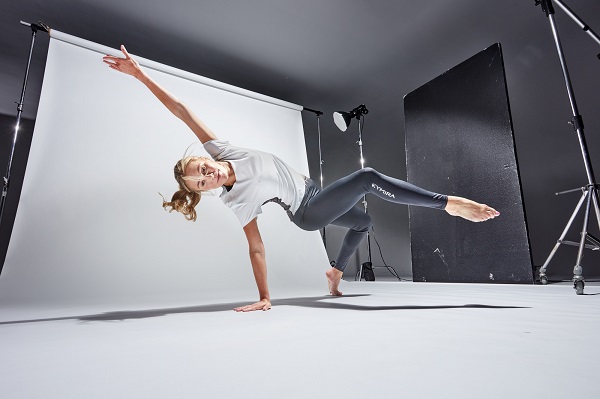
KYMIRA’s sweatshirts, leggings and tracksuits are designed with the company’s infrared-emitting fibre technology which is designed to enhance performance, accelerate recovery and reduce injury risk.
KYMIRA’s sporting clients include numerous teams from across both NFL and NCAA colleges covering 15+ sports and counting in North America as well as elite soccer and multiple international rugby union teams in Europe. All these teams are tapping into a well of expertise born of ongoing medical research and certifications.
Just days earlier, KYMIRA completed a fitting with an English Premier League team, which turned into an education session for the players. “The club identified the products that they want to make available to their athletes, we visited their training centre, and set up a pop-up KYMIRA area. We also had a microscope so we could demonstrate some of the biological effects to help the athletes visualise what is going to happen and we were there to answer questions such as ‘what does it do for me? Does it fit? What colours do you have?’ Some had already been using our products, been on the website, and come with some scientific questions. But the important thing for us is getting that face time with the athletes, so that they can ask their questions, they can be curious.”
Brownstone is a biochemist who specialises in photobiological wound healing. He is also a former competitive rower and is well-placed to explain to athletes how KYMIRA’s clinical research translates for their benefit.
“It’s reducing injury probability, it’s making sure that you’re more available to be in more games and help your team win,” he continues. “It’s extending your career; we have a big population of aged athletes and I think we’ve given the biggest an extra five seasons. Their agents like that, their families like that, and they’ve been able to keep doing the sport they love for longer.”
Such visits as the one described above are a valuable opportunity to build rapport with athletes and practitioners. One individual, an NCAA performance director, reached out with a series of questions. It is also not uncommon for athletes to post online about their use of KYMIRA products. “They’ll post something on Instagram, we’ll share it saying ‘thank you’ and then we use that chance to engage. Then when athletes are buying directly through our website, we’ll typically follow up and say ‘we’re pleased to see that you like the product. We’d like to know more’. Building that rapport enables us to collect honest feedback.”
Brownstone again points to the rail of KYMIRA clothes. “Each of those has been developed because teams and athletes have said ‘hey, I sleep in my recovery tights but I’d rather be in pyjamas – can you do pyjamas?’ or ‘I don’t really want pyjamas – can you do bedsheets?’ or ‘can you do tracksuits, or tights, or loose-fitting garments?’ We’ve evolved that range with demand and that close back-and-forth during the developmental period to make sure that fit and style is on point.”
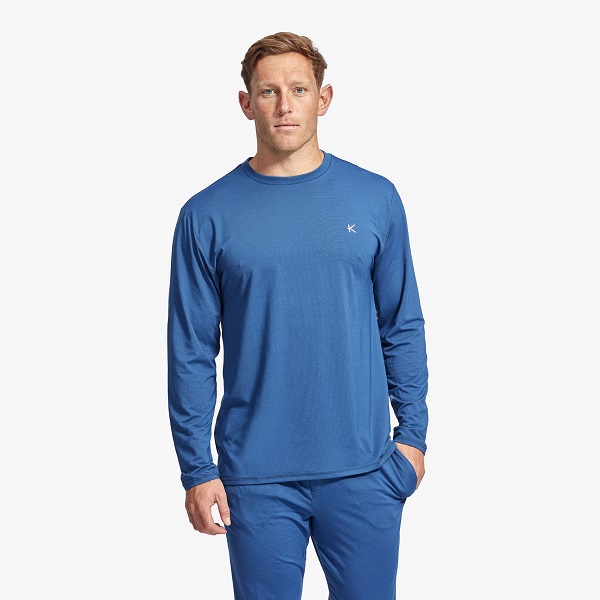
KYMIRA has developed a range of sleepwear that can improve sleep quality by 15.8%.
Functional and applied benefits
Brownstone divides the benefits of using KYMIRA into the functional and the applied, with data drawn from case studies with the company’s clients.
“From a functional standpoint, they will stimulate nitric oxide production, which will increase circulation,” he says.
“There’s a pain relief response, which is actually the same pathway as taking an opiate. Not as potent as morphine, for example, but it can help with chronic pain relief, which is where we get that 25% reduction in pain scores coming from. There’s an improvement in sleep quality of 15.8% based on research that’s been conducted on the products. Cells respire more efficiently so they’re consuming less oxygen to achieve the same work output; that, plus the circulation, you’ve basically got an increased supply and a reduced demand, which yields a 20% increase in tissue oxygen levels, which means there’s more oxygen there for the cells to use from a recovery and performance standpoint.
“From an applied benefit, we have an ecosystem. So preparation, performance, recovery, including travel and sleep, and rehabilitation. The ring around all of that is injury mitigation. So from a preparatory standpoint, wearing the products before a game setting, for example, allows you to accrue some benefits. So if you wore a KYMIRA product for 60 minutes, for 90 minutes afterwards you’re still going to have accelerated nitric oxide production, which is boosting circulation, helping the muscles to become more supple and less prone to injury.”
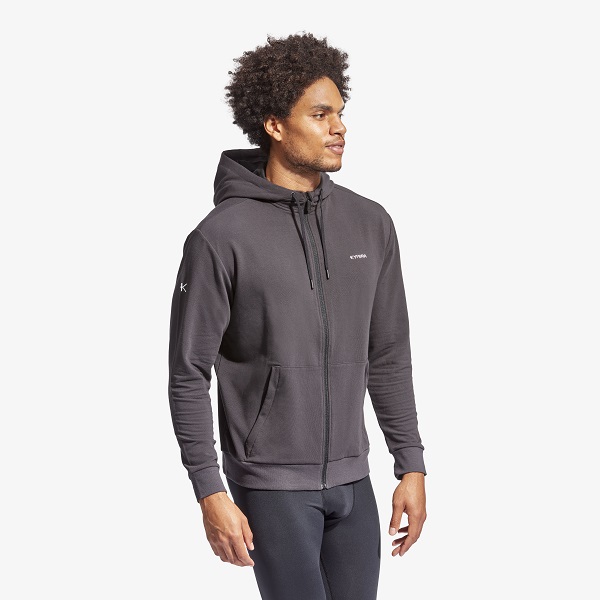
KYMIRA has evolved its range with close back-and-forth during the developmental period to make sure that fit and style is on point for athletes.
The benefits sound remarkable, with one user – a British SAS operator – wryly enquiring if KYMIRA deal in ‘black magic’. Sceptics naturally abound and Brownstone welcomes their questions.
“Sceptics are really important because everyone should be sceptical of confident claims like ours because they’re quite bold. They’re substantiated but they’re bold because they’re substantiated. I don’t think anyone should look at the list of benefits that are on the wall over there and just go ‘that’s fantastic’. They should ask ‘how do you do that? Why do you do that?’
“The sceptic often becomes the biggest advocate because they’ve made us work harder for the reward, in essence. In dealing with sceptics, we just let the data speak for itself. We’ve got tens of case studies, tens of clinical trials, there is a mountain of evidence.”
As we head into 2023, Brownstone and KYMIRA are optimistic given their own plans for the new year as well as the increasing levels of education around all aspects of recovery in sports. Some teams are even using their athletes’ experience with KYMIRA to underline their fundamentals around sleep, nutrition and recovery.
“That’s quite cool and we hope that trend continues.”
In our latest Member Case Study Virtual Roundtable, James Morton of Science in Sport reviews his time spent helping to develop a winning strategy with Team Sky.
A Leaders Performance Institute article brought to you by our Partners

Recommended reading
The Secrets of an Agile Team: when McLaren Racing Began to Make Ventilators
Framing the topic
Our final Member Case Study of the year was led by James Morton, Professor of Exercise Metabolism at Liverpool John Moores University, and focused specifically on executing performance in one of the most challenging performance environments in sport – the Tour de France. James shared with us his experiences from the Team Sky, now Ineos Grenadiers, environment around how they approach the race and maximising the impact on rider performance.
“Lack of knowledge is not always the problem… it’s the ability to take this knowledge and develop and deliver practical and simple solutions that counts… it’s the detail and final step of delivery that makes the difference in sport” – Sir Dave Brailsford, Team Sky / Ineos
Performance Knowledge & Delivery
This is the concept of it is what you do that really matters not always what you know. How are you taking the knowledge and applying it – execution.
There are four pillars of consideration to this model (Close, Kasper & Morton, 2019):
High-performing teams strive for Transformational Improvements – practitioners who engage in research and practice, constantly auditing and wanting to improve.
The Knowledge Delivery Framework
Developing the programme and athlete performance plan through the performance checklist:
Where can you lose or win this race? What can stop us winning?
Identify the factors that can stop you winning (cycling example):
What can you do from a delivery perspective to optimise performance?
Discussion points
Biggest challenges
First-Team Fitness Coach Conall Murtagh explains how Zone7 is helping the club’s monitoring model to optimize individual player care.
An article brought to you by our Partners

Murtagh joined as a sports scientist while studying for his PhD in 2012. He then became the Fitness Coach for the men’s under-18s in 2014, and joined Head Coach Jürgen Klopp’s staff in early 2016. His tenure with the first team coincides with one of the most successful spells in the club’s history.
“When you come through the door each day there is a desire and expectation to be world-class,” he tells the Leaders Performance Institute. “Working under this philosophy is the ultimate motivation for me.”
Recipe for success
Liverpool, who won the League Cup and FA Cup this season, have played the maximum number of games possible – 63 in total and the most of all teams in the Premier League – the first time an English team has competed in every possible match in a single season since Liverpool themselves completed the feat during their FA Cup, League Cup and UEFA Cup-winning 2000-2001 campaign.
The Reds ended the season with almost a full complement of players thanks to the work of Klopp and his multidisciplinary staff which includes Murtagh, a former footballer himself and UEFA A Licence-qualified coach. It is a demanding environment. Murtagh’s fascination with sports science and physiology began long before his own playing days.
“I was obsessed with how the human body worked, particularly how it responded to training and games. That led me down the study of physiology and then sport science. When I was playing as a professional, I had no real knowledge of sports science until I started studying and playing semi-professionally. The individual response to training always intrigued me. How the day after the same session, some players would turn up fresh as a daisy, while others arrived feeling sore and stiff. We could also all do the same gym intervention programmes and yet some players’ sprint or jump performance would shoot through the roof, while others’ stayed the same.”
Murtagh believes that different players inherently have different capacities for physiological adaptation from physical workload. Therefore, they require a stimulus tailored to their individual needs in real-time; something that is very difficult to provide consistently in a team sport environment. That is the challenge Murtagh embraces, as he and the wider staff strive to keep all squad members in peak condition.
Zone7 adoption
Liverpool, much like any Premier League club, has an array of player monitoring and intervention tools at their disposal. For the 2021/22 Premier League season they have also enlisted Zone7, a data-driven artificial intelligence risk forecasting system, to support their development of personalised player workload management processes.
The collaboration, amongst many other important cutting-edge processes adopted at Liverpool, has been a success. Under the watch of club practitioners, Liverpool’s first team – according to Premier Injuries – have seen a 33% drop in days lost to injury this season compared to last. When narrowed to ‘substantial’ injuries (long absences marked by 9+ consecutive days lost), this drop increases to 40%. Goalkeeper and illness-related absences are excluded from the breakdown.
In essence, Zone7 empowers human decision-makers who oversee athlete workloads. These professionals are often tasked with making recommendations in highly pressurised situations. By analysing the extensive, disparate datasets generated and collected in elite sporting environments, Zone7 can detect injury risk patterns that may otherwise be invisible. In some instances, it can go a step further by making proactive recommendations to mitigate the identified injury risk. Importantly, Zone7 will often suggest increasing workloads in particular areas to lower risk. Reducing workloads or simply prescribing rest is not always the right solution.
“We know that adaptation for the human body is a dynamic process,” says Murtagh. “Every time the player performs a training stimulus we must reassess their body’s adaptation balance.”
“As a multidisciplinary team, we assess every player every day. Zone7’s AI works alongside our extensive internal monitoring processes by effectively identifying more complex data patterns that could indicate whether a player has good rhythm or has deviated from it. If our monitoring system identifies that the player is not in optimal rhythm, we intervene accordingly from a multidisciplinary perspective.”
The productive use of Zone7 requires pragmatism. No credible AI solution will claim it is correct all the time and periodic false flags are a natural consequence. Murtagh, however, is unfazed.
“You can never say [a Zone7 risk alert] is a false positive when you’re flagging the player,” he says. “Some players do receive flags and we do not detect anything to suggest they are at an elevated risk. There is such a fine line between someone getting injured or not, we try to identify when the player has sub-optimal rhythm and we intervene appropriately.”
Zone7’s data science team has evolved their solution this year by introducing a new ‘Workload-Simulator’ component, which enables practitioners like Murtagh to input projected workloads and simulate players’ future injury risk in advance.
“The thing I like most about Zone7 is that they’re constantly updating the algorithm, constantly evolving, constantly on the front foot in this field,” added Murtagh. “To have the AI working in our environment to support our internal monitoring system gives us a certain sense of safety around our player management recommendations. The simulator is a brilliant feature, which will be used more and more as the system evolves.”
With a full season behind them, and tangible success metrics to point to, Liverpool and Zone7 have extended their working engagement by another two years, a move that also includes Zone7 adoption across the Liverpool Women’s and Under-23 teams. Rich Buchanan, Zone7 Performance Director, says that “working with Murtagh and Liverpool FC is hugely important to Zone7. It shows that our technology, in the hands of progressive and experienced practitioners, can exist and evolve, in one of the world’s most elite sporting environments.”
A Human Performance article brought to you by our Main Partners
A recent study, led by Jan Ekstrand (2021), analysed trends in injury rates among male professional football players across 18 seasons. They identified a decrease in injury trends as well as an increase in player availability in both training and matches.
In the Australian Football League (AFL), recent results seemed to show stable injury rates and missed matches, as the player-salary costs remained stable too (Eliakam et al, 2020). In the National Basketball Association (NBA) recent results showed an increased in injuries (unique injuries) and games missed due to injuries (Torres-Ronda et al, 2022).
Nonetheless, what seems to be pretty consistent across the industry is that injuries cost money, and a few studies are starting to prove (objectively with data) they cost performance (success) too. And from the team and the individual perspective, every time we hear about a main injury in a player it makes me think, ‘here we go again; how these type of injury still occurs so often?’ or ‘why so many occurrences of this injury?’
The first question I want to pose is: what are we doing wrong when it comes to injuries, and are there steps we can take at an organisational level to buck the trend?
If we study the injury data that has emerged from the NBA in the last four years we can see that the occurrences of injury are increasing despite ever greater resource being poured into injury prevention.
It is in everyone’s interest to fix the situation, given that injuries cost both money and success. Beyond the bottom line, there is also the disruption to your team. When important players are absent it can increase the pressure on the rest of the roster and your coaching staff, as well as increase the working hours of your performance staff behind the scenes.
Risk-reward
Firstly, should we use ‘injury prevention’ or (managing) ‘injury risk’? Sometimes semantics can make us rethink what we’re doing. With ‘injury prevention’, we often see more of a focus on strength training exercises, whereas ‘injury risk’ allows an assessment of the likelihood of an injury occurring and enables decisions to be made to reduce that likelihood.
Of course, an opponent could step on a player’s foot at any time. There are things that we can control and others that we cannot. The schedule is not going to change, so could it come down to minute-management? Is it worth a player playing the second night of back-to-back games, with a high cumulative minutes (for his age, experience, strength levels, team’s season performance)? What other factors are coming into play? I believe decisions should be made in a risk-reward context.
With this in mind, what injury trends are you noticing with your teams? How have your internal review processes evolved to manage those trends? The greater investment in injury prevention has created a lot of moving pieces and still the injury numbers are ticking upwards. In the NBA, it is load-related, with tendon and ligament injuries on the rise (specifically, knee injuries).
There will inevitably be differences between teams, which could come down to playing style, the choices of the coach, or simple bad luck during any given campaign, but this tells me that we should be reviewing internally what we’re doing with our athletes.
With frameworks for decision making and tools such as strength assessments, biomechanics, and ultrasounds, among many other assessment tools for internal and external loads, and players’ subjective perceptions of fatigue ratings, we can have information about many aspects of the athletes’ day to day. But how can we use this information and communicate it to coaches and the various stakeholders to make a better decision around whether or not a player plays tonight or for how many minutes?
When staff are making assessments, are they allowed to do their jobs, and by this I mean, how is your player buy-in context and organisation support? Are we doing the right testing, at the right timings, and analysing the right metrics? Are the players using their time in the right way to promote injury prevention? Is it important to track and classify their drills for injury risk as well as for conditioning and performance? Which types of statistics are we using? Are they correct? Should we review deeply our resources, what we can realistically do and expectations about the risk of injury?
The missing piece
It is also important to consider the culture of a franchise. If a coach has been in tenure for three, five or more years they likely have more trust and stability for long-term processes. Such scenarios stand in contrast to some franchises where ‘you lose three games in a row and the coach is fired’, making the environment more unstable, and depending on how it affects the staff, more volatile. For those coaches, it is hard to say ‘we’re going to develop this player and every 20 games he’s going to rest for one game, depending on the opponent or difficulty of the game.’ They need to be successful today and they’re going to squeeze the sponge or play the cards that they have.
Sticking with the NBA, when a franchise is bringing in college players or players from overseas they will inevitably be impacted by the schedule, which is between two to three times the length (or congested fixtures) than the European average season. How should we manage those players and introduce them to their new context?
When the European competition increased the number of games there was also a spike in injuries and severity. The schedules are unlikely to be reduced in any corner of the globe, so the issue becomes: how do we handle that? Do we need bigger squads? Do we need to have greater rotation? Do these need to be enshrined in the rules?
And what is happening in those moments that we can’t control? What are the athletes eating? What are their habits? Their professionalism? Their education in their own bodies and recovery? I think we’re making steps in general in the sports community because we have more professionals, more education, more investment in food, but then why are injuries increasing, or not significantly decreasing?
In addition, I don’t think we have enough good data to know why injuries are happening. The impact of data collection and analysis is another consideration, particularly when considering risk-reward and decision-making. When using that data, are we being too conservative? Are we using the data against our interests? Or are we pushing too much because of pressures (including players’ desire to play)?
It can also depend on the sport or the league. There are some risk management systems that have access to datasets on multiple teams and sports; they might be able to call upon injury or tracking information.
What are we missing in the analysis? We might be getting better at some things with injuries but there’s still the trend of injuries increasing. Should the leagues be more involved? because nobody wants the star players missing, not teams, fans, media or the broadcasters. As a league, how could we have a database where people submit anonymised information that can lead to analysis? I venture to say that injury analysis is way more complex than the way that we’re attacking it, and that we are probably ‘missing something somewhere’.
Lorena is one of six Leaders Performance Advisors, a group of leading performance thinkers providing more subject expertise to our member-only content and learning resources. To find out more about all our Performance Advisors, click here.
A data & innovation article brought to you by our Partners
“I experienced it first-hand as a practitioner,” Rich Buchanan tells the Leaders Performance Institute, having previously worked behind the scenes at Swansea City FC, the Wales FA, and other organizations. “The people tasked with making sense out of assorted data are under immense pressure to interpret information every single day for every single player throughout an entire season. The weight of delivering ROI lies in their hands.”
Buchanan, who has also worked for organizations in the US and continental Europe, is now the Performance Director at Zone7. The company’s artificial intelligence [AI] system is being used by a growing number of top-tier sports outfits as they look to convert data collection into actionable insights for higher levels of athlete performance and availability.
“If you have one person undertaking manual analysis and interpretation, it is difficult, if not impossible, to do that consistently well over the course of a campaign,” he continues. “Just as we’ve seen in other industries, I believe AI will play an increasingly important role in helping professionals identify complex risk patterns from an athlete’s data that would otherwise be invisible to the human eye.”
How does data fatigue manifest? “Typically, sports scientists or fitness coaches are the ones tasked with monitoring players using data-generating tools, like GPS or biometric wearables,” says Buchanan. “Many of these professionals, however, are not data specialists by trade. They are generally sports practitioners whose expertise is better served in athlete-facing environments – on a pitch, in a gym, etc. – where they work directly with athletes in a practical manner.”
“Right now, the conventional norm for making sense of athlete performance data in sport requires significant time commitment to examine large datasets. It is a laborious manual analysis and interpretation process, one which often runs counter to why these professionals embarked on a career in sport in the first place. As a result, disenchantment becomes quickly apparent and you see signs of data fatigue setting in as they’re pressured to deliver meaningful insights that can then be practically applied.
“Even now, as many organizations employ data science personnel, it’s not humanly possible to do this kind of manual analysis and interpretation effectively and consistently for multiple athletes over the course of a season. Combined with the frequency and complexity of new datasets becoming available, the manual approach often results in flawed insights that reduce the value that organizations receive from investments in data collection tools.”
Buchanan works closely with Tal Brown, CEO and Co-Founder of Zone7, whose extensive background in creating and deploying AI technology with the likes of Salesforce and Oracle has allowed him to witness data fatigue first-hand.
“The need to find accurate solutions for harmonizing, analyzing, and interpreting such large volumes of data has never been clearer,” says Brown. “I’ve spent much of my career creating intelligent tools that minimize data fatigue while creating more efficient data analysis processes. This is now becoming a significant challenge for decision makers in sport, especially as they’re tasked with validating and correctly interpreting data from a growing array of different sources. It’s not just game and competition data, we’re also seeing increased amounts of medical, strength & conditioning, sleep and general wellbeing data generated by wearable technologies.”
The scenario of data fatigue described by Buchanan is not uncommon and Zone7 is aware of the vital need to adopt a ‘practitioner’s lens,’ continues Brown. “Tech innovation and evolution is driven by the need to answer harder questions in more efficient and reliable ways. You need to collaborate with practitioners and ultimately provide the insights that add value in their specific environments.”
One such practitioner is Javier Vidal, a Performance Coach with Spanish La Liga club Valencia CF. Vidal has used Zone7 in a number of different team environments. “Zone7 is a tool I’ve used for several years,” said Vidal. “Its AI has allowed me to adapt my day-to-day routine and get more value of out new data generating technologies that are arising all the time.
Zone7 has been deployed and operated real time by Vidal at Valencia CF since the start of the 21/22 season and the number of confirmed injuries has dropped by 52% compared to the previous season. This closely resembles results during his tenure in Getafe another La Liga team, where Vidal saw a drop of 70%, with a 65% reduction in days that first-team players were lost due to injury. “It would be the work of many people analyzing data all day to gain such useful information, but with Zone7 I get accurate, usable information within minutes that I can immediately put into practice.”

Buchanan adds that, in the case of forecasting injury risk, AI can also take a complex, multifaceted problem and present it in an easy-to-understand way. “At the top line, Zone7 presents ‘athletes at high, medium, or low risk. On top of that, it presents potential actionable solutions, such as, ‘do more or less in this specific area than you originally intended.”
Multifaceted problems also create greater risk of blind spots emerging in athlete monitoring. In this case, the relationship between classic sports performance data streams such as external workload, strength and internal workload, and ‘next gen’ of data points such as heartrate variability [HRV] and biomarkers monitoring stress, sleep or diet presents a margin for error. “We can create visibility into how those nodes interact in the day-to-day environment,” says Brown. “More data allows us to calibrate tools that can understand those relationships. Traditional spreadsheet-like tools just don’t offer that functionality.”
One of the missions driving Zone7 is to give practitioners a sense of security at moments when they are under significant pressure to deliver. “One of the hardest parts of a coach, analyst, or performance specialist’s job is giving definitive advice on decisions made around athletes,” says Buchanan. “The number of times these professionals are tasked with doing this under pressure from all directions, with only their own subjective opinion to draw upon, is concerning. Equipping medical, fitness or coaching professionals with the objectivity that AI provides, driven by complex computations, creates more certainty and a stronger case for the advice they provide in that scenario.”
“Humans, by nature, already have in-built biases,” Buchanan continues. “We already have opinions about certain athletes; who’s robust and who’s not robust, who’s likely to report muscle tightness, etc. Now, if Zone7 corroborates those opinions, it assures the user. If what Zone7 suggests turns out to be true, then the trust builds. When we suggest something that’s counterintuitive, people may find that uncomfortable because it’s challenging preconceived beliefs. But I would say, in a way, that’s the true value-add that Zone7 brings, highlighting those blind spots. We’re there to make sure those players, and the opportunities to pre-emptively intervene, don’t slip through the net.”
Brown and Buchanan are excited about the opportunities that lie ahead for data science in professional sports, whether that be 360-degree support for any interaction a player has related to performance, the possibility for longitudinal injury risk profiling, or the ability to support practitioner across a variety of different sports, each with their own cadences. The latter is already underway, with Zone7 being actively applied across American football, basketball, baseball, and rugby, in addition to extensive work in soccer.
Zone7 will also continue to challenge accepted wisdoms. “Regardless of the value individual practitioners and sports organizations place on data to manage athletes/players, the industry has been heavily reliant on simplistic data analysis and interpretation for a number of years and, quite simply, there’s now a more refined way of doing it,” says Buchanan. “Using AI to simulate different training load scenarios with the aim of physically peaking on certain days on the training cycle is just around the corner. “This is where people can get very precise on how they prepare their players or athletes for future events, rather than best guess periodization models.”
“Ultimately, future sporting success belongs to those who leverage their data in the most efficient, effective and accurate manner. We’re here, primed and ready to help practitioners in sport do just that.”
To connect with Zone7 directly, please email [email protected]