12 Dec 2024
ArticlesIn the fourth part of his ongoing miniseries, mental performance coach Aaron Walsh says that your mental performance coach can only be a facilitator – it takes everyone within a team to deliver a mental performance program.
To successfully integrate the work, teams need to understand what a mental performance coach can do to elevate performance and how to deliver that work most effectively. Traditionally, the delivery model has involved one person attempting to meet the needs of everyone in the environment. This often leads to frustration for both the team and the provider. The team feels like the demands are only sometimes met, while the provider feels more time is needed.
A more effective model is viewing the provider as a facilitator, where they engage the key leaders in the environment and help drive the work. Yes, contexts will be provided for the provider to deliver critical messages and practices directly. Still, as we know, the mental side of performance happens every day and all the time.
To clarify this, I will examine four specific areas related to team performance where the mental skills coach can support key individuals and deliver crucial work.
Coach support
The coaching group, particularly the head coach, will have the most significant influence on any team environment. Their messages shape the players’ mindsets, and if they have the tools, they can be effective real-time psychologists for the playing group.
They must also navigate the pressure of working in a results-based business as a group. Recent research has revealed that the coach’s well-being is a genuine concern. The hours they work, the consistently tough decisions they make, and the lack of ongoing job security create a recipe that challenges and, at times, compromises their mental health.
What this looks like day to day
Player leadership group
An additional key group that drives the work is the senior playing group. We know that high-performing teams require high-performing leaders. These individuals wield significant influence and are often the “gatekeepers” who determine the rest of the team’s engagement. Their role is pivotal, and their impact is substantial. Without their “buy-in,” the work will fail to embed as it will depend on one individual driving everything.
What this looks like day to day
Creating and maintaining an environment that empowers performance
Anyone involved in a team recognises the connection between environment and performance. Group dynamics and how people feel within a team have the most significant effect on mindset. We are hardwired to seek belonging and need to be connected to the team’s purpose, the people we work with, and what our role is that helps performance.
When these realities are met, people can pour their energy and focus into the team’s shared mission. They can lock into their role and the tasks they are asked to deliver. They can be themselves, feel respected and know that they matter. By feeling included, they become better teammates and performers.
We can provide all the tools, such as breathing, meditation, and visualisation, but we won’t get the most out of our people if we neglect these core needs.
What this looks like day to day
Mental performance training
The final aspect to examine is mental skills training. I have written extensively about this in previous articles. However, we have a simple goal with this work: We want our athletes to be able to deliver their best when it matters most. Typically, this work has been viewed through the lens of one-on-one work. These are important, but there is also value in delivering group sessions.
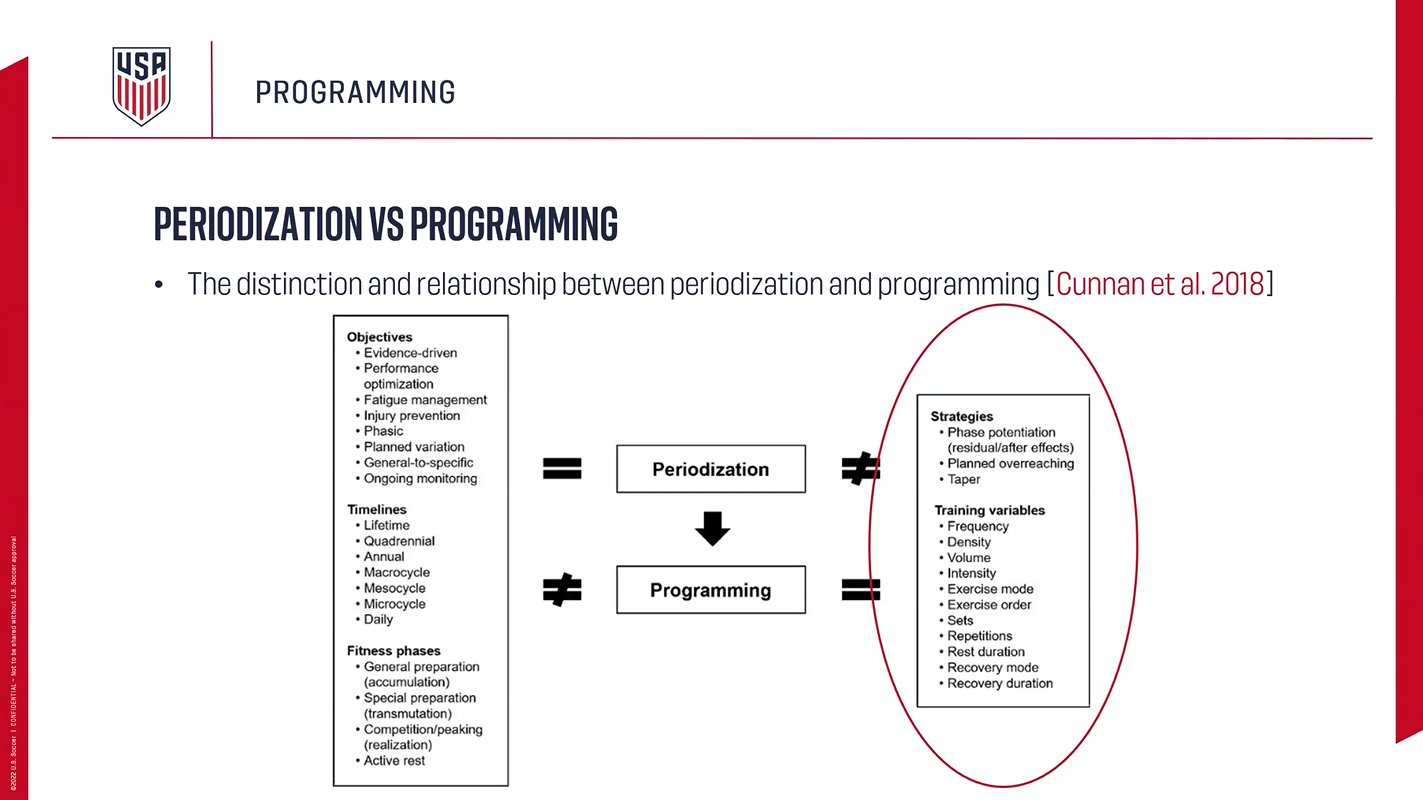
I prefer to periodise these sessions, similar to preparing the body for a season. We can use The pre-season aims to build foundational mental principles and skills. Subjects like understanding pressure, where it comes from, and how it affects us are good starting points. The goal is to have everyone aligned and create clarity around what messages will be Important during the season. I like to keep these sessions to 10-15 minutes and create some. level of introspection and interaction. During the season, we can refer back to this foundation and make it relevant to what happens in any given week. This prevents us from flooding the players with new and unnecessary information.
I use the mental skills framework discussed in the second article for the one-on-one work. I go through this with each player each preseason and ask them to identify some areas they believe will be critical to their performance that year. This keeps the one-on-one focused and purposeful, avoiding another meaningless “catch-up” during the season’s business. We can adjust as needs arise, but the work is mainly strategic and avoids bouncing around subjects as a reaction to any given week.
What this looks like day to day
Reflection questions
Further reading:
Your Mental Skills Work Must Be Simple, Relevant and Applicable
9 Dec 2024
PodcastsWe spoke to Arianna Criscione of Como Women, Sarah Smith of Angel City FC, and Kitman Founder Stephen Smith about the most pressing issues in women’s football.
A podcast brought to you by our Partners
That is the view of Arianna Criscione, the Head of Football Operations at Mercury/13 and Como Women. “It’s not enough,” she tells this Kitman Labs podcast. She explains that there are a range of services, from nutrition to psychology, that need to be tailored to women players.
Criscione continues: “You also have to have access to medical [support], but a lot of clubs don’t have access to a gynaecologist, which is a major part of the female body and really needs to be addressed a lot more.”
Dentistry is another area of oft-neglected consideration. “If you have an off-bite, that can actually affect your structure and how you’re running, which could cause injury.”
It is, as Sarah Smith says, about “making sure that we have a good foundation of support around our athletes.” Smith, who is the Director of Medical and Performance at Angel City FC in the NWSL, joins the conversation alongside Stephen Smith, the Founder of Kitman Labs.
In addition to discussing holistic female player development [10:45], the trio delve into bridging the gap in data and understanding in women’s football [15:45]; how talent identification is evolving [20:15]; as well as the existing disparities in data collection [28:10] from club to club and league to league.
This is episode two of a three-part series. Please go back and check out episode one, where the Leaders Performance Institute and Stephen Smith spoke to Paul Prescott of the International Football Group and Morten Larsen of Danish Superliga side Aarhus discussing talent pathways in the Premier League and beyond.
Further listening:
Kitman Labs Podcast: What Factors Drive Talent Development in the Premier League and Beyond?
Listen above and subscribe today on iTunes, Spotify, Stitcher and Overcast, or your chosen podcast platform.

In the third part of his ongoing miniseries, mental performance coach Aaron Walsh says that the key to integrated mental skills work is a better understanding of your athletes’ needs and their competition.
I wanted to understand the perceived gap between value and impact and embarked on a research project whereby I contacted 35 head coaches and performance directors and asked three questions.
The first two were ‘yes’ or ‘no’ questions:
The third question was open-ended:
One of my significant findings was that the information delivered to the players, coaches, and staff wasn’t consistently effective. This is understandable; psychology is a vast subject, and translating the principles that underpin the work can be difficult. However, the last thing a provider wants to do is add a layer of complexity for athletes who already have the burden of processing a lot of information.
To address this, I will examine a couple of areas we can focus on to ensure the content we deliver is meaningful and impactful. We want it to enhance performance and provide the necessary information, tools, and support for our players and staff to perform at their best when pressure is present. The first area of focus is determining what content is needed for our teams.
To illustrate this, I will look at the different natures of the sports our athletes participate in and how that shapes what we engage them with.
Looking for the clues
When determining what content to deliver, our first reference point will be something other than a textbook or theory. We will use what we know about psychology extensively, but we need to ask a more critical question before we dive into it.
What are the mental demands of the sport?
This seems a simple question, but it forces us to eliminate supercilious issues and allows us to identify where we can bring value to the athlete. To help us answer this question, I have divided sports into three categories. The reason for doing this is the nature of the sport will tell us what challenges the athlete is likely to face.
The categories below are not black and white in their definition; for example, in some sports, you have moments when you are required to initiate the movement (A lineout throw in Rugby, a free kick in football, a free throw in basketball). Still, most of the time, you are responding to movement. In other sports, you only initiate the movement (golf, archery, jumps in athletics).
Defining these challenges allows us to tailor our content to meet those needs. In other words, we become relevant. For the sake of brevity, I will define the mental challenges of the sports involved and give three mental skills to enhance performance. This is not intended to be a comprehensive list but rather a snapshot identifying the demands and skills required to succeed.
The name and nature of endurance sports give us immediate insight into their challenges. How do you mentally stay engaged in a mundane task that is causing significant pain?!! Endurance athletes are different beasts. To be successful, they must develop the ability to tolerate discomfort and resist the temptation to back off or quit. This becomes essential during long-duration efforts.
Key mental skills required
Most sports require the athlete to respond to movement to be successful. This includes both a moving ball and opposition. The nature of the games, from basketball to football to rugby, is fast-paced, and participants must make numerous decisions under fatigue and pressure. This is often accompanied by strategic demands, with various game plans that must be executed for the team to perform well. As the introduction mentions, these sports are intertwined with moments where the athlete must initiate the movement.
Key mental skills required
These tend to be the sports where perceived mental failure occurs. How many of us have watched an athlete with a putt to win or a kick to seal victory, and those athletes succumb to pressure? What makes these sports so demanding is that you have time to think when you initiate the movement. Unlike responsive sports, where you are primarily instinctive and reactive, these sports ask the athlete to prepare for a difficult task, fully aware of what is at stake.
Key mental skills required
One further layer of having demand-based content is making it positionally specific. In a team sport, what will be required will be different. A goalkeeper will be different from a forward, and a front rower in Rugby will be different from a fly-half. A quarterback will be different from a lineman. The more we can dig into these demands, the more relevant our content will be.
Three principles to guide our content
The second aspect of enhancing engagement is related to how we present to the athletes. Once we identify what needs to be delivered, how do we maximise our time with the athletes so the work is meaningful to them?
Below are three principles I have leaned on to make this happen:
Reflection questions
Further reading
The Global Alliance is a novel collaboration of some of sport’s most decorated rivals.
However, the quartet have formed an unlikely partnership for the good of female athletes across the globe and with the aim of pushing forwards advancements in female health research and practice.
The result is the Global Alliance and, on our most recent Women’s High Performance Sport Community call, we were joined by Dr Helen Fulcher from HPSNZ, Dr Amber Donaldson from USOPC, Dr Rachel Harris from the AIS, and Dr Richard Burden from UKSI, to discuss how it works.
All four institutes have made their own way in providing additional focus and resource for female athlete health, starting at different points in time across the last ten years.
All four have focused on education. The AIS, UKSI and USOPC have had further branches into research; HPSNZ have looked at processes and systems linked to technology; and the USOPC have had to consider partnerships that help navigate a geographically large country and complex health system.
However, all four acknowledge that despite their positions of privilege there are limits to time and resource in this area, and all four are aware of what improving health for females, who typically suffer more injuries and illnesses than males, could do for raising levels of competition. The opportunity the group of four are close to bringing to reality is for an alliance to support globally with raising minimum levels of understanding when it come to female athlete health.
The formation of the Global Alliance
The world of elite sport is quite small, so when travelling to conferences and talks on these spaces, the group realised that they are all doing the same things, with limited resources and time. So the premise of the Alliance is to combine resources and save time across the group. After all, as Burden asked, “what’s the point in spending lots of money people don’t have on education resources when it already exists publicly?” Whilst bumping into one another, the group organically had conversations on how they can work together to increase efficiencies without crossing boundaries of competition. “We are all under-resourced, we’re overstretched in terms of the time that we’re wanting to spend in this space,” said Harris. “We really wanted to try and allow the people that are working in our sporting organisations to be more proactive.”
Traditionally seen as rivals, these organisations are now collaborating for the benefit of female athletes across the globe. The primary goal is to collaborate on female health initiatives, leveraging each organisation’s expertise and resources. This collaboration aims to enhance the health and performance of female athletes by sharing knowledge and best practices across regions.
The Alliance’s main objectives include…
The Alliance faces several challenges, including:
The alliance is committed to overcoming all of these challenges by building robust, reliable resources and ensuring they are effectively communicated and accessible to all athletes.
A proactive and inclusive strategy
The Global Alliance is a comprehensive approach to enhancing female athlete health that prioritises:
Top tips
Just start! If you’re working in a small organisation where you can’t produce education modules or you can’t fund research, there’s no harm in just starting a conversation. Build your own networks, forge connections, and don’t be isolated.
Find people with the same values and intent. “And that’s not to say that there is no kind of diverse thinking within our group,” said Burden. “But the underpinning values within the Global Alliance and the work that we’re trying to do are all shared.”
It’s not about ‘us’ but a bigger purpose. Fulcher spoke of building communities within your area of expertise or within your own nation, but then taking that further. “That’s within your specialty, within your area or your nation,” she said. “I think it’s a natural step to build an international community; and we do have them, but they’ve been a bit ad hoc.” The Global Alliance is, as she added, an opportunity to raise standards across female sport. “The focus is not just on individuals having great connections but what can we collectively do better for this group of athletes that we all care about.”
Stay curious and be friendly. “One of the biggest things is to be humble,” said Donaldson. “Really coming to this platform being humble and wanting to learn, wanting to contribute is key.”
Find out what works for you. You can learn from others but try to ascertain what works for you in your context too. Donaldson said: “I can tell you exactly what we do, but you’re not going to be able to replicate it like for like.”
Those in-person moments can be critical. “Those in-person conversations can help build relationships,” said Donaldson, who explained that the Alliance meets periodically. “You can also get more done when you have those conversations.”
Involve coaches in the education piece. Fulcher said: “Make sure coaches feel comfortable enough so that if a certain issue is brought up, they know where to direct traffic and tell people where to go for help.”
13 Nov 2024
ArticlesIn the second part of our miniseries, mental performance coach Aaron Walsh explains the importance of a vision, philosophy and framework.
Do we focus on increasing capability or reducing interference as a primary strategy?
In theory, most would agree with increasing capability but, in practice, our coaching models are often dominated by reducing interference.
There’s a time and a place for work-ons but, from a mental perspective, when we overfocus on weaknesses, players can become oversensitive to threats that could impact performance. Their thoughts drift towards what could go wrong and how those weaknesses could be exposed.
When we focus on their strengths, they are more likely to look for opportunities to express those positive points of difference. Rather than being anxious about performing, they are excited.
Your mental performance work should align with your overall performance philosophy and beliefs about how we get the most out of the people we leads, but once a team has decided on an approach to increasing its mental performance, there needs to be some strategy around the work. To do this, there are three questions to guide us:
Creating a vision for the work
Let’s start with the end in mind. What would success look like if we nail this work?
This question lets us capture something tangible and provides strategic direction with clear outcomes. It anchors us in reality while buffering us from the temptation to be reactive when various challenges arise.
Here is an example of a vision statement we can use:
‘We want to produce self-sufficient athletes who can embrace the demands of being a professional athlete while delivering their best when it matters the most.’
Success is clear. There is no ambiguity, and everyone involved in the program can align around this vision.
Capturing your philosophy
Secondly, having a philosophy about how we will achieve the vision is vital. This is more about ‘how’ we will approach the work and what will guide the delivery of the program. This should capture and reflect our broader high-performance beliefs around growth and development.
There is an equation we can use to help us define this.
High Performance = Capability – Interference
This definition poses a critical question for everyone in the performance space.
As asked above, when finding the most effective way to develop our people, do we focus on increasing capability or reducing interference as a primary strategy?
We can all think of coaches who start a review with clips about poor aspects of the team’s performance and it is normal for players to have those aforementioned work-ons at the beginning of each week.
This is not to say that there is no place for this, but we select players because of what they can do. It’s their strengths and their ability to impact the game that make them valuable members of a team. Furthermore, if all we give them are areas of their game to work on and if they change week by week depending on their game, then we endanger development through inconsistency.
Whatever your agreed approach to mental performance, it should align with our overall performance philosophy and beliefs about how to get the most out of the people we lead.
The right framework
With the vast nature of subjects and focus areas within sports psychology, it is often daunting for providers and teams to know where to start. However, a simple framework can create a strategic approach that brings clarity and direction to the work. This prevents the provider from bouncing around different subjects weekly and not building anything of substance.

The framework above is anchored in the philosophy introduced previously, which states mental skills exist to help people grow and maximise their capability. It intentionally starts with foundational subjects that build upon each other. The reason for this is linked to the growing prominence of the mental side of performance. With more discussions occurring, more articles being written, and the emergence of social media, there is a danger of replacing foundations with tools.
Here’s what I mean: subjects like mindfulness, breathing, and visualisation are helpful and, in some cases, necessary. However, they are just tools that can help under pressure. Dealing with pressure will be much more effective if these tools are married to other critical mental skills. This framework aims to introduce these skills systematically and purposely so the athlete is well equipped for the various challenges they will face. From experience, athletes who know how to grow themselves and their mindset find pressure, something they can face and overcome. Giving a few tools won’t accomplish that.
Grow yourself
The first aspect of the framework lays the foundation for mental performance. When discussing this with an athlete, we can introduce and define it by asking five questions.
Purpose: We want athletes connected to a purpose that fuels their performance. Every athlete will face challenging periods throughout their career, whether it’s injury, non-selection, or a loss of form; there are moments where doubt emerges that can potentially derail their journey. Being connected to why they play the sport and accessing that passion provides perseverance and focus during these difficult times.
Goals: Knowing what you are trying to accomplish is vital for any athlete. To understand this, here is a simple analogy. When we want to get somewhere in our vehicles, we set the destination in our GPS. We do this so we don’t get lost and waste time getting to where we want to. This is the same for an athlete; without clear goals, they can spend much time going in different directions and not get closer to their desired destination.
Planning: Once we know where we are going, we must understand how we will get there. This is where a good plan is invaluable. To continue the analogy above, a GPS provides clear steps so we arrive at the right place at the right time. Many athletes set goals and fail to determine what they must do to get there. A performance roadmap creates a focus on the right areas of development that will be critical to achieving what the athlete has set out to do
Ownership: I was recently asked what characteristics are shared among the best athletes I have worked with. Though there are many that they share, one sticks out. They take ownership of their careers. They drive the different aspects of performance and see those around them as key supporters. They don’t make excuses or play “victim” if things don’t go their way. One key aspect of this is how they use their time; they have a weekly schedule that is linked to the goals they have and the plans they have in place. They are purposeful and hold themselves accountable.
Support: The final aspect of growing yourself is about support. Throughout their career, athletes will have numerous and different perspectives offered by coaches, support staff, and agents. They need to be clear about what voices are essential. Having a clear support circle is critical so they stay on track and have the encouragement to get where they want to be.
Grow your mindset
The second aspect of the framework is grow your mindset. American psychologist Michael Gervais defines mindset as “how we see ourselves and the world we live in.” This is critical for athletes. Here are a few examples of the power of the mindset
Constant Improvement: Are athletes focused on getting better every day? Do they have a process in place to achieve this? Can they be consistent regardless of what happened the day or week before? Can they manoeuvre through the highs and lows of the game and remain anchored to their pursuit of being their best? They can reduce all the noise of competing by returning to a simple question: “How do I get better today?”
Opportunity-focused: Do they view themselves as competent, and is it an opportunity to express themselves? Or do they see themselves as imposters, and is the game a place where they get exposed? One mindset produces trust and excitement, while the other produces doubt and anxiety, both significantly impacting performance.
Antifragile: Author Nassim Nicholas Taleb defines antifragility ‘as something beyond resilience or robustness. The resilient resists shocks and stays the same; the antifragile gets better.’ This is particularly relevant for athletes, as adversity, disappointment, and failure are common obstacles they will face. Do they see this as something that destroys them or something they can learn from and be better than ever? Their mindset towards challenges is a significant indicator of future decline or growth.
Growing under pressure
The final aspect of the framework is how we deal with pressure. Most people see pressure as something to be avoided at all costs. Certain situations cause deeply uncomfortable feelings. Without the right strategy, pressure can feel unmanageable and, at times, paralysing. For athletes, there is no option to avoid pressure if they want to be successful. Therefore, they must have the tools to approach it confidently and believe it is a place where they can succeed.
As mentioned above, there are many practices and tools related to pressure. Once we have the foundations in place, they are valuable. For the sake of brevity, I won’t go into all the tools, but there is a clear outcome no matter what we use.
We want to be able to deliver our best when it matters the most.
Below are three things we can focus on to help our athletes be at their best in the big moments
1. Get calm: Under pressure, the nervous system can cause chaos. Our minds begin to race, and our bodies react. Our first port of call is getting calm so we can deal with the moment in front of us.
2. Get clear: Once we are calm, we need to manage our focus. Often, under pressure, there is a temptation to go to the outcome of a game or the consequence of getting things wrong. We want to eliminate that distraction and focus on the task at hand.
3. Let go: The final reality that can help us when pressure is present is letting go. This requires us to trust what we have at that moment and surrender. The more we try to control, the less instinctive we will become. Athletes are at their best when they are free, trust their skillset, and play what’s in front of them.
In conclusion, a mental performance program will only be effective if there is a clear strategy behind it. Here are a few questions to help stimulate this:
Further reading from Aaron Walsh:
Why the Upswell in Demand for Mental Skills Is Not Being Translated into Effective Work
Team Manager Lee Stutely explains that no stone was left unturned as the team prepared for Paris.
The team narrowly lost their bronze medal match at the Paris Paralympics 50-48 against Australia, but captain Gavin Walker was positive.
“If you’d have asked me two years ago, I’d have probably snatched your hand off for the experience of playing for a bronze medal,” he said, mindful of the transition the team has been in since winning gold in Tokyo.
“We go into another rebuilding process, another four years ahead of us and looking towards LA now,” he continued. “[We will be] growing the sport, putting time into grassroots and developing the team going forward.”
Not that any stone was left unturned in the build-up. “Our performance in Paris highlighted the progress we are making and confirmed that we remain at the forefront of wheelchair rugby,” says Lee Stutely, Great Britain’s Team Manager.
She is speaking to the Leaders Performance Institute about Great Britain’s two team camps that took place at St George’s Park in Staffordshire before the Games. The first, a seven-day visit in January, focused on their continuing preparations; the second, a four-day camp in August, represented the final taper towards Paris.
Both were a result of smart planning, with Stutely taking a lead on the logistics of the camps. “We came and rec’ed, just me and our Head of Performance Support & Science Barry Mason,” adds Stutely. “Then the coaches came with some athletes to check the playing surfaces.” From there, the coaches and performance team came together with Walker and vice-captain Stu Robinson to map out the sessions and structure.
All reflect with satisfaction on the work that was done in the last cycle. “The team’s trajectory is clearly on the right path toward further medal success,” says Stutely, “and we are driven by our commitment to high standards and continuous improvement.”
The team will conduct a post-Paris debrief to identify its strengths and weaknesses. “We will be hoping to learn if the systems and processes in place were effective,” adds Stutely, who emphasises how important it is to retain and refine successful strategies. “We will also examine what can be improved and what we should stop doing. As Paris showed, there is little between the top teams. We need to identify where can we get our marginal gains and what can increase our competitive edge in the next cycle.”

Chris Bond of team Australia is on the ground after a clash with Aaron Phipps of Team Great Britain during the Wheelchair Rugby Group B game Australia vs Great Britain. (Photo: Marco Mantovani/Getty Images)
The home of England
Great Britain qualified for Paris by finishing runners-up at the 2023 European Championships.
With their passage secured, the team could step up their preparations. While happy with their usual training facility at the Lilleshall National Sports Centre in Shropshire, Stutely and her colleagues felt that a change of scenery could reset minds and take players out of their comfort zones.
The 330-acre facility at SGP fitted the bill. Stutely says: “It made them more aware that they were moving onto a competition and preparing for something special rather than just being their home from home training environment.”
SGP is also the home of 24 England football teams. “We have quite a few football fans within our team so they were excited,” adds Stutely. “It’s historic and other senior teams have trained here, such as the England women’s rugby team. The venue is awesome for us because it’s accessible; and everything – training facilities and accommodation – is in one location.”
In addition to an onsite Hilton Hotel, the complex boasts 14 state-of-the-art football pitches, which can be configured for a variety of sports, as well as a range of indoor facilities including a full 3G pitch, a multifunctional sports hall, gym, hydrotherapy pools and a cryotherapy chamber.
The SGP team were on hand to allay any concerns. “Kevin Sanders was very good to us,” says Stutely of SGP’s Elite Sport & Partnerships Manager. The team could count on court time, gym time, meeting rooms and private dining rooms. “The Hilton were also very good at making sure we had as many accessible rooms as possible and that everything was suitable for our athletes’ needs.”
SGP is the home of England’s Para football teams and has long been committed to ensuring that the nation’s disability and impaired teams have equal access to the complex’s high performance facilities. It’s a point of pride for SGP, even if this process remains a work in progress, as Becky Bullock, the SGP Customer Account Lead at the Football Association, tells the Leaders Performance Institute.
“We acknowledge there is always more we can do,” she says. “We are continually learning, listening and striving to improve, and we remain dedicated to incorporating best practice into the future design and development of our facilities to be accessible for all.”

Aaron Phipps of Team Great Britain competes during Bronze medal match between Australia and Great Britain. (Photo: Aitor Alcade/Getty Images for IPC)
The future
The Great Britain team is aware of its legacy beyond the court, with Walker taking the opportunity after the bronze medal match to address the audience watching at home in the UK.
“For fans out there and people who are watching this, we’re all playing this sport after starting life with a disability or going through some sort of traumatic injury,” he said. “The fact that any athlete in the Paralympics is competing shows they’ve overcome adversity and everyone should be proud of any performance. I guess that’s the main message for anyone out there that is struggling – this is something that can get you out of those dark times.”
Wheelchair rugby, as Walker alluded to, is an egalitarian sport. It is built on ensuring that players with different care needs can compete together. Players are assigned a points-based value based on their functional ability ranging from 0.5 (those with the highest support needs) to 3.5 points (those with the fewest). The total point value of a four-player team cannot exceed 8.0 points unless it includes a female player, which affords a team an extra 0.5 points, taking the maximum total to 8.5 points.
“Some team bonding happens because of accessibility issues, the whole ‘no-one is left behind’ thing,” says Stutely. “They always look after each other.”
The British Paralympic Association works with Games authorities to ensure that athlete accommodation at all Paralympics is suitable for their teams’ needs. Stutely, who took part in her fifth Games in Paris, believes that environments have generally improved since the London 2012 Games raised the bar.
“As staff and athletes, we spend a lot of time being adaptable to the environment we enter,” she says. “Overcoming any challenges and learning how to control people’s mindsets when things are not going the right way is so important.”
Looking further ahead, Stutely is excited for Great Britain’s prospects. “We also have a promising depth of young and talented athletes. This blend of experience and emerging talent positions us well to continue competing at the highest level and achieve even greater accomplishments on the world stage.”
Further reading:
Pre-Season Preparations: Why a Home from Home Can Make All the Difference
Drs John Francis and Denise Martin highlight gaps and identify potential opportunities when recruiting performance analysts for teams across sport.
An article brought to you in collaboration with

This is just one of the misapprehensions that continue to dog the world of performance analysis; a range that spans from data collection and reliability to value capture and integration.
All were addressed in the third and final session of a virtual roundtable series hosted by the British Association of Sport & Exercise Sciences [BASES] and the Leaders Performance Institute.
Dr John Francis of the University of Worcester and Dr Denise Martin from Atlantic Technological University in Ireland were on hand to lead a discussion titled ‘Advances in performance analysis: what the research is telling us’ that sought to provide insightful tips for attendees.
Integrating practitioner and academic expertise
In a straw poll, more than half of attendees declared that use academic resources to support processes and projects. It’s a promising start, but Francis was in no doubt that the applied world and academia can and should work closer together.
He and his colleagues surveyed 175 analysts on the time they spent collecting good, accurate and meaningful data and how they tested that data before providing key insights to the end user. The cohort delivered several insights:
The PRECISE Framework
Francis and his colleagues have devised a framework aimed at delivering recommendations related to validity, familiarisation and reliability. Their research is currently subject to peer review but does shed light on the question of integrated approaches.
The PRECISE Framework addresses those issues listed above:
Who writes your team’s job descriptions?
As discussed, the search for unicorns is counterproductive, but then that is often a by-product of poorly-conceived job descriptions. Is enough time being spent on positioning them in the right way?
Attendees swiftly pointed out a series of challenges:
The research of Francis and his colleagues also observed that too few job advertisements provide a feel for the environment in which someone will be entering.
On this front, they have recommendations for both organisations and applicants across four areas:
Organisation: outline values and goals, provide infrastructure, staffing and philosophy.
Applicant: understand the organisation’s goals and how to contribute.
Organisation: list job-specific tasks and required skills; list specific academic or coaching knowledge and software competencies; emphasise evidence-informed processes and the need to understand feedback and learning strategies.
Applicant: gain clarity on role tasks and responsibilities; highlight relevant experiences in application and determine their fit. Identify areas for personal and professional growth.
Organisation: clearly present salary bands and rewards.
Applicant: assess job value and potential rewards.
Organisation: detail career progression and CPD activities.
Applicant: make informed decisions about career path within the organisation; consider your long-term aspirations.
Ensuring value capture in applied performance analysis
Martin and her colleagues have conducted research into value capture in performance analysis and alighted on three key questions:
What? Organisational capability to generate, curate and translate data to co-create knowledge and insight.
How? Skills and contextual intelligence allow practitioners to embed effectively in the performance ecosystem.
Why? These lead to what Martin calls the ‘lightbulb moments’ – where value is added to decision-making processes and contributes to performance.
The ‘Lighthouse Model’ for practice
Martin explored her ‘Lighthouse Model’, which seeks to showcase the ‘how’ (the base of the lighthouse) and the ‘what’ (the tower). As you reach the top, the ‘light’ emphasises the learning opportunities derived from understanding and better-informed judgements.
“Developing a Framework for Professional Practice in Applied Performance Analysis”
😎Very proud to see the capstone project from my PhD published this morning.
👉We define the role of an Applied PA, the components of practice and the expertise which underpins this pic.twitter.com/32vMGSYxN7
— Denise Martin (@deniseanalysis) July 26, 2021
To do the ‘what’, you need to establish the ‘how’, which includes:
Martin emphasised contextual awareness i.e. what is needed from your environment to then have an impact on athletes, coaches and executives – those you are trying to create the ‘lightbulb’ moments for.
The following are cornerstones for the ‘what’:
Gaps and opportunities: how do you get the lightbulb to shine?
30 Oct 2024
ArticlesIn the first of a new miniseries, mental performance coach Aaron Walsh makes the case for greater integration.
It is almost impossible to listen to an interview with or watch a documentary about successful individuals and teams and not hear them refer to the role of mental skills and their significant impact on performance.
As this awareness has grown, we have seen roles created and resources dedicated to help drive and support this vital work.
But is this upswell in demand being translated into effective work? I was curious and began to ask other mental performance coaches I knew and enjoyed some valuable interactions.
From these conversations, something quite clear and surprising emerged: though the work had been normalised, it needed to be integrated better, and as a result, the impact that both these coaches and the teams they were engaged with was not occurring to the level they hoped.
This graphic from the 2016 Rio Olympics captures this perfectly:

Image: Aaron Walsh
I wanted to understand the perceived gap between value and impact and embarked on a research project, which I’ll discuss throughout this series.
Each article will build upon the next. Here, I will define my approach to mental skills; the second will examine the need to have a framework in place for delivery; the third will capture the content that needs to be in place; the fourth will address the actual delivery of the work; and the final instalment will help you to find the right person for your team.
The mental side of performance is not 90 per cent, but it’s not insignificant either
Where does the mental side sit within a team’s overall performance?
Many coaches and athletes say it is 90 per cent but I think the real figure is much lower and, in my view, we need to correct this discrepancy because it significantly shapes the work at hand.
To compete at the highest level, your athletes must be physically capable, possess the necessary skill level, and have an effective game plan. We can measure this for most teams and benchmark ourselves against the best we play against. Sports science as well as game film and analysis give us tremendous insight into this; and we can track the growth of our teams. You can’t outthink a lousy body, lack of skill and poor strategy.
However, when everything is equal, a mysterious performance aspect relates to your ability to deliver your best when it matters the most. It’s hard to measure and quantify at times, but we all know it makes a difference.
In the insanely competitive world of high performance, the mental aspect is a competitive advantage, and if you are not investing in it, you are leaving performance on the table.
My research
I contacted 35 head coaches and performance directors and asked three questions.
The first two were yes/no questions:
Do you think mental skills play an important role in the overall performance of your team?
Do you currently have a strategy to integrate this work into your team environment?
As you can imagine, 100 per cent answered ‘yes’ to the first question, but only four (11 per cent) answered ‘yes’ to the second question.
The responses I received showed that mental skills were acknowledged as necessary, yet integrating this work effectively remains challenging for many teams.
The last question was open-ended, and I wanted to know what prevented these teams from integrating this crucial work:
What major obstacles prevent mental skills from being integrated into your team?
From this question, four major themes emerged:
The research also revealed two critical realities:
Most organisations and teams, though genuine in their desire to equip their teams with mental support, did not know where to begin.
When a team did engage with a potential provider, the nature of that work was often unclear. The work could become random, misaligned, and therefore ineffective. As a result, the provider frequently felt siloed and isolated and usually lacked alignment with the core messages of others in the environment.
Alongside this, the lack of understanding, support and buy-in from key stakeholders (coaches, players, and support staff) created confusion about what the provider was there to do; in some cases, their role was reduced to fixing underperforming athletes, far from an ideal model and approach.
Secondly, a provider who engaged with a team without integration felt a lack of connection to the needs within the environment. This meant the information they presented to the team was only sometimes relevant. The theories were acceptable, but the ability to translate them into simple information for the athletes to apply was lacking. The failure to integrate meant providers, at times, were throwing darts at a board and hoping they’d hit the bullseye.
The research raised an important question: how can we integrate this work more effectively? After all, teams value the work but are unsure how it fits within their setting.
To better understand the challenges facing most teams, it is worth exploring the five broad approaches to mental skills services:
Recognition of the need is almost universal, but knowing how to address it is challenging. Some teams struggled to find the right person, to have a model that fits their needs or to have a budget to invest in mental skills. They would often conclude that no program is better than one without clarity, intent, and appropriate resources. They are right.
Someone engages with the environment intermittently. They may do a few workshops. The workshops may be helpful, but they must be more strategic and embedded into the environment with follow-up for impact to occur.
The danger with this approach is that it stirs up the possibility of growing in the mental side of performance but does not effectively answer the need.
What this looks like: someone in the environment 3-4 times a year for 1-2 days
This is the most common approach for teams who have begun some work. Mental skills are presented as something that is reserved for players/ teams that are struggling. This approach further drives the negative stigma associated with the mental side.
With this model, mental space can quickly become a performance scapegoat. If the team does not perform, it’s a mental issue, but the ability to address it and grow can’t occur with a deficit approach.
What this looks like: someone in the environment a few hours a week or when needs arise
A skill-based approach is when a team sees mental skills as something everyone needs to work on. The scope of the work consists of the team’s general mindset, providing tools to help people grow, and doing a lot of one-on-one work.
The result, however, can still be siloed from the rest of the coaching team; it is still person-dependent rather than program-dependent. Rather than having a strategy and model that shapes the provider’s work, the work relies on a person to come into a context and decide what needs to occur.
What this looks like: someone in the environment 2-3 days a week or on important tours/ fixtures etc.
This is the optimal scenario and most immersed model. There is a clear strategy that everyone agrees on, buys into, and drives. Mental skills are a critical pillar of performance, and financial resources and time reflect this. They work across the whole team. The focus areas would be coaching performance, coaching the other coaches, coaching the way culture is developed and lived, and coaching the leaders in the environment.
What this looks like: they are fully integrated into the team and viewed as critical to success as a skilled coach. They are part of the environment regularly, have genuine input, and are seen as a valuable resource.
Questions to ask yourselves:
Aaron Walsh is performance coach and consultant. He is currently the Mental Skills Coach for Chiefs Rugby in New Zealand and Scotland Rugby. If you would like to speak to him, please contact a member of the Leaders Performance Institute team.
Esther Goldsmith and Dr Natalie Brown explain how Sport Wales provides embedded support for Welsh athletes.
As we mentioned previously, there is a lot of myths and confusion about what you should or shouldn’t be doing as a practitioner or coach in sport when working with females. Unfortunately, similar to all sports science practices, there is no ‘one-size-fits-all’ approach. Every athlete that you work with is going to be different, and female athletes are no exception. In fact, when it comes to menstrual cycles, we know that this increases variation as every individual will have a different experience of their menstrual cycle, and this might even change from cycle to cycle.
At Sport Wales we work internally and externally to ensure that every female athlete in Wales can access support when it comes to female athlete health. However, this looks different depending on the context.. We have a dedicated team of practitioners who work together to provide a multidisciplinary approach to support female health and performance. As a team, we have four aims:
Whilst menstrual cycles have previously been a big focus of research and delivery at Sport Wales, we also appreciate that this isn’t the only area that female athletes need support in! Pelvic health, pregnancy, breast support, female puberty, menopause and RED-S [relative energy deficiency in sport] are areas that we have expertise around and are working with sports to consider. We also make sure that female-specific factors are considered across all practitioner disciplines, and collaborate with other teams in Sport Wales, such as the coaching team, for consistency and a whole organisation approach.
Female-specific factors do not have to be standalone or demand a lot of time and resource. Instead, we promote integrating and embedding into ongoing work to support the individual athlete. Some good examples of this might be:
Another approach focusses on providing education to athletes and sharing the importance of considering and talking about the menstrual cycle. The menstrual cycle has been, and still often is, a taboo or topic that isn’t often discussed, the first step to working with female athletes is to help them feel comfortable talking about periods!
This is even more of a challenge when talking about pelvic floor health and stress incontinence. We encourage female athletes to track their own menstrual cycle so that female athletes understand what their cycle means for themselves; what symptoms they experience, how that relates to training and competition and how to manage or reduce symptoms. In addition, we help support female athletes to understand the importance of having a regular menstrual cycle and when to seek help if periods become irregular or symptoms are severe. Tracking can also be a useful starting point to initiate conversations about female health.
We also work with coaches and support staff to educate them about the menstrual cycle; we have created four online e-modules that any sport and practitioner across Wales can access. Whilst education for athletes, coaches and practitioners helps improve their knowledge which we know can help everyone feel more confident to have conversations, we also provide education and support on ‘how’ and ‘what to do next’ to encourage conversations and support to be translated into practice.
From a behaviour change perspective, education and training are two possible interventions. However, enablement and environmental restructuring are additional interventions and approaches we take to support female health and performance. For example, helping sports contemplate the environment they provide and whether it is set up for a menstruating athlete (e.g. are there period products available during camps?).
Over the last five years, there has been a lot of progress internally amongst the practitioner team at Sport Wales to better support female athletes in Wales. We have worked hard on:
Embedding female health support into practice does not have to be complicated or require additional time and resource – it should not be an ‘extra thing’. It is important to support the individual athlete, and female-specific considerations should be incorporated into this as normal practice. A huge amount of support can be provided through open conversations and environments between the athlete, coaches and practitioners.
In our next article we will explore conversations with female athletes in more detail.
As Vignesh Jayanth of AS Monaco explains, when data is integral to your performance conversations, the analyst can better place themselves at the service of the team.
“I’d like a robot that could do my job and I just tell it what to do,” says the Head of Sporting Insights at AS Monaco with a laugh.
Time, resource and support are precious commodities for data analysts. They can only be earned through trust and belief in the value of the insights they provide.
“Data can help to make decisions, set directions and add value to people’s opinions,” Jayanth continues, “and it’s also there to ask the right questions. The important thing is to create a holistic picture to help a player or coach understand what they’re doing and why they should be doing it.
“Numbers sometimes speak louder than simply saying things.”
But what makes those numbers the right numbers? With Jayanth’s help, we explore how your analysis team can turn insights into a critical performance edge.
For better integration consider: is your insight ‘great-to-know’ or ‘good-to-know’?
How integrated is data analysis within your multidisciplinary work? If you struggle you’re not alone; it is arguably the analyst’s most enduring challenge. Where it exists, integrated analysis can provide insights that will inform decision-making, both for the match at the weekend and looking further ahead.
But it’s often tricky to reach that point. “Maybe overtime you gain that sort of trust, but in football, it’s quite hard because there can be lot of turnover,” says Jayanth of European football in general.
How can the analyst better help themselves in a volatile world? A clear data strategy with the right support structure helps but, too often, data analysts struggle when making the distinction between what Jayanth terms “great-to-know” (“something that could influence the next few games or the next two to three months”) and “good-to-know” (“something that could influence future practice”).
“Analysts get pulled into the tendency of everyone putting their heads down and working towards the weekend ahead,” he continues. “It’s always nice to take a step back and look at things from a global perspective.” Indeed, you should reiterate those good-to-knows occasionally. The frequency may depend on whether or not you are running data analysis from your academy through to your senior team or whether you are part of a wider team quietly running models in the background.
Take athletes and coaches through a ‘process of realisation’
Data must be relevant and consumable at the right times. The data, in Jayanth’s case, needs to be football-relevant and, ideally, will be “encapsulated in one or two points.”
There is what he calls a “process of realisation” for coaches and performance staff. He says: “What I’ve learned over time is it’s better to ask questions with information that you have and then the coach can try to understand what’s needed by themselves. It has to be a process of realisation because no-one wants to be told what to do”.
As a coach begins to make their decision, they might also bring other members of staff into the conversation. “Eventually, it’s like a circle where you say ‘I found something interesting, what do you think?’ and then the coach gives you their perspective, which could be completely different from what you’ve been thinking about.”
Such a difference in opinion is not necessarily a bad thing, even when pursuing coach or athlete buy-in. “It helps you, once you build that relationship, to go back and analyse elements for the future; and you can always bring back this conversation and say ‘this is what you mentioned, this is what I took away, and this is what we analysed’.”
Here, Jayanth’s advice for analysts is simple. “Know your audience,” he says. “Know exactly what their role is and what they are doing and eventually see how you could give them an impactful suggestion or an impactful way of making yourself more useful.”
‘No-one cares how, they just want it done – so prioritise’
As a data analyst, what is the key to working under pressure? “Prioritising helps,” says Jayanth, referring back to the great-to-know versus good-to-know balance. “It also depends on how you’re structured as an organisation”, he adds, alluding to the fact that no two clubs are the same.
Moreover, if the performance team comes to you with a request that sidelines your current projects, it is an opportunity to strengthen the standing of your work.
“The idea is to be able to communicate clearly and find a solution at that point, so if there’s something that breaks down in the process, you can just tell them ‘OK, let’s find another way’ and continue to include them in that process; but ultimately no-one cares how it’s done, they just want it done, so prioritising really helps.”
To wrap up, the Leaders Performance Institute asks Jayanth for one mistake he’s made that other analysts should avoid. “I would say finding the right place to speak to someone at the right time and then picking your battles.”