Artistic Director Alexander Campbell explains his academy’s approach with reference to his own experience as a professional ballet dancer.
“The reality is that not any one teacher is going to know, if you’ve got ten people in front of them, what’s best for each individual person in that class,” he told an audience at Leaders Meet: The Talent Journey last year.
“It’s about having that humility or that understanding that it’s OK not to know that definitively, for it to be a work in progress.”
Campbell, who spent 19 years at the Royal Ballet and Birmingham Royal Ballet companies, retired in 2024 to take up his current role, which gives him responsibility for the academy’s teaching across more than 80 countries.
It’s a position that grants him insights into the expectations, motivations and development needs of the next generation of dancers; and, as a self-proclaimed “sports tragic”, he was delighted to address an audience of Leaders Performance Institute members at the Royal College of Music in London.
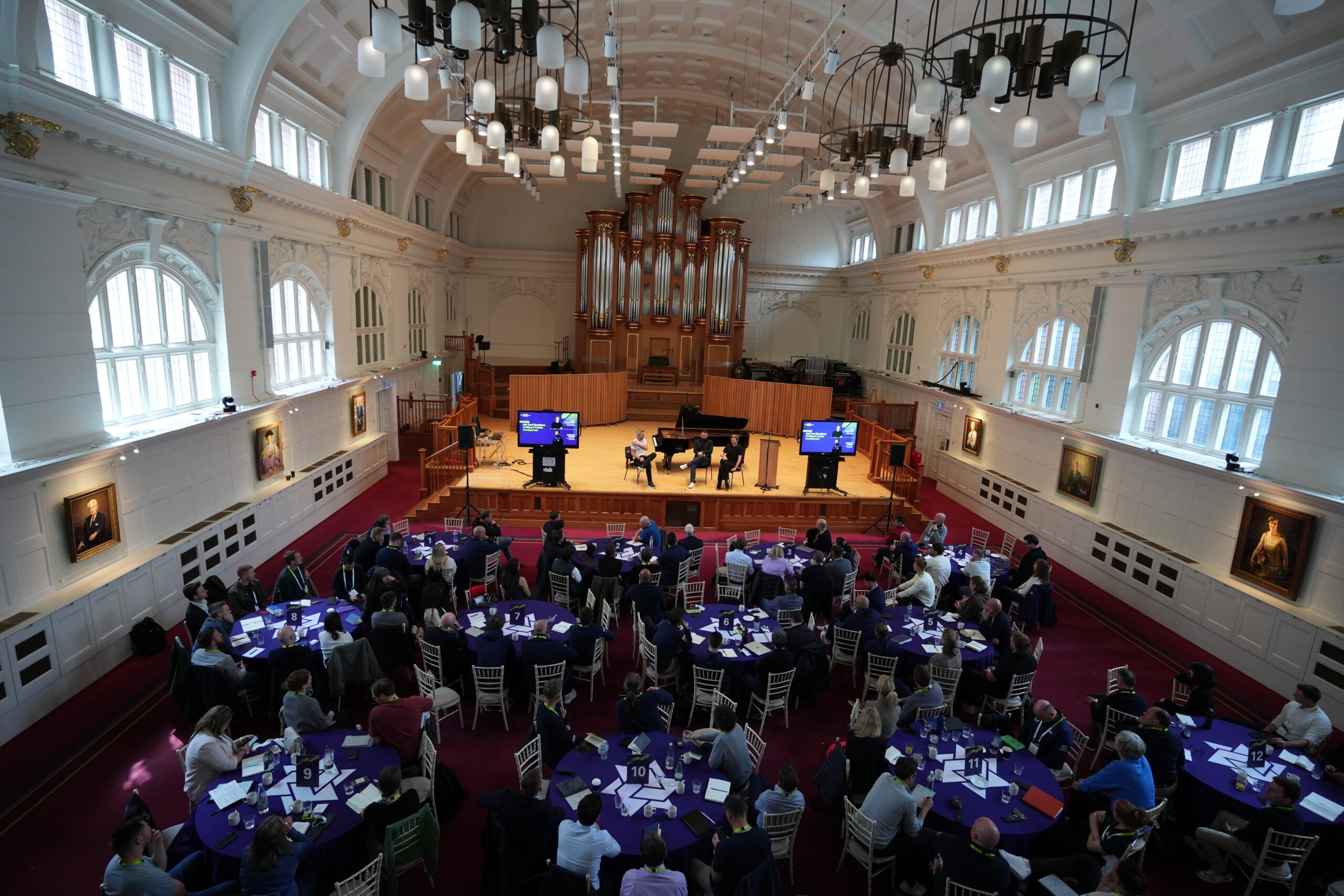
The Amaryllis Fleming Concert Hall at the Royal College of Music in London where we hosted Leaders Meet: The Talent Journey in April 2025.
Below, we explore, through the lens of Campbell’s own ballet career, his approach to meeting that challenge head-on with the RAD.
Meet students halfway
Campbell’s teaching mindset has been influenced by his underwhelming student experience at the Royal Ballet School, which he attended on a scholarship between 2003 and 2005.
The main problems were the teachers and the environment. “I struggled so much that I wasn’t sure whether I wanted to continue pursuing a career in ballet,” he said.
He had arrived from his native Sydney mid-term, which didn’t help him to settle, but it was also down to the type of prescriptive teaching that routinely irks younger generations today.
“We weren’t really encouraged to step out of our lane. It was like, ‘you know the steps, you focus on this, and we’ll worry about everything else,’” he added.
As Campbell explained in a 2017 interview with the Daily Telegraph, “we weren’t encouraged to ask too many questions. I think it took me too long to learn that, because I was naturally inquisitive, and wanted to know why we were doing certain things.”
When reflecting on that time for Leaders members, he said it was “such a missed opportunity.”
His turn-of-the-century experience as a ballet student shows that the need for teachers to meet their students halfway is not new. Two decades later, talent environments in performing arts, and in sport, must be designed to engage a cohort that wants to know ‘why?’
Promote early sampling
Campbell followed in the footsteps of his maternal grandparents, Valma Briggs and Mario Desva, who had both danced with Ballet Rambert in London.
By the early 1990s, Briggs was teaching at Academy Ballet in Sydney; Campbell’s mother worked in the same school as a manager. He began dancing at the school at the age of five.
He played grade cricket too. If his dancing talent was no surprise then nor was his cricketing ability as his father Alan was a professional player.
Campbell might have gone down that path himself had circumstances been different, but there was no pressure from his parents to choose one over the other; his teachers at Academy Ballet were similarly minded.
Of his cricket and school studies (he was homeschooled from the age of eight), Campbell said, “my parents were keen for me to remain interested in other things so that I was ‘Alexander, a person with various interests’ rather than just ‘Alexander, the ballet dancer’.”
Much like the world of sport, the performing arts has increasingly moved away from the idea of early specialisation. On Campbell’s watch, the RAD promotes the type of holistic development he enjoyed; and he is not alone. “Thinking about and knowing certain conservatoires, thinking about their talent pathways and their talent identification, how they train people is being reconsidered.”
The shift towards co-creation
As Campbell explained, RAD teachers must be able to adapt to a generation of students that desire agency in their own development.
“As educators and teachers, it’s really easy to go, ‘OK, I have to have this knowledge and I have to demonstrate to them that I know how best to get from A to B’,” he said.
That isn’t true, of course, but it requires humility on the part of the educators; and much of Campbell’s focus is on equipping dance RAD teachers with the “understanding that it’s OK not to know things definitively, for it to be a work in progress, and that it is going to be different, not just for each individual, but for each year [grade] at the school.”
Campbell’s decision to persist with ballet beyond his experience at the Royal Ballet School was influenced by his “opportunities to work with other coaches and have different experiences” at the Birmingham Royal Ballet. When he joined the company in 2005, it enabled him to see “a different environment and different way of operating that felt much more aligned to the sort of experience that I’d hoped for and wanted to have.”
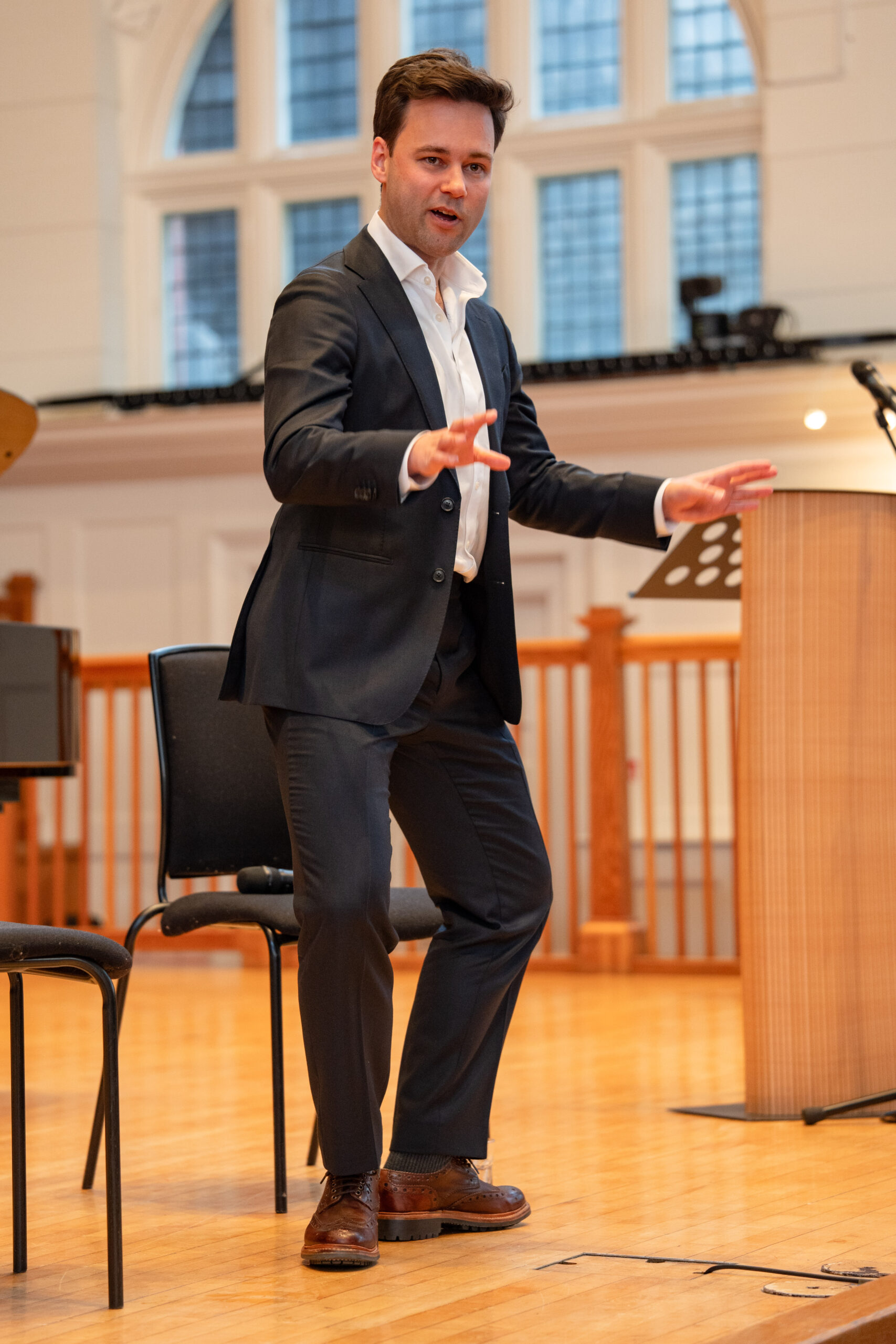
Campbell demonstrates a plié for an audience of Leaders Performance Institute members, who imitate his movements with varying success despite his words of encouragement.
Care is a baseline expectation
We know that wellbeing is a performance enabler; younger generations sense it too.
Campbell wants RAD staff to be role models of wellbeing. He said: “Educating our teachers on that and the importance of looking after themselves could have the most impact in a fairly short period of time.” It must start with him as Artistic Director; a fact of which he is “acutely aware”.
The RAD has also made efforts to improve safeguarding in its schools and increase the accessibility of its courses, particularly for students and participants with additional support needs. “We’ve got teachers who have parents saying ‘my child has additional needs but they love dance, they really want to be part of it; is that something you can do?’ And a lot of our teachers will find a way or have found a way, but a number of them feel nervous about the responsibility that entails. They don’t want to get it wrong.”
Campbell and the RAD are working to provide those teachers with the right tools. “We give them the support so they can say ‘this is how you go about it or if you want to find out more this is where you would go’. I think this is giving us the best opportunity to broaden our participation in ballet and dance.”
A broader definition of success
Campbell admitted that all his “Plan As” came off in his professional life. He is a prime example of talent meeting opportunity.
However, as he said, “my self-worth and my personality were not determined by whether I was successful in that pursuit.”
He makes sure this is reflected across the RAD’s curricula. “I don’t want to just provide for those people who want to get to the top level and be the very best.” Rather, he also wants to support the career aspirations of students who say, “I enjoy this, I’m quite good at it, but actually I don’t have that real drive to pursue this one very narrow thing.”
Their love of the art form might lead to a career in dance teaching or one of the industry’s that surround the performing arts such as lighting, set design or even physiotherapy with a specialism in dance. The RAD will support those aspirations. “It’s understanding that there are more opportunities than just being the dancer on the stage.”
What to read next
Leaders Performance Adviser Iain Brunnschweiler addresses the complex world of youth sport.
For all the experience in the virtual room – members that have spent decades working with youth athletes – each struggles to balance the elements that help young athletes to realise their potential.
“You’ll never solve it,” says Brunnschweiler, who has worked on successful talent pathways in both football and cricket. “The interesting part is how we make decisions and deliver on a strategic approach that’s appropriate for the context of the athlete.”
For the benefit of the virtual table, he outlined five common tensions that he has encountered on talent pathways:
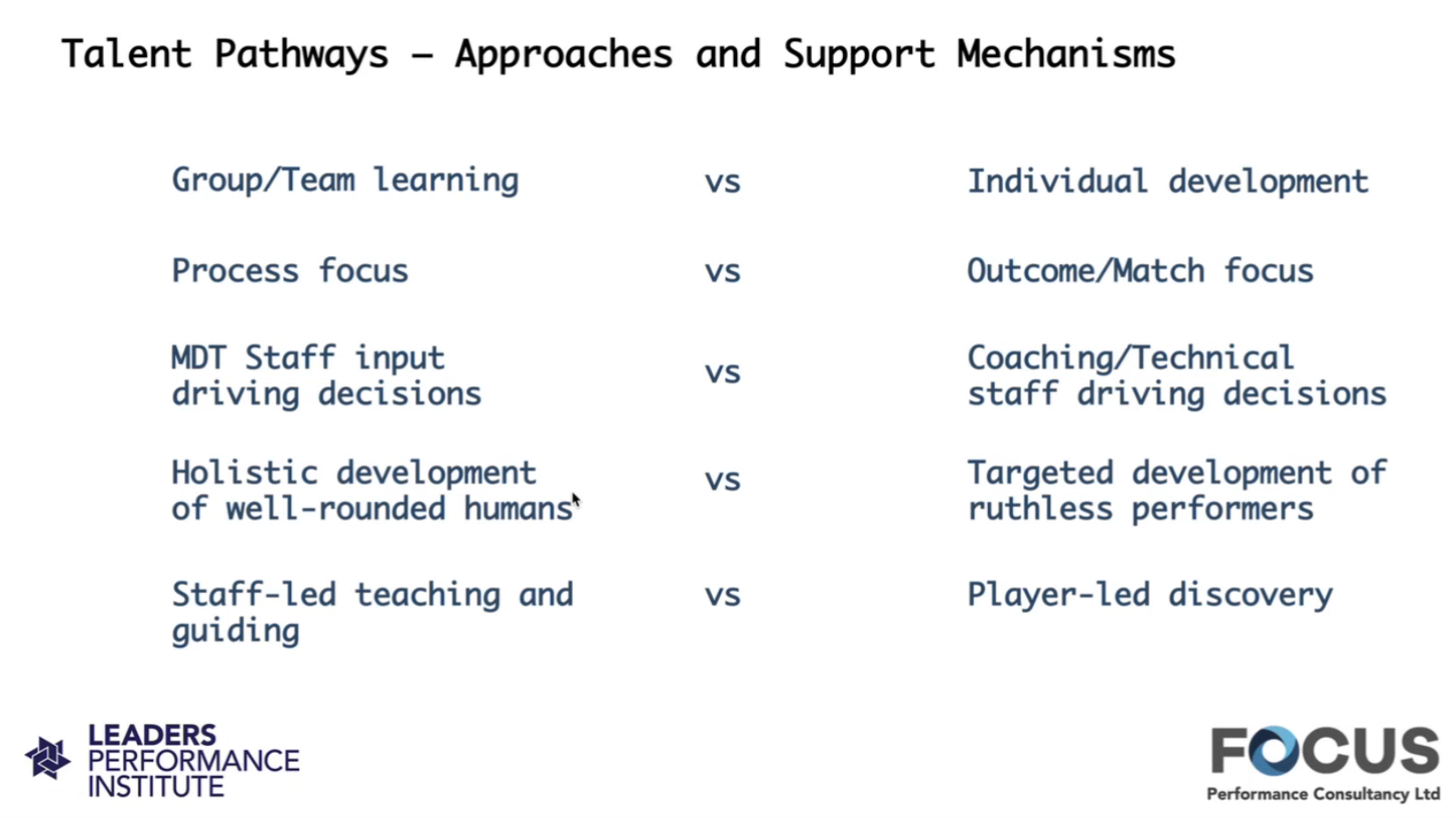
The list is not exhaustive, but it is representative.
“The headline feedback from everyone at the roundtable is that probably they’re weaving down that ‘versus’ line in the middle when they’re doing this well,” adds Brunnschweiler.
He explains each tension in turn:
1. Group/Team learning vs Individual development
“Within your programme, how much time are you spending on team tactics, team interconnectivity, team culture, etc. versus identifying individual work-ons, individualised practices, individual focused development, individual prioritisation?”
2. Process focus vs Outcome/Match focus
“This is very similar to the first in many ways but, in my mind, is distinctly different. How much are you focusing on the process versus the outcome? And this is really around how you’re monitoring development. So if there’s a pathway lead or an academy director: are you looking at whether teams are winning when it comes to competition or are you looking at tracking progress against process markers that are embedded either within training or within the game?”
3. MDT staff input driving decisions vs Coaching/Technical staff driving decisions
“This is about athlete programming. How much of your emphasis is put on the ologists, multidisciplinary staff, the scientists versus coaching and technical staff? Who’s making the final call? How are you looking to integrate? What are the processes or systems that allow those two things to collide effectively? This was certainly one of the tensions that strongly resonated with the group.”
4. Holistic development of well‑rounded humans vs Targeted development of ruthless performers
“There’s been a massive growth in talent pathways around understanding the holistic nature of development and the growth in player care, support, psychology support, performance, wellbeing, and education off the pitch. The common question is ‘how do we develop well‑rounded humans?’ And the tension is someone saying ‘but surely it’s just about game performers can we spend all of our time targeting development of that ruthless in‑game performance?’”
5. Staff‑led teaching and guiding vs Player‑led discovery
“There’s a perception that it’s slower to do the player‑led, but it might be deeper; whereas it’s quicker and can feel more rewarding to do the staff‑led. ‘Let me tell you, here’s some guidance. Let me solve the problem for you.’”
Brunnschweiler then reflected on some of the available support mechanisms:
1. Consider if the athlete’s experience of a programme matches your teams’ intent. Much will depend on the athlete’s prior experiences, plus how and when they came to your programme.
“There’s a lot of insight generated around young athletes in all sports now and it’s like, well, how do you harness that background information as well as that current information you’re getting on them in order to make decisions around their programming?”
It requires a shared mental model between the different disciplines.
“There were some good examples at the roundtable where team culture means people’s view are respected, taken onboard and valued. And that’s utilised as a part of a decision-making approach.”
2. Retain coaches with age-specific expertise. Too little value is placed on age-group coaches, which can lead to those individuals seeking employment with more mature athletes.
“If I’m the first team coach, there’s a perception I’m better than the under-12s coach; whereas they’re equally challenging in different ways. Someone who’s brilliant at working with 10 to 12 year olds may end up working with older athletes because they get paid more.”
They may or may not be equipped to make that transition but he argues that teams can make it less of a problem by asking:
“Can you manipulate your wage structure to ensure these academy coaches stay valued within the role they’re best deployed in?”
3. Remember: well-rounded athlete can still possess an edge. While there is a desire to ensure holistic approaches that promote well-rounded development, there is a risk in taking it too far.
“There’s a danger that we over-index on compliance within pathways; and, actually, being an edgy, ruthless person is an imperative characteristic for an elite performance athlete.”
4. Development support for coaches. There is a time when a coach needs to be instructional and clear as well as a time when they need to skilfully draw a decision from an athlete.
“How do we provide learning and development support for coaches and other members of the MDT in this space so they can be skilful at learning design and skilful at knowing when to provide which approach based on the context and the athlete?”
5. Give the young athlete a sense of agency. Let young athletes speak in conversations around their IDPs and help them understand why things may feel challenging.
“I’ve seen people saying we want to put on sessions that look slick. That may or may not be the objective. It might also be that we’re really clear as a club that we think the deep learning and progress occurs in messy sessions where it’s clunky and we’re allowing players to play and solve problems. As coaches, we should be the best problem-setters.”
What to read next
10 Ways in Which the Best Environments Support their Pathway Athletes
Group Captain Emma Keith took to the stage to outline the RAF’s ever-adapting approach to bringing trainee officers up to speed.
“A lot of people hold up self-awareness as the holy grail. ‘I’m really self-aware.’ Brilliant. But it’s a complete waste of your time if you do nothing with that knowledge,” she said.
“Just imagine that I’m the kind of boss that says: ‘When I’m under pressure I can get really stressed and yell’ – I don’t think I am but let’s say that I am – it doesn’t help my team at all that I have that knowledge. What helps them is that I do something about that, which is the hard part.”
Keith, a Royal Air Force Group Captain, is the Commandant of the Tedder Academy of Leadership at the RAF. In 2015 she became the first woman to run RAF Officer Training.
A decade later, she stepped onto the stage at the 2025 Leaders Sport Performance Summit to run through her organisation’s strategies for effective learning.
The Leaders Performance Institute picked five that stand out.
1. The RAF promotes self-leadership
For the RAF, learning is not just about “absorbing information”, as Keith put it, but in establishing the right habits that enable learning. Self-leadership is at the forefront of their approach. It combines that aforementioned self-awareness with self-management. It also feeds into the idea that everyone in the RAF is a leader in their own right.
“Leadership at all levels really matters,” said Keith, who believes it would be all too easy for personnel in non-command positions to absolve themselves of responsibility. “I really don’t like the term ‘follower’. It needs a word in front of it; an engaged follower, a respected or intelligent follower. Nobody just follows, or at least they shouldn’t, and I don’t want someone in my organisation who isn’t a thinking follower. What we’re really talking about is a leader who’s leading themselves with followership skills.”
Character is critical too. “You can teach skills more easily than you can teach character,” said Keith, who is less interested in what a person has done than how they have approached their opportunities.
“For example, if somebody has an amazing profile but they were dropped off at every fixture at school; they were picked up and everything was handed to them, it’s not to take it away from them but I want to see more from that person. But the kid who got on a bus and travelled 40 minutes under their own steam to make hockey practice – that shows me something about their character.”
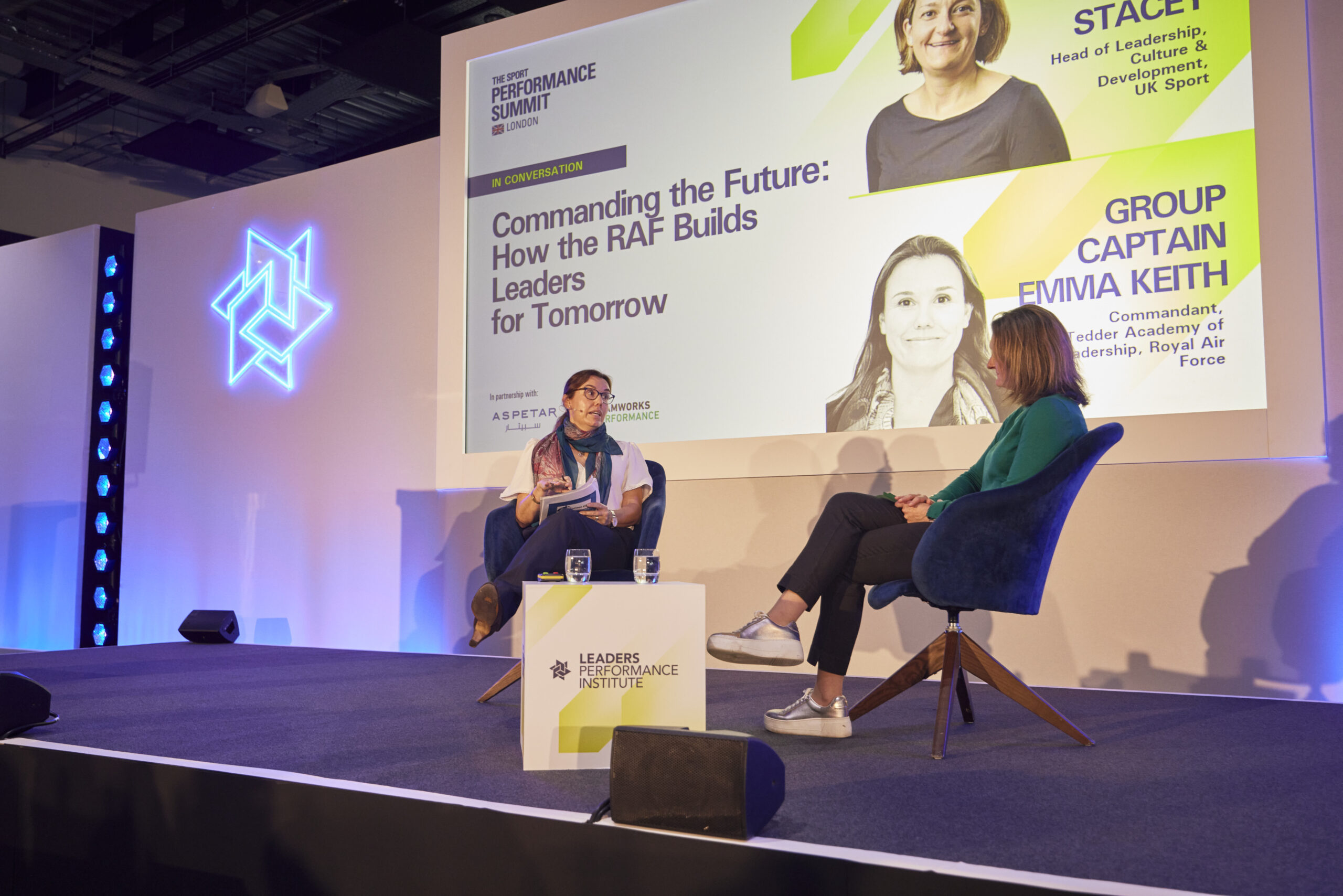
Emma Keith in conversation with Alex Stacey at the 2025 Leaders Sport Performance Summit at the Kia Oval in London.
2. The service positions its values as the ‘carrot’ rather than the ‘stick’
The RAF has a document entitled ‘Air Publication One’. “It’s not a very sexy name, I’m afraid,” said Keith. “Welcome to the military.”
Prosaic title aside, it sets out the RAF’s values of ‘respect’, ‘integrity’, ‘service’ and ‘excellence’. There’s nothing unique in those four – you probably have something similar within your teams – but the devil is in the detail.
Air Publication One is updated from time to time, with the last occasion being in 2019.
“Those updates covered more inclusive imagery and language,” Keith continued. “Thinking about my organisation, that’s probably not that surprising. But another major change that I made to that document, which came from my experience of running officer training, was to shift this from being the stick to the carrot.”
This shift was critical because too often the document was used to browbeat good people. “Actually 99% of my organisation are amazing, they really are, and I wanted a document that was aspirational for them, that they could believe in, that it was the organisation they wanted to be a part of. And we know from all the different behavioural models of change that it only happens when people want to change, not because it’s been forced on them.”
Everyone in the service is asked what these values mean to them. “Even the word ‘discipline’ means something different to me and a 17-year-old who’s just joined up. So, if they feel that they’ve been heard and listened and talked to, I think that’s really important.”
Air Publication One is currently undergoing further revision.
3. They use peer to peer storytelling
As Keith explained, she and her team produced an anthology and a series of videos detailing the stories of RAF personnel. These are not just nice-to-haves but critical learning resources.
She illustrated her point by referring to the ineffectiveness of a top-down approach with a recruit. “With the best will in the world, if I stand up there and tell them all the things they should do, they’re going to look at me and go, ‘thanks very much, Group Captain, you do not live my world, you do not know me and I’m going to switch off. Your lived reality is different to mine’.”
Instead, “if their corporal stands up and says it, someone who’s only a couple years ahead of them, that really is powerful. Who in your organisation can you help sell that message for you?”
4. They accept that learning never ends
The RAF used to approach leadership development for its aspiring officers as something to be taught in one hit. Today, the service adheres to a four-step pathway:
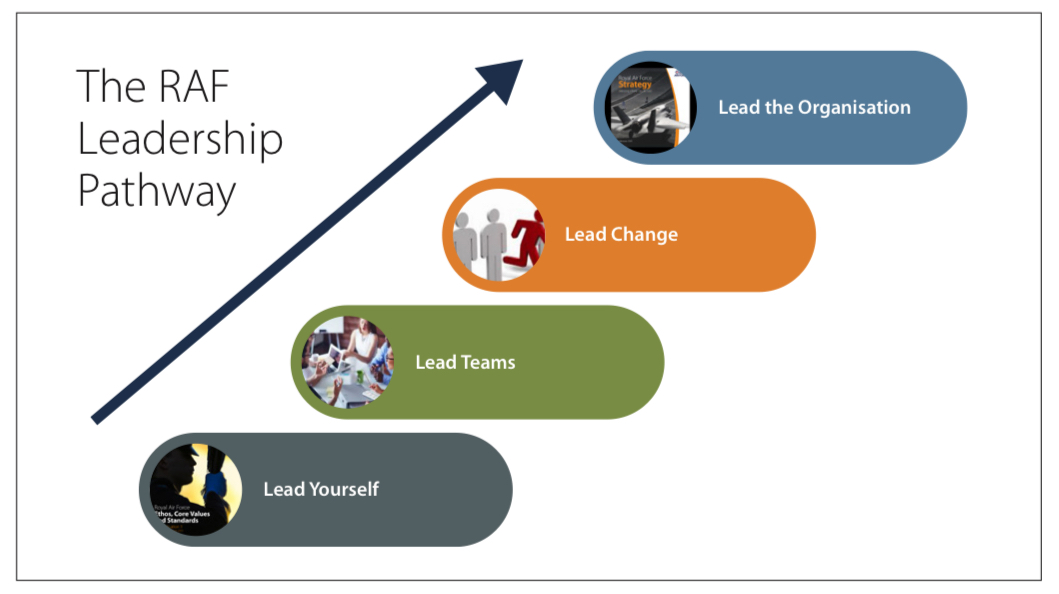
“We’re changing ‘lead teams’ to ‘lead others’ because not everybody has a team, but you lead by role model and example,” said Keith, who also highlighted the pathway’s non-linear nature. “The reality is you will be doing all of these things all of the time. The Chief of the Air Staff is still leading himself. You never stop that.”
She also encourages challenge from younger generations. “It’s about having humility on both sides to have those conversations. That’s where things like mentoring and reverse mentoring can be so powerful. It’s an exchange of ideas that can be so helpful. I mentor a lot of people and, honestly, every time I put the phone down or put the coffee cup down, I’ve learned as much as they have, if not more, I am absolutely sure.”
5. They leave the ‘how’ to their learners
Nestled at the heart of the RAF’s guiding principles is ‘mission command’, which refers to the empowerment of mission leaders.
“In simple terms this is the idea that the leader or whoever’s in charge of the task is set the ‘what’ and the ‘why’, but we really try and keep out of the ‘how’,” said Keith. “What you’re trying to give is as much freedom of manoeuvre for people on the ‘how’ as you can.”
If she needs a team to cross a river to rendezvous with someone on the other side, for example, she will let them decide the ‘how’ so that they are not reliant on returning to her for instruction should things go wrong.
“It allows a speed of decision-making, empowerment for that person. It operates on trust and it crucially frees up headspace for the person in charge. Another wonderful gift you get from that technique is innovation and creativity, because they will probably do things differently to you, which is potentially uncomfortable for you, but also probably helpful.”
More on effective learning strategies
British actor Michael Fox explains that the best directors know that the answer can come from anyone in the room.
While not a bad thing per se, if the athlete is overly focused on doing what their coach may see as the ‘right’ thing, they’re not focused on performing to the best of their ability. Performance can be suboptimal if the coach imposes a creative straitjacket.
There are parallels between the athlete-coach relationship and the actor-director dynamic in the performing arts, as British actor Michael Fox explains onstage at the 2024 Leaders Sport Performance Summit in London.
“It’s about quality listening,” he says. “The director’s role is to lead, to steer the ship, but the frustrating thing is that you can lose answers if the actors are not able to voice their opinion and put it out into the room.
“It’s good to be heard, and the director can do what they want with it, but if you’re allowed to voice it then you can let it go. You can lose people’s creative instincts if they’re not able to voice their opinion.”
Fox, who is best known for his work on Downton Abbey and Dunkirk, has also appeared in numerous theatre productions and voiced characters in several video games since graduating from the Royal Central School of Speech and Drama.
On occasion in his subsequent career, he has encountered directors who see themselves as “gurus”. “You can make people really shrink around you,” he says of such characters. “Am I just an instrument for you to share with the world how amazing you are?”
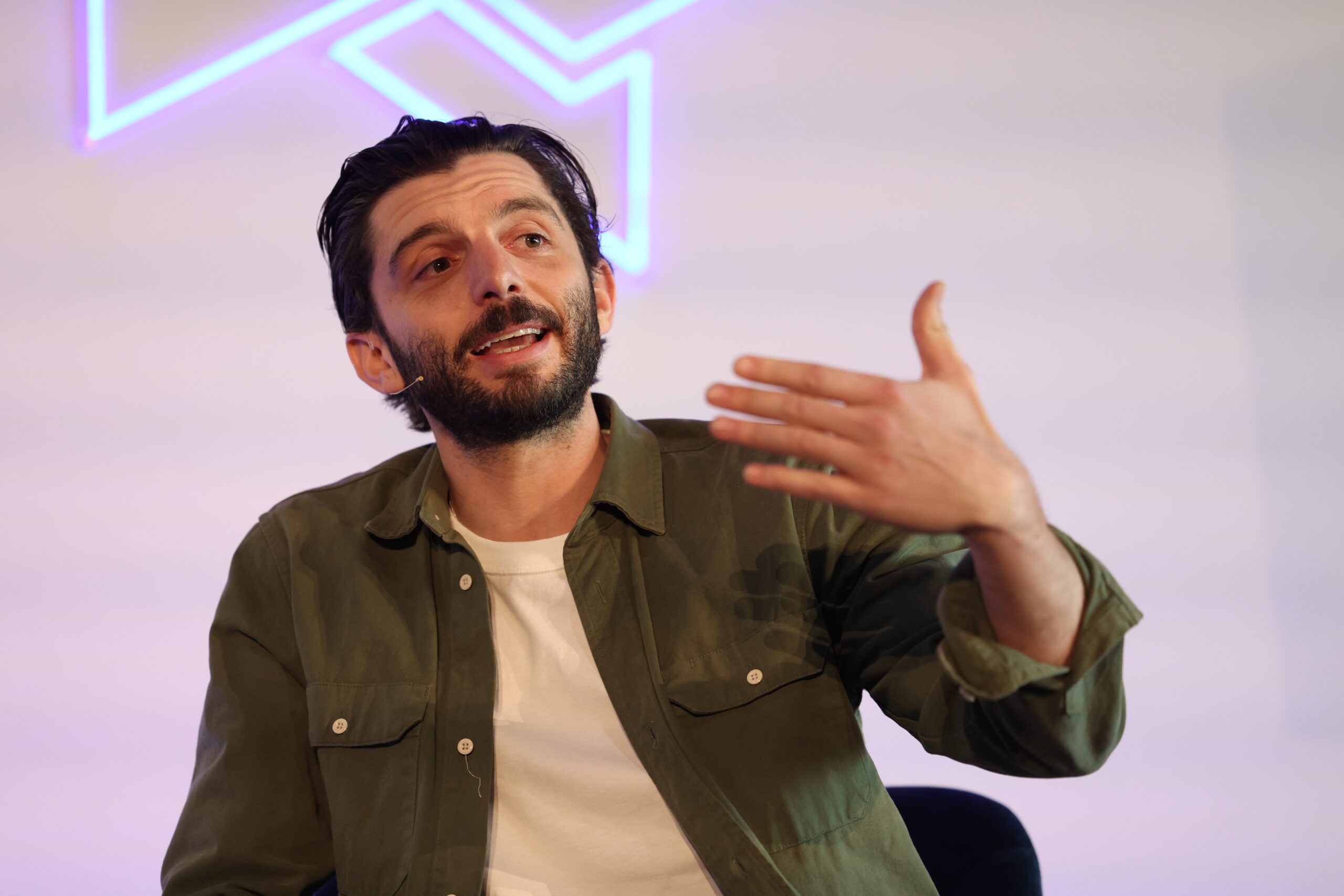
Fox’s observations struck a chord with the coaches in the room at the Kia Oval and raised several questions:
Does the responsibility sit solely with the director?
No. In fact, as Fox says, “you have to still value the things that you need to do to make sure that you’re at the top of your game.” His routine includes yoga and meditation and, since he “spends a lot of time unemployed” he must do whatever it takes to ensure he is ready to go following a successful audition.
It sounds quite insular. How does that translate to a company setting?
“You do the work separately and then come and be crafted,” says Fox. “You’re taking the edges off to push in the right direction. You don’t want the director to do all the work.”
Speaking of directors, surely no two are alike?
Not at all. “That first week we just don’t know what we’re expecting,” says Fox. “You have to adapt to their way of working.” He appeared at the summit during the London production of The Fear of 13, which was unique in its genesis. “We were up on the first day and we nearly staged the front half of the play, which is madness, but it was amazing. But most directors talk over a coffee for the first few days.”
What qualities define the best directors, in Fox’s opinion?
“The directors I like working with are the ones that come into the first day of rehearsals and say ‘I don’t have all the answers – we’ll find them together’,” says Fox. “I respond better to that sort of mentality because I think it’s more honest. We don’t have all the answers. The best idea can come from anywhere in the room.”
However, it is still common practice, as he explains, for film call sheets to rank actors by importance on any given day. “That kills creativity, personal agency and instinct,” adds Fox. “They feel like their voice is less important.”
Therefore, “the best directors can give trust and individual agency to the actor over what they’re doing, their artistry, then you feel like you’re growing as an individual.” Critically, “in the moments where you need to be instinctive onstage you’re not thinking about getting it right for them or making a mistake.”

How might this look in practice?
A good example is Sinéad Rushe’s 2023 production of Shakespeare’s Othello in which Fox played the character of Iago.
It was notable for the fact that three actors played Iago onstage at the same time and Othello was given a more prominent role than in traditional stagings.
“We wanted to take Iago’s complicity with the audience away and put Othello much more at the centre of that play,” Fox told The Uncensored Critic Podcast earlier this year. Iago’s famous soliloquys became dialogues between the three aspects of his character rather than the usual series of knowing asides to the audience.
Rushe, who also taught Fox at Central, facilitated creative discussions from the off. “We’ve had two periods of development just of ten days each just to begin to workshop this idea of three actors playing Iago,” Rushe told The Theatre Audience Podcast on the eve of the second preview.
She also wanted to protect actor Martins Imhangbe in the titular role. “There’s a racial dynamic there that’s very problematic and there are these very interesting histories of actors who’ve played Othello over the years of finding it actually quite a distressing experience of feeling like the entire audience is laughing at them through the vehicle of Iago.”
Imhangbe himself also spoke at the time of the company’s work “dismantling” and “reconstructing” the play. “We’re trying to do something different with it, so it means we have to see it with fresh eyes,” he told The Rendition. “We’re trying to bridge the gap between what was written and how it’s relevant today.”
Rushe added that the production provided “a feeling of kindred spirits and people up for working in a collaborative and ensemble way.”
Fox agrees. “It was an unusual take but actually it meant that people could hear the play anew. And I loved it.”
What to read next
How to Transform an Underperforming Environment into a Thriving Hub
