30 Jun 2023
PodcastsThe Parisian club’s new Director of Rugby discusses his work at Leinster and what it will take to replicate that success in the European Champions Cup and French Top 14.
A podcast brought to you by our Main Partners
Stuart Lancaster, the new Director of Rugby at Racing 92, agreed to join the Parisian club last September while enjoying his seventh season as Senior Coach at Leinster. It meant a fresh challenge for the man who also coached England at the 2015 Rugby World Cup.
Says Lancaster: “For the first time, really, my head was turned a little bit by the opportunity to try something new in a different country, in a different competition, the Top 14, and to try and build something as successful as Leinster but in a completely different context”.
He discusses his move at length in today’s episode, which is brought to you by our Main Partners Keiser. During the conversation with Henry and John, he also touches upon:
Henry Breckenridge Twitter | LinkedIn
John Portch Twitter | LinkedIn
Listen above and subscribe today on iTunes, Spotify, Stitcher and Overcast, or your chosen podcast platform.

What Leaders Performance Institute members said in a recent Virtual Roundtable about coaching and leading in an inclusive way.
One of the groups on the call used the above as the start of the conversation – a question was asked whether or not Lewin’s equation is a linear relationship around trying to get as much talent and as good an environment as possible to maximise performance. Or is it actually about optimisation? Finding the optimal relationship between talent and the environment. Different talents could be successful in different environments, and vice versa, as opposed to just trying to put as much talent into a particular environment, and then make it as good as it can be. Something to think about.
Reflecting upon psychological safety
When we reflect on experiences of feeling included, often we hear responses such as the feeling of being heard, feeling safe to speak up, challenge and ask questions without a level of self-censorship – this is the essence of psychological safety. If that self-censorship is present, Lewin would say this would really impact the environment. It can create hostility and have an impact on performance. It will also affect the authenticity of the environment. If we feel a level of covering or lack of authenticity, social scientists have found it can actually compromise our ability to think by up to 30%.
There are four levels of psychological safety:
For the purpose of this roundtable discussion, we emphasised the importance of inclusion safety as the first level of this process – it is a precondition for the other levels of safety. Are your athletes or staff comfortable in that coaching or leadership relationship? Social sciences research suggest that in the need to feel valued, there needs to be a sense of belonging first to allow the rest to grow together. If you want to explore some deeper thinking around belonging, consider some of Owen Eastwood’s work.
Finally on this point, in the quest for establishing psychological safety, role-modelling is key, particularly from those at the top of the organisation who have influence. A clear statement of intent can go a long way to increasing psychological safety, and comfort for other stakeholders aligned to the organisation.
Onboarding
Throughout the group conversations, the onboarding process was identified as a crucial component in fostering a strong sense of inclusion safety, and one where we felt thinking around this is currently under developed. The consensus from the conversations is that many environments are often more mature in their thinking around onboarding with players, as opposed to staff. Circling back to Lewin’s equation that was used at the top of the call, staff however, are the ones that are often the biggest shapers of an environment so there’s work to be done here. So what’s working and what can be improved?
Most organisations are striving to be quality learning environments – this often starts with having psychological safety present. Are we making it clear and backing it up with action, that the moment new people walk through the door and are being introduced to the culture, that there’s an intent and commitment to invest in one’s growth? ‘The better you are will make for a better collective’.
Do we need to challenge our thinking in this space? Why do we recruit somebody? Often we think about the technical elements, but are we considering and paying enough attention to the ‘softer’ skills as a key component, and then bringing them up to speed on the environment from there? Specifically to inclusion, some organisations have started to add an inclusion question in their interview processes as well, which has been an interesting addition to see how many people struggle to articulate their position on it.
To create true inclusion safety, the onboarding process can in actual fact begin before an individual is in the building, during the recruitment process itself. It’s important to think about a 360 approach to connect to all elements of the organisation. What are the cultural connections someone will live and see on a daily basis? What does that tangibly look like for specific teams, because we know sub-cultures exist? Then there is the relationship with the athletes themselves – what do they look like? Often it comes back to relationships and how we treat each other was a comment from one of the groups, which is why there is an emphasis on recruiting the right individuals for your environment, and also role-modelling from those that carry influence.
Finally, seek to measure the impact of these processes. We know there is a high turnover in professional sports. Are you surveying your culture in general and also capturing insights into the effectiveness of those best practices that are integrated as part of the onboarding process? Be intentional and frequent in checking if people feel a part of an organisation.
Front loading through education
It’s perhaps not a huge surprise that ‘education or educating’ as a term was frequently used in our conversations, from a variety of different perspectives. As a provocation within the group, the question of what are the behaviours that create inclusion safety is a simple but effective place to start when considering this process.
One environment on the call shared an anecdote of how they front-loaded education around psychological safety with their coaches across a two-year period, with one of the end results being that this could have a positive impact on how they then create environments for players. Those in the organisation felt it was important to respect where coaches and other staff are coming from, respecting those opinions and creating opportunities to ask questions and develop thinking around psychological safety. The safety it created for coaches thus created better safety for the players. There was a clear undertaking of needs analysis with stakeholders (in this case coaches) to support psychological safety.
As an extension to the point above, there were discussions about leading inclusively, and how some traditional coaches may not have experienced this style before – assuming that ‘hero leadership’ (leading from the front, pushing, directing) is the way to achieve success. It is important to help and educate coaches to lead more from the centre, and not to dismiss people if they are less successful at the beginning of their leadership journey.
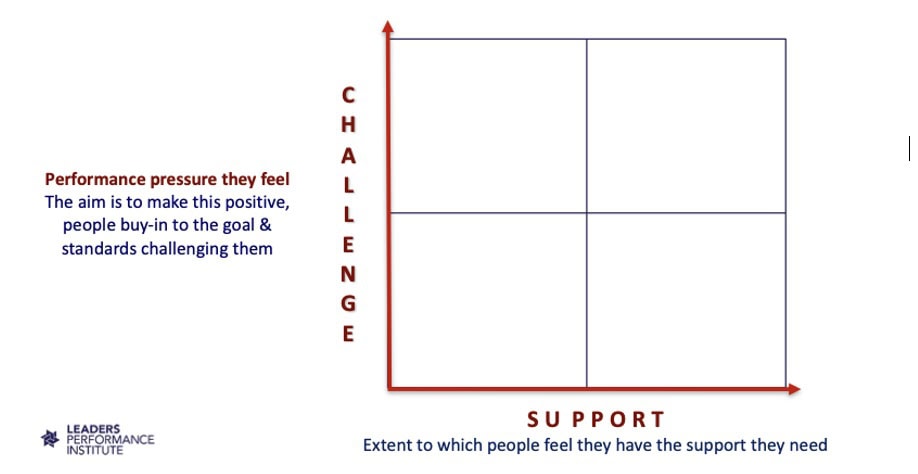
Transparency and choice of language is important here as well. We discussed high standards and high support environments. To create alignment, there needs to be high support and education resources to accompany the expectations of high standards. There needs to be clarity around expectations on the front end. For example, sharing that a particular training session is going to be really hard, and the failure rate is probably going to be pretty high, and that’s okay. The relationship between transparency and willingness to share information is more important than ever before.
Finally, consider the power of facilitation with those in the environment. Do they have self-awareness of their own biases? How do you work to respect different individuals’ backgrounds through understanding their perspectives and an awareness of where they’ve come from? We are striving to encourage that level of safety so that people can be more open and buy-into the environment. Culture often starts with the identity of the group, so this creates the opportunity to design that culture from safe foundations and the removal of self-imposed thoughts and beliefs.
Respecting differences
Environments have different cultures. Educating players and staff on each other’s background and culture shows respect and awareness. The heritage and lineage of where people are coming from is really important. What we can do to bridge those cultural gaps? The importance of delivering according to need – for example, prayer rooms and certain types of foods.
People want to be expressive. Whether that’s to dress in a certain way as an example. How are we welcoming that? Inclusion can be a combination of belonging and uniqueness working collaboratively with one another. How are we helping somebody simultaneously fit in and stand out?
Empathy is crucial. Create an environment where empathy is on display and can be nurtured. We also have to think about the idea of being comfortable with inclusion looking different to certain groups and people. Do you ask your players and staff ‘how can we include you more’ or ‘what would help you feel more included here?’
Takeaways: Group Reflections & Insights
At the end of the call, attendees were asked to share a key reflection of thoughts from the roundtable that they’d like to take forward:
1 Jun 2023
ArticlesJatin Patel of the Rugby Football Union discusses his work addressing issues of equality, diversity and inclusion within his organisation.
Jatin Patel, the Inclusion and Diversity Director at the RFU, English rugby union’s governing body, since 2021, was one of a series of individuals who played an instrumental role in devising the Inclusion and Diversity Plan, which is a result of elite game research into racism and classism in the English game.
The project was given added impetus last year when the Newcastle Falcons’ centre Luther Burrell spoke publicly about his experiences of racism and class prejudice.
Patel published a LinkedIn post announcing the plan’s launch. “April went by in a flash. But what a month it was,” he wrote, going on to explain the notable achievements of his “small but mighty team (with a lot of help from our friends!)” managed during the month. In addition to the I&D Plan, they delivered ‘active bystander’ training to RFU Council members, contributed to panel discussions on pride, hate speech and racial equality, and hosted non-governmental bodies and equality, diversity & inclusion leads at Twickenham Stadium during an England women’s international match.
“There is always more to do. But at the heart of everything above is #collaboration. With other colleagues, with passionate leads within the game and with leaders beyond our own sport”.
Patel demonstrated his passion when he came downstairs to speak at the 2022 Leaders Sport Performance Summit at the RFU headquarters in Twickenham Stadium.
He also found time to speak to the Leaders Performance Institute backstage.
What does your role look like on a day-to-day basis?
JP: My role as Inclusion and Diversity Director at the RFU involves looking at all elements of the game. Our strategy has four fundamental pillars and there is no hierarchy. The first I’ll speak about is employees and the board; so what is our organisation? How is it made up? How can we improve, attract, retain and progress diverse talent? The second pillar is around gameplay; community to professional rugby. How do we make the game more inclusive? How do we increase the diversity of players, coaches, officials and people working within the club environment? The third pillar is around our fans, followers and partners. Who are they? What is the content they’re consuming? How are we engaging them in rugby across England? And how are we working better with our partners to understand the efforts they’re making to diversify their own environments but also working with them to scale the impact we want to have and reach more communities? The final piece of that strategy is around our governance. Our volunteer leaders who are elected into positions such as our Council as constituency body reps. Who are they? How do we help them to be more inclusive leaders? And ultimately how do we diversify the talent pool coming into those positions for the future as well?
How does that look on a good day at the office?
JP: On a good day, that means people openly talking about issues around inclusion and diversity. And it might sound simplistic, but sometimes people avoiding talking about diversity because it’s too difficult or the fear of the unknown, certainly the fear of saying the wrong thing, which I can understand to some extent. But on a good day, what you’ll see is people having this conversation in a really open way, showing a bit of vulnerability, being open to the fact that they may not know something and ultimately asking for the guidance, advice and opinions and insights of people who may come from more diverse groups to help them to be better leaders, to make better decisions, to be more inclusive in the way they operate, to make sure that we’re sticking to our ambitions of being more inclusive and diverse.
What are the signs and clues you look for that show that diversity and inclusion is becoming embedded in the fabric of the organisation?
JP: The signs you look for are when leaders at the top of your organisation are building diversity and inclusion into their objectives and their agendas, which is very much the case at the RFU. I think you see it when you start to have clubs within the professional game talking about this on a more regular basis and that’s absolutely happening in rugby right now. Some of those discussions are difficult, but at the same time, talking about them openly and the challenges you are facing. Ultimately, the key indicator everyone’s looking for is: what is the diversity of people participating in the game of rugby? It’s hard to measure that because we haven’t always got the data we want but, ultimately, the day we can do that effectively and we can start to see progress, I guess that’s a really good sign that not only is the game changing to become more diverse, but people are staying in the game. Hopefully that leads to becoming more inclusive as well.
How do you deal with inevitable bumps in the road?
JP: Bumps are always going to occur in this space. It’s a steep learning curve for some. Others are a bit more advanced. There’s probably a big chunk of people in the middle that are still quite new to the inclusion and diversity space but get why it’s important. Bumps; you’ve got to kind of ride them. The more you build inclusion and diversity into your strategic objectives, your strategic thinking, into the commercial plans, the marketing plans you have, the communications plans you have, the performance strategies that you have, the more it becomes normalised and so the bumps become like any other bumps rather than a specific inclusion and diversity bump, one you become more used to riding rather than, at the moment because the fear of the unknown is more heightened. I tend to use bumps also as an opportunity to continue engaging on this topic with many of my colleagues as I possibly can. I think it’s sad to hear stories of discrimination in the game, but if you don’t learn something from them and how to be better as a result of them, it’s not only a missed opportunity, you’re failing the person that experienced that and you might be failing people in the future.
How do you balance long-term and short-term planning in your role?
JP: Balancing the long-term and short-term is probably the biggest challenge in the diversity and inclusion space. I think, depending on public pressure, people, particularly in different positions of influence and leadership, want to see their results overnight. For me, it’s about making sure that all the initiatives we do around the I&D agenda are regular, are digestible, that it can be tangible, not just about raising awareness but what can people do about it. All those short-term activities are designed to increase long-term change and hopefully improve not only the representation of diverse groups in rugby but also the number of inclusive leaders that exist within it as well. Ensuring you make that distinction is really important. Inclusivity, getting it right, and getting inclusive cultures, behaviour and decision-making in place will help diverse groups that are either in the sport today or you’re trying to get into the sport for the future, not only for the sense of belonging but also to flourish and be the best they can in an environment that is being considerate of them. Short-term versus long-term, one automatically leads to the other and it’s just making sure people have the patience and the confidence that they’re going on a journey that will ultimately introduce change.
How important is data in your role?
JP: Data is critical to my role. It’s not always the easiest thing to obtain around the diversity space, primarily because of regulatory issues and also explaining to people why asking for their diversity data is important to their own experience, but also helping the RFU understand the diversity of the game more effectively. It underpins all of the baselines that we have; we have a lot of KPIs and metrics we want to hit over time. Most of them are quite challenging but that’s a good thing. It helps us focus on the issue and we can regularly report on movements in programmes that we’ve got in place or just generally in terms of participation. In that sense, data underpins every good inclusion and diversity strategy and certainly underpins ours here at England Rugby.
Does data help you to identify gaps?
JP: I think it’s more about making sure I use data to demonstrate the impact that we’re having but also to give a picture of the lay of the land, particularly from a diversity perspective. I think it can be used effectively to persuade others as well of the importance of it. For example, participation in rugby is a really key challenge at all levels of the game and making sure that we present data were gaps exist that not only demonstrate the opportunity but also demonstrate the need to act on that. If we’re struggling to get more people engaging and participating in the game and the data says so, we then need to be using that to increase the number particularly from diverse groups going forward and seeing it as an opportunity rather than as an additional project.
Our recent Leadership Skills Series raised the topic and highlighted some useful tips for Leaders Performance Institute members.
In kicking off this skills session, the group found it useful to revisit definitions of ego: ‘Ego is an individual’s sense of self-esteem or self-worth. The way someone views or perceives themselves – their self-awareness’.
Ego is a spectrum. It’s neither good nor bad per se, it’s a matter of degree or context. Positive aspects include confidence, security of identity and self-belief. Negative aspects are attributed to criticism of self and others, needing approval and the need to feel superior.
With the above in mind, here are some considerations for managing ego, individually and collectively.
Working with your ego
What are some of the ways you can keep your ego in check, healthy and appropriate?
Do you check in on your ego? The ‘Johari Window’ which is a framework for understanding conscious and unconscious bias that can help increase self-awareness and our understanding of others. There are four dimensions of self-knowledge around ego:
Finally, ask people that you trust. What do they know, think about you that you are not self-aware of? Self-disclosure and feedback is the kind of the golden recipe for getting insight into how our ego is manifesting itself, and whether it’s working well for us or not.
What the research says
A piece of research that explored problem players in sports teams with high, inappropriate ego highlights that you can experience the following consequences:
Working with someone else’s ego
Three ways you as an individual can seek to keep it in check:
Working with ego in teams
Three ways the team can seek to keep ego healthy:
Ioan Cunningham, the Head Coach of the Wales women’s rugby union team, discusses his traits as a leader as well as the importance of connection and fun in a team environment.
A stern test awaits them this weekend in round three, with England travelling to Cardiff Arms Park on Saturday (15 April), with Wales’ schedule wrapped up back to back away matches. They will face France at Grenoble’s Stade des Alpes on 23 April before ending their Six Nations campaign against Italy at the Stadio Sergio Lanfranchi in Parma on 29 April.
Cunningham explains to the Leaders Performance Institute that, instead of coming home after the France match, the team will then make the six-hour coach journey to Parma and spend the week in Emilia-Romagna preparing for Italy.
“You don’t lose two travel days [returning to the UK and setting out again] and it gives you the best chance to prepare,” says Cunningham, who recently contributed to a Leaders Performance Special Report on how teams can manage their preparations for major competitions.
“We can set up camp in Parma ready for the week,” he continues. “Already family and friends are looking to come out and spend time with the players.” He indicated that the players would have some free time in Parma on the Wednesday. “They get to see their friends or family and spend some time outside the camp. The weather will be decent in Italy in April and they can feel good; ‘the sun is good, I feel I am in a good place, and I’m getting ready to play Italy at the end of the week’.”
Cunningham also emphasises the importance of fun. “We created mini teams within our squad with different responsibilities or creating games. We asked the girls to name their teams. They chose famous Welsh people and had t-shirts made and, suddenly, you have an identity and you’re part of a team.”
What were some of the names chosen? “Duffy, the singer, was one,” he says. “The Nessa character from [British sitcom] Gavin & Stacey. So you’ve got a t-shirt with the picture on front and it’s quite funny when you get those up and running. What was really good, you had an opportunity then where I might say there’s a trade opportunity here, ‘do you want to trade anyone out of your team because they’re not pulling their weight?’ And those are quite funny when they’re trading players and there’s an opportunity to draft. It was quite fun.”
Connection and downtime are essential too, which is why friends and family were invited to Parma, just as they were for Wales’ 2022 Rugby World Cup campaign. “If you’re away from home and family and friends have travelled to watch you, making sure the players have contact time with their family and friends and also inviting the family and friends into our environment is massive. On those downtime periods, parents are always welcome to come into our hotel and team room to spend time with the players, as well as the players going out.”
Cunningham also spoke to the Leaders Performance Institute about the development of his newly professional squad. Here, we turn attention to Cunningham as a leader.
How important are your instincts? How do you prevent yourself losing touch with your intuition?
IC: Instincts are huge. Your gut feel. Your coach’s eye as well as your gut. ‘I’m not feeling this today, it’s a bit off, I need to have a chat with this person’. Another part of instinct, as well as data, if you have a short turnaround and you haven’t had much in the tank in that week, we might do a 20-minute run through on a captain’s run day [usually a Friday, although Cunningham’s team do not undertake this traditional rugby practice in a typical fashion; see below] but the majority of the time we won’t. But it’s having that feel, even at the start of the week, if you’ve come off a good win, for example, they think they’re in a good place, they have just beaten one team but there’s another team coming after us, so maybe it’s bringing their feet back to the ground and why. Instinct is huge, not only on players but on management; feeling if they’re a bit fatigued. We did something last year when we felt people were tired and we’d been in a long time; ‘right, let’s cut tomorrow. We won’t come in tomorrow’, just having a mental recharge away from the environment or we know someone who’s very friendly with us in the group and he’s got a coffee van so we put a coffee van up inside the training field, so we’ll finish the session and then go have a coffee at his van; just spending time together, having a chat, we put some music on, and then just having those connections then. It just recharges us and makes us feel like we’re ready to go again.
Must data back your intuition?
IC: 100%. It’s got to be aligned to everything we want to do. Regarding rugby stats, our main page is stats that are important to us in the game and which change behaviour. So if we want to get off the floor quicker, we’ll stat that up. Say with that, ‘60% speed of feet, we need to get to 70%, then. How do we get off the floor quicker?’ That’ll change behaviour. But then there’s other data regarding volume and load from a GPS point of view, which we know now the type of load we want to put into the players in a test week; ‘if we want to cover 22k, we need to get this amount of high speed metres into the players’. That’s all important and relevant to the game we want to play.
What is the key to getting the big decisions right and managing them effectively?
IC: Regular communication with the right people, constant drip effect of the same message; ‘why we’re doing it, this is the game we want to play, because it’ll give us this’. Those conversations in a week are huge for me. We’ll always wrap up the day with ‘how did it go? ‘it went well’ ‘do we need to change anything tomorrow?’ We’ll run through tomorrow’s sheet and we’re constantly working a day ahead, then we’ll look to the week ahead. It’s really important.
Do you reflect on your own decision making and communication skills?
IC: Some of that could be better, if I’m honest. When you’re in it, you’re entrenched in the work and when someone asks you a question you’re into something else, but I do deliberately try to give myself time to reflect on ‘did I give that message correctly? What tool did I use? Did I react well to that? How do I want to come in tomorrow? I need to speak to this person and how do I do it?’ I do try to deliberately reflect on my day and what I’ve done. It’s a huge part of performance. I like to have good relationships with some key members of staff as well that will give me feedback on how I’ve done; or ‘how was our meeting? Were we happy with it?’ Those things are important for me as well.
How do you protecting your own time and resources?
IC: You can turn around and, before you know it, the day’s gone and there’s so much happened in that day that sometimes the car journey or just driving the car is good, reflect, and put something on, music or a podcast, just putting something on to reflect is good.
What do you do in lieu of the captain’s run?
IC: We do a walkthrough and we do this exercise called ‘walk the map’. So the map is our pitch. We’ve got this five-metre pitch that we roll out and we walk through everything that we’re taking into the game both with and without the ball. We’ll do ‘what-if’ conversations. ‘What if we concede in the first two minutes? What do we do? What does it look like? What if we get a yellow card to a nine? Who steps in?’ We cover those sorts of things as a team as we walk the map. On the captain’s run day, we’ll actually walk the ground from try line to try line with our leaders just walking and talking through what we’re going to do and the kickers will kick and that’s it.
Ioan Cunningham is a contributor to our latest Special Report, titled Navigating Your Way Through Major Competitions: a snapshot from Olympic, Paralympic and elite team sports. In addition to Welsh Rugby Union, it features insights from Swimming Australia, the Lawn Tennis Association, Athletics Australia and Hockey Ireland. Each has teams competing in major tournaments this year, and all are bound to give you something to think about in your future projects.
In the first instalment of a two-part interview, Lisa Jacob of Hockey Ireland describes how she interprets her role as High Performance Director.
She is a former dual international athlete, having represented Ireland at both field hockey and rugby sevens. In hockey, she accrued 139 caps and scored 17 goals between 2006 and 2014 and, upon retiring from hockey, took an 18-month contract to play sevens.
In her post-playing career, she returned to hockey and coached the Ireland girls’ under-16 and under-18 teams. She also worked as a coach developer. Then, in 2019, Jacob was appointed to Hockey Ireland’s board of directors and she became the organisation’s Strategic Director later that year. It began a run of several swift transitions.
In 2020, Jacob became the women’s programme’s Team Manager, in charge of logistics and operations – “the glue that gets things moving” – as she puts it. “I had no career plan – I just ended up as Team Manager perchance,” she tells the Leaders Performance Institute.
“I did that into the Tokyo Olympics and then we had a couple of coaches who finished up after the Olympics, but the team had a World Cup qualifying tournament maybe eight weeks later. So I went from Team Manager to an assistant coach. I knew the group and I had a coaching background anyway.
“I had that critical choice of ‘do I go towards coaching or do I go towards something else?’”
Her decision was ‘something else’ and she became High Performance Director in September 2022. It is a role she discusses in the first half of a two-part interview with the Leaders Performance Institute.
“I sit overarching all of high performance over the men’s and women’s programmes and the pathway,” she continues. “My role is trying to support the head coaches to enable them to focus on their role and take away some of the stakeholder management and fight for resources, and go between the institutes.”
Hockey Ireland identifies, develops, trains and selects players from across both jurisdictions on the island of Ireland, which means that Jacob works closely with Sport Ireland, Sport Northern Ireland, the Sport Ireland Institute, the Sport Institute of Northern Ireland, as well as the Olympic Federation of Ireland.
“They would all be big stakeholders with whom I work directly and my piece is as a kind of advocate; planning; doing all of the policies and proposals.
“The performance director’s role is important because that fight for resources always exists, so there needs to be somebody who’s always separate, who can oversee everything and go ‘hold on, if we join these dots we can get more bang for our buck’ or ‘this is more important than this space, even if you don’t like it, and this is why’, ‘this is the bit that’s important for you’ etc.”
Working under the programme’s head coaches (Mark Tamilty on the men’s side and Sean Dancer on the women’s) is a mixture of Hockey Ireland employees and institute service providers.
“There’s a lot of staff around the team, which can be great, but it can also cause a disconnect,” Jacob says. “I see my role as checking where everyone is at. I feel by listening that you really get a feel for it, where things are at, what might need to happen. It might seem small but I am helping people with their performance challenges as they see them.
“I also have a role in working with the athletes. By and large, I work with the leadership group to address any issues. In some ways, I need to be separate enough but also connected enough to understand if there are issues or changes of direction needed. I need to be approachable enough for those to come to the fore.”
What have been some of her reflections on her first six months in the role? “I’ve learned that the role is quite hard to define,” she says, adding, “there’s more than one way to do the performance director role, certainly in Ireland. You take the piece around how you can position and engage yourself and engage everybody in a way that you can shift the dial.”
There is not always unanimity. “It’s certainly not always an easy one but there’s a lot of really good people in the programme and my job is to get the best out of them, make sure that things are working well, so they can do what they’re best at.”
At the time of writing, both the men’s and women’s programmes are placed thirteenth in their respective FIH World Rankings (“that’s probably accurate enough”) but the women’s team exceeded all expectations to finish runners-up at the 2018 FIH World Cup. It was a breakthrough moment for the women’s game in Ireland and, in the subsequent time, the programme has enjoyed an increased range of, and access to, service providers. “That has allowed us to professionalise the programme for the girls. They get more direct support to be able to commit to hockey as well as pursuing work or study. They’re not scrambling to make things work.”
While that silver medal provided a watershed, there have not been wholesale changes, and there will not be any on Jacob’s watch.
“The programme is in place and has had a really clear plan over the last four years or so,” she says. “We’re now in 2023, which is a key year for qualifying for the Olympics. You might sit down and look at something with the coach but it’s really now small tweaks with a few key questions such as ‘are you going to go on a warm weather tour?’ So I’d work with the coach to set the direction of the programme but it’s not from a blank page or throwing out everything we’ve been doing.”
To wrap up the first part of her interview, the conversation turns to social support for athletes and staff and how Jacob can make an impact. She discusses her role with regard to the Ireland women’s programme, stating that the squad is a “really good group of friends” and “sometimes that can be good and sometimes that can make it harder to have honest conversations in the performance space.”
This is why the team have placed an emphasis on building relationships in the truncated time between the Tokyo and Paris Olympic Games. “When we have lunch, we need to sit together, you need to be asking your mate what’s going on in their life proactively rather than just hoping it will happen just because we’re in the same training base for two days a week.”
Players and personnel may not always talk about themselves but they may tell other Hockey Ireland staff about a teammate or colleague. Jacob explains that the work of Hockey Ireland’s head of performance services is invaluable in that regard. For her own part, she is sure to have contact points within the staff.
“I have realised in the last six months that there’s one or two people who sit very naturally in the space of supporting people through performance challenges.” She must ensure the right person is available for each challenge. “If you’re on the ground observing, you can send the right support towards someone or even follow up with them yourself – but there’s so many people I that I literally cannot do it all myself – with me, there are key people I try to keep across because I tend to be the glue for everybody else and it’s made me think quite a lot about how you structure and support people’s wellbeing and mental health in a high performance environment.”
Lisa Jacob is a contributor to our latest Special Report, titled Navigating Your Way Through Major Competitions: a snapshot from Olympic, Paralympic and elite team sports. In addition to Hockey Ireland, it features insights from Swimming Australia, the Lawn Tennis Association, Athletics Australia and Welsh Rugby Union. Each has teams competing in major tournaments this year and all are bound to give you something to think about in your future projects.
The afternoon at the Scotiabank Arena featured Toronto Metropolitan University, Klick Health and Management Futures discussing both the theory and application of strategies designed to create winning environments.
In partnership with

These are the highlights from the afternoon programme, which featured Dr Cheri Bradish, the Director of the Future of Sport Lab at Toronto Metropolitan University; Glenn Zujew, Chief People Officer at the world’s largest independent commercialisation partner for life science, Klick Health; John Bull, the Director & Lead for High Performance at leadership and organisation consultancy Management Futures.
[Already up-to-date with the afternoon? The morning takeaways are available here.]
Session 4: Designing the Environment & Innovating at Pace
Speaker: Dr Cheri Bradish, Director of the Future of Sport Lab, Toronto Metropolitan University
Innovation + Culture
Session 5: The People & Culture
Speaker: Glenn Zujew, Chief People Officer, Klick Health
Session 6: Debriefing Skills
Speaker: John Bull, Director & Lead for High Performance, Management Futures
“The only sustainable competitive advantage is an organisation’s ability to learn faster than the competition” – Peter Senge
STOP: for live debriefs during the event:
How Debriefs Help Create a Winning Culture
Features of a great debrief
Broad structure of debrief questions
Further reading:
Check out the takeaways from the morning here.
The performance coach explains that behaviours are more important than slogans when creating a championship culture.
“Everyone’s goal in team sports is to have their team perform at a high level and to get to the top of their league or division,” Jack Easterby told the Leaders Performance Institute via email.
“To do that it seems only common sense to most that there are initiatives, mantras and banner sayings that need to be uttered from the mouths of leaders upon the launch of the program for everyone to buy-in and begin to improve. After all, most teams don’t have new leaders unless the previous leadership was not executing what ownership wanted them to.”
The performance specialist, who most recently served as the Executive Vice President of Football Operations at the Houston Texans, goes further. “The truth is that most leadership sayings, catchphrases and quotes are better lived out than uttered! Good leaders know that sayings are the least of the problem when they take a new assignment.”
As Easterby said in the first instalment of our interview, asking great questions is a good starting point, but you can also rephrase those buzzwords for better effect, as he tells us here in part three.
He argues that something such as ‘work hard’ could be tweaked to ‘outwork our opponent’. “At the outset of a leadership post,” he wrote, “great leaders simply schedule work, presentations and meetings in a way that demand everyone to earn each other’s respect while working hard, and then they ask ‘did we outwork our opponent?’ which ultimately becomes a core fabric of the team and a calling card for preparation in every area.”
He later meets with the Leaders Performance Institute to build upon his point [he discusses dealing with systems failure elsewhere]. Think of it like this,” he says. “You’re at the front of a room of 300 people and you say to everybody ‘work hard’, what does that mean? It means something different to every person. You may have said something that sounds great but it means nothing. But if you say: ‘are you willing to do what’s best for the team?’ That’s a ‘yes/no’ question. Now, if someone is ducking out early or not sending you things on schedule or maybe not communicating efficiently then you’re not doing what’s best for the team. It’s clear.
“Behaviours are a lot more digestible when you’re trying to create culture than slogans. I think slogans should be later – let that come later – I think you want the beginning to be behaviours. That’s why I mentioned instead of saying ‘work hard’ you’ve got to schedule meetings to show people that you care, and they should care. The meetings should be productive, where everyone has a voice and ‘we’re all working together here, let’s go’. So when you schedule a meeting structure you are actually working hard and not just telling everyone to work hard.
“When you say ‘think about the team’ what you’re saying is that ‘if this person is not willing to stay 20 minutes extra to help break down the training room, then they don’t really care about the team’. That’s as simple as that. That’s what I was saying in my email.
“Digestible phrases are good for t-shirts and all of that stuff but, in the end, it’s behaviours – behaviours of championship culture. That’s the one you want to be able to say: ‘we have championship behaviours’ not ‘championship slogans or mantras, we have championship behaviours’. And when you do that you have a chance to win and change people’s lives.”
All that said, are there phrases he thinks resonate? “I think the unorthodox phrases are the most valuable,” says Easterby. “I think of Coach Belichick’s ‘do your job’ or I think of some of the things that happened during the course of doing business and also what potentially comes out of your mouth, not just a premeditated ‘put the team first’ or ‘teamwork makes the dreamwork’. Those things can get cheesy.
“What happens when you’ve got some things going wrong, some things going right, and you’re trying to apply some good vision and some good energy and you’ve got to go to something? For me, that was ‘it all matters’ because when you’re trying to create buy-in, a lot of times you’re standing in front of people and saying ‘guys, this is really important’ and then the next day you’re in front of them and you’re going ‘this is really important’ and then you realise ‘hey, I’ve said that nine times’. So the best thing to say is that ‘it all matters’ because now you’ve covered the gauntlet of when things are good, things are bad, when things seem small, things seem big; you’ve always said ‘it all matters’ so that was my go-to phrase because I didn’t want any body to have the premonition that something was a lot more important. The ops role is just as important as the star wide receiver and if you have equal pressure on everybody’s job then everyone will look to perform accordingly for the love of the team and the love of each other.
“But I do think the best buzzwords and the statements that are uniting come from the pressure where the leaders had to say certain things and that gave everyone a spark to rally around.”
Ioan Cunningham, the Head Coach of Wales Women, explores the continuous development of his newly professional squad ahead of the 2023 Six Nations.
The number has further increased since then and Head Coach Ioan Cunningham reflects on this development with pride, particularly in light of Wales’ creditable performances at the delayed Rugby World Cup in 2022. The team reached the quarter-finals in New Zealand before bowing out against the hosts.
“I think creating history meant something special to the group,” he tells the Leaders Performance Institute. The changes have been noticeable too, as Wales seek to bridge the gap between themselves and the World Cup semi-finalists, namely England, Canada, France and the world champions New Zealand.
“The physical changes – we were able to put the players on full-time programmes, maximising their rest and recovery – allowed them to get better,” Cunningham continues. “We were able to put a daytime training programme together, which was fantastic for our group, zoning in on our skillset work as well as physical conditioning, building athletes that could play the style of rugby we wanted to play.”
Cunningham, a notable contributor to our latest Special Report, is set to lead his Wales side into the 2023 Women’s Six Nations this weekend. Wales host Ireland in Cardiff on Saturday afternoon (25 March).
The preparations were in full swing when the Leaders Performance Institute sat down for a Teams call with Cunningham, who delved into his team’s hopes for the competition while reflecting on his style as a leader.
Ioan, how has the team’s transition to professionalism influenced you as a leader?
IC: I began by being coaching-focused on the grass, really getting close to the players, building relationships, growing trust, building self-belief in the players. But then as time went on, it’s sort of stepping back a little bit to that satellite view looking down on the whole programme. So what do we need to make us better? Trying to take a more holistic approach around the players, trying to get the psychologist involved, the nutritionist involved and how that fits into the team; another S&C coach and growing that department and those groups and allowing the players to flourish in the environment. My style has changed. I’m still coaching the players quite hard but also making sure that the team around me is delivering and I am checking in with them regularly to make sure that we maintain our standards.
What is the link between your standards and the culture you are seeking to create?
IC: First and foremost, we want our players to come into our environment and enjoy what they’re doing. That’s the most important thing. Within that, we will be up front and honest with each other. We did a piece early on about performance conversations and how that’s different to maybe just having a normal conversation with anyone. So when we have those performance conversations they might be difficult or hard to hear, but the feedback is coming from a good place because we want you to get better. Also, how players give feedback to each other is an important part of enabling ourselves to get better, maintaining those training standards, allowing no sloppy behaviours with regards to a meeting. We say when everyone’s in we’re ‘on’ and we don’t want to waste a rep. Those things are huge in our environment and we stay on top of those. Over the last six months, the group have grown immensely to self-police that to a point so that we can just chip in and stay on top of players and then they drive it, especially the senior group.
What do you need to be aware of in terms of the general energy of the group?
IC: We don’t want any negative people, sappers or oxygen thieves. It’s easy enough to look at something they can’t control, whether it’s the weather or timings or equipment, but what they can control is how they react to a situation and that’s still something we work hard on. Selection is a big thing. They can’t control selection. What they can do is control everything in their control to make sure they give themselves the best chance to be selected. It’s moving that energy and that focus onto them first. We had this thing last year in the Six Nations and in the World Cup. It was ‘we before me’. We put the team first before ‘me’. So if I’m thinking of the team first I’m going to do everything I can, first and foremost, to make the team succeed because it’s easy enough to point fingers and say ‘well, she didn’t do that’ or ‘this wasn’t good enough’ or ‘I didn’t have this’. But did you do everything you could?
How carefully do you choose your words? What can you say and what do you prefer to not say?
IC: It depends on the individual, the person, or the type of group that you’re dealing with, but most of the time it’s an approach of an arm around the shoulder but you’re also jabbing them in the rib. I’m coming to players with a care mindset because I want them to get better but I’m also saying it directly sometimes because ‘this is what you need to hear’. I need to check-in to make sure they have heard the message is clear because some people have listened but they don’t hear. Also, within our coaching group, I think we’re at the stage where we’ve worked together for quite a good period where we can actually ask the right questions of each other. For example, I might say to my forwards coach ‘are you looking at everything you can to make sure that we’re operating in our lineout? Can we be more creative? Do we need to go back to our skillset work?’ I might show them examples that I’m seeing and he’ll come back to me and show me examples of what he’s seeing and then we meet at a common place and say ‘this is clearly what we need to work on going forward and let’s be clear on that with the players’. And I’ll be open to him. I’ll say ‘I’ll come to you in the session. I won’t come to the players unless I need to speak to them’. I’ll say ‘keep driving something, you can do that differently, you can check there if they actually learned that’. I’ll just stay on top of that mostly day to day or in the session.
How do you work to provide opportunities for player feedback?
IC: There is a small group setup for meetings, both unit meetings as well as team. I’ve created a group which I call a ‘guidance group’ – I didn’t want to call them a ‘leaders group’, I wanted to call them a ‘guidance group’ because I want them to guide and support, lead and feed back. Within that, there are four players who are experienced and been around the group and there’s one young player attached. She can learn off everyone else and see the type of conversations we’ll have. And they are the sounding board on the grass for me plus they deliver some of the information I want to be delivered to the team. I believe the environment is a safe one for players to speak out, ask a question. All of our team are very approachable from a management point of view and I think that creates an environment where players come in and are comfortable expressing themselves and that’s what we want.
What can you do to remove as much stress as possible from your playing group?
IC: As a leader, when you step into the building every day I think you’ve got to come in with positive high energy but also a calmness that says everything’s under control. I think that’s really important. And to show that the messages you are giving are clear, you’re not stressed as a head coach. It’s like the old swan. You’re calm on top of the water and your legs are kicking underneath. That’s the picture and the aura you try to give off, that everything is good, calm and controlled, planned and organised. We’re focusing on the process rather than the outcome. ‘Did we do everything right this week? Yes we did.’ Back it up with confidence; ‘we’ve trained superbly well this week, we’ve done everything we can do’. So giving them that confidence. Even in the middle of games. I remember when we played the Black Ferns [New Zealand] in the quarter-final of the World Cup. We knew we were playing one of the best teams in the world and the girls gave everything in that first half and, at half-time, they were coming in thinking ‘we’re down by 20 points. What’s he going to say?’. And it was all calm and positive. ‘We’ve done superbly well, executed what we wanted to do, just keep doing it. It’s real good work.’ I remember some of the faces were like ‘oh, great’ and when you review that and speak to the players later on when the emotion’s gone a couple of days after. They said ‘we were expecting you to come in and give us a rocket but you didn’t. You backed us and supported us and said the right things’. You get a good response off that. One phrase I’ll say to the players is ‘make it hard not to pick you’. It’s making sure they realise that it’s not just what they do on the training field, it’s not just what they do with the ball in hand; have they done their injury prevention work? Have they checked-in? Have they monitored? Have they ticked everything off to make sure they are ready to go? And that is part of performance. If they have done those things there will still be a conversation in a one-to-one selection feedback meeting, for example, because it’s about habit-forming. If they don’t do these things then something’s going to break later on down the line.
You view the matches as a vehicle for your improvement?
IC: 100%. The next World Cup is in 2025, so it’s about two and a half years away; it’s not that far from the last one. So you’ve one eye on that so you’re like ‘we’ve got to start bringing fresh faces into the group, we’ve got to start exposing more players to Test match rugby to prepare them for 2025. We’ve still got to win the Test matches that are in front of our face, so how do we do that? Looking at the evolution of players as well, as in changing positions or the combination of players playing together. Those are really important. There’s a lot of stuff going into one game or this tournament. And with the Six Nations, it’s so important to start well because it’s only five games and if you don’t start well the momentum can go against you quite quickly. There’s a lot going on and it’s exciting with regards to the different bits of that jigsaw coming together and, before we know it, we’ll be in a World Cup year trying to do better than we did last time.
What would it take for your Six Nations campaign to be considered a success?
IC: Score more points, it’s as simple as that. On average, we’re scoring about 12 points a game, 15. That’s not good enough to win Test matches and to beat the better teams in the world. So our conversion rate in the opposition 22. Once we get in there can we convert more often than we have been? If we can nail those two things then we’ll certainly become a better force. If we nail what we’ve spoken about in our game from an attacking point of view, we’ll create those opportunities and you have to convert them then. I’ll give you an example, we played Canada in August before the World Cup and we had eight entries into the 22 and came away with three points. They had five entries into our 22 and came away with 22 points. It’s just those entries and those conversion rates. If you look at the ‘why’ behind that, why didn’t we convert more from those eight entries? Those are the work-ons we’ve got to nail from an accuracy point of view, players understanding, everyone on the same page, the detail within our structures, and hopefully those entries turn into more points for us.
Ioan Cunningham is a contributor to our latest Special Report, titled Navigating Your Way Through Major Competitions: a snapshot from Olympic, Paralympic and elite team sports. In addition to Welsh Rugby Union, it features insights from Swimming Australia, the Lawn Tennis Association, Athletics Australia and Hockey Ireland. Each has teams competing in major tournaments this year, and all are bound to give you something to think about in your future projects.
In early February, some of the industry’s most respected leaders from across Australia gathered at Collingwood FC in Melbourne to discuss the pressing performance matters of the day.
It is designed to connect people with responsibility for performance at the highest levels of world sport with each other and the ideas that have served their peers best. The top jobs in elite sport are often lonely places and always comprise unique challenges. The following is a record of the Think Tank meeting that took place at Collingwood FC in Melbourne on 7 February 2023. A behind-closed-doors event, the account that follows is a general summary and aimed at presenting the lessons learned from the conversation.
Peer-driven cultural change places the responsibility of shaping a team’s culture in the hands of a playing group, letting them drive the desired behaviours while also ensuring that all new team members are onboarded in a suitable fashion.
Key points:
It would be disingenuous to suggest that there are not markers that denote a champion team or a medal success, but there are also cultural elements, particularly around communication and connection, that connote a winning team. Therein lies the path to success, where the score starts to take care of itself.
Key points:
The shifting demands in this instance are the increasing individualisation of high performance and the implications for sustaining a team ethos and culture.
Key points:
It is common for head coaches to assume control at a time when their new team is at a low ebb. When a playing group has lost the winning feeling, the muscle memory of what success looks and feels like, what steps can the head coach take to instil the mindset necessary to kickstart their tenure?
Key points:
The best teams are able to manage the big moments in competition, putting daylight between themselves and the rest. It doesn’t happen by accident and there are steps that all leaders can take to prepare their teams for those clutch moments.
Key points: