MMA champion Dakota Ditcheva discusses her use of wearables, their influence on her training regime, and the benefits of playing multiple sports in her youth.
A Data & Innovation article brought to you by

You can’t have a discussion about sports technology today without including athletes in that conversation. Their partnerships, investments and endorsements help fuel the space – they have emerged as major stakeholders in the sports tech ecosystem. The Athlete’s Voice series highlights the athletes leading the way and the projects and products they’re putting their influence behind.
* * * * *
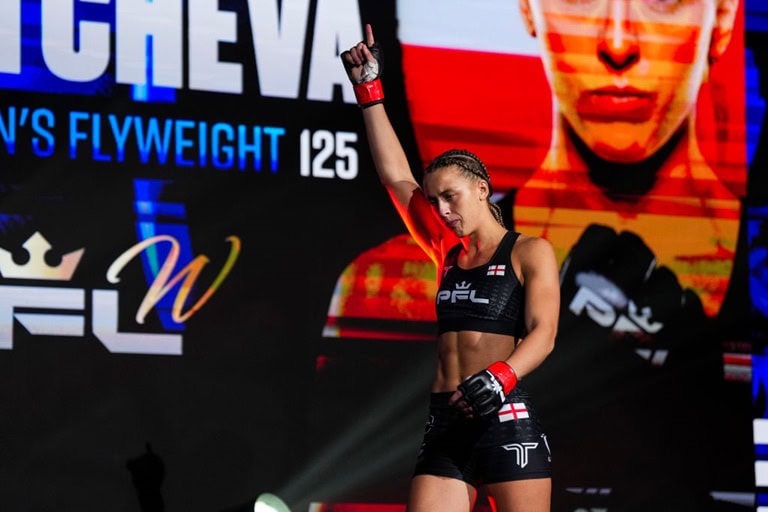
Ditcheva, 25, is undefeated as a pro (13-0-0 with 11 wins by knockout), including August’s first-round TKO of Jena Bishop in their PFL [Professional Fighters League] semi-final match in Nashville. She is a Manchester, England native known for replicating Man City goal celebrations after winning bouts. Her mother, Lisa Howarth, was a World Kickboxing Association champion, so Ditcheva grew up in a gym and later won a gold at the 2016 International Federation of Muaythai Amateur World Championships before switching to MMA.
Now training at American Top Team in Coconut Creek, Florida, Ditcheva won the PFL Europe tournament in 2023 to claim a $100,000 purse and gain entry into this year’s larger PFL draw. She has rapidly gained a large social media fanbase after a video of her weighing in last December was viewed nearly 19 million times and gained her 100,000 new followers.
On getting started in kickboxing at her mom’s gym…
It wasn’t something that I would say I always wanted to do from being young. I was involved in it straight away because my mum had a gym before I was born. So as soon as I was born, I was in the gym, pushing my little dolls’ prams while she was coaching and things like that. So it was always something that I was around.
I did train when I was, like, four years old. These like videos and photos of me fighting and stuff I did two, three fights when I was four, and then from that point, I didn’t do it at all until I was 13. It wasn’t really something I was interested in. And my mum was never one to say, ‘I was a fighter. Now, I want you to be.’ She actually didn’t want me to fight.
It just so happened that I came back to it myself when I was 13, after trying loads of different sports. I did netball, football, I did basketball, I did gymnastics, I did everything. To be honest, I tried so many different things. My mom and dad are the type of parents that are like, ‘Stay involved in sport. And it doesn’t matter what you choose to do. Just stay active, stay fit.’ So that’s what I did. But then when I was 13, I was, like, starting to train again. Obviously, my mom, still having a gym, I was older, understood it a little bit more, and that’s where it just went from there.
On the benefit of playing multiple sports…
Definitely, 100%, especially in martial arts like this. You need so many different qualities for this sport. And you get that from other sports. [From] gymnastics, you need the balance. You need the weight, the sense of gravity in this sport you need, which I probably got from gymnastics. I got loads of different things from playing sport.
And I think, as well, it just made me realize how much I wanted to do it. That was the main thing. It was something that I came back to myself, so being able to try different sports, see what I enjoyed, what I didn’t enjoy, what I loved. And that’s probably why I stuck to it so much now, because I wasn’t forced to do it. Doing all different sports built me to the person that I am today and showed me what I love the most.
On choosing to sign with the PFL…
When I signed a few years ago, 2022, I was at a point in my MMA career, where I was fighting on different shows, and even though I was winning and getting a lot of exposure from the shows, I didn’t feel like I was building up a set fan base with a promotion. So I felt like it was the right time when they approached me, especially with them approaching about the European season.
First, I wanted to stay close to home and build good support closer to where I’m from, in the UK. So it just really appealed to me at the time. And obviously the tournament money, the format and things like that was good for me because I like to fight quite regularly. And obviously, with this tournament, it’s back-to-back fights throughout the year, so just loads of things that really appealed, and it was lucky for me to get a promotion that said they would get behind me and push me as the brand for myself and not just get me fights.
On moving to Florida and training at American Top Team…
I was going through quite a difficult stage in my career and in my life in general. This is a really tough sport, a very selfish sport. I was probably a little bit lost. I was having great success in my career, but I was struggling to accept the fact that it’s a very different life to what my friends have. A few things at home, like relationships and things like that outside the sport just weren’t working out. I was feeling like I didn’t know what direction I was going.
It was hard to get the balance inside the sport as well. I was traveling a lot to different gyms to get the right training up and down the country. So it was just perfect timing for me to go over to America before I sign with PFL and just find that one base that I really felt at home at. And as well, the sunshine — in the UK, we don’t get much sunshine. Now, this is a tough sport, and people like said to me, ‘You can’t make it easy for yourself just because you’re waking up in the sun.’ And I’m like, ‘But why would I not want to better my life if I’m still working just as hard, waking up in Florida sunshine and still having a few sessions a day and working really hard, like, why wouldn’t I do that?’
On tracking sleep and recovery…
I’ve actually got a Whoop on. I do [track] a little bit. I got out of a bit of a routine because it’s difficult to wear this under my gloves sometimes because it can be a bit hard, but I do like to track it, mostly the sleep and the recovery. I think that’s a really important part for fighters, rather than the actual exercise. We know we work hard and we burn the calories, there’s no denying that — that’s not necessarily what I use it for — but the recovery and how well I’m sleeping and things like that is what I tend to track. That’s why I try and get in a routine of wearing something like this or other monitor [devices]. People just think we base everything off training and how hard we’re working, but, actually, it’s the recovery that we need to get on point as well.
On a habit she has changed based on the data…
Caffeine probably being one of them. My nutritionist has put a cap on what time I’m allowed caffeine now. So I actually see a lot difference in the amount I sleep, and the way I sleep when I’ve had caffeine too late. So that’s quite an interesting one to see. But you can check if I tend to have this [Celsius energy drink] a little bit too late, then I see a little bit of a difference in my sleep pattern.
This article was brought to you by SBJ Tech, a Leaders Group company. As a Leaders Performance Institute member, you are able to enjoy exclusive access to SBJ Tech content in the field of athletic performance.
In the third and final session of her Performance Support Series, Dr Meg Popovic explored the value in wellbeing intelligence in fostering environments where athletes and coaches can thrive.
A Human Performance article brought you by our Main Partners
So said Dr Meg Popovic at the outset of her Performance Support Series, where across three sessions she led Leaders Performance Institute members in an exploration of wellbeing and burnout.
In her view, high performance environments that foster wellbeing also:
She also acknowledged that her definition of wellbeing, while having broad relevance, will have subtly different application in each and every environment.
As for her own environment, Popovic is the Senior Professional Sports Manager for North America at EPIC Global Solutions, the world’s leading independent gambling harm minimisation consultancy and a valued Partner of the Leaders Performance Institute.
She also served as the Toronto Maple Leafs’ Director of Athlete Wellbeing & Performance between 2018 and 2021 and drew on that experience in this third and final session where she delved into wellbeing frameworks and ‘wellbeing intelligence’.
How to bring a wellbeing framework to life
An intentional strategy is essential when you have finite time with athletes and staff.
At the Leafs, Popovic adopted a three-phase approach:
However, your framework is not viable without ‘wellbeing intelligence’
‘Wellbeing intelligence’ refers to a skillset that leaders can develop to better understand and improve their own and staff wellbeing.
As Popovic explained, workplace challenges continue to increase and so having wellbeing intelligence becomes essential for effective leadership.
At the Leafs, she focused on three key areas of intelligence that integrated growth mindset and learning into the wellbeing and performance strategy of athletes and staff.
How do we ‘do’ growth mindset so the organisation embodies a growth mindset? The Leafs introduced ‘Mindset Mondays’, which was an organisation-wide communication sent to all athletes and staff to encourage the cultivation of character and performance that positively impacts the wider team culture. The communication spotlighted a person in the organisation each week who would share ‘The Seeds’, ‘The Sunlight’ and ‘The Growth’; providing advice, content and perspectives that everyone could read and engage with.
They also introduced professional development Thursdays. This was a 15-week period during the off-season which provided opportunities for athletes and staff to learn from experts outside of their specific sport. The player sessions were strictly a space for the players. The sessions gave them ownership of fostering their own growth mindset with guidance from key members of staff.
The ‘team of teams’ – the interconnected departments within an organisation – necessitates relational intelligence to better understand the unique needs of different subcultural groups within a team.
The Leafs hosted dedicated player development programmes enabling athletes to learn more about mental performance, wellbeing and different areas of interest. Alumni were also brought in to share stories around being a professional athlete.
There were also staff professional development workshops – four in-season and two in the off-season – for each department. These workshops were aligned to the goals of the team, specifically the areas identified when it came to skill development and building team culture.
At director level, there were fortnightly roundtables to connect C-suite individuals to each other in the hope of cross-pollinating ideas and best practices. Too often this subculture is overlooked.
What can be done to amplify individual experience and learning of self, profession, and leadership?
At the Leafs, one-to-one coaching was available for both athletes and staff to engage in confidential conversations. They also created a dedicated one-to-one player programme designed for athletes to discover answers to questions such as:
Another approach was a prospect mentorship programme, focused on providing support for up-and-coming talent. This was co-created with development staff to provide mentorship and professional development training for future and current young prospects.
Select alumni were also paired with the prospects in monthly calls to explore themes such as goal-setting, professionalism, use of social media, time management, navigating conflict and skill development.
Finally, athlete care and other support resources were created in collaboration with doctors, the operations team and the performance director to provide options for athletes and their families to access whilst playing for the team. These resources included parental support, family therapy, psychological assessment and mental health resources, clinical psychology and mental performance specialists.
The recurring challenges currently facing athletes, coaches and staff
WorkRate is a startup seeking to address issues with lack of movement skills and neuromuscular fatigue in athletes.
A Data & Innovation article brought to you by
* * * * *
Our Startups series looks at companies and founders who are innovating in the fields of athlete performance, fan engagement, team/league operations and other high-impact areas in sports.
* * * * *
World’s shortest elevator pitch: “WorkRate translates athlete-centered research into practice through diagnostics and evidence-based training to reduce injury and boost performance.”
Company: WorkRate, Inc.
Location: New York, New York
Year founded: 2020
Website/App: https://workrate.fit/
Funding round to date: “Self-funded.”
Who are your investors? “We do have some family and friends investments and that was up to around $30,000.”
Are you looking for more investment? “Yes. That would expand our capability development.”
Tell us about yourself, founder & CEO WorkRate Rondel King: “I was born and raised in the twin island republic of Trinidad and Tobago. In my formative years, I had a deep passion for science and sport. I co-founded a soccer team in my neighborhood that competed in the official youth league in Trinidad and Tobago. After one year of competing as a founding player, I migrated to New York. I studied exercise science at Brooklyn College and continued my sporting career by joining the soccer team at Brooklyn College. I experienced a series of injuries which severely hindered my development. I experienced sub-optimal results with my athlete care team, which included pain doctors, athletic trainers and physical therapists. This frustrating experience galvanized my passion for research. I made investments in continuing my education and completed my Masters in exercise physiology and sports nutrition at LIU Brooklyn. It was at this point I gained a deep understanding of my biomechanics and physiology, and I was able to solve my own problems that my care team wasn’t able to solve. After my personal success, I started asking questions. Why was my care team unsuccessful? What was missing in my care approach? Ultimately, I learned a huge disconnect exists between evidence and practice in athlete care. I started WorkRate to narrow this gap and improve athlete-centered care.”
Who are your co-founders/partners? “My co-founder and COO is Janna Szangolies. Janna is special in many ways, but if I had to choose one way that makes her stand out it’s her versatility. Not only is she a problem solver, but she also plays a pivotal role in translating the deep science into a customer-facing narrative. As a scientist, it’s sometimes difficult to cut the jargon. Janna helps keep me in check and to ensure we are communicating effectively with our users and collaborators.”
How does your platform work? “WorkRate designs and builds data models to enhance human performance. We have developed two diagnostic models and a training recommendation model to address two pertinent risk factors identified by the WorkRate scientific team – lack of movement skill and neuromuscular fatigue. The primary goal of WorkRate diagnostic testing is to obtain objective information to guide the training process properly and systematically. From a movement skill perspective, we developed a self-guided biomechanical analysis algorithm that objectively measures movement quality. The data from this analysis is manually entered into our platform by the user to individualize corrective exercises and identify orthopedic abnormalities. To diagnose neuromuscular fatigue, we invented a graded exercise test (GXT) that evaluates the integrated cardiovascular, pulmonary, musculoskeletal, and neuropsychological systems. We accomplished this by leveraging commercially available heart rate monitors – i.e. Polar H10 – and Inertial Measurement Units like Garmin and Apple smartwatches. The 21-stage running protocol is designed to objectively measure locomotor performance in free-living humans through the utilization of Human Activity Recognition (HAR). HAR is the art of identifying and naming activities using Artificial Intelligence. The rapid proliferation of wearable technologies and advancements in sensing analytics have greatly enhanced our capability development over the past four years. Our novel analysis functions similarly to lab-based graded exercise tests, whereas it can analyze critical running dynamic metrics such as ground contact time (GCT), cadence, stride length and vertical oscillation. Furthermore, the protocol calculates running economy and identifies heart rate zones – i.e. Zone 2 – to fine-tune aerobic and anaerobic metabolism for enhanced performance and fatigue mitigation. Data analytics from our diagnostic models are used to create our training recommendation models, which include respiratory muscle training, corrective exercises, gait training, neuromuscular training and zone-based conditioning. Ultimately, our product is the way we harness human performance data. Our model-based system promotes a classification of athlete performance that helps us to understand and analyze how various training methodologies affect performance and injury. WorkRate models are housed and delivered through the WorkRate Performance App for individual athletes, coaches and organizations.”
What problem is your company solving? “Athletes are still getting injured at a very high rate, from professional soccer all the way to your everyday runner. Research shows a significant gap exists between practice and scientific evidence in sports science that restricts the advancement of effective injury prevention and performance enhancement strategies. At WorkRate, we take a very evidence-based approach. We have curated a powerful, problem-solving model for sports science practice that incorporates the best evidence from well-designed studies, athlete and coach perspectives, documentation, performance diagnostics and the knowledge of the WorkRate Scientific Team.”
What does your product cost and who is your target customer? “We are pre-market. We are targeting soccer athletes and runners as our primary target market to start with.”
How are you marketing your product? “We are marketing our product through collaborative channels with our partners, such as InjureFree and Gateway Athletics Trinidad & Tobago. We have tapped into running communities throughout New York City. We’ve conducted pilots within these ecosystems. We’ve launched soccer performance ecosystems in Tampa, Fla., through collaboration with Flex Soccer. It’s very much a controlled and systematic deployment of our technology, and we do this to ensure our models are scientifically valid before we go into scale and a wider market. These collaborations will be guided by WorkRate Labs. WorkRate Labs is a boutique-style research and development hub that was built to bridge the gap between athlete-centered research and practice. The fully portable laboratory was designed to ensure that WorkRate diagnostics and interventions are scientifically validated via medical-grade diagnostic testing. WorkRate Labs is the cornerstone of the WorkRate evidence-based practice model.”
How do you scale, and what is your targeted level of growth? “We will scale through our collaborative channels where we intend on acquiring up to 60,000 individual athletes and 5,000 coaches within the next 12-24 months.”
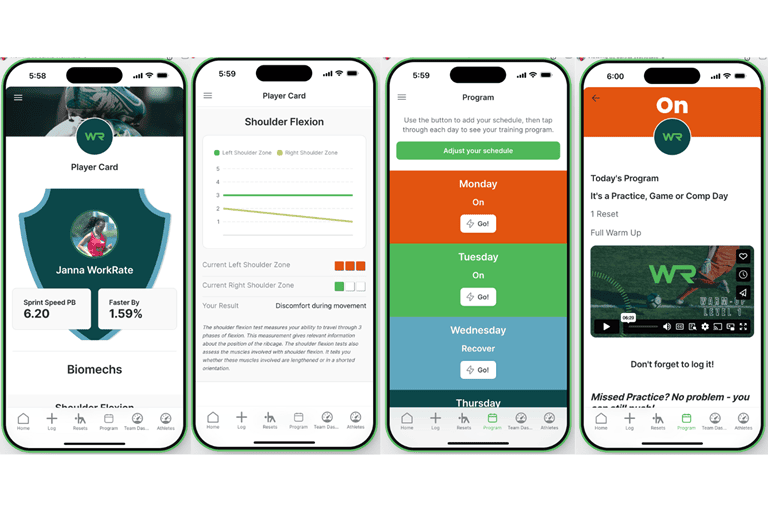
Image: WorkRate
How does your platform work? “WorkRate designs and builds data models to enhance human performance. We have developed two diagnostic models and a training recommendation model to address two pertinent risk factors identified by the WorkRate scientific team – lack of movement skill and neuromuscular fatigue. The primary goal of WorkRate diagnostic testing is to obtain objective information to guide the training process properly and systematically. From a movement skill perspective, we developed a self-guided biomechanical analysis algorithm that objectively measures movement quality. The data from this analysis is manually entered into our platform by the user to individualize corrective exercises and identify orthopedic abnormalities. To diagnose neuromuscular fatigue, we invented a graded exercise test (GXT) that evaluates the integrated cardiovascular, pulmonary, musculoskeletal, and neuropsychological systems. We accomplished this by leveraging commercially available heart rate monitors – i.e. Polar H10 – and Inertial Measurement Units like Garmin and Apple smartwatches. The 21-stage running protocol is designed to objectively measure locomotor performance in free-living humans through the utilization of Human Activity Recognition (HAR). HAR is the art of identifying and naming activities using Artificial Intelligence. The rapid proliferation of wearable technologies and advancements in sensing analytics have greatly enhanced our capability development over the past four years. Our novel analysis functions similarly to lab-based graded exercise tests, whereas it can analyze critical running dynamic metrics such as ground contact time (GCT), cadence, stride length and vertical oscillation. Furthermore, the protocol calculates running economy and identifies heart rate zones – i.e. Zone 2 – to fine-tune aerobic and anaerobic metabolism for enhanced performance and fatigue mitigation. Data analytics from our diagnostic models are used to create our training recommendation models, which include respiratory muscle training, corrective exercises, gait training, neuromuscular training and zone-based conditioning. Ultimately, our product is the way we harness human performance data. Our model-based system promotes a classification of athlete performance that helps us to understand and analyze how various training methodologies affect performance and injury. WorkRate models are housed and delivered through the WorkRate Performance App for individual athletes, coaches and organizations.”
What problem is your company solving? “Athletes are still getting injured at a very high rate, from professional soccer all the way to your everyday runner. Research shows a significant gap exists between practice and scientific evidence in sports science that restricts the advancement of effective injury prevention and performance enhancement strategies. At WorkRate, we take a very evidence-based approach. We have curated a powerful, problem-solving model for sports science practice that incorporates the best evidence from well-designed studies, athlete and coach perspectives, documentation, performance diagnostics and the knowledge of the WorkRate Scientific Team.”
What does your product cost and who is your target customer? “We are pre-market. We are targeting soccer athletes and runners as our primary target market to start with.”
How are you marketing your product? “We are marketing our product through collaborative channels with our partners, such as InjureFree and Gateway Athletics Trinidad & Tobago. We have tapped into running communities throughout New York City. We’ve conducted pilots within these ecosystems. We’ve launched soccer performance ecosystems in Tampa, Fla., through collaboration with Flex Soccer. It’s very much a controlled and systematic deployment of our technology, and we do this to ensure our models are scientifically valid before we go into scale and a wider market. These collaborations will be guided by WorkRate Labs. WorkRate Labs is a boutique-style research and development hub that was built to bridge the gap between athlete-centered research and practice. The fully portable laboratory was designed to ensure that WorkRate diagnostics and interventions are scientifically validated via medical-grade diagnostic testing. WorkRate Labs is the cornerstone of the WorkRate evidence-based practice model.”
How do you scale, and what is your targeted level of growth? “We will scale through our collaborative channels where we intend on acquiring up to 60,000 individual athletes and 5,000 coaches within the next 12-24 months.”
This article was brought to you by SBJ Tech, a Leaders Group company. As a Leaders Performance Institute member, you are able to enjoy exclusive access to SBJ Tech content in the field of athletic performance.
In the second session of her new three-part Performance Support Series, Dr Meg Popovic guided Leaders Performance Institute members in a discussion of burnout – a topic oft-neglected in sport.
A Human Performance article brought you by our Main Partners
Last week, she hosted the second session of her three-part Performance Support Series for Leaders Performance Institute members entitled ‘Wellbeing – What’s Having the Most Impact?’ The focus for session two – by popular demand – was burnout: what it is and how one can prevent and manage it in sport.
The session began with a straw poll where Popovic asked attendees: what are the main sources of stress in your workplace? The results, which were collated in real time, were illustrative. The most common answer was work-life balance; second was workload; third was people and the workplace culture; and fourth was a lack of job security.
The results allude to a range of problems, and yet these stresses – which can lead to burnout – have been rarely discussed in elite sporting contexts.
“There is very little to nothing written about staff burnout in high performance sport, Olympic and professional sport,” added Popovic, who is the Senior Professional Sports Manager for North America at EPIC Global Solutions, the world’s leading independent gambling harm minimisation consultancy and a valued Partner of the Leaders Performance Institute.
“In sport, I think burnout is sometimes quite hidden or it just looks different in every person and you don’t know what to do to help.”
Over the course of an hour, she led a discussion on understanding burnout and its early warning signs before turning to stress management and the importance of supportive environments.
The five phases of burnout
Burnout is, as Popovic said, “a state where the employee feels exhausted emotionally and physically”. It is “often the outcome of feeling stress or frustration for a prolonged time” and “burnout can cause significant physical, emotional, psychological and spiritual damage to people”.
While sport is distinct from traditional workplaces, with unique time-sensitivity and performance pressures, Popovic distilled the stages of employee burnout into five phases that resonated with those members in attendance. They were:
The early warning signs of burnout
Popovic explained that phases two and three of employee burnout – the onset of stress and chronic stress – are preceded by a series of early warnings signs that we can all become attuned to recognising. They are:
Higher sensitivity – an individual feels or seems more sensitive than usual.
Reduced job performance – there may be signs that they are not able to perform tasks effectively.
Extreme thinking – an individual may become reliant on food, drugs, alcohol or gambling to cope.
Popovic conducted a second straw poll and, troublingly, but perhaps not surprisingly, attendees indicated that anywhere between 15% and 80% of the colleagues with whom they interact are currently experiencing burnout, in their view.
Preventing burnout strategy #1: navigating the stress cycle
Popovic presented two perspectives on preventing burnout. Firstly, that of Drs Emily and Amelia Nagoski as posited in their 2019 book Burnout: The Secret to Unlocking the Stress Cycle. They argue that we should recognise stress as a natural response to challenging situations. There are inevitable stressors and people will experience both physiological and emotional responses.
In Burnout, they suggest that individuals must go through the full cycle of experiencing and articulating stress in their bodies to effectively manage it. By acknowledging and addressing stress, one can navigate through the cycle and emerge on the other side with improved resilience and wellbeing.
As Popovic explained, the Nagoskis recommend:
In making their case, the Nagoskis highlight the distinction between ‘stressors’ – external situations or circumstances that trigger stress – and ‘stress’ itself, which they refer to as the internalisation of stress within your body. This process encompasses how your body responds to stressors and is a manifestation of the physiological and emotional impact of stress on an individual’s wellbeing.
All in all, the Nagoskis’ perspective is underpinned by a sense of compassion. They encourage people to understand the societal pressures and obstacles that contribute to burnout.
Preventing burnout strategy #2: the demand-control-support model
The second view posited by Popovic was organisational psychologist Dr Adam Grant’s ‘demand-control-support’ model. Grant said:
‘Demand’ involves making structural changes, which includes lightening a person’s load or redistributing tasks. He also feels that an organisation should address overtime and expectations of a person’s availability.
‘Control’ includes empowering people to set their own goals, equipping them with the skills needed to handle difficult situations, and giving them the freedom to work flexibly.
‘Support’ operates at a more systemic level. Leaders should foster an environment where requesting and receiving help is easy and it is, in fact, normal to seek assistance and discuss challenges.
Additionally, Grant emphasises the importance of celebrating small wins and tracking daily progress to help address burnout. He also advocates for redesigning job roles as part of an effort to foster supportive cultures.
Further reading:
Four Ways to Better Balance Winning and Wellbeing
If you are interested in joining the third session of this Performance Support Series with Dr Meg Popovic on Tuesday 30 April, sign up here.
Circular’s ring is an AI wellness assistant designed to humanize and teach people how to use the data to help improve their performance.
Main Image courtesy of Circular
A Data & Innovation article brought to you by
Our Startups series looks at companies and founders who are innovating in the fields of athlete performance, fan engagement, team/league operations and other high-impact areas in sports.
* * * * *
World’s shortest elevator pitch: “Circular is a pioneering organization in smart ring technology with the mission of revolutionizing personal health by transforming complex data into actionable insights through an innovative and easy-to-wear device.”
Company: Circular
Location: Paris, France
Year founded: 2019
Website/App: www.circular.xyz; Apple app; Google Play app
Funding round to date: “In 2020, Circular began crowdfunding and utilized Kickstarter and Indiegogo. On Kickstarter, over 1,500 investors pledged approximately $380,000. Similarly, on Indiegogo, we raised $405,000 from just around 1,800 backers.”
Who are your investors? “Circular has a team of strategic and medical investors, including professional athletes, renowned doctors, and medical professionals.”
Are you looking for more investment? “Circular will be looking to grow its funding further over the next 18 months.”
Tell us about yourself, co-founder & CEO Amaury Kosman: “I’ve always been captivated by the intricate dance of technology and human well-being. After years of research and development, driven by a desire to enhance daily health management, Circular came to life. It was a melding of personal passion and professional pursuit, aiming to revolutionize how we interact with our own health metrics. My journey to CEO was fueled by this singular vision: to create a seamless, intuitive and deeply personal health monitoring experience. Noticing a gap in the market for user-friendly health-tracking devices, I dedicated years to developing the Circular ring. I realized other devices were not understood by ordinary consumers, not even by top-level athletes. By talking to a lot of health professionals and professional sports coaches and using my own experience and that of consumers, I was able to understand and create a product that would be of a professional standard but could be used by everyone. To solve this issue, I thought that creating wearables that are centered around an AI wellness assistant to humanize and teach consumers how to use the data would be a revolution. It was hard to create the product during COVID, especially after we’d succeeded in gaining the trust of consumers following Kickstarter. We had several production problems and had to bounce back several times. This would have killed a lot of companies of our size, but with our determination we always managed to find solutions. Today, we’re still working 12 hours a day, but we’re seeing the fruits of our labor take shape, and there’s still plenty of room for improvement.”
Who are your co-founders/partners? “Circular’s CTO and co-founder Adiasa Suharno. Circular’s COO and Co-Founder Laurent Bsalis. In total, 15 experienced team members make up a diverse and multicultural group who share the same passion for developing the next generation of wearable devices to improve human capabilities.”
How does your product/platform work? “Circular Ring Slim is the thinnest, lightest and most intuitive smart ring in the world and the first to incorporate haptic navigation and alerts. Paired with Kira+, Circular’s powerful AI wellness assistant, the sleek Circular Ring Slim assesses seven biometrics and 142 derived markers 24/7 to help people sleep better and live healthier lives.”
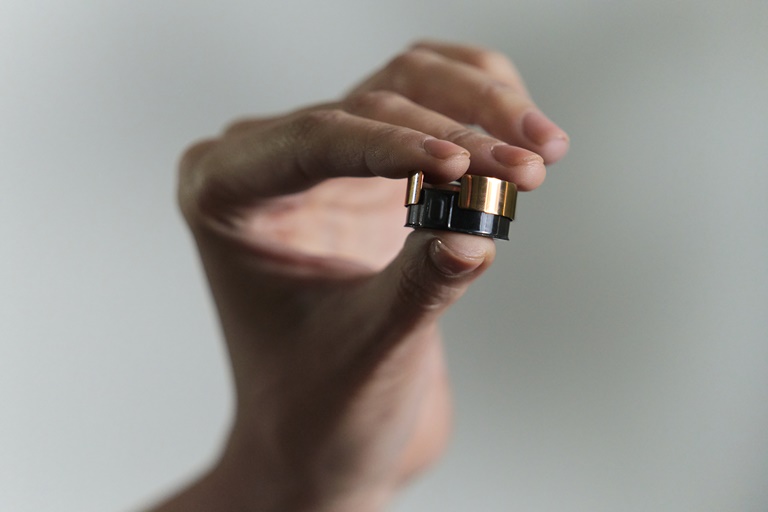
The Circular Pro ring features changeable shells for easy customization. (Image: Circular)
What problem is your company solving? “Most smart rings are heavy and bulky, while the Circular Ring Slim eliminates both of those problems. By creating a thin and lightweight ring, the Slim can be worn at all times which increases accuracy in sleep and activity analysis. It also solves the problem of complicated and difficult to understand data by simplifying it and making it more comprehensible to the everyday user.”
What does your product cost and who is your target customer? “Circular Ring Slim is priced at $275 and includes access to the app without any subscription fee. Our target customer is an individual who wants to live a healthier life but doesn’t understand the metrics or doesn’t want to understand the metrics. In a survey we conducted, 35% of people who bought Circular’s original smart ring said they did not own another wearable device. Circular is targeting an untapped market of people who are interested in a wearable device but need to be convinced that there is a product that can do the work for them.”
How are you marketing your product? “Circular’s marketing strategy is mainly digital oriented, focusing on the unique strengths and innovative features of the Circular Ring. Circular markets the Circular Ring Slim as an accessible and user-friendly health monitoring devices designed for everyday individuals, not just for professionals or biohackers. Our emphasis is on simplicity and ease of use, ensuring that anyone can understand and benefit from its advanced biometric tracking capabilities.”
How do you scale, and what is your targeted level of growth? “We try to double our volume every year. Currently, we’ve realized only 30% of our ultimate vision, with numerous enhancements and innovative features in the pipeline. In the near future, there will be an app update with new features around wellness and empowerment. Additionally, new medical features as well as products and services are on the horizon. Circular will also make strategic partnerships with wellness-oriented companies and celebrities.”
Who are your competitors, and what makes you different? “Smart rings are an emerging market and there are several competitors. Main competitors are Oura Ring, Movano Ring Evie, Ultrahuman Ring Air, Ringconn and boAt Ring. Samsung and Apple are currently developing smart rings, but there is no credible timeline on the release dates. Circular has many key differentiators both in hardware and software. As mentioned before, it is the slimmest and lightest smart ring among its competitors. It has haptic feedback, which allows the users to get additional features around wellness for example tapping anywhere on the surface to stop vibrations linked to an alarm or timer, guided breathing sessions or vital alerts. In terms of software, most of the major differences are within the Circular app. The app simplifies complex metrics and makes meaningful recommendations through Kira, a personal wellness AI assistant. No other competitor contains an AI feature that provides personalized advice. Circular has also gamified the app, offering users the ability to earn online coins and rewards to unlock new features in the app. Additionally, while most competitors record and track health metrics every five to 30 minutes, Circular records metrics every two minutes, which offers increased granularity in the data.”
What’s the unfair advantage that separates your company? “Circular’s unfair advantage lies in a mix of everything but is in the majority of our Vision and team. Circular has utility and design patents and has trained its own algorithm. We have created and own everything, from hardware to software, and have a dedicated team which makes us very versatile, flexible, and quick in development to reach our vision, which is completely different from the others.”
What milestone have you recently hit or will soon hit? “Launching soon will be our first medical features.”
What are the values that are core to your brand? “The core values of Circular’s brand are accessibility, data privacy and a commitment to advancing personal health through technology. Circular’s goal is to develop and create a multi-feature wearable ring to improve physical and mental performances of the users through unique and intelligent recommendations. The long-term goal is to provide the ultimate accessory that will be essential to the way we sleep, live and work. Circular’s multicultural team believes in the power of assisted technology and wearable devices, but often had the feeling that their true powers have not been unleashed completely. The wish was to create a device that would rather assist users in making good decisions and responding to their body signals in a healthier way rather than just something that would simply tell them how good or bad they are doing. As Circular is also in the fashion industry, the team strives to manufacture a piece of art, not only a technological advancement. The interchangeable outer-shells on the Pro model allow you to adapt the look of your ring to every moment of your life.”
What does success ultimately look like for your company? “Success for Circular is defined by widespread adoption of the Circular Ring Slim, leading to a significant positive impact on users’ health and well-being, and establishing Circular as a key innovator in the personal health technology space.”
What should investors or customers know about you — the person, your life experiences — that shows they can believe in you? “As the driving force behind Circular and my two co-founders, our journey reflects a profound dedication to health technology and innovation. My two co-founders and I started with no initial capital four years ago, and despite these humble beginnings, we have achieved remarkable progress. Launching Circular amidst the COVID-19 pandemic presented extraordinary challenges for a hardware company like ours, yet we overcame numerous obstacles that could have easily derailed our project. Our resilience and unyielding commitment have brought us this far, and there’s still much more we aspire to achieve. Currently, we’ve realized only 30% of our ultimate vision, with numerous enhancements and innovative features in the pipeline. This journey, marked by perseverance, is a testament to my unwavering commitment to transforming personal health technology and I hope this narrative instills confidence in my vision and capability to revolutionize the health tech landscape.”
Which demographics and sports is Circular enjoying its most success within? “Ordinary people who learn wellness prevention and monitoring thanks to Circular. And who find in it a passion/way of life and then explore biohacking further than just Circular to improve their quality of life in the parallels they have chosen to enhance.”
This article was brought to you by SBJ Tech, a Leaders Group company. As a Leaders Performance Institute member, you are able to enjoy exclusive access to SBJ Tech content in the field of athletic performance.
Dr Nicola Brown of St Mary’s University explores an unregulated market where anything can be labelled as a sports bra.
A Human Performance article brought you by our Main Partners
“We know that half of schoolgirls drop out of sport because of their breasts,” she added. “One in three adults see the breasts as a barrier to participation. Then we also have that performance aspect. We know that if we change breast support, because the breasts will move during activity, that it will change how an athlete moves, it will influence their confidence, it can change their breathing, it can change their muscle activity.”
In September 2023, Brown was speaking as part of a panel discussion on the physiology of the female athlete at Leaders Meet: Driving Step Change in Female High Performance at Manchester’s Etihad Stadium. She spoke alongside pelvic health physiotherapist Emma Brockwell and Dr Amal Hassan, who serves as Women’s Team Doctor at rugby club Harlequins.
“We know that the majority of women wear the incorrect size bra, and you can have a great sports bra, but if it doesn’t fit properly then it’s not going to be effective.”
In this article, Brown reflects on the sports bra market and the importance of athlete education when it comes to breast health.
Note: Brown’s responses have been edited for clarity and brevity.
Sports bras: a confusing marketplace…
The sports bra market has massively increased, which is a fantastic thing, but it does then make it a very confusing marketplace for women. It may be very difficult to find the right sports bra. There’s no such thing as the best sports bra. What might be the best sports bra for me might be very different to someone else and we know that key issues around sports bras are knowledge of the types of sports bra that might be suitable for small breasts versus large breasts; and also the fit of the bra.
Why athletes should not rely on official apparel suppliers alone…
If there’s a very limited choice of products, particularly if you’re working with a team of athletes, it’s unlikely that those products will cater for the entire team. I think we need to be careful about mandating some kind of product that is actually having a negative health implication on an athlete. Anything can market itself as a sports bra. There’s no kind of criteria the bra has to meet. That’s another thing that makes it quite challenging to find the right breast support.
There are three types of sports bra on the market…
Firstly, a compression bra, which is kind of like the crop top that goes over your head with an elastic bottom. They tend to be better for smaller-breasted women. Larger-breasted women will probably be more suited to an encapsulation bra, which encapsulates each breast separately. The third type is a combination or a hybrid bra, which combines elements of the compression and the encapsulation bra. So you have the separate pockets for each breast and then with a compressive layer of material over the top. You might make the assumption that if we combine both types of bra we’ll get the best one but that’s not necessarily the case. It is again about that individual fit or the person.
Why compression bras are so popular…
Depending on the sport they are playing and the activity that they’re doing, an athlete may choose different sports bras for different types of activity, but the key feedback that we get, particularly from athletes working at the very top level, is that they often use a bra that is compressive because they are trying to look as if they don’t have breasts. They want to compress their breast tissue as much as possible because they’re concerned about what they look like and how people will comment on social media or in the crowd, and they want to be able to focus on the game and not be concerned about their appearance, so they will try and make their breasts look as small as possible.
The importance of education and empowerment…
There’s always that fashion aspect that comes into play but I think the most important thing is education about what a good sports bra can do. If we can try to promote the benefits that will come from that then we’ll hopefully have athletes making more informed choices. I think it’s also important not to assume that an athlete will recognise that it’s a problem. It wasn’t until 2015 that it was reported that the breasts are a barrier to activity – and I don’t think something happened in 2015 that meant breasts became a problem – it’s just the first time that anybody asked women. And so a lot of women will just assume that the issues they experience are just part and parcel of what they have to deal with. But if we can raise awareness of the fact that there is a potential solution in the form of well-fitting appropriate breast support then it just opens up their opportunities to try and reduce those negative consequences of the breast function.
Deciding what option is best…
Make sure they try it on before they buy it. The fit is one of the most important things. You can get it professionally fitted in-store, but I think particularly for sports bra fits, there’s no real regulation or training for those fitters, so I’m very much an advocate of empowering the athlete or any individual to know what bra fits them. Then it doesn’t matter what bra they pick, they know what to check and whether it fits them. And when it comes to the sizing, just not assuming that you’re one size and that you’re that size for the rest of your life. I think that’s something that happens. You get fitted with a bra at some stage of your life and then you wear that bra forever more. But different styles of bra, even the different colour of a bra, if you wear a black bra versus a white bra of the same design, just the colour can make that tighter. Your breasts might change size and shape through various stages of life, through stages of a medical cycle, so it’s making sure that you are aware that you need bras that are fitted and that your breasts may change. And more expensive doesn’t always mean better. It’s very much not the case. So it’s finding what works for you. Then, once they put it on, jump around in the changing room, simulate some movements you’d do during that activity, make sure that you feel supported.
The gold standard in breast support services…
At the top level with unlimited resources and expertise to hand, we could do a biomechanical assessment of an athlete’s breast movement doing a sports-specific activity so we can establish the optimal breast support for them and then design a bespoke bra; and then they can exercise in that. We’ve done that with some athletes and they report that they feel more confident in their performance, that they perform better, reduce pain and so on.
Steps that all teams can take…
We should go right down to the lowest level with something as simple as putting a bra fit poster in a changing room or on the back of a toilet door. Some little nudge, that thought about ‘have I checked my bra?’ or ‘have I changed my bra recently?’ ‘Does my bra fit? Something that might spark that conversation to discuss breast health issues more openly. And then in between offering bra fit assessments, if you can get the expertise on hand. Anything from signposting to educational leaflets. There are educational resources and videos and things available to signpost. Obviously we’re not all going to become experts in all of these areas of women’s health overnight and know everything, but we can at least signpost athletes if they do come to us with those issues to the resources they might need.
Where there is more work still to be done…
There’s been a lot of work done on breast support for different population groups and at different life stages, but very limited work done on pregnancy or breast feeding post-partum. So I think work needs to be done in terms of making sure there is the appropriate breast support for athletes to facilitate breast feeding if needed but also to facilitate the return to sport to ensure the breast support they’re wearing is appropriate and to support their needs. And obviously the anatomy of the breasts is going to change substantially during that period. And again, I would promote education about those changes and how team can best support their athletes. Breast injuries: we don’t really know the long-term consequences of breast impacts. That’s another area where we need to be better at collecting that data. We ask athletes about all sorts of other injuries but don’t necessarily ask about breast injuries and they don’t necessarily report it. In rugby, I know there are steps being made within injury surveillance systems to actually start incorporating breast injury data. I think that will be a really important step forward, to try and understand the prevalence, the severity, the mechanisms of those injuries, whether it’s contact with the player, contact with the ball or contact with the ground, but also the consequences of that.