We bring you five insights from Seth Meyers, the Brooklyn Nets, USOPC, US Air Force and Juilliard School – all of whom spoke at the Leaders Sport Performance Summit in New York.
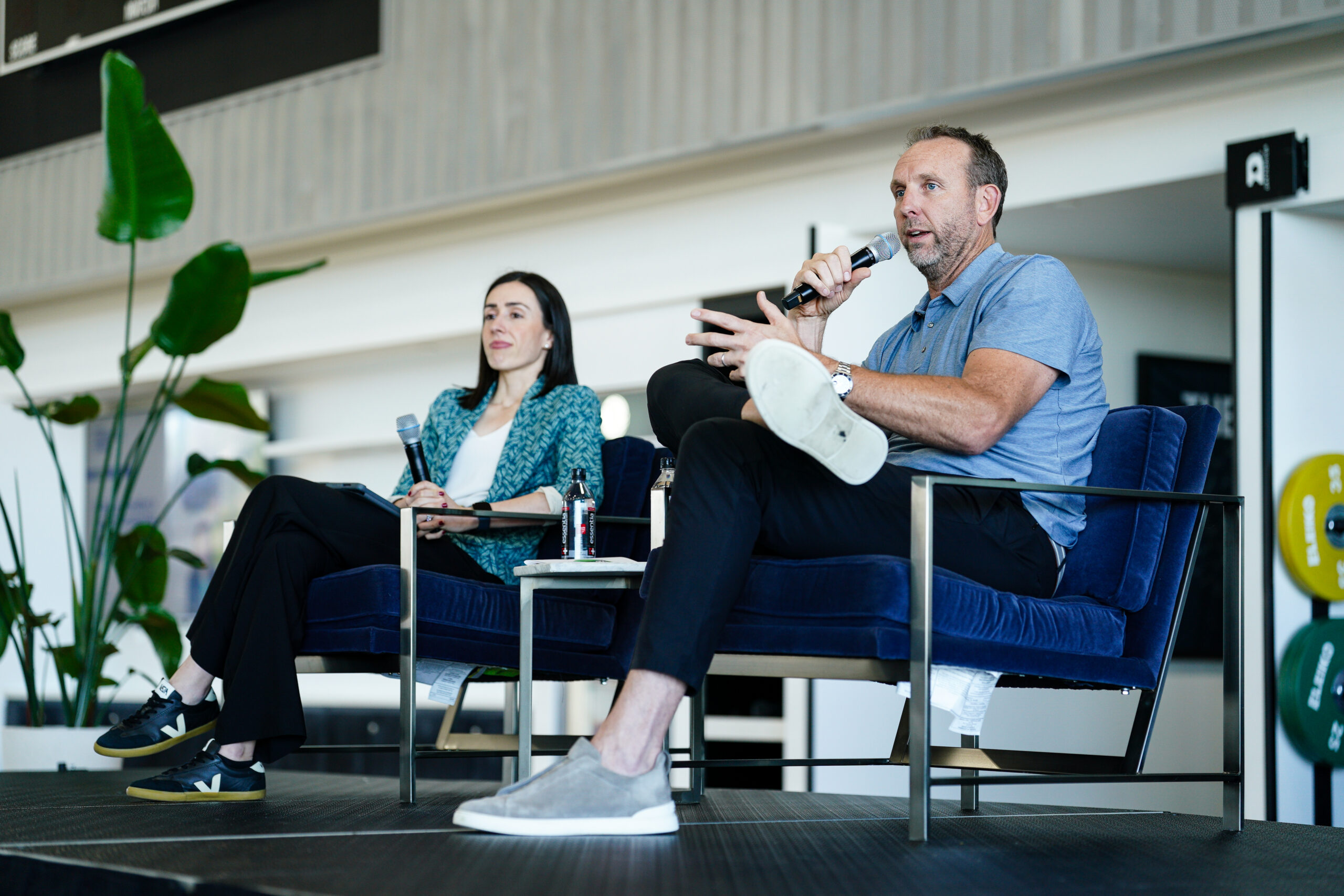
The renowned leadership specialist was speaking just moments before she introduced Seth Meyers to the stage at June’s Leaders Sport Performance Summit at the Barclays Center in Brooklyn, New York City.
Meyers, a comedian, broadcaster and producer, instantly built on the theme, with his tales of watching the likes of Will Ferrell, Kristen Wiig, and Jason Sudeikis produce sketches that died a death during read-through sessions (and all too often live onstage) at Saturday Night Live.
“Watching them succeed is something you can do,” he said, “but watching them fail at the table was the real education.”
Meyers made clear his admiration for the writers and producers of SNL who, as he said, “have seen and heard more sketches than anyone in the history of the world”. “It was a reminder of how hard comedy was,” he added. “To fail at this does not mean you’re not funny.”
Crucially, Meyers and his peers failed in what were ultimately safe spaces. They were all the better – and all the funnier – for it.
And it was not just Meyers’ musings. Across both days, we heard from leaders in high-performance environments as diverse as the US Air Force, Juilliard School and the Brooklyn Nets, who lent us their home for two days. Together they delivered insights on how leaders can cultivate environments in which people fail cheaply, learn quickly and perform sustainably.
Below is a selection of five insights that paint a picture of proceedings.
The Brooklyn Nets have been on an exciting trajectory since the arrival of Sean Marks as General Manager in 2016. His tenure began with a question: “What are we going to stand for?” Marks believed that the Nets needed an identity that meant more than mere wins or losses and he landed upon ‘Brooklyn grit’ – a system of behaviours that extended beyond one, single individual. “It’s really important that you take the responsibility to drive a culture that everybody can observe,” he said.
Marks and the Nets have continually hired the best people, regardless of their professional background. A quick roll call of their staff would reveal people with experience in fields as diverse as soccer, baseball, finance and, of course, basketball. Each is given the platform to perform. He said:
If you give people the opportunity, you empower them to speak up, you empower them that they do have a voice, they’re motivated far more than a group that isn’t empowered to have a voice.
Brooklyn Nets General Manager Sean Marks in coversation with host Holly Ransom. Photo: Leaders Performance Institute / Evan Bernstein
Across both days, listening emerged as an important performance tool. Whether building an NBA franchise, leading a writers’ room or cultivating future performers, the speakers repeatedly stressed that leaders who genuinely listen create environments where trust, challenge and innovation can flourish.
Marks for one said:
I want a diverse train of thought [and] if I’m going to hang my hat on hiring the very, very best, shame on me if I don’t listen to them.
Similarly, Seth Meyers’ beliefs have been shaped by his time in improvisational comedy as well as his time as a talk show host. He said:
One of the first rules with improvising is you have to be a listener. You can’t build something with a person if you’re just thinking about what you’re saying when you’re talking… and don’t ask questions you’re not actually curious about the answers to.
Seth Meyers on a different New York stage. Photo: Leaders Performance Institute / Evan Bernstein
So what actually happened when a sketch died during SNL read-throughs? What would Meyers do? What if the sketch actually died onstage?
“You have to shake it off,” he said. “You can learn lessons from things that don’t go well, but you can’t bring it with you to your next week’s effort.”
As one of the longest-serving head writers in SNL history, Meyers was responsible for managing exceptionally talented people operating under intense deadlines and, if writers carried every disappointment into the next week, their performance would deteriorate. The key was to try ambitious ideas, accept that many would fail, then learn quickly and move on.
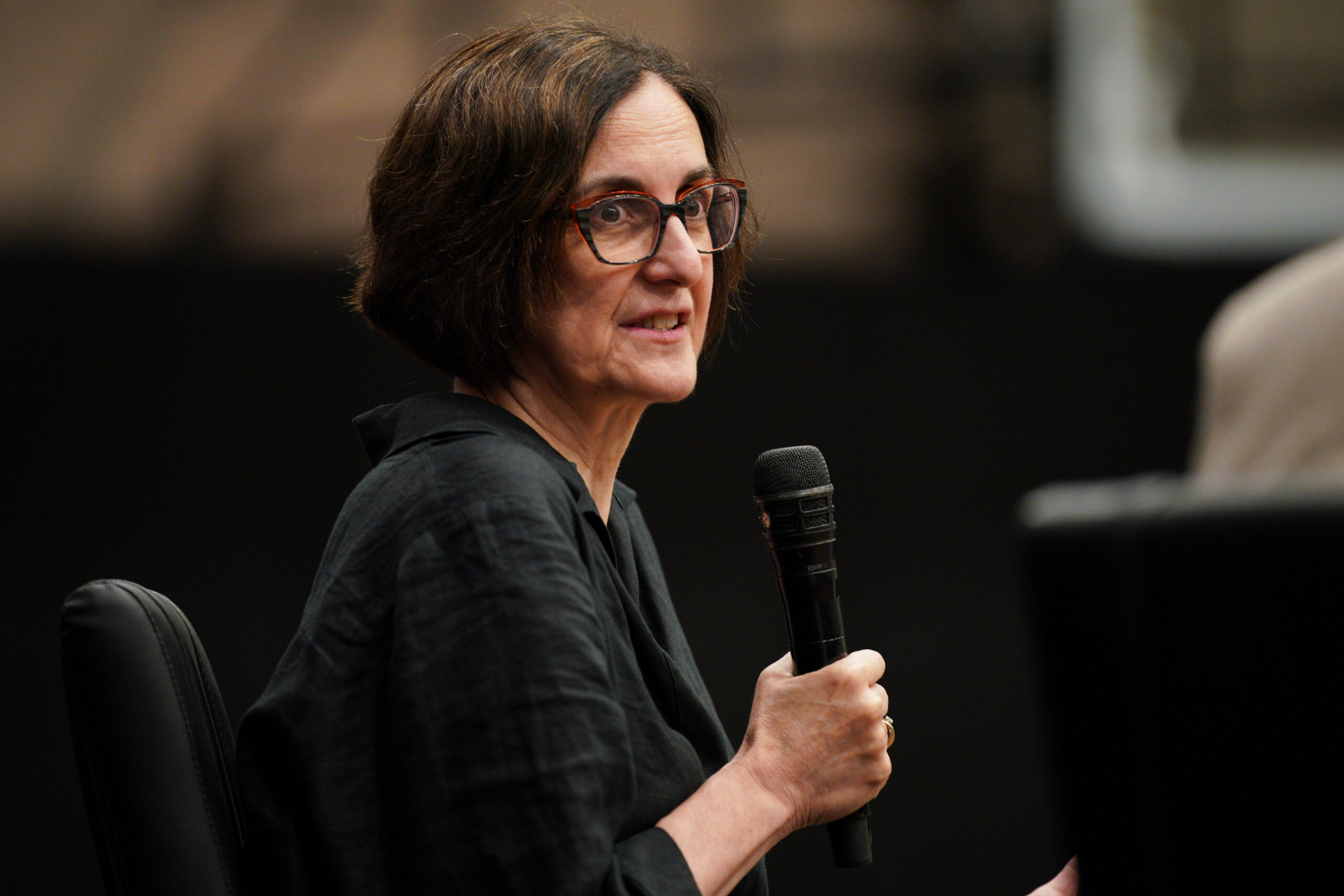
Meyers was echoed by Evan Yionoulis, the Director of the Juilliard’s Drama Division. “If we’re worried about fear, we have to foster an environment where you can be brave,” she said. She tells her students:
‘I believe in you, I brought you into the school. You’re going to graduate, and I’m going to take you all the way there, and I’m going to be patient… I’m not judging you, good or bad’. I’m going ‘what’s the next step to take it further? What’s the next step to take it deeper?’
Evan Yianoulis of the Juilliard School. Photo: Leaders Performance Institute / Evan Bernstein
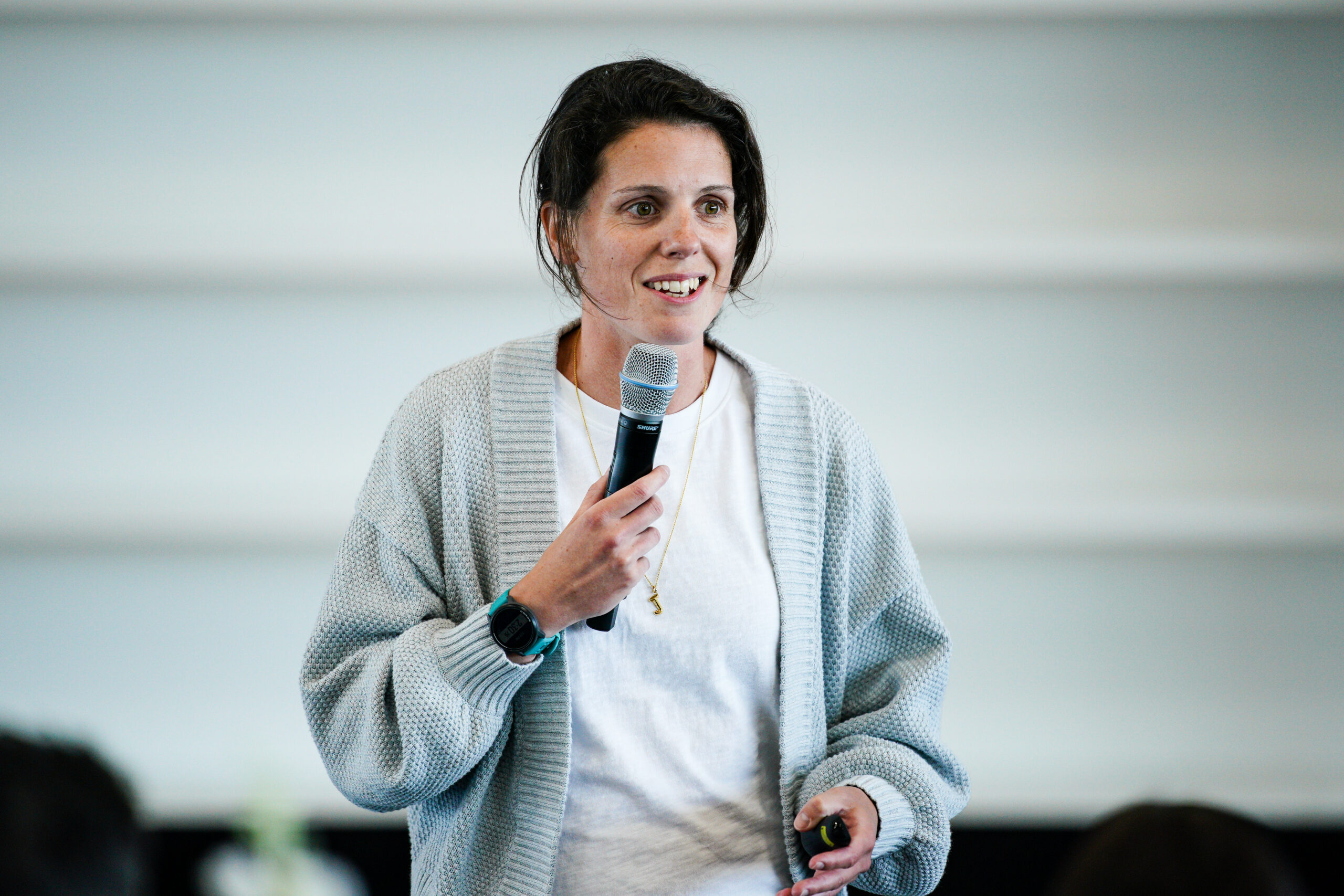
Dr Wendy Walsh is the Chief Learning Officer for the US Air Force, a role in which she oversees education for approximately 700,000 personnel. Her work goes beyond training to the creation of conditions that enable learning across a sprawling, complex system. She argues that high-performance environments are “complex adaptive systems made up of continuously changing people, relationships and influences. She argued that learning starts from observation:
It’s the most important thing that we do is to be present with each other… I might not agree with you, but it’s a requirement for me to understand a different person’s perspective, because that will reveal more possibilities.

Dr Wendy Walsh, the Chief Learning Officer of the US Air Force. Photo: Leaders Performance Institute / Evan Bernstein
Walsh was joined onstage by Andrea Tullos, who explained why the US Air Force pivoted from focusing on factors such as strength, endurance and swimming ability in recruitment. Ultimately, they were alarmed by the numbers of recruits dropping out. They shifted the focus to factors such as resilience, learning agility, tolerance for discomfort and motivation. Tullos said:
We need to know who they are before we understand what they can do… [and] it’s not about assigning blame. It’s about understanding how to get up tomorrow to do it all over again as a team and get better.
Andrea Tullos, former lieutenant general in the US Air Force and Founder and CEO of Outperform IQ. Photo: Leaders Performance Institute / Evan Bernstein
Team USA finished second in both the 2026 Milano Cortina Winter Olympic medals table (behind Norway) and Paralympics medals table (behind China). The United States Olympic and Paralympic Committee wants to be No 1 in both tables in 2030, which means creating the conditions that make future medals possible.
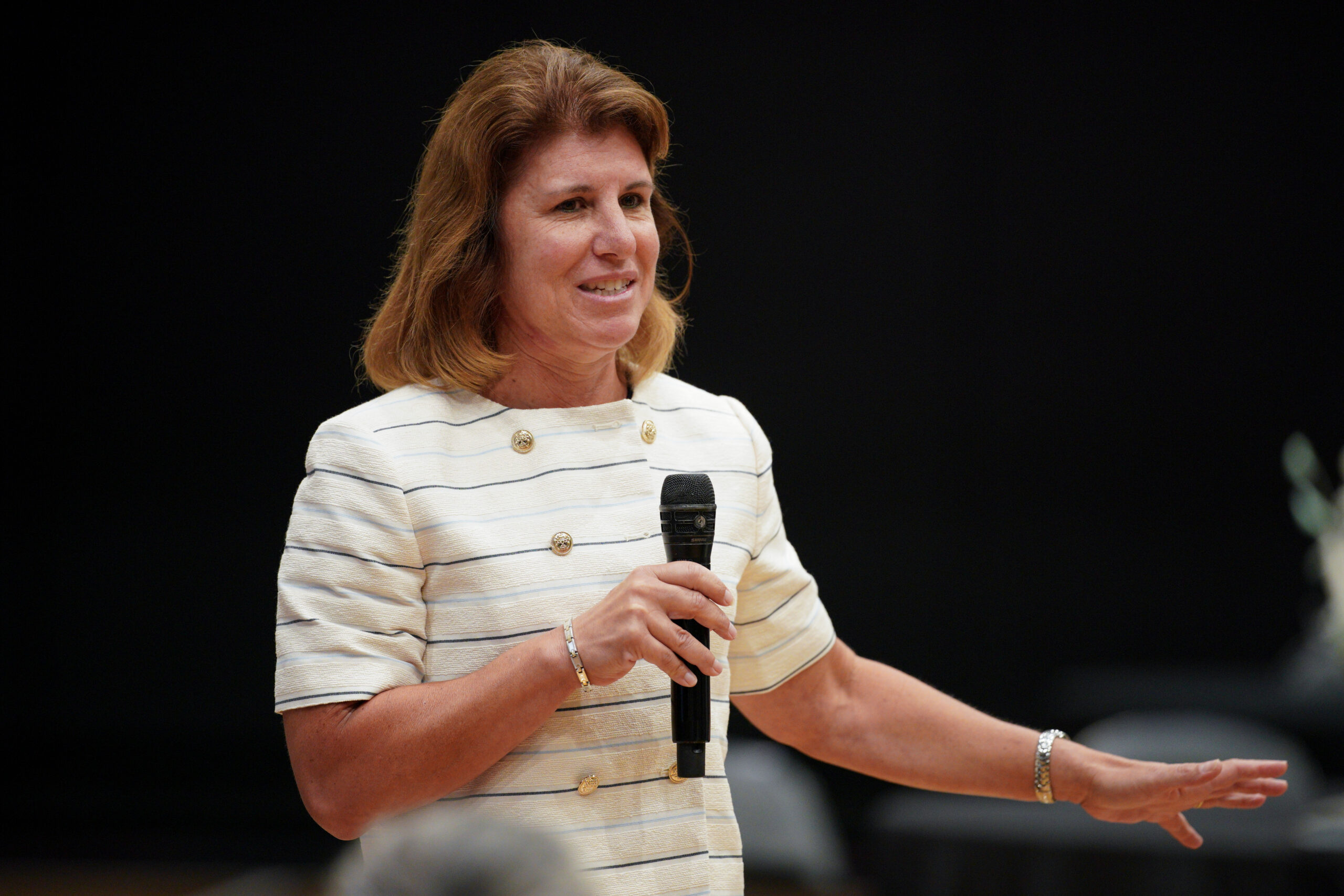
Jen Bryant, the USOPC’s Senior Director of Olympic and Paralympic Performance, told the audience of her organisation’s continuing efforts towards meeting their target. She said:
We couldn’t just focus on what we were going to do at the Games [Milano Cortina]. We needed to spend time building a team that was capable of going and delivering a podium-level performance… We focused on bringing a broader number of athletes through the pipeline… [we asked also ourselves] How are we keeping athletes in sport and then the opportunities to bring new athletes into Olympic sport?
Jen Bryant, the USOPC’s Senior Director of Olympic and Paralympic Performance. Photo: Leaders Performance Institute / Evan Bernstein
What to read next
In July, talent pathways, performance under pressure and the importance of a smartly implemented strategy were all talking points.
Having joined the Spanish federation in 2013, he worked with many of the same players through the Under-19s, Under-21s, the Olympic Games, Euro 2024 and now a World Cup triumph, making him one of the rare international coaches to oversee an entire generation from adolescence to the sport’s biggest prize.
“When I was made seleccionador I said that if I had an advantage it was that I knew the players. That allowed us to ‘bet’ on the future,” he told the Guardian in 2024.
It is a model many sports organisations would love to replicate. Yet, as performance specialist Iain Brunnschweiler observed during a recent Leaders Performance Institute roundtable: “I don’t think anyone’s solved this. That’s why we’re still talking about it; we’re still trying to work out how to do it most effectively.”
Spain would not claim to have cracked the code. Nevertheless, their success focuses attention on one of the most enduring questions in performance: how do organisations consistently develop talent capable of succeeding on the biggest stage?
That discussion was just one of the standout conversations among Leaders members in July.
We share some of the choicest cuts in this month’s Debrief.
Insight of the month:
When it comes to talent pathways, are we designing programmes around the needs of the athlete, or around the needs of the system?
Brunnschweiler wrapped up his presentation during the aforementioned roundtable with a reflection on his career working on elite talent pathways:
At the upper end of the talent pathway, the highest potential athletes can get the ‘worst’ programme.
An athlete may look as though they are receiving the best possible opportunity when they are training with senior professionals, yet if that exposure comes at the expense of match minutes, individualised development, physical preparation and psychological support, they may actually be receiving a worse developmental programme than peers lower down the pathway.
“They were being utilised more as a training mechanism for senior performers rather than a really high potential young player,” said Brunnschweiler, who worked with his colleagues to find a solution.
“One mechanism we did put in place was having a transition coach whose specific role was to go with that high potential player or group of players when they went into the senior training environment.”
Read the full roundtable report here.
Myth buster of the month:
Strategies don’t deliver outcomes – that’s the reality.
Michael Bourne, the Performance Director of the Lawn Tennis Association, admitted he loves a strategy. But as he told an audience at Leaders Meet: The Art of Strategy in April, ideas count for little without coherent actions.
He continued: “I’ve talked about a strategy that was written in 2018. So the idea of that being accurate to what we have to do today, well, a realism needs to be brought to that. The critical factor in those clear and coherent actions is if you still believe in your basic principles, you’ve got to have rapid review cycles that can tell you what you need to do today against the mission and the vision that we’ve set ourselves.”
These reviews are tracked on a dashboard, which contains 56 metrics that enable the LTA to link their strategy to “the bigger picture, to what everybody’s doing.”
Last month, with Wimbledon underway, we returned to that session to explore Bourne’s role in delivering the LTA’s ten-year performance strategy.
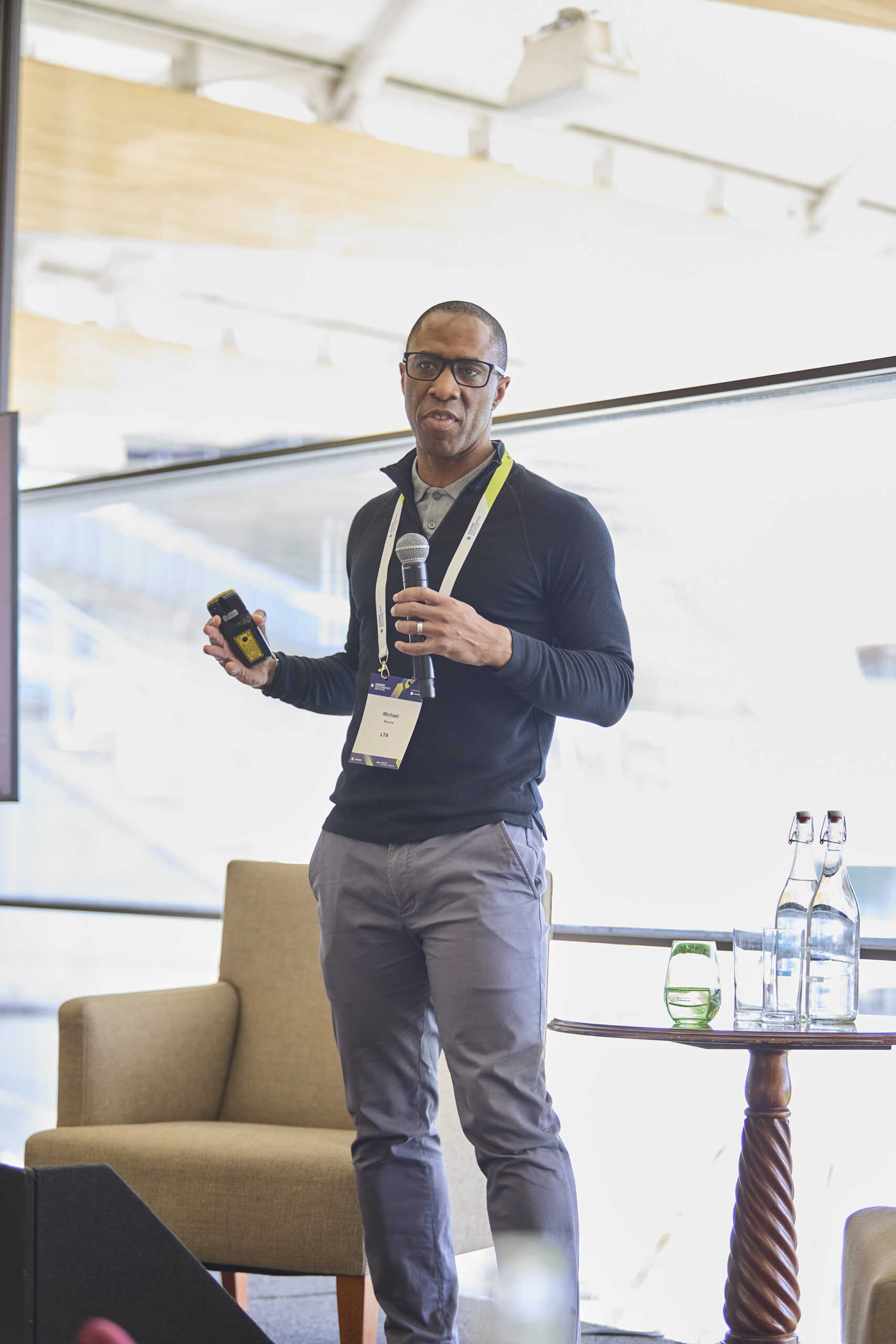
Michael Bourne, Performance Director at the Lawn Tennis Association, spoke first and set out the hard truths confronting British Tennis back in the mid-2010s. Image: Robert Obreja / Leaders Performance Institute
Good to know:
My work has taught me that you cannot overcome biases by simply trying to be more rational. The optimal path is to create processes that prevent us from succumbing to them.
Behavioural economist Dr Benjamin Kelly used the start of rugby union’s Nations Championship to run the rule over the biases that most commonly present themselves in the sport.
He advocates a structured intervention, as depicted below:
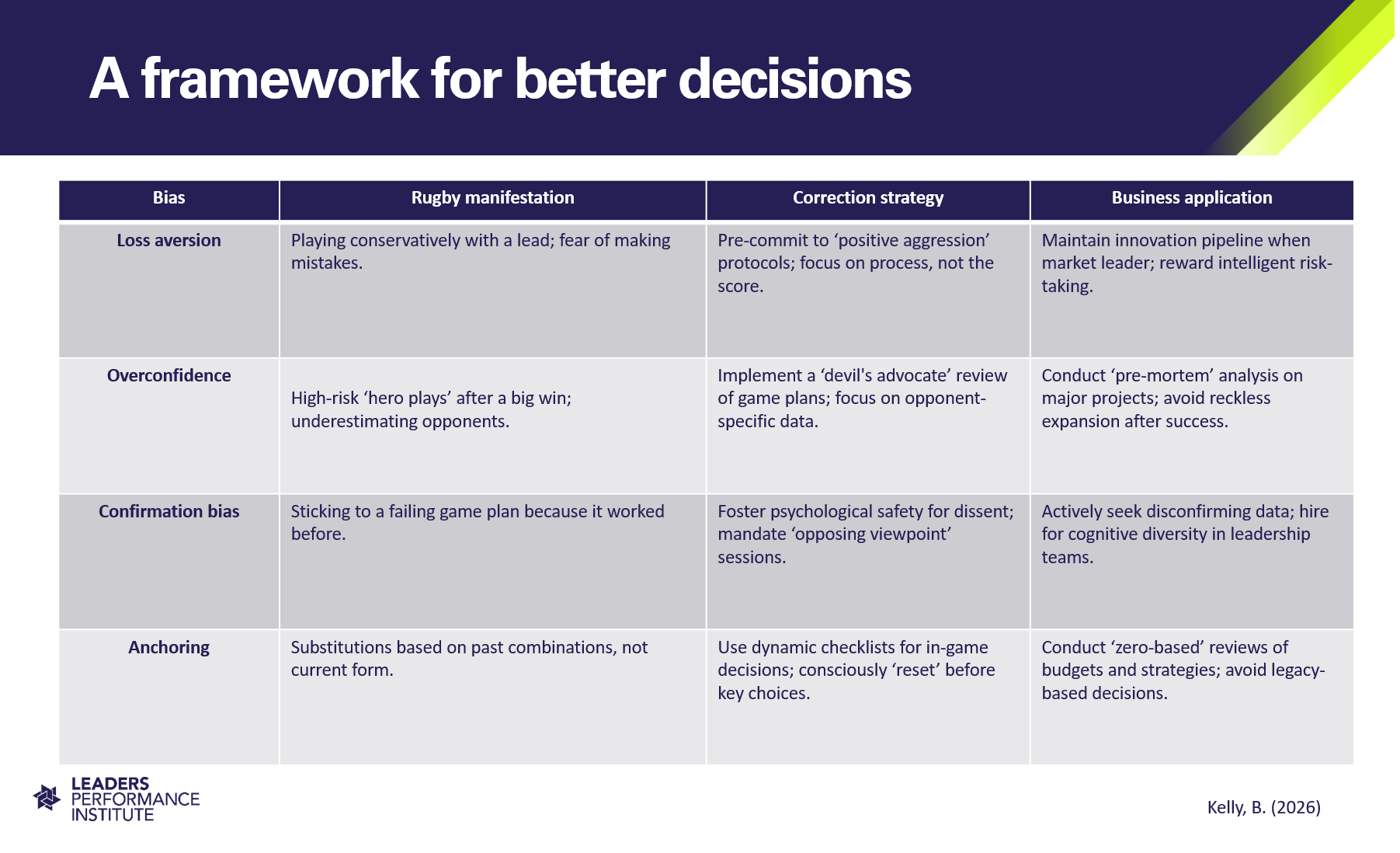
‘By understanding how these biases manifest, leaders can design and implement structured processes to counteract them,’ he wrote. ‘The journey to mastering the mental game is one of discipline and a commitment to process over outcome. The critical insight is not to eliminate bias, but to build systems that account for it. For any leader, in any field, that is the ultimate competitive advantage.’
Read the full article here.
Quote of the month:
Do the common things uncommonly well.
So said performance specialist Rachel Vickery at a roundtable on the topic of performance under pressure.
She argued that an ability to manage pressure is less to do with fancy tricks or even an attempted recreation of pressure moments in training, and more to do with reducing an athlete’s allostatic load – the accumulation of stressors and demands over time that push a person into a heightened state of physiological arousal.
“What they end up seeing in finals is not a sudden, unexpected failure of performance,” she said. “It was something that was actually built because of that accumulation in the system as a whole.”
The secret lies in increasing an athlete’s ‘buffer’ – the spare capacity between a person’s current arousal level and the point at which performance starts to deteriorate. When someone has plenty of buffer, the pressure can rise naturally, their arousal can increase, and they can still stay below their threshold.
Vickery argued that many organisations make a fundamental mistake by treating sleep, recovery, relationships and gratitude as wellbeing initiatives rather than as performance interventions that create buffer.
Read the full story here.
Best advice:
There’s this quote: every time you say ‘yes’ to something, you’re saying ‘no’ to something else. You’ve just got to make sure you’ve got the energy and the headspace to provide the appropriate level of support that your performance team need.
Ian Costello became the General Manager of Munster Rugby in 2025 and, in assuming the role, took a strategic leadership position after two decades of coaching on the grass.
He admits it has been a steep learning curve, but with a shared vision he has allowed Munster’s domain experts to flourish while finding the space to spot performance trends and nip issues in the bud.
Read our interview with Costello here.
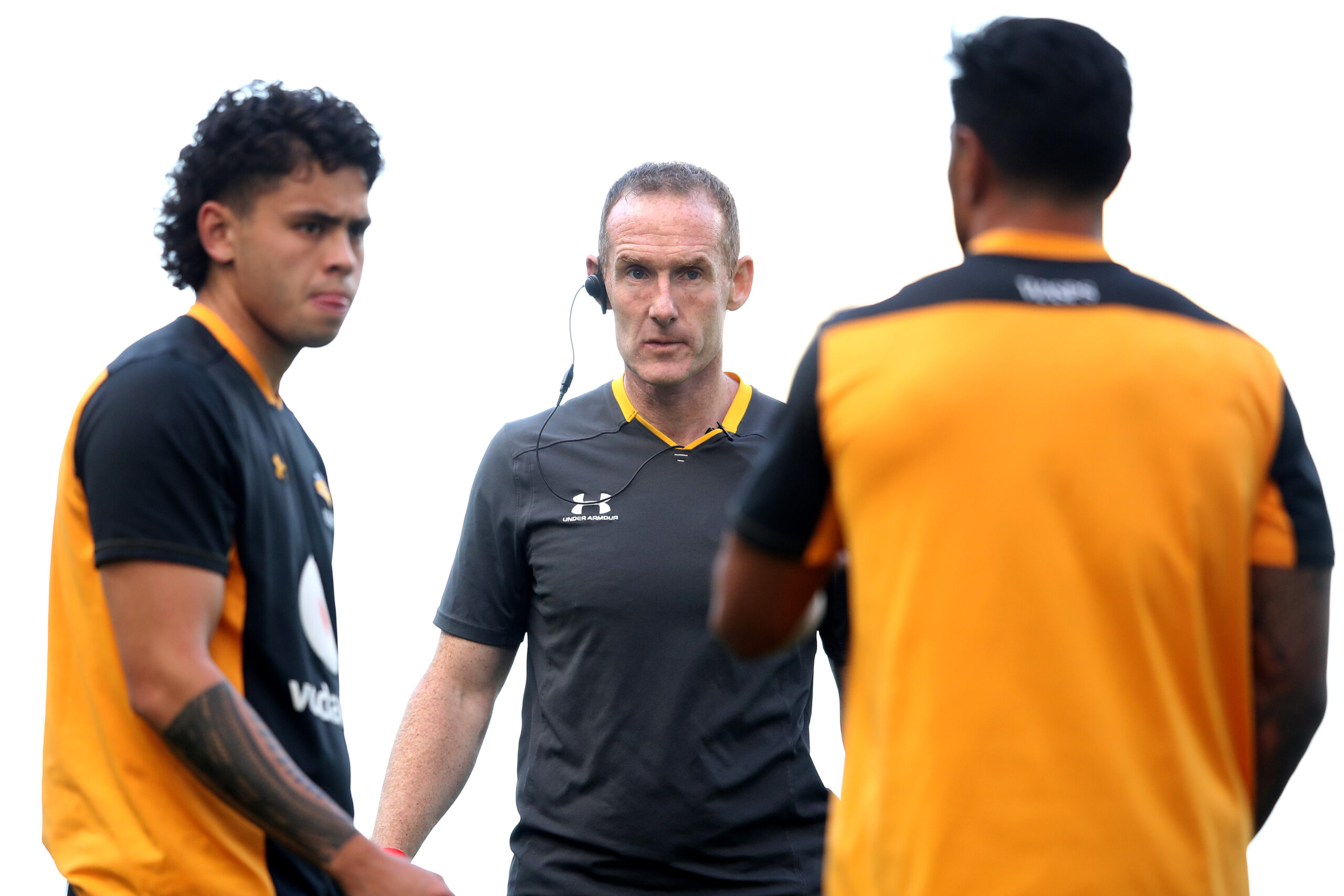
Ian Costello (centre) has been the General Manager of Munster Rugby since 2025.
What’s coming up for members
Why Succession Planning & Sustainability of Handovers is Critical
With a little help from Saya Sakakibara, Ellyse Perry and Anna Meares, we reflect on what enables better execution in the moment.
High-performance specialist Rachel Vickery made this very point at a Leaders Virtual Roundtable in early 2026 when she discussed the science behind a missed free throw in basketball or a simple putt on the eighteenth green in golf.
“Typically, the cause has less to do with what’s happening in the arena and a lot more to do with what’s happening everywhere else,” said Vickery, who helps teams in the worlds of sport, business and the military perform under pressure.
She explained that pressure is a daily accumulation that adds to a person’s allostatic load, which is the cumulative ‘stacking’ of stressors over time that erode the amount of physiological ‘space’ an athlete has between their current arousal level and their personal stress threshold. Vickery refers to this space as their “buffer”.
“We know from the environments that we work in that pressure is actually the constant,” she continued, “but it’s the physiological stress response that is often the variable.”
The stressors in question can be personal (e.g. a lack of sleep), organisational (e.g. misalignment), performance-based (e.g. being outside your comfort zone), or physiological (e.g. reduced ability to hear or absorb information).
Crucially, “as long as your arousal state stays below your threshold, your negative performance will not show up.”
At Leaders Meet: Australia in February, we invited three champion performers to the stage with a view to interrogating how they found their A games under pressure.
The trio in question were Olympic BMX gold medallist Saya Sakakibara; Ellyse Perry, who is widely regarded as one of the greatest female cricket players of all time (she is also a former Australian soccer international); and two-time Olympic track cycling champion (and Paris 2024 Australian Olympic Chef de Mission) Anna Meares.
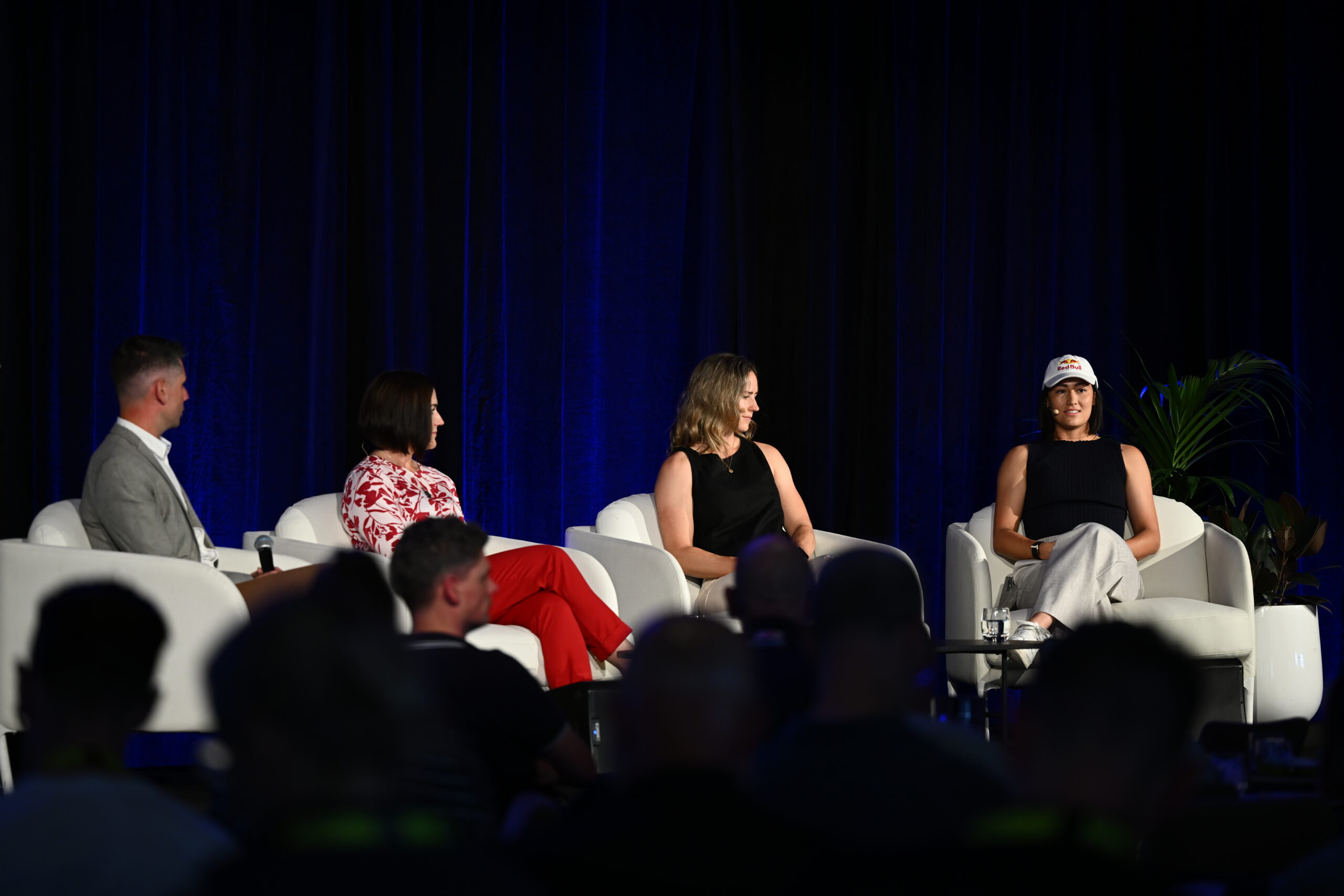
(Left to right) Moderator Fabio Serpiello with Anna Meares, Ellyse Perry and Saya Sakakibara onstage at Leaders Meet: Australia (Photo: Albert Perez / Leaders Performance Institute).
Below, they tackle the topic from a systemic and cultural perspective.
1. Preparation that frees up mental space
Saya Sakakibara crashed out of her BMX semi-final at the delayed 2020 Tokyo Olympics, but the experience set her on the path to gold at Paris 2024.
“Tokyo was my first time racing at an Olympic level,” she said. “I had absolutely no idea what to expect. I think in hindsight I was very underprepared and I was out of touch with my race routine.”
This realisation would make all the difference in Paris where she interpreted the track conditions better than her opponents. In preparation, Sakakibara visited the Vélodrome de Saint-Quentin-en-Yvelines two months before the Games to learn the “ins and outs” of the track, as she put it.
“I also took my GoPro and put it on my head and I did a race run, like a full lap, so I could take that video with me and went home and used it as a tool to really visualise the race,” she continued. She also filmed her walk up the hill to the track. “I was able to rehearse the things I’m saying as I’m walking up the hill. There was a telegraph pole halfway up to the start hill; and I was like, ‘every time I look at that telegraph pole, I’m going to tell myself to smile and I’m so grateful to be here’. I rehearsed that over and over.”
Her preparation enabled her to stay present. “Usually if you don’t have a system in place or if you haven’t rehearsed something, you go into panic mode and you act on emotion and not logic. So having those little things like smiling at the telegraph poll or making sure I’m saying like, ‘just fucking go’ or whatever it was.”
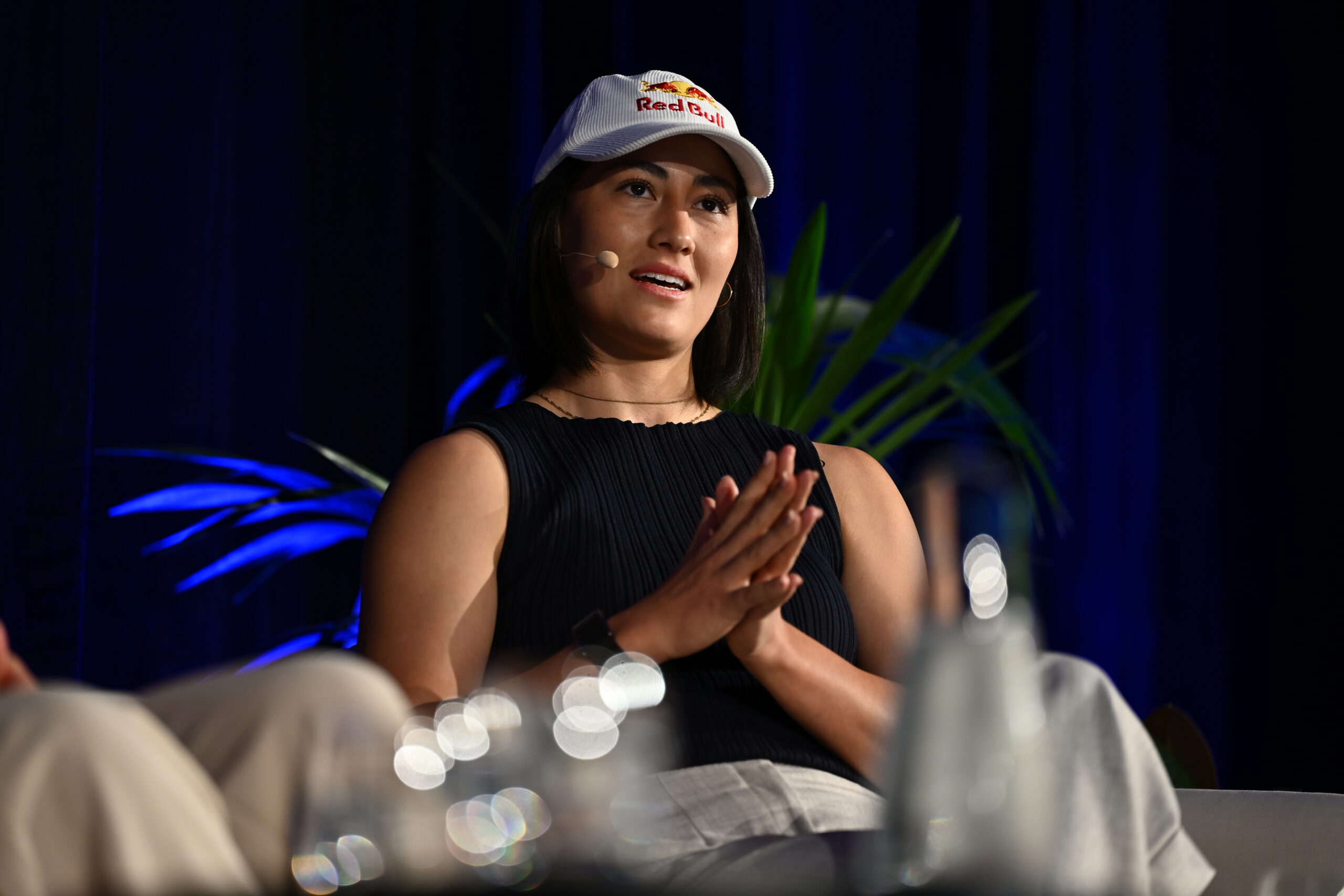
Saya Sakakibara (Photo: Albert Perez / Leaders Performance Institute).
2. Consistent leadership
The trust Sakakibara could place in her process helped her in more vulnerable moments too. “I still struggle with self-belief,” she told the audience. “I really don’t think all high performers have this unshakable belief that they’re going to win all the time.”
Consistency in leadership – vision, purpose, goals – is just as critical, as Ellyse Perry explained. “I think the way that that’s done with clarity and hopefully with some calmness over a long period of time is what really makes a difference,” she said.
It is something that has benefited Perry and Australia, who won the ICC Women’s T20 World Cup at Lord’s last weekend (5 July) for the seventh time in ten editions. The tournament was very much in Perry’s sights when she spoke in Brisbane; and Australia’s renewal is something Head Coach Shelley Nitschke has discussed on the Leaders stage in the recent past.
“People know what they get, they’re not guessing today how you’re going to respond to something, what the outcome is going to be.”

Ellyse Perry (Photo: Albert Perez / Leaders Performance Institute).
3. Safe learning environments
Anna Meares, who overcame the challenge of home favourite Victoria Pendleton in the sprint cycling event at the 2012 London Olympics, spoke of using less prestigious competitions to hone her performance in the build-up to those Games.
“I needed to understand Vicky better in order to make myself competitive in that environment with her and feel capable of surviving,” said Meares, who then described her work with her coach. “We went through a very long and tedious process of breaking down old habits, old skillsets; doing everything wrong deliberately and then going through a very frustrating process of learning new skillsets; starting to put myself in environments where I could trust those skillsets.
“I remember we went to a World Cup competition and my coach would not let me race not confident in the front, not confident in the back; but these were where he gave me the scope to make the wrong decision under pressure.”
It takes away any fixation on the process. “What that then does is it teaches you that this was not the right decision to make in that situation. Next time I’m there, I’m going to make a different decision. It slowly starts to change the pathway that you can create, but also the trust in making that up.”
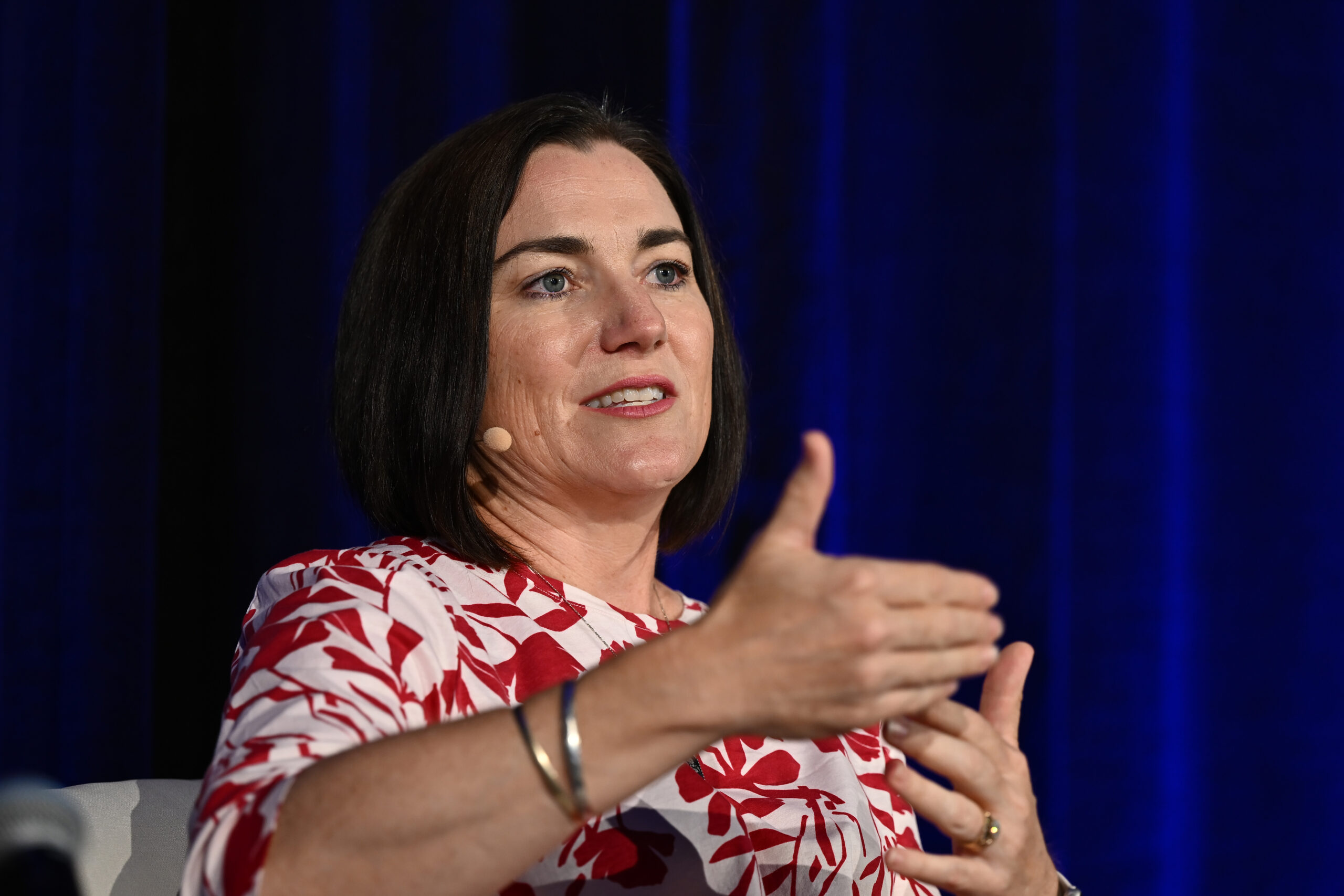
Anna Meares (Photo: Albert Perez / Leaders Performance Institute).
4. Repetition and mastery
“When I was at the top of the start hill in Paris, I felt the most ready I’ve ever been,” said Sakakibara.
Meares then reflected on her own experience and went some way to explaining why efforts such as hers or Sakakibara’s look so ‘easy’ from the outside.
“Your intuition or your autopilot comes from the work that you have done,” said Meares. The best systems and environments reduce panic, uncertainty and cognitive overload so that people can read the situation, trust their preparation and make better decisions.
“The mental preparation is just as important in order to get out of your own way, in order for the intuition to lead the way.”
In other words, the best systems or processes enable better judgement in the heat of the moment. “I rehearsed all those things so when it came to crunch time, it was just like, ‘yeah, I know what to do’.”
What to read next
Pressure Doesn’t Make you Better – it Reveals what’s Already There
In the final part of his miniseries, Basketball New Zealand GM Paul Downes what kind of leadership works when authority is limited and commitment is discretionary.
In senior 5×5 teams, athletes are commonly not selected from within domestic systems given the time of year for FIBA competitions. Instead, they are selected whilst under contract within professional (and semi-professional) environments across various global leagues. Athletes for FIBA 5×5 age-grade tournaments (Under-15 to Under-19) are typically selected from performances across school, Association and National camp assembly periods.
Supporting the selected athletes are coaches and management that also are operate in decentralised, time‑limited contexts. No role holders are employed full-time and, as such, are operating without the contractual levers that traditional high‑performance (HP) models assume. Across the 5×5 HP pathways, BBNZ runs six age‑group national teams (male and female), plus select teams that provide ‘best vs best’ exposure to support development (on and off court) and prepare for FIBA tournaments.
Within this reality, management team members are asked to balance a number of competing demands. Examples include: short‑term competitiveness versus long‑term system sustainability, respect for professional autonomy versus national‑team standards, and redefining ‘success’ in an international sport increasingly dominated by wealthy, highly resourced nations. These challenges, among others, sit outside of being simply tactical or financial rather the most complex challenges that present are systemic and relational. Therefore, a crucial leadership question what presents itself to the BBNZ HP team is no longer whether leadership is required, but instead what kind of leadership actually works when authority is limited and commitment is discretionary.
The purpose of this article is to apply the research pertaining to Leadership Climate and Followership to the context of the 5×5 National Teams of BBNZ and demonstrate the opportunities that the constraints presented offer HP leaders for generating elevated levels of engagement and commitment to the HP strategy.
What is Leadership Climate and why does it matter?
The National teams of BBNZ can be considered to have compromised formal authority outside of assembled periods due the nature of management composition and contractual status. Without the ability for HP leaders to rely on extrinsic levers such as significant salaries, full-time contracts and formal hierarchies there could be supposed to be high risk regarding team culture and operational effectiveness. Powerful research from Goleman into Leadership Climate (1, 2) supports organisations such as BBNZ to succeed and maximise the opportunities that come from such constrained circumstances.
Goleman (1, 2) describes Leadership Climate as the emotional tone of the working environment created by leaders’ behaviours, which in turn shapes motivation, engagement, wellbeing, and performance outcomes. When HP leaders cannot rely on extrinsic motivation levers or formal hierarchy the notion of Leadership Climate becomes the primary lever for sustaining commitment and discretionary effort.
Unpacking climate further
To make Leadership Climate assessable and actionable, JCA Global (3) developed the Leadership Climate Indicator (LCI) as a behavioural measure of how it feels to be led within a given system. The LCI translates leadership behaviour into four distinct climate quadrants made up of twelve observable scales:
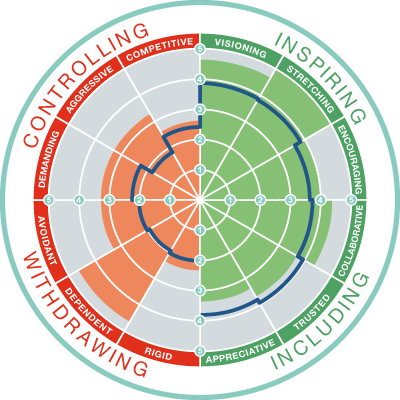
Green climates: the Inspiring and Including quadrants represent green climates – those that build clarity, trust, energy, and commitment through behaviours such as visioning, encouragement, collaboration, reliability, and appreciation.
Red climates: by contrast, the Controlling and Withdrawing quadrants represent red climates which, while sometimes effective in short‑term crises, erode trust and engagement when used habitually through behaviours such as micromanagement, aggression, avoidance, or rigidity.
In decentralised, tour‑assembled environments like BBNZ’s National teams, this framework provides a practical lens for understanding why some campaigns generate ownership, voice, and discretionary effort, while others default to compliance, silence, or disengagement under pressure. In these teams leadership climate can be considered to be the felt experience of being led by the HP team. This spans the experience one has at the recruitment stage, their subsequent onboarding, the connections leading into a camp/tour, tours themselves and the review period after each assembly. They are the conditions created by leaders’ behaviours during both stable and complex, high-pressure context and govern whether people think, speak up, and commit fully, or retreat into compliance and self‑protection.
Defining and contextualising Followership
Contemporary leadership research is explicit that leadership is not delivered one way from leaders to followers but is instead co‑produced through the active judgement, engagement, and agency of followers within relational and contextual systems (4, 5, 6). Within this literature, ‘Followership’ is defined as the behaviours, decisions, and choices individuals make in how they support, challenge, and contribute to collective goals – not simply their positional role or willingness to comply. It is an active function requiring judgement, commitment, and moral courage.
Kelley’s foundational work (6, 7) was pivotal in reframing organisational performance as being driven disproportionately by effective followers. These being followers who think independently and engage actively rather than by compliance‑based execution alone. This reframing shifts attention away from what leaders do to people, and toward the conditions leaders create with others.
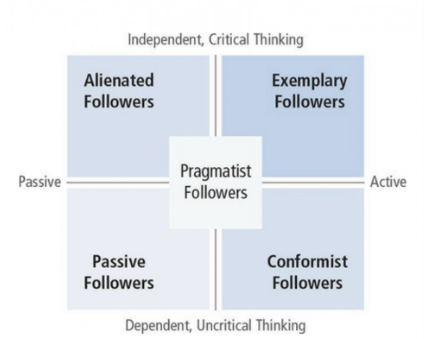
Figure 1. Kelley’s Followership Model (1988)
Figure 1 and Table 1 provide a summary of the five types of followers and what these mean in the context of BBNZ’s HP management teams. For Kelley, the ideal follower was a critical thinking contributor, termed the ‘exemplary follower’. Kelley argues that most leaders prefer ‘conformist followers’ because they are easy to control. ‘Alienated followers’ are critical but do not contribute; and ‘passive followers’ have little to no value other than bring present. A critical thinking follower who is alienated is far more likely to be a negative team member.
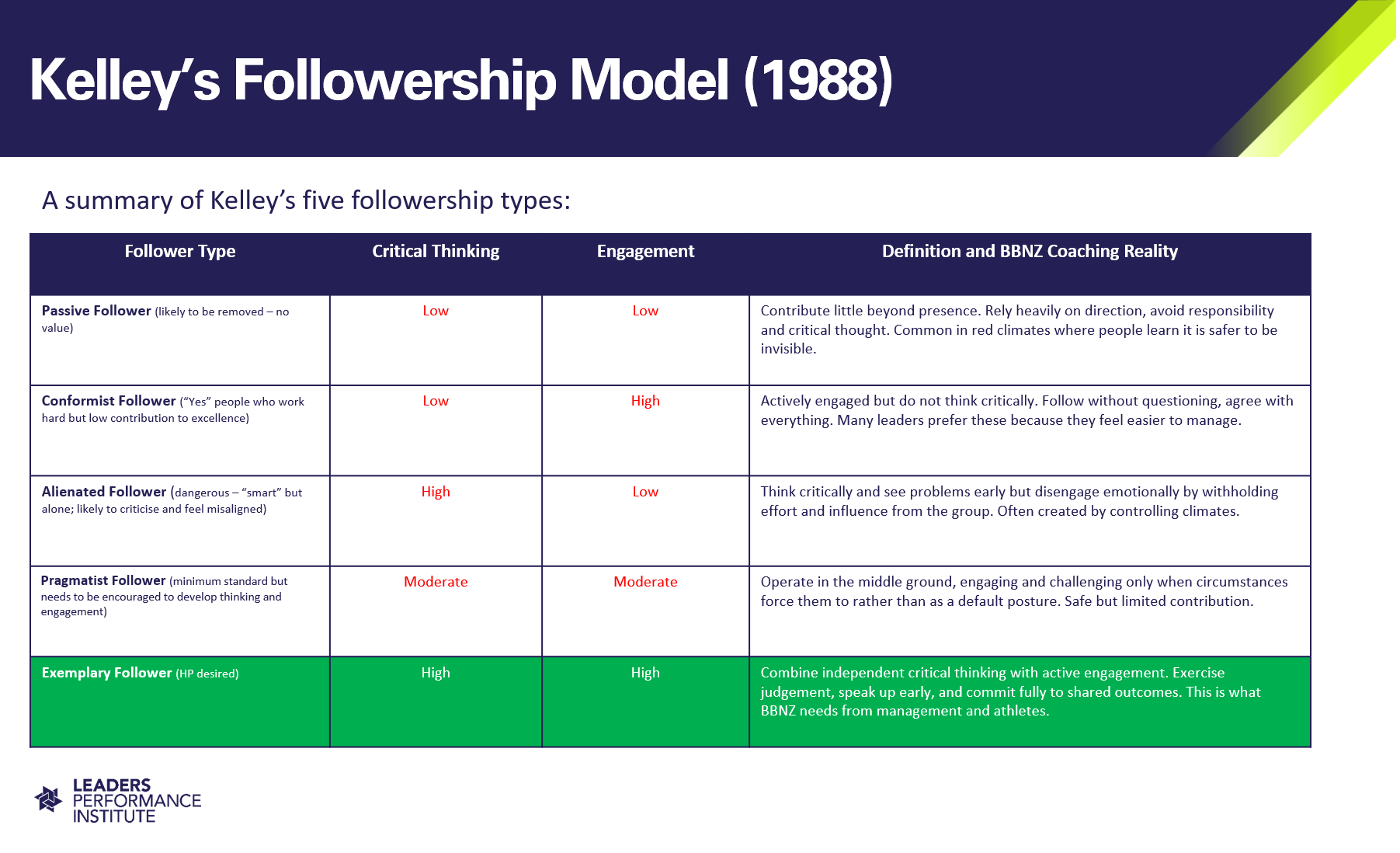
Table 1. A summary of Kelley’s five followership types
A clear understanding of Followership theory and the interaction of critical thinking with active contribution is valuable for organisations like BBNZ, where management teams operate in periodic, decentralised, and contractor‑heavy environments. Once national teams assemble for FIBA events, organisational charts flatten quickly, formal authority as a national sporting organisation (NSO) reduces, and the HP system functions largely through trust, clarity, and discretionary effort. In these contexts, the quality of followership becomes visible in what people do when conditions are uncertain, pressured, or imperfectly resourced.
In tour‑assembled environments, followership quality is a strong determinant of whether standards are sustained, problems are surfaced early, and judgement is exercised when it matters most. Kelley’s insight remains deliberately uncomfortable. Leaders often gravitate toward conformists because they feel easier to manage, yet doing so suppresses the independent thinking and ownership that complex, time‑bound campaigns depend upon.
How Leadership Climate and Followship exist across BBNZ’s national teams
An example of system logic is provided in Figure 2.
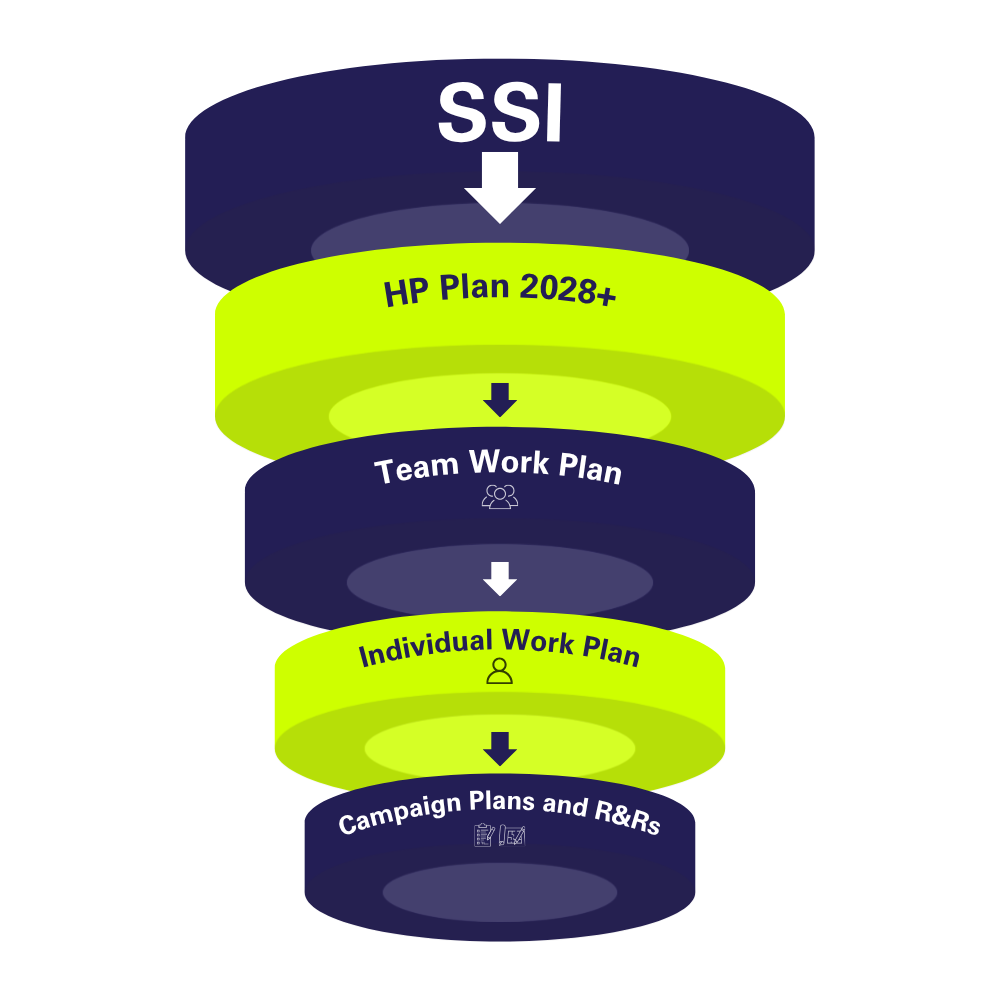
Figure 2. A system logic view of BBNZ HP Strategy spanning the NSO’s Strategic Statement of Intent (SSI) to HP Strategy (HP Plan 2028+) into HP Team Plan that support HP team member’s individual plans that inform how HP constructs and operationalises Campaign Plans and Roles and Responsibilities across various National teams.
In this example, clarity is treated as a primary leadership behaviour. Through making purpose, expectations, roles, and decision rights explicit HP leaders are able to reduce anxiety and guesswork in management teams and create the conditions for Inspiring and Including climates. These favourable climates elevate the quality of followership the HP system produces. Across the HP team’s ways of working there is a deliberate emphasis on a clear, shared purpose, psychological safety, empowerment with accountability, and inclusion.
These act as necessary prerequisites for ‘exemplary followership’ which are characterised by independent thinking and active engagement. Examples of how this is achieved are engaging in collaborative approaches to define ‘What It Takes To Win’ (WITTW), clarifying campaign roles early in a cycle, and making HP expectations visible through Team Charters to allow management and athletes to exercise judgement rather than wait for instruction. When management are recruited and onboarding takes place there is a priority to build early senses of belonging and clarify the conditions for constructive candour and continuous learning. With reference to Leadership Climate terminology, such conditions actively strengthen Visioning, Trusted, Collaborative, and Encouraging behaviours while reducing the likelihood that pressure induces Controlling or Withdrawing patterns.
In the realities of global FIBA tournaments existing in dynamic, uncertain, complex conditions the benefits of positive team climates and exemplary followship are experienced. By making purpose, boundaries, and expectations explicit before and during campaigns, BBNZ increases the probability that touring parties will act as capable followers. Ones who can think ahead, raise issues early, hold standards without being policed, and sustaining discretionary effort under fatigue. The latter is imperative with international travel and compressed recovery windows between competition. In this sense, the HP frameworks developed and communicated are not just management tools, they are deliberate climate interventions that enables leadership and followership to be co‑produced in conditions where formal control is neither realistic nor effective.
At age‑grade level, clarity is what allows people to coach and support with judgement rather than hesitation. When purpose, roles, and decision‑making boundaries are clear early in the cycle, staff don’t wait for permission—they act in the best interests of the athletes. That creates trust, encourages honest challenge, and allows learning to happen quickly. In high‑pressure tournaments, those conditions matter because we need people thinking and contributing together, not just executing instructions.
Mel Bennett (Head Coach of U15-U17 Women and Assistant Coach of 2Degrees Tall Ferns)
From a medical and recovery perspective, clarity changes everything. When roles, decision rights, and expectations are explicit, I don’t have to guess whether to escalate an issue or wait—and neither do the players. It allows us to act early, manage load properly, and hold standards without friction. In the middle of a FIBA campaign, that clarity creates trust, reduces stress, and lets everyone contribute their judgement rather than just follow instructions.
Mikayla Rosieur (2degrees Tall Ferns and U17 Men’s Physiotherapist)
To help better illustrate the interactions of Leadership Climate, the types of climate conditions and Followership, Table 2 maps the JCA Climate Types to Followership Behaviours in the form of ‘touring realities’.
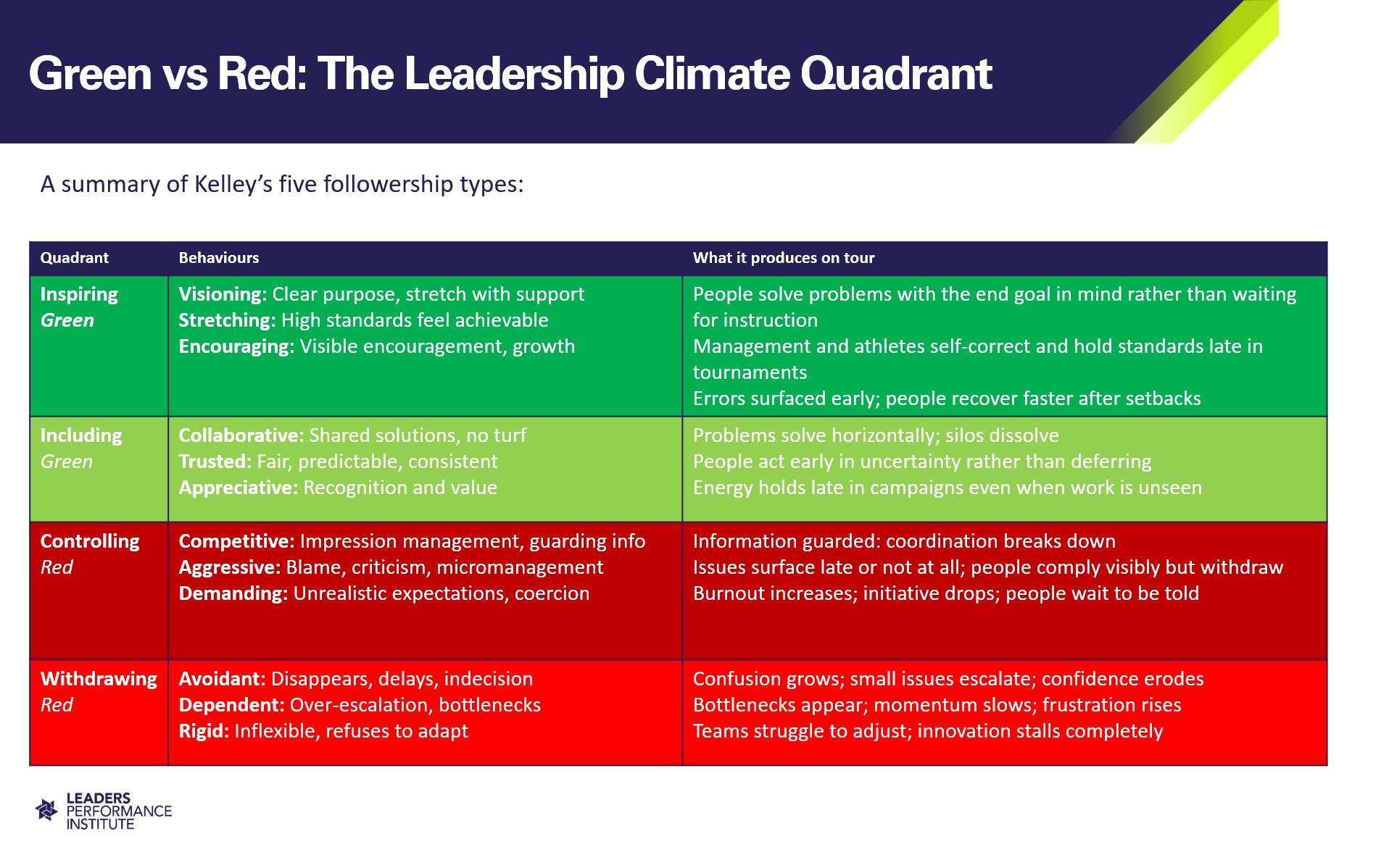
Table 2. The JCA Climate Types mapped to Followership Behaviours in the form of ‘touring realities’.
Recently the BBNZ HP team has constructed Team Charters as an initiative to elevate leadership climate and followership by replacing hierarchy with shared clarity. These charters make purpose, expectations, and behavioural norms explicit so that independent thinking, early voice, and accountable contribution become safe and expected, even under pressure. Through the removal of ambiguity (the primary trigger for anxiety, silence, and defensive followership) the Charters serve to stabilise the emotional climate whilst actively strengthening Inspiring (Visioning, Stretching) and Including (Trusted, Collaborative, Appreciative) climates by ensuring people know what matters, how decisions will be made, and how they are expected to contribute.
Concluding remarks
In decentralised, time‑limited national‑team environments, the decisive leadership task is not to demand compliance but to design the conditions for exemplary followership. That begins with making the why unmistakable for all parties. There needs to be a clear purpose, realistic success markers, and alignment surrounding how each role contributes. These conditions enable the setting of mutual expectations about standards, decision rights, and escalation pathways to hold teams steady under pressure. There is a requirement to create permission for feedback and insights by rewarding early problem‑raising, building trust through reliable follow‑through and predictable communication. HP leaders need to recognise the contributions that sustain standards, energy, and learning throughout campaigns. Create conditions, not compliance because international performance is built on the effort you cannot mandate.
References
At a recent Leaders virtual roundtable, John Bull of Management Futures explained that long-term success depends on preserving what works while embracing challenge and evolution.
He even compared some high-performance environments to a cult.
“Pete didn’t mean that as a negative thing, but he felt there was a cult of personality around figures such as the coach or the GM,” said John Bull, to whom Keen was speaking at the time. “His concern was when they leave; what would happen to performance?”
Bull, the Head of High Performance at Management Futures, recently led a virtual roundtable session for Leaders Performance Institute members that explored the facets of organisations that have sustained their success over a long period.
“Pete challenged us,” added Bull. “He said, ‘it would be great if someone did a piece of research helping us to understand, if you look at sustained environments, what are they doing differently? And what can we learn from that if we want to make a system more sustainable?’”
There are both environmental and leadership dimensions and, as Bull would go on to explain, it is something at which all leaders can work.
“How do you become very good at being a sustained leader within your own organisation? How good are you at balancing adding value for today versus adding value for tomorrow?”
He then posed another question to encourage the table to think about the topic:
If you had to place a single bet on the organisation that will be the most consistently successful over the next 50 years – in any domain you choose – what characteristics would you look for?
In response, the table proposed three characteristics:
With the scene set, Bull turned to a research project titled ‘Radically Traditional’, which was led by Alex Hill, the author of the 2023 book Centennials: the 12 habits of great, enduring organisations. Hill led the project on behalf of UK Sport and the Centre for High Performance.
In 2018, Hill wrote of the project for the Leaders Performance Institute:
Why do some teams sustain success, whilst others stumble and fall? What sets them apart? And how can we learn from them? Well, our findings suggest it’s by becoming Radically Traditional. With a stable core – purpose, stewardship, openness – and a disruptive edge – experts, nervousness, accidents.
Back at the roundtable, Bull attempted to illustrate this idea:
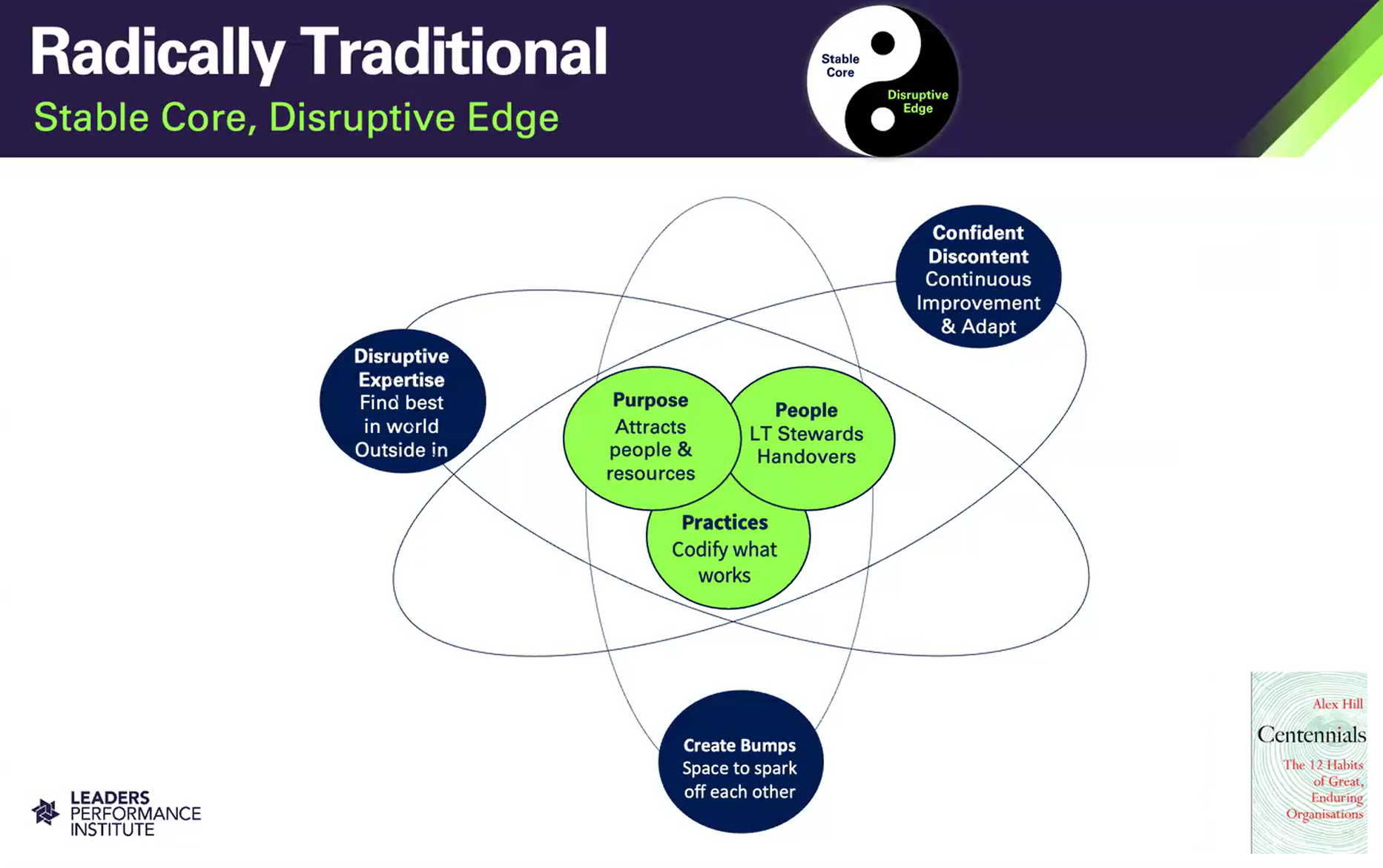
He then explained each element in turn.
The stable core
The disruptive edge
When it comes to finding a disruptive edge, Bull cited two leaders who proved their credentials.
Firstly, Peter Blake, the founder of Emirates Team New Zealand, the perennially successful America’s Cup sailing team.
“His founding principle was we want to combine insights from sailors and the designers,” said Bull, adding that this did not sit well with the team’s designer, Bruce Farr.
“Farr decided he didn’t want to listen to sailors messing with his design and, very courageously, Blake said, ‘well, that’s fine. Then you’re not the designer for our campaign’; given that Farr was the best designer in the world, that was pretty courageous.”
That was in the early 1990s; Team New Zealand has since gone on to win the America’s cup five times, including the last three editions.
Bull’s second example is Gene Kranz, who served as one of NASA’s Flight Controllers during the Apollo Lunar missions of the 1960s and early 1970s. Kranz made sure that his team at the Manned Space Center in Houston regularly ate meals together.
The bonds formed during those mealtimes were likely critical to the Apollo missions, especially during the successful effort to bring home the stricken crew of Apollo 13 after an explosion occurred on their spacecraft 200,000 miles (320,000 km) from Earth.
There is, as Bull explained, power in breaking bread with your peers and colleagues. “Without a doubt, the best problem-solving discussions I ever heard were when the senior team were around a table eating lunch,” he said. “And if you go back to if I were betting on an organisation, one of the things I’d do is walk into the café and I’d want to see if mobiles are out or if people are engaged in conversation and how mixed the tables are across function.”
A member from a military background told the table that he has tried something similar with his team. He said such interactions can generate “something that solves some problems that you as a leader didn’t necessarily foresee”.
He added: “that’s a major organisational decision to be comfortable with maybe a little bit less productivity with a purpose that that is an investment in future productivity based on relationships.”
As the session wound to a close, Bull steered the conversation towards four transitions to which we need to pay attention (and the risks to avoid):
1. Big success: the risk of complacency
“It can be really hard to avoid,” said Bull. However, in environments of sustained success, he has noticed “leaders are slightly paranoid when they get success; and that’s what drives them to go further.”
2. Big failure: the risk of overreaction
“The danger is that we throw the baby out with the bathwater; that we throw out some of the good as well as some of the things that we don’t need to change,” said Bull. “But there’s something about going ‘not all tradition is worth keeping’.”
3. Change in key people: the risk of losing knowledge
“One of the key things is managing handovers,” said Bull. “I think it is also looking to recruit for curiosity and humility. Sure, you want people to bring in some disruption and change, but you also want them to spend some time figuring out what has worked and not change everything.” He returned to Keen’s observation about cultish environments. “How do we make them not cults but a repeatable formula that can pass from generation to generation?”
4. Significant external change: the risk of slow or inadequate adaptation
“What’s interesting in the sustained organisations is they are often not the first to come out with a new innovation, but they are the first to start thinking about it and innovating,” said Bull, who observed that they can be conservative by nature, which does not quell their desire to test and learn. “They’re big believers in evolution rather than revolution in that sense.”
If you have any further questions around how to sustain success with your team, feel free to reach out to Management Futures directly via [email protected]
What to read next
Tom Crick, the Chief Scientific Adviser to the UK Government’s Department of Culture, Media & Sport, explains that there is a responsibility on leaders to build environments that empower people, engender trust, and enable swift learning.
“You’ll hear things like ‘AI will replace teachers’ or ‘AI will replace doctors’ – no they won’t,” he told an audience at the 2025 Leaders Sport Performance Summit in London.
It is more likely, he said, that “AI-enabled or AI-augmented teachers might replace teachers”; similarly, “AI-augmented doctors might be more effective from a diagnostic perspective.”
Crick believes the current discourse that paints AI as either “humanity’s destruction or its ultimate saviour” is “not very helpful for the broader conversation around technology utility and adoption”.
His words were delivered to a room full of coaches and practitioners from across the globe, all of whom have seen AI play an increasingly prominent role in their work; and, as far as Crick is concerned, sport’s leaders must simply get to grips with it.
“There’s no way you can be a leader and be digitally incompetent,” he said. That doesn’t mean one has to train as a computer scientist, but a working knowledge is essential. “I don’t understand how you would see the impacts and the challenges for your business if you just say ‘I’ll delegate that; that’s a CTO or CDO problem’.”
That said, Crick understands the anxiety around AI and tech, which he attributes to a “confidence and capability challenge”. “It can be quite exposing if you’re the senior leader in an organisation,” he continued. “You basically have to say ‘I know nothing about this stuff and it’s a massive gap in my knowledge and understanding.’ It takes humility to own that.”
Over the course of half an hour or so, Crick prompted the leaders in the room to reconsider their approach to AI.
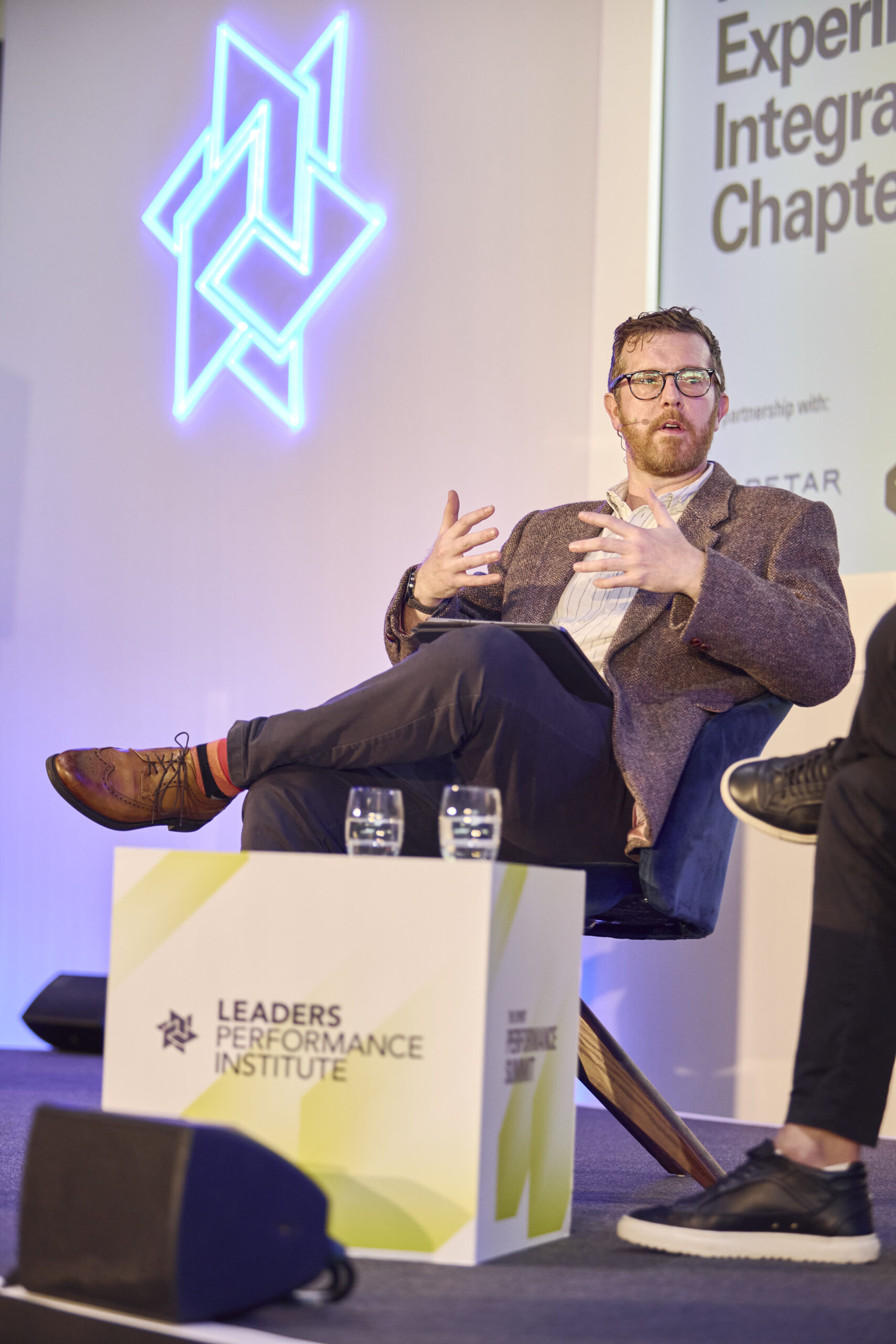
Tom Crick onstage at the 2025 Leaders Sport Performance Summit at London’s Kia Oval.
Don’t deal in blind trust – keep the human in the loop
“Lots of generative AI tools are just statistical probabilistic bullshit generators,” said Crick. “People anthropomorphise these tools far too much. [AI tools] don’t think and they don’t have an intrinsic understanding of things.”
In stating these limitations, he encouraged the audience to not just “automatically trust the system” and to look more closely at both the challenges and opportunities presented by AI.
“AI will not magically remove uncertainty, but it can reshape and augment what that might look like for you as a coach,” he added. An AI tool may help you churn through datasets at inhuman speed, but “we have to be grounded in the dangers of these tools as a shortcut to absolute certainty.”
It comes back to what Crick terms a person’s “critical AI literacy”. “We want to stay curious; we don’t want to be too complacent.”
As such, he promotes “AI with humans in the loop” because AI “augments human capability and does not replace it”; human agency, he argued, is “sacrosanct”.
Get the basics right before even thinking of scaling
Crick believes that organisations should think about the “skills, competencies, behaviours and dispositions” they’ll need in the coming years because if teams are unsure why they’re using AI, if there’s no strategy and no idea of when to invest, when to lead and when to follow, their efforts will be built on a “foundation of sand”.
It starts with the basics. “Think about good data disciplines and make sure the data is high quality,” he said. It is also a question of clarity and alignment, which he revealed is a perennial problem across the various departments of the British Government when it comes to AI.
Your structure will guide how effective your delivery is and will enable you to verify or validate datasets and practices. This is critical because AI is not a “magic black box” where you simply “crank the handle and out comes the answer”. In any case, Crick argued, such an approach would be “disempowering for coaches and people who work in sports performance.”
Design for trust and accountability
AI usage must be rooted in values that promote accuracy and trust. “Values are useful anchors and shouldn’t be seen as constraints,” said Crick, who explained that the DCMS, in defining its AI strategy, will “enshrine high level principles to provide assurance and confidence to everyone who works in the department.”
It comes down to “doing the right thing in the right way and how that comes through in legitimacy, trust, transparency, verifiability; and things such as explainability and understandability too.”
Therefore, when using AI in athlete-facing settings, coaches and practitioners should work in an open and transparent way. They should ask themselves “where’s the feedback loop? What’s the mechanism for co-design and co-creation of shared outcomes? This naturally leads back to the humans in the loop”.
Crick likens technological leadership to an art or craft, one that is particularly important when the going gets tough.
“What does that look like when you bounce human intuition around and the magic algorithm says ‘no’? [What do you do when] the algorithm says you should do x but the experienced coach says you should do y? How do you reconcile such elements, especially under pressure?”
Be curious
“I think you need to have a system and culture that rewards curiosity,” said Crick.
When teams test and learn they will fail often and he argued that leaders must accept that fact.
The key, he argued, is “to fail fast, adapt and refine very quickly”.
It comes back to the leader and those foundations. “How do you have the structure in place to recognise that?”
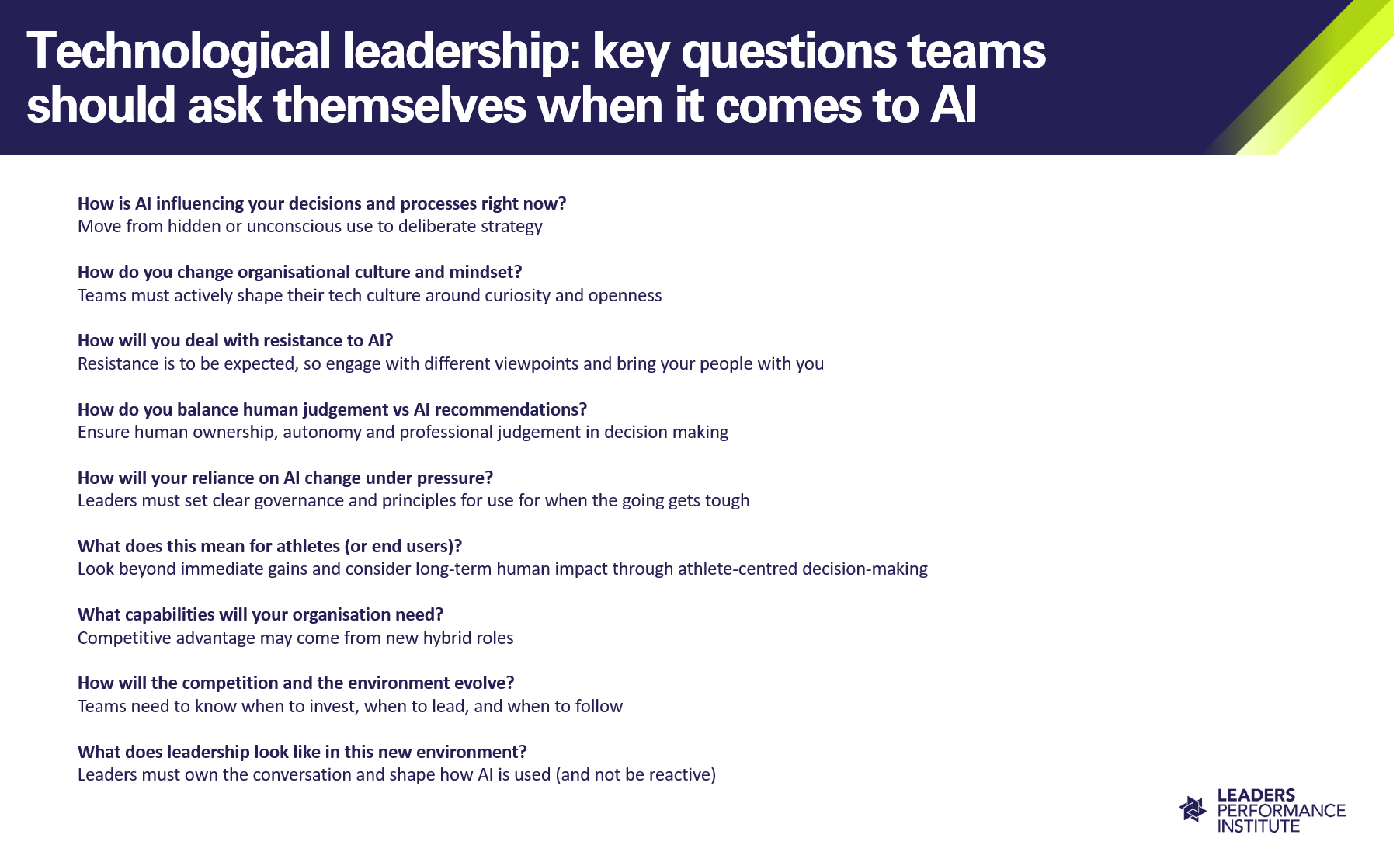
Crick wrapped up his session with a further series of questions to ponder:
What to read next