The five-time Olympic medalist discusses his work as a strategic adviser to The Zone, a new platform designed to support athletes with their mental health and wellness through a range of programs and modules.
Main Photo: Getty Images

You can’t have a discussion about sports technology today without including athletes in that conversation. Their partnerships, investments and endorsements help fuel the space – they have emerged as major stakeholders in the sports tech ecosystem. The Athlete’s Voice series highlights the athletes leading the way and the projects and products they’re putting their influence behind.
* * * * *
Gatlin retired in 2022 and has found a new role in the sports tech space: he was named a strategic adviser last month for mental health platform The Zone, which offers mental health and wellness support to athletes through a collection of programming and modules.
The startup works with more than 200 teams across all levels of college athletics, along with some collegiate conferences and youth sports.
On connecting with The Zone and its founders, Erik Poldroo and Ivan Tchatchouwo, through a mutual friend…
“He said, ‘I think you’d be great for this program.’ So I did a little more research on it, and I actually liked it a lot because I think mental health, especially in the sports and athletic space, is the next frontier.
“Athletes are becoming stronger. They’re becoming faster. Obviously, recovery helps them stay in the game of play longer, helps extend their career. But going through the research of what The Zone represents and what it brings, it kind of tapped me on the shoulder to realize that I operated around a lot of athletes, and I saw a lot of athletes who had performance anxiety. Athletes who did very well at practice but couldn’t really cross over into the game of play.
“And that could be a whole array of things. It could be the fact that you’re not controlling your environment like you do at practice, or the fact of stage fright and competing in front of a certain amount of people, or even from a professional level, if I don’t get this job done, that means a reduction instead of a bonus. So I think it’s a really taboo and hush-hush area. And I think what The Zone brings to the table, it helps uncover that, but in a way to where athletes have a tool.”
On how The Zone could’ve supported him during his running career…
“From a collegiate aspect for me, my first year, I was constantly the bridesmaid to my teammate. To give you perspective — how you do in other sports like basketball, football, baseball, it’s very team-oriented. And you’re working with your team to better each other so you can go out there and win together. But you also have to remember, in track and field, the people you’re training with, it’s almost like those are the people you’re going to compete against. I’m training with other 100-meter runners who are trying to beat me to be able to get that one gold. And that goes from a collegiate aspect to the professional realm as well. So you’re always in that state of alertness.”
On his post-retirement life…
“Right now, I’m learning to slow down because being a professional athlete, especially in the track world, it was always like go, go, go, attack, attack, attack. … One thing for me was taking the time to calm myself down and know exactly where I am as a person and a human being, and that’s what I love about the retirement aspect of things. Now I can slow it down a little bit. I don’t have to feel like I’m in a rush all the time, and I get to enjoy my sons, who are growing up — I’ve got a 15-year-old and a 4-year-old — and tackling other things that I have a passion for, which is going out and doing speaking engagements, speaking to certain type of audiences, and also aligning myself with companies like Erik and Ivan’s with The Zone.”
On the tech that boosted his career…
“I think for me, Normatec, the cryochambers, the Whoop — those are the things that we used that helped me understand where my athleticism was at and gauge it, especially from recovery level. When I was still competing, recovery was that thing that was going to make sure you stayed in the game. … I think now the name of the game is mental. Because a lot of athletes are always searching for how to be able to be better physically. No one coaches you and teaches you how to compete. They just teach you the nuances of your sport: how to shoot a correct jumper, how to be able to hit a home run. But no one teaches you how to be able to mentally be in the game, and what it looks like to be in the game at a high level.”
This article was brought to you by SBJ Tech, a Leaders Group company. As a Leaders Performance Institute member, you are able to enjoy exclusive access to SBJ Tech content in the field of athletic performance.
The new Institute for Sports Tech Standards aims to provide reliable third-party testing with an aim to streamline the tech validation process and reduce redundancy.
Main Photo: Institute for Sports Tech Standards
But ultimately there were calls for more, and two of the white paper’s authors — Sam Robertson from TCG Advisory and Jessica Zendler from Rimkus Consulting — are now the founding co-directors of a new body, the Institute for Sports Tech Standards, that seeks to test product quality, establish accredited standards and consult on approval programs.
ISTS was formed from a strategic partnership between TCG Advisory and Rimkus and initially will focus mostly on collaborations with governing bodies but will expand to work with teams and tech vendors, too.
“There’s no Consumer Reports of sports tech,” Zendler said. “Everyone wants this, but no one does it. So what do we need to do to make it happen?”
Zendler, who is Director of Rimkus’ sports science practice, is Manager for the NBA/NBPA Wearables Validation Program; Robertson, a former Victoria University professor, has extensive experience working with FIFA’s Quality Program.
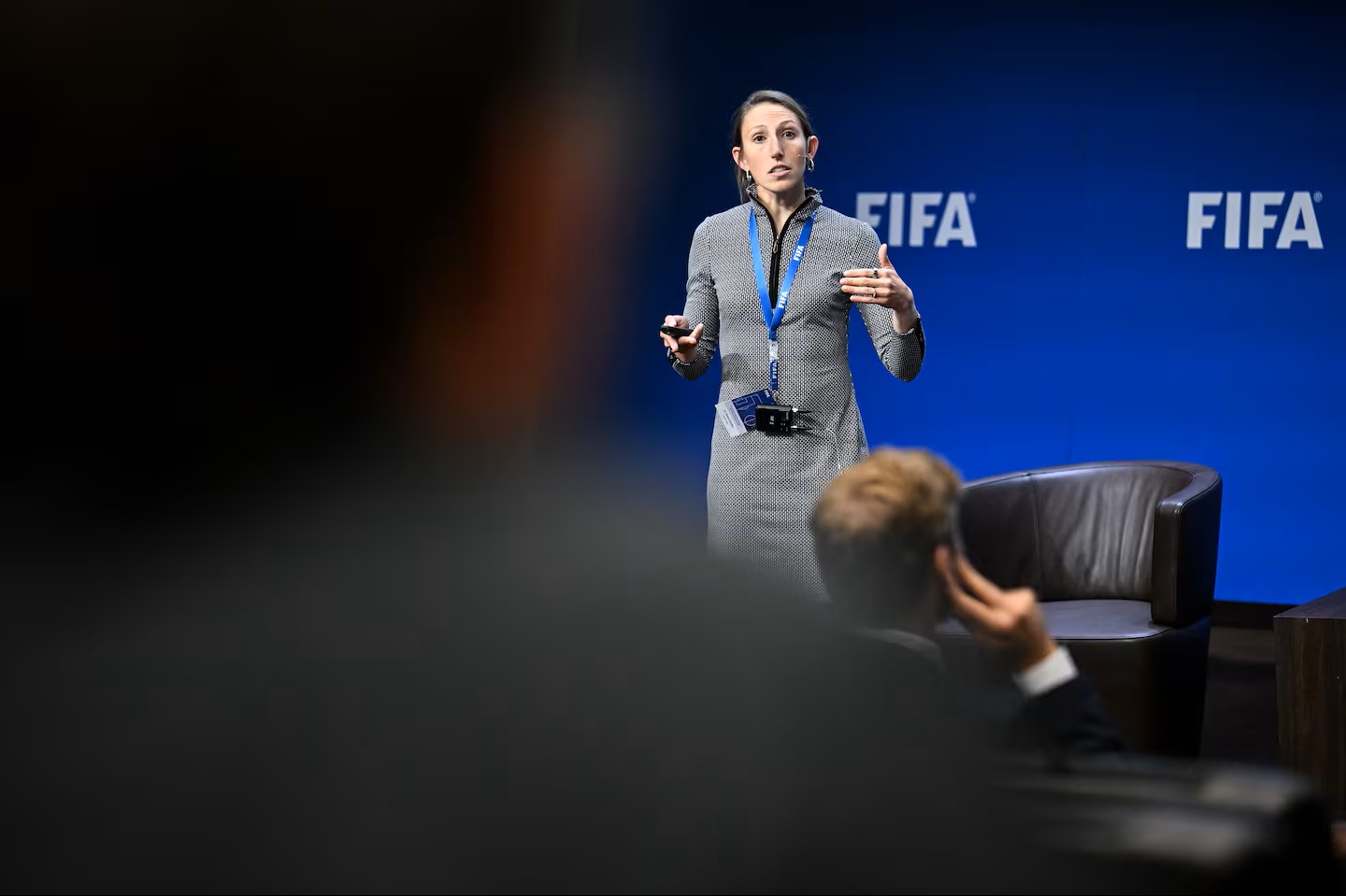
Zendler, the Director of the Sports Science Practice at Rimkus, is shown here speaking at a FIFA innovation conference. (Photo: Institute for Sports Tech Standards)
Robertson also previously served as a performance coach in soccer, rugby and Australian football, and has consulted for MLB, NFL and NBA teams. What he’s found is that many people in roles designed to be athlete-facing coaches or sport scientists have now largely become “applied technologists” spending upwards of 80% of their time managing software and hardware. All of them are inundated with inbound pitches of new tech, and none has the time to do proper validation.
“This was a classic problem that everyone in sport — particularly in the performance area, but also in the business space — would say, ‘We need to have better information about the technology we take on board,’” Robertson said. “But the reality is, it was a nice-to-have, rather than a must-have, and it’s only recently that shifted. The knocks on the doors became so frequent, so loud, that we thought, ‘Well, it’s time to do something about it.’”
The NBA and FIFA have taken leading roles in organizing technology vetting protocols, but those are deliberately bespoke to the needs of their sport and circumstance.
“A strategic labor of love on our part is to get more global standards out there that sports can agree upon that are going to cross-boundaries, cross-sports, cross-geographical regions,” Robertson said. “Once they are there, we can get a level of efficiency in what we’re doing.”
Tech vendors, especially startups operating on limited budgets, can’t afford multiple expensive testing program certifications. Those manufacturers would be glad to have a “paint-by-numbers” approach to validation, she added, because each league or governing body has different rules and associated fees — enough to hinder the focus on innovation.
Getting broader buy-in is a goal for the ISTS, which is working with the IEEE — a standards body Zendler described as having a “well-respected, high-integrity, public process” — on player and object tracking as its first project.
“We have seen this redundancy now happening, and this is not an efficient use of resources or anyone’s time,” Zendler said. “So can we make a way where it’s more of a third-party test institute that the governing body will say, ‘We’ll trust the report from that.’”
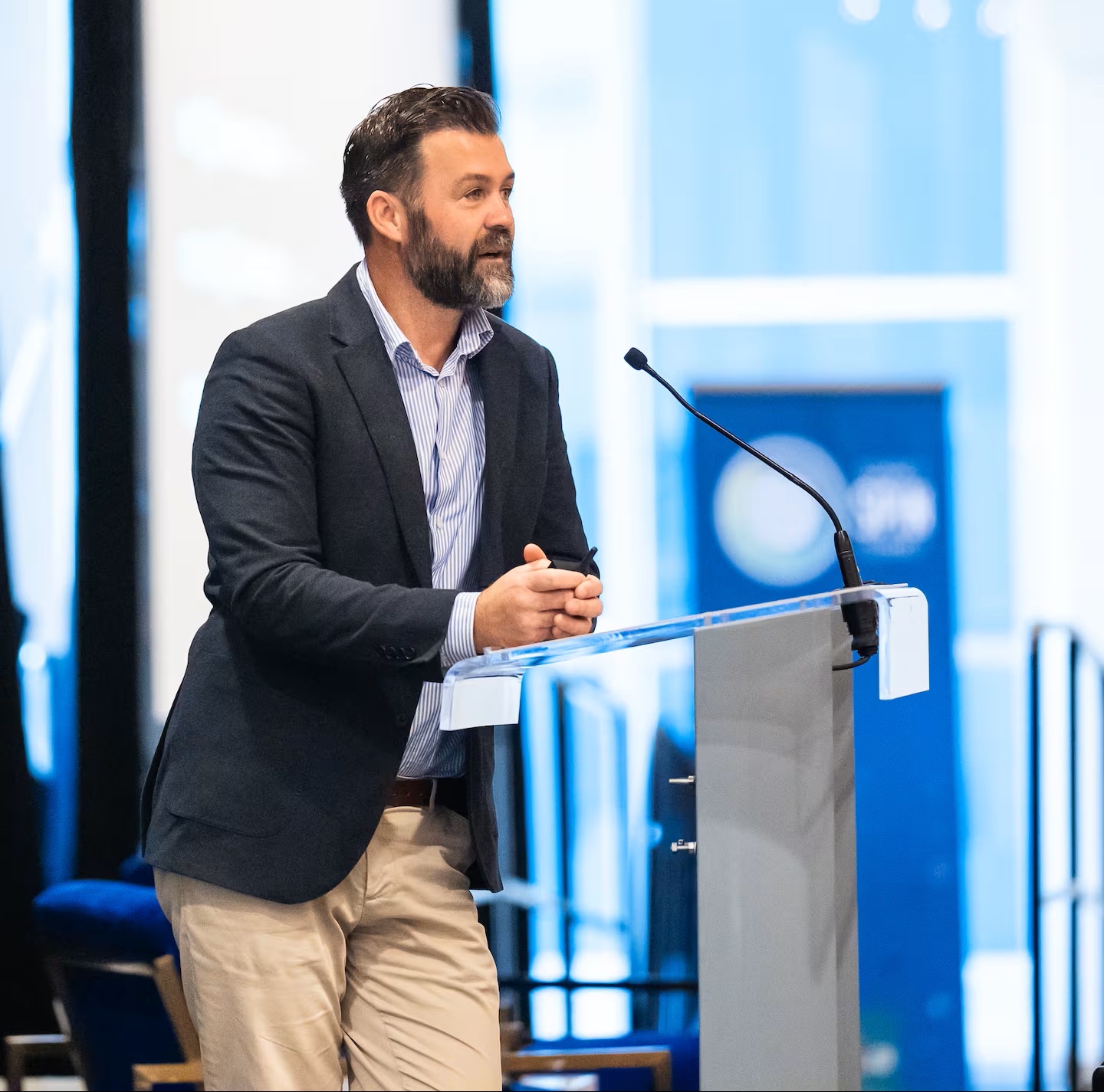
Robertson, who recently left his post at Victoria University, is the director of TCG Advisory and a consultant to pro clubs in the US and Europe. (Photo: Dave Holland/Canadian Sport Institute)
Both co-directors have PhDs and have held roles in academia — Zendler directed Michigan’s Performance Research Laboratory; Robertson led Victoria’s Sports Performance & Business program — but explained that most universities are set up more for innovation and research rather than testing. Higher education labs also tend to move more slowly.
Robertson, who has experience working with an accelerator in Melbourne, realized that young companies aren’t incentivized to seek testing early in the development timeline.
“It wasn’t lost on me that every single founder in that gets zero training on showing the quality of their product,” he said. “It’s all around getting a minimum viable product and attracting investment. That’s to be expected, but somewhere along the line you need to know [whether] your product is any good.”
This article was brought to you by SBJ Tech, a Leaders Group company. As a Leaders Performance Institute member, you are able to enjoy exclusive access to SBJ Tech content in the field of athletic performance.
In the first session of our latest three-part Learning Series, Darren Devaney of Ulster and Daniel Ransom of Manchester United discuss the steps psychologists can take to ensure their smoother – and smarter – integration in a sporting environment.
An article brought to you in partnership with
More than 80 per cent of respondents feel that psychology is ‘very important’ in the enhancement of human performance, yet 43 per cent also feel that psychology is the most ‘underserved’ area of human performance.
The discrepancy chimed with Darren Devaney. “It’s like people know they want it, but they’re not quite sure how to make it happen,” said the Lead Performance Psychologist at Ulster Rugby.
Devaney was co-presenting at the first session of a three-part Leaders Virtual Roundtable Learning Series in partnership with the Chartered Association of Sport & Exercise Science.
The series is entitled ‘How Do we Enhance the Impact of Psychology in Performance Environments?’
His co-presenter Daniel Ransom, the Head of Psychology and Performance Lifestyle at the Manchester United Academy, offered his analysis of the report’s findings.
“What it perhaps highlights is the gap between research and application, as well as the immaturity of psychology as an applied discipline,” he said while also noting the appetite in the sports performance community for psychological services.
When session attendees, many of whom had a background in psychology, were invited to rate their own effectiveness, most answers were grouped in the middle.
“It probably just reflects that it’s not fixed,” said Ransom of the results. “That level of effectiveness will change throughout seasons or cycles, and, I guess we’re hoping to be at the top end but we know at times it’s going to move up and down a little bit.”
Over the course of an hour, the duo discussed the role of the psychologist and the ways they can develop and sustain their work in sporting environments.
The requirements of the psychologist
Together, Devaney and Ransom drew up a list of requisites for a practising psychologist in sport:
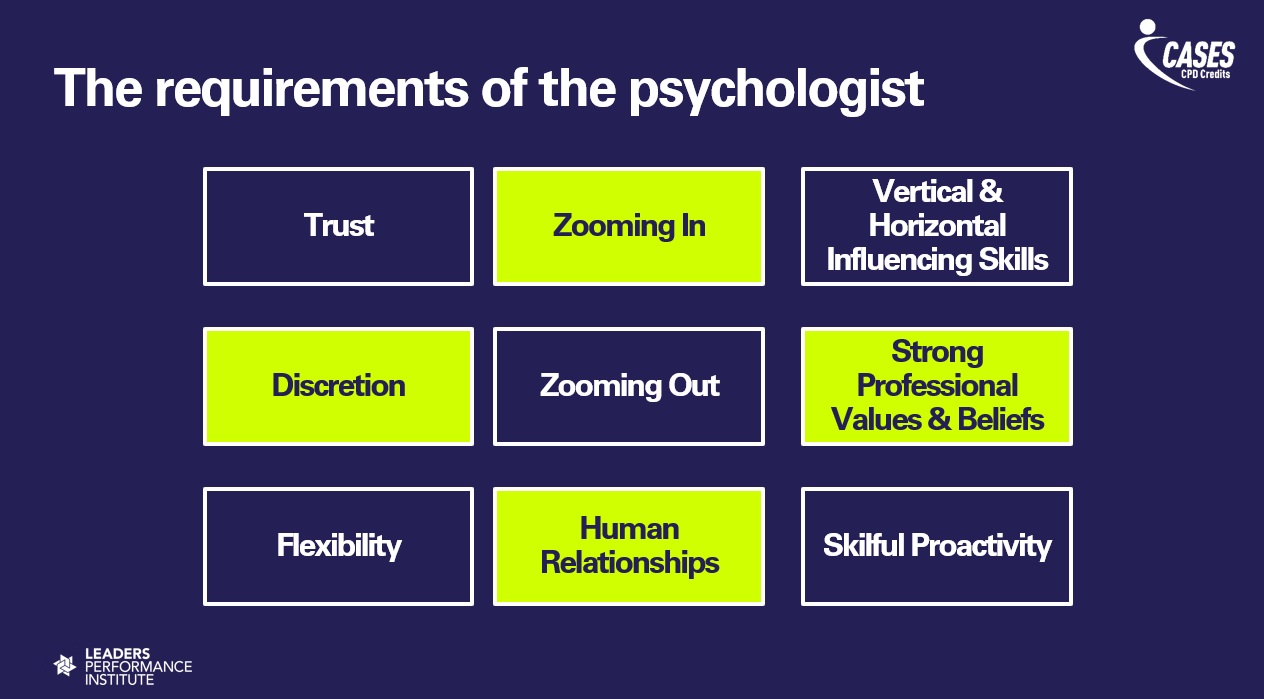
They then homed in on a selection:
Zooming in and out
According to Devaney, the psychologist must “get away from the assumption that we work with the individual athlete only”. Instead, they should ask themselves “is my intervention best targeted at an individual or is this more systemic? And if I’m going to be here for the next five or six years, what’s the most useful way of spending one or two hours on this? Is it working with a head coach? Is it working with all the staff? Is it working with a group of players, or is it the one-to-one with the athlete?”
Vertical and horizontal influencing skills
Psychology is not just the work of the psychologist. “An hour spent with one individual athlete is very well spent,” said Devaney, “but an hour spent with somebody that upskills or shapes them”, such as a coach, brings your work into “exponential territory”. He continued: “it changes how they do their work with 20 or 25 people over the course of the week”.
Ransom added: “If we really want to embed and integrate psychology what we require is other people to take on our ideas and work in ways that are psychologically-informed.”
Skilful proactivity
“We can’t sit still and wait for work to walk in the door,” said Devaney. “I’ve often reflected that this organisation functioned for decades without me in the building, so if I’m not here, this place can keep going. I need to recognise the fact that it might not be every day the main thing that everybody’s thinking about, so how can I do that in a way that doesn’t produce scepticism or kickback?” Nevertheless, “you must be proactive in trying to have an impact.”
Ransom has advice for anyone encountering scepticism. “If people are ready for more in-depth and focused work, then let’s meet them there. If they’re not, and they’re at that sceptical end, how do we try and offer them something which is appropriate to the needs of what they might be open to? If we pitch that wrong and we try and go too hard or move too quickly with those people, I think you can get caught in a potential tug of war where we don’t really make much progress and people hold their position.” With skilful guidance, people can “see the value that other people have, and that can be a way of opening a few windows and doors to them.”
The foundations
Devaney and Ransom set out four foundations:
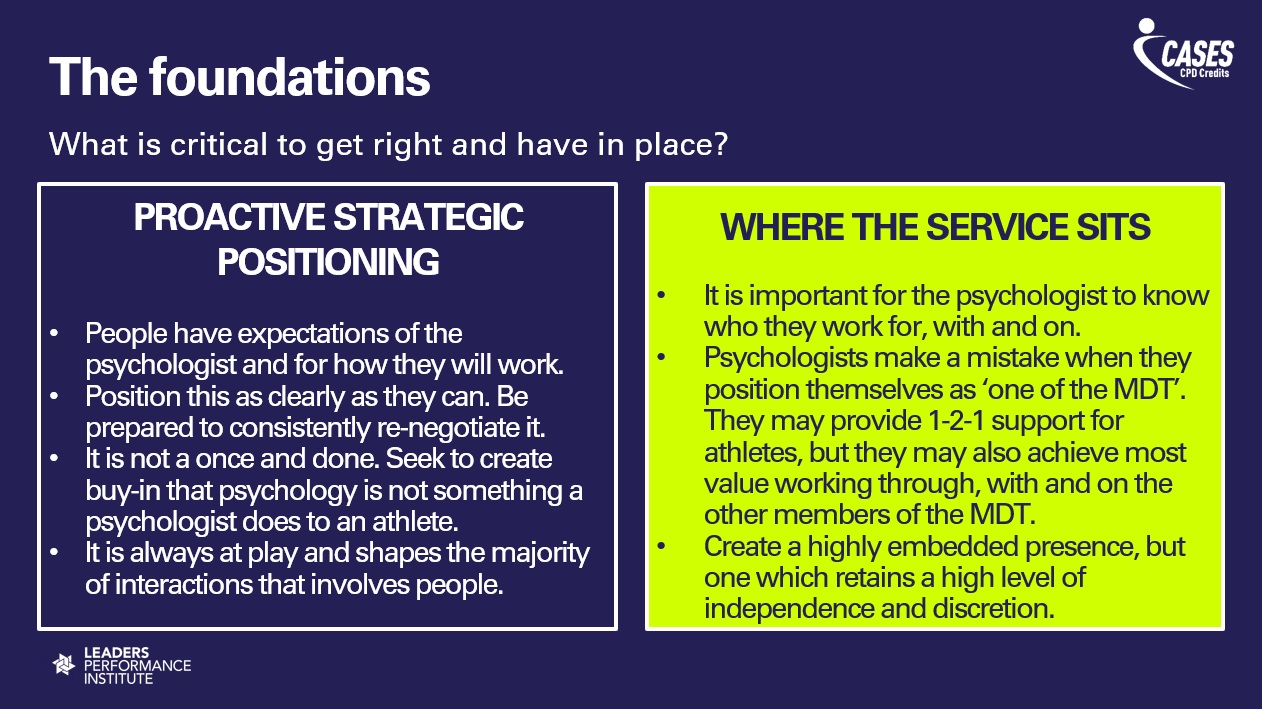
Devaney argued that in professional sport at least, a psychologist’s job can be harder if the head coach is not one of those key stakeholders. “They can really shape what the role can be,” he said. “Like whose priorities do I need to be trying to align with? If I’m running into time demands, and we’re trying to figure out where and when I’m going to do work, who actually has the best steer on that?”
Whether you’re preparing for success today or down the line, the priority needs to be clear. But that’s not always the case. “It sounds pretty straightforward, but you’d be surprised how often those ideas can be misaligned,” said Ransom. “It makes it really difficult for you to work in an integrated, embedded way, with a long-term focus if other people are perhaps expecting immediate impact on individuals when you have a more systemic, broader focus.”
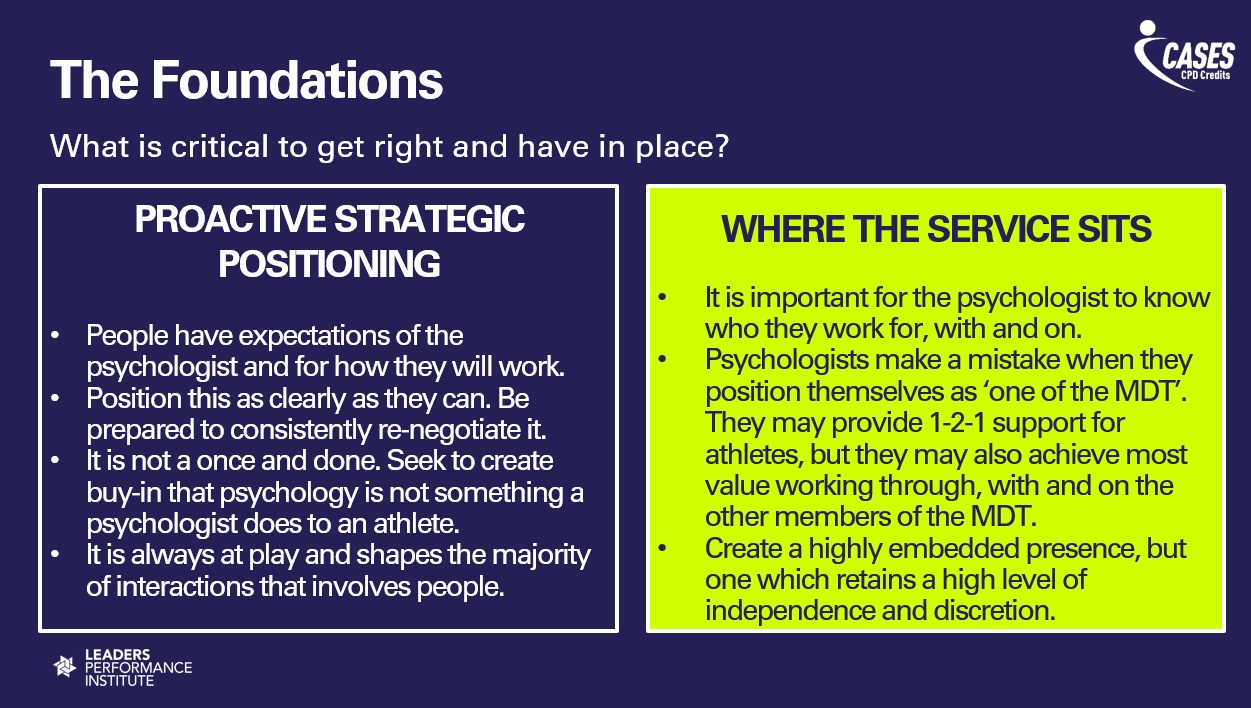
A psychologist’s positioning is not fixed. Ransom argued they must be “prepared to renegotiate the position time and time again”. He has had to “go through a process of having to establish, clarify and communicate boundaries in terms of what my role is.”
“The need to renegotiate is just so consistent,” added Devaney, “and I think there’s a bit of me sometimes that thinks that there’s an arrogance that if I’ve explained it once, everybody will get it and know it all the time and keep it at the forefront of their mind.”
The duo’s point about intentionally stepping away from being part of an MDT, to not be “boxed in”, raised a concern from one attendee about the potential negative impact on the sport psychologists as the conduit into clinical psychology. Ransom and Devaney took the point.
Ransom, who clarified that it was more about not being aligned to a single department of the MDT than not being a member per se. “As practitioners, we have to be flexible,” he said. “So there’d be times where, in my role, I would be positioned as part of an MDT. There’s times where I’d be positioned closer to some of the coaching staff.”
This takes skill, as Devaney said: “If I’m going to sit somewhat outside of the MDT and start to bring suggestions to them about how I can be supportive of their process, I’m going to have to do so very delicately and skilfully to get the impact that I want.”
Keep building
Both men had some advice for the table:
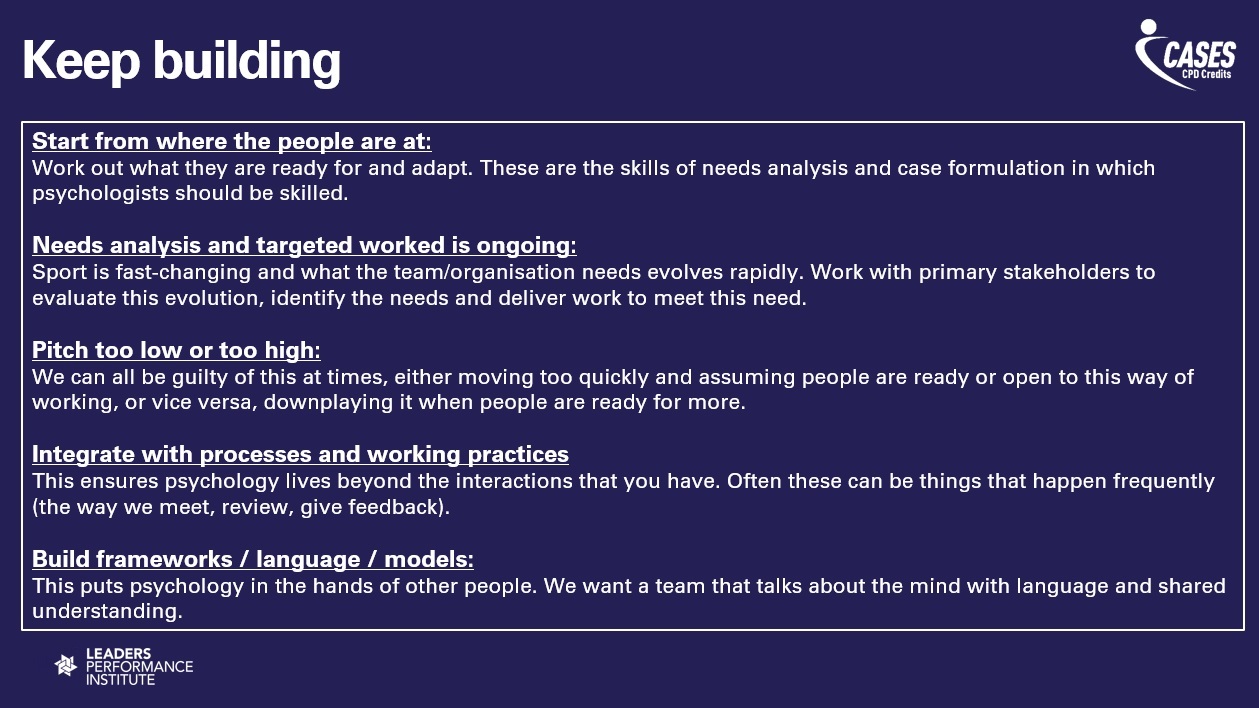
In reflecting, Devaney spoke of a personal experience: “The best question I’ve ever been asked by a head coach that I worked with was ‘what rooms and meetings do you need to be in to be able to be more effective in your job? Tell me, and I’ll make it happen’. That’s such an empowering position.
“He was basically offering an open invite to integrate what psychology is into the different practices of the organisation.”
Devaney also spoke about the importance of maintaining a shared lexicon, particularly in sports with regular athlete and staff turnover.
The finishing touches
Of the finishing touches, Ransom said: “If we think about the foundations through to the building blocks, which were more around the processes, the ways of working, the frameworks, then this bit is more around the actual skills of the practitioner and the key relationships that they have.”
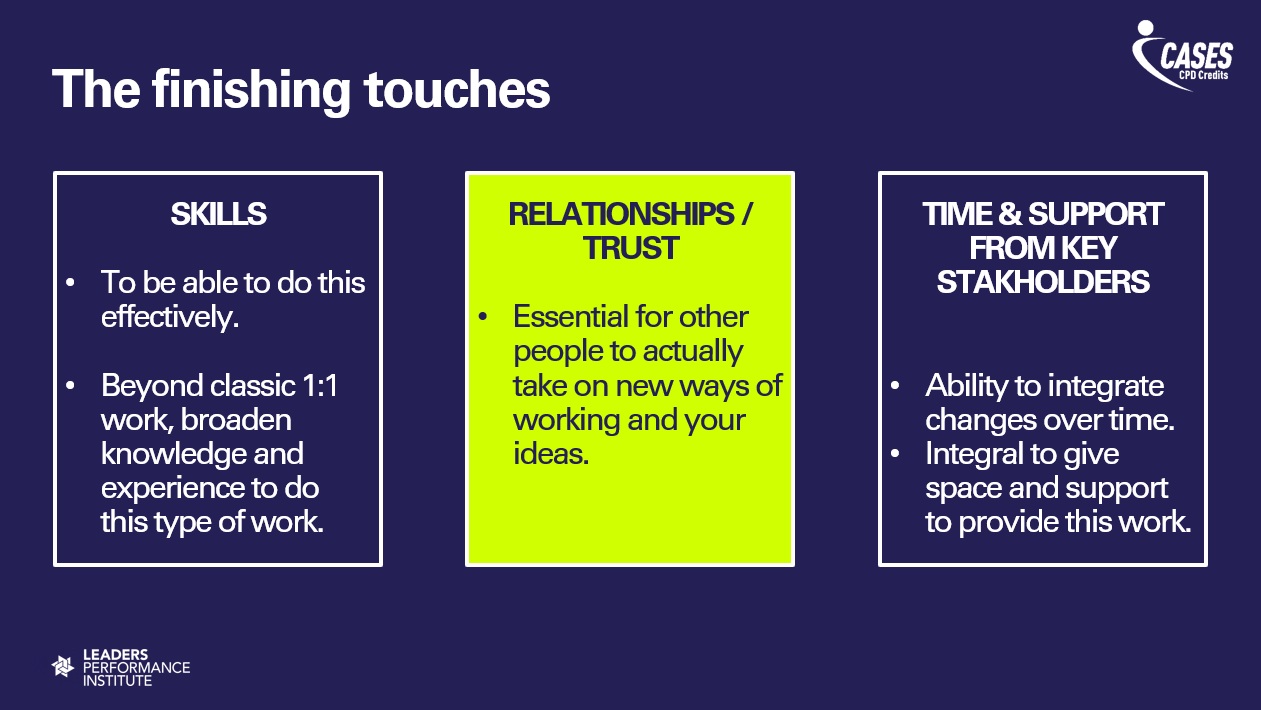
“Here,” Ransom continued, “we’re talking about the importance of having skills beyond the classic ability to do individual one-to-one work, which people might associate with psychologists. So we have the ability to carry out discussions among teams of staff and hold those types of collaborative conversations, which is a skill in and of itself. Do we have the confidence and competence to sit with a team of experts and navigate a conversation in a way, which is encouraging different people to contribute, which is embedding or weaving in some psychology input into that without dominating that conversation?”
Session 2 of ‘How Do We Enhance the Impact of Psychology in Performance Environments?’ is on 2 October. You can sign up to be part of this Learning Series here.
The San Antonio Spurs is the first team to use OpenAI to create team master calendars, flight charters and email templates for outreach to preferred hotels and practice facilities on the road.
Main Photo: San Antonio Spurs
Where most organizational leaders agree, however, is that reconciling this transformative and constantly evolving technology is a core business priority, particularly in investigating ways it can streamline operations. And this emphasis comes from the top down.
“One of [our five biggest company objectives] is master AI to boost efficiency and impact,” X Games CEO Jeremy Bloom recently told Sports Business Journal. “That is a leg on the stool, it’s not a peripheral goal or an afterthought.”
Internal efficiency-focused AI use cases are not always flashy, nor directly revenue generating. They run the gamut of areas such as segmenting fan data, drafting communications and employee onboarding, and are increasingly tapping agentic workflows, a class of artificial intelligence that is more autonomous — meaning minimal or no human intervention — and layered in its decision making than large language models, and can act on behalf of users.
The empirical benefits of AI in these contexts remain theoretical in some cases, but tech leaders center their efforts on increasing productivity and freeing understaffed departments to focus on big picture priorities, rather than mundane daily tasks.
Enamored with the potential impact of AI on the sports industry, Josh Walker, co-founder and CEO of data firm Sports Innovation Lab, earlier this year launched a sports-focused AI education program called AI Advantage. With two of four planned sessions completed, the program has assembled hundreds of industry professionals — split evenly among teams/leagues, brands/agencies and media/technology companies, in Walker’s estimation — to learn more about AI and investigate potential use cases through presentations and product demos.
The biggest trend he has noticed with how sports teams and leagues are adopting AI?
“There is no pattern,” Walker said. “It would make perfect sense for the leagues to centralize the services that they are building for AI and roll it out to the teams. The teams never wait for that. You have some enterprising data science team or some enterprising CTO at the team level — they’re going to try stuff faster than the leagues do.”
Professional basketball is a hotbed of such enterprising teams.
The Cleveland Cavaliers, according to Michael Conley, the team’s executive vice president and chief information officer and president of Rock Entertainment Sports Network, began their generative AI discovery 3½ years ago. This started by consulting tech experts on the potential impact of generative AI and forming a cross-departmental generative AI committee. Eventually, they even transitioned one of their data quality analysts, Ben Levicki, into a full-time AI solutions architect, a first in the sports industry.
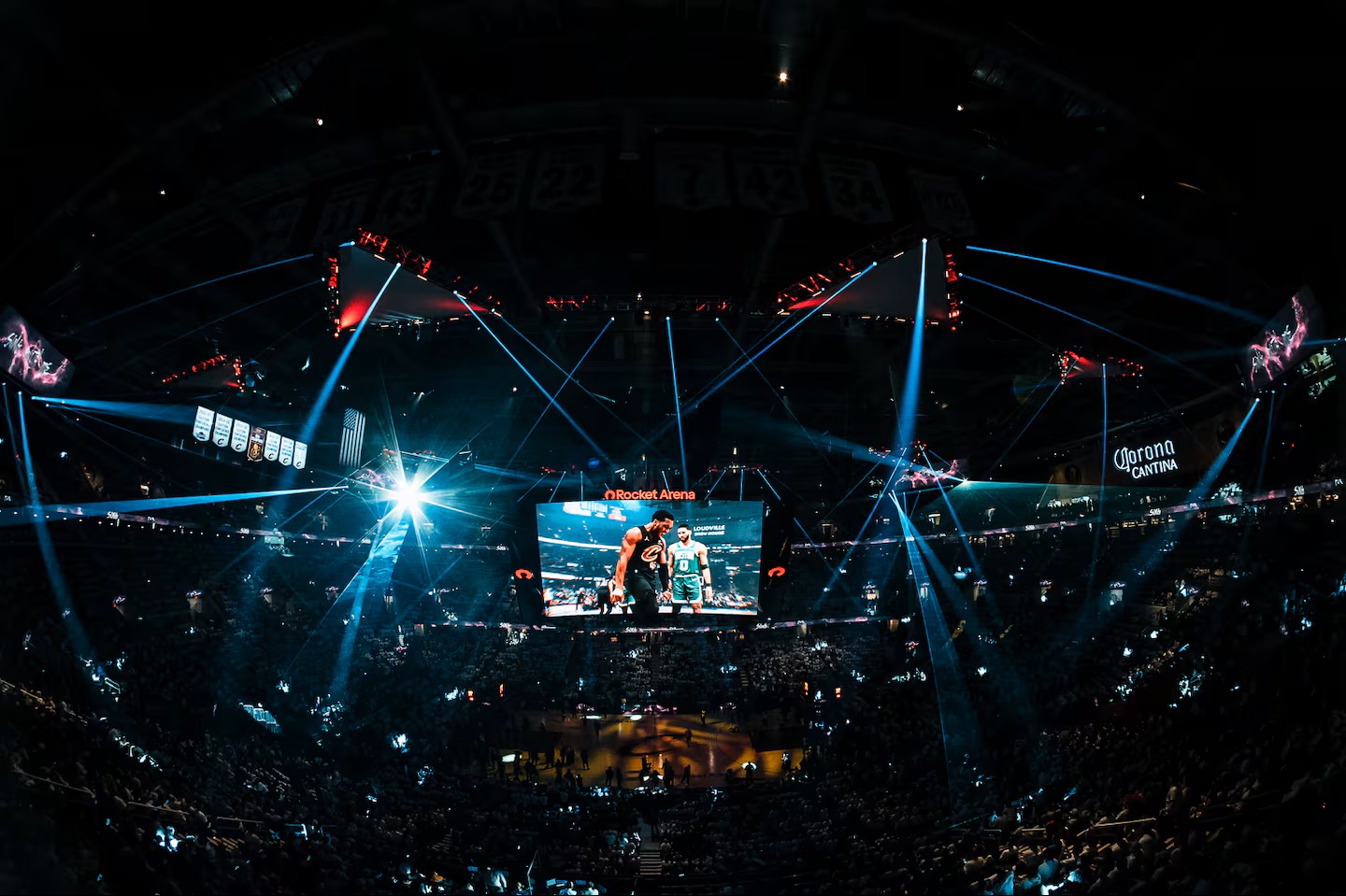
Ticket, food and beverage and retail data are among the areas the Cavaliers have deployed generative AI insights over the past 3 1/2 years. Photo: Cleveland Cavaliers
Since then, the Cavs have found success in initial use cases, such as building a semantic search function for the team’s basketball operations manual and a generative AI insights layer for their real-time ticket, food and beverage and retail data platform. At the direction of their C-suite, they are now focused on automating elements of their external communications, streamlining the processing of internal fan data and personalizing fan interaction.
During the NBA’s first Data Strategy Forum in July, the team presented the working prototype of a custom-built product that leverages a network of AI agents and fan information to distribute individualized emails to subscribers, down to details such as color scheme and emoji usage. After further testing using real fan profiles in September, the Cavs’ plan is for the product to be a part of email workflows by the start of the 2025-26 NBA season.
“Our goal is to be able to increase the amount of engagement that comes off a click action for those emails, to be able to eventually lead to better results down the funnel,” Conley said. “Is the messaging more effective, where we’re seeing greater open rates? Are we seeing greater engagement?”
Elsewhere, the Indiana Fever have seen potential in deploying AI agents (via Salesforce’s Agentforce platform) to comb through and segment internal fan data, which Joey Graziano, Pacers Sports & Entertainment executive vice president of strategy and new business ventures, said will help the team deliver personalized offers, content and experiences to fans and eventually be a resource for partners as well.
This is a massive potential use case in sports, given the multifaceted nature of fan data and ability for AI to scale the capabilities of understaffed data engineering departments.
“We are getting more sophisticated every day,” Graziano said. “And it’s not just the sophistication, it’s the speed and it’s the volume of segments you can create.”
The San Antonio Spurs, as a unique example, are using OpenAI to train models on previous years’ travel calendars (and other custom rules) to ingest the NBA’s overarching schedule and create deliverables such as team-specific master calendars, flight charters and email templates for outreach to preferred hotels and practice facilities on the road.
Human oversight is required, of course, but Charlie Kurian, the team’s director of business strategy and innovation, said tests have shown that first iterations of the deliverables can be produced in about 20 minutes, with the end-to-end, manual process of inputting information into Excel block-by-block distilled from three weeks to, at worst, one. He anticipates a version of the technology will aid the Spurs’ schedule-making as early as this season.
“This came directly from our CEO,” Kurian said. “[The message was], ‘Our people need to be focused on the higher ROI items. How do we use AI to deal with some of these tasks we’re bogged down with?’”
Kurian, at the head of the Spurs’ AI adoption effort, often says the first step of building a company’s “AI muscle” is enabling an AI-empowered workforce.
“We still believe we are very, very early on in the AI revolution. It’s hard to tell who is going to win, and what is going to stick,” Kurian said, comparing the current marketplace of competing AI platforms to the early days of social networking. “But what we can undoubtedly say is this technology will absolutely stick for the foreseeable future. [We’re] making sure we have invested in the most important thing we have — which is our people — so that, agnostic of what tool it comes to, we will still win.”
The team put this focus into action last year by piloting a generative AI learning program using ChatGPT, which has led to 90% of the 150 participants adopting the technology on a week-to-week basis, according to Kurian.
“We’ve crossed a threshold in people broadly using AI tools,” he said. “Now we’re doing discovery across every single department in our organization, understanding workflows, and, in the most positive way, blowing up the workflows to be able to integrate where AI can add value so that the real human beings can focus on the best use of their resources.”
Across its properties, TKO also is undertaking a hands-on approach to AI discovery and education, according to Alon Cohen, executive vice president of innovation. He and Melanie Hildebrandt, TKO and WME Group’s CIO, brought in an advanced prompt engineer for hands-on AI training with “natural early adopters” (e.g., TKO’s innovation and IT teams), and are now looking for other areas the technology can provide business value.
“The next version of almost every business application that we use has a heavy AI component to it,” Cohen said. “So, every team is identifying places where they think they can be successful, and when they go through their next upgrade cycle — or we consolidate to a new tool that’s also a good moment for an upgrade cycle — those tools become available.”
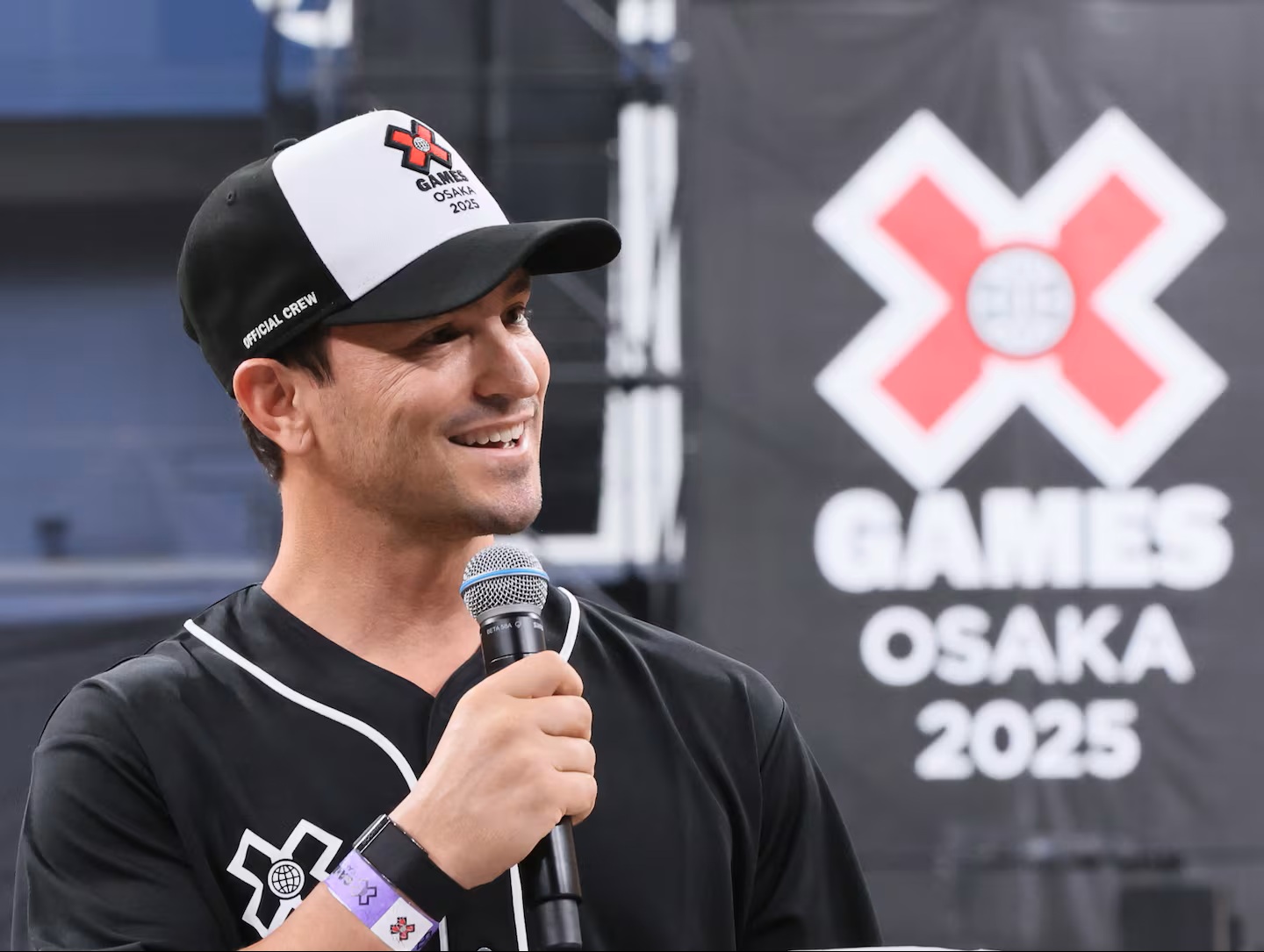
X Games CEO Jeremy Bloom said the property’s employees are encouraged to spend 10% of their working hours experimenting with AI tools that could increase productivity. Photo: AP Images
X Games encourages its staff to dedicate 10% of their working hours to experiment with AI tools that could boost productivity, Bloom said. One particularly effective use case has been in training a model on droves of internal data to be a resource for new hires on everything from finding sales deck templates to signing up for benefits.
“The company that I founded before [joining X Games], we had 600 employees, so we had really big and built-out functions across all these specific areas,” Bloom said, referring to the software startup Integrate. “[At] X Games, we have like 30 full-time employees. Necessity is the mother of invention for us.”
Across virtually all corporate industries, there is palpable and understandable anxiety about the potential for AI to replace certain job functions.
Bloom, for one, noted that the AI startup he recently launched, Owl AI — which offers AI-powered competition judging, data processing and broadcast commentary capabilities, including for X Games — is leveraging AI agents for market research, effectively substituting for an internal team or expensive third-party consulting firm.
However, he views live sports as not just insulated from automation, but potentially a benefactor of it.
“AI is going to disrupt so many jobs and so many industries,” Bloom said. “But I think the tailwind for us, and for any sport, is humans are still going to want to watch humans play football, and not want to watch robots play football. I think that is a huge tailwind for X Games, for the NFL, for Major League Baseball, basketball. I think it’s one of the big reasons we’re seeing so much private equity want to get into sports.”
This article was brought to you by SBJ Tech, a Leaders Group company. As a Leaders Performance Institute member, you are able to enjoy exclusive access to SBJ Tech content in the field of athletic performance.
As Jamie Taylor tells us, the Premier League-sponsored Coaching Expertise Project is challenging assumptions and establishing new standards.
Main Image: Phil Greig, courtesy of the Premier League
Yes, a head coach could be an expert, but that team might also be blessed with a highly expert foundation phase coach or an expert professional development phase coach. Each faces different demands and their work as coaches is inevitably different, but each can be expert.
My colleagues and I have been influenced by the adaptive skill model of Paul Ward and his colleagues. We see coaching expertise as the ability for someone to form intentions in their coaching practice and then flexibly and adaptively work towards those intentions – or change those intentions based on the changing context.
This idea is at the heart of the Coaching Expertise Project, which is an ongoing collaboration between the Premier League and Dublin City University and Insight Foundation Ireland. The project was launched in 2023 as part of the Premier League’s efforts to cement its reputation as world-leading in coach development practice.
Most of our data was collected by Mike Ashford, a postdoctoral researcher at the Insight SFI Research Centre for Data Analytics, while at the Premier League, Scott McNeill, the Head of Coach Development, and Danny Newcombe, the Senior Coach Development Manager, have driven the work from their side.
Scott and Danny’s roles have been to ensure the Coaching Expertise Project is anchored in the real demands of coaching practice and closely aligned to both academy and first team environments. They have worked with clubs to identify expert coaches across phases and to shape the project so that it reflects the realities of their day-to-day work. This is important for them because their ambition is to impact the full coaching pathway, supporting ongoing development not only in academies but also in first team settings. More broadly, their main intention is to contribute to the wider football system by enhancing the skill and expertise of both coaches and coach developers. The Premier League sees this as part of a bigger picture as they work alongside their professional game partners.

Photo: Phil Greig, courtesy of the Premier League
At the outset, we identified six coaches per phase across the Premier League, each working at a different development phase in their club’s academy. These coaches were selected from amongst their peers – the only effective means by which we can say one coach is better than another – and invited to undertake an extensive research journey.
Through this process we seek to better identify and understand the coaching demands at different levels. If we can understand those demands then we can be better at identifying expert coaches and helping coaches to reach an expert level.
The coaches involved in the project love it too. They’re constantly trying to find opportunities to learn and develop and it has supported their efforts to step into deep, reflective practice.
And so in shifting that focus from mere competence to true expertise, the Coaching Expertise Project has challenged long-held assumptions and is establishing new industry standards.
The issue with traditional coach development plans
Too often in coach development practice there has been a tendency to focus on coaching behaviour. That’s antithetical to what expertise is because, by definition, expertise is about flexibility, decision-making, and changes to practice that are, frankly, not very observable.
The risk in focusing on behaviour and attempting to change coach behaviour is that we end up reproducing what’s already there.
If there is too much focus on behaviours there is also too much focus on the coach and not their environment. This creates coach development plans divorced from demands. It is important to ask: is a coach development plan based on the demands of practice or on a series of generic capacities that cannot be tracked?
Our project is focused on the interaction between the coach and their context because we cannot identify expertise unless we understand the interaction between a coach and the demands of their role. We’ve identified a series of coaching demands – six or seven per phase – then mapped out the cues and strategies that expert coaches use to navigate those demands. It’s not a list of qualities that says ‘every good coach does this’. The demands are consistent but the coaches are different, and they navigate those demands in reasonably unique ways.
Photo: Phil Greig, courtesy of the Premier League
What ‘expert’ looks like
The Coaching Expertise Project has used this fresh understanding of the demands and coaching context to build a profiling tool that we want to embed in coach development at the Premier League.
It will inform a needs analysis for each coach because we can better understand good practice and the development status of the coach in question.
Capacities are still important. Entry level coaches will still need to show that they’re good enough to enter a role, but the Premier League’s ambitions extend beyond that starting point.
We’re going to be able to provide recommendations for coaches on the different demands of their roles and how they might work to develop themselves against these demands. Ultimately, we hope it’s going to become embedded into coach development practices across Premier League academies and in the daily life of an academy coach.
People have also asked me if we’ve simplified anything for coaches. The answer is no. You’d never say ‘how do you simplify this for a sports scientist or psychologist?’ because we have higher expectations of those professions. Coaches are some of the most expert practitioners in any field so it’s less important that it’s simplified and more that it’s valid and useful for coaches, that it can be integrated into their workflows.

Photo: Phil Greig, courtesy of the Premier League
Evolution not revolution
This remains a fruitful area for research. There are fewer than ten studies that have used expertise as a lens to understand coaching practice – and two of those studies have been mine.
The Premier League remains committed to the ongoing development of coaches across both academy and first team settings. The central intention of the project is to contribute to the wider football system by enhancing the skill and expertise of coaches and coach developers alike. By doing so, we aim to strengthen the overall quality of coaching and create development environments where the very best practitioners can continue to grow and positively impact the game.
We hope that this will eventually have an impact in the wider sporting world, but we are promoting an evolution rather than revolution, and if we can recognise the very best coaches and we’re better able to develop coaches towards expertise, it’ll see those coaches rewarded for good practice and then ultimately every player, when they walk into a club, is on the receiving end of high quality coaching practice.
Dr Jamie Taylor
Jamie is an Assistant Professor in the School of Health and Human Performance at Dublin City University, with a focus on coaching, coach development and coaching research. As a researcher, he supports practitioners on DCU’s MSc and professional doctorate programmes and collaborates with high-performance sports organisations including the Premier League, GAA, IRFU, and Premiership Rugby. As a coach developer, he has worked across a range of high-performance environments. Alongside his academic and development work, Jamie coaches rugby union at Leicester Tigers.
If you would like to speak to Jamie Taylor, Scott McNeill or Danny Newcombe about their work, please contact a member of the Leaders Performance Institute team.
In this recent edition of SBJ Tech’s Athlete’s Voice, former British athlete Andrew Steele discusses his transition from track & field and how a chance meeting with a genetic scientist transformed his career trajectory.
Main Photo: Getty Images
You can’t have a discussion about sports technology today without including athletes in that conversation. Their partnerships, investments and endorsements help fuel the space – they have emerged as major stakeholders in the sports tech ecosystem. The Athlete’s Voice series highlights the athletes leading the way and the projects and products they’re putting their influence behind.
* * * * *
Steele, 41, later began a career in genetics and how that science affects fitness, nutrition and performance. He led product at DNAfit and then Prenetics (which had acquired DNAfit) before starting his own digital health firm, Stride, in 2023, which this summer made strong inroads in North America through a partnership with Unity Fitness Canada. It provides multiomic testing: wide-ranging diagnostics on genomics, the microbiome, protein profile and more.
On his vision for Stride…
Previously, we’d had a lot of products which are point solutions: Here’s a DNA test for this, here’s a blood test for this. With Stride, I’m trying to bring it all together. So we’ve got a range of multiomic lab testing. We do a DNA test, a microbiome test, a blood draw, a biological age test, and an oral health test will be in the future too.
We knit all that together to see a holistic picture of your internal biology in a way which is pleasant to see and understandable — not a bunch of PDFs to download from the lab, but actually a really engaging digital dashboard. Your DNA doesn’t change, but you test everything else every six months and see how that’s tracking. And then we make a tailored supplement based off those results for you.
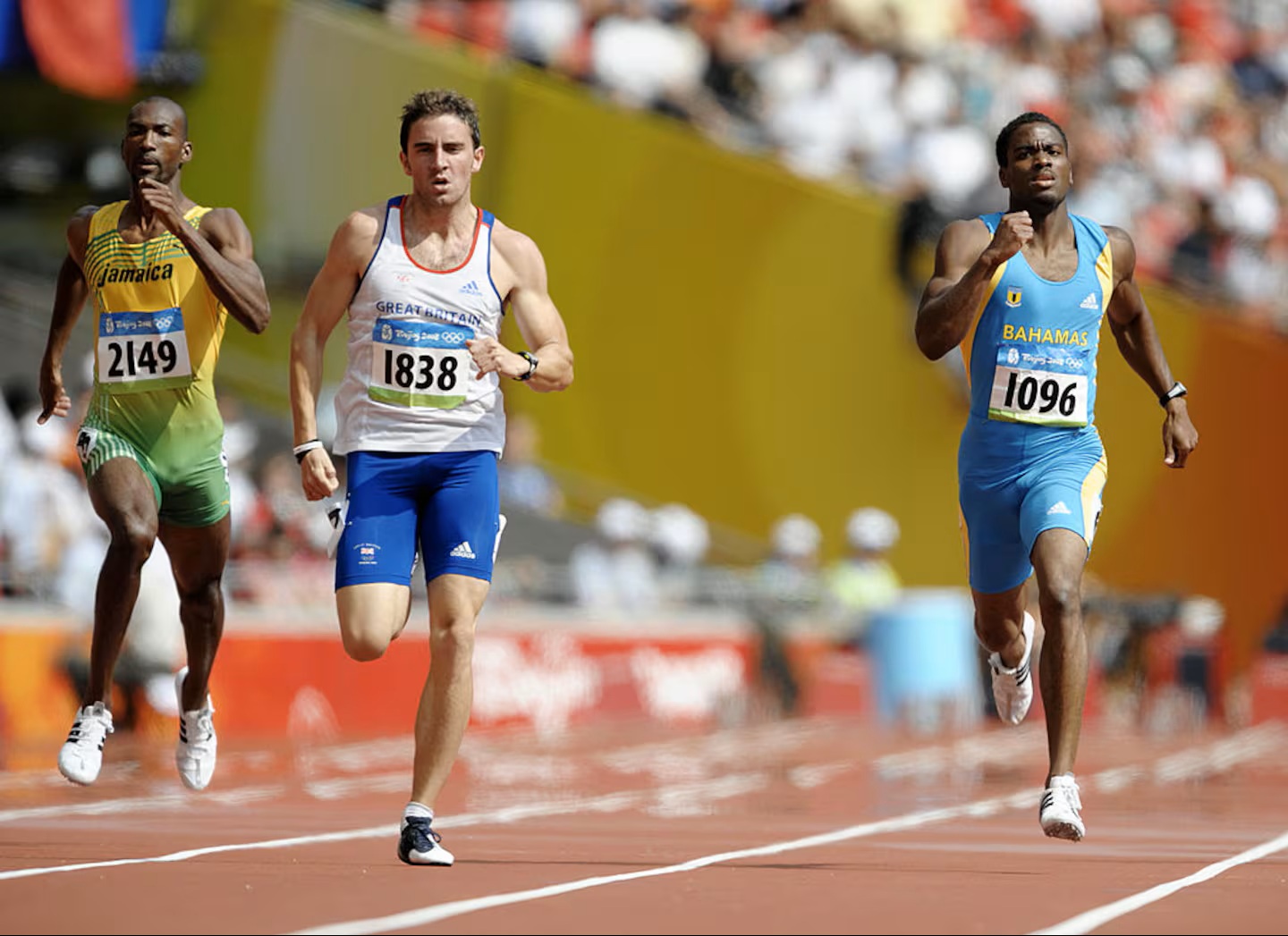
In 2008, Steele competed in the Olympic Games held in Beijing in the 4 × 400 m relay. AFP via Getty Images
On the cold outreach that changed his life…
I’m actually glad I didn’t get [my medal] at the time because it forced me to be very open to opportunities about what came next in my life.
There was one email that came into my inbox one day from a guy who was working with a genetic scientist and looking to commercialize this test and looking for research subjects to help them understand how genetics affected exercise response. And if my [running] career been going better, I would have just forwarded it onto my agent and said, ‘Hey, see if there’s some deals to be done here.’ I was, at this juncture in my life, when I was 27, I had zero higher education. I had zero work experience, and I certainly had not even zero money. I had minus money.
So I engaged proactively on this, and thank God I did because, long story short, [I joined] a health tech business called DNAfit in 2013. That business went well, I learned a bunch, and I became a co-founder there. Five years later, we sold the business for $10 million as bootstrap founders. Then I went into the next thing [Prenetics] as Chief Product Officer, eventually being part of the leadership team that led to a billion dollar NASDAQ IPO. So it changed the path of my life, not winning that medal — but probably for the better. And, along the way, they awarded me the medal anyway.
On his current business life…
I still sit pretty close to sport. I founded a business called Stride, which is in the similar space of diagnostics and preventative health. But I also have one other thing, which is a big passion of mine. Sport First is a venture studio, which helps people that come from a sports background navigate the transition into becoming a founder and entrepreneur.
On his science and tech interest as an athlete…
If you’d asked my teammates, I was probably always known as the guy that was [following] the latest nutrition science or supplements. It was always a passion of mine — and tech. I was always super interested in startups.
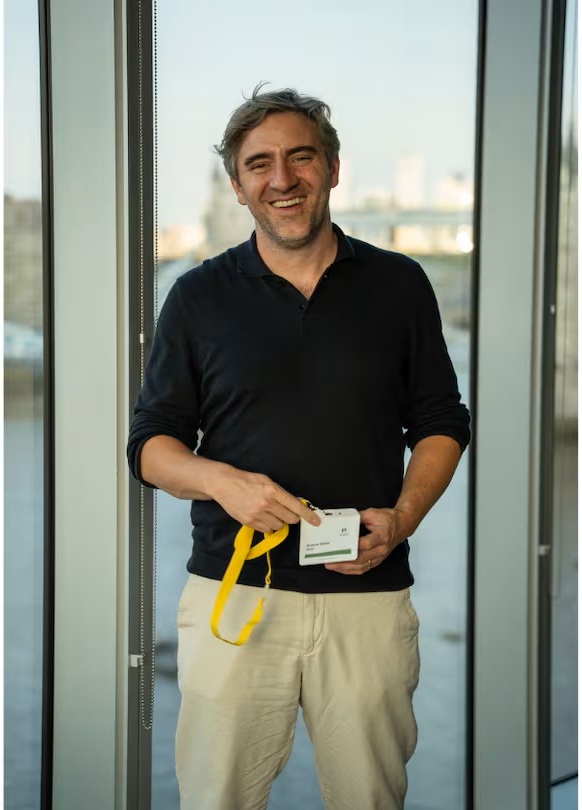
Steele founded personal genetics company DNAfit before going on to become part of the Prenetics group. Now, he’s building Stride for personalized supplements tailored to an individual’s unique genetic makeup and personal health goals. Courtesy of Andrew Steele
On what he learned about his genetics…
DNA is just one of the things in the picture, right? There’s a genetic variable called ACTN3, and there’s a version of this gene which is basically the C version of this gene. So with every gene, you have two copies of it — you have one that you got from your mother and another that you got from your father. And then basically there’s a version of this gene that is often colloquially called the Olympic gene, or the sprint gene, and it’s basically extraordinarily over-represented in elite-level power.
Everyone who’s generally an Olympic level power athlete has either one copy or two copies of the C variant of this gene. This is me completely oversimplifying the science, but that’s basically the lay of the land. And I found out, fascinatingly enough, I didn’t have even one copy of this. I was an absolute outlier from an Olympic-level sprint athlete who just didn’t have this gene, which was considered almost table stakes to be a sprint athlete.
This article was brought to you by SBJ Tech, a Leaders Group company. As a Leaders Performance Institute member, you are able to enjoy exclusive access to SBJ Tech content in the field of athletic performance.
New Zealand’s Ella Wyllie is leaving no stone unturned as she continues her return from injury – tech included – but, as she explains, it has to be matched by effort.
Main Photo: Getty Images
You can’t have a discussion about sports technology today without including athletes in that conversation. Their partnerships, investments and endorsements help fuel the space – they have emerged as major stakeholders in the sports tech ecosystem. The Athlete’s Voice series highlights the athletes leading the way and the projects and products they’re putting their influence behind.
* * * * *
New Zealand cyclist Ella Wyllie competed in her second Tour de France Femmes, which this year expanded to nine stages. After turning pro in 2023, she first participated in that summer’s Tour de France and finished second in the youth classification and later took eighth overall in Australia’s Tour Down Under. Wyllie, who is also studying civil engineering at the University of Auckland, missed last year’s Tour de France with injury but returned this year to finish 80th and pick up two points in the general classification as a member of Liv AlUla Jayco.
We caught up with her ahead of the race.
On preparing for the Tour de France Femmes…
I’m so excited. I did the Tour two years ago, and it was my first big tour. And last year I missed out just because of injury and everything, so it’s really nice to be in a position this year where I’m happy with my form coming into it.
The Tour is getting longer, which is exciting, and, yeah, definitely the last couple stages, I was lucky enough to go on a recon with the team. We’ve checked them out, and they are looking pretty hard so I’ve been doing some training to replicate that. And there’s a hilltop finish, so I’ve been doing a lot of climbing.
View this post on Instagram
On her training plans…
I have a team coach, Marco [Pinotti], so he’s been really helpful because he just plans the training for me, and I discuss how I think things went or maybe my own feelings about things and where I think I’m struggling a bit more. He just looks at all that and the course demands, and we just plan intervals, VO2 efforts, all the fun things, and mix it in with a bit of endurance riding to get a good base. But yeah, it’s really the spicy VO2 efforts that get the race kick in the legs and hopefully will put me in good form.
On the tech she uses…
I have a power meter on my bike, and also heart rate is another big thing in terms of just seeing how you respond on the fatigue and all those kind of metrics. Lactate testing can also be helpful in certain periods of training and everything. Cycling is just getting more and more technically advanced in all those metrics, but also, at the end of the day, you’re not looking at your power meter when someone’s attacking. You might understand, oh yeah, it’s hard, but I’m not going to say to my competitor, ‘Oh sorry, we’re 100 watts over what I should be doing for three minutes. Sorry, I’m just going to wait.’
At the end of the day, that’s just all to help the training, really, because in the race, it’s actually just all on perceived effort. And you just have to go hard when you need to go hard. Especially on long climbs and breakaway efforts, you’re probably more in tune with, Okay, I’m going to try and stick around this watt range because you know exactly how you can handle fatigue. It’s always a useful tool, but you also have to remember that at the end of the day, it’s a race.
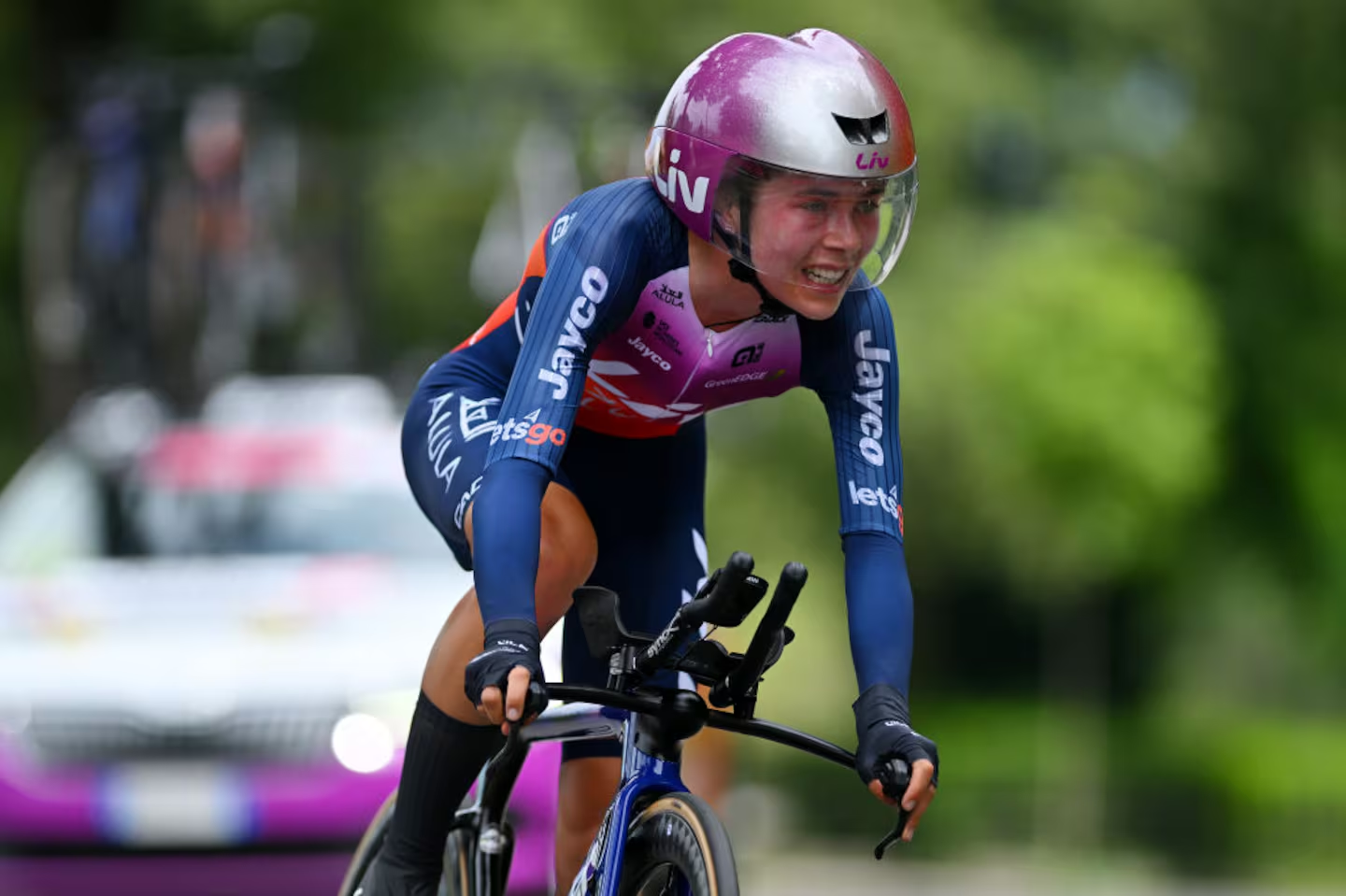
Photo: Getty Images
On what she applies from her engineering studies…
I’m always messaging my coach with, ‘Oh, look, I saw this.’ Yeah, I definitely appreciate all of that stuff. I’m very analytically minded, so if I can notice patterns or see improvements through certain things — I think sometimes it’s not so obvious — but when you do look at all the data, you can pick up the small wins. And to me, that’s motivating too. I’m also known to like Strava.
On evaluating brand deals and supporting her journey in sport…
I’m in probably a bit more of a unique position coming from New Zealand where we didn’t have so much support from our governing body, Cycling New Zealand. They are really great in some areas, and obviously we have the chance to be racing in the world championships, but we don’t have the money, necessarily, to fully fund it. So when I go to a world championships, I’m paying the majority of the fees to go, and it’s expensive because I have to pay the flights, you’ve got to pay towards staff support and accommodation.
So, yeah, I’m definitely reaching out to brands and people that are wanting to invest in my journey and everything. But it has to be the right partnership. I think it has to be mutually beneficial and also things that make sense. I’m not going to go and promote something that’s completely outside of my realm being a professional cyclist.
This article was brought to you by SBJ Tech, a Leaders Group company. As a Leaders Performance Institute member, you are able to enjoy exclusive access to SBJ Tech content in the field of athletic performance.