Performance Coach Ronan Conway believes that coaches can bring a fresh dimension to team gatherings and help teams tap into their inherent power by adding some facilitation principles and techniques to their skillset.
In recent years I worked with a coach of a football team. He’d regularly vent to me about players not speaking up in meetings, and how the group lacked leaders and energy. So I decided to sit at the back of some player meetings to observe the dynamic.
A clear pattern emerged. Standing at the top of the room, the coach would send waves of golden information and inspiration toward the players in the shape of tactics, opponent analysis, and game plans. His style was to direct, to instruct, and to hand players the answers – because that’s how he was coached, that’s what he excelled at; plus time was of the essence. The players’ role was simple: to listen and absorb.
My feedback was as follows:
“The coach needed to maintain his directive style as a solid foundation, and layer in skills to stimulate group discussion”
My suggestion was to maintain his directive style as a solid foundation, and layer in skills to stimulate group discussion – not to replace his approach, but to complement it.
In the following weeks after delivering his game plan, he practised popping the ball into the players’ court; inviting their thoughts and insight. Within weeks he facilitated a post-game review, opponent analysis, and culture session with the squad. To different degrees, the players played a key part in both sessions. These small shifts had profound results:
To get to this point, it required a big shift in attitude towards his group and his role. It called for him to swap his teacher cap for his facilitator cap.
“The change called for the coach to swap his teacher cap for his facilitator cap.”
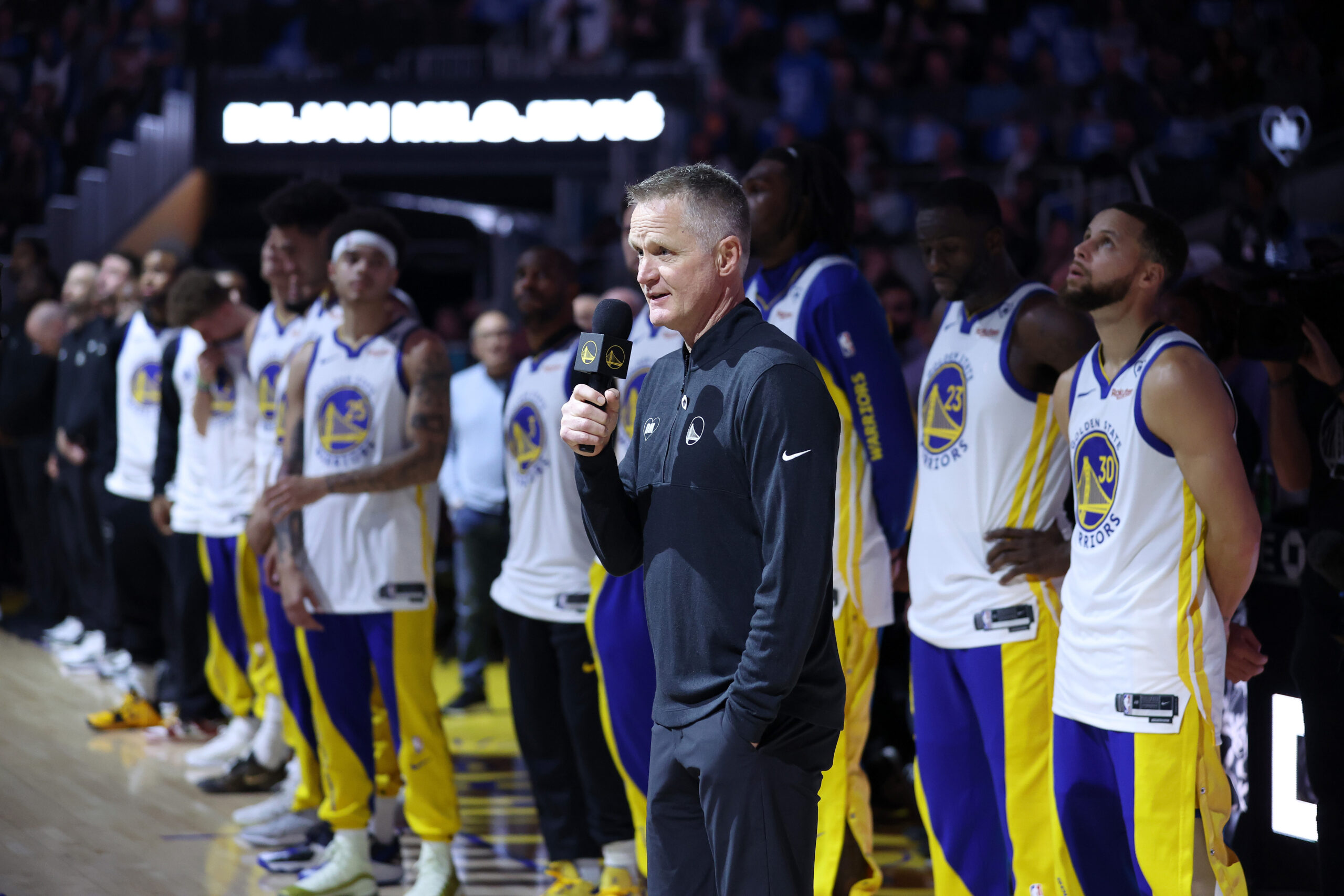
Photo: Ezra Shaw/Getty Images
Before facilitating any meeting, it helps to adopt a group-centred lens. To have a strong belief in the group’s inherent wisdom. When you look at your squad in front of you, you see an ocean of insight, inspiration and breakthroughs. You see teachers rather than students. You see answers in the room.
The transition from a teacher to a facilitator mindset can be tricky. Most coaches are experts in their field, and at times it can suit to simply tell players what they need to know. But as a facilitator it’s not about telling, rather it’s about being curious. It’s about fostering the right conditions for the group to unearth their own answers.
“The transition from teaching to facilitating is about fostering the right conditions for the group to unearth their own answers.”
For some this may require a loosening of the reins, but it doesn’t mean letting go of them. Your direction and leadership is still central, but you’re inviting your squad to step up with you from time to time. It’s important to say that certain players and squads certainly won’t have all the answers. In this case, at least they get to practise critical thinking and to put their own fingerprints on a discussion.
Steve Kerr, the Head Coach of the Golden State Warriors NBA-winning team, is a proponent of player-driven meetings. For Kerr, it’s not about “control”, rather “guiding” or “nudging players in the right direction”. That ‘nudging and guiding’ is the essence of facilitation.

Stimulating any form of response from a group is about moving energy. Moving energy can look like a smile, a nod, a raised hand. Maybe a word. Or a sentence. In time perhaps a rich, flowing discussion. We call this process, ‘getting the water flowing’.
Here are some facilitation tips to get your meetings flowing:
Show of hands: When faced with 30 blank faces, and the energy feels stuck, you can get the water trickling with a show of hands. ‘Hands up if you know’; ‘if you agree’; ‘who relates’; ‘if you’ve experienced this’. Each hand raised or not is a micro-investment in the meeting.
Open-ended questions: Clear open-ended questions are the keys for unlocking the treasure. They typically begin with ‘how’, ‘why’, or ‘what’, and generally elicit deeper insights than closed questions which give yes/no answers. The quality of the question will determine the quality of the response.
Intentional language: ‘The answers are in the room’: use language that reflects this mindset. You are not wondering if they have an answer, you know they do. Instead of ‘does anyone have an answer?’, try ‘who wants to go first/next?’.
Non-verbal communication: Facilitation isn’t just verbal. A nod or some steady eye contact can subtlety signal, ‘I want to hear from you’. You can lightly scan the room, naturally clocking different individuals throughout the meeting. At the very least, these ‘I see you’ moments will keep people checked-in and engaged.
Pair up: Speaking in front of an entire group is a big interpersonal risk to take. Pairing up to speak is a more manageable one. It gets all voices flowing; it builds safety; it serves as a stepping stone to a wider group conversation.
If your questions are met with silence, don’t sweat.
That liminal space between question and answer can be an intense time. When I started out facilitating in schools, most of my questions would hang in the air for what felt like minutes. Time sped up, as did my heart rate. I’d hold my breath. My brow got sweaty. ‘Someone. Please. Say. Something,’ my inner world yelled. The group shuffled awkwardly longing for the same. Until, finally, I’d move things along with a joke, or by answering my own question. Phew.
After enough moments like this, my relationship with silence changed. I found these moments to be a necessary and natural punctuation point; a chance for the room to slow down and to breathe. In the moments when I filled the silence, I wasn’t saving the group from the discomfort, I was in fact saving myself from my own discomfort. Rather than seeing silence as a void to be filled or feared, I started seeing it as a space for gold to be found. Granted not all silences lead to answers, but at least give the group time to gather their thoughts and muster up some courage.
‘Sitting in the silence’ is a useful practice in these moments. Meaning, allowing silence space – trusting it – and remaining as relaxed as possible.

“The more I trust myself to sit in the silence, the more the group trusts themselves to speak up.”
Here are two nuggets which help the process of sitting in the silence:
1. Trust the silence
When a group isn’t responding, a myriad of things can be happening for them. Quite often, they’re just not used to being asked. The silence is almost like a test to gauge ‘is this a token question or a genuine ask?’ In filling the silence, a lack of belief in oneself and the group is communicated. Being willing to ‘sit in the silence’, we signal a strong confidence in the group. You’re saying, ‘I know you know and I’m willing to wait’. It amazes me: the more I trust myself to ‘sit in the silence’, the more the group trusts themselves to speak up.
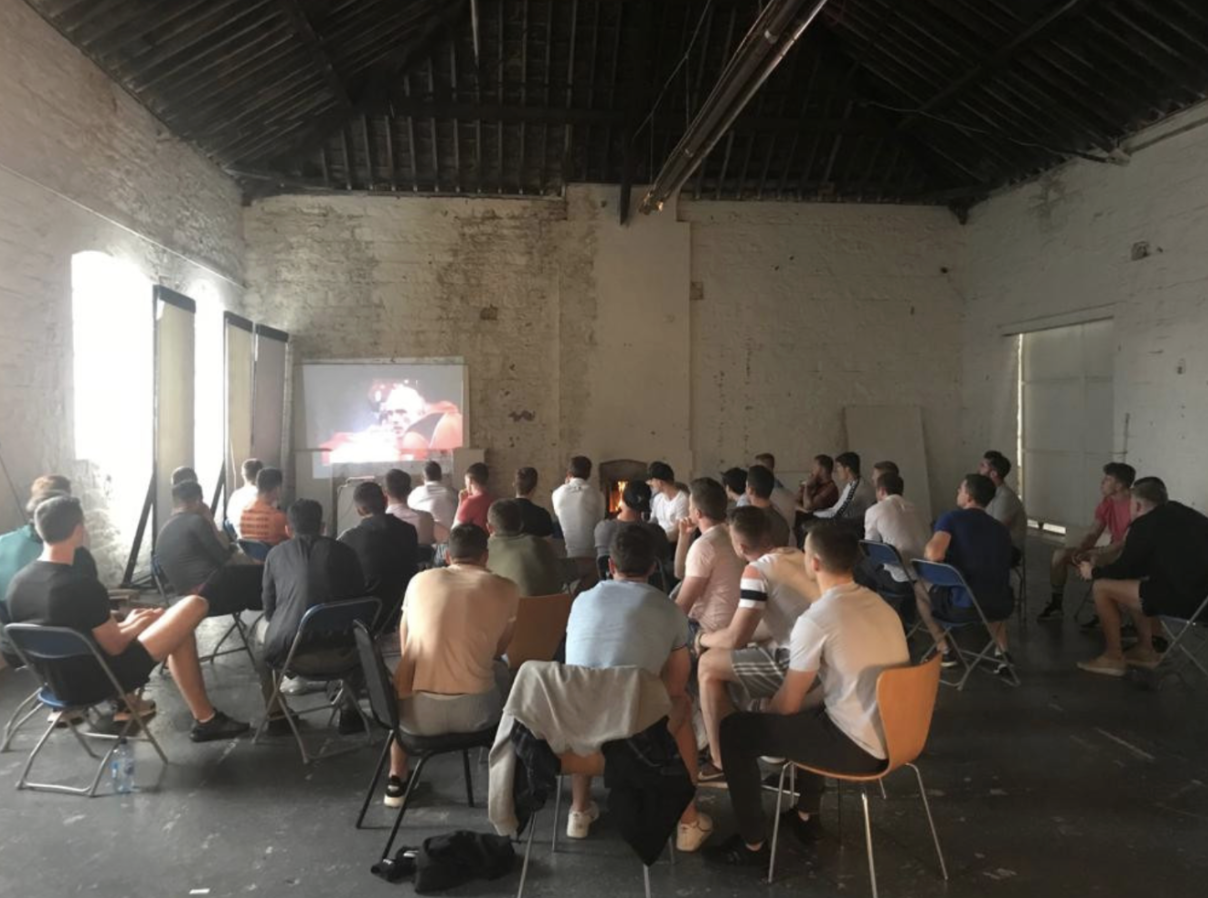
A connection-building workshop facilitated by Ronan Conway.
“The group needs to feel like you can hold yourself before they feel that you can hold them.”
2. Stay grounded
Sitting in the silence isn’t just about waiting it out, it’s about being as relaxed as you can. When we are on edge, stressed, or overly desperate for answers, groups are less willing to engage. The group needs to feel like you can hold yourself (stay calm, regulated, at ease) before they feel that you can hold them.
So before team meetings, or indeed when a wall of silence rises up, I’ll do the following to stay rooted and grounded:
Like a skill, facilitation takes time and deliberate practice. It may take time for everyone to adjust to the new rules of engagement, but once it starts flowing, the impacts can be transformative.
If you try this, I’d love to hear your experience of it.
Hopefully this article serves you and your team’s journey ⛰️
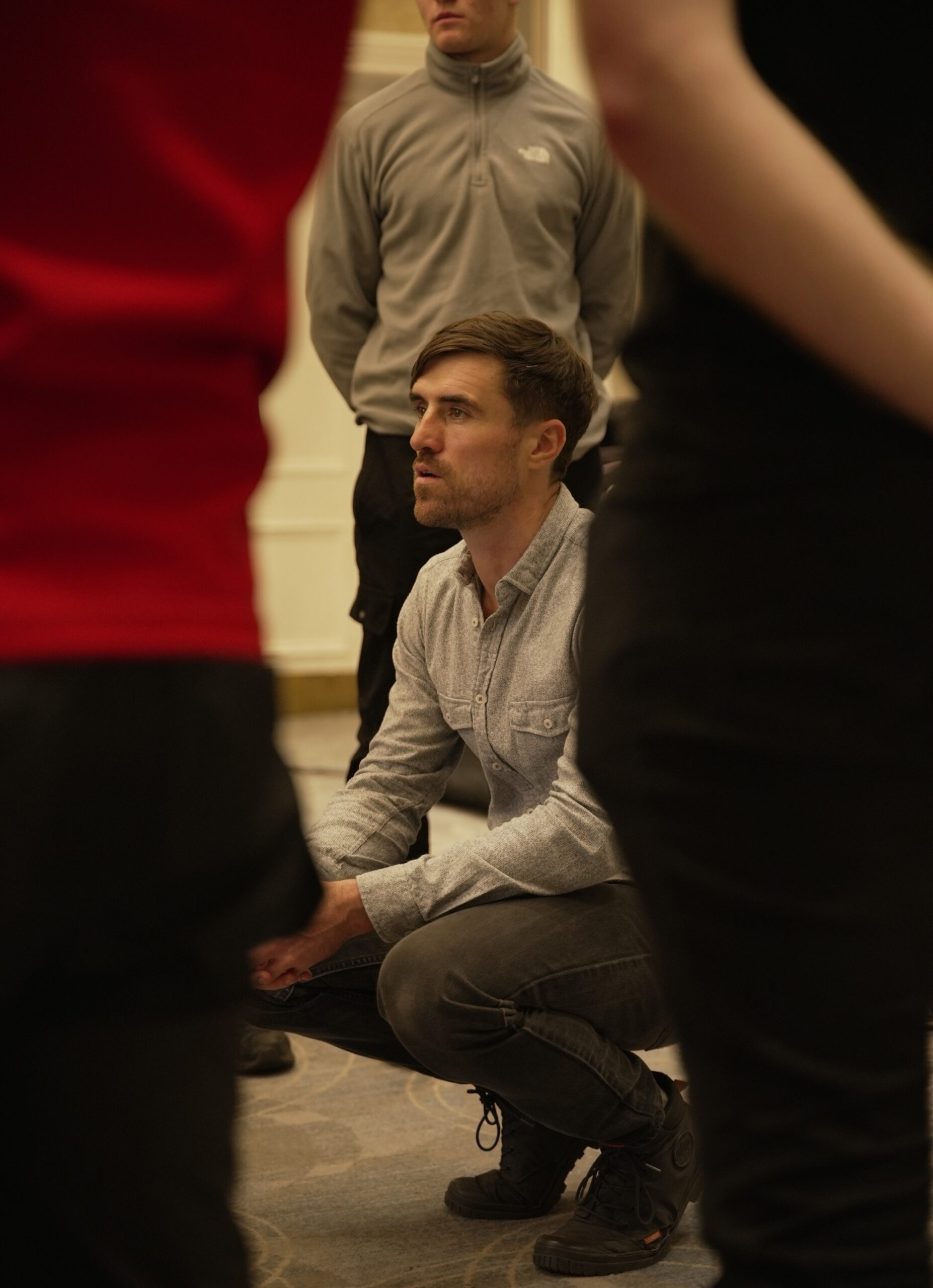
Ronan Conway is a performance coach who specialises in building cohesion and motivation in elite sports teams. He has worked with some of Ireland’s most successful teams, including the Ireland men’s rugby team, Dublin GAA’s five-in-a-row-winning men’s Gaelic football team and, currently, Leinster Rugby.
Ronan has honed his craft as a facilitator since 2012. He believes skilled facilitation can play a key role in empowering players and generating greater buy-in and belonging.
You can read more about Ronan’s work with elite teams here and here . Or you can visit his website at ronanconway.ie and find him on LinkedIn .
Nurtured and sustained excellence sat at the heart of proceedings at the 2025 Leaders Sport Performance Summit in Melbourne. Below, discover the insights to help propel you to greatness courtesy of the worlds of medicine, academia, the military and, of course, the world of sport.
Brought to you by our Event Partners

“There are parts of your game going well at a particular time and other parts of your game that are not going well,” he told Fox’s Face to Face in 2023.
“You’re trying to improve these things without sacrificing the things you’re doing well.”
He and Collingwood span those plates with alacrity during the 2023 season, his first as captain: they won the AFL Grand Final. Today, they remain one of the league’s finest teams; and Moore has been praised for his leadership abilities both on and off the field. It was to great acclaim that we welcomed him to the stage at the 2025 Leaders Sport Performance Summit at The Glasshouse in Melbourne.
“Good player leadership is organic and comes from natural respect based on competency, status and character in alignment to the team’s values,” he told an audience of Leaders Performance Institute members.
In addition to Moore, across two insight-laden days, we hosted a range of speakers from organisations including Melbourne FC, Leinster Rugby, the Royal Melbourne Hospital and Royal Australian Air Force. The overarching theme was the approaches one can adopt to give performers the best chance of success.
There were six approaches that stood out.
The athlete-coach relationship is pivotal, whether it’s a long-tenured coach setting up a new leader for success or, conversely, a senior athlete taking steps to put a new coach at ease.
Craig McRae, the Senior Coach at Collingwood, demonstrated the former with his public endorsement following Darcy Moore’s appointment as captain in 2023. “Be yourself, forge your own journey, and take a swerve at what that needs to be,” he told Moore. “Lead from the front and lead your way.”
Across town a year later, Rebekah Stott, a hugely experienced New Zealand international defender with more than 100 A-League appearances under her belt, went out of her way as captain of Melbourne City FC to ensure incoming Manager, Michael Matricciani, felt at home.
“From day one when I signed for the club, from the first conversations I’ve had, she’s only welcomed me with open arms,” said Matricciani. “She’s been a great support and she’s an excellent leader off the pitch.”
Neither Moore nor Stott, who spoke onstage together, believe they’re the finished article. Both spoke of their need to work on confronting teammates and having difficult conversations. In that regard, it helps when the on-field leader feels both comfortable and supported.
Rebekah Stott, Melbourne City FC
Darcy Moore, Collingwood FC
Moore and Stott’s concern with confronting people in emotionally charged environments is a daily feature of life at the Royal Melbourne Hospital, where Brian Le serves as Director of Palliative Care at the Peter MacCallum Cancer Centre. “Preparation is really important,” he said. “I formulate what needs to be spoken about and what my agenda is. But once with the patient, I adjust to what I’m hearing and the clues I’ve picked up in relation to their context.”
Timing is critical too. “Not addressing the situation has its own cost,” said Le, adding that delays are regrettable when the patient likely knows that an emotionally-wrought conversation is coming anyway.
Brian Le, Royal Melbourne Hospital
Data-informed decision-making is preferable, but where does the balance sit between objective and subjective sources? Additionally, what of the balance between disruption and stability? The topic was tackled by Kate Hore, the captain of AFLW team Melbourne FC, who spoke alongside Marcus Wagner, the club’s Chief Innovation Officer & General Manager of Football Operations. The Demons have been using Teamworks Performance as they look to strike that balance.
“You can get a flag from your monitoring that helps a discussion, but the impact really comes from your relationship with the athletes,” said Wagner. “Baseline information helps, but understanding the person is most important.”
When you understand the person, you can ask the right questions (either in-person or via questionnaires) and, if something needs to change based on something that happened in training, staff can swiftly make adaptations (supported by data).
As for the balance between disruption and stability. “It’s fine balance,” added Wagner. “You need to ensure you don’t lose your identity by going too far either way. How we measure is by looking at overall performance internally and externally, how we communicate, and the quality of our data.”
Kate Hore, Melbourne FC
Approximately 95 per cent of Nobel Prize-winning scientists emanate from the same cluster of labs or have enjoyed the proximal influence of past winners. Why? It is their higher minimum standards or greater openness to new (and often bad) ideas?
David Burt, the Director of Entrepreneurship at the University of New South Wales, delivered a presentation in which he lauded the value of exploring ‘terrible ideas’. His rationale was sound: it reduces the negative emotions that can cloud creativity and reduces the impact of power dynamics in a team environment.
He recommends an ‘accountability loop’:
David Burt, University of New South Wales
What must we do to sustain excellence? That was at the centre of Dave Walker’s appearance at the summit. The former naval pilot, who works for the Royal Australian Air Force, spoke of PBED:
PBED, he explained, is a continuous improvement process to table improved error recognition, error reduction or correction, which enables the creation of efficiencies that lead to improved performance. It is an essential tool in an environment where students must learn quickly.
“It’s the quality of interaction in each event that ultimately turns a team of experts into an expert team,” said Walker. “We often find that members do not know how to work or operate as a team – just following a framework does not make a team.”
David Walker, Royal Australian Air Force
Leinster Rugby, one of Europe’s most prominent teams, has a squad that is 86 per cent homegrown – what is the secret to finding and nurturing supreme talent in your region? As Simon Broughton, the Academy Manager at Leinster, explained, the team benefits from a group that has played and developed together in the youth ranks. They have travelled, won and lost as a collective. “So many experiences that strengthens their connection,” said Broughton.
The club has adopted a variety of approaches, including proximal role modelling, which sees younger players spend 80 per cent of their time integrated with older players. Proximal role modelling is “integrated organically into different aspects of their training week, from walking the pitches, to session design, and into analysis rooms.”
Leinster have also latched onto the ‘goldilocks principle’ as 33 per cent of their players are neurodivergent. “This has led to changes in how messages are delivered,” Broughton added. “There are slides, but also video and walkthroughs, and time for reconnecting and breaking mental circuits.”
Simon Broughton, Leinster Rugby
Female athlete health, mental performance, data-informed recruitment and leadership were foremost in conversations across the Leaders Performance Institute in December.
There was plenty on offer on our Intelligence Hub in December and here we bring you four key thoughts from the final weeks of 2024 to set you up for success in the months ahead.
Before we get into it, remember our first summit of the year takes place at Melbourne’s Glasshouse in just under four weeks’ time. More info here. We hope to see as many of you there as possible.
If there’s an upcoming virtual learning session that takes your fancy, please let a member of the Leaders Performance Institute team know.
Right, back to the matter at hand. Here are four themes that stood out in December.
That’s not really news and, to be fair, is not entirely representative either. We have sought to address the fine work being done (as well as the enduring iniquities) in our latest Performance Special Report, titled A Female Lens on Performance: what it takes to help women and girls thrive in elite sport.
The report, which is brought to you by our Partners Keiser, features Garga Caserta, the Head of Performance at NWSL side the Kansas City Current, who discusses the best ways to balance challenge and support for players.
He also touched upon his reluctance to chase ‘low-hanging fruit’ in women’s sport performance, particularly where data is lacking:
Elsewhere in the report, we spoke to:
We also pondered the potential implications of the gendered environment for female athletes and coaches.
Download A Female Lens on Performance now.

Be careful how you answer that question. If you feel that your mental performance coach never quite fulfils their remit, perhaps you’re not setting them up to be successful. It could be, as mental performance coach Aaron Walsh argues in this exclusive column, that you’re viewing their work from the wrong angle.
Walsh wrote:
Read the full article here.
Even if you are, you probably feel that you can tighten up processes here or look at things through a different lens there.
It was a theme that ran through our Kitman Labs podcast series where the Leaders Performance Institute was joined by Kitman Founder Stephen Smith to chat to a range of guests from across the world of soccer.
These included Dr Karl-Heinrich Dittmar, the Head of Medical at German Bundesliga champions Bayer Leverkusen. He spoke at length about the club’s efforts to use data to outmanoeuvre their rivals when recruiting:
During the course of this Kitman Labs series, we also spoke to:
It’s an age-old question, but no-one has really nailed it. Dan Jackson, the General Manager of Player Development & Leadership at the Adelaide Football Club is no exception.
“I can’t teach leadership,” he told the Leaders Performance Podcast. “I can help unlock what’s already in there.”
Jackson feels that leaders can be created. “Leadership is 100 per cent made, but it’s made from a very young age.”
Beyond the origins of leadership, Jackson also spoke about the importance of prioritising others in a team environment.
“Great sustainable teams are built in environments where everyone’s looking to help someone else out,” he adds. “When you fill someone else’s bucket, it fills yours.”
It’s well worth your time. The same can also be said for these other guests, who all joined our three-part Keiser Series podcast in December:
John Bull of Management Futures set out a series of easy-to-adopt measures that could make the difference between winning and losing.
It’s easy to say that, as a battle-weary 32-year-old facing a younger, stronger champion, Ali had little choice when selecting his approach.
Foreman had won 37 of his 40 fights by way of knockout and was confident of adding No 38 to his unbeaten record in the early hours of 30 October at Kinshasa’s packed Stade du Mai 20.
Yet Ali later said his decision to stay on the ropes and allow Foreman to tire, which set him up to secure an eighth-round knockout, was made on the fly. He backed himself to absorb Foreman’s punishing body blows and wait for his moment. Foreman had only been taken to eight rounds four times previously in his career, so there were question marks over his stamina. The longer Ali could last – easier said than done – the greater his chances.
“I didn’t really plan what happened that night,” said Ali in 1989. “But when a fighter gets in the ring, he has to adjust to the conditions he faces.”
That Foreman could be lured into rope-a-dope was at least deemed possible by Ali’s coach, Angelo Dundee, who was seen loosening the ropes (to make leaning back easier) prior to the fighters’ ring walks. But that’s another story.
Ali’s defensive tactics, particularly during the fight’s final rounds, chimed with John Bull, the Director & Lead for High Performance Research at Management Futures (and big Ali fan), as he told an audience at the 2023 Leaders Sport Performance Summit in London.
Of his hero, Bull explained that a wave of fear came over Ali “for the first time in his career” as he sat in his corner at the end of the first round.
“Ali was really scared; and then 20 seconds later said to himself ‘I’m going to need to outthink this guy’,” Bull said.
Outthink Foreman Ali did; and Bull argued that such adaptability could be commonplace in sport with the right approach.
“I do believe some people are more naturally creative, but there are ways and structures that help anyone become more creative,” he continued while likening the process to strengthening muscles.
“What I love about these techniques is you can learn them really quickly. Practise any of these techniques for more than 15 minutes and you will be better than most people.”
These are the techniques Bull shared with the audience.
The STOP process for creative problem-solving

“I love STOP,” said Bull. “It’s a really simple way to get people thinking about ‘how are we doing that?’ How often do we take the STOP moments during a game, during the season etc. It’s a quick, short use of time.”
Bull then presented five strategies for encouraging athletes to adapt to the challenges or opponents facing them.
If you can find new ways to consider your problems, it can open up new ways of thinking.
Bull used the example of an elevator. Perhaps your goal is to make the elevator go faster, but what if your aim was to make the wait less annoying?
“Most hotels will put a mirror beside the elevator,” he said. “That seems to kill time when we’re looking at ourselves in a mirror.”
Bull suggested we “think of at least three different ways we could define our goal, to help open up new ways of thinking about the problem”.
If you can map the different categories of possible solutions it can prevent you narrowing in on just one type of solution.
Bull asked members of the audience to take a pen and piece of paper and write down as many sports as they could think of in one minute.
He then proposed a rerun of the exercise where the paper includes sub-categories such as ‘team’, ‘individual’ or ‘in or on water’. It might look like this:
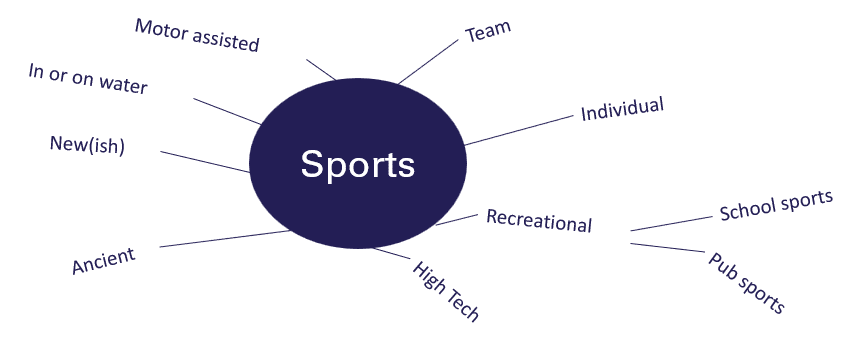
“What mind mapping is very good at doing is getting us to think more broadly,” said Bull. “What we tend to do when we’re being creative is we’ll come up with one or two ideas quickly as you would have been doing there, but then we tend to stay in that same vein of thought. So if I come at this using mind mapping, the first question you ask yourself mind mapping is not what sports can I think of, but what categories. Once you come up with a category, the brain very quickly accesses four to seven ideas.”
Step change thinking is the idea of setting a very stretching goal and then thinking how that could be possible.
Bull posed two questions:
He shared the following example:
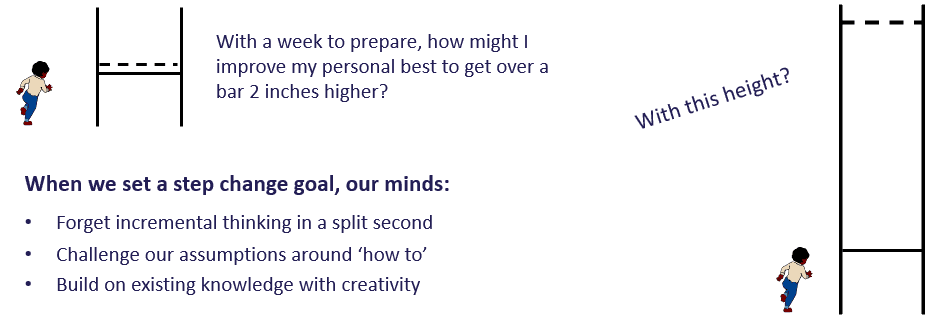
To underline his point, Bull explained that step change goals are common at Google where employees often set – and meet – seemingly impossible goals. “They’ll take any performance measure they want to get creative with and they’ll say ‘times it by ten’ and ask ‘how would we do that at a ridiculous level?’ just to provoke creative approaches.”
This notion is straightforward enough:
Bull cited the real-world example of paramedics in England. Providers of ambulatory care would like to reach people who suffer heart attacks within eight minutes, which is impossible by road in areas such as rural Norfolk in East Anglia. “You ask ‘how could we make that happen?’ And the answer that came up was you could train someone in every community to be able to keep someone alive until the first-responders arrive.”
Sport is not life and death, but a similar thought process could prove useful.
Who has already solved your problem and what can you learn from them?
In answering this question, New Zealand rugby, as Bull explained, turned to ballet for help with its lineout lifting.
“Rugby’s been doing this for 25 years in terms of assisted lineouts. Ballet’s been doing this for a few hundred years – they probably know a little bit more about it, so it’s that idea of going outside.”

Flo Laing of Scotland Rugby discusses her work with the Scotland Women’s national team.
A podcast brought to you by our Main Partners

“It’s got to be the World Cup,” says Scotland women’s Lead Physiotherapist.
The competition will be hosted across the border in England and starts in August. Laing says it has been the Scotland team’s “north star” for several years.
During the course of our conversation – the second of three in this Keiser podcast series – we spoke about her work in women’s rugby at a time where the sport is starting to capture the public’s imagination and performance standards are rising faster than ever for the women players who compete [4:00].
Elsewhere, Laing discusses her leadership style, which is very much about putting people at ease [18:00]; she also talks about the most pressing issues in female athlete health [28:40]; as well as the transferable skills she’s learned from her time working for Sport Scotland [12:30].
Listen above and subscribe today on iTunes, Spotify, Stitcher and Overcast, or your chosen podcast platform.
Prevent Biometrics’ new device has been introduced to augment World Rugby’s Head Impact Assessment protocol and lay the groundwork for long-term study of head impacts in contact sports
Main photo courtesy of World Rugby

It’s why he calls Prevent’s sensor-embedded mouth guards, which track linear and angular accelerations, providing what experts say is a more accurate measure of head impact than other methods such as helmet sensors, “the most important technology in sports.”
“We’re the data. We are not diagnostic,” Shogren said. “But if you don’t have the data, you can’t do much.”
As a focus on head impact reduction in collision sports — e.g., the NFL’s in-game authorization of Guardian Caps for this season — grabs headlines domestically, Prevent and years-long collaborator World Rugby are embarking on their largest data collection effort on the subject yet, and on a global scale.
Since January, World Rugby required that athletes competing in its elite-level competitions wear Prevent’s instrumented mouth guards, a deployment that will ultimately encompass 8,000 players. The aim: to both augment World Rugby’s Head Impact Assessment protocol and lay the groundwork for long-term study of head impacts in contact sports.
Dr Joe Maroon co-developed the ubiquitous ImPACT concussion management protocol, worked as the Pittsburgh Steelers’ team neurosurgeon for more than three decades and is now a Prevent adviser. He said World Rugby is “leading the charge” in concussion management, adding that smart mouth guards could eventually permeate contact sports such as American football, wrestling, lacrosse and soccer.
“We took ImPACT and other management tools to World Rugby 10, 15 years ago,” Maroon said. “World Rugby now is bringing another tool back to the sports in the United States.”
■ ■ ■ ■
The mouth guard mandate necessitated a $2.4 million investment from World Rugby, which covered fitting (via teeth scans), producing and delivering the gear, plus equipping teams with support staff to help operate the technology and analyze the data collected. The custom-fit mouth guards typically price between $225 and $250, Shogren said.
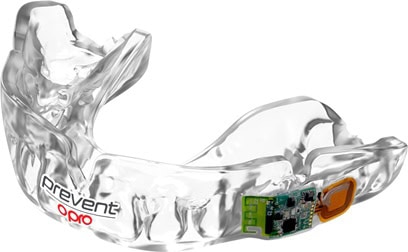
The mouth guards detect hard impacts as an early warning of possible concussions. [Photo: Prevent Biometrics]
“To draw any kind of meaningful analysis, you need to have hundreds of these [concussive] events, not tens,” said Falvey. “Our first priority at the moment is making sure the [impact] threshold is as clinically relevant as it should be.”
Prevent’s mouth guards trigger a Bluetooth alert upon registering a linear or angular acceleration above thresholds set by World Rugby, at which point the player is pulled from the game to undergo evaluation for a possible concussion. (Players can still be flagged for assessment based on observable clinical symptoms, independent of the mouth guard.)
“We’re not using this as a concussion detection device. We’re using it as a device that picks up a large impact,” Falvey said. “A concussion actually is a clinical diagnosis. There’s more to it than just an impact. There’s how the player is, what their previous exposure is, what their age is, what their concussion history is.
“It’s never going to be just about the impact. But that impact is putting the right players in front of us to have a look at.”
So far, unique alerts triggered solely by a mouth guard are adding an average of one extra stoppage every three games, he said. He added that 43% of total concussions logged across World Rugby competitions have triggered a mouth guard alert, and 35% of mouth guard alerts have ultimately correlated with a concussion diagnosis. According to Falvey, that 35% rate is in line with other individual subtests within the head injury assessment protocol, which include assessments of symptoms, memory and balance.
The hope is that having as many guardrails as possible in the protocol will continue to increase its overall accuracy and mitigate cases in which athletes continue to compete with a concussion. Citing research conducted by the University of Pittsburgh, Falvey noted that every 15 minutes a player continues playing after a concussive event, their recovery time is lengthened by three days. That comes with medical risks — for example, issues with non-resolving concussions — and, of course, the business impact that dovetails off player absences.
“None of the subtests on their own are fantastic, but the diagnostic accuracy of the HIA protocol [as a whole] is about 88%,” Falvey said. “That’s as good as an MRI for tendinopathy in your shoulder. When we are able to look back on this year, we feel this is going to have improved the accuracy above 88%. It’s another piece, which is as good as any of the other subtests so far.”
■ ■ ■ ■
Ultimately, World Rugby hopes to leverage the wealth of impact data it is collecting, high-impact and otherwise, to inform rule changes or best practices for competition and training. Falvey cited a dataset of 35 players who play the same position from a recent competition as an example.
“One player was getting nearly six times the number of impact events that a player in their position was getting in the same tournament,” he said. “It may be that they’re involved in more tackle events. But it also might be that their technique isn’t as good as it should be. Doing something about that can significantly improve that player’s health and welfare and make playing the game safer.”
Falvey will present findings from the first year of the mandate in early 2025 at a meeting of the International Collision Sport Group, a collection of collision sports medical leaders, including from the NFL and NHL.
“It’s a scenario where everybody helps everybody out in this space,” Falvey said. “It’s all about getting to the right answer as fast as we can.”
This article was brought to you by SBJ Tech, a Leaders Group company. As a Leaders Performance Institute member, you are able to enjoy exclusive access to SBJ Tech content in the field of athletic performance.
