Plantiga believes their wearable sensors can fight back against the male bias and collect data on ground forces, contact times, stride length, and asymmetries for female athletes.
Main image: Plantiga
A Data & Innovation article brought to you by

After that season, however, Bueckers underwent right ankle surgery. The following year, she suffered a tibial plateau fracture and meniscus tear in her left knee, which required another operation. In August 2022, she tore the ACL in that knee — another surgery.
But Bueckers was fully cleared for the 2023-24 season and returned to form. She was again a unanimous All-American, leading UConn to the Final Four again. During the tournament, her legendary coach, Geno Auriemma, called Bueckers “the best player in America,” in an implied comparison to Iowa’s Caitlin Clark.
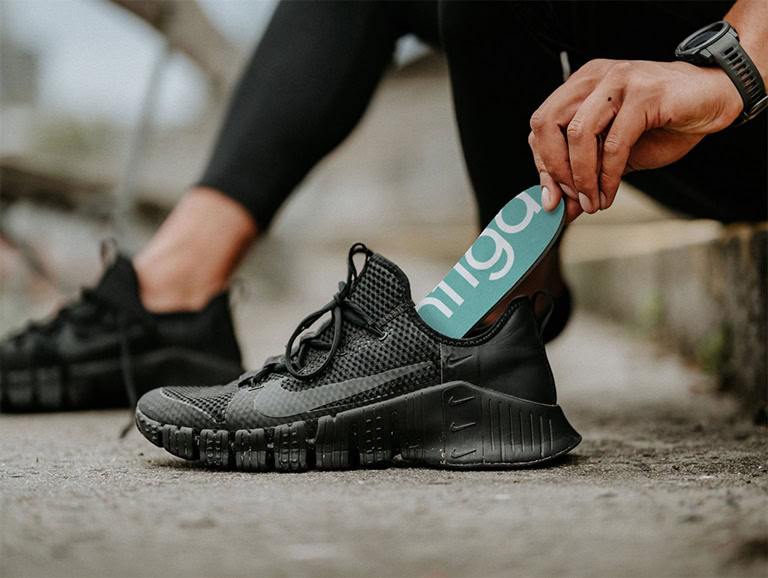
Among the modalities helping monitor her as she returned to elite performance were sensors embedded in the insoles of the sneakers she wears in practices and games. That device, made by Plantiga, is in the early stages of a multifaceted effort to collect real-world biomechanics data on female athletes. Its sensors collect data on ground forces, contact times, stride length, asymmetries and more.
Plantiga is working with the WNBA through its participation in the NBA Launchpad program. It’s helping women’s running shoe brand Hettas inform its designs and materials. And it’s being deployed to track elite athletes such as UConn’s Bueckers, Azzi Fudd and Jana El Alfy, all of whom have suffered ACL or Achilles injuries over the past 20 months.
“The main problem that we see in women’s sports right now is that there’s a really big bias in the scientific literature, and there’s a bias in the resources that are often made available to women’s teams,” said Matt Jordan, a kinesiology professor at the University of Calgary who serves as Plantiga’s Chief Scientific Officer.
“Where Plantiga comes in is it affords us a brand-new opportunity to study girls and women playing in sport on the field of play, doing the things they do in the real world, not just in a lab, but on the field and on the turf. And it really opens up a new paradigm to be able to understand how training load, movement biomechanics and asymmetries, and how these things really influence the health profile of the female athlete.”
Plantiga Co-Founder/CEO Quin Sandler described the dual motivation for pursuing research in women’s sports: the altruistic idea of helping advance the science for women and also the business opportunity of supporting an underserved market. Title IX already ensures a large population of young women playing elite sports at U.S. universities, but the recent explosion in popularity of all women’s sports — pro and college — is helping grow budgets for more rigorous training tech.
Plantiga is helping women’s running shoe brand Hettas inform its design and materials as it builds sneakers for elite athletes, as well as working with the WNBA through the NBA Launchpad program. Image: Plantiga
Sandler declined to specify the price, but said it is comparable to the cost of technologies such as Catapult and Kinexon. In some instances, teams could get the same load monitoring data only from Plantiga.
The research gap between male and female athletes has been well documented in recent years, but the severe discrepancy persists. Chris Napier, Director of the Simon Fraser University Run Lab that has been conducting research for Hettas, said there’s a huge opportunity to create more optimal sneakers for women because just about everything to date has been designed based on research for men.
“Then they just make the shoe a little bit smaller for women, and we think we can do better than that,” Napier said. “We think we can actually optimize those materials and the geometries to really suit female runners and make them improve their mechanics to make them perform better. And then we think, potentially, we can also do better to prevent injury.”
The stark need became apparent when his company built a predictive model for the Canadian Armed Forces regarding knee injuries in soldiers.
Because most of the test subjects were men, Plantiga’s model became precise in identifying trends in their data. It could estimate how long ago a male soldier injured his knee down to the month.
“When we applied that model to women, it just didn’t work. Same model, same machine learning, but that goes to show you that their movement patterns are so unique that our model — because it was just trained on male data — literally couldn’t even see it accurately on women,” Sandler said. “If [the data] wasn’t on both sexes, it basically rendered it almost useless.”
Through NBA Launchpad, Plantiga is conducting a two-pronged research effort. Its technology will be available to WNBA players and performance coaches for use in practice to collect data on elite players, and it will be offered to a high-level girls’ basketball program, New Heights in Brooklyn, with a particular focus on tracking its U17 club team for up to six months.
Plantiga successfully completed the NBA’s rigorous wearables validation program, but the WNBA CBA prohibits wearable usage in games. The WNBA is introducing optical tracking for the first time this year with Second Spectrum, but there’s appeal in the potential of collecting ground forces from a device such as Plantiga as well. (The company’s athlete user investors include NBA player Thaddeus Young and Olympic gold medal-winning sprinter Andre de Grasse.)
NBA Vice President Tom Ryan described the utility of an inertial measurement unit, which is the type of sensor used by Plantiga, in the shoe: “Being able to have an IMU that is right there at the point of contact for both feet, we think is just a piece of data that is always going to be valuable, as a complement to optical.”
This is the first year Launchpad introduced a focus on the WNBA, with Ryan explaining that the league looked at technologies with application at all levels of “the basketball pyramid.” He said, “The goal on the grassroots side is to take all those learnings that an elite health and performance professional at a WNBA setting or NBA setting could teach an athlete, but then being able to take those learnings and productize it into Plantiga’s platform.”
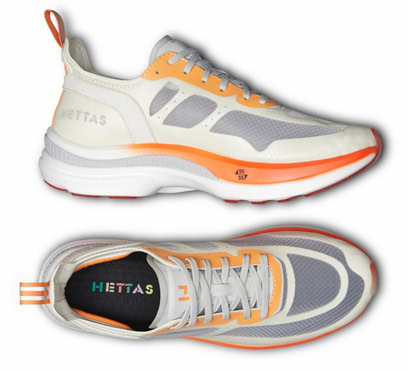
Image: Plantiga
The goal is to collect longitudinal data that would create benchmarks of progression, just as has been established in European soccer academies, which have voluminous data on what the physical performance of each age and positional cohort should be.
“We want to collect a first-of-its-kind data set on what that player development pathway looks like,” Sandler added. “What does an elite 17-year-old basketball player look like? What does an elite 19-year-old, 21-year-old, 24-year-old look like?”
In the case of Bueckers, she began wearing Plantiga in early January, according to Andrea Hudy, UConn’s Director of Sports Performance for Women’s Basketball. Hudy noted the use of Plantiga at this juncture is mostly for information gathering. For Bueckers specifically, the data indicates “there are some things we can do after the season that I think will be helpful for her,” Hudy said, but too much intervention during a season would be unwise and impractical.
Hudy, who is concurrently in a PhD program at UConn, cited a 2019 research paper on Division I women’s soccer players who had MRI scans of their ACLs before and after the season. The study found a 10% increase in knees with edema, a type of swelling in the tissue outside of the joint, which is strongly correlated with injuries to the ligament.
“Is it an overuse injury? Is it a traumatic injury? What are we dealing with?” said Hudy, who was recruited by Auriemma in the late 1980s before a pair of ACL injuries. She instead played Division I volleyball at Maryland and said her personal injury history helps drive her research.
“It’s all coming back, in my opinion, to just gait patterns, and what happens before or after an injury,” Hudy added. “And then how does that reflect your gait afterwards? Because your body compensates in so many ways. And it’s just the kinetic chain of dysfunction if you don’t correct it right away.”
That can persist and manifest itself in future ailments. Part of the epidemic around ACL injuries, added Jordan, is the high recurrence rates, which studies have pegged as anywhere from 8 to 40 times higher risk, as well as the challenge just to return to the same level of play.
“Your ability to return to performance — that, you can’t hack unless you’re training smart, monitoring your deficits and attending to this every single day as a part of your training,” Jordan said. “We’ve known that forever, and the blind spot is essentially that once the athletes are back on the court, we have no clue how they look because we don’t have biomechanical devices that allow us to measure in the real world.”
In a world of insole sensors and properly designed sneakers, the shoes female athletes wear might finally fit.
This article was brought to you by SBJ Tech, a Leaders Group company. As a Leaders Performance Institute member, you are able to enjoy exclusive access to SBJ Tech content in the field of athletic performance.
Neurodivergence is not the blocker that some coaches perceive it to be and neurodivergent athletes are some of the best-equipped to perform – with the right coaching.
The term ‘neurodivergence’ can often be perceived to be a blocker in sport, but as Dr Julie White, Head of Learning Support at Millfield School, put it to our members at Leaders Meet: Teaching & Coaching, “neurodivergence is when there are differences from the ‘neurotypical’ as opposed to perceived weaknesses”.
In fact, neurodiverse learners have been known to display high levels of perseverance and demonstrate transferrable resilience into the classroom. They embody the words of Harvey Blume, who was one of the first journalist to cover neurodivergence. In 1998, in the Atlantic, he wrote:
Neurodiversity may be every bit as crucial for the human race as biodiversity is for life in general. Who can say what form of wiring will be best at any given moment?
You may be familiar or have heard of neurodivergence through familiarity with such terms as dyslexia, dyspraxia (cognitive learning and gross motor skills), autism (speech, communication and language processing), ADHD (social, emotional and mental health difficulties). But, a lot of the time, the signs and symptoms of these conditions are hidden or less obvious for coaches to pick up on.
It’s critical for coaches and practitioners to have a baseline understanding to ensure they know a) what to look out for; and b) how the various conditions affect decision-making and subsequent performance.
White breaks down one of the core neurodiverse challenges into two areas related to speed of thinking and recall:
Many neurodivergent people will have a weakness in one or both of these areas, regardless of their label.
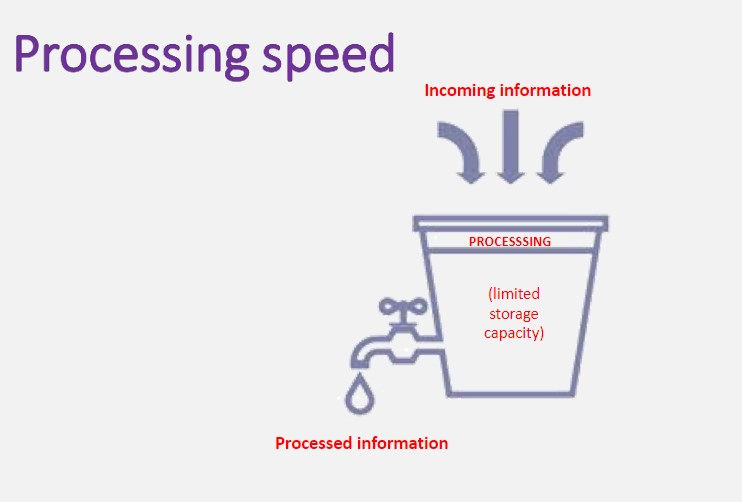
It’s easiest to think about it as a bucket.
For most of us: information comes in the top, there’s a steady flow. It’s being processed in the middle section at a good speed, and it comes out of ‘the tap’.
But if your processing speed is slow, your ‘tap’ lets out a lot less water. The info comes in at a fair speed, the bucket fills up very quickly, it can’t drain quickly enough and so it overflows. That’s what happens in young people’s brains where they can’t take in any more information, and they feel overwhelmed.
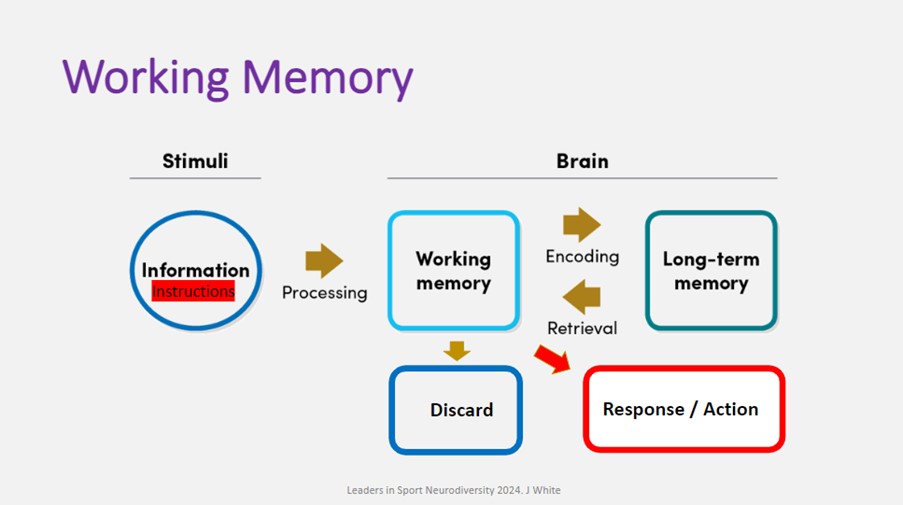
On the field/pitch/training, you might see this as:
As a coach, you need to…
Pay attention to the language you use and the quantity of information you give:
You have to make adaptations. We’re not all the same. It’s about equity and giving them equal access.
Dr Julie White, Head of Learning Support, Millfield School
Coaching checklist
Don’t assume you know the full picture – many players will not acknowledge that they have a difficulty, because:
A coach should:
WorkRate is a startup seeking to address issues with lack of movement skills and neuromuscular fatigue in athletes.
A Data & Innovation article brought to you by
* * * * *
Our Startups series looks at companies and founders who are innovating in the fields of athlete performance, fan engagement, team/league operations and other high-impact areas in sports.
* * * * *
World’s shortest elevator pitch: “WorkRate translates athlete-centered research into practice through diagnostics and evidence-based training to reduce injury and boost performance.”
Company: WorkRate, Inc.
Location: New York, New York
Year founded: 2020
Website/App: https://workrate.fit/
Funding round to date: “Self-funded.”
Who are your investors? “We do have some family and friends investments and that was up to around $30,000.”
Are you looking for more investment? “Yes. That would expand our capability development.”
Tell us about yourself, founder & CEO WorkRate Rondel King: “I was born and raised in the twin island republic of Trinidad and Tobago. In my formative years, I had a deep passion for science and sport. I co-founded a soccer team in my neighborhood that competed in the official youth league in Trinidad and Tobago. After one year of competing as a founding player, I migrated to New York. I studied exercise science at Brooklyn College and continued my sporting career by joining the soccer team at Brooklyn College. I experienced a series of injuries which severely hindered my development. I experienced sub-optimal results with my athlete care team, which included pain doctors, athletic trainers and physical therapists. This frustrating experience galvanized my passion for research. I made investments in continuing my education and completed my Masters in exercise physiology and sports nutrition at LIU Brooklyn. It was at this point I gained a deep understanding of my biomechanics and physiology, and I was able to solve my own problems that my care team wasn’t able to solve. After my personal success, I started asking questions. Why was my care team unsuccessful? What was missing in my care approach? Ultimately, I learned a huge disconnect exists between evidence and practice in athlete care. I started WorkRate to narrow this gap and improve athlete-centered care.”
Who are your co-founders/partners? “My co-founder and COO is Janna Szangolies. Janna is special in many ways, but if I had to choose one way that makes her stand out it’s her versatility. Not only is she a problem solver, but she also plays a pivotal role in translating the deep science into a customer-facing narrative. As a scientist, it’s sometimes difficult to cut the jargon. Janna helps keep me in check and to ensure we are communicating effectively with our users and collaborators.”
How does your platform work? “WorkRate designs and builds data models to enhance human performance. We have developed two diagnostic models and a training recommendation model to address two pertinent risk factors identified by the WorkRate scientific team – lack of movement skill and neuromuscular fatigue. The primary goal of WorkRate diagnostic testing is to obtain objective information to guide the training process properly and systematically. From a movement skill perspective, we developed a self-guided biomechanical analysis algorithm that objectively measures movement quality. The data from this analysis is manually entered into our platform by the user to individualize corrective exercises and identify orthopedic abnormalities. To diagnose neuromuscular fatigue, we invented a graded exercise test (GXT) that evaluates the integrated cardiovascular, pulmonary, musculoskeletal, and neuropsychological systems. We accomplished this by leveraging commercially available heart rate monitors – i.e. Polar H10 – and Inertial Measurement Units like Garmin and Apple smartwatches. The 21-stage running protocol is designed to objectively measure locomotor performance in free-living humans through the utilization of Human Activity Recognition (HAR). HAR is the art of identifying and naming activities using Artificial Intelligence. The rapid proliferation of wearable technologies and advancements in sensing analytics have greatly enhanced our capability development over the past four years. Our novel analysis functions similarly to lab-based graded exercise tests, whereas it can analyze critical running dynamic metrics such as ground contact time (GCT), cadence, stride length and vertical oscillation. Furthermore, the protocol calculates running economy and identifies heart rate zones – i.e. Zone 2 – to fine-tune aerobic and anaerobic metabolism for enhanced performance and fatigue mitigation. Data analytics from our diagnostic models are used to create our training recommendation models, which include respiratory muscle training, corrective exercises, gait training, neuromuscular training and zone-based conditioning. Ultimately, our product is the way we harness human performance data. Our model-based system promotes a classification of athlete performance that helps us to understand and analyze how various training methodologies affect performance and injury. WorkRate models are housed and delivered through the WorkRate Performance App for individual athletes, coaches and organizations.”
What problem is your company solving? “Athletes are still getting injured at a very high rate, from professional soccer all the way to your everyday runner. Research shows a significant gap exists between practice and scientific evidence in sports science that restricts the advancement of effective injury prevention and performance enhancement strategies. At WorkRate, we take a very evidence-based approach. We have curated a powerful, problem-solving model for sports science practice that incorporates the best evidence from well-designed studies, athlete and coach perspectives, documentation, performance diagnostics and the knowledge of the WorkRate Scientific Team.”
What does your product cost and who is your target customer? “We are pre-market. We are targeting soccer athletes and runners as our primary target market to start with.”
How are you marketing your product? “We are marketing our product through collaborative channels with our partners, such as InjureFree and Gateway Athletics Trinidad & Tobago. We have tapped into running communities throughout New York City. We’ve conducted pilots within these ecosystems. We’ve launched soccer performance ecosystems in Tampa, Fla., through collaboration with Flex Soccer. It’s very much a controlled and systematic deployment of our technology, and we do this to ensure our models are scientifically valid before we go into scale and a wider market. These collaborations will be guided by WorkRate Labs. WorkRate Labs is a boutique-style research and development hub that was built to bridge the gap between athlete-centered research and practice. The fully portable laboratory was designed to ensure that WorkRate diagnostics and interventions are scientifically validated via medical-grade diagnostic testing. WorkRate Labs is the cornerstone of the WorkRate evidence-based practice model.”
How do you scale, and what is your targeted level of growth? “We will scale through our collaborative channels where we intend on acquiring up to 60,000 individual athletes and 5,000 coaches within the next 12-24 months.”
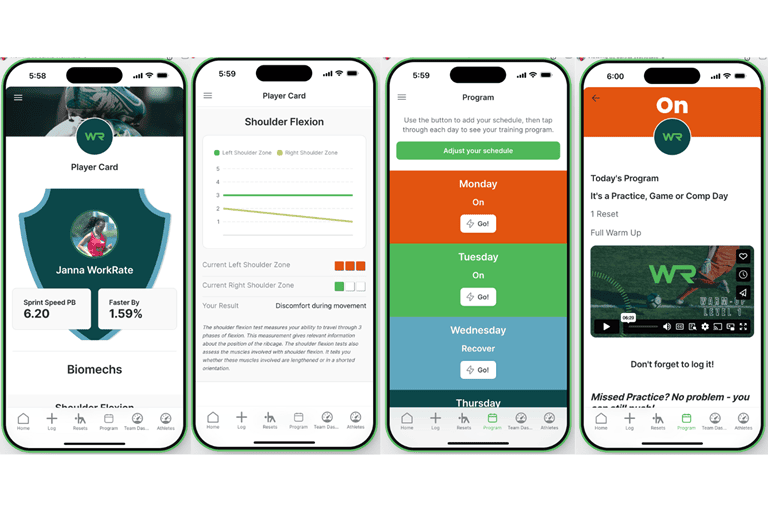
Image: WorkRate
How does your platform work? “WorkRate designs and builds data models to enhance human performance. We have developed two diagnostic models and a training recommendation model to address two pertinent risk factors identified by the WorkRate scientific team – lack of movement skill and neuromuscular fatigue. The primary goal of WorkRate diagnostic testing is to obtain objective information to guide the training process properly and systematically. From a movement skill perspective, we developed a self-guided biomechanical analysis algorithm that objectively measures movement quality. The data from this analysis is manually entered into our platform by the user to individualize corrective exercises and identify orthopedic abnormalities. To diagnose neuromuscular fatigue, we invented a graded exercise test (GXT) that evaluates the integrated cardiovascular, pulmonary, musculoskeletal, and neuropsychological systems. We accomplished this by leveraging commercially available heart rate monitors – i.e. Polar H10 – and Inertial Measurement Units like Garmin and Apple smartwatches. The 21-stage running protocol is designed to objectively measure locomotor performance in free-living humans through the utilization of Human Activity Recognition (HAR). HAR is the art of identifying and naming activities using Artificial Intelligence. The rapid proliferation of wearable technologies and advancements in sensing analytics have greatly enhanced our capability development over the past four years. Our novel analysis functions similarly to lab-based graded exercise tests, whereas it can analyze critical running dynamic metrics such as ground contact time (GCT), cadence, stride length and vertical oscillation. Furthermore, the protocol calculates running economy and identifies heart rate zones – i.e. Zone 2 – to fine-tune aerobic and anaerobic metabolism for enhanced performance and fatigue mitigation. Data analytics from our diagnostic models are used to create our training recommendation models, which include respiratory muscle training, corrective exercises, gait training, neuromuscular training and zone-based conditioning. Ultimately, our product is the way we harness human performance data. Our model-based system promotes a classification of athlete performance that helps us to understand and analyze how various training methodologies affect performance and injury. WorkRate models are housed and delivered through the WorkRate Performance App for individual athletes, coaches and organizations.”
What problem is your company solving? “Athletes are still getting injured at a very high rate, from professional soccer all the way to your everyday runner. Research shows a significant gap exists between practice and scientific evidence in sports science that restricts the advancement of effective injury prevention and performance enhancement strategies. At WorkRate, we take a very evidence-based approach. We have curated a powerful, problem-solving model for sports science practice that incorporates the best evidence from well-designed studies, athlete and coach perspectives, documentation, performance diagnostics and the knowledge of the WorkRate Scientific Team.”
What does your product cost and who is your target customer? “We are pre-market. We are targeting soccer athletes and runners as our primary target market to start with.”
How are you marketing your product? “We are marketing our product through collaborative channels with our partners, such as InjureFree and Gateway Athletics Trinidad & Tobago. We have tapped into running communities throughout New York City. We’ve conducted pilots within these ecosystems. We’ve launched soccer performance ecosystems in Tampa, Fla., through collaboration with Flex Soccer. It’s very much a controlled and systematic deployment of our technology, and we do this to ensure our models are scientifically valid before we go into scale and a wider market. These collaborations will be guided by WorkRate Labs. WorkRate Labs is a boutique-style research and development hub that was built to bridge the gap between athlete-centered research and practice. The fully portable laboratory was designed to ensure that WorkRate diagnostics and interventions are scientifically validated via medical-grade diagnostic testing. WorkRate Labs is the cornerstone of the WorkRate evidence-based practice model.”
How do you scale, and what is your targeted level of growth? “We will scale through our collaborative channels where we intend on acquiring up to 60,000 individual athletes and 5,000 coaches within the next 12-24 months.”
This article was brought to you by SBJ Tech, a Leaders Group company. As a Leaders Performance Institute member, you are able to enjoy exclusive access to SBJ Tech content in the field of athletic performance.
Al, the art of persuasion, and the habits that hinder performance – just some of the topics that filled the air in March.
Leaders Meet: Teaching & Coaching, an in-person member event, is just around the corner so, if you haven’t already, do check it out and register to join us at Millfield School in Somerset. We have some excellent topics on the agenda, including pedagogy & andragogy, non-directive coaching, coaching neurodivergent athletes, the language of coaching, complexity science and much more besides.
The day will be most relevant to anyone working with athletes on a day-to-day basis, whether in a first team environment or within the pathway. There’s just a couple of weeks left to register so don’t miss out.
Our Debriefs are designed to set you up for success. We’ll keep you on the pulse of contemporary thinking across the high performance space and provide members with the inspiration to engage with the variety of opportunities on offer through their membership. Do check out some of our upcoming events and virtual learning sessions to connect, learn and share with fellow members from across the globe.
And now, let’s reflect on the pressing performance issues of the day.
Virtual roundtables
March was a busy month for roundtables. From topic-led conversations around Sustaining Team Culture and the Influence of AI on Performance Programmes, to a Leadership Skills session focused on Building Persuasion and, last but definitely not least, part two in our series of learning around Wellbeing and what is having the most impact.
These are the insights that resonated with us most.
The potential impact of AI
We identified some of the enablers and outlined some of the key questions we still have around the technology.
So, where do we think AI can have a positive impact on our programmes?
All sounds good, doesn’t it? However, we still have some questions that need answering. Have you explored and come up with answers to these in your environments?
Why persuasion is an important skill in modern day leadership
How can you master the art of persuasion? We have some tips for you. Having good ideas is not enough. In order to change thinking and enact change, we need to be able to persuade people.
The Trust Equation
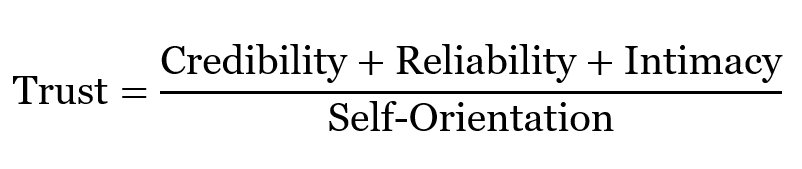
The equation is a conceptual formula used to describe how to build and elevate trust. To go into a big more detail, Credibility speaks to words and credentials and simply put, how authentic are we? Reliability is the perception of someone’s integrity, are your actions connected to your words? Are you credible in how you present yourself? Intimacy refers to the feeling of safety or security in the sharing of information and how safe and secure others feel in sharing with us. Finally, Self-Orientation reflects an individuals focus and where it is directed – is it towards themselves or others?
Essential steps in mastering persuasiveness
There was lots of gold in this skills session but as we reflected on the essential steps to impact the notion of persuasion well, there were four steps to reflect on in developing your persuasion muscle:
Additional reporting by Lottie Wright
Something a little different…
As many of you will know, we at the Leaders Performance Institute pride ourselves in exploring the world of high performance outside of the elite sporting context. With this in mind, we wanted to push your attention to some golden insights from the Royal Academy of Dramatic Art and their Director of Actor Training. To read more on their approach to elevating performance here and also how they’ve worked to redesign their curriculum here.
Skilbeck shared with us five factors that underpin their process to developing their talent. Are yours similar?
Additional reporting by John Portch
Community groups
In March, our Performance Support & Science community group took centre stage.
With 2024 bringing new projects and streams of work, we looked into the pressing questions and topics that are currently occupying the minds of those in this group.
Some of these will look familiar. How are you trying to approach some of these issues in your environment?
Sustaining staff health & energy
A few different people as part of the group discussion alluded to the topic of staff energy and sustainability, from the lens of the performance support and coaching team. Some of the spin off questions referred to how do we best integrate support and what does that look like, particularly due to the intensity of competition and in some environments, where there is uncertainty.
AI is coming, so how do we prepare?
Firstly, we’d recommend revisiting some of the bullet points above on what came out of the conversations of this topic in one of our roundtables. A lot of performance teams are evaluating it’s possible impact and the input it could have into our worlds. Will you be an early or late adopter and do you have a clear strategy in place to ensure there is clarity and preparation for how you will use it when that day comes?
Are you collaborating with external practitioners?
Arguably the most common response from the group when it came to current challenges. Such is the nature of modern day elite sport, performance support networks around our athletes are growing, including independent specialists who are not employed by the organisation. The crux of the conversation was, if we are to work with them, how do we do it best? Or do we not look to collaborate with them at all?
Balancing long-term planning and short-term delivery
This is a constant battle for performance support teams, such is the nature of the work that takes place in this field. The group brought to the table the question of how others are finding the balance to ensure they are moving at the ‘pace of performance’ in the day-to-day environment, but a nod to the future exists when it comes longer-term programme planning. We also discussed how to keep senior and experienced staff growing as it can be very easy to slip back into the short-term mindset, thus stifling longer-term development opportunities.
In the second session of her new three-part Performance Support Series, Dr Meg Popovic guided Leaders Performance Institute members in a discussion of burnout – a topic oft-neglected in sport.
A Human Performance article brought you by our Main Partners

Last week, she hosted the second session of her three-part Performance Support Series for Leaders Performance Institute members entitled ‘Wellbeing – What’s Having the Most Impact?’ The focus for session two – by popular demand – was burnout: what it is and how one can prevent and manage it in sport.
The session began with a straw poll where Popovic asked attendees: what are the main sources of stress in your workplace? The results, which were collated in real time, were illustrative. The most common answer was work-life balance; second was workload; third was people and the workplace culture; and fourth was a lack of job security.
The results allude to a range of problems, and yet these stresses – which can lead to burnout – have been rarely discussed in elite sporting contexts.
“There is very little to nothing written about staff burnout in high performance sport, Olympic and professional sport,” added Popovic, who is the Senior Professional Sports Manager for North America at EPIC Global Solutions, the world’s leading independent gambling harm minimisation consultancy and a valued Partner of the Leaders Performance Institute.
“In sport, I think burnout is sometimes quite hidden or it just looks different in every person and you don’t know what to do to help.”
Over the course of an hour, she led a discussion on understanding burnout and its early warning signs before turning to stress management and the importance of supportive environments.
The five phases of burnout
Burnout is, as Popovic said, “a state where the employee feels exhausted emotionally and physically”. It is “often the outcome of feeling stress or frustration for a prolonged time” and “burnout can cause significant physical, emotional, psychological and spiritual damage to people”.
While sport is distinct from traditional workplaces, with unique time-sensitivity and performance pressures, Popovic distilled the stages of employee burnout into five phases that resonated with those members in attendance. They were:
The early warning signs of burnout
Popovic explained that phases two and three of employee burnout – the onset of stress and chronic stress – are preceded by a series of early warnings signs that we can all become attuned to recognising. They are:
Higher sensitivity – an individual feels or seems more sensitive than usual.
Reduced job performance – there may be signs that they are not able to perform tasks effectively.
Extreme thinking – an individual may become reliant on food, drugs, alcohol or gambling to cope.
Popovic conducted a second straw poll and, troublingly, but perhaps not surprisingly, attendees indicated that anywhere between 15% and 80% of the colleagues with whom they interact are currently experiencing burnout, in their view.
Preventing burnout strategy #1: navigating the stress cycle
Popovic presented two perspectives on preventing burnout. Firstly, that of Drs Emily and Amelia Nagoski as posited in their 2019 book Burnout: The Secret to Unlocking the Stress Cycle. They argue that we should recognise stress as a natural response to challenging situations. There are inevitable stressors and people will experience both physiological and emotional responses.
In Burnout, they suggest that individuals must go through the full cycle of experiencing and articulating stress in their bodies to effectively manage it. By acknowledging and addressing stress, one can navigate through the cycle and emerge on the other side with improved resilience and wellbeing.
As Popovic explained, the Nagoskis recommend:
In making their case, the Nagoskis highlight the distinction between ‘stressors’ – external situations or circumstances that trigger stress – and ‘stress’ itself, which they refer to as the internalisation of stress within your body. This process encompasses how your body responds to stressors and is a manifestation of the physiological and emotional impact of stress on an individual’s wellbeing.
All in all, the Nagoskis’ perspective is underpinned by a sense of compassion. They encourage people to understand the societal pressures and obstacles that contribute to burnout.
Preventing burnout strategy #2: the demand-control-support model
The second view posited by Popovic was organisational psychologist Dr Adam Grant’s ‘demand-control-support’ model. Grant said:
‘Demand’ involves making structural changes, which includes lightening a person’s load or redistributing tasks. He also feels that an organisation should address overtime and expectations of a person’s availability.
‘Control’ includes empowering people to set their own goals, equipping them with the skills needed to handle difficult situations, and giving them the freedom to work flexibly.
‘Support’ operates at a more systemic level. Leaders should foster an environment where requesting and receiving help is easy and it is, in fact, normal to seek assistance and discuss challenges.
Additionally, Grant emphasises the importance of celebrating small wins and tracking daily progress to help address burnout. He also advocates for redesigning job roles as part of an effort to foster supportive cultures.
Further reading:
Four Ways to Better Balance Winning and Wellbeing
If you are interested in joining the third session of this Performance Support Series with Dr Meg Popovic on Tuesday 30 April, sign up here.