In February, high performance specialists from across the sporting landscape wrote and spoke about a range of topics including performance systems, coach wellbeing and organisational alignment.
The Chinese-American star, who had just won silver medals in the slopestyle and big air at the Milano Cortina Olympics, had been asked at a press conference if she saw those medals as “silvers earned” or “golds lost”.
She chastised the journalist for his “ridiculous perspective” but her wider comments were more telling.
“How do I say this? Winning a medal at the Olympics is a life-changing experience for every athlete. Doing it five times is exponentially harder because every medal is equally hard for me, but everybody else’s expectations rise, right?” she said.
“I’m showcasing my best skiing. I’m doing things that quite literally have never been done before. So, I think that is more than good enough, but thank you.”
It called to mind the Milwaukee Bucks’ Giannis Antetokounmpo, who was similarly exasperated in a press conference when he was asked about the Bucks’ ‘failure’ upon their elimination from the 2023 NBA Playoffs.
“There’s no failure in sports,” he responded. “There’s good days, bad days, so days you are able to be successful — some days you’re not. Some days it’s your turn, some days it’s not your turn. That’s what sports is about. You don’t always win — so other people are going to win, simple as that. We’re going to come back next year, try to be better, try to build good habits, try to play better.”
Gu, it must be said, won gold in the halfpipe just days later (making it three golds and three silvers in two Olympics) but she and Antetokounmpo (who won the NBA Cup with the Bucks in 2024) hinted at how unhelpful it is to frame high performance as anything less than first place or a gold medal.
Setbacks are inevitable, but as Gu and Antetokounmpo show, athletes, coaches and programmes can choose how they meet the moment. Those that prepare smartly, with the right focus and guidance, can give themselves improved chances of success.
These ideas came up time and again at the Leaders Performance Institute in February. Here is a flavour of what was said.
Insight of the month
The Winter Olympics are on the agenda across the Performance Hub, with high-performance specialist Richard Young telling us what happens when teams stray from their mission:
As the event approached, small adjustments began to appear. Plans were refined again. Extra conversations were added. Senior leaders checked in more frequently. None of it seemed dramatic, yet the clarity that had carried them started to dilute. The athletes felt it before anyone articulated it. The system became busy, and when the moment came the performances were close but the medals did not follow.
The issue was not effort; it was the absence of a shared and protected standard. When everything feels important, the essential things lose their edge. The debrief circled around marginal gains, yet the real margin had slipped much earlier. At some point the team stopped asking whether each decision truly met gold medal quality.
Read more here.
Quote of the month
This month its Peter Hodgkinson, who wrote of his time working as Build Operations Manager for the INEOS Britannia sailing team during the 37th America’s Cup.
Given the youth and inexperience of his build team, psychological safety and intent-based leadership were the order of the day. He wrote:
Surprises are for birthdays and Christmas, in my book. I wanted this young team under pressure to speak up. I wanted them to feel that it was wrong not to say something if they were concerned about a part or a process or were having a problem. I wanted to hear what they had to say, I was desperate to hear what they were thinking, and it was important that I responded productively when they did bring me bad news.
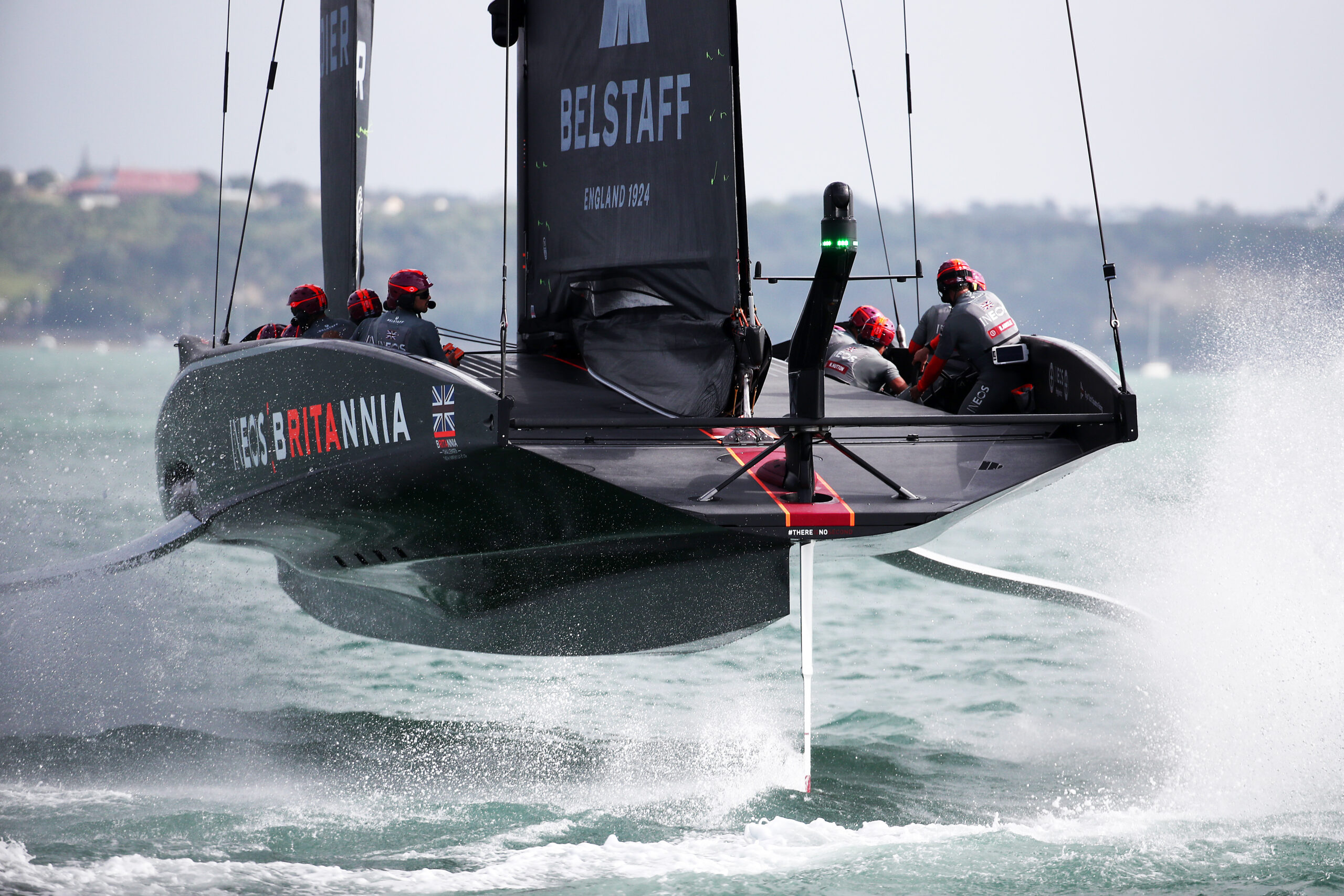
INEOS Britannia in action at the 37th America’s Cup. Photo: Getty Images/Fiona Goodall
Good to know
Pressure doesn’t make you better, but it does reveal what is already here.
That is according to high-performance specialist Rachel Vickery, who led a virtual roundtable for members looking at how they can reduce their athletes and coaches’ allostatic load – that is the cumulative ‘stacking’ of stressors over time that erode the amount of physiological ‘space’ an athlete has between their current arousal level and their personal stress threshold.
The stressors in question can be personal (e.g. a lack of sleep), organisational (e.g. misalignment), performance-based (e.g. being outside your comfort zone), or physiological (e.g. reduced ability to hear or absorb information).
Crucially, as Vickery explained, “as long as your arousal state stays below your threshold, your negative performance will not show up.”
Read more here.
Coach wellbeing
Though often neglected, members of the Leaders Performance Institute gathered to share ideas on how they can better support their coaches.
In one particular World Cup-winning environment, when athletes wanted specialist help, they were asked to book appointments. There was no 24/7 service.
This, their former manager explained, not only developed the self-reliance of the players, but also served to protect coaches and staff members who were all too ready to put themselves out, whether for out-of-hours appointments or “2am emails”.
Read more here.
Aussie rules
In early February we welcomed many of you to Brisbane for Leaders Meet: Australia, where organisations including the Brisbane Lions, Cricket Australia and World Rugby tackled the challenges of the day.
Chief amongst those was the ever-pressing need for alignment.
The Lions’ Senior Coach Chris Fagan favoured strong relationships with senior management; Australian all-rounder Ellyse Perry espoused the value of psychological safety in cricket; and World Rugby Chair Brett Robinson, as an executive, emphasised trust built on clarity from the top.
We picked out five elements for your consideration.
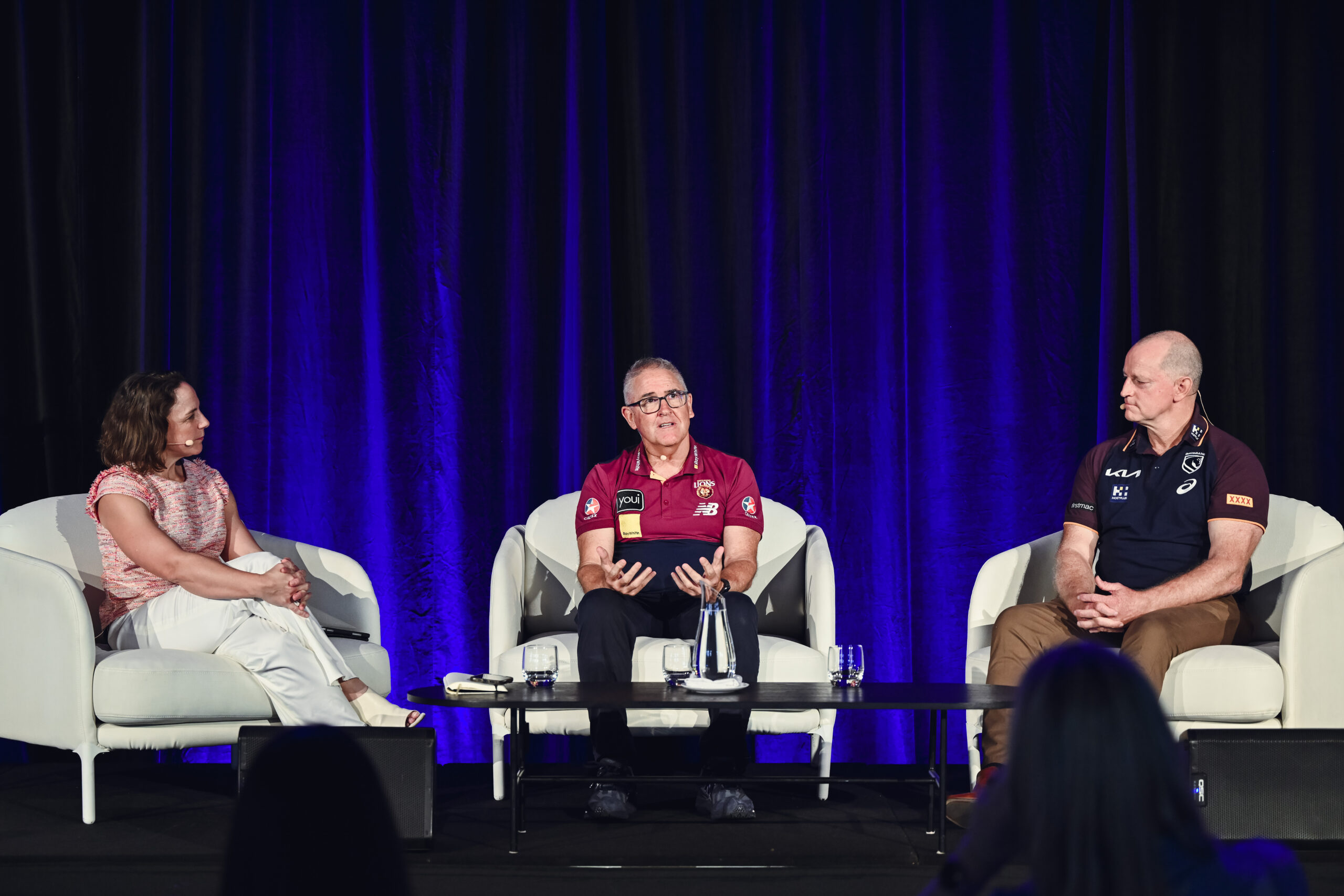
Chris Fagan (centre) in conversation with Michael Maguire (right) and moderator Rachel Vickery. Photo: Albert Perez
One you might have missed
Ben Ashdown and Dr Mustafa Sarkar of Nottingham Trent University pondered the behavioural elements of resilience in young players at football academies in this exclusive interview.
Their research has identified six resilience behaviours:
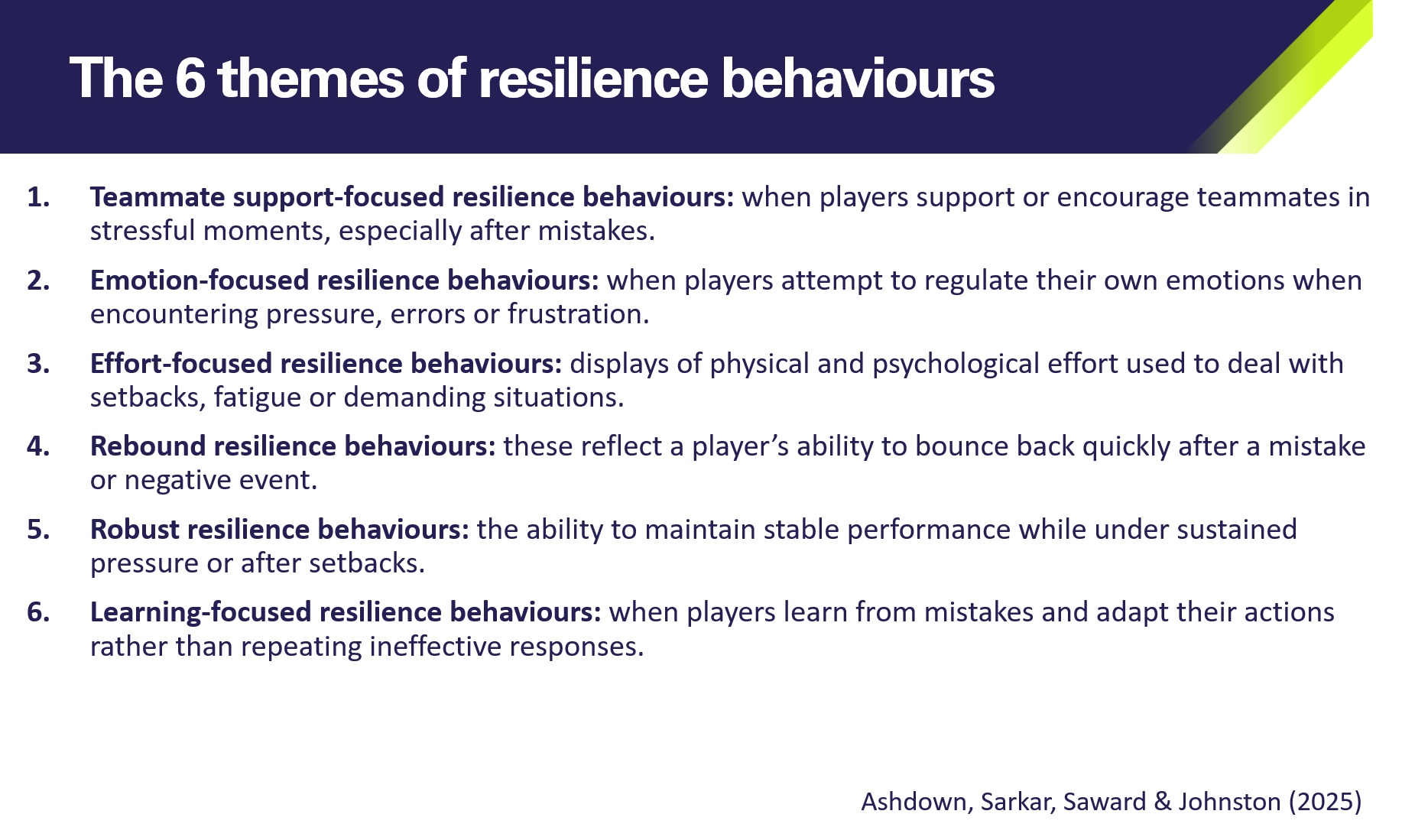
Their hope is to use these six to fashion a tool to help academy staff identify and develop resilience behaviours in their young athletes.
Read more here.
What’s coming up for members
Ben Ashdown and Mustafa Sarkar of Nottingham Trent University are working on a research programme aimed at providing an evidence-informed and objective approach to tracking resilience on the pitch.
Main Image: Thomas Eisenhuth/Getty Images
“Even within the same football academy we’ve seen staff have different views of what resilience is,” Ben Ashdown, a Senior Lecturer in Sport and Exercise Psychology and Lead Researcher at Nottingham Trent University, tells the Leaders Performance Institute on Teams.
“They’ll say ‘resilience is a really important part of our philosophy but actually we don’t really know what it is, we don’t really know how to measure or assess it, we don’t really know how to track it’,” says Dr Mustafa Sarkar, who also joins the call. He is an Associate Professor of Sport and Performance Psychology at Nottingham Trent and Lead Supervisor of the research programme.
Together, alongside Dr Chris Saward, Dr Nathan Cobb, and Dr Julie Johnston at Nottingham Trent University, they are leading a research programme to identify behavioural indicators of resilience in English academy football and develop a resilience behaviours observational tool. As part of the research, they have worked with academy stakeholders including coaches, psychologists, scouts, and analysts. They are also conducting a season-long study at a Category One academy (Derby County Football Club).
Based on their research, they have found that resilience behaviours can be categorised under six themes:
At the end of this research programme, they hope to have developed a tool for sport psychologists and coaches primarily, with some benefit to analysts who might contribute to the tracking of these behaviours through video-based analysis.
Sarkar says: “We don’t necessarily see it as a tool for identifying talent. I think it would be more as a conversation-starter with a player for player development purposes.”
Resilience: a behavioural response
As the exploration, measurement, and assessment of resilience in sport has tended to rely on self-report alone, myths and misconceptions have emerged (such as resilience being related to endurance and the suppression of emotion), and there is a gap between what resilience truly entails and what practitioners witness on the pitch.
“Coaches and support staff are starting to recognise that both physical and mental rest are critical to sustained resilience over time,” says Sarkar who has spent time with academy stakeholders dispelling those myths and misconceptions. “Part of resilience is about helping individuals to develop their thought and emotional awareness. It is not about encouraging people to hide their emotions”.
Additionally, “resilience requires more nuanced (context-specific) language because a person’s resilience in relation to being injured might be quite different to their resilience in relation to a loss of form”.
The behavioural elements of resilience lay at the heart of their research programme.
“We see resilience as a behavioural response,” says Ashdown, “but, up till now, there hasn’t been any literature that has actually asked what do these behaviours ‘look like’? How do we observe them? I think our work, in a behavioural sense, gives us some directly observable, reliable and valid indicators of resilience in football.”
The appeal for coaches, psychologists, and analysts is clear. “They’ve really bought into this idea that we’ve got something to look for on the pitch, and if we can see it [resilience], then maybe we can then develop it and track it over time,” Ashdown continues.
Their initial 2025 study/paper identified 36 behaviours (across six themes mentioned above), which have since been refined to ten. “We retained at least one across the six themes, which is another indicator that they’re pretty reliable.”
These behaviours include: demonstrating supportive actions during pressure or adversity (support-focused behaviour); positive body language in response to stressors (emotion-focused behaviours); and regaining focus in the face of challenges (robust resilience behaviours).
How might coaches approach these behavioural themes in their resilience development work?
The Leaders Performance Institute asks Ashdown and Sarkar about each of the six themes and they give consideration to each in turn with the caveats that a) they should be viewed collectively in order to develop a holistic view of an athlete; and b) the data collection and analysis of their research programme remains ongoing.
When players support or encourage teammates in stressful moments, especially after mistakes.
Ashdown admits that the relational aspects of resilience are more significant than he initially thought. “At times I probably assumed resilience was an individual capacity that you developed almost by yourself without realising that social support (through your teammates) is really significant,” he says.
“Through the work of Ben and others we’re starting to find that resilience is very much relational,” says Sarkar. “The development of resilience is dependent on cultivating high quality relationships. The interesting bit about social support is that we’ve found that it’s not necessarily about getting social support, but it’s about the perception that that support is available to you. From a resilience perspective, the perception is more important than receiving the actual support itself.”
Ashdown then shares a story of academy training drills, at Derby County FC (work led by academy sport psychologist, Lyle Kirkham, and supported by Ashdown), where players had a “secret support partner”. “We tasked some players with, right, when your teammate experiences some adversity or stressor or when they’re under pressure, find ways of offering them support,” he says, adding that the process raised the players’ awareness of how they’re reacting, responding and interacting with their teammates.
When players attempt to regulate their own emotions when encountering pressure, errors or frustration.
While there isn’t yet the data to support a definitive conclusion that emotion-focused behaviours depend on age and phase, as Ashdown explains, “there’s so many points where the participants said ‘we would expect to see a different response from a 10-year-old than one of our under-18s’.”
Emotional maturity is sure to be a factor. He adds: “How these players react and respond to things, particularly at younger ages, it’s a lot more visible, whereas maybe the older players tend to try and disguise how they’re feeling.”
This is a behavioural theme where interdisciplinarity comes to the fore. “We’re working with performance analysts to try and identify these behaviours through video footage and I think we’ll end up with a bespoke set of behaviours based on the phase [foundation, U9-U11; youth development, U12-U16; professional development, U17-U23].”
Displays of physical and psychological effort used to cope with setbacks, fatigue or demanding situations.
What does making an effort ‘look like’ in any sport? “There’s a danger of making assumptions because every player is different,” says Ashdown with reference to both physical and psychological indicators of effort. Their work has talked of pairing GPS data with observations but, as he admits, “this is where we need to be careful and cautious of not mislabelling players based on a perceived lack of effort and we must be aware of individual differences”.
For Sarkar, again, it is more about setting the terms for a player development conversation. He says: “You might come up with a resilience profile to say one player has got hypothetically high effort-focussed behaviours and lower teammate-focussed behaviours, but we see this observational tool more holistically across all six themes”.
These reflect a player’s ability to bounce back quickly after a mistake or negative event.
These need to be channelled. It is no good if a player makes a mistake and runs around like a headless chicken for the next 10 minutes and is sent off.
“One of the participants in our research mentioned that exact point in relation to effort-focused behaviours,” says Ashdown, before echoing Sarkar’s earlier reflections. “The most value in this behavioural approach is the opportunities that it creates for player-coach or player-psychologist reflection.” This, Sarkar suggests, could be a joint review of game video clips where the coach and/or psychologist says to the player ‘talk us through your thought process. What were you thinking and feeling at the time? How might you react and respond differently?’ or it a series of ‘what-if’ questions and scenarios. ‘What if this were to happen in the future? How would you react and respond?’
Sarkar adds that any intervention should be context-specific. “If a player has done that once are we then making an assumption that they’re doing that all the time – is this a one-off occurrence versus a pattern of occurrences? If it’s a one-off, like Ben said, then it’s probing that player about what they were thinking at that particular point in time. But we have to be careful that we’re not intervening based on a one-off versus a pattern.”
The ability to maintain stable performance while under sustained pressure or after setbacks.
Ashdown and Sarkar make the point that robust resilience behaviours risk being conflated with youthful inconsistency – and all its causes – at academy level.
“One of the participants in our research said it’s not about consistency of performance but the consistency of behavioural responses to things. So performance will fluctuate but is there some consistency in the way they’re behaving, reacting and responding?” says Ashdown. “What some of the coaches are after is a flattening of the curve emotionally and the way the players are managing things on the pitch.”
Sarkar believes coaches may be able to use the resulting observational tool as a means of evaluating the efficacy of pressure training scenarios. “What are you, the coach, actually seeing in terms of their reactions, responses, certainly from a behaviours point of view, and as a result of that pressure training, are you actually seeing an increase in some of the resilience behaviours in relation to these themes?”
When players learn from mistakes and adapt their actions rather than repeating ineffective responses.
Pressure training also presents an opportunity for self-reflection and learning through its video component – this is the ultimate purpose of this resilience behaviours work. “If we’re aware of that, can we support them in navigating those more effectively when they’re inevitably going to come up on the pitch?” says Ashdown.
“We don’t learn from experience, we learn from reflecting on experience,” says Sarkar, paraphrasing the American educational reformer John Dewey. “Pressure training shouldn’t just be about putting people under pressure in training and then automatically assuming somehow that they’re going to develop their resilience to future situations?”
At Derby County, led by Kirkham and supported by Ashdown, they have also introduced a series of gamification principles in delivering education and feedback at the academy through a resilience behaviours lens. This includes FIFA-style cards for players, and a football-specific version of snakes & ladders to mirror the ups and downs of the academy journey.
The future of resilience tracking
When it comes to resilience, coaches are acting on intuition, which is valuable but ultimately has its limitations.
“We’re trying to make that process more objective and systematic; hence this is where the interdisciplinary piece comes in,” says Ashdown. “We wouldn’t expect coaches in the moment in the game to be thinking about necessarily tagging or noting these behaviours. We might ask the analyst, with support from the psychologist, to do live coding or tagging of these behaviours or retrospective tagging based on the recording. That would then lead to conversations with the players. With this work, there’s a big opportunity to bring together coaching, performance analysis, and psychology.”
Sarkar explains that they are using the behavioural data to create a resilience profile for players across the noted behaviours. “That gives you a holistic viewpoint,” he says. “A player might have higher team-focused resilience behaviours and slightly lower effort-focused resilience behaviours and a medium level of learning-focused resilience behaviours. So, it gives you a nice overall resilience profile of an individual.”
The hope is that their work will eventually provide an evidence-informed and objective approach to tracking resilience on the pitch.
“It can also then become part of the everyday conversation with multiple staff. So rather than just a conversation in relation to psychology, it’s a broader conversation about player development.”
What to read next
Playfulness and Resilience: How Ballet and Music Schools Link Them Together to Amplify Both
Haas F1 Team Principal Ayao Komatsu manages pressure and expectations at his team with a blend of challenge and support.
Not that he watches it, as he told the audience at the 2025 Leaders Sport Performance Summit.
“When I’m doing my job, if I even for a moment think about what I say or how I behave or how I’m perceived by a TV audience, then I can’t do that job,” said the Team Principal of the Haas Formula One team.
Those inhibitions, he explained, “could be the difference between me making the right decision or not” during a race.
Not that Komatsu is unaware of the influence he has as a leader. Google his name and the images that spring up tend to depict him holding a microphone at a press conference or media engagement. In that sense, Komatsu’s onstage appearance in London – just days after November’s Brazilian Grand Prix and a 12-hour flight – is no different.
“When you’re doing a media session that is an opportunity for us to tell our story, who we are,” he added.
Who they are is Formula One’s smallest team, both in terms of staff size, budget and infrastructure, but with a hard-earned reputation for punching above their weight under Komatsu’s stewardship.
In the year prior to his elevation, Haas finished tenth out of ten, which was in keeping with their size but below the expectations of team owner Gene Haas.
Komatsu, who previously served as Haas’ Chief Race Engineer, took the reins from Gunther Steiner ahead of the 2024 World Championship and led the team to seventh in the Constructors’ Standings; in 2025, they finished eighth.
He puts it down to an organisational structure that “promotes and forces communication and helps people to get to know each other”. “If we cannot work together, we’re not supporting each other, if we’re not aligned, we’ve got zero chance against organisations that are a minimum three times, sometimes four times larger”.

Ayao Komatsu onstage at the 2025 Leaders Sport Performance Summit at the Kia Oval in London.
Over the course of 35 minutes, Komatsu set out what it takes to manage the pressure and expectations of building on Haas’ successes while keeping in touch with Formula One’s leading lights.
Komatsu understands that you can’t chase results under pressure
Chronic pressure eventually leads to diminished performance. Komatsu found this out to his cost at the 2025 British Grand Prix at Silverstone.
“My mindset approaching the race was completely wrong,” he said. “I was really trying to force the result because I knew we should be scoring lots of points.”
Haas had spent considerable time and resource developing their car prior to Silverstone and knew that their drivers, Oliver Bearman and Esteban Ocon, could claim high finishes. Instead, the duo collided on the 43rd lap and finished pointless.
“What happened was really instead of letting the race come to you, doing your best, focusing on yourself, you are just focused on the result.”
It was a rare misstep for a leader who tries to give his staff “breathing space” and “a chance to think more about what they do rather than chasing it, because that’s not sustainable”.
Nevertheless, he pushes people out of their comfort zone each day
Komatsu said: “Our people are not afraid of failure. If you’re afraid of failure, nobody’s going to move.”
The right balance of challenge and support can enhance both focus and motivation.
“You’ve got to give people a clear message that, ‘come on, you’ve got to take yourself out of your comfort zone every day’,” he added. This is Komatsu’s non-negotiable. “If you haven’t taken yourself out of your comfort zone once a day, actually, I don’t think you’ve done your job.”
Komatsu encourages calculated risks that build confidence
Whenever crisis strikes, Komatsu has a well-planned contingency to relieve collective stress.
One such occasion was at the first race of the 2025 season, in Melbourne, where the Haas cars just “did not function”. Ocon qualified in last position, while Bearman could not even set a qualifying time and was required to start the race from the pit lane.
“That was a really testing time,” said Komatsu. But the team had discussed this very possibility for the past four months. They knew the car would either fly, flop or achieve something in between. In the event, the car flopped.
Their response to that race weekend was governed by the new car regulations coming in for the 2026 season. Most teams began to focus on their 2026 cars not long after Melbourne. Haas, with their comparatively modest resources, had no choice but to develop their 2025 car further because, as Komatsu said, “one place in the Constructors’ Championship is worth millions”. “So to make next year’s budget work, with brand new regulations, you’ve got to keep spending money to develop the car.”
He is proud of what happened next. “We just got on with it,” he continued. “I gave the team a clear objective; what is not acceptable, what we need to achieve. I didn’t tell them how. I listened to them and they came up with the solution and took the risk.”
While the true outcome “will only be known in January or February”, the 2025 car did improve and so did the team’s standing.
“For me, more than that sporting result, more than the lap time we gained, the important thing is the confidence this gives the people of the organisation; it’s priceless.”
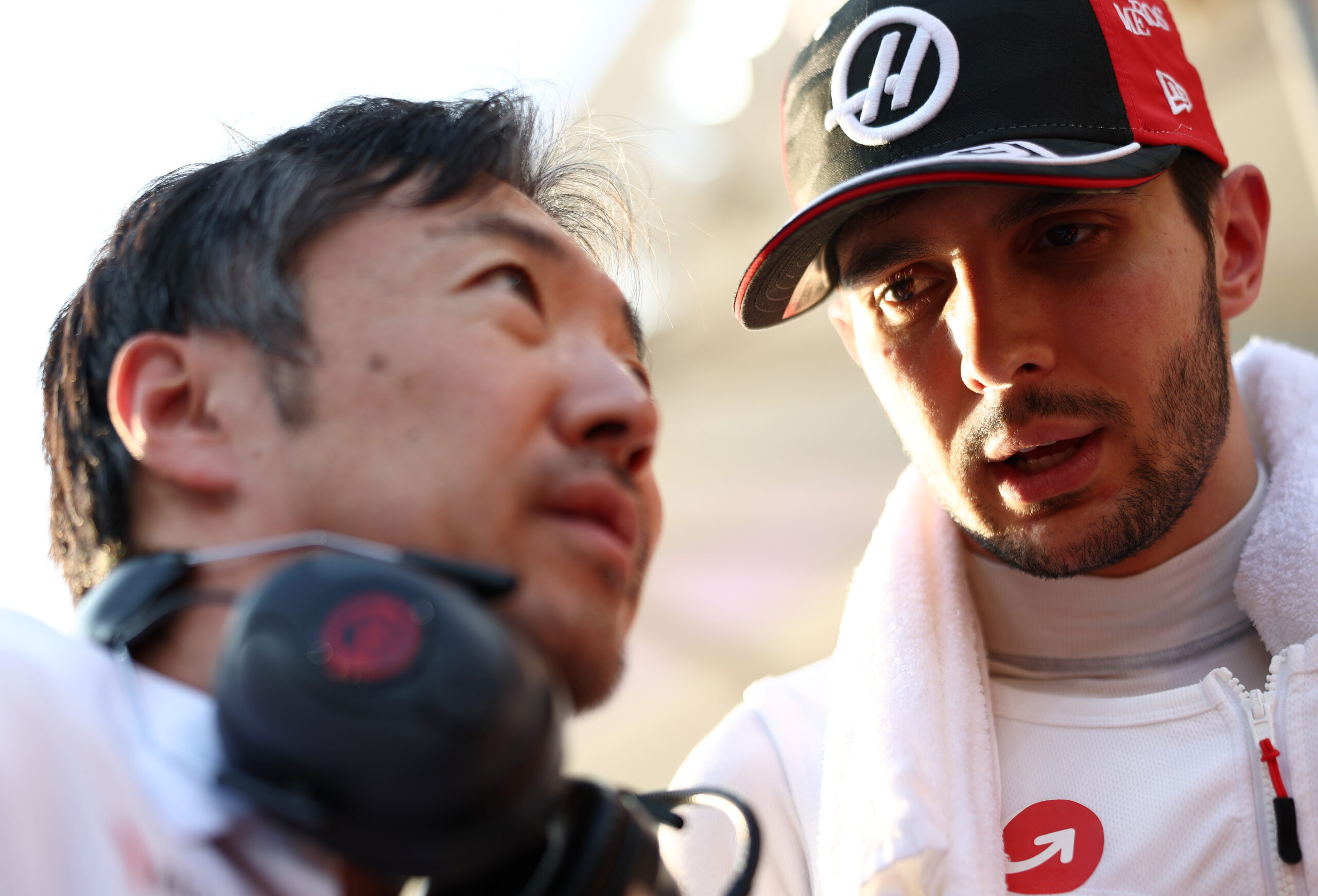
Ayao Komatsu and Esteban Ocon talk on the grid prior to the F1 Grand Prix of Abu Dhabi at Yas Marina Circuit in December 2025.
He has also cultivated a ‘no blame’ culture
In removing the fear, providing breathing space, and giving people latitude to solve their own problems, Komatsu has cultivated a ‘no blame’ culture.
He took public responsibility for the collision at Silverstone but later spoke to Bearman and Econ about what went wrong. He let them air their grievances and decide the future rules of engagement when their cars are in close proximity mid-race.
“I said, ‘look, until the next race, we’ve got two weeks. Take your time, you put everything on the table and, by next week, can you come to an agreement? If you don’t come to an agreement, I’ll tell you what we need to do’,” said Komatsu while fully aware that neither driver wants to be told what to do by anyone else.
“The important thing here is that full transparency,” he added. “I don’t have any other agenda than wanting both of you to perform; the team to perform. I’m not biased towards one driver or the other, but then again, sometimes I have to make a decision that will disadvantage one of the drivers, but as long as this guy knows that I was making that decision purely based on the interest of the team, as long as you’ve got that respect and transparency, it’s fine.”
When Ocon signed with Haas ahead of the 2025 season, some external observers harboured reservations due to his supposedly difficult character. Komatsu, having worked with Ocon for more than a year, is having none of that.
“I knew that it’s got a lot to do with the respect between the team and the driver, transparency, and then providing that safe space. I was very confident that we could provide that environment.”
What to read next
In the third and final session of our Virtual Roundtable series ‘Leading in Complexity’ John Bull of Management Futures explores the skills and tools that enable a leader to be more adaptable in the face of change.
The Director & Lead for High Performance Research at Management Futures hosted the third and final session of our Virtual Roundtable series entitled ‘Leading in Complexity’.
Bull wanted to encourage Leaders Performance Institute members to reflect on their own role as an adaptive leader and pinpoint some areas for self-development.
But, as he admitted, this is easier said than done. He recalled a conversation he had with his colleague Tim Cox, who led sessions one and two, and our own Luke Whitworth.
“We reflected that it takes energy to spot the necessary changes,” said Bull. “It probably feels like it then takes even more energy to then try and lead the change in the face of resistance.”
There are, however, skills to be learned and tools available to all leaders.
Four inhibitors (and four more)
In session two, Cox outlined four common ‘traps’ that can inhibit your ability to be adaptable.
They were:
You can read about these in greater detail here.
At the start of this session Bull added four additional traps suggested by the Leaders Performance Institute members who have attended this series:
“You know the end of this sentence,” said Bull, who introduced the table to the work of British organisational theorist Charles Handy, specifically his 2015 book The Second Curve: Thoughts on Reinventing Society.
Handy wrote: ‘The nasty and often fatal snag is that the Second Curve has to start before the first curve peaks.’
“You need to start reinventing almost on the peak of the curve before your competitors do,” added Bull.
Sports, as Bull pointed out, tend to recruit leaders from within the realms of their own sport. “The implication of that is that the sport is lacking some cognitive diversity,” said Bull.
As an antidote, he cited the example of British Cycling’s ascendancy in the late 2000s under Sir Dave Brailsford. “The two biggest breakthroughs in British Cycling came from Australian swimming [equipment design] and in introducing a clinical psychiatrist.”
All change requires a leap of faith. “This inhibitor is linked to the traditional,” said Bull, “but where an organisation may be very risk averse that can get in the way of adaptation.”
This was a major area of focus in our recent Trend Report.
Bull said: “The more alignment you have, the faster you will be able to pivot and adapt as a team.”
Why mindset matters when it comes to adaptability
Put simply, a leader’s mindset influences how they perceive, respond to, and lead through change in complex environments.
Bull then led the virtual room through six areas that demonstrate why mindset matters:
‘Radically traditional’ is a term coined by Professor Alex Hill to describe organisations that have thrived for over a century through an adherence to tradition allied to a willingness to adapt.
“The key insight out of that work is: in order to be able to be adapt, you have to be really clear on what doesn’t change,” said Bull. “It’s about being really clear on what is the core that we want to safeguard, what is what is now out of date. It’s having a balanced view and doing both at the same time.”
Bull used neuroscience to make his point here. “If we are threatened by the uncertainty we’re going to go into fight or flight mode,” he said. “And as we all know we’re going to be less resourceful in fight or flight as opposed to seeing it as an opportunity.” This is what sets adaptable people apart. “They’re calmly ready for it, they’re calmly in alert. Their radar is on and, if you can relish the uncertainty and dial up that part of your personality that relishing it, your brain’s going to be operating at its best. You’ll have all the feel-good hormones of serotonin, endorphins, dopamine and oxytocin.”
Bull is fond of the phrase ‘situational humility’, which was coined by renowned psychologist Amy Edmondson. “If we’re operating in a domain where we have a lot of expertise it’s recognising there’s still going to be stuff we don’t know,” he said.
He built on his point by introducing the work of philosopher Julia Galef, who has outlined what she calls ‘scout’ and ‘soldier’ mindsets:
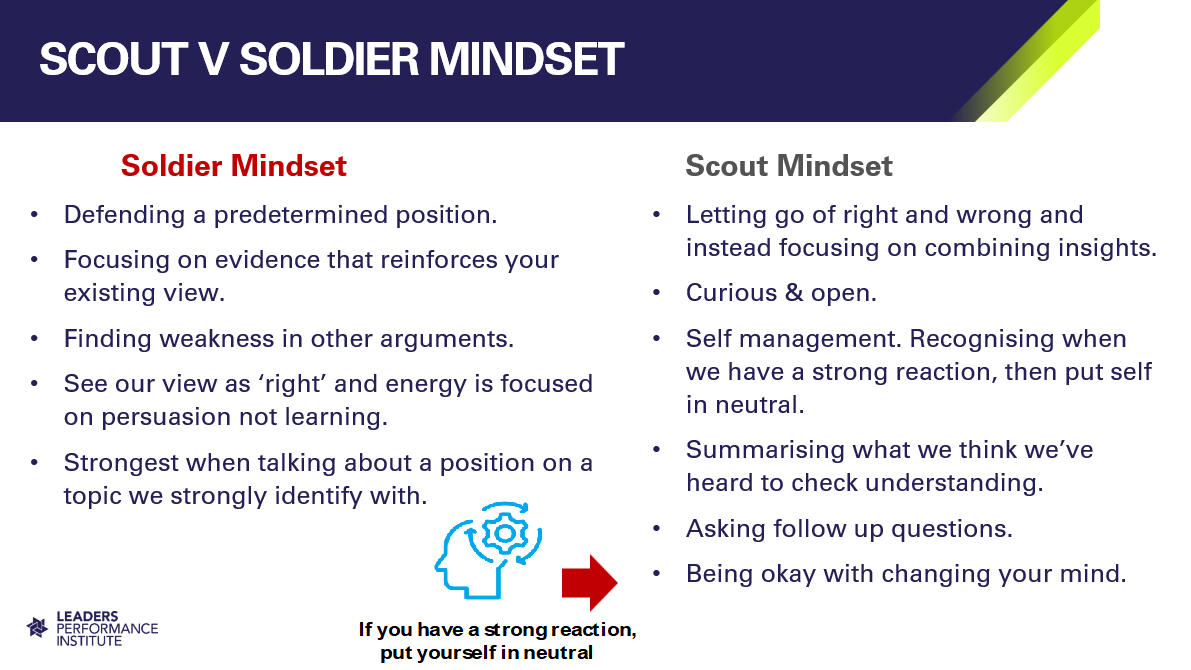
A scout mindset, such as when a scout might draw a map, is essential when learning and adapting. “It’s about acknowledging we might know some elements of the map, but large parts of the map are still undrawn,” added Bull. “It’s not ignoring that we have expertise, but it’s looking for what’s missing.”
On the other hand, a soldier mindset is counterproductive because, as Bull said, “most of our energy is going to influencing other people to see things our way as opposed to learning from what we’re missing.” It can also help, as Shona Crooks, a colleague of Bull’s from Management Futures says, to ‘put your brain in neutral’.
“From a mindset point of view, this is about where’s our energy going?” said Bull. “Is our energy going to what we can’t control? Or is our energy going to the element of that which we can control?”
Bull said: “Do we focus on learning from failure and finding opportunities where the failure has low consequences?”
This is “the courage to speak up, challenge and name a need to adapt even when that’s really unpopular,” said Bull of the term commonly used in marketing. “There will be some elements of what the sport does or what the organisation does which has served your team incredibly well in the past, which you might feel needs revisiting. That’s going to get the strongest reaction, but sometimes that’s important to show that courage.”
The group were then invited to rank themselves, strongest to weakest, on their ability in each area:
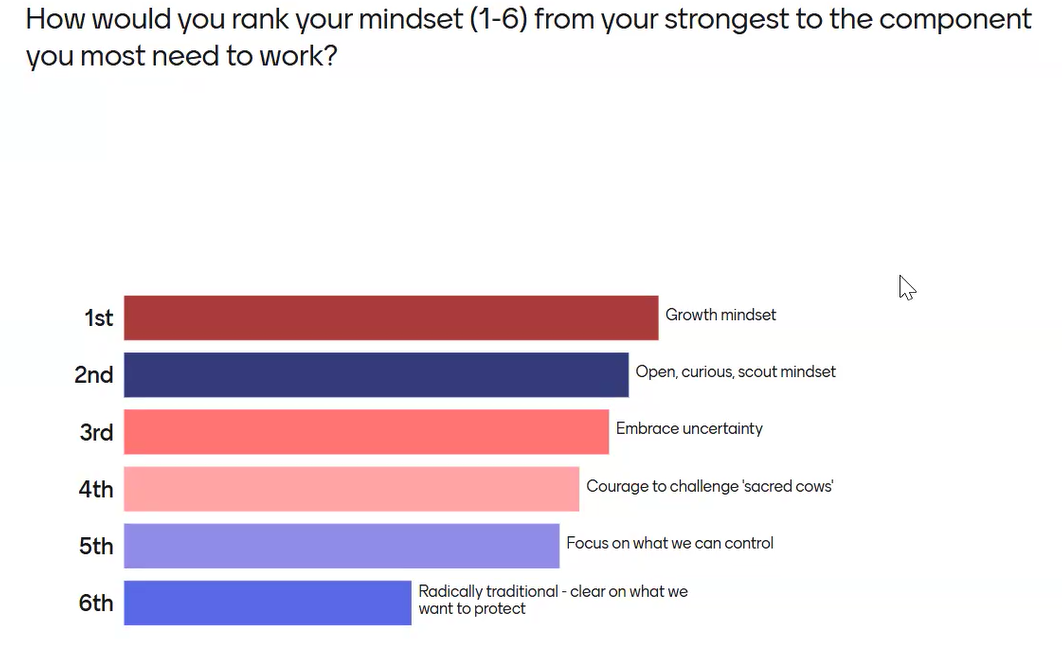
“The common component is emotion,” said Bull in reflection.
How we respond to challenges is critical and, to follow up, he shared eight important adaptive leadership skills needed in complex environments:
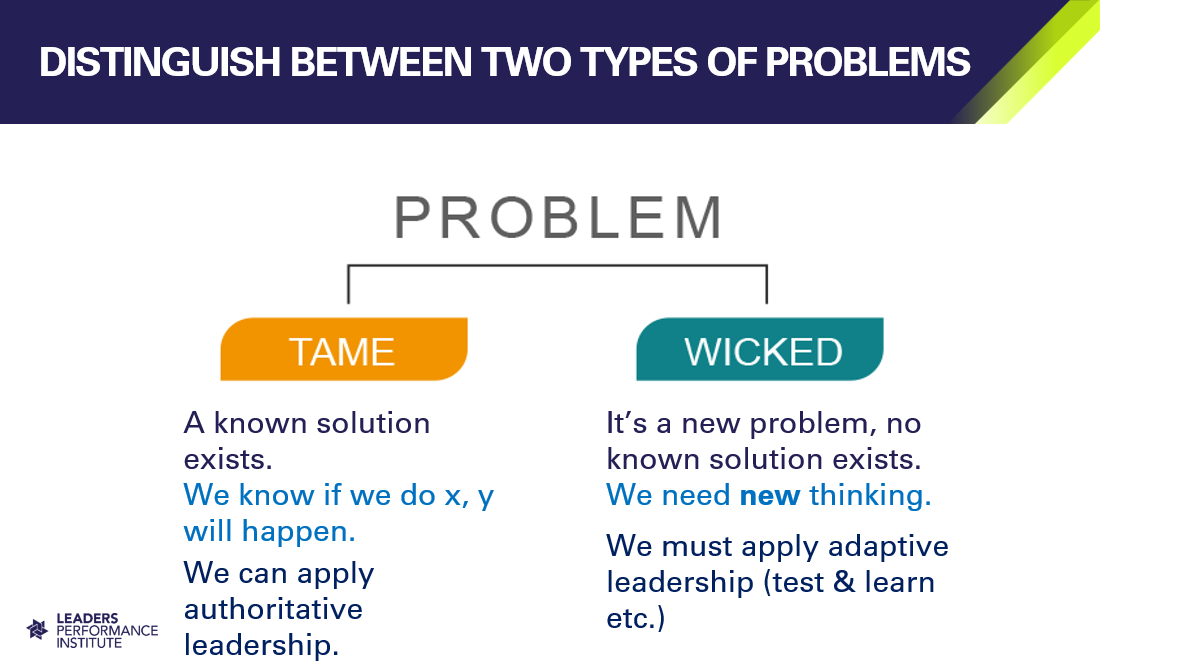
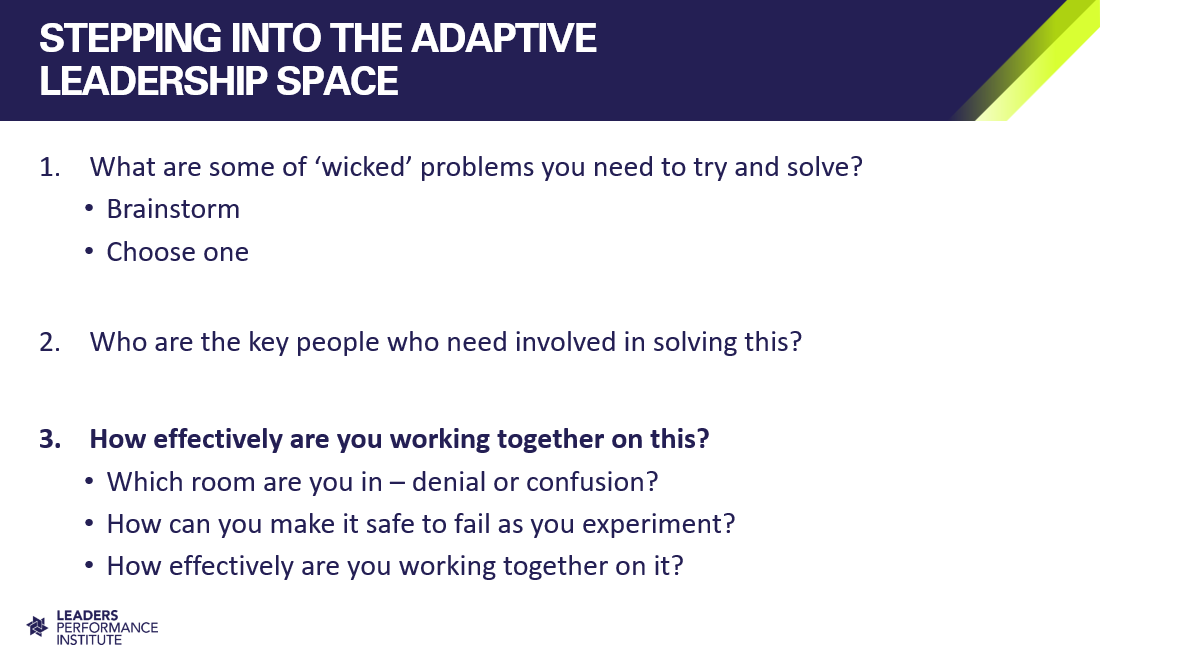
“The leadership required around a tame solution is very different to the leadership skills required around adaptive leadership and solving a wicked problem,” said Bull. “And where a lot of leaders and organisations get into trouble is where they treat a problem that is wicked as though it’s tame and they try and just implement a simple solution; and it doesn’t work or they try and ignore the problem.
“One of the key skills is how do we spot when we need to go into adaptive leadership mode?”
Again, attendees were asked to rank themselves on each of the eight suggestions:
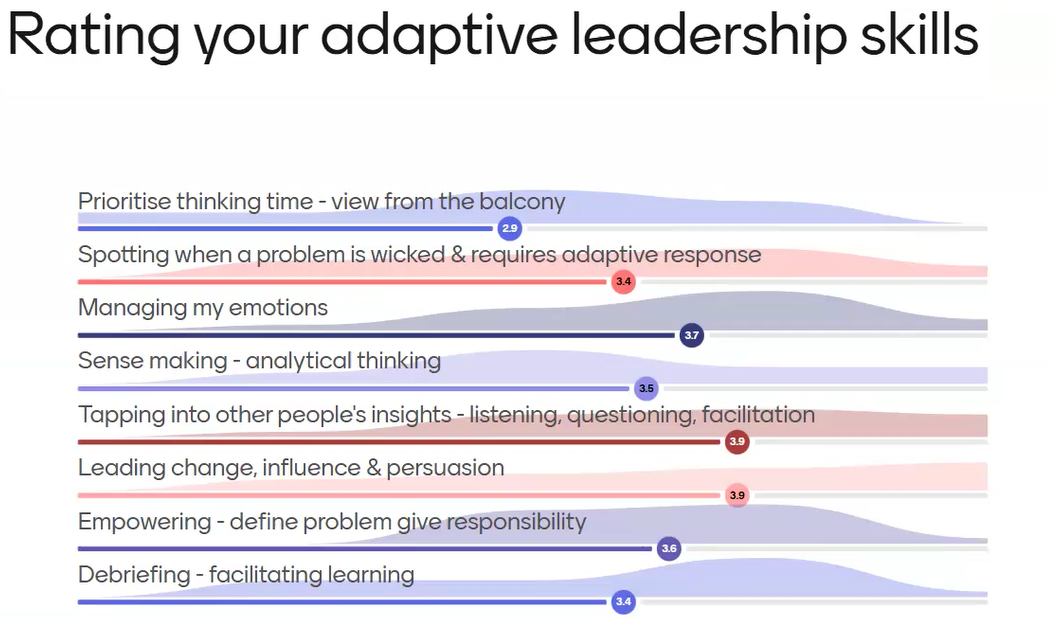
Bull believes the snapshot provided by the above bodes well for sport. “I’m struck, relative to outside of sport, how strong people are generally scoring on the ‘leading change, influence, and persuasion’,” he said. “That’s a positive strength to be able to bank here because, in our experience, and if you look at the research around this, that’s often the skill that most holds back adaptive leadership.”
To wrap things up, Bull shared eight tools to help leaders be more adaptive:
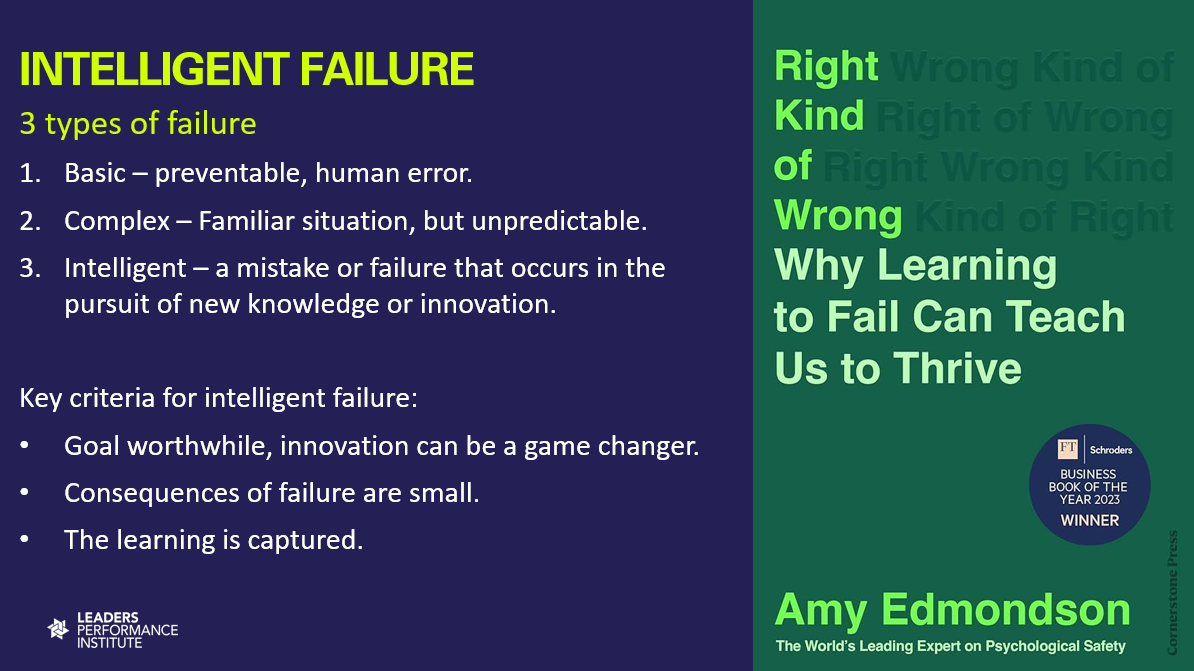
“So what she would say is in organisations that that have a more mature attitude to failure will find opportunities to do ‘intelligent failure’.”
In her book Right Kind of Wrong: Why Learning to Fail Can Teach Us to Thrive, Edmondson outlines three types of failure and the conditions for ‘intelligent failure’:
Final task
Bull concluded by setting the virtual room a task to consider in their own time:
What to read next
Ian Walsh of Red Bull is renowned for his meticulous approach to tackling some of the biggest waves on the planet. Here he shares his wisdom with the wider sporting community.
Main Image: Fred Pompermayer / Red Bull Content Pool
“In every other part of my life there’s a million things going on. I feel like I always have ten balls in the air. Did I forget to take the laundry out? Did I put it in the dryer? I have bills to pay, groceries to buy. And surfing is one of the few places in the world where that all just drifts away.”
This level of focus may sound familiar to athletes, but the stakes of big wave surfing are something else entirely. One false move and Walsh risks serious injury every time he mounts his board.
Walsh has built a career on his coolness under pressure, which is why he was invited to share his insights at the Leaders Sport Performance Summit at Red Bull Media House in Santa Monica last year.
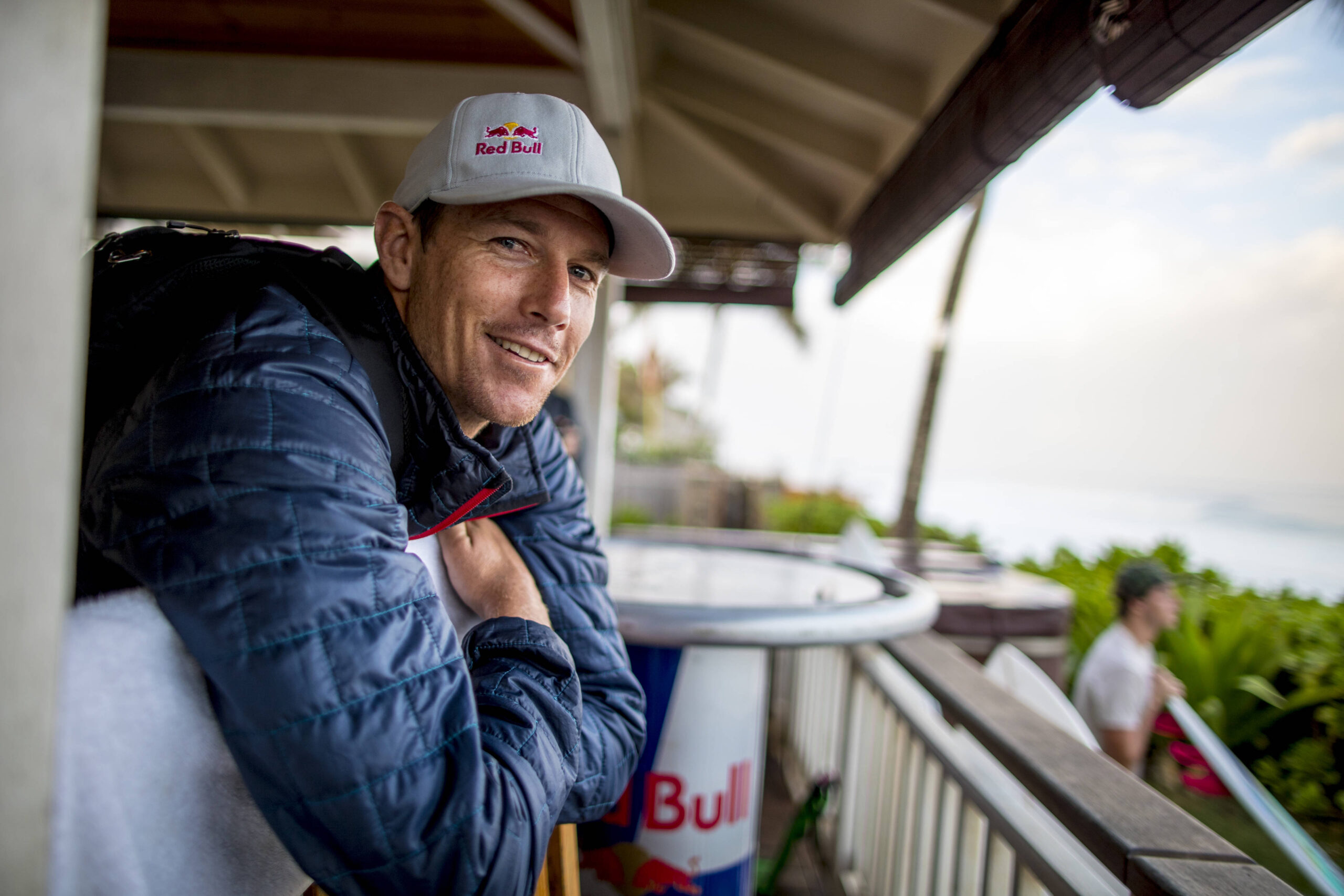
Ian Walsh poses for a portrait at the Volcom Pipe Pro on 4 February 2018, on the island of Oahu, Hawaii, USA. [Zak Noyle / Red Bull Content Poo]l
1. He acknowledges and harnesses his fear
“Those nerves and everything you fear are natural, and you can use that to elevate your performance,” said Walsh. “It commands every ounce of your being and your focus to deal with what’s coming at you and how you want to navigate it to try and finish on your feet.”
This ability comes with “repetitions and time”. Walsh was in town for a training block at Red Bull’s state-of-the-art Athlete Performance Center ahead of the northern hemisphere summer season. “I’m going to take full advantage of having this amount of time in a facility like this,” he added. “It gives me the chance to push myself in a controlled environment.”
2. He keeps his ‘smart brain’ online
Walsh can keep his ‘smart brain’ online under pressure. It is a term often used by high-performance specialist Rachel Vickery. “Have you got enough buffer in the system to absorb that natural increase in arousal state peaking?” she said on the Leaders Performance Podcast in 2023.
“Every human has a threshold that basically says if my arousal stays below my threshold or below my red line, I can perform in a way that I’ve got a lot more control of. If I’ve got more buffer in the system, so to speak, then when I get the normal increase in arousal it’s still under control and it’s not shooting me across the red line.”
In Walsh’s case, he de-escalates and grounds himself through the ‘breathe-up’ technique, which is a cycle of diaphragmatic breathing aimed at lowering his heart rate and preparing his body to stay relaxed underwater for an extended period.
Additionally, thanks to training alongside Red Bull freediver Kirk Krack, Walsh has learned to hold his breath underwater for up to five minutes. “It’s creating situations where I could elevate my heart rate and then get into a breath hold and understand how my body is going to react and eventually adapt to those scenarios.”
“It’s a skill in and of itself to then go, ‘how do I apply that once this physiological threat response kicks in? How well am I able to adapt and adjust and execute when all those changes happen?’” said Vickery, who would no doubt approve of Walsh’s strategies.
3. He already knows what to do when things go wrong
Walsh has long had a firm interest in meteorology and bathymetry [the study of the seabed, lakebeds and riverbeds]. He can pinpoint with reasonable accuracy when and where the most suitable swells will appear during both the northern and southern hemisphere surfing seasons. He said: “The reason it evolved to so much precision is to give myself as much of an opportunity on those special days as I can, because those days are rare and everything can change so fast on those mega swells.
He then readies his equipment and support team. “By having my preparation done, I can get absolutely smoked on a wave, break my board, everything gets washed onto the rocks, but I have everything ready to go again. I can go right to the boat or the jet ski, get my second board, catch my breath, make sure everything’s good and then get back into the lineup within 15-20 minutes.
“If you don’t have that ready, you could spend two hours dealing with it and it could be another month to six weeks or even the next season when you get another opportunity to push yourself in that calibre of surf.”
His meticulousness extends to listing and ranking restaurant menus in different locations. It drives his partner up the wall. “I take it into my normal life and my girlfriend can attest to how annoying those details are.”
Jokes aside, Walsh’s approach calls to mind the words of mountaineer Kenton Cool, who once told an audience at a Leaders Sport Performance Summit: “People often think of extreme adventure athletes as possessing a ridiculous appetite for risk, that we’re reckless, foolhardy and make illogical decisions. In reality, it’s quite the opposite.”

Ian Walsh photo session for The Red Bulletin, Los Angeles, 19 July 2024. [Maria Jose Govea / The Red Bulletin]
Walsh’s near-catastrophic failures have taught him to be humble when ironing out creases in his performance. “Letting go of some of your ego will create a lot more latitude for opportunities,” he said. “Maybe I did get annihilated on that wave, but I was also an eighth of an inch from making it.”
Walsh studies film of his efforts. He is also a comprehensive note-taker. “I can go back and be like ‘this swell angle, these winds, these tides are shaping up like January 10, 2004 [a date on which he suffered a severe injury – one of several throughout his career]’.” He can then tell himself “maybe I should have ridden this forward or tried those fins. Maybe our water safety protocol could have been a little more buttoned-up.”
What to read next
Alex Hill, the Co-Founder and Director of the Centre for High Performance compelled the league to consider its own mortality before suggesting ways it can ensure its relevance a century from now.
A podcast brought to you by our Main Partners

On one such occasion, Hill, the Co-Founder and Director of the Centre for High Performance, compelled senior leaders at the Premier League to confront its own demise.
“I said: ‘at some point people will not want to work for you’. Now that feels impossible at the moment,” Hill tells the Leaders Performance Podcast.
How did that observation go down?
“It was quite a quiet room,” Hill says. “At the moment, they’re lucky they’ve got the pick of the best talent, the best physios, the best scientists – but that might not be there forever.”
Hill spent 13 years studying organisations that have out-performed their peers for over 100 years, including the All Blacks, Eton College and the Royal Shakespeare Company. The result is his book Centennials: The 12 Habits of Great, Enduring Organisations.
“If you want society to support you long term, your impact has to be much broader than just creating role models,” he continues. “Why don’t you take the learning from being at the cutting edge of mental and physical performance and share that?”
Hill believes that the British national governing bodies competing at the Olympic and Paralympic Games could feed those lessons back into the community in the form of a “spin-offs division” similar to that of NASA (another centennial).
“This spin-offs division [could be] designed to take that learning and feed it into all of society so that the whole of our country develops.”
It is just one idea Hill shares during the course of a conversation full of advice for sporting organisations. He spoke of the New Zealand All Blacks and their readiness to embrace failure [40:20]; finding smarter ways to attract money and talent [10:45]; and why a diverse talent pool can make an organisation more relevant to a broader swathe of society [17:15].
Henry Breckenridge X | LinkedIn
Listen above and subscribe today on iTunes, Spotify, Stitcher and Overcast, or your chosen podcast platform.
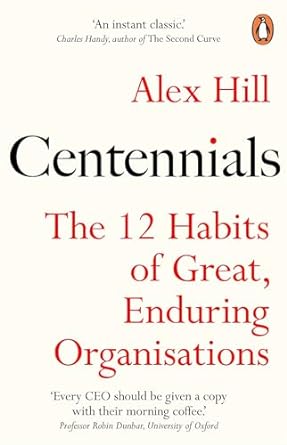
Alex Hill’s Centennials: The 12 Habits of Great, Enduring Organisations is now available in paperback from Cornerstone Press / Penguin Random House
Adaptive growth sat at the heart of the Leaders Sport Performance Summit in Los Angeles. Discover the insights to propel you to greatness courtesy of the arts, academia and, of course, the world of sport.
An article brought to you by our Event Partners


“We choose to go to the moon in this decade and do other things, not because they are easy, but because they are hard,” said the US President at Rice University on 12 September 1962.
Those words, undiminished by six decades of distance, might have become a monument to presidential hubris had NASA’s Apollo program failed to land Neil Armstrong and Buzz Aldrin on the moon. Instead, Kennedy’s vision galvanised his nation and, allied to federal resource, gave the program the impetus it needed.
NASA’s ‘moonshot’ has since become a byword for ingenious and audacious projects that showcase adaptive growth. That is: being adaptable in the face of change and challenges, continuously striving for growth and improvement, learning from your experiences and making strategic decisions that drive progress and innovation.
Moonshots were a theme of the recent Leaders Sport Performance Summit at Red Bull in Santa Monica, with Jennifer Allum, who is part of the leadership team at Alphabet’s X, The Moonshot Factory, taking to the stage to discuss an environment where audacity is a prerequisite.
It was a marvellous start to proceedings on the morning of day one but, in truth, other themes discussed across both days, from talent and creativity to strategic thinking and resilience, just as readily point to adaptive growth.
Here, inspired by the worlds of sport, the arts and academia, we touch upon seven factors that can help to fuel your own moonshot, whether you’re taking your first small step, sustaining your early momentum, or looking to make a giant leap.
Harvard professor Clayton Christensen observed that large, established organisations do not always take advantage of potentially disruptive technologies and trends, while newer and less-established organisations often do. In his 1997 book The Innovator’s Dilemma, he explores the tension between sustaining existing products and embracing disruptive innovations.
Allum discussed the concept onstage in front of an audience where ‘failure’ is a common bedfellow. She understands that Alphabet, the parent company of Google, could easily fall prey to the Innovator’s Dilemma. So while X, The Moonshot Factory performs an instrumental role in delivering ‘moonshot technologies that make the world a radically better place’, there are myriad failures that pile high on their factory floor – and Alphabet wouldn’t have it any other way because they perceive failure as a learning opportunity rather than a threat.
Allum’s top tips for avoiding the Innovator’s Dilemma:
Jennifer Allum, leadership team, X, The Moonshot Factory
Long-established teams can all do better, but what of those just starting out, particularly in women’s sport? How can a beginner’s zeal be channelled into establishing a stable, long-term concern? Those are two of the questions currently facing NSWL expansion team Bay FC and their WNBA counterparts the Golden State Valkyries.
It is an exciting time for women’s sport but there are pitfalls to be avoided:
Lucy Rushton, General Manager, Bay FC
Ohemaa Nyanin, General Manager, Golden State Valkyries
Is yours a creative learning environment? Either way, you’d do well to listen to the Westside School of Ballet (LA’s most successful public ballet school) and the UCLA Herb Alpert School of Music – what can such schools teach the world of sport about the creation of learning environments that encourage improvisation, experimentation and intrinsic motivation?
It begins with a love for the art form and a welcoming ecosystem that allows the freedom to explore:
Adrian Blake Mitchell, Associate Executive Director, Westside School of Ballet
Eileen Strempel, Dean, UCLA Herb Alpert School of Music
As a leader, strategic thinking is in your remit, but do you ever include protecting your energy as part of the equation? “An organisation can’t outpace its leaders,” said author Holly Ransom onstage in Santa Monica. “So there’s nothing more important than working on ourselves as leaders.”
How to show up each day:
Holly Ransom, author, The Leading Edge
No matter your level of success or the smoothness of your systems, high performance can exact a large toll if your stakeholders are not resilient. As Red Bull US CEO Chris Hunt explained, a leader’s first job is to engender trust amongst their team. There’s no instant solution – you have to advocate for people and stand up for your values time and again.
How can people in high performance develop their resilience?
Chris Hunt, CEO Red Bull US, Red Bull
As a big wave surfer, Red Bull’s Ian Walsh is well-placed to discuss performance under pressure. He took to the stage to discuss the strategies that serve him well out on the surf.
Pressure points:
Ian Walsh, big wave surfer, Red Bull
Technology at its best can inform your decision making and, as Fabio Serpiello, a professor at the University of Central Queensland, told the audience at Red Bull, there are steps you can take to ensure you’re using the right technology and datasets.
Ensure you’re staying on top of tech innovations:
Fabio Serpiello, Director, Sports Strategy, University of Central Queensland