Leaders in Business
  • Membership
  • Events
  • Content
  • Virtual Learning
  • Connections
  • Partners
Login
  • Leaders Week London
  • Events
    • Leaders Week London
    • Leaders Sports Awards
    • Leaders Club Events
    • Leaders Performance Institute Events
    • Leaders Meet: Innovation
  • Memberships
    • The Leaders Club
    • Leaders Performance Institute
  • About
    • Careers
    • Contact
I’m a sports leader:
  • Off The Field For those focused on the business of the sport View more
  • On The Field For those working with an athlete or elite team View more
  • Login
    • Leaders ClubThe membership for future sport business leaders
    • Leaders Performance InstituteThe membership for elite performance practitioners
  • Newsletters
Performance Institute Leaders Performance Institute Logo
  • Membership
  • Events
  • Content
  • Virtual Learning
  • Connections
  • Partners
Login
Members Only

22 Sep 2022

Articles

Do your Coaches and Athletes Believe in your Sports Science?

Category
Human Performance, Leadership & Culture, Premium
Share
Facebook Twitter Email Copy Link
https://leadersinsport.com/performance-institute/articles/do-your-coaches-and-athletes-believe-in-your-sports-science/

Brandon Stone of the Toronto Blue Jays explores four factors to promote buy-in.

A Human Performance article brought to you by our Main Partners

By John Portch
At the Pac-12 Conference Media Day in the summer of 2021, UCLA football Head Coach Chip Kelly revealed his phrase: TBU – ‘true but useless’.

“If it’s true but useless,” he told the gathered media. “I don’t really share that with our team.”

The Leaders Performance Institute cites that moment when speaking to Brandon Stone, the Sports Science Coordinator at the Toronto Blue Jays. Coach Kelly was referring to a game that took place two years earlier – but could ‘true but useless’ apply to the application of sports science as a team?

“If you walk into a room as a sports scientist and you feel that you have to say ‘the rate of force development is at the 50 millisecond epoch’ or ‘you’ve got to start an assessment with the upper quarter YBT’ – if you always have to be that technical and you can’t generalize it or apply it– to me that isn’t science,” says Stone, who previously worked in Olympic and Paralympic sports, college sports, and with the military.

“We have to bring the lab to the field and make sure it answers questions that are relevant to the work our coaches do every day. If it can’t be applied, it isn’t useful.  I’m not going to get caught up in a term that would prevent me from connecting with coaches. If they use ‘workload’ and they don’t really mean work in joules, then use another term. It’s the same if they say ‘velocity’ and they mean ‘speed’. Instead of me getting hung up on that for six months I would rather connect with people and meet them where they are as that creates an opportunity to say: ‘when we say speed, then this is how we define it , and here’s  how we’re seeing it’. The faster we speak the same language the quicker we can begin impacting players together.”

Stone is proud of the manner in which the different departments of baseball operations, such as scouting and player development, are willing to collaborate with the sports science department. “I would say that we’re dot-connectors,” he continues. “We understand the ‘benchtop science’ aspects of physiology, neurobiology and biomechanics, but then we also have the ability to apply that in a field setting. I think that’s what the backbone of sports science should be, can be, and is, in certain instances.”

He has also noticed the wider trend towards generalists in sports science. “We need to have a bit of depth in each domain,” he says, which includes a breadth of ‘soft’ skills allied to a deep practitioner knowledge and, here, Stone sets out four factors for sports science practitioners to consider when developing trust in their craft.

  1. It’s not what you say but how you say it

Stone argues that sports scientists have, at times, adopted the wrong approach when entering an organization. “We’re often coming into environments that have been there for a long period of time and, for me, it’s more about creating an environment of openness and a willingness to engage on both sides,” he says. “As long as we have a way we’re going to approach something internally that makes sense to everybody in the room – not just the scientists or the coaches – but it has to make sense to everybody and we work really hard with that. We’re going to make sure that the technology and verbiage we use fits that environment so that people don’t feel like they can’t connect and understand, because then they’re going to be unwilling to say anything. We’re going to be two ships passing in the night instead of getting on land together and making sure we’re taking the next step forward.”

  1. Trust comes from listening

Meeting the coach where they’re at – and gaining their confidence in your work as a sports scientist means listening. Stone says: “We can fall into this trap where you think you’ve got to come in and prove your value. ‘I will try to show you how smart I am and show you all the gadgets I have.’ But if you’re in the organization they already value you at some level, right? In my opinion, what creates that confidence in our coaches is my ability to just listen. I want to learn from them regardless of their age, their years in the field or the game. What ends up happening is that they’ll say things that I also see or resonate with. We already mentioned the challenge of the verbiage, the language that is unique to that culture. The ability for the practitioner to learn fast is fundamental and the best way to do that is to listen. Just little things. You get a sense for what they’re describing, and you end up saying ‘Oh yeah, I see the same thing’. That common ground can gain confidence and trust can grow from there.”

  1. The importance of repeatability and routine

When it comes to building confidence in a dataset, Stone stresses the importance of routine for everyone involved. “You want to have as much rigor as you can in the field, but there’s a razor’s edge of knowing I can’t control everything,” he says. “It’s not going to be a sterile lab environment, but if we can keep the same repeatable things every single day then we have a higher likelihood of that being reliable over time. Simple things – simple but not always easy – like monitoring. We’re going to monitor at the same time or at least in the same time block every day at certain times of the year, knowing that when we have to switch, then we’re not going to compare morning to afternoon data. Research would support it, anecdotal information that we have in-house would support that too. Working in the United States military, working in college athletics, I can’t remember one place where people didn’t like a schedule. So we’ve tried to leverage that so that what we do fits into their day. It’s not an extra thing that they have to do.”

  1. What will deliver the most buy-in?

Pick the item that gains you the most buy-in. “That was the thing when we came in,” says Stone. “We picked the one thing that we were already doing that we could improve, and once we had that dialed in the other pieces could fall into place. Some coaches have that model for skill acquisition; ‘I’m going to start with one cue and one thing a day. We’re going to get really good at that and build upon that foundation.’ It’s the same thing with our scientific approach. Yes, it may not be perfect, and someone from an academic environment would come in and say ‘there’s seven things that aren’t right’. I would suggest that if we can fix one thing that helps three of those take care of themselves and I know that one thing can get more buy-in. I may have a lower confidence level on the validity and reliability of that data upfront, but I can also circle back with some key stakeholders and say early on ‘this is going to be a little bit rough but it gets us into our routines to know that these other three or four things are going to happen down the line.’ That’s what gives me more confidence now because those other things have started to snowball in a positive way where we’re getting to control those simple but not necessarily easy things.”

Members Only

14 Sep 2022

Articles

Is a Lack of Diversity Holding your Team Back? Here Are Some Steps you Can Take to Create a True Sense of Belonging

Category
Leadership & Culture, Premium
Share
Facebook Twitter Email Copy Link
https://leadersinsport.com/performance-institute/articles/is-a-lack-of-diversity-holding-your-team-back-here-are-some-steps-you-can-take-to-create-a-true-sense-of-belonging/

Leaders Performance Advisor Dr. Lorena Torres Ronda calls on her own experience to provide some steps that all organizations can take to create inclusive performance environments.

By Lorena Torres Ronda
Would a diverse environment be something beneficial for you or your organization?

Definitely yes – and it’s not just me saying it.

There is growing support from the scientific community as well as empirical evidence from a range of different fields that diverse work environments are more innovative, creative and rich in productivity.

As Chris Hirst points out in his book No Bullsh*t Leadership, ‘a 2015 McKinsey report on 366 public companies found that those in top quartile for ethnic and radical diversity in management were 35% more likely to have financial returns above their industry mean… Diverse teams outperform those that aren’t.’

It often feels easier said than done, as creating or fostering a work environment rich in diversity requires that we know the sociological foundations of inclusion to really be successful in attaining an effective high performance environment. Firstly, let’s define and clarify some basic concepts.

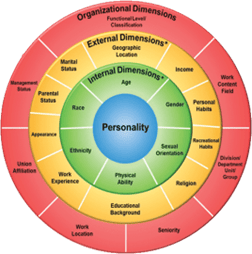
Diversity means that “everybody is invited to the party” – you hire diversly, regardless of gender, race, skin colour, social background, physical ability, sexual orientation, religion, ethnicity and so forth. But being invited to the party doesn’t automatically mean you feel seen, heard and valued – all characteristics of feeling included – but the ultimate feeling of inclusion is the feeling that you belong. ‘Belonging’ means that you are in an environment where you can be your authentic self and everybody accepts you as you are. In order to foster an environment of belonging, you need to treat people (and be treated) with equity, with fairness, where everybody is given what is necessary to achieve similar or the same results.

Treating people equally (equality) means treating everybody the same, and while it might sound counterintuitive, treating people as individuals – which often means treating them differently – and providing an environment of security and support, where there is a sense of acceptance, inclusion, and identity of the members in a certain group, is fair.

A final point on this topic, as I wrote elsewhere, if you were intentional in your efforts to hire, say, female or African American staff but it turns out that those individuals attended the same schools, learned from the same professors and mentors, went to the ‘same book clubs’, or people who surround themselves with people with the same ideas or who will support them in their ideas (people enjoy being reinforced in their own ideas!), probably won’t bring functional, cognitive diversity to a group, but superficial diversity.

Diversity can come from the traits listed above, but also importantly from deep-level diversity: personality, values, abilities or beliefs. These characteristics might be accompanied by challenges and biases that must be taken into account and managed when conflict emerges.

What helps to create an inclusive environment? What is needed? What is the correct strategic approach?

We don’t want it to be a box-ticking exercise. There is increasing awareness that we live in a professionally more globalized world. Today the geographical location is not a barrier, you can find an Australian in America, a European in South America, an American in Asia, and all possible combinations. Finding women in high performance is already more difficult, especially in certain jobs or leadership positions. Unfortunately, the promotion of inclusion of races, gender, sexual orientations or religions in a community traditionally dominated by white males is not a norm yet. And sometimes the driver of diversity is reduced to a box-checking exercise. But if we work in an organization that is going to bet on diversity and innovation, what helps to create those inclusive environments?

An inclusive environment promotes the idea that everybody is heard and we all have a voice. We listen and we learn; and in those conversations there is a room for productive disagreement and free exchange of ideas. But in order to facilitate this, it is imperative to create a trusting and safe place, be open to different approaches, and understand that different people feel safe in different ways.

One exercise one can do, before thinking about tools to approach diversity and create an inclusive environment, is to do an exercise in establishing your awareness of your unconscious bias. What does this mean? Influences from our background, cultural environment and personal experiences we might have can lead to subtle, even unintended (unconscious) judgments. But they are there, they are the product of learned associations, social and cultural conditions. Therefore, practicing being self-aware of those possible biases, and being aware of how our words and actions might affect others, or even raising awareness of others biases, is a first step towards creating an inclusive environment. ‘Practice being an advocate to encourage open, candid, and respectful conversation to develop relationships built on trust. An inclusive leader is self-reflective and attendant to the feelings of others. They’ve also “done the work” – they’ve attuned all manner of different intelligences (gender, cultural, generational) that helps them understand difference’ (ADP, 2022).
sport techie

Gardenswartz & Rowe, Diverse Teams at Work (2nd Edition, SHRM, 2003). Internal Dimensions and External Dimensions are adapted from Marilyn Loden and Judy Rosener, Workforce America! (Business One Irwin, 1991).

Steps that can be taken to increase the number of female coaches and practitioners

I want to bring to the table something that has happen to me, when applying to a job or even when I had to hire people while working at an NBA franchise. To cite Chris Hirst again, ‘diversity is an undoubtedly desirable outcome, but when considering any individual hire or promotion, you have a duty, even moral responsibility, to hire the best possible person for the role, irrespective of who they are’. I have used almost the same exact words with my supervisor when expressing doubts about three candidates for a specific position, an argument that can be perceived as a less diverse team. On the one hand, we want the best candidate possible, and on the other hand, how are we ever going to get jobs that have been traditionally held by white males if we are never going to be given or give the first chance?! How do we know if a woman can be head coach in the NBA, or the performance director in a LaLiga team, if no one is given a chance to any women?! Of course we don’t have the experience – it’s almost impossible to obtain the experience! And the few that are sometimes afforded that opportunity face the pressure to excel, which is fair in itself, but are we being treated and evaluated as fairly as our male peers? How can we increase the number of female coaches or practitioners? Just give them the chance! And then, create an environment of fairness, and protect that environment, leaders, management, and staff. And the elephant in the room: remove those who are in the way and are the biggest barrier to change. Eliminate nostalgia from your organization. Make decisions to promote a diverse and inclusive workplace. Period.

How can teams better understand the atmosphere within teams – what data or feedback can you collect? Focus groups? One-to-ones?

I read the following in a book, and I thought ‘well, I wish my former supervisor, an apparent leadership expert, had read this sooner’. It read: ‘what you need to achieve change is for every member of your audience (AKA staff) to spend ABSOLUTELY NO TIME AT ALL thinking about how others need to change and to think only of the change they themselves will make’. I have experienced myself the huge damage that can be inflicted when people are given the opportunity to anonymously rate your colleagues. Rather than that, work to promote safe environments for having difficult conversations if needed. This enables everyone to be clear on what everybody else needs to do better.

Behavioral change happens when the individual grasps the need for them to change, and understands the benefit of that change. It is true that change is a challenge for most people; getting out of our comfort zone, the feeling of losing power or even fear of what might come, the feeling of being threatened by others’ success (huge in our sector!) – all are barriers to overcome on the path to future team success. Rather than allowing themselves to be inspired by others, some people puts barriers to new forms of thinking and behaving. If you are brave at heart, embrace the change rather than fear it. If you are able to adapt to challenging personalities, such as some players and coaches, why not be open to promoting diversity for the greater good of your team or your organization?

Lorena is one of six Leaders Performance Advisors, a group of leading performance thinkers providing more subject expertise to our member-only content and learning resources. To find out more about all our Performance Advisors, click here.

13 Sep 2022

Articles

‘I Think I’m an Expert Generalist’

Category
Leadership & Culture
Share
Facebook Twitter Email Copy Link
https://leadersinsport.com/performance-institute/articles/i-think-im-an-expert-generalist/

Phil Church of the Football Association discusses his greatest strengths as a leader.

By John Portch
Phil Church is the Senior Professional Game Coach Development Lead at England Football Learning, which oversees the Football Association’s [FA] education pathways for youth and senior coach development and technical director development.

It was a role the Leaders Performance Institute asked him about in a recent edition of the Leaders Performance Podcast.

“Our mission statement is probably a good place to start,” said Church, “and it’s to increase the number of English-qualified leaders, which is managers, coaches and technical directors, working at the highest levels of the game.”

We spoke at length about the FA’s suite of programmes and courses as it works towards fulfilling England Football Learning’s mission statement.

Attention then turns to Church’s strengths as a leader.

“Have you read the book Range?” he asks. The Leaders Performance Institute responds in affirmation having read David Epstein’s book in preparation for his presentation at the 2019 Leaders Sport Performance Summit in Atlanta.

Epstein makes the case for an extensive sampling period for all youngsters who play sport. To make his case he cites 18-time tennis grand slam champion Roger Federer, who played a range of sports in his youth and brought those skillsets from other sports to his game as a tennis player when he settled on a career in tennis.

“I think I’m the expert generalist,” says Church, who goes on to explain himself in greater detail.

What do you regard as your greatest strength?

PC: I think my greatest strength comes in two parts. It’s my experience throughout the last 25 years because it’s varied, and lots of people have varied experiences, so I think I know a lot of things about a lot of things. I started working in community football and I loved it; I had to work with key stakeholders, the youth offending teams. I ran an inclusion, employment and training programme for West Ham United. And that exposed me to some fantastic people, some brilliant work, and it wasn’t about football, it was about trying to help some young people get through some stuff. There was some brilliant stuff around that. I was at the PFA [Professional Footballers’ Association] as a coach developer, working for the players’ union, I’ve worked in clubs as the head of coaching and had work around the youth team and the senior game areas and now I’m leading a team at the FA. So my experience is a part of it. And then I think I have a good level of communication, so I think I can impart information and reason. I suppose communication and influence would probably be the part I’d link into that, where I think I can add impact.

What strength do you admire most in others?

PC: Resilience, I think. I use a quote quite often and I said it to my daughter a few weeks ago: ‘You’re only limited by courage, tenacity and vision’. And I believe that. There’s some brilliant people doing some amazing things and life throws lots of challenges at you and sometimes it’s hard and sometimes it’s good; and that tenacity is linked to the pitfalls you have and successes you have too – sometimes they are hard to deal with – so I think the level of resilience; some of the things that people go through, some of the stories of people who were in the Commonwealth Games or the Women’s Euros. Some of the journeys they’ve had and the way they’ve moved through those is fantastic.

What is the key to strong teamwork?

PC: Trust is at the heart of it. And ‘trust’ is just one word. But underneath the trust comes a whole layer of time, relationship-building, competence. And you get trust in different ways. You get trust from being good at something, you get trust from being consistent, behaving in certain ways all the time, you get trust from modelling good behaviour, you get trust from doing what you say you’ll do, which isn’t always as common as you might hope it would be in the world. So underneath trust, there’s so many facets that if you’ve got it, it’s strong. It’s easy to lose, and you can lose it really quickly. It takes a long time to get but it’s easy to lose quickly. But if you’ve got trust you can achieve lots of things with lots of people.

How will you look to get stronger in your role?

PC: I’m always looking to learn from other people. I am very fortunate to be able to work with and alongside lots of fantastic people from diverse backgrounds, from different lenses, with different skillsets. Partly for me it’s intentional. So I’m driven by developing high performance, developing strong cultures, by helping to develop people, and within that space it allows me to get access to some unbelievable people who are doing some fantastic things. I’ve got that passion for developing and improving and I’ve got loads of people around me who I think are magnificent. Part of it is probably the self-reflection bit. So I’m around it a lot, I see it a lot, and I’m working out how I can apply part of that to myself is probably key.

Listen to the full interview with Phil Church below:

John Portch: Twitter | LinkedIn

Listen above and subscribe today on iTunes, Spotify, Stitcher and Overcast, or your chosen podcast platform.

Members Only

6 Sep 2022

Articles

Are you Doing Enough to Foster Collaboration Within your Interdisciplinary Teams?

Category
Leadership & Culture, Premium
Share
Facebook Twitter Email Copy Link
https://leadersinsport.com/performance-institute/articles/are-you-doing-enough-to-foster-collaboration-within-your-interdisciplinary-teams/

In this recent Leaders Virtual Roundtable, Science in Sport’s James Morton leads a discussion on the question of fostering and sustaining collaboration in high performance environments.

By Luke Whitworth & Sarah Evans

Recommended reading

High Performance Environments – What the Research Is Telling Us

Performance Thinking: Understanding How you Learn, Unlearn and Deliver

Why Psychological Safety Paves the Way to Better Decision Making and Innovation

Framing the topic

Across this virtual roundtable conversation, we explored the ever-intriguing topic of collaboration, and in particular how to continue to foster and evolve it. Some of the key questions for exploration were around the barriers to collaboration, examples of good collaboration in practice, and where the areas of need are for impactful collaboration.

Session stimulus from James Morton, Professor of Exercise Metabolism, Liverpool John Moores University: Performance Collaboration: Winning Consistently… Together

  • A performance culture of collaboration: three core concepts to this: alignment, continual improvement and reflective practice.
  • Four pillars: taking these three concepts further, there are four key components to allow you to bring these concepts to life.
  • Vision & mission: be bold, ambitious and inspirational. Create excitement. Over communicate.
  • Strategy: be performance focused. The importance of having a knowledge-to-delivery framework. Behavioural change science.
  • People: ‘Podium people’. Winning behaviours. A coaching mindset. Problem solvers. Front line operators.
  • Delivery: Athlete (and staff) performance plans. Alignment of what, when and why. Consistently executing excellence.

 Discussion points

  • Multidisciplinary vs interdisciplinary: ‘multidisciplinary’ can often encourage a sense of staying in your lane culture and collaboration, whereas ‘interdisciplinary’ is framed more as ‘come and get in our lane’. Do you do collective education across your different disciplines? A key component for collaboration is respect for others’ contributions. The best way to have a recognition for that is to spend time with one another, understand the value they bring and the challenges they have.
  • Multidisciplinary vs interdisciplinary approaches: with a multidisciplinary approach, you can get so immersed in your work and what others need to achieve that they don’t look up – you can still perform well, but you can perform better with more foresight and longitude in their vision if there was more interdisciplinary activity.
  • Shifts in approaches: in a number of environments, we can see the presence of both multidisciplinary and interdisciplinary approaches. Within the performance team it’s more interdisciplinary, but when you look outside of that group to departments such as coaching or front office, it can revert to being more multidisciplinary which makes it harder to collaborate.
  • Finding common ground: as a best practice to drive more collaboration, we have focused on incorporating the athlete’s performance goals from a technical coaching perspective. This is the goal from the coaching staff in this instance – as performance staff this allows us to ask questions around how do we not just make this person better from a physical sense, but also specific to what that individual athlete needs?
  • The need to collaborate: we push a lot and collaboration is a buzz word. There is a balance between forcing collaboration where it actually doesn’t need to take place and the real need for it. When staff want to be involved in areas that are perhaps a little outside their lanes, it’s often due to a lack of role clarity and not feeling valued in what they are doing.
  • Amazon: they talk about not liking too much communication, teams often work independently and then come together at the end – this isn’t suggesting it’s the best model but it’s a different way of thinking about collaboration. If staff feel valued in their tasks, there isn’t as much of a need to look at what is happening elsewhere.
  • Be intentional: when thinking about collaboration, think about when and why? Consider this as opposed to forcing collaboration in all areas where everybody is involved in everything – this can slow things down, make you less innovative and can prevent people from being heard.
  • Strategic vs operational: there is the here and now to deliver immediate results but also longer-term thinking. In terms of strategic collaboration, the challenge is around when is that most important? Consider where the integration points and crossroads are to ensure you utilise the best information and people to promote progression.
  • Clarity: role clarity is important, but also having a clear understanding of what collaboration actually is. What doe the behaviours look like for collaboration and what are we trying to get out of this? Collaboration can often get confused with teamwork – we hear the emphasis on ‘team’ all the time, but collaboration is really about problem-solving and decision-making – it’s not meeting for the sake of meeting.
  • Role modelling: in most organisations, there are people we can point to who are champions of collaboration. Considering putting people who are good as facilitators of conversations and collaboration in roles that can help multiply this – model expectations.
  • Barriers to collaboration: lack of trust, clarity, fixed mindset and defensiveness and siloed-thinking.
  • Bringing it back to the athlete: it is crucial that everyone is aligned to the performance plan. Who do you need to work with consistently well day to day to develop the athlete?
  • Alignment: make sure everyone is on the same page, having a vision and consistency across the board but then having subcultures who have their own ways of working, but it must still be aligned to the overall vision. Having this consistency then allows for individuals to enact it as they want and allow for individuality because at the core they are all aligned.
  • Continuous challenge: one main challenge we can face in our environments is being reliant on other staff for key information. Time is also the most precious resource and this presents a challenge to ensuring that everyone is aligned. Meetings that promote collaboration are crucial.
  • Scalability: everyone has great ideas but what is scalable? What are the key things we need to focus on?
  • Communication is key: have we mapped and have a stronger understanding of how different people communicate?
  • ‘Speed of trust’ tool: evaluating the competency and collaboration increases trust.
  • Visualising others’ processes: valuing the accumulation effect of the sports science performance processes and getting everyone to see that as an example is important. One barrier is the sum of the people, and how to change behaviours – behavioural change science.
  • Communicating value: using personal experience rather than always data can help influence people more effectively – understanding what will motivate them. One example was asking each discipline to explain how important water is to them – for nutrition hydration is key, for coaches water breaks are key times to give tactical coaching etc. Something so simple can bring together every discipline and show how they can work together and how many things impact them all.

Attendee takeaways

At the end of the roundtable discussions, attendees were asked to share one key reflection point or takeaway from the call that they would like to take back to their environment for further consideration:

  • Treat every aspect of sport as a performance domain.
  • The need to think more deeply around collaboration v individuality.
  • Aligning collaboration with vision and mission.
  • What are we worried will happen if we over communicate? We will over collaborate?
  • Clarity of purpose to drive intentional collaboration.
  • Exploring together, collectively what we all believe collaboration is and what it looks like in any given environment or situation – that helps to set expectations, behaviours and clarity of role.
  • Focused and reflection of collaboration, don’t meet just to meet, ensure clarity of intent coming out of the meeting. Ensure collaboration on the front end for any messaging going to players. Conviction in the why and intent is essential. Align behaviours with values.
  • How are we reviewing collaboration? How well are we defining the expectations? What is the level of consistency of the behaviours that contribute towards collaboration?

Members Only

31 Aug 2022

Articles

How the Brooklyn Nets Put their People at the Heart of their Culture

Category
Leadership & Culture, Premium
Share
Facebook Twitter Email Copy Link
https://leadersinsport.com/performance-institute/articles/how-the-brooklyn-nets-put-their-people-at-the-heart-of-their-culture/

GM Sean Marks explains that if you take care of your people they will take care of your culture.

By John Portch
  • Look for those individuals who can embody the values and cultural norms you are seeking to instil.
  • Support your people and their families.
  • When your culture can be clearly defined, it will become self-selecting.

Find those who know what it takes to win

In the early days of the Brooklyn Nets’ continuing rebuild under General Manager Sean Marks, he sought to bring in talents from organisations with a proven performance pedigree. The headliners were the likes of Kyrie Irving and Kevin Durant, but it extended to the performance staff and beyond. As Marks told an audience at 2020’s Virtual Leaders Meet: Total High Performance Summit, the Nets needed to know what it takes to win. He said: “When you bring in the likes of Kyrie and Kevin, it was a matter of sitting down with them, learning what do they want to see, how do they want to grow. What do they need and what are they looking for in a successful operation?” Both were forthcoming. “Kevin said right off the bat ‘this organisation needs to have championship characteristics in everything we do’. That is one of our tenets here that we constantly talk about to this day, whether that’s how we scout, how we conduct our reports, conduct ourselves both on and off the court; and this goes for players and staff.”

Opine and share, disagree and commit

Cultural architects come in all guises and Marks has brought together a disparate group on and off the court. “I like the fact that I’m bringing in people whether it’s from baseball or all walks of life in terms of computer programmers; a group of coaches that are coming from a variety of different backgrounds too,” he said, mindful that it is these people who continue to shape the Nets’ culture. “Multiple have been head coaches before; some haven’t, some have been in developing systems, some have been key development coaches and some of the best in the business.” Marks sets himself up as Devil’s advocate and weighs up divergent views before deciding the best course of action. Everyone can have their say but they must respect his final decision. “The worst thing you can have is people behind closed doors saying ‘I wish I was involved’ or ‘I didn’t have a say in that decision’ or ‘man, I disagree with that decision’,” Marks added. “Nobody’s allowed to disagree once we’ve already committed. Once we’ve committed we’re all in and that’s the type of environment that I’d like to be part of.

We are family

Marks understands that the Nets’ culture is continuously being reshaped by the players and staff. He described them as the team’s “No 1 priority”. Moreover, people need to be free to focus on the day job knowing that their families and loved ones are provided for and supported while they are away. Marks said: “Right from the get-go we like to make them feel like they are family – like they are in the Brooklyn Nets family.” He acknowledges how much people have sacrificed to commit to the Brooklyn rebuild. “Nothing goes awry here. We wouldn’t want them left to their own devices; it’s a big city, it can be a little daunting. Where do you find a place to live, whether it’s nurseries or restaurants; you name it, but things are catered for [to] these players and staff so they come in here and they’re able to assimilate into Brooklyn and the Nets, hopefully as seamlessly as possible.”

Strong cultures are self-selecting

When a culture’s values and norms are defined, those who cannot conform tend to take themselves out of the equation. “You can’t have a metric system to say ‘this person is bought in and this person isn’t’,” said Marks. “Honestly, if you’ve built the right culture and continue to have the right people around it weeds itself out. I know that’s strange to say but I’ve had a few people over the course of the time here just say, ‘look, you guys are moving at a pace that I can’t handle. I’d love to say that I want to own this and be part of this, there’s great things ahead, but, to be honest, I’m not cut for this – you can do better’. When people come to me and say that, terrific, there’s better things on the horizon, whether it suits their families or their livelihoods, terrific. I don’t think I always need to be the one to say ‘I don’t think that person’s bought-in’ or ‘I don’t think they’re a high riser or a high flyer’.”

Members Only

27 Jun 2022

Articles

Three Simple But Important Steps to Earning the Trust of your Athletes

Category
Coaching & Development, Premium
Share
Facebook Twitter Email Copy Link
https://leadersinsport.com/performance-institute/articles/three-simple-but-important-steps-to-earning-the-trust-of-your-athletes/

Dan Lewindon of the LTA explores how the organisation seeks to develop coach and player relationships in a high performance environment.

By Sarah Evans
  • Wellbeing and resilience sit front and centre
  • Communicate with care
  • Plan, do, review

1. Be sure to understand and value the individual

There is a growing awareness across all sports that wellbeing and resilience play a key role in the achievement and sustainment of success. Dan Lewindon, Head of Performance Science and Medicine at the Lawn Tennis Association [LTA], explained in our Virtual Leaders Meet in 2020, that in fact, wellbeing and resilience “sit front and centre in our discussions about our athletes and in our conversations with them.” It is critical to understand the individual as a whole, their abilities, their drivers, and take the time to understand their individual backgrounds and experiences that make them who they are. Lewindon also highlighted that individually tailoring the approach to each athlete is crucial and “our understanding of their context is key in building a relationship of trust and ultimately influence.”

2. Shape your environment and communication

There has been an explosion in specialism within sports science which has created the opportunity for dedicated expertise and diverse thinking in how you solve problems. However, Lewindon warned that this could lead to silo thinking and unnecessary noise. He explained how it is critical to filter these into a system that is clear and cohesive, with an integrated approach in a “structured and safe environment where stake holders and support staff can share their views and feel valued for doing so.” If this is done right it creates real clarity for the athlete, and reduces unnecessary noise and distraction. Lewindon also highlighted how imperative it is to communicate with care: “don’t use overly technical or medical language with the athletes, do what is best for them, not for you”. The trust that staff members create, the genuine connection they have with the athletes, and communication they use, can have a huge impact on the performance outcome.

3. Have a clear plan and processes

Lewindon stated how important it is to understand how to support the athlete, and how to shape the training environment and programme, in order to go after the priorities needed for performance. You must make it crystal clear to the athlete how everything aligns, be that testing, monitoring or training techniques. “It is important the athletes and coaches understand the ‘why’ and the ‘how’ this is going to impact their performance,” said Lewindon. This understanding then provides the confidence and clarity needed in order to push forwards. “The individual development plans that are successful are those which are genuinely owned by the athlete” he added. The athletes are part of the conversation, process and it is written in their language. Finally, the review process is critical, it is not something that you just make once and then never look at again. “Plan, do, review, regularly,” said Lewindon. It takes real time and effort to do, but it is crucial to take time to both look back and to plan ahead.

Members Only

6 May 2022

Articles

Leaders Virtual Roundtable: Communicating In High Pressure Environments

Category
Leadership & Culture, Premium
Share
Facebook Twitter Email Copy Link
https://leadersinsport.com/performance-institute/articles/leaders-virtual-roundtable-communicating-in-high-pressure-environments/

By Sarah Evans

Recommended reading

Selecting and Training Elite Performers in the Special Operations Command

Belonging: The Ancient Code of Togetherness

How a Coach Can Begin to Improve their Communication Skills

Framing the topic

In this Member Case Study format of our Virtual Roundtables, Rachel Vickery, one of our Performance Advisors and expert in human behaviour and performance, spoke about communicating effectively in highly pressurised environments. Rachel specialises in working within high pressure, high stakes environments, and looks to understand what happens to high performers within these situations from the perspective of the human stress response, and how this shows up, and impacts performance.

One thing Vickery was keen to stress to start with, is that irrespective of the arena of performance, whether it be a team sport, individual, or not even sport-related, a common factor is the human stress response. It is primal, survival-driven, and we all have it.

Consequences of the human stress response on communication​

  • Part of the natural stress response is humans become more withdrawn, defensive, ‘me’-focused, hear feedback as criticism or as an attack, blame orientated; ‘our stuff flies out sideways at others.​
  • Body language will also change. Mammals in nature under threat make themselves look bigger to look more threatening, increase tension in face, neck and jaw, breathing lifts into upper chest. ​We do the same, and it is often subconscious.

​Your body language and ‘vibe’ will impact those around you  ​

  • The strongest energy will determine the vibe. Sometimes that’s not a good thing. Teams will model the behaviour of coaches and leaders within the team, so it’s important to recognise the energy leaders in the team are giving out.
  • Emotionally intelligent leaders need to set the energy through their communication.  Learn to control your state. g.sideline coach or coach’s box. Making the players feel calm, reassured and centred.
  • It is important to understand the energy you as a leader bring to any interactions. If you are stressed, how does this present in your body language? If there is a breakdown in communication, think to yourself, ‘am I bringing something into this interaction?’
  • Understand how you show up under pressure. Notice what is happening in your body, can you be aware of it and try to put things in place to adapt? Practise this in low threat / low pressure environments.​

Keep the performance critique to the hot wash  ​

  • In the heat of the moment, verbal input needs to be forward-moving, using action-orientated language, not abusive or blaming.​ Criticism here is not helpful, the athlete is not thinking rationally and needs action orientated communication.
  • After the game you can pull the performance apart and go into detail, because there is the time and space to do so.

The trust you need in the pressure moment is earned away from pressure  ​

  • Are you someone who builds others up, brings out the best in them and sets them up for success?  ​
  • Or do you let your ‘stuff’ fly out sideways at others?​
  • If you are volatile and other’s don’t know how you are going to act, the athlete might anticipate your reaction and operate from a sense of fear rather than belonging. If they operate from a place of fear, they are more likely to tense up and make more mistakes.
  • The athlete needs to know in that critical moment that you have their back to give them the freedom to perform to their best.

Self-communication​

  • Self-talk needs to be true if it’s to be effective.  ​
  • False self-talk undermines your confidence as your brain knows you’re lying.​ The self-talk needs to be accurate. If it is true and it is earnt that is when you will feel confident.
  • If the self-talk is action-focused and forward-moving, that can be the most effective. One example from Dan Caine, Director of Special Teams for the US military was to ‘stay frosty’, meaning to stay calm, which is a great way of centring and focusing on the job at hand.

The main overarching point Vickery stressed was that in pressure moments, most people need to feel like someone has their back, that someone believes in them, and their performance is part of something bigger than themselves.​ If, as leaders you can instil this into the players and create that trust away from the pressure, you will be able to build a deep connection and work effectively under stress.

Attendee takeaways

  • The importance of de-escalation techniques: body language and breathing.
  • Grow your people as the person not just the performer. I also love the action-oriented language idea – it will keep me ‘present’.
  • Continue to work on your own reactivity.
  • The trust that you need is earned away from the pressure moment.
  • Understanding that pressure is easily transferred, so have clear strategies to cope and de-escalate.
  • Earning trust away from the pressure environment.
  • Spend time to self-reflect but also within your group spend time to ensure alignment of message and reviewing current strategies.
  • Immediate, calm and forward-moving talk.
  • The strongest energy in the room is going to determine the vibe of the team – how can we leverage that as leaders?
  • How to use your body language to calm and diffuse a reactive environment.
  • Do the prep work around communication away from a high pressure context.
  • How do you deal with the moments that catch you off guard? They often are the moments that can earn or lose respect and trust.
  • Do we have consideration and agreement on the ‘vibe’ we want e.g. calm or high energy in the changing room?
  • Once we’ve considered education and application of these strategies, how do we maintain it?
  • Practise techniques with those close to you to see responses in order to develop your own communication and body language to have the positive impact you want.
  • Build trust and know your people; being prepared helps in dealing with difficult situations. Self-awareness.
  • How can I create opportunities for our staff teams to reflect and build self-awareness more regularly around their own energy and the impact of that on the groups they interact with?
  • Self-talk needs to be true if it’s to be effective; building a barrier of confidence for ‘game-day’.

Members Only

22 Apr 2022

Articles

‘Phil Jackson Totally Understood How Important Context Is to Leadership’

Category
Leadership & Culture, Premium
Share
Facebook Twitter Email Copy Link
https://leadersinsport.com/performance-institute/articles/phil-jackson-totally-understood-how-important-context-is-to-leadership/

Ulster Rugby Head Coach Dan McFarland shares five performance-focused tomes that have influenced his career.

Man’s Search for Meaning: The classic tribute to hope from the Holocaust by Viktor Frankl

sport techie
McFarland says: “This book really touched me emotionally and I read it at a time in my life where learning the importance of having a meaningful purpose and diving headlong into living that purpose was critical.”

Mindset: Changing the way you think to fulfil your potential by Carol Dweck

sport techie
McFarland says: “Understanding the basis of growth and learning as the willingness to challenge yourself and that that is a great thing.”

More on Mindset here.

The Score Takes Care of Itself: My philosophy of leadership by Bill Walsh with Steve Jamison & Craig Walsh

sport techie
McFarland says: “I am not sure that I am at all the kind of coach the great Bill Walsh was but I loved the detail and accountability he developed in the setting up of the 49ers machine.”

More on The Score Takes Care of Itself here.

Eleven Rings: The soul of success by Phil Jackson and Hugh Delehanty

sport techie
McFarland says: “Phil Jackson totally understood how important context is to leadership. He demonstrates empathy in equal measure to strong decision making.”

More on Phil Jackson here.

Team of Teams: New rules of engagement for a complex world by General Stanley McChrystal

sport techie
McFarland says: “McChrystal was able to see the need for change within the military operating systems in modern warfare. He implemented change from traditional military hierarchy to distributed leadership – this level of change in conceptual thinking is mind-blowing to me.”

More from the McChrystal Group here.

Members Only

6 Apr 2022

Articles

Tips for Improved People Development, People Management and Process Development

Category
Leadership & Culture, Premium
Share
Facebook Twitter Email Copy Link
https://leadersinsport.com/performance-institute/articles/tips-for-improved-people-development-people-management-and-process-development/

By John Portch

“The whole idea of self-development, leadership and learning is such a passion of mine,” Jon Bartlett tells the Leaders Performance Institute.

Within a few minutes, the Elite Basketball Performance & Program Operations Advisor at the NBA explains just how interconnected people development, people management and process development is.

When each is done poorly, there tends to be common themes, such as a lack of investment in people, a lack of clarity, misalignment, and fear of challenging the status quo. These return time and again throughout our conversation and Bartlett cites the distinction between ‘discussion’ and ‘dialogue’ in making his case.

“In sport, we often skip the idea of engaging in dialogue – that is being open to and listening with intent to everyone’s viewpoint, willing to understand their perspectives, place value in their backgrounds and their experience – and instead we go straight to the discussion/debate narrative. Without recognising it, the situation quickly becomes a ‘me versus you’ with the actual problem not being addressed or solved.

In the first instalment of our two-part interview, we explore the steps teams can take to promote better people development, people management and process development.

Jon, what is the first step leaders can take towards creating shared understanding, language, meaning, vision and clarity within their teams?

JB: The obvious one, and it’s easier said than done, is making it visible. Does everyone know what the plan and strategy is? Is it evident within the environment you’re working in on a daily basis? Is there alignment between the owners, the board, the GM, coach, performance director and then all the different verticals underneath? Are there routine checkpoints along the way to determine progress or is it just an annual check-in to see how it’s going against the plan? Are there actual processes and opportunities to review the plan as it’s happening and emerging? Is the work of those who are non-athlete facing and those who are athlete facing aligned to the wider goals? Are the actions and words consistent? It’s easy to put words up on a wall, but are the actual actions and behaviours aligned with those?

How can goals and values be effectively communicated to staff members?

JB: It’s about taking people on a journey. In an ideal world they’re somewhat part of the conversation, or involved some way in developing the goals and values. This way you likely get to the point easily and quickly around how those values are embodied. For big staff groups though where this isn’t always possible there are opportunities through behavioural frameworks. If you’ve got a certain set of values and behaviours in which we’re going to operate, what are the actions that embody those values? And how can you live those on a daily basis? I think in having that shared language and that shared understanding, the co-creation and sharing of that responsibility, you’re then reaching all the different verticals. There are many ways to achieve this but, ultimately, I think the more people involved in the process the more buy-in and engagement there is early on.

What about the role of those below the leaders?

JB: To achieve alignment, the heads of department are critical in sharing the values, the language, and the processes. One thing I’ve thought about hard is giving flexibility to staff on how they do their work and how it contributes to the bigger picture. Empower and allow them to carry out how they do their job on a daily basis, but then collectively identify how that work contributes to the bigger picture. Now you’re meeting them in the middle. That is key to that alignment. If it’s just being told constantly, ‘this is what you need to do, this is how you need to do it’. I don’t want to work like that. Flip it around: the work you want to do and how you’re doing it; how is that contributing to the bigger picture? What  piece of the puzzle are you in contributing to the overall strategy? It’s both top-down and bottom-up.

How can organisations track both progress and the development of behaviours?

JB: You always want to be able to track if something is going in the right direction through constant touchpoints on where it’s at, what’s the progress, where’s it getting to, but it’s also a case of tracking what isn’t working as well, what needs to be dropped. So, I like the idea of asking how do we spend our time? And what are we spending our time on? Then you’re almost thinking what’s the problems we’re trying to deal with? Are we asking the right questions? Are we trying to solve the right problems? If you haven’t got the initial plan, vision and strategy, then what are you actually tracking? I think that’s key: you’ve got to have the first part first in order to then track your progress along that lifecycle.

What are some of the signs of poor process management?

JB: This is really talking now to how things are done, the methods in which we account for planning, ideation, creation, implementation, review and evaluation. I think, done poorly, there’s gaps at every stage. Done well, there might be one or two ‘getting there’ stages, which might need tweaking. Done great, there are processes and frameworks contributing to every step of that process, it’s a well-oiled machine and it effectively contributes to decision making. For example, if there’s no review or evaluation of a process, then there’s very little learning happening. And no learning means the same thing is being done over and over; when you want different results and you do the same thing it’s basically insanity. In sport, if you do the same thing over and over, recruit the same, go through the same cycle and expect different results, nothing changes. One of the themes that I think interchangeably gets regarded as poor staff incompetence is just poor process management. Sometimes, it just needs better oversight and better management of the process and then often this can lead to better action plans and development for staff.

Change often comes during losing streaks, periods of staff turnover and other turmoil. How can teams begin to find opportunities in those moments?

JB: You’ve got to ask: what’s the problem? What’s the question we’ve got to ask ourselves? Change is inevitable in sport, it’s a constant. That’s why I think context becomes so important. To get a group of people to work together towards a common goal you have to ask: was there even a common goal established at the start? If there wasn’t, then that’s the problem, not necessarily the people underneath, because they didn’t necessarily know what they were doing. The opportunity is there to ask the right questions and if you don’t know what the questions are then get people in to help ask those questions and find out what the problem is. Subsequent to that, all staff have the opportunity to be a part of something. What do you want your role to be in this and how are you going to contribute to it in terms of turning it around and changing it? Some people will be ‘I’m out of here, I’m done’. Some people don’t have the choice. But in a way, you’ve got to come back to: what is the problem? Poor results isn’t the problem, that’s the outcome. You’ve got to find out what’s leading to those poor results. Context is key and that’s the opportunity.

What is the right way to win over stubborn people within a team?

JB: We are talking here in the context of change, I guess, and with that how you go about convincing someone with a certain mindset and philosophy of practice tweaking how they do things, so they’re aligned to how an organisation or department wants to operate. The first thing is learning about what their perspectives are, what their background and experience is and what their modus operandi is. Gaining understanding of this means building a relationship and respecting that background. Equally it provides the opportunity of asking: ‘how can their background, practice, methodology, philosophy contribute to us trying to answer this problem?’ You want to get to a place where you get them to come up with a solution of how they contribute to the actual problem as opposed to saying, ‘this is where we’re going and this is where we need you to operate.’ Again, it comes down to that ‘dialogue versus discussion’ concept. They might not agree with the vision, strategy and pathway, which might mean a separation of ways, but if they are engaged then for me it’s about identifying with that individual how they align and operate the agreed vision and philosophy of the department.

1 Apr 2022

Articles

How Can You Better Support the Subcultures Within your Teams?

Category
Human Performance, Leadership & Culture
Share
Facebook Twitter Email Copy Link
https://leadersinsport.com/performance-institute/articles/how-can-you-better-support-the-subcultures-within-your-teams/

A Human Performance article brought to you by our Main Partners

By Sarah Evans

Recommended listening/reading

Keiser Podcast: How Leaders Can Overcome Resistance to Change

How to Create Energy in Athletes Performing Under Great Scrutiny

Framing the topic

This was session two of our new Performance Support Series, which focused on exploring the topic of ‘Making Wellbeing A Core Component Of Your Organisational Culture’, led by Dr Meg Popovic. In the last session, Meg explored culture, wellbeing and learning through an organisational / systems lens. In this session we delved into the ‘Team of Teams’ phase of Meg’s framework and the thinking of relational intelligence through subcultural understanding. There is one more session to follow, and across all of the sessions, we will look to explore three questions: how do you see? What do you see? How do you use what you see to make it better?

What is a ‘subculture’?

  • Commonalities individuals share with one another – guidelines of social behaviour, overarching values that guide and reflect behaviour, known symbols (to the people within) and modes of operation that convey meaning to persons in shared system
  • A smaller, more manageable unit of that culture as a whole, and differs from parent culture by embracing certain attributes. Thus, there are clear differences and specific commonalities between subcultural norms, values in the broader culture.
  • Individuals of a subculture are socialised to adopt cultural definitions and perspectives, and to assert cultural identity and sense of community. They validate identity from each other and present themselves to the external society.
  • Within a subculture there are varying degrees of commitment to the core of subcultural identity.
  • Individuals who express high level of commitment are known as the ‘ideal type’.
  • Subcultural criteria creates feeling of belonging and shared commonality. It also defines boundaries between insiders and those on the periphery.

How does this work in high performance sport?

If you want to design a new role, and have it contribute to something you’re already doing, how do you know what is possible and how do you know it will work? Ask yourself, what is the outcome I / you / we want to seek?

Success in this is when the leader hits the mark on the programme or process of the subculture. Failure, or when it falls flat, is when you’ve missed something or missed the mark within the subculture.

Meg Popovic: ‘Today we become team of team ethnographers tasked with investigating staff subcultures using this framework’:

  1. How do you see?
  2. What do you see?
  3. How do you use what you see to make it better?

What is Relationship Systems Intelligence?

  • The ability to interpret oneself as an expression of the system.
  • What happens is not only personal but it also belongs to the system.

The ‘third entity’: Imagine each staff system is a living organism, a collection of parts.

  • It has a life of itself, an identity that people feed into.
  • The essence that emerges as an expression of the relationship or system – the voice of the system
  • What is created as a function of interactions (experiences, events, behaviours etc.) in a relationship or system – the space between and among people.
  • The ‘more’ in the more than the sum of the parts.

Group exercise

Step 1: Pick TWO staff departments.

Step 2: Subcultural analysis. Explore subcultures of two sub groups, think about the following for each sub group.

  1. SKILLS: 1-2 capacities to be great at tasks in role
  2. QUALIFICATIONS: Professional and education to obtain roles in department.
  3. TIME: Busiest? Most free? Most stressful?
  4. LONGEVITY: Length of time working for Club?
  5. COLLECTIVE HISTORY: Describe the department 10 years ago?
  6. PASSION: What are they most passionate about?
  7. CREATIVE: If you could give this department a song, what would it be?

The shadow

The framework that is dragged behind, that which is in the background, seen or unseen, acknowledged or not acknowledged, but there is gold in there too.

Part of the growth process is shining light on the dark parts, and not being ashamed of those dark parts or making them wrong, but instead bringing them in and integrating them. This can happen on an individual level or on a group level.

Step 3: Deeper subcultural work – ask the following questions for the same two sub groups.

  1. KNOWLEDGE: What is the wisdom this group holds for the club?
  2. STATUS: How is success gauged within this group? What makes someone an outsider in this group?
  3. SHADOW: What are a few qualities within this staff group’s collective shadow?
  4. CONFLICT: What is the DREAM BEHIND THE COMPLAINT within the broader club environment?

Task before next session: Next Level Leadership – The Wellbeing 1%

Do one small thing for each department (or someone in the department) that honours who they are. Recall the dream behind the complaint, and think about what would connect with them. It doesn’t have to be a grand gesture, just something small, but we all know we operate in a world where the 1 per cent matters. Bring back to our group later this month to celebrate with each other.

Go to home
Follow us on Instagram Follow us on LinkedIn Follow us on X

Contact

Leaders UK

Tuition House
27-37 St George's Road
Wimbledon
SW19 4EU
London
United Kingdom

Enquiries Line: +44 (0)207 806 9817
Switchboard Number: +44 (0)207 042 8666

Leaders US

120 W Morehead St # 400
Charlotte
NC 28202
United States

Enquiries Line: +1 646 350 0449

Leaders

  • Contact
  • About
  • Careers
  • News
  • Privacy Policy
  • CA Privacy Rights
  • Cookie Notice
  • Website Terms of Use

Performance Institute

  • Membership
  • Events
  • Content
  • Virtual Learning
  • Connections
  • Partners

Latest

Intelligence Hub
High Performance Future Trends Research Elite Performance Partners continue to drive the potential in high performance forward through renewed Leaders partnership
Your Privacy Choices

© 2026 Leaders. All rights reserved

  • Privacy Policy

Attendees

x