Ulster Rugby Head Coach Dan McFarland shares five performance-focused tomes that have influenced his career.

McFarland says: “This book really touched me emotionally and I read it at a time in my life where learning the importance of having a meaningful purpose and diving headlong into living that purpose was critical.”
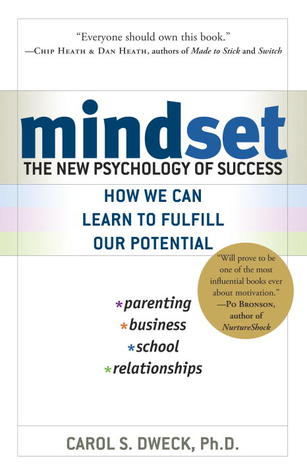
McFarland says: “Understanding the basis of growth and learning as the willingness to challenge yourself and that that is a great thing.”
More on Mindset here.
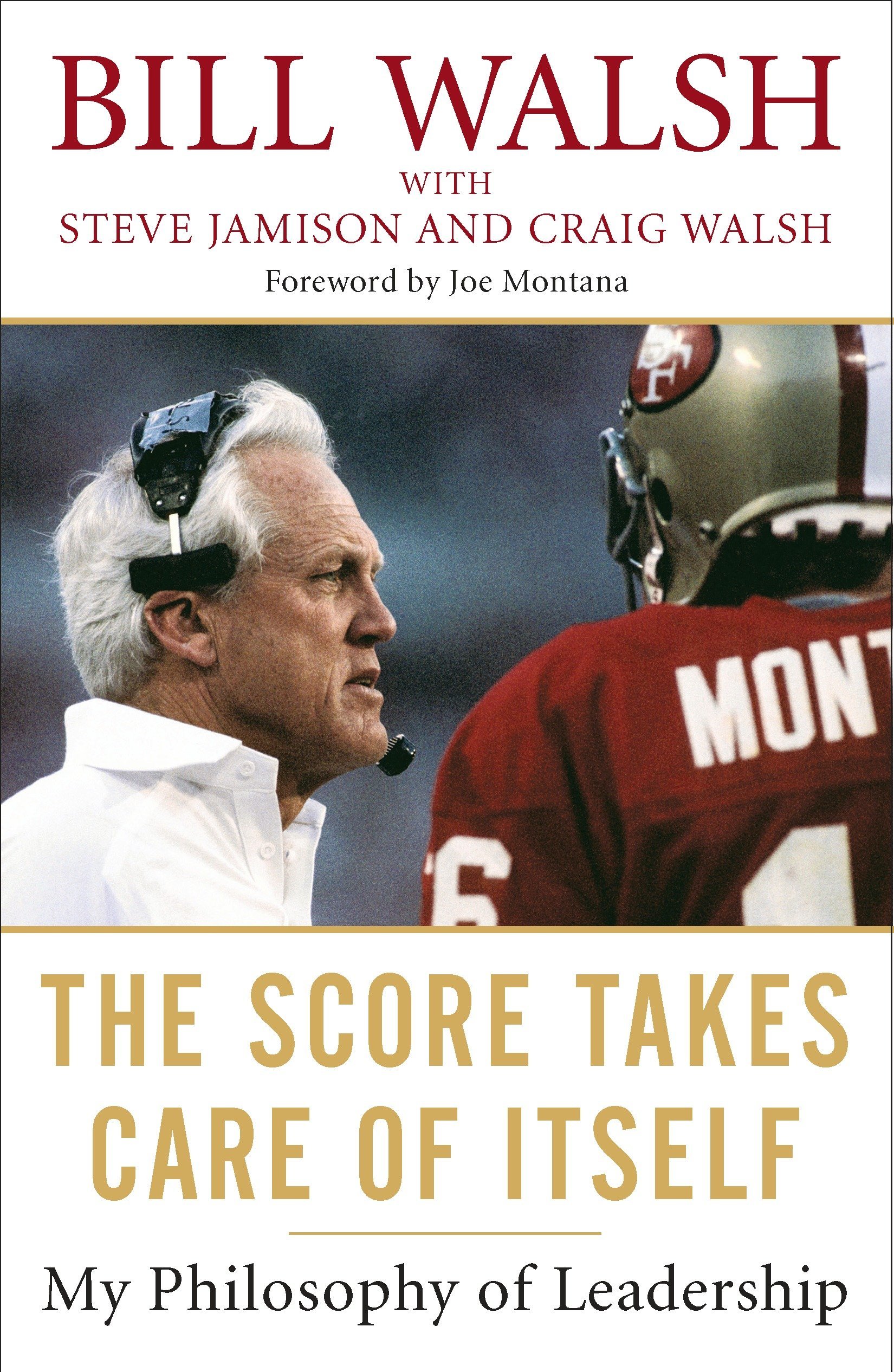
McFarland says: “I am not sure that I am at all the kind of coach the great Bill Walsh was but I loved the detail and accountability he developed in the setting up of the 49ers machine.”
More on The Score Takes Care of Itself here.
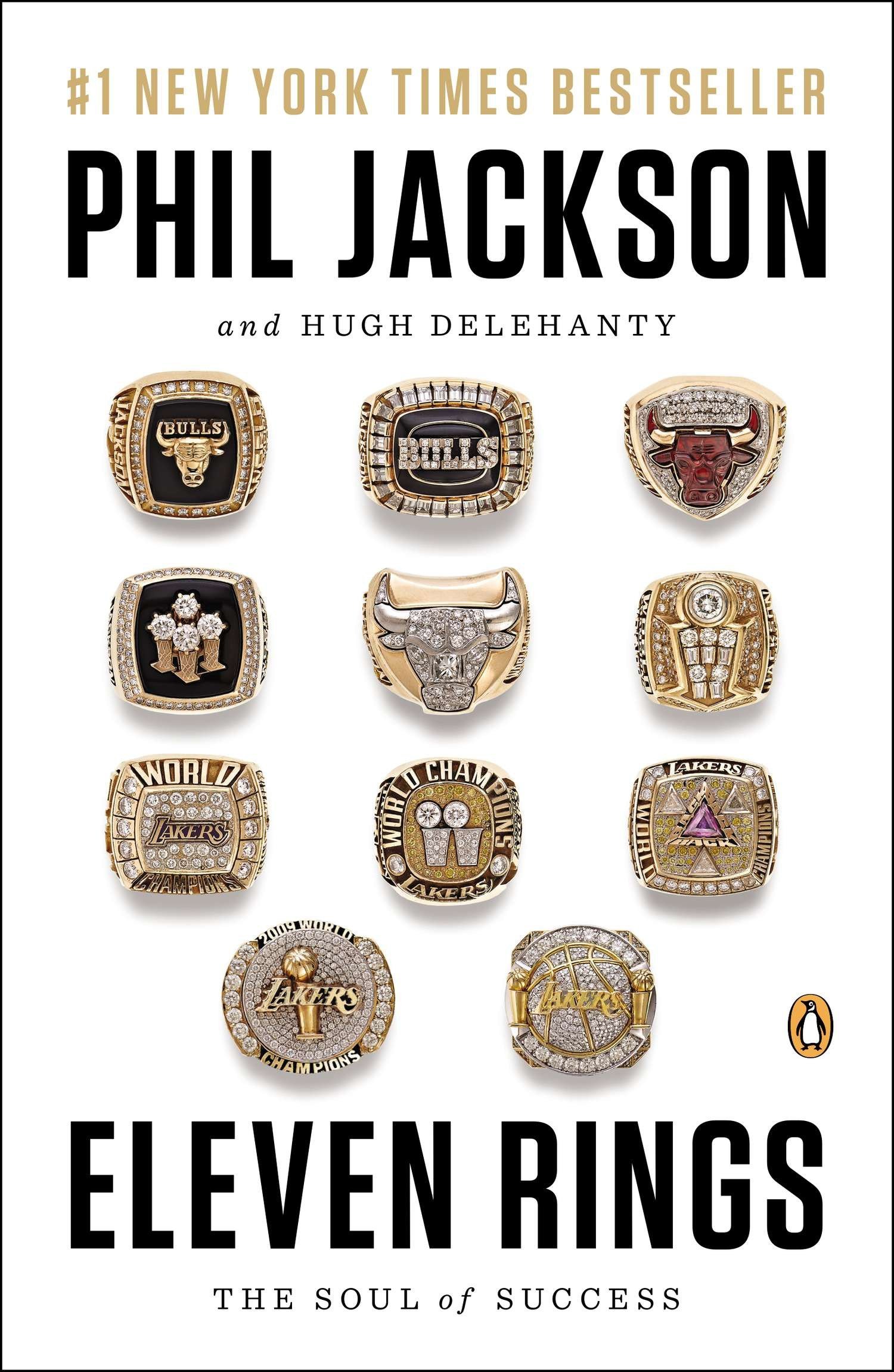
McFarland says: “Phil Jackson totally understood how important context is to leadership. He demonstrates empathy in equal measure to strong decision making.”
More on Phil Jackson here.
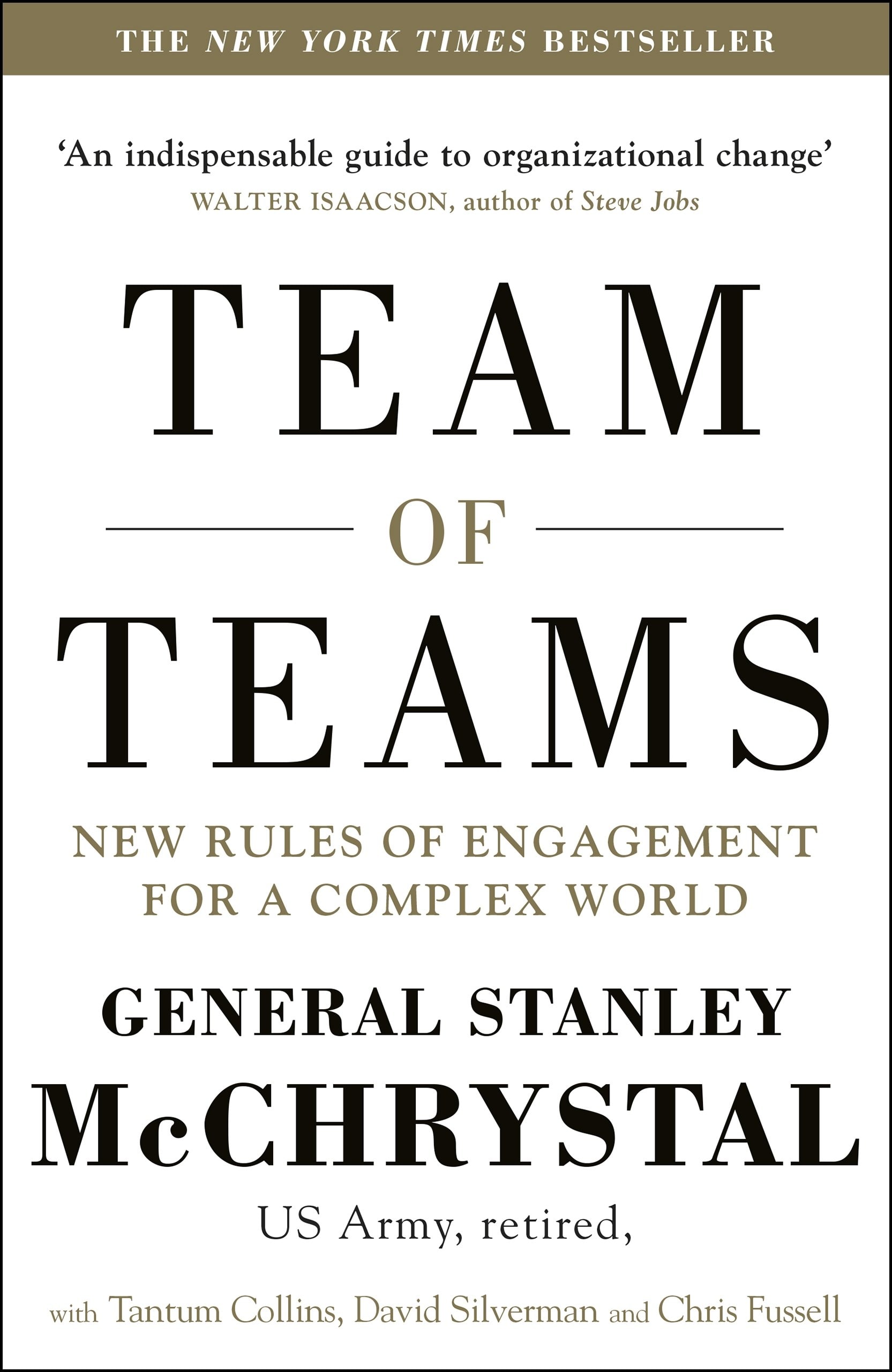
McFarland says: “McChrystal was able to see the need for change within the military operating systems in modern warfare. He implemented change from traditional military hierarchy to distributed leadership – this level of change in conceptual thinking is mind-blowing to me.”
More from the McChrystal Group here.
A Industry Insight brought to you by our partners Science in Sport.
The Performance Director at MLS champions New York City FC is the first guest on the Science in Sport Industry Insight podcast series, where he joins the Leaders Performance Institute Editor John Portch and Science in Sport’s Director of Performance Solutions James Morton to discuss his first season at the club, which culminated in the championship.
Bettle spoke to the pair about his arrival in the Big Apple, with Morton sharing from his own experiences of working with seven-time Tour de France winners Team Sky/INEOS Grenadiers and in English Premier League football.
Also on the conversational agenda were:
James Morton: Twitter | LinkedIn
John Portch: Twitter | LinkedIn
Listen above and subscribe today on iTunes, Spotify, Stitcher and Overcast, or your chosen podcast platform.

An episode of the Industry Insight Series brought to you by our Partners
“Those first couple of years set me in a really good position to go through some pretty tricky times later in my career.”
White is speaking to the Leaders Performance Institute and Elite Performance Partners’ [EPP] Founding Partner Dave Slemen about his transition from professional rider to management over the course of a single winter in 2007 and 2008.
He also discussed how he has adapted as a leader in the intervening period, particularly in light of cycling’s pivot towards younger riders and an ever more cutthroat development environment.
A Leaders Performance Podcast brought to you by our Main Partners

This question is posed by psychologist and former Leaders speaker Gareth Bloomfield in this edition of the Leaders Performance Podcast, which is brought to you today by our Main Partners Keiser.
Bloomfield, who works with the Royal Military Academy at Sandhurst, explores the topic of behavioural change at length and delves into:
John Portch: Twitter | LinkedIn
Listen above and subscribe today on iTunes, Spotify, Stitcher and Overcast, or your chosen podcast platform.
‘The Hall’ is the single greatest individual award that can be bestowed upon anyone in American professional baseball. The numbers he amassed over 20 seasons in Major League Baseball place him among the greats, and the joy of watching ‘Big Papi’ stride to the plate with bad intentions for opposing pitchers satisfied millions over the course of his career.
People will debate his greatest contribution to the game and if you pick up any one of the hundreds of articles written about him you will read that his personality and natural ability to lead are even larger than his physical stature.
I learned all this in person at Spring Training in 2007, when the impact he had on a certain 29-year-old journeyman minor league player kickstarted my journey in leadership.
Reaching your leadership ceiling
I am a big believer that leaders can be born but they can also be made in the sense that even if people have natural ‘born leader’ qualities the true height of that ability can’t be realized unless they continue to learn, train and exercise those abilities. Everyone is born with what I call a ‘leadership ceiling’. Whether that person reaches their leadership ceiling or not is dependent on a multitude of factors, such as, how influential can that person’s leadership be in a multitude of environments? Does a person have the requisite skill set to lead in any environment and most importantly can they activate those skillsets when it matters most? The best leaders on the planet exhibit a few crucial qualities regardless of who they lead.
At the Boston Red Sox’s Spring Training camp in late February 2007, I carried my bags into their clubhouse in Fort Meyers, Florida, and began to learn that Ortiz had those qualities in spades. I was heading into my seventh season as a professional, with my third club, and had yet to crack a Major League roster. Honestly, with my 30th birthday coming in October, I was questioning my time in professional sport.
Nevertheless, Spring Training can be a tremendous opportunity for younger guys or journeyman like me to make an impression on the coaches and decision makers. The second I walked into that clubhouse the place was different. There was a feeling of calm, easiness and focus on the task at hand: winning the World Series. This team was laser-focused on doing just that. This team was different too in that it was a very veteran clubhouse, including Jason Varitek, Manny Ramirez, Mike Lowell, Julio Lugo, Curt Schilling and, of course, ‘Big Papi’.
The origins of Ortiz’s nickname are rooted in American baseball culture. The most senior Latin leader in the clubhouse is referred to as ‘papi’, which loosely translated from Spanish means ‘daddy’. Major League teams and their affiliates will have rosters filled with players from the Dominican Republic, Venezuela, Mexico, Colombia and Curacao. They are signed between the age of 16 and 18 and usually start their careers in club-operated academies in the ‘DR’. The best will progress to the US where these young men are asked to learn a foreign language, assimilate to another culture and, oh yeah, play ball at a high level! On the flip side, you have a group of young American players who are yet to be exposed to Latin players.
What we know about human behavior tells us that people tend to assimilate in groups of similar people. Clubhouse culture in baseball is no different. In each of these groups – white guys from the West Coast, black guys, Northeast guys, Southern guys, the Latin guys – leaders tend to emerge from within these groups and, usually, these guys are comfortable enough in their own skin to bridge the gaps and pull people together. For the Latin players, the role of the ‘papi’ is crucial. With that moniker comes responsibility and, often, this man is not just the leader of the Latin players but a bridge to the coaching staff and everyone else on the team.
Intentionality and integrity
At Fort Meyers, I was assigned the number 76 – an awful number. You tell yourself it doesn’t matter but we all know it’s terrible. I would arrive at 5:30am for the workouts that typically didn’t get started until 9am because you never know what might happen. Lift, eat, sort equipment, adjust to any changes, whatever needed to be done. I remember the third or fourth day of camp at about 5:50am. I had just changed into shorts and a t-shirt and, out of the weight room having finished his workout, comes ‘Big Papi’.
‘Hey, what you doing here? It’s too early,’ he said in a deep voice with a heavy Dominican accent.
‘Papi’, I said, while pointing to the #76, ‘man, unless you’re early they forget about you!’ Part of me was kidding, part of me was dead serious. His answer was something that I’ll never forget.
‘Nah, you get invited to this camp, you have a chance to help us win a World Series and we gonna do that. Get your bat… let’s go hit!” He didn’t know me from the next guy but I was in that clubhouse and I had the same uniform on. At this point of his career he had been a three time all-star, a World Series champion and a World Series Most Valuable Player. At 6am he was changing his shirt post-gym workout and heading to the batting cage.
With his actions he was saying ‘we win things around here, this is how we work and you’re part of it’. This was his routine and he was going to do this whether I was in the building or not. I happened to be there so this was his opportunity to show me the culture in the building without saying a word. Leaders such as ‘Big Papi’ act with intention because they have a vision of where they see themselves and their club and a clear plan of how they can get there.
It spoke to his accountability too. Accountability and integrity are essential and connected, as it’s very easy to call for accountability in those you are leading. Holding people to account for their preparation, performance or work is easy – holding yourself to those same standards signals integrity. What are you doing when no one is watching you? Are you holding yourself to the same standard that you expect from those you lead? In world sport today, managers, coaches, or technical directors have a vision of what they want that culture to be but ultimately it must be player-led.

Communication and personal connection
It was 6:10am and I was sat in the batting cage with Big Papi, and Wily Mo Pena (a massive prospect at the time for Boston) taking turns. While Manny and Wily Mo would hit, Papi and I were in deep conversation about all number of things. He’d ask: where are you from? Where have you played? Are you married? Do you have kids?
When he hit, I watched him work through his hitting routine, how professional it was, how detailed and demanding he was of himself, how he watched Ramirez work (Manny is a legend himself). After I had my turn he asked me questions about my approach and the things I thought about when I was at the plate: did I like hitting left-handed or right-handed better? He was asking me about my baseball journey, how I ended up signing with Boston? Where did I feel most comfortable playing defensively? How did I believe I could help the club? What did the administration tell me about the opportunity I had in the organization?
Papi wanted to know who he was working with. He wanted to know what I was about. His approach in asking me these questions made me want to answer them without hesitation. Additionally, this was a two-way street. I didn’t know him, I just knew what I saw on TV. This was my opportunity to find out, besides talent, what made this guy tick. What was his journey to this point? One of the core beliefs I have in leadership and people development is the player resides within the man: if you want direct access to the player you better know the human first. He had an innate understanding that people’s talents, whatever they are, shine the brightest when there is a level of comfort in the environment.
That day the #76 felt important – like I really did have a chance to impact this club. Remember, this is 2007 and we weren’t talking about psychological safety then, but that’s exactly what it was. There was an easiness about him that was contagious. I hit early with that group the next ten days and every day was just like this. We got into real conversations, and it was incredible.
The ability for leaders to connect with everyone is vital to that person reaching their leadership ceiling or simply just having leadership qualities. ‘Big Papi’ went all out.
Authenticity
About two weeks into camp, the exhibition games against other teams start and the biggest beneficiaries of these early opportunities are guys just like myself. And I played terrific.
Early one morning I was in the cafeteria and in comes ‘Papi’. ‘Oye [Spanish for ‘listen’], I see you, you playing your ass off,’ he says. He grabs a bowl of oatmeal and takes a seat next to me. ‘There is a guy in this clubhouse that come up for one game – one series to help us win the division.’ I remember sitting in my locker later that day thinking this guy is unbelievable. The level of professionalism in his preparation. The respect he garnered not just from his play but also by how he treated his teammates, coaches and support staff. Most importantly, he was REAL!!!
There is a saying in baseball: ‘just remember, you can’t fool the clubhouse’. People know when you are real and people know when you are phony. When you are in a leadership position and you are an imposter in any way, you will lose the group.
Later in camp, the big boys were playing five to six innings and then the subs entered the game. We were playing the New York Mets and I replaced Ramirez in the sixth. When those guys get out of the game, they get whatever recovery they need from the physio team, shower, then leave. Well in the top of the seventh inning I was playing left field and Lastings Milledge hit an absolute rocket down the line near the corner. I took off full speed, located the baseball and laid flat out to make the best catch of my entire 14-year professional career.

At the end of the inning, I ran into the dugout and waiting on me at the top step in street clothes was ‘Big Papi’. He was watching the rest of the game as he was doing his recovery with the physio staff. When I’d made the catch he’d ran outside and was waiting for me at the top step. ‘Oye, that was unbelievable! I’m telling you, you gonna help us win something!’ When he’d first said that to me almost a month earlier, I’m sure he said that to put me at ease in the beginning of camp. Now, I had played well and he noticed. I believe in that moment he really believed ‘this guy really might be able to help us.’
Well, he wasn’t kidding the Boston Red Sox won something in 2007: the World Series and, believe it or not, they did it without me! I spent the entire season at Pawtucket, the Triple A affiliate. I had one of my best seasons as a professional and I never got called up. The younger version of me was crestfallen that I didn’t get promoted to the majors that year. The version that is writing this piece realizes the intellectual currency that I took from that experience. What I got was a six-week case study on what high level leadership really looked like up close.
Leaders connect on a personal level with those they lead. Leaders are vulnerable and transparent, understanding that authenticity in relationships is central to culture creation. Leaders realize they will accomplish nothing by themselves, and they need the contribution of everyone in the operation. Leaders make everyone in the operation feel like their contribution to the group is important. Leaders set the tone for what the standard is in the organization. Leaders do all these things and do so in different styles – we will cover that in later posts.
David ‘Big Papi’ Ortiz is a three-time World Series champion, a legend of the sport and now a member of the Baseball Hall of Fame. I’m not going to pretend that I know him because I don’t. We don’t talk and I don’t have his number. Here is what I do know: Papi has influenced countless lives by modeling what real leadership looks like. For me, that makes him a Hall of Fame leader.
Bobby is one of six Leaders Performance Advisors, a group of leading performance thinkers providing more subject expertise to our member-only content and learning resources. To find out more about all our Performance Advisors, click here.
An article brought to you by our Partners
The Performance Director of MLS champions New York City FC is talking to the Leaders Performance Institute and Elite Performance Partners [EPP] about his own experience as both a practitioner and a leader.
“In my first leadership roles,” Bettle continues, “I really thought having the best strategy or having the best ideas, that was what was going to make me a great leader, that people would just hear my idea and say ‘this is brilliant! Let’s do it!’ And you very quickly realise that it’s all about the people that you’re going to be leading.”
Bettle speaks from his experience leading performance divisions at teams including the Anaheim Ducks and Toronto Maple Leafs. “Yes, you have to have a strategy but the other side of it is that you need to have empathy for what people are going through, their sense of threat from your new system, and the humility you must have to go into a new environment and take it all in. There’s a huge component of leadership you almost don’t realise until you’re in the job already. Hopefully you ride that storm out where you last and get to take that next step.”
The Leaders Performance Institute and EPP’s Dave Slemen and Anna Edwards are also joined by Darren Burgess, the High Performance Manager of the Adelaide Crows who also leads EPP’s search offering in Australia, and James Thomas, the Performance Director at British Gymnastics.
Although the trio offer three different perspectives from three different sports, systems and countries, they hit on the numerous performance principles that EPP, a performance consultancy and search firm, discuss with their clients on a daily basis. One such principle being the need to ensure people are developing a range of ‘human skills’ over and above their technical competence in order to prepare for leadership. Here are some of the other key considerations they identify for performance directors going into new roles.
Cultivating high performance habits
The environment is uppermost in the minds of all three, playing to EPP’s belief that culture and strategy hold equal weight in an organisation – like two strands of a DNA helix, with strong leadership binding the two together and enabling the team to retain its core structure when pressure is inevitably applied. “You don’t have to get it perfectly to succeed at all because talent will probably beat that, but where talent is equal, the environment becomes really important,” says Burgess, who has led high performance teams in the English Premier League at Liverpool and Arsenal, as well as in his native Australia, where he helped Melbourne to win the AFL Grand Final last year.
The dynamics are not quite the same in Olympic sport but the need for a clear performance vision is paramount, as Thomas explains. “I’ve always described culture as turning expectation and beliefs into behaviours, and then behaviours into daily performance habits,” says Thomas, who has previously worked with British Judo, Welsh Boxing and Great Britain Wheelchair Rugby. “The people I’ve seen be successful have had consistently high performance habits in an environment that allows people to express those habits daily, to allow them to be reinforced and celebrated in training and competition.”
It takes time to reach that point, as Bettle points out. “People need to be open-minded and have humility, both me coming into an environment and the people there,” he says. “In a positive environment, there’s a lot of work done to prepare for your entry, but that isn’t always the case and staff can have no clue as to what’s expected and why we’re making a change. You have to spend a significant amount of time on the front end just letting the staff know exactly what the new org chart looks like.” Even when you get there, leaders need to remind their teams of the culture they are trying to build on a daily basis, EPP’s Dave Slemen adds.
Stop, look and listen
That said, it is important not to rush. “I think the most important thing that I’ve done is taking some time to not do anything,” says Bettle. “Really just observing the current culture, the current systems; really taking it all in before you actually start plugging your system into it.” He admits it is an error he has made in the past. “You go in too quick and you’ve got a system that you want to drop on this new culture and you miss things that are being done really well. You lose sight of the fact that this is a big change management project, and so people can’t change as fast as you would like them to if you just go in on day one and start to change systems and processes and reporting lines.
“For 60 days, you should observe and plug in little pieces where you can, and then once you’ve done that evaluation, you can plug in your system to really complement the things that are being done really well; and you can give them small pieces to change over time, and look at it as more of a long-term project than ‘at day one you’ve got to come in and produce results’.”
Burgess concurs: “People need to feel safe and they need to feel appreciated, and they need to feel that just because there’s change that doesn’t mean there will be wholesale change, and that’s a tough balance because, in a lot of clubs, in a lot of situations, you’re brought in for a reason, and they know that and you know that and the players know that, so there is a delicate balance there you have to find.”
The performance director role must begin to engender trust. “Unless you spend the time to build the connection with somebody I’ve often found it falls a little bit short,” says Thomas, who understands the importance of giving his staff a sense of psychological safety. “I’ve always taken the time to stand next to a coach during training, watch, ask questions, be inquisitive, and give them a sense that I’m interested rather than coming in and make a big change. It might not need a big change, but unless you talk to people and find out, you’ll never really know. It’s probably quite simple, but I just stand, watch and ask questions and try to be humble. I’ve come in, I’m not going to fix everything for anybody, but I’ll happily try and help. But I need to know about what you feel, what you think the issues are, and what you think doesn’t need fixing. What you think is great and really sacred to the sport, what needs to be maintained for the next few years.” Burgess points out you also need to speak up when it’s required, which fits with the definition of psychological safety held by EPP. “It’s not just about creating an environment in which everyone can speak up and be heard, it’s about creating one where you have an obligation to if you think something is wrong,” adds Slemen.
Thomas’ inclusive approach proved useful as British Gymnastics devised its plan for the 2024 Paris Olympics. “By the time we’d launched our plan, which was just before Tokyo, everybody had seen it and heard the words, heard the language, and heard the ideas of change, so it felt quite normal,” he says. “It felt like people took and breath and just said ‘onto the next four years’. There’s a few changes and I’m sure people will have to work through that, but we’d taken on such a journey and evolved the team quite early on. There was actually a big sense of togetherness rather than a secret thing that was cooked up in a boardroom that no one had ever seen and all of a sudden now you were putting it on them.”
The importance of a criteria-based approach
As Bettle says: “You want to be clear about your standards and how people are going to be held accountable and, within that, being as supportive as you can.”
To that end, Burgess has adopted a criteria-based approach. “I tend to give the staff a practical job description and say ‘there’s your practical day to day responsibilities’ and then there’s a real clear expectation and they can be as little as ‘you’re putting out the cones for the warm-up’ to as extensive as ‘you’re responsible for delivering the training analysis to the coach’, he says. “Whether that’s a physio, doctor, psychologist, a performance analyst, they all have their practical job description and therefore they know what they’re going to be held accountable for, and that tends to be a little bit more specific and practical than a human resources-designed job description. That’s helped a lot. It’s helped us to get people aligned in what they’re doing, it’s also created its own issues when people fall short because it’s only mine and it’s not HR’s, but within our staff context it works quite well.” Which is perhaps why he’s such a good fit for EPP, who take a similar criteria-based approach to their hires, taking time upfront to ensure all are aligned on the key priorities for any role and why they are hiring, rather than getting blinded by names of prospective candidates or silverware.
For Thomas, it is a question of impact. “I’ll say, ‘where do you, as an analyst, as a physiotherapist, show impact? Can you talk me through where you impacted on performance?’” he says. “And then we move away from KPIs and job descriptions to actually showing me or telling me a story about where they impacted and connect to the team going after world championships and winning four medals; the nutritionist can tell me a story of the six weeks before and you get a real sense that somebody really can give you a great story of where they’re adding value; or if someone can’t quite describe that to you that’s where I start to think where are they? Where are they working? Where are they impacting? Moving forward, is this an area that we might want to change?”
Find your authentic voice
Authenticity is important and, in Edwards’ view, the most important leadership trait, alongside vulnerability. “It’s just what is right for me and what allows me to be my best, draw from my experiences, inspire others, but in a way that suits me,” says Thomas. “I’m not a stand on top of a desk and beat my chest person, I try to inspire through relationships, caring about people, good strategy, but actually allowing other people to feel empowered to do it. So for me it’s been learning about myself, trust myself, but do it the way it feels right for me.”
For his part, Burgess initially noted down the qualities he liked and disliked in his leaders. “I would just come back and check those quite often,” he says. “The big one for me, in every organisation, was that I barely got feedback and that might be a conversation on the pitch or more formalised feedback and those things are really important because most of the staff are just craving some sort of information on how they’re doing.”
Mentors and blind spots
Thomas found a mentor early in his career. “I wanted someone to challenge me outside of the gymnastics space,” he says. “It was a safe space where someone could really push me, get me asking the right questions, and give me feedback about how I was doing and how I was coming across.”
It’s something that I always quite pleased on, my ability to make tough decisions, and someone held the mirror back at me and said ‘you’re great at making tough decisions, but do you have tough conversations before that?’ That’s something different. Making a tough decision and just doing it, that’s one thing, but actually telling people beforehand or getting their views beforehand and having those tough conversations, that was a little bit of a blind spot for me and maybe I’m shying away from the tough discussion but then going straight to the tough decision. That’s something I’ve learnt, that they go hand in hand, but they’re two very different skills.
The importance of mentors came out as a key theme in Slemen’s dissertation for the Executive MBA he completed last summer. In interviewing ten of the UK’s top performance leaders, he found all had leant on mentors throughout their careers, and most highlighted it as the most pressing factor in their success.
Thomas advocates the same for his team. “It was something probably two years in that I pushed really hard with my senior team; ‘get yourself a mentor, get someone who can support you outside of the work environment’. It’s been a massive success for gymnastics in terms of the growth I’ve seen in my team and them enjoying more leadership responsibility. A lot of that has been in seeking feedback from other members of the team.”
Quarterly 360-feedback is now part of British Gymnastics’ programme and Thomas relies upon it. “They might not even be involved in performance, it might be PR or marketing or finance, but tell me how I’m doing, tell me how I’m coming across, what grates on you that I do that I’m not aware of, that I need to think about, where my blind spots are that I’m just not aware of day to day; and it’s that ability to reflect based on other people’s feedback has been really important.”
Bettle agrees. “I’ve worked with a mentor and coach for some time now and I think that that process of self-reflection has been one of the most important things in my career, certainly transitioning into leadership, just general self-awareness, self-reflection and getting to know yourself better, getting to know what my defaults are and what my blind spots are has been really important coming into environments as we try to increase diversity within an organisation; and you just know that you’ve got blind spots that you’ve got no way of knowing how other people are really thinking unless you’re really seeking it out.” Having seen the importance of such guidance in the careers of many of the leaders they work with, Edwards has undertaken a Master’s in Mentoring & Coaching, allowing EPP to offer this as an additional service to those with whom they work.