The team behind the team
This year (2022) marks the 20th Anniversary of the English Institute of Sport (EIS). We were formed in 2002 and have grown significantly over those 20 years to become a world leader in sports science, medicine, innovation and technology.
Our primary objective is to provide the outstanding support that will enable sports and athletes to excel, both on and off the field of play. We achieve that by working in close partnership with sports and our other stakeholders. While this report will focus on the EIS’s work, we could not operate or deliver any of the services you will read about without the support and partnership of the sports we work with and multiple other organisations. We are grateful to all our partners for their collaboration and feedback which helps us to learn and improve the services we offer.
After our formation in 2002, the EIS has continued to grow and add new services to our portfolio, meeting the growing needs of the high performance system. After Rio 2016, where the EIS contributed towards 93% of medals won by GB athletes, we created a world-first Athlete Health team, as well as taking on responsibility for a dedicated Performance Innovation team. By the time the Tokyo Games came around, we were proud to be working with 40 different Olympic and Paralympic sports, as well as sending more than 100 of our people to the Games as part of the official support teams for Team GB and ParalympicsGB.
The Covid-19 pandemic was a recent example of how well the EIS adapts to handle challenging situations; our medical teams worked extensively with sports to produce Return to Training guidance, enabled athletes to continue heat training by installing individual heat tents at sites across the country and administered more than 500 Covid tests to athletes.
We are committed to putting people at the heart of extraordinary performance and none of our success as an organisation would be possible without our 350-strong expert team. Our people work tirelessly behind the scenes to problem solve and innovate, often working as part of, or as an extension to, a sport’s personnel. I am delighted that through the course of this Special Report, you will hear from a number of that team, some of whom have been with the EIS for over 15 years!
I am immensely proud to lead this great organisation as we look to another 20 years of outstanding support. I hope you enjoy reading about our teams, projects and successes, as well as hearing from some of our much-respected colleagues from the world of high performance sport.
Matt Archibald, CEO, English Institute of Sport
Kevin Yusuf Coleman, the former Head of Equality, Diversity and Inclusion at Brentford FC [now the Diversity & Inclusion Lead at the BBC Studios], is speaking at November’s Leaders Sport Performance Summit in London. The English Premier League club have been noted for their work in delivering upon their EDI [equality, diversity and inclusion] goals.
At the top of the conversation, he highlights the findings of some research conducted by management consultancy firm McKinsey. “If you’re in the top quartile of gender and ethnicity you’re about 25-30 percent [more profitable],” says Yusuf Coleman. “Just in terms of pure cash, if you’re a more diverse and inclusive organisation you do better, as well as it being the right thing to do.”
In this chapter, through Yusuf Coleman’s words, we highlight four factors to consider when trying to promote equality, diversity and inclusion.
1. EDI must be intrinsic
Yusuf Coleman emphasises that EDI must be part of your cultural identity, not just some add-on, which is all too common. “I’ve spent most of my life in sport trying to justify why EDI was a good idea and it was really refreshing to come to an organisation where it was already front and centre,” he says of a club situated in one of London’s most diverse areas. “It was already one of our two biggest priorities and it was more how we do it than why.
“It makes logical sense for us to have an understanding of having an inclusive environment for staff to work in, an inclusive offer for our fans and players and wider communities. It makes perfect business sense as well as being the right thing to do.”
2. Accountability is key
As Yusuf Coleman says, every staff appraisal at Brentford includes a section on EDI accountability. “If everyone is accountable then they will make it relevant to them.” Equally, your staff and athletes can play a fundamental role in bringing EDI to life. “You never design a programme, or anything that’s supposed to help any particular community without them being part of it.”
EDI can also be tracked. “It has to be something physically practical that you can measure so it means something to everyone, otherwise it is a slogan and when the next CEO comes in there will be another slogan and another acronym.”
Yusuf Coleman recalls his time as Equality & Diversity Manager at the Football Association [FA]. “We had monthly poll surveys where you had lots of questions around inclusion and belonging and you looked at how much people strongly believed in them or slightly believed in them and how that changed every month. And actually, over a period of two years, you saw the change in how people feel about the organisation. You have to be clever about things you normally can’t measure and it can feel like fluffy clouds, but you have to find a way to try and measure them.”
3. Create experiential learning opportunities for staff
“EDI, to really get it, you have to understand it and feel it,” says Yusuf Coleman. “People from diverse communities, from under-represented communities who might have experienced discrimination, for example, will understand it more because of life experience. And if you’re from the majority, if you’re a white middle-aged man like me, you don’t have those experiences to inform you.”
Experiential learning is a crucial tool. “We all talk about the ‘70:20:10 rule’ where if you experience something it’s much more impactful, especially around EDI,” he continues.
During his time at the FA, Yusuf Coleman arranged for a staff visit to the Neasden Temple, which is about 2km from Wembley Stadium but not a place most staff had visited. “[It’s about] being creative and helping people to experience diversity and inclusion for themselves is going to be more impactful than paying for corporate trainer a lot of money to come in with a white board for a few hours.”
4. You never succeed at EDI
Yusuf Coleman clear on that point. “You never succeed at EDI – no one is ever successful,” he says, adding that organisations should revisit their EDI strategy every two to three years. “You might be more ambitious in three years’ time or you might revisit the same thing. Never think of it as something you’re going to achieve. It’s ‘are our indicators good? Are we ahead of society? Are we leading society? Can we be seen as good practice or are we flagging behind?’ That’s really your only two litmus tests. As businesses, you don’t have to be more diverse than society, you don’t have to hit every target, one thing that’s really key is being humble and knowing where you are.”
“I quite like talking about these kind of things because it helps me to formulate my thinking and, at the end, I’ll have a clearer picture of how I think about things,” he says.
“What is ‘change’ in and of itself?” he continues. “Firstly, ‘change’ is someone who says ‘this isn’t working, things are terrible, and we need to change’. But change is also growth. If you’re an organisation that wants to grow, develop and learn – by definition that is ‘change’.
“How you conceptualise change and how you use it is interesting, because if you include the idea that ‘growth is change’ then there’s always a need for change, isn’t there? At least in anything that’s competitive. It is important not to box change as merely something that happens to a failing organisation or somebody who’s in trouble. Then it’s just a degree in change and, I suppose, recognising the degree of change is interesting.”
McFarland has been a coach since his retirement from playing in 2006. He took an assistant coaching role with his club, Connacht Rugby, upon hanging up his boots at the west of Ireland club. His first stint in Ireland came to a close when he joined Gregor Townsend’s coaching staff at the Glasgow Warriors in 2015 and he later joined Townsend’s coaching ticket when he took the reins of the Scotland men’s national team in 2017. Ulster came calling and McFarland took his first senior head coaching position with Ulster in April 2018.
He is a firm believer in the need to identify a “lodestone” – a foundation – when effecting change. In explanation he retells the story of his initial trek back across the Irish Sea from Connacht to Glasgow. “I was looking for change, but I needed something I was already strong in, something that was relevant to me, something that was going to hold the continuity from one place to the next; bridging that gap of change. For me, it was personal development and that needed to bridge the change of place, environment, and people I was working with. I needed that continuity and that was also part of the change.”
Continuity, as McFarland argues, is essential for players and staff. “The idea of flipping everything on its head, to me, is not great, unless you want something totally new, in which case it doesn’t come under the term ‘change’. When I arrived in Ulster, they were looking for change but I also recognised the things that were going well at the time. ‘What are the things that work here? What things are important? They might not be visible at the time, but that lodestone is generally always there; and if you can attach yourself to that and use that as a foundation, then it’s much easier to gain buy-in from the people who supply the continuity.
“People are trying hard; they’re working hard and doing good things. They just might not be going in the right direction, processes might not be efficient – but there is good stuff going on in places.”
Repurposing, systems, culture and people
McFarland explains that lodestones, as he describes them, at a rugby club can take numerous forms. He says: “It could be purpose, it could be systems, it could be individual people within that organisation. It could be lots of different things.”
He distils the focus when embarking upon change into four categories: repurposing, systems, culture and people. “Repurposing is a huge thing. People have got to have a purpose and, as I say, it may already be there,” he adds. “Creating clarity around that purpose can help. After you’ve done that, you can then look at the kinds of people that are there and how they fit within that purpose. You can look at the kinds of systems and whether they’re efficient and fit for purpose. Then, obviously, the big byword is the cultural stuff. Does that row in behind the people and fit with the systems and the purpose? That’s how I would look at it.”
At Ulster, how did he know where to look first and how does he know where to continue looking? “When I’m making assessments of things like that, I’ll do a stage of cultural mapping. That’s a huge part in the change. It’s understanding where people are. What do they understand about the organisation? From within but also without. Cultural mapping consists of conversations between people within the organisation, but it also consists of media sweeps. That was one of the big things coming into Ulster: doing a big media sweep and understanding what the perceptions of the organisation were at the time – because they weren’t good. People say ‘I don’t want to look at the outside, it doesn’t matter what they think’. You could pretend that the people within your organisation aren’t influenced by what people are saying on the outside, but that’s so naïve. They are influenced by external factors, they make a big impression. Our individual identities are built on not only what we think of ourselves but what other people project onto us. It’s just fact and how you deal with those things is really important.
“That’s why systems analysis and the functionality of the departments within the organisation, communication lines and the performance is important. You’ve got to look at the performance of the systems and what they’re actually putting out, in our case, on the pitch. And then, as I say, with the repurposing, you’ve got to look at organisational aims.”
In his case, is there an actual map? “In a sense it does look like a map,” says McFarland. “My cultural map consists of maybe three or four slides of feedback, mainly from players and sports staff who have answered certain questions. Things like ‘stop’, ‘start’, ‘keep going’; those kind of questions. How you want to be perceived, how you think you’re perceived. It takes quite a lot of time to get that data in and it was quite a lot of effort for people.” Casting his mind back to 2018, he recalls that people did, however, put in that effort, even before he’d started as Ulster Head Coach.
“I spend a lot of time analysing that and taking themes from those answers. You have to look at the language and break out the important parts or the thematic pieces that go across a number of people and then I build those into little maps. I have those on my PowerPoint sheet; you start to get clusters of themes. Some things bridge the gap between those and I’m looking for the kinds of things that are important to the people within the organisation; what they think they’re doing well now and what they really want to do.
“That’s the big thing: what do they want to do? What do they want to be like? That basically built our cultural values. Once I’d put that together I was able to feed that back to them and say, ‘look guys’. A lot of it is bridging gaps, now that I’m thinking about it.”
Fighting for every inch
The process of environment evaluation is continual and McFarland describes an important lodestone from his early days at the Kingspan Stadium. “The first thing that we did here three years ago was culturally to implement the idea of ‘fighting for every inch’. What did it look like? What is important? How are we going to train that? How are we going to measure that? If we could have that as a foundation, we knew we could look at lots of other things and try and work on those over a period of time. But that needed to be in place because I didn’t want to be worrying about that in a year and a half’s time. I didn’t want to be coming back to that and saying ‘we need to concentrate on this, concentrate on that’. Not in any big detail – we’re always looking at it – but we didn’t want it to be the main thing, we didn’t want to have to adjust that; it is what it is. That helps, that ability to have something within your structure that you can rely on so there are other areas you can look at.”
Over the past three years or so, McFarland and Ulster have also placed an emphasis on learning and growth, given the increasingly youthful profile of the playing group, as well as promotion the collective sense of belonging and togetherness.
The men’s Six Nations international rugby tournament, which takes place annually between February and March, often represents an ideal time to think about making the longer-term changes that complement the need to win today, as McFarland explains. “It’s about this time of the year, maybe later, that I’ll start to think about next year,” he says. “Where do we need to go? Where do we need to evolve? Where do we need to change? Then it will start with little conversations with the guys that are interested in that kind of thing. We’ll start putting together ideas of where we want to go next year. There’s quite a lot of planning and preparation that will go into that big shift and changes.”
McFarland also warns against being distracted by superfluous detail. “There is a lot of fluff around the edge of the feedback that we receive and it is just noise,” he says. “Once you’ve got your key things in place, your decision-making has to be based around bridging those gaps. It might be a gap in the competitive nature of training or the competitive nature of selection. If that was a cultural gap, you’ll need to focus on that. So you can’t focus around ideas such as lunch should be half an hour earlier – that’s just noise. Focus on the things that are really going to make a difference and find ways to mechanise them.”
The head coach as salesperson
“Once you’ve got your cultural map, you’ve got to be able to sell the changes you are bringing in,” says McFarland. “I’m certainly not the author of that change – the author is the process. That’s part of my job: selling the idea of the repurposing, or at least giving clarity around the purpose. Understanding the cultural things that they’ve brought to the surface and making them clear; and helping people to mechanise those things is very important. Often spotting the kinds of behaviours that are important to that change, that are going to bridge that gap, and then highlighting them. Those are all parts of selling it and mechanising it.”
He also has become more adept at creating thinking space and allowing people to do their jobs. “Growth is much richer if we’re all part of it and it’s a networking process. The interactions of people across departments, between coaches and players, between players and players, is much richer. I could stand in front of the room and say: ‘this is exactly what we’re going to do in this area, you’re going to do this, you’re going to do that’. That’s probably more efficient, but your growth over time is not as rich, you don’t get the benefits from guys who are on the ground and their information and their ability to adapt in the moment. There are times when you need to stand in front of people and say ‘this is what it’s about, guys. This is where we’re going, this is what we’re doing.’ But there’s also the necessity to create the space where people can grow into that. Potentially my job is to just pull all of that together and to give clarity so that we’re all on the same page.”
As the facilitator, McFarland also feels he must role model change. “Let’s say you want to create a learning environment,” he says. “You’ve got to model that. If that’s me, I’ve got to be seen to be willing to be wrong and adapt, I’ve also got to be seen to be doing things that are helping my own individual growth, I’ve got to be seen to be celebrating things where people are developing. Then once you’ve modelled those you’ve got to be able to mechanise those. There’s got to be room in the actual programme for doing that kind of stuff. It could be individual development programmes that are up and running and actually have things that you do, there’s got to be time in the schedule for development of certain things or skills, but there’s also got to be time in the programme for sports staff to be able to have personal development. Then finally, you’ve got to be able to measure that; you’ve got to be able to look at your programme and say ‘have we actually created development? Have we developed as a staff, as a group? Have we developed as players? Have we developed as individuals?’ Modelling, mechanising and measurement are pretty key to that.
Some of his colleagues and players naturally fall into the role of cultural architects. “Not everybody is interested in innovation, the idea, certainly on a cultural level, of really getting invested, but some people are. A lot of people are. They want to and they’re motivated to do that. That’s a huge thing. Finding the people within your organisation who are interested in that side of things. I’ve got a chunk of people here who are really interested in that kind of thing, developing us as a group and who we are. The organisation leans on them heavily; and the conversations that happen between myself and them and within themselves as a group are instrumental in what we do and how we grow ourselves. Ultimately, an organisation is effectively a group of people. There are buildings here but the buildings are pretty static, the thing that evolves is us as a group of people and the network of our brains and our thoughts.”
Encourage innovation in a safe and inclusive environment
Selfridges is the UK’s premier high-end department store chain and must continuously asks itself “how can we make a point of difference?” EDI [equality, diversity and inclusion] is at the heart of their response to that question, as Melissa Clottey, the founding Chair of Selfridges’ Diversity Board, told an audience at the 2021 Leaders Sport Performance Summit in London. She explained that if you prioritise EDI, you are encouraging difference, which breeds innovation, which ultimately increases growth and impacts the companies bottom line. Innovation is critical, and having the thought process of “nothing is off the table, there are no right or wrong answers, all ideas are in, how do we collaborate together?”
Diversity of thought brings added impact and credibility
Clottey highlighted that Selfridges’ EDI strategy has given the organisation the framework by which to truly embed EDI into the DNA of the company. Twelve people from different parts of the company, ranging from retail to the head office, to whom ‘EDI’ meant something very different, came together to build their EDI strategy. It was this diversity of thought and experience from within the group that enabled their strategy to be so impactful. They came up with three pillars which cover ‘people, customer and product’ and, as Clottey admitted, “We wouldn’t have come up with such a wide-reaching strategy without that diversity of thought in the group.”
EDI is a collective responsibility
Clottey and the EDI group at Selfridges recognised that in order to truly embed EDI they would need buy-in from both the executive level and people ‘on the ground’. However, they believed that step one on their journey should be a bottom-up approach; to listen to their employees, understand what they need and want, and build their strategy from there. This being said, having support from the executive level has also been crucial, and every month they invite one executive member to sit in on their meeting and ask for a task from them. “We listen to the director, take on their advice, and build it into the strategy,” said Clottey. They introduced a ‘diversity squad’ to help drive engagement, and make sure it was always being pushed on the agenda, and fully embedded into the DNA of the company.
Cultural identities – how do you tell the story of yourself?
Clottey explained that a cultural identity is when you tell a story of yourself to others so “you can find similarities and celebrate your differences.” This was something that, though their links with Management Futures, a management consultancy specialising in business and leadership skills, Selfridges were able to roll out across the whole organisation. They allowed people the space to speak and be open, so they could share their lived experiences, “the things you wouldn’t necessarily think about someone based on their visual representation.” This allowed them to find connections with one another and improve that sense of inclusion and belonging.

Recommended reading
Selecting and Training Elite Performers in the Special Operations Command
Belonging: The Ancient Code of Togetherness
How a Coach Can Begin to Improve their Communication Skills
Framing the topic
In this Member Case Study format of our Virtual Roundtables, Rachel Vickery, one of our Performance Advisors and expert in human behaviour and performance, spoke about communicating effectively in highly pressurised environments. Rachel specialises in working within high pressure, high stakes environments, and looks to understand what happens to high performers within these situations from the perspective of the human stress response, and how this shows up, and impacts performance.
One thing Vickery was keen to stress to start with, is that irrespective of the arena of performance, whether it be a team sport, individual, or not even sport-related, a common factor is the human stress response. It is primal, survival-driven, and we all have it.
Consequences of the human stress response on communication
Your body language and ‘vibe’ will impact those around you
Keep the performance critique to the hot wash
The trust you need in the pressure moment is earned away from pressure
Self-communication
The main overarching point Vickery stressed was that in pressure moments, most people need to feel like someone has their back, that someone believes in them, and their performance is part of something bigger than themselves. If, as leaders you can instil this into the players and create that trust away from the pressure, you will be able to build a deep connection and work effectively under stress.
Attendee takeaways
An article brought to you by our Partners
More than half of FSTE 100 CEOs are believed to use an executive coach. “The senior leaders of those organisations recognise the need to find time to step away, reflect and be coached,” says Dave Slemen, the Founder of Elite Performance Partners [EPP], a search, selection and advisory firm working across elite sport and specialising in performance.
“The number of CEOs, head coaches or performance directors in sport using coaches is not that high – we did our own research. It’s interesting that it’s a cultural shift that needs to be made within sport. I wonder how important it is in terms of that organisational purpose and culture that has an impact on learning.”
Slemen opens the floor to Scott Drawer, the Director of Sport at Millfield School in Somerset, and Simone Lewis, who currently works as a Technical Leadership Expert with Fifa.
The panel came together for this EPP Webinar, titled Creating Effective Learning Organisations, to discuss why organisations that prioritise learning are gaining a critical competitive edge.
Leaders Performance Institute members logged in from across the globe to hear the trio discuss the creation of learning cultures, tips to ensure your staff are continually engaged in self-development, and useful models of feedback to ensure that learning is captured and applied.
You need to make learning happen
Often sports organisations talk about learning but there needs to be a concerted effort to ensure your coaches and staff are continuously engaged. “It’s no different to training an athlete,” says Drawer, whose background includes time spent working for UK Sport, England Rugby and the Team Sky Innovation Hub.
“You’re fundamentally trying to change your memory state. There’s some underlying physiology and neuroscience that drives that. You’re trying to drive information and behaviours from short-term memory to long-term memory; and there’s some tools and techniques to do that based on really good pedagogy.
“The way I describe it: the best coaches we have are often the best teachers; and the best teachers can be the best coaches. We often forget some of this foundational knowledge that exists in pedagogy and andragogy.”
Drawer’s time away from sport has helped him to coalesce his thoughts. “If you’re really serious about this, you have to be deliberate and focused about it and create time to let it happen,” he continues. “You have to really think about how you’re going to structure those opportunities.”
The role of leaders in creating a culture of learning
“It’s very hard to have a learning culture if it’s not enforced by senior leaders,” says Lewis, who is an advocate of role modelling. “You can learn as an individual without [necessarily] being in a learning culture.” It is complex, although Drawer outlines some tips for teams looking to develop a culture of learning. “You have to feel safe and supported as an individual where you’re not going to be ridiculed for asking questions or questioning the norm. At lot of that starts with the leadership in any organisation,” he says.
“‘Psychological safety’ is used in lots of contexts, but you have to feel it. Equally, an individual has to feel vulnerable enough to want to expose themselves. All of that is around that principle of safety. Once you have that, it’s then around the support that you put around them. If I’m going to ask a question, I’m given freedom to explore it.”
Lewis has also found that leaders often need help when structuring difficult conversations. “Giving and receiving feedback is hard,” she says. “Using things like ‘greens and reds’ and neutral language, always starting with the positives, and then following up with the things that can be improved upon. ‘You and me agree’ is another one. ‘You go first, what do you think?’ then I offer my opinion and we discuss it rather than me as your boss diving in with feedback. BAR is another one: behaviour, affect, request. Using the ‘affect’ and ‘it makes me feel’ can be really powerful for giving and receiving feedback to bring about learning and change.”
Inevitably, as Slemen points out, some people will be resistant to change, either openly or secretly and he asks Drawer how he might overcome such reluctance. “I need to understand why they’re resistant,” says Drawer. “There could be some fundamental psycho-behavioural reasons why that’s the case because of their previous learning experiences.
“My experience is that the brilliant people, the brilliant leaders I’ve worked with in a number of domains, they make you feel safe to go and explore.”
Learning is not a case of cause-and-effect, so time and support are both requisites. “That means better resources, that means putting time aside, that means having a leadership that recognise your next competitive advantage is going to be in that space.”
Help people to self-reflect
Lewis explains that the key to supporting individuals in their learning is to raise their self-awareness and helping them to self-reflect. She says: “It’s about helping them reflect on what they know, how they learn.” There are a number of tools freely available and Lewis suggests the ‘so what? /now what?’ model as an example. “‘Everything’s gone on, so what have I learnt? And then the key question is what am I going to do about it? What am I going to do differently? What am I going to implement?’” she continues. “If you’ve had a whole season let alone a whole game it’s about distilling the key learning and what I’m going to take forward. Build a habit and a system of capturing that and sharing it, if that’s relevant, whether that’s sticky notes, voice mails or old-fashioned note-taking – find a way that works for you.”
Learning experiences need to be designed and tested. Says Drawer: “If I knew intervention X would definitely give me Y, I would be doing it all the time and that’s not the real world. You need to try lots of things and see how individuals respond.”
Teaching curiosity
Studies around andragogy – adult learning – demonstrate that adults need to see immediate value when learning. “You’ve got to find ways of making that happen,” says Drawer. “If you feel supported in doing that, that will just evolve over time. If you encourage the opportunity for people to question because they genuinely want to understand, and then create the space, we can test an idea and explore it.”
Lewis suggests that mentoring, including support for those who have never worked with mentors before, is important. As is peer to peer learning and communities of practice. “We’re social animals, we learn together, but in terms of adding a bit of structure around a project, say, with a group of people in your organisation, [it helps to use] action learning principles or just giving a little guidance around how to define the problem better, how to be creative in brainstorming solutions for how to move forward with a project.” That way people learn, solve a problem, and become better leaders in the process.
Maintaining a long-term learning lens
Performance is always the inevitable focus, so how can teams and individuals retain a lens on learning when the pressure to obtain results begins to tell? “I’d never polarise one or the other,” says Drawer, who puts himself in the position of a coach. “Of course, you’ve got to win, but there are still opportunities to learn, there are still coaching moments and it’s therefore probably the time and effort you spend on that versus the reality of trying to get an outcome. Whatever you do, even if you’re focusing on one thing, there’s still opportunities to do that. You just have to acknowledge that’s the reality of that environment that you’re then in.”
He believes that leaders need to be pragmatic when trying to exploit learning opportunities when everything is what he terms “full gas”. “There are ways that we can capture and sort this unstructured data so that you don’t miss the moments of long-term opportunity,” he says. “Every time you’re having a conversation, all that unstructured data, body behaviour, language – all of that is quality information that you can learn from. By the time you get to the end of the season, when you’re doing a full debrief, you can pull on it and extract themes; and that might help you move.”
Staff learning can also be periodised, just as training might be for athletes. Drawer discusses psychology theory about how leaders can structure learning opportunities, but preaches patience. “It can take you a year to understand the rhythms and culture of the organisation / ecosystem you’re going into,” he says. “Anyone coming in will need that and be able to recognise when those opportunities are and when you’re most likely to be in a position where your brain is free, you’re not cognitively loaded, and you’re ready to do those things.”
Ulster Rugby Head Coach Dan McFarland shares five performance-focused tomes that have influenced his career.

McFarland says: “This book really touched me emotionally and I read it at a time in my life where learning the importance of having a meaningful purpose and diving headlong into living that purpose was critical.”
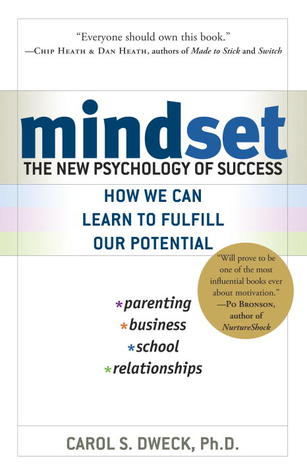
McFarland says: “Understanding the basis of growth and learning as the willingness to challenge yourself and that that is a great thing.”
More on Mindset here.
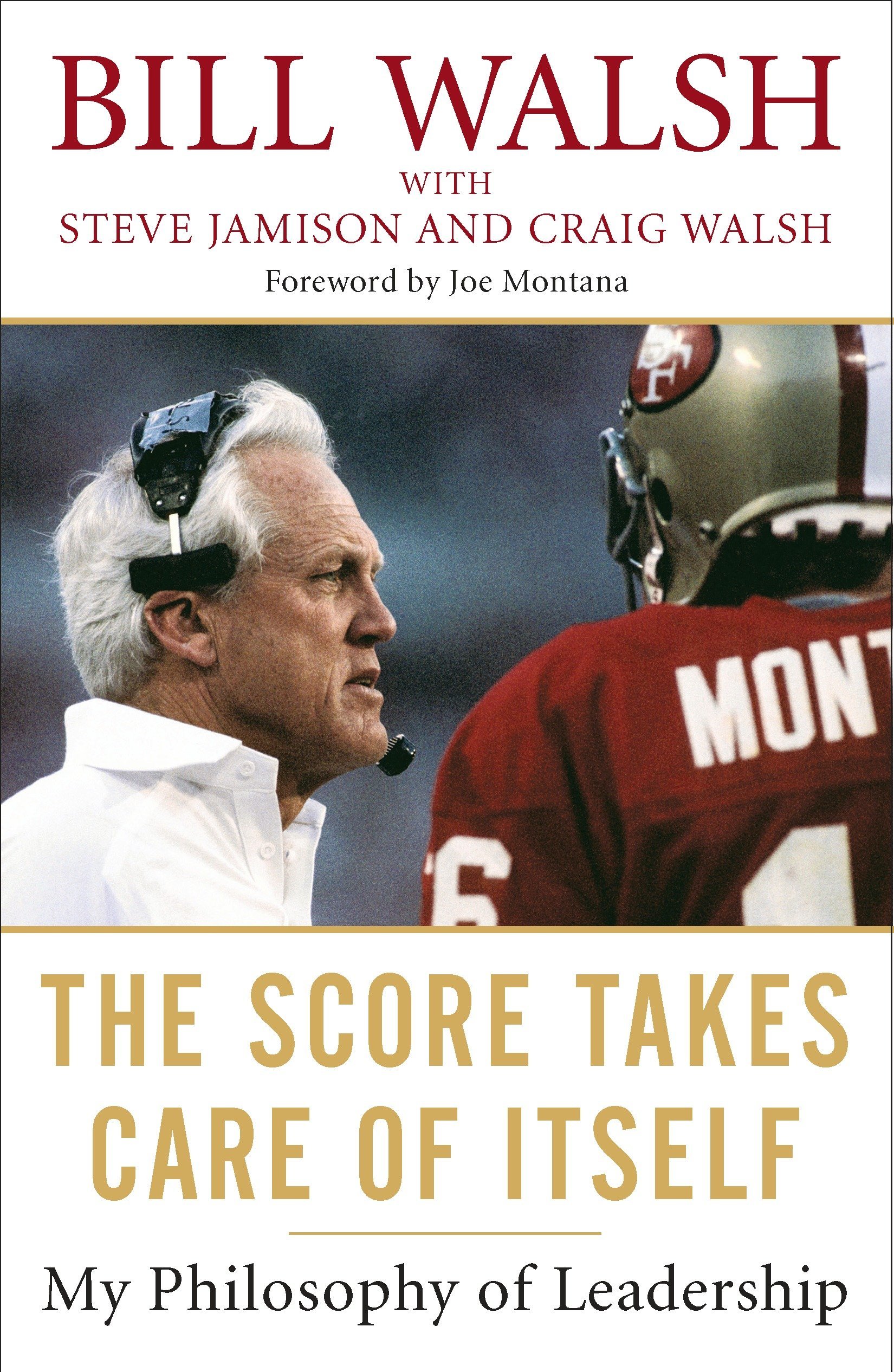
McFarland says: “I am not sure that I am at all the kind of coach the great Bill Walsh was but I loved the detail and accountability he developed in the setting up of the 49ers machine.”
More on The Score Takes Care of Itself here.
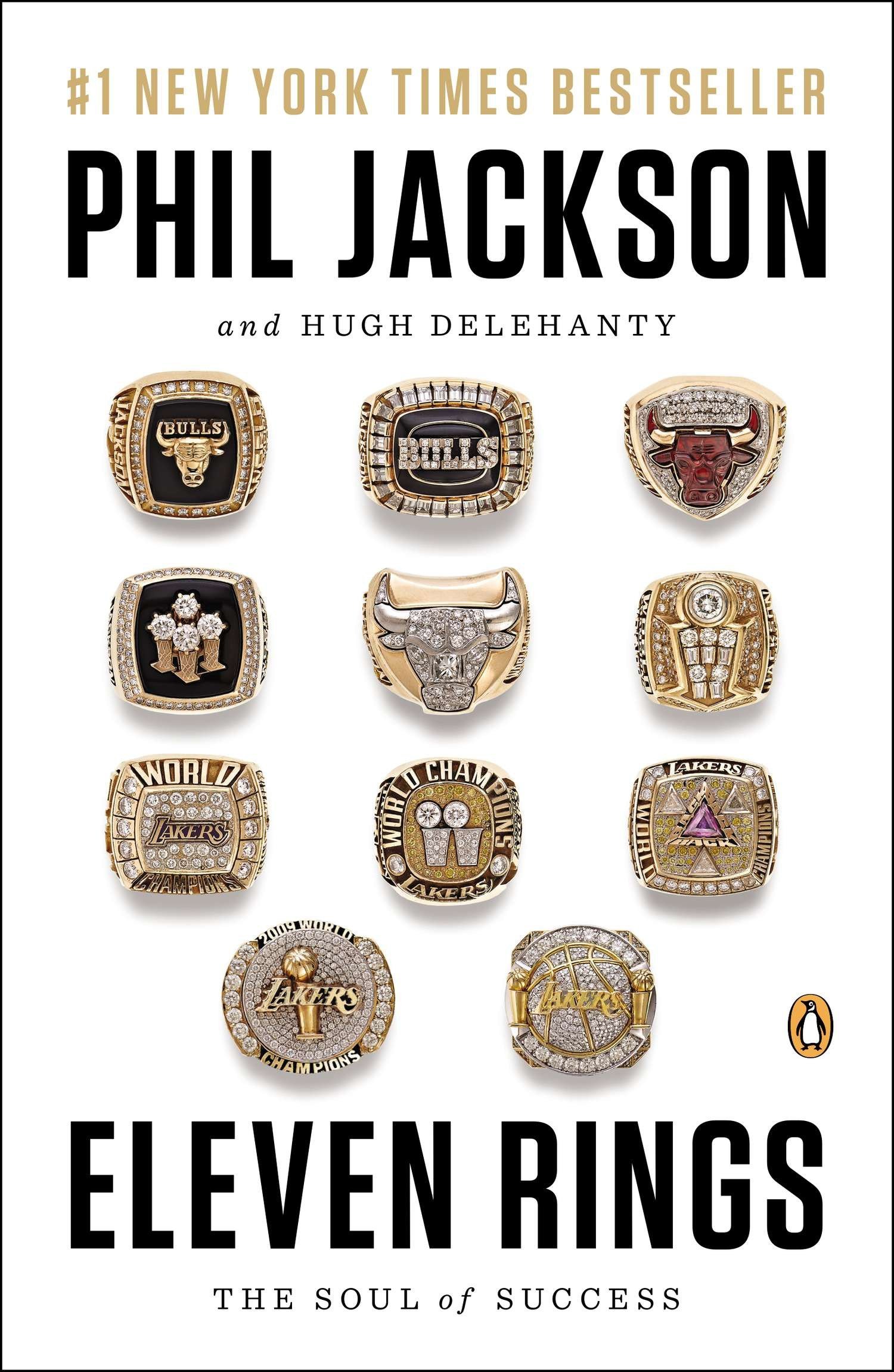
McFarland says: “Phil Jackson totally understood how important context is to leadership. He demonstrates empathy in equal measure to strong decision making.”
More on Phil Jackson here.
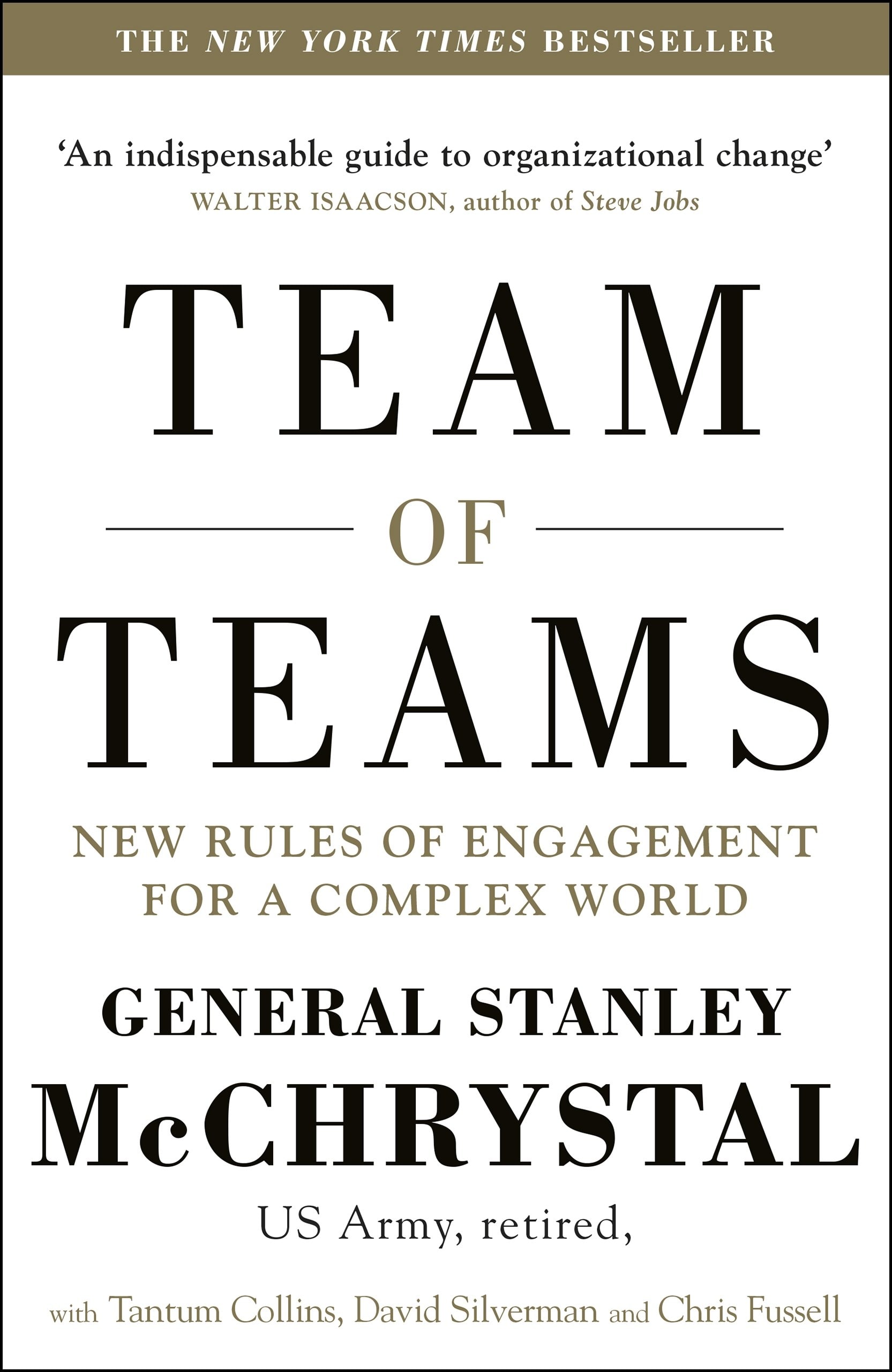
McFarland says: “McChrystal was able to see the need for change within the military operating systems in modern warfare. He implemented change from traditional military hierarchy to distributed leadership – this level of change in conceptual thinking is mind-blowing to me.”
More from the McChrystal Group here.

Within a few minutes, the Elite Basketball Performance & Program Operations Advisor at the NBA explains just how interconnected people development, people management and process development is.
When each is done poorly, there tends to be common themes, such as a lack of investment in people, a lack of clarity, misalignment, and fear of challenging the status quo. These return time and again throughout our conversation and Bartlett cites the distinction between ‘discussion’ and ‘dialogue’ in making his case.
“In sport, we often skip the idea of engaging in dialogue – that is being open to and listening with intent to everyone’s viewpoint, willing to understand their perspectives, place value in their backgrounds and their experience – and instead we go straight to the discussion/debate narrative. Without recognising it, the situation quickly becomes a ‘me versus you’ with the actual problem not being addressed or solved.
In the first instalment of our two-part interview, we explore the steps teams can take to promote better people development, people management and process development.
Jon, what is the first step leaders can take towards creating shared understanding, language, meaning, vision and clarity within their teams?
JB: The obvious one, and it’s easier said than done, is making it visible. Does everyone know what the plan and strategy is? Is it evident within the environment you’re working in on a daily basis? Is there alignment between the owners, the board, the GM, coach, performance director and then all the different verticals underneath? Are there routine checkpoints along the way to determine progress or is it just an annual check-in to see how it’s going against the plan? Are there actual processes and opportunities to review the plan as it’s happening and emerging? Is the work of those who are non-athlete facing and those who are athlete facing aligned to the wider goals? Are the actions and words consistent? It’s easy to put words up on a wall, but are the actual actions and behaviours aligned with those?
How can goals and values be effectively communicated to staff members?
JB: It’s about taking people on a journey. In an ideal world they’re somewhat part of the conversation, or involved some way in developing the goals and values. This way you likely get to the point easily and quickly around how those values are embodied. For big staff groups though where this isn’t always possible there are opportunities through behavioural frameworks. If you’ve got a certain set of values and behaviours in which we’re going to operate, what are the actions that embody those values? And how can you live those on a daily basis? I think in having that shared language and that shared understanding, the co-creation and sharing of that responsibility, you’re then reaching all the different verticals. There are many ways to achieve this but, ultimately, I think the more people involved in the process the more buy-in and engagement there is early on.
What about the role of those below the leaders?
JB: To achieve alignment, the heads of department are critical in sharing the values, the language, and the processes. One thing I’ve thought about hard is giving flexibility to staff on how they do their work and how it contributes to the bigger picture. Empower and allow them to carry out how they do their job on a daily basis, but then collectively identify how that work contributes to the bigger picture. Now you’re meeting them in the middle. That is key to that alignment. If it’s just being told constantly, ‘this is what you need to do, this is how you need to do it’. I don’t want to work like that. Flip it around: the work you want to do and how you’re doing it; how is that contributing to the bigger picture? What piece of the puzzle are you in contributing to the overall strategy? It’s both top-down and bottom-up.
How can organisations track both progress and the development of behaviours?
JB: You always want to be able to track if something is going in the right direction through constant touchpoints on where it’s at, what’s the progress, where’s it getting to, but it’s also a case of tracking what isn’t working as well, what needs to be dropped. So, I like the idea of asking how do we spend our time? And what are we spending our time on? Then you’re almost thinking what’s the problems we’re trying to deal with? Are we asking the right questions? Are we trying to solve the right problems? If you haven’t got the initial plan, vision and strategy, then what are you actually tracking? I think that’s key: you’ve got to have the first part first in order to then track your progress along that lifecycle.
What are some of the signs of poor process management?
JB: This is really talking now to how things are done, the methods in which we account for planning, ideation, creation, implementation, review and evaluation. I think, done poorly, there’s gaps at every stage. Done well, there might be one or two ‘getting there’ stages, which might need tweaking. Done great, there are processes and frameworks contributing to every step of that process, it’s a well-oiled machine and it effectively contributes to decision making. For example, if there’s no review or evaluation of a process, then there’s very little learning happening. And no learning means the same thing is being done over and over; when you want different results and you do the same thing it’s basically insanity. In sport, if you do the same thing over and over, recruit the same, go through the same cycle and expect different results, nothing changes. One of the themes that I think interchangeably gets regarded as poor staff incompetence is just poor process management. Sometimes, it just needs better oversight and better management of the process and then often this can lead to better action plans and development for staff.
Change often comes during losing streaks, periods of staff turnover and other turmoil. How can teams begin to find opportunities in those moments?
JB: You’ve got to ask: what’s the problem? What’s the question we’ve got to ask ourselves? Change is inevitable in sport, it’s a constant. That’s why I think context becomes so important. To get a group of people to work together towards a common goal you have to ask: was there even a common goal established at the start? If there wasn’t, then that’s the problem, not necessarily the people underneath, because they didn’t necessarily know what they were doing. The opportunity is there to ask the right questions and if you don’t know what the questions are then get people in to help ask those questions and find out what the problem is. Subsequent to that, all staff have the opportunity to be a part of something. What do you want your role to be in this and how are you going to contribute to it in terms of turning it around and changing it? Some people will be ‘I’m out of here, I’m done’. Some people don’t have the choice. But in a way, you’ve got to come back to: what is the problem? Poor results isn’t the problem, that’s the outcome. You’ve got to find out what’s leading to those poor results. Context is key and that’s the opportunity.
What is the right way to win over stubborn people within a team?
JB: We are talking here in the context of change, I guess, and with that how you go about convincing someone with a certain mindset and philosophy of practice tweaking how they do things, so they’re aligned to how an organisation or department wants to operate. The first thing is learning about what their perspectives are, what their background and experience is and what their modus operandi is. Gaining understanding of this means building a relationship and respecting that background. Equally it provides the opportunity of asking: ‘how can their background, practice, methodology, philosophy contribute to us trying to answer this problem?’ You want to get to a place where you get them to come up with a solution of how they contribute to the actual problem as opposed to saying, ‘this is where we’re going and this is where we need you to operate.’ Again, it comes down to that ‘dialogue versus discussion’ concept. They might not agree with the vision, strategy and pathway, which might mean a separation of ways, but if they are engaged then for me it’s about identifying with that individual how they align and operate the agreed vision and philosophy of the department.
Six months earlier, the team were languishing sixth in the Premiership table and were without a lead coaching figure following the departure of Paul Gustard as Head of Rugby.
A series of swift and profound decisions transformed Quins’ campaign. Firstly, Gustard was not directly replaced. Instead, the reins were taken by Director of Rugby Billy Millard, with support from coaches Jerry Flannery, Nick Evans and Adam Jones.
Off the field, the club sought the counsel of performance coach Owen Eastwood, who has worked with organisations including Gareth Southgate’s England men’s team, the British Olympic team, NATO and the South African men’s cricket team, in an effort to revive their fortunes.
“Everybody was looking at them and saying ‘there’s no energy – are they not fit?’ Eastwood tells the 2021 Leaders Sport Performance Summit at London’s Twickenham Stadium. “The team was struggling, they weren’t playing well, and they were getting a hard time for that.”
Eastwood’s role was vital. “We were lost in our DNA and Owen Eastwood started spending time with the club,” says Millard, speaking on a different day at Twickenham, where Quins lifted the Premiership trophy. “We excavated the history of Harlequins.”
By June, both the men’s and women’s teams had taken their leagues by storm, playing fast and frenetic rugby on their way to being crowned champions. Both were aided in part by the cultural reset that laid the foundations of both triumphs.
Back to Quins’ roots
As the Leaders Performance Institute speaks to Millard, it is clear that part of him still cannot believe the turnaround that took place. “You don’t have seasons like that,” he says.
His mind goes back to Harlequins’ last Premiership triumph in 2012. “We played a certain style, we behaved a certain way. Quins have always been entertainers – that’s why we’re ‘the jesters’ – and we just had to tap back into that, which we did. Our owners [Duncan Saville and Charles Jillings] set a vision, we stripped it right back, and that vision was aligned right through the playing squad.”
Sitting beside Millard is Danny Care, Quins’ scrum-half who was a key part of that earlier success. He says that he and his teammates had ‘fun’ as the club raised its game. “I think the main thing we did is that we said we were going to do it our way, we’re going to do it the Quins way, we’re going to go back to our roots, back to what we feel is the way we like to play rugby, do it with a smile on our face,” he says. “And we went and did it.”
“In 21 years of professional sport I’ve never seen it so strong,” adds Millard. “If we lost a game, which we did on the run to winning it, there was no panic, as long as we were doing what we said we’d do and play a certain way, everyone stayed true to that.”
Back in January, Eastwood had spotted the lack of energy. He would conduct 52 interviews with players and staff as he sought to make his recommendations. He says: “Just through some changes in the environment, different philosophies, all of a sudden, this team had this unbelievable amount of energy, and they were the same conditioned group and they were the same people. Something shifted that created this unbelievable energy – and that was the environment, the culture.”
TRUE values
As Eastwood, who joined the Quins board in August, began his research into the club founded in 1866 – the fourth-oldest rugby club in the world – he quickly unearthed characteristics that lent themselves to a neat and powerful acronym: TRUE, which stands for ‘tempo, relationships, unconventional, enjoyment.’
“Owen said this acronym had been around forever,” says Millard. “’Tempo’ – Harlequins play with tempo. ‘Relationships’ – everyone says relationships are important, but we live and breathe that. Our relationships are the foundation of what we do.
“We’re ‘unconventional’. As [prop] Joe Marler says, that means we can do whatever we want. Pretty close. And enjoyment, so T-R-U-E. It’s not everyone’s cup of tea, but it’s Quins for nearly 160 years.
“[Eastwood] spoke to us about all these amazing stories about relationships and unconventional and enjoyment; and we all tapped into that.”
Care takes up the theme. “I think it’s the main reason we were successful come the end of last season,” he says. “To revisit what the club is all about, I think, for players, sometimes you’re in a hard situation as a player. You feel that you can’t really speak out and say what the coach doesn’t want to hear. But when we did have this reset, I think it was a great opportunity for players, coaches, staff to sit in a room and each of them describe what we needed. I’ve never known an environment where we’ve felt more empowered because we were asked questions.”
Belonging cues
As Care says, the Harlequins players were asked for their input to help shape training and preparation in the absence of a head coaching figure. Tabai Matson would be installed as Head Coach during the subsequent off-season but, there and then, the players led the way and, most importantly, felt heard by Millard and his support staff.
He says: “The coaches fully gave us that trust and listened to us. Then, as a player, you then feel empowered and trusted to go out on the weekend.”
As befitting Quins’ ‘unconventional’ label, changes were made behind the scenes, including the abolition of the ‘captain’s run’ [the traditional final captain-led training session on the eve of a match] and Quins consistently found a level of performance befitting their talent.
Eastwood believes that a fundamental factor was the ‘belonging cues’ the players increasingly received from the coaching staff. It stems from his research into the relationship between energy and hormonal states.
“Fundamentally, from a hormonal point of view, when we go an compete, we will be stressed,” he says. “The two biggest energisers in our hormones are adrenaline and cortisol. It’s not hard to find them when we’re competing, but if we’re only fuelled by them then a) is it sustainable? And b) that type of fuel will have consequences. People in those states can have tunnel vision, they can find it hard to talk. More widely, people who are marinating in cortisol and adrenaline can get into a self-preservation mode and find it hard to connect with other people. People who are fuelled by cortisol and adrenaline can find it hard to be vulnerable; if they don’t understand something they may not put their hand up and say it.
“So what we want to do is create this balance, from a hormonal point of view, when we are in a competitive environment. The cortisol and adrenaline will be there, we don’t need to ramp it up, actually we need to calm it a bit. And what hormones like oxytocin, around our connection with other people; dopamine, which is that motivator pushing us forwards towards the goal; serotonin, which has a regulatory effect on our mood. What we really need to do is, in our environment, promote those hormones. I think there’s a simple way of understanding it and it’s all related to energy.”
Therefore, belonging cues, as Eastwood argues, can have a positive impact on a person’s energy and hormonal balance. “When people receive belonging cues, it’s a massive energiser. So many experiences I’ve had of going into teams where people, they trust me and they’ll talk to me and they’ll say, ‘I don’t know if I belong here, I feel a little bit like an imposter, I don’t know if the coach respects me. I feel like every single thing I’m doing, even training, off the field, I’m being judged and people make decisions all the time about whether I should stick around here.’
“When that happens, again, people start marinating in cortisol, stress hormones and adrenaline. They go within themselves. If they don’t understand something or if they’ve got a weakness in their game that they want to develop, they’re not going to put their hands up and say that because they feel unbelievably vulnerable. We also know that our short-term memories are affected when we’re in that state as well.
“When we feel a sense of belonging, that we actually belong here, that people respect us, we’re in a completely different hormonal state. Our dopamine, oxytocin levels are raised, we’re able to focus on our job and our teammates, if we don’t understand something we feel comfortable in saying that.”
“It was definitely different to what I’ve been used to,” says Care. “I’ve never felt more trusted, empowered, respected, but also then there was a massive responsibility on us as senior players to lead it and the younger players to follow.”
Millard says that the approach is here to stay and, when it comes to recruitment, there is “a method to the madness,” adding, “you’ve got Danny and the leaders telling stories and Owen Eastwood saying ’70 years ago, this is what Quins used to do’ and these young kids are like ‘we’re bigger than this, the spotlight’s on us now but there’s so much that came before us and, in 20 years, we’re still going to be playing this way.’”
This article originally appeared in our Special Report Enhancing Your Environment: Nurturing positive high performance set-ups. It also features insights from English Premier League Brentford FC, Major League Baseball’s Toronto Blue Jays and Google.
17 Mar 2022
PodcastsChad Morrow, a command psychologist with the US Airforce, succinctly identifies the elephant in the room when it comes to multidisciplinary work.
“When you hire people who are usually at the top of their game and they’ve then got to slow down to work together,” he tells the Leaders Performance Podcast. “I think everyone says they want to do that but if they’ve never done it, I’m not sure they want to do that.”
He goes on to explain that healthcare professionals in the military can recoil when they understand that being embedded can come with limited support. In truth it is not always so different in elite sport.
In our discussion on the creation of holistic teams, we also touch upon:
John Portch: Twitter | LinkedIn
Listen above and subscribe today on iTunes, Spotify, Stitcher and Overcast, or your chosen podcast platform.